
Khalifa University and UAE Telecom and Digital Government Regulatory Authority Sign Funding Agreement for EBTIC to Support Research and Build Capacities

  • His Excellency Eng. Majed Sultan Al-Mismar said: “This agreement is vital to the government and private sectors and the Academia for achieving common national goals that go in line with the country’s ambitions and aspirations towards a future that is focused on the implementation of emerging techniques for sustainability, happiness and luxurious life.”
  • Arif Sultan Al Hammadi said: “The funding agreement strongly illustrates our close partnerships with government organizations and renowned industry brands to seek new technologies and solutions.”


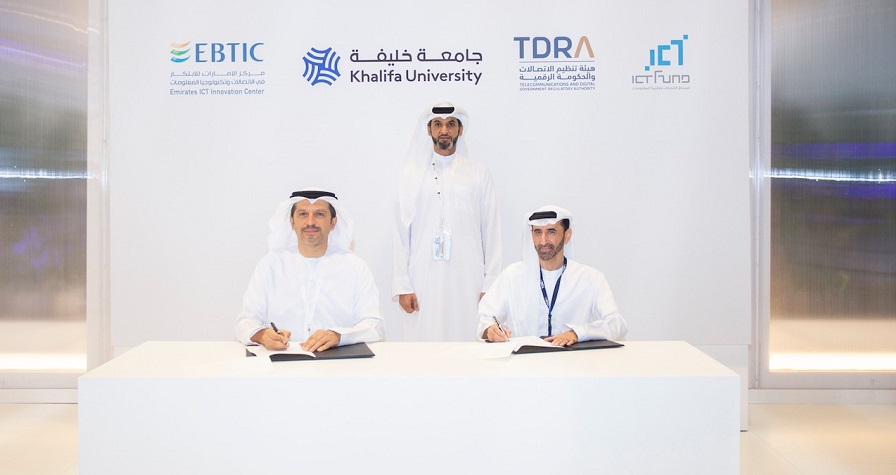
The Telecommunications and Digital Government Regulatory Authority (TDRA) and Khalifa University of Science and Technology have signed an agreement to fund the Emirates ICT Innovation Center (EBTIC).


The agreement was signed by His Excellency Eng. Majed Sultan Al-Mismar, Director General of TDRA, and Chairman of the Board of Trustees of ICT Fund, and Dr. Arif Sultan Al Hammadi, Executive Vice-President, Khalifa University.


EBTIC was founded by Khalifa University, Etisalat, and BT in 2009 as the first UAE-based ICT research and innovation center. The award by the TDRA follows an earlier grant awarded in 2014 to support EBTIC’s transformation to a national industry-academia-government research center focused on developing home-grown and globally-competitive technologies and Emirati talent in the vital ICT sector.


On this occasion, H.E. Eng. Majed Sultan Al Mesmar said: “In today’s world of rapid changes and developments, we are in urgent need of paying attention to research, development, capacity building, and enhancement of skills. Based on our experience full of achievements in the UAE, we realize the importance of cooperation among different sectors for the general benefit of society.”


He added: “This agreement greatly embodies the partnership among the government, the private sector, and the academic sector to achieve common national objectives in line with the UAE’s aspirations to apply trending technologies to achieve sustainability, happiness, and wellbeing. Within this context, we in TDRA will not save any effort to support development, future foresight, and enhancement of skills required for the age of the 4th Industrial Revolution. This is based on our role to enable digital transformation within society.


Dr. Arif Sultan Al Hammadi said: “The funding agreement strongly illustrates our close partnerships with government organizations and renowned industry brands to seek new technologies and solutions. EBTIC is already in a commendable position because of its successful track record in obtaining new innovations and generating IPs over the years, and we believe this funding agreement will help EBTIC reach new milestones, while contributing to human capital development in  the UAE, as well as regionally and internationally.”


According to the agreement, EBTIC will lead a national research and innovation program focusing on areas including healthcare, education, communications, information technology, IoT, and data science. It will seek innovative solutions that can be exploited commercially in communications and information technology (ICT), while entering into partnerships with other renowned academic institutions to promote research and scientific excellence.


EBTIC will also work with industry to ensure that research and innovations can be leveraged to tackle business and societal challenges and deliver benefits at the national level. Additionally, it will work towards submitting patents, publishing scientific papers and exploiting intellectual property rights in the ICT sector. Moreover, the Center will contribute to enhancing the country’s international standing and position in the networked readiness index. It will also contribute to developing national skills and talents and to the dissemination of trained talents in various ICT areas.


At the same time, EBTIC will ensure human capital development, rate of Emiratization, training of public and private sector employees through training courses and assignments, while also training university students through summer internships and graduation projects. In addition, it will organize knowledge-sharing lectures, presentations, and workshops, and submit relevant research projects in the ICT sector.


In order to further strengthen the ICT sector, EBTIC will take up a number of research projects in the ICT sector for the UAE Government, for Khalifa University, and its industrial partners. It will also present research papers at conferences, publish in scientific journals, and issue white papers, in addition to generating new IPs.


Clarence Michael
English Editor Specialist
23 November 2021

Seeing Clearly with Bifocal Contact Lenses That Can Measure Blood Glucose Levels and Correct Vision


A collaborative team of researchers from Khalifa University and Imperial College London has developed a new contact lens that could help people with diabetes by monitoring their glucose levels without the need for daily blood tests, while also correcting the near-sightedness common in diabetic patients.


A metabolic disease, diabetes mellitus is characterized by high blood glucose levels, and if left untreated, can lead to severe complications including blindness, kidney and heart disease, stroke, loss of limbs, and reduced life expectancy. It is a major public health problem, affecting hundreds of millions of people worldwide and representing a substantial economic burden on society.


There are two types of diabetes: Type 1 usually begins in childhood with individuals suffering from their body’s inability to produce enough insulin, while Type 2 is commonly associated with obesity and age of onset is usually in middle age. Both types of diabetes tend to run in families and hence genetic factors contribute to the disease. Among UAE citizens, the prevalence of diabetes is the second highest in the world with over 1.1 million cases of diabetes recorded in the UAE in 2017.


A collaborative team of researchers from Khalifa University and Imperial College London has developed a new contact lens that could help people with diabetes by monitoring their glucose levels without the need for daily blood tests.


Continuous monitoring of glucose levels in people with diabetes is essential to managing the disease and avoiding the complications that can be associated with poorly-managed treatment. Diabetes is predicted to become the seventh deadliest disease by 2030 and involves either a deficiency in the production of insulin or the body’s inability to use its available insulin to process glucose.


Long-term complications of diabetes develop gradually, and the less controlled a person’s blood sugar levels are, the higher the risk of complications. Eventually, diabetes complications may be disabling or even life-threatening, as excess sugar can—for example—injure the walls of the capillaries nourishing the nerves, damage the glomeruli blood vessel clusters in the kidneys, and affect the blood vessels of the retina, potentially leading to blindness.


The research team includes Dr. Haider Butt, Associate Professor of Mechanical Engineering, Dr. Mohamed Elsherif, Postdoctoral Fellow, Dr. Fahad Alam, Postdoctoral Fellow, Dr. Bader Alqattan, Visiting Researcher, and recent MSc graduate Ahmed Salih, all from Khalifa University, along with Dr. Ali Yetisen, Associate Professor of Chemical Engineering at Imperial College London. They published their research in the highly acclaimed journal, Small.


“Continuous glucose monitoring systems have emerged to obtain frequent measurements throughout the day and this could revolutionize the way diabetes is managed,” Dr. Butt explained. “However, they are currently limited by high costs and the need to be recalibrated at least twice a day as a result of signal drift. Commercial systems detect glucose concentration in the interstitial fluid, which is the fluid that fills the spaces between cells. This needs an electrochemical probe to be inserted through the skin, which is an invasive process that could be avoided by other means. Our solution uses contact lenses with integrated sensors that sample and measure tears for numerous biomarkers, including those indicative of high glucose levels.”


Tears are easily accessed and can be examined to diagnose cancer, Alzheimer’s disease, Parkinson’s disease, cystic fibrosis, systemic sclerosis and glaucoma without the need for drawing blood.


The research team’s contact lenses provide a novel way of measuring glucose levels in diabetics by integrating light diffraction sensors which are embedded in a hydrogel matrix to make the contract lenses. Hydrogels are the soft, pliable and thin materials that make up more than 90 percent of contact lenses prescribed in the United States: they are water-swollen polymeric materials that maintain a 3D structure.


Traditional glucose monitoring devices use enzyme-based sensors in which the enzymes interact with the glucose molecules, resulting in an electrical response that can be correlated to the concentration of glucose. These sensors are highly sensitive and give rapid results, but their short-term stability is affected by temperature, pH level and humidity. Enzymes are unstable by nature and sterilizing the contact lens would denature any enzymes in the sensors, rendering them useless. Additionally, hydrogen peroxide is a byproduct of the glucose-enzyme interaction, which would interfere with the sensor’s response and is not a substance desired in the eye area. Enzyme-based sensors are also difficult to embed into contact lenses and require a power supply, making their use in contact lenses impractical.


Light diffractive glucose sensors, on the other hand, use molecules that bind with parts of the glucose molecule and cause changes in the volume of the hydrogel contact lens. The lenses swell when glucose is detected, influencing the focusing efficiency. The research team used the light sensor in a smartphone to capture light reflected from the contact lenses and then used that data to determine glucose levels.


“Practically, a smartphone could be used as a portable reader for a contact lens-integrated glucose sensor,” Dr. Butt explained. “We could also install a light source in a glasses frame, which would be worn when patients need to measure their glucose concentrations. The light beam would hit the worn contact lens and the photodetector would collect data about the amount of light reflected back, sending this information to the user’s phone via Bluetooth. The smartphone application would then correlate the received signals with glucose concentrations in tears.”


Additionally, for those who need corrective eyewear in addition to glucose monitoring, a contact lens that could do both would be ideal. The research team developed their contact lenses to be bifocal, which can help produce clear vision at near and far distances. A complication of diabetes is myopia, or near-sightedness, which causes distant objects to appear blurry, while close objects appear normal. Bifocal contact lenses have been shown to help control myopia, decreasing its progression in diabetes sufferers.


The lenses can also act as an informational tool for the wearer: when glucose is detected in tears, the lenses will swell and change shape, changing the focus for the wearer. Once vision goes blurry, the user knows to check their blood glucose and top up their insulin levels. 


“Our lenses can be fabricated quickly and easily and fine-tuned to any desired sensitivity for any eyesight,” Dr. Butt said. “They offer practicality in their readout methodology and could be a basis for a minimally-invasive glucose monitoring system for diabetics as well as other diseases by changing the detection methods for the various biomarkers found in tears.”


Jade Sterling
Science Writer
23 November 2021

Khalifa University and Dassault Aviation Sign MoU on Aeronautical Education and Research Collaboration at Dubai Air Show 2021

Partners Agree on Sponsorship of Students, Internships, and Capacity Building and Development  


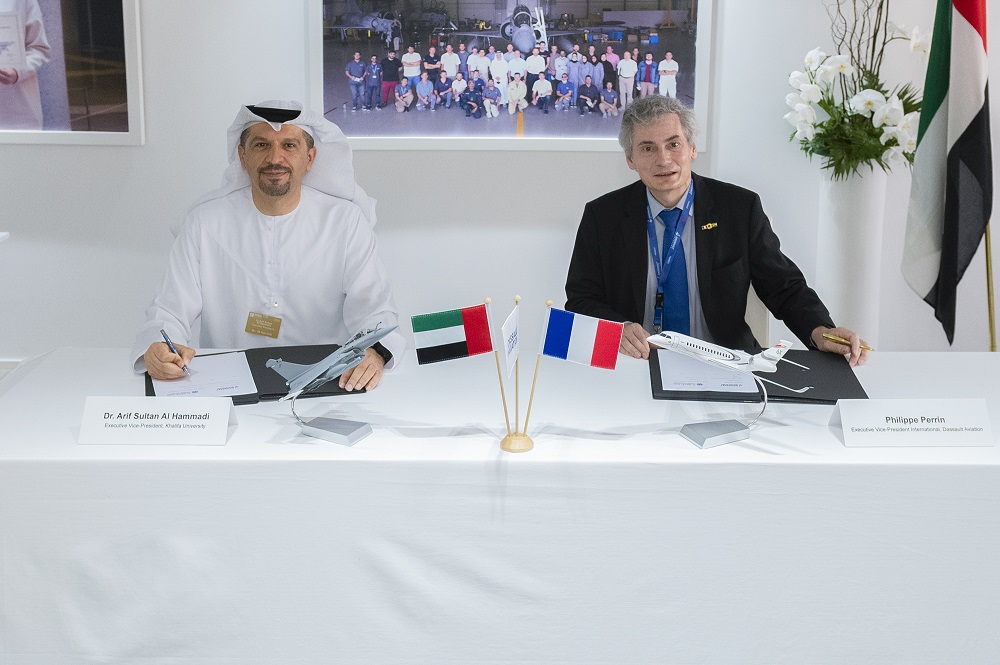
Khalifa University of Science and Technology and global aerospace leader Dassault Aviation today announced they have signed a memorandum of understanding (MoU) to establish academic cooperation in developing aeronautical education and related research in the UAE, involving industrial experience as well as advanced technologies.


The two partners will jointly promote and implement cooperation in areas including collaborative high-skilled research programs, student sponsorships and internships, support to academic programs as well as capacity building and development. The MoU will build on existing strengths within Khalifa University in the critical aviation, space, and defense systems sectors, covering aeronautics and astronautical engineering, as well as the Aerospace Research and  Innovation Center (ARIC) that drives innovation in these areas.


The MoU was signed by Dr. Arif Sultan Al Hammadi, Executive Vice-President, Khalifa University, and Philippe Perrin, Executive Vice-President International, on behalf of Eric Trappier, Chairman and Chief Executive Officer, Dassault Aviation, at Dubai Airshow 2021.


Dr Arif Sultan Al Hammadi said: “The collaboration with France-based global aerospace leader Dassault Aviation reflects our internationalization efforts to collaborate with best partners around the world to bring great minds and expertise to the UAE and our strong commitment to developing human capital in the UAE’s strategic areas. The partnership will benefit our researchers and scientists to explore new frontiers in this industry, while helping students to augment their knowledge and understanding of this vital sector. Through this MoU, we believe we will be able to contribute to the UAE and the region with innovative technology solutions and skilled manpower, capable of handling challenges specific to aerospace and aviation.”


Eric Trappier stated : “Dassault Aviation, as a reliable partner of the UAE for over 45 years, is committed for more than 20 years in contributing to human capital development of the UAE through the development of local capabilities and the enhancement of knowledge, technologies and industrial know-how. Our products, from Rafale fighter as well as Mirage 2000-9 brilliantly operated by the United Arab Emirates Air Force & Air Defence (UAE AF & AD) to Falcon family jets demonstrate our expertise in research and development in the field of Aeronautics and Systems with innovative solutions and a pragmatic and dynamic approach to cooperation. Today this new agreement illustrates our determination to share our expertise providing Khalifa University’s students with the highest education standards within the ambitious projects developed by the UAE industry for the benefit of strategic sectors of the UAE economy.”


Among other initiatives, Dassault Aviation intends to sponsor a cooperative research program on Smart and Advanced materials for aeronautic applications to be jointly conducted at Khalifa University. This activity, benefiting from the skills and outstanding expertise developed at the university, is seen as an important stepping-stone for the maturation of disruptive technologies and future integration on aircraft.


Clarence Michael
English Editor Specialist
22 November 2021

Khalifa University Researchers to Present Papers on New Solutions in Offshore, Marine, Upstream and Downstream Segments at ADIPEC 2021

Displays on Most Recent Patents to Cover New Innovative EOR Technologies, Geoscience, and Oil and Gas Field Developments  


Faculty and researchers from Khalifa University of Science and Technology will present more than 11 research papers, covering the most innovative technology advancements in offshore, marine, upstream and downstream segments of the global oil and gas industry at Abu Dhabi International Petroleum Exhibition and Conference (ADIPEC) 2021.


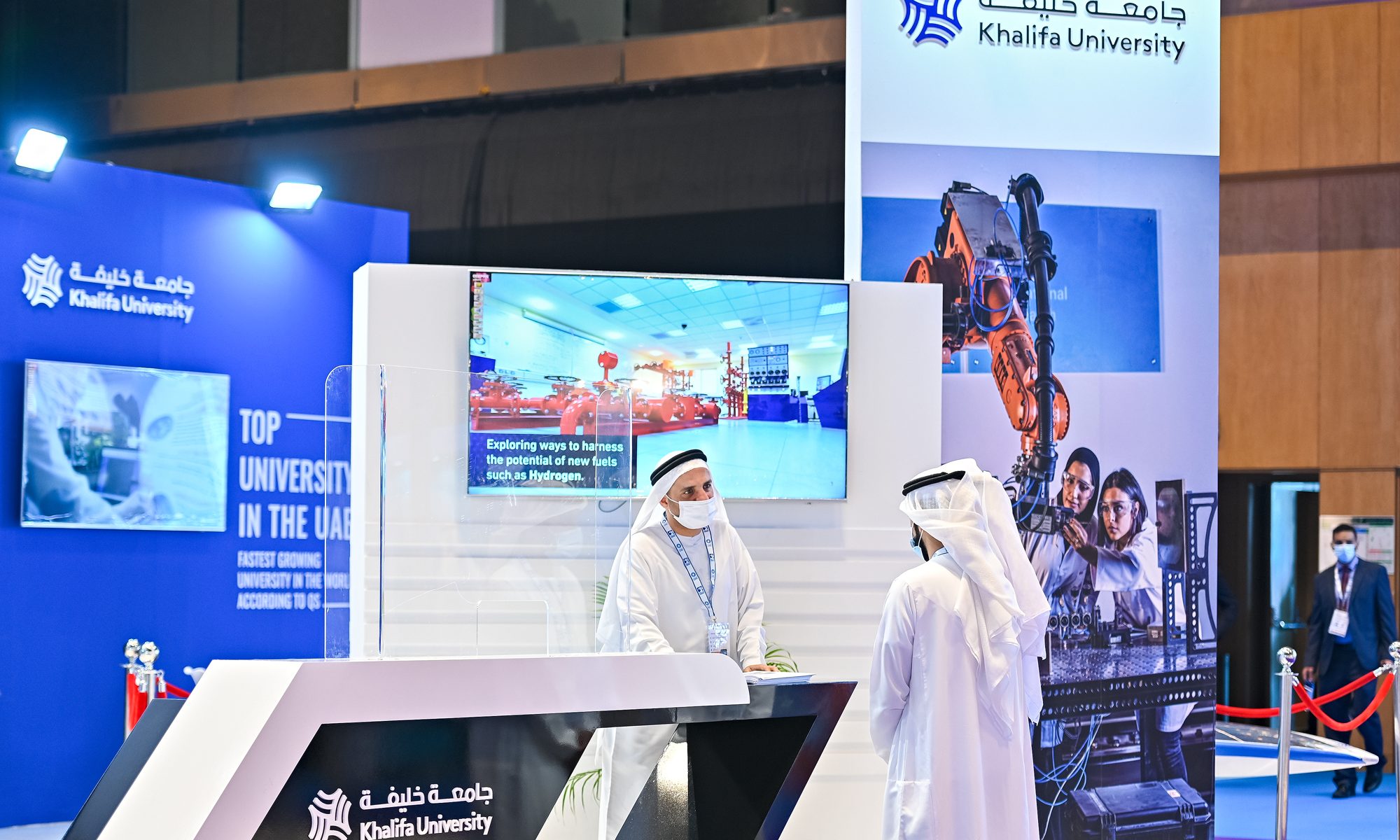
Hosted by the Abu Dhabi National Oil Company (ADNOC), ADIPEC 2021 is scheduled to be held from 15-18 November at the Abu Dhabi National Exhibition Center (ADNEC). The Khalifa University stand, focusing on the activities of Petroleum Institute, the university’s main R&D component for oil and gas, will display information on the latest IPs including six issued patents for enhanced oil recovery (EOR),  one for artificial intelligence, robotics, and hybrid intelligent systems in geoscience, one each on oil field development and management, unconventional resources development, data analytics and machine learning in geosciences, as well as gas field development and management.


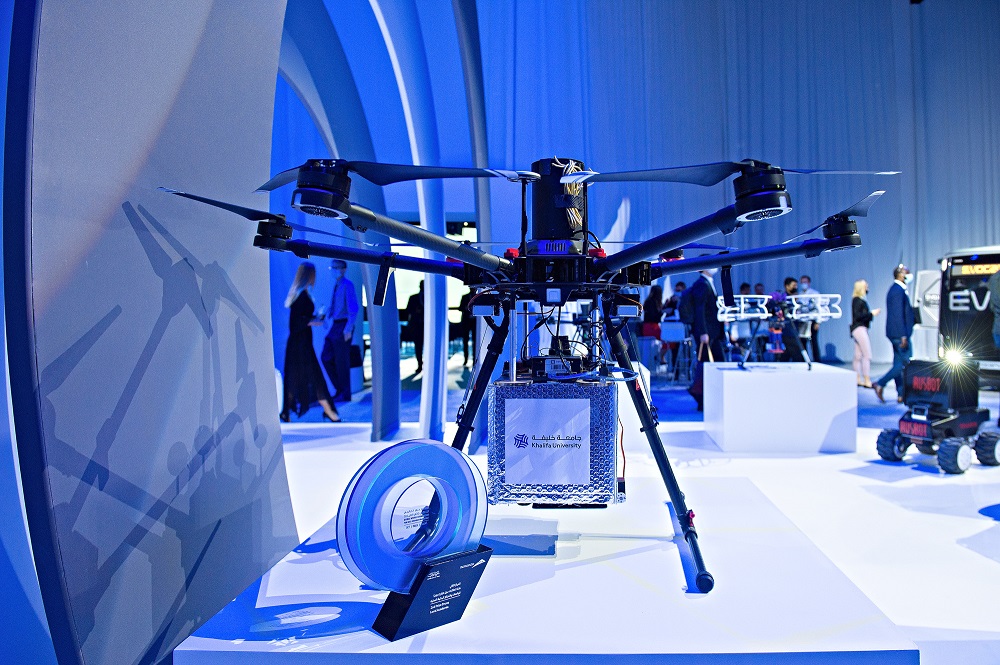
It will also showcase a drone, developed by Dr. Hamad Al Karki, Associate Professor, Mechanical Engineering, and his team of students, which won second place at the Dubai World Challenge for Self-Driving Transport 2021.


Dr. Arif Sultan Al Hammadi, Executive Vice-President, Khalifa University, said: “Reflecting the status of Khalifa University’s Petroleum Engineering Department which at present is ranked 21st internationally, the participation in ADIPEC 2021, a leading industry networking platform and technology showcase, will project our leading status as a pioneer in oil and gas sector innovation. In addition, our faculty will present research papers, and offer their expertise, while students will demonstrate their entrepreneurial prowess at the SPE ADIPEC Virtual University Program competition. We believe through ADIPEC, we aim to provide a glimpse of our leading research projects in the oil and gas industry.”


In addition to displays at the stand, Khalifa University faculty and students will be closely involved in the 2021 SPE ADIPEC Virtual University Program, which gives students clear insights into the industry and provides opportunities for students to build their professional networks and work with peers across the MENA region on joint virtual activities.


Khalifa University faculty including Dr. Ahmed Al Shoaibi, Associate Professor, Chemical Engineering, and Senior Vice-President for Academic and Student Services, will be a Committee Advisor for the Steering Committee of the SPE ADIPEC University Program, while Dr. Emad Al Shalabi, Assistant Professor, Petroleum Engineering, is a member.


A team of four senior Khalifa University petroleum engineering students will be developing a two-minute video and a 500-word write-up on this year’s project theme, ‘Hydrogen Energy as an Enabler for a Net Zero Carbon Target’. They will be joining a total of 29 teams from the Middle East and North Africa region for the competition. A judging panel will shortlist the top six teams who are expected to work closely with a young professional mentor for two weeks, to present a video presentation. The presentations will once again be reviewed by the judging panel, who will decide the winners.


Clarence Michael
English Editor Specialist
15 November 2021

KU Students Complete Six Sigma Project at Bab Al Qasr Hotel


Maha AlDhaheri and Mariam Ramadan, both BSc in Industrial and Systems Engineering students, successfully optimized the service delivery at Bab Al Qasr hotel, a luxury hotel in Abu Dhabi, in Spring 2019, as part of their Six Sigma Methodology and Applications course.


The course, delivered by Dr. Maher Maalouf, Associate Professor of Industrial and Systems Engineering, engages the students through an experiential learning approach with real-life projects and activities. The students learn-by-doing the Six Sigma set of tools and methodologies, these include powerful techniques used by major companies worldwide to help improve production processes, eliminate defects, and guarantee quality. 


Mahriam and Maha put their retained skills from the Six Sigma course into work to help identify optimal ways to streamline the beverage delivery at Bab Al Qasr hotel. Using DMAIC (Define, Measure, Analyze, Improve, Control) tools, the students streamlined the chain of activities at the hotel, resulting in an improved workers’ efficiency by 16.5%, with a 1000% return on investment (ROI) as judged by the Hotel management.


“This project has opened our eyes to the importance of Six Sigma and process improvement in hospitality to enhance organizations’ operational and financial performance,” the students shared. 


They credit the experience for improving their communication and technical skills, as they had to collect information from several different stations, machines and people across many departments.


“Working on this project also helped us identify non-value-added activities and inefficiencies in the hospitality sector, a field in which Six Sigma application is limited in the existing literature,” they said.


“In terms of technical skills, the project boosted our data collection and analyses skills. These are vital to being able to better identify the problem, validate its existence, understand where opportunities exist, and make significant and sustained improvements that help the organization.”


Several courses in the Industrial and Systems Engineering department, including Six Sigma, involve hands-on projects like this one, to help emphasize the experiential learning and learn-by-doing approach.


Erica Solomon
Senior Publication Specialist
14 November 2021

Dr. Irfan Hussain Delivers Human-Centered Robotics Webinar

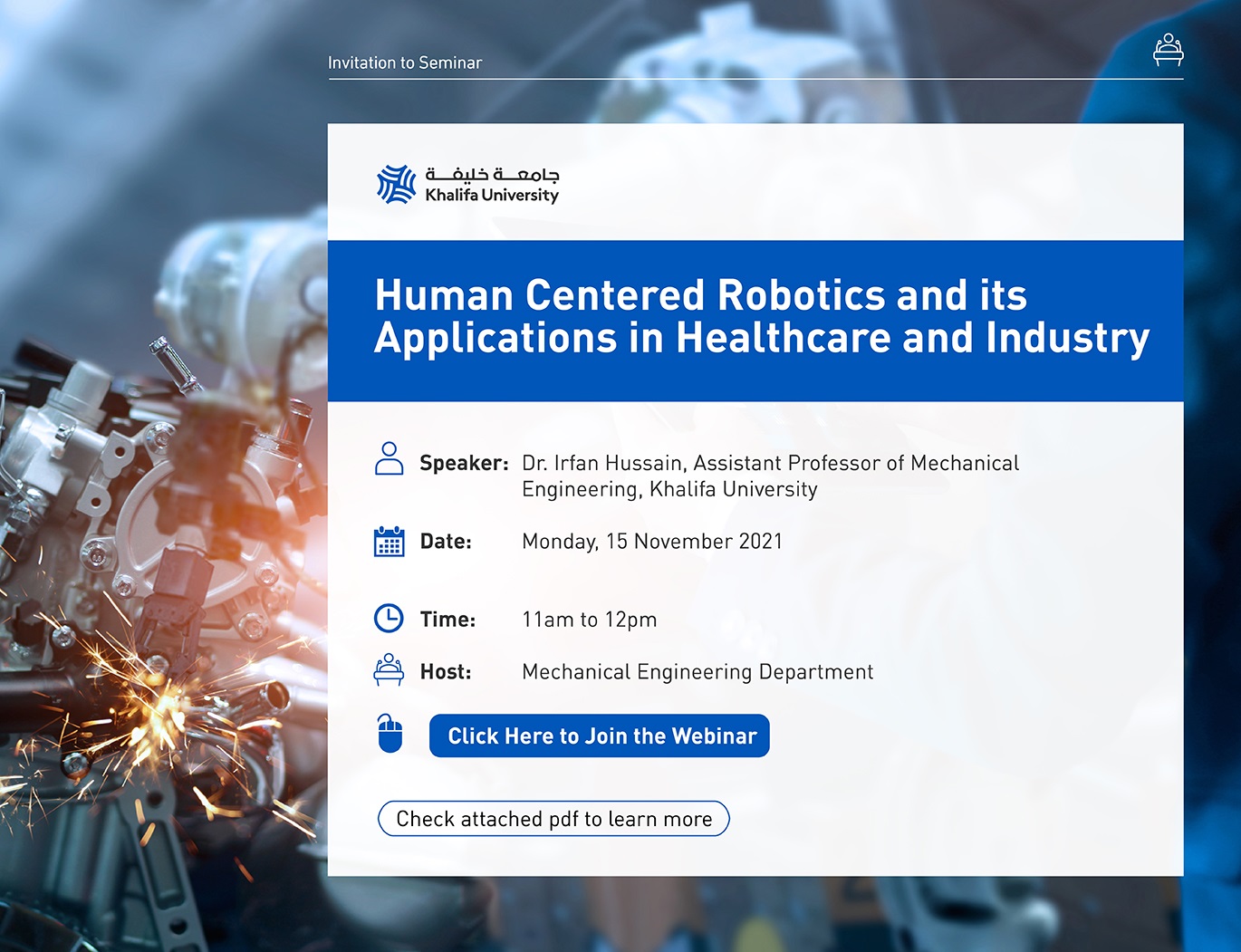
Dr. Irfan Hussain, Assistant Professor in Robotics and Mechanical Engineering, delivered a webinar titled “Human Centered Robotics and Its Applications in Healthcare and Industry” on Thursday, 11 November.


Human-centered robotics (HCR) focuses on the science and systems needed for robots to interact, assist and cooperate with humans. HCR holds a special place in the robotics field because they both mimic human sensing/actuation (Physical Intelligence) and cognitive behavior (Artificial Intelligence), and are designed to assist humans for safety and productivity. To explore human-centered robotics is to explore human beings and how we sense the world, analyze complex and often conflicting information, and act upon our findings, modifying perception, understanding, and action as new information is available. Such machines could be of great practical benefit to humans on long space flights to Mars, for instance, or as human proxies in hazardous environments or healthcare and Industry. HCR is a multifaceted and challenging domain which entails robot operation in human environments and close interaction with non-professional users. Obviously, creating human-centered robots poses many challenges in conception, design, and the hardware and software that support them. In this keynote, I will introduce our work in human centered robotics and its applications to healthcare and Industry.

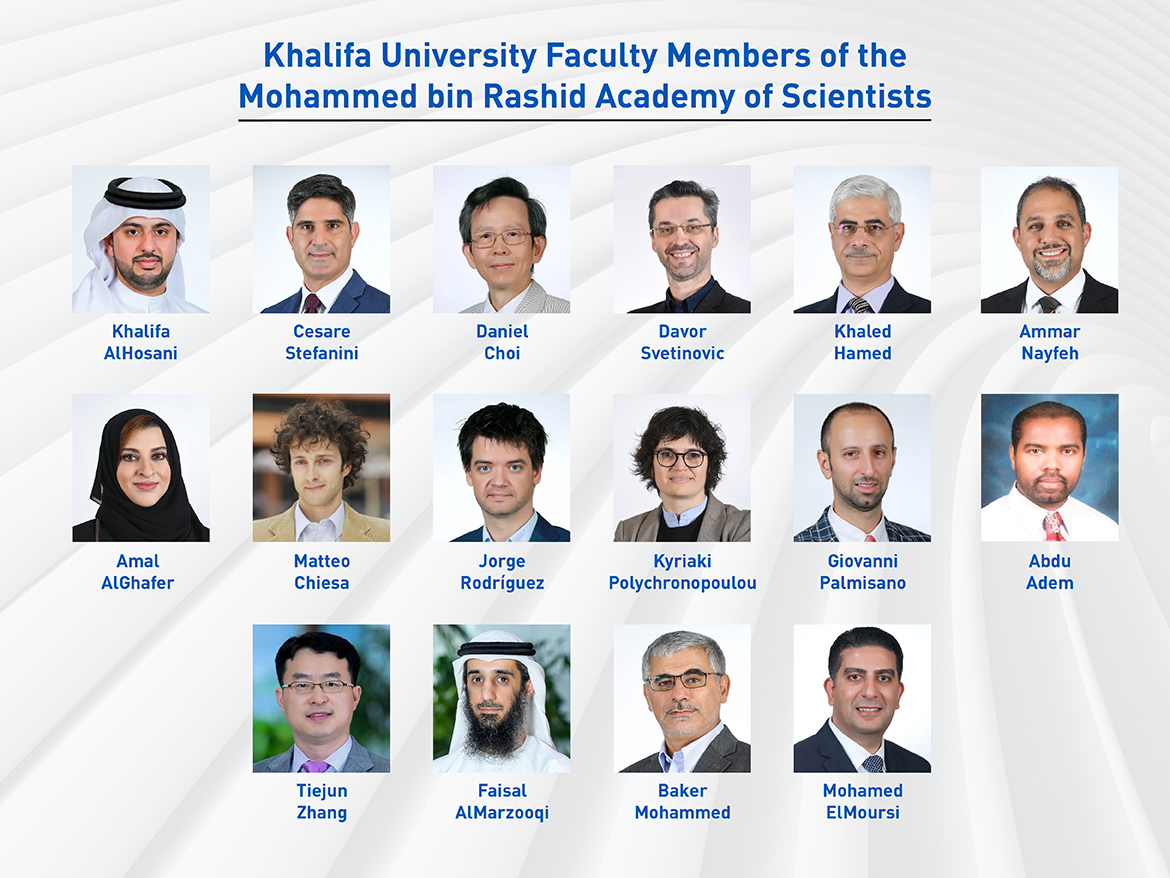
KU Faculty Joins the Mohammed bin Rashid Academy of Scientists Roster

Eighteen Khalifa University faculty members have been selected to be part of the second cycle of the prestigious Mohammed Bin Rashid Academy of Scientists (MBRAS), the primary body of the UAE’s science community composed of top researchers from different institutions in the country. 


The Khalifa University MBRAS members were selected for their expertise in their respective fields. In addition, four KU students were selected to participate in the new Youth Member category.


The KU members join other prominent scientists from around the UAE who were selected. The total number of members that form the MBRAS second cycle is 64, along with 45 new affiliate members and 40 new youth members. This brings the total number of members in MBRAS to 97, in addition to 85 affiliate members.


Khalifa University is deeply committed to the UAE’s knowledge economy transformation and to empowering the local community, which is why it is proud to see many of its faculty and students pool together with other experts in the country to explore new ways to drive scientific progress in the country.


Congratulations to the KU faculty and students who were selected! 


The KU members include: 


Health and Medical Science Member:


Engineering and Technology Members:


Affiliate Members:


Youth Members:


  • Ayesha Alkhoori, PhD in Engineering
  • Falah Alhammadi, PhD in Engineering
  • Ahmed Aldhanhani, BSc in Mechanical Engineering
  • Aaesha Alnuaimi, BSc in Computer Engineering
  • Taimur Hassan, PhD in Electrical Engineering and Computer Science


Erica Solomon
Senior Publication Specialist
10 November 2021


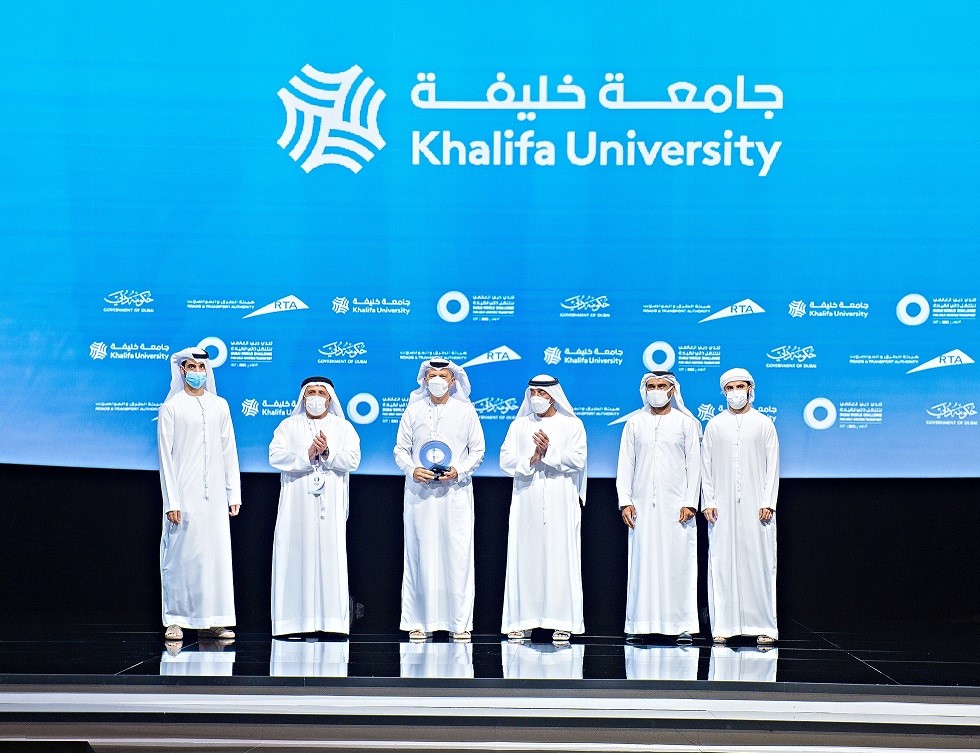
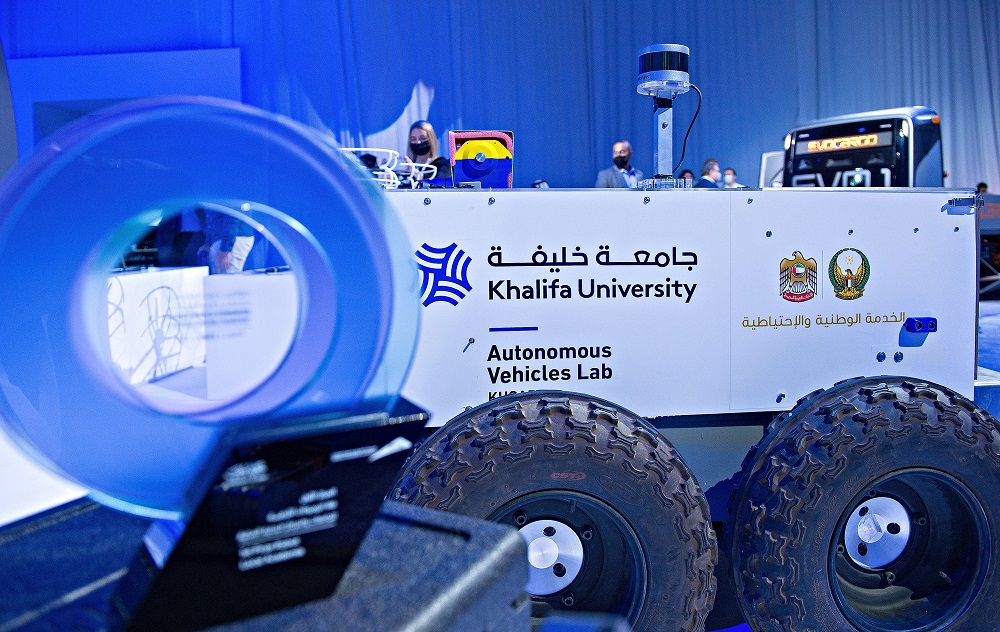
Two KU Teams win 1st and 2nd at Dubai World Challenge for Self-Driving Transport

Two teams from Khalifa University took first and second place for their innovative ground vehicle and drone at the 2nd Dubai World Challenge for Self-Driving Transport. The competition was held by Dubai’s Roads and Transport Authority (RTA) under the theme ‘Self-Driving Logistics’ and offered prizes over AED6 million.


His Highness Sheikh Ahmed bin Saeed Al Maktoum, President, Dubai Civil Aviation Authority, Chairman and Chief Executive of Emirates Airline and Group, honored the winners during a ceremony held at the Dubai World Trade Centre on Wednesday, 27 October 2021, in the presence of His Excellency Mattar Mohammed Al Tayer, Director-General, Chairman of the Board of Executive Directors of the Roads and Transport Authority.


The challenge is devoted to Self-driving Logistical Services, including ground transport and drones. Over six weeks, the qualified projects and initiatives were subjected to various tests at a testing site in the Dubai Silicon Oasis. 


Thirty-one academic institutions and international companies competed in the challenge, with seven teams making it to the finals in the Academia category. 


Khalifa University won first place in the Academia category in the Ground Vehicles Challenge, winning US$100,000 for their robot with a unique mechanical design that makes it effective in rugged conditions and terrain. The robot features a driving program focused on risk management strategies, touchless package delivery, and the successful clearing of tests and obstacles.


The KU Ground Vehicle team was led by Dr. Majid Khonji, Assistant Professor of Electrical and Computer Science, and included the following team members:


  • Eyad Shaklab, Research Assistant
  • Arjun Sharma, Research Associate
  • Rashid Alyassi, Research Engineer
  • Dr. Areg Karapetyan, Postdoctoral Fellow
  • Mustofa Basri, MSc student
  • Mohamed Nagy, MSc student
  • Murad Mebrahtu, MSc student
  • Mohamed Al Zarooni, 2020 Al Nokhba member


While in the Aerial Vehicles Challenge, Khalifa University finished second and won US$50,000 for a modified drone fitted with a dedicated cargo compartment. The highly reliable drone proved it can quickly deliver supplies in urban areas.


The KU Aerial Vehicle team was led by Dr. Hamad Karki, Associate Professor of Mechanical Engineering, and included the following team members:


  • Vishnu Badhran, Research Associate
  • Vidya Sudevan, PhD student 
  • Hamdan Al Dhanhani, 2021 Al Nokhba member
  • Khaled Al Kaabi, 2021 Al Nokhba member
  • Abdullah Al Sherif, 2020 Al Nokhba member
  • Abdullah Al Ataishi, 2020 Al Nokhba member
  • Abdullah Al Hosani, 2020 Al Nokhba member


Dr. Fahad Al Maskari, Assistant Professor of Aerospace Engineering and coordinator of the Al Nokhba Program – a KU program that trains National Service Associates from the UAE in the research and development of autonomous vehicle technologies – supported both winning teams in an advisory role.


Teams were evaluated based on three key elements: Safety, which included reliability, visibility handling, interaction with pedestrians, and speed control; usability, which included speed, ease of use, cargo safety and understandable behavior; and the level of maturity, which included passing the scenario and operator interaction, path planning, detection and prediction. 


The challenge was part of the Dubai World Congress for Self-Driving Transport, which aims to highlight the leading role Dubai is playing in self-driving transport and to accelerate efforts to achieve the targets of Dubai Autonomous Transportation Strategy by attracting experts and technologies of self-driving transport to the UAE.


Erica Solomon
Senior Publication Specialist
9 November 2021

KU Students Compete in Bloomberg Trading Challenge

Editor’s Note: This article was updated on 24 November 2021


Two student teams from Khalifa University competed against more than 495 universities in the  Bloomberg Trading Challenge, investing non-fiat US$1 million in trade currency to buy and sell stocks and other commodities over the course of the 7-week competition. 


We are so proud of our KU students for participating in this challenge, which is based on a real-world investment environment using the popular Bloomberg Terminal platform. Through their dedication and strong team cooperative spirit, and by leveraging the skills they’ve acquired from either business or math courses at KU, our teams performed extremely well and gained a strong understanding of real-world trading.


The team with Faculty Advisor Dr. Ricardo H. Archbold, Assistant Professor of Humanities and Social Sciences, includes the following members:


  • Team Captain: Zehara Ali, BSc in Biomedical Engineering
  • Cidrik Mulugheta, BSc in Chemical Engineering
  • Hamad Alblooshi, BSc in Mechanical Engineering
  • Khalid Adam, BSc in Chemical Engineering
  • Tiemar Semere, BSc in Computer Engineering


The second team with Faculty Advisor Dr. Giorgio Consigli, Associate Professor of Mathematics, and supporting advisor Dr. Jorge Zubelli, Professor of Mathematics, includes the following members:


  • Team Captain: Bruno Nunes Costa, PhD student
  • Omar Forrest, PhD student
  • Iman Chaabi, BSc in Mathematics
  • Haya Mayoof, BSc in Mathematics
  • Mohammed El Amin Azz, BSc in Mathematics


At the end of the competition, Team Captain Zehara placed 50th, while Team Captain Bruno placed 77th, out of 496 total competing universities. While in the Middle East/Africa Regional competition, Team Captain Zehara placed 6th and Team Captain Bruno placed 8th. This is particularly impressive considering that most of the team members do not have a strong knowledge of finance or trading.


The students used the same type of terminals and data information that is available to real investment banks and financial exchanges.  They gained the knowledge of how to access financial information and determine the economic trends that affect stocks and other commodities and exchanges across the world. Profits and losses were determined by the real-world performance of these financial instruments.  The teams had to indicate the strategy they used to determine the trades.


Participating students became certified on the Bloomberg Terminal, which gives them a competitive advantage in the job market post-graduation.


Erica Solomon
Publication Senior Specialist
9 November 2021

Khalifa University and ADPHC Sign MoU to Collaborate in the Fields of Public Health

H.E Abdullah bin Mohammed Al Hamed, Chairman of the Abu Dhabi Department of Health, witnessed the signing of a strategic cooperation agreement between Abu Dhabi Public Health Center (ADPHC) and Khalifa University of Science Technology that is made to identify better ways for both parties to work together in various public health aspects.


The agreement was signed by H.E Matar Saeed Al Nuaimi, Director General of Abu Dhabi Public Health Center (ADPHC), and Dr. Arif Sultan Al Hammadi, Executive Vice President of the Khalifa University of Science Technology. The agreement was signed in the presence of representatives of both parties.


This MoU acts as a documentation of the joint strategic cooperation between ADPHC and the University. Khalifa University is a research-based educational institution that seeks to graduate Emirati leaders and critical thinkers in applied sciences and engineering field, while stimulating the growth of the fast-evolving knowledge economy in Abu Dhabi and the United Arab Emirates.


Under the agreement, both partners shall cooperate in producing academic programs and research results made by the research team, members of the academic staff and scientists in the public health field.


H.E Sheikh Abdullah bin Mohammed Al Hamed, Chairman of the Abu Dhabi Department of Health, commended this agreement and said: “Thanks to its distinguished and advanced academic and research programs, Khalifa University is highly placed among the leading educational institutions on both regional and global levels. In our pursuit to play a leading role in the world Public Health (through the efforts of Abu Dhabi Public Health Center “ADPHC”), we signed this agreement to add a new momentum to the field of knowledge and research. This leaping step will serve the interests of the Emirate and the UAE as a whole.”


For his part, H.E Matar Saeed Al Nuaimi, Director General of the Abu Dhabi Public Health Center (ADPHC), said: “Abu Dhabi Public Health Center (ADPHC) is pleased to cooperate with Khalifa University to ensure the implementation of strategic cooperation and information interchange in a way that creates a synergy and a collaborative partnership between both partners. Through this MoU, we have defined the major areas, disciplines and topics of special or common interest through which we can exchange activities in the fields of teaching, learning and research productively.”


His Excellency added: “Cooperation in joint activities will contribute to the advancement of research and innovation processes that will benefit both the country and the region.”


Dr. Arif Sultan Al Hammadi, Executive Vice President of Khalifa University of Science and Technology, said: “We are delighted to partner with ADPHC; one of the country’s leading government entities regarding research and awareness efforts amid the ongoing pandemic. We believe in the importance of strategic cooperation among entities to ensure a healthy future of our country.”


Both parties have agreed on cooperating in multiple projects aimed at supporting the UAE’s vision, including public health, infrastructure, and research cooperation. That is to be done by providing supervision and guidance for the development and application of relevant standards in research methodologies and protocols to help ADPHC enhance its position as a strong regional research institution in public health, health, intelligence, and health informatics fields. In addition to education and training in the field of public health, organizational development, and cooperation in various activities related to capacity building.


This agreement embodies ADPHC efforts to continue exchanging experiences and knowledge with its partners, in order to ensure the continued consolidation of the foundations of public health among members of Abu Dhabi community.


It is worth noting that ADPHC, through this cooperation, seeks to continue working alongside its growing tasks, which calls for more cooperation in various fields between the two parties in the future.


Staff Report
9 November 2021

Model Performs Reality Check on Adsorbents for Carbon Capture

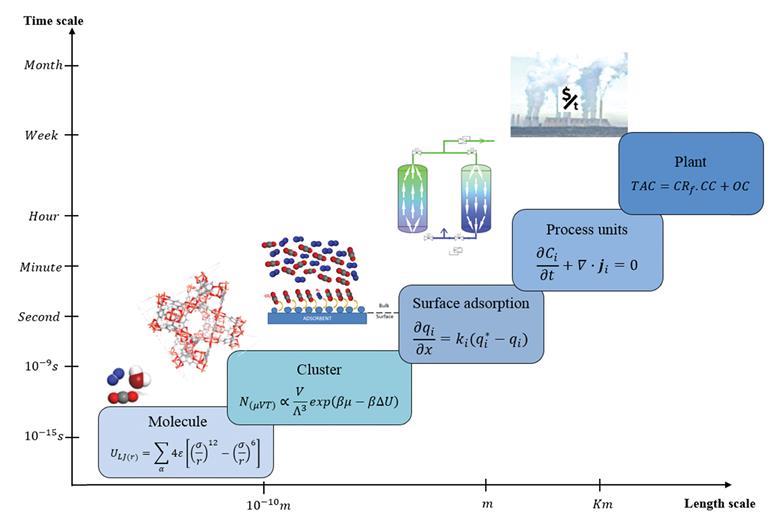
Researchers in the United Arab Emirates have developed and validated a tool for assessing the potential performance and economic viability of newly developed adsorbents for post-combustion CO2 capture.


The tool, developed by Ahmed Al Hajaj, Lourdes Vega and colleagues at the Khalifa University of Science and Technology, integrates molecular simulations with a dynamic process model. Molecular simulations generate adsorption data on the molecular level for screening materials, while the dynamic process model simultaneously optimises operating conditions and provides a technoeconomic analysis.


Read the rest of the article here: https://www.chemistryworld.com/news/model-performs-reality-check-on-adsorbents-for-carbon-capture/4014695.article

KU Student Interns at Dubai Expo 2020

BSc in Computer Engineering student Mohamed Alzarooni interned with Dubai Expo 2020’s Innovation and Future Technology (IFT) Department, where he was part of the Virtual Expo team responsible for developing the Expo’s virtual experiences. 


Being able to work on the Dubai Expo 2020, also dubbed the “Greatest Show on Earth,” was, as Mohamed put it, life changing.


“I feel immense pride to have been part of the Expo 2020. It is a feeling like no other and I recommend that people be involved with the event whether they are employees, interns, volunteers, or even visitors. This is a once in a lifetime opportunity,” he said.


Mohamed’s nine-week long internship put the skills he has been gaining at KU in software development and testing to good use.


“My role primarily included testing several of those platforms developed for Expo by companies located across the globe. I worked with a team at Expo but also with other teams under different companies on a regular basis,” Mohamed explained.


He took great joy in the project, stating this his most memorable part of his experience was “seeing people’s reactions to the projects I worked on once they were released to the public. Especially the reactions of my friends and family when they tried experiences like that on VirtualExpo.world or saw Augmented Reality elements embedded as part of Expo’s Opening Ceremony.”


His main responsibility during the internship was to verify the functionality of the software applications being developed for Expo. 


He would test and verify that texts and images appeared properly in apps and checked that different features agreed with specific constraints. 


One app that he worked on extensively, called Expo Xplorer, is now available to download for both iOS and Android. Expo Xplorer is an app that features a 3-dimensional recreation of the Expo site that users can explore and play around with from anywhere in the world.


This internship was a game-changer for Mohamed, who is now rethinking his plans for the future. 


“My experience made me realize that I am capable of more than I initially thought possible. I simply need to challenge myself.”


Erica Solomon
Senior Publication Specialist
4 November 2021