
Planning in the Age of Pandemics: Renewing Suburban Design

Researchers from Khalifa University show how suburbs can be redesigned for better pedestrian accessibility, a crucial factor in pandemic-proofing a neighborhood. 


Covid-19 was not the first pandemic to force changes in how we live: Communicable diseases have transformed urban planning before.


The Black Death outbreak in 14th-century Europe saw narrow public squares transformed into larger public spaces better integrated with nature. The cholera outbreak in 19th-century London prompted improvements to water-management infrastructure. And during the Spanish flu, residents eschewed cramped public transport in favor of walking in uncrowded streets.


Many of the practices in architectural and urban design prevalent now evolved from similar measures taken throughout history to safeguard the health, hygiene, and comfort of city dwellers. Now, researchers from Khalifa University are turning their attention to suburbia.


The team comprised Dr. Khaled Alawadi, Associate Professor in the Department of Civil Infrastructure and Environmental Engineering, Asim Khanal, Research Assistant, and Abdallah Mouselly and Abrar Bashar Aletaywi, MSc students in the Sustainable Critical Infrastructure program. They present a scientific, evidence-based approach to physical planning and show that accessibility and walkability are crucial aspects for pandemic-proofing neighborhoods. Their findings, published in Sustainable Cities and Society, show suburbs can be redesigned for better pedestrian accessibility if the right combination of structure and design is achieved.


“We explored accessibility in the neighborhoods of Abu Dhabi and Dubai to draw tangible lessons for designing future neighborhoods to be more pandemic-resilient,” Dr. Alawadi said. “The undesirable prospect of lockdowns in the future due to other pandemics cannot be denied. During the pandemic, people experienced a greater need for open spaces and easily accessed outdoor areas.


“Cities have to learn how to balance the competing demands of social distancing, preserving the economy, and promoting people’s wellbeing. These demands reduced interest in densification and we argue that suburban design in the post-pandemic era should facilitate a balanced density level that is higher than the suburban norm but lower than that of traditional compact cities. Finding this balance is necessary to maintain the difficult balance between environmental concerns and human well-being.”


Despite the vast majority of the population continuing to reside in suburbs, retrofitting efforts to promote walkability and transit-oriented development are mostly limited to city centers. In GCC countries and the UAE in particular, suburbanization is the dominant development trend: suburbs occupy more than 50 percent of Abu Dhabi’s urbanized land and 40 percent of Dubai’s urban area.


“Many urban-planning scholars and practitioners have criticized suburbs and lamented the tendency of cities to expand outward from the old core,” Dr. Alawadi said. “In most cases, traditional city centers are known for their organic, compact and human-scale design. They are more sustainable: a compact design saves land resources, reduces the need for vehicles and thereby carbon emissions, improves walkability and promotes public health. In contrast, suburbs are spread-out, isolated patches of development where walking is uncommon and a private vehicle is necessary. The process of suburbanization continues and is shaping cities all around the world.”


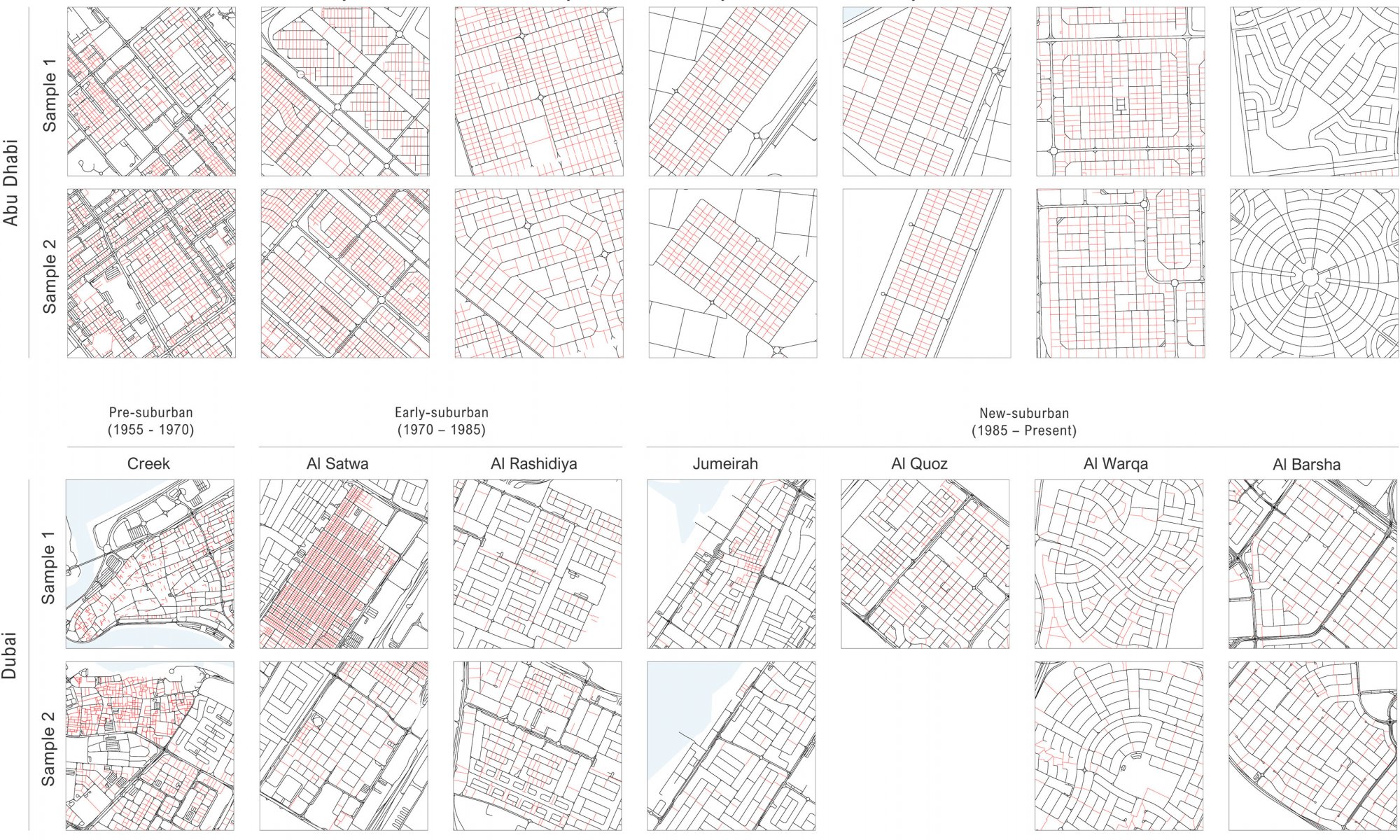
Because suburbs are likely to continue to be the primary features of urban development, the KU research team argues that suburban design should be rethought, instead of vilified, discarded or ignored. Their work presents a more thorough and scientific approach to physical planning and integrates morphological mapping, urban network analysis, and forgotten urban-form elements such as alleys into designing future suburban areas. They focused on neighborhoods in Abu Dhabi and Dubai, examining the structural and physical layouts of both cities, which resemble neighborhood typologies common in Western cities.


“The urbanization and suburbanization trends, along with the resulting development of different neighborhood forms in the UAE, were imported from Western countries,” Dr. Alawadi said. “Both cities have a history of inviting and hiring consulting firms and foreign architects who were all trained in Western countries. The grids and fragmented layouts that comprise the diverse set of neighborhoods in Abu Dhabi and Dubai are the same applied in city planning around the world.”


The need to rethink suburban design stemmed from the need to confront climate change, long before the emergence of the novel coronavirus. Suburbs have been harshly criticized for their social, economic, and environmental impact, and in terms of physical planning ideals, one of the key criticisms is low pedestrian accessibility.


Detached, single-family housing — the primary form of the suburban landscape all over the world — has either been glorified as the icon of the American dream of vilified as a deplorable built environment, but the KU team argues suburbia should not be visualized as sprawling low-density settlements only.


“The potential to design suburbs in various forms and levels of density cannot be overlooked,” Dr. Alawadi said. “For example, new suburbs can be designed to feature interconnected street systems rather than fragmented and broken street networks. Accessibility plays a vital role in good urban form. Residents are more likely to walk or cycle when their local area is more accessible and the distance between origins and destinations is shorter.”


Accessibility and mobility go hand in hand: Mobility can be defined simply as how far you can go in a given amount of time, whereas accessibility is how easily one can get there. Research shows that, at neighborhood scale, accessibility has a significant influence on urban living, spatial equity, public health, and walkability.


The Multiple Centrality Assessment is a tool used to both visually and mathematically understand accessibility in different neighborhood shapes and structures. It computes accessibility at a local scale, and its values represent the number of reachable destinations within a certain search radius. For the KU team’s investigation, accessibility is defined as the ability to reach as many destinations as possible with walkable radii of 400m and 800m, considering two network scenarios: streets and streets with alleys. They also consider accessibility as the ability to walk to any destination by any route, looking at the accessibility efficiency of the entire system and the various walking purposes: health and fitness, mental and psychological needs, leisure, and utilitarian.


When comparing Abu Dhabi with Dubai, the researchers found that Dubai is more accessible overall but particularly when its network of alleys throughout its streets is considered. These results suggest that better accessibility can be achieved by linking street networks with alleys between buildings. The grid system much of the UAE is built on may not create highly accessible environments by itself, but strategic alley placement can enhance accessibility.  


“Walking within neighborhoods for recreational, fitness, and utilitarian purposes is indispensable in a post-pandemic world,” Dr. Alawadi said. “The Covid-19 pandemic revived old debates in urban planning but there is an almost unanimous consensus regarding the need for walkable neighborhoods in post-pandemic cities. People want easy access to outdoor spaces, public parks and other destinations to meet their daily needs. Redesigned suburbs with more suitable infrastructure for local accessibility have the potential to serve as a viable housing option for the post-pandemic world.”


Jade Sterling
Science Writer
16 November 2022
Khalifa University Co-Sponsors 15th Edition of IEEE International Symposium on Robotic and Sensors Environments in Abu Dhabi

ROSE 2022 Also Coincides with Khalifa University-IEEE Robotics and Automation Society’s Exhibition and Conference  


Khalifa University announced a number of oral presentations are shortlisted by the organizing committee for the hybrid 15th edition of the IEEE International Symposium on Robotic and Sensors Environments (ROSE).


Khalifa University is the technical co-sponsor of IEEE ROSE 2022 that will be held from 14-15 November 2022. The ROSE 2022 Symposium will also coincide with the Khalifa University-IEEE Robotics and Automation Society’s (KU-IEEE RAS) exhibition and conference, which will be organized under the theme of ‘Robotics and Industrial Automation’. A set of workshops on Marine Robotics Surveillance, Women in Engineering, and AI and The Future Of Engineering Education will be part of the KU-IEEE RAS event.


Dr. Arif Sultan Al Hammadi, Executive Vice-President, Khalifa University, said: “We are delighted to co-sponsor IEEE ROSE 2022 and bring the 15th edition to Abu Dhabi and the UAE to highlight the evolving technologies in robotics and industrial automation and their importance in a digital world. The exhibition and conference organized simultaneously by KU-IEEE RAS is another great opportunity for the industry to showcase specialized robots and technical capabilities to participants, visitors, guests, and the general audience.”


The focus of the ROSE 2022 Symposium series is on sensing systems and technologies for robotics and industrial automation, as well as their impact on autonomous robotics and intelligent systems development and applications. Paper and poster presentations will focus on all aspects of Sensing Systems and Technologies for Robotics and Industrial Automation, Human-Robot Cooperation, Multimodal Sensing, and Perception Technologies.


Among the two keynotes, Dr. Sami Haddadin, Professor and Chair of Robotics and Systems Intelligence, Technical University of Munich (TUM), and the founding and executive director of the Munich Institute of Robotics and Machine Intelligence (MIRMI), will deliver an address titled ‘Tactile Robots: Building the Machine and Learning the Self’. The second keynote titled ‘Learning Autonomous Vision-based Flight’ will  be offered by Dr. Davide Scaramuzza, founder and director of the Robotics and Perception Group, and Professor of Robotics and Perception, at both departments of Informatics (University of Zurich) and Neuroinformatics (University of Zurich and ETH Zurich).


At the same time, a sizable number of local and regional industrial and academic partners have already registered for participation in the KU-IEEE RAS exhibition and conference. The event will be a platform for networking, sharing knowledge and creating opportunities for future collaboration in research, development and potential startups.


Clarence Michael
English Editor Specialist
13 November 2022

Nature-inspired Membranes for Organic Solvent Nanofiltration

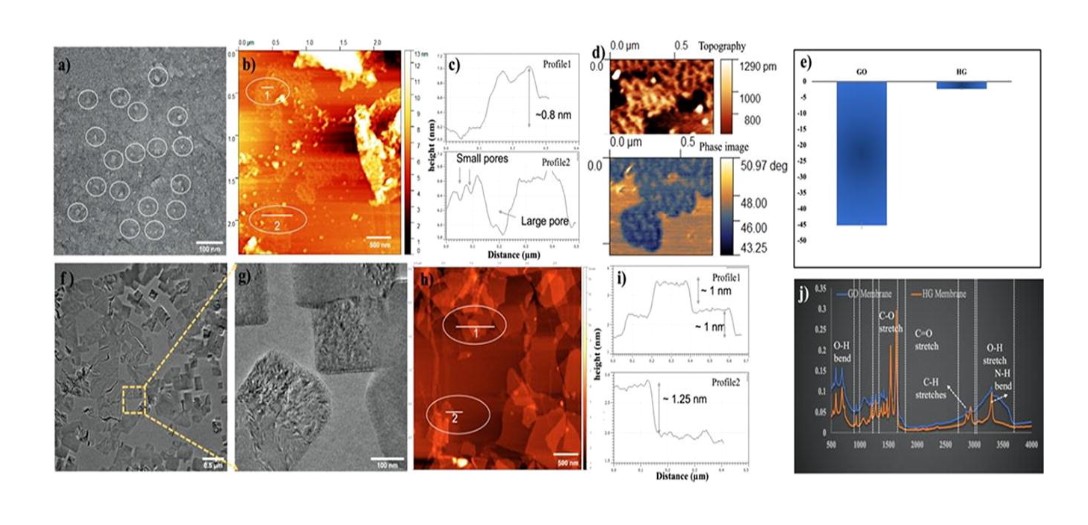
Membrane-based organic solvent nanofiltration could save up to 90 percent of the energy required to reuse solvents in various industries. A team of researchers from Khalifa University’s Center for Membranes and Advanced Technology has developed a new nature-inspired membrane for this technique using holey graphene. 


The broad spectrum of solvents with differing chemical and physical properties means there are myriad applications for their use. These solvents, for instance, are used in up to 90 percent of the processes used in the pharmaceutical industry. However, recovering these solvents for re-use typically requires energy-intensive processes.


Membrane-based organic solvent nanofiltration-separation techniques, however, could save up to 90 percent of this energy required, according to a team of researchers from Khalifa University’s Center for Membranes and Advanced Water Technology (CMAT).


Dr. Shadi Hasan, Associate Professor and Director of CMAT, Prof. Fawzi Banat, Professor of Chemical Engineering, Yazan Ibrahim, Research Engineer, Dr. Cyril Aubry, Dr. Parashuram Kallem, Postdoctoral Fellow, Mariam Ouda, PhD candidate, and Dr. Hanaa Hegab, Postdoctoral Fellow, developed an innovative next-generation two-dimensional membrane using holey graphene for solvent separation. They published their results in Chemical Engineering Journal.


“Compared to distillation and common evaporation techniques for organic solvent separation, membrane-based nanofiltration could save up to 90 percent of the required energy,” Dr. Hasan said. “The material required for such a membrane is critical: It should perfectly operate and maintain prolonged stability when used with harsh organic solvents during the separation process. In addition, this membrane should display high efficiency and precise selective capacity for small molecules at the nanoscale.”


The research team used perforated, or holey, graphene with silicon dioxide nanoparticles to develop the membrane. In its purest form, graphene offers plenty of applications. However, in recent years, the nanoscale perforation of 2D materials has emerged as an effective strategy to enhance and widen the applications of the material beyond its pristine form.


Porous, or holey, graphene is a form of graphene with nanopores in its plane. The performance of the material is affected by the pore size, density, shape, and volume. Usually, uniform pore shape and size distribution is optimal as it leads to enhanced thermal, mechanical, and electrical properties. These pores are perfect for adsorption, where target molecules collect and attach to the surface of the pores. These features are all tunable too.


“Graphene membranes are already widely used in water treatment and organic-solvent nanofiltration processes because of their unique selective capacity, which can be governed by the tight interlayer 2D spacing among nanosheets,” Dr. Hasan said. “However, the pristine membrane without any chemical or structural modifications exhibits low permeation of organic solvents. Holey graphene can be produced with intentionally nanoscale holes to improve permeability while maintaining membrane selectivity for different applications.”


Using holey graphene also helps avoid other drawbacks seen with graphene and graphene oxide nanosheets: graphene oxide laminates suffer from swelling upon exposure to organic solvents, which reduces pore size and deteriorates the membrane selectivity.


“The limitation of the selectivity versus permeability trade-off in various membrane types, including graphene-based ones, remains a critical challenge in addressing practical applications,” Dr. Hasan said. “Studying the unique structures of microorganisms and their inimitable functions can lead to out-of-the-box solutions to real-world problems.”


There are biological membranes with high selectivity toward small ions and molecules, which can be attributed to fine-tuned multifunctional hierarchical nanochannels in their cellular membranes. These channels are known as aquaporins and they are a key component in biological membranes for boosting water permeability.


“The unique channel feature of aquaporin has inspired researchers to innovate a new generation of superior membranes,” Dr. Hasan said. “The protein molecules of aquaporin channels have alternative arrangements, including a hydrophilic region to guarantee high water permeability and a hydrophobic domain to enhance ion selectivity. Mimicking these unique features to develop a membrane with intentionally spaced interlayers and decorated with multifunctional groups will help tackle the crucial permeability/selectivity trade-off.”


The CMAT researchers designed a novel and facile strategy to fabricate aquaporin-like multifunctionalized membranes for efficient organic solvent nanofiltration. The interactions between the silicon dioxide groups and the holey graphene created a unique alternative 2D-spacing structure of nanoparticles, which allows high permeability and also high selectivity.


Their membrane design offers great potential for improving practical organic solvent nanofiltration in food, pharmaceutical, and other industrial separation applications. 


Jade Sterling
Science Writer
15 November 2022

New Catalyst Turns Carbon Dioxide into Rocket Fuel

A simple and straightforward method can be used to develop catalysts for the chemical process that turns carbon dioxide emissions into high-energy-density fuels. Nickel nanoparticles and cerium(IV) oxide combine to make a catalyst more than 50 percent more effective than already existing catalysts. 


A team of researchers including Dr. Aasif Dabbawala, Prof. Kyriaki Polychronpoulou and Aseel Hussein from Khalifa University’s Center for Catalysis and Separations (CeCaS) has developed a new catalyst for transforming carbon dioxide emissions into fuels that could be used for space travel and Mars exploration missions.


The CeCaS team collaborated with researchers from University College London, Cyprus University of Technology, the University of Surrey, University of Western Macedonia, Greece, and Universidad de Zaragoza, Spain. Their results were published in Applied Catalysis B: Environmental.


“Following the industrial revolution, the sharp increase in anthropogenic carbon dioxide emissions has caused a great spike in its concentration in the atmosphere,” Prof. Polychronopoulou said. “Capturing and converting part of this emitted CO2 towards value-added products aims to mitigate the adverse effects of climate change, while transitioning towards a net-zero economy. CeCaS has a very diverse portfolio of technologies under development for decarbonization.”


One such value-added product is the development of high-energy-density fuels such as methane and jet fuel. Captured carbon dioxide can be converted via hydrogenation into these fuels, circumventing problems related with the storage and transportation of hydrogen, since hydrogen has a very low volumetric energy density. Transforming CO2 into methane (methanation) has also been indicated as potentially useful for Mars exploration missions, since abundant CO2 from the Martian atmosphere could be used to generate fuel for methane-powered rocket engines.


The catalysts used to power this methanation reaction typically use nickel, ruthenium, or rhodium, but nickel-based catalysts are much more likely to be used due to their high activity and lower cost. Beyond the material used, however, the structure of the catalyst itself is vital in producing the most effective catalyst for methanation. The support structure can provide the active sites for the adsorption and activation of the carbon dioxide and enhance the dispersion of the nickel nanoparticles.  


Cerium(IV) oxide (CeO2) is a metal oxide often used as an oxidant and catalyst in chemical processes.


“Nickel-based CeO2 catalysts are reported in numerous studies to be greatly superior to nickel catalysts supported on other metal oxides, especially in relation to low-temperature activity and methane selectivity,” Prof. Polychronopoulou said.


The chemical bond between the oxygen and the cerium is easily broken, which promotes the adsorption of the carbon dioxide into the active sites and enhances the conversion and removal of the reaction intermediates. This makes the methanation process more efficient.


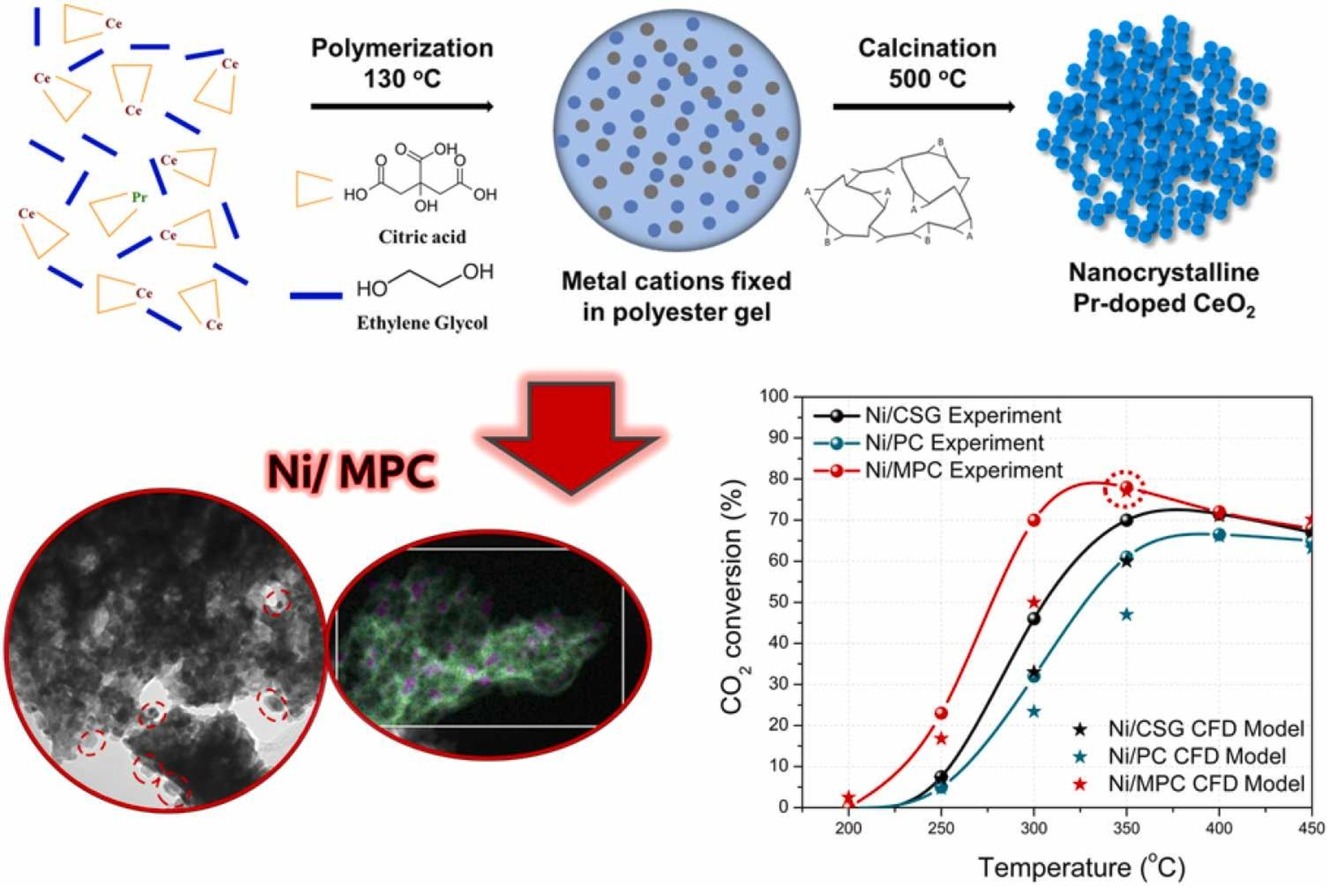
Adding small amounts of praseodymium (Pr) to the nickel-based CeO2 catalyst can also enhance the methanation process. The research team developed their catalyst using Pr-doped CeO2 and nickel nanoparticles. A wide spread of the nickel nanoparticles translates to a more efficient catalyst, which the research team achieved using a modified synthesis technique.


“Another important factor that needs consideration is the architecture or nanostructure of the CeO2-based support,” Prof. Polychronopoulou added. “Surface defect chemistry and the available surface area are just as important as the nickel dispersion and mean size of the supported nickel nanoparticles in affecting the catalytic activity.”


An effective catalyst needs lots of activation sites — pores in the structure where the carbon dioxide can collect and adsorb for the methanation process to occur. The team used a modified sol-gel-type synthesis process to create the porous architecture in the Pr-doped CeO2 supports. The sol-gel process is a method for producing solid materials from small molecules, used for the fabrication of metal oxides. In this case, the CeO2. They then deposited the nickel nanoparticles onto the supports.


“Using ethylene glycol in the absence of water during our modified synthesis process led to a metal oxide support with larger pore size and volume, which was conducive to the deposition of medium-sized nickel nanoparticles into the nanoporous structure,” Prof. Polychronopoulou said. “The high nickel dispersion and availability of surface defects and basic sites greatly improved the catalyst’s activity.”


The research team saw a 50 percent increase in carbon dioxide conversion at 300C, compared with other catalysts. They conclude that the catalyst nanostructure and active metal dispersion play a crucial role toward the design of carbon dioxide methanation catalysts. Theirs is a simple and straightforward method to produce metal oxide supports with tailored nanopore structures, which allows the production of highly active catalysts. 


Jade Sterling
Science Writer
15 November 2022

Geological Records Indicate Wildfires Contributed to the End of the Triassic Period

Examining the molecules left in the geological sediments of northern Italy indicates that wildfires caused by volcanic activity may have contributed to the end-Triassic mass extinction event. 


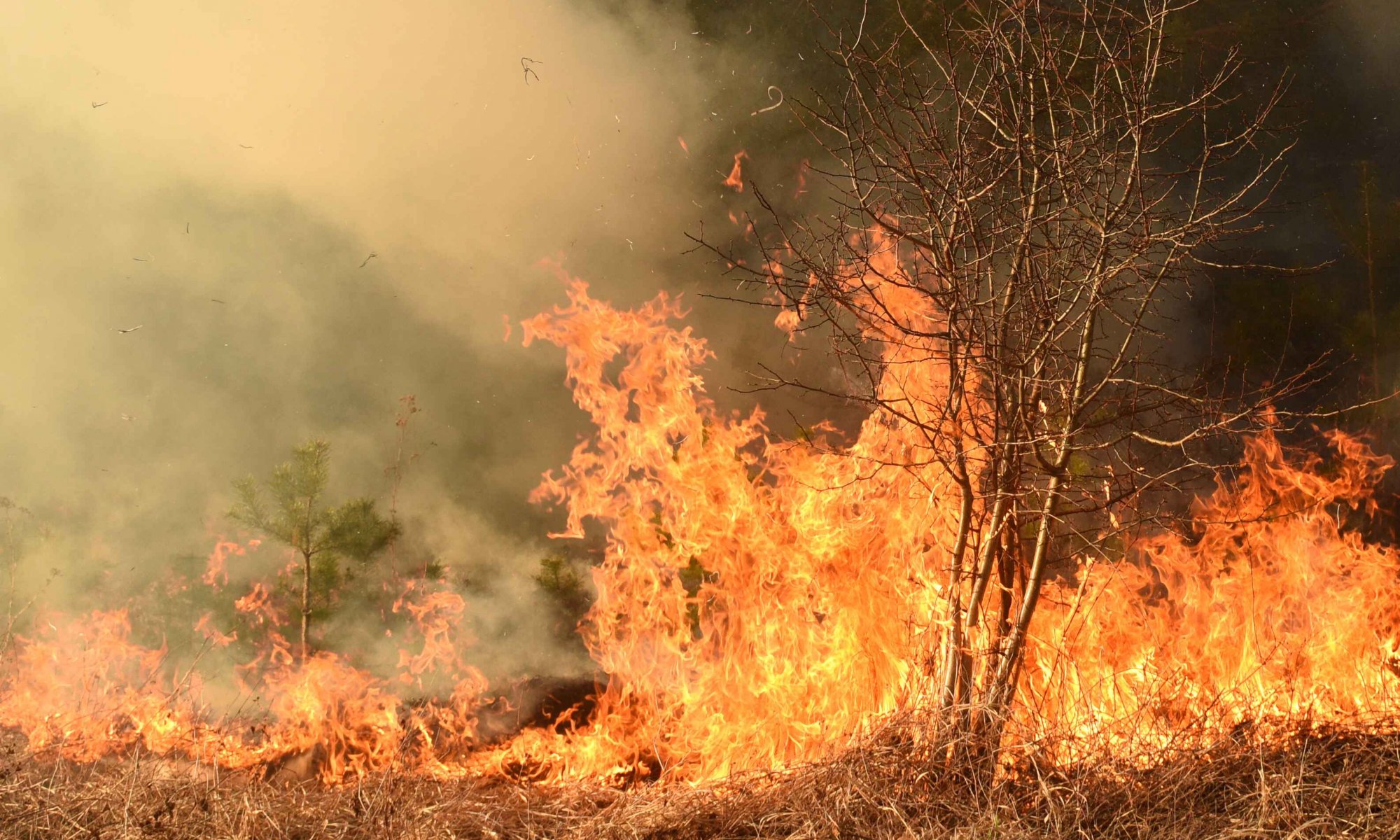
Researchers from Khalifa University have examined geological sediments in northern Italy to better understand the wildfire events that occurred at the start of one of Earth’s major extinction events. Dr. Calum Fox, Postdoctoral Fellow, and Dr. Aisha Al Suwaidi, Associate Professor, collaborated with researchers from Curtin University and Universita degli Studi di Padova, Italy, to use records of molecules left behind from wildfire to report the best evidence so far of wildfire activity at the end of the Triassic Period. The researchers found an intense and short-lived wildfire event that linked terrestrial and marine ecosystem stress that precipitated the extinction event.


They published their results in Global and Planetary Change.


Earth’s history is punctuated by major extinction events. One such period, bookended by extinctions, is the Triassic Period: the age of the rise of the dinosaurs.


The Triassic Period (252-201 million years ago) began after one such extinction event and ended with another, with elements of climate change that also occur today. By the end of the Triassic Period, sea levels were rising and the oceans became more acidic, which contributed to dramatic extinctions in the oceans.


 “The end-Triassic mass extinction event was driven by a massive input of carbon dioxide and other harmful volatiles from Earth’s most extensive volcano networks at the time,” Dr. Fox said. “Although still not completely understood, there’s evidence to suggest that combinations of acidification and anoxia are important mechanisms of marine extinction. By contrast, the mechanisms responsible for the loss of life on land have received much less attention than those for the marine extinction at the end of the Triassic Period.”


Known as the Central Atlantic Magmatic Province (CAMP), the area that is now the Atlantic Ocean experienced mass volcanic activity that doubled or even tripled the amount of paleoatmospheric carbon dioxide at the time. This is expected to have led to “a series of cascading environmental catastrophes” resulting in the end-Triassic mass extinction event (ETE).


Recent research has determined that these volcanic eruptions occurred at the start of the extinction period, but the CAMP is also expected to have driven intensive wildfire activity at the end of this period.


Wildfires are evidenced by polycyclic aromatic hydrocarbons (PAH), a class of chemicals that occurs naturally in coal and oil deposits. They result from burning organic matter, such as in forest fires.


High levels of PAH were found in rocks dating from the end of the Cretaceous Period, the geological period following the Jurassic, likely from the mass extinction event that wiped out the dinosaurs. More than 100 times the level of PAH was found in rocks from this time frame, compared with other periods, with this spike attributed to massive fires that consumed about 20 percent of the terrestrial biomass in a very short time.


“Increases in PAHs that can form from incomplete combustion are commonly used as evidence of wildfire activity across the end-Triassic mass extinction event and other periods of volcanic activity-driven global warming,” Dr. Fox said. “However, these PAHs can have other sources and also represent processes unrelated to fire events, including volcanic and hydrothermal vent activities, meteorites and soil erosion.”


To better determine the wildfire and soil erosion records from the ETE, the research team investigated the low molecular-weight (LMW) and high molecular-weight (HMW) PAH compounds found in the Lombardy Basin in northern Italy. They compared their findings to PAH records reported from globally dispersed sites. 


“LMW PAHs are attributed to processors other than fire, such as soil erosion and markers of ecosystem collapse that are crucial to better understanding ETE ecological perturbations,” Dr. Fox said. “PAHs with a heavier molecular weight are frequently attributed to wildfire events but are not exclusively derived from combustion. However, we interpret the abundance of HMW compared to LMW PAH to represent the intensity of wildfire burning, due to higher temperature fire events producing greater quantities of PAHs. High abundances of these PAHs could indicate that higher intensity burn events occurred close to where the PAHs were found.”


By examining the different sizes of PAH molecules, the researchers determined that the geological record in the Lombardy Basin supports a short-lived but more intense wildfire event at the time thought to represent the onset of the extinction event. Further analysis comparing the Lombardy record to global records also shows evidence of intense wildfire activity at this time.


“This provides evidence of likely CAMP-driven widespread wildfire activity across multiple basins surrounding the time of the end-Triassic mass extinction event that were important for terrestrial ecosystem perturbations, but such studies require further investigations to determine the full fire history of the ETE,” Dr. Fox said.


There’s a lot of history between the end of the Triassic Period 201 million years ago and the 21st century experience of climate change but similarities exist. Insights to the causes of past major extinction events can help understand the current issues facing modern ecosystems and environments. As carbon dioxide levels continue to increase, understanding the geological events of history will help predict what climate changes we can expect in the future. 


Jade Sterling
Science Writer
15 November 2022

A New Organ-on-a-Chip Device to Accurately Model Human Cells

The new e-transmembrane platform supports and monitors complex 3D cell architectures and could be a universal resource to conduct next-generation drug-screening assays.


Re-creating the human body in a Petri dish isn’t exactly straightforward. In vitro methods are used to study bacterial, animal, or human cells in culture, isolating specific cells and structures to provide a controlled environment for an experiment. The key challenge for cell-based in vitro models is to mimic, as accurately as possible, the state of the actual biological system being studied.


In a new study, Dr. Charalampos Pitsalidis, Assistant Professor of Physics at Khalifa University, describes the development of a new bioelectronic platform to support and monitor complex 3D cell architectures. In collaboration with researchers from the University of Cambridge, Dr. Pitsalidis created an organ-on-a-chip device to better mimic human tissues and organs for a more in-depth understanding of how the cells interact with potential drug candidates.


The results were published in Science Advances.


“Current understanding of the growth, function, and homeostasis of cell and tissues mainly arises from two-dimensional (2D) cell-based assays using cell monolayers cultured on flat, rigid surfaces,” Dr. Pitsalidis explained. “While such assays have been applied for both fundamental research and toxicology screening, they cannot re-create the complex 3D microenvironment found in vivo.”


This re-creation is made possible using micro-engineered scaffolds to function as membranes, upon which the cells can build their tissue structures. These membranes also act as separators to compartmentalize and spatially organize multicellular cultures.


Integrating electrical components allows for the real-time recording of cell growth and function, offering an opportunity to noninvasively interface with these biological models for more accurate and quantifiable information.


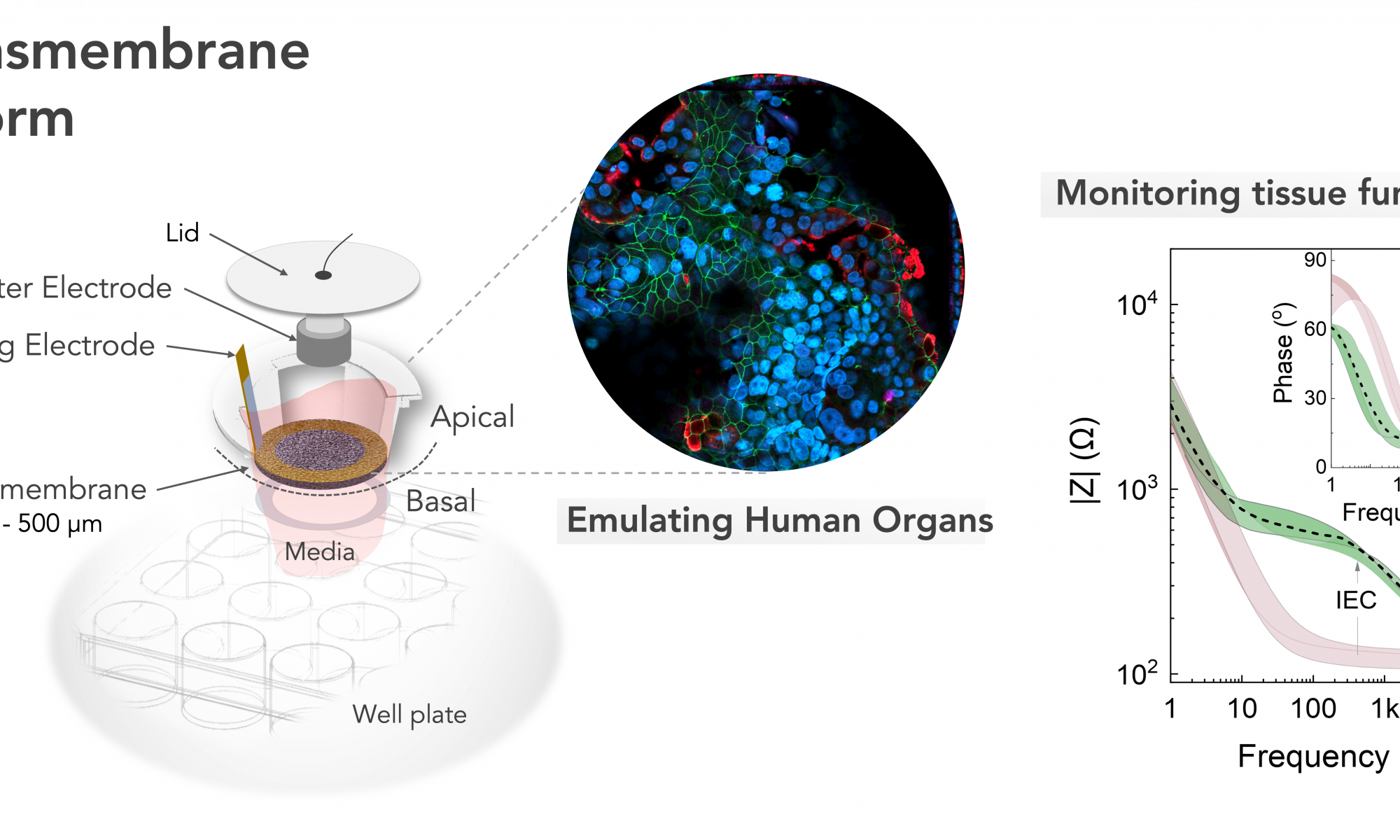
The research team named their scaffolding platform the e-transmembrane. It is capable of supporting and monitoring complex 3D cell architectures and has the potential to become a universal tool for biologists for the next generation of high-throughput drug-screening assays.


“Using the e-transmembrane platform, we can generate high-complexity cellular constructs and monitor cell growth and tissue functionality,” Dr. Pitsalidis said. “It combines tissue engineering approaches with electronic components; the first promotes the development of cells in a 3D space, while the second allows for electrical monitoring of tissue functional properties. The e-transmembrane can be directly applied in the development of biologically relevant 3D cell models of various organs or disease states.”


Bioelectronics are anticipated to play a major role in the transition away from animal studies, offering a much needed technology to push forward the drug-discovery paradigm. The e-transmembrane device is compatible with well plate models, which represent the current standard for culturing cells in the lab, meaning it can be quickly and easily integrated into existing laboratory facilities and set-ups.


The scaffolding material used is a further advantage. Most scaffolds used for 3D cell cultures are based on natural polymers, including collagen, or synthetic polymers. Although these scaffolds support the 3D architecture, they present imaging challenges, making it difficult to evaluate the interactions with the cells. Using electroactive scaffolds based on mixed ionic-electronic conductor materials aids the development of bioelectronic devices that can more seamlessly integrate with complex biological systems and offers more effective signal transduction of biological events.


Additionally, while conventional rigid plastic membranes are limited to variations in the pore size and thickness, the e-transmembrane can be engineered for purpose by tailoring the biochemistry, porosity, conductivity, and stiffness.


The team tested the e-transmembrane platform by developing a 3D human intestine model and using the electrical components to detect breaches in the intestinal barrier. In certain conditions, the cellular network is compromised, which leads to breaks in the cell-barrier integrity. This can be identified by a decrease in the trans-tissue resistance as monitored by electrochemical impedance spectroscopy measurements.


Dr. Pitsalidis said. “In contrast to other in vitro biochips, e-transmembrane offers a simple approach to generate and simultaneously measure 3D cell cultures as a more accurate mimic of human physiology.”


The team plans to further their work by concentrating on expanding the repertoire of tissues modeled on the e-transmembrane to lung, blood-brain barrier, esophagus and vaginal epithelia for a host of drug-discovery and disease-modeling applications. 


Jade Sterling
Science Writer
15 November 2022

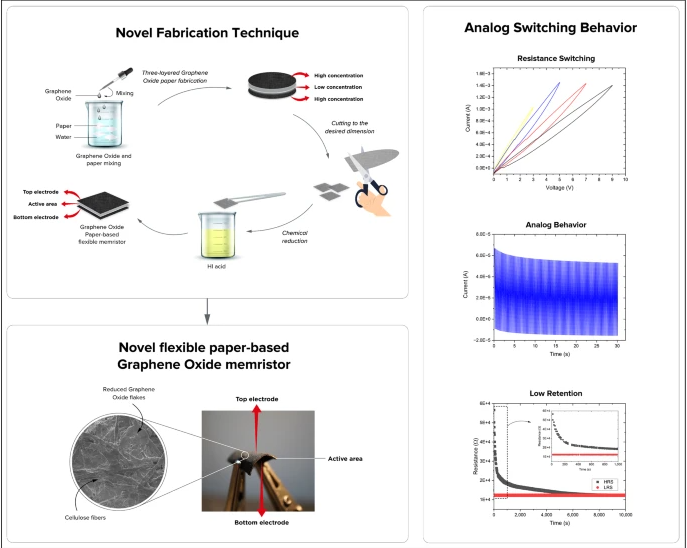
Paper and Graphene Oxide Combine to Make Novel Flexible and Biodegradable Memristors

Electrical components made from paper and graphene oxide could mark the next breakthrough in flexible wearable electronics for a wide range of applications 


Researchers from Khalifa University’s System-on-Chip Laboratory (SoCL) have developed a flexible memristor device using cellulose and graphene oxide that has the potential to revolutionize wearable electronics. It is low-cost, flexible, biocompatible and conveniently disposable. They published their original work in MRS Bulletin and a further study testing their material for ultraviolet and sunlight monitoring in Nanoscale Research Letters.


The team included Dr. Anas Alazzam, Associate Professor of Mechanical Engineering, Dr. Nahla Alamoodi, Assistant Professor of Chemical Engineering, Prof. Baker Mohammad, Director of the SoCL, Dr. Heba Abunahla, Research Scientist, Ahmed Abusultan and Ahmad Chaim, MSc students.


In principle, a memristor device is composed of a metal oxide sandwiched between two electrodes. It has the ability to change its resistance under the application of an applied voltage. As the name implies, the memristor can remember its last written state, even if the power is turned off, which offers great potential for use as a solid-state computer memory device.


Unlike traditional solid-state storage technologies, memristors require less energy to operate, last longer, and store at least twice as much data. They use architectures that allow them to perform in-memory computing, which solves a traditional computing problem of needing to move data from memory to the processing unit before performing computing functions.


Now, the material and fabrication approach employed by the research team makes memristors metal-free and even more flexible. The material developed offers physical flexibility and is made of carbon and oxygen. The research team developed a three-layer paper memristor device, named PrMem, using a novel low-cost fabrication technique. All three layers — the top electrode, active layer, and bottom electrode — are made of the same materials, cellulose and reduced graphene oxide, but with different concentrations.


Because the device is made entirely of cellulose, the structural component of plants that is used to produce paper, it is hydrophilic, which means that liquids may flow freely through its porous structure. This simple capillary action eliminates the need for additional mechanical pumping structures, making PrMem a promising candidate for a variety of applications, Dr. Alazzam said.


Graphene is already widely used in a range of applications for its outstanding features. It is flexible, low-cost and adaptable for many applications. The flexibility allows the PrMem device to be integrated into electronics that are built on flexible surfaces for applications such as smart wearable devices, where flexible sensing is vital.


One such application is monitoring ultraviolet (UV) light and solar exposure.


“Sunlight, namely UV light, is the principle source of vitamin D for the human body,” Dr. Alazzam said. “However, overexposure has been linked to the development of various diseases. Continuous monitoring of UV exposure at the individual level is critical to ensuring that exposure is managed safely and effectively.”


Existing monitoring devices use photochromic and photoelectric sensors. Photoelectric sensors use a wide bandgap semiconductor integrated within an electric circuit that absorbs and measures UV radiation within a specific bandwidth. Photochromic sensors change color in response to UV emission without requiring any electrical input.


The SoCL research team, with Ahmed Abusultan, MSc student, and Dr. Yasmin Halawani, Postdoctoral Fellow, developed a sensor using their memristor material.


“The sensor is entirely composed of paper and is photosensitive due to the incorporation of graphene oxide in the structure of the paper,” Dr. Alamoodi said. “It can be worn on the body as a patch, and sunlight or UV exposure can be estimated by observing the color change in the patch after being exposed to sunlight. A UV monitoring sensor with an artificial intelligence application that is compatible with mobile devices is used to estimate sunlight exposure by analyzing color changes and correlating them to exposure energies. Graphene oxide has ‘exposure memory’ as a result of the reduction process, which means that changes in its chemical and physical properties are permanent. This memory aids in tracking UV or solar radiation exposure and enables offline measurements at any time after exposure is complete.” 


Jade Sterling
Science Writer
15 November 2022

New Device to Identify Early Damage from Chemotherapy Treatments

The new device uses terahertz spectroscopy to identify biological compounds in the body that arise as a result of organ damage by chemotherapy drugs. Early identification of these compounds, known as nitriles, can help prevent significant harm to the patient as they undergo chemotherapy treatment for a range of cancers. 


A team of researchers, including Khalifa University’s Mauro Pereira, Professor of Physics, has developed a device that could detect damage to a patient’s kidneys at the very onset of chemotherapy treatment, four to six months before it would be clinically diagnosed.


The team included researchers from Lobachevsky State University, Russia, the Institute for Physics of Microstructures, Russia, the University of Montpellier and the Czech Academy of Sciences. Their results were published in Scientific Reports.


Platinum-based chemotherapy is used to treat a variety of cancers, such as lung, breast, ovarian, and colon. Platinum compounds damage the DNA of cancer cells, preventing them from multiplying. But in some cases, there are serious side effects for the patient.


All cytotoxic chemotherapy drugs, including platinum-based drugs, may induce a range of severe side effects due to their poor selectivity for cancerous tissue over normal tissue. The drugs are known to cause kidney damage — nephrotoxicity — and liver damage — hepatotoxicity. Terahertz (THz) photonics may help deal in the early identification of this damage.


Terahertz photonics is developing quickly thanks to the increasing availability of new materials, sources, and detectors, Prof. Pereira said. “We focused on what may become one of its more impactful applications: metabolomics, the systematic study of the chemical compounds (metabolites) that stem from cell metabolism.”


Metabolites and their concentrations are directly connected to the underlying biochemical activity and state of cells, tissues, and organs, providing an opportunity for the development of new diagnostic techniques. In particular, analyzing the chemical composition of exhaled breath and biological liquids (blood, saliva, urine) can provide important information about diseases and pathological processes.


The research team identified a set of nitriles that either appeared after chemotherapy or increased in content as a result of bio-chemical damage to the liver following platinum-based chemotherapy. It’s not possible to detect damage to the body immediately post-treatment using existing clinical methods, but the identified nitriles are candidates for further large-scale systematic testing toward markers for nephrotoxicity at an early stage of the treatment.


Using THz photonics, the researchers can track the damage caused to the liver and kidneys during cancer treatment by monitoring the levels of these nitriles in patients’ urine.


Existing techniques used in clinics are limited to standard laboratory methods, such as biochemical blood tests and clinical urine analysis. However, they reveal only significant organ failure, not the subtle side effects that happen at the start of treatment, which could help medical teams correct the treatment before it escalates to more significant damage.


It’s rare after the initial courses of platinum-based chemotherapy to detect the signs of renal failure, Prof. Pereira said. “As a rule, changes in biochemical parameters appear after four to six courses, or four to six months after the start of the treatment.”


This could be too late to intervene and prevent significant organ failure. The research team built a sensor that can interpret the signs of subtle damage to the kidney tissues immediately after exposure to the chemotherapy drugs and before the appearance of other measurable clinical symptoms.


“We want to determine guidelines to detect the onset of damage before it develops into actual damage to the organ,” Prof. Pereira said.


This is where non-stationary high-resolution THz spectroscopy could help.

This technique can be applied to gases, vapors of liquids, or solid-state samples to determine the biological compounds within.


The central theory of spectroscopy is that light is made of different wavelengths that each have a different frequency. Every molecular compound is characterized has a unique light spectrum described by the frequencies of radiation it emits or absorbs. Researchers can examine a sample to identify the compounds within by identifying the frequencies detected.


“Our devices are game-changers for THz spectroscopy of liquids,” Prof. Pereira said. “They allow for analysis of four different frequency ranges for evaluation of most liquid substances. A spectral interval is analyzed that bypasses the strong absorption lines from substances such as water and ammonia, which may otherwise mask the detection of the target metabolites.”


The research team focused on identifying nitriles, as their presence in urine vapors may arise from the decomposition of a protein found in the body and be an indicator of subclinical renal toxicity, which cannot be detected by standard clinical methods.


“Our goal was to develop a dedicated spectrometer measurement technique and an initial set of candidate markers as a starting point for large-scale studies,” Prof. Pereira said. “Our device is efficient but does rely on complex components, which limits the frequency tuning, increases cost, and reduces output power. There is great potential for improving our device, and our work paves the way for analyzing a plethora of other liquids that, so far, cannot be accessed by existing sources and detectors.”


Jade Sterling
Science Writer
15 November 2022

Predicting Deformations in Aircraft Parts before They’re Even Made

A team of researchers from Khalifa University and STRATA has investigated the ways in which parts manufactured for the aerospace industry may deform during the manufacturing process using simulation tools to predict these deformations before they happen. 


PhD student Mariam Ahmed Al-Dhaheri, Dr. Kamran Khan, Associate Professor of Aerospace Engineering, Dr. Rehan Umer, Associate Professor of Aerospace Engineering, and Prof. Wesley Cantwell, Director of the Advanced Research and Innovation Center (ARIC) and Associate Dean for Research, with Frank van Liempt, STRATA Manufacturing, reached accurate results in predicting the process-induced deformations of composite sandwich structures, with less than five percent error. Their research was funded by Mubadala Aerospace and published in Composite Structures.


A composite material combines various material ingredients to achieve specific structural properties. Polymer-matrix composite (PMC) materials are one such example used in aerospace applications.


PMC materials can enhance performance in an aircraft while reducing weight. Their high strength, stiffness, and toughness combined with low density make them the structural material of choice for aircraft components.


“The use of high-performance polymer-matrix composite materials in the aerospace industry has increased significantly in recent years, due largely to their high strength-to-weight ratio, immunity to corrosion, and excellent fatigue resistance,” Al-Dhaheri said. “They were first used in secondary structures, but more than half of the recent Airbus A350 is made from PMCs, and the Boeing B787 uses PMCs in the nose structure.”


However, PMCs are not immune to faults. One major issue is the potential for process-induced deformations (PIDs) that come from the manufacturing process itself, without any contribution from external factors. In aerospace manufacturing, these PIDs represent a significant concern during the design phase as they can cause difficulties during the final assembly.


“Aerospace composite structures are typically cured in an autoclave at high temperatures and pressures, involving a complex thermochemical cycle that cures the polymer matrix until it reaches a solid state yielding the required mechanical properties,” Al-Dhaheri said. “Although the curing process strengthens the composite structure, it also introduces residual stresses that remain in the structure upon cooling.”


When these parts are removed from the machinery that makes them, the material ‘relaxes’ as it is removed from its strained condition on the tool. This can cause structural deformation. Parts that aren’t quite right will be challenging to assemble, forcing aircraft technicians to apply greater levels of force to make them fit, which could create internal stresses or even damage the overall structure. The parts may even be deemed unsuitable and fail the airworthiness tests.


“Process-induced deformation is one of the main concerns during the manufacturing process of composite aerostructures,” Al-Dhaheri explained. “This is because residual stresses in the manufactured parts cause instability. Ultimately, this could lead to the part being rejected by the customer or even an expensive part being completely scrapped. Predicting these deformations numerically in the early design stages can help ensure conformity with the design and quality requirements.”


PIDs can be compensated for by accounting for these deformations during the design stage, but this is a trial and error approach, which is expensive and inefficient. Alternatively, process modeling or computer simulation approaches can streamline the production process.


“PIDs can be minimized by controlling specific parameters that contribute to the development of residual stresses,” Al-Dhaheri said. “Previous research has studied the effects of these parameters on process-induced deformations, but they haven’t considered composite sandwich structures, mainly the warpage in flat panels and the spring-in of curved structures, which is what our research focused on.”


Residual stresses are the internal stresses that develop during composite part processing. During curing, the materials undergo shrinking, and when cured into curved shapes, the angle between the two curved sides is reduced. This change in the angle is known as ‘spring-in’. Spring-in causes considerable difficulty and expense for composite manufacturers as it can vary with material, cure temperature, structure, and other manufacturing factors. This means that what worked once may not necessarily work the next time. If spring-in from residual stresses could be consistently and easily predicted, the manufacturing process could be tuned for specific part characteristics.


A large proportion of current aerospace composite components are light sandwich structures, where thin composite laminates constitute the ‘bread’, and honeycomb cell walls make up the ‘sandwich filling’. While light and strong, these structures are susceptible to damage and repairing them can be complicated. To date, there is little research into PIDs in sandwich structures, which the KU research team sought to rectify.


They used a simulation tool that can predict the occurrence of process-induced deformations in sandwich structures with a high degree of accuracy. They constructed a 3D finite element model of the composite part and simulates the curing process, as well as the interactions between the manufacturing tool and the part. From their simulations, the research team recommended that an aluminum core and aluminum tools should be used for manufacturing curved structures with reduced PIDs. They also recommended the sandwich design configuration to avoid large deformations in the final cured composite structure, compared to other designs.


While further experimental studies are needed to further validate the simulation findings, this represents a crucial tool to understanding the effects of various parameters on PIDs and improving the design and production process of airworthy composite parts.


Jade Sterling
Science Writer
14 November 2022

Khalifa University and Aerospace and Defense Leader Leonardo to Jointly Offer Certification and Training Programs in English and Arabic

Powered by Leonardo, Khalifa University Cybersecurity Academy Will Also Design Special Initiatives to Meet Needs of UAE Organizations  


Khalifa University of Science and Technology and Leonardo, the Italy-headquartered aerospace, defense, and security multinational, today announced they are joining forces to offer certification and training programs through the Khalifa University Cyber Security Academy, an initiative based on the university’s research excellence and powered by Leonardo’s innovative Cyber-Range platform. 


To be located at Khalifa University’s Main Campus in Abu Dhabi, the Khalifa University Cyber Security Academy will offer complete certification and training programs in English and Arabic, as well as special training initiatives designed to meet the needs of UAE organizations. Research personnel from the Center on Secure Cyber-Physical Systems (C2PS) will be involved in offering advanced cybersecurity training. They will put together their own knowledge of the cybersecurity threats and of the ICT infrastructure specific to the UAE industry, as well as the advanced scenario set-up and high-fidelity attack replication capabilities of the Leonardo Cyber-Range platform, to offer the training. 


The Academy will leverage Leonardo’s expertise in the design and delivery of solutions for the security of digital ecosystems and the resilience of critical assets as well as the recent launch of the Leonardo Cyber & Security Academy based in Italy. This partnership will further enhance Khalifa University’s prime research and academic programs, which already offer highly specialized degrees that can take students all the way to top-rated doctorate degree holders. 


The Khalifa University-Leonardo collaboration includes a train-the-trainers program that will enable young Emirati security professionals to familiarize with the Leonardo platform in Italy before using it to deliver training in the UAE.


“The agreement confirms the great attention that Leonardo and Italy as a whole attach to the United Arab Emirates and to the farsighted vision of its leadership,” said Ambassador of Italy to the UAE Lorenzo Fanara, who took up his duties in Abu Dhabi last month. “Cyber security is a major challenge for both our countries and Italian high-tech companies, such as Leonardo, are willing to do their part to tackle it together successfully by sharing expertise and capabilities”.


Dr. Arif Sultan Al Hammadi, Executive Vice-President, Khalifa University, said: “Khalifa University is delighted to partner with Leonardo, a global high-tech leader in aerospace, defense and security sectors, to support the Khalifa University Cybersecurity Academy and help in capacity building in this vital area. We believe this initiative will not only build human capital but also develop expertise, enabling Emirati professionals to remain well-equipped in cyber security and safeguard the interests of the UAE.” 


“We are honored to have been chosen by Khalifa University as partner of this ambitious project,” said Tommaso Profeta, Managing Director of Leonardo’s Cyber & Security Solutions Division. “This initiative once again confirms Leonardo’s commitment, at both national and supranational level, to the dissemination of a strong security culture, a primary element for the effective protection of critical infrastructure, essential services, citizens and countries.” 


Dr. Ernesto Damiani, C2PS Director, said: “Through the Cyber Academy, Khalifa University and Leonardo will aim to contribute to the National Cybersecurity Center of Excellence ecosystem, helping to improve the UAE’s security while promoting intensive and secure knowledge-sharing within the UAE.” 


At the heart of the recently announced Khalifa University Cybersecurity Academy will be the same proprietary platforms offered by Leonardo in Italy and worldwide, such as the Cyber Range. Designed with the principles of gamification (using mechanisms similar to those of games, with the assignment of objectives and rewards for each achievement), the Cyber Range leverages both virtualization and interoperability to simulate immersive operational scenarios. 


Utilizing “digital twins” of networks, systems and applications to be protected, as well as threats and tools for both attack and defense, both individuals and groups will be able to put into practice the skills acquired to defend the infrastructure. Leonardo’s platforms are able to support exercises with digital twins of thousands of nodes and hundreds of networks, simulating up to five complex scenarios simultaneously with multiple teams and tens of users per team. 


Clarence Michael
English Editor Specialist
10 November 2022

Khalifa University Signs MoU with CRC to Join UAE National Cybersecurity Center of Excellence and Establish Khalifa University Cybersecurity Academy

Khalifa University Will Contribute Its Advanced Research Capabilities on Security of Cyber-Physical Systems and World-Class Training Facilities


Khalifa University of Science and Technology and the UAE Cyber Security Council (CRC) today announced they have signed a memorandum of understanding (MoU), enabling Khalifa University to join the National Cybersecurity Center of Excellence, a collaborative hub promoted by the CRC, as a primary academic partner, and establish the Khalifa University Cybersecurity Academy. The university will contribute its advanced research capabilities on the security of cyber-physical systems and its world-class training facilities. 


The MoU was signed by Dr. Arif Sultan Al Hammadi, Executive Vice-President, Khalifa University, and His Excellency Dr. Mohammad Hamad Al Kuwaiti, Head of Cybersecurity, UAE Government, in the presence of Dr. Ernesto Damiani, Director, Khalifa University Center for Cyber Physical Systems (C2PS), and Professor, Electrical Engineering and Computer Science.


Through the MoU, Khalifa University will open its research and development platforms to the National Cybersecurity Center of Excellence, and contribute to accelerating effective innovation in cybersecurity, developing the country’s growing talent pool and making cybersecurity an integral part of the competences of the UAE workforce.


Both partners will coordinate in the establishment of the Khalifa University cybersecurity academy, while also sharing information and response to security incidents, and the spread of malware. They will exchange experience in countering information on security threats, cyber security awareness materials, as well as educational and training material on cyber security. Moreover, the two will send missions of experts and joint working groups in cybersecurity, while providing advisory information assistance in the investigation and elimination of information security incidents.


Dr. Arif Sultan Al Hammadi, Executive Vice-President, Khalifa University, said: “As a world-class academic institution leading in pioneering technology and innovation, Khalifa University is delighted to partner with the CRC and contribute its expertise towards tackling challenges to cybersecurity. We believe this collaboration will bring forth better solutions that will guide the industry and government sector policy-makers in not only responding but also in taking preventive measures that can stop cyber-crimes before they happen.” 


His Excellency Dr. Mohammad Hamad Al Kuwaiti, Head of Cybersecurity, UAE Government, said: “We are glad to collaborate with Khalifa University as a primary academic partner for the National Cybersecurity Center of Excellence, a collaborative hub promoted by the CRC. With its advanced research capabilities on the security of cyber-physical systems and its world-class training facilities, we believe Khalifa University will work with us to play an integral role in raising awareness on cyber-attacks and strengthening our existing cyber infrastructure, while developing competences for the UAE’s growing talent pool.”


The National Cybersecurity Center of Excellence is promoted by the CRC for the UAE industry organizations, government agencies, and academic institutions to work together to address the country’s pressing cybersecurity challenges. The Center will seek to establish an ecosystem to promote and exchange cybersecurity capabilities at all levels, from achieving widespread cybersecurity awareness in the UAE workforce to developing, adopting, and deploying the most advanced security technology in the world to protect the country’s key assets. 


By promoting intensive knowledge sharing, the National Cybersecurity Center of Excellence will accelerate the rate of adoption of standards-based, cost-effective, repeatable, and scalable cybersecurity solutions enabling UAE organizations and the entire society to secure their data and digital infrastructures. A major goal of the Center is involving the country’s top cybersecurity researchers, educators, and innovators, empowering them to creatively address cybersecurity challenges in a state-of-the-art, collaborative environment.