Faculty Elected Member of Chemical Engineering Journal Editorial Board

Dr. Dinesh Shetty Holds Six Patents and 74 Peer-Reviewed Publications 


Khalifa University faculty Dr. Dinesh Shetty, Associate Professor, Chemistry and Theme Leader, Center for Catalysis and Separations (CeCaS), has been inducted into the editorial board of the Chemical Engineering Journal, a Scopus top 1% premiere journal. 


With six patents to his name, Dr. Shetty is the author of 74 peer-reviewed journal papers and more than 45 conference papers. His group research is focused on developing multifunctional porous polymers/frameworks and hybrid materials for various applications, including water purification, desalination, resource recovery, renewable energy, and catalysis.  


Dr. Shetty is a trained chemist, experienced in multidisciplinary research areas, including materials science, porous materials, supramolecular chemistry, water purification, catalysis, and membrane science. His diverse expertise enables him to contribute significantly to advancements in these fields. 


He has received the Young Investigator Award from both the Korean Society of Nuclear Medicine and the Korean Cancer Research Foundation. In the year 2023, he was inducted as an invited member of the Royal Society of Chemistry under the Future Leaders in the Field category. He was also awarded bronze medal by Chirantan Rasayan Sanstha (CRS), an organization in India that aims to promote research and development in all branches of science. His research innovation was selected to feature as an innovator at Land of Dreamers Who Do at the UAE Pavilion of Expo-2020. Currently, he is also serving as an inaugural advisory board member of the journal RSC Applied Polymers.   


Dr. Shetty said: “I am honored to join the editorial board of the Chemical Engineering Journal as this role not only reflects my commitment to advancing research but also provides a platform to collaborate with fellow scientists in tackling critical global challenges. This opportunity allows me to contribute to and highlight the innovative research coming out of Khalifa University, particularly in the field of material science.” 


Alisha Roy 

Science Writer

Khalifa University PhD Candidate Advocates for Umbilical Cords as a Stem Cell Game Changer

Umbilical cord stem cell therapy could be a game changer in UAE healthcare, but policy changes are needed to harness the benefits


Umbilical cords are being reevaluated as a vital resource for regenerative medicine. Rich in mesenchymal stem cells (MSCs), umbilical cords could offer solutions for treating chronic diseases like type 2 diabetes and cardiovascular conditions—diseases affecting a significant portion of the UAE population.  


Joaquin Villarreal Barragan, PhD candidate at the Department of Biomedical Engineering and Biotechnology, Khalifa University, has published a paper with Dr. Mira Mousa , under the supervision of  Dr. Nupur Kohli, advocating for policy reform to facilitate the collection, storage and use of otherwise discarded, umbilical cords. Villarreal Barragan says that by addressing regulatory barriers and implementing standardized protocols, hospitals in the UAE can not only contribute to advancements in regenerative medicine but also solidify the nation’s position as a leader in this emerging field, ultimately improving patient outcomes and reducing the disease burden both locally and regionally. The team published their work in Gulf Education and Social Policy Review.


Umbilical cords contain a variety of cell types, including mesenchymal stem cells MSCs) and secretome-rich cells derived from Wharton’s Jelly, the mucous tissue within the cord. MSCs are multipotent, meaning they can transform into various cell types, including bone, cartilage, fat, and even neurons. This flexibility makes them invaluable for treating conditions ranging from spinal cord injuries to autoimmune disorders. 


Joaquin Villarreal Barragan

“Umbilical cords are not just biological waste; they are a resource brimming with untapped therapeutic potential. By harnessing these, we can redefine healthcare in the UAE and beyond.”

Joaquin Villarreal Barragan, PhD Student, Khalifa U


The UAE faces a high prevalence of chronic diseases: Approximately 17.3 percent of the population lives with type 2 diabetes, and cardiovascular diseases remain a leading cause of mortality. Clinical trials with MSCs have shown promise in addressing these conditions. They can regenerate insulin-producing beta cells, offering potential treatment for diabetes, and their immunomodulatory and angiogenic properties help repair damaged heart tissue and improve vascular health.


Countries including Spain and the UK have successfully implemented national umbilical cord banking systems. In contrast, while private cord blood banking services exist in the UAE, their private models limit accessibility and are underutilized due to low public awareness.


Villareal Barragan says the UAE must adopt a multifaceted approach to capitalize on the therapeutic potential of umbilical cords: “A government-backed facility like a National Umbilical Cord Bank could handle the collection, processing and storage of umbilical cords, ensuring equitable access to MSCs for research and clinical use. Integrating cord collection into prenatal and delivery care would ensure a steady supply, and educating expectant parents about the benefits of umbilical cord donation is crucial. Simplifying approval process for stem cell therapies and aligning with international guidelines would accelerate the adoption of these treatments.”


Adopting these reforms could position the UAE as a leader in regenerative medicine. By transforming waste into a resource, the UAE could lead the charge in tackling chronic diseases and advancing global health.


“This cutting-edge research not only underscores the pioneering role our university plays in advancing scientific innovation but also aligns with the UAE’s ambitious vision to reshape healthcare and drive sustainable medical solutions,” Dr. Nupur Kohli, Assistant Professor in the Department of Biomedical engineering and Biotechnology, and the Principal Investigator, said. “This work explores the transformative potential of repurposing biological waste—specifically umbilical cord tissue—as a powerful resource for stem cell therapy. It offers innovative solutions that could revolutionize healthcare treatments in the UAE, contributing to both local and global efforts to improve regenerative medicine. It highlights Khalifa University’s commitment to driving scientific research that directly addresses the nation’s most pressing health challenges.”


Jade Sterling 

Science Writer

Khalifa University Century Challenge to kick off February 1

The Abu Dhabi Cycling Club and Khalifa University of Science and Technology are organising the 4th edition of the Khalifa University Century Challenge, set to take place on 1st February 2025, with twin starting points – Abu Dhabi (190km) and Dubai (175km) – leading to the top of Jebel Hafeet in Al Ain, for the second consecutive year.


Khalifa University Main Campus will be the starting point for Abu Dhabi participants, while the Dubai leg will set off from the Al Qudra Cycling Track to converge on the Jebel Hafeet summit in Al Ain, with the participation of over 1,000 cyclists.


Prof. Ebrahim Al Hajri, President of Khalifa University, said, “The 4th edition of the Khalifa University Century Challenge, organised in collaboration with the Abu Dhabi Sports Council and the Abu Dhabi Cycling Club, builds on the success of the previous years in inspiring the community to take up sporting activities. The challenge reiterates our commitment to promoting health and wellness as well as outdoor engagement to move away from a sedentary lifestyle.”


Al Nakhira Al Khaili, Executive Director of the Abu Dhabi Cycling Club, stated, “As we approach the launching of the 4th edition of the Khalifa University Century Challenge, the Abu Dhabi Cycling Club remains steadfast in our mission to inspire university students to embrace cycling. We aim to educate them about the significant benefits of this sport and promote it as a practical and sustainable means of transportation.”

Khalifa University Ranks Among Top 10 Global Universities in Delivering Impactful Research

More than 57% of Research Publications Featured in Top 10% of International Scientific Journals According to SciVal Analytics Data


Khalifa University of Science and Technology today announced that it has ranked among globally top 10 Quacquarelli Symonds (QS) ranked universities in delivering impactful research, especially in the quality of output with publications in the top 10% journals, with the highest citations, and citation impact, according to SciVal analytics data.


Over 57% of Khalifa University publications are featured in the top 10% of international scientific journals and have received higher citations per paper ratio in 2024 when benchmarked against the top 10 QS-ranked universities.


Khalifa University publications totaled 7,018 from the 2022 – 2024 period and received a remarkable Field-Weighted Citation Impact (FWCI) of 2.21, demonstrating that, on average, its publications receive more than double the citations compared to the global average for similar research worldwide. FWCI is a valuable metric in SciVal analytics that assesses the impact of research by comparing the number of citations a paper receives to what is expected for similar publications.


Such strong performance reflects Khalifa University’s commitment to producing high-quality research that significantly contributes to various STEM disciplines. Khalifa University continues to enhance its research footprint on the global stage with more than 76% of all collaborations and research partnerships being international. 


His Excellency Prof. Ebrahim Al Hajri, President, Khalifa University, said: “We are delighted to share the remarkable progress Khalifa University continues to make in its research outcomes, following the implementation of a series of strategic initiatives. This progress is truly a testament to the University’s efforts in developing human capital, represented by students and faculty. It’s also a testament to the caliber of our researchers, the enabling environment and the suitable infrastructure that Khalifa University provides, leading in top impact research findings and the creation of intellectual property database that addresses the UAE’s strategic objectives for the knowledge economy.”


Reflecting these aspects are the numbers in the most recent faculty rankings with 15 faculty in the Highly Ranked Scholars in the ‘Top 0.05% Worldwide’, and 29 in the Top 0.5% Scholars worldwide, in the prestigious ScholarGPS listing.


Additionally, 112 Khalifa University faculty are included in the Stanford University-Elsevier Top 2% Worldwide Scientists list for 2024, making it the second time Khalifa University tops the UAE as 45 faculty were earlier included in 2019 listing. 


With 300 issued patents and more than 700 pending applications so far, Khalifa University leads in the UAE with the highest number of patents, driven by 13 specialized research centers, seven core labs and four research groups, across five key research thematic areas. 

Khalifa University Hosts CadenceCONNECT: Middle East Technology Days 2024

Khalifa University hosted The CadenceCONNECT: Middle East Technology Days 2024, welcoming a diverse group of visitors from the Middle East and North Africa (MENA) region for an immersive two-day multi-track seminar on the latest advancements in Cadence’s AI-powered technologies.


Supported by the Technology Innovation Institute (TII – Abu Dhabi), Imec, ARM, and Khalifa University, the event brought together semiconductor enthusiasts, entrepreneurs, and business professionals, marking a significant milestone for technological collaboration in the region.


Tracks featured in the seminar included ‘Analog and Mixed-Signal IC Design​’, ‘Digital Implementation & Signoff and System Verification​’, ‘Data Center Solutions / Academic’ and ‘Multiphysics System Analysis and Radio Frequency.’


Participants had the opportunity to engage with cutting-edge innovations and discuss the future of technology in the Middle East, underscoring the region’s growing influence in the global tech landscape.


Alisha Roy

Science Writer

Spain Honors Khalifa University Professor and ADIA Lab Scientist Marcos López de Prado with Knighthood

One of Spain’s Highest Honors Conferred on Professor Marcos for Distinguished Services to Science and Global Investment Industry


Khalifa University of Science and Technology today announced Professor Marcos López de Prado, Mathematics department, and ADIA Lab scientist and Advisory Board member, has received the Officer’s Cross and diploma of the Royal Order of Civil Merit, one of Spain’s highest honors, from His Majesty King Felipe VI and the Government of Spain.


The award was presented at the investiture ceremony held in Abu Dhabi on 21 November 2024 by H.E. Íñigo de Palacio España, Ambassador of Spain to the United Arab Emirates. The honor recognizes Professor López de Prado’s ‘distinguished services to science and the global investment industry.’


His Majesty the King of Spain is the Grand Master of the Order, and Spain’s Minister of Foreign Affairs, European Union and Cooperation is its Grand Chancellor. Knights and Dames of the Order are appointed for their outstanding service to society and include heads of state, royalty, diplomats, scientists, artists, as well as government, business, political, religious and military leaders.


In his remarks at the investiture ceremony, Ambassador de Palacio highlighted Professor López de Prado’s extraordinary contributions, including his pivotal role in founding ADIA Lab and establishing its collaboration agreement with the Kingdom of Spain, which has fostered a robust scientific exchange between Spain and the UAE. The Ambassador also commended Professor López de Prado for elevating and enriching Spain’s image abroad.


Professor López de Prado has been a driving force in the modernization of finance over the past 25 years, pioneering artificial intelligence (AI) algorithms that are now widely adopted at some of the world’s largest investment firms—an achievement recognized with multiple international awards. He is Global Head of Quantitative Research and Development at the Abu Dhabi Investment Authority (ADIA), Professor of Practice at Khalifa University’s Department of Mathematics, a Research Fellow at Lawrence Berkeley National Laboratory (U.S. Office of Science), and Professor of Practice at Cornell University’s School of Engineering, where he teaches machine learning.


Ambassador de Palacio said: “Ranked among the top 10 most-read authors in economics globally by the Social Science Research Network (SSRN), and having advised the U.S. Congress on AI policy, Marcos’ work spans science, industry and public service. The Royal Order of Civil Merit acknowledges not only his scientific and professional accomplishments, but also the lasting social impact of his work, which has strengthened international cooperation and deepened ties between nations.”


His Excellency Professor Ebrahim Al Hajri, President of Khalifa University, said: “Professor López de Prado, a globally acclaimed authority on the application of artificial intelligence in investment strategies, enriches our faculty with unmatched expertise and experience. His knighthood stands as a tribute to the transformative societal impact of his academic achievements. Khalifa University is privileged to have him among its esteemed scholars and looks forward to the pioneering contributions he will undoubtedly continue to make in the field.”


Professor López de Prado, said: “As both a professor and a fund manager, I have worked for the past 25 years to advance our field, developing AI algorithms that make investing more evidence-based, systematic, and reliable. I hope this accolade draws further attention to the financial applications of AI and supercomputing, which benefit society by enabling better decision-making and public policy design. I am grateful to ADIA for the opportunity to apply my scientific work towards achieving its long-term investment objectives.


“I would not have earned this highly coveted distinction without the unwavering support of my family, friends, and countless colleagues, many of whom are here with me today. This knighthood is also for them, and I will wear its insignia in their name with pride, and with profound gratitude towards His Majesty King Felipe VI.”


Among the attendees at the ceremony were several renowned scientists, including: Prof. Steven Chu, Nobel Laureate in Physics (1997) and former U.S. Secretary of Energy (2009-2013); Prof. Dan Shechtman, Nobel Laureate in Chemistry (2011); Prof. Shafi Goldwasser, recipient of the Turing Award (2012) and the Gödel Prize (1993, 2001); Prof. Guido Imbens, Nobel Laureate in Economics (2021); Prof. Jack Dongarra, Turing Award (2021); Prof. Miguel Hernán, Rousseeuw Prize for Statistics (2022); Prof. Horst Simon, Gordon Bell Prize (1998, 2009); Dr. Edward Jung, former Chief Architect of Microsoft Corp. Institutional representatives included: H.E. Carme Artigas, Co-Chair of the United Nations AI Advisory Body; H.E. Sultan Al Mansoori, former Minister of Economy of the UAE; H.E. Félix Barrio Juárez, Managing Director of Spain’s National Cybersecurity Institute; H.E. Prof. Enrique Herrera Viedma, Vice-President for Research of the University of Granada; H.E. Antoine Delcourt, Ambassador of the Kingdom of Belgium to the UAE; H.E. Robert Lauer, Ambassador of the Grand Duchy of Luxembourg to the UAE.


Dr. Marcos López de Prado has published approximately 100 scientific articles on AI and statistical inference in the leading academic journals, is a founding co-editor of The Journal of Financial Data Science, and the author of influential graduate textbooks used by universities worldwide. He holds 15 patents, several of which have been purchased and licensed by some of the largest institutional investors worldwide to manage multibillion-dollar funds.


In recognition of his work, Professor López de Prado has received various scientific and industry awards, including the National Award for Academic Excellence (1999) by the Kingdom of Spain, the Quant Researcher of the Year Award (2019) by Portfolio Management Research, the Buy-Side Quant of the Year Award (2021) by Risk.net, and the Bernstein Fabozzi / Jacobs Levy Award (2024) by The Journal of Portfolio Management.


For more information, visit https://QuantResearch.org/

Khalifa University Faculty Elected as Fellow of American Society of Mechanical Engineers

Khalifa University faculty member Dr. Bashar El-Khasawneh, Associate Professor of Practice in Mechanical & Nuclear Engineering, has been elected as a Fellow of the American Society of Mechanical Engineers (ASME)


Dr. El-Khasawneh joins over 3,000 distinguished members who have attained the grade of Fellow of the ASME. He is also the Founding Chair of the ASME Professional UAE Section. In order to be recognized as an ASME Fellow, one must demonstrate significant engineering achievements and have over 10 years of active practice.


In addition to his academic and professional accomplishments, Dr. El-Khasawneh is the founder of Dexter Robotics, a startup company spun off from Khalifa University. His research interests include the development of parallel kinematic robotic systems for machining, service, or maintenance (dry or underwater), as well as additive manufacturing (3D printing of structures using cable-driven robots). He is also deeply interested in the regional drivers of innovation, entrepreneurship, and technology. 


Dr. El-Khasawneh said: “I am deeply honored to be elected as a Fellow of the American Society of Mechanical Engineers (ASME). This prestigious recognition is a testament to the unwavering support and collaborative spirit at Khalifa University, which has been pivotal in my journey across service, entrepreneurship, education, and research. Khalifa University stands as a cornerstone of the UAE’s thriving ecosystem, which actively nurtures research, development, and innovation, shaping the sought-after knowledge economy.” 


Alisha Roy

Science Writer

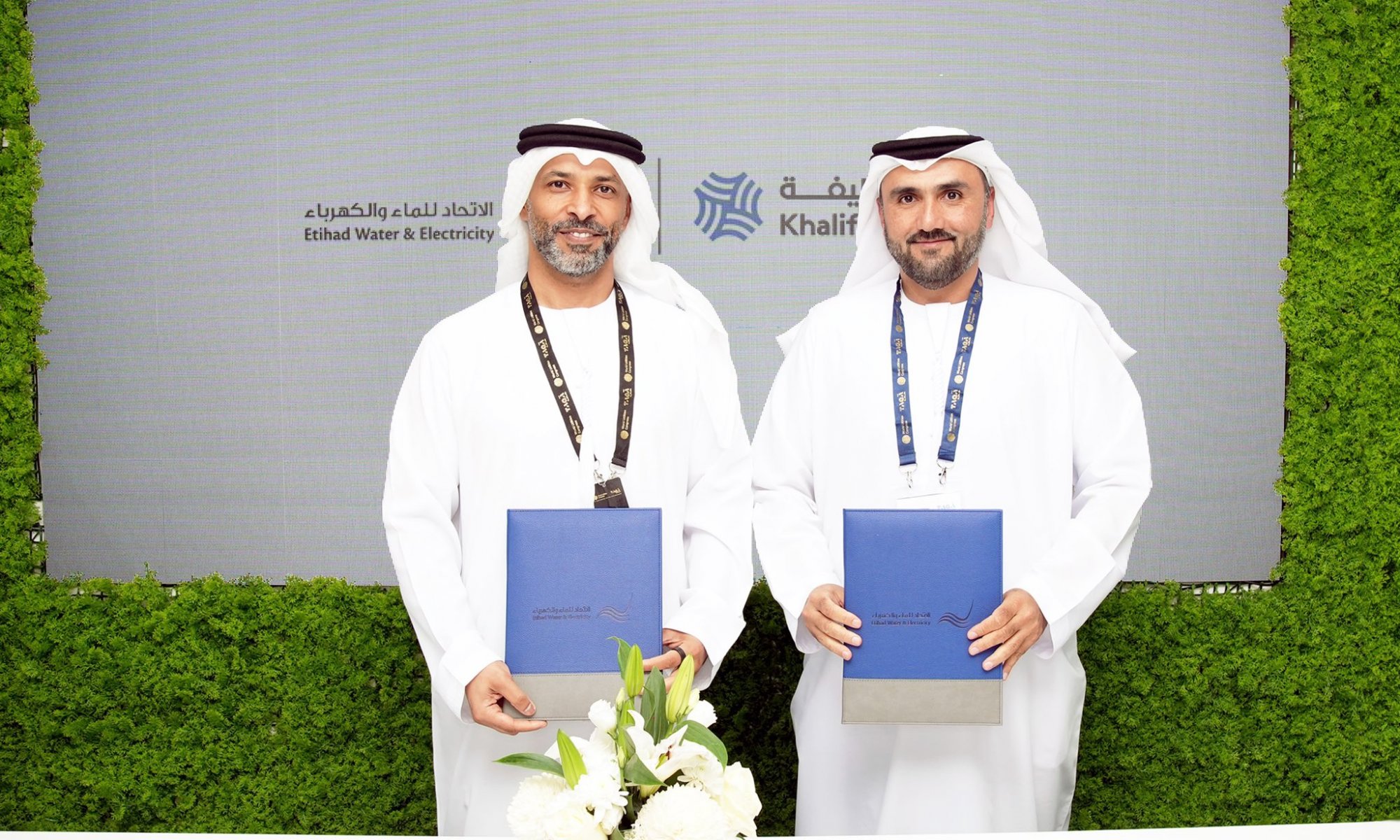
Khalifa University, EtihadWE partner to advance water quality

Khalifa University of Science and Technology’s Centre for Membranes & Advanced Water Technology (CMAT) and Etihad Water and Electricity (EtihadWE) have signed a memorandum of understanding (MoU) to enhance water treatment and resource management in the UAE.


The agreement outlines a framework for both partners to explore and evaluate advanced membrane technologies, improve water quality, and optimise desalination operations through artificial intelligence (AI) and machine learning technologies.


The MoU formalises the intent to develop pilot projects for testing water desalination technologies and deploying AI-driven models to improve the efficiency and sustainability of desalination processes. The partnership will also facilitate the exchange of knowledge and expertise through educational modules, workshops, and competitions focused on advanced water technologies, including provisions for internships and research opportunities.


Yousif Ahmed Al Ali, CEO of EtihadWE, said, “This MoU perfectly aligns with our ambition to enhance operational efficiency and ensure water security in the UAE’s northern emirates. By combining Khalifa University’s research capabilities with EtihadWE’s practical experience, we will advance sustainable water management.”


The agreement will also support student engagement and create employment opportunities, offering internships, research projects, and jobs for graduates. Khalifa University will incorporate real-world case studies into its curriculum, enriching the academic experience.


Prof Ebrahim Al Hajri, President of Khalifa University, said, “We are delighted to further cement our partnership with this MoU and play a critical role in strengthening water treatment and resource management in the UAE. Our Center for Membranes & Advanced Water Technology has achieved pioneering innovations in desalination and sustainable water management. We believe this research collaboration will help not only in the exchange of knowledge and expertise in one of the UAE’s strategic sectors but also pave the way for new technological advancements.”


EtihadWE, a leader in desalination technology, contributes to the UAE Water Security Strategy 2036 through this collaboration and other efforts. The Naqa’a desalination plant, one of the world’s largest, utilises advanced Reverse Osmosis (SWRO) technology to produce water for around two million UAE residents annually.


The plant incorporates innovative technologies such as Variable Frequency Drive (VFD) and Pressure Exchanger (PX) systems, reducing electrical energy consumption by more than 60%.


In addition, EtihadWE is committed to minimising Non-Revenue Water (NRW) leaks, utilising advanced tools such as SmartBall, data loggers, and acoustic inspection technologies. The company has implemented District Metering to pinpoint and address leaks more effectively, contributing to better water security across its network.


Dr. Shadi W Hasan, Director of the Centre for Membranes and Advanced Water Technology at Khalifa University, said, “This partnership represents a significant step forward in applying cutting-edge research to solve real-world challenges in water management. By integrating advanced membrane technologies with AI-driven optimisation, we can unlock new levels of efficiency and sustainability in desalination processes, ensuring a secure water future for the UAE.”


Through the MoU, Khalifa University’s research will be directly integrated into EtihadWE’s live projects, allowing for real-world testing and scaling of new solutions. This hands-on approach will help refine technologies and operational practices in desalination facilities and water infrastructure.


Khalifa University has solidified its position as a leader in water treatment and desalination innovation through CMAT’s groundbreaking projects. Led by Dr Hasan, CMAT is advancing cutting-edge solutions, including solar-powered desalination systems tailored to the UAE’s climate, electrified membranes using advanced nanomaterials like graphene for enhanced pollutant removal, and smart stimuli-responsive membranes for optimising water purification.


CMAT is also pushing the commercialisation of eco-friendly nanocomposite membranes and graphene-based biosensors for rapid virus detection. These innovations, alongside advanced technologies for heavy metal removal and oil/water separation, highlight Khalifa University’s commitment to sustainable, high-performance solutions that address global water challenges and industrial needs.

High-Level Workshops on Water Management, Climate Network Roundtable Highlight Khalifa University’s Participation in COP29 Baku

Faculty Leads Knowledge-Sharing Forums as Students Participate in UCN Youth Engagement Workshop 


Khalifa University, through the 35-member UAE Universities Climate Network (UCN), actively engaged in knowledge-sharing forums to inspire decision-makers towards addressing climate change, sustainability, and technological innovation during the 29th Conference of the Parties (COP29), from 11-22 November 2024 in Baku, Azerbaijan. 

Khalifa University faculty led and participated in six key workshops and discussions at COP29 Baku. They included the UCN Youth Engagement Workshop: Understanding and Reducing Your Carbon Footprint, Higher Education Climate Network of Networks Roundtable, MBZ Water Initiative Workshop: Innovations in Water Management – From Lab to Field, UCN Water Security Workshop: Accelerating Innovations to Tackle Global Water Scarcity, UCN Urban Planning Workshop: UAE’s Path to Sustainable, Circular, and Cognitive Cities, and Launch of MENA Climate Solutions Research Network. 

Representing the university were faculty members including Dr. Samuel Mao, Professor, Mechanical & Nuclear Engineering, and Co-Chair of the UAE Universities Climate Network, who was a Chair and an invited panelist in multiple workshops. Dr. Khaled Alawadi, Associate Professor, Civil & Environmental Engineering, participated in discussions on sustainable urban development; and Dr. Shadi Hasan, Director, Center for Membranes and Advanced Water Technology (CMAT), contributed to dialogues on water security and technological innovations. 

Dr. Samuel Mao also highlighted the establishment of the UAE UCN and its engagement with the UAE and Azerbaijan COP presidencies for organizing events at COP28 and COP29. He introduced plans for a climate solutions conference to be held at Khalifa University in 2025. Additionally, Dr. Thalita Dalbeo from Unicamp of Brazil discussed the early planning for COP30. 

Dr. Shadi Hasan, invited panelist, discussed the role of technology innovations play in advancing water security, particularly in arid regions like the UAE. He also commented on the critical investment areas for water security, such as strengthening the nation’s water infrastructures. Dr. Khaled Alawadi, invited panelist, in the ’UCN Urban Planning Workshop: UAE’s Path to Sustainable, Circular, and Cognitive Cities’ emphasized the importance of creating inclusive, sustainable cities. 

A significant component of Khalifa University’s participation was the UCN Youth Engagement Workshop: Understanding and Reducing Your Carbon Footprint where undergraduate students Jassem Al Hamadi and Khalid Adam emphasized the importance of youth involvement in sustainability initiatives and introduced the UAE Green Campus Competition, announcing the 2024 winners and showcasing the impact of student-led efforts.  

Dr. Samuel Mao said: “Khalifa University has led the way among universities in the MENA region in its commitment to sustainability and climate change research. Our innovative initiatives position us favorably for upcoming research opportunities, such as the MBZ Water Initiative, allowing us to further advance our leadership in critical sustainability areas. Through the UAE Universities Climate Network (UCN), we leverage the collective expertise of our institutions to drive impactful climate change research and initiatives.” 

Khalifa University also participated in the Higher Education Climate Network of Networks Roundtable, organized by the United Nations Climate Change High-Level Champions Team including Dr. Stephen Davison, Higher Education Lead of the Climate Champions Team. The Roundtable was attended by representatives from 26 global and regional climate networks and reviewed the core functions and impacts of the network over the past year.  

The ‘MBZ Water Initiative Workshop: Innovations in Water Management – From Lab to Field’ was chaired by Ayesha Al Ateeqi, Lead of the Mohamed bin Zayed Water Initiative, where Dr. Samuel Mao addressed the urgent global issue of water scarcity and highlighted innovations taking place in the UAE.  

During the ‘UCN Water Security Workshop: Accelerating Innovations to Tackle Global Water Scarcity’, Dr. Samuel Mao, Chair of the Workshop, introduced the MBZ Water Initiative and ‘XPRIZE Water Scarcity’. He also presented groundbreaking technologies developed in the UAE, including an entirely off-grid, solar-powered water production system that was designed and constructed by Khalifa University’s research team, with Dr. Samuel Mao as the project lead. The ‘Launch of MENA Climate Solutions Research Network’ at the high-level workshop at the Global Alliance of Universities on Climate (GAUC) Pavilion, discussed the ‘2030 Climate Solutions Implementation Roadmap.’  


Alisha Roy

Science Writer

Khalifa University Researcher Highlights Advancements for 6G Networks 

For future 6G networks, ultra-high data rates, sensing, and energy efficiency are paramount. Several groundbreaking technologies are emerging and Khalifa University’s Prof. Merouane Debbah’s research has been at the forefront of these innovations 


“Today, the fifth generation of mobile networks is being deployed, but both academia and industry have shifted their research focus to the next generation of communications technologies,” Prof. Debbah, Director of the 6G Research Center, said. “This is commonly referred to as the sixth generation or 6G.” 


A smarter, faster approach to satellite-ground networks 

In a world increasingly reliant on fast, reliable communication across vast distances, satellite-ground integrated networks (SGINs) are proving essential. These networks are designed to connect satellites, airborne platforms, and ground-based stations to offer broad coverage and robust data transmission capabilities. SGINs are integral to 6G wireless systems, expected to support high-speed data transfer with minimal latency, even for remote or isolated users. However, managing the complexities of these networks — characterized by dynamic structures and time-varying data — remains a challenge.


A new study from a team of researchers including Prof. Debbah introduces a new framework to address these issues, aiming to reduce latency and improve the efficiency of federated learning models within SGINs. The research was published in IEEE Transactions on Wireless Communications, a top 1% journal. 


One of the primary challenges in SGINs is the dynamic nature of the network. Unlike conventional networks, where nodes (representing devices) are relatively stable, nodes in SGINs are constantly moving and can appear or disappear. The team’s framework addresses this with a model that adapts to the changing structure of SGINs. By dynamically adjusting factors like transmission bandwidth, the model ensures efficient data processing while minimizing latency. 


Revolutionizing signal processing with stacked intelligent metasurfaces (SIMs)


A major breakthrough in signal processing for 6G is the use of stacked intelligent metasurfaces (SIMs). SIMs act as reconfigurable layers capable of manipulating electromagnetic waves in real-time. Traditional signal processing tasks require complex digital computations, but SIMs shift this paradigm by performing these computations as waves propagate through the metasurface layers. This drastically reduces power consumption and minimizes the need for extensive receiver hardware, which is essential for creating more efficient 6G devices and infrastructure. 


Prof. Merouane Debbah

“Next generation cellular technologies, commonly referred to as the sixth generation (6G), are being developed to support disruptive applications such as virtual and augmented reality, blockchain, and autonomous vehicles. To do this, 6G needs to be ultra-reliable and offer far higher connectivity than previous generations.”

Prof. Merouane Debbah, Director of the 6G Research Center, KU


Prof. Debbah’s research into SIMs was published in IEEE Journal on Selected Areas in Communications, a top 1% journal, and paves the way for energy-efficient and compact hardware for future networks.  


Terahertz communication expands the bandwidth frontier 


With data demands surging, Terahertz (THz) communication is set to unlock new levels of bandwidth to support the high data rates envisioned for 6G. Operating at frequencies between 100 Gigahertz and 3 THz, THz communication offers ample spectral resources far beyond current technologies. Prof. Debbah was part of an international team considering the applications of THz communications and sensing for 6G and beyond. Their work was published in IEEE Communications Surveys & Tutorials, a top 1% journal.  


The research team says that as THz technology matures, it will deliver the ultra-reliable, low-latency, and high-capacity communications essential for applications like holographic telepresence, immersive virtual reality, and advanced Internet of Things networks. 


Antenna technology improves communications in busy places 


Holographic MIMO (H-MIMO) technology represents a leap forward in antenna design. MIMO (multiple input, multiple output) is a technology used in wireless communications where multiple antennas are used at both the transmitter and receiver ends of the communication circuit. The main idea behind MIMO is to increase the system’s capacity and reliability without needing additional bandwidth or increased transmission power. MIMO is a key component in modern wireless communication, including Wi-Fi and cellular networks. It’s one of the technologies that make high-speed internet and data transfer rates possible in today’s wireless networks.  


H-MIMO uses surfaces made of metamaterials that act like one large, almost seamless surface of small antenna elements. These elements are packed closely together and work together to control the shape and movement of electromagnetic waves with great precision.  


A new study from a team of researchers including Prof. Debbah has investigated leveraging the potential of H-MIMO in the near-field. In this range, signals behave differently, spreading out as spherical waves rather than flat ones. This means H-MIMO can handle a lot more data and connect to more devices in a small area, which is essential for crowded environments like cities or stadiums. The team’s results were published in IEEE Wireless Communications, a top 1% journal.  


Prof. Debbah’s research into these technologies addresses critical challenges for 6G. THz communications, stacked intelligent metasurfaces, satellite-ground integrated networks and H-MIMO complement each other within a cohesive system and this synergy is essential to support the multi-functional requirements of 6G, such as real-time sensing, ultra-dense networking, and highly localized communication. Research into these areas make the vision of 6G feasible, transforming how we connect and interact in a highly digitalized and interconnected world. 


Jade Sterling

Science Writer

Khalifa University’s Aerospace Systems Group Wins Outstanding Research Paper Award at Space Research Conference 2024

Third Consecutive Award Reflects Research Caliber of Aerospace Engineering Department and FALCON Program


Khalifa University’s Intelligent and Autonomous Aerospace Systems Group has won the Outstanding Research Paper Award in the Space Situational Awareness session at the Space Research Conference (SRC) 2024. This first-of-its-kind event was organized by the UAE Space Agency in Abu Dhabi as part of the World Space Week activities. 


The award-winning paper titled ‘Hybrid Sensor Networks: Space Debris Tracking through Intelligent Distributed Space Systems and Ground-Based Observations’ tackles the critical issue of orbital congestion caused by Resident Space Objects (RSOs).  The research team working on this project is led by Professor Roberto Sabatini and includes PhD student Khaja Faisal Hussain, Dr. Kathiravan Thangavel, Dr. Noureldin Safwat, and Assistant Professor Alessandro Gardi, form the Department of Aerospace Engineering. The award-winning paper will be featured on the UAE Space Agency’s Space Research Platform.  


The Intelligent and Autonomous Aerospace Systems Group is a key component of Khalifa University’s Flight Systems Research and Training (FALCON) Program, which addresses key contemporary challenges in sustainable flight systems design and operations, including advanced air mobility, high-speed and suborbital transport, and the integration of ground and space-based Communication, Navigation and Surveillance (CNS) infrastructure. It is led by Prof. Sabatini, who also serves as Vice-President of Technical Operations at the IEEE Aerospace & Electronic Systems Society.  


The paper introduces an innovative multi-sensor data fusion strategy that combines intelligent Distributed Space Systems (iDSS) with ground-based sensor capabilities to achieve real-time tracking of space debris, significantly enhancing Space Situational Awareness (SSA) and promoting safer, more sustainable orbital and suborbital flight. 


Prof. Roberto Sabatini said: “Receiving three awards in a two-week timespan was amazing and the team deserves to be commended for this incredible series of achievements. After receiving two awards in the US at the AIAA/IEEE Digital Avionics Systems Conference both in the Digital Flight and Space Systems sessions, this additional recognition at the UAE Space Research Conference underscores the importance of aligning our research with the aerospace sector’s national and international priorities.” 


In addition to their award-winning research, the Group made significant contributions to two other conference tracks: Satellite Communication (SatCom) and Earth Observation. In the SatCom track, they presented a paper titled ‘Robust Communication in Remote Regions: An Integrated Satellite-HAPS-5G Architecture for Traffic Routing in Adverse Weather Conditions.’ This research aims to provide robust communication solutions in remote and underserved regions, especially during adverse weather conditions, by developing dynamic traffic routing algorithms that adapt to environmental changes. 


In the Earth Observation track, the team presented ‘Distributed Satellite Systems for Enhanced Earth Observation: Applications in Climate Change Monitoring and Disaster Management.’ This paper highlights the use of Distributed Satellite Systems (DSatS) to tackle global challenges like climate change and natural disasters. The research underscores the role of DSatS in providing high-resolution, timely data for proactive disaster management and climate change analysis, contributing to the United Nations Sustainable Development Goals (SDGs). 


A flagship project within the FALCON program is the development of a Multi-Domain Traffic Management (MDTM) framework, conducted in collaboration with leading industry and government partners. This project aims to ensure the safety, efficiency, and sustainability of integrated air and space transport operations, paving the way for a more connected, efficient, and environmentally responsible future in the aerospace sector and beyond.


By addressing the challenges of modern air and space transport, the program contributes to the advancement of the UAE’s aerospace industry and sets a global benchmark for sustainable innovation in flight systems design and operations. 


Alisha Roy 

Science Writer

Khalifa University’s RIC2D’s Key Role in Consolidating UAE’s Status as Innovation Leader in Advanced Materials Highlighted at I2DM2024

Arab Region’s First Innovative & Industrial 2D/Advanced Materials Summit & Expo Focuses on Current Innovation Trends and Applications


Khalifa University of Science and Technology’s Research & Innovation Center for Graphene and 2D Materials (RIC2D) is proud to play a pivotal role in graphene and related materials’ research and innovation, contributing to the UAE’s status as a leader in fostering research and development in advanced materials, said His Excellency Homaid Abdulla Al Shimmari, Chairman of RIC2D’s Senior Management Board, at the Arab region’s first Innovative & Industrial 2D/Advanced Materials Summit & Expo (I2DM2024).


Organized by RIC2D and Phantoms Foundations, I2DM2024 has brought together some of the brightest minds from around the globe to the Arab region for the first time. The summit that runs until 28 November explored the insights and innovations in the industry, led by experts who offered plenary and keynote talks. . They included Nobel Laureate Professor Sir Andre Geim, University of Manchester, UK, and Professor Yury Gogotsi, Drexel University, US, Director, A.J. Drexel Nanomaterials Institute.


In his welcome remarks, Dr. Bayan Sharif, Khalifa University’s Provost, said: “Khalifa University is privileged to welcome the large gathering of scientists and innovators to this important summit on graphene, 2D, and advanced materials. This summit is not only about sharing knowledge, but is about forging connections to drive future innovations, collaborations, and tangible outcomes. The roundtables on startups and commercialization, and the B2B meetings on direct engagement will immensely facilitate potential partnerships and further cement Abu Dhabi’s role as a center for innovation in 2D materials.”


The summit features oral and poster presentations, a series of parallel workshops focused on topics of interest for the Arab region, most recent advances in technology developments, business opportunities in Advanced Materials commercialization, and an exhibition featuring the latest innovations and offerings. The day also includes two round tables titled ‘From Lab to Business’ and ‘Promoting Start-ups in Advanced Materials.


The second day’s sessions included five workshops focusing on Advanced materials in desalination and water treatment; Advanced materials in biotechnology and healthcare; Smart and advanced nanocomposite materials; Materials for hydrogen production, transportation, and storage; and Advanced Materials Characterization.