
Khalifa University Honors 24 YFEL Program Members for Successfully Completing Annual Projects and Courses

Globally Appealing YFEL Outreach Program Enters 15th Year Creating an Alumni Body of More Than 600 Members


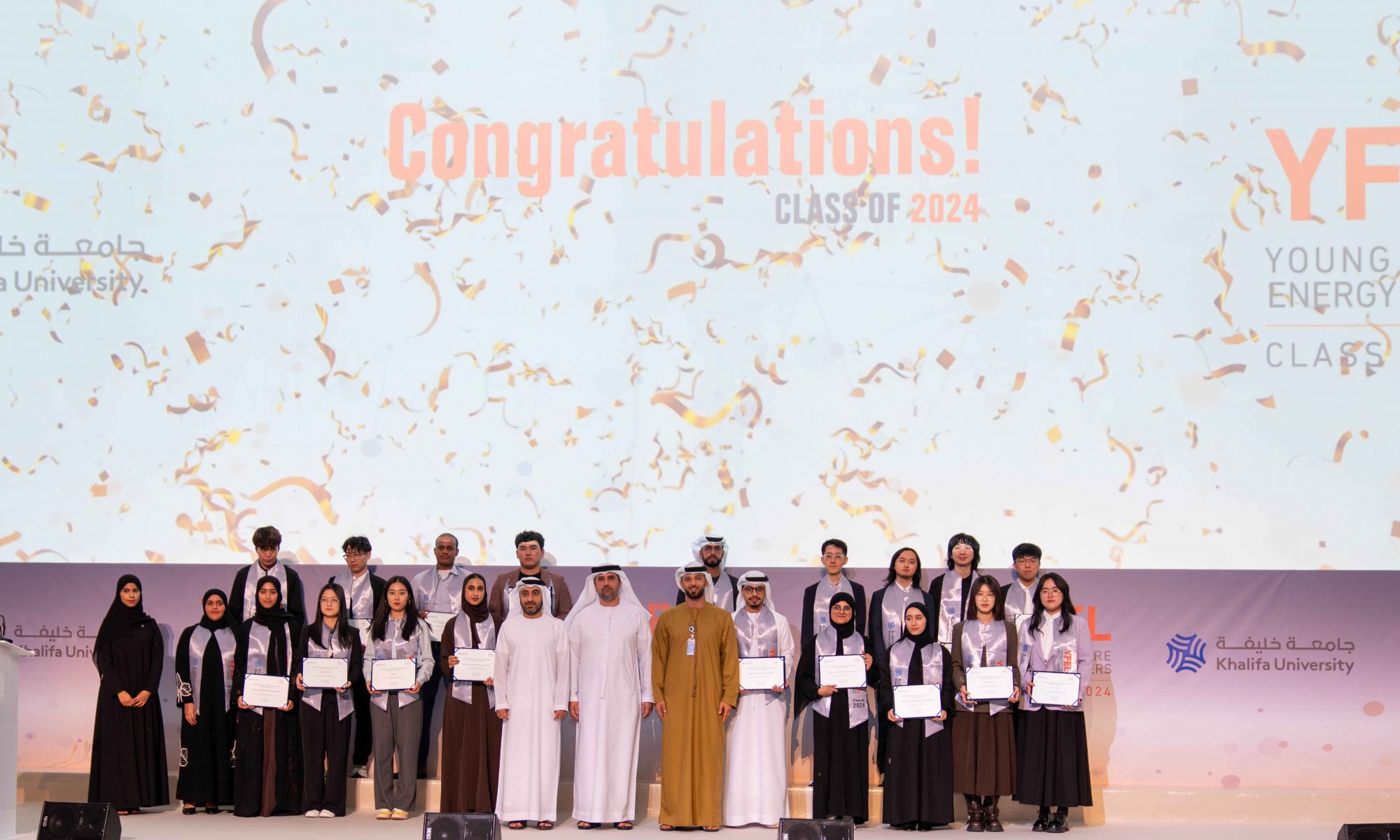
Khalifa University of Science and Technology today announced 24 members of the 2024 Young Future Energy Leaders (YFEL) program, the flagship outreach initiative, received their certificates of completion at a grand ceremony after having successfully concluded their annual schedule of courses and projects.


Launched in 2010 by the UAE President His Highness Sheikh Mohamed bin Zayed Al Nahyan, the YFEL program offers members – students and young professionals – exceptional and unmatched access to top global leaders, senior business executives, and academics engaged in clean energy and sustainability.


The 15 male and nine female members of the 2024 YFEL program represent six nationalities, and are associated with two local and eight international universities, demonstrating the global appeal of the YFEL program among students and youth interested in clean energy and sustainability. The YFEL 2024 cohort includes 14 international students who live outside the UAE, which further signifies the overall inclusive characteristic of the YFEL outreach program. The graduates join an alumni body of more than 600 former YFEL members, driving new initiatives in sustainability and clean energy.


Professor Bayan Sharif, Provost, Khalifa University, said: “The YFEL program is Khalifa University’s flagship outreach initiative that have consistently grown to its 15th year now, creating leaders for the future who can ensure the continuation of initiatives in sustainability and clean energy. The multifaceted aspects of the YFEL program make it more globally appealing as can be gauged from the cross-section of nationalities that are its current and past members. We believe these talented students and young professionals, fully equipped to tackle challenges, will provide sustainable solutions from the knowledge they have gained through the YFEL program. I offer my congratulations to the graduating 2024 YFEL members and wish them the best.”


One of the key events during the year was the fourth edition of YFEL German-Emirati Sustainability Days conference with inspiring debates, panel discussions and interactive dialogue between UAE stakeholders, German industry and 2024 YFEL members. A case study competition focusing on addressing misalignment challenges in EV wireless charging systems through literature reviews and innovative solutions produced 13 winners, selected for their exceptional research, insight, and alignment with program goals. As part of their recognition, they were awarded an exclusive training session sponsored by German company BASF. These were in addition to their active participation and engagement at events such as the World Future Energy Summit 2024, and the COP28 UAE Summit.


The 2024 YFEL members also successfully completed six projects that reflected their involvement in sustainability and clean energy technologies. The projects include ‘Sustainable Urban Design of Abu Dhabi Public Transportation’, ‘PV Panel Intelligent Fault Detection Techniques’, ‘Carbon Capture Utilization and Storage (CCUS): Advancements, Challenges, and Future Prospects in the UAE’, ‘Advances in Methane Cracking for Hydrogen and Graphene Production’, ‘Promotion for Rooftop Solar Panels in Abu Dhabi Households’, and ‘Carbon Footprint Tracker’.


Emirati YFEL member and Khalifa University Biomedical Engineering student Rodha AlQubaisi said: “The YFEL workshops were highly relevant and beyond my expectations. The instructors were incredibly supportive, and I gained valuable skills and built lasting connections.”


YFEL member Abylai Shynggys from Kazakhstan and student at Hong Kong Poly Technic University said: “The YFEL program provided engaging workshops and an excellent platform to grow professionally. I appreciated the opportunity to network with others in my field and enhance my knowledge.”


YFEL member and Hong Kong Poly Technic University student Cai Zhuoang from China said: “The YFEL program provided excellent workshops, great support from instructors, and well-organized logistics. The networking opportunities were very effective, and I achieved my learning goals.”


Over the years, the YFEL program has received support from community leaders such as His Excellency Sultan bin Rashed Al Dhahiri, and His Excellency Mohamed Bin Kardous Al Ameri, as well as several UAE-based and German corporate sponsors including AHK, BASF, Siemens, Linde Engineering, Wilo Group, and ADNOC, Dolphin Energy, ADWEA, and ENEC.
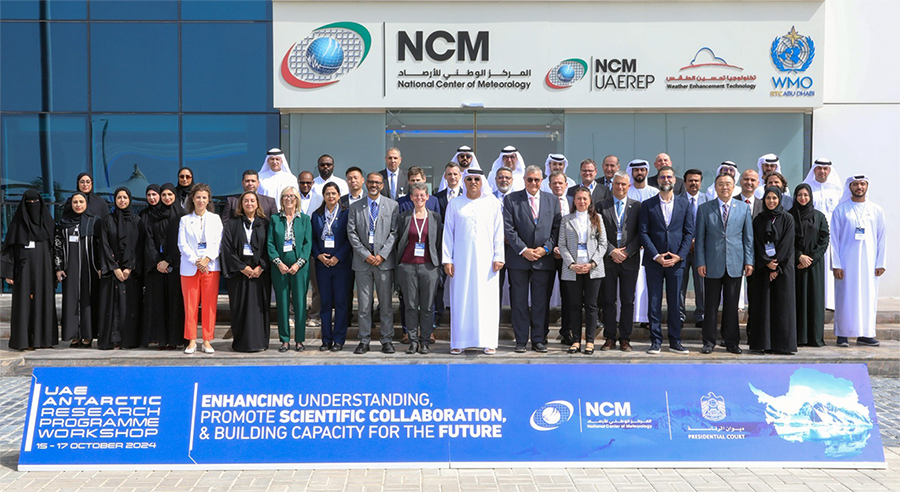
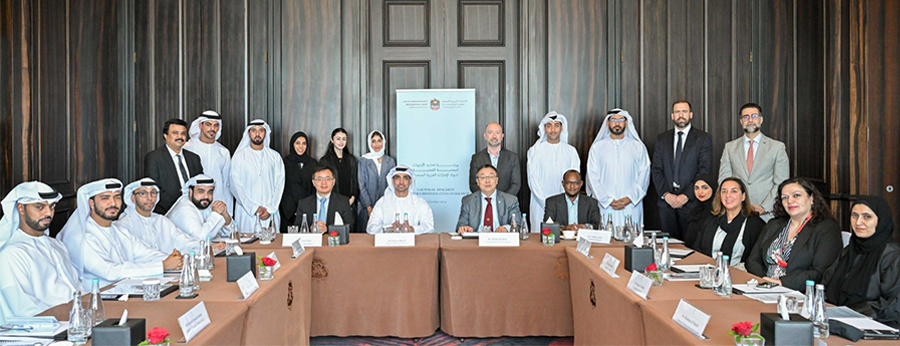
Khalifa University Scientists attend the NCM Workshop on Antarctic Research

The UAE Antarctic Research Programme Workshop was convened in Abu Dhabi by the UAE National Meteorological Center (NCM) with the aim of seeking input from the international Antarctic research community to the development of a UAE Antarctic Program to ensure both its alignment with the overall priorities for Antarctic research laid out by the Scientific Committee on Antarctic Research (SCAR) and other international coordination bodies and it’s complementarity to other existing national Antarctic research programs.

The primary objectives of the UAE Antarctic Research Programme Workshop were to:

  • Enhance the understanding of the current global research priorities and activities in Antarctica and the role of Antarctic systems in climate change and global climate processes within the UAE research and policy community.

  • Promote networking and collaboration between UAE researchers, institutions, and policymakers interested in or already involved in Antarctic research and the global Antarctic research community.

Khalifa University Faculty attend UAE Polar Research Priorities Workshop

The UAE Polar Program Steering Committee, through the International Affairs Office initiated a series of consultations over the past few months, with public, private, and academic stakeholders to help shape the strategic research agenda. Several focus group discussions and workshops, including the workshop hosted by the National Center of Meteorology have helped identify the needs. Hosted by the International Affairs Office at the Presidential Court and the UAE Polar Mission Steering Committee, this workshop represented the final phase of the process. It focused on developing a high-level strategic research agenda.

Khalifa University Faculty Elected Vice-President Technical Operations for the IEEE Aerospace and Electronic Systems Society

Appointment Highlights Prof. Roberto Sabatini’s Contributions to Aerospace Systems Research, Innovation, and Education   


Khalifa University faculty Prof. Roberto Sabatini, Department of Aerospace Engineering has been elected as Vice-President of Technical Operations by the IEEE Aerospace and Electronic Systems Society (AESS), the most prestigious professional organization entirely dedicated to this field. 


This appointment highlights Prof. Sabatini’s extensive contributions to aerospace systems research, innovation and education, over the past three decades. His career is marked by a series of leadership roles across industry, government, and academia in Europe, North America, Australia, Asia, and the Middle East, making him a renowned figure in the advancement of aerospace and aviation technologies worldwide. 


Prof. Sabaini’s research addresses key contemporary challenges in avionics, spaceflight and robotics/autonomous systems design, test and certification, focusing on the central role played by cyber-physical systems and AI in the digital transformation and sustainable development of the aerospace and aviation sectors. Practical applications include trusted autonomous flight systems, urban and regional air mobility, distributed space systems, space domain awareness, and multi-domain traffic management.  


Throughout his career, Prof. Sabatini has led several industry and government-funded research projects and has authored or co-authored more than 350 peer-reviewed international publications. He holds various academic qualifications in engineering, science and management disciplines, including doctoral degrees in Aerospace Engineering (Cranfield) and Geospatial Systems (Nottingham).  


As a licensed Flight Test Engineer, Private Pilot and Remote Pilot, he has logged more than two thousand flight hours on various aircraft types, including jets, turboprops, propeller aircraft, helicopters, and both fixed-wing and multi-rotor unmanned aircraft. Prof. Sabatini is a Chartered Professional Engineer (CPEng), as well as a Fellow and Engineering Executive of Institution of Engineers Australia (FIEAust and EngExec). He is also a Fellow of the Royal Aeronautical Society (FRAeS), Fellow of the Royal Institute of Navigation (FRIN), and Fellow the International Engineering and Technology Institute (FIETI). 


Currently, Prof. Sabatini serves in the editorial board of several journals, including the IEEE Transactions on Aerospace and Electronic Systems, Progress in Aerospace Sciences, Robotica, Aerospace Science and Technology, the Journal of Navigation, and the IEEE Aerospace and Electronic Systems Magazine. 


Since joining Khalifa University in 2021, Prof. Sabatini has founded the Intelligent and Autonomous Aerospace Systems (IAAS) Group and the Guidance, Navigation and Control Laboratory (GNC-Lab). He also leads the FALCON program, a transdisciplinary research and training initiative dedicated to the future of aviation and commercial spaceflight. The FALCON program addresses critical gaps in sustainable flight systems design and operations, including advanced air mobility, high-speed and suborbital transport, and the seamless integration of ground and space-based communication, navigation and surveillance infrastructure. 


Prof. Sabatini said: “As Vice-President Technical Operations of the IEEE AESS, I envision a future where the aerospace and electronic systems community capitalizes on its strengths, embraces constant improvement, and leverages collaboration opportunities to maximize impact. I am strongly committed to the AESS mission and values, and I have actively contributed to this prestigious society since 2008 in various technical and operational leadership roles. As Vice-President, I will continue working with the team to uphold the highest possible standards in technical operations, also contributing to high-impact publications, educational initiatives, conferences, and standardization working groups.” 


Alisha Roy

Science Writer

Leading Global Scientists and Policy-Makers Join Polar Seminar Sessions at Khalifa University

Khalifa University Faculty Members Share Research Perspectives on Ways to Preserve Polar Region 


In collaboration with the Emirates Polar Program and the Arctic Circle, Khalifa University hosted global stakeholders, leading polar scientists, and policymakers for a Polar Seminar at the Sas Al Nakhl (SAN) Campus as part of the Abu Dhabi Sustainability Week (ADSW) 2025. 


Joined by the Chairman of Arctic Circle, H.E. Ólafur Ragnar Grímsson, and the Chair of the Polar Dialogue and previous Prime Minister of Iceland, H.E. Katrín Jakobsdóttir, the guests toured Khalifa University’s cutting-edge research facilities. The group visited the Environmental and Geophysical Sciences (ENGEOS) Lab, the world’s first atmospheric water generation system (AWG) that operates entirely on solar energy and electrical thermal energy storage, the region’s only permanent Body Museum, the College of Medicine and Health Sciences (CMHS), the Advanced Research and Innovation Center (ARIC) focusing on aerospace, and the Marine Studies and Research Lab – the region’s first-ever advanced research facility equipped with wave and stream generation facilities. 


Faculty members from Khalifa University representing Earth Science, Aerospace Engineering, as well as Mechanical & Nuclear Engineering and Civil & Environmental Engineering, shared their perspectives on research and science, recommending various avenues for collaborations to mitigate the threats of melting glaciers and water insecurity, aggravated by climate change.  


Other delegates included members of the Emirates Polar Program Steering Committee, Gitte Adler Reimer, Rector, University of Greenland; Izabella Koziell, Deputy Director General, ICIMOD – International Centre for Integrated Mountain Development, Dr. Peter Griffith, Director, Cycle & Ecosystems Office, Science Systems & Applications, Inc. (SSAI), Sudan Bikash Maharjan, Cryosphere Scientist, ICIMOD, Dr. Thorsteinn Thorsteinsson, Glaciologist, Icelandic Meteorological Office, and Prof. Alexander Haumann, Alfred Wegener Institute Helmholtz Centre for Polar and Marine Research. 


Announced in November 2024 by H.E. Mariam Almheiri, Head of the International Affairs Office of the Presidential Court, and Chair of the EPP Steering Committee, the Emirates Polar Program aims to equip Emirati scientists for participation in international polar missions. The Polar Research Center at Khalifa University was only an initial step, which also includes building strategic international partnerships, signing relevant treaties, and joining international polar missions. The Center aims to be a key contributor in filling the knowledge gaps in polar sciences by studying the cryosphere, oceans, and landscape, aligning with global initiatives like the 5th International Polar Year (IPY) 2032-33.he Arctic Circle Polar Dialogue initiative unites global experts and policymakers to drive forward the global conversation on responsible polar research and foster scientific collaboration on the Arctic, Antarctic and  the Himalaya – Third Pole regions. 


Clarence Michael 

English Editor Specialist

Faculty Promoted Editor of Water Research Journal

Khalifa University’s Dr. Jorge Rodríguez, Associate Professor, Chemical and Petroleum Engineering, is promoted as Editor of Water Research, a flagship (top 1%) journal by Elsevier in association with the International Water Association (IWA). Water Research is widely regarded as a leading journal in several areas of water and environmental engineering, making it the top choice for researchers in these fields. 


Dr. Rodríguez had previously served as Associate Editor for the journal for several years. Full Editors in Water Research have full responsibility in handling the peer review process of manuscripts submitted to the journal and also have final decision on the acceptance of papers towards ensuring that the journal maintains the highest standards of quality and impact. 


In addition to his new role at Water Research, Dr. Rodriguez has been also serving for the past two years as Editor of Chemical Engineering Science, a journal with long history in the field.  


Dr. Rodríguez said: “I was honored to become Editor of this prestigious scientific journal while serving at Khalifa University. The Editorial team of Water Research has a strong reputation as very independent when it comes to quality and ethics in publishing. This role offers me an opportunity to contribute to the advancement of research and innovation in the water sector, an area strategic to the UAE and the region. This appointment also reflects Khalifa University’ status as an internationally leading research institution of high reputation with world-class faculty.” 


Dr. Rodríguez’s main research areas over the last 20 years have been in environmental biotechnology and microbial wastewater treatment, including anaerobic digestion, microbial fermentations, and bio-electrochemical systems, with a strong emphasis on the modeling and optimization of these processes. 


Most recently, he has also been active in research related to public health and epidemiology modeling, work that began during the pandemic through his advisory role with the Abu Dhabi Department of Health on the impact of interventions, vaccination strategies and international travel and continues at present on the management of infectious diseases. 


Since 2023 Dr Rodríguez is also President of the Association of Spanish Scientists and Researchers in the UAE and he was elected Chair of the International Water Association (IWA) Anaerobic Digestion specialist group. 


Alisha Roy

Science Writer

Researchers Highlight Non-Energy Use of Fossil Fuels in Climate Strategies

Alternative Sources Could Provide up to 62% of Total Feedstock Needs in Chemical Sector by 2050 

A new study led by a team of researchers from Khalifa University has found significant changes in raw materials used for energy production could reduce global reliance on fossil fuels by about 60% by 2050, presenting more opportunities for a sustainable energy future.  


Published in Nature Communications, the study addresses non-energy use of fossil fuels in the chemical industry, and the role of fossil fuels beyond production. A global integrated assessment model analyzed various climate scenarios, revealing alternative sources could provide up to 62% of total feedstock needs in the chemical sector by 2050, with substantial scale-up of biomass utilization and carbon capture technologies. 


Titled ‘Unaddressed non-energy use in the chemical industry can undermine fossil fuels phase-out,’ the study estimates approximately 13% of fossil fuels worldwide are utilized for non-combustion purposes, primarily as feedstocks for the production of high-value chemicals.  


The research team includes Dr. Pedro Rua Rodriguez Rochedo, Assistant Professor, Management Science & Engineering, and Research and Innovation Center on CO2 and Hydrogen (RICH Center), Khalifa University, as well as Dr. Marianne Zanon-Zotin, Dr. Luiz Bernardo Baptista, Dr. Rebecca Draeger, Dr. Alexandre Szklo, and Dr. Roberto Schaeffer from Universidade Federal do Rio de Janeiro, Brazil. 


As the demand for fossil fuels in energy systems declines, the chemical sector must adapt to ensure continued supply of materials essential for various industries, including renewable energy technologies. 


The study highlights three trends in the refining sector, which is expected to become more efficient and technologically advanced due to stricter environmental policies. The overall capacity of refineries will decrease over time, resulting in less oil production whereas new refineries will utilize advanced technology, enabling them to process various types of oil more effectively. Additionally, while the total production of chemicals from refineries will decline, the remaining refineries will be more closely integrated with petrochemical production. 


The researchers recommend policymakers consider the complex interdependencies between energy and materials production when formulating climate strategies.  


Dr. Pedro Rochedo, said: “The chemical sector has a dual role: while it contributes significantly to carbon emissions, it holds the potential to support deep decarbonization strategies. By adopting innovative technologies and sustainable practices, the sector can play a pivotal role in mitigating climate change. Our results indicate that scenarios with tighter limits on global biomass availability, the use of carbon capture and storage (CCS), and biogenic carbon storage require urgent and large-scale climate action. Additionally, this research not only sheds light on an often-overlooked aspect of fossil fuel use but also provides a roadmap for future climate action that includes both energy and material considerations.” 


Alisha Roy

Science Writer

Khalifa University and Sungrow Middle East Sign MoU to Tackle Climate Change, Promote Energy Diversification, and Advance Economic Pursuits

MoU Enables Conducting of Advanced System Innovation Construction and Solution Performance Optimization under GCC Climate Conditions


Khalifa University of Science and Technology today announced it has signed a memorandum of understanding (MoU) with Sungrow Middle East, a globally renowned manufacturer of renewable energy equipment, to collaborate on advancing region-specific research and innovation to tackle climate change, promote energy diversification, and support economic sustainability.


The announcement coincided with Khalifa University’s showcase of 8 projects at the World Future Energy Summit (WFES) 2025. The MoU was signed by H.E. Prof. Ebrahim Al Hajri, President, Khalifa University, and Thompson Meng, Vice-President of Sungrow PV & Storage BG. Sungrow specializes in solar inverters and Battery Energy Storage Systems (BESS), with a significant local presence and well-established brand recognition within the UAE market.


H.E. Prof. Ebrahim Al Hajri, President, Khalifa University, said: “The MoU with Sungrow reflects Khalifa University’s commitment to remain in line with the objectives of the UAE’s Energy Strategy 2050, which aim to meet the economic requirements and environmental goals of the UAE. In order to achieve this goal, we aim to help offer transformative solutions from our top-of-the-range academics and researchers with their expertise. We believe this MoU with Sungrow will pave the way for contributing to the UAE’s energy objectives and deliver effective innovations through the synergy created from this collaboration.”


Thompson Meng, VP of Sungrow PV & Storage BG, said: “The cooperation with Khalifa University is of great significance to Sungrow. Guided by our mission ” Clean power for all”, we are eager to contribute to the transition to clean energy and enhance power grid support in this region. By collaborating with Khalifa University, we can plan a greater blueprint together!”


Under the terms of the MoU, Sungrow and Khalifa University will conduct advanced system innovation development and solution performance optimization under GCC climate conditions. The partnership will include joint experiments and prototype development, exploration of sponsorship and collaboration opportunities with additional stakeholders, as well as establishment of research and testing facilities.


Earlier, a delegation from Sungrow visited the labs and the research facilities of Khalifa University’s Advanced Power and Energy Center (APEC) and expressed interest in collaboration on some of the ongoing research projects. This strategic partnership is expected to explore groundbreaking advancements in the UAE’s renewable energy sector.

Khalifa University Showcases 8 Sustainable Research Innovations at World Future Energy Summit (WFES) 2025

Breakthrough Solutions Address Managed Energy Transition, Advanced Materials and Manufacturing, Water Treatment and Food Security to Support Sustainable Secure Society


Khalifa University of Science and Technology today announced 8 research innovations in sustainability are being showcased at the World Future Energy Summit (WFES) 2025, the leading international event accelerating sustainability and the global energy systems transformation that is part of the Abu Dhabi Sustainability Week (ADSW) 2025.


Organized from 14 – 16 January at the Abu Dhabi National Exhibition Center (ADNEC), WFES is a combination of multiple segments including an exhibition, technology showcase, investment incubator and business forum. The event brings together leaders, innovators and global thinkers to share ideas that are creating the blueprints for a sustainable future. The Khalifa University stand (Atrium – A420) at WFES 2025 will present projects that stand out as breakthrough innovation in sustainability.


Professor Bayan Sharif, Provost, Khalifa University, said: “As a research-intensive institution, Khalifa University is pleased to present innovations that are designed to advance clean energy and sustainability solutions for the benefit of the community.  “Our projects, focusing on managed energy transition, advanced materials and manufacturing, water treatment, and food security, are designed to support the development of a sustainable and secure society. This work exemplifies the kind of in-depth research that Khalifa University is renowned for. We believe through these projects, guests and visitors at WFES 2025 will learn about the extent of Khalifa University’s extensive research that are relevant not only to the region but to everyone across the world.”


The Khalifa University projects being showcased at WFES 2025 include Novel technologies for CO2 capture, utilization and storage; Sustainable hydrogen production and utilization; Design and development of materials and processes for sustainable fuels for heavy transportation; and the novel AI software SAVE (Stability Assessment, Visualization, and Enhancement) that predicts the stability of power grids.


The project on the Multi-Objective Optimization Design of Multi-Pulse Ultra High-Voltage Pulse Power Generator has significance for a number of special applications such as microwave-related applications, water and food treatment. The ‘Novel 3D Printed Structures for Multifunctional Applications’ offer scope for water harvesting devices and thermal management devices such as heat exchangers and heat sinks for electronics and EV batteries.


The ‘Innovative Processing route of organic wastes for desertic soils transformations’ has proved valuable in transforming desertic soils into enhanced soils, while Mangrove-mimicked Solar Desalination Device for Freshwater Production with Zero Brine Discharge is used to enhance the water yield as per demand. The Electromagnet Capacitive Deionization Technology can be used for producing pure water from low to intermediate salinity feed streams.

Khalifa University and PureHealth Form Strategic Partnership to Enhance Emirati Talent Development in Healthcare

Collaboration Encompasses Career Development, Skill Enhancement, and Contributions to UAE’s Growing Healthcare Ecosystem


Khalifa University of Science and Technology and PureHealth, the largest healthcare group in the Middle East, today announced a collaboration to empower UAE National students and graduates in their career development, skill enhancement, and contributions to the UAE’s growing healthcare sector.


The Memorandum of Understanding, signed by the partners, aims to provide Khalifa University students and graduates with access to training programs that align with PureHealth’s priorities, facilitate global placements specifically for Emirati talent, and align with the UAE’s strategic goals.


His Excellency Prof. Ebrahim Al Hajri, President, Khalifa University, said: “We are delighted to collaborate with PureHealth to enhance opportunities for our students and graduates, particularly focusing on Emirati talent. By collaborating with a leading healthcare network, we aim to develop a skilled workforce that meets the evolving needs of the industry, ensuring that we not only enhance our capabilities but also contribute to the broader vision of health and well-being in the UAE. This collaboration underscores our commitment to increasing our students’ active participation in the private sector representing a significant step towards aligning with the UAE’s objectives to strengthen the workforce with timely skills, eventually contributing to the advancement of the healthcare sector in the region.”


Rashed Saif Al Qubaisi, Group Chief Operating Officer, PureHealth, said: “At PureHealth, we are committed to nurturing the next generation of local healthcare leaders, in line with the strategic vision of Abu Dhabi leadership to build a world-leading, self-sustaining healthcare sector here in the UAE. This partnership with one of the nation’s foremost academic institutions not only strengthens our support for local employment but also reinforces PureHealth’s commitment to advancing Emiratization. We look forward to welcoming exceptional Emirati talent into our expansive network of hospitals and clinics, as we continue our unwavering mission to shape the future of healthcare in support of the UAE’s national agenda.”


The academia-industry collaboration will enhance professional growth in the healthcare sector through participation in career fairs, workshops, and collaborative research projects. The partnership will also explore opportunities for global placements of Khalifa University students and alumni within PureHealth’s network. Furthermore, the collaboration aims to enhance research initiatives to promote knowledge exchange in the healthcare sector through activities and events.


Khalifa University’s College of Medicine and Health Sciences remains at the forefront of regenerative medicine including fabricating artificial tissues, in collaboration with researchers from Harvard Medical School, US, and the University of Twente in the Netherlands. In Fall 2024, CMHS launched two new PhD programs – Public Health & Epidemiology and Biomedical Sciences. The Public Health & Epidemiology Program offers extensive training in quantitative methods such as epidemiology, clinical research and biostatistics in addition to training in artificial intelligence, public health genomics, and the impact of social determinants of health that make the program unique.  The Biomedical Sciences program has a unique focus on precision medicine and AI in biomedical research and enables students to collaborate with expert faculty advisors and leverage these technologies in areas such as diabetes, cardiovascular or neurologic diseases, and cancer.

Environment Agency – Abu Dhabi and Khalifa University collaborate on comprehensive coastal seabed survey aboard marine research vessel Jaywun

A team of scientists and marine researchers from Environment Agency – Abu Dhabi (EAD) and Khalifa University have led the first comprehensive modern sediment survey off the coast of Abu Dhabi, on board the region’s most advanced marine research vessel Jaywun, to explore the effects of climate change on the Arabian Gulf’s distinctive marine ecosystem. The research mission will pave the way for future research opportunities.


Launched by His Highness Sheikh Hamdan bin Zayed Al Nahyan, Ruler’s Representative in the Al Dhafra Region and Chairman of EAD’s Board of Directors, the UAE’s first research vessel Jaywun is equipped with advanced technology and six laboratories to support scientific exploration initiatives in environmental preservation and climate change mitigation.


The project was initially launched as part of the expedition under the multilateral agreement between EAD, OceanX, Bayanat, and M42, aboard the Ocean Explorer across the UAE in December 2023. The study aims to uncover critical insights into marine ecosystems and, through mapping of the seafloor, will also shed light on underwater features of the Arabian Gulf along Abu Dhabi’s coast. Future missions on Jaywun, including an extended study off the coast of Fujairah, will continue to build on these findings.


Prof Bayan Sharif, Provost, Khalifa University, said: “We are proud to be one of the members of the Abu Dhabi Environmental Research Network (ADERN), launched by the Environment Agency – Abu Dhabi. As part of ADERN, the Jaywun research vessel is available to UAE scientists, including our faculty members who can submit research projects to the EAD for execution on the vessel. We take great pride in conducting this first modern sediment survey in offshore Abu Dhabi to gain vital information about climate change on marine ecosystems, enabling us to effectively monitor marine health in the Arabian Gulf.”


Ahmed Al Hashmi, Executive Director of the Terrestrial and Marine Biodiversity Sector at EAD, said: “Jaywun enables us to conduct in-depth research on marine ecosystems using sophisticated equipment, ensuring high-quality data collection and analysis. Currently, in partnership with Khalifa University, we are studying marine sediments for the first time to assess the impact of climate change on the Arabian Gulf. The collaboration between our scientific teams is essential, and the results from this research will play a key role in informing future sustainability and conservation projects to protect our vital marine ecosystems.


“The primary objective of the survey is to explore the waters of the UAE and establish a baseline of sediment data from offshore Abu Dhabi for the first time. This will enable the researchers on board Jaywun to gain crucial insights on historical and recent changes in the marine environment. The research also covers sediment movement, the impact of storm events, as well as the overall health of oceanic ecosystems. Moreover, the marine chemistry and sediments formed under these extreme conditions provide insights into a future warmer climate.”


Dr. Aisha Al Suwaidi, Associate Professor, Earth Science, Khalifa University, said: “Mapping the seafloor and developing a baseline of data on sediments by Khalifa University researchers on the Jaywun offshore Abu Dhabi reveals important details about the strength of bottom water currents, as well as the intensification of storm events. We also aim to combine the sedimentological survey and geophysical data to find out the impact of regional tectonics in the Arabian Sea.”


Alongside two marine research analysts from the EAD, the postdoctoral and PhD researchers from Khalifa University’s Earth Sciences Department on the Jawuyn included Dr. Ahmed Abdelmaksoud Ahmed Osman, Omar Abdulrahman Abdulla Aleter Aldhanhani, and Salvador Domingo Rojas Lequerica. Their study will contribute to a larger research project led by Dr. Aisha Al Suwaidi, Dr. Thomas Steuber, and Dr. Mohammed Ali, which aims to explore the unique conditions of the Arabian Gulf during the summer months.