

Sharing the Decarbonization Effort: The Road to Global Carbon Neutrality for Eastern Mediterranean and Middle Eastern Countries


Research from Khalifa University offers the first national emission allocation evaluation for the countries in the broader EMME region, providing guidance on setting realistic and fair emissions targets based on national circumstances.


The climate crisis is a critical issue for contemporary society, demanding significant investments from all nations to transition to low carbon economies. A 2021 IPCC report indicates that in order to limit global temperature increase to 2°C, global net CO2 emissions need to be reduced by about 25 percent from 2010 levels by 2030 and net-zero must be reached by 2070. More aggressive targets are required to limit the 1.5°C overshoot.


Globally, different regions and nations show varying degrees of commitment to these goals. While the European Union, Canada, and South Korea are aiming for carbon neutrality by 2050, many countries in a region like the Eastern Mediterranean and Middle East (EMME),, which consists of Bahrain, Cyprus, Egypt, Greece, Iran, Iraq, Israel, Jordan, Kuwait, Lebanon, Oman, Palestine, Qatar, Saudi Arabia, Syria, Turkey, and the United Arab Emirates are less inclined to rapidly adopt carbon neutrality due to their heavy reliance on fossil fuels. In 2019, the EMME region with 5.5 percent of the global population, and 4.9 percent of the world’s economic output, contributed over 8 percent of global carbon dioxide emissions.


Research has explored necessary actions at the country level to achieve the Paris Agreement targets, considering equity in the low-carbon transition. Effort-sharing approaches to determine emissions reduction targets, carbon budgets, and carbon dioxide removal quotas have been discussed, typically centered around three principles of equity: responsibility (current and historical contribution to emissions), capability (ability to pay for mitigation), and equality (equal rights per person).


Dr. Steve Griffiths, Professor of Practice and Senior Vice President Research and Development together with collaborators from the Cyprus Institute have proposed various approaches to determine equitable national emission allocations for 2030 for the 17 countries in the EMME region. The research team compared these allocations with the Nationally Determined Contributions (NDCs) of each country to assess the degree to which current climate change mitigation targets are sufficient, finding two approaches that may be considered both realistic and fair. Both approaches are based on required emissions reductions for the EMME region as a whole to be in line with the global average emissions reductions need to achieve net-zero targets. Emission reductions required for each EMME country are then allocated relative to those required for the EMME region. Hence, both approaches require emissions in the EMME region to drop by nearly 50 percent by 2030 as compared to 2019 levels to achieve a 1.5°C warming scenario.


Their results were published in Climate Policy, a leading global journal focused on climate policy matters. Despite previous regional-level emission allocation studies, this paper offers the first national emission allocation evaluation for the countries in the broader EMME region, providing guidance on setting realistic and fair emissions targets based on national circumstances.


There are numerous approaches to effort-sharing in reducing emissions and the Paris Agreement recognizes the ‘common but differentiated responsibilities’ shouldered by each nation, but there are no universally agreed guidelines to quantify what constitutes a realistic and fair contribution. To remedy this, the researchers propose quantitative criteria to evaluate the concepts of realism and fairness: the emission reduction target, relative to 2019 emissions, should not exceed 80 percent for any country; the abatement target for any country should not be more than 50 percent higher than the average abatement of the entire EMME region; and the range of abatement targets between countries should be less than 80 percent.


“If we were to just assume that all countries globally must achieve the same per capita emissions reductions by 2030, the EMME region must reduce its emissions by 52 percent and 65 percent in 2030, compared to 2019 levels, for the 2°C and 1.5°C global warming targets, respectively,” Dr. Griffiths says. “This blanket approach, however, does not take into account balanced consideration of equality, responsibility and capability to pay for climate mitigation.”


While it’s not advisable to ignore the uniform per capita emissions equality criterion, the researchers suggest that combining this with additional criteria such as per capita GDP (capability), cumulative carbon emissions (responsibility), or carbon intensity (responsibility) could lead to more balanced decarbonization burden sharing. Nations like Syria, Palestine, and Egypt could be allowed temporary emissions increases to further their development, while placing a stronger decarbonization burden on wealthier nations.


In order to ensure that countries in regions such as the EMME are not unduly burdened with carbon emissions reduction requirements, 2030 emission reductions required worldwide can be applied to the regional as a whole and then reductions for each EMME country can be assessed by ranking the countries according to various equality, capability and responsibility criteria.


“Interestingly, some EMME countries we studied, such as Greece, have calculated emissions reductions requirements that are relatively uniform across the many emissions reduction allocation approaches we considered,” Dr. Griffiths says. “Other countries, however, have dramatically different outcomes based on the approach considered. These countries, which include Palestine and Qatar, are more likely to lobby strongly for specific approaches that are more favorable to them, while countries such as Greece, may be indifferent to the specific approach pursued.”


In order to assess the sufficiency of national climate policies relative to net-zero compliant emissions reductions from the various approaches studies, the researchers examined the emission reduction pledges provided in Nationally Determined Contributions (NDCs). Only a handful of countries (Greece, Iran, Israel, Jordan, and the United Arab Emirates) have set targets that align with the calculated ranges necessary to prevent more than 2°C of warming. Even fewer (Jordan, UAE, and Palestine) have targets in line with the more ambitious 1.5°C warming threshold. In contrast, countries like Egypt, Iraq, Kuwait, Oman, Palestine, and Turkey are expected to increase their emissions compared to 2016 levels.


The researchers note that the climate targets in these countries still represent a significant slowdown in emissions growth compared to a hypothetical situation without any abatement measures. For instance, even though Turkey’s greenhouse gas emissions are projected to increase substantially over the next decade, following their NDC would result in a growth rate 21 percent slower than in a scenario without any mitigation measures.


Several countries, including Greece, Israel, the UAE, Oman, Turkey, Bahrain and Saudi Arabia, have recently committed to a net-zero emissions future. However, even countries like Israel and the UAE that are regionally best-in-class regarding climate policy commitments aligned with net-zero 2050 ambitions, may need to further strengthen their medium-term mitigation efforts if their ambitions are to be realized. More specifically, their current 2030 emissions mitigation commitments are near the lower end of the ranges that were calculated as being consistent with meeting the 1.5°C warming threshold.


Among the 14 proposed approaches the researchers considered, two were proposed as the optimal for further consideration based on the criteria of being both realistic and fair. According to both suggested approaches, all countries must decrease their emissions by 2030 even though this might be challenging for developing nations with low incomes, such as Palestine, or countries recovering from long periods of conflict, like Syria. The countries required to make the most significant reductions are those with high GDP per capita (capability) and high CO2 emissions levels (responsibility): Qatar, Kuwait, Bahrain, the UAE, and Saudi Arabia.


“If these countries with the most significant required emissions reductions are to align with the Paris Agreement’s goals, they must diversify their energy supply towards zero- and low-carbon technologies,” Dr. Griffiths said. “These countries, being rich in fossil fuel reserves and net energy exporters, have the financial capacity to pursue a low-carbon transition, which can arguably be considered fair in terms of effort-sharing.”


The researchers underscore that emission abatement efforts must be fair and realistic, considering the unique impacts on each country and the relative impacts experienced by the countries in the EMME region. Some of these countries face significant challenges, particularly those in fragile states or those with deeply ingrained carbon emission in their economic structures.


“So far, none of the EMME countries, despite their updated NDCs and net-zero commitments, have proposed a strategy to reduce 2030 carbon emissions by more than half compared to 2019 levels,” Dr. Griffiths said. “This discrepancy between stated ambitions and realistic targets is a concern.”


The team propose regional cooperation, such as renewable electricity trade or technology knowledge exchange, and financial support from wealthier countries for green projects in countries with lower GDP per capita. This approach could help EMME countries align with the Paris Agreement goals and could be a model for other regions.


“Wealthier countries in the region should take on greater responsibility for developing and implementing emission management and removal technologies, crucial for global climate change mitigation targets. The UAE provides an example of what needs to be done through its regional leadership in climate policy, renewable energy deployment and oil and gas sector decarbonization,” Dr. Griffiths said.


Jade Sterling
Science Writer
July 2023
In the Sands of Time: Khalifa University Machine Learning Technique Revolutionizes Archaeology in Arid Environments


A new technique from Khalifa University combines satellite imagery with machine learning to automate and improve the detection and mapping of archaeological features in the UAE and other desert regions. 


In the sandy stretches of the United Arab Emirates, modern technology is revealing secrets of the past. At Saruq Al-Hadid, an archaeological site tucked into the Rub’ Al-Khali desert in Dubai, researchers are pioneering new methods in satellite remote sensing to uncover hidden artifacts and potential archaeological sites. The sophisticated techniques used could revolutionize how we discover and study remnants of bygone eras.


The use of imaging radar in archaeological research is not new, but its application has gained traction in recent years. Unlike traditional methods of ground surveys, which can be time-consuming and arduous, especially in challenging terrains such as deserts, remote sensing offers a wider and more detailed perspective. The technology allows researchers to survey vast areas from above, spotting signs of past human activity, avoiding all terrestrial obstacles to their identification.


Satellite imaging and radar have been successfully used in various archaeological studies globally, focusing on everything from geological investigations to vegetation mapping. In arid, sandy and dusty regions like the UAE, the application of this technology faces unique challenges. Here, the interference of dust particles and cloud cover can degrade the image quality and dune formations and patterns can interfere with identifying remnants of human activity. Advances in radar sensors and their signal penetration abilities can overcome the dust challenge, but the unique landscape still poses a problem.


A team of researchers from Khalifa University’s Earth Sciences Department has harnessed the power of artificial intelligence and machine learning to take remote sensing a step further. They combined satellite images with machine learning for advanced image processing and geospatial analysis to understand the Saruq Al-Hadid site better, helping to automate the processes and test its feasibility.


Dr. Diana Francis, Head of KU’s Environmental and Geophysical Sciences (ENGEOS) Lab, Charfeddine Cherif, Research Associate, and Dr. Steve Griffiths, Professor of Practice and SVP Research and Development, collaborated with Prof. Kosmas Pavlopoulos and Dr. Haifa Ben-Romdhane, Sorbonne University Abu Dhabi, and Dr. Hosni Ghedira, Mohamed bin Zayed University of Artificial Intelligence. Their results were published in Geosciences.


“The driving force behind this research was to enable the UAE to discover archaeological sites and features hidden under the sand,” Dr. Francis said. “Given the climate and the fact that much of the country is desert, it was too difficult logistically to inspect the desert from the ground. That’s why satellite data was key. Then, we needed to have technology that can see beneath the sand.”


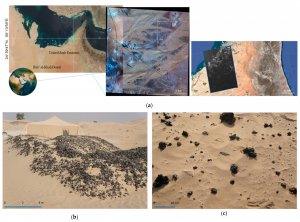
Figure 1. (a) Left inset: Saruq Al-Hadid archaeological site (24°39′47″ N 55°13′55″ E). Middle inset: Worldview-3 multispectral image (left scene—19 August 2019; central scene—19 November 2019; right scene—9 January 2019). Right inset: ALOS-2/PALSAR2 (L-band) image (2015-05-17T20:15:36Z). (b) Metalworking slag interspersed with metal artefacts, ceramics, and other cultural material. (c) Slag artefacts on the dune surface extending to over 1 km2 post-excavation.


This pioneering study is the first to apply such advanced techniques to the area, expanding upon previous work that combined radar remote sensing technologies with traditional archaeological practices. The goal of this project goes beyond mere discovery, aiming to develop a benchmark for national and regional remote sensing capabilities, which can be generalized to larger areas.


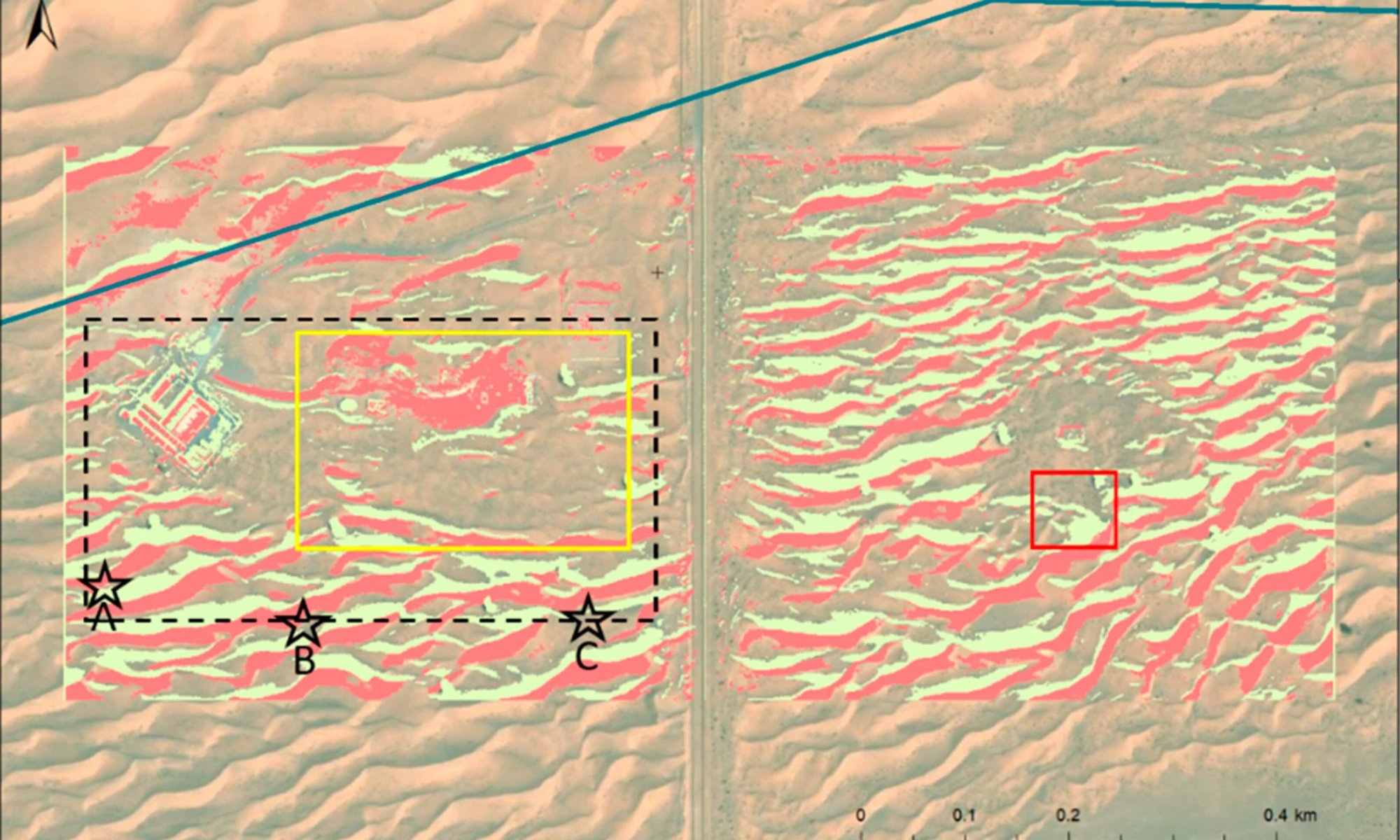
The researchers hypothesize that the artifacts found so far at the site were produced on-site, indicating potential hidden settlements nearby. Using machine learning algorithms, they developed an automated process to extract features from Synthetic Aperture Radar (SAR) data and perform geospatial analyses. The results have been promising, with detected areas on the site correlating with those already under excavation and revealing potential new archaeological zones.


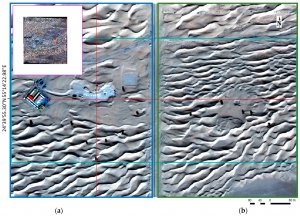
Figure 2. Worldview-3 colour-balanced RGB orthomosaic of the Saruq Al-Hadid site located in the mobile dune fields of the northeastern edge of the Rub’ Al-Khali desert, captured on 26 November 2019. (a) Western zone of observation. (b) Eastern zone of observation.


Of course, the process isn’t without its challenges. The desert environment, dominated by sand and sparse vegetation, presents a limited range of spectral signatures which can be problematic for machine learning algorithms. The varying surface interactions, such as those with sand dunes and rocky outcrops, add further complexity. However, researchers expect that the modeling and prediction accuracies will improve as they incorporate more data from recent field surveys and integrate a neural network and backpropagation algorithms.


“The dunes are fascinating on aerial and satellite imagery; they look like ocean waves, but sand,” Dr. Francis said. “For me, the fascinating thing was when the machine learning model indicated to us the potential area for excavation — and it turned out this was the one archaeologists had already started to explore. It validated the method.”


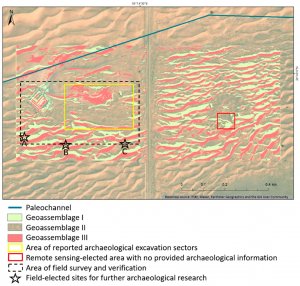
Figure 3. Reclassification of the study site, based on its landscape context and multimodal data, into three main geomorphological assemblages. The area of field survey and verification contained the reported main excavation sectors and surroundings. Based on the field surveys, three site locations were elected for future archaeological investigation


This research not only has implications for the future of archaeological studies but also for our understanding of paleo-drainage systems within the study area. It’s anticipated that the process’s applicability and efficiency will improve with more recent field surveys and further validation efforts using multi-temporal data. The techniques developed here could be adapted to better serve archaeological research in larger areas and similar environments, thereby illuminating the past and guiding future studies.


Moreover, this research suggests the potential for long-term, comprehensive investigations into the prehistoric landscape of the study site and similar environments. A workflow integrating machine learning and deep learning techniques with automated feature detection could generate and validate detections of unidentified archaeological objects and sites. This would enhance archaeological training datasets and aid in the identification of significant areas, predicting potential site locations, and formulating more informed research strategies for future investigations.


“This research represents a proof-of-concept on how SAR imagery and machine learning can guide archaeological searches in a desert environment,” Dr. Francis said. “The methods we developed work for all arid regions and it’s my hope we can apply it to the whole of the UAE and then take it to other desert areas in the region. These areas are still unexplored but we know they have cultural history.”


These findings represent a significant leap forward in the integration of cutting-edge technology and archaeology, showing that even in the harshest of environments, we can unearth the stories of our past. Who knows what other secrets lie waiting to be discovered beneath the sands?


Jade Sterling
Science Writer
06 July 2023

Khalifa University Researchers Develop New Resource for Understanding Human Emotion in Real-world Settings


K-EmoPhone mobile and wearable sensor dataset contributes to advancements in affective computing, emotion intelligence technologies and attention management.


Sensors embedded in our smartphones, watches, and even vehicles and homes can now give researchers unprecedented insights into human behavior and preferences. The devices we use to call a friend or post on social media can become windows into our psychological state and behavioral patterns — these data can be used to track signs of stress and emotions.


This new paradigm for use of abundantly available data feeds into an emerging field known as affective computing, which aims to develop systems that can recognize and interpret human emotions. Affective computing research is often conducted using data collected in controlled laboratory environments where participants either portray specific emotions or are exposed to stimuli that trigger particular emotional responses. Their physiological signals, facial expressions, and speech patterns are then captured and recorded. While this approach has its merits, viewing an emotional video clip in a lab doesn’t quite evoke the full range of human emotion as experienced in the real world.


To address this, a team of researchers including Khalifa University’s Prof. Ahsan Habib Khandoker and Prof. Leontios Hadjileontiadis, Chair of the Department of Biomedical Engineering, has developed a dataset that incorporates real-world emotion, stress, and attention labels gathered from university students. With researchers from Korea Advanced Institute of Science and Technology, Profs. Hadjileontiadis and Khandoker collected data from students’ Android smartphones and Microsoft Band 2 smartwatches using a variety of sensor data. Additionally, participants were asked to report their emotional state — happiness, stress, attention levels, task disturbance, and emotional change — up to 16 times a day. All of the data collection was undertaken according to a plan approved by the Khalifa University research ethics committee.


Named K-EmoPhone, the dataset offers an in-depth look at human emotions through behavioral, contextual, and physiological data. The data were collected from participants as they navigated their daily lives, with the technology and wearables prompting responses throughout the day. The dataset was published in Nature Scientific Data


“Despite the remarkable strides in building affective computing datasets, there is still a clear need for more comprehensive, real-world, multimodal datasets that include a broad range of in-situ emotional labels,” Prof. Hadjileontiadis said. “The K-EmoPhone dataset promises to illuminate the nuances of emotional states over time and has potential applications across a wide range of domains, from affective computing to attention management. We believe that such a comprehensive dataset will greatly benefit future research in data-driven understanding of human behavior and emotion.”


The research team used PACO, an open-source smartphone app that enables researchers to design and conduct experience sampling method studies (ESM). This approach aims to collect in-the-moment emotions, stress, attention levels, and other aspects of cognitive state, casting light on the human condition as it unfolds in everyday life.


The participants received push notifications as prompts to respond to a questionnaire, randomly appearing up to 16 times per day over a week. Each prompt would disappear after 10 minutes to reduce recall bias, ensuring immediate responses for the most accurate emotional state representation. Data were also gathered from the participants’ smartphones and wearables. Special data collection software was designed to unobtrusively capture data reflecting mobility, network traffic, social communication, application usage, and device status around the clock. The smartwatches provided additional sensor readings related to physiological responses, environmental contexts, and mobility.


“The K-EmoPhone dataset has been curated to help researchers study affective and cognitive states using multimodal data, encompassing physiological signals, personal contexts and interactions captured by smartphones, personal attributes, and mental health,” Prof. Khandoker said. “It is unique in its focus on timely responses to affective and cognitive states in real-world data collection settings.”


Potential applications include building machine learning models to predict mental well-being and productivity, emotion cognition, and stress detection. It could also be used in attention management studies and could shed light on how emotional states are affected by tasks that require timely responses. All data are open and available to any researcher, while the KU team is currently working on analyzing the data for emotion recognition and modeling behavior change.


Jade Sterling
Science Writer
06 July 2023

Enhancing Robotic Grasping with a New Approach to Panoptic Segmentation


New model unlocks vision in robotics and wins Best Paper Award at one of the most prestigious and influential conferences in the field of computer vision 


Robots are becoming increasingly involved in our everyday lives, lending their hands to everything from manufacturing and logistics to healthcare and housework. Yet, they face a significant hurdle: accurately recognizing and dividing up objects in their environment, a task made challenging by blockages, complex shapes, and ever-changing backgrounds. This stands in the way of them fully grasping the world around them, limiting their abilities and efficiency.


The technical term for this daunting task is ‘panoptic segmentation’ — dividing an image into foreground objects and background regions simultaneously. If robots could master this skill, their perception of the environment would greatly improve, enabling them to handle more complex tasks efficiently.


However, this robotic vision problem isn’t easy to solve. Cluttered scenes, object variability, occlusions (objects that block vision), motion blur, and slow temporal resolution of traditional cameras all conspire to make it a tough nut to crack. Added to this, high latency—or delays—in processing sensor data can slow down response times and reduce task accuracy. The latest developments in object segmentation using cutting-edge Graph Neural Networks have their own limitations; they add extra requirements as both panoptic segmentation and grasp planning must be done quickly and efficiently. More sophisticated algorithms and techniques that can grapple with the real world’s unpredictability and complexity are needed.


Dr. Yusra Alkendi, PhD student, and Dr. Yahya Zweiri, Professor and Director of the KU Advanced Research and Innovation Center, developed a method to overcome these challenges using a Graph Mixer Neural Network (GMNN). Specifically designed for event-based panoptic segmentation, a GMNN preserves the asynchronous nature of event streams, making use of spatiotemporal correlations to make sense of the scene. The KU researchers developed their solution with Sanket Kachole, Fariborz Baghaei Naeini and Dmitirios Makris from Kingston University and showcased their results at the IEEE Conference on Computer Vision and Pattern Recognition, one of the most prestigious and influential conferences in the field of computer vision. Here, they were awarded Best Paper by a distinguished committee that included experts from Meta, Intel, and leading U.S. universities.


The linchpin of their solution is the novel Collaborative Contextual Mixing (CCM) layer within the graph neural network architecture. This allows for the simultaneous blending of event features generated from multiple groups of neighborhood events. They also based their solution on event cameras, also known as dynamic vision sensors, which respond to local changes in brightness, with each pixel operating independently and asynchronously. The changes in brightness are reported as they occur and time-stamped with high temporal precision, providing precise information about when the change occurred, enabling the camera to capture fast and dynamic scenes accurately, including rapid motion and high-frequency events.


A dynamic vision sensor merges the cutting-edge CCM technique with an established neural network, with the new setup simultaneously processing events at multiple levels, leading to parallel feature learning —or high-speed multi-tasking for robots.


This architecture works by the encoder performing “downsampling” operations (reducing data) while the decoder carries out “upsampling” operations (increasing data) on events. The outcome is an effective panoptic segmentation model that’s particularly useful for robotic grasping.

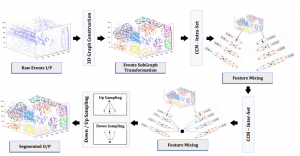
Proposed Framework – Graph Mixer Neural Network (GMNN) for panoptic segmentation of asynchronous event data in a robotic environment.
GMNN operates on a 3D- graph constructed of DVS events acquired within a temporal window, encapsulating its spatiotemporal properties. Subgraphs of
spatiotemporally neighboring events are then constructed (colored event in step 2) where each is processed by various nonlinear operations within Mixer and sampling modules to perform segmentation

The team tested their proposed model on an event-based segmentation dataset (ESD) under a wide range of conditions. Its success demonstrated the robustness of the novel CCM approach in overcoming obstacles like low lighting, small objects, high speed, and linear motion. The faster prediction times offered by the model is a leap in the quest to enable robots to process their environment faster and more accurately.


“GMNN has proven its worth, achieving top performance on the ESD dataset, a collection of robotic grasping scenes captured with an event camera positioned next to a robotic arm’s gripper,” Dr. Zweiri said. “This data contained a wide range of conditions: variations in clutter size, arm speed, motion direction, distance between the object and camera, and lighting conditions. GMNN not only achieves superior results in terms of its mean Intersection Over Union (a key metric for segmentation accuracy) and pixel accuracy, but it also marks significant strides in computational efficiency compared to existing methods.”


This model lays the groundwork for a future where robots can perceive and interact with their environment as efficiently as possible, opening up a world of potential applications across various industries. Future research will investigate the extent to which this new approach can be generalized in real-world scenarios with a variety of robots, sensors and environments, including depth sensors or thermal cameras, which could boost the model’s performance in low-light conditions. 


Jade Sterling
Science Writer
05 July 2023

Dynamic Molecular Crystals: The New Frontier of Materials Science


Dynamic molecular crystals are an underexplored realm within the material sciences, which are poised to play a critical role in a number of technologies in the coming decades. Researchers at the KU Advanced Materials Chemistry Center (AMCC) are applying multiscale materials modelling techniques to accelerate their discovery.


Over the last two decades, our perception of molecular crystals as brittle objects has changed and it is now clear that some molecular crystals can respond to a range of external stimuli including mechanical stress and light. This has opened up new avenues for the potential application of molecular crystals in technologies as actuators and optical waveguides. Today, the response of molecular crystals to mechanical stress has taken center stage because unlike inorganic crystals which have been used in a number of technologies for decades, molecular crystals comprise covalently bonded molecules that can be easily functionalized, thereby opening up a world of opportunities for tailoring the bulk properties of the solid.  


Dr. Sharmarke Mohamed, Associate Professor of Chemistry at Khalifa University, Mr. Mubarak Almehairbi, MSc student in Applied Chemistry and Dr. Tamador Alkhidir, Visiting Scholar at Khalifa University’s AMCC, have taken part in a comprehensive study to summarize the state-of-the-art in our evolving understanding of the mechanical properties and dynamic effects of molecular crystals, with work that was recently published in Chemical Society Reviews. This work was supported by Khalifa University’s AMCC, which has a dedicated Theme devoted to the application of multiscale materials modelling techniques to help support the discovery of new functional materials.


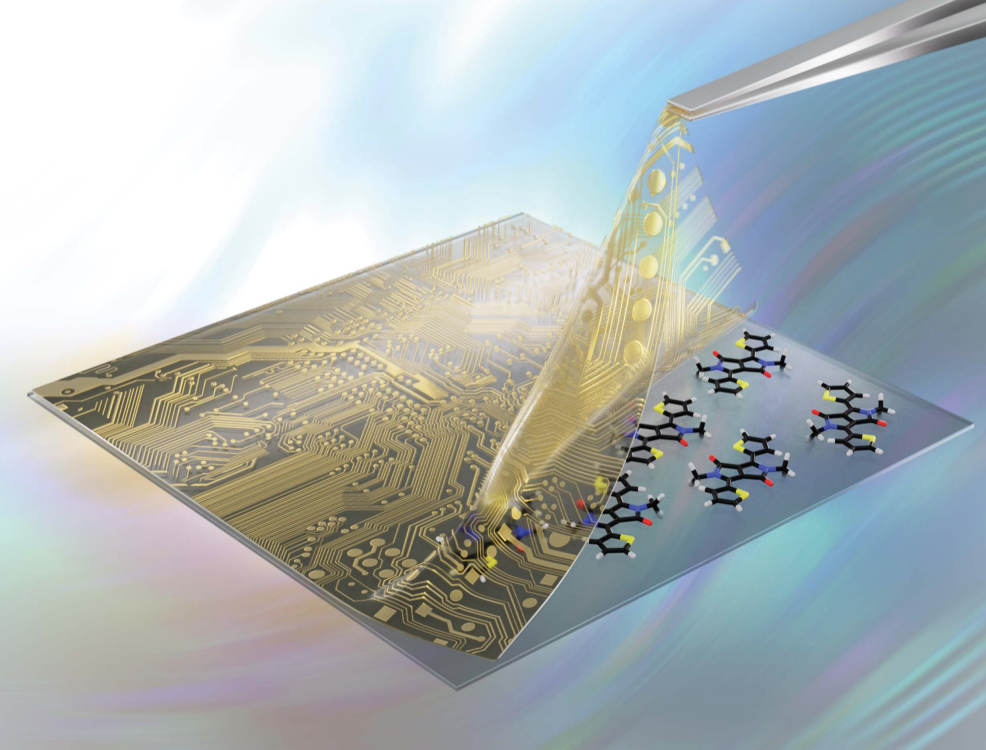
Prof. Mohamed’s other work in dynamic molecular crystals has shown that elastically deformable molecular crystals are ideal candidates for all-flexible devices. Notably DFT simulations led by Prof. Mohamed have shown that elastically deformable semiconducting crystals can be used in all-flexible devices because of their superior stress tolerance and field-effect mobility. This work was featured on the front cover of Chemical Science following the work of Prof. Mohamed and visiting scholar Dr. Tamador Alkhidir, where they demonstrated new insights into the molecular-level mechanism for elastic deformation in molecular crystals using periodic DFT methods. As for the future potential of these mechanically responsive crystals, Prof. Mohamed believes that “we have only scratched the surface as to what we can do with these dynamic molecular crystals. I got interested in this area of research several years ago because I saw the growing gap that existed between the interests of experimentalists and the capabilities of the best computing models available for explaining these complicated dynamic effects. I am glad to see that there are now an increasing number of theoretical groups working on this problem. The challenge at present is not so much in finding new applications for these dynamic molecular crystals but connecting the dots between the molecular structure and the bulk behaviour of the crystal. Experimentalists and theoreticians working together to gain a deeper understanding of the structure-property relationships is a key step on the way towards commercialization. At Khalifa University’s AMCC, we have a group of postdoctoral research fellows and students that are developing new code and applying multiscale materials modelling techniques to advance our understanding and pave the way for the discovery of new interesting dynamic molecular crystals.”  


Historically, the solid-state chemistry and mechanical engineering research communities have had divergent research interests, leading to a fragmented understanding of the mechanical properties and potential of molecular crystals. Prof. Mohamed’s group comprises both experimentalists and theoreticians working together to look at the same problem from different vantage points. There is an unmet need for greater synergy between the two groups of researchers, as increased collaboration begins to yield intriguing insights and applications in photonics, electronics, and soft robotics.


Prof. Mohamed says that if we can foster more collaborative research between international partners, we can better grasp the intricate phenomena underpinning these molecular crystals and expedite the journey from lab to real-world applications: “Ultimately, the goal is to master control over these molecular crystalline machines, transforming our understanding and enabling new technologies.”

A New Approach to Mapping Fractures in Abu Dhabi’s Oilfields


Groundbreaking method offers improved understanding of fracture orientation and paves the way for optimal energy extraction.


Natural fractures in rocks can substantially influence the hydraulic properties of fluid-saturated reservoirs, making it essential to accurately estimate their geometrical properties. This estimation can help understand fluid flow in reservoir zones, predict production rates, enhance oil recovery, and carry out dynamic simulation.


A team of researchers from Khalifa University has investigated fractured carbonate reservoirs, such as those found in the UAE, using the shear-wave splitting concept. Alejandro Diaz-Acosta, Dr. Fateh Bouchaala, Dr. Tadahiro Kishida, Dr. Mohamed Jouini, and Prof. Mohammed Ali developed a cost-effective analysis tool for detecting fractures in geological reservoirs and determining their orientation. Fractured carbonate reservoirs are of great interest to the oil and gas industry because of their potential for high fluid flow rates. The fractures often serve as pathways for the movement of oil, gas, and water, leading to enhanced permeability and increased production. Their results were published in Advances in Geo-Energy Research


A fractured carbonate reservoir is typically composed of carbonate rocks such as limestone or dolomite and contains significant quantities of fractures or cracks as a result of tectonic movements, changes in stress fields, and the dissolution of carbonate rocks. They can be complex and challenging to manage, with fractures of varying size, orientation, and density, and are sometimes filled with mineral deposits that limit their permeability. The interaction between the fractures and the surrounding rock matrix also significantly influences the reservoir’s overall behavior, including how fluids are stored and flow through it.


Over the years, several numerical models have been devised to glean fracture properties from seismic data, elucidating the complex relationship between anisotropy parameters and fracture properties. However, these models are typically developed and validated with synthetic data, which may not accurately reflect the complexities encountered with real field data, particularly in carbonate rock formations.


Using field data can often help decipher the geometrical and physical properties of a reservoir using a diverse range of techniques and concepts. One more sophisticated technique is shear-wave splitting.


Also known as seismic anisotropy, shear-wave splitting is a powerful tool in the analysis of fractured reservoirs, including carbonate ones. This method involves analyzing the behavior of shear waves as they pass through anisotropic media, such as fractured rocks.


When a shear wave encounters an anisotropic medium (a material that exhibits different physical properties in different directions), it splits into two orthogonal, polarized waves — one parallel to the fracture (fast shear wave) and one perpendicular (slow shear wave). This is because the speed of a seismic wave travelling through a rock may vary depending on the direction of travel: The wave may move faster in a horizontal direction through a layer of sedimentary rock than in a vertical direction due to the way the rock has been deposited or deformed over time. The difference in arrival times between the two waves is called the delay time, and it can provide valuable information about the extent and orientation of the fractures.


While shear-wave splitting is a powerful tool, it’s just one part of a suite of techniques that geophysicists use to analyze fractured reservoirs. Other methods might include electrical resistivity, well logging, and tracer tests, among others. Additionally, the interpretation of shear-wave splitting data can be complex, requiring the integration of other geological and geophysical information.


Applying the shear-wave splitting concept in reservoirs such as those in Abu Dhabi, which are characterized by heterogeneous lithology and composed mainly of carbonate rocks, is a challenging task. To address these challenges, the Khalifa University team developed an advanced approach based on multicomponent shear-wave velocity analysis and the shear-wave splitting concept. Their method offers a cost-effective and less overburden-sensitive alternative to other techniques.


The intricate structural attributes of Abu Dhabi oilfields can be traced back to a complex series of tectonic events that culminated in the formation of the Arabian Plate. Given the area’s tectonic history, it is not surprising that Abu Dhabi reservoirs are highly fractured. The fractures significantly contribute to the porosity and hydraulic conductivity. Evaluating their geometrical properties is vital for accurate reservoir characteristics.


The research team’s model proved to be accurate in identifying fracture orientations when tested on real-world field data from onshore oilfields in Abu Dhabi. Their analysis method is a promising, cost-effective tool that could be especially useful in complex environments like the fractured carbonate reservoirs of Abu Dhabi, where conventional methods might not be as successful.


The team’s technique could also be leveraged for site selection in carbon dioxide sequestration and energy storage projects.


This work lays the groundwork for the future advancement of the shear wave splitting concept in complex media, including carbonate rocks. The team has identified two important directions to explore in handling greater complexity in geological media: source-offset effects and the presence of fracture sets with multiple preferential orientations. Future research will incorporate machine learning techniques, with the team recently successfully identifying the features that demonstrate the highest sensitivity to shear wave splitting and determining the most effective machine learning techniques for analyzing these features. 


Jade Sterling
Science Writer
26 June 2023

Digital Twins Meet Blockchain: Revolutionizing Manufacturing


New blockchain solution aims to secure and validate digital twins and their real-world counterparts throughout their lifecycle. 


In the Industry 4.0 era, a new wave of technological innovations is revolutionizing manufacturing. While this transformation is fueled by breakthroughs in the Internet of Things (IoT), big data analytics, and artificial intelligence, digital twins are the emerging technology poised to cause a seismic shift.


Digital twins (DTs) are virtual doppelgangers of physical systems: digital clones of physical assets, providing intricate digital mirrors of real-world processes and assets. From design to manufacturing, assembly, and diagnostics, DTs can be used at all aspects of a product’s life cycle. They streamline problem-solving in critical systems, boost efficiency in production, and enhance cost-effectiveness.


And, just like their physical counterparts, these digital twins can be compartmentalized into sub-DTs, mimicking real-world structures where large systems are composed of multiple smaller components. Take an aircraft for example: The entire thing can be digitally twinned, and so can its individual parts.


The potential of digital twin technology can only be fully realized with credible, verifiable, and transparent communication and information sharing. In traditional manufacturing systems, centralized structures often pose risks of failures and corruption through a single point of vulnerability. The need for a more reliable mechanism to infuse trust into the data supplied to digital twins is evident.


Researchers from Khalifa University think blockchain is the answer. Research members at the Digital Supply Chain and Operations Management Center, Haya Hasan, Mohammad Madine, Dr. Ibrar Yaqoob, Prof. Khaled Salah and Dr. Raja Jayaraman, with Dragan Boscovic from Arizona State University, proposed a blockchain-based solution to ensure trust in the information fed into a digital twin. Their system was published in Future Generation Computer Systems, a top journal in the field of computer science.


“Digital twins are an important technology that can be leveraged to assist in unlocking value in Abu Dhabi’s manufacturing sector,” Prof. Salah said. “They play a key role in smart manufacturing processes and value chain development, as well as advancing the transition to a circular economy. For example: Digital twin models can be leveraged to efficiently investigate the potential of utilizing sustainable product material alternatives without compromising performance. Also, a more holistic digital system twin is likely to highlight opportunities for carbon emission reductions in key processes.”


Blockchain technology is a decentralized solution, ensuring transparency, accountability, and data integrity, all of which are vital in managing DTs. Thanks to its tamper-proof ledgers and stored logs, blockchain guarantees that once a piece of information is recorded, it can’t be altered, offering a robust foundation for the dynamic world of DTs.


Interestingly, the blend of blockchain with DTs brings into play non-fungible tokens (NFTs). These unique digital assets, minted on the blockchain, can symbolize the digital twins of physical entities. Each NFT provides proof of originality, ownership, and authenticity. When a token is minted, its identifier – or TokenID – becomes immutable, and it can be traced using on-chain logs.


The proposed solution aims to leverage the unique attributes of NFTs – their transparency, resilience, and tamper-proof nature – to manage the ownership of DTs effectively. By integrating with decentralized storage solutions, the metadata of NFTs, containing DTs information, can be securely stored. This way, the ownership of DTs and their sub-DTs can be tracked in a hierarchical manner using NFTs and sub-NFTs.


In this innovative model, DTs are sold alongside their physical counterparts. The goal is not only to manage ownership of DTs effectively but also to provide a reliable proof of delivery (PoD) for their associated physical assets.


“We are always on the lookout for how we can leverage emerging technologies in solving real-world problems,” Prof. Salah said.


The team’s solution is comprehensive. It employs a two-key security measure with the keys functioning as proof of delivery, recorded on the blockchain. Participants are incentivized to act honestly through the payment of collateral, which is returned upon successful delivery and payment settlement. NFTs are used to maintain proof of ownership and authenticity, with each NFT representing a DT and its metadata stored off-chain. All transactions are logged in blockchain’s tamper-proof records and with the Ethereum address of the caller, ensuring that no participant can deny their actions. The data cannot be edited or deleted, becoming part of the immutable ledger that creates reliable data provenance for historical usage. By leveraging the unique strengths of blockchain technology and NFTs, this solution brings enhanced security, traceability, and accountability to digital twins.


While blockchain offers numerous advantages, the technology is not without limitations.


It is decentralized by nature, meaning there’s no central authority to create regulations, verify transactions, or govern rights. Smart contracts form the backbone of any blockchain transaction, but they are vulnerable to exploitation if they aren’t correctly written. Plus, once deployed, smart contracts are also immutable, making it difficult to add or remove functionalities to the system.


However, despite ongoing research challenges, the combination of digital twins and blockchain technology offers enormous potential.


“Researchers at Khalifa University are currently investigating how to leverage NFTs and digital twins to solve many real-world problems,” Prof. Salah said. “NFTs have massive applications and the potential to disrupt various industries. This research can unlock opportunities for creators, investors, and consumers. We have been looking into how NFTs can be leveraged in solving problems in smart cities, healthcare, and the metaverse.”


Jade Sterling
Science Writer
26 June 2023

Khalifa University Students Present 54 Engineering Projects to Stakeholders on ‘Innovation Day 2023’

Diverse Project Concepts Demonstrate Students’ Creative Excellence, as well as Authentic and Community-Relevant Innovations


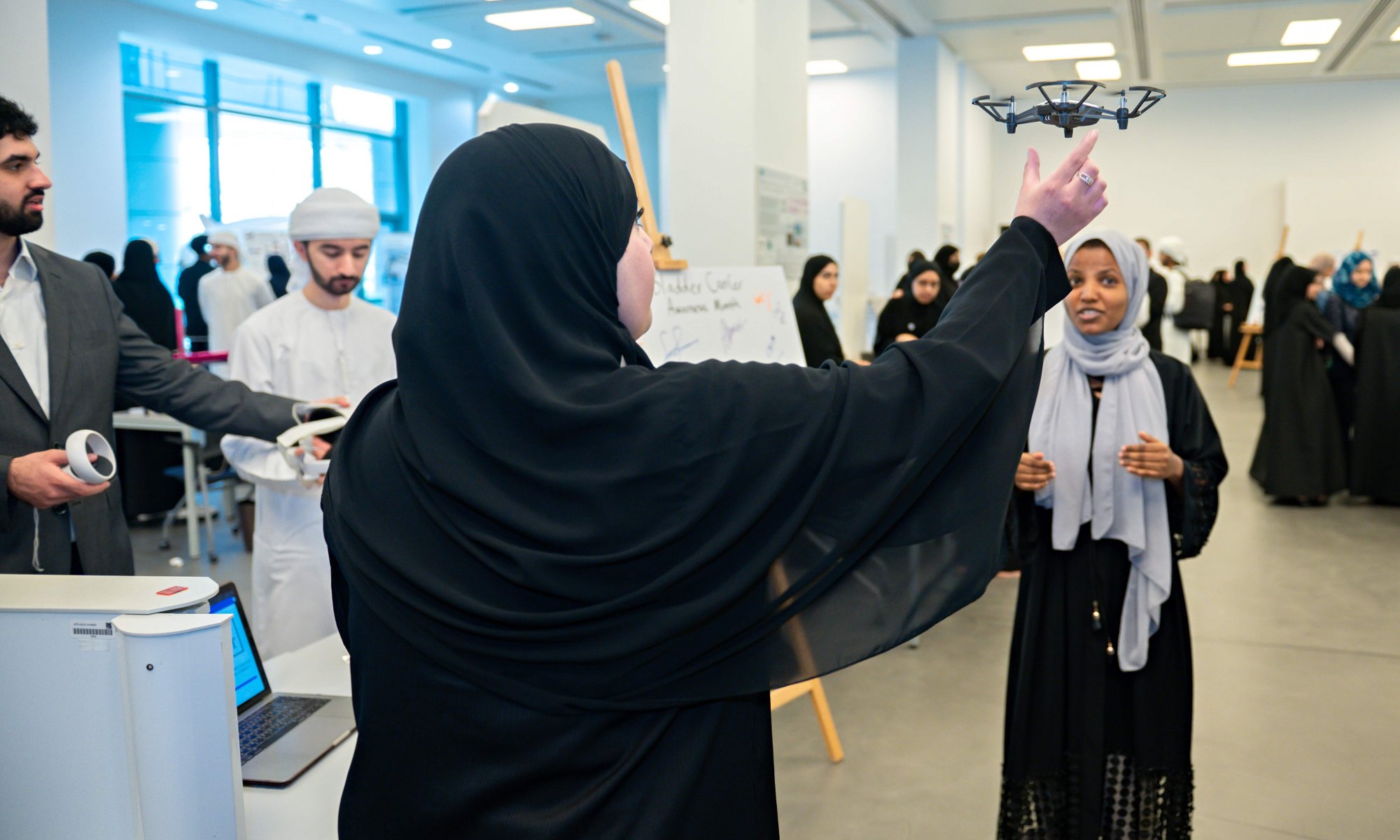
Khalifa University of Science and Technology today announced a total of 54 innovative senior design projects from six engineering disciplines were showcased to  the stakeholders on Khalifa University Innovation Day 2023 the annual exhibition that acknowledges the creative excellence of senior graduating students.


The range of project concepts displayed at the Khalifa University Main Campus included Aerospace Engineering (9 projects), Biomedical Engineering (11), Civil Infrastructure and Environmental Engineering (3), Electrical Engineering and Computer Science (17), Industrial and Systems Engineering (5), and Mechanical Engineering (9).


Dr. Arif Sultan Al Hammadi, Executive Vice-President, Khalifa University, said “Such an array of diverse project concepts demonstrate the creativity and authentic community-relevant innovations from Khalifa University students, which validates our status as a pioneering institution for intellectual and human capital.  These projects reflect the close involvement of the students with faculty whose guidance remains the key factor for the excellence of students.”


Aerospace Engineering projects included 3D scanning and reconstruction of aero-engine blades, Designing an electric vertical take-off and landing aircraft for urban air mobility, Design of light-weight aero-structures inspired by deep-sea sponge, Design and construction of an unmanned air vehicle for AIAA’s Design-Build-Fly competition, and a polymorphing wing capable of active span extension and passive twist.


The Biomedical Engineering projects included Electrokinetics for cancer diagnosis, 3D printing cells and scaffolds for bone tissue engineering, Artificial intelligence and autonomous drone for mask detection, Human lower limb vibration stimulation and sensory-cognitive integration in post-stroke rehabilitation: A pilot study, Tracking eye movements with common computing devices, and 3D-printed conducting polymer structures for next generation printed bioelectronics.


Projects from Civil Infrastructure and Environmental Engineering focused on Application of Gabbro dust for agricultural soil improvement in arid regions, Modular design of a sustainable building, and Food security and environmental protection via hydroponic system for decentralized wastewater reuse for agriculture. At the same time, projects from Industrial and Systems Engineering include Industrialized Building System (IBS) teaching lab for engineering students, Risk management and resiliency of the supply chains, Implementing lean manufacturing principles to Emirates Weather Enhancement Facility, and Renewable energy in the Middle East: current state and future plans.


Projects from Electrical Engineering and Computer Science covered various concepts relevant to AI-based environment prediction system, 3D sun-tracking hybrid PV-battery energy storage systems (BESS), camping tent, Water-fueled vehicle, Intelligent link boxes for smart maintenance high voltage underground cables in the UAE, Credit card fraud detection, Hybrid flying car, Islamic Zakah mobile applications, Design and control of induction machine-based Plug-In Electric Vehicle (PEV) powertrain, Machine learning for device level prediction in secure and resilient private phone mesh networks, Smart trash bin using computer vision-based separation, Embedded AI system for elderly healthcare monitoring, A drone-based system for autonomous and onboard monitoring of solar panels, Automated apartment management system, and Access control mechanism in the blockchain storage.


Some of the Mechanical Engineering projects included Harvesting wind energy using a sustained flag – smart city applications, Development and Instrumenting atmospheric drop tube furnace for the gasification of solid slurry fuels, Design of a flow-bench test apparatus, Design and Implementation of unmanned surface vessel, and Design of flare stack system for autonomous UAV inspection.


Clarence Michael
English Editor Specialist
23 May 2023

Khalifa University to Give Away Over 4,000 Books to University Students and Researchers at Abu Dhabi International Book Fair 2023

Rare Books on UAE’s Leaders, Heritage, History and on the Country’s Economic Success Will also be on Display


Khalifa University of Science and Technology today announced it will give away more than 4,000 books to visitors, including university students and researchers, during the Abu Dhabi International Book Fair 2023.


In addition, the Khalifa University stand will also showcase rare books about the UAE’s heritage and history, as well as some of the most important early books published on the UAE’s leaders including the Founding Father of the UAE Late Sheikh Zayed bin Sultan Al Nahyan. The Abu Dhabi International Book Fair 2023 will be held from 22-28 May 2023 at the Abu Dhabi National Exhibition Center (ADNEC).


Dr. Abdulla Al Hefeiti, Assistant Vice-President, Libraries, Khalifa University said: “We are proud to showcase rare and unique books about UAE’s heritage and history to mark our contribution to the country and our participation in the expansion of knowledge through giving away books to visitors including university students and researchers during the Abu Dhabi International Book Fair 2023. As a top-ranked university that leads in human capital building and in the creation of intellectual capacity, Khalifa University remains committed to focusing on highlighting the important roles of books and modern libraries that are becoming more digitized.”


Books authored by Khalifa University faculty that will also be on display include ‘The Military and Police Forces of the Gulf States, by Dr. Athol Yates, Associate Professor, Humanities and Social Sciences, as well as books from Dr. Ammar Nayfeh, Associate Professor, Electrical Engineering and Computer Science, Dr. Baskar Thangaraj, Research Scientist, Physics, Dr. Mohammad Sakhnini, Senior Lecturer, English, and Dr. Robert Llewellyn Tyler, Assistant Professor, Humanities and Social Sciences.


On campus, the Khalifa University Libraries is a thriving center for knowledge, offering Arabic and English titles about the UAE, and the Gulf Cooperation Council (GCC) region, as well as fiction, dictionaries, and general books in different disciplines including humanities, history, science, engineering, and technology, besides recreational and fiction titles.


The Khalifa University Libraries has a collection of more than 110,000 printed books in Arabic and English A research library, it is also a reputable leader among academic libraries in the region. The KU Libraries is committed to the goals of the university aimed at advancement of knowledge, science, and technology, while helping the faculty with publications in top journals, and Gold Open Access publishing information in partnership with scholarly and professional communities both locally and internationally. At the same time workshops on data literacy, and life-long learning are also offered to both undergraduate and postgraduate students.


Clarence Michael
English Editor Specialist
22 May 2023

Methane concentrations fluctuate over south-eastern Arabia

Satellite data was used to assess atmospheric methane concentrations and trends over south-eastern Arabia.


Atmospheric methane concentrations vary largely between seasons over the south-eastern Arabian Peninsula, according to assessments conducted by researchers at Khalifa University in the United Arab Emirates. 


“In assessments of the region to date, there has been no quantification of methane concentrations,” says Khalifa University atmospheric scientist, Diana Francis.


Francis and her colleagues used high-resolution satellite data to measure atmospheric methane concentrations over the south-eastern Arabian Peninsula, and to assess how they varied from season to season and over the years.


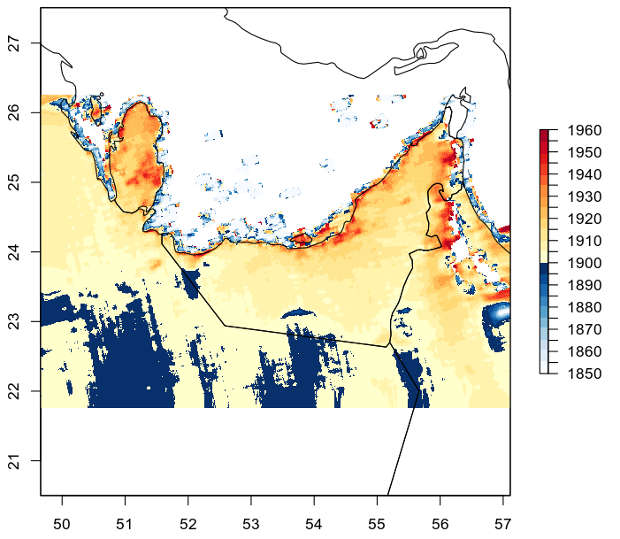
They found that concentrations were low in the colder seasons and high in summer. There was also a generally increasing trend in atmospheric methane, which is many times more powerful a greenhouse gas, contributing to global warming, than the more widely publicised carbon dioxide.


The highest methane concentrations were found in coastal sites, where wet flats called sabkhas and waste landfill sites are found. There were also high concentrations along the Al Hajar mountains, which extend from northern UAE through north-eastern Oman. It is possible that agricultural practices and natural habitats along this mountain range encourage methane-producing microbes.


“Before our work, we had to refer to studies performed elsewhere to infer the trends, but now we can provide proper numbers for this region,” Francis adds. The use of satellite data uniquely provides information on the total amount of methane over a large area, compared to the point data from ground observations used in other regions.


Francis says that the study provides valuable guidance for policymakers trying to develop mitigation strategies to limit the effects of global warming. The study also highlights the need for an extensive ground-based observational network for all greenhouse gasses.


The team next plans to obtain a more comprehensive picture by conducting measurements of carbon dioxide and other greenhouse gases. 


“The work is both very interesting and significant,” says atmospheric remote sensing expert Dietrich Feist at the German Aerospace Center, who was not involved in the research. He adds: “Despite being one of the anthropogenic methane hot spot regions in the world, the whole Arabian Peninsula is not covered by the global greenhouse gas monitoring networks.” He therefore encourages the type of follow-up work that the Khalifa team are planning.

Read article here: https://www.natureasia.com/en/nmiddleeast/article/10.1038/nmiddleeast.2023.71

Satellite data study examines methane levels over UAE

Researchers say reported increase in concentrations may be due to prevailing winds and human activity


Concentrations of methane are increasing over the UAE, a new study has revealed.


Levels are high in coastal areas, where there are landfill sites and sabkha habitats – mud flat or salt flat areas – both of which are key sources of the gas.


Inland, concentrations are high around the Hajar Mountains, where methane is thought to be emitted by farms and microorganisms that live in wadis.


The researchers at Khalifa University in Abu Dhabi behind the new study in Frontiers in Environmental Science used satellite data to calculate concentrations of the gas – which has the chemical formula CH4 – over the past few years.


They found that “column values” of methane, known as XCH4, were increasing by around nine parts per billion per year.

This was double the increase recorded over two other locations – the Arctic and Argentina – for which similar work has been carried out using satellite data.


Increasing population

Dr Diana Francis, an assistant professor in the earth sciences department at Khalifa University and the first author of the study, said that the increases in concentration were probably mostly the result of human activity “related to population growth and economic development in the region and globally”.


“Landfill sites and industrial sites in general are the most significant contributors to anthropogenic emissions and, therefore, they are the key sources to focus on when it comes to strategies towards net-zero targets,” she said.

A large proportion of the methane over the UAE may come, she said, from countries to the north, given that the prevailing winds are north-westerlies.


Methane is described as being 86 times more potent than CO2 at warming the Earth’s atmosphere over a two-decade period.


While CO2 retains its warming capacity for about 200 years, methane only remains for around nine to 12 years. As a result, measures to cut methane emissions can have a major effect on limiting temperature rises in a relatively short period.


Read full article here: https://www.thenationalnews.com/uae/2023/05/29/satellite-data-study-examines-methane-levels-over-uae/