
Khalifa University’s RIC2D’s Key Role in Consolidating UAE’s Status as Innovation Leader in Advanced Materials Highlighted at I2DM2024

Arab Region’s First Innovative & Industrial 2D/Advanced Materials Summit & Expo Focuses on Current Innovation Trends and Applications


Khalifa University of Science and Technology’s Research & Innovation Center for Graphene and 2D Materials (RIC2D) is proud to play a pivotal role in graphene and related materials’ research and innovation, contributing to the UAE’s status as a leader in fostering research and development in advanced materials, said His Excellency Homaid Abdulla Al Shimmari, Chairman of RIC2D’s Senior Management Board, at the Arab region’s first Innovative & Industrial 2D/Advanced Materials Summit & Expo (I2DM2024).


Organized by RIC2D and Phantoms Foundations, I2DM2024 has brought together some of the brightest minds from around the globe to the Arab region for the first time. The summit that runs until 28 November explored the insights and innovations in the industry, led by experts who offered plenary and keynote talks. . They included Nobel Laureate Professor Sir Andre Geim, University of Manchester, UK, and Professor Yury Gogotsi, Drexel University, US, Director, A.J. Drexel Nanomaterials Institute.


In his welcome remarks, Dr. Bayan Sharif, Khalifa University’s Provost, said: “Khalifa University is privileged to welcome the large gathering of scientists and innovators to this important summit on graphene, 2D, and advanced materials. This summit is not only about sharing knowledge, but is about forging connections to drive future innovations, collaborations, and tangible outcomes. The roundtables on startups and commercialization, and the B2B meetings on direct engagement will immensely facilitate potential partnerships and further cement Abu Dhabi’s role as a center for innovation in 2D materials.”


The summit features oral and poster presentations, a series of parallel workshops focused on topics of interest for the Arab region, most recent advances in technology developments, business opportunities in Advanced Materials commercialization, and an exhibition featuring the latest innovations and offerings. The day also includes two round tables titled ‘From Lab to Business’ and ‘Promoting Start-ups in Advanced Materials.


The second day’s sessions included five workshops focusing on Advanced materials in desalination and water treatment; Advanced materials in biotechnology and healthcare; Smart and advanced nanocomposite materials; Materials for hydrogen production, transportation, and storage; and Advanced Materials Characterization.


How 3D Printing is Enhancing Composite Durability and Reinforcing the Future

Advanced 3D printing techniques are enhancing fracture toughness in fiber-reinforced polymer composites, paving the way for high-durability applications across industries 


Fiber-reinforced polymer composites (FRPCs) have emerged as key players across the aerospace, automotive and biomedical engineering industries as lightweight and resilient advanced materials. These industries demand high-strength, lightweight materials that can withstand substantial forces, whether in the wings of aircraft or the joints of a prosthetic limb. FPRCs, often crafted via 3D printing, offer impressive strength-to-weight ratios but are prone to weaknesses in fracture toughness due to the layered nature of additive manufacturing. However, recent research highlights significant advancements in fracture toughness, which promises to broaden the use of FRPCs across high-stakes industrial applications. 


A team of researchers from Khalifa University, including Dr. Tayyab Khan, Dr. Murad Ali, Prof. Haider Butt, Prof. Rashid Abu Al-Rub, and Prof. Rehan Umer, collaborated with Zakia Riaz, Shanghai Jiao Tong University, China, and Yu Dong, Curtin University, Australia, to optimize 3D printing techniques for FRPCs. The team published their review in Composites Part B, a top 1% journal. 


“FPRCs are manufactured by embedding fibers like carbon, glass, or even natural fibers into a polymer matrix,” Prof. Umer said. “This combination enhances mechanical properties such as tensile strength, flexibility, and fatigue resistance, creating materials suited for extreme conditions. Additive manufacturing allows them to be produced with lower waste and less expense, but 3D-printed FRPCs have historically been limited by weaknesses at their internal layer boundaries, which make them prone to delamination and cracking under stress.”


Prof. Rehan Umer

“From aerospace to medicine, by fine-tuning 3D printing parameters, we can greatly enhance fracture toughness in composites, making them viable for applications that demand both durability and flexibility.”

Prof. Rehan Umer, Professor of Aerospace Engineering, KU


Studies show that higher temperatures lead to better bonding between layers in a 3D-printed composite and improved interfacial strength means that cracks are less likely to develop, significantly reducing the likelihood of delamination. Also, slower printing speeds increase the time for material bonding, producing stronger layers. Thicker layers reduce the number of inter-layer boundaries, making components more resistant to fractures that start between layers.  


“Despite these advancements, manufacturing defects such as voids, cracks, and porosity remain a challenge for FRPCs,” Prof. Umer said. “Unintentional porosity, which can develop within layers or at layer boundaries, reduces mechanical strength and increases the likelihood of fractures. Techniques such as heat treatment and laser polishing can help minimize surface and internal voids, while printing in vacuum environments has also shown promise by reducing the porosity of FRPC components.” 


The research team also pointed out that hybridization — embedding two types of fibers or combining two different polymers — can help achieve a balance of mechanical properties. Hybridization holds the potential to create materials with enhanced durability without sacrificing the customization sustainability advantages of 3D printing.


“Looking forward, additional research is needed to develop standards for evaluating the fracture performance of 3D-printed composites,” Prof. Umer said. “Current studies rely on general standards used for metallic or plastic parts, which may not fully capture the unique properties of additively manufactured composites. Establishing new standards could improve the reliability of 3D-printed components and further boost their adoption in critical applications.” 


Jade Sterling

Science Writer

Hybrid Microgrids Bring Reliable, Green Energy to Remote Communities  

A new algorithm for hybrid microgrids boosts energy access and sustainability in remote communities, cutting costs and emissions by optimizing solar, wind and diesel resources 

More than 4,000 remote communities worldwide rely on diesel generators for their electricity needs. This dependence on diesel is a strain on their finances and on the environment, with significant emissions limiting sustainable growth in isolated regions. To address these challenges, a team of researchers from Khalifa University has developed an innovative energy management system that optimizes hybrid microgrids, balancing solar, wind, and diesel power sources to make energy access more reliable, cost-effective, and environmentally sustainable. 


Adel Merabet, Dr. Ahmed Al-Durra, Dr. Tarek El-Fouly and Prof. Ehab El-Saadany, with Sujoy Barua, Saint Mary’s University, Canada, focused on a novel optimization method called the Levy Arithmetic Algorithm (LAA). This enhanced algorithm builds on traditional arithmetic optimization techniques by improving the search capabilities and avoiding common pitfalls in optimization, offering a robust solution for managing multiple power sources within a microgrid, especially under the complex conditions found in off-grid communities. The team published their results in Applied Energy, a top 1% journal. 


The hybrid microgrid model integrates solar photovoltaic panels, wind turbines, and multiple diesel generators to meet the load demands of remote areas. The LAA optimizes energy use by prioritizing renewable energy sources whenever they are available, thus reducing reliance on diesel generators. The team demonstrated that this method is sufficient to lower the energy costs and reduce the emissions significantly — up to 10% compared to diesel-only microgrids. 


Prof. Ehab El-Saadany

“With the pressing global need for sustainable energy solutions, especially in isolated areas, our model offers a promising path forward. By reducing fuel dependency and emissions while ensuring steady electricity access, this technology has the potential to transform lives in remote regions, paving the way for a cleaner, more resilient energy future.”

Prof. Ehab El-Saadany, Professor of Electrical Engineering, KU


“Reducing the reliance on diesel is especially critical given that fuel transportation and storage in remote areas often entails additional costs and logistical complexities, compounding the environmental and financial burden on these communities,” Prof. El-Saadany explained. 


The model’s breakthrough lies in the LAA’s ability to minimize both cost and emissions in energy dispatch decisions. Traditional economic load dispatch strategies have focused primarily on balancing load and costs, neglecting the emission impact of diesel power generation. The research team’s system weighs emission penalties and economic costs, resulting in a greener and more cost-effective solution, managing the timing and scale of generator use based on projected renewable energy availability.  


“Our results underscore the potential of optimized hybrid microgrids as a scalable solution for isolated and underserved communities,” Prof. El-Saadany said. “By reducing diesel dependency and maximizing the use of renewables, our model enhances resilience, lowering the environmental impact of energy generation and improving access to stable power.” 


The research team plans to continue refining the system for real-world implementation, with a focus on integrating electric vehicle charging and storage solutions, which could provide valuable backup power during low renewable output periods. Advanced load-shifting techniques within the LAA framework could also enable the system to anticipate demand changes more effectively, optimizing energy use over longer cycles.  


Jade Sterling

Science Writer

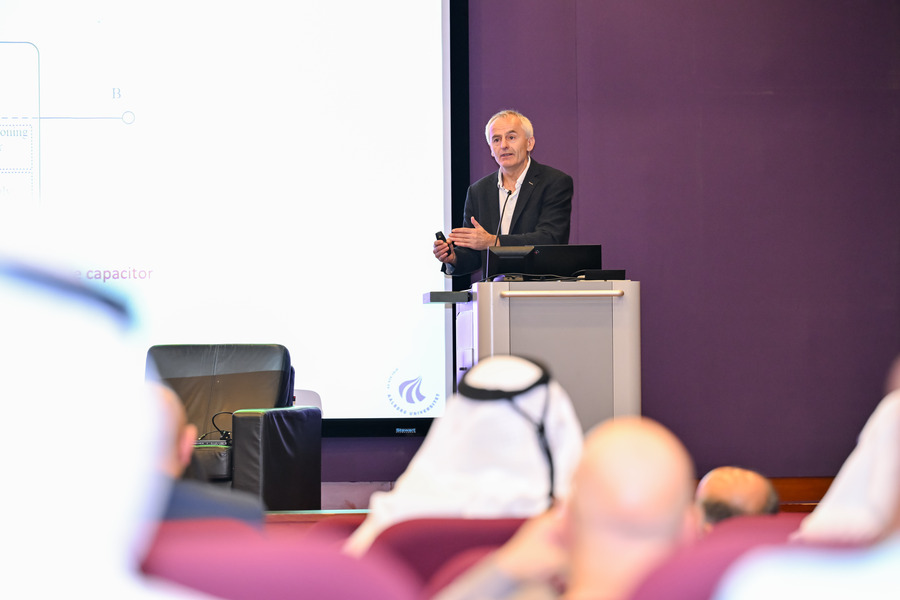
Expert Seminar Explores Power Electronics Technology with Prof. Frede Blaabjerg

A seminar titled ‘Power Electronics Technology – Quo Vadis’ brought together experts and enthusiasts to hear from Prof. Frede Blaabjerg of Aalborg University, Denmark. Held at the Sas Al Nakhl (SAN) Campus, the event focused on the critical role of power electronics in the evolving landscape of global energy systems, addressing the innovations and challenges that will shape the future of this essential technology.


Prof. Blaabjerg, a leading expert in the field, is recognized for his research in areas such as adjustable-speed drives, microgrids, and renewable energy technologies, and has received the 2019 Global Energy Prize for his significant contributions. He discussed the challenges and opportunities presented by the transition from fossil fuels to renewable energy sources. Key topics included the evolution of power devices, reliability in power electronics, and the stability of power electronic-based power systems.


Alisha Roy

Science Writer

New Cutting-Edge Model to Advance Soft Robotics

Algorithm Helps Robots Better Mimic Complex and Subtle Movements of Living Creatures

Researchers have long aspired to bring natural wonders like the maneuvers of an octopus arm or efficiency of bacteria into robotics and now scientists from Khalifa University have developed a new model in the field of biomechanics that makes the complex task of robot behavior more precise and simpler in the way robots move and interact with their environment.


The groundbreaking Geometric Variable Strain (GVS) model which transforms the control and movements of hybrid soft-rigid robots — those that combine both soft, flexible parts and rigid components, does not compromise on accuracy despite requiring fewer calculations, making it a powerful tool for the next generation of robotic systems.


This research was published in a paper titled ‘Reduced order modeling of hybrid soft-rigid robots using global, local, and state-dependent strain parameterization’ in the International Journal of Robotics Research, a top 1% journal.


The team includes Khalifa University’s Mechanical and Nuclear Engineering Associate Professor Dr. Federico Renda, and Postdoctoral Fellows Dr. Anup Teejo Mathew, Dr. Daniel Feliu-Talegon, and Dr. Abdulaziz Y. Alkayas, as well as Dr. Frederic Boyer, Faculty, Researcher, LS2N Laboratory, Institut Mines Telecom Atlantique, Nantes, France.   


Traditional models often struggle with the complexity of blending both flexibility and rigidity, but the GVS model streamlines the process by using a reduced-order framework, an efficient algorithm, which only needs a minimal amount of data to accurately represent the robot’s behavior. This model is implemented in the SoRoSim Toolbox, an open-source simulator highly regarded in the soft robotics community for its speed, accuracy, and stability, enabling the use of the GVS model in a wide range of modern robotic applications, from human-robot interaction to underwater exploration robots and industrial inspection tools.


Key advantages of the GVS model are its ability to simplify the design and control of robots that need to operate in complex environments. For example, in minimally invasive surgery, continuum manipulators — long, flexible robotic arms — can benefit from the model to achieve more precise movements, reducing the risk to patients. In underwater exploration, robots inspired by the natural propulsion systems of bacteria can navigate with greater efficiency and less noise, making them ideal for sensitive environments, while soft grippers benefit the agricultural and food industries.


In scenarios where soft and rigid components must work together seamlessly including robots used in 3D printing for construction, the GVS model helps tackle operational challenges like vibration and sagging of robots that use steel cables to control heavy loads.


Dr. Federico Renda said: “The GVS model’s ability to simplify the analysis process while maintaining accuracy is beneficial for the design and control of such robots, as it can lead to more efficient algorithms and potentially more responsive and versatile robotic systems. The impact of the model on the future of robotics, especially in the field of soft robotics, could facilitate the development of advanced robotic systems that are capable of more complex and subtle interactions with their environment, similar to living animals, leading to critical innovations.”


Alisha Roy

Science Writer

Nobel Laureate Prof. Guido Imbens Shares Insights on Causality and Data Analysis at Khalifa University Event

Prof. Guido Imbens, 2021 Economic Sciences Nobel Prize winner, shared his insights on the complexities of data analysis in today’s research landscape during a special visit to the Khalifa University Main Campus where he engaged with faculty and students of the Mathematics Department. 


A significant part of Prof. Imbens’ visit was a fireside chat titled ‘Causal Inference and Challenges in Data Analysis’, which was facilitated by Prof. Emilio Porcu, and Prof. Jorge Passamani Zubelli, Department Chair, Mathematics. Prof. Imbens also received an overview of the Mathematics Department and a tour of the campus that highlighted the university’s commitment to academic excellence. 


Prof. Imbens is well-known for his significant contributions to econometrics and for developing methodologies for drawing causal inferences. He is also an Advisory Board Member of ADIA Labs and the Applied Econometrics Professor at the Stanford Graduate School of Business and Professor of Economics in the Economics Department at Stanford University. Prof. Imbens’ visit to Khalifa University follows his keynote talk at the ADIA Lab Symposium at the Abu Dhabi Global Market (ADGM), further contributing to the dialogue between data analysis and economic sciences. 


Alisha Roy 

Science Writer

13 November 2024    

Revolutionary Screening Tools for Retinal Diseases Using Artificial Intelligence 

As retinal diseases become a growing global challenge, screening tools harnessing the latest in AI techniques can enable early detection and accurate diagnosis.


Retinal diseases stand as the leading cause of blindness globally. Alarmingly, half of those affected are unaware of their condition until it is too late, highlighting the need for early detection and diagnosis. According to the World Health Organization, in 2019, around 2.2 billion people worldwide were living with some form of visual impairment, with approximately one billion of those cases being preventable. 


The integration of machine learning techniques into healthcare has seen remarkable advancements, especially in the medical fields related to vision and eyesight. Models are showing promising capabilities in screening major retinal diseases that can lead to severe visual impairment or blindness if left untreated. 


A team of researchers including Khalifa University’s Dr. Bilal Hassan and Prof. Naoufel Werghi has developed a comprehensive review of existing models for retinal disease screening. Their work highlights how machine learning techniques and models can enhance early diagnosis and treatment by assisting clinicians in identifying retinal abnormalities through advanced imaging technologies. The research team included experts from Khalifa University in collaboration with Hina Raja and Siamak Yousefi, University of Tennessee; Taimur Hassan, Abu Dhabi University; Muhammad Usman Akram, National University of Sciences and Technology, Pakistan; Hira Raja, Margalla Institute of Health Sciences, Pakistan; and Alaa Abd-alrazaq, Weill Cornell Medicine-Qatar. They published their findings in Artificial Intelligence Review, a top 1% journal. 


“Machine learning is revolutionizing retinal disease screening. By enabling early detection and accurate diagnosis, these screening tools not only improve patient outcomes but also reduce the economic burden associated with advanced retinal diseases.”

Prof. Naoufel Werghi, Professor of Computer Science, KU

“In the United States, for example, approximately 50 percent of people with retinal conditions are not diagnosed until the disease has progressed significantly,” Prof. Werghi explained. “This delay stems from the insidious nature of many retinal diseases, where symptoms often do not become apparent until the disease has caused irreversible damage. However, early diagnosis, facilitated by AI, can transform outcomes for patients by ensuring timely intervention.” 


Machine learning models have emerged as a valuable tool in detecting retinal diseases early. They enable efficient and accurate screening of large populations, especially in regions with limited access to eye care professionals. These models can analyze retinal images, identifying structural abnormalities such as lesions and irregularities in the retinal layers, which can indicate the early onset of diseases like diabetic retinopathy and glaucoma.


Diabetic retinopathy (DR), for example, is caused by prolonged high blood sugar levels, leading to damage in the retinal blood vessels. If left untreated, it can result in complete vision loss. Models trained on vast datasets of retinal images have shown remarkable accuracy in detecting the earliest signs of DR even when the patient has no symptoms. Similarly, glaucoma, often dubbed the “silent thief of sight,” can be diagnosed early by models analyzing the retinal nerve fiber layers. In glaucoma, increased pressure in the eye damages the optic nerve. Assessing the thickness of these retinal layers and detecting early signs of damage can be achieved by these AI models, even before significant vision loss occurs.


“As machine learning techniques continue to evolve, their integration into healthcare presents endless possibilities,” Prof. Werghi said. “By enabling early detection and accurate diagnosis, these screening tools are revolutionizing the field of ophthalmology, offering innovative solutions for early diagnosis and management of retinal diseases.” 


Jade Sterling

Science Writer

22 October


Second Healthy Longevity Symposium Opens at Khalifa University

Over 25 Experts Convene to Address Aging as root cause of Chronic Diseases


Khalifa University of Science and Technology continues to play a vital role in advancing research and education in the fields of life sciences, genetics, and health and longevity, contributing to the global dialogue on improving health outcomes, said Prof. Habiba Alsafar, Conference Chair and Dean, Khalifa University College of Medicine and Health Sciences, as the second edition of the Healthy Longevity Symposium opened in Abu Dhabi today. 


Organized by Khalifa University and supported by the Department of Health – Abu Dhabi and the Department of Community Development, the Second Healthy Longevity Symposium brought together more than 25 leading experts for 12 insightful sessions, including a panel discussion, focused on the science of healthy aging and personalized wellness.  


The two-day scientific symposium that runs until 22 November 2024 focuses on offering new strategies to slow age-related diseases, enhance well-being and promote longevity. The day commenced with welcome remarks from His Excellency Dr. Mugheer Al Khaili, Chairman of the Department of Community Development, and Prof. Habiba Alsafar. Her Excellency Dr. Noura Al Ghaithi, Undersecretary of the Department of Health – Abu Dhabi, attended the symposium alongside H.E Dr. Rashed Alsuwaidi, Executive Director of Healthcare Workforce Planning Sector, H.E Hind Al Zaabi, Executive Director of Healthcare Facilities Sector, DoH, and H.E. Dr. Ahmed AlKhazraji, Acting Director-General of Abu Dhabi Public Health Center. 


H.E. Samar Almansoori, Senior Vice-President, Support Services, Khalifa University and H.E. Amal Nasser Al Jaberi, CEO, Khalifa University Enterprises Company (KUEC) also attended.  


Prof. Habiba Alsafar said: “Khalifa University is committed to establishing Abu Dhabi as a global leader in aging research and health innovation and the second edition of this symposium serves as a vital platform for collaboration among scientists, policymakers, and healthcare professionals.  The Symposium not only serves as a platform for sharing knowledge but also fosters the next generation of research through abstract presentations by emerging scholars.” 


H.E. Dr. Noura Al Ghaithi, Undersecretary of the Department of Health – Abu Dhabi, said: “Longevity is about empowering our community to live healthier, more vibrant lives. In Abu Dhabi, we are transforming healthcare with a proactive, preventive approach that puts patients at the heart of our strategy. The recent introduction of a groundbreaking regulatory framework and standards for the establishment of Healthy Longevity Medicine Centres in the Emirate aims at promoting wellness, disease prevention and longevity. We are prioritising personalised care to enhance the patient experience with treatments that meet individual needs. This initiative further cements Abu Dhabi’s position as a leading health destination globally, reinforcing our commitment to creating a healthier future for generations to come.” 


The theme of this symposium reflects the goal to improve the quality of life as we age. The Sessions included Dr. Alya Almulla who discussed the intersection of healthy longevity and public policy, and Dr. Nicole Sirotin who is the chief Excutive Officer at the Institute for Healthy living Abu Dhabi and presented on ‘Designing Health Policies: The Role of Healthy Longevity in Shaping Future Care’. Notable plenary speaker such as Professor George Malliaras from the University of Cambridge presented on ‘Bioelectronic Medicine – Current Status and Future Directions’, while Professor Joyce Harper from University College London explored embracing age through personal narratives. 


Talks also covered Cellular Senescence and the Skeleton by Professor Mustapha Kassem from Khalifa University, Stem Cell-Based Therapy of Ovarian Aging by Professor Ayman Al-Hendy from the University of Chicago, and Engineering Biology for Human Health and Longevity by Professor Barry Merriman from UCLA. Other discussions focused on advances in genomic technologies, personalized nutrition, and the clinical factors affecting aging, culminating in a judging event for abstract presentations. 


The second day will have keynote on The Role of Mitochondrial inflammation, and engaging sessions including Artificial Intelligence /Machine Learning in Brain Aging as well as an Award Ceremony.  

Khalifa University PhD Graduate Sara Alkhoori in Forbes Middle East’s 30 Under 30 List

Alkhoori  Files Provisional Application for US Patent and Nominated Technical Advisor in U.A.E. Ministry of Industry and Advanced Technology


Sara Alkhoori, a Khalifa University PhD graduate, is featured among the Forbes Middle East’s prestigious ‘30 Under 30’ list in the Science and Technology category.


Alkhoori who has made significant strides in advancing green fuel production, is one of 32 from the UAE in the Science and Technology category of the Forbe’s list, which includes 120 entries and 153 individuals representing 24 nationalities.


Alkhoori specializes in Materials Science and Engineering, particularly catalysis for sustainable fuel production. Her research centers on the production of biofuels from renewable sources such as palm oil, with a primary emphasis on designing catalytic materials for the deoxygenation process that converts palm oil into carbon-neutral renewable fuels. Alkhoori filed a provisional application with the United States Patent and Trademark Office and co-authored 15 journal publications. She is a nominated technical advisor for synchrotron-related activities in the U.A.E. at the Ministry of Industry and Advanced Technology.


Alkhoori has also made significant strides in advancing green fuel production. Her PhD thesis on turning palm oil into clean fuel was part of an internship program at ETH Zurich which focused on developing sustainable energy solutions for the future.


The Forbes 30 Under 30 is a set of lists of 30 notable people under 30 years old in various industries issued annually by Forbes magazine and some of its regional editions.


Read more


Clarence Michael

English Editor Specialist

20 November

Digital Twins and Dynamic NFTs for Crowdsourced Last-Mile Delivery

New research revolutionizes last-mile delivery with blockchain and digital twins for real-time monitoring and secure, efficient logistics 


As e-commerce continues to grow, efficient and secure last-mile delivery has become a pressing challenge. The surge in demand has highlighted significant shortcomings in package monitoring and security, particularly when dealing with sensitive or perishable items such as vaccines and food. 


A team of researchers from Khalifa University has developed a blockchain-based platform that utilizes digital twins and dynamic non-fungible tokens (NFTs) to revolutionize last-mile delivery. Their innovative approach tackles the complex needs of this final step in the delivery process from a distribution center to the recipient by leveraging smart contracts and real-time monitoring capabilities. 


Feruz Elmay, Dr. Maha Kadadha, Dr. Rabeb Mizouni, Dr. Shakti Singh, Prof. Hadi Otrok and Prof. Azzam Mourad are all part of Khalifa University’s Center on Cyber-Physical Systems (C2PS). They published their research in Information Processing and Management, a top 1% journal.


It is also often the most complex and expensive part of the supply chain. Last-mile delivery involves navigating local roads, dealing with traffic, and meeting customer expectations for rapid delivery, and as e-commerce continues to boom, the demand for efficient and cost-effective last-mile solutions has never been higher.  


Prof. Hadi Otrok

“Our work aims to bridge the gaps in last-mile delivery by integrating blockchain with digital twins for real-time monitoring and transparency. This approach not only enhances package security and efficiency but also sets a new standard for handling sensitive goods in a rapidly evolving logistics landscape.”

Prof. Hadi Otrok, Professor of Computer Science, KU

“One of the biggest challenges in last-mile delivery is the inability to monitor package conditions in real-time,” Prof. Otrok explained. “Traditional tracking systems only provide updates on package locations without critical data like temperature, which is essential for sensitive goods. Our system integrates digital twins — virtual models of physical items — into the delivery chain. By embedding sensors within packages, the platform’s digital twins monitor key variables such as temperature and humidity, ensuring that each package remains within safe conditions throughout its journey.” 


Digital twins also offer predictive capabilities: If a package encounters extreme conditions, the digital twin can simulate potential risks and notify delivery personnel immediately. This functionality is invaluable for goods like pharmaceuticals, where even minor temperature deviations can compromise produce quality. This way, delivery personnel receive alerts in real time, enabling them to take corrective action before a problem escalates. 


The research team’s solution enhances trust and transparency using blockchain. Blockchain’s immutability provides a secure, decentralized ledger that records each package’s journey from sender to receiver, but the team takes it a step further by incorporating dynamic NFTs. 


“Traditionally, NFTs are unique digital assets that don’t change over time, but dynamic NFTs evolve as new information is added, which makes them ideal for real-time delivery tracking,” Prof. Otrok explained. “Each package is assigned an NFT that captures all relevant data from the package’s origin to its delivery conditions. If the digital twin detects any discrepancies in package status, it updates the NFT’s metadata, creating an unalterable record of events. This data is stored securely on the blockchain, where anyone with access can verify the package’s history. This transparency not only boosts consumer trust, but also protects delivery personnel from disputes by providing an objective record.”


With last-mile delivery costs comprising up to 50% of total logistics expenses, this system presents a significant opportunity to reduce costs while boosting efficiency. By merging digital twins, blockchain, and dynamic NFTs, the Khalifa University team has created a resilient, transparent, and highly adaptable platform that could transform industries reliant on sensitive goods. Their experiments show that their system improved delivery success by over 75%, and by including smart contracts that assign tasks to delivery personnel based on a quality-of-service score, accountability is enhanced, as each worker’s performance is tracked and evaluated based on the conditions of the packages they handle. 


By combining real-time monitoring with predictive insights, this approach could reshape how industries manage inventory, optimize logistics, and safeguard product quality throughout supply chains.  


Jade Sterling

Science Writer

28 October

Khalifa University Leads Launch of MENA Climate Solutions Research Network at COP29 Baku

New Initiative Aligns with ‘2030 Climate Solutions Implementation Roadmap’


The UAE Universities Climate Network (UCN), co-chaired by Khalifa University of Science and Technology, launched the MENA Climate Solutions Research Network at the Global Alliance of Universities on Climate (GAUC) Pavilion at COP29, the 29th session of the Conference of the Parties to the United Nations Framework Convention on Climate Change at Baku, Azerbaijan.


The MENA Climate Solutions Research Network is mandated to tackle critical climate challenges in the MENA region by implementing solutions aligned with the ‘2030 Climate Solutions Implementation Roadmap’, which was released earlier by the United Nations Climate Change High-Level Champions.


The launch event was marked by a high-level workshop in which Khalifa University Professor Dr. Samuel Mao, Co-Chair of the UAE Universities Climate Network (UCN), was a panelist along with the other UCN Co-Chair Dr. Rasha Bayoumi of the University of Birmingham in Dubai, and colleagues of the Climate Champions Team.


The workshop at the GAUC Pavilion highlighted the critical areas for collaborations and discussed the next steps for enhancing the research community in the MENA region. Dr. Stephen Davison, Higher Education Head of the Climate Champions Team, provided an overview of eight thematic priorities in the ‘2030 Climate Solutions Implementation Roadmap’.The thematic priorities cover Energy, Transport, Industry, Land Use, Oceans & Coastal Zones, Water, Human Settlement and Finance.


Additionally, Dr. Mao was an invited panelist in the high-level water management workshop chaired by Ayesha Al Ateeqi, Lead of the Mohamed bin Zayed Water Initiative, and Associate Director for Economic and Energy Affairs of the UAE Executive Affairs Authority.


The workshop offered an opportunity for participants to share their experiences of, and visions for, how technology can be leveraged to address global water scarcity and raise its importance on the international agenda. Reem Al Mansoori, Future Sustainability Leader of the UAE Youth for Sustainability Initiative, was also a panelist. 


Clarence Michael

19 November 2024

English Editor Specialist


Researchers Develop Energy-Efficient Memory Chip to Tackle Electronic Waste

Device to Boost AI and Machine Learning Algorithms Sustainably 


Even if a gadget were to last forever, the reality is that technology evolves so quickly that many devices soon find themselves outdated and discarded. This constant churn contributes to overflowing landfills and to tackle this growing problem, scientists from Khalifa University and other institutions have developed a sustainable memristor – a device made from organic materials synthesized via green synthetic approach, which acts like a memory chip that can remember electrical signals, enhancing AI applications in technology ranging from self-driving cars to smartphone cameras. 


The research was published in a paper titled ‘Energy Efficient Memristor Based on Green-Synthesized 2D Carbonyl-Decorated Organic Polymer and Application in Image Denoising and Edge Detection: Toward Sustainable AI’ in Advanced Science, a top 1% journal. The Khalifa University efforts are led by Dr. Dinesh Shetty, Department of Chemistry and theme leader in the Center for Catalysis and Separations (CeCaS), and team includes Dr. Abdul Khayum Mohammed, Ruba Al-Ajeil, Department of Chemistry, Dr. Ammar Nayfeh, Dr. Ayman Rezk, Department of Electrical Engineering. The work was achieved in collaboration with the external research team led by Dr. Nazek El-Atab, King Abdullah University of Science and Technology (KAUST) as well as Dr. Pratibha Pal, and Dr. Hanrui Li, Dr. Georgian Melinte.


According to the United Nations, around 53 million metric tons of e-waste is produced globally every year, with most of it going unprocessed, with traditional memory chips utilizing nonrecyclable or even toxic materials. The memristor developed by the team is constructed from a biocompatible polymer, which is chemically stable and environmentally friendly. It can regulate and remember the flow of electricity, making them incredibly efficient and eco-friendly. Moreover, the device successfully operated over 1,000 cycles, repeatedly switching between different electrical states without losing performance. Such high level of endurance, reliability and stability, without significant degradation over time make the device a promising option for long-term use in technology.


Dr. Dinesh Shetty

“We have developed a sustainable memory chip from organic materials to help improve AI applications in technologies ranging from self-driving cars to smartphone cameras.”

Dr. Dinesh Shetty, Associate Professor, Khalifa University

Dr. Dinesh Shetty said: “The good electronic properties, environmentally friendly nature, and ingenious structure render the carbonyl-rich, two-dimensional organic polymer a suitable candidate for neuromorphic computing. Such characteristics of the device confirm its ability to mimic synaptic functions of the biological brain. More importantly, the combination of a green synthesized and biocompatible switching layer with electrodes that can be potentially fully recycled, in addition to the high energy efficiency, can contribute to sustainable applications.”  


Alisha Roy 

Science Writer

18 October 2024