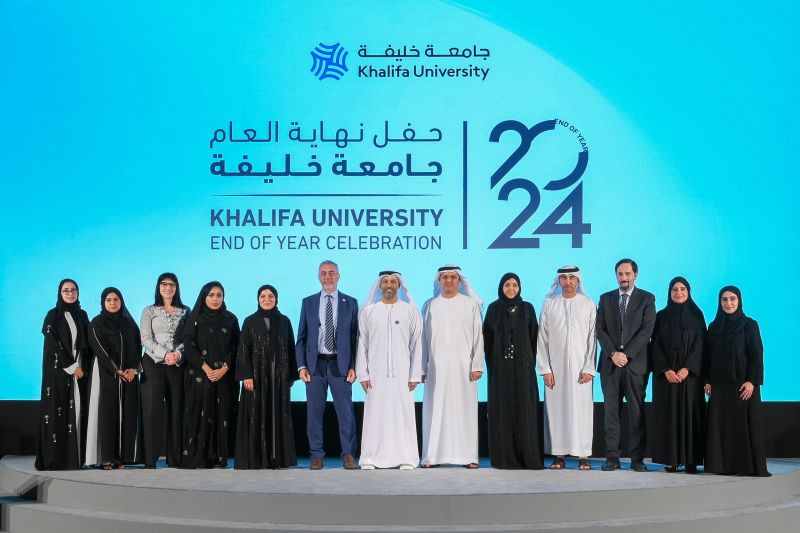
Congratulations to 62 outstanding individuals who made a remarkable impact in 2024. Their dedication, innovation, and team spirit foster a positive work environment and set the standard for excellence. Today, we honor their achievements across various categories:
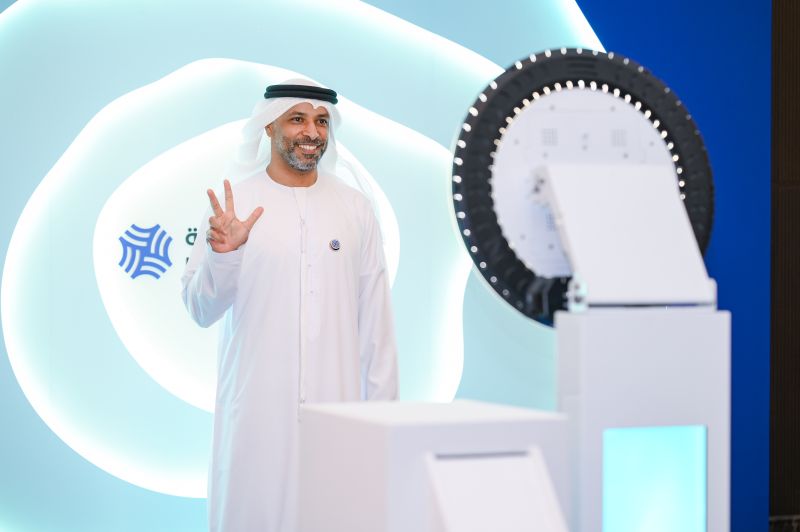
The Khalifauniversity family came together for the End-of-Year Achievements event.
The #Khalifauniversity family came together for the End-of-Year Achievements event. It was a night filled with proud moments, inspiration, and laughter as we celebrated the individuals who make KU exceptional.
Khalifa University’s Ankabut Information Technology and Siemens signed an MoU to collaborate on digital transformation and smart campus solutions for the higher education sector.
Khalifa University’s Ankabut Information Technology and Siemens signed an MoU to collaborate on digital transformation and smart campus solutions for the higher education sector. The strategic partnership will cover a pilot project, market penetration, and enhanced research and innovation, in line with UAE’s strategic goals for innovation in education and sustainability.
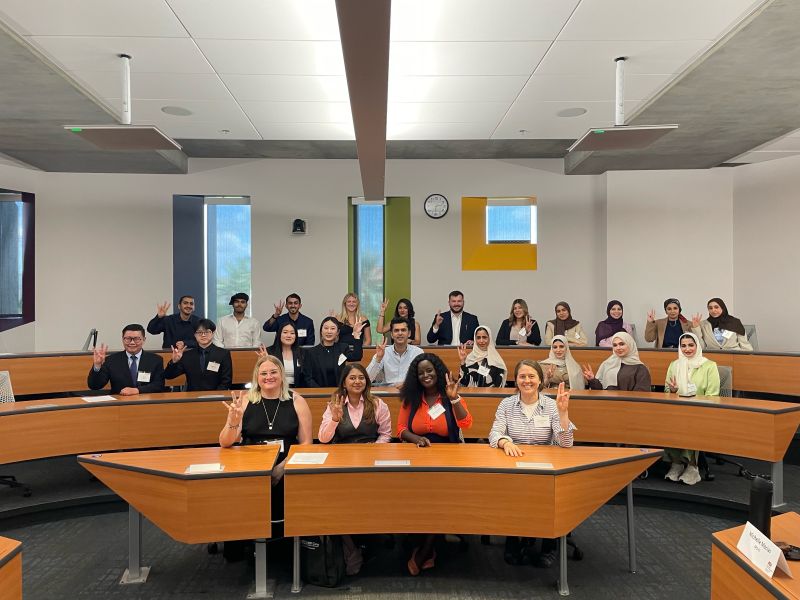
Khalifauniversity and the Arizona State University (ASU), US, have launched a dual Master of Science program
Khalifauniversity and the Arizona State University (ASU), US, have launched a dual Master of Science program – the first of its kind in the #UAE – with a core curriculum focused on embedding entrepreneurship and #innovation in higher education. They will be mentored for their projects by faculty from both institutions. The Khalifa University-ASU partnership will be supported by the university’s business and investment arm Khalifa University Enterprises Company (KUEC), and the deep-tech incubator Khalifa Innovation Center (KIC).
Musculoskeletal Modeling: A New Frontier in Gait Analysis
From injury recovery to cutting-edge prosthetics, advanced gait analysis is driving the next era of personalized medicine.
The way we walk can be a window into our health. Changes in gait—a person’s unique rhythm and movement patterns of walking—can signal neurological disorders, musculoskeletal conditions, and even cardiovascular disease. Traditionally, assessing gait required basic measures of step length or speed, often paired with observational insights. However, the field has taken a leap forward, thanks to advances in musculoskeletal (MSK) modeling.
A team of researchers from Khalifa University have reviewed these advances, providing a comprehensive overview of the different existing multibody modeling platforms and their potential practical applications. Muhammad Abdullah, Abdul Aziz Hulleck, Rateb Katmah, Dr. Kinda Khalaf and Dr. Marwan El-Rich published their review in the Journal of NeuroEngineering and Rehabilitation, a top 1% journal.
Musculoskeletal models simulate the intricate dynamics of the human body, from joint mechanics to muscle forces. By combining data from motion capture systems, force plates, and electromyography (EMG), these models create detailed quantifications and representations of how forces travel through bones, muscles, and joints during movement. Such precision allows researchers to explore not only how people walk but also why their gait patterns may deviate due to injury, aging, or disease.
“Musculoskeletal modeling has transformed our ability to analyze gait mechanics and predict the impact of treatments, offering unprecedented tools for clinicians and engineers alike.”
— Dr. Marwan El-Rich, Associate Professor, KU
“MSK modeling offers insights that go beyond what we simply observe and measure noninvasively,” Dr. El-Rich said. “These tools let us predict muscle forces, evaluate implant designs, and even optimize rehabilitation protocols.”
Applications of MSK modeling are already making waves. From advancing prosthetic designs to simulating how implants might behave under real-life stresses, these models are reshaping orthopedics and rehabilitation. The integration of finite element modeling with MSK systems is even allowing researchers to predict stresses on tissues like cartilage, paving the way for more effective surgical interventions.
However, the researchers noted one critical gap: the lack of musculoskeletal models based on female anatomy. This shortfall underscores the importance of developing inclusive models that better represent diverse populations.
“While challenges remain—such as high computational demands and limited real-world validation—musculoskeletal modeling continues to push the boundaries of how we understand and improve human movement,” Dr. El-Rich said.
Jade Sterling
Science Writer
Distinguished Service Award for Electrical Engineering Department Lab Engineer
Electrical Engineering Department Lab Engineer Nishar Ahamed Manzoor was honored with the ‘2024 Distinguished Service Award’ for individual excellence, under the ‘Distinguished Service’ category, during the Khalifa University annual Staff Excellence Awards 2024.
Manzoor received this award for his exceptional dedication, professionalism, extensive knowledge, and effective problem-solving skills demonstrated throughout 2024. He was recognized as one of 62 outstanding individuals who have made a remarkable impact at Khalifa University in 2024.
Khalifa University Student Honored with Young Achiever Award at Health 2.0 Conference
Participation Highlighted as Among the Best in Bio Medical Industry
Khalifa University’s Biomedical Engineering student Aishah Alkindi was presented the Young Achiever Award at the prestigious Health 2.0 Conference, Dubai, for her dedication to fostering connections within the healthcare community. Alkindi was the only recipient from the UAE among a diverse group of awardees in various categories.
The award reflects Alkindi’s contributions to the medical field and for building connections at medical conferences. The skills she gained from her coursework projects, leadership roles, and achievements beyond her academics have helped her to clinch the award.
The Health 2.0 Conference featured over 50 presenters, including prominent CEOs from medical companies and leading doctors in their fields. Alkindi and her team also received recognition in the conference’s event summary magazine, highlighting their participation among the best in the industry.
Under the guidance of her faculty advisor, Dr Mohamed Elgendi, Assistant Professor of Biomedical Engineering and Biotechnology, Alkindi is collaborating with fellow students Hind Yaqoot, Sara Aljenibi, and Noof Alnagbi on an innovative biomedical project – the rehabilitation shoe named ‘iStep.’ This project focuses on developing the UAE-made iStep Smart Shoe, designed to enhance patient recovery through real-time monitoring by integrating wearable technology into patient care. The goal is to improve healthcare delivery and provide significant benefits to the community.
Alisha Roy
Science Writer
Khalifa University and Arizona State University Launch UAE’s First Dual Master’s Program in Entrepreneurship and Innovation
Students to Receive Support for Launching Startups and Will Also Be Trained for Pitching to International Venture Capitalists
Khalifa University of Science and Technology and the Arizona State University (ASU), US, jointly announced the launch of a dual Master of Science program – the first of its kind in the UAE – with a core curriculum focused on embedding entrepreneurship and innovation in higher education.
According to the agreement signed by both universities, students will earn a Master of Science in Entrepreneurship and Innovation from ASU, which is delivered by faculty from the W. P. Carey School of Business and Herberger Institute of Design and Arts, and a Master of Science degree in Engineering Systems and Management with a concentration in Technology Management, Innovation, and Entrepreneurship from Khalifa University. The Khalifa University-ASU partnership will be supported by the university’s business and investment arm Khalifa University Enterprises Company (KUEC), and the deep-tech incubator Khalifa Innovation Center (KIC). Focusing on the commercialization of scientific research, these two entities will support students who wish to launch startups after completing the dual degree program.
Dr. Bayan Sharif, Provost, Khalifa University, said: “We are delighted to collaborate with Arizona State University on this unique dual Master of Science program, that will provide Khalifa University students with a studio based academic and experiential immersive international experience that will culminate in a pitching competition to investors. This initiative demonstrates our consistent commitment to nurturing entrepreneurship and innovation among our students, in line with our mandate to contribute to the UAE and the region, and to realize the vision of our leadership in creating a knowledge-based economy. The dual program will equip and empower students with the necessary skills and experiences they need not only to succeed in academics and research, but also to convert their innovations into global businesses that can contribute to the economic development of the UAE.”
Hitendra Chaturvedi, co-director of the MS in Entrepreneurship and Innovation program at the W. P. Carey School of Business, said “ASU has been ranked No. 1 in Innovation 10 years in a row, and natural segue to innovation is entrepreneurship. The future demands world leaders with an entrepreneurial mindset who can excel in ambiguity and uncertainty. We are excited to partner with KU to teach the entrepreneurial mindset to such entrepreneurs, and intrapreneurs.”
The dual degree program will also offer Khalifa University faculty, and students, as well as staff from KIC and KUEC opportunities to network with students and faculty from the MSc in Entrepreneurship and Innovation program at ASU that will enable transfer of knowledge especially in pitching for investors and developing the entrepreneurial mindset that can be applied when starting own company, or working for a large company.
Students will spend part of their study at ASU then return to Khalifa University, the faculty from both institutions will mentor the students on the dual degree program during the execution of their projects.
Khalifa University PhD Student Takes Top Honors at 3rd MENA IAEE Conference Riyadh
Sara Khalil Zaidan Awarded Best Student Research Presentation on Energy System Models and Sustainable Development
Khalifa University PhD student Sara Khalil Zaidan from the College of Engineering and Physical Sciences was awarded first place for Best Student Research Paper for her study on sustainable development at the 3rd MENA International Association of Energy Economics (IAEE) at King Abdullah Petroleum Studies and Research Center (KAPSARC), Riyadh, Saudi Arabia. The study was presented at the conference and was selected out of over 220 submissions and 112 presentations.
Zaidan’s paper, co-authored by Dr. Mutasem El Fadel, Chair, Department of Civil and Environmental Engineering, is titled ‘Leveraging Energy System Models Towards Optimal Synergies Between Net-Zero Transitions and Sustainable Development Goals.’ It focuses on the critical intersection of Sustainable Development Goals (SDGs) and Net Zero Emissions, two key topics that dominated conference discussions.
The 3rd IAEE MENA Conference, themed ‘Domestic Energy and Economic Transformations in a Transitioning World,’ provides a platform for economists, academics, researchers, and policymakers to engage in meaningful discussions about challenges and opportunities with clean and sustainable energy transition in the MENA region.
Zaidan’s paper presentation addresses the intertwined nature of the United Nations’ goals: the short-term target of achieving the SDGs by 2030 and the long-term objective of reaching Net Zero Emissions by 2050 under the Paris Agreement. With a pressing timeline for the SDGs, the research emphasizes effective policy actions targeting multiple SDGs simultaneously.
Using modeling tools, the study explores the connections between various SDGs, utilizing the 248 indicators defined by the UN. It categorizes the SDGs into environmental, economic, and social domains, revealing that current Energy System Models (ESMs) primarily focus on energy-related environmental indicators, with limited attention to economic and social factors.
Dr. Mutasem El Fadel said “This excellent student achievement at the 3rd MENA International Association of Energy Economics (IAEE) showcases Sara’s dedication to advancing research in energy studies and supports the position of Khalifa University as a key player in the dialogue about sustainable energy solutions.”
Alisha Roy
Science Writer
Self-Powered Memory Device Mimicking Brain Functions to Advance Smart Electronics
Self-Powered Device Mimics Brain Function, Enabling Real-Time Adaptation for Enhanced Learning and Responsive Interactions.
Taking cues from the human brain, Khalifa University researchers have developed a self-powered device mimicking important brain functions, such as adapting its learning based on past experiences, achieving an impressive accuracy rate of 93%.
This breakthrough enables the development of neuromorphic systems, such as learning and memory processing, without relying on external power sources. By harnessing self-powered technology, these systems efficiently process and store information using minimal energy, making them ideal for applications in energy-constrained environments like biomedical devices and portable electronics.
The research paper titled ‘Unidirectional Neuromorphic Resistive Memory Integrated with Piezoelectric Nanogenerator for Self‐Powered Electronics’ was published in Advanced Functional Materials, a top 2% journal in the field of material science. The team at Khalifa University includes Professor Baker Mohammad, Dr. Moh’d Rezeq, Associate Professor, Dr. Anas Alazzam, Associate Professor, Dr. Yawar Abbas, Research Scientist, and Dr. Muhammad Umair Khan, Post-Doctoral Research Fellow.
Operating at low voltage current, the device combines an energy-generating system with a novel memory structure that retains and forgets information, similar to how the brain processes information. A special memory component in the device works like a brain cell, and it is built using layers of materials, including Indium tin oxide, Zinc Oxide and gold. It also features a sensitive piezoelectric energy generator that converts pressing movement into electrical signals, like a neuron.
“Khalifa University’s System on Chip Lab has developed a self-powered device that mimics the brain’s synapses, enabling real-time data processing without external power — for smarter, energy-efficient technology.”
— Dr. Muhammad Umair Khan, Post Doctoral Fellow, Computer and Information Engineering, Khalifa University
In the brain, synapses, or connections between nerve cells that transmit signals, can increase in strength, enhancing learning and memory — a process known as synaptic plasticity, which is crucial for developing artificial neural networks. In their device, the researchers found that applying electrical pulses can affect the device’s ability to adapt to new information, allowing it to strengthen or weaken connections in response to varying stimuli, much like how the brain learns and adjusts.
Such key functions like strengthening and weakening connections and adapting over time occur without needing additional components, showcasing the device’s potential for self-powered sensing systems. As the device mimics brain functions independently, it also makes for an efficient, advanced, energy-saving technology. Additionally, the device forgets information more quickly when the input signals are weaker, indicating it can rapidly adapt to new inputs. This ability to forget faster allows it to respond faster in changing environments that require quick updates.
Dr. Muhammad Umair Khan said: “The study highlights the Khalifa University System on Chip Lab’s leading role in advancing neuromorphic computing. Our research team has developed a self-powered device with great potential for self-powered electronics applications. Its ability to detect mechanical stimuli and store data makes it invaluable for self-powered electronics. This self-powered memory device not only represents a significant leap in neuromorphic computing but also holds the potential to revolutionize how future technologies interact with the world, offering smarter, more energy-efficient solutions across a broad spectrum of applications.”
Alisha Roy
Science Writer
Bridging the Power Gap
A team of researchers from Khalifa University has developed a multi-strategy framework for enhanced electricity access in developing regions, promoting fair and sustainable power distribution, and supporting climate resilience for a resilient future
Access to reliable electricity remains a pressing issue for many developing countries, with over 675 million people worldwide still lacking this essential service as of 2021. The global push to achieve universal electricity access by 2030, as outlined by the United Nations, has spurred numerous initiatives to tackle this issue, but limited fuel availability, high investment costs, and infrastructure inadequacies have hindered progress.
A team of researchers from Khalifa University has proposed an innovative, multi-strategy framework for optimizing electricity access. By incorporating community engagement and utility collaboration, the framework offers a way to extend electricity access while maintaining fairness and sustainability. Dr. Ameena Al-Sumaiti, Dr. Rathor Sumitkumar and Dr. Hoach The Nguyen published their framework in Sustainable Cities and Society, a top 1% journal.
Developing countries face numerous obstacles in achieving universal electricity access. In Sub-Saharan Africa, for example, only about half the population has access to electricity.
“The situation is exacerbated by the lack of consistent fuel supplies, the fund availability for investing in renewable energy projects and population growth,” Dr. Al-Sumaiti explained. “Demand flexibility, designed to manage electricity access by encouraging consumers to adjust their energy use, encounters significant hurdles. These include its reliance on voluntary participation, the persistent issue of rotating load-shedding to address supply gaps, and the absence of reliable electrification in underserved communities, often exacerbating disparities in energy access.”
“Our research demonstrates that with the right approach, we can significantly improve energy efficiency and make meaningful progress toward closing the electricity gap in developing countries.”
— Prof. Ameena Al-Sumaiti, Associate Professor of Electrical Engineering and Computer Science, Khalifa University
The multi-strategy framework optimizes electricity distribution, particularly in regions suffering from power shortages. It integrates demand-side management strategies with utility operations, focusing on scheduling essential appliances and optimizing power flow in distribution grids. By leveraging a combination of technical and social strategies, the framework seeks to enhance energy efficiency, improve fairness in electricity distribution, and boost economic sustainability.
“The core of the framework is an optimization tool designed to schedule electricity access in a way that maximizes the benefits for both consumers and utility providers,” Dr. Al-Sumaiti said. “This tool considers a variety of factors, including consumer preferences, appliance types, and grid constraints. The tool prioritizes essential appliances, including- but not limited to- lighting, fans, and water pumps, to ensure that communities continue receiving vital services during power shortages. It also factors in the influence of weather conditions and the operational impact of one appliance on another, while accounting for how these factors may change over time in different seasons.”
The optimization framework demonstrated significant improvements in energy efficiency and economic sustainability when evaluated across various scenarios.
The tool also proved scalable, with a sensitivity analysis showing that the system could handle population growth and increasing appliance usage without sacrificing performance. As more households connect to the grid, the multi-strategy approach ensures that electricity is distributed in a way that balances the needs of both consumers and the power system.
“Addressing the challenge of supply shortage and achieving universal electricity access in developing economies requires innovative approaches and investment in energy infrastructure,” Dr. Al-Sumaiti said. “By integrating social equity, consumer preferences, and technical optimization, our framework provides a pathway to more efficient, fair, and sustainable electricity distribution.”
Jade Sterling
Science Writer

Khalifa University Alumni Mahmoud Adi in Forbes Middle East’s 2024 Top Venture Capitalists List
Mahmoud Adi, Founding Partner at Shorooq Partners, Leverages Expertise to Support Startups in Gaming Sector
Khalifa University alumnus Mahmoud Adi, Founding Partner at Shorooq Partners, has been named one of Forbes’ Top Venture Capitalists in the Middle East for 2024, alongside fellow Founding Partner Shane Shin. This prestigious recognition highlights the pivotal role he and the firm play in shaping the venture capital landscape across the region.
The Forbes list showcases the top leaders from the Middle East’s most active venture capital firms, emphasizing their innovative strategies, key investments, and significant contributions to the startup ecosystem.
With over twelve years of global experience in the investment sector, Adi has been instrumental in establishing Shorooq Partners as the premier early-stage venture capital firm in the Middle East, North Africa, Pakistan, and Turkey (MENAPT). It is also the first regional VC firm regulated by the Abu Dhabi Global Market Financial Services Regulatory Authority (ADGM FSRA).
Adi’s expertise in venture capital has enabled him to support numerous innovative startups, particularly in the gaming sector. His strategic investments have played a vital role in fostering entrepreneurship and driving technological advancements in the region. Furthermore, as the former CEO of Hub71, Abu Dhabi’s groundbreaking tech ecosystem initiative, Adi has been at the forefront of building a thriving environment for tech entrepreneurs.
At Khalifa University, Adi completed his engineering education, gaining essential skills and knowledge that have helped him navigate the investment landscape and support the next generation of innovators.
Alisha Roy
Science Writer