
UAE’s NCEMA and Khalifa University Host First-ever National Forum for HAZMAT Experts in Abu Dhabi

Forum Gathers International Scientists, Researchers and Industry Experts in Fields of Chemical, Biological, Radiological, Nuclear, and Explosives Materials


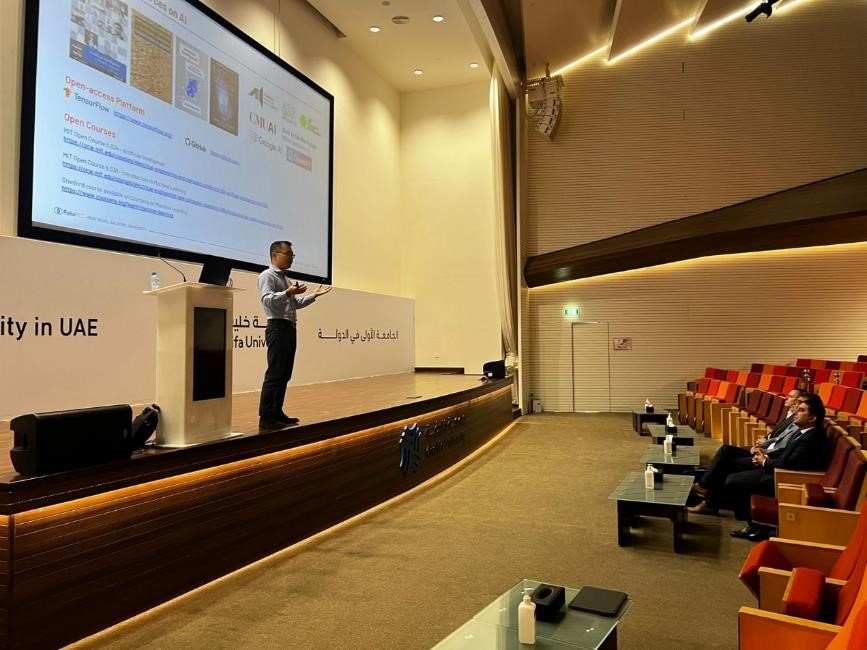
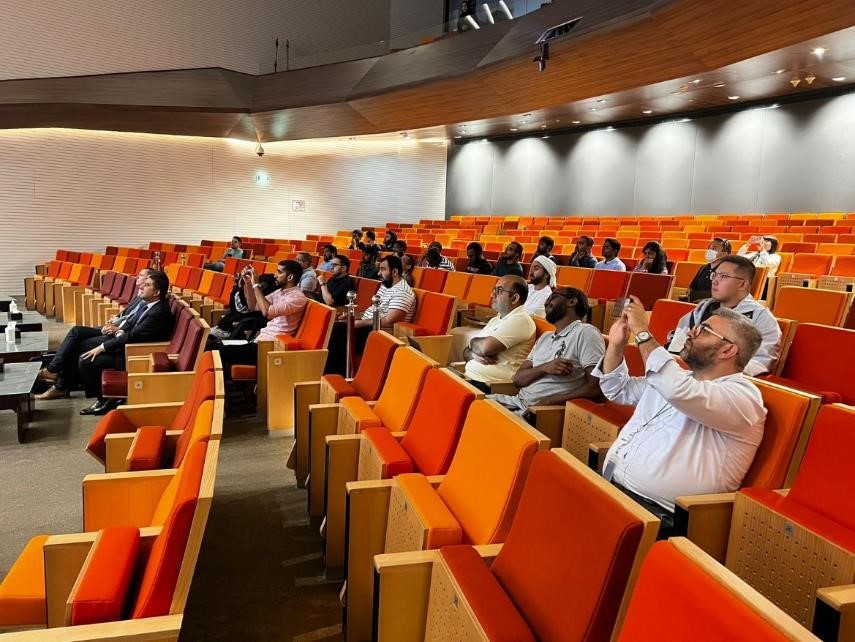
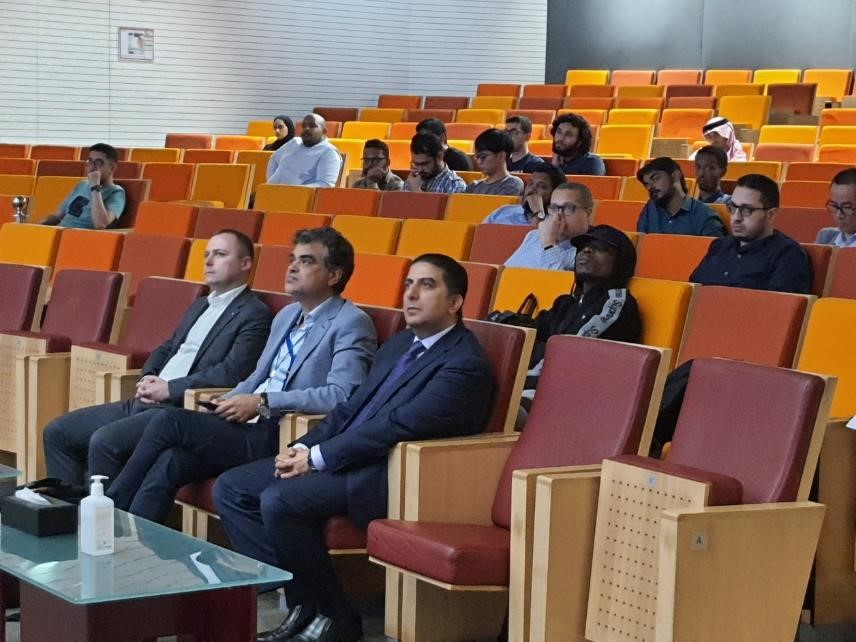
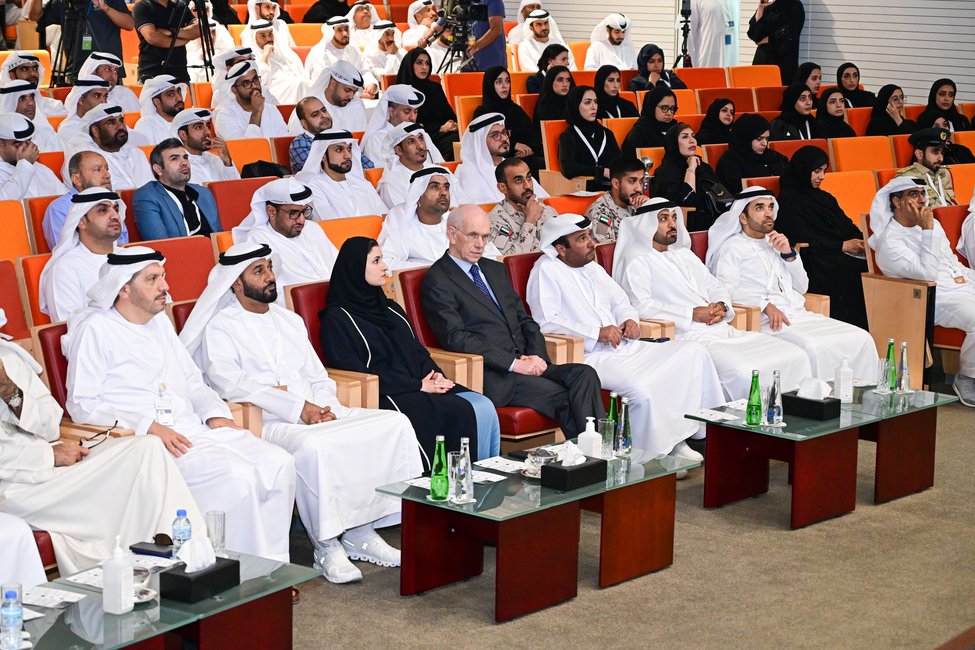
The first-ever National Forum for hazardous materials (HAZMAT) Experts, organized as a collaboration between the National Emergency Crisis and Disaster Management Authority (NCEMA), and Khalifa University of Science and Technology, launched today in Abu Dhabi, as part of the UAE’s endeavor to promote research, development and innovation to enhance the role of experts in the emergency and crisis management network.


Her Excellency Sarah Bint Yousif Al Amiri, Minister of State for Public Education and Advanced Technology, delivered the keynote address at the one-day forum held at the Khalifa University Main Campus. His Excellency Hamad Saif Al Kaabi, Director, Hazardous Materials Incidents Department, NCEMA, also addressed the gathering.


Minister Sarah bint Yousif Al Amiri, affirmed that the United Arab Emirates places special emphasis on research and development through the adoption of a comprehensive national system for research and development. This system enhances the role of experts and specialists and their readiness to work in various vital and priority fields. It supports research centers and laboratories in all national efforts to enhance existing sectors and develop new sectors. It also supports research efforts in terms of response and rescue capabilities, pre-planning and preparedness measures, studying potential scenarios and their impacts, testing hypotheses and solutions, and ultimately proving the results.


Her Excellency Al Amiri added that the Ministry of Industry and Advanced Technology plays an integrative role with the relevant government entities at the national level, such as the National Emergency Crisis and Disaster Management Authority, and academic and research institutions such as Khalifa University. Additionally, it strengthens partnerships with the private sector, which are supportive efforts to exchange knowledge and expertise in the field of research and development, and enhance the opportunity to shape a sustainable future in line with the developmental vision of the UAE, and enhance its regional and international competitiveness.


Her Excellency also highlighted the important national role of the National Emergency Crisis and Disaster Management Authority and the valuable information presented in the National Guide for Research and Studies on Hazardous Materials and Operations. She pointed out that these integrative efforts, in collaboration with the academic sector represented by Khalifa University, enhance the ability of national institutions to deal with crises and develop innovative solutions for their management. This strengthens the UAE’s capabilities to deal with various transformations and equip Emirati generations with the necessary expertise in these fields.


Scores of scientists, researchers and industry experts in chemical, biological, radiological, nuclear, and explosives (CBRNE) fields from across the world attended the forum to emphasize the importance of research in emergency and crisis management because of the evolving risk landscape. The Dubai Police Scientists Council provided some of the most important research and studies in the field of hazardous materials, while a panel discussion offered insights into the challenges and opportunities of research.


For his part, His Excellency Obaid Rashid Al Hosan Al Shamsi, Vice President of the NCEMA, emphasized the importance of the National Forum for Hazardous Materials Experts, which brings together a select group of experts and specialists to enrich the national system for emergency and crisis management with their specialized knowledge, stating “This forum aims to enhance our understanding of the necessary scientific knowledge in order to sustain the natural course of life by assessing and studying the risks and threats related to hazardous materials”.


His Excellency Al Shamsi added that the partners within the national system play a significant and vital role in managing hazardous materials incidents by employing their capabilities and resources to the highest standards and potentials. Their contributions greatly contribute to addressing numerous challenges and potential risks with proactive and high flexibility.


Dr. Arif Sultan Al Hammadi, Executive Vice President of Khalifa University, stated on this occasion: “Emergency and crisis management require adequate preparedness levels, which calls for research into possible scenarios from use of hazardous materials. We are delighted to partner with the National Emergency Crisis and Disaster Management Authority (NCEMA) to host this forum and we believe the knowledge exchange and discussions will benefit key stakeholders, especially decision-makers and regulatory agencies operating in this area.”


During the forum, The National Emergency, Crisis and Disaster Management Authority (NCEMA) presented details on the ‘National directory for research and studies of hazardous materials accidents and operations’, and the National Data Center offered information on the ‘Analytical platform of national resources for research centers, laboratories and experts for hazardous materials incidents’.


Khalifa University presented details on some of the most important research and studies in hazardous materials, while the UAE University offered information on the methods of selection and arbitration of research in this field. The Advanced Technology Research Council (ATRC) emphasized on the ‘Methods of selecting and funding research and studies’, while the contribution by the Emirates Center for Strategic Studies and Research was also highlighted.


The panel discussion covered areas including scientific research (in all disciplines, public health, animal health, environment), risk assessment, prediction and modeling, technologies to improve detection and response, artificial intelligence, studies on foresight, comparison and best practice, and, strategic studies, as well as behavioral and cultural studies influencing emergency response in general.


The forum aimed to promote networking and collaboration among different stakeholders to brainstorm and capture priority areas for conducting research and studies in order to solve challenges and/or improve emergency management such as prevention, preparedness, mitigation, response, and recovery.


Clarence Michael
English Editor Specialist
23 June 2023
Khalifa University’s Smart Mobile Application Contest 2023 for High School Students to Kick Off from 14 August

Themed ‘Astronomy and Space Exploration’, SMAC 2023 Will Help Expand Students’ Intellectual Curiosity in Addressing Challenges and Opportunities in Space Sector.


 Khalifa University of Science and Technology today announced the launch of the Smart Mobile Application Contest (SMAC) 2023 for students in grades 9, 10, and 11 to help them explore basic app technologies, offering them a platform to showcase their technical skills and creativity in astronomy-related app development. 


Scheduled to run from 14-24 August with the theme ‘Astronomy and Space Exploration’, the challenge calls for participants to develop an application that should focus on addressing the challenges and opportunities within the space sector, relevant to the UAE’s commitment to scientific advancement and space exploration. Participants need to describe how the application is related to the theme and astronomy’s expected contribution to education, trade, manufacturing, and culture. 


Dr. Yousof A. Alhammadi, Acting Senior Vice-President, Academic and Student Services, Khalifa University, said: “Khalifa University’s Smart Mobile Application Contest (SMAC) 2023 will aim to foster innovation while nurturing digital skills. This challenge trains, equips and leads young minds towards creating their own mobile apps and seeks to assess their understanding of UAE’s recent progress in the space sector. We believe more students will have an opportunity to participate in this contest and tune themselves towards research and innovation of the future, and will participate in driving progress and distinction in the UAE through the study of astronomic bodies and space.” 


In order to participate, a student must attend all sessions of the four-day short courses from 14-17 August. A team of two students will submit only one project. Live project demonstrations are scheduled for 24 August. The panel of judges will assess the entries based on originality and value of the idea (30%), implementation and functionality (40%), app quality (20%), and cultural focus (10%). 


SMAC 2023 aims to help expand students’ intellectual curiosity, while assisting them in developing technical and soft skills through presentations, problem solving, teamwork, communication, social skills, coordination, and time management. The challenge also seeks to raise students’ awareness of the role of coding, computer science, and engineering in general, in today’s digital world..

KU Researchers Achieve Efficient Phenol Removal Using a Hybrid Membrane


A team of researchers from Khalifa University has developed a breakthrough approach to water treatment as innovative low-cost, eco-friendly membrane could revolutionize toxic phenol removal from water. 


Removing phenol from industrial water is a pressing global issue. A persistent organic pollutant, phenol is commonly used in agriculture and general disinfection. Long-term exposure to phenol can damage human health and potentially cause cancer, but despite the risks, phenol is an indispensable chemical in various manufacturing industries, making it hard to completely eliminate its use.


However, its poor biodegradability means it cannot be removed from wastewater by conventional methods. Traditional methods, like distillation and degradation, are either energy-intensive or lead to secondary pollution and increased costs. Removal by adsorption is more energy-friendly but can also result in secondary pollution due to the breakdown or leaching of adsorbents. 


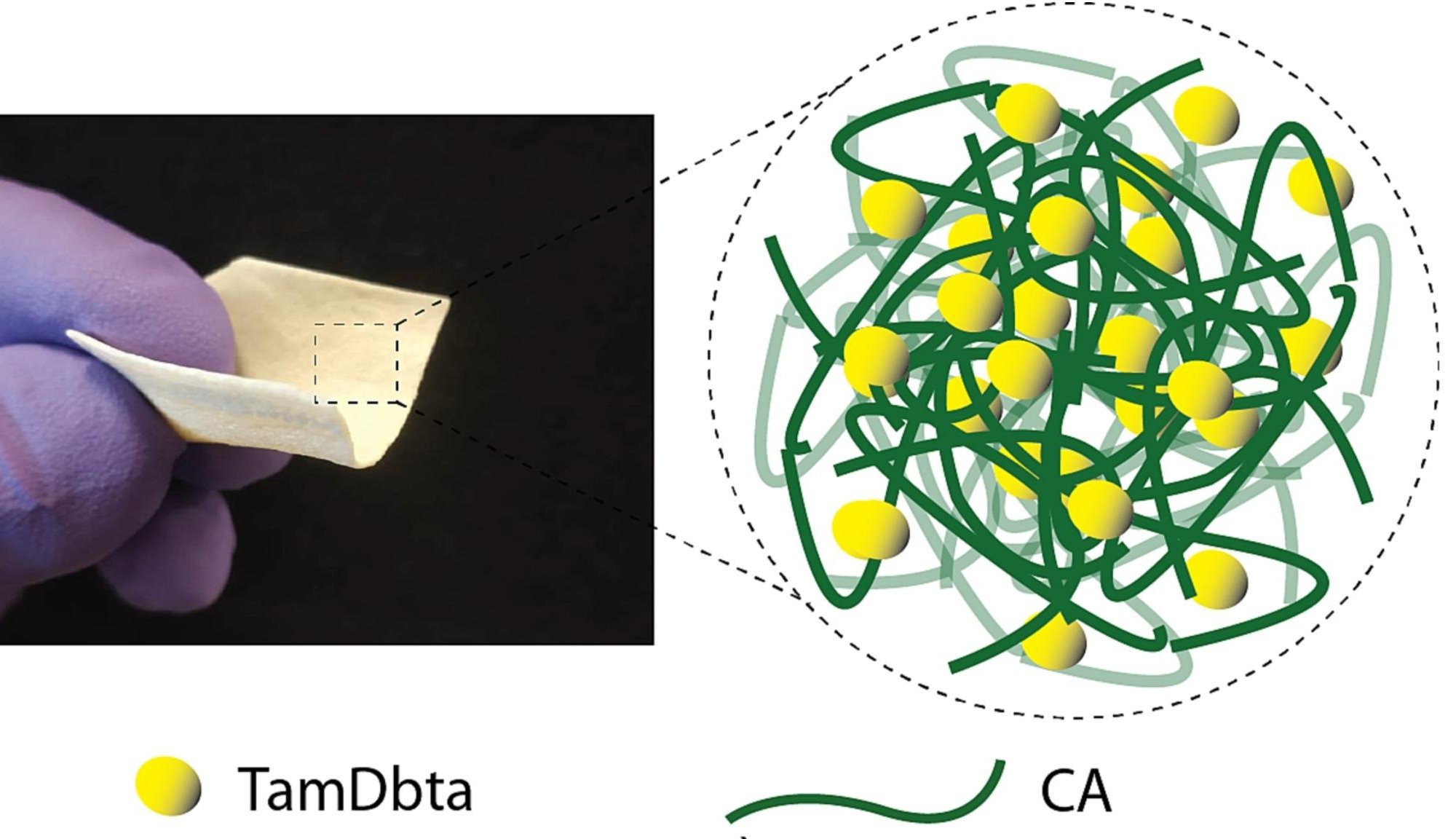
A team of researchers from Khalifa University’s Departments of Chemistry and Chemical Engineering, Center for Membranes and Advanced Water Technology, and Center for Catalysis and Separations has developed an effective phenol decontamination method using a 3D-pillars induced membrane of cellulose acetate (CA), a synthetic fiber made from tree pulp. Membrane-based separation is an energy-efficient method that avoids the risks of secondary pollution, but developing these membranes comes with its own set of challenges, including creating the correct porosity and functionality to filter phenol effectively. 


Dr. Abdul Khayum Mohammed, Dr. Jisha Kuttiani Ali, both Postdoctoral fellows, Mahira Bashri Selman Kuzhimully, PhD student, Dr. Emad Alhseinat, Associate Professor, and Dr. Dinesh Shetty, Assistant Professor, with Dr. Matthew Addicoat, Nottingham Trent University, published their results in Chemical Engineering Journal, a top 1% journal in industrial manufacturing and engineering.  


The team used cellulose acetate to address the issue of economic viability: CA is a naturally abundant, biodegradable, and inexpensive polymer. It can easily be fashioned into porous polymeric membranes, and its polar functional groups increase the hydrophilicity of the membrane, facilitating the smooth flow of water molecules. By adding nanopores and suitable functional groups, the team enhanced phenol removal.


The researchers developed a nano-porous 3D pillars-doped CA membrane. The mixed-matrix membrane uses a 3D covalent organic framework (COF), a structure capable of harboring functional molecule networks within its structure. The 3D COF framework creates open porosity with interconnected nanochannels, promoting smooth molecular diffusion. The team strategically controlled the growth of the COF at the nanoscale, which resulted in multiple functional sites and allowed for its even distribution within a mixed matrix membrane based on a common solvent used in membrane fabrication. 


When tested on synthetic oil manufacturing wastewater, the results were promising: the research team’s membrane demonstrated an 80 percent removal rate for phenol. Even across a wide pH range and under high salinity conditions, the performance stability remained high, highlighting the potential of using carefully designed COFs as a key component in commercially viable polymer membranes. 


“This innovative development signals a breakthrough for toxic phenol removal on an industrial scale,” Dr. Shetty said. “It serves as testament to the potential of leveraging eco-friendly, economic materials, and the power of science to address urgent environmental challenges.”

Jade Sterling
Science Writer
20 July 2023

Khalifa University Launches Atlas Elektronik High Pressure Combustion Center in Collaboration with Tawazun Council

Modern Facility to Carry Out Research Focusing on Gas Turbine Combustors Used for Ground and Aero Applications

Khalifa University of Science and Technology today announced the launch of Atlas Elektronik High Pressure Combustion Center, a state-of-the-art facility, in collaboration with Tawazun Council, the UAE’s defense and security acquisitions authority for the Ministry of Defense, Abu Dhabi Police and Security Agencies, and Atlas Elektronik, a global leader in naval and marine electronics, especially integrated sonar systems.

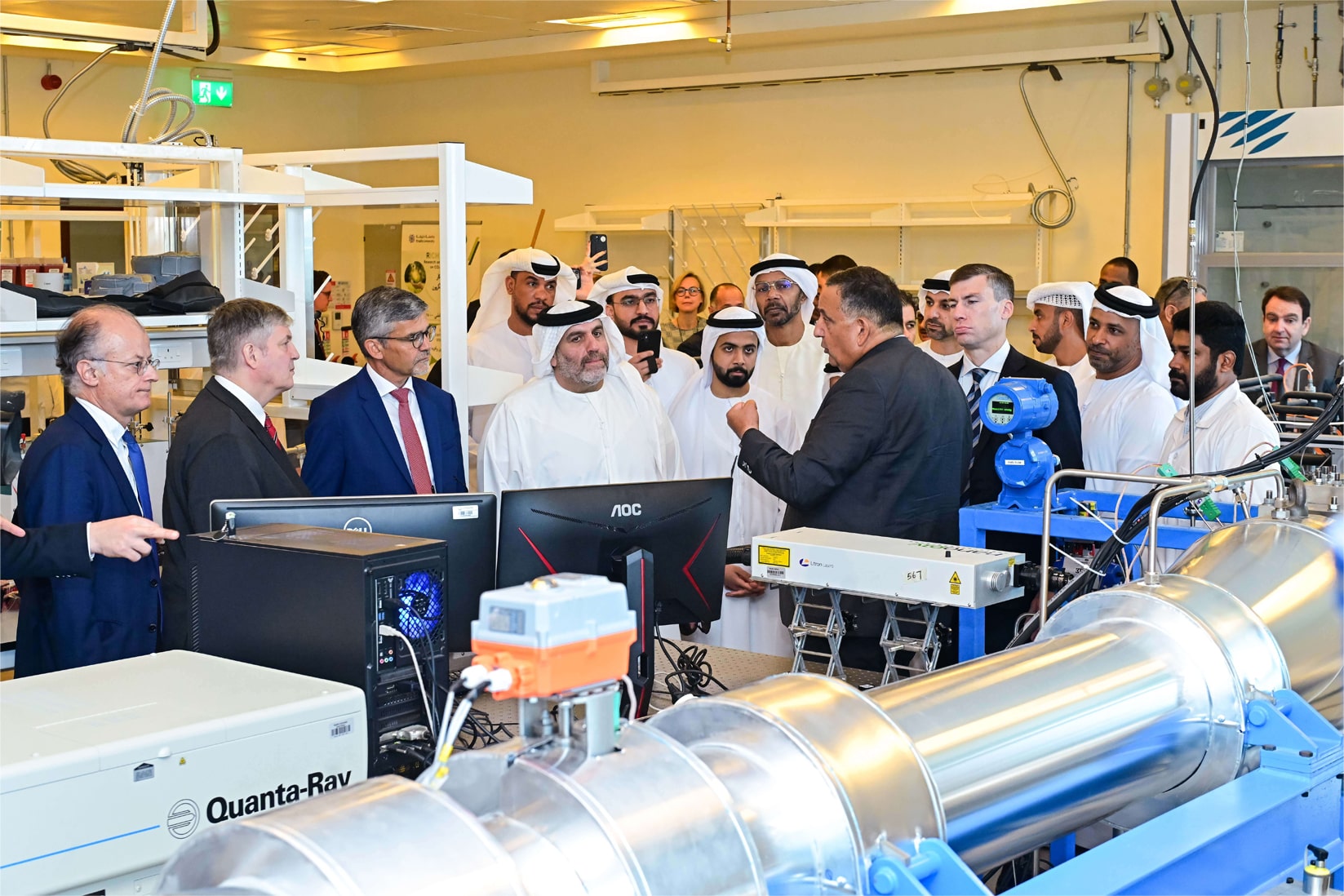
Located at Khalifa University’s Sas Al Nakhl (SAN) Campus, the new center will carry out research projects focusing on combustors used for ground and aero applications and highly advanced gas turbine technologies. Designed and built by ATD Combustors (ATDC), the center includes a high-pressure combustion tunnel, as well as all ancillary equipment needed to provide the combustion with air and fuel at desired conditions. It is also equipped with a state-of-the-art laser system for studying flame chemistry and flame structure. ATD specializes in turbomachinery components and advanced combustion systems technologies.

The center will allow Khalifa University to develop and train students in the energy space and equip them to make significant contributions to the country’s economy. Students who conduct research at this center are expected to be the most sought after by major industrial and energy companies.

The Atlas Elektronik High Pressure Combustion Center will enable Khalifa University researchers and their industrial collaborators to work together on pioneering high-efficiency, low-emission technologies that will include research on fuels like natural gas, green and blue hydrogen, and ammonia, which could help UAE companies drastically reduce their carbon footprint and their fuel consumption. The objective is to help the university develop sustainable green technologies, which, in turn, will help the UAE accelerate its transformation into a green economy.

Dr. Arif Sultan Al Hammadi, Executive Vice-President, Khalifa University, said: “We are very delighted to launch the Atlas Elektronik High Pressure Combustion Center at Khalifa University, which complements the University’s capabilities in sustainability-relevant research.”

He also said: “Through research development collaborative efforts, Khalifa University works closely with its strategic partners to drive the level of innovation in the UAE forward. Within this framework, this center will undoubtedly help advance the quality of innovation being produced by our research and student community and sustain the University’s position as a leading research and innovation institution in the sustainability space.”

Shareef Hashim Al Hashmi, Chief Executive Officer of Tawazun Council: “Tawazun Council supports research and development in advanced technologies through the Tawazun Economic Program, focusing on sustainable applied research, in collaboration with strategic partners, to contribute toward reducing carbon emissions. We also seek to enable and empower students and researchers in the fields of engineering, energy, and developmental testing by equipping them with the most cutting-edge technologies to lead vital sectors of the national economy.”

He added: “The Atlas Elektronik High Pressure Combustion Center contributes toward accelerating the development of advanced technologies by enhancing research and development activities in the field. The center serves as a bridge among the industrial sector, academia, and research institutes, fostering collaborative efforts to develop dual-use applications with low-carbon emission and highly efficient technologies.”

Dr. Majed Toqan, Chief Executive Officer of ATD Combustors, said: “Having such a center in the U.A.E. will accelerate the development of new combustion technologies utilizing green fuels such as hydrogen and ammonia”. 

He also said: “Currently, most if not all effort in the region is focused on producing the green fuels. Very little work is done on the utilization of such fuels once they are produced. Developing green combustion systems using the new center will advance the U.A.E. to become a global leader in the space.” 

Dr. Heinz-Axel Kirchwehm, Head of Industrial Participation and Offset at Atlas Elektronik, said: “Atlas Elektronik has been engaged in this project since its inception and the company is extremely pleased to see that the center is about to be launched in the coming days. This center will help the UAE to become a leader in R&D in fuels utilization technologies.”

Prof. Dimitrios Kyritsis, Chair, Department of Mechanical and Nuclear Engineering, and Deputy Director, Research and Innovation Center on CO2 and Hydrogen (RICH), Khalifa University, is the technical contact for the project.  A Fellow of the American Society of Mechanical Engineers (ASME), Dr. Kyritsis’ expertise in combustion physics and laser diagnostics for reactive flow is expected to benefit this project. (More details here)

The Atlas Elektronik High Pressure Combustion Center offers an opportunity to study the burning process of different types of fuels ranging from natural gas and conventional liquid fuels to green fuels. Of particular relevance is the capability to study high-temperature reactive flows in a controlled manner that will relate not only to CO2 emissions from industrial combustors, but also to management of high-temperature reactive hydrogen-containing streams, as well as the possibility to operate combustors with synthetic fuels that will have zero or even negative global warming potential.

The research facility offers exciting evolutions in the field of low-carbon-footprint gas combustion and energy conversion, currently taking place at Khalifa University’s Research and Innovation Center for CO2 and H2 (RICH).

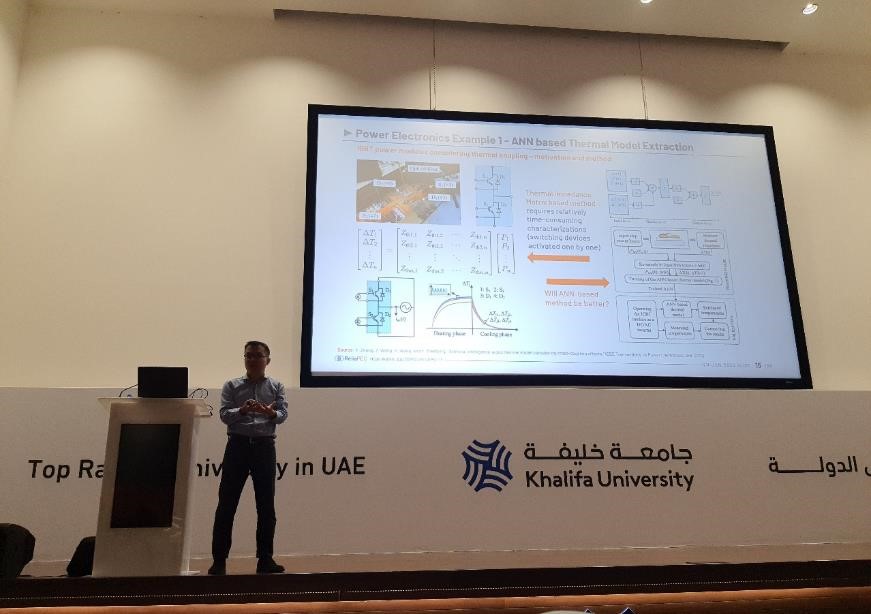
APEC Lectures series

Abstract

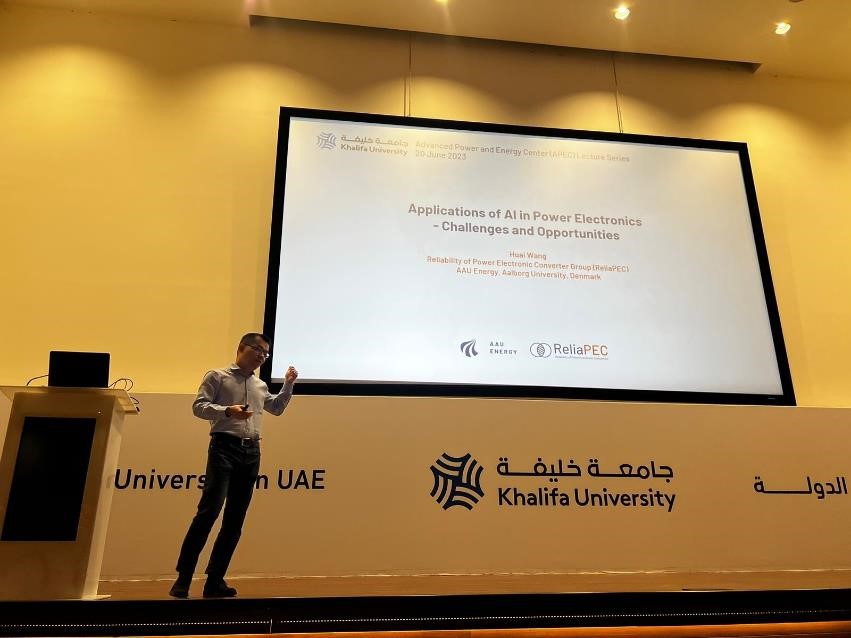
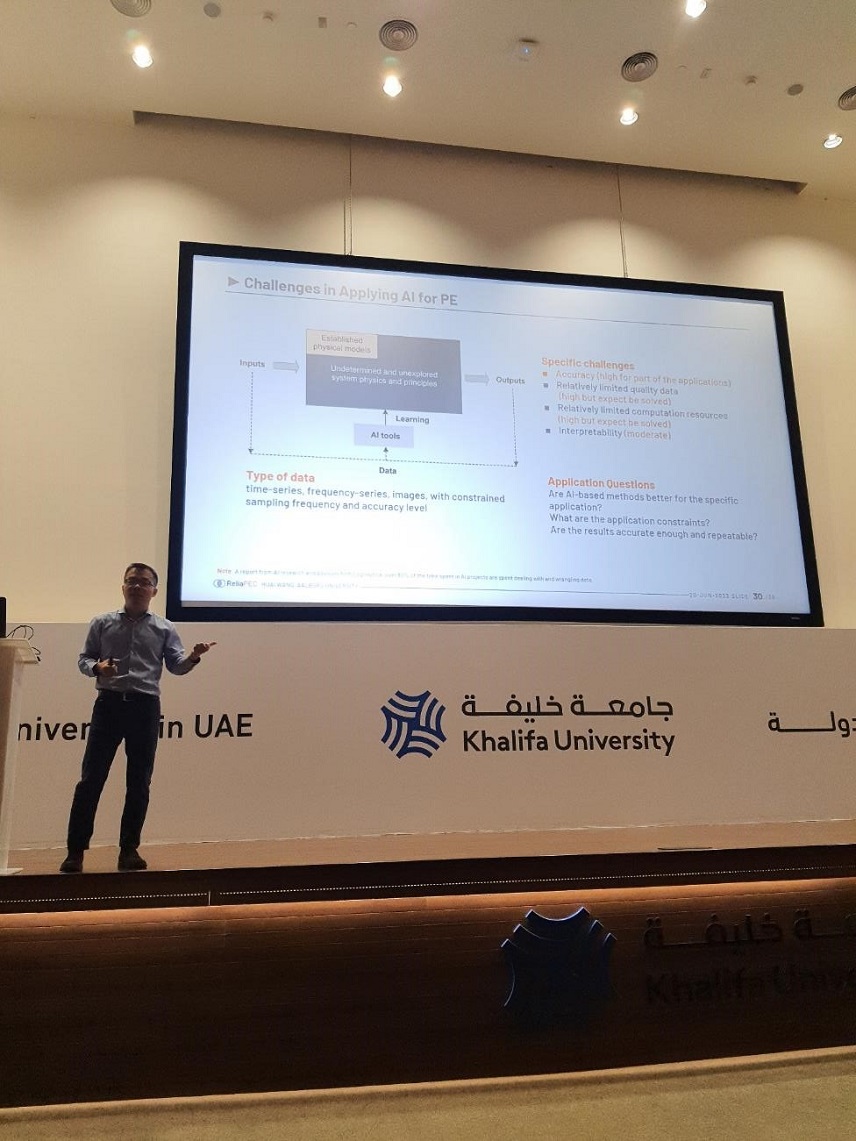
Power electronic converters are “hidden heroes” in numerous modern energy systems, such as wind turbines, Photovoltaics (PV), Power-to-X, electric vehicles, data centers, mobile phones, and smart homes. In contrast to CPUs/GPUs that process digitalized information, power electronic converters process electrical energy by efficiently converting voltage, current, or frequency. They are ubiquitous in electricity generation, transmission, distribution, and consumption, forming a critical part of the infrastructure for the green transition. Artificial Intelligence (AI) is increasingly solving optimization, regression, and classification problems within the energy sector, where deep electrification and digitalization intersect. This presentation focuses on the application of AI in the design, control, and condition monitoring of power electronic components and converters. Specifically, it covers the following aspects: 1) a brief introduction to power electronics and its pivotal role in modern energy systems; 2) an overview of AI research spanning from the 1990s to the present day, focusing on diverse power electronics applications; 3) discussions on the unique challenges faced when applying AI to power electronics compared to other domains, as well as the gaps between current academic research and industry applications;  4) a few illustrative examples that highlight the potential opportunities for employing AI in the field of power electronics.

Biography

Huai Wang is a Professor at the Department of Energy, Aalborg University in Denmark. He leads the Reliability of Power Electronic Converters (ReliaPEC) group and chairs the Mission of Digital Transformation and AI at AAU Energy, with 13 affiliated research groups. His research addresses the fundamental challenges and application issues related to efficient, reliable, and cognitive power electronic converters. Prof. Wang actively collaborates with companies throughout the value chain, from power electronic materials and components to systems. He has initiated four short-term industrial/PhD courses, which have been attended by over 500 PhD students and industry engineers. In addition, he has delivered more than 30 international conference tutorials and given over 100 invited talks.

Prof. Wang received his PhD from the City University of Hong Kong in 2012 and his B.E. from Huazhong University of Science and Technology in 2007. He has also conducted research as a short-term visiting scientist at the Massachusetts Institute of Technology (MIT) in 2013 and ETH Zurich in 2014. In addition, he was with the ABB Corporate Research Center in Switzerland in 2009. In recognition of his contributions, Prof. Wang received the Richard M. Bass Outstanding Young Power Electronics Engineer Award from the IEEE Power Electronics Society in 2016 and IEEE Transactions on Power Electronics 1st Prize paper award in 2021. Furthermore, he was Chair of the IEEE IAS/IES/PELS Chapter in Denmark from 2018 to 2020 and currently serves on the editorial board of 4 journals from IEEE, Springer Nature, and Elsevier. In 2023, he was elected as a member of the Danish Academy of Technical Sciences.


Sharing the Decarbonization Effort: The Road to Global Carbon Neutrality for Eastern Mediterranean and Middle Eastern Countries


Research from Khalifa University offers the first national emission allocation evaluation for the countries in the broader EMME region, providing guidance on setting realistic and fair emissions targets based on national circumstances.


The climate crisis is a critical issue for contemporary society, demanding significant investments from all nations to transition to low carbon economies. A 2021 IPCC report indicates that in order to limit global temperature increase to 2°C, global net CO2 emissions need to be reduced by about 25 percent from 2010 levels by 2030 and net-zero must be reached by 2070. More aggressive targets are required to limit the 1.5°C overshoot.


Globally, different regions and nations show varying degrees of commitment to these goals. While the European Union, Canada, and South Korea are aiming for carbon neutrality by 2050, many countries in a region like the Eastern Mediterranean and Middle East (EMME),, which consists of Bahrain, Cyprus, Egypt, Greece, Iran, Iraq, Israel, Jordan, Kuwait, Lebanon, Oman, Palestine, Qatar, Saudi Arabia, Syria, Turkey, and the United Arab Emirates are less inclined to rapidly adopt carbon neutrality due to their heavy reliance on fossil fuels. In 2019, the EMME region with 5.5 percent of the global population, and 4.9 percent of the world’s economic output, contributed over 8 percent of global carbon dioxide emissions.


Research has explored necessary actions at the country level to achieve the Paris Agreement targets, considering equity in the low-carbon transition. Effort-sharing approaches to determine emissions reduction targets, carbon budgets, and carbon dioxide removal quotas have been discussed, typically centered around three principles of equity: responsibility (current and historical contribution to emissions), capability (ability to pay for mitigation), and equality (equal rights per person).


Dr. Steve Griffiths, Professor of Practice and Senior Vice President Research and Development together with collaborators from the Cyprus Institute have proposed various approaches to determine equitable national emission allocations for 2030 for the 17 countries in the EMME region. The research team compared these allocations with the Nationally Determined Contributions (NDCs) of each country to assess the degree to which current climate change mitigation targets are sufficient, finding two approaches that may be considered both realistic and fair. Both approaches are based on required emissions reductions for the EMME region as a whole to be in line with the global average emissions reductions need to achieve net-zero targets. Emission reductions required for each EMME country are then allocated relative to those required for the EMME region. Hence, both approaches require emissions in the EMME region to drop by nearly 50 percent by 2030 as compared to 2019 levels to achieve a 1.5°C warming scenario.


Their results were published in Climate Policy, a leading global journal focused on climate policy matters. Despite previous regional-level emission allocation studies, this paper offers the first national emission allocation evaluation for the countries in the broader EMME region, providing guidance on setting realistic and fair emissions targets based on national circumstances.


There are numerous approaches to effort-sharing in reducing emissions and the Paris Agreement recognizes the ‘common but differentiated responsibilities’ shouldered by each nation, but there are no universally agreed guidelines to quantify what constitutes a realistic and fair contribution. To remedy this, the researchers propose quantitative criteria to evaluate the concepts of realism and fairness: the emission reduction target, relative to 2019 emissions, should not exceed 80 percent for any country; the abatement target for any country should not be more than 50 percent higher than the average abatement of the entire EMME region; and the range of abatement targets between countries should be less than 80 percent.


“If we were to just assume that all countries globally must achieve the same per capita emissions reductions by 2030, the EMME region must reduce its emissions by 52 percent and 65 percent in 2030, compared to 2019 levels, for the 2°C and 1.5°C global warming targets, respectively,” Dr. Griffiths says. “This blanket approach, however, does not take into account balanced consideration of equality, responsibility and capability to pay for climate mitigation.”


While it’s not advisable to ignore the uniform per capita emissions equality criterion, the researchers suggest that combining this with additional criteria such as per capita GDP (capability), cumulative carbon emissions (responsibility), or carbon intensity (responsibility) could lead to more balanced decarbonization burden sharing. Nations like Syria, Palestine, and Egypt could be allowed temporary emissions increases to further their development, while placing a stronger decarbonization burden on wealthier nations.


In order to ensure that countries in regions such as the EMME are not unduly burdened with carbon emissions reduction requirements, 2030 emission reductions required worldwide can be applied to the regional as a whole and then reductions for each EMME country can be assessed by ranking the countries according to various equality, capability and responsibility criteria.


“Interestingly, some EMME countries we studied, such as Greece, have calculated emissions reductions requirements that are relatively uniform across the many emissions reduction allocation approaches we considered,” Dr. Griffiths says. “Other countries, however, have dramatically different outcomes based on the approach considered. These countries, which include Palestine and Qatar, are more likely to lobby strongly for specific approaches that are more favorable to them, while countries such as Greece, may be indifferent to the specific approach pursued.”


In order to assess the sufficiency of national climate policies relative to net-zero compliant emissions reductions from the various approaches studies, the researchers examined the emission reduction pledges provided in Nationally Determined Contributions (NDCs). Only a handful of countries (Greece, Iran, Israel, Jordan, and the United Arab Emirates) have set targets that align with the calculated ranges necessary to prevent more than 2°C of warming. Even fewer (Jordan, UAE, and Palestine) have targets in line with the more ambitious 1.5°C warming threshold. In contrast, countries like Egypt, Iraq, Kuwait, Oman, Palestine, and Turkey are expected to increase their emissions compared to 2016 levels.


The researchers note that the climate targets in these countries still represent a significant slowdown in emissions growth compared to a hypothetical situation without any abatement measures. For instance, even though Turkey’s greenhouse gas emissions are projected to increase substantially over the next decade, following their NDC would result in a growth rate 21 percent slower than in a scenario without any mitigation measures.


Several countries, including Greece, Israel, the UAE, Oman, Turkey, Bahrain and Saudi Arabia, have recently committed to a net-zero emissions future. However, even countries like Israel and the UAE that are regionally best-in-class regarding climate policy commitments aligned with net-zero 2050 ambitions, may need to further strengthen their medium-term mitigation efforts if their ambitions are to be realized. More specifically, their current 2030 emissions mitigation commitments are near the lower end of the ranges that were calculated as being consistent with meeting the 1.5°C warming threshold.


Among the 14 proposed approaches the researchers considered, two were proposed as the optimal for further consideration based on the criteria of being both realistic and fair. According to both suggested approaches, all countries must decrease their emissions by 2030 even though this might be challenging for developing nations with low incomes, such as Palestine, or countries recovering from long periods of conflict, like Syria. The countries required to make the most significant reductions are those with high GDP per capita (capability) and high CO2 emissions levels (responsibility): Qatar, Kuwait, Bahrain, the UAE, and Saudi Arabia.


“If these countries with the most significant required emissions reductions are to align with the Paris Agreement’s goals, they must diversify their energy supply towards zero- and low-carbon technologies,” Dr. Griffiths said. “These countries, being rich in fossil fuel reserves and net energy exporters, have the financial capacity to pursue a low-carbon transition, which can arguably be considered fair in terms of effort-sharing.”


The researchers underscore that emission abatement efforts must be fair and realistic, considering the unique impacts on each country and the relative impacts experienced by the countries in the EMME region. Some of these countries face significant challenges, particularly those in fragile states or those with deeply ingrained carbon emission in their economic structures.


“So far, none of the EMME countries, despite their updated NDCs and net-zero commitments, have proposed a strategy to reduce 2030 carbon emissions by more than half compared to 2019 levels,” Dr. Griffiths said. “This discrepancy between stated ambitions and realistic targets is a concern.”


The team propose regional cooperation, such as renewable electricity trade or technology knowledge exchange, and financial support from wealthier countries for green projects in countries with lower GDP per capita. This approach could help EMME countries align with the Paris Agreement goals and could be a model for other regions.


“Wealthier countries in the region should take on greater responsibility for developing and implementing emission management and removal technologies, crucial for global climate change mitigation targets. The UAE provides an example of what needs to be done through its regional leadership in climate policy, renewable energy deployment and oil and gas sector decarbonization,” Dr. Griffiths said.


Jade Sterling
Science Writer
July 2023

In the Sands of Time: Khalifa University Machine Learning Technique Revolutionizes Archaeology in Arid Environments


A new technique from Khalifa University combines satellite imagery with machine learning to automate and improve the detection and mapping of archaeological features in the UAE and other desert regions. 


In the sandy stretches of the United Arab Emirates, modern technology is revealing secrets of the past. At Saruq Al-Hadid, an archaeological site tucked into the Rub’ Al-Khali desert in Dubai, researchers are pioneering new methods in satellite remote sensing to uncover hidden artifacts and potential archaeological sites. The sophisticated techniques used could revolutionize how we discover and study remnants of bygone eras.


The use of imaging radar in archaeological research is not new, but its application has gained traction in recent years. Unlike traditional methods of ground surveys, which can be time-consuming and arduous, especially in challenging terrains such as deserts, remote sensing offers a wider and more detailed perspective. The technology allows researchers to survey vast areas from above, spotting signs of past human activity, avoiding all terrestrial obstacles to their identification.


Satellite imaging and radar have been successfully used in various archaeological studies globally, focusing on everything from geological investigations to vegetation mapping. In arid, sandy and dusty regions like the UAE, the application of this technology faces unique challenges. Here, the interference of dust particles and cloud cover can degrade the image quality and dune formations and patterns can interfere with identifying remnants of human activity. Advances in radar sensors and their signal penetration abilities can overcome the dust challenge, but the unique landscape still poses a problem.


A team of researchers from Khalifa University’s Earth Sciences Department has harnessed the power of artificial intelligence and machine learning to take remote sensing a step further. They combined satellite images with machine learning for advanced image processing and geospatial analysis to understand the Saruq Al-Hadid site better, helping to automate the processes and test its feasibility.


Dr. Diana Francis, Head of KU’s Environmental and Geophysical Sciences (ENGEOS) Lab, Charfeddine Cherif, Research Associate, and Dr. Steve Griffiths, Professor of Practice and SVP Research and Development, collaborated with Prof. Kosmas Pavlopoulos and Dr. Haifa Ben-Romdhane, Sorbonne University Abu Dhabi, and Dr. Hosni Ghedira, Mohamed bin Zayed University of Artificial Intelligence. Their results were published in Geosciences.


“The driving force behind this research was to enable the UAE to discover archaeological sites and features hidden under the sand,” Dr. Francis said. “Given the climate and the fact that much of the country is desert, it was too difficult logistically to inspect the desert from the ground. That’s why satellite data was key. Then, we needed to have technology that can see beneath the sand.”


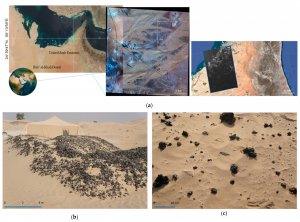
Figure 1. (a) Left inset: Saruq Al-Hadid archaeological site (24°39′47″ N 55°13′55″ E). Middle inset: Worldview-3 multispectral image (left scene—19 August 2019; central scene—19 November 2019; right scene—9 January 2019). Right inset: ALOS-2/PALSAR2 (L-band) image (2015-05-17T20:15:36Z). (b) Metalworking slag interspersed with metal artefacts, ceramics, and other cultural material. (c) Slag artefacts on the dune surface extending to over 1 km2 post-excavation.


This pioneering study is the first to apply such advanced techniques to the area, expanding upon previous work that combined radar remote sensing technologies with traditional archaeological practices. The goal of this project goes beyond mere discovery, aiming to develop a benchmark for national and regional remote sensing capabilities, which can be generalized to larger areas.


The researchers hypothesize that the artifacts found so far at the site were produced on-site, indicating potential hidden settlements nearby. Using machine learning algorithms, they developed an automated process to extract features from Synthetic Aperture Radar (SAR) data and perform geospatial analyses. The results have been promising, with detected areas on the site correlating with those already under excavation and revealing potential new archaeological zones.


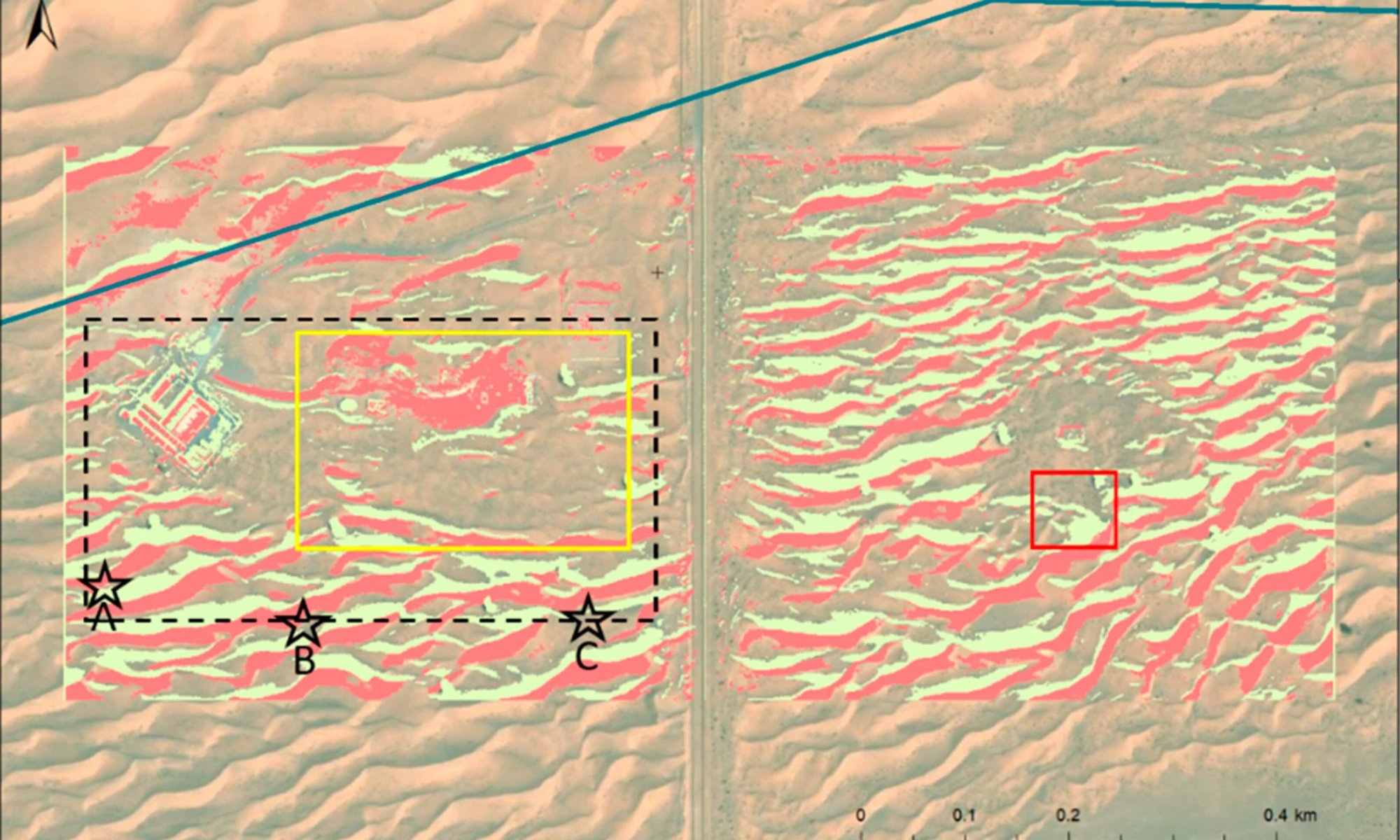
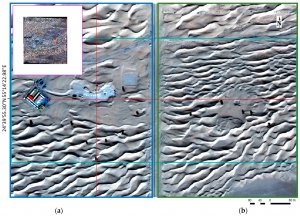
Figure 2. Worldview-3 colour-balanced RGB orthomosaic of the Saruq Al-Hadid site located in the mobile dune fields of the northeastern edge of the Rub’ Al-Khali desert, captured on 26 November 2019. (a) Western zone of observation. (b) Eastern zone of observation.


Of course, the process isn’t without its challenges. The desert environment, dominated by sand and sparse vegetation, presents a limited range of spectral signatures which can be problematic for machine learning algorithms. The varying surface interactions, such as those with sand dunes and rocky outcrops, add further complexity. However, researchers expect that the modeling and prediction accuracies will improve as they incorporate more data from recent field surveys and integrate a neural network and backpropagation algorithms.


“The dunes are fascinating on aerial and satellite imagery; they look like ocean waves, but sand,” Dr. Francis said. “For me, the fascinating thing was when the machine learning model indicated to us the potential area for excavation — and it turned out this was the one archaeologists had already started to explore. It validated the method.”


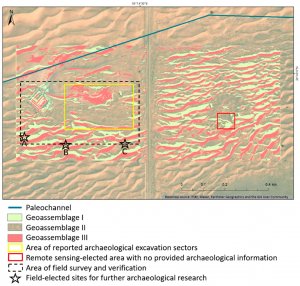
Figure 3. Reclassification of the study site, based on its landscape context and multimodal data, into three main geomorphological assemblages. The area of field survey and verification contained the reported main excavation sectors and surroundings. Based on the field surveys, three site locations were elected for future archaeological investigation


This research not only has implications for the future of archaeological studies but also for our understanding of paleo-drainage systems within the study area. It’s anticipated that the process’s applicability and efficiency will improve with more recent field surveys and further validation efforts using multi-temporal data. The techniques developed here could be adapted to better serve archaeological research in larger areas and similar environments, thereby illuminating the past and guiding future studies.


Moreover, this research suggests the potential for long-term, comprehensive investigations into the prehistoric landscape of the study site and similar environments. A workflow integrating machine learning and deep learning techniques with automated feature detection could generate and validate detections of unidentified archaeological objects and sites. This would enhance archaeological training datasets and aid in the identification of significant areas, predicting potential site locations, and formulating more informed research strategies for future investigations.


“This research represents a proof-of-concept on how SAR imagery and machine learning can guide archaeological searches in a desert environment,” Dr. Francis said. “The methods we developed work for all arid regions and it’s my hope we can apply it to the whole of the UAE and then take it to other desert areas in the region. These areas are still unexplored but we know they have cultural history.”


These findings represent a significant leap forward in the integration of cutting-edge technology and archaeology, showing that even in the harshest of environments, we can unearth the stories of our past. Who knows what other secrets lie waiting to be discovered beneath the sands?


Jade Sterling
Science Writer
06 July 2023

Khalifa University Researchers Develop New Resource for Understanding Human Emotion in Real-world Settings


K-EmoPhone mobile and wearable sensor dataset contributes to advancements in affective computing, emotion intelligence technologies and attention management.


Sensors embedded in our smartphones, watches, and even vehicles and homes can now give researchers unprecedented insights into human behavior and preferences. The devices we use to call a friend or post on social media can become windows into our psychological state and behavioral patterns — these data can be used to track signs of stress and emotions.


This new paradigm for use of abundantly available data feeds into an emerging field known as affective computing, which aims to develop systems that can recognize and interpret human emotions. Affective computing research is often conducted using data collected in controlled laboratory environments where participants either portray specific emotions or are exposed to stimuli that trigger particular emotional responses. Their physiological signals, facial expressions, and speech patterns are then captured and recorded. While this approach has its merits, viewing an emotional video clip in a lab doesn’t quite evoke the full range of human emotion as experienced in the real world.


To address this, a team of researchers including Khalifa University’s Prof. Ahsan Habib Khandoker and Prof. Leontios Hadjileontiadis, Chair of the Department of Biomedical Engineering, has developed a dataset that incorporates real-world emotion, stress, and attention labels gathered from university students. With researchers from Korea Advanced Institute of Science and Technology, Profs. Hadjileontiadis and Khandoker collected data from students’ Android smartphones and Microsoft Band 2 smartwatches using a variety of sensor data. Additionally, participants were asked to report their emotional state — happiness, stress, attention levels, task disturbance, and emotional change — up to 16 times a day. All of the data collection was undertaken according to a plan approved by the Khalifa University research ethics committee.


Named K-EmoPhone, the dataset offers an in-depth look at human emotions through behavioral, contextual, and physiological data. The data were collected from participants as they navigated their daily lives, with the technology and wearables prompting responses throughout the day. The dataset was published in Nature Scientific Data


“Despite the remarkable strides in building affective computing datasets, there is still a clear need for more comprehensive, real-world, multimodal datasets that include a broad range of in-situ emotional labels,” Prof. Hadjileontiadis said. “The K-EmoPhone dataset promises to illuminate the nuances of emotional states over time and has potential applications across a wide range of domains, from affective computing to attention management. We believe that such a comprehensive dataset will greatly benefit future research in data-driven understanding of human behavior and emotion.”


The research team used PACO, an open-source smartphone app that enables researchers to design and conduct experience sampling method studies (ESM). This approach aims to collect in-the-moment emotions, stress, attention levels, and other aspects of cognitive state, casting light on the human condition as it unfolds in everyday life.


The participants received push notifications as prompts to respond to a questionnaire, randomly appearing up to 16 times per day over a week. Each prompt would disappear after 10 minutes to reduce recall bias, ensuring immediate responses for the most accurate emotional state representation. Data were also gathered from the participants’ smartphones and wearables. Special data collection software was designed to unobtrusively capture data reflecting mobility, network traffic, social communication, application usage, and device status around the clock. The smartwatches provided additional sensor readings related to physiological responses, environmental contexts, and mobility.


“The K-EmoPhone dataset has been curated to help researchers study affective and cognitive states using multimodal data, encompassing physiological signals, personal contexts and interactions captured by smartphones, personal attributes, and mental health,” Prof. Khandoker said. “It is unique in its focus on timely responses to affective and cognitive states in real-world data collection settings.”


Potential applications include building machine learning models to predict mental well-being and productivity, emotion cognition, and stress detection. It could also be used in attention management studies and could shed light on how emotional states are affected by tasks that require timely responses. All data are open and available to any researcher, while the KU team is currently working on analyzing the data for emotion recognition and modeling behavior change.


Jade Sterling
Science Writer
06 July 2023

Enhancing Robotic Grasping with a New Approach to Panoptic Segmentation


New model unlocks vision in robotics and wins Best Paper Award at one of the most prestigious and influential conferences in the field of computer vision 


Robots are becoming increasingly involved in our everyday lives, lending their hands to everything from manufacturing and logistics to healthcare and housework. Yet, they face a significant hurdle: accurately recognizing and dividing up objects in their environment, a task made challenging by blockages, complex shapes, and ever-changing backgrounds. This stands in the way of them fully grasping the world around them, limiting their abilities and efficiency.


The technical term for this daunting task is ‘panoptic segmentation’ — dividing an image into foreground objects and background regions simultaneously. If robots could master this skill, their perception of the environment would greatly improve, enabling them to handle more complex tasks efficiently.


However, this robotic vision problem isn’t easy to solve. Cluttered scenes, object variability, occlusions (objects that block vision), motion blur, and slow temporal resolution of traditional cameras all conspire to make it a tough nut to crack. Added to this, high latency—or delays—in processing sensor data can slow down response times and reduce task accuracy. The latest developments in object segmentation using cutting-edge Graph Neural Networks have their own limitations; they add extra requirements as both panoptic segmentation and grasp planning must be done quickly and efficiently. More sophisticated algorithms and techniques that can grapple with the real world’s unpredictability and complexity are needed.


Dr. Yusra Alkendi, PhD student, and Dr. Yahya Zweiri, Professor and Director of the KU Advanced Research and Innovation Center, developed a method to overcome these challenges using a Graph Mixer Neural Network (GMNN). Specifically designed for event-based panoptic segmentation, a GMNN preserves the asynchronous nature of event streams, making use of spatiotemporal correlations to make sense of the scene. The KU researchers developed their solution with Sanket Kachole, Fariborz Baghaei Naeini and Dmitirios Makris from Kingston University and showcased their results at the IEEE Conference on Computer Vision and Pattern Recognition, one of the most prestigious and influential conferences in the field of computer vision. Here, they were awarded Best Paper by a distinguished committee that included experts from Meta, Intel, and leading U.S. universities.


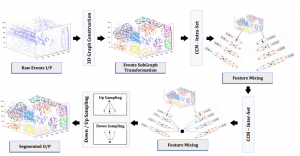
The linchpin of their solution is the novel Collaborative Contextual Mixing (CCM) layer within the graph neural network architecture. This allows for the simultaneous blending of event features generated from multiple groups of neighborhood events. They also based their solution on event cameras, also known as dynamic vision sensors, which respond to local changes in brightness, with each pixel operating independently and asynchronously. The changes in brightness are reported as they occur and time-stamped with high temporal precision, providing precise information about when the change occurred, enabling the camera to capture fast and dynamic scenes accurately, including rapid motion and high-frequency events.


A dynamic vision sensor merges the cutting-edge CCM technique with an established neural network, with the new setup simultaneously processing events at multiple levels, leading to parallel feature learning —or high-speed multi-tasking for robots.


This architecture works by the encoder performing “downsampling” operations (reducing data) while the decoder carries out “upsampling” operations (increasing data) on events. The outcome is an effective panoptic segmentation model that’s particularly useful for robotic grasping.

Proposed Framework – Graph Mixer Neural Network (GMNN) for panoptic segmentation of asynchronous event data in a robotic environment.
GMNN operates on a 3D- graph constructed of DVS events acquired within a temporal window, encapsulating its spatiotemporal properties. Subgraphs of
spatiotemporally neighboring events are then constructed (colored event in step 2) where each is processed by various nonlinear operations within Mixer and sampling modules to perform segmentation

The team tested their proposed model on an event-based segmentation dataset (ESD) under a wide range of conditions. Its success demonstrated the robustness of the novel CCM approach in overcoming obstacles like low lighting, small objects, high speed, and linear motion. The faster prediction times offered by the model is a leap in the quest to enable robots to process their environment faster and more accurately.


“GMNN has proven its worth, achieving top performance on the ESD dataset, a collection of robotic grasping scenes captured with an event camera positioned next to a robotic arm’s gripper,” Dr. Zweiri said. “This data contained a wide range of conditions: variations in clutter size, arm speed, motion direction, distance between the object and camera, and lighting conditions. GMNN not only achieves superior results in terms of its mean Intersection Over Union (a key metric for segmentation accuracy) and pixel accuracy, but it also marks significant strides in computational efficiency compared to existing methods.”


This model lays the groundwork for a future where robots can perceive and interact with their environment as efficiently as possible, opening up a world of potential applications across various industries. Future research will investigate the extent to which this new approach can be generalized in real-world scenarios with a variety of robots, sensors and environments, including depth sensors or thermal cameras, which could boost the model’s performance in low-light conditions. 


Jade Sterling
Science Writer
05 July 2023

Dynamic Molecular Crystals: The New Frontier of Materials Science


Dynamic molecular crystals are an underexplored realm within the material sciences, which are poised to play a critical role in a number of technologies in the coming decades. Researchers at the KU Advanced Materials Chemistry Center (AMCC) are applying multiscale materials modelling techniques to accelerate their discovery.


Over the last two decades, our perception of molecular crystals as brittle objects has changed and it is now clear that some molecular crystals can respond to a range of external stimuli including mechanical stress and light. This has opened up new avenues for the potential application of molecular crystals in technologies as actuators and optical waveguides. Today, the response of molecular crystals to mechanical stress has taken center stage because unlike inorganic crystals which have been used in a number of technologies for decades, molecular crystals comprise covalently bonded molecules that can be easily functionalized, thereby opening up a world of opportunities for tailoring the bulk properties of the solid.  


Dr. Sharmarke Mohamed, Associate Professor of Chemistry at Khalifa University, Mr. Mubarak Almehairbi, MSc student in Applied Chemistry and Dr. Tamador Alkhidir, Visiting Scholar at Khalifa University’s AMCC, have taken part in a comprehensive study to summarize the state-of-the-art in our evolving understanding of the mechanical properties and dynamic effects of molecular crystals, with work that was recently published in Chemical Society Reviews. This work was supported by Khalifa University’s AMCC, which has a dedicated Theme devoted to the application of multiscale materials modelling techniques to help support the discovery of new functional materials.


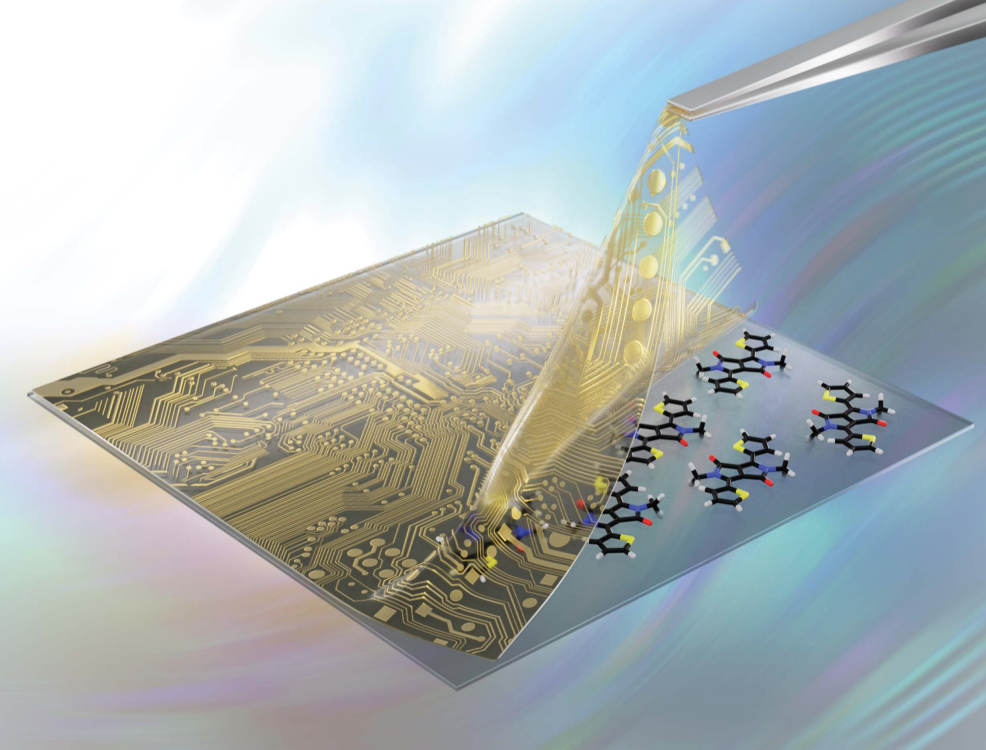
Prof. Mohamed’s other work in dynamic molecular crystals has shown that elastically deformable molecular crystals are ideal candidates for all-flexible devices. Notably DFT simulations led by Prof. Mohamed have shown that elastically deformable semiconducting crystals can be used in all-flexible devices because of their superior stress tolerance and field-effect mobility. This work was featured on the front cover of Chemical Science following the work of Prof. Mohamed and visiting scholar Dr. Tamador Alkhidir, where they demonstrated new insights into the molecular-level mechanism for elastic deformation in molecular crystals using periodic DFT methods. As for the future potential of these mechanically responsive crystals, Prof. Mohamed believes that “we have only scratched the surface as to what we can do with these dynamic molecular crystals. I got interested in this area of research several years ago because I saw the growing gap that existed between the interests of experimentalists and the capabilities of the best computing models available for explaining these complicated dynamic effects. I am glad to see that there are now an increasing number of theoretical groups working on this problem. The challenge at present is not so much in finding new applications for these dynamic molecular crystals but connecting the dots between the molecular structure and the bulk behaviour of the crystal. Experimentalists and theoreticians working together to gain a deeper understanding of the structure-property relationships is a key step on the way towards commercialization. At Khalifa University’s AMCC, we have a group of postdoctoral research fellows and students that are developing new code and applying multiscale materials modelling techniques to advance our understanding and pave the way for the discovery of new interesting dynamic molecular crystals.”  


Historically, the solid-state chemistry and mechanical engineering research communities have had divergent research interests, leading to a fragmented understanding of the mechanical properties and potential of molecular crystals. Prof. Mohamed’s group comprises both experimentalists and theoreticians working together to look at the same problem from different vantage points. There is an unmet need for greater synergy between the two groups of researchers, as increased collaboration begins to yield intriguing insights and applications in photonics, electronics, and soft robotics.


Prof. Mohamed says that if we can foster more collaborative research between international partners, we can better grasp the intricate phenomena underpinning these molecular crystals and expedite the journey from lab to real-world applications: “Ultimately, the goal is to master control over these molecular crystalline machines, transforming our understanding and enabling new technologies.”

A New Approach to Mapping Fractures in Abu Dhabi’s Oilfields


Groundbreaking method offers improved understanding of fracture orientation and paves the way for optimal energy extraction.


Natural fractures in rocks can substantially influence the hydraulic properties of fluid-saturated reservoirs, making it essential to accurately estimate their geometrical properties. This estimation can help understand fluid flow in reservoir zones, predict production rates, enhance oil recovery, and carry out dynamic simulation.


A team of researchers from Khalifa University has investigated fractured carbonate reservoirs, such as those found in the UAE, using the shear-wave splitting concept. Alejandro Diaz-Acosta, Dr. Fateh Bouchaala, Dr. Tadahiro Kishida, Dr. Mohamed Jouini, and Prof. Mohammed Ali developed a cost-effective analysis tool for detecting fractures in geological reservoirs and determining their orientation. Fractured carbonate reservoirs are of great interest to the oil and gas industry because of their potential for high fluid flow rates. The fractures often serve as pathways for the movement of oil, gas, and water, leading to enhanced permeability and increased production. Their results were published in Advances in Geo-Energy Research


A fractured carbonate reservoir is typically composed of carbonate rocks such as limestone or dolomite and contains significant quantities of fractures or cracks as a result of tectonic movements, changes in stress fields, and the dissolution of carbonate rocks. They can be complex and challenging to manage, with fractures of varying size, orientation, and density, and are sometimes filled with mineral deposits that limit their permeability. The interaction between the fractures and the surrounding rock matrix also significantly influences the reservoir’s overall behavior, including how fluids are stored and flow through it.


Over the years, several numerical models have been devised to glean fracture properties from seismic data, elucidating the complex relationship between anisotropy parameters and fracture properties. However, these models are typically developed and validated with synthetic data, which may not accurately reflect the complexities encountered with real field data, particularly in carbonate rock formations.


Using field data can often help decipher the geometrical and physical properties of a reservoir using a diverse range of techniques and concepts. One more sophisticated technique is shear-wave splitting.


Also known as seismic anisotropy, shear-wave splitting is a powerful tool in the analysis of fractured reservoirs, including carbonate ones. This method involves analyzing the behavior of shear waves as they pass through anisotropic media, such as fractured rocks.


When a shear wave encounters an anisotropic medium (a material that exhibits different physical properties in different directions), it splits into two orthogonal, polarized waves — one parallel to the fracture (fast shear wave) and one perpendicular (slow shear wave). This is because the speed of a seismic wave travelling through a rock may vary depending on the direction of travel: The wave may move faster in a horizontal direction through a layer of sedimentary rock than in a vertical direction due to the way the rock has been deposited or deformed over time. The difference in arrival times between the two waves is called the delay time, and it can provide valuable information about the extent and orientation of the fractures.


While shear-wave splitting is a powerful tool, it’s just one part of a suite of techniques that geophysicists use to analyze fractured reservoirs. Other methods might include electrical resistivity, well logging, and tracer tests, among others. Additionally, the interpretation of shear-wave splitting data can be complex, requiring the integration of other geological and geophysical information.


Applying the shear-wave splitting concept in reservoirs such as those in Abu Dhabi, which are characterized by heterogeneous lithology and composed mainly of carbonate rocks, is a challenging task. To address these challenges, the Khalifa University team developed an advanced approach based on multicomponent shear-wave velocity analysis and the shear-wave splitting concept. Their method offers a cost-effective and less overburden-sensitive alternative to other techniques.


The intricate structural attributes of Abu Dhabi oilfields can be traced back to a complex series of tectonic events that culminated in the formation of the Arabian Plate. Given the area’s tectonic history, it is not surprising that Abu Dhabi reservoirs are highly fractured. The fractures significantly contribute to the porosity and hydraulic conductivity. Evaluating their geometrical properties is vital for accurate reservoir characteristics.


The research team’s model proved to be accurate in identifying fracture orientations when tested on real-world field data from onshore oilfields in Abu Dhabi. Their analysis method is a promising, cost-effective tool that could be especially useful in complex environments like the fractured carbonate reservoirs of Abu Dhabi, where conventional methods might not be as successful.


The team’s technique could also be leveraged for site selection in carbon dioxide sequestration and energy storage projects.


This work lays the groundwork for the future advancement of the shear wave splitting concept in complex media, including carbonate rocks. The team has identified two important directions to explore in handling greater complexity in geological media: source-offset effects and the presence of fracture sets with multiple preferential orientations. Future research will incorporate machine learning techniques, with the team recently successfully identifying the features that demonstrate the highest sensitivity to shear wave splitting and determining the most effective machine learning techniques for analyzing these features. 


Jade Sterling
Science Writer
26 June 2023