Khalifa University Bolsters Online Learning Opportunities through Coursera Partnership

Khalifa University (KU) has partnered with Coursera to enhance online education for the KU community. Coursera is the global online learning platform that offers anyone, anywhere access to online courses and degrees from world-class universities and companies.


Khalifa University becomes the first university in the Gulf Region to join Coursera’s 234 partners across 53 countries offering 6,966 courses. This strategic partnership is aligned to Khalifa University’s mission. 


This partnership means that Khalifa University faculty, students, and staff have access to the following:


Coursera for campus- Basic Plan:

Members of the KU community have access to the entire Coursera catalogue and can access almost all courses (i.e. can look through the content of all courses), and take one course – which is certificated – for free every year (in order to access this, KU learners should create a Coursera account linked to the Khalifa University email address).  


Partner Consortium:

KU becomes a partner of the Coursera Partner Consortium which allows all participating Universities to share their content, hosted on Coursera, for free with other participating partners. Learners from university partners can earn an unlimited number of certificates for free from this content. This initiative is not live yet, an announcement will be made soon to inform the KU community.


Coursera for Partners:  

All KU learners have access to all Coursera content created by KU faculty and staff. Not only can learners access all of the content produced by KU for free, they can also get certificates on any of KU’s courses on the Coursera platform.  


With online learning now core to the student experience, universities need an effective way to create and curate high-quality online curricula. For instructors, teachers and lecturers, Coursera for Partners provides the opportunity to privately author courses using Coursera’s powerful authoring platform. They can efficiently build custom courses, hands-on projects, assessments, and even embed Zoom recordings with Live2Coursera. Strategies and resources for effective online teaching are also available on the Coursera Teaching Center.


News Report
20 April 2021

UAE Chapter of IAEE to Organize Webinar on Role of Hydrogen in a Global Context on 21 April


International Energy Experts from Japan, Saudi Arabia and UAE to Analyze Hydrogen Markets in Asia, Europe and the GCC Region  


Read Arabic story here.


Khalifa University has announced the UAE Chapter of the International Association for Energy Economics (UAE-IAEE) will organize a webinar on the role of hydrogen in a global context to highlight the opportunities and challenges for hydrogen as a key energy sector in Asia, Europe and the Gulf Cooperation Council (GCC).


The webinar, titled ‘Hydrogen in a Global Context’, will be held on 21 April at 5pm in the UAE (9am EST), and will be moderated by Dr. Steve Griffiths, Senior Vice President for Research and Development, and Professor of Practice, Khalifa University. Panelists will include Professor Masakazu Toyoda, Chairman and CEO, The Institute of Energy Economics, Japan; Ahmad O. Al Khowaiter, Chief Technology Officer, Saudi Aramco, Saudi Arabia; and Robin Mills, CEO, Qamar Energy, UAE.


Dr. Griffiths said: “Khalifa University is pleased to organize this webinar and highlight the immense potential for hydrogen in the local, regional and international markets. With government and private stakeholders committed to producing hydrogen through low-carbon sources, this platform will highlight some of the most recent advances in the commercial development of hydrogen as well as forward-looking challenges and opportunities.”


Panelists will discuss wide-ranging issues including Japan’s hydrogen strategy and the opportunities and challenges for developing a hydrogen market from a hydrogen importer perspective, as well as Saudi Aramco’s hydrogen plans and its ambitions domestically and internationally from a hydrogen exporter perspective. Panelists will also share their perspectives on the developing hydrogen markets in Europe and the GCC region, as well as opportunities for GCC-Europe and GCC-Asia cooperation in hydrogen.


As a leading research-intensive institution, Khalifa University is already collaborating with the IEEJ and Kyushu University on concepts for the development of low-carbon hydrogen for domestic use and international export. . In addition, the Abu Dhabi Hydrogen Alliance, with stakeholders including Abu Dhabi National Oil Co (ADNOC), Mubadala Investment Company and the holding company ADQ, are planning to produce both green hydrogen and blue hydrogen – which is produced from natural gas – to export to emerging international markets. Aligned with this initiative, Khalifa University is currently working with ADNOC on designs for large-scale low-carbon hydrogen research to be jointly conducted in Abu Dhabi.


According to estimates, the global hydrogen market could be worth as much as US$200 billion by the year 2030. Hydrogen could help countries globally achieve their ambitions to reach net-zero greenhouse gas emissions by 2050, particularly through utilization in sectors such as chemicals, steel, refining, air travel, shipping, and heavy-duty road transport. Hydrogen use is expected to increase significantly in the near future as the world turns to cleaner sources of energy.


Clarence Michael
English Editor Specialist
18 April 2021

CMHS Simulation Specialist is the First from the UAE to Receive CHSOS-A™ Title

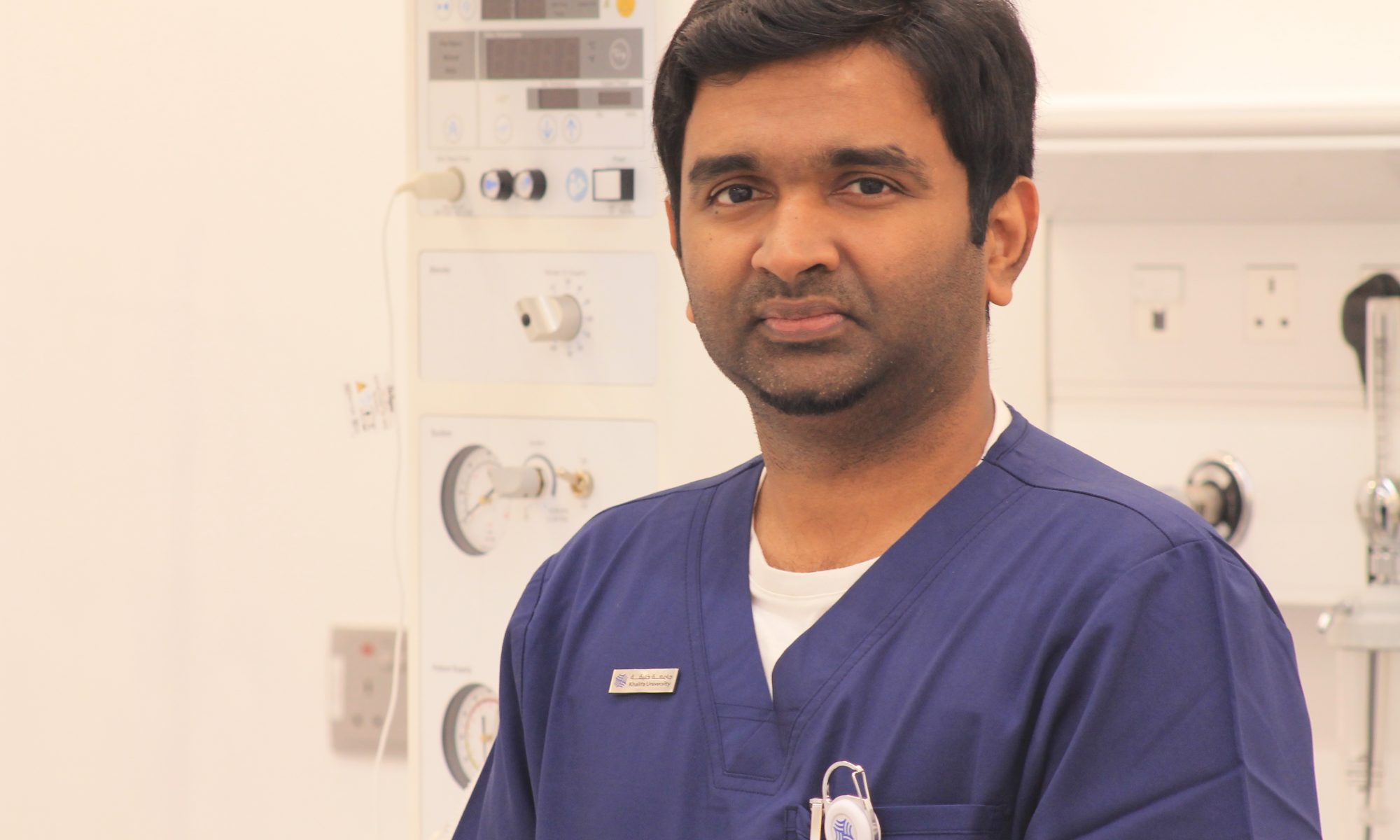
Abi Sayid Mohammed, Simulation Specialist of the College of Medicine and Health Sciences, has earned the International Certified Healthcare Simulation Operations Specialist-Advanced (CHSOS-A) credential, given by the Society of Simulation in Healthcare, the largest healthcare simulation organization in the world with its purpose to serve a global community of practice to enhance the quality of healthcare.


The comprehensive CHSOS-A™ credential is a portfolio-based certification for those in healthcare simulation operations. It covers the design, delivery, and technological and operational simulation principles. It also covers the leadership and demonstrated impact of simulation professionals on the field to meet the needs of healthcare learners at all levels. 


Mohammed submitted a portfolio that validated his advanced performance as an operations specialist in the healthcare simulation field, which was peer-reviewed against established standards of performance. 


Since March 2021, only 25 individuals from four countries have earned the CHSOS-A™ credential. Mohammed now joins this elite group as the first and only candidate from the United Arab Emirates to achieve the title.


Mohammed said, “It is an honor to be recognized and to be in the company of other 24 distinguished simulation specialists from around the world.”


Dr. John Rock, Founding Dean of the College of Medicine and Health Sciences, commented, “I congratulate Abi Sayid Mohammed on his earning the Certified Healthcare Simulation Operations Specialist-Advanced (CHSOS-A) credential. This is an important recognition of excellence in simulation operations.”


Ara Maj Cruz
Creative Writer
18 April 2021

Dr. Daniel Choi Talks about the ‘Wonder’ Battery at the Innovation@UAE Majlis

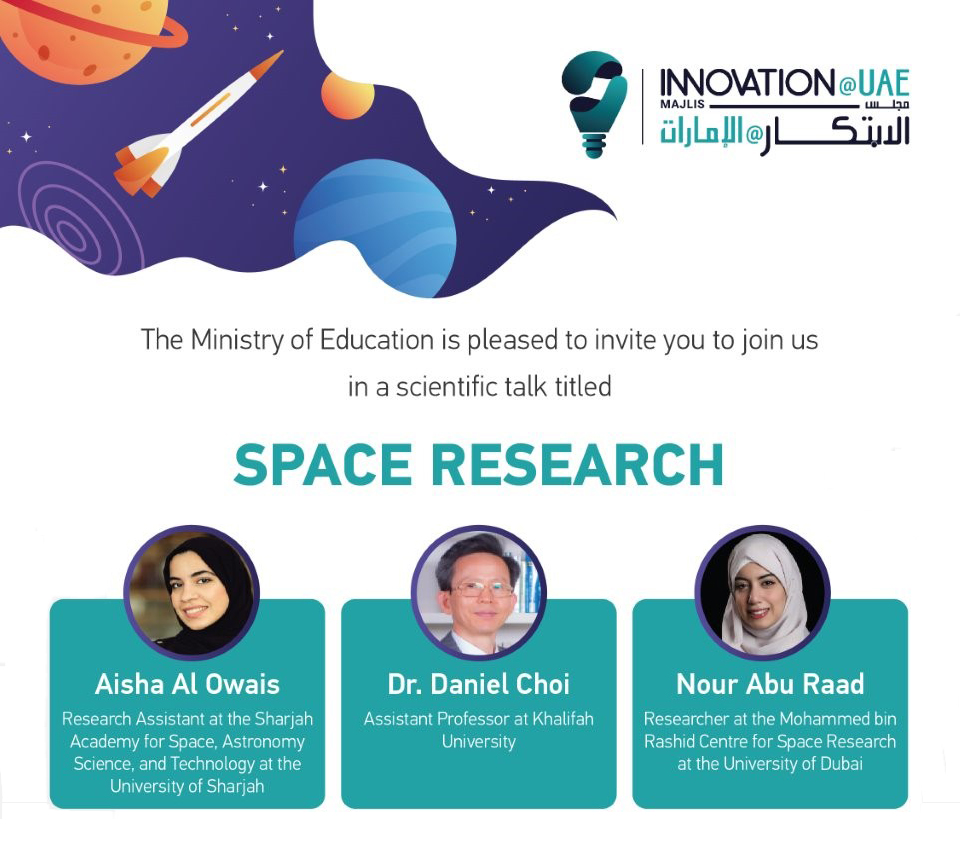
Dr. Daniel Choi, Associate Professor of Mechanical Engineering, was one of the invited speakers at the Innovation@UAE Majlis Research Talk Series on 29 March 2021. Organized by the Ministry of Education, this webinar focused on space-related research.


Along with Dr. Choi, the other speakers at the event were Nour Abu Raad, Researcher at the Mohammed bin Rashid Centre for Space Research at the University of Dubai, and Aisha Al Owais, Research Assistant at the Sharjah Academy for Space, Astronomy, Science, and Technology at the University of Sharjah. The session was moderated by Dr. Hend Al Tair, Director of Department of Science, Technology and Scientific Research, Ministry of Education.


During his talk, Dr. Choi introduced the ‘Wonder’ Flexible Battery, a thin battery intended primarily for space and aerospace applications but can also be used in wearable applications. Dr. Choi and his team were able to produce a battery that weighs less than 20 percent of the weight of a traditional battery.  “You would expect a large trade-off in energy density, but for the same volume of a traditional battery, ours offers approximately 90 percent the same energy density,” Dr. Choi said.


“Another advantage of our ‘flexible’ battery for space applications is that the flexibility of the nanocomposite material means it can be shaped to fit any odd or underutilized space inside and outside of the spacecraft instead of requiring a dedicated space to be built in, which can reduce the total weight of the spacecraft,” Dr. Choi explained.


After each presentation, attendees were given an opportunity to ask questions, opening an engaging discussion on current and future space research in the UAE. This series of webinars are part of the Ministry’s mission of advancing and supporting academic research in the country by giving a platform to academic researchers leading innovative projects of relevance to the UAE. The interactions between academic researchers and the public increase science engagement and contribute to scientific literacy and public participation in science.


 Ara Maj Cruz
Creative Writer
15 April 2021

Nearly 30 Government and Private Sector Entities Seek Talent at Khalifa University’s Virtual Internship Fair 2021

UAE’s Top-Ranked University Equips Students with Knowledge and Skills to Lead UAE’s Knowledge-Economy of the Future  


Khalifa University announced that nearly 30 government institutions and private sector organizations participated in the virtual Internship Fair 2021 to attract and recruit qualified and talented students for internships. Students and organizations view internships as a major first step in the careers of young professionals, capable of contributing to the growth of the UAE’s knowledge economy. 


A total of 457 students attended the virtual Internship Fair that offered more than 120 Internship opportunities in a wide range of industries such as healthcare, biotechnology, clean energy, nuclear engineering, aerospace, oil and gas, as well as other advanced technology sectors such as robotics, artificial intelligence, supply chain logistics, and infrastructure. 


Some organizations that offered internships included Etisalat, Abu Dhabi National Oil Company (ADNOC), EDGE Group, Tawazun, du, Microsoft, GE, General Motors, PwC Middle East, Total, Schlumberger, Accenture, and Emirates NBD Bank. Others included Schneider Electric, Lockheed Martin, Boston Consulting Group, Al Masaood Oil and Gas, National Petroleum Construction Company, Strata, Noor Abu Dhabi, National Marine Dredging, Det Norske Veritas (DNV) and Direct TT.


The virtual Internship Fair 2021 also included five workshops, CV clinics for 23 students, and a session on ‘Build Your Network and Advance Your Career on LinkedIn’ that received 47 participants. More than 100 students attended a session titled ‘An introduction to EDGE Group and Trends that are Shaping the Workplace’.


In keeping with the prevailing extraordinary circumstances, students and alumni were offered a virtual platform to interact with each organization, who had digital booths. Employers were able to meet students in virtual space via chat rooms, sometimes as groups as well as in one-to-one interaction, during which interviews were conducted and internship details offered. Through videos and digital brochures, companies provided virtual visitors details on relevant training programs.


Dr. Ahmed Al Shoaibi, Senior Vice-President, Academic and Student Services, and Associate Professor, Khalifa University, said: “Khalifa University’s comprehensive academic, research and outreach portfolios that are designed to equip the students with the right expertise, provide the participating corporate and government sector entities with the talent they seek for their organizations. Being part of Khalifa University provides the students with 21st century knowledge and skills to prepare them for the jobs of the future. Our students are well-rounded in personal and professional credentials. They are ambitious and bring fresh perspectives to help companies with innovative solutions and ideas. Our alumni have made significant impacts in key industry sectors such as energy, sustainability, space and healthcare among others. We are confident that this new group of student interns will build on that legacy by adding value to their host organizations.”


In order to foster relationship building with the industry and maximize contribution of students and graduates to the UAE economy and the world at large, Khalifa University’s Career and Alumni Services Office organizes a number of events such as the Annual Career Fair, Internship Fair, Employer on-Campus Day and Majors Day. The Career Services Office constantly works to build and maintain meaningful relationships with industry leaders who support Khalifa University students and graduates in their search for internships, job opportunities and other possible types of student-company engagement.


According to the Career Services office, a significant number of Khalifa University students have received employment, training or internship offers in the past during such annual events. Every year, these events provide an opportunity for students to transition into major corporate entities and government sectors as professionals. Moreover, some Khalifa University students successfully secure international internship experiences with multinational corporations and partners, contributing significantly while gaining exceptional practical experience beyond their comfort zone. Internships that are conducted abroad, whether in-person or virtually, contribute to Khalifa University’s commitment towards internationalization and preparing the students to become global citizens.


Clarence Michael
English Editor Specialist
15 April 2021

KU Team Develops Simulations to Find Materials for Capturing Carbon from Carbon Dioxide Emissions

With myriad materials to choose from, simulations help speed up the process of selecting the right materials for the job. 


Read Arabic story here.


With most of the world still relying on fossil fuel-driven power plants for their energy, carbon dioxide emissions remain a global concern. Reducing greenhouse gas emissions, particularly carbon dioxide, is paramount in combating climate change.


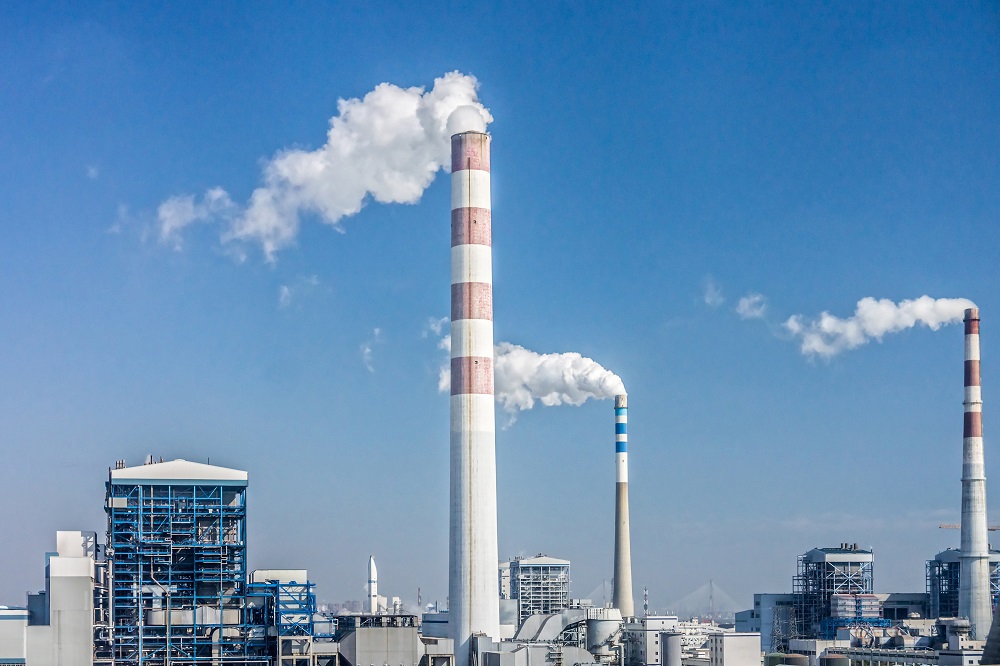
One way to do this is to capture the carbon dioxide (CO₂) emissions directly from the smokestacks of the power plants before they enter the atmosphere.


Dr. Lourdes Vega, Director of the Khalifa University Research and Innovation Center on CO₂ and Hydrogen (RICH) and Professor of Chemical Engineering, is leading a collaborative research team that is analyzing different types of materials to determine their potential for post-combustion carbon dioxide capture and separation.


The team includes Dr. Daniel Bahamon, Research Scientist, and Dr. Maryam Khaleel, Assistant Professor of Chemical Engineering, both from Khalifa University, along with Dr. Santiago Builes from EAFIT University, Colombia, and Wei Anlu from China University of Petroleum, a student who spent six months at the RICH Center at Khalifa University for performing part of this study. They published their work in January in the journal Frontiers in Chemistry.


“Mitigation strategies such as carbon capture, utilization and storage (CCUS) play an import role in limiting the contribution of CO₂ emissions to global climate change. One key approach to this is capturing post-combustion CO₂ from flue gas at power stations and chemical manufacturing plants,” explained Dr. Vega.


Flue gas is the by-product gas that leaves a fossil fuel power station or plant via a chimney known as a flue. While its composition depends on what is being burned, it mostly comprises nitrogen, carbon dioxide, water vapor and a number of pollutants such as particulate matter, carbon monoxide, nitrogen oxides and sulfur oxides. The ‘smoke’ seen pouring from these flues is not smoke at all, but the water vapor in the gas forming a cloud as it meets cooler air.


Carbon dioxide is the second largest component of flue gas at around 4 to 25 percent, depending on the source. Although there are technologies available now to capture this carbon dioxide before it can wreak havoc on the atmosphere, they have several disadvantages.


Currently, aqueous amine solutions, which are solutions containing water and amines, organic compounds derived from ammonia and containing a nitrogen atom attached to hydrogen and carbon atoms, are used to capture CO₂ in large-scale applications. Amine solutions are excellent at trapping the CO₂, making them the most popular and developed carbon capture technology. However, the disadvantage to this technology is that in order to separate the trapped CO₂ from the amine solution, it has to be heated, requiring additional energy, and some of the amines are lost in this high energy process.


To overcome the shortcomings of amine solutions, solid sorbent materials are a viable alternative. Solid sorbents can selectively adsorb CO₂, however some solid sorbent materials perform better than others, and finding the most optimal carbon capturing material was the focus of Dr. Vega’s investigation.


A good adsorbent is a highly porous material with a large internal surface, full of holes to collect the CO₂. Metal-organic frameworks (MOF) materials possess enhanced stability, greater CO₂ cycling capacities and lower regeneration energies, making MOFs a material of choice for solid sorbent-based carbon capture.


However, MOFs alone are not enough to adsorb the CO₂ from flue gas at low pressures, especially since water vapor in the gas can compete with the carbon dioxide for adsorption. To counter this, attention has turned to amine-functionalized MOFs, where amines are grafted onto the open metal sites to increase CO₂ adsorption selectivity and capacity. These materials combine the benefits of both the MOFs and the amines, avoiding the disadvantages of the need for heating the solvent for removing the CO2 or the evaporation of the amines.


There are multiple types of amines, each of which has different characteristics relevant to CO₂ capture. Finding the optimal amine for each real-world application can be a time-consuming endeavor.


“Molecular simulations can allow the systematic and precise study of the various relevant variables of a system,” explained Dr. Vega. “We can isolate and quantify the effect of each functionalized MOF on the performance of the system, making simulation an excellent tool for the rational design of materials.”


The research team used molecular simulations to explore the relationship between the structure of different kinds of amine-grafted MOFs and their CO₂ adsorption performance.


A series of amine-grafted MOFs were screened, establishing the most promising materials for adsorbing low-concentration CO₂, while considering their regeneration performance, or how many cycles the MOFs could operate before degrading.


“Our work offers a molecular understanding of how functionalization takes place on MOFs and how it affects their final performance, providing guidance on the design of the best material/amine combination for optimal post-combustion CO₂ capture,” said Dr. Vega.  Once the best material is found with this procedure, it will be synthesized and tested in a reactor at the conditions required for CO2 capture from different sources.


Dr. Vega’s team’s work is a significant contribution to the development of efficient and sustainable carbon capture utilization and storage solutions, as part of the RICH Center effort to find optimal materials to produce clean energy. 


Jade Sterling
Science Writer
15 April 2021

Getting More Clean Energy with New Materials

Research into advanced materials at Khalifa University is unlocking a number of new technologies that can be used to generate and store renewable energy more efficiently.


Read Arabic story here.


Dr. Nirpendra Singh, Assistant Professor of Physics at Khalifa University, and colleagues recently published three papers that investigate the development of materials with a number of applications for renewable energy.


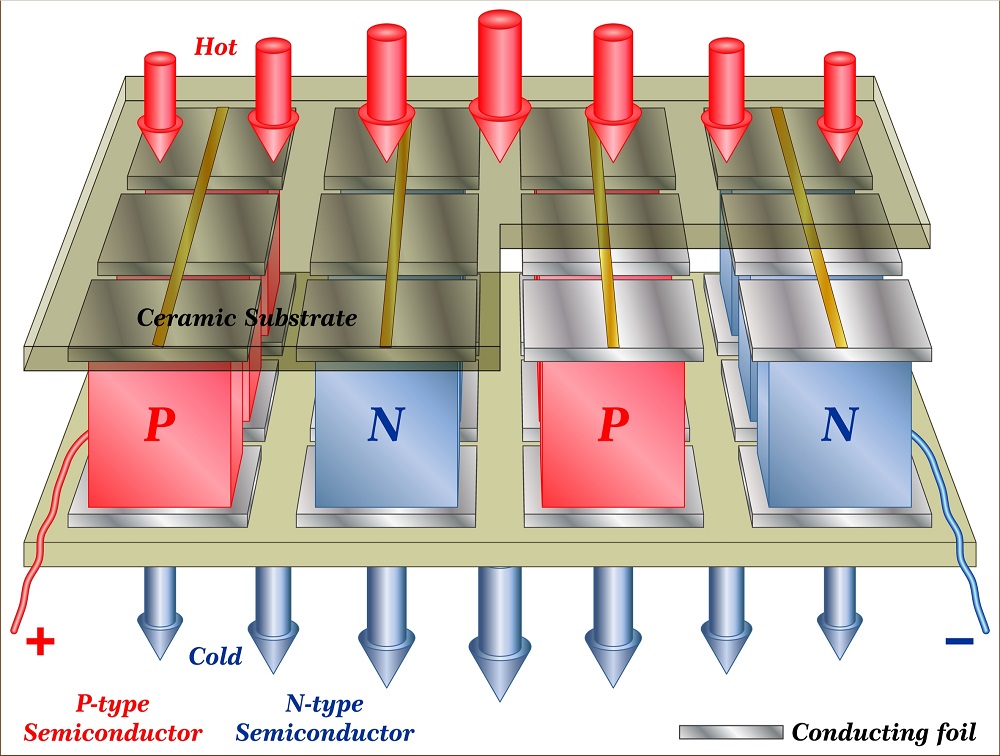
These papers explore new materials that could help improve the performance of thermoelectric materials capable of converting heat into electricity more efficiently, and sulphur-based batteries with high energy densities that could replace traditional lithium-ion batteries.


Dr. Nirpendra Singh, Assistant Professor of Physics, (right) and Dr. Muhammad Sajjad, Post-Doctoral Fellow.


Understanding Phonon Dynamics of Copper Pseudohalides

A team consisting of Dr. Singh, Dr. Dalaver Anjum, Assistant Professor, Dr. Gobind Das, Associate Professor, Dr. Issam Qattan, Associate Professor, and Dr. Shashikant Patole, Assistant Professor, all from Khalifa University’s Department of Physics, and Dr. Muhammad Sajjad (currently working at Khalifa University) from Luleå University of Technology, Sweden investigated the phonon dynamics of two copper compounds to determine how effective they are in conducting the heat. Their study was published in the journal ACS Omega


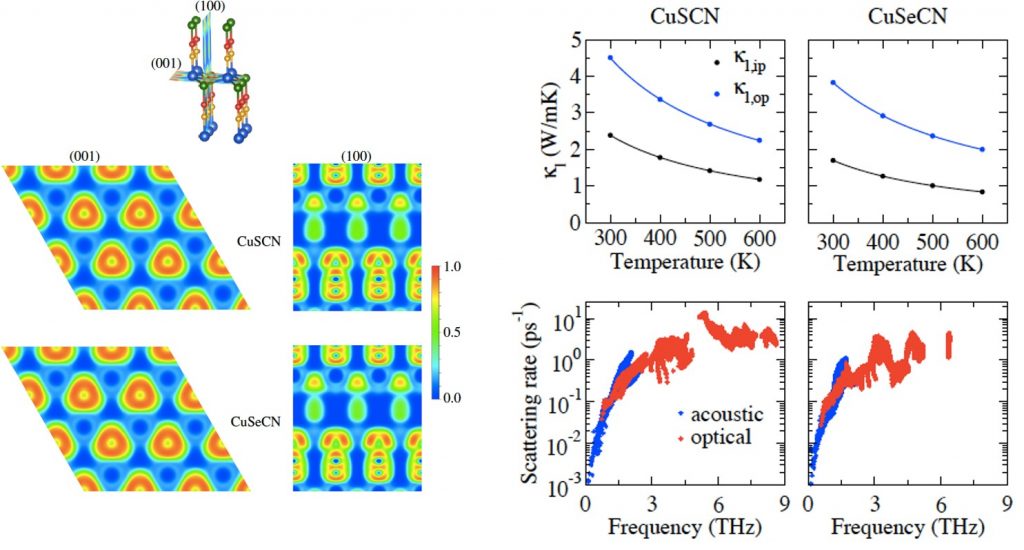
Phonon transport of materials plays a significant role in determining their thermoelectric performance. Dr. Singh’s team investigated two copper-based compounds – copper thiocyanate (CuSCN) and copper selenocyanate (CuSeCN) – which are candidates for inexpensive large-area photovoltaic use, but until now, have not been deeply studied for phonon transport. The research team comprehensively determines phonon thermal transport with the most sophisticated computational approach available to date. The electron localization function profile is used to explain phonon softening, which was found to be the leading cause of low in-plane lattice thermal conductivity. The high phonon scattering rates in CuSeCN give rise to lower lattice thermal conductivity than CuSCN, suggesting its better thermoelectric performance, Dr. Singh explained. 


DOI: https://doi.org/10.1021/acsomega.0c03696


Lead-free Double Perovskite Cs2PtI6: A Promising Thermoelectric Material

While transparent materials are vital for renewable energy harvesting, thermoelectric materials are crucial for turning heat – either heat from the sun or waste heat from power plants and cars – into renewable energy. One promising thermoelectric material is double perovskite Cs2Ptl6, a lead-free hybrid material containing cesium and platinum. 


Dr. Singh, Dr. Muhammad Sajjad, and Dr. J. Andreas Larsson from the Luleå University of Technology, Sweden,  report the electronic and phonon transport properties of Cs2Ptl6 in work recently published in the journal ACS Applied Energy Materials.


The researchers found that the Cs2Ptl6 shows high thermoelectric performance at and above room temperature and is therefore worth exploring for thermoelectric applications. Cs2PtI6 has a lattice thermal conductivity that is 8-fold smaller than that of the commercial thermoelectric material Bi2Te3. Nanostructuring and alloying of Cs2Ptl6 can lead to further improvement in thermoelectric performance, possibly making it useful for conventional thermoelectric generators.  For future energy needs, finding alternative and better thermoelectric materials is critically needed, Dr. Singh said. 


DOI: https://dx.doi.org/10.1021/acsaem.0c02236


Polar C2N Sheet: A Potential Electrode Enhancer in Sodium–Sulfur Batteries

With clean renewable energy production comes the need for energy storage since renewable energy supply is intermittent. Currently, metal-ion batteries are used, but low energy density and relatively high cost limit their viability for large-scale usage.


Alkali metal-sulfur batteries have emerged as a promising option, especially in applications requiring high energy storage capacity. However, one issue with metal-sulfur batteries is the so-called ‘shuttle effect.’ In the shuttle effect, metal particles called polysulphides dissolve into the battery’s electrolyte and are transported from the sulfur cathode to the metal anode. This results in a reduction in capacity and charging performance of the battery.


Finding a way to suppress the shuttle effect is crucial to metal-sulfur battery performance and lifetime. Dr. Singh. Dr. Muhammad Sajjad and Dr. J. Andreas Larsson from Luleå University of Technology, Sweden, and Dr. Tanveer Hussain from the University of Queensland investigated the use of different 2D materials that could ‘anchor’ the metal particles and prevent them from shuttling. They published their findings in the journal Langmuir.


The 2D materials the team investigated were nitrogenated holey graphene (C2N) and nonpolar polyaniline (C3N). Both C2N and C3N are 2D nanostructures, which can help to anchor the metal polysulphides to the sulfur cathode and improve the electric conduction of the sulphur cathode in metal-sulfur batteries.


The researchers found that C2N was a stronger anchor than C3N, paving the way for a cost-effective C2N nanosheet as an anchoring material for the high-energy and high-capacity batteries needed for large-scale photovoltaic energy storage.


As energy consumption continues to rise, finding new materials that can make renewable solar energy generation and storage cleaner and more efficient will be key to meeting the world’s growing energy demands sustainably.


DOI: https://doi.org/10.1021/acs.langmuir.0c02616


Jade Sterling
Science Writer
12 April 2021

Khalifa University and Abu Dhabi Agriculture and Food Safety Authority to Collaborate on Developing New Desalination Technology

Project to Focus on Engineering, Scaling-up and Commercialization of Novel Class of Selective Ion Sponges for Desalination  


Khalifa University and the Abu Dhabi Agriculture and Food Safety Authority (ADAFSA) announced they have signed a research collaboration agreement to jointly fund a project to engineer, scale-up and commercialize a novel class of selective ion sponges for desalination supporting enhanced water recovery and a circular approach to desalination.


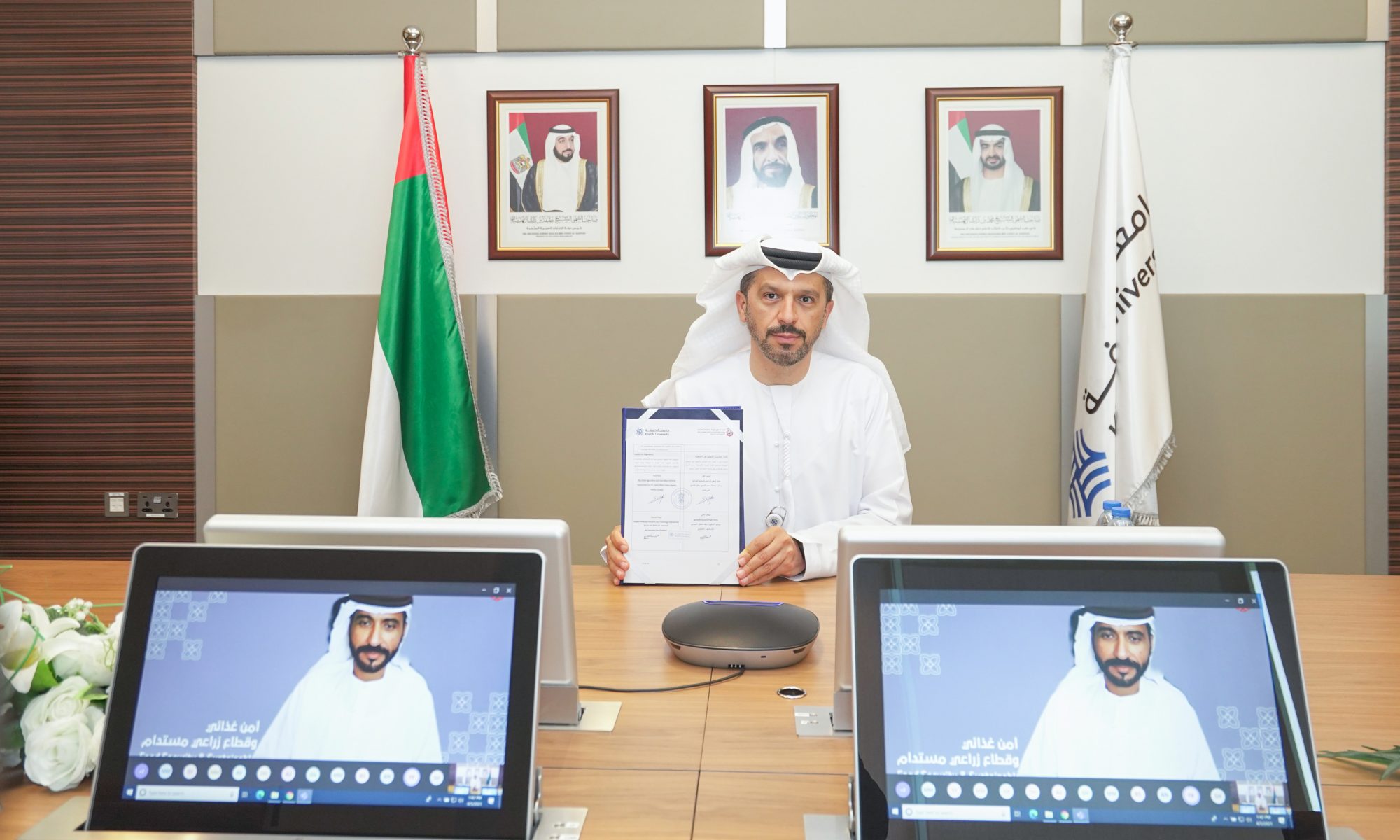
The agreement was signed by Dr. Arif Sultan Al Hammadi, Executive Vice-President, Khalifa University and His Excellency Saeed Albahri Salem Alameri, Director-General, ADAFSA. The project represents both the partners’ intense involvement in water management and food security – two sectors strategic for the UAE.


The project will lead to the delivery of intellectual property (IP) in desalination, advanced materials design, process integration and trigger responsive systems, with applications and scope of study spanning far beyond the project’s ambit. It will also place Khalifa University, ADAFSA and the UAE in a leadership position in advanced separation materials design for the development of a significant and scalable technology for desalination. Additionally, it will find potential applications beyond desalination in areas such as resource recovery, selective toxins or pathogens removal, and nutrients benefaction. Highly novel materials and manufacturing routes are also expected to be developed and translated in the scale-up stage.


Dr. Al Hammadi said: “Khalifa University is delighted to enter into this partnership with ADAFSA and inspire innovation in the UAE’s strategic sectors. In addition to food security and desalination, this project is expected to yield IP in several related sectors, which will help highlight the UAE’s role in advancing development of fresh technologies. We believe our expert faculty, who are leading this research project with their collaborators, will not only drive innovation but will also develop human capital for the local and regional industries.”


H.E Saeed Alameri said: “We are happy to collaborate with Khalifa University in conducting this research project, which will create environmentally and economically sustainable freshwater resources. Due to the increased pressure on the available water resources and the depletion of groundwater, there is a pressing need for investing in scientific research to localize modern technologies and innovations in desalination.”


Alameri noted the agriculture sector is the largest consumer of groundwater in the Emirate, stressing this collaboration stems from ADAFSA’s keenness on leveraging all possible opportunities to achieve agricultural sustainability, thus boosting the food security of Abu Dhabi and the UAE in general.


The project was initially submitted to Khalifa University within ADAFSA’s efforts to build strategic partnerships with key research entities in the UAE, to develop the agricultural and food sector. It was prioritized as water is of the essential natural resources used in agricultural production, especially as this sector faces many challenges in providing the needed irrigation water for crops.


The project will be led by Dr. Ludovic Dumee, Assistant Professor, Chemical Engineering, an expert in advanced and responsive separation materials development at Khalifa University, who will be assisted by post-doctoral researchers and two PhD students. Dr. Hassan Arafat, Director, Khalifa University Center for Membranes and Advanced Water Technology (CMAT), and Professor, Chemical Engineering, will also support and co-lead this project.


From ADAFSA’s side, the research project will be supervised by a team specialized in economic, agricultural and irrigation development under the directives and follow-up of H.E. Saeed Alameri, ADAFSA’s Director General.


The project will eventually lead to development of a library of light responsive MOF materials and module configurations enabling relatively low-cost water recoveries, as well as analytical databases that can predict water quality based on ‘source’ waters. In addition, it will generate freshwater streams from saline groundwater or treated wastewaters at par quality or above that is required for farming applications, while leading to a scalable technology for deployment at the end of the project with relevant stakeholders in the water utilities and materials engineering areas.


Khalifa University’s CMAT focuses on advanced desalination technologies, nanomaterials and membranes, energy efficiency and sustainability of water processes, as well as technology transfer and capacity building in desalination.


Meanwhile, ADAFSA will follow-up and utilize the project’s outcomes in developing the agricultural sector and finding ways to desalinate water in a sustainable, economic and environmental manner, in cooperation with the stakeholders.


Clarence Michael
English Editor Specialist
6 April 2021

Khalifa Innovation Center at Khalifa University Receives First “Incubator License” from Abu Dhabi Department of Economic Development

Read Arabic story here.


Khalifa Innovation Center (KIC –  www.khalifainnovation.ae), a strategic partnership between Khalifa University of Science and Technology, Khalifa Fund for Enterprise Development, Tawazun, Mubadala Investment Company, and Sandooq Al Watan, today announced it has received license from the Abu Dhabi Department of Economic Development (DED) to operate as an incubator, thus becoming the first institution in Abu Dhabi to receive such a license.


Hosted at Khalifa University but is open to all university students and researchers in the UAE, KIC will now be able, through the DED, to issue Innovative License to entrepreneurs incubating their newly established startups in KIC . This is critical to enable startups to validate new technologies and business models while remaining independent and engaging in business traction activities such as attracting investors or engaging with collaborators to scale up and grow their businesses. Startups in KIC can now engage in business acceleration activities with minimum financial and legal risks, beginning their initial journey in the innovation business.


Moreover, this “Incubator License” will support KIC’s efforts to accelerate validation and introduction of technology-based startups into the Abu Dhabi market and industry. Most importantly, it will encourage more young scientists and entrepreneurs in the UAE to apply and take part in the KIC programs to get their ideas and inventions moving from concept stage to impactful business opportunities.


Dr. Arif Sultan Al Hammadi, Executive Vice-President, Khalifa University of Science and Technology, said: “This incubation license is a great milestone in the journey of KIC, especially with the operation and management of its startup portfolio which are mostly founded on research discoveries. KIC plays a pivotal role in embedding and incubating scientific research outputs within entrepreneurial business settings, producing promising startups and new companies. This is a new paradigm in the overall knowledge-based ecosystem in Abu Dhabi and the UAE, and therefore, it requires a new approach for including incubators like KIC within the economic fabric in order to achieve maximum economic and innovation potentials.”


Mouza Al Nasri, Acting CEO, Khalifa Fund, said: “At Khalifa Fund, we’re constantly searching for new opportunities and identifying best practices to enhance the UAE’s entrepreneurial ecosystem. That’s why we’re extremely proud to contribute towards this strategic partnership that enables the Khalifa Innovation Center (KIC) to deliver imperative services to our startups and SMEs.


KIC’s new capability to issue incubation licenses is a monumental step that will cement Abu Dhabi’s position as an entrepreneurial hot-spot. The licensing process will provide UAE entrepreneurs with a multitude of integral operational benefits, that will accelerate their validation process and thus empower them to elevated innovation levels and optimal performance.


She added: “I’d like to thank Khalifa University of Science and Technology, Tawazun, Mubadala Investment Company, and Sandooq Al Watan for sharing Khalifa Fund’s dedicated efforts towards enhancing the UAE’s entrepreneurial ecosystem, and the Abu Dhabi Department of Economic Development for helping to create this important milestone.”


Dr. Yehya Al Marzouqi, Advisor to the CEO of  the Tawazun Economic Council, Board Member of Khalifa Innovation Center said: “KIC’s incubation licenses would contribute to strengthening the ecosystem and would instill innovation and creativity especially for projects that are based on technical and advanced technology.


 “Tawazun Economic Council would continue supporting KIC in its effective contributions to the development of a sustainable ecosystem through cooperating with strategic partners to empower the Center and strengthen its role in embracing innovative technology projects. The Center offers many exclusive services like training the creative youth and empowering them to transform the ideas of their projects into real practical models and develop them further to ensure alignment with the market requirements taking into consideration the possibility of promoting each.”, he added.


Al Marzooqi expects a positive impact to this approach in creating  various innovative projects that would feed to the benefit of the national economy and lead to strengthening Abu Dhabi’s position as a global destination in the field of technical and advanced technological industries and projects that can be employed in various sectors in future.


The first incubator license for KIC also reflects a recognition that KIC fulfilled all standard requirements for an incubator to conduct its operations efficiently. This includes available space for inventors and entrepreneurs to receive appropriate training, as well as the ability to provide office spaces for newly established startups where they can run their businesses and develop their technologies. In addition, inventors and entrepreneurs can have access to technical expertise and scientific laboratories to validate their technologies and prototypes.


All of these services are part of KIC’s offerings to entrepreneurs. Moreover, KIC provides financial support and funds to startups and entrepreneurs who successfully engage in its bootcamp, incubation and acceleration programs. Such a fund is targeted towards developing prototypes, validating business models or any other activities that can help entrepreneurs scale up their ideas.


Dr. Sami Bashir, Interim Director, KIC, said: “This incubator license means KIC has the required technical and expertise resources to support and mentor inventors, entrepreneurs and their startups to go through robust and successful innovation programs that are tailored to push technologies from labs to the market. Moreover, the nature of the technologies and discoveries incubated within the KIC fit with the overall innovation strategy in areas such as advanced materials, health sciences, artificial intelligence, security and agriculture.”


Clarence Michael
English Editor Specialist
21 April 2021

KU Team Wins 3rd Place in Imperial Barrel Award

A team of students from Khalifa University has won third place, beating out five other teams, at the Middle East Imperial Barrel Award Program 2021, a joint program of the American Association of Petroleum Geologists (AAPG) and the AAPG Foundation. It is an annual prospective basin evaluation competition for geoscience and engineering students from different universities around the world. 


This year, five KU students participated in the competition, including:


  • Noura Naji Alzaabi, BSc in Petroleum Geosciences student from the UAE
  • Omar Al Attas, BSc in Petroleum Geosciences student from the UAE
  • Ali Al Sabbagh, BSc in Petroleum Engineering student  from the UAE
  • Sara Abd El-Samad Salem, MSc in Petroleum Geosciences student from Egypt
  • Alejandro Diaz Acosta, MSc in Petroleum Geosciences student from Mexico


The team faculty advisor was Dr. Mohammad Alsuwaidi, Assistant Professor of Earth Sciences.


The students underwent an eight-week intensive program where they worked as exploration geologists and analyzed a large dataset — including geology, geophysics, land, production infrastructure, and other relevant materials —  in order to evaluate the hydrocarbon potential of a prospective sedimentary basin


“The Imperial Barrel Award organized by the AAPG is a great opportunity for our students to use their skills in Petroleum Geosciences and Petroleum Engineering to work on an actual hydrocarbon exploration project. They were provided with geosciences data including seismic, well logs, production data, and other data related to a hydrocarbon prospect. They spent eight weeks studying, analyzing, and integrating all data to present their recommendations to a panel of judges (who acted like investors) to develop the prospect. Such projects usually are conducted by experts in exploration teams in oil and gas companies over many months/years. This is a great opportunity for students to learn and understand how to evaluate and assess petroleum prospects,” explained Dr. Alsuwaidi.


Alejandro Diaz Acosta reflected on his experience: “The AAPG Imperial Barrel Award competition was a tremendous amount of work that allowed me to broaden my industry network, develop my geological evaluation skills and collaborate with great people. I appreciate the ambition of everyone involved in this wonderful experience.”


Ali Al Sabbagh expressed a similar sentiment: “It was a great experience working with a diverse team, with different backgrounds, majors and academic levels to achieve a single common goal. This competition helps students apply the theoretical knowledge into real life practical projects. Also, I believe it is important for students to not restrict themselves to a certain major or discipline, and this competition gave us an opportunity to learn a broader range of knowledge and skills.”


More information about the competition is available at https://iba.aapg.org/


Erica Solomon
Senior Publication Specialist
5 April 2021


Through Rose-tinted Contact Lenses: Gold Nanocomposites Help the Color-Blind See the World Differently

Using red-tinted glasses can make colors more prominent, but achieving this correction in a comfortable manner is more challenging.


Read Arabic story here.


A collaborative team of researchers from Khalifa University and Imperial College London has developed a new contact lens that could help people with color blindness. Rather than the conventional approach, using dyes to tint lenses, the research team uses gold nanoparticles to filter red and green light, creating a safer way to see colors.


The research team includes Dr. Haider Butt, Associate Professor of Mechanical Engineering, Dr. Mohamed Elsherif, Postdoctoral Fellow, Dr. Fahad Alam, Postdoctoral Fellow, and recent MSc graduate Ahmed Salih, all from Khalifa University, along with Dr. Alil Yetisen, Associate Professor of Chemical Engineering at Imperial College London. They published their work last month in ACS Nano.


Problems with distinguishing red from green restrict people from working in fields where color recognition is critical, but can also have everyday ramifications as simple as deciding whether a banana is ripe or selecting matching clothes.


The retina of the eye has three types of cones: one perceives blue light, another green, and the third red. These cones work together to allow people to see the whole spectrum of colors, except when one doesn’t work properly.


“Color vision deficiency (CVD), more commonly known as color blindness, is an inherited ocular disorder that limits the sufferer’s ability to distinguish between specific colors,” explained Dr. Butt. “Red-green color blindness is the most prevalent form of CVD, with most sufferers relying on wearables to manage the difficulties in day-to-day tasks. The most common wearable is a form of tinted glass.”


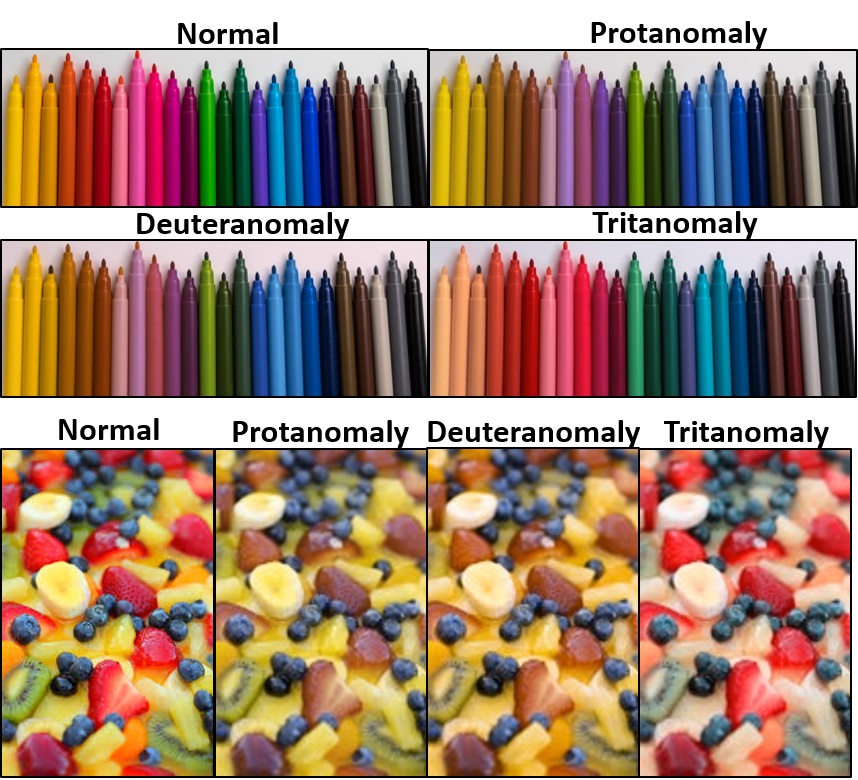
Deuteranomaly, which occurs mostly in men, is a condition in which the photoreceptor responsible for detecting green light responds to light associated with red. This can be improved using red-tinted glasses, which make the colors more prominent, but achieving this correction in a comfortable manner is more challenging. Glasses based on this approach are commercially and readily available, but they are bulky and can be uncomfortable. Contact lenses do exist, but their reported effectiveness varies among tested patients and the stability of the dyes within the contact lenses is insufficient for daily use. 


“Research on CVD management techniques has shown that dyed contact lenses are expensive and have leaching and toxicity problems,” explained Dr. Butt. “We used gold nanoparticles instead. Noble metal nanoparticles, particularly gold and silver, have excellent electrical and optical properties, making them suitable for various biomedical applications, while they also display excellent light absorption and scattering properties.”


Conventional color-correcting lenses are made with certain minerals to absorb and filter out some of the wavelengths between green and red that confuse the photoreceptors. With less color overlap, the brain gets a clearer signal to help distinguish between the problem colors, but this does reduce the amount of light getting into the eye.


Gold, on the other hand, has been used for hundreds of years in cranberry glass, where red glass is made by adding gold salts to molten glass. Gold nanocomposites are non-toxic and scatter light in such a way as to create this red glass look. The researchers believed this scattering quality could be leveraged and incorporated into contact lens material to improve the red-green contrast safely and effectively.


Dr. Butt and colleagues put their theory to test and designed a contact lens with embedded gold nanoparticles that successfully filtered out the range of optical wavelengths at which CVD patients have difficulty distinguishing between specific colors.


The gold nanoparticles were embedded into a hydrogel polymer, which was shaped into the contact lenses, producing rose-tinted gels that filtered the light where red and green overlap. Importantly, the lenses were also studied for the effect of the nanoparticles on the water content and hydration for the eyes. The researchers found that the gold did not have an appreciable effect on the water content of the gel, meaning it can be used in contact lens applications without any undesirable side effects.


When compared with commercially available glasses and dyed lenses, the team’s lenses were just as effective, with comparable water content.


Now, the team aims to investigate the oxygen permeability of the hydrogel used in their lenses, before they can be deployed and help people with CVD to see the world differently. 


The research is jointly funded by Sandooq Al Watan, Aldar Properties, and Khalifa University.


Jade Sterling
Science Writer
5 April 2021

KU Faculty Receives MSA Membrane Science Award for His Work on the Effects of Nanoscale Pollutants in Wastewater Treatment

The award recognizes Dr. Dumée’s work on the impact of nano- and microplastics on wastewater treatment processes.


Dr. Ludovic Dumée, Assistant Professor of Chemical Engineering and Research and Innovation Center on CO2 and Hydrogen (RICH) faculty member, was honored by the Membrane Society of Australasia (MSA) with the MSA Membrane Science Award. The award is in recognition of Dr. Dumée’s work on the harmful effects of microplastic contaminants in wastewater treatment plants.


“I am deeply honored and delighted to receive the inaugural MSA Membrane Science Award for the impact and breadth of our research portfolio on microplastics pollution. This recognition will support my new engagement at Khalifa University and within Abu Dhabi and the UAE to tackle challenges arising from microplastics and other persistent pollutants present in waterways and oceans,” Dr. Dumée said.


Dr. Ludovic Dumée

Dr. Dumée is an active membranologist whose work focuses on developing advanced separation and chemical conversion technologies primarily in water and gas purification areas. His recent work on the impact of nano- and microplastics on wastewater treatment processes demonstrated major risks and challenges associated with the presence of nanoscale contaminants on secondary and tertiary treatments.


“Emerging contaminants, such as microplastics, represent operational threats to water treatment and desalination, and further studies are dearly required in this area to improve our sampling and characterization capabilities and reinforce water safety and control measure strategies,” Dr. Dumée said.


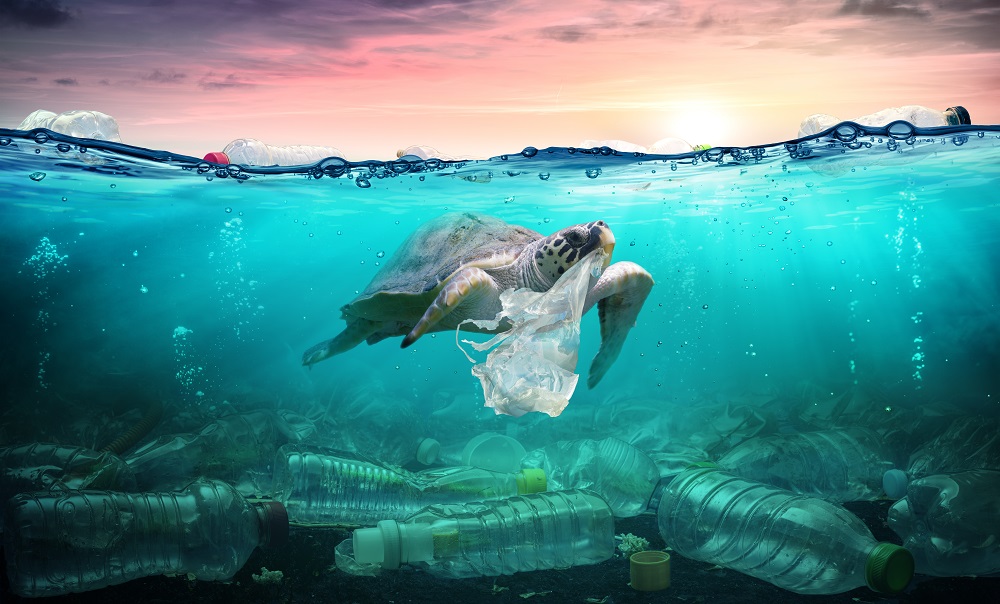
“Our team back in Australia investigated the detrimental consequences of the presence of micro and nanoplastics on wastewater treatment plants, as well as their toxicological potential on fish embryos. Besides the microplastics’ native toxicity, our team also recently published a study showcasing the potential of microplastics released in oceans to act as catalysts for rare earth and heavy metal precipitation, further increasing risks for marine life and the entire food chain, going up to human beings,” he added.


The MSA’s goal is to bring together academics, industrial professionals to further membrane science and technology within the Australasian region and promote a wider understanding of these technologies for public interest. The MSA Awards recognizes leadership in research and engagement in separation and membrane science/engineering across the region.


Below are key readings from Dr. Dumée’s group about microplastics:

Surface Adsorption of Metallic Species onto Microplastics with Long-term Exposure to the Natural Marine Environment

Nano/microplastics in Water and Wastewater Treatment Processes – Origin, Impact, and Potential Solutions

Release of Hazardous Nanoplastic Contaminants Due to Microplastics Fragmentation Under Shear Stress Forces

Kinetic and Mechanistic Aspects of Ultrafiltration Membrane Fouling by Nano- and Microplastics


Ara Maj Cruz
Creative Writer
5 April 2021