
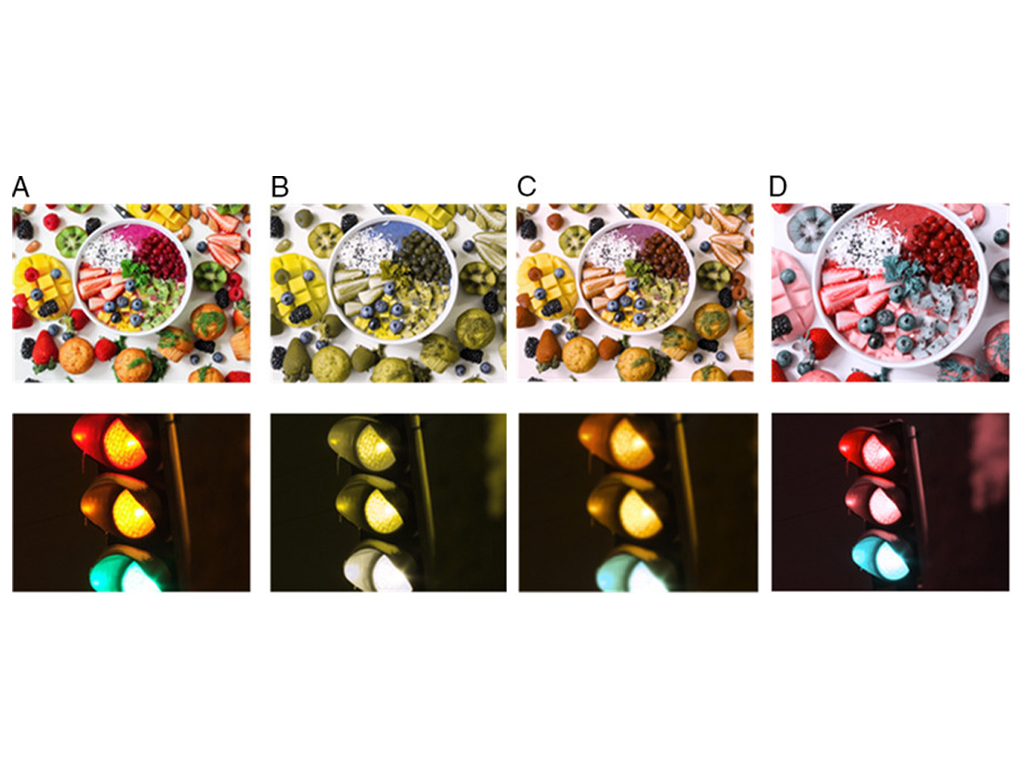
Developing 3D Printed Glasses to Correct Colorblindness


A team of researchers from Khalifa University has developed a new wearable that could help people with color blindness. While using dyes to develop lenses for glasses to help correct colorblindness is not new, the team has developed a method using 3D printing to manufacture customized glasses. 


Dr. Haider Butt, Associate Professor of Mechanical Engineering, Dr. Fahad Alam, Postdoctoral Fellow, Dr. Mohamed Elsherif, Postdoctoral Fellow, and Ahmed Salih, all Department of Mechanical Engineering, published their results in Advanced Engineering Materials. This research also inspired a Senior Design Project for undergraduate students Saif Abdulla Alnaqbi, Ali Saif Rashid Alshawi Aleghfeli, Rashid Ali Khalfan Bin Gahfan Al Ali, and Mohammad Ali Mohamad Hussain Ali Alshamali.


A transparent resin was used to make the lenses, mixed with two wavelength-filtering dyes to provide a tinting effect. The researchers used three different concentrations of the dyes to customize the lenses and compared their 3D-printed glasses to commercially available products used to treat color vision deficiency (CVD).


“Patient-specific customization of glasses for CVD remains a challenge, even though research has significantly advanced the properties and materials of CVD wearables available on the market,” Dr. Butt said.


The retina of the eye has three types of cones: One perceives blue light, another green, and the third red. These cones work together to allow people to see the whole spectrum of colors, but CVD is an inherited ocular disorder that limits this ability. Red-green color blindness is the most prevalent form of CVD, with most sufferers relying on wearables to manage the difficulties in day-to-day tasks. The most common wearable is a form of tinted glass.


Deuteranomaly, which occurs mostly in men, is a condition in which the photoreceptor responsible for detecting green light responds to light associated with red. This can be improved using red-tinted glasses, which make the colors more prominent. Certain dyes can absorb and filter out some of the wavelengths between green and red that confuse the photoreceptors. With less color overlap, the brain gets a clearer signal to help distinguish between the problem colors. This concept can also be extended to the other forms of CVD.


The KU team used two dyes: One blocked the undesired wavelengths for red-green patients, while the other filtered unwanted wavelengths for yellow-blue patients. The team used both dyes in their lenses, and when tested, volunteers with red-green CVD and yellow-blue CVD both benefited from the glasses, suggesting their efficacy at managing both CVD types.
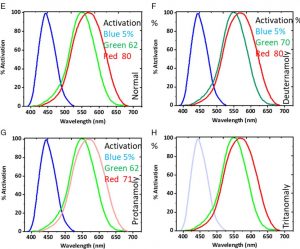
 

The activation of the photoreceptor cells at 520 nm for E) normal, F) deutan, G) protan, and H) tritan.


Glasses based on this approach are commercially and readily available, but they are bulky and can be uncomfortable. The KU research team developed their own frames for their lenses, using 3D printing to optimize the frames for comfort and usability. Inspired by commercially available designs, their 3D printed glasses can fold like other glasses, making them more usable to the wearer.


The stability of the dyes within the 3D printed glasses was examined by storing the glasses in water over a week. Their results showed that no dye leaked into the water, indicating their stability. They also left the glasses open at ambient conditions for a further week, proving their stability and long-lasting properties.


Their mechanical properties were also carefully assessed. Their flexibility and tensile strength are crucial components in quantifying their longevity and durability, and when tested, the glasses exhibited excellent durability, without breaking even when subjected to folding or bending.


“Our results showed that 3D printing had no influence on the wavelength-filtering properties of the dyes,” Dr. Butt said. “In fact, the dyes remained unchanged as they were integrated with the resin and 3D printed. When we compared the optical performance of our glasses with commercial colorblind glasses, our results indicated that our 3D-printed glasses were more selective in filtering undesired wavelengths than the commercially available options. They have great potential in treating colorblindness, and their ease of fabrication and customization means they can be tailored to each individual patient.”


The research work was funded by Sandooq Al Watan and Aldar Properties.


Jade Sterling
Science Writer
30 June 2022
Atmospheric Triggers of the Brunt Ice Shelf Calving in February 2021

An intense and stationary cyclone around Antarctica caused part of the Brunt Ice Shelf to collapse into the sea; researchers believe increased global temperatures are at play.  


As climate change continues around the globe, dramatic scenes play out in Antarctica. Enormous sheets of ice fracture from the edge of the continent, crashing into the sea, the very image of global warming. The breaking and detachment of parts of ice shelves is a natural process, however, known as the glaciological cycle, and although individual events are not cause for concern, they are becoming more common.


A calving event is the process by which a large block of ice gets separated from an ice shelf or glacier and forms an iceberg. Ice shelves are platforms of floating ice that form where the Antarctic ice sheet meets the ocean. Large calving events from these remain highly unpredictable, but the process is typically associated with the glaciological cycle of the ice shelves as well as ocean dynamics. Atmospheric triggers of such events have been largely overlooked, but a team including researchers from Khalifa University identified changes in strong near-surface winds as the cause of one calving event in February 2021.


Dr. Diana Francis, Head of the Khalifa University Environmental and Geophysical Sciences Laboratory (ENGEOS), Dr. Ricardo Fonseca and Charfeddine Cherif, both from ENGEOS, investigated the atmospheric triggers of the calving event with Kyle Mattingly, University of Wisconsin-Madison; Oliver Marsh, British Antarctic Survey; and Stef Lhermitte, Delft University of Technology. Their results were published in Atmospheres.


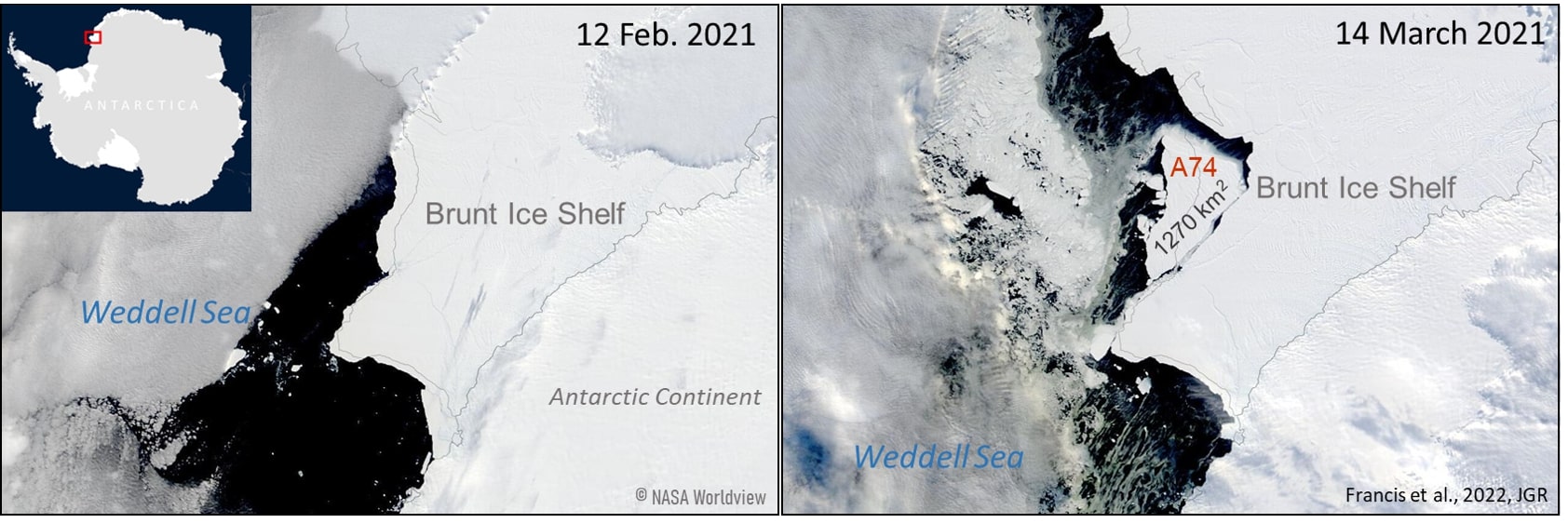
Iceberg A-74 was calved from the Brunt Ice Shelf when strong near-surface winds associated with intense cyclones amplified the stress on a pre-existing rift in the ice shelf. After calving, the iceberg drifted westward at a speed of 700 meters per day, aided by strong offshore winds.


“Ice shelves around Antarctica make up 11 percent of Antarctica’s total area,” Dr. Francis said. “Over the last few decades, ice shelves have been retreating significantly or have collapsed altogether, and this land-ice loss has important implications for sea-level rise both locally and globally. In fact, ice shelves around Antarctica act as a buffer for the land ice behind, shielding it from ocean swells that may promote further loss of ice. When ice shelves weaken or collapse, ice loss accelerates, causing the sea levels to rise.”


However, they act as a brake on the flow of ice further inland. “In late February 2021, iceberg A-74 calved from the north side of the Brunt Ice Shelf,” Dr. Francis said. “Although most of the ice loss at this ice shelf has been attributed to the inflow of warm ocean water, the atmospheric conditions above Antarctica may have played a role in triggering this calving event. We know that the number and intensity of cyclones around Antarctica have increased over the last few decades as storm tracks shift towards the pole under enhanced greenhouse-gas concentrations. As the climate continues to warm, the intensity of more frequent cyclones is projected to increase.”


The week before the A-74 calving event saw a strong low-pressure system around the Brunt Ice Shelf, paired with an intense atmospheric river, an elongated band of clouds and high water-vapor content to the northeast of the center of a cyclone. Heavy snowfall fell over the ice shelf, with the researchers suggesting this may have contributed to its destabilization. Strong winds from the cyclone brought more warm air from the atmospheric river, which may have led to high waves hitting the front of the ice shelf. As the cyclone moved eastward and intensified, these forces increased until the calving event was triggered and iceberg A-74 fell into the sea.


This cyclone was deeper and more persistent than an ordinary cyclone, providing the ideal conditions to trigger a calving event. Warm and moist air and wet snow, combined with high ocean waves and swells, weakened the ice-shelf front. Then, strong offshore winds created a steep oceanward sea-surface slope forcing the ice shelf to calve along a pre-existing rift. It took just a few days for the ice shelf to weaken sufficiently for the ocean to force part of it to break.


“Recent studies have found a poleward shift and strengthening of the Southern Hemisphere’s winds, particularly during the summer season, and this has mainly been attributed to ozone depletion,” Dr. Francis said. “However, despite ozone recovery in recent years and the expected reduction in these trends, we’re seeing more frequent stormy periods around Antarctica in the warmer months. Global warming may be causing a continued poleward shift and intensification of the storm track, which means calving events may occur more often in a warming world, with atmospheric forcing playing an increasingly important role. It’s more important than ever that we develop models and data sets to assess and project Antarctic and Greenland ice-shelf dynamics and sea-level rise to better predict their evolution and dynamics.”


Jade Sterling
Science Writer
30 June 2022
UAE High School Students Earn College Credit and Gain Key Soft Skills at Khalifa University’s Dual Credit Program

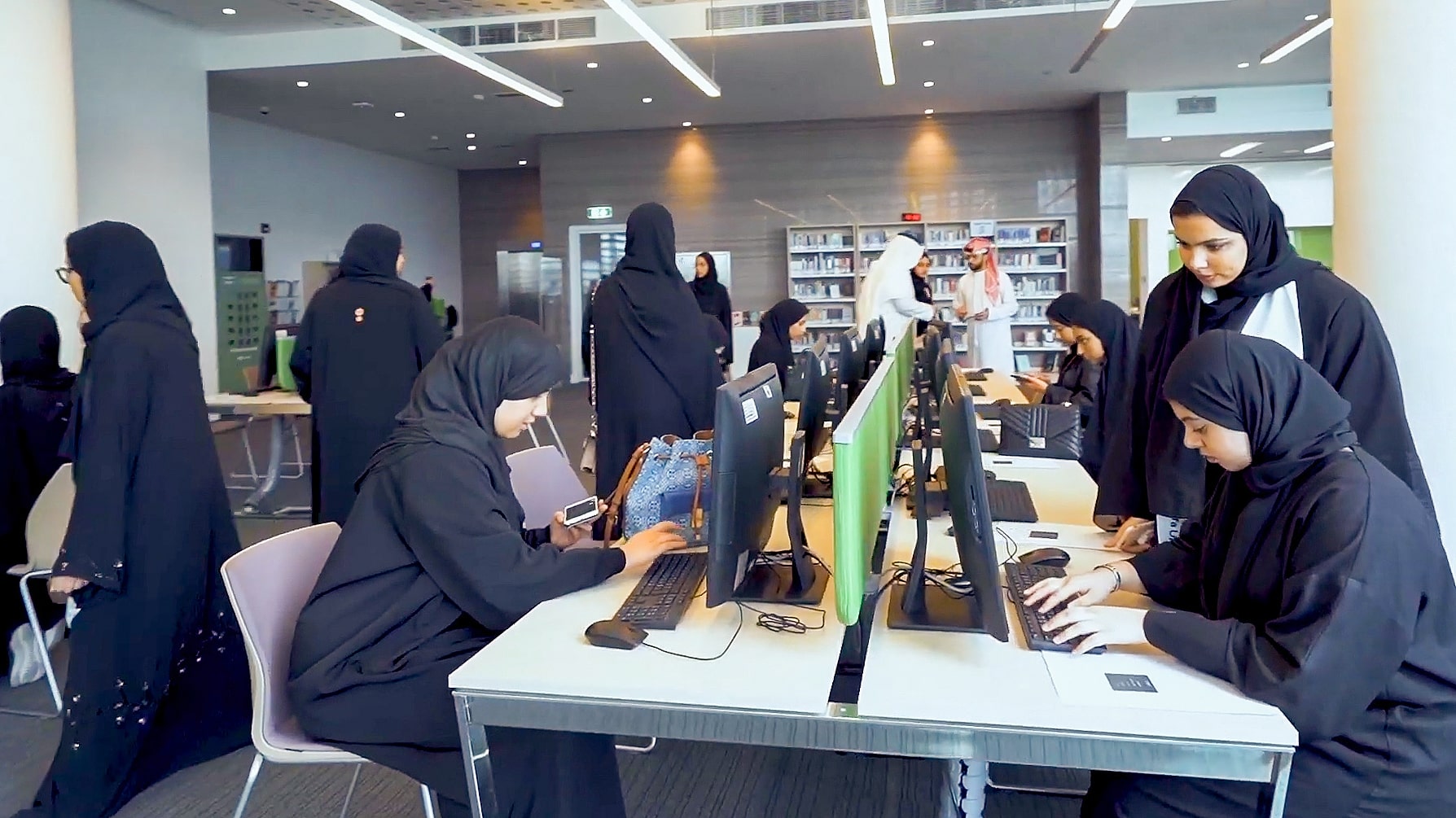
Twenty talented UAE high school students took courses at Khalifa University during the Spring 2022 semester, earning college credit that can be used for undergraduate admissions, through the Khalifa University Dual Credit Program. The program is in collaboration with Emirates Schools Establishment (ESE), the main entity that manages and operates government/public schools in order to advance the education sector in line with UAE objectives. 


Launched in August 2020, the Dual Credit program allows outstanding high school students from grades 11 and 12 to earn credit for Bachelor-level courses. The University’s 4+1 Accelerated Program also allows Bachelor’s students to earn credit for Master’s level courses. The programs aim to bridge the gap between educational levels, providing an opportunity for exceptional students to obtain their degrees within a shorter duration. 


The Dual Credit Program gives high school students an opportunity to fulfill their potential and provides them with the tools they need to succeed in life and in college. 


The high school students participating in the program took college-level English or Calculus, taught by KU’s world-class faculty and instructors. The classes opened students’ minds to college opportunities, and taught them important soft skills, such as time management, in addition to technical knowledge. 


Following are some of the students’ testimonials about the program: 


Nawari Alhmoudi

I benefited greatly from the program. I learned how to stay organized and improve my writing. It taught me that I can do things I think are impossible and that people will make mistakes, but they can learn from them and move on.


Alghalya Alshehhi

I have grown quite a lot from this program. I was afraid of the whole university experience at first – meeting new people much older than me, studying subjects that I thought were far beyond my scope; but I quickly learned there was nothing to fear. The program helped me realize that I am the only person limiting my own potential, and I do not need someone holding my hand every step of the way to achieve my goals. I learned how to organize my time between high school and classes. I learned to be more professional and how to behave in an unfamiliar environment. I am already starting to use the skills and lessons learned in my classes in my day-to-day life. It was overall a very fun experience, and the course instructors are brilliant, inspiring people.


Shahad Abdullah Alnaqbi

The program is so beneficial. I improved in calculus and received better marks in school. At first, I was struggling with managing my time, but I eventually learned how to balance my university and high school courses.


Mahra Maher Ahmad Albastaki

I would like to thank KU for giving us the opportunity to participate in the Dual Credit Program. I’m happy to say that I’m doing great in this program, everything is clear from the professors and the university. I gained a lot of skills and learned how to be independent. I also improved my performance in timed question skills, and now I can solve questions much faster than before.


Shahad Zaid

I enrolled in the English course, where we learned how to write research papers academically without plagiarizing. It helped with my high school studies as it improved my writing skills significantly. In school, we must write a research paper about a particular topic, and because of this program, this assignment has been much easier for me to do.


Shaikah Fayez Ahmed Alnaqbi

This program is helpful because it teaches students what university classes are like and helps them learn how to manage their time. I learned how to use my time wisely and balance school homework and university classes. My English writing has improved so much since the start of the course. I have been using more vocabulary in my writing and adding resources from other articles to prove a statement. Talking in class and interacting with the teacher and my classmates has improved my speaking and boosted my self-confidence. It has only been eight weeks, but I have learned so much.


 Rashid Arif Alzaabi

The dual credit program has helped me improve myself in many ways. It showed me how classes and assignments are handled in a university. The program also expanded my knowledge in many aspects. One of the most important lessons I’ve learned is about how time management plays a big role in success. Through this program I was able to explore subjects and programs that truly interest me. I liked the staff at KU; they are amazing in their teaching, and I have learned so many things in programming and academic writing. This experience will give me a head start when I enroll into the university since I will get credit on the courses I took. The dual credit program has helped me envision my future goals and plans. Having future plans enables me to set a pathway for my future, keeps me motivated and gives me inspiration. My experience overall was very positive, and I am forever indebted to this program.


Shamma Abdalla Alkaabi

There are many benefits that I gained from the Dual Credit Program. I learned how to write essays in a more professional way. I learned how to manage my time, organize, and balance my school and university studying schedule. I have noticed many improvements in myself, including my writing skills. Another thing is that I have become more organized in many different ways and everyone in my home has noticed that.


Razan Yazeed

Overall, my experience with the Dual Credit Program is wonderful. On a personal level, I gained many skills in addition to academic benefits. For instance, I learned time management, how to balance between school, family, and the program, and most importantly, how to get out of my comfort zone, cross my limits, and break boundaries. Moreover, taking a university Bachelor-level course while pursuing high school made me experience the standards of learning required of university-level students. Meanwhile, the support staff (IT, registration, and outreach team) always listened to our queries and concerns and dealt with them fairly. Thanks from the bottom of my heart for this amazing program.


Khalifa Sulaiman Alshamsi

I learned a lot from taking this stimulating course, which contributed not only to my academic growth, but to my spiritual growth as a person who seeks knowledge. My overall experience has been amazing. The course and program overall have provided me with several opportunities to grow and explore my skills.  The course provided a positive and healthy environment, and the teachers are highly supportive.


National Service and Reserve Authority, Khalifa University to Expand Cooperation in Academic, Research Areas

The UAE National Service and Reserve (NSR) Authority and Khalifa University of Science and Technology have signed a Memorandum of Understanding (MoU) on expanding cooperation in academic, scientific and research areas, including robotics and smart systems.


The MoU was signed by Dr. Arif Sultan Al Hammadi, Executive Vice President of Khalifa University, and Brigadier-General Obaid Ali Al-Mansoori, Director, Directorate of Information and Corporate Communication at NSR Authority, in the presence of Major-General Pilot Sheikh Ahmed bin Tahnoun bin Mohammed Al Nahyan, Chairman of NSR Authority; and Homaid Al Shimmari, Vice Chairman of the Executive Committee of Khalifa University Board of Trustees.


Major General Pilot Tahnoun viewed the projects developed by the third batch of 16 Al Nokhba-NSRs that were displayed as part of the “Khalifa University Innovation Day 2022”, the annual exhibition that celebrates the innovative essence of senior graduating students. The Al Nokhba-NSRs were later presented with certificates of completion on the successful conclusion of their assignments with Khalifa University.


Sheikh Ahmed stressed the importance of this MoU as it enhances the strategic partnership between the NSR Authority and Khalifa University, which is considered one of the leading scientific and academic institutions in the country.


He added that areas of cooperation outlined in the MoU focus on benefiting from the scientific capabilities of NSR recruits who will acquire scientific specializations and postgraduate studies through training, qualifying and refining their skills in many practical fields that prepare them for scientific research, which is the fastest way to progress and prosperity.


Major General Pilot Sheikh Ahmed also emphasized the importance of the Ministry of Defense’s ambition in preparing a strong group of UAE National researchers capable of serving the military, while providing innovative solutions in logistic, technical and medical areas. At the same time, the MoU will also develop a group of recruits to support the military industry sector, as one of the most critical and strategic sectors supported by our wise leadership under President His Highness Sheikh Mohamed bi Zayed Al Nahyan.


Humaid Al Shimmari said, “We believe this MoU will pave the way for many UAE national students to gain knowledge while enhancing their skill sets and become full-fledged professionals, adequately equipped to tackle future challenges.”


The MoU will expand cooperation on the Al-Nokhba and Tomooh programmes and aim to cover 30 to 50 participants annually, including students and NSR recruits, to hone their skills and prepare them for scientific research. Recently, the third batch of 16 Al-Nokbha-NSR graduates received their certificates of completion on the successful conclusion of their assignments with Khalifa University.


Read the full article here: https://www.wam.ae/en/details/1395303053754

Blockchain in the Oil and Gas Industry has Promise but Faces Challenges

Blockchain could revolutionize the oil and gas industry, but there are several open research challenges hindering its successful implementation. 


Legacy systems, approaches, and technologies leveraged for managing oil and gas supply-chain operations fall short of providing operational transparency, traceability, audit, security, and trusted–data-provenance features. They also tend to be centralized, manual, and not integrated, which make them vulnerable to manipulation and the single-point-of-failure problem.


A Khalifa University team researched the issue and found reason to be excited for blockchain technology’s potential in the industry. But there are challenges ahead despite the fact that the industry has already begun adopting blockchain solutions.


Dr. Raja Ahmad, Postdoctoral Research Fellow, Prof. Khaled Salah, Department of Electrical Engineering and Computer Science, Dr. Raja Jayaraman, Associate Professor, Department of Industrial and Systems Engineering, Dr. Ibrar Yaqoob, Research Scientist, and Dr. Mohammed Omar, Chair of the Department of Industrial and Systems Engineering, have investigated the use of blockchain in the oil and gas industry, analyzing the applications, challenges and future trends of this technology in one of the world’s most important industries. Their research was published in Technology in Society.


Industry players believe digital technologies could boost their productivity by 10 to 15 percent. Trading of oil and gas products, such as gasoline and diesel, is a highly standardized and quality-sensitive process that requires high security, privacy and fast data processing, but the majority of systems that currently exist to monitor and manage this trade are centralized, unreliable and non-transparent.


Blockchain, however, is a secure, distributed ledger of transactions that uses cryptographic hash algorithms, which the researchers believe can make oil and gas operations more efficient, transparent, and trustworthy.


A Shell, BP, and Statoil research study estimates that adopting blockchain could reduce the oil and gas industry’s transaction-execution time by 30 percent, Dr. Yaqoob said.


Blockchain offers an immutable and tamper-proof ledger, where each record created forms a block, and each block is confirmed by the community among which the platform is shared before it can be paired up with the previous entry in the chain. The blockchain is a shared database, validated by a wider community rather than a central authority, making it a public ledger that cannot be easily tampered with, as no one person can go back and change things.


Many blockchain solutions use programmable smart contracts – simple programs that can be used to automatically exchange information under predetermined conditions.


Dr. Yaqoob said. “More specifically, blockchain assists in securing and simplifying oil and gas trading, shipment tracking, inventory control, documentation, and billing and payments. It simplifies the unwieldy and complex supply chain processes by introducing transparency to the involved business processes.”


The researchers say blockchain technology uses resource-efficient consensus algorithms and irreversible hashing-based data encryption methods to secure the data and transactions relating to this industry. However, the successful adoption of blockchain technology into the oil and gas industry is affected by many factors, including immature and globally differing blockchain standards, which need to be standardized across the world for such an international industry. Additionally, blockchain technology has a high implementation cost, and legal and regulatory frameworks for blockchain need to be built.


Additionally, the computing processes behind blockchain require a large amount of energy and computing resources to unlock the mathematical challenges of building each block. The energy demands result in increased carbon-dioxide emissions, so finding a more energy-efficient mining process is a crucial research challenge.


Dr. Yaqoob said. “While there are many open challenges still hindering its implementation, we present these as future research directions, and believe there are several systems using blockchain-based smart contracts that can greatly improve critical services in the oil and gas industry.”


Jade Sterling
Science Writer
22 June 2022

Color-Changing, Holographic Fresnel Lenses Made Possible with Additive Manufacturing

3D printing makes manufacturing regular lenses, and more recently Fresnel lenses, easy and cost-efficient, but now, additive manufacturing can be used to extend their functionality with enhanced optical properties and sensing abilities.  


Dr. Haider Butt, Associate Professor, Murad Ali, Ph.D. candidate, and Dr. Fahad Alam, Postdoctoral Fellow, all Department of Mechanical Engineering, published their results in ACS Materials.


In optical designs, spherical and aspherical lenses form and guide light. Aspherical lenses have a more complex surface profile, making them difficult to manufacture, but a single aspheric lens can often replace a much more complex multi-lens system.


Fresnel lenses concentrate light using a stepped surface that bends the light as much as a thick, heavy glass lens. They are made of concentric rings, and each ring bends the light slightly more than the one below it, so all the light rays emerge in perfect, parallel beams. 


“Fresnel lenses are innovative spherical lenses characterized by optimized mass and materials,” Dr. Butt said. “While they originated in lighthouses, they are now used in field lenses, magnifiers, smartphones, photovoltaic panels, ultrasonic devices, and miniature spectrometers, among many other uses.”


Fresnel lenses in lighthouses are used to create powerful beams of light that stretch long distances. Unlike the conventional lenses in a telescope, for example, the optical quality of the light beam emerging from a lighthouse lens doesn’t matter. This means the Fresnel lens can be made from plastic, such as acrylic or polycarbonate, as well as glass, making their manufacture cheaper and easier.


“Acrylic exhibits excellent optical characteristics for multiple applications in solar technology, for example, especially in concentrating photovoltaic systems,” Dr. Butt said. “Alternative silicon Fresnel lenses are also used in space applications such as solar concentrators with glass protection. These are easily produced by casting, injection molding, and compression molding.”


However, if the Fresnel lens is to be used to collect light from a distance and bring it into a sharply focused image, precision manufacturing is key. Inexpensively made Fresnel lenses make poorer quality images than traditional glass lenses due to spherical aberration: Light rays travelling through a Fresnel lens at different angles will come to a focus at slightly different points, creating a blurred image. Because the surface of the lens is discontinuous, the image is distorted, and because different colors are refracted by the lens to different degrees, chromatic aberration is also a concern.


Adjusting the angle of the steps in a Fresnel lens is crucial to minimizing aberrations, although current manufacturing techniques limit design and processing flexibility.


“High resolution printers have made it possible to print 3D micro- and nano-optical components to perform complex optical operations,” Dr. Butt said. “For instance, optical waveguides and lenses are immensely popular as light-guiding devices, using complex geometric shapes integrated with optical fibers, gas, and optofluidic sensors. Advances in additive manufacturing are pushing optical and photonic devices into new and unexplored architectures with immense commercialization potential.”


In this research, the lens was designed with 15 rings of a constant width of just 0.833mm.


 “3D printing processes are more promising to explore the design strategies and complexity of Fresnel lenses,” Dr. Butt said. “3D printing also allows for multimaterials-based lens production, for sensing and multifunctional optics.


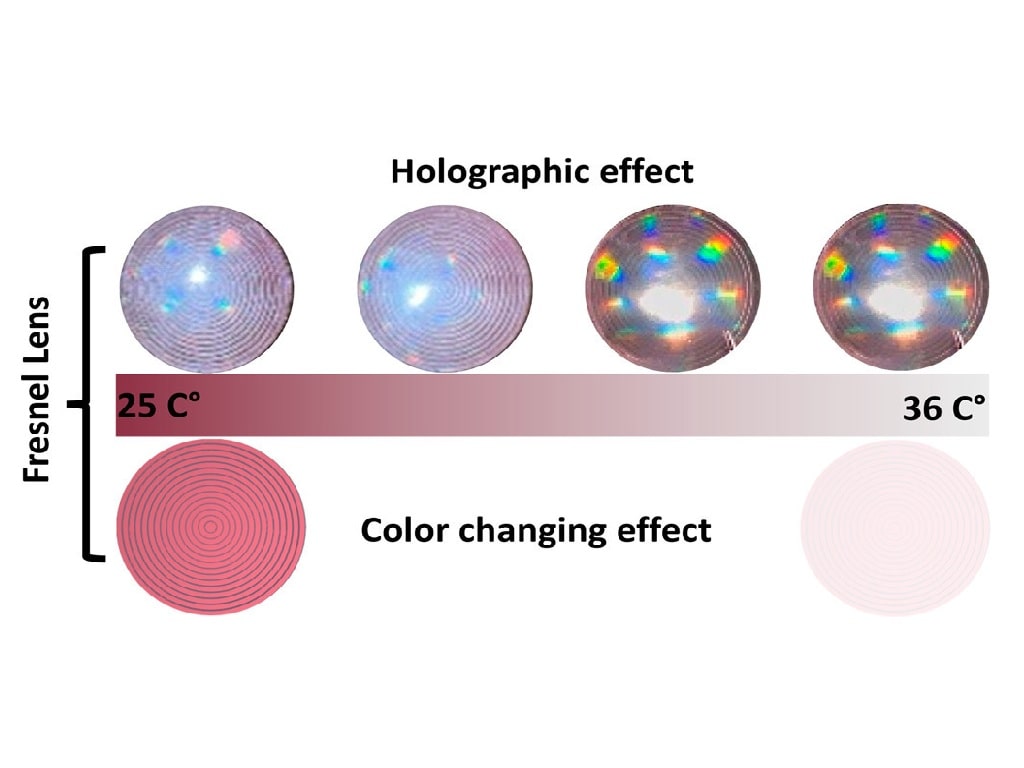
Thermochromic materials undergo a coloration or discoloration process at specific temperatures: When the temperature reaches a particular value, a color change occurs. To add thermal sensing to the lenses and make them four-dimensional, a thermochromic pigment powder was added as a responsive material to the transparent hydrogel resin that constitutes the Fresnel lens itself. This powder causes a reversible change, turning the lens from transparent to pink when temperatures drop. Various concentrations of the pigment can be used for parameter-specific optical applications, making the manufacturing process tunable to different applications.


The fifth dimension was introduced by embedding microscale holographic patterns on one side of the lenses. A variety of textured surfaces with holographic effects can be embedded into 3D parts, with the holographic film applied to the print bed of the 3D printer. A microsize holographic pattern in a Fresnel lens enables the lens to focus light and simultaneously exhibit the holographic effect. And the holographic effect is more than just aesthetically pleasing: The rainbow pattern generated could easily be combined with an image sensor, providing a miniature spectrometer for mechanoluminescence-sensing applications.


“Although the lenses we made have suitable optical properties, further improvements are always possible,” Dr. Butt said. “Reducing the thickness of each layer could improve optical performance, and a different curing technique could make the surface of the lens smoother. Regardless, we have shown that additive manufacturing can fabricate optical components with promising applications in the fields of sensing and communication.”


Jade Sterling
Science Writer
22 June 2022

Khalifa University’s C2PS Symposium to Focus on Next Generation of Secure Mobile Networks and Intelligent Systems

Special Talks by Invited Speakers and Panel Discussions to Highlight Future of Cybersecurity  


Khalifa University hosted top research scientists that presented flagship activities and discussed current challenges of interest for the UAE and the international community in incorporating advanced machine learning techniques into the next generation of intelligent systems and mobile networks at the third Center for Cyber-Physical Systems (C2PS) Symposium. 


The symposium titled “Next Generation Secure Networks and Systems” was held at Khalifa University Main Campus on 20 June 2022. Experts, from industry and academia, discussed how to provide advanced distributed services at unprecedented scale, with low latency and high throughput, while guaranteeing data protection, robustness in the face of attacks, and resilience to recover from failures. 


Prof. Dr. Ernesto Damiani, Director, C2PS, said: “We are delighted to organize this symposium to highlight the need to adopt and standardize advanced solutions to ensure cybersecurity for the next generation of intelligent systems and mobile networks. We believe presentations by visiting experts will benefit UAE industry stakeholders and those involved in research of relevant systems.” 


The Keynote speech on “Edge Intelligence over Wireless: Present and Future” was delivered by Dr. Mehdi Bennis, Head of the Intelligent Connectivity and Networks/Systems Group (ICON) Faculty of Information Technology and Electrical Engineering, Center for Wireless Communications, University of Oulu, Finland. The day’s events included invited talks by top speakers including Dr. Merouane Debbah, Chief Researcher, AI Cross-Center Unit and Digital Science Research Center at the Technology Innovation Institute (TII), Dr. Ticky Thakkar, Chief Researcher, Secure Systems Research Center (TII), and Dr. Antonio Lioy, Professor of Computer Security at Politecnico di Torino, as well as technical presentations by C2PS researchers. A panel discussion on “Securing Intelligent Cyber-Physical Systems” was moderated by Dr. Damiani.


Other speakers from C2PS included researchers and faculty members from Khalifa University, Dr. Chan Yeun, Dr. Naoufel Werghi, Dr. Rabeb Mizouni, Dr. Hadi Otrok, and Dr. Paschalis C. Sofotasios, and Dr. Hanane Lamaazi.


C2PS is part of the overall research line under the Robotics and Intelligent Systems Institute. C2PS research covers key areas like edge-cloud computation and blockchain, mobile network and 5G, data analytics and applied artificial intelligence, as well as cybersecurity and privacy.


Clarence Michael
English Editor Specialist
20 June 2022

‘Self-Healing’ Composite Materials for Aerospace Applications

A team from Khalifa University has developed a technique to repair aerospace parts using autohesion, or ‘self-healing.’ 


A composite material is a combination of materials designed to achieve specific structural or performance properties. Fiber-reinforced polymer composite materials (FRPCs) are one such type of composite used in aerospace applications. FRPCs can enhance structural performance in an aircraft while reducing weight. Their high strength, load-bearing capability, high corrosion resistance, and enhanced durability makes FRPCs state-of-the-art materials in aerospace applications. 


However, no material is perfect, and one of the biggest challenges faced in the aerospace industry is dealing with damaged composite parts. Damaged composite structures tend to be replaced because repairing them is expensive and labor-intense.


A KU research team has found a way to repair these damaged parts using a technique called crack healing.


The team comprised Tayyab Khan, PhD student, Dr. Muhammad Irfan, Postdoctoral Fellow, Prof. Wesley Cantwell, Director of the Advanced Research and Innovation Center (ARIC), and Dr. Rehan Umer, Associate Professor, Aerospace Engineering Department. Their results were published in a leading journal in the field of composites, Composites Part A: Applied Science and Manufacturing.


In the aerospace industry, FRPCs are employed in both structural and non-structural aircraft components. Most complex aerostructures are formed by joining multiple small parts, with the joint often representing the weakest part. Introducing complexity into large composite parts is often a challenge, and one of the most cost-effective methods to achieve complex structures involves joining smaller parts together.


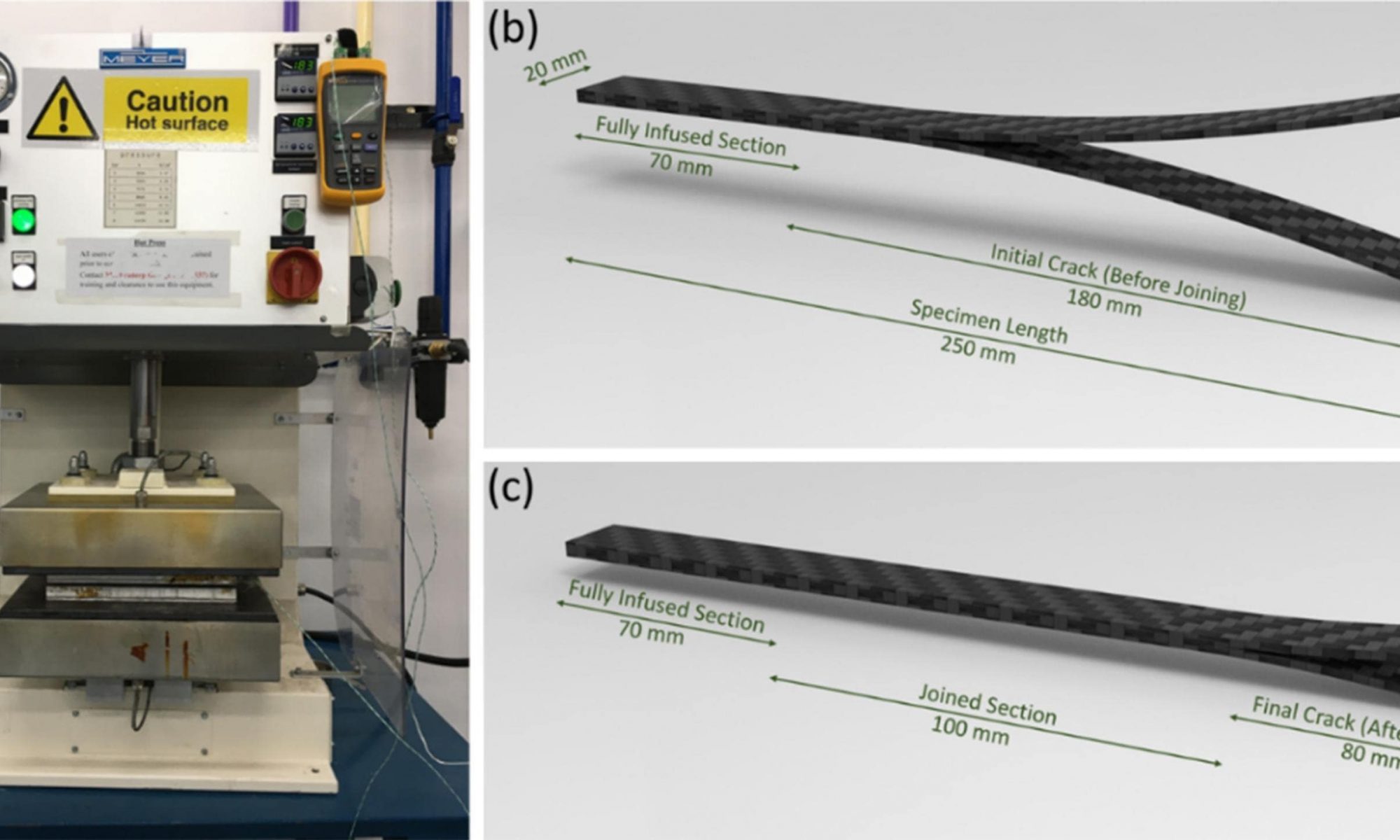
To test their technique, the team fabricated carbon-fiber reinforced composite material with pre-existing cracks introduced in a novel infusible thermoplastic matrix. These faults were then ‘repaired’ using hot press, by melting them back together again.


“Self-bonding, also known as autohesion, through interdiffusion is an interesting joining approach that has the potential to provide strong bonds between two polymer surfaces,” Dr. Umer said. “Two polymer surfaces in contact with each other can interdiffuse if the polymer chains are mobile enough—if the temperature is high enough.”


Fusion bonding techniques can be used to both join and repair thermoplastic composites. It is the material itself that can be readily melted and consolidated: The heat introduces mobility to the polymer chains that make up the material. These chains can then move and interlink with each other, mixing together and creating a strong seal between the two parts without any need for an adhesive.


“Strong bonds are formed through interdiffusion and the subsequent entanglement of the polymer chains across the interface,” Dr. Umer said. “The initial boundary gradually disappears—the crack vanishes—and mechanical strength builds up at the interface.”


Fusion bonding can’t be used with just any material, such as traditionally used thermosets in aerospace industry. Many thermoplastics have high melt viscosities and high processing temperatures, limiting their widespread use in many sectors, including the aerospace industry. New materials have been developed, including Elium, a novel infusible thermoplastic resin. Arkema Industries China provided the Elium material for the KU team’s research.


The team fabricated pre-cracked laminates from the Elium material and then ‘healed’ the laminates at different temperatures for various time periods and under a range of pressures. They found that pressure had a negligible effect on the results, with the temperature used having the most influence. The laminates bonded at higher temperatures for longer showed the highest strength at the repaired area, with these repaired composites testing at strengths near to those of new or undamaged laminates.


said Dr. Umer.


Jade Sterling
Science Writer
20 June 2022


Nanoparticles in the Marine Environment

Despite the overwhelming demand for nanoscale technologies, little research exists on the effects of these materials on marine environments, with concern growing for their ecotoxicological impacts on aquatic species. 


Researchers have previously looked at the impacts of individual nanoparticles on aquatic species.


Prof. Sheehan, Dean of the College of Arts and Sciences, published the results in Science of the Total Environment, with authors Ilaria Marisa, Maria Gabriella Marin and Valerio Matozza, University of Padova; Davide Asnicar and Marco Parolini, University of Milan; Nicola Brianese, Institute for Energetics and Interphases, Italy; and Maria Fedorova and Ralf Hoffman, Universitat Leipzig.  


“Organisms are exposed to complex mixtures of contaminants in their environments, not just individual substances,” Prof. Sheehan explained. “The challenge for ecotoxicological studies is to understand the potential combined effects induced by exposure to these mixtures. For aquatic species, there has been plenty of attention given to mixtures of pharmaceutical compounds, such as those in personal-care products, and the pollutants found in herbicides and pesticides, but little is known about the impact of manufactured nanomaterials in marine environments.”


Metal and metal-oxide nanoparticles are useful in a wide variety of commercial applications and consumer products, with manufacturers taking advantage of their unique electrical, optical and catalytic properties. Nanoparticles are extremely small fragments of matter with a diameter less than 100 nanometers, roughly one thousand times smaller than a single strand of human hair. Their unique properties stem from their small size, but these properties may also pose problems for marine coastal areas, which are a sink for chemical and physical contaminants, including nanoparticles.


“Laboratory toxicity studies on freshwater and marine species have shown the potential adverse effects of nanoparticles in the environment, but since information on their concentrations in marine areas is still lacking, we can only use predicted environmental concentrations as a reference,” Prof. Sheehan said. “Animals in these environments can easily come into contact with nanoparticles through their diet, and they can accumulate in the body, leading to oxidative stress, damage to DNA, protein and organelles, and even changes in gene expression.”


This includes bivalve organisms such as clams, oysters, and mussels, which filter large quantities of water to capture and ingest food particles. They play a critical role in cycling nutrients between the sediments and the water with a profound influence on water quality.


Because they are an important contributor to an aquatic environment, determining the impacts of nanoparticles on this group of animals is important for a full understanding of how manufactured nanoparticles might affect marine and coastal environments. Additionally, if nanoparticles are accumulating in bivalve tissues, they may be transferred to other animals that eat them, including humans.


“Although nanoparticles are present in aquatic environments in small quantities, so far, their mixture could cause different effects compared to each single nanoparticle,” Prof. Sheehan said. “A mixture of nanoparticle pollutants could interact in many different ways to induce biological responses at different levels of biological organization. There is also the potential ‘Trojan horse’ effect, which implies the facilitated uptake of toxic molecules adsorbed onto nanoparticles into the cells. Investigations on the combined toxic effects of multiple chemicals in organisms are much more challenging than those regarding single compounds, meaning information is lacking. Plus, the number of possible combinations of pollutants is extremely large and we don’t know which combinations would be the most ecotoxicologically relevant.”


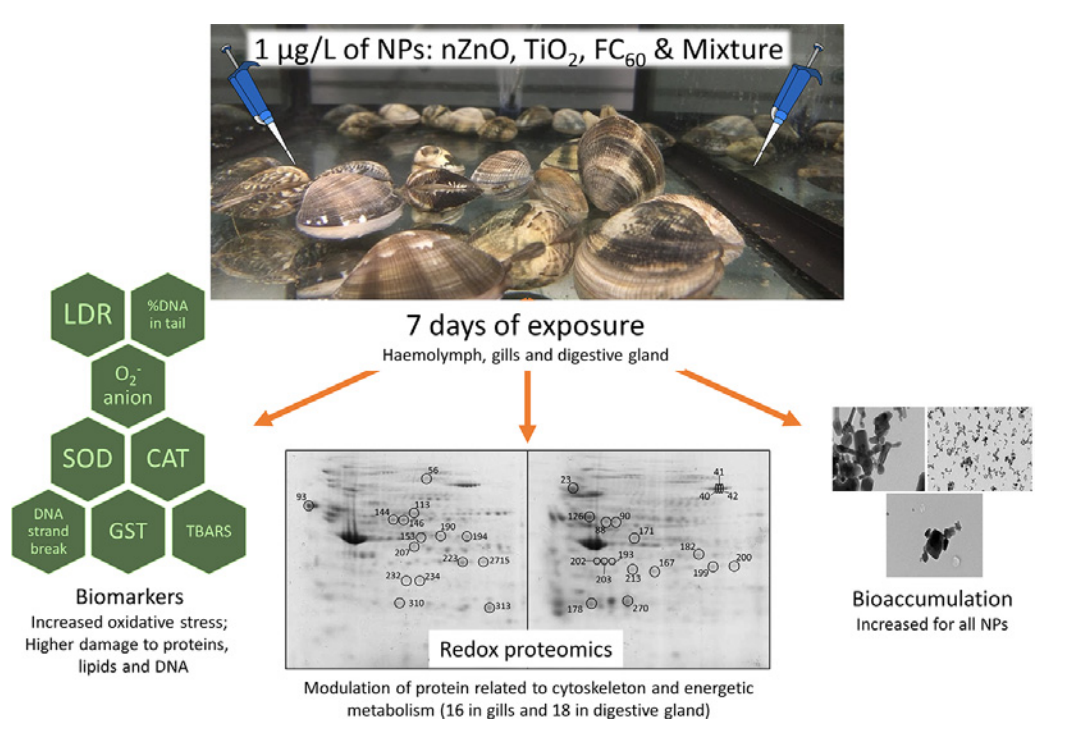
The research team investigated two metal oxide nanoparticles — zinc oxide and titanium dioxide — and a carbon nanoparticle (FC60) to assess their effects both independently and in mixture. These nanoparticles are the most produced and most commonly used in products worldwide, and while many studies have been conducted to understand their impacts individually, this was the first to study their effects as a mixture. The team collected specimens of the marine clam Ruditapes philippinarum to test the effects of the nanoparticle mixture over seven days.


They used a multi-biomarker approach to better understand the effects of the nanoparticle mixture, and in all tissues analyzed, oxidative stress was the main mechanism influenced by nanoparticle toxicity. The research team found that during the early days of the investigation, the clam gills and digestive gland were able to cope with the presence of nanoparticles, limiting any damage, but after seven days, the mixture caused significant damage to the lipids and DNA in the digestive gland.


“Our findings indicated that the nanoparticle mixture had detrimental effects on the haemolymph, gills and digestive gland of clams, with the digestive gland most affected,” Prof. Sheehan said. “We also found that while concentrations differed, the nanoparticles did accumulate in the clams. Overall, the complexity of assessing the effects of contaminant mixtures was clear, and many environmental drivers and physiological constraints in various species need consideration in future studies.”


Jade Sterling
Science Writer
17 June 2022

Gulf Will Face ‘More Tropical Cyclones’ Due to Climate Change


Khalifa University study finds that cyclones are more likely to hit land as temperatures rise. 


Gulf nations are likely to face more tropical cyclones amid climate change, researchers have warned.


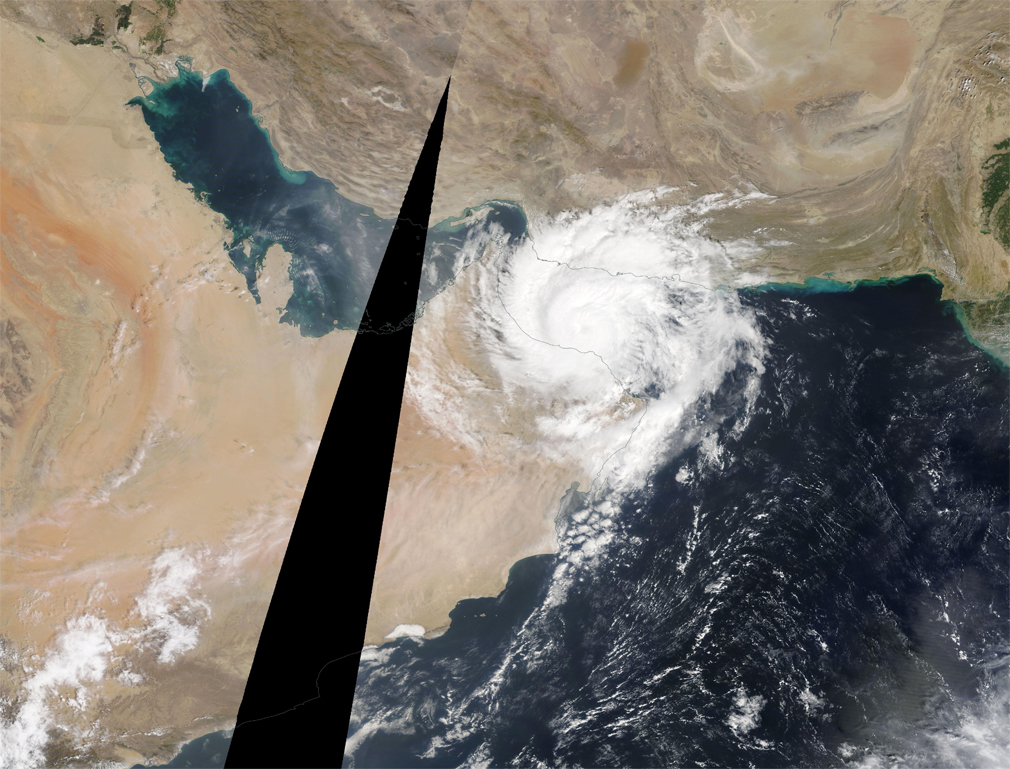
Cyclones are more likely to form in the Arabian Sea as temperatures rise, they are predicted to become stronger, and there is a greater chance that they will make landfall on the Arabian Peninsula because the land is warmer, climate analysis suggests.


Models predict an increase in extreme weather globally as temperatures increase, and scientists have previously said that there is already evidence of this happening.


The latest study, titled “Key factors modulating the threat of the Arabian Sea’s tropical cyclones to the Gulf countries”, looks at the only two tropical cyclones to move into the Sea of Oman and make landfall on the south-eastern coast of the Arabian Peninsula since 1900. These were Gonu, in 2007, and Shaheen, in 2021.


With climate change, temperature and moisture “are projected to increase significantly over our region”, according to Dr. Diana Francis, the first author of the study and head of the Environmental and Geophysical Sciences (ENGEOS) lab at Khalifa University in Abu Dhabi.


Co-authored by Dr. Ricardo Fonseca and Dr. Narendra Nelli, postdoctoral fellows at Khalifa University, the paper will be published soon in the journal JGR-Atmospheres.


Read the full article here: https://www.thenationalnews.com/uae/science/2022/06/06/gulf-will-face-more-tropical-cyclones-due-to-climate-change/ 

Khalifa University Receives RoSPA Silver Award

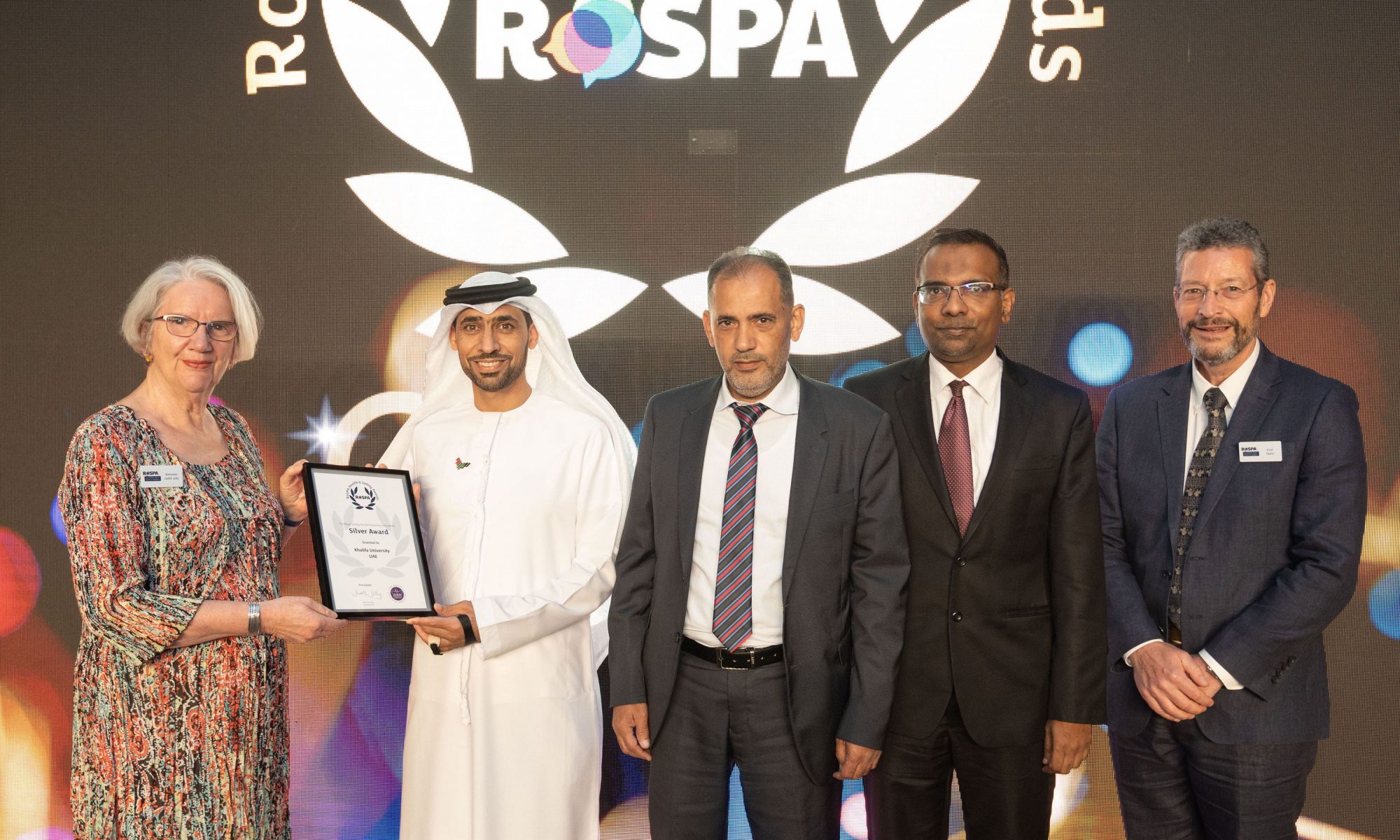
Khalifa University of Science and Technology’s Adnan Jasem Al Mansoori, Vice-President, Administration, Facilities and EHS, receiving the Royal Society for the Prevention of Accidents (RoSPA) Silver Award for the university’s health and safety performance during January-December 2021, from Baroness Jolly and Errol Taylor, RoSPA Chief Executive, at an award ceremony on 23 May 2022 in Hyatt Regency Dubai.

Others are Khalifa University’s Belal Irshaid, Manager, Environment Health and Safety, Environment, and Navaz Mytheen Kannu, Labs Safety Senior Specialist.

This is the first time Khalifa University is receiving the award from RoSPA, a British charity which aims to save lives and prevent life-changing injuries that occur as a result of accidents.

RoSPA’s international awards program recognizes institutions and organizations around the world for their leading role in promoting and upholding the highest occupational health and safety standards.

For the Fifth Year in a Row Khalifa University Ranks Top in UAE and Reaches 181st in QS World University Rankings

Climbs to 37th Place in THE Asia University Rankings 2022


Khalifa University of Science and Technology today announced it has registered an extraordinary achievement by being ranked top in the UAE in two global rankings.


For the fifth year in a row, the research-oriented Khalifa University is the top-ranked institution out of 11 universities assessed from the UAE in the recently announced Quacquarelli Symonds (QS) World University Rankings 2023, while it climbs to 37th Place in the Times Higher Education (THE) Asia University Rankings 2022, which comprises 616 universities from 31 countries.


Dr. Arif Sultan Al Hammadi, Executive Vice-President, Khalifa University, said; “This is a historic achievement for the UAE and for Khalifa University. The twin global rankings demonstrate that for the second year in a row, Khalifa University has remained among the top 200 globally in the QS World University Rankings 2023, and among top 40 in THE Asia University Rankings, bringing more honor to the UAE. Since 2015, Khalifa University has moved up 260 places over nine years, and has consistently moved higher six times in the QS World Universities rankings.”


Dr. Al Hammadi also said: “Our international status in the most recent QS and THE rankings are robust indications of our research and academic strength which we aim to strengthen even further. As we advance more in local and global rankings, we believe our performance will help us expand our overall offerings, while developing more human and intellectual capital that will contribute to the UAE’s knowledge-economy transformation.”


In the QS World University Rankings 2023 which lists a total of 1,422 universities from 100 countries, Khalifa University increased its rankings by two notches. The university has also performed well, having been placed among the top 13% institutions, while also scoring ‘10’ globally for International Faculty, the strongest indicator.


Moreover, in the International Research Network category, Khalifa University scored 53.9 against a global average of only 41.0. This category reflects the ability of an institution to diversify the geography of their international research network by establishing sustainable research partnerships with other higher education institutions. Factors such as diversity of partner locations against the efforts needed to achieve such a diversity are also taken into consideration while quantifying this score.


The QS World University Rankings assess each academic institution on six metrics, including its reputation amongst academics and employers. The criteria include Academic Reputation (40%), Employer Reputation (10%), Faculty/Student Ratio (20%), Citations per faculty (20%), and International faculty ratio/International student ratio (5% each).