Masdar Institute’s YFEL Program and WiSER Partner to Develop Women Leaders in Sustainability

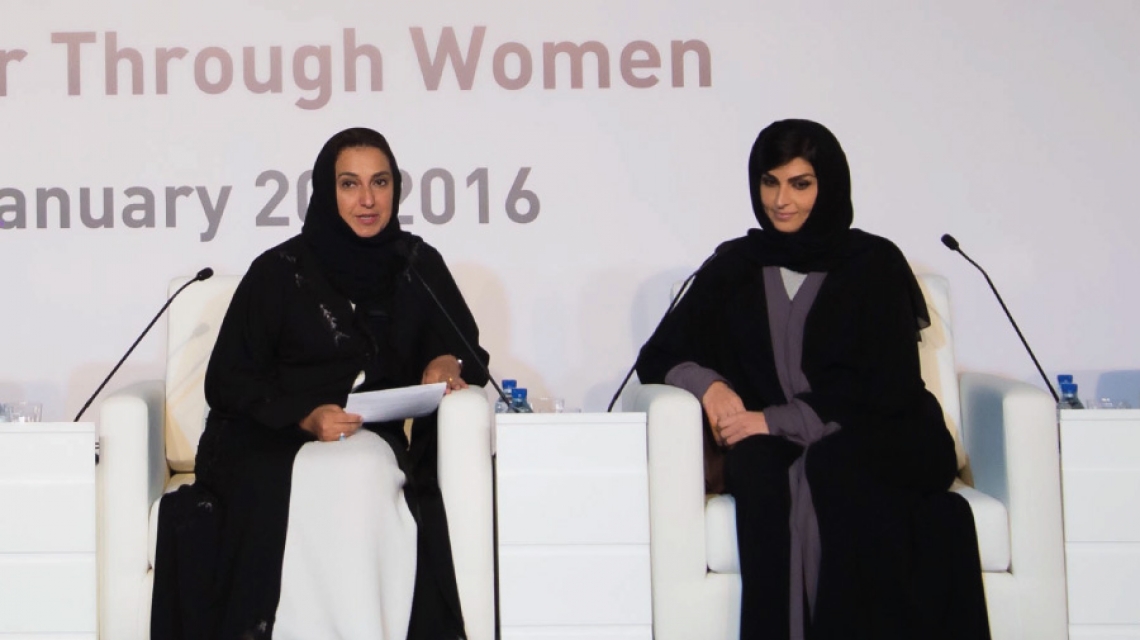
Masdar Institute’s Young Future Energy Leaders (YFEL) program is partnering with the Women in Sustainability, Environment and Renewable Energy (WiSER), enabling women to join outreach program and realize their dreams of becoming leaders in the global sustainability movement.

Recipients of the fellowship will be nominated by WiSER through a competitive process, which will be open to female applicants globally. They will participate in the YFEL’s annual program of global experiences and learning

Dr. Lamya N. Fawwaz, Vice President of Institutional Advancement and Public Affairs, Masdar Institute, said: “This partnership with the WiSER initiative reiterates our commitment to supporting talented young women in the sustainability sector. We look forward to sharing the benefits of the YFEL program with even more talented young women from the professional and academic arenas across the world. We believe youth development programs like YFEL are key to the future of sustainability and are keen to see more young women play an active role in renewable energy and sustainability.”

The partnership supports WiSER’s goal to enable women to gain real-world experience and to build the right skills necessary to be leaders of industry, entrepreneurs and excel in sectors traditionally dominated by men. The initiative was founded by Masdar and the Zayed Future Energy Prize (ZFEP) to empower and inspire women to be catalysts of innovation and the drivers of commercial solutions.

Dr. Nawal Alhosany, Director of Sustainability at Masdar, and Director of the ZFEP, said: “I am delighted to be able to announce this partnership with Masdar institute of science and technology. It will provide young-women with an opportunity to enroll in programs led by leading thinkers in the field of sustainability and is a positive step towards women having the opportunity to learn and develop at the very best institutions. We also believe that opportunities via the Young Future Energy Leaders (YFEL) program will be provide the impetus for young women to strive to be a leader of tomorrow in sustainability.”

The announcement was made on the sidelines of the World Future Energy Summit (WFES), which is being organized as part of the Abu Dhabi Sustainable Week (ADSW) 2016 at the Abu Dhabi National Exhibition Center (ADNEC) from 16-21 January 2016.

Clarence Michael
News Writer
21 January 2016

ADNOC Signs to Support Masdar Institute’s YFEL Outreach Program for Sixth Consecutive Year

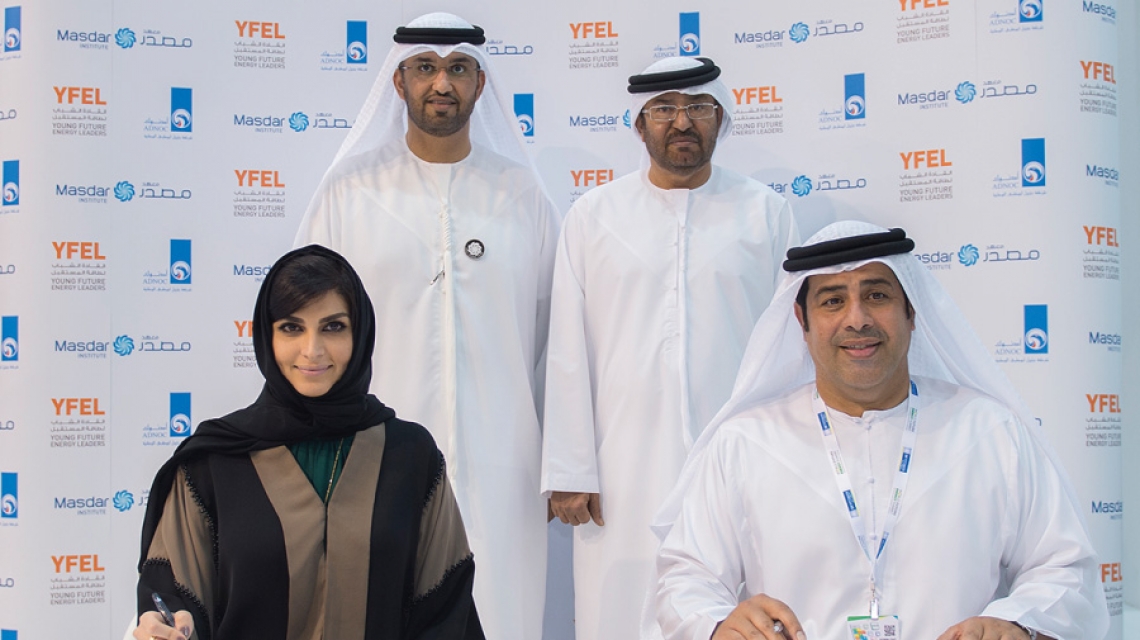
In line with its continuing commitment to support youth-related programs in the UAE, the Abu Dhabi National Oil Company (ADNOC) signed an agreement to contribute AED1.2 million and support Masdar Institute’s Young Future Energy Leaders (YFEL) program.

In the presence of His Excellency Dr Sultan Al Jaber, Minister of State and Chairman of Masdar, HE Abdulla Nasser Al Suwaidi, Director General of Abu Dhabi National Oil Company (ADNOC), the agreement was signed by Mohammed S. K. Al Qubaisi, Director, Human Resources, ADNOC, Dr Lamya Fawwaz, Vice-President for Institutional Advancement and Public Affairs, Masdar Institute during a ceremony held at the Masdar Institute stand on the sidelines of the World Future Energy Summit, which has been organized as part of the Abu Dhabi Sustainable Week (ADSW) 2016 at the Abu Dhabi National Exhibition Center (ADNEC).

The contribution announced at ADSW marks the sixth consecutive year that ADNOC has committed to supporting the dynamic YFEL program. During their one year program, YFEL members explore new avenues and ideas in the sustainable and clean energy arena through an engaging schedule of courses and international experiences.  

As a key supporter of youth-related outreach programs in the Emirate of Abu Dhabi and across the UAE, ADNOC lays special emphasis on programs that offer youth professional and career guidance. Its contribution to YFEL will help the outreach program organize dedicated courses throughout the upcoming year, and encourage the country’s young people to achieve innovation and excellence.

His Excellency Abdulla Nasser Al Suwaidi, CEO of ADNOC praised the  support and due concern attributed by  the UAE’s  wise leadership to all  projects and programs aiming  at empowering the UAE young generation  to become tomorrow’s leaders capable of solving the world’s most pressing challenges in advanced energy and sustainability.

He stressed the commitment of ADNOC to support all programs and initiatives aiming at encouraging youth for  adoption of  creative thinking and innovative  solutions  to address the issues of sustainability, and preparing tomorrow’s leaders and intellectuals in the fields of clean  energy and sustainability to lead the transformation of the UAE towards a knowledge based  economy.

He applauded the mutual cooperation between ADNOC and Masdar Institute calling for promotion and expansion of fields of joint cooperation in order to benefit from Masdar Institute’s experience in the fileds of advanced energy and sustainable technologies.  

Dr. Lamya N. Fawwaz, Vice President of Institutional Advancement and Public Affairs, said: “We welcome the sixth consecutive contribution from ADNOC, which continues to be a committed supporter of the YFEL program. This support, along with the program’s other corporate sponsors and Emirati donors, enables our continued development of talented young professionals interested in sustainability fields.”  

“The YFEL program’s focus on offering specially designed leadership experiences in clean renewable energy, water, and advanced material technologies through its annual calendar of events helps YFEL members to grow into world-class professionals,” she added.

Clarence Michael
News Writer
21 January 2016

Scientists tune polymer material’s transparency

If you’ve ever blown up a balloon or pulled at a pair of pantyhose, you may have noticed that the more the material stretches, the more transparent it becomes. It’s a simple enough observation: the thinner a material, the more light shines through.

Now MIT scientists have come up with a theory to predict exactly how much light is transmitted through a material, given its thickness and degree of stretch. Using this theory, they accurately predicted the changing transparency of a rubber-like polymer structure as it was stretched like a spring and inflated like a balloon.

Francisco López Jiménez, a postdoc in MIT’s Department of Civil and Environmental Engineering, says the researchers’ experimental polymer structure and their predictive understanding of it may be useful in the design of cheaper materials for smart windows — surfaces that automatically adjust the amount of incoming light.

“For buildings and windows that automatically react to light, you don’t have to spend as much on heating and air conditioning,” López Jiménez says. “The problem is, these materials are too expensive to produce for every window in a building. Our idea was to look for a simpler and cheaper way to let through more or less light, by stretching a very simple material: a transparent polymer that is readily available.”

López Jiménez envisions covering window surfaces with several layers of the polymer structure. He says designers could use the group’s equation to determine the amount of force to apply to a polymer layer to effectively tune the amount of incoming light.

The research team — which includes López Jiménez; Pedro Reis, the Gilbert W. Winslow CD Associate Professor of Civil and Environmental Engineering and Mechanical Engineering; and Kumar Shanmugam of the Masdar Institute of Science and Technology in Abu Dhabi — has published its results this week in the journal Advanced Optical Materials.

Stacking the polymer deck

The current work arose from a related project by Reis, López Jiménez, and Shanmugam, in which they analyzed the light-transmitting properties of a simple block of PDMS — a widely used rubbery, transparent polymer. The polymer block contained some darkened regions, and the team was looking to see how deforming the block would change the light traveling through the material.

“It was a happy accident,” López Jiménez says. “We were just playing with the material, and we soon got interested in how we can predict this and get the numbers right.” The researchers set out to fabricate a type of soft color composite — a material that changes color or transparency in response to external stimuli, such as electrical, chemical, or mechanical force. Reis and López Jiménez created a thin, rectangular stack of transparent PDMS sheets, mixed with a solution of black, micron-sized dye particles, that may be easily stretched, or deformed mechanically. With no deformation, the structure appears opaque. As it is stretched or inflated, the material lets in more light.

In initial experiments, the researchers shone a light through the polymer structure infused with dye particles and characterized the amount of light transmitted through the material, without any deformation. They then stretched the polymer perpendicular to the direction of light and measured both the thickness of the polymer and the light coming through.

A theory on light

They compared their measurements with predictions from their equation, which they devised using the Beer-Lambert Law, a classical optics theory that describes the way light travels through a material with given properties. The team combined this theory with their experimental analysis, and derived a simple equation to predict the amount of light transmitted through a mechanically deformed PDMS structure.

To verify their equation, Reis and López Jiménez carried out one more set of experiments, in which they clamped the PDMS structure in the shape of a disc, then inflated the material like a balloon, as they shone a light from below. They measured the amount of light coming through and found that as the material was stretched and thinned, more light came through, at exactly the same intensities that were predicted by their equation.

“We can predict and characterize the evolution of light as we strain it,” López Jiménez says. “If you give me the initial material properties and measure the incoming light intensity, we know exactly how much light will go through with deformation.” He adds that going forward, he hopes to use the equation to help tune the transparency and optical transmittance of materials with more complex surfaces and textures.

“Soft color composites offer exciting opportunities to provide materials with switchable and tunable optical properties,” Reis says. “Applying this relatively simple but both robust and predictable mechanism is an exciting challenge worth pursuing for concrete engineering applications such as indoor light control through smart windows.”

Shengqiang Cai, assistant professor of mechanical and aerospace engineering at the University of California at San Diego, says that in addition to smart window technology, the group’s colored polymer may be used applied as a strain test for other materials. 

“I imagine that a thin layer of such soft composite can be potentially used as nonlinear strain gauge,” says Cai, who was not involved in the study. “Through attaching a thin layer of the soft composite to an engineering structure, we may be able to visualize its surface deformation, which is clearly important information for monitoring the structure’s safety. The idea is very simple. However, functions of the system are very robust, as demonstrated by these authors.”

This work was supported by the Cooperative Program between Masdar Institute and MIT.

Jennifer Chu | MIT News Office
22 January 2016

This article was originally published on the MIT News website and was republished with the permission of the MIT News Office.


A New Method for Storing Thermal Energy Could Boost CSP’s Solar Potential

Masdar Institute’s unique, single-tank thermal energy storage (TES) system has come online at the Masdar Institute Solar Platform (MISP). The novel TES system, which absorbs and stores thermal energy using molten salt or other liquid transfer media, may prove to be more affordable and efficient than conventional two-tank systems.

“The CSPonD Demo prototype is expected to directly absorb and store 600 KWh of thermal energy in a one-tank system on the ground, thus avoiding the need to pump molten salt to the top of the solar power tower, which is the method employed by traditional two-tank TES systems. It will produce constant power of 25 kW at all times of the day and night,” explained Dr. Nicolas Calvet, Chair of the MISP and Assistant Professor of Mechanical and Materials Engineering at Masdar Institute.

A traditional two-tank molten salt TES system – like the one developed by the Abu Dhabi Future Energy Company Masdar and Spain-based SENER for the 20 MW-Gemasolar CSP power tower plant in Spain – uses rotating mirrors to concentrate sunlight onto a solar receiver located at the top of a high tower. 

Molten salt is stored in a “cold” tank on the ground at 290°C is pumped to the solar receiver through a temperature-controlled piping system. Once heated to 565°C, the molten salt is sent back down to a second hot tank, where it is stored as solar thermal energy.

The CSPonD Demo system avoids the use of pipes, pumps, and double tanks by bringing the sunlight down directly to a receiver on the ground, which it does through secondary mirrors placed at the top of the tower. It also avoids costly receiver tubes that undergo thermal fatigue and can bring the entire system down with the smallest of leaks.

To reproduce the two-tank system in one tank, a divider plate separates the hot molten salt on top from the cooler salt below. As the plate moves, the heated molten salt is fed into a heat exchanger where it can be used to produce steam for power generation with a turbine. Cooled molten salt returns to the bottom of the tank to repeat the cycle. 

In order to capture more of the reflected light from the secondary mirror on top of the solar beam-down tower, the team built a concentrating cone that funnels the reflected sunlight evenly into the receiver where it is directly absorbed by the hot molten salt in the top of the tank.

“The six-sided cone we designed is fixed on top of the open receiver, reducing the receiver’s aperture so that less of the molten salt is exposed to the environment. The cone reduces thermal loss while also increasing the concentration of sunlight, enabling the salt to reach higher temperatures,” said Dr. Antoni Gil, a post-doctoral researcher from MIT working on the prototype.

The initial concept for the CSPonD Demo originated from research conducted at the Massachusetts Institute of Technology (MIT), which was published in 2011. Masdar Institute collaborated with MIT to scale-up the original design to create a pre-commercial scale prototype, which they expect to validate at the MISP.

Masdar Institute’s CSPonD activities aim to contribute to a more affordable and reliable form of solar energy capture. Current costs of electricity produced by CSP plants are quite expensive relative to  solar photovoltaics (PV). However, CSP systems coupled with sufficient TES can dispatch electricity at all times of the day and night and thus have an edge over PV as PV presently requires expensive batteries to store electricity produced during the day.

Developing innovative TES and CSP components that can reduce the energy costs for CSP plants is critical to decreasing the cost of electricity produced by CSP. Dr. Calvet and his team hope to drive down energy costs and increase efficiency of CSP plants through their novel one-tank TES system.

The CSPonD Demo is one of nine Masdar Institute-MIT active Flagship Research Projects, which are projects that bring together teams of faculty from both Masdar Institute and MIT to address key strategic research areas with the intent to build critical mass and make sizeable research impact for the UAE and the region.

 Erica Solomon
News and Features Writer
15 February 2016

“RenewAbility” Debate Teaches UAE Students about Sustainability

A debate held between Masdar Institute students and sustainability industry leaders at the “RenewAbility Debate Series” – an educational initiative held during the Abu Dhabi Sustainability Week (ADSW) – helped teach young people about the important and nuanced role sustainability and renewable energy play in mitigating climate change and achieving the ‘greatest good’ by 2030.

Organized by the Women in Sustainable, Environment and Renewable Energy Initiative (WiSER), the debate served as a platform for the transfer of knowledge from today’s generation of leaders to the next by pairing current leaders in the field of sustainability with students in the same field. The leaders and students debated the issue of whether a focus on accelerating the development of renewable energy is the best way to achieve prosperity for people and planet by 2030.

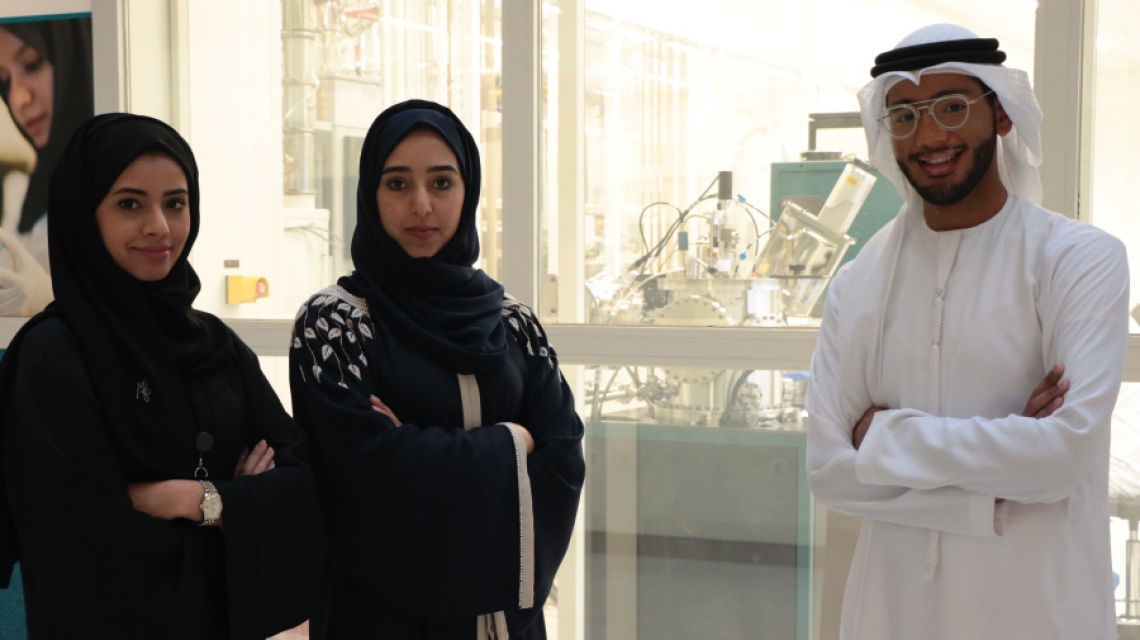
“As Masdar Institute students, sustainability is our field of expertise. To be able to talk about these topics and debate them at ADSW makes us feel empowered and I hope that we were able to have an impact – no matter how small – on the students who attended the debate,” said Mohamed Al Ghailani, a Master’s student in Chemical Engineering and one of four students who participated in the debate.

The other three students included Maryam Al Mazrouei and Noora Abdulrahman from Masdar Institute’s Engineering Systems and Management Program and Dikirani Thaulo, a Global High Schools Zayed Future Energy Prize winner in 2014.

The students were paired with four sustainability industry leaders, including HE Dr. Thani Al Zeyoudi, Permanent Representative to IRENA, Director of Energy and Climate Change at the UAE Ministry of Foreign Affairs, Christine Lins, Executive Director of REN21, David Sandalow, Inaugural Fellow at the Center on Global Energy Policy, Columbia University, and Gurmeet Kaur, Head of UAE Projects at Eversheds.

The debate provided audience members with valuable information and insights, while it also gave the debating students the opportunity to develop innovative thinking skills on issues of sustainability, which is required to transform the UAE into a knowledge-based economy.

Al Mazrouei and Thaulo were paired with Lins and HE Dr. Al-Zeyoudi. They defended the proposition side of the debate, stating that a focus on renewable energy development is necessary for other forms of sustainable development to be achieved.

“Accelerating the development of renewables will directly facilitate the development of a knowledge-based economy and a new industry that can provide employment, spur education, and potentially end the poverty cycle that so many people in developing nations are stuck in,” Al Mazrouei explained. She also added that the adoption of renewable energy projects provides governments with energy security and environmental sustainability, in addition to economic opportunities.

On the other side of the debate, Al Ghailani and Abdulrahman argued the opposition with Sandalow and Kaur. Their team proposed that renewable energy development is just one part of the solution – not the solution – to achieving the greatest good, or a climate resilient and sustainable future for all.

“To achieve the greatest good as outlined by the 17 UN Sustainability Goals, we should not focus entirely on renewable energy because energy is just one part of the puzzle,” Abdulrahman said.

“To mitigate climate change, we should not rely solely on renewables; there are other ways to reduce carbon emissions and fight climate change, such as developing sustainable cities, like Masdar City, to achieve our global goal of an environmentally sustainable community.”

Al Ghailani, Abdulrahman and Al Mazrouei were part of the UAE’s COP21 delegation, and brought their insight from the international climate change conference to the debate.

“The COP21 conference gave me a holistic view of climate change mitigation and how broad the topic really is,” Al Ghailani commented.

“In order for countries to reduce their carbon emissions and increase renewable energy development, the solutions must be economically desirable while also considering the social aspects of the proposed solutions. My ability to analyze situations and evaluate their benefit based on these three criteria – environmental, social and economic – has enabled me to be able to debate the topic much more effectively,” he added.

The RenewAbility Debate took place as part of The Student Exclusive – an engaging and informative event hosted by Masdar at ADSW dedicated entirely to students. In addition to the debate series, The Student Exclusive included a performance from the Landfill Harmonic orchestra and an interview with AKON, a singer, rapper and founder of the Akon Lighting Africa Initiative.

Erica Solomon
News and Features Writer
16 February 2016

How Agricultural Waste Can Contribute to the UAE’s Food, Water and Energy Security

Masdar Institute researchers are converting agricultural waste into a valuable resource that could significantly bolster the UAE’s ability to produce locally-grown food sustainably – critical innovations that respond to the food-water-energy nexus.

These waste-to-resource technologies leverage farm waste to improve the country’s poor soils while also contributing to Abu Dhabi’s near-zero waste goals.

“Agriculture is inseparable from water, energy, and the environment,” said Dr. Lina Yousef, Assistant Professor of Water and Environmental Engineering at Masdar Institute. She leads several projects that look to improve the UAE’s agricultural productivity, some of which were showcased at the Global Forum for Innovations in Agriculture (GFIA) – a summit designed to catalyze innovations for sustainable agriculture – held earlier this month in Abu Dhabi.

“The UAE’s agricultural sector is the largest consumer of water, accounting for a substantial amount of the country’s freshwater use, and it takes a lot of energy to generate freshwater. We are developing technologies that will help promote more efficient crop growth in a way that does not squeeze the UAE’s precious freshwater,” she added.

The food-water-energy nexus is felt deeply in the UAE. Water and energy are required to produce food, and in the UAE, energy is required to produce water, making these three critical resources interlinked. The nexus is impacted by the UAE’s shrinking groundwater levels, which are reducing by 0.5 cm per year, requiring more of the country’s freshwater needs to be met by energy-intensive desalination methods. These methods currently produce 40% of the country’s freshwater, but that number will likely increase in the coming years as the country’s population grows.

The UAE’s agricultural sector is a significant user of the country’s limited and precious resources, accounting for approximately 72% of the total freshwater consumed. However, despite its large water footprint, the agricultural sector produces less than 20% of the UAE’s food. The remaining 80% is sourced through imports.

The UAE government is keen to increase agricultural productivity to achieve greater food security in a way that does not negatively impact the country’s water and energy conservation efforts. In response to this need, Dr. Yousef is developing technological innovations that will help farmers grow more crops with less water.

Her research leverages the waste generated by farmers – agricultural waste represents roughly 7% of the UAE’s non-hazardous solid waste – to develop soil enhancement technologies that can help UAE farmers grow more food in an energy-efficient way, thus supporting sustainable crop growth and greater water, food and energy security. This technology also provides the country with a way to transform its agricultural waste, which would otherwise end up in landfills, into a valuable product.

Soil quality is key to sustainable agriculture, which is why Dr. Yousef’s project is aimed at improving the UAE’s soil productivity potential. The soils in the UAE are severely affected by desertification – the degradation of land, especially in dry climates, caused by the erosion of topsoil.

To improve the structure of soil so that plant roots can absorb water more easily and thus grow more efficiently, Dr. Yousef is looking to add an important element – carbon, made from organic agricultural waste – to the soil.

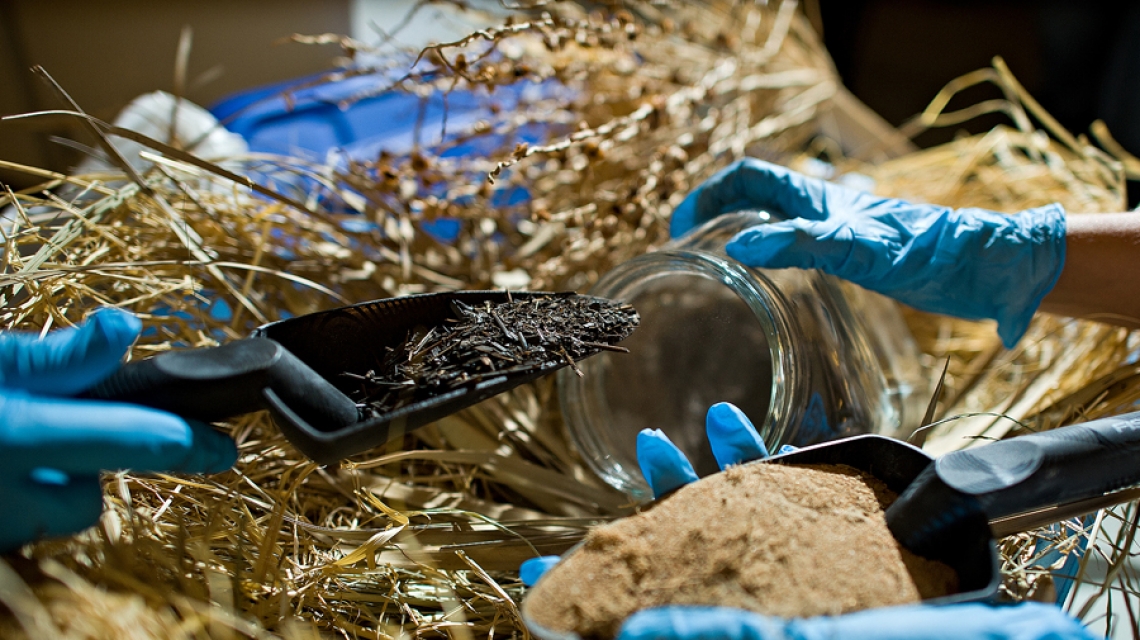
“Using the process of pyrolysis – decomposition brought about by high temperatures – we intend to turn readily available green farm waste into an inert form of carbon known as ‘biochar’, which can then be mixed back into the soil. Such material is otherwise wasted in landfills or burned – neither of which is environmentally ideal,” she explained. Biochar also helps sequester atmospheric carbon dioxide into the earth as soil carbon, which will help the UAE achieve its carbon-emission reduction goals.

In addition to agricultural waste, Dr. Yousef is looking at other waste streams that she believes can be leveraged to improve the fertility of soils and their ability to retain water.

“My team is developing formulations from water-absorbing minerals that, when mixed with different clay residues, produce high-quality residues that are rich in carbon, phosphorus and nitrogen, which could enhance the fertility of UAE’s soils,” Dr. Yousef explained.

“Our goal is to improve water-use efficiency, fertility and soil texture so erosion is limited and crop yields are enhanced,” Dr. Yousef said.

The UAE’s ability to feed its people without straining its water and energy resources requires innovative technologies that support sustainable agriculture. The solutions being explored at Masdar Institute aim to help increase sustainable crop production from UAE farms while conserving groundwater and reducing overall water consumption, which would in turn reduce over-reliance on energy-intensive seawater desalination, thus contributing to greater energy, water and food security in the UAE.


Erica Solomon
News and Features Writer
23 February 2016


Student Shares Marine Data’s Role in Conserving the Arabian Gulf

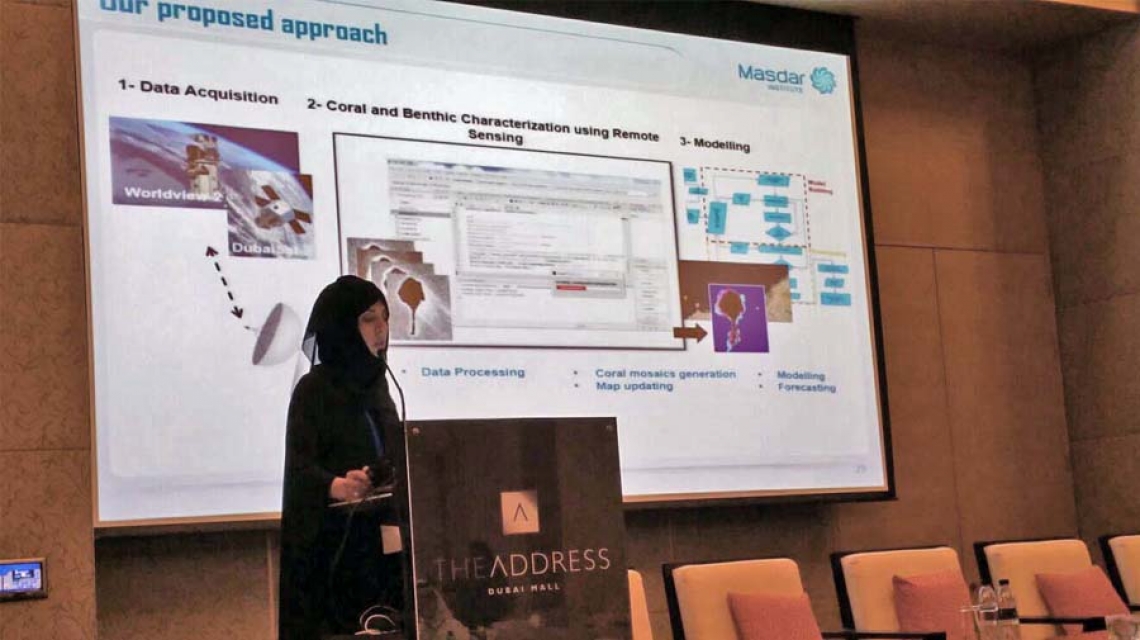
Masdar Institute PhD student Haifa Ben Romdhane has returned from the first Marine Data Infrastructure Gulf Cooperation Council (GCC) Summit, which was held last week at The Address Dubai Mall, where she played an active role as Advisory Board member, chairwoman, presenter and panelist.

The summit brought together marine data management experts, regulators, maritime sector stakeholders and technology providers to discuss the important role data plays in monitoring and managing one of the GCC’s most precious resources – its sea.

“The region’s coastal and marine ecosystems provide food, recreation, transportation, support biological diversity, and regulate climate. Unfortunately, extensive land development practices, overfishing and climate change have had detrimental effects on these critical environments,” Ben Romdhane stated.

She believes that the generation of integrated, easily accessible, high-quality data on these ecosystems is key to the development of systems that will help policy makers and maritime sector stakeholders better track, predict, manage and adapt to changes in the marine environment, which will help reduce the degradation of coastal and marine environments.

“The inaugural summit was the first of its kind in the region and it was a great opportunity to gather marine data users from different GCC-based organizations. It brought together experts who discussed the challenges, problems and potential solutions to structuring and centralizing marine data in the GCC region for easy and practical accessibility by all marine data users, including the scientific and academic community,” Ben Romdhane shared.

GCC nations are increasing their efforts to protect the Arabian Gulf, which provides not only a rich and diverse ecosystem, but also 40% of the UAE’s freshwater through desalination, and revenue through coastal tourism, trade and shipping, and fisheries. As a result, Gulf governments are investing significantly in advanced technologies that will lead to better data integration, management and access.

Ben Romdhane’s PhD research focuses on utilizing remote sensing – a technology that uses sensors on aircraft or satellites to collect data from objects on Earth by detecting the energy they reflect – as well as numerical modelling to better understand and protect the UAE’s coral reefs, which are regarded as some of the most diverse and valuable ecosystems on Earth.

In her presentation at the Marine Data Summit, titled “Remote Sensing and Modelling of Coral Reefs in the Arabian Gulf,” Ben Romdhane reviewed some of the international best practices in remote sensing applications and presented a case study that describes the current state of coral reefs in Dalma Island, UAE. She also provided a set of recommendations for gathering marine data more effectively, emphasizing the role that remote sensing technologies and modelling can play in developing smarter coral reef management solutions.

Remote sensing technologies can be used to monitor shoreline changes, track hazardous activity such as oil spills and algae blooms, and track water and soil quality, among other potential applications. This type of data can then be used to create management and preparedness strategies to reduce damage caused by such events.

Ben Romdhane believes that a holistic approach to managing the marine data being generated in the GCC is required to achieve better management – an approach that aims to integrate data into one model that encompasses the entire region. This, she says, would maximize access, quality and usefulness of the data.

Her advisor, Dr. Hosni Ghedira, Director of the UAE Research Center for Renewable Energy Mapping and Assessment (ReCREMA) and Professor of Practice, Chemical and Environmental Engineering, praised Ben Romdhane for her achievements and contributions to the Institute’s satellite-based mapping resources.

“Ms. Ben Romdhane has played a principal role in setting up the marine surveying activities at Masdar Institute using her knowledge of the key national players in this field. During her doctoral research at Masdar Institute, she has developed new satellite-based mapping methodologies and advanced modelling techniques that contributed to more effective monitoring tools of coral reefs in the UAE coastal areas,” he said.

The PhD candidate’s active and high-level participation in the summit reveals Masdar Institute’s robust efforts to develop dynamic experts in specialized research areas, who will be instrumental to the UAE’s knowledge-economy transformation.

Erica Solomon
News and Features Writer
23 February 2016


SBRC Inaugurates World’s First Facility to Grow Both Food and Fuel in the Desert

The world’s first research facility to grow both food and fuel, using desert lands irrigated by seawater, began operations today on a 2-hectare site in Abu Dhabi, United Arab Emirates. Operated by Masdar Institute, the facility, is funded by the Sustainable Bioenergy Research Consortium (SBRC), a group advancing the aviation industry’s commitment to reduce its carbon emissions by developing a clean, sustainable and alternative fuel supply.

“We live in a resource-constrained world where the access to energy, water and food are interlinked,” said Dr. Behjat Al Yousuf, Interim Provost of Masdar Institute, a research-based university in Abu Dhabi, and a founding member of SBRC. “Public-private collaboration to support cutting-edge research is needed to ensure that rising populations and industry can flourish sustainably, while, at the same time, also protect our finite resources. This project has the potential to turn resource scarcity on its head.”

“By doing research on integrated food and energy systems, we can begin to explore how the cultivation of biomass contributes to feeding the planet, preserving fresh water supplies and delivering cleaner, more sustainable fuels,” said Dr. Al Yousuf. “This research is very relevant for the UAE and all freshwater- and arable land-constrained countries.”

Aquaculture – industrial fish or shellfish farming – is one of the world’s fastest expanding food sectors, with a current growth rate of about 6% a year. While aquaculture systems can reduce a nation’s dependence on foreign food and improve security, they pose environmental challenges due to the impact of nutrient-rich effluents flowing into the ocean. The SBRC tackles these concerns and is seeking to minimize the footprint of commercial farming practices.

The research facility uses coastal seawater to raise fish and shrimp for food, whose nutrient-rich wastewater then fertilizes plants rich in oils that can be harvested for aviation biofuel production. The salt-tolerant halophyte plants – whose commercial potential is relatively unexplored – thrive in arid, desert conditions and don’t require fresh water or arable land to grow. In the last step of the system, the wastewater is diverted into a cultivated mangrove forest, further removing nutrients and providing valuable carbon storage, before the naturally-filtered and treated effluent is discharged back into the sea.

“With more than 30 million commercial flights flown worldwide each year, the aviation industry is committed to reducing its carbon footprint, and sustainable biofuel technologies are a critical part of the solution,” said Marc Allen, President, Boeing International. “The aquaculture and biomass facility in Abu Dhabi holds tremendous promise to turn the 25.5 million square kilometers of desert and arid areas of the world into productive farmland, supporting both food security and cleaner skies.”

Masdar Institute, together with Etihad Airways, Boeing and Honeywell UOP, were the founding members of SBRC. Takreer, the Abu Dhabi oil refining company, along with Safran and GE Aviation, have since joined the research group.

“As the global demand for jet fuel continues to grow, we see a significant business opportunity to refine and produce sustainable aviation biofuels,” said Jasem Ali Al-Sayegh, CEO of Takreer, the Abu Dhabi oil refining company. “The UAE is also uniquely able to create the supply chain and infrastructure needed – from research, production and refining – to fuel airplanes with bioenergy grown in our own backyard.”

More than 2,000 commercial flights have used sustainable aviation biofuel blended with conventional petroleum since renewable jet fuel was approved for commercial use in 2011.

“This breakthrough research places Abu Dhabi at the center of a global movement to advance technology that supports the sustainable production of food and bioenergy,” said James Hogan, CEO of Etihad Airways. “The commercialization of aviation fuels – cleaner, superior-performing fuels – is a critical step toward balancing our industry’s dependency on fossil fuels, while also incubating innovation that may have profound global implications to address energy, water and food security.”

The goal of the research facility is to demonstrate the viability of an integrated bioenergy production system with respect to essential food and fuel production, suitable land use, reduced carbon emissions and wastewater clean-up. If the technology proves viable at this smaller-scale, further scale-up will continue with the ultimate ambition to scale up to a 200-hectare site that has been selected along the Abu Dhabi Western Region coast.

06 March 2016


“Digital Rock Physics” Project by Masdar Institute, ADNOC, Petroleum Institute and Total Win 2016 “Partnership of the Year” Award

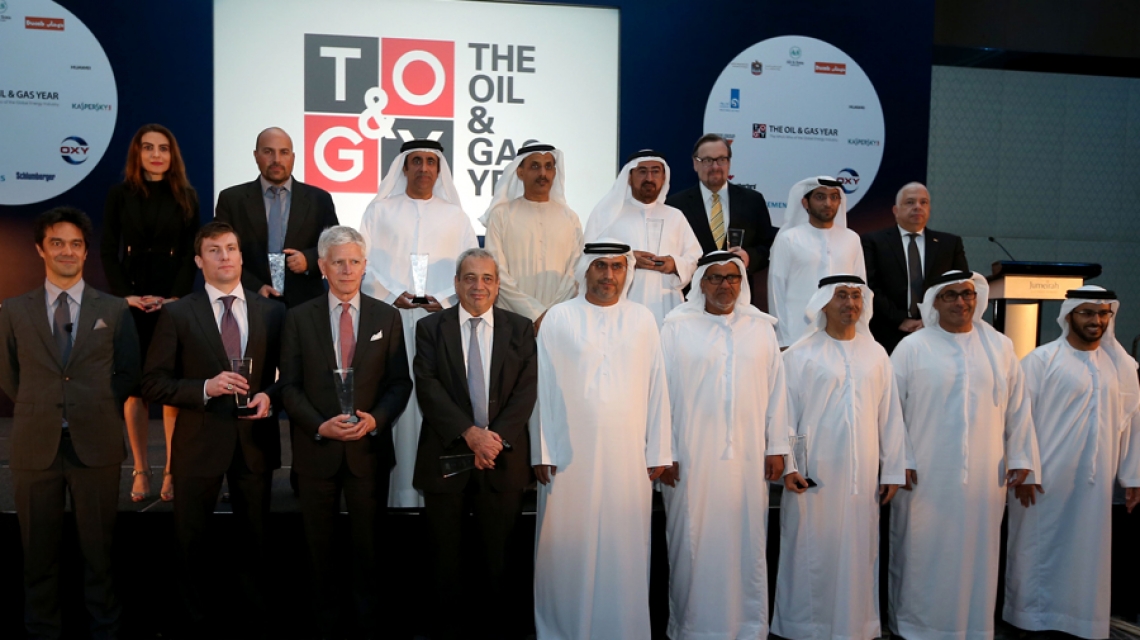
The Digital Rock Physics (DRP) project, a research and development (R&D) collaboration with partners including Abu Dhabi National Oil Company (ADNOC), French energy firm Total, Masdar Institute of Science and Technology, and the Petroleum Institute, has won the Oil and Gas Year’s 2016 ‘Partnership of the Year’ award.  

Dr. Steve Griffiths, Vice-President for Research and Interim Associate Provost, Masdar Institute, was presented the award at the ceremony, which also marked the launch of the ‘Oil and Gas Year, Abu Dhabi 2016,’ published in partnership with ADNOC and the Ministry of Energy, UAE.

This is the first time the organizers have announced the ‘Partnership of the Year’ category. The finalists were selected at a roundtable event in Abu Dhabi during which 330 executives voted on the award’s various criteria. Every year, The Oil & Gas Year recognizes the most outstanding achievements of individuals and organizations in the world’s most important oil and gas regions.  

The DRP project is the first R&D collaboration between ADNOC and Total. The project’s objective is to understand how hydrocarbons move through the tiny pores of Abu Dhabi’s heterogeneous carbonate reservoirs. This is achieved by pooling the technical resources of Total, ADNOC, Masdar Institute and the Petroleum Institute to map Abu Dhabi’s carbonate geological reserves in order to produce an extensive archive of rock images at multiple scales and leverage this information to develop simulations for fluid flow in oil and gas reservoirs. The project is expected to enhance knowledge of the pore network and pore morphology of Abu Dhabi’s reservoirs from the nanoscale to macro-scale, with a view toward maximizing oil recovery.  

Approximately 70% of the Middle East’s oil and 40% of its natural gas is found in carbonate reservoirs such as those being studied in this project. Mature fields in complex carbonate reservoirs generally have less than a 33% recovery rate of available oil, so a more detailed understanding of these field’s geo-mechanical and related properties is essential to achieving ADNOC’s target of 70% oil recovery.  

Dr. Griffiths said: “We are honored to receive the award with our partners in the DRP project, which demonstrates the emphasis that Masdar Institute places on collaborative research partnerships that have direct benefit to Abu Dhabi and the broader UAE. We believe that this project greatly supports Abu Dhabi’s ambitious goals for increased oil recovery, which in turn will help drive further economic development and transformation.”

The collaborative research project is aimed at archiving the varying carbonate reserves found in areas deep under the earth’s surface where oil and gas is difficult to recover. The aim is to learn more about these formations so that ADNOC and others can make better predictions on the ease or difficulty of extracting oil and gas, which will ultimately cut costs and maximize recovery rates.  

Masdar Institute’s state-of-the-art microscopy facility is a critical part of this project. Its cutting-edge laboratory helps to scan the rock samples at the nanoscale to generate 3D images of the pore network and pore morphology of typical Abu Dhabi reservoir rock cores. These images are then used in computer simulation of elastic and petro-physical rock properties.  

Hatem Nuseibeh, President of Total UAE, said: “We are honored to receive this award along with our partners. This project illustrates Total’s long term commitment to maximize oil recovery in Abu Dhabi through collaboration with Masdar Institute, ADNOC and the Petroleum Institute.”  

Dr. Marc Durandeau, Senior Vice President, Research & Development, Petroleum Institute, said: “The Oil and Gas Year’s 2016 ‘Partnership of the Year’ award is a testament to the skill, ingenuity, and vision of our academic and industrial collaboration. Our objective is to use collective expertise and technology to come up with the best solutions that will help to meet the increasing power demand in the country. Projects like these showcase how combined efforts can help solve some of the most demanding needs and help the country reach the next phase of growth and development.”  

Dr. Durandeau added: “The project lead on behalf of the Petroleum Institute, Dr. Ali Al-Sumaiti, himself a product of the ADNOC Scholarship Program, demonstrates ADNOC’s higher education focused strategy continues to produce tangible impact on the business. This award gives us an impetus to fulfill UAE’s vision of an innovative and knowledge-driven future.”  

Masdar Institute’s Dr. Mohamed Sassi, Interim Dean of Faculty, is the principal investigator on the project from the Institute’s side, while Dr. Rashid Abu Al-Rub, Associate Professor, Mechanical Engineering, is also closely involved. Others working on DRP include Dr. Mustapha Jouiad, Microscopy Facility Manager and Principal Research Scientist, Dr. Sylvie Chevalier, Research Associate, Dr. Rajakumar S. Devarapalli, Research Engineer, Dr. Bojing Zhu, Research Scientist, and PhD students Titly Faisal and Amina Islam.

Clarence Michael
News Writer
30 March 2016

Investing in education and R&D could raise UAE’s competitiveness

By Dr. Lamya N. Fawwaz

The world is facing a changing global reality. Oil prices continue to lag, and leading international economists like Morgan Stanley say prices will fall further before they can begin to rise. Additionally, global economic activity will soon feel the effects of efforts to reduce global climate change.

This challenging situation places the UAE at a unique juncture to accelerate its economic transformation efforts to capitalize on the opportunities provided by the world’s need for technologies, systems and policies while offsetting the impact of shrinking hydrocarbon returns. 

The strategy being pursued by the UAE leadership for the past decade and longer has been to pursue economic diversification efforts to focus on high-tech knowledge sectors that can meet the growing global needs and challenges. This approach leverages the UAE’s relatively strong economy to balance its limited available workforce and raw materials, helping to value-add the UAE’s small population to become high-worth knowledge professionals.

Achieving this requires continued investment in education and research and development (R&D), so that the UAE can develop the human and intellectual capital required to secure global competitive advantage. The UAE can learn much from the success of Singapore, where intelligent and targeted investment and government support of education, high-value industries and research, pushed the GDP from around US$500 in 1965 to US$55,000 in 2014.

Investments in basic research can result in returns of 20% to 60% annually. Studies show that increasing public R&D spending can increase an economy’s ability to derive gross domestic product growth from a certain level of labor and capital, while R&D itself is one of the types of knowledge-based capital (KBC) investment that can increase labor productivity growth.

And being able to engage in meaningful R&D that advances the cutting edge of science and technology to produce these desired returns requires a strong educational foundation. Various international studies estimate that the contribution of education to labor productivity growth is up to 30 percent of the total increase. The International Monetary Fund has said that primary and secondary education affects a country’s ability to copy or reproduce new technology, while college and research university education impacts a country’s ability to achieve innovative new technologies, showing that the entire educational system, from primary to advanced, plays a crucial role in achieving technological advancement. Again, looking at the Singaporean example, nearly 20% of total government expenditure is on education.

But in a time of reduced national revenue on the back of historically low oil prices, many may question the logic of engaging in medium and long-term investments like improvement of educational standards, funding of research and development of academic facilities. The value of such a strategy, however, can be seen in the experiences of many of the world’s leading innovative nations.

Regarding the value and impact of investing in R&D during constrained financial cycles, a Harvard Business Review study of 4,700 companies found that companies that reduce costs selectively by focusing more on operational efficiency and invest in marketing, R&D, and new assets have the highest probability of coming out ahead of competitors.

Education also has a significant impact on the economic prospects of individuals. A University of Kansas study found that the lifetime earnings gap between high school and college graduates can be as high as US$1.1 million. This shows that investing in education and developing a high-quality higher educational sector can help a nation bring greater wealth to its people.

The value of both R&D and education is no secret to the UAE leaders, who have centered successive economic strategies on these two foundational economic elements. In 2014 the UAE launched its National Innovation Strategy, which required all government entities to reduce spending by 1% and to dedicate the savings to research and innovation projects. It is believed this move would significantly increase the country’s annual R&D spending from the AED7 billion revealed in 2014. That target was followed with an additional plan revealed by His Highness Sheikh Mohammed bin Rashid in 2015 to triple government spending on research and development from 2015-2021 and boost the national workforce by 185,000, from 22% of the workforce to 40%.

Building on the UAE leadership’s plan of increased R&D investment in the country, I believe that the enhanced funding should be channeled into high-tech research areas of relevance to both local and international needs. In these challenging economic times, the global and local market demands new ways to make the most of limited resources, highlighting the need for innovations that achieve greater efficiency and reduced operating costs.

Within the UAE, national development plans and goals require expansion of the country’s infrastructure, diversification of its economy and development of highly-competitive technical sectors, like aerospace, aviation and clean energy, while externally, the global market demands innovations to meet growing water, energy and food security needs. Maintaining steady and abundant investment in R&D and education in the UAE can not only help the country achieve a new level of prosperity, but also help our world at large achieve greater sustainability and security.

Dr. Lamya N. Fawwaz is Vice President of Institutional Advancement and Public Affairs at Masdar Institute of Science and Technology.

This op-ed originally appeared in print in Gulf Today on 29 March 2016.

Masdar Institute Leveraging Nanotechnology to “Grow” Rain Droplets in Clouds for Greater Rainfall

The advanced science of nanotechnology is being leveraged in a new way to help increase water security in the UAE and other arid and semi-arid regions as part of an innovative rain enhancement research project being led by Masdar Institute faculty.

Triggering rain from clouds that would normally produce none is the science of rain enhancement, also known as cloud seeding. Rainfall plays an important role in replenishing groundwater reservoirs and refilling dams and wells in the UAE, while also helping to keep air clean and desert ecosystems thriving. Unfortunately, current rainfall levels are unable to replenish the UAE’s shrinking groundwater supplies – which are decreasing at a rate of .5 centimeters per year – due to a combination of growing freshwater demand and very low rainfall levels.

Studies have indicated that rainfall enhancement via cloud seeding can increase rainfall between 5% to 20%, which would help restore groundwater reserves, boost agricultural production, and reduce the country’s heavy reliance on freshwater produced by energy-intensive seawater desalination.

Masdar Institute Professor Linda Zou of Chemical and Environmental Engineering is looking to capitalize on the unique capabilities of nanotechnology to support the country’s water security needs. Her research will leverage nanotechnology to increase the production of water droplets in clouds, which in turn will help produce more rain. Nanotechnology is the manipulation of matter on anatomic,molecular, andsupramolecularscale, to engineer functional systems on those respective scales.

“Many of the cloud seeding materials used today, such as potassium chloride and sodium chloride, are based on traditional practices; the information and techniques used are outdated, and their effectiveness is not well understood,” Prof. Zou said.

“This research project will leverage the unique nanostructured properties of cloud seeding materials to help water vapor in clouds condense, which is the necessary process needed for raindrops to form,” she added.

The UAE government has recognized the potential of rain enhancement to support water security and established the UAE Research Program for Rain Enhancement Science to increase rain enhancement research in the UAE and arid and semi-arid regions across the world. Prof. Zou was one of the three inaugural recipients of the US$ 5 million grant from the Program earlier this year.

Conventional cloud seeding materials, such as silver iodide and salt particles, provide a crystal around which water vapor can condense. Though these materials have proven successful in producing water droplets and rain, Prof. Zou believes that recent technological advancements in materials science and nanotechnology can be leveraged to improve these cloud seeding materials’ ability to form rain.

As part of her grant-winning project, Prof. Zou will engineer cloud seeding particles with optimal properties to ensure that condensation will occur effectively and more rainfall can be achieved.

To aid this process, Masdar Institute’s Dr. Mustapha Jouiad, Microscopy Facility Manager and Principal Research Scientist of Mechanical and Materials Engineering, will develop novel methods to evaluate water condensation using advanced microscopy techniques. The project will also be assisted by two international co-investigators, Dr. Loh Kian Ping from the National University of Singapore and Dr. Mladjen Curic from the University of Belgrade, who will provide additional expertise in nanotechnology, fine particle dispersion examination through interfacial science, nanomaterial characterization, and cloud modelling.

“The ultimate goal of our research project is to ensure that the knowledge gained through our research project leads to consistent and enduring results,” she explained.

This novel application of nanotechnology, which is known more for its use in materials science, health, electronics and robotics, has attracted the interest and optimism of meteorological scientists.

“Research related to nanotechnology in the context of rainfall enhancement by Dr. Zou represents a new and exciting approach,” said Dr. Deon Terblanche, Director of the Atmospheric Research and Environment Branch of the World Meteorological Organization (WMO) based in Switzerland.

“All science-based rainfall enhancement techniques are based on the formation of water vapor into either cloud droplets or ice crystals, and this process is dependent on nuclei (small particles) in the air. Nanotechnology provides the opportunity to optimize the effectiveness of such nuclei in innovative new ways based on our knowledge of nucleation theory, which refers to the formation of a new phase or structure of a material.”

Rapid and continuous social and economic growth within the UAE has intensified the demand for fresh water supplies for human consumption and industrial applications. Therefore, rain enhancement research is critical in the quest for new water security options and innovative solutions in the UAE and beyond. Finding innovative and sustainable ways to increase rainfall and groundwater reserves through rain enhancement is critical to the development of a robust water infrastructure in the UAE, and Prof. Zou hopes that this research will help the country achieve greater water security in the near future.

This and other rain enhancement research taking place at Masdar Institute could help position the UAE as a leader in advanced water technologies to address issues of water security while also helping to produce the high value human capital needed for the country’s advanced sectors.

Zarina Khan
Senior Editor
3 April 2016

Masdar Institute Files Patent on Student’s Innovative Camel Monitoring System to Improve Camel’s Health and Racing Performance

A Master’s student from the Masdar Institute of Science and Technology has capitalized on the latest technological advances in computer science and signal processing to innovate one of the UAE’s oldest and cherished pastimes – camel racing.

Recognizing the novelty and potential commercial applications of the student-led innovation, Masdar Institute has filed a provisional patent with the United States Patent and Trademark Office (USPTO) for the innovative camel monitoring system being developed by Saeed Alnofeli, an MSc student in the Engineering Systems and Management Program.

To date, the Institute has filed over 70 patents with the USPTO. Patents and inventions are considered a key measure of innovative performance within a university, company or country, and serve as a vital first step towards an invention’s commercialization. Alnofeli’s patent reflects the Institute’s concerted efforts to drive commercialization of the technology-based innovations required to advance and diversify the UAE’s key industries and sectors.

The invention is based on Alnofeli’s thesis research, titled “Customer Driven Product Development Process for Camel Monitoring System,” which is focused on optimizing monitoring systems of a training platform that can be used to improve camel training and racing.

Camel racing is part of the UAE’s rich heritage. As a centuries-old cultural tradition across the Arabian Peninsula, the UAE formalized the sport immediately after the country was founded.

Despite its popularity and cultural significance, Alnofeli believes that some aspects of the sport are a bit antiquated.

“I found some challenges in the camel racing industry, including a poor understanding of the camel’s health and how to improve camels’ racing performance, which is what motivated my research,” Alnofeli said.

Robot jockeys, which were introduced in 2004, were the first technological advance in the sport and the first step towards improving communication between camels and their trainers. Alnofeli’s camel monitoring system further improves and secures the communication between trainer and camel, by providing the trainer with information on the camel’s heart rate while it  races – information that, through Alnofeli’s proposed training system, can be used to both safeguard the camel’s health and optimize the camel’s racing performance.

In the current prototype of the monitoring system, an off-the-shelf sensor is wrapped around the camel’s body to collect data on the camel’s heart rate and speed. Through sophisticated signal processing software, the data is transmitted to a computer operated by the trainer. Alnofeli is working to develop camel-specific sensors, which will be able to track other valuable information in addition to the camel’s heart rate. He also plans to introduce tracking and recording capabilities into the software.

Alnofeli has been championing his camel monitoring system with much success over the past two years. Awarded the BP Innovation Scholarship in 2014 (a two-year, fully-funded merit scholarship awarded to graduate students in any one of Masdar Institute’s nine engineering concentrations), Alnofeli went on to win the first Khalifa Fund Technopreneur Competition, held in May 2014, and the Ibtikari 2.0 competition, held the same year.

As a result of winning Ibtikari 2.0, Alnofeli underwent a 4-month incubation program, during which he received the training, mentorship and support needed to polish his training system and turn it into a viable commercial product.

“I see the camel monitoring system as a business opportunity and I am eager to build a start-up with it,” Alnofeli said.

The Khalifa Fund and the Ministry of Economic Development, Abu Dhabi, have provided Alnofeli with financial support, which he used to develop the system’s prototype.

From Masdar Institute, Alnofeli has received technological support from the members of his research committee, which include Dr. Hector Hernandez, Assistant Professor of Chemical and Environmental Engineering, Dr. Marcus Dahlem, Assistant Professor of Electrical Engineering and Computer Science, and Dr. Petra Johanna Turkama, Visiting Assistant Professor of Engineering Systems and Management.


Erica Solomon
News and Features Writer
17 April 2016