PAL-Mentoring Program Launched for CMHS Students

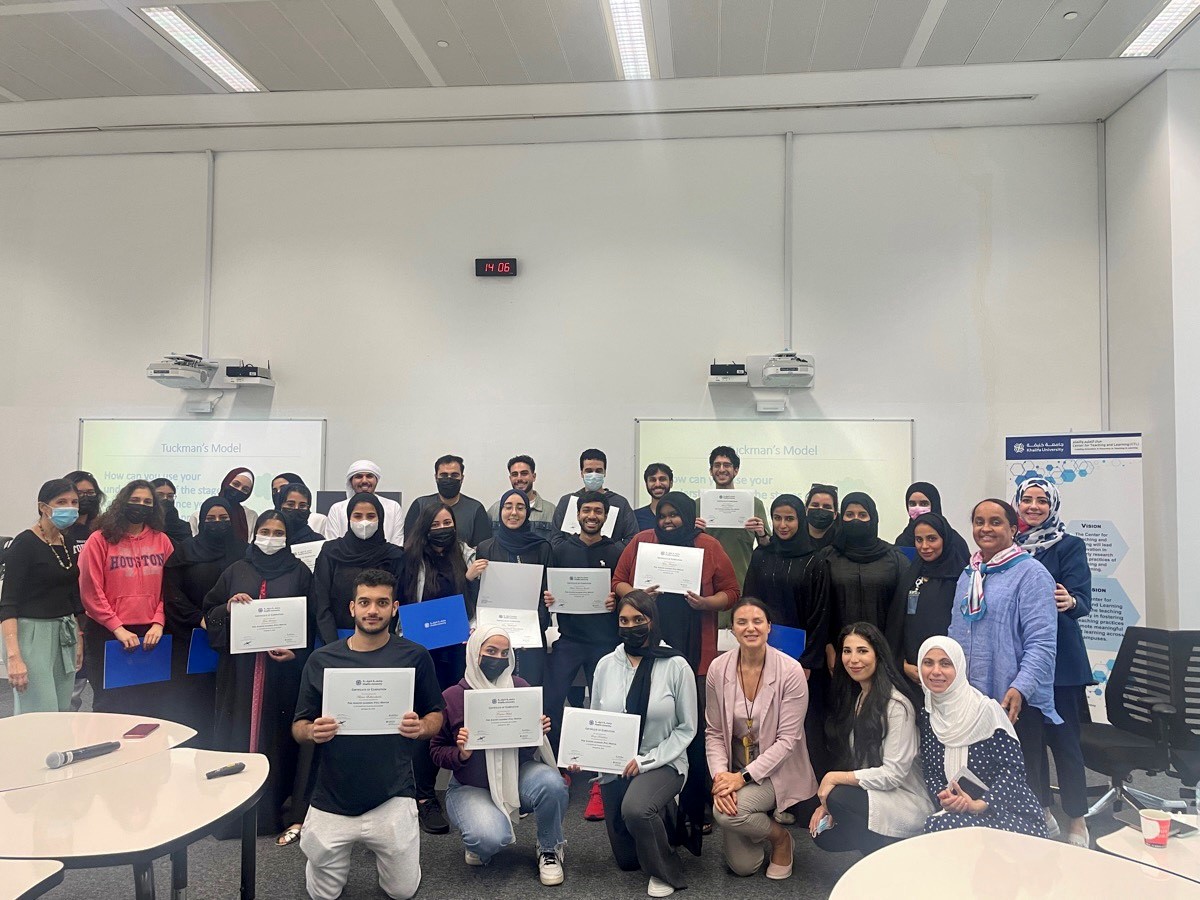
In collaboration with Khalifa University’s Center for Teaching and Learning (CTL), the Falcon Learning Communities (FLC) team launched the Peer-assisted Learning (PAL) Mentoring Program for CMHS students in Period 2.


PAL is a peer teaching approach where students help each other to learn. Guided by an instructor, the students work in small groups to teach and learn the information. This program allows students to acquire knowledge and skills, and build professional learning relationships among their FLC teams.


The PAL mentors (Period 2 students) received several ongoing workshops in which they learned about leadership skills, effective teaming, the role of peer mentors, and MBTI, so they will be well-equipped to support the PAL mentees (Period 1 students).


The concept of PAL is widely used in medical education to support academic performance by providing a safe space for students to interact with peers and engage in active learning in an informal setting. Studies have documented a wide range of benefits from incorporating PAL activities in the medical school curriculum, including enhancing leadership skills, boosting self-confidence, and fostering community.


Some of the comments received from the student mentors about PAL are:

“PAL was very useful as it prepared me to become a better physician.”

“I strongly believe that good doctors are teachers.”

“I learned from mentoring students how to address different learning styles and personalities.”

“PAL strengthened my sense of belonging and allowed me to bond with my colleagues.”


The first cohort of 39 students from Period 2 completed their PAL Program training with a PAL Mentor Certificate issued by CTL and FLC.


Staff Report
21 February 2023

Khalifa University Launches Metaversity Hackathon Supported by Microsoft UAE and Hevolus Innovation

Mixed Reality Discovery Webinar on 15 February at Khalifa University to Explain Hackathon Requirements


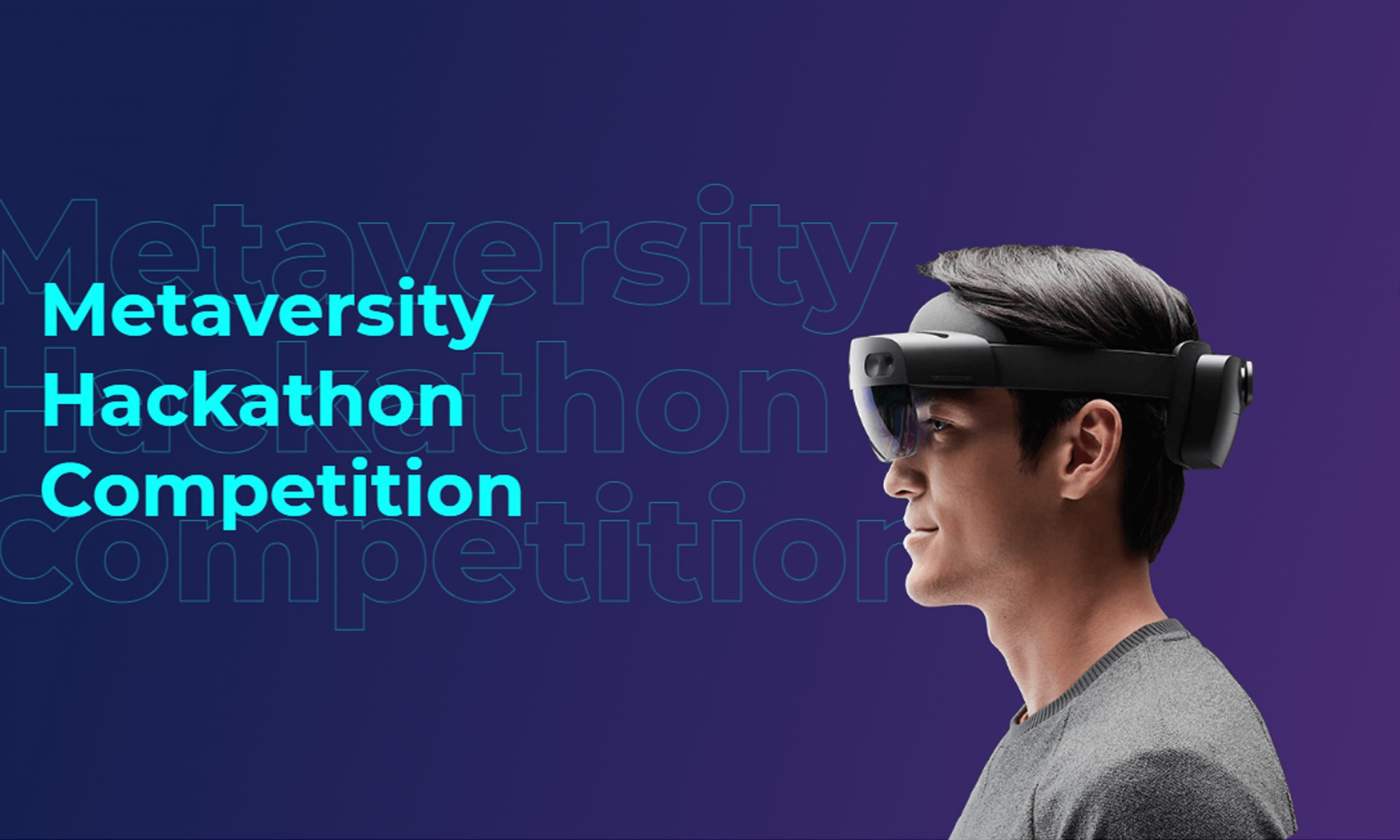
Khalifa University of Science and Technology announced the launch of AED50,000-‘Metaversity Hackathon’ supported by Microsoft UAE and Hevolus Innovation through which students will have an opportunity to learn about building a mixed reality (MR) application for Microsoft HoloLens 2 – an ergonomic, untethered mixed reality holographic device that was recently launched in the UAE.


Registration will close on 27 February for the ‘Metaversity Hackathon’ that offers students an opportunity to experiment with cutting-edge technologies. The winner will receive AED25,000, the runner-up will get AED15,000 and the third place team AED10,000. A Mixed Reality Discovery Webinar will be organized for registered eligible students on 15 February to explain the hackathon requirements.


Khalifa University will reward students who successfully build an innovative mixed reality application prototype for HoloLens 2 that can transform how a university program is taught, learnt and/or assessed in a metaverse classroom experience, solving current challenges and unlocking new opportunities in higher education. The project application prototype should answer the question – How can metaverse technologies transform how universities educate and assess students? Students will be supported by technical mentors during the in-person competition that will be held at the Khalifa University Main Campus.


Dr. Arif Sultan Al Hammadi, Executive Vice-President, Khalifa University, said: “Khalifa University is collaborating with Microsoft and Hevolus Innovation to launch the Metaversity Hackathon Competition with the aim of nurturing innovation and creativity among university students in the UAE.  Implementing a hackathon within clearly-established parameters and a set period of time will enable students to gain new technical skills, connect with mentors and collaborate with peers across faculties. We believe the competition will generate value-driving ideas, inspire a competitive spirit and build metaverse-readiness.”


Naim Yazbeck, General Manager, Microsoft UAE, said: “Mixed reality has the potential to truly transform the way we learn and teach future generations, while hackathons enable students to experience new technologies first hand, and are invaluable learning exercises. We are excited to be supporting Khalifa University in their efforts to bring the metaverse into the classroom, and we look forward to the innovative ideas the competition will spark.”


Antonio Squeo, Hevolus Innovation’s Cofounder and Chief Innovation Officer, said: “The Metaversity Hackathon validates the UAE University system’s goal of being at the cutting edge of education. It is an honor to bring our expertise in developing innovative XR products such as HevoCollaboration and hVerse, as well as our best practices, to guide and assist students during the Metaversity Hackathon. Acquisition International Magazine’s Global Excellence Awards named HevoCollaboration the Most Innovative Classroom Education Technology Provider of 2022, and it has received recognition from a number of international universities. Through our collaboration with Khalifa University and Microsoft, we are committed to improving educational sustainability and revolutionizing teaching methods in the region.”


Each team will have five eligible individuals who need to be at least 18 years old, enrolled in a university locally, and living in the UAE at the time of registering. The registered students will be invited to the Metaversity Hackathon in-person launch event on 1 March at the Khalifa University Campus.


The teams will have two days from 25 – 26 April 2023 to build the mixed reality application and prepare for the judging sessions. The teams will be judged on 27 April based on their creativity and exploration, how well the project fits the hackathon theme and challenge, novelty and quality of idea, technical execution excellence, design and UX, potential impact, as well as the team’s ability to articulate the project and deliver storytelling.


Microsoft UAE and Hevolus Innovation will provide technical readiness to participants who will also learn ways to adopt Microsoft technology and hardware in the mixed reality space for the competition.


Clarence Michael
English Editor Specialist
8 February 2023

Statecraft in the Steppes: Central Asia’s Relations with China

Dr. Li-Chen Sim says post-Soviet Central Asia — Kazakhstan, Kyrgyzstan, Tajikistan, Turkmenistan and Uzbekistan — and China enjoy a mutually beneficial, albeit hugely asymmetrical, relationship. In an article published in the Journal of Contemporary China, Dr. Sim, with Dr. Farkhod Aminjonov, National Defense College UAE, highlights the varying ability of leaders in Central Asia to manage and negotiate their relations with China as an often under-appreciated evolving approach. 


Op-ed by Dr. Li-Chen Sim


Post-Soviet Central Asia and China enjoy a mutually beneficial relationship. Trade has skyrocketed from US$1.7 billion in 2000 to almost US$40 billion in 2019 thanks to the region’s role as a key energy and commodity pillar of China’s “Belt and Road Initiative” (BRI). Consequently, China is the largest trade partner and among the largest investors in these countries. At the same time, Central Asian leaders have, on rare occasions, signaled concerns about China’s outsized impact on their sovereignty and regime security.


The impression of Central Asia as a hapless policy-taker permeates many conventional analyses of the region. It is typically perceived as a “battleground,” a “geostrategic playground of the world’s major civilizations,” or as an arena that facilitates the development of strategic convergence between Russia and China.


We argue that some Central Asian states possess the resources and capabilities to exercise agency vis-à-vis their relations with China more often than is generally recognized in the literature. We think that “hedging” becomes a viable foreign policy option for countries in Central Asia arising from domestic considerations (such as governance deficits, limited economic reforms) as much as from external pressures.


“Hedging” has become an increasingly established concept in international relations. It is most often deployed by small and medium states to maximize the twin imperatives of security and autonomy in the face of relatively circumscribed material capabilities. It can be considered a “fence-sitting” position — a set of strategies that cultivate a middle ground under situations where security and autonomy need to be balanced. We think it’s more than fence-sitting: It is the concurrent and selective pursuit of two mutually opposite or countervailing policies where one set pleases a big power while the other action defies the same power.


When considering the Central Asian states, we categorize them as “heavy” and “light” hedgers: The former have more political will and possess the material capacity to leverage advantageous structural and exogenous conditions to engage in selective hedging behavior more effectively than the latter. In this regard, Kazakhstan is a relatively heavy hedger with regard to China; Tajikistan, Kyrgyzstan, and Turkmenistan, which were traditionally pro-Russian, may be described as light hedgers; while Uzbekistan appears to be evolving into a heavy hedger. These countries employ a range of hedging strategies that leverage on economic, diplomatic, military, and cultural pathways.


Ultimately, it is the interaction of system-, regional-, and unit-level factors that drive the propensity of some Central Asian states to selectively engage in hedging behavior.


China’s engagement of Central Asia rests on several pillars. First, as a land-based transit corridor, the region is “central” to China’s Eurasian ambitions to link China’s west to South Asia, the Middle East, and Europe. It provides a valuable alternative to maritime routes that carry the bulk of China’s merchandise trade but largely lie outside its control. Second, the region’s hydrocarbon and mineral resources fuel and sustain China’s economic growth and prosperity.


Central Asian leaders appear equally committed to deepening relations with China. First, as noted earlier, Chinese-funded physical connectivity is expected to boost access to export markets. Second, Chinese loans, companies, and investments are critical for the growth of local economies in one of the poorer regions of the world. Towards this end, Kazakhstan and Kyrgyzstan are negotiating with China to align local economic-development visions (Nurly Zhol in Kazakhstan or Taza Koom in Kyrgyzstan) with the BRI. Third, Central Asian-China relations balance against the demands of the former’s traditional hegemon, Russia. For Central Asian leaders, realization of these goals will ultimately strengthen instrumental legitimacy and regime resilience, particularly if their key domestic constituencies are beneficiaries of Chinese largess. At the same time, there are deep-seated worries that are rarely voiced publicly by leaders about what China’s rise implies for security and autonomy.


A cursory glance at the material capabilities between Central Asia and China reveals a large and obvious power asymmetry. This has not stopped the former from attempting to hedge, that is, to concurrently defer to and selectively defy China.


Central Asia is not simply a region to be controlled and pulled inexorably into China’s sphere of influence. The region is represented in some cases by increasingly assertive leaders who can, on selective issues, leverage structural, exogenous, and domestic considerations to manage and negotiate their relations with China. Although Central Asian regimes possess different resources and capabilities, hedging beyond mere diversification of partners appears to be the strategy of choice to minimize economic and security risks while maximizing the political benefits of reinforcing legitimacy. The claim here is not that leaders in Central Asia are effective or proficient hedgers akin to some countries in Asia, but that to varying degrees they are beginning to use hedging as part of their statecraft to interact with China.


Going forward, although Central Asia’s engagement with China will continue to be hugely asymmetrical, the hedging capabilities will evolve. Various world challenges impact on the policy space for hedging in opposite ways and hence bear watching. 


Jade Sterling
Science Writer
16 February 2023

Khalifa University Researchers Named as Winners of Innovators under 35 MENA

A 3D printed prosthetic leg from recycled materials and an app to support patients with osteoporosis are the result of pioneering biomedical engineering work from two Khalifa University researchers.


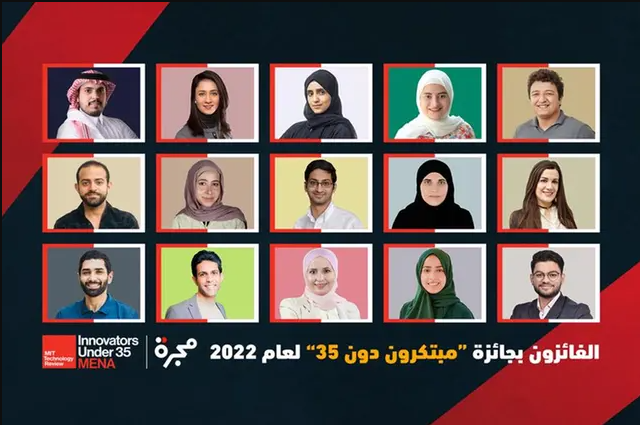
Two researchers from Khalifa University have been selected as part of MIT Technology Review Arabia’s “Innovators under 35 MENA,” which aims to honor leading innovators whose inventions or research promise to change the way people live for the better. Ghada Al Hussein, PhD candidate in the Department of Biomedical Engineering, and Dhalia Hassan, Research Assistant, were named for their biomedical engineering innovations.


Al Hussein created OsteoMentor, an end-to-end smart ecosystem to help people with osteoporosis manage their health care needs, and Hassan developed Bloom, a safe, affordable and self-adjusting design for prosthetic legs.


Al Hussein’s research focuses on developing an emotional climate recognition (ECR) system using artificial intelligence. The system relies on a novel approach to assess the emotional climate in natural dialogue between people: “Features from speech signals are fed into the system, which assesses the emotional state of the patient with osteoporosis. The app connects the emotional state with all the other medical data and can suggest better health care plans, offering more individualized support outside the clinic.”


Al Hussein focused her attention on patients over 40 years of age. “The application takes speech from people talking to the app and converts it into emotional climate prediction. Most people over 40 find it easiest to interact with the app via voice.”


She says her idea can be implemented in any digital health application, not just osteoporosis. “It can be expanded to other fields to provide more personalized and better services,” she said. “The goal is to release the app to the public free of charge, but first the plan is to engage patients from the orthopedic clinic in Sheikh Shakhbout Medical City to test the app to understand real-life interactions between the app and patients.”


Hassan’s Bloom is a 3D-printed prosthetic leg design, the first of its kind to use recyclable materials for a prosthetic costing just $20. The prosthetic is designed to fit any recipient with any length of residual limb at all amputation levels. Extensions with adjustable straps and moveable panels allow for growth, weight gain or loss, and for the user to take control personal comfort.


“Bloom is a one-size-fits-all solution allowing amputees in war-torn countries to self-fit their prosthetics rather than travel to inaccessible clinics for fittings,” Hassan said. “It’s also the first system that grows with the amputee and doesn’t need to be replaced.”


Hassan was inspired by the story of a girl and her father who both lost one of their legs as a result of the war in Syria. The girl’s father had built “prosthetic” limbs using tuna cans, plastic tubes and fabric.


“As a biomedical engineer, it is my duty to make prosthetics more accessible to people,” Hassan said. “I strongly believe in the responsibility we have to give back to the world, and I’d like to use my innovation and technology skills to deliver solutions to society.”


The Bloom design has been successfully fitted onto transfemoral amputees, giving them a comfortable and efficient gait and demonstrating a successful proof of concept for Hassan. The next stage is manufacturing larger volumes to help more people.


“The manufacturing phase is arguably the most important and critical phase,” Hassan said. “It will entail a third party collaboration to make this vision come to life by printing, packaging and delivering the prosthetics at scale.”


Jade Sterling
Science Writer
15 February 2023

Deep Learning Approaches for Vulnerable Road Users’ Safety: Special Journal Issue Edited by Khalifa University Expert

Khalifa University’s Prof. Ernesto Damiani was invited to serve as a guest editor of a special issue of Safety Science dedicated to the latest technological developments and innovations that will improve safety in dangerous traffic situations. 


According to the World Health Organization’s Global Status Report on Road Safety 2018, the number of road-traffic deaths continues to climb with approximately 1.35 million people dying every year in road accidents. Of these, the burden of road-traffic injuries and deaths is disproportionately borne by vulnerable road users who contribute to half of all victims. In other words, almost 50 percent of road fatalities are among cyclists, pedestrians or other people who use the roads but aren’t using motorized vehicles.


While progress has been made by strengthening legislation and encouraging the use of seat belts, less focus has been placed on the planning, design and operation of roads and roadsides, which can be assisted by deep-learning approaches.


Deep learning is a machine-learning method based on neural-network architectures with multiple processing layers— it’s a technique that teaches systems to learn by example. Deep-learning algorithms extract patterns from data and learn to associate these patterns with future data. This ability to learn from experience has made deep learning widely applied in various application areas, including health care, visual recognition, text analytics and cybersecurity. However, building an appropriate deep learning model is a challenging task.


Safety Science dedicated a special issue to deep-learning approaches for vulnerable road users’ safety and asked experts from the journal’s editorial board to serve as guest editors. Prof. Ernesto Damiani, Director of the Khalifa University Center for Cyber Physical Systems, was invited to edit this edition, alongside three other editors from Korea, Italy and Canada.


“Deep-learning methods with the benefits of improving accuracy and enhancing efficiency have been broadly adopted in both industry and academia,” Prof. Damiani said. “From a transportation point of view, these methods bring about both challenges and opportunities. They can help improve safety in dangerous traffic situations while also being used for novel transportation applications, including autonomous vehicles.”


The editors selected articles focusing on state-of-the-art theories and novel-application scenarios, surveys of recent progress in the field, and novel-analysis methods and applications. They also featured articles on building benchmark datasets.


The articles covered applications for deep-learning approaches, including data collection on who would be considered a vulnerable road user, intelligent cooperative traffic systems, road-traffic measurements and modeling, and cybersecurity countermeasures to protect systems and prevent dangerous behaviors.


“The articles in this special issue provide insights in a field related to safety science using deep learning and intelligent edge computing, including models, performance evaluation and improvements, and application developments,” Prof. Damiani said. “We hope readers can benefit from these insights and contribute to these rapidly growing areas. We also hope this issue encourages the scientific community to pursue further investigations leading to the rapid implementation of these technologies and approaches.”


Jade Sterling
Science Writer
15 February 2023

Khalifa University and Hayat Biotech Sign MoU to Collaborate on Research Projects, Human Capital Development and Career Enhancement

MoU to Facilitate Partnership in Healthcare-Related Research Projects as well as Internship and Work Placement offers for Khalifa University Students  


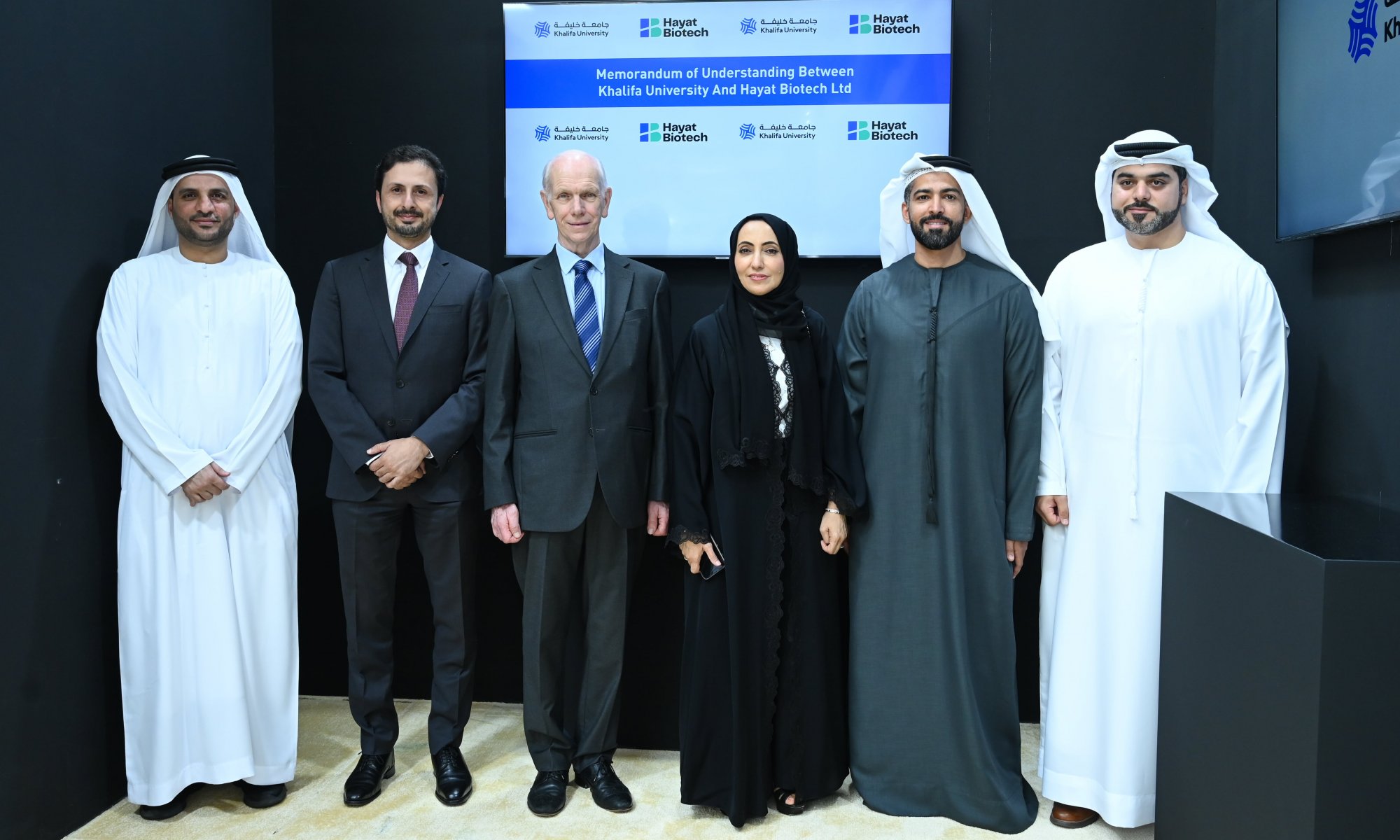
Khalifa University of Science and Technology and Hayat Biotech, the UAE based biotechnology leader, announced the signing of a memorandum of understanding (MoU) to collaborate on research projects, human capital development, and career enhancement.


The MoU was signed by Professor Sir John O’Reilly, President, Khalifa University, and Naser Al Yammahi, Deputy Chief Executive Officer, Hayat Biotech, while senior officials from both partners were present at the ceremony that was organized on the sidelines of Arab Health 2023. The MoU will facilitate collaboration in healthcare-related research projects as well as internship and work placement offers for Khalifa University students.


Khalifa University’s research remains relevant nationally and internationally even as the top-ranked academic institution prioritizes creating skilled and proficient manpower suitably trained to lead the UAE’s fast-growing knowledge-economy companies both in the government and private sectors. The MoU is expected to pave the way for indigenous human capital that will prove its mettle not only in the region but also across the global community.


On signing the MoU, Naser Al Yammahi, Deputy Chief Executive Officer, Hayat Biotech, said, “At Hayat Biotech, we remain committed to the growth and development of the healthcare sector across the UAE through furthering medical education and research.  The signing of this agreement with Khalifa University, a recognized and respected academic institution in the UAE, is testament to our unwavering commitment towards collaborating with renowned institutions from key sectors. We strongly believe that such collaborations contribute to the consistent enhancement and transformation of the UAE’s healthcare ecosystem.”


Mr. Al Yammahi added, “We are a homegrown company with global reach and a focused ambition, hence nurturing local talent is a key objective for Hayat Biotech. We seek to identify existing gaps and play a leading role in the development of the next generation of healthcare leaders and scientists. This stands to benefit not only the local community but also has positive implications on the regional and international healthcare industry.”


Commenting on the signing, Hongbin Cong, Chief Executive Officer, Hayat Biotech, said: “We are extremely proud to strengthen our collaboration with one of UAE’s most distinguished academic institutions, Khalifa University. Hayat Biotech is a firm believer in the power of collaboration to help build robust and sustainable research capabilities to benefit the world at large. Our ever-growing partnerships in key markets and sectors is an affirmation of our steadfast determination to becoming a leading international player while simultaneously fortifying our home-based operational efficiency and capabilities.”


“This MoU will focus on technologies and academia within the healthcare sector, to fully capitalize on the industry’s potential while fueling the advancement of research and medical education in the UAE.  We pledge to forge ahead confidently as we lay the foundation to bring a positive impact on the wellbeing of the community.”


Clarence Michael
English Editor Specialist
2 February 2023

Khalifa University Presents Permanent Body Museum and Three Innovative Healthcare Startups from KIC at Arab Health 2023

Khalifa University College of Medicine and Health Sciences Offers Visitors Information on Doctor of Medicine Curriculum and Scholarships


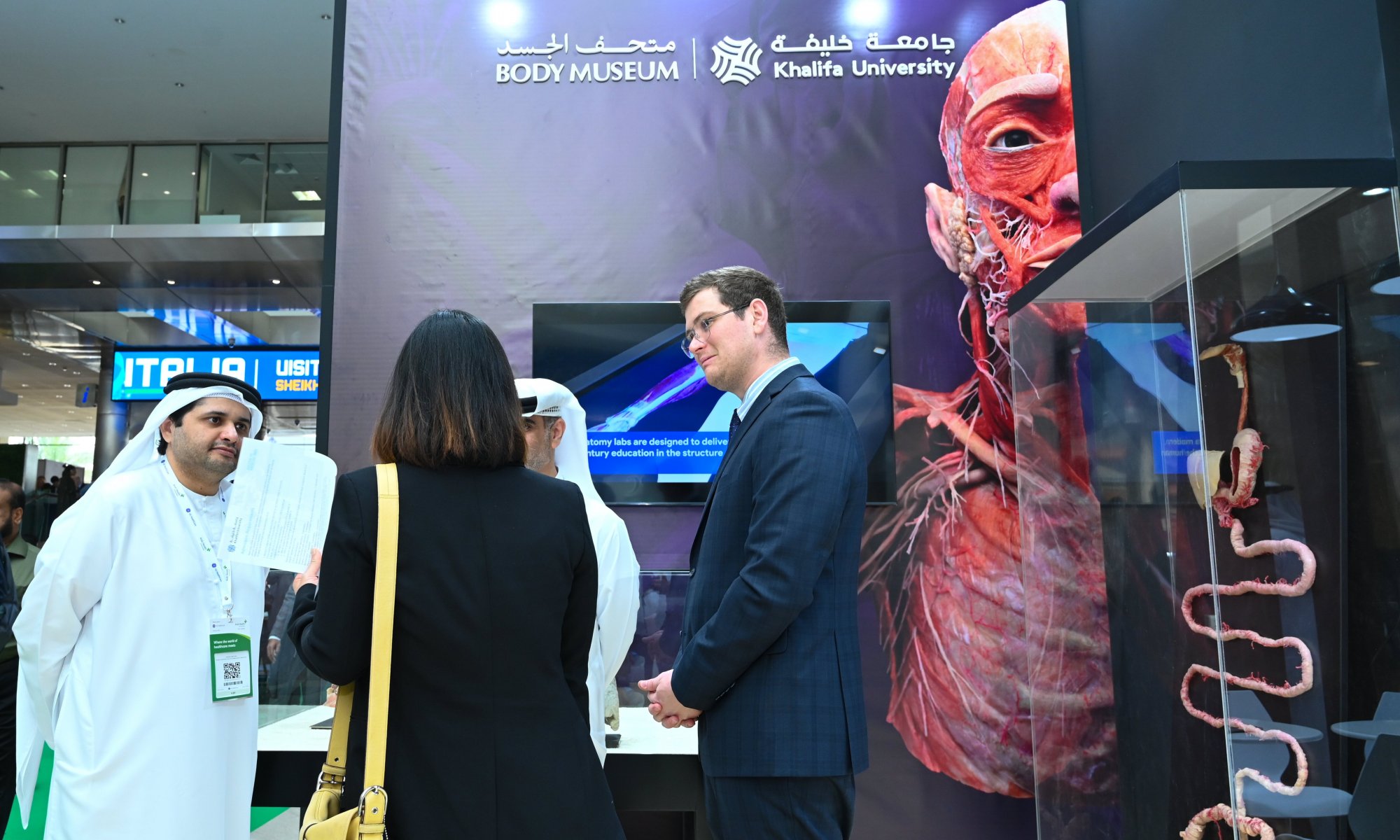
Khalifa University of Science and Technology announced it is presenting the permanent Body Museum – an exhibition of dissected human bodies presenting both regional and systems-based anatomy in healthy and diseased adults, and three innovative healthcare startups incubated at the Khalifa Innovation Center (KIC) at Arab Health 2023.


The 2023 edition of Arab Health runs at the Dubai World Trade Centre from 30 January – 2 February with the theme, ‘Innovation and Sustainability in Healthcare’. The event brings together key stakeholders to collaborate and make healthcare a more sustainable, positive impact industry. The Khalifa University stand (CC-160) offers details on the startup projects and the Body Museum, while the College of Medicine and Health Sciences (CMHS) offers visitors information about the curriculum application process and scholarships available for the MD program, Abu Dhabi’s only graduate-level professional degree program modeled after the North American medical education system.


Dr. John Rock, Founding Dean, Khalifa University College of Medicine and Health Sciences, Senior Vice President for Health Affairs, and Professor of Obstetrics and Gynecology, said: “We are delighted to participate.in Arab Health 2023 and showcase our healthcare innovations, infrastructure and the total ecosystem that we have created in the industry. Through our participation, we hope to offer visiting professionals and industry stakeholders a glimpse of our advanced academic and entrepreneurial endeavors.”


The Body Museum at Khalifa University gives visitors a glimpse of the inner workings of the human body and how poor health and lifestyle choices can have a negative effect on the body. The exhibition aims to inspire and motivate visitors to make their health and wellness a priority. This one-of-a-kind exhibition takes visitors to a journey of learning and understanding the human body. Managed by Khalifa University’s CMHS, the Body Museum strengthens the university’s goal of educating future generations to live healthy and informed lives, while showcasing the different body systems, how these systems work together, and how disease and aging affect the human body.


The three KIC startups include Mashyah that enables clinical gait analysis by combining portable motion sensors, Laboos Technologies that presents an innovative, patented W3M shoe-integrated system for wearable weight and walk monitoring, and Swift Biomed that aims to develop compact, portable and rapid diagnostics devices for detection of infectious diseases like COVID-19, Malaria, Tuberculosis and other biological testing.


On the academic side, many Khalifa University medical students have successfully passed the United States Medical Licensing Examination (USMLE) Step-1, achieved superior results in the US International Foundations of Medicine® (IFOM) exams and also secured clinical training opportunities for students at premier academic health centers.


Khalifa University CMHS has also published 266 research publications to date in highly respected international scientific and medical journals. These PubMed-listed research papers address a wide array of biomedical topics of relevance to the UAE and beyond, ranging from the Arab genome to nanoparticles, COVID-19, diabetes, cardiovascular diseases, and medical education.


Clarence Michael
English Editor Specialist
30 January 2023

Creating SoRoSim: A MATLAB Toolbox for Soft Robotics Modeling and Simulation

Researchers at Khalifa University have developed a new toolbox for modeling soft robotics using algorithms that are much less computationally expensive than existing approaches. 


Dr. Federico Renda, Associate Professor of Mechanical Engineering, Ikhlas Ben Hmida, Research Associate, and Dr. Anup Teejo Mathew, Postdoctoral Fellow, designed the toolbox to enable the static and dynamic analysis of soft, rigid, and hybrid robotic systems. It can be accessed using MATLAB, a programming platform for engineers and scientists to analyze and design systems and products.


“In the past, most robots were confined to the factory floor, often at a safe distance from workers and fragile objects,” Dr. Renda said. “Today, a growing number of robotic applications involve operating in challenging environments, where components must interact closely with delicate matter. Medical robots, for example, encounter human tissue, underwater robots handle marine life, and agricultural robots touch produce.”


Soft robots are significantly more adept at handling these scenarios than their rigid counterparts. They are highly deformable, made primarily of soft, compliant materials like elastomers. They are reconfigurable robots, able to dynamically adapt their structures to accomplish their tasks in increasingly diverse environments.


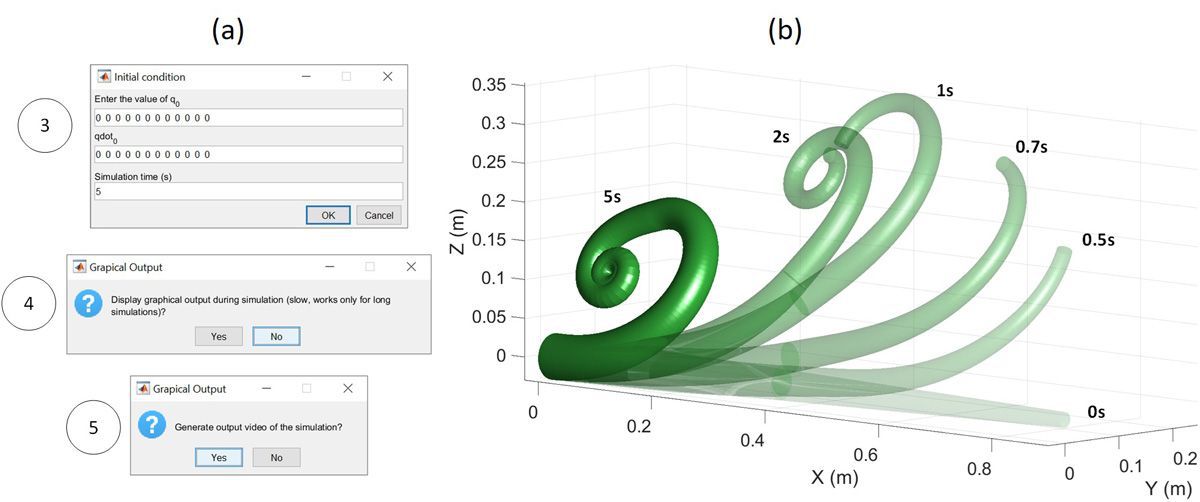
As an example, the research team has developed a flagellum-inspired soft underwater propulsor — an underwater soft robot. The robots are designed as a passive system, capable of moving in a range of geometrical configurations from the interaction with the surrounding fluid. This is a simple actuation mechanism inspired by flagellated microorganisms in nature, but it wasn’t simple to bring this type of soft robot to life.


Designing this technology means overcoming unique hurdles as robots with infinite degrees of freedom can prove difficult to model. Existing toolboxes are theoretically simple but computationally intensive and suffice for general purpose simulation and are too slow for practical use in analysis and control design.


The research team developed SoRoSim, a toolbox using three MATLAB elements to represent links, linkages, and twist. The link enables the user to define soft or rigid links with a variety of joint types; linkages let the user assemble multiple links into chains and define external forces, such as gravity, as well as actuation inputs; and twist allows users to specify the degrees of freedom for joints.


“Taking this approach enabled us to easily enhance and add capabilities to these elements over time without having to refactor other aspects of the toolbox,” Dr. Renda said. “As our research progressed, we added more advanced computational methods and support for modeling dynamics all within the existing MATLAB framework.”


Faster-than-real-time simulation means SoRoSim can be used to address real-world control design and optimization problems.


“One of the main advantages of developing SoRoSim in MATLAB — aside from the popularity of MATLAB among the robotics research community — is the ability to solve complex challenges by combining SoRoSim with other MATLAB toolboxes,” Dr. Renda said. “Our future development efforts will be guided by feedback we receive from roboticists and researchers using SoRoSim.”


Jade Sterling
Science Writer
7 February 2023

A New Algorithm to Optimize Inventory and Fulfillment in Omnichannel Retail

Order fulfillment in an omnichannel environment is very complex but a Khalifa University researcher has developed an algorithm to minimize costs and optimize fulfillment for orders online and in-store.


Fueled by the Covid-19 pandemic, global e-commerce retail encompassed 19.6 percent of retail sales in 2021. And this is expected to grow, with experts predicting that online shopping will make a 24.5 percent share of all sales by 2025. Increasingly, however, brick-and-mortar stores are making a comeback as retailers choose an omnichannel strategy.


Dr. Adriana Gabor, Associate Professor in the Department of Mathematics, with researchers from Technical University Eindhoven, the Netherlands, studied an inventory-optimization problem for a retailer that faces stochastic online and in-store demand. They proposed a two-stage stochastic optimization method and designed an algorithm for dynamic fulfillment to minimize the retailer’s costs. They published their results in Computers and Industrial Engineering.


“Traditional retailers such as Wal-Mart and Target, who used to sell only through brick-and-mortar stores, expanded online to be able to offer their customers a larger assortment of products and the possibility to shop from the comfort of their own homes,” Dr. Gabor said. “Large e-commerce companies such as Amazon and Google, however, have purchased brick-and-mortar stores recently to offer their customers the opportunity to try their products before purchasing them. These retailers are using a variety of channels to fulfill customers’ orders, including dedicated fulfillment centers and existing stores where items can be collected by or sent directly to consumers.”


Order fulfillment in an omnichannel environment is very complex. “Integrating inventory for both types of customers (online and in-store), as well as designing cost-effective fulfillment decisions, is very complex and coupled with many practical difficulties,” Dr. Gabor said.


The research team chose to tackle a joint fulfillment and inventory optimization problem originally proposed in 2021. In the problem, an omnichannel retailer has a set of facilities that fulfill both online and in-store orders. The goal is to decide the initial inventory at each location for a number of time periods and to design a fulfilment strategy that minimizes the total expected costs of the retailers, including holding, transportation, and penalty costs.


“This problem is mathematically very difficult,” Dr. Gabor said. “Although combining dynamic fulfillment with inventory can reduce costs considerably, it makes the joint optimization problem very complex due to the uncertainty in demand and the fact that orders can be fulfilled from different locations.”


Due to the uncertainty in the demand process, the research team approached the problem with a two-stage stochastic optimization strategy, in which they decide the initial inventory in the first stage and find an order fulfillment policy in the second.


To reduce the computational burden of working with a large number of scenarios in the optimization problem, the team proposed a novel method for scenario reduction, based on clustering scenarios according to a predefined measure of similarity using Linear Programming and the Turing-Good estimator.


“The main advantage of our method is that it does not require us to specify in advance the number of scenarios needed,” Dr. Gabor said. “Our algorithm can lead to average cost reduction of 11.81 percent compared with existing methods, and for longer time horizons, the optimal solutions obtained by our algorithm are 3.93 percent lower.”


Their algorithm showed from a managerial point of view that for short time horizons, fulfillment costs are the major component of the total costs, so retailers should focus on having sufficient inventory since this decreases the probability of fulfilling items from distant locations. For longer time horizons, both inventory holding and fulfillment costs are important, so retailers need to find the balance between the two costs.


When the proportion of online customers increases, holding costs can be reduced by pooling inventory among different stores. However, pooling inventory results in higher fulfillment costs, so the relationship between online and in-store demand should be carefully considered when making inventory decisions in an omnichannel environment.


Finally, in situations with high demand variability, the researchers found it is better to focus on having sufficient inventory, as this can reduce both lost-sales costs and fulfillment costs.


“For future research, we want to look at improving the scalability of the algorithm to a large number of locations, long time horizons, and a low proportion of in-store customers,” Dr. Gabor said. “Another interesting venue for research is studying how to adapt our proposed scenario reduction method to other stochastic optimization problems.”


Jade Sterling
Science Writer
7 February 2023

Procurement & Contracts Department and CIPS Conducted a Workshop on the Future of Procurement and Supply Chain

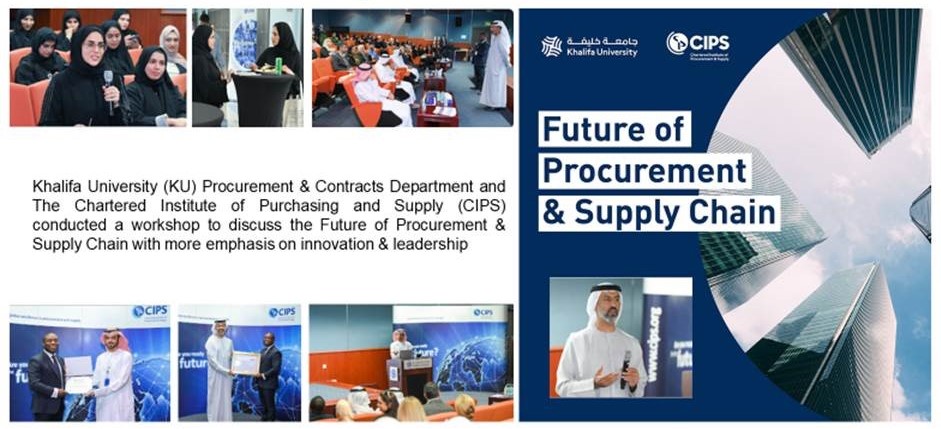
Last week, CIPS hosted an event with Khalifa University (KU) about ‘The Future of Procurement & Supply Chain’. Saeed Al Mahri MCIPS, Procurement & Contracts Director from Khalifa University shared insights on how KU is establishing and innovating the future of Procurement & Supply Chain locally, regionally, and globally. As part of the procurement team transformations, Shamma Rashed from KU shared her experiences in KU having recently joined the procurement profession.
 
Industry expert and one of the most recognized Procurement & Supply Chain leaders in the UAE, Waleed AlSaeedi FCIPS, Director of Supply Management at the Department of Culture and Tourism shared his professional journey and his thoughts on the roadmap to shape the future of leadership in Procurement & Supply Chain. Earlier in the session, Sam Achampong FCIPS Regional Director at CIPS MENA shared his thoughts on how CIPS is guiding organizations towards talent, skills, and competencies, driving world-class practices, and engaging innovative and sustainable practices for the future.
 
The event was attended by several leading CPOs and procurement professionals (MCIPS) and also included discussions from real-life practices. Some of the audience provided their thoughts on what the future looks like for procurement professionals. CIPS also recognized the successful achievement of MCIPS by Saeed Al Mahri and presented his certificate of achievement at the event. 

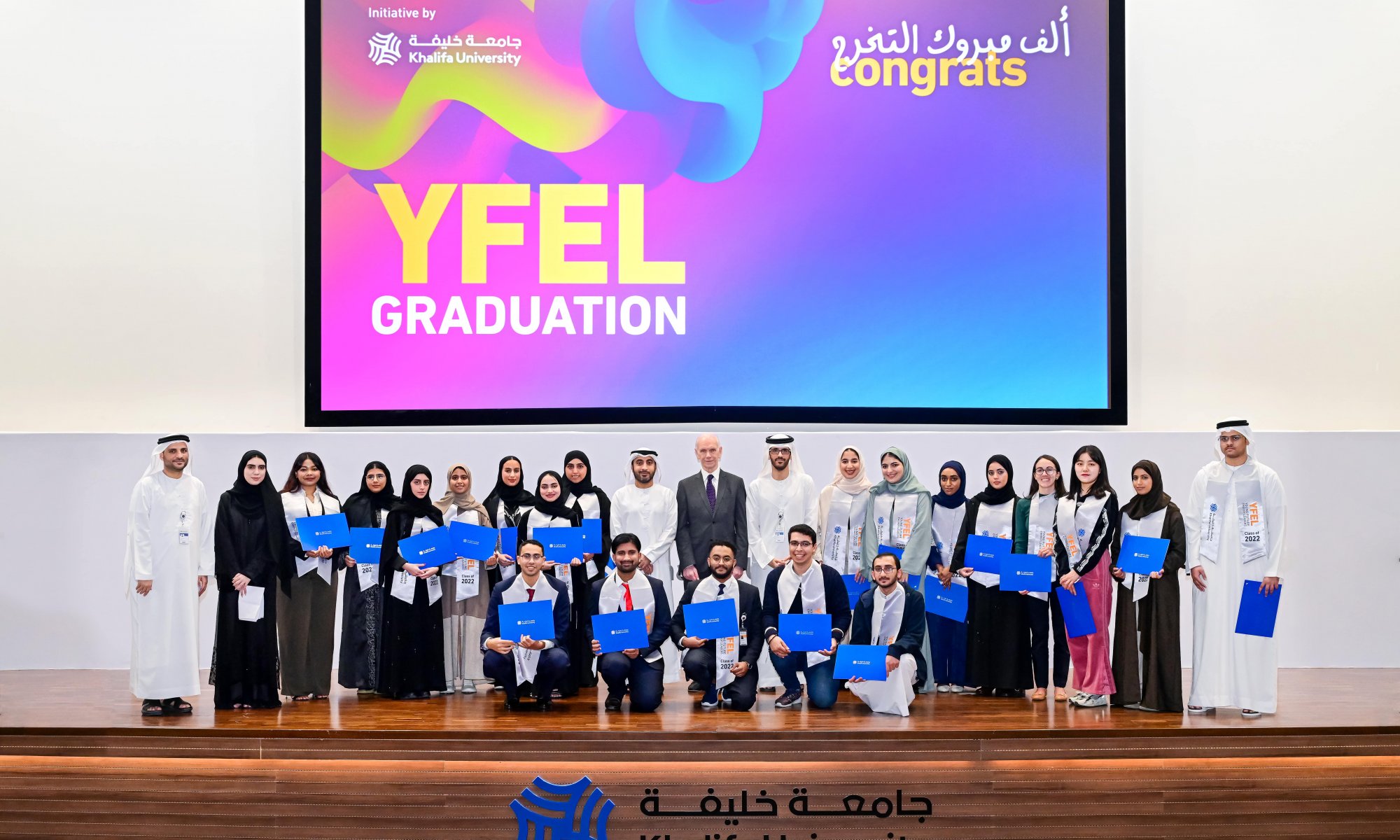
Members of Khalifa University’s 2022 YFEL Outreach Program Honored

13 Years Since Inception, YFEL Program Has Created an Alumni Body of Nearly 600 Young Future Leaders in Energy and Sustainability  


Khalifa University of Science and Technology today announced 32 members of the 2022 Young Future Energy Leaders (YFEL) outreach program received their certificates of completion during a gala commencement ceremony for successfully concluding their year-long schedule of commitments. The YFEL program enters its 13th year of existence this year.


Launched at the World Future Energy Summit 2010 by the UAE President His Highness Sheikh Mohamed bin Zayed Al Nahyan, the YFEL program offers members exceptional and unmatched access to top global leaders, senior business executives and academics engaged in alternative energy and sustainability at global forums such as the Abu Dhabi Sustainability Week 2023. The YFEL program is Khalifa University’s flagship outreach program in sustainability that reflects its commitment to ensuring a sustainable future


The certificates of completion were presented to the 2022 YFEL members. Also present were the 2023 YFEL members, for whom the evening’s proceedings served as an ‘orientation’ ceremony. The 2023 YFEL members include four young professionals, 18 international members including those from South Korea, Pakistan, Saudi Arabia, Italy, Egypt, Belgium, and Tunisia, as well as 10 locally-based expat members, and 19 UAE nationals. So far, in its 12-year long existence, the YFEL program has created an alumni body of nearly 600 students and young career professionals.


Sponsors of the 2022 YFEL program, as well as dignitaries, and guests were present at the ceremony organized during the Abu Dhabi Sustainability Week 2021 at the Khalifa University Main Campus. Professor Sir John O’ Reilly, President, Dr. Arif Sultan Al Hammadi, Executive Vice-President, and Dr. Ahmed Al Shoaibi, Senior Vice-President, Academic and Student Services, attended the ceremony.


Dr. Ahmed Al Shoaibi, Senior Vice-President, Academic and Student Affairs, Khalifa University, said: “Congratulations to the graduating 2022 YFEL members who have successfully completed their courses in technology, policy and leadership, as well as projects in sustainability and clean energy. Now in its 13th year, the YFEL program continues to educate, inspire and engage students and young professionals to become future leaders capable of solving the world’s most pressing challenges in clean energy and sustainability. We welcome the 2023 YFEL members who, we believe, will emulate their predecessors and achieve even more in these critical areas and effectively contribute to the UAE’s Net Zero strategy.”


During the year, the YFEL 2022 graduates completed their year-long program of technology workshops, courses, and policy-related discussions. They had also worked on sustainability-related projects including a smart energy self-sustained electrolysis system, an intelligent waste to energy system, a hydrogen storage system, direct CO2 Capture and Storage (CCS) using green energy, compressed air storage plant, and smart rewarding points system for the segregated waste by households. At the same time, 2023 YFEL members discussed the topics and projects they will work on.


2022 YFEL member Fai Alismail from Saudi Arabia said: “The YFEL  program gave us the opportunity to explore and engage with leading industry experts and employers to learn more about sustainability and energy.”


YFEL member Ammar Hummieda said: “From the informative sessions and the meeting with industry leaders I think we learned a lot from the YFEL program but most of all I think we learned a lot from each other.”


A session on Leadership Emotional Intelligence led by Kholoud Ribhi Elayyan, Student Academic Enhancement Senior Specialist, Khalifa University, offered YFEL members special insights into handling workplace challenges, while Dr. Glenn Muschert, Professor, Humanities and Social Sciences, and Sara Mneimne, Engagement and Development Senior Officer, Khalifa University, offered a session on Sustainable Development Goals.


In addition to attending the WFES 2023 opening ceremony and some panel sessions, YFEL members also participated in debates on ‘Fuel Cell vs. Battery-Powered Cars’ led by Dr. Glenda El Gamal, Senior Lecturer, on ‘Electric Cars are Impractical’ led by Dr. Aisha Al Suwaidi, Associate Professor, Earth Science, and on ‘Can Green Infrastructure be used to alleviate our CO2 emissions?’ during the Water and Smart Cities Forum 2023 led by Dr. Asli Hassan, Assistant Professor, Khalifa University.


Clarence Michael
English Editor Specialist
20 January 2023