Novel Insights to Enhanced Oil Recovery Techniques in the Middle East

Researchers from Khalifa University investigated the geochemical mechanisms of surfactant polymer flooding in the rocks found in Middle Eastern oil reservoirs to develop a framework for choosing the most efficient mix. 


Contrary to popular belief, retrieving oil from reservoirs isn’t as simple as drilling a hole and letting it flow. This is merely the first phase of oil recovery, where 5 to 15 percent of the oil reservoir’s total amount of oil flows to the surface under natural pressure. But continuous oil extraction causes the pressure gradient to drop in the reservoir, decreasing production rates. Maximizing production therefore requires additional effort to both maintain reservoir pressure and release maximum amounts of oil.


Researchers from Khalifa University have developed a novel geochemical modeling technique to study and evaluate the methods used to extract oil from carbonate reservoirs. Dr. Ilyas Khurshid, Postdoctoral Researcher, and Dr. Imran Afgan, Associate Professor, Department of Mechanical Engineering, investigated chemical flooding, a technique that encourages oil to detach from the pores of the rocks and flow to the surface. Their model looks at the chemicals and polymers used in this process and helps better forecast how they will interact with the oil in the reservoir. Most importantly, their work considers the rocks that make up the geological landscape of the Middle East: carbonate rocks like limestone and dolomite.


Their results were published in Nature Scientific Reports.


When a reservoir’s natural pressure falls too low to support oil production, water or gas can be injected into the reservoir to maintain pressure and increase the oil-recovery rate. Water displacement alone will release only an additional 15 percent of the oil in the reservoir, leaving as much as 70 percent of the original oil in place. At this point, enhanced oil recovery (EOR) processes are required.


Rather than simply trying to force the oil out of the ground using pressure, EOR seeks to alter reservoir properties to facilitate extraction. Polymer and surfactant flooding are two techniques for improving the recovery of viscous oil.


Water injection alone is insufficient because it may flow in highly permeable pathways that exist between the injection wells and the production wells, leaving several regions of the reservoir untouched by the flood of water. Additionally, water and oil don’t mix. Oil that is trapped within the rock matrix will not mix with the water and be swept toward the production wells. This is where polymers and surfactants are needed to detach the oil from rock surfaces. Surfactants reduce the surface tension of liquid, increasing its spreading and wetting properties.


In polymer flooding, polymers are added to the water injected into the reservoir. This increases the water’s viscosity and improves oil displacement. Surfactant flooding is often used in conjunction with polymer flooding, where surfactants are added to the water, acting in the same way as dish detergent to detach the oil from the rock surface.


“A surfactant/polymer chemical flooding operation cannot be considered as two independent mechanisms that occur in a reservoir at the same time,” Dr. Khurshid said. “The interaction of both chemicals affects the surfactant retention, operation economics, and oil recovery factor.”


Carbonate rock formations typically show low porosity and lead to low oil recovery. Plus, the salts and minerals in the rock cause the polymers to degrade. When the polymers degrade, oil-recovery efficiency is diminished.


“This is why it’s important to investigate the interaction or compatibility of surfactants and polymers with the rocks in the reservoir,” Dr. Khurshid said.


Dr. Khurshid and Dr. Afgan developed a comprehensive modeling approach to capture the effects of rock mineralogy as well as fluid composition on surfactant retention during surfactant polymer flooding. Their study is the first to consider the oil/surfactant effect on surfactant retention. Their work enables petroleum engineers to determine the best polymer and surfactant mixes to use in the carbonate rock formations found in the Middle East. 


Jade Sterling
Science Writer
21 March 2023

Nitrogen Dioxide Concentration Over the UAE

Researchers at Khalifa University studied the periodicity of nitrogen dioxide (NO2) over the United Arab Emirates, with particular focus on how human activities in the country related to the concentration levels, especially after the Covid-19 lockdown. 


Nitrogen oxides may not be the primary greenhouse gases that contribute to global warming, but they do contribute to the formation of ground-level ozone, a major pollutant that causes environmental and health concerns. Many areas around the world have seen steep declines in nitrogen oxides levels in recent years following strengthened regulations, but other countries still experience high levels with significant consequences for air quality and public health.


Dr. Zeyar Aung, Associate Professor in the Department of Electrical Engineering and Computer Science at Khalifa University, and PhD candidate Aishah Al Yammahi studied the periodicity of nitrogen dioxide (NO2) over the United Arab Emirates. They were interested in how human activities in the country related to the concentration levels, especially after the Covid-19 lockdown. The researchers found that the NO2 concentrations in desert areas were unaffected by the lockdown period, but urban areas showed a reduction. Their results also showed that NO2 is more highly concentrated during winter.


Al Yammahi and Dr. Aung published their results in Nature Scientific Reports.


“Nitrogen dioxide and nitric oxide (NO) are the most reactive gases in the atmosphere,” said Dr. Aung, who conducted the using data from 14 weather stations across the UAE from 2019 to 2020.


“The desert locations showed the lower concentrations of NO2, while the downtown Abu Dhabi and industrial area stations exhibited the highest overall concentration levels,” he said.


The concentration of NO2 in rural desert areas such as Liwa and Al Quaa was unaffected during the pandemic lockdown period, but stations in Abu Dhabi, Al Dhafra and Al Ain showed a reduction. These findings were consistent with those of similar studies conducted in China, Poland, and India.


This implies that NO2 concentration generally tends to last longer in less-populated areas, Dr. Aung said.  This is probably because human activities cause more dynamic atmospheric conditions.


The researchers also found a “generally seasonal pattern” of NO2 concentrations in the UAE. They noticed a good correlation in the concentration profiles of stations located in areas of similar land uses even if these stations were geographically distanced.


“The concentration of NO2 in the atmosphere fluctuates according to human activities and the presence of factories in industrial areas,” Dr. Aung said. “Tracking the variability of NO2 concentrations needs to be studied accordingly with population intensity and other environmental factors, such as temperature, which affects the movement of NO2 in the atmosphere. It is vital to study the concentration of NO2 via many other natural trappers, such as water and sand, because NO2 can change from one location to another. As a future work, we plan to study the environmental concentration of NO2 in the sand in the UAE.”


Jade Sterling
Science Writer
20 March 2023

IEEE Innovative Smart Grid Technologies Middle East 2023 Conference Opens in Abu Dhabi

Organized by Khalifa University, Conference Themed ‘Secure and Resilient Smart Grids’ Focuses on Innovations and Applications of the Future  


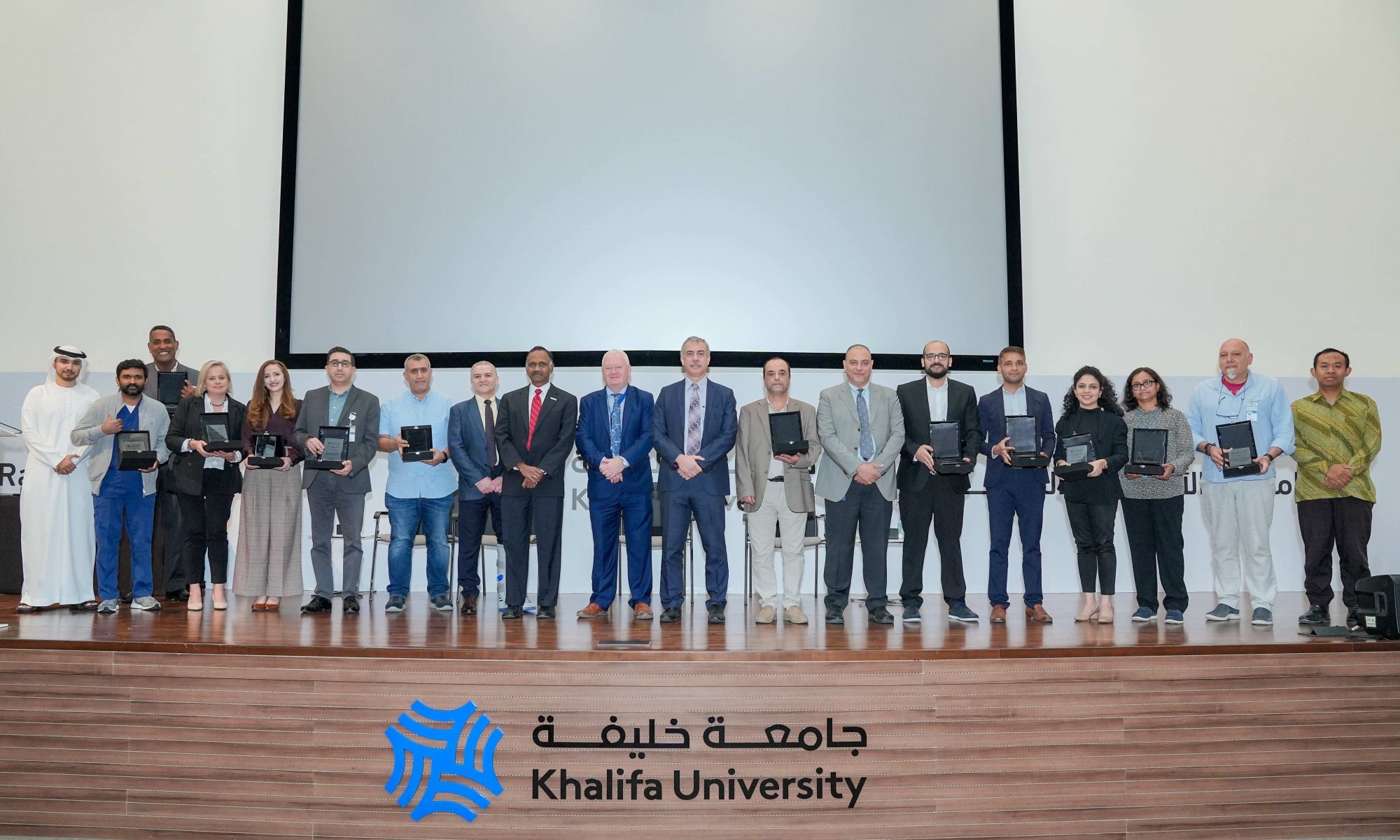
Khalifa University of Science and Technology announced the IEEE Innovative Smart Grid Technologies (ISGT) Middle East 2023 conference opened in Abu Dhabi to discuss innovative technologies for smart resilient grids of the future. The conference is organized by Khalifa University and is supported by Abu Dhabi Convention and Exhibition Bureau and sponsored by the IEEE Power and Energy Society (PES). 


Running until 15 March at Khalifa University Main Campus, the IEEE-ISGT Middle East 2023 is themed ‘Secure and Resilient Smart Grids’. A total of 78 papers are shortlisted out of 105 submissions for oral and poster presentation, of which Khalifa University’s Advanced Power and Energy Center (APEC) has contributed 14 high quality papers on renewable energy integration, smart grid, micro-grid operation and control, as well as AI applications on power systems and EVs.


The conference gathers academics and industry experts to promote and discuss innovations and developments in smart grid technology and applications, and address new challenges, share solutions and discuss future research directions of the interface of technology, information, and complex systems. 


Dr. Arif Sultan Al Hammadi, Executive Vice-President, Khalifa University, said: “We are delighted to collaborate with our partners including the Abu Dhabi Convention and Exhibition Bureau and the IEEE to bring this important conference to Abu Dhabi and the UAE. With research papers aligned with the industry needs for developing an efficient smart grid with renewable energy integration and transportation electrification, shortlisted for presentation, we believe this conference facilitates not only knowledge sharing and networking, but may also lead to obtaining new solutions to the benefit of all stakeholders.”


IEEE-ISGT Middle East 2023 features keynote and plenary sessions, technical papers, oral and poster sessions, as well as pre-conference tutorials.


Dr. Ehab Fahmy El-Sadaany, Director, Advanced Power and Energy Center, Acting Dean, College of Engineering, and Professor, Electrical Engineering and Computer Science, said: “The  IEEE-ISGT Middle East 2023 in Abu Dhabi focuses on shedding more light on different drivers and enabling technologies that will help arriving at a seamlessly operating energy ecosystem, as the electrical power and energy systems are entering an era of renewable integration, transportation electrification, high bandwidth two-way communication and autonomous micro-grids. These changes impact the way electrical energy is being generated, transmitted, distributed and utilized.”


Individual sessions at the conference focus on Renewable and distributed energy resources integration, Grid operation and management, Micro-grid operation, control and protection, Integration of EV in smart grids, Cyber-physical security and grid resiliency, as well as Trans-active energy and blockchain applications for smart grids. Other topics include Application of AI for smart grids, Power electronic devices for smart grids, Integrated energy systems in smart grids, Information and Communication Technologies (ICT), IOT for smart cities, Advanced metering, data acquisition and analytics, as well as Monitoring, diagnostics, self-healing, and reliability of smart grids.


Clarence Michael
English Editor Specialist
14 March 2023

Khalifa University and France’s Dassault Aviation Collaborating to Develop Graphene-based and 2D Material Technologies for Aerospace Applications

Specific Agreement Covers Technologies for 3D Printable Lightweight Materials  


Within the framework of the memorandum of understanding (MoU) signed earlier to establish academic cooperation in developing aeronautical education and related research in the UAE, Khalifa University of Science and Technology and Dassault Aviation of France today announced they are collaborating on a research project that focuses on developing two new material technologies for aerospace applications with potential for patenting and commercialization.


The research project agreement was signed by Dr. Arif Sultan Al Hammadi, Executive Vice-President, Khalifa University, and Bruno Stoufflet Chief Technology Officer, Dassault Aviation, in the presence of Professor Sir John O’Reilly, President, and other senior officials from both the partners. These projects are in collaboration with Khalifa University’s Advanced Digital and Additive Manufacturing (ADAM) Center.


Dr. Al Hammadi said: “Through this specific agreement, we are delighted to collaborate with Dassault Aviation in the development of new technologies for graphene and other 2D materials that will support the production of advanced aircraft components. Khalifa University has all the infrastructure required for cutting-edge research and we believe this partnership will yield solutions that will benefit not only both partners but also the aerospace industry in general.”


Bruno Stoufflet said: “This agreement illustrates Dassault Aviation‘s commitment to contribute to the United Arab Emirates capital development and our enthusiasm to pursue the long and fruitful cooperation we have with the world class Khalifa University of Science and Technology. State-of-the-art additive manufacturing technologies on innovative materials hold out exciting opportunities for the future. This new agreement will allow sharing and developing our expertise and skills on concrete applications and participating in the nurturing of Emirati aerospace talents.”


Three Khalifa University faculty from both Mechanical and Aerospace Engineering departments are leading the project with Professor Dr. Rashid Abu Al-Rub as the lead PI, and Professors Dr. Wesley Cantwell and Dr. Kin Liao as the co-PIs. Several graduate students, undergraduate students, and research staff will also be working on the project.


Khalifa University has extensive experience in fabricating graphene, Mxene, and other 2D materials and some experience in producing heterogeneous materials.


Clarence Michael
English Editor Specialist
23 February 2023

Naval Group and Khalifa University Join forces to Collaborate on Innovative Research Fields to Support UAE’s Naval Industry

Naval Group and Khalifa University of Science and Technology in Abu Dhabi have signed a Memorandum of Understanding (MoU) to collaborate in innovative research fields in the United Arab Emirates. The MoU was signed by François-Régis Boulvert, R&D Cooperation & Partnerships Director at Naval Group, and Professor Sir John O’Reilly, Khalifa University President.


Following the signing, François-Régis Boulvert, R&D Cooperation & Partnerships Director at Naval Group, stated: “We are very pleased to collaborate with Khalifa University as partner of this ambitious project. Naval Group remains committed to supporting UAE’s ambition to develop its defence and security industry by implementing sustainable, long-term partnerships which contribute to national sovereignty.”


Dr. Arif Sultan Al Hammadi, Executive Vice-President, Khalifa University, said: “We are delighted to sign this MoU with Naval Group and collaborate on obtaining innovative solutions in additive manufacturing, energy and power technologies. These areas remain crucial to the defense and security sector and as the UAE’s leading academic institution that creates and nurtures technology leaders of tomorrow, we believe the synergy resulting from this collaboration will help us to develop an advanced infrastructure ecosystem in the country through research and innovation.”


This project will contribute to the local industrialization of additive manufacturing processes on strategic materials, leading to the improvement of defense materials operational availability. It will also contribute to optimizing the performance of energy networks for naval and maritime applications.


Many companies in the UAE are exploring metal additive manufacturing as an effective way to print spare parts to address the current supply chain issues. Khalifa University and the Naval Group will investigate the printability of spare parts for improved performance using laser-powder-bed fusion metal 3D printing technique. Researchers at Khalifa University’s Advanced Digital and Additive Manufacturing (ADAM) Center, the first R&D center of its kind in the Middle East established in 2019, will be working on this project.


Beyond the common scientific interest, this collaboration paves the way to interactions between local industrial partners, leading to forums, conferences and recruitment of students, researchers and engineers.


Naval Group and the UAE, developing long-term partnerships


Naval Group has been established in the United Arab Emirates since 2010, with the objective of developing sustainable, long-term partnerships which contribute to national sovereignty.


In 2019, the United Arab Emirates ordered two Gowind® corvettes to be built in France. The first corvette was launched on December 4th 2021 in the Naval Group Lorient shipyard and the second corvette was launched on May 13th 2022. As a turnkey solution provider, Naval Group is also training the UAE Naval Forces’ crew in France. This preparation will continue in UAE with team-building and practice on operational scenario in every warfare domain.


In addition, Naval Group has a consistent and promising roadmap of industrial subjects to be implemented with various industrial partners in Abu Dhabi, proposing an ambitious focus on high added value transfers of technology and common research and development programs with UAE players.


Clarence Michael
English Editor Specialist
21 February 2023

Modelling How 3D Woven Fabrics Will Respond to the Stresses of Aerospace Application

A team of researchers from Khalifa University has developed an approach to model the behavior of woven fabrics under stress cycles. Modeling this allows manufacturers of aircraft components to choose the most appropriate materials.


The aerospace industry is continuously searching for materials that are lightweight but strong enough to resist the stresses and strains of flight. Advanced composite materials including 3D orthogonally woven fabrics (fibers woven at right angles) offer many unique features and benefits over other materials, but before they can be used, they need to be tested.


A team of researchers from Khalifa University has developed an approach to model the behavior of fiber-reinforced polymer composite (FRPC) fabrics under stress cycles. Woven fabrics will compress and relax in a particular way that depends on the architecture and properties of the fabric reinforcement used in the manufacturing process. Modeling this allows manufacturers of aircraft components to choose the most appropriate materials.


The team included Siddhesh Kulkarni, Masters Student; Dr. Rehan Umer, Associate Professor; Prof. Wesley Cantwell, Aerospace Engineering; Khalid Alhammadi, Undergraduate Student; and Dr. Kamran Khan, Associate Professor. Their results were published in Composites Part A: Applied Science and Manufacturing.


A composite material is a combination of materials designed to achieve specific structural or performance properties. FRPCs are one such type of composite used in aerospace applications. They are manufactured using liquid composite molding (LCM) processes, where a dry fabric reinforcement is kept between two molds and then compacted to a target thickness while a liquid resin is injected into the fabric.


FRPCs can enhance structural performance in an aircraft while reducing weight. Their high strength, load-bearing capability, high corrosion resistance, and enhanced durability makes FRPCs state-of-the-art materials in aerospace applications.


Fibers in such composites can be woven in either two or three dimensions, with 3D fabrics preferred for critical structural components, such as engine fan blades, as they offer higher stiffness and out-of-plane strength.


“Woven fabrics exhibit a viscoelastic response that depends on the fiber reinforcement,” Dr. Khan said. “This means that the fabric’s stress response will depend not only on the deformation, but also on the rate of deformation during compaction.


Furthermore, when the fabric is held at a constant thickness after compaction, it exhibits relaxation of stresses. Therefore, the rate-dependent viscoelastic compaction response also needs to be considered when modeling the fabric’s behavior under various stresses.”


The compaction behavior of fabric reinforcements demonstrates a unique, non-linear stress-deformation response curve. Using this knowledge, the team experimentally investigated the rate-dependent response of a 3D orthogonal woven fabric under different loads and developed a model to understand how the fabric would respond. Their model could also predict the fabric’s response to stress until the cycles of compaction and relaxation caused microstructural changes, which the team found became extensive after four rounds of testing.


“This work is a continuation of a project that focused on introducing 3D reinforcements in Aerospace composites such as the fan blade of an aircraft engine,” Dr. Khan said. “There are issues related to processing thick 3D preforms to achieve high fiber content and better resin permeability. The modeling work helps to predict mold clamping forces hence identifying strategies to inject resin in an LCM mold.”


Jade Sterling
Science Writer
14 March 2023

The Center for Catalysis and Separation (CeCaS) recently hosted its 3rd International Workshop on “Catalysis and Separation Towards Sustainability and Net Zero Carbon Emissions (ZeroC)”

The scope of this event was to bring together scientists, engineers, and industrial partners across the globe to discuss the current advances, local and global challenges, and sustainable solutions in the fields of catalysis and separation towards achieving net zero carbon emissions and sustainability.


This particular workshop focused on:

  • Greener catalytic and separation processes/ technologies
  • Green and sustainable materials development
  • Net zero-carbon emissions 
  • Circular economy
  • Life-cycle analysis


The invited speakers from the Abu Dhabi Ports Academy (Dr. Yaser AlWahedi), BASF Middle East (Mrs. Elena Petriaeva and Mr. Manish Mehta), and ADNOC (Mrs. Hanin Radman) exchanged their knowledge with the CeCaS researchers on how the technology nowadays addresses the CO2 emissions from different aspects and what types of fuels are most promising for the aviation and shipping industry. The key role of catalysis in the roadmap to sustainability and alternative fuels was pointed out and the involvement of researchers in addressing critical parts of the energy puzzle was discussed.


A technical poster session was administered during the event, where the graduate students and research staff of CeCaS presented and discussed their work with the attendees from academia and industry. Certificate awards were handed to the best three poster presenters.


Identifying the Best Photocatalysts for Green Hydrogen Production Using Computational Screening

A team of researchers from Khalifa University’s Research and Innovation Center on CO2 and Hydrogen (RICH) has developed a novel integrated approach to search for efficient photocatalysts for hydrogen production. 


As the world seeks more efficient and environmentally friendly sources of energy, attention has turned to low-carbon hydrogen production and applications. Hydrogen is abundant in enormous quantities on Earth, but not freely. It is bound in water, hydrocarbons, and other organic matter, making efficient extraction of hydrogen one of the main challenges to using it, or one if its derivatives, as a fuel or feedstock for other applications.


A team of researchers from Khalifa University’s Research and Innovation Center on CO2 and Hydrogen (RICH) has developed a novel integrated approach to search for efficient photocatalysts for hydrogen production.


Prof. Lourdes Vega, Director of RICH, Dr. Mutasem Sinnokrot, Dr. Daniel Bahamon, and PhD student Yuting Li published their results in npj Computational Materials. Their model identified four promising novel co-catalysts with very good performance to be further explored in experimental studies.


Hydrogen production is usually classed in terms of color labels. In this work, the RICH team focused on green hydrogen production, using renewable energy sources to split water or hydrogen sulfide, which is abundant in the UAE from natural gas processing. Here, the splitting process uses solar energy and semiconductors for photocatalysis and can operate at room temperature and ambient pressure, simplifying the equipment needs.


“Cadmium sulfide (CdS) has been extensively studied as a visible light-active semiconductor for producing hydrogen by virtue of its low cost, proper band edges for visible light response and proton reduction,” Prof. Vega said. “Loading co-catalysts onto its surface has proved to be an efficient approach to regulate the electronic structures and enhance the photocatalytic activity.”


This process is known as doping, where transition metals are loaded onto CdS, improving the stability of the catalysts, providing active sites for the reaction to take place, and improving efficiency. In recent years, modeling has proved helpful in guiding the selection or design of catalysts for efficient hydrogen generation, significantly accelerating the development of new catalysts.


The RICH team found that previous studies focused exclusively on the applications of electrocatalysis and the doping effects on the catalysts’ fundamental properties. Systematic theoretical analysis for developing multifunctional, highly active, and stable catalysts for photo-induced hydrogen production was still required.


As such, the team developed a top-down approach to systematic computational screening to identify the co-catalysts that could meet the desired requirements for splitting water and hydrogen sulfide to produce hydrogen. The team also found that CdS photocatalysts doped with two transition metals as opposed to just the one could dramatically improve efficiency.


“The insights obtained from this work explain at the electronic and mechanistic levels why transition metals doped on CdS photocatalysts can improve the reaction performance compared with the pristine CdS surface,” Prof. Vega said. “We can then quantify and rank the performance of the different doped surfaces using our calculations. This work provides robust guidance for designing the optimal catalyst candidates for green hydrogen production, moving them closer to the market.”


Jade Sterling
Science Writer
9 March 2023

Europa’s Water Plumes are Harder to Detect Than Previously Thought


Europa is a moon of Jupiter. Scientists think it might have an underground ocean, where life could exist. We would love to get a sample of the ocean, but that is very complicated. The thick ice layer on top of the ocean prevents us from accessing it directly. Interestingly, there is evidence for eruptions of water on Europa known as ‘plumes’. If a future space mission like the European Space Agency’s JUpiter ICy moon Explorer (JUICE) or NASA’s Europa Clipper flies through a plume, we could sample the ocean.


Previous studies have demonstrated that it would be possible for ESA JUICE to detect the plumes. However, in this new study, we show that it might be harder to detect the plumes than we thought. Previous studies of plume detections neglected collisions between the plume molecules. Collisions make the plume more confined, and harder to detect. In addition, it’s likely that the particles escaping from the vent would cool down a lot, effectively resulting in fewer fast particles, further limiting the size of the plume. Practically speaking, the area on Europa’s surface from which JUICE could detect the plumes is effectively halved. It’s still possible to detect the plumes, but to maximize the chance of detecting one, we advise to fly below the altitude of the shocked part of the plume (roughly 400 km). Excitingly, if JUICE would fly through a plume, we could see its entire structure. That would allow us to investigate the physics inside plumes in detail, giving us a better understanding of how they are formed.


By Hans Leo F Huybrighs
Postdoctoral Fellow

Department of Earth Sciences and Space and Planetary Science Group

Khalifa University Presents Defense-Related Advanced Technology Innovations by Al Nokhba Students at IDEX 2023 in Abu Dhabi

Khalifa University of Science and Technology today announced several advanced technology defense-related innovations developed by a group of UAE National Service Recruits (Al Nokhba-NSRs), are being featured at the International Defense Exhibition & Conference (IDEX 2023), while Master’s students from the university’s Institute of International and Civil Security (IICS) are sharing their perspectives on security issues of importance to the UAE.


The 16th edition of IDEX 2023 and the seventh edition of the Naval Defense and Maritime Security Exhibition (NAVDEX 2023) will be held from 20-24 February at Abu Dhabi National Exhibition Centre (ADNEC). The Khalifa University stand (C4-009) will present several new defense and security sector-related technologies in drones, mobile robots, energy harvesting and voice encryption.


Dr. Arif Sultan Al Hammadi, Executive Vice-President, Khalifa University, said: “This year, the participation in IDEX and NAVDEX signifies not only our technology advancements in robotics and drones, but also human capital development, especially through Al Nokhba initiative, for the UAE’s defense and security sector., In addition, our Master’s students are analyzing key historic developments in the region. We believe participation in IDEX 2023 will help us to highlight our research advancements and other achievements vital for the UAE nationals in the defense sector.”


Al Nokhba program aims at building national cadres, qualified to work effectively in advanced science and technology fields including robotics and drones, in addition to engaging the National Service Recruits in developing projects in security and defense, contributing to the military and civil sectors in the UAE.


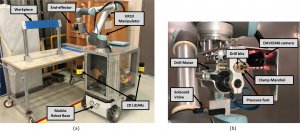
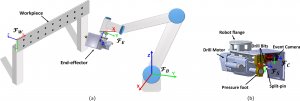
The innovations from Khalifa University’s group of Al Nokhba-NSRs  that are showcased at IDEX 2023 include a multi-purpose autonomous robot (mobile robot) system for aerospace machining applications, a Reduced Instruction Set Computer (RISC-V) based secure flight computer system on chip, an energy harvesting system for mobile power device, encryption of voice on field-programmable gate array (FPGA), a cyber-range for cybersecurity training, a smart all rounded autonomous drone (SARAD), and a robotic maritime security solution.


In addition, the Institute of International and Civil Security (IICS) Master’s student Ali Saif Al Dhaheri is discussing his thesis titled ‘Skill gaps of new Emirati graduates in defense companies’. which examines the degree to which certain skills are missing from new graduates from the perception of defense companies. This research is important to identify whether the skills gap can be closed to make new Emirati engineering graduates even more employable. At the same time, another Master’s student Sarah Abdulwahab Alawadhi is discussing her work on the little examined but important defense diplomatic activities in support of foreign policy undertaken by three GCC states.


This year, IDEX and NAVDEX are introducing IDEX Next-Gen, a space dedicated to startups that will enable entrepreneurs to demonstrate their solutions and technologies in the defense and naval sector to leading figures in the industry. The events will also introduce the Innovation Trail, a focused journey through the exhibition, highlighting the latest products and innovations for the defense and naval community, from the world’s leading brands. Exhibitors will be able to submit their newest and most innovative products and solutions for selection as part of this curated journey, which will attract the interest of thousands of international and local buyers.


Clarence Michael
English Editor Specialist
20 February 2023


Khalifa University Launches MENA Region’s First Permanent ‘Body Museum’ at Its College of Medicine and Health Sciences in Main Campus, Abu Dhabi

Initiated Under the Patronage of His Highness Sheikh Hamed bin Zayed Al Nahyan


Under the patronage of His Highness Sheikh Hamed bin Zayed Al Nahyan, Chairman of Khalifa University of Science and Technology Board of Trustees, and Member of the Abu Dhabi Executive Council, Khalifa University announced the launch of the ‘Body Museum’ at its College of Medicine and Health Sciences (CMHS) on the Main Campus in Abu Dhabi, reiterating its commitment to delivering world-class education and enhancing the healthcare ecosystem through discovery and research. This is the only Body Museum in the Middle East and North Africa (MENA) region and one of the largest in the world outside Germany.


His Excellency Dr. Mugheer Khamis Al Khaili, Chairman, Department of Community Development (DCD), Professor Sir John O’Reilly, President, Khalifa University, and Dr. Arif Sultan Al Hammadi, Executive Vice President, Khalifa University, in addition to members of the University’s senior leadership team were present on the occasion.


The exposition of dissected human bodies focuses on presenting both regional and systems-based anatomy in healthy adult individuals. There is also a dedicated section highlighting the effects of lifestyle diseases and pathological processes on human organs. Thus, the Body Museum at Khalifa University offers an excellent opportunity for students from other academic institutions, especially schools and universities, to visit and understand human anatomy, learn the importance of a healthy lifestyle, and increase their knowledge of healthcare and medicine.


Dr. Arif Sultan Al Hammadi said: “The Body Museum is the perfect addition to CMHS and Khalifa University, a consistently top-ranked institution for higher education and research in the UAE. This museum also reiterates our commitment to advancing knowledge for the betterment of humanity as well as promoting Khalifa University’s legacy and culture to lead, innovate, inspire, and transform. The first museum in the country dedicated to medicine and health sciences is also in line with the UAE’s emphasis on creating a world-class healthcare ecosystem that ensures not only in providing care for the needy but also educating and informing, while developing trained and fully-equipped medical professionals.”


Dr. John Rock, Founding Dean, Khalifa University CMHS, said: “As the Khalifa University College of Medicine and Health Sciences continues to make consistent progress in developing human capital, the addition of this Body Museum will play a vital role in raising awareness about medical education in the UAE and the region. We firmly believe these exhibits will encourage the community to keep away from habits harmful to the human body, while serving as a simplified anatomy lesson that combines visitor education and satisfying curiosity.”


Dr. Dietrich Lorke, Founding Chair of the Department of Anatomy and Cellular Biology, expressed his gratitude to the Higher authorities for providing students with these excellent learning tools and allowing the public to understand the miracles of the human body. “This collection of plastinated specimens is unique in the world,” he said.


The Khalifa University CMHS Body Museum is a not-for-profit initiative aimed at inspiring visitors and residents of the UAE to adopt a healthy lifestyle and consider studying medicine and health sciences. Moreover, with plastination, it is possible to permanently display the inside of a body in a more fascinating and aesthetic way. These plastinated specimens are practically imperishable, allowing them to be employed for the training of future doctors and for educating the public about the inner workings of the human body.


The exhibition will be one of the key elements of the Khalifa University CMHS, which currently offers a graduate-entry MD program that encompasses five longitudinal strands: Biomedical Sciences, Clinical Medicine, Medicine and Society, Physicianship, and Research, Technology and Innovation.


Clarence Michael
English Editor Specialist
9 February 2023