

Professor Elected as Fellow of the Royal Aeronautical Society

Professor Rehan Umer Awarded the Prestigious Distinction for His Achievements in Aerospace Engineering Leadership and Research 


Khalifa University’s Dr. Rehan Umer, Professor, Aerospace Engineering, is elected as Fellow of the Royal Aeronautical Society (FRAeS), for his contributions to advancing the aerospace engineering sector.


The current Fellows of the Society elected Dr. Umer for this rare honor, which is granted to only those in the profession of aeronautics or aerospace, who have made outstanding contributions in the field, or have attained a position of high responsibility in an aerospace-related profession. 


Dr. Umer’s appointment comes as a result of his exceptional contributions to the aerospace community as well as his expertise and research acumen, earning him widespread recognition in the field. As a prolific author, Dr. Umer has published three books, numerous refereed journal articles, and conference papers, showcasing his extensive understanding of aerospace engineering and his commitment to advancing the discipline.


Beyond academia, Dr. Umer holds four US patents and has played a pivotal role in establishing collaborative research centers by co-founding the Advanced (Aerospace) Research and Innovation Center (ARIC), a joint venture between Khalifa University and STRATA Manufacturing. As the founder of the Composites Manufacturing Lab, he also spearheads groundbreaking research on process modeling and simulations, the additive manufacturing of lightweight composite structures, machine learning and augmented reality of advanced manufacturing in Industry 4.0.


Moreover, Dr. Umer’s research contributions extend beyond his current affiliations through his active involvement in Khalifa University’s Research and Innovation Center on Graphene and 2D Materials (RIC-2D), which is hosted by Khalifa University as part of a strategic investment by the Government of Abu Dhabi to advance the scientific development and commercial deployment of technologies derived from graphene and other 2D materials. As a theme and project lead, Dr. Umer is instrumental in driving advancements in the utilization of graphene and 2D materials within the aerospace industry.


One of Dr. Umer’s notable research endeavors involved a collaborative effort between Khalifa University and STRATA Manufacturing, investigating the deformation of aerospace parts during the manufacturing process. Through the use of advanced simulation tools, Dr. Umer and a research team developed predictive models that enable manufacturers to anticipate and mitigate deformations, ensuring the production of high-quality aerospace components. Furthermore, he has contributed to the development of an innovative approach to model the behavior of woven fabrics under stress cycles. This breakthrough research facilitates the selection of optimal materials for aircraft components, enhancing their performance and safety.


Dr. Rehan Umer said: “I am delighted to receive this prestigious and rare honor, joining the ranks and becoming one of the Fellows of the Royal Aeronautical Society, the highest grade attainable for professionals in the field of aeronautics or aerospace. I would like to thank Khalifa University for its generous support for all the research over the years as well as the Society’s commitment to upholding professional standards and fostering a central forum for knowledge sharing, which is truly commendable.”


With more than 25,000 members representing over 100 countries, the Royal Aeronautical Society, established in 1866 to further the art, science and engineering for aeronautics, is the only professional body dedicated to aerospace, aviation and space communities.


Alisha Roy
Science Writer
17 April 2024
Elevating Battery Performance with Nickel-Rich Cathodes Could Revolutionize Energy Storage Solutions

Khalifa University’s Prof. Pau Loke Show reviews the research charting the future of high-energy lithium-ion batteries


 With the world turning to renewable energy sources, energy storage solutions are key to ensuring constant energy supply to power systems, during the night or at times when energy sources like the sun and wind are not available. Lithium-ion batteries remain at the forefront and are central to technology advancements in these batteries are nickel-rich cathodes.


A team of researchers, including Khalifa University’s Prof. Pau Loke Show, has explored the complex nature of these cathodes, focusing on holistic solutions to enhance energy density and stability. Prof. Show collaborated with researchers from the University of Nottingham Malaysia; University Malaya, Malaysia; Xiamen University, China; Nanyang Technological University, Singapore; and Feng Chia University, Taiwan. Their results, published in the Journal of Cleaner Production, pave the way for a future powered by advanced battery technology.


Nickel-rich cathodes are characterized by their high specific capacity and elevated working potential and offer a promising avenue for high-energy-density batteries. However, challenges such as instability, safety concerns, and the presence of residual lithium compounds have prompted the search for innovative solutions. Ongoing research, with a focus on sustainability and performance optimization, aims to address these challenges and unlock the full potential of nickel-rich cathodes.


“Recent advancements in coating techniques and novel doping strategies have shown significant promise in addressing these challenges, bolstering the performance lifespan and sustainability of lithium-ion batteries,” Prof. Show says.


Advanced coating techniques aim to improve the structural integrity of cathodes, thereby enhancing their performance and lifespan. Using specific materials such as carbon to coat the cathodes not only mitigates adverse side reactions, but also contributes to the stability and efficiency of the batteries. Doping strategies introduce specific elements into the cathode material, which improves the overall performance of the cathode. Carefully selecting the elements used can enhance the electrochemical properties, improving their capacity, stability, and resistance to degradation.


“In the realm of advanced battery technology, the significance of nickel-rich cathodes in lithium-ion batteries has been firmly established,” Prof. Show says. “We unveiled the intricate challenges associated with these cathodes in our review, which we hope will illuminate the path for future endeavors in nanoscience, material science, and sustainable engineering.”


Jade Sterling
Science Writer
16 April 2024

Khalifa University to Showcase 11 Sustainable Technology Innovations at World Future Energy Summit 2024 in Abu Dhabi

Empowering YFEL Members to Interact with Global Business Leaders in Renewables and Sustainability  


Khalifa University of Science and Technology today announced it will showcase 11 green innovations and emphasize its role in sustainable community outreach through members of the Young Future Energy Leaders (YFEL) program at the World Future Energy Summit (WFES) 2024.


The Khalifa University stand (A420) at the ADNEC Atrium will display technology innovations and the University’s intense involvement in outreach activities at WFES 2024. Members of the flagship 2024 YFEL outreach program will have their activities scheduled at the Khalifa University stand during the summit.


Professor Sir John O’Reilly, President, Khalifa University, said: “The World Future Energy Summit 2024 brings together global leaders, industry influencers, and decision-makers to focus on cutting-edge, sustainable solutions. This provides an excellent platform for Khalifa University to showcase 11 green innovations, enabling us to actively demonstrate our consistent commitment to achieving a more climate-friendly future. At the forefront of this endeavor, our flagship Young Future Energy Leaders (YFEL) program members will engage with global business leaders and stakeholders at WFES, reflecting their proactive involvement in sustainable community outreach, and highlighting our technological advancements in renewable energy.”


The innovations that will be showcased at the stand include an AI-Enhanced Software for Power Grid Stability, the Masdar Institute Solar Platform (MISP), which is a solar thermal energy conversion and storage facility, a Li-ion battery pack demonstrated with an E-scooter, Radiative cooling sheets for solar energy and greenhouse applications, project on the Climate Change Impacts in MENA region, and a Fully-sustainable, solar-powered water-from-air-system.


Other innovations include Wastewater to Hydrogen Technology, Sustainable water desalination system with reused plastics, Green Solvents for CO2 Capture, a Membrane filtration system, and Novel membranes with self-assembled charged graphene/multi-walled carbon nanotube materials for removing water pollutants. 


The 2024 YFEL cohort will also be participating in a Case Study Competition that will be led by Dr. Jamal Alsawalhi, Assistant Professor, Electrical Engineering, and will attend a session titled ‘Exploring Automation: A Deep Dive into Robotics and Technical Innovation’ that will be led by Dr. Hamad Karki, Associate Professor, Mechanical & Nuclear Engineering; and Dr. Federico Renda, Associate Professor, Mechanical Engineering.


Moreover, the 2024 YFEL members will connect with experts for collaboration and knowledge sharing, and engage with experts on latest trends in renewable energy. They will draw inspiration from the success stories for impactful projects, and explore new solutions for sustainability challenges. The YFEL program offers members exceptional and unmatched access to top global leaders, senior business executives and academics engaged in alternative energy and sustainability at global forums such as WFES 2024, while also offering access to specialized training for effective leadership.


Clarence Michael
English Editor – Specialist
16 April 2024


Mangrove-Mimicked Solar Vapor Generator Achieves Simultaneous Fresh Water Production and Passive Salt Collection

Research Published in Nature Communications Shows Efficient Solar Energy Utilization for Sustainable Freshwater Production with Zero Brine


Making ways for efficient solar energy utilization and freshwater production, a team of researchers from Khalifa University has found that solar vapor generators decline in performance due to the loss of light absorption rather than the physical blockage of pores by salt and, in fact, the presence of salt can actually enhance the evaporation process, even in the absence of light.


The findings, published in Nature Communications, were observed on a scalable Solar Vapor Generation and Crystallization (SVGC) device, an IP-protected technology. This open access research paper titled, Sustainable Biomimetic Solar Distillation with Edge Crystallization for Passive Salt Collection and Zero Brine Discharge was fully developed as part of the MSc and PhD theses. The Khalifa University research team includes Dr. TieJun (TJ) Zhang, Associate Dean, College of Engineering and Physical Sciences, and Professor, Mechanical Engineering; Dr. Faisal AlMarzooqi, Associate Professor, Chemical Engineering; Mohamed A. Abdelsalam, Research Engineer; Muhammad Sajjad, Graduate Student and Dr. Aikifa Raza, Research Scientist.


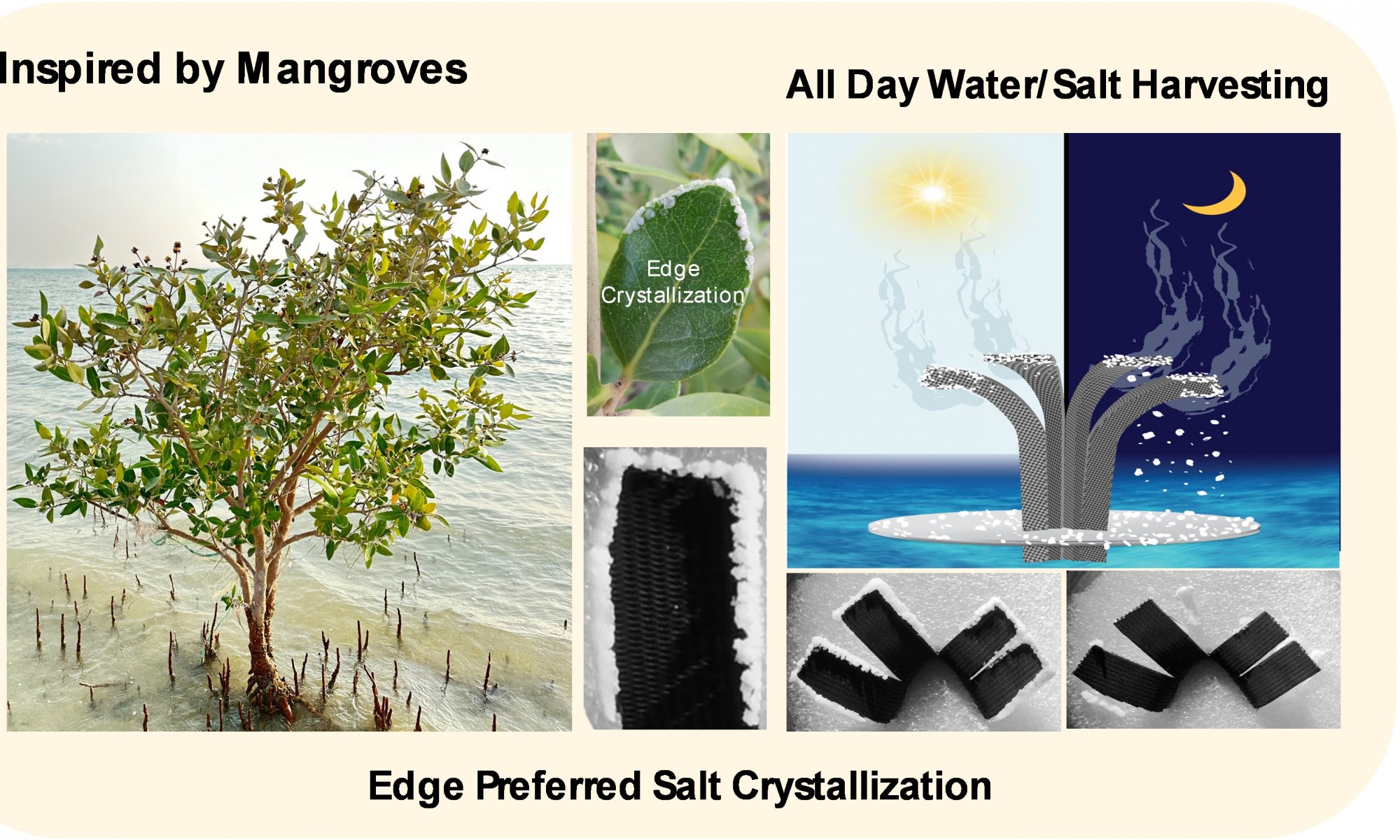
Desalination methods often rely on fossil fuels and generate brine, a waste product that contributes to increasing seawater salinity and harming aquatic life. SVGC device proposed by Khalifa University team, mimics the natural transpiration process of mangrove plants: produces freshwater from real seawater and passively collects salt without brine discharge and the need for fossil fuels to power the device. Moreover, the direct solar vapor generator can also be employed directly to treat brine with zero liquid discharge, making the dry salt as the only byproduct.


Under natural sunlight, the device can produce 2.2 liters of freshwater per square meter per day from real seawater, which is sufficient to meet individual drinking water needs. Indoors, the device achieved a 94% efficiency in treating synthetic seawater with a salinity of 3.5 wt.% when exposed to light at intensity equivalent to one sun.


Similar to halophytes: salt tolerant plants, the device uses an anti-corrosion porous wicking ‘stem’ and multi-layer ‘leaves’ composed of low-cost superhydrophilic nanostructured titanium meshes, forming a capillarity-driven salty water supply, which enables continuous vapor generation and passive salt collection. During daytime evaporation, salt in the water precipitates at the edges of the leaf, forming a porous patch. At night, gravity takes its course causing the salt patches to detach when the leaves are rewetted by saline water. Moreover, these porous salt patches enhance evaporation performance.


Dr. TieJun Zhang said: “Our biomimetic solar distillation device represents a major step forward in sustainable seawater desalination. By drawing inspiration from nature, we have developed a scalable and efficient solution that can contribute to solving the world’s water scarcity problem while minimizing environmental impact and extracting valuable minerals. Such innovations also highlight the potential commercial applications of the innovative work at Khalifa University.”


Alisha Roy
Science Writer
5 April 2024

Advancing PV Maintenance for Large-scale Installations Enhances Cost Savings and System Performance

Khalifa University PhD Student’s Paper Applies Principles from Wind Energy Industry to Review PV System Operation and Maintenance


A team of researchers from Khalifa University have recommended advancing maintenance practices for large-scale photovoltaic (PV) systems by implementing comprehensive system-wide strategies and optimizing scheduling, potentially resulting in annual cost savings of up to US$10,000 per megawatt (MW). 


The paper, ‘Photovoltaic Systems Operation and Maintenance: A Review and Future Directions’, published in the Top 5% journal Renewable and Sustainable Energy Reviews by Elsevier, offers a fresh approach to studying the maintenance of photovoltaic (PV) systems. Khalifa University PhD student Hind Abdulla is the first author, with Dr. Andrei Sleptchenko, Associate Professor, Management Science and Engineering, as the main advisor, and Dr. Ammar Nayfeh, Associate Professor, Electrical Engineering, the co-advisor. 


The expansion of complex large-scale systems and the absence of established maintenance strategies for diverse portfolios are the reason for current challenges. In response, the researchers advocate for integrating adaptive techniques such as reinforcement learning to enhance system-wide reliability, efficiency, and sustainability. This approach is aimed at ensuring the continuous relevance of performance metrics in PV operation and maintenance (O&M).


The research finds that despite the simplicity of their design, maintenance tasks of PV systems are more challenging. In fact, studies show that implementing effective O&M strategies can recover an average energy gain of 5.27% for a typical 16.1 MWp PV plant, translating to an annual cost savings of US$10,000 per MW. Without effective O&M strategies, the global PV industry could face an alarming annual loss of US$14.5 billion in 2024 alone. In light of these concerns, the main objective of this review is to comprehensively examine the development of PV O&M over the past decade and systematically analyze key topics and their interconnections within the field.


Using a specific method called the Preferred Reporting Items for Systematic Reviews and Meta-Analyses (PRISMA) framework, the study categorized the research into four main areas: strategies to maintain the PV systems, measuring their performance; how they deteriorate over time and planning and optimizing maintenance activities for maximum efficiency. 


Drawing insights from advanced maintenance approaches evident in the wind energy industry, this paper has found that proactive maintenance and data-driven decision-making are crucial in ensuring the optimal performance of solar systems. Unlike previous reviews, this research focuses on diverse maintenance elements while also incorporating planning and organizational factors into the discussion. 


Key suggestions include employing adaptive methodologies such as reinforcement learning to tailor metrics for large-scale solar installations and effectively streamline the long-term maintenance of PV systems. The paper additionally suggests implementing dynamic protocols, departing from traditional static approaches that focus solely on individual components. Instead, it suggests taking a system-wide perspective and utilizing machine learning to prioritize potential risks in PV systems.


Dr. Sleptchenko said: “Innovation in sustainability is key at Khalifa University and to achieve a sustainable energy landscape, we recognize the crucial roles of wind and solar energy including through PV, in the overall energy system. Maintenance of PV systems extends beyond addressing technical issues, including strategic allocation of resources, prioritization of tasks, and formulation of contingency plans. Our paper found that a majority of existing research has focused primarily on individual aspects of O&M, neglecting the integration of crucial elements such as human resources, inventory, transportation, and supply network management. Understanding the interconnections between these aspects is essential for optimizing maintenance and making well-informed decisions. 


He added: “In addition, our review sets the stage for integrating innovative strategies in future PV O&M efforts, showcasing the importance of the new Maintenance 5.0 paradigm in renewable energy production. These strategies combine advanced technologies and human expertise to improve performance, optimize operations, and foster a sustainable energy landscape through collaborative human-centric approaches.”


Recognizing the critical role of maintenance in ensuring optimal performance, the study further identifies gaps and proposes avenues for improvement, recommending a shift towards predictive maintenance in PV systems. Furthermore, the findings from this paper also align with the UN Sustainable Development Goal 7 (SDG-7) to ‘ensure access to affordable, reliable, sustainable and modern energy for all’, while also ensuring grid security.


Alisha Roy
Science Writer
5 April 2024

Upgrading Wireless Communication Networks with Full Duplex Systems

Research from Khalifa University paves the way to a more efficient future, redefining wireless communication with novel approach to network system design


The demand for quicker and more efficient wireless communication is increasing. With the rise of data-intensive applications, the traditional half-duplex systems, which either transmit or receive signals at a time, are hitting their limits. To overcome this bottleneck, research is investigating innovative technologies including full-duplex communications.


A team of researchers including Khalifa University’s Prof. Zhiguo Ding, professor of computer communication engineering, has developed a full-duplex system enhanced with reconfigurable intelligent surfaces (RISs) for maximum efficiency in the communications system. Prof. Ding collaborated with researchers from Jinan University, China; South China University of Technology; Peking University, China; University of Thessaly, Greece; and Princeton University, United States. Their results were published in IEEE Transactions on Wireless Communications, a top 1% journal.


Full-duplex communications mark a significant leap from half-duplex by enabling simultaneous sending and receiving of signals over the same frequency band. This theoretically doubles the spectral efficiency, a measure of how efficiently a limited frequency spectrum is used. However, when the outgoing signal from a transmitter drowns out the incoming signal at the receiver, a phenomenon called self-interference occurs, which has the potential to degrade communication quality if not properly addressed.  


To mitigate self-interference and unlock the full potential of full-duplex communication, significant research has been directed toward self-interference cancellation techniques. These advancements have made full-duplex communications more viable, but more innovation is needed. A promising solution could be the use of reconfigurable intelligent surfaces (RISs). These are powered by advancements in micro-electrical-mechanical systems and programmable meta-materials, comprising numerous nearly passive elements that can adjust the phase of incoming signals, shaping the wireless transmission to reduce interference and improve signal quality.


Prof. Ding and the research team developed efficient algorithms that show their system’s promising improvements over traditional full- and half-duplex systems in simulations. Incorporating RIS into full-duplex communication systems has shown potential in applications from unmanned aerial vehicle-aided communications to integrated sensing. The idea is to position RISs strategically to proactively mold the wireless environment, mitigating interference and enhancing system performance. RIS deployment could reduce the need for more complex self-interference cancellation techniques and reduce the number of antennas required at base stations. This would cut down on both energy consumption and hardware costs.


The research team’s novel approach of integrating RISs into multi-cell full-duplex networks aims to maximize spectral efficiency by jointly optimizing transmission and reflection elements. Their findings show that RISs can not only alleviate interference issues but also offer a practical pathway to achieving the high-speed, efficient wireless communication needed to support our increasingly connected world.


Jade Sterling
Science Writer
5 April 2024

Khalifa University Researchers Develop New Algorithm to Optimize Wind Turbine Design and Operation

Research from Khalifa University harnesses the breeze with insights to blade pitch control in vertical axis wind turbines


A team of researchers from Khalifa University has developed a new algorithm to guide wind turbine design and operation. Their algorithm can produce the optimum blade pitch profile to maximize lift force and indicate the number of blades that will produce more torque in low wind speed conditions. Their results will help to enhance the effectiveness of any vertical-axis wind turbine design configuration.


Prof. Isam Janajreh, Antim Gupta and Dr. Hamid Ait Abderrahmane, all from Khalifa University’s Department of Mechanical Engineering, published their results in Applied Energy, a top 1% journal.


There are two types of wind turbines: the horizontal-axis wind turbines (HAWTs) and vertical-axis (VAWTs). HAWTs are the most common, with two or three long, thin blades that face directly into the wind. VAWTs have wider, shorter curved blades. VAWTs are less efficient than their horizontal counterparts but offer advantages, especially in urban settings, due to their quieter operation, lower operational wind speed threshold, and less intrusive visual profile.


In regions with variable wind patterns, such as the mountainous terrains of the Gulf States, conventional HAWT models face performance limitations, compounded by concerns over bird fatalities and public acceptance. VAWTs may be a promising alternative, as they mitigate many of the drawbacks, including logistical and maintenance challenges. However, their lower efficiency and complex performance prediction due to inconsistent aerodynamic conditions remain significant hurdles.


Advancements in wind turbine technology focus on enhancing VAWTs through improved designs, materials and control systems. The aerodynamic efficiency is a critical research area, with factors like blade profile, number and solidity investigated to boost performance. Blade pitch control, for example, could address issues like low wind speed inefficiency and self-starting capabilities. The perfect blade pitch adjustment could offer optimal efficiency for enhancing power output and operational reliability.


Understanding the complex interplay of aerodynamics in VAWTs needs sophisticated predictive models. The research team investigated blade pitch adjustment using a novel algorithm. Their insights into optimal blade pitch angles, chord lengths, and number of blades pave the way for more efficient and adaptable wind turbine designs, promising enhanced sustainability and accessibility of wind energy in diverse environments.


Jade Sterling
Science Writer
5 April 2024

New Catalyst Offers Sustainable Ammonia Production with Breakthrough Efficiency

Research from Khalifa University is revolutionizing ammonia production with a novel catalyst


While hydrogen is a front-running potential solution to the world’s energy needs, production capabilities lag behind the predicted surge in demand. Ammonia (NH3) derived from hydrogen, however, could be a viable catalyst for hydrogen adoption. Its potential lies in its high hydrogen content, ease of liquefaction, and low transport costs.


A team of researchers from Khalifa University has designed and developed a novel catalyst to produce ammonia in a carbon-free process.   Dr. Dinesh Shetty, Dr. Kayaramkodath Ranjeesh, Dr. Abdul Mohammed, Safa Gaber, Khaled Badawy, Dr. Mohamed Aslam, and Dr. Nirpendra Singh collaborated with researchers from Indian Institute of Technology Ropar; University of Strasbourg-CNRS, France; and University of Nova Gorica, Slovenia. Their catalyst showed exceptional performance, surpassing current benchmarks and meeting the targets set by the US Department of Energy for ammonia production. The research team published their results in Advanced Energy Materials.


The conventional method of producing ammonia, known as the Haber-Bosch process, is energy-intensive, requiring high temperatures and pressures, and relies heavily on fossil fuels, particularly for production of the hydrogen used in the process. This process is responsible for significant carbon dioxide emissions and consumes a considerable amount of energy. Alternative methods to the Haber-Bosch process include electrochemical nitrogen reduction, but such methods are not commercially adopted and face challenges such as low solubility of nitrogen in water and the competing hydrogen evolution reaction, which hinder efficiency and practical application.


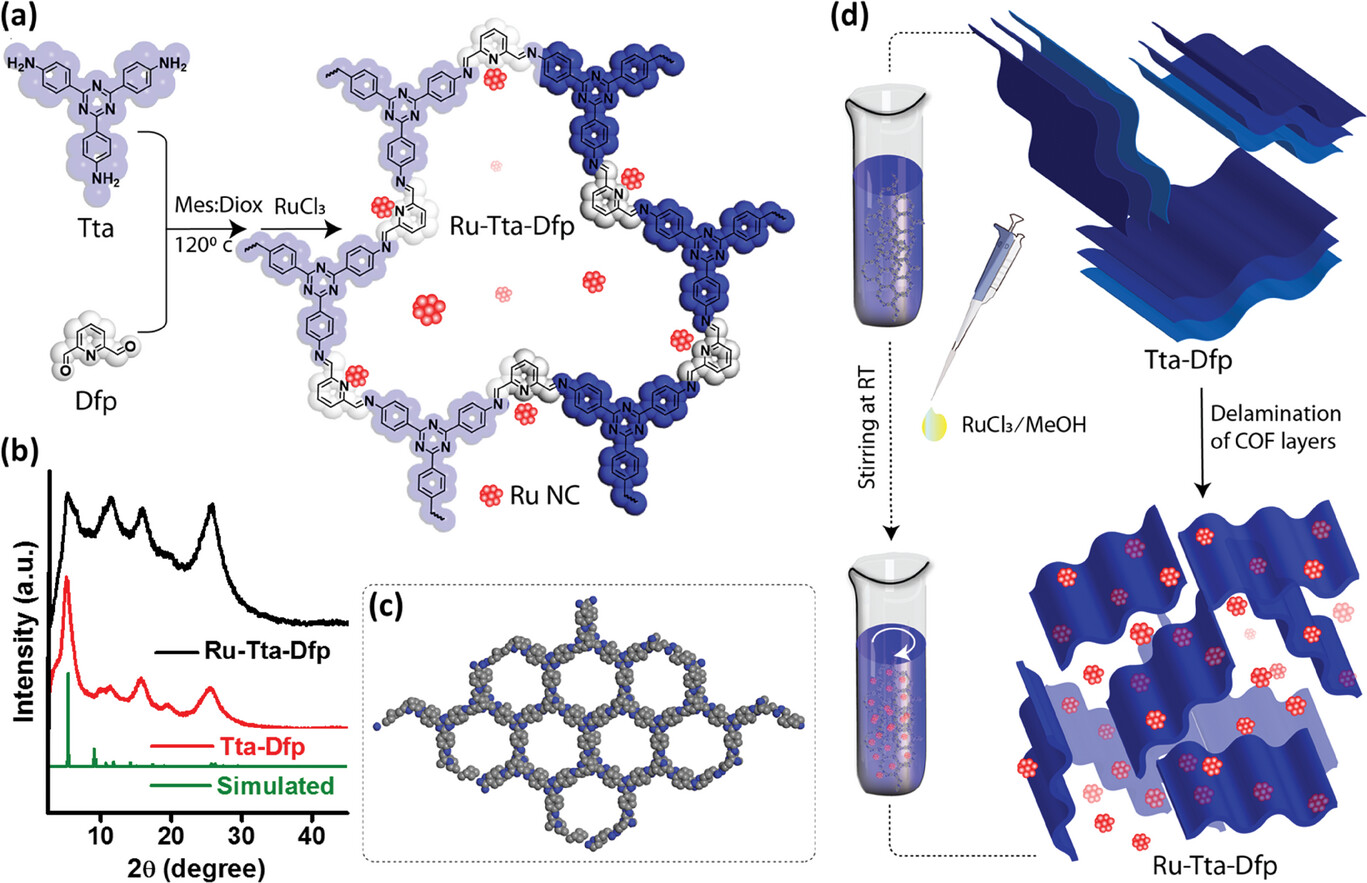
The research team overcame the limitations of the Haber-Bosch process by designing and developing a new catalyst that can more effectively facilitate the nitrogen-reduction reaction by minimizing the competing hydrogen evolution reaction. They used proton-filtering materials to increase the local concentration of nitrogen at the electrode surface, which enhances the selectivity of the nitrogen reduction reaction. The research team’s catalyst is a ruthenium-embedded, nitrogen-rich 2D covalent organic framework catalyst, which integrates proton filtration and catalytic activity within a single system. This innovative design not only simplifies electrode fabrication but also significantly improves catalytic efficiency.


“The ruthenium and strategic integration of nitrogen within the covalent organic framework are key to our catalyst’s success,” Dr. Shetty explains. “They enable effective interaction with both nitrogen and the protons within the reaction mixture. This suppresses the undesired hydrogen evolution reaction while promoting the nitrogen reduction reaction, resulting in the production of ammonia.”


The team’s novel catalyst offers the potential for the production of clean ammonia. A patent has been filed for their catalyst and the team is working on optimizing scalability.


“Importantly, the developed catalyst is easily scalable and opens the door for the translational opportunity given the breakthrough production efficiency,” Dr. Shetty says. 


Jade Sterling
Science Writer
5 April 2024

Khalifa University’s Holistic Academic and Research Offerings Expand to Reach More Students Regionally and Globally

Over 90% Scholarships Aim to Meet Capacity Building Objectives under UAE’s Vision 2030 Plan


Khalifa University of Science and Technology today announced its holistic academic and research offerings will have a far wider reach, becoming even more accessible to all students across the UAE, the region and globally, further strengthening the University’s status as a key contributor to the rapid transformation of the UAE’s human and intellectual capital. 


As a consistently highly-ranked academic institution with an emphasis on research, innovation and enterprise, Khalifa University continues to spearhead creativity and collaboration nurturing tomorrow’s talent leaders through various initiatives. Admissions for all students from around the world to Khalifa University is open until 30 April 2024. 


Dr. Yousof Al-Hammadi, Senior Vice-President, Academic and Student Services and Assistant Vice-President, Graduate Studies, Khalifa University, said: “Khalifa University provides the most appropriate learning environment while ensuring that its world-class academic, research and scholarship options are available and accessible to more students in the region and across the world. This is in line with the UAE leadership’s directives and the objectives of UAE Vision 2030 towards contributing to developing human and intellectual capital for the UAE. Each of Khalifa University’s initiatives is geared towards achieving the most advanced solutions through scientific research, while simultaneously offering a platform for learning to as many students as possible, across the globe. In addition, as a highly-ranked international institution, Khalifa University continuously works towards providing highly diverse regional and international internships, as well as facilitating work opportunities.” 


Students have access to dynamic internships and career opportunities across a wide spectrum of industries including the emerging space sector, metallurgical industries in aluminum and steel, and oil-and-gas and petrochemical sectors. Equipped with substantial technical skills and theoretical knowledge students are able to present research projects at major international conferences and apply a broad range of technical and non-technical transferable skills, needed for successful careers and leadership roles in industry, business and government. Many graduates also have the option to pursue postgraduate study or research, earning their MSc or PhD, being well-prepared to embark on successful careers in Intelligent Systems and application of mathematical and statistical techniques to machine learning (ML). 


Covering a broad range of disciplines in science, engineering, medicine and life sciences, the University continuously broadens the scope for world-class academics with unlimited research. Khalifa University remains top in the UAE in academic rankings and it also has the highest number of patents in the UAE.


Student-led clubs at Khalifa University promote creativity and collaboration, enriching the academic experience. These clubs cater to various interests, including arts, science, culture, and history, and provide a platform for student advocacy and leadership development.


Clarence Michael
English Editor – Specialist
3 April 2024

Khalifa University Inaugurates Cure Medical’s On-Site Health Clinic at Main Campus  

Agreement Covers Enhanced Healthcare Services, Academic Opportunities, Medical Research, and Awareness for Healthy Lifestyle Among Campus Community


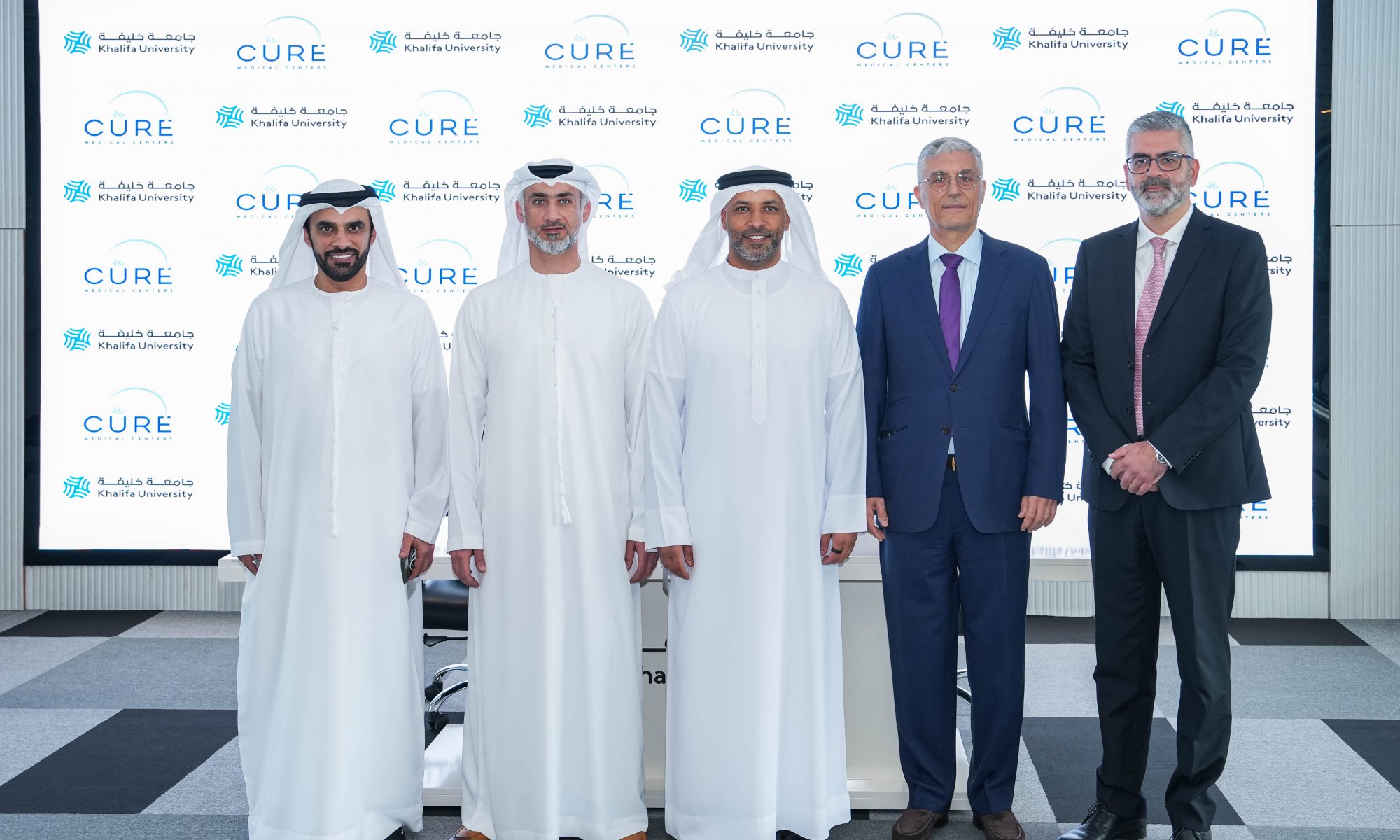
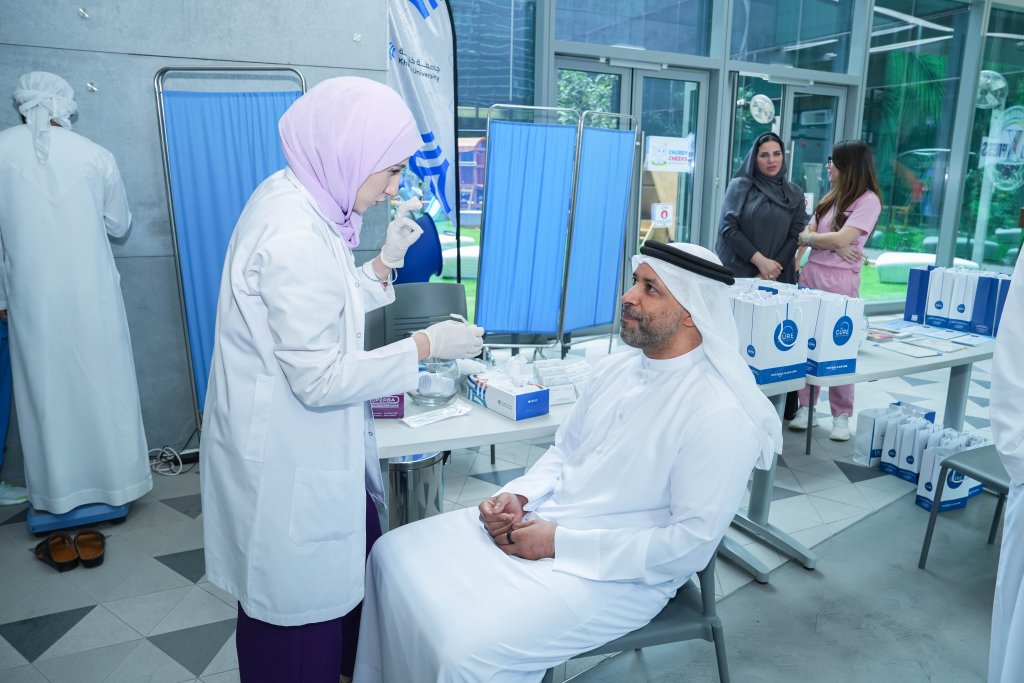
Khalifa University has inaugurated an on-site clinic in partnership with Abu Dhabi’s leading medical center Advanced Cure Diagnostic Centre, to provide primary, occupational, and preventive healthcare services to students, faculty, and staff, along with emergency and first aid response at the Khalifa University Main Campus.


The on-site clinic follows a contract agreement signed by Esmaeel AbdulKarim Abdulla AlAhmed, Vice-President, Procurement and Contracts, Khalifa University, and Yasser Geissah, Managing Director, Cure Medical. The agreement also covers academic opportunities for medical research, and other initiatives to promote healthcare-related awareness and the establishment of five additional centers to be located across the Khalifa University Sas Al Nakhl (SAN) Campus as well as all male and female student dorms. Fostering a healthy environment, the clinic is expected to contribute to the university’s objective of creating a disease-free community while complying with Department of Health – Abu Dhabi (DoH) regulations. 


A range of services were on offer as part of the inauguration of the clinic at the Main Campus. They included  dental check-ups, facial consultations, vital signs monitoring, glucometer tests, Tanita body composition analysis, spirometry, and cholesterol tests, selected to address various aspects of health and wellness in the campus community.


Additionally, the clinic aims to collaborate with other community organizations to offer year-long awareness campaigns and events for students and staff at Khalifa University. Some of the planned events will focus on breast cancer awareness, World Mental Health Day, osteoporosis, diabetes, obesity, ergonomics, and easy exercises for desk workers.


Initiatives from Cure Medical Center will also include creating awareness through walks and runs and health-related discussions as well as activities on World chronic obstructive pulmonary disease (COPD) Day with pulmonologists, World Cancer Day, World Health Day, Women’s Day, cervical health and thyroid, glaucoma week with ophthalmology checks and lectures on allergy, and awareness on hypertension. 


The on-site clinic at Main Campus will be manned with General Practitioners registered with the DoH, as well as DoH-registered male and female nurses to conduct consultations, order tests, make referrals to specialists, prescribe medications, handle emergencies, and provide support to students and individuals on campus with specific needs.


Alisha Roy
Science Writer
28 March 2024

New Technology Solution to Transform Recycling and Sustainable Waste Management with Machine Intelligence

Dr. Khalid Askar’s Research Not Only Tackles Plastic Pollution but Aligns with the UAE’s Plans to Divert 75% of Waste from Landfill  


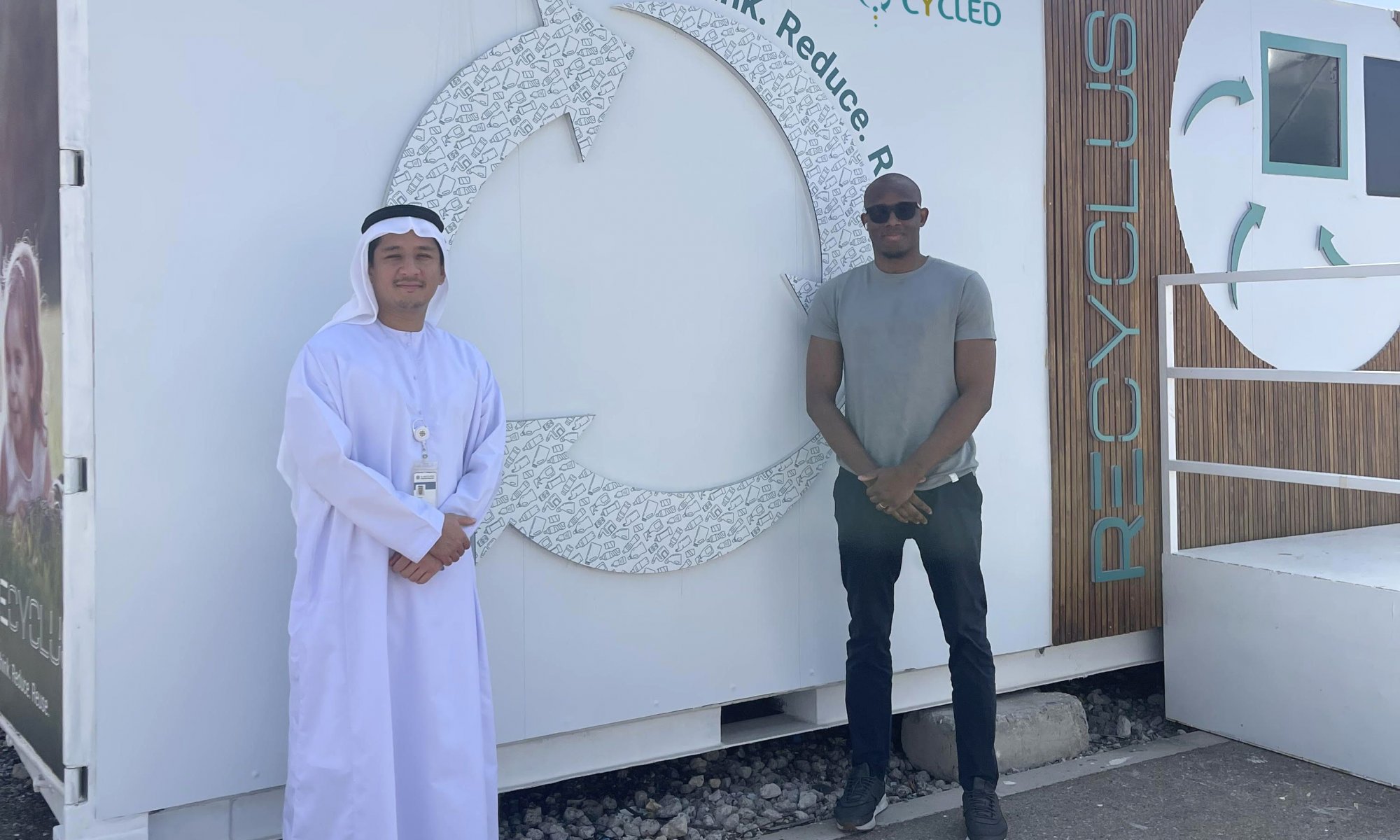
A new technological solution to sort waste based on the actual properties of post-consumer materials, rather than relying solely on visual differences with the help of machine intelligence, is being developed by a team of researchers led by Dr. Khalid Askar, Assistant Professor, Mechanical Engineering, Khalifa University, in collaboration with Cycled Technologies Middle East, a recycling technology company in the region.


As a novel step towards combating plastic pollution and promoting sustainability, the research project aims to transform the circular waste management model – addressing one of the world’s most pressing challenges – plastic pollution, an environmental concern which was of immense significance at the COP28 UAE climate summit.


Dr. Askar said: “By turning the concept of waste into the concept of value creation, the project also fosters a community-wide inclination towards recycling; significantly reducing the cost and environmental impact associated with implementing circular waste management practices. This project aligns perfectly with the UAE’s ambitious plans of diverting 75% of waste away from landfills, acting as a crucial enabler for this environmental goal. Another key highlight of the research project is to increase real-time traceability of post-consumer materials, paving the way for a fully digitalized and smarter waste management industry.”


Working with Ayoola Brimmo, Co-Founder and COO, Cycled Technologies, and Chia-Yun Lai, Research Assistant, Materials Science and Engineering, Dr. Askar seeks to extend the capability of existing waste sorting technology in the plastic recycling industry. By leveraging the power of Convolutional Neural Network (CNN)-based machine learning AI algorithms, this new technology processes characterization data to define and detect surface contamination thresholds on plastic items.  


Ayoola Brimmo said: “With a vision to create a smarter and more environmentally responsible waste management industry, Cycled Technologies is delighted to partner with Khalifa University to transform the way we approach recycling and contribute to a more sustainable future. This research collaboration fosters a culture of innovation and technological advancement, and showcases our commitment to driving sustainable solutions and economic growth. More importantly, it addresses plastic pollution and promotes sustainable waste management practices, marking a crucial step forward in the region’s environmental and economic landscape.”


The project includes a prototype housed at the Masdar Institute Field Station, a Khalifa University research facility. This prototype utilizes a vent for intake of waste, which is then transported via a conveyor belt for compression, after which intelligent systems integrated into the prototype capture detailed images of the plastic properties. This enables the AI system to learn and identify the type of plastic present in the waste material. 


The prototype’s advanced sorting and classification process also has the potential to provide invaluable information for industries engaged in plastic recycling and reuse and as the AI system continues to train itself, the research can also enable identification of other materials beyond plastics. Additionally, portability may not be a challenge, as Dr. Askar’s team anticipates that the large size of the sorting technology will facilitate the collection of substantial quantities of plastic waste.


The implications of this research project extend far beyond waste management as it aligns with the Abu Dhabi 2030 strategy on economic diversification, bridging the gap between academia and industry, positioning the UAE as a high-tech hub for innovators. 


Alisha Roy
Science Writer
28 March 2024

Evaluating the Environmental Impacts of Green Hydrogen Production

Hydrogen offers promise in decarbonization efforts with research from Khalifa University showing production from hydrogen sulfide powered by renewable energy a particularly green option


Hydrogen has emerged as a potential solution to the world’s energy needs because it is a cleaner alternative to traditional carbon-derived energy. With experts predicting a surge in demand, it is crucial to upscale the hydrogen economy and improve the performance of hydrogen-producing technologies.


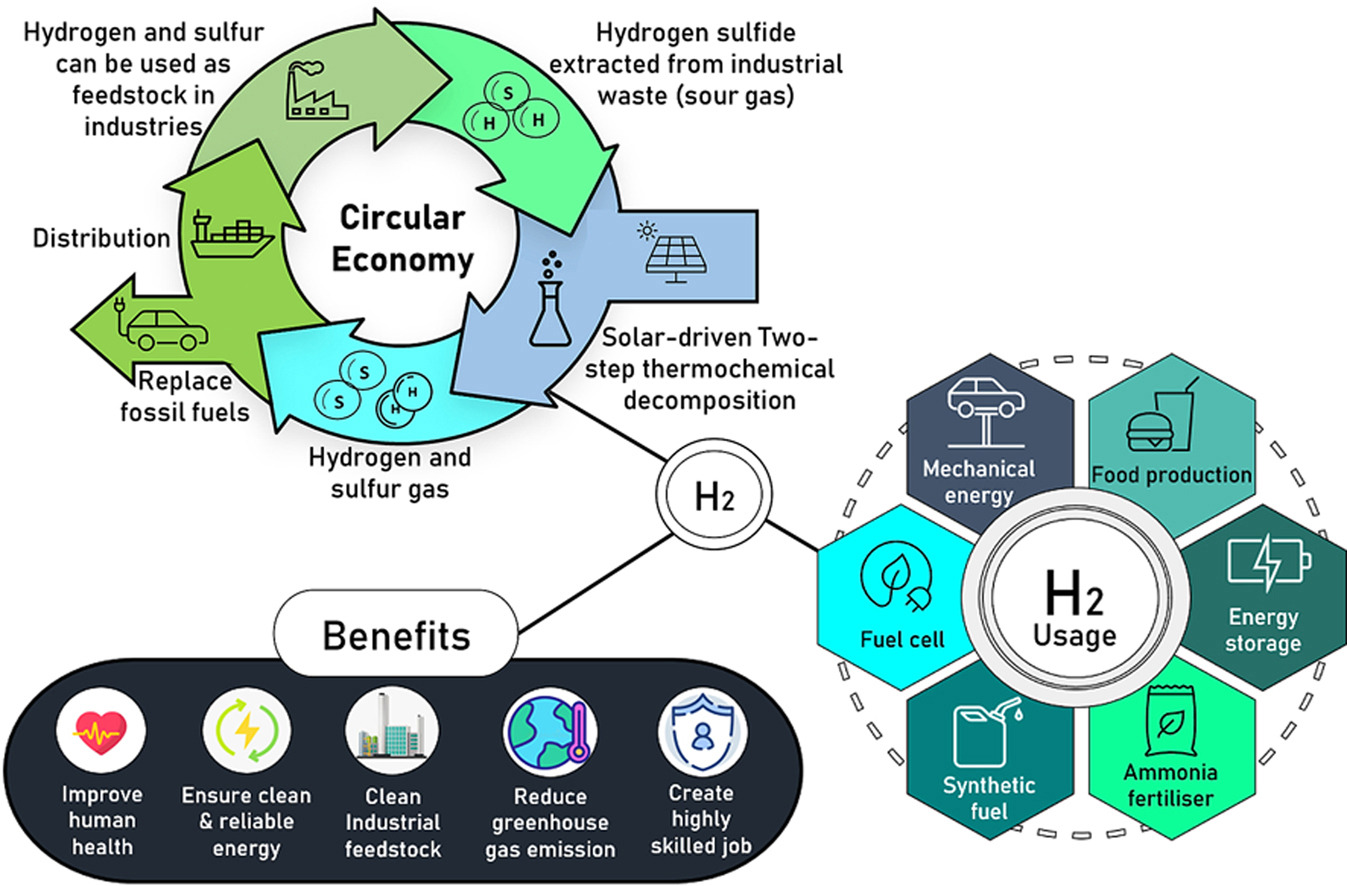
A team of researchers including Khalifa University’s Dr. Khalid Al Ali, Associate Professor, and Asma al Blooshi, PhD student, conducted a comprehensive life-cycle assessment of a hydrogen sulfide-splitting model that replicates a pilot-scale plant. Their study focused on evaluating the environmental performance of the innovative two-step solar thermochemical process for hydrogen production.


By meticulously examining both the operational and construction phases of the pilot-scale plant, the research team aimed to provide valuable insights into the environmental implications of adopting this cutting-edge technology. Their findings underscored the pivotal role of renewable energy sources in mitigating the environmental footprint of hydrogen production, particularly through processes like electrolysis. Dr. Al Ali and Al Blooshi collaborated with researchers from Universiti Kebangsaan Malaysia, with their results published in the Journal of Cleaner Production, ranking among the top 1% of journals in the field.


Hydrogen can be produced from various sources. Almost 47 percent of the world’s hydrogen is produced from natural gas, 27 percent from coal, 22 percent from oil, and around 4 percent from electrolysis. Each technology varies in terms of its economic and environmental performance, depending on factors such as emission rates and the costs associated with its construction and operation.


“The global landscape of hydrogen production is diverse, with natural gas, coal, and oil being the primary sources,” Dr. Al Ali says. “However, the environmental footprint of these methods has sparked a search for greener alternatives. Electrolysis, powered by renewable energy, is a promising solution with some economic hurdles, but continuous advancements in research and technology will make green hydrogen a viable, cost-effective option.”


Hydrogen sulfide is a by-product of the oil and gas industry and can be converted to hydrogen through various processes such as thermochemical decomposition. This gas, often referred to as “sour gas,” poses significant environmental and safety challenges due to its toxic and corrosive nature. Converting hydrogen sulfide into hydrogen not only mitigates environmental pollution but also offers a valuable opportunity for energy recovery. However, the research team concluded that powering the process with renewable energy would further reduce the environmental impact, enhancing the sustainability of hydrogen production from hydrogen sulfide. Through innovative technologies like solar thermochemical processes, hydrogen production can be achieved more sustainably, contributing to the transition towards a cleaner and more efficient energy landscape.


“Our study assesses the environmental performance of producing hydrogen from a waste product such as hydrogen sulfide,” Dr. Al Ali says. “The process is powered by solar energy as it is economically and environmentally advantageous compared to processes powered by electricity from the grid. It is essential to assess emerging technologies such as this using life-cycle assessment to determine the environmental performance. Apart from producing hydrogen as an alternative clean-energy carrier, treating hydrogen sulfide also greatly lessens the environmental burden, especially its impact on human health.”


Despite the promising advancements highlighted by the team’s study, challenges remain in the journey toward a sustainable hydrogen economy. The high energy requirements for hydrogen production, the need for further research on alternative catalysts, and the imperative of addressing economic and social sustainability dimensions remain critical areas for future research, according to the research team.


“As a greener alternative to fossil-fuel derived energy, hydrogen as an energy carrier is one of the most feasible ways to progress towards decarbonization,” Dr. Al Ali says. “Our analysis shows that wind-powered thermochemical hydrogen sulfide splitting shows a reduced environmental load. We also concluded that in order for electricity generated from renewable sources to be more practical, the negative effects on human health must be reduced. Future studies should concentrate on the economic, social, and energy issues that are fundamental to sustainability.”


Jade Sterling
Science Writer
28 March 2024