
Khalifa University’s ACE4S Wins Special Recognition Award from Semiconductor Research Corporation

Center Dedicated to Advance Semiconductor Research and Technology in Abu Dhabi Achieves Several Milestones Over Five Years

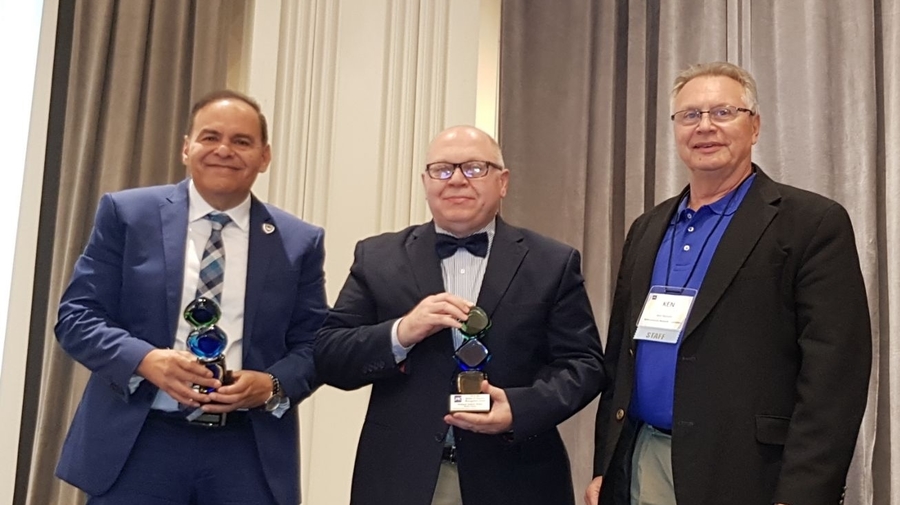
The Semiconductor Research Corporation (SRC) has awarded the Khalifa University-led ATIC-
SRC Center of Excellence for Energy Efficient Electronics Systems (ACE4S) the
‘Semiconductor Research Corporation Board of Directors Recognition Award – Pioneering
Semiconductor Research in Abu Dhabi’.

The award was presented to the co-directors, Dr. Ibrahim Elfadel, Professor of Electrical
Engineering and Computer Science at Khalifa University, and Dr. Mohammed Ismail El Naggar,
Adjunct Faculty at Khalifa University, in a ceremony at the SRC’s annual TECHCON
conference, which took place in Austin, Texas, last month.

ACE4S has come a long way since its inception in May 2013 as part of Masdar Institute,
generating significant intellectual capital including more than seven issued patents and 18 more pending. The center, dedicated to advance semiconductor research and technology in Abu
Dhabi through local academic research, is supported by Abu Dhabi-Government’s Mubadala
Development Company with Khalifa University equally sharing its total funding needs.

Dr. Ibrahim Elfadel, Professor and co-Director of ACE4S, said: “This is the first time SRC has given such an award anywhere outside the US. Moreover, ACE4S was the only SRC center
outside the US. This in itself was an achievement given that many advanced countries in
Europe, America, and Asia could have hosted such a center dedicated to semiconductor for
research in internet of things (IoT).”

A high technology-based research consortium, the SRC serves as a crossroads of collaboration
between technology companies, academia, government agencies, and SRC’s highly regarded
engineers and scientists. It plays an indispensable part to address global challenges, using
research and development strategies, advanced tools and technologies.

Over the course of five years, some of the ACE4S milestones achieved for the UAE include
developing the first set of PhD graduates in the semiconductor field (with seven already
graduated, and five more in the pipeline), first multi-university research center, first hardware-secure biomedical system on chip (SoC), and first silicon photonics tape-out. It also won four best conference papers, achieved two most-downloaded journal papers of the month, and published two books, demonstrating the research drive at the Center, which formally wrapped up on 30 April 2018 after completing its founding mandate.

Through research and training in self-powered wireless sensing and monitoring systems,
ACE4S aimed to create knowledge, educate, train, and enable a highly skilled workforce to
drive innovation and entrepreneurship in the UAE’s semiconductor sector in line with the Abu
Dhabi 2030 vision. The Center was organized around an overall theme that vertically ties
together local UAE research strengths in energy efficient wireless chipsets and sensors,
wearable devices, MEMS, energy harvesting, power management, and scalable nanometer system-on-chip.

Dr. Elfadel is currently working under the newly created Center for Cyber Physical Systems
(C2PS) at Khalifa University on various aspects of hardware accelerators for artificial
intelligence (AI). “I also continue to conduct research on MEMS for space applications, cloud
and edge computing, and embedded signal processing,” he said.

ACE4S has also encouraged entrepreneurship and tech startups to emerge. A start-up focusing
on heart monitoring technology for early detection of heart attacks is still in progress and the project seems to have a good potential for commercialization in the area of wearable weight and walk monitoring.

Clarence Michael
News Writer
17 October 2018
PhD Candidate Selected to Participate in Pitch@Palace Global 2.0 in London

Abdulla Mohammed Alshimmari Keen to Attract More Investors to Transform Food Services Platform ‘Foodate’ into Global Business

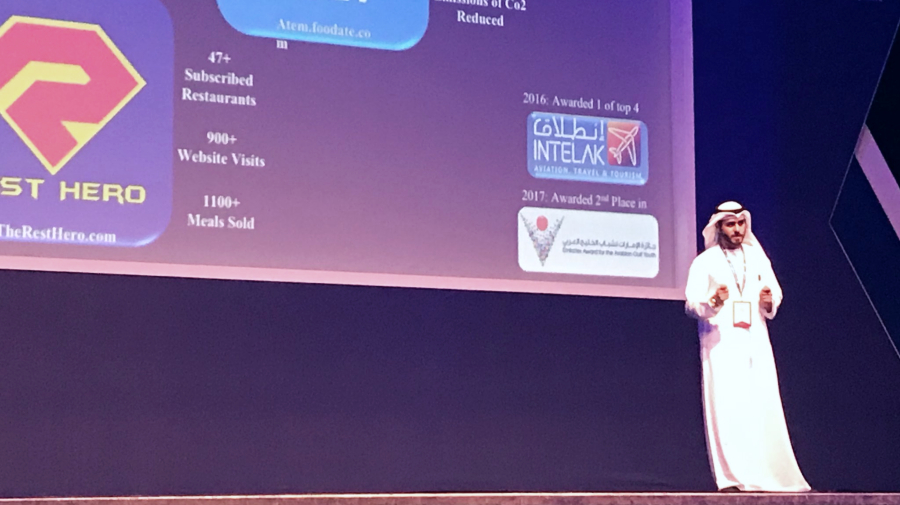
PhD candidate Abdulla Mohammed Alshimmari has been chosen among the four finalists to participate in the Pitch@Palace Global 2.0 at St. James’s Palace in London this December.

Alshimmari was selected out of 14 entrepreneurs from the UAE, Bahrain and Saudi Arabia who pitched their project ideas in Abu Dhabi as part of Pitch@Palace GCC 1.0, a platform that seeks to amplify and accelerate the work of entrepreneurs. The winning entrepreneurs from the UAE and the Gulf region will be given an opportunity to present their ideas before an elite group of businessmen, investors, and high-level company executives, at the London event.

His Highness Sheikh Abdullah bin Zayed Al Nahyan, Minister of Foreign Affairs and International Cooperation, attended the final event of Pitch@Palace GCC 1.0 at Emirates Palace, Abu Dhabi, in the presence of the His Royal Highness Prince Andrew, Duke of York, and founder of the Pitch@Palace initiative that aims to encourage innovation. The Khalifa Fund for Enterprise Development (KFED), founding partner of Pitch@Palace UAE and GCC, announced the four winners.

With this year’s theme being ‘Technology serving humans’, Alshimmari, won for ‘Foodate’, an online-based smart system for food and beverage services. It provides high-end tech-savvy services through an e-Commerce gateway, which includes business tools like customized e-Commerce web/app, smart management tools and payment gateways.

Speaking about his experience, Alshimmari said: “Pitching at the Pitch@Palace GCC 1.0 was truly challenging, as the finalists were professionals and I believe all of us had great ideas and applications. However, the bootcamp made me aware of the specific criteria about pitching itself, while the trainers and their course proved beneficial.”

Having come this far, Alshimmari is firmly setting his sights on the final in London, where he will have to pitch in front of the global audience in London.

“The issue we are solving is a global issue, people are wasting around 50% of their food globally. We are providing a solution that reduces unused cooked food, reduce greenhouse gases associated with this unused cooked food and feed the needy. We will work more on how to work this solution suitably for different countries. Additionally, for the business side, we will be working on the value proposition and how to approach more investors in order to grow,” he explained.

Clarence Michael

News Writer

28 October 2018

KU Summer Internships Benefit Over 400 Students

Overseas Collaboration Partners and Research Centers within Campus Premises Provide Platforms for Summer Internships

More than 400 students interned within the UAE at various government and private sector organizations for up to eight weeks as part of Khalifa University’s Summer Internship program.

At the same time, the Khalifa University Main Campus hosted six student interns at the Aerospace Research and Innovation Center (ARIC) and the Center for Biotechnology, three students at the Emirates Advanced National Research and Education Network (Ankabut) and five students at the Emirates ICT Innovation Center (EBTIC).

Industrial Engineering student Mohamed Khaled Ballaith interned as a Mechanical Maintenance Engineer with Shams Power Company, a 100MW concentrated solar power (CSP) plant and the first of its kind in the Middle East region located in the Western Region of the Abu Dhabi.

Sharing his experiences, Ballaith said: “I learned about the production of solar power and keeping the system online. I was engaged in many field jobs such as performing preventive maintenance and corrective maintenance on all mechanical equipment such as valves, pipes, motors, compressors and turbines. This gave me valuable experience.”

Khalifa University also worked collaboratively with a number of organizations from various industries in different countries including Germany, the United States, Italy, France, Japan, Ireland and Korea, to secure internship placements with foreign industry. On average, the university sends around 30 students overseas every year under its internship program.

Computer Engineering student Saeed Maatouq Alnuaimi spent nearly three months in Germany interning with NewStore, a company that provides software solutions to various retail stores.

Alnuaimi said: “I worked as part of an agile software development team that follows a framework called SCRUM. I was able to develop python programs, application programming interface (APIs), and iOS applications. Additionally, I have learned the process of software development in the workplace. Being in such a place outside my comfort zone has developed me not only academically, but also personally in problem-solving and being through independent.”

Mechanical Engineering student Khaled Ali Alneyadi interned with Barij Munitions, specialists in providing world-class ammunition products and services, and company came into existence following the merger of Caracal Light Ammunition (CLA) and Burkan. It is owned by Emirates Defense Industries Company (EDIC), an integrated national defense services and manufacturing platform, which is a joint venture between Mubadala Development Company and Tawazun Holding.

Alneyadi said: “I mainly served in the health and safety department of Barij Munitions, which gave me an insight into the regulations and helped me gain greater understanding of how new manufacturing companies depend on the assurance of complying with a set of regulations to best provide the most effective and efficient production rate of such munitions.”

He added: “In addition, I had experienced how a mechanical engineer can benefit this field and serve to better local mindsets to increase innovation. I have noticed aspects that I felt can be modified and made better. I have gained way more interest and experience than I had expected while joining this company.”

Khalifa University also supports and facilitates its students’ selection and participation in other international student internship programs.

This year two Master’s students – Sara Sarrar and Madiha Farman – completed summer internships at the University of Tokyo as part its Engineering Summer Education Program (ESEP) 2018, where up to 20 students are selected each year for short-term research experience in the basic and translational sciences.

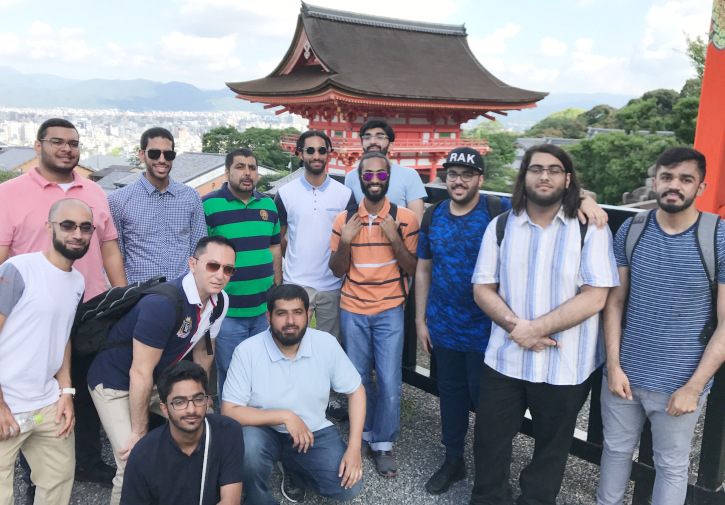
Additionally, a team of nine Khalifa University students interned in Japan as part of the ADCO-Cosmo-JCCP Internship Program over the summer. Their experience included trips to Waseda University, a private, independent research university in central Tokyo, the 100,000-barrel-per-day (bpd) Cosmo Sakai refinery, Toyota facility in Nagoya, the JFE Steel’s Chita Works, and the Hamaoka nuclear power plant. The internship program aims to give the UAE’s future engineers the opportunity to visit leading Japanese companies in oil, energy and manufacturing sectors to teach them about their operations, as well as visit renowned Japanese universities.

Clarence Michael

News Writer

25 October 2018

Electrical Engineering Student Chosen for Prestigious Fulbright Foreign Student Program

Maryam Abbas Ahmad Hussain Sajwani Keen to Focus her Master’s on Machine Learning to Develop Software that Tests Students’ Skills

For Maryam Abbas Ahmad Hussain Sajwani, currently studying for her BSc in Electrical Engineering at Khalifa University, her most recent birthday proved to be extra lucky. It was the day she found out she was chosen for the prestigious Fulbright Foreign Student Program for the Middle East and North Africa.

“Since June 2018, I had not received any response on my application, so it was a great surprise,” said an elated Sajwani on receiving a call on her birthday from the US Embassy in Abu Dhabi.

The scholarship program is a two-year fellowship that provides full funding for two academic years to achieve a Master’s degree at a US university. Sponsored by the US Department of State, the Fulbright Program is the flagship international educational exchange program designed to foster mutual understanding among nations through educational and cultural exchange.

The America-Mideast Educational and Training Services (AMIDEAST), a private American nonprofit organization engaged in international education, training, and development assistance work, administers the Fulbright Foreign Student Program for the Middle East and North Africa on behalf of the US Department of State's Bureau of Educational and Cultural Affairs.

Sajwani said she would be applying to a maximum of eight universities, but her preference is clear. “My top five choices are Stanford, Carnegie Mellon, University of California Berkley, Georgia Tech or University of Pennsylvania,” she shared.

Sajwani is grateful to Khalifa University faculty and officials, especially Marianne Hassan, former Chief of Staff, who had briefed her about the program and had guided her along the way.

She added: “I had started my application process in April 2018 and submitted my application in June. Then I was called in for an interview, during which I had been asked about my past experiences, my goals and why should I be selected into the program. A week after the interview, I was again invited, along with other applicants, for an alumni get-together, where we socialized and gained further insights into the program.”

Sajwani intends to focus her studies on machine learning. “I am planning to study Applied

Mathematica with a focus on machine learning — a derivative of artificial intelligence (AI). I want to do research on how educational systems can be evolved and how to attain a maximum success rate with development of a software that tests students’ skills, creates a unique roadmap for learning, accelerates their recurring power and increases their thought process.”

She has also set her sights high for further studies to continue with her research work when she is back in the UAE.

She said: “On my return to the UAE, I wish to apply for a PhD program. I aspire to make learning easier and more engaging, by creating a tool that helps educators understand their students learning patterns and helps them get the best out of their learning experiences.”

Clarence Michael
News Writer
4 November 2018

Students Develop Patient Care Apps with Sheikh Zayed Institute for Pediatric Surgical Innovation

Apps developed during Eight-Week Internship at Children’s National Medical Center in Washington DC

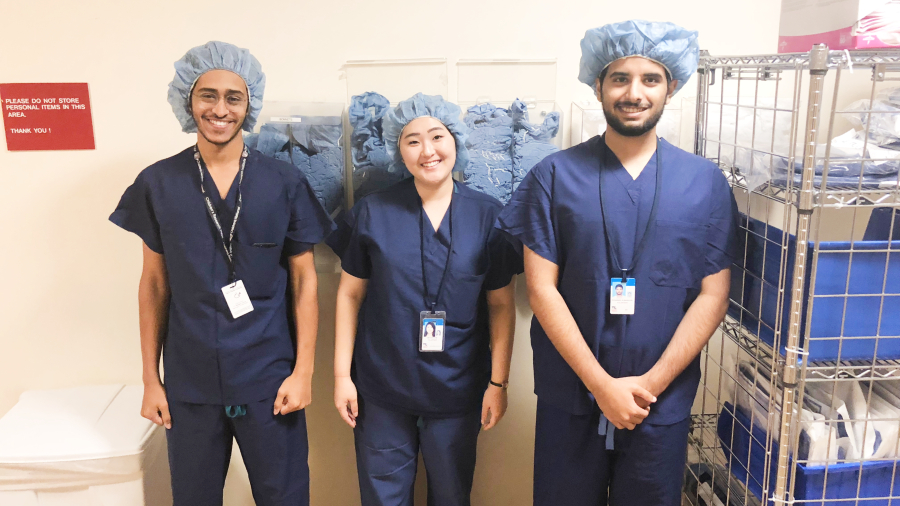
Two of Bachelors of Computer Engineering students have successfully developed prototype apps for patient care as part of their internships at the Sheikh Zayed Institute (SZI) for Pediatric Surgical Innovation at the Children’s National Medical Center in the US.

The two apps – Online Treatment Recovery Assistant for Concussion in Kids (OnTRACK) and BearGenes – were developed by students Hazza Daiban and Mohammad Al Mansoori during their eight-week internship in Washington, DC. The students worked under the guidance of Kevin Cleary, PhD, Professor of Radiology, Surgery, and Pediatrics at George Washington University and leader of the Bioengineering Initiative at the Sheikh Zayed Institute. OnTRACK was developed with Gerry Gioia, PhD, Director, Safe Concussion Program, while BearGenes was developed with Natasha Shur, MD, and Marshall Summar, MD, from the Children’s National Rare Disease Institute.

Dr. Arif Sultan Al Hammadi, Executive Vice-President, Khalifa University of Science and Technology, said: “Our students are offered various channels including internships to demonstrate their creativity and make use of their knowledge for the benefit of the community. The patient care apps developed by the two Khalifa University students illustrate the learning and expertise they have gained in Abu Dhabi and the guidance they received while interning at the Sheikh Zayed Institute in Washington DC. We believe institutions such as the SZI offer our students the right platform to not only widen their knowledge horizon but also serve as an instrument to sharpen their skills in areas including healthcare.”

The OnTRACK mobile app prototype that Daiban worked on is intended to help in concussion management by using ecological momentary assessment (EMA) of symptoms and to prompt patient treatment strategies. It is designed to provide support for patients five years and older who are identified with concussion. The developers are keen to incorporate the feedback currently being received from end users.

The BearGenes mobile app prototype that Al Mansoori worked on is designed to provide a trusted educational and informative platform for the patients and the public about genetic counseling and genetic conditions. It also provides information on where to access genetic expertise, such as the Children’s National Rare Disease Institute. The team is planning to create a web version of the platform that will be linked with the mobile app. Videos and information are being created by Children’s National Rare Disease Institute and will be added to the mobile app prototype database. Once uploaded to Play Store and App Store, mobile devices with the app will be offered to interested patient families.

Research professor and engineer Dr. Kevin Cleary said: “It was a great pleasure to have Hazza and Mohammad as interns. They made a positive contribution to our institute and hospital and did an excellent job developing the prototype apps.”

Dr. Cleary leads SZI’s interdisciplinary bioengineering team and focuses on technology development for pediatric medicine, working with the clinical team and other colleagues at Children’s National.

In addition to creating the Sheikh Zayed Institute for Pediatric Surgical Innovation, the Children’s National Medical Center has also named its primary campus in downtown Washington DC, the Sheikh Zayed Campus for Advanced Pediatric Medicine.

Clarence Michael
News Writer
5 November 2018

Four Electrical Engineering Students Selected for Stanford Fellowship

Student Projects to Increase Campus Engagement and Become Agents of Change

Four students from the Khalifa University Bachelor’s in Electrical Engineering program have become the first-ever group to be selected from the UAE for the University Innovation Fellows (UIF) program at Stanford University in the US.

The global program run by Stanford University’s Hasso Plattner Institute of Design (d.school), empowers student leaders to increase campus engagement with innovation, entrepreneurship, creativity and design thinking. It encourages students to become agents of change at their schools, and work towards ensuring that their peers gain the knowledge, skills and attitudes required to compete in the economy of the future and make a positive impact on the world.

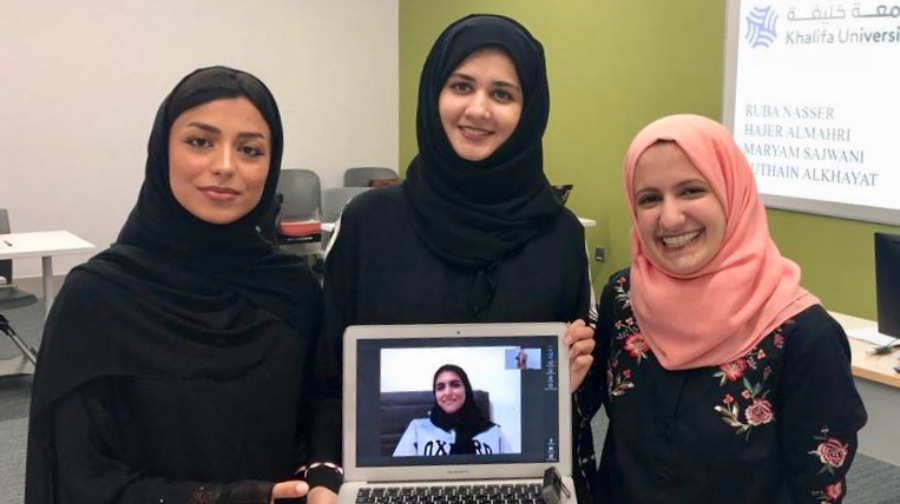
The four – Hajer M. Almahri (2020), Maryam Abbas Sajwani (2019), Ruba Nasser (2019), Buthaina Alkhayat (2020) – have now completed their six-week online training program. The team, along with faculty mentor Dr. Nicholas Dimmitt, Associate Professor, Department of English, will now be invited to the Silicon Valley Meetup in California, US, where they will attend experiential workshops and exercises focused on topics including movement building, innovation spaces, design of learning experiences, and new models for change in higher education. The team’s visit will also include a day of activities and learning at the headquarters of Google (Alphabet) in March 2019.

Additionally, in Spring 2019, the team will attend as ‘special guests’ in the Eastern Hemisphere Meetup in Dubai, organized for teams from China, India and Far-East Asia.

Dr. Arif Sultan Al Hammadi, Executive Vice-President, Khalifa University of Science and Technology, said: “The selection of our students by Stanford illustrates the relevance of Khalifa University’s innovation and entrepreneurship ecosystem and our faculty expertise in skill-building. Our students need to be encouraged to come up with such practical, need-based projects that are useful, and concepts that can be implemented by the university. We believe our students will bring more honor to our university through such innovative projects that they will co-create with stakeholders in the coming months, ready for presentation at Stanford and elsewhere in the world.”

The four Khalifa University students will now begin to plan and activate their projects that are the outcome of their training.

Ruba Nasser and Buthaina Alkhayat are working together on two projects. Their LabAID project is a resource-design around laboratories that helps better understand what the lab sessions talk about and includes a demonstration of experiments.

Nasser said: “I plan to complete my project to collaborate with one of the lab instructors who taught me a lab that I already took and create the videos, and observe the difference on how well the students are grasping the lab experiments.”

The ‘Workshops on emotional intelligence’ project aims to help students build self-confidence and raise self-expectations as well as focus on achieving specific goals despite daily distractions.

Alkhayat said: “Right now, Student Services hosts various workshops to encourage students to practice introspection and reflection, which are fundamental aspects of emotional intelligence.  Also, a one-credit course is also being developed to focus on the fundamental skills university students need, introducing habits of mind and provides real life scenarios for students to approach. A student led group will be creating an online portal that encourages registration for this course and provides feedback.”

The project by Maryam Abbas Sajwani focuses on ‘Facilitating students’ engagement through communication systems’, and aims to help students distinguish events that are happening on-campus, allowing them to be more interactive with specific interests.

Sajwani said: “My next step to make this project a reality is to create a web-based preliminary application, incorporate possible events and test its functionality. I wish to work on it in small sections, then collate all to make a fully furnished app design.”

Hajer Almahri’s project, ‘Freshman Year Experience’ (FYE) program or ‘Freshmen Success Program’, is designed to facilitate transition from high school to university, while helping students to interact with one another socially.

Almahri’s said: “The FYE program will cover two main aspects, educational and social. For the educational aspect, it will consist of a three-credit course that will introduce the students to different majors in the university. For the social aspect, it will make sure students remain engaged on-campus by attending events and workshops, and off-campus by attending exhibitions and fieldtrips.”

Throughout the year, the four UIF students will have many opportunities to learn from one another, Stanford mentors, and leaders in academia and industry, while presenting their work and facilitating workshops at events and conferences around the world.

Clarence Michael
News Writer
7 November 2018

Students and Faculty Drive Knowledge Exchange at ADIPEC 2018

Research Shared at Technical Sessions While Students Lead Hands-On Activities and Demonstrations in STEM Areas

Khalifa University faculty members are leading several technical sessions and presenting papers at the Abu Dhabi International Petroleum Exhibition and Conference (ADIPEC) 2018 while a dozen student volunteers lead hands-on activities and demonstrations for visitors from different schools at Young ADIPEC.

Khalifa University is the ‘Academic Partner’ for ADIPEC 2018, which is being held on 12-15 November at the Abu Dhabi National Exhibition Center (ADNEC). The sixth annual Young ADIPEC is being held at ADIPEC 2018 with the support of the Abu Dhabi Department of Education and Knowledge (ADEK).

Dr. Arif Sultan Al Hammadi, Executive Vice-President, Khalifa University of Science and Technology, said: “Our participation in ADIPEC 2018 illustrates the faculty expertise and the scientific innovation we continue to achieve in petroleum engineering, especially in exploration and pipeline technologies. The oil and gas sector plays a critical role in the overall development of the UAE and seeking new engineering innovations in this sector through research will surely facilitate efficient production and enhanced oil recovery. We believe through this participation, industry partners and other stakeholders will gain more awareness about our strength as an institution that drives research towards achieving new techniques in this sector.”

KU has its own Khalifa University Zone at ADIPEC, where students are showcasing hands-on science-based activities at the Chemistry, Earth Science, Physics, Mathematics, and Computing stations. More than 600 students from 25 schools are visiting the event this year. The Chemistry Station features three hands-on activities, the Engineering Zone features an education kit and, the Earth Science Station has two demonstrations. The Physics Station offers three demonstrations, while the Mathematics and Computer stations feature two each.

Faculty from the Petroleum Engineering Department are co-chairing several special sessions focusing on Drilling and Completion Technology, while Chemical Engineering faculty are delivering four oral and one e-poster presentations. Four papers co-authored by Petroleum Engineering faculty are also being presented, while a Petroleum Engineering staff member is serving as a Young Professional Mentor for one of the selected teams as part of the Society of Petroleum Engineers (SPE) ADIPEC University Program judging Committee Member. There is also a special session on ‘Is Creativity Beneficial for Engineers?’ where two faculty will be sharing their perspectives.

Clarence Michael
News Writer
13 November 2018

Debate Club Wins Best Delegation Award at AUSMC 2018

Student Team Members Also Collect Three Individual Debate Awards

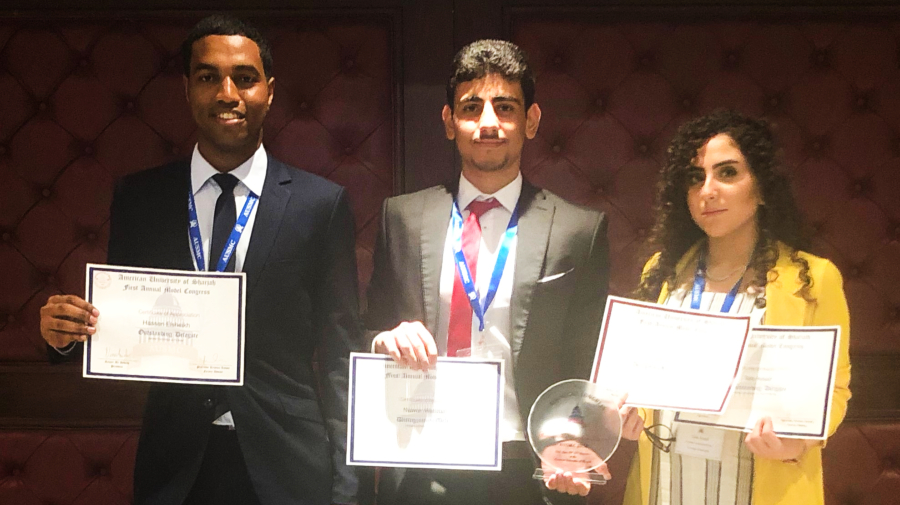
Three members of the Khalifa University Debate Club won the Best Delegation Award for their excellent overall performance at the first American University of Sharjah Model Congress (AUSMC) 2018, which was held on 15-17 November in Sharjah. A total of 20 teams and 273 delegates participated in the congress.

Nawar Allabban, Debate Club President and BSc in Mechanical Engineering student received the Best Delegation Award on behalf of the University. Additionally, Allabban won the Distinguished Delegate Award in the Senate Committee on Intelligence, while BSc in Mechanical Engineering student Hassan Elsheikh won the Outstanding Delegate Award in the Senate Committee on Finance. Industrial Engineering student Tala Assaf won the Outstanding
Delegate Award in the Senate Committee on Foreign Relations. Dr. Robert Pech, Debate Club Advisor, and Assistant Professor of Humanities and Social Sciences, was the faculty guide for the students. Their participation was organized by the Student Services Department.

Allabban said: “The competition gave me the opportunity to meet people from different backgrounds. It was an honor to represent Khalifa University at such a competitive challenge, and I am looking forward to being a part of the upcoming events.”

The first of its kind in the world, AUSMC seeks to bring the vibrant and dynamic workings of the US Congress to university and high school students. The student participants were able to test their debating and negotiation skills in a wide variety of situations and scenarios modelled
around the US Congress.

Elsheikh said “My experience at AUSMC gave me insight into how complicated matters such as passing legislation and enacting laws are done in one of the world’s most complex political systems. It was a great honor to be awarded the Outstanding Delegate Award in my committee
and the experience as a whole was incredible!”

For Assaf, it was a thrilling and informative conference. She said: “From the US Constitutional law to the bills written to find a cohesive solution, the AUS Model Congress was an inclusive platform. I enjoyed every moment and learnt a lot. I also realized that what we say and how we
say it, could have the most profound impact on others. That adage will resonate with me forever.”

The Khalifa University Debate Club members are now looking forward to participating in the AUS Model United Nations Conference next year.

Clarence Michael
News Writer
25 November 2018 

KU Marks 47th UAE National Day with Student-Led Activities Focusing on ‘Year of Zayed’, Culture and Heritage

Stands Showcase Contributions Made by Founding Father and UAE’s Continuous Progress

The UAE’s elegant national colors and the flag adorned the Khalifa University campuses as students, faculty and staff joinedthe 47th UAE National Day celebrations that showed how the country has continuing on a path of great progress since its founding in 1971.

This year’s UAE National Day activities followed the theme of ‘This is Zayed. This is the UAE’, coinciding with ‘Year of Zayed’. Reflecting the theme, the evening’s festivities included heritage-led activities, that reflected the Emirati culture, traditional musical performances, local and international cuisine, as well as individual stalls portraying the leaders who played a critical role in the formation of the UAE federation and other historical events.

Welcoming the gathering, Dr. Arif Sultan Al Hammadi, Executive Vice-President, Khalifa University of Science and Technology, said: “UAE National Day commemorates not only the significant efforts of our leaders in creating the federation but also the great strides taken since then by the country in all walks of life. The vision of the past leaders and their wise stewardship have ensured that the country has remained on the progressive path and is at present one of the most modern economies in the world.This National Day’s activities signify our efforts to pay tribute to their valuable contributions and express our sincere gratitude to the current leadership for steering the country in line with the ambitions of the UAE Founding Father, the Late Sheikh Zayed bin Sultan Al Nahyan.”

A short film titled ‘What If He Was Here’ produced by MSc student Mohammed Abu Zant explored how theUAE Founding Father Late Sheikh Zayed bin Sultan Al Nahyan would feel about the country’s current achievements and progress.

The student Literature Club led an activity and a special performance followed by a the Q&A Competition that focused on National Day, whichgenerated significant interest among the guests and students.

Among the other interesting activities, the Mars Puzzle Room provided visitors with an in-depth look into various features of the Red Planet.The UAE aims to landits space exploration probe mission on Mars in 2021, to coincide with the 50th anniversary of the founding of the UAE. Organized by the Khalifa University student chapter of the American Institute of Aeronautics and Astronautics (AIAA),the booth’s featured an Escape Room on the theme of the UAE’s Mars Mission 2020. Participants were required to solve a series of short puzzles to escape the room and complete the Mars Mission.

An ‘Astronaut-Diver’ booth showcased the determination of Emiratis who used to dive for pearlsfrom the Arabian Gulf in the past, and future Emiratis astronauts who will travel to space.The Art Booth captured the vivid imagination of various budding artists, illustrating their dreams and signifying their ambitions.

The ‘Sheikh Zayed Board’ portrayed the various characteristics of the Founding Father, and his immense contributions to developing the country into one of the most modern economies in the world. The booth ‘UAE Under the Light’ by the Happiness Club showcased developments sincethe UAE’s establishment and the country’s current progress. The ‘Wisdom From YOU’ booth organized by the Center for Teaching and Learning offered advice under “7 themes for 7 emirates”on how to manage a life-study balance, with thoughts from the late Sheikh Zayed.

Clarence Michael
News Writer
4 December 2018

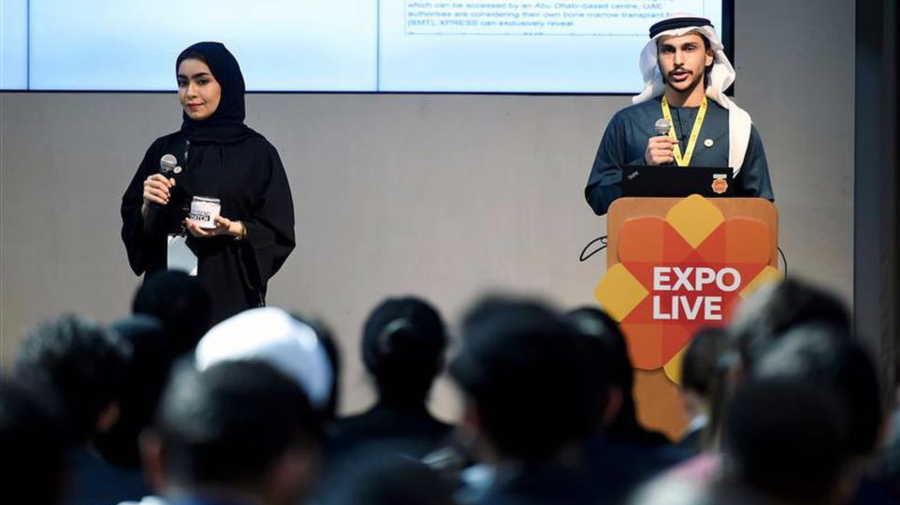
Expo Live Awards 3 KU Student Teams for Innovative Projects

GenoMatch, Karbooj, and Thyroid on a ChiP Selected for Potential to Address Global Challenges

Three student teams from Khalifa University were among the 28 teams from 16 universities that secured funding and support through Expo 2020 University Innovation Program (UIP) Expo Live.

The teams – GenoMatch, Karbooj, and Thyroid on a ChiP – submitted their innovative ideas on Expo 2020’s subthemes of Opportunity, Mobility, and Sustainability. Expo Live’s UIP seeks to incentivize creative thinking, problem-solving, and collaboration between university students to address important global challenges. It awards grants to promising concepts that are relevant to the UAE and region so they can be accelerated, validated and prototyped.

GenoMatch, which was developed by Hasan Alattas and Halima Alnaqbi under the mentorshp of KU faculty Dr. Habiba Alsafar, is focused on developing a method to more easily identify compatible organ donors for transplant patients in the UAE. Karbooj — which has among its members Hanin Abu Alrub, Shaza Karaman, and Wafa Alyammahi, and was guided by KU faculty Dr. Hadi Otrok and Dr. Rabeb Mizouni — is a mobile game designed to reduce childhood obesity. Thyroid on a ChiP is a test to help people make decisions that prevent and/or treat thyroid cancer, and was developed by Fatima Yousif Alshamsi, Sarah Ismail Alali, Tamader Omar Alhouqani, and Amna Nasser Ahli, with guidance by Dr. Habiba Alsafar.

The three KU teams, along with the other selected teams, will receive a receive grant of up to AED50,000 to advance their ideas after participating in the second cycle of the UIP, which was conducted by Expo Live with the support of the UAE Ministry of Higher Education and Scientific Research. They will also receive guidance from Expo Live to advance research and development, create a business model, grow their team and potentially partner with other entities. Grantees may even have the chance to showcase their innovations to millions of people at Expo 2020 Dubai.

His Excellency Dr. Ahmad bin Abdullah Humaid Belhoul Al Falasi, UAE Minister of State for Higher Education and Advanced Skills, said: “The creative solutions submitted to Expo Live as part of the University Innovation Program are a testament to the pioneering capabilities of UAE youth. It is young people with enterprising minds and an innovative outlook who will be responsible for leading the country’s transformation into a knowledge economy and in meeting the aspirations of the leadership towards UAE Vision 2021 and UAE Centennial 2071.

“The caliber of projects selected during the program’s second cycle reflects the high standard of tertiary education in the UAE and I sincerely congratulate each and every awardee for their hard work and achievements. My colleagues and I are extremely keen to see how their innovations will progress on the journey to Expo 2020 and beyond.”

Yousuf Caires, Vice President of Expo Live, Expo 2020 Dubai, said: “This program epitomizes Expo 2020’s theme of ‘Connecting Minds, Creating the Future’, and it is truly exciting to witness first-hand the levels of innovation that are being cultivated among university students here in the UAE. Young innovators who secured Expo Live’s support as part of the UIP’s first cycle are already advanced in developing creative solutions to global challenges that impact our region. We look forward to working closely with grantees from the second cycle as they take their projects to
the next level, and we cannot wait to see how they turn their ideas and prototypes into reality.”

More than 500 student groups from 57 universities across the UAE submitted applications as part of the UIP’s second cycle, with proposed solutions addressing at least one of Expo 2020’s three key subthemes: Opportunity, Mobility and Sustainability. Finalists pitched their projects to a panel of judges at the Expo 2020 Dubai Visitor Center.

The GenoMatch team said: “We are absolutely thrilled to receive Expo Live’s support as it will help us bring our solution to life. It is so exciting to have an idea with the potential to save lives, and we have now secured the funding and guidance necessary to advance our vision.”

Applications were evaluated by a panel of judges from Expo 2020, its commercial partners and other stakeholders. Representatives from DP World, Emirates Airline, Emirates NBD, PepsiCo, SAP and Siemens offered feedback to each of the finalists on how they could improve and advance their proposed solutions.

The 28 projects selected join the 19 groups that secured support during the UIP’s first cycle, meaning that Expo Live has now committed grants, guidance and exposure to 47 student teams from across the UAE. Expo Live is a USD100 million innovation and partnership program launched by Expo 2020 Dubai to make a lasting social impact by funding, accelerating and promoting creative solutions that improve lives or preserve the
planet, or both.

Based on the belief that innovation can come from anywhere to everyone, Expo Live will continue to deploy a combination of grants, challenges, university programmes and knowledge-sharing events on the journey to 2020.

To learn more about the University Innovation Programme, or to find out about Expo Live’s other initiatives, visit expo2020dubai.com/expo-live.

20 December 2018

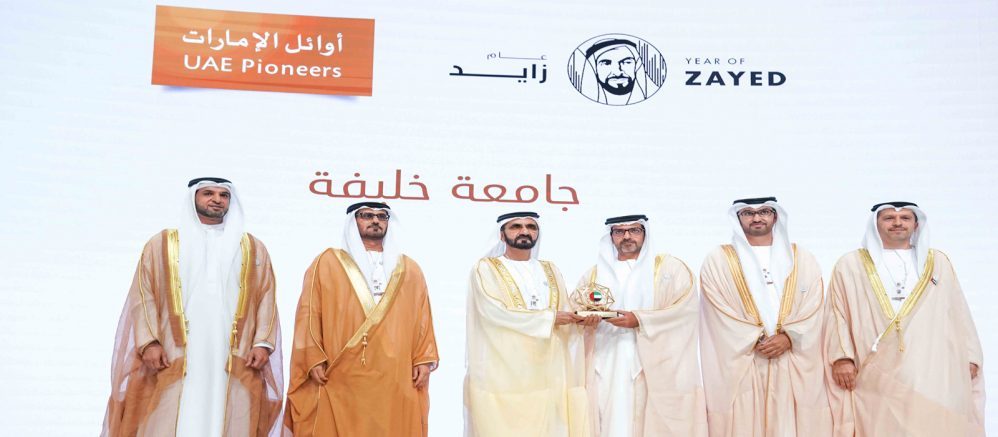
Khalifa University Honored with UAE Pioneers Award 2018

Research-Focused University Becomes One of 30 Pride of Zayed Award 2018 Winners

Khalifa University of Science and Technology was honored among the 30 Emirati achievements for the UAE Pioneers Award 2018.

The University was recognized for being the national nerve center for scientific research in the country, and introducing meticulously planned programs as per the requirements of Abu Dhabi and the UAE’s employment market.

His Highness Sheikh Mohammad Bin Rashid Al Maktoum, Vice-President and Prime Minister of the UAE and Ruler of Dubai, honored the university’s achievements during a ceremony held in Abu Dhabi, following the conclusion of the Annual Government Meetings. The UAE Pioneers ceremony coincided with 47th UAE National Day celebrations.

A total of a total of 30 organizations had won individual Pride of Zayed awards. Residents were able to nominate institutions that they felt the UAE’s Founding Father, the late Sheikh Zayed, would most likely be proud of today.

Khalifa University has been able to contribute significantly to the UAE’s intellectual and human capital development since its founding in February 2017 through the merger of three leading universities. During 2017, Khalifa University became the single largest contributor to the UAE’s total patents, when it registered 32 patents with the US Patent and Trademark Office, accounting for approximately 30.3% of the country’s total patents.

More recently, the university became one of only two academic institutions from the UAE to launch a satellite when the MYSAT-1 CubeSat, developed by the students and faculty, was sent to the International Space Station. It will be used for educational and research purposes once it makes its final ascent to its orbital position in the beginning of 2019. The nanosatellite carries two payloads, including a camera to take images of the UAE from space, demonstrating the process of remote sensing, as well as an innovative lithium-ion battery developed at Khalifa University.

Khalifa University already shares the top spot with 11 other select international institutions in the ‘industry income’ pillar, which signifies knowledge transfer, according to the 2019 Times Higher Education (THE) World University Rankings that was released in September 2018.


Clarence Michael
News Writer
29 November 2018

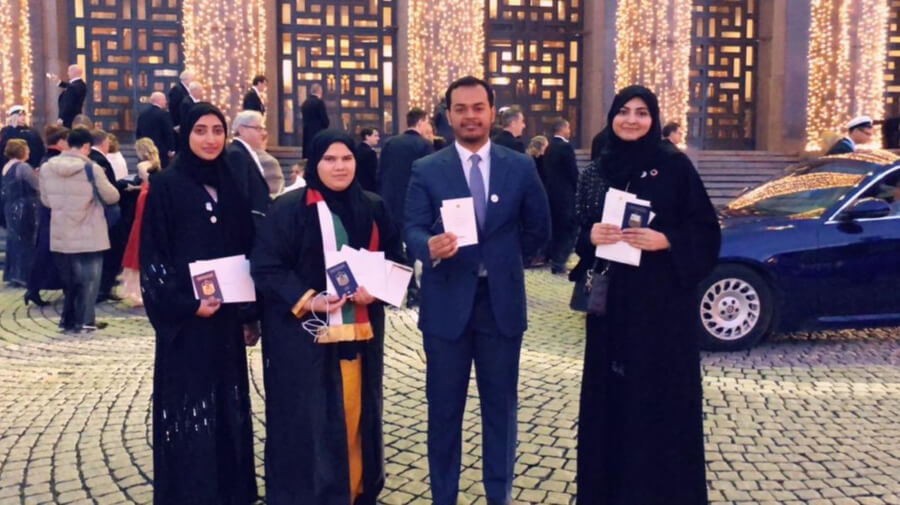
Alumnus Represents KU at 2018 Nobel Prize Award Ceremonies in Stockholm

Abdelaziz Saeed Mohamed Alzaabi Selected to Attend for Outstanding Academic Performance and Leadership Skills

Khalifa University MSc in Mechanical Engineering alumnus Abdelaziz Saeed Mohamed Alzaabi was among four Emirati graduates selected to represent the UAE at the Nobel Awards Ceremony 2018 in Stockholm, Sweden, where awardees received their Nobel Medals and Diploma from His Majesty King Carl XVI Gustaf of Sweden.

The graduates were given this unprecedented honor through the Mohammed Bin Rashid Al Maktoum Knowledge Foundation (MBRF), which also organized the trip and their collaboration with Nobel Prize Foundation in Sweden. Al Zaabi was selected based on his outstanding academic performance and leadership skills within the university and the broader UAE community.

The four were greeted by H.E. Sultan Al Kaitoob, UAE Ambassador to Sweden, as well as MBRF’s Chief Executive Officer Jamal bin Huwaireb.

“His excellency Al Kaitoob reiterated the government’s support for research and science as well as the goal of having an Emirati win a Nobel prize in the coming years,” Al Zaabi shared, referencing a quote from Sheikh Mohammed bin Rashid Al Maktoum, Vice President and Prime Minster of the UAE and Ruler of Dubai, who said: “We work today to develop a generation of UAE scientists able to compete for Nobel Prize in the next decades”.

The trip aimed to inspire promising young Emirati towards achieving their personal and professional goals in science, towards ultimately receiving the Nobel Prize.

In addition to the ceremony and prize distribution on 10 December, the UAE graduate group also attended the Nobel Week Dialogue where previous laureates discussed “Water matters”, the main topic for the year. The event also had sessions on the importance of water and scientific topics about water, as well as the possible existence of life and water on Mars.

Alzaabi and the three other Emiratis – two from UAE University, one from Zayed University – were hosted by the Nobel Foundation in the Nobel Museum in Stockholm and were given a tour on the laureates’ achievements and their artifacts that they provided to represent their achievements at the museum.

Alzaabi was selected to attend the Nobel event for his outstanding academic performance and leadership skills within Khalifa University and the broader UAE community. He won his place to represent Khalifa University and the UAE after an extensive interview in April 2018.

Earlier this year, Alzaabi was selected as a member of the UAE Youth Science Council. He also presented a paper at the 2018 IEEE International Conference on Systems, Man, and Cybernetics (SMC 2018) in Miyazaki, Japan, since his research focuses on new robotics (underwater) technologies. Moreover, in his role as a teaching assistant he supports and equips freshmen engineering students with the skills needed to innovate and reach beyond their imagination and enhance traditional engineering by building and solving real engineering problems.

Abdelaziz also has several scientific contributions and has co-authored several journal papers since his final year in the undergraduate program at Khalifa University. Some of the education excellence awards he has received include H.H Sheikh Khalifa Award for Excellence in academic Achievements, H.H Sheikh Hamdan Bin Rashid Award for Excellence in Academic Achievements, Sharjah Award, and gold medals of the Chemistry and Physics National Olympics which were awarded by the Emirates Association for the Gifted and Ministry of Education.

The Nobel award ceremony is attended by prominent academics, scientists and previous Nobel laureates. This year’s ceremony marked the first time students from the Arab world were selected to attend. The UAE was the first country to secure a place for four students to attend the ceremony following a collaboration between Mohammed Bin Rashid Al Maktoum Knowledge Foundation (MBRF) and the Nobel Prize Foundation in Sweden.

Clarence Michael
News Writer
3 January 2019