

Outlook for Energy Policy in the Middle East and North Africa Assessed

The energy landscape of the Middle East and North Africa (MENA) region is undergoing a significant transformation as a result of intersecting technological, economic and political trends that are both regional and international. This transformation, which is placing pressure on regional resources and energy systems, has stimulated the need for a fresh look at regional energy policies with consideration of their impact on social, political and economic sustainability, Masdar Institute’s Dr. Steve Griffiths, Vice President for Research and Interim Associate Provost has highlighted in a recent research paper.

The paper will be published in the March 2017 issue of the international journal Energy Policy and is currently available online through ScienceDirect. In the paper, which is titled “A review and assessment of energy policy in the Middle East and North Africa region”, Dr. Griffiths provides a critical review and assessment of energy policy in the MENA region, with emphasis on the key policy considerations required for the region’s energy system to achieve increasing levels of sustainability.

“The paper examines the regional and global factors that influence MENA energy policies, including critical uncertainties – such as geopolitical and socioeconomic dynamics, the energy-water nexus, and regional energy interconnections – and action priorities – such as energy subsidies, renewable energy development and energy pricing,” explained Dr. Griffiths.

He explores how the impact of global factors, like volatility in the oil and gas markets, the emergence of a global commitment to reducing greenhouse gas emissions, and the evolution of renewable energy as a cost-competitive energy source, have worked to support investment for further scale-up and integration of renewables into energy systems across the MENA region.

Similarly, regional factors, including the issue of water scarcity and the interdependence between freshwater production and energy consumption, which necessitate the coupling of water and energy policy, highlight the need for all countries in the region to emphasize demand management and alternative, low-carbon energy sources in their energy strategies and policies.

“Considering the MENA region context is imperative to understanding the timeline and potential for MENA countries to evolve and transition their energy systems,” Dr. Griffiths commented.

While remaining cognizant of the political, economic and social context of the MENA region, Dr. Griffiths explores the potential role that policy changes in the areas of energy efficiency standards, energy subsidies, energy supply diversification and inter-regional electricity integration could play in achieving a successful energy transition that would enable sustainable development and a decoupling of economic growth and energy consumption.

He explains that while many of the MENA countries are focused on energy supply diversification, including from renewable sources like the sun, wind and nuclear energy, which is demonstrated by the establishment of renewable energy targets, clear progression from political visions to strategic plans to roadmaps tied to policies and regulations is absent in all but a select few MENA countries.

Noting the need for regional policies and regulations supportive of renewable energy deployment, Dr. Griffiths cites those policies that are most commonly used, stating: “The most widely implemented renewable energy policy framework in the MENA region is tendering, but additional policy measures, such as net metering, will be needed for greater private sector engagement in the deployment of distributed renewable energy systems, like rooftop solar PV.”

Dr. Griffiths also sheds light on the need for MENA countries to develop and implement energy efficiency standards beyond the building sector to include the transportation and industrial sectors. These sectors make up 51% of energy consumption in Levant countries, 56% in North African countries and 69% in GCC countries. Currently, however, no MENA country has a comprehensive policy for transportation efficiency and no GCC country has clear policies and regulations to drive energy efficiency in its industrial sector.

Energy subsidy reform and regional energy trade, including electricity interconnection, are key policy development areas that Dr. Griffiths highlights as having strategic potential for enabling economic development without increasing regional energy consumption. In his report, Dr. Griffiths cites findings that suggest an interconnected GCC electricity market could yield more than US$23 billion in economic benefits by 2028 via reduction in fuel, operation and maintenance costs while providing additional savings of more than US$5 billion in power generation capacity and abating as much as 225 million tons of regional carbon dioxide emissions.

In conclusion, Dr. Griffiths notes the MENA region’s future energy transition is dependent on the development of key policy frameworks that promote energy efficiency standards, demand management and interconnected markets.
“Although hydrocarbon exploration and production is poised to continue to play an important role in the region’s energy systems in coming years, policies that place an emphasis on regional energy trade, demand management, energy efficiency and clean energy production can contribute to benefits such as lower energy prices, enhanced sustainability, and lower air pollution and greenhouse gas emissions,” he said.

Dr. Griffith’s paper was published as one of a series of requested papers for Energy Policy focused on national and regional policies with contributions covering the United States, Canada, the United Kingdom, Denmark, China, Japan, Association of Southeast Asian Nations (ASEAN), and Australia. He was personally invited to prepare a paper on the MENA region by the journal’s editor, Professor Michael Jefferson of the ESCP Europe Business School.

Commenting on the paper, Professor Jefferson said: “I have long had a personal interest in the Gulf, so I had a strong wish to see Dr. Griffiths’ paper come to fruition. He has produced an excellent assessment of the challenges the region faces as efforts continue to achieve a global transition to alternative forms of energy while heavy dependence on oil and gas products continues for some decades to come. It is our hope and expectation that Dr. Griffiths’ paper will improve understanding of the region, the challenges it faces, and the desirability of fuller cooperation between its member states and peoples.”

The publication of this comprehensive assessment of MENA-wide energy policies is quite timely. With Abu Dhabi Sustainability Week (ADSW) – the largest gathering of sustainability and clean energy leaders in the region – scheduled to take place later this month in Abu Dhabi, Dr. Griffith’s paper will stimulate well-informed discussions of the potential strategies, technologies, and policies needed to achieve sustainable development across the region.


Erica Solomon
News and Features Writer
10 January 2017

 

Masdar Institute Files Patent for Innovative Cloud Seeding Material that Could Trigger More Rainfall from Clouds

The Masdar Institute research team that was one of the inaugural recipients of the US$ 5 million grant from the UAE Research Program for Rain Enhancement Science last year has made significant progress in their work as evidenced by the filing a provisional patent with the United States Patent and Trademark Office (USPTO).

By filing a patent on their innovative cloud seeding material, the research team is bringing the material in the pathway for commercialization, thereby supporting Masdar Institute’s goal of bolstering the United Arab Emirates’ local intellectual property, which is a key measure of the country’s innovation drive. It also signifies a milestone towards achieving greater water security in the UAE, as rainfall enhancement via cloud seeding can potentially increase rainfall between 10% to 30%, helping to refresh groundwater reserves, boost agricultural production, and reduce the country’s heavy reliance on freshwater produced by energy-intensive seawater desalination.

Masdar Institute Professor of Chemical and Environmental Engineering, Dr. Linda Zou, is the principal investigator of this research project, and one of the first scientists in the world to explore the use of nanotechnology to enhance a cloud seeding material’s ability to produce rain.

While the field of rain enhancement – which involves stimulating clouds to produce rain – leverages cloud physics, atmosphere physics, and topographical studies, Dr. Zou and her team complement such work through their focus on the cloud seeding material itself.

“Using nanotechnology to accelerate water droplet formation on a typical cloud seeding material has never been researched before. It is a new approach that could revolutionize the development of cloud seeding materials and make them significantly more efficient and effective,” Dr. Zou remarked.

Offering a comprehensive overview of Dr. Zou’s progress, Alya Al Mazroui, Manager of the UAE Research Program for Rain Enhancement Science said: “The Program is a unique opportunity to use advanced research methods for studying atmospheric processes in arid regions, where its understanding is most important to ensure water security globally. We are convinced that Masdar Institute’s project, under Linda Zou’s supervision, will advance rain enhancement science through innovative seeding agents.”

Dr. Deon E. Terblanche, Director, Atmospheric Research and Environment Branch, World Meteorological Organization (WMO), serves as a member of the international scientific advisory committee of the UAE Rain Enhancement Program Award. He believes that the novelty of Dr. Zou’s research has great potential to drive innovation in the field of rain enhancement: “Dr. Linda Zou of the Masdar Institute is bringing a fresh and exciting contribution to the field of rainfall enhancement. Her team’s research into the development of new seeding materials, taking advantage of nanotechnology, holds exciting possibilities and is followed with considerable interest,” Dr. Terblanche remarked.

Conventional cloud seeding materials are small particles such as pure salt crystals, dry ice and silver iodide. These tiny particles, which are a few microns (one-thousandth of a millimeter) in size, act as the core around which water condenses in the clouds, stimulating water droplet growth. Once the air in the cloud reaches a certain level of saturation, it can no longer hold in that moisture, and rain falls. Cloud seeding essentially mimics what naturally occurs in clouds, but enhances the process by adding particles that can stimulate and accelerate the condensation process.

Dr. Zou and her collaborators, Dr. Mustapha Jouiad, Principal Research Scientist in Mechanical and Materials Engineering Department, postdoctoral researcher Dr. Nabil El Hadri and PhD student Haoran Liang, explored ways to improve the process of condensation on a pure salt crystal by layering it with a thin coating of titanium dioxide.

The extremely thin coating measures around 50 nanometers, which is more than one thousand times thinner than a human hair. Despite the coating’s miniscule size, the titanium dioxide’s effect on the salt’s condensation efficiency is significant. Titanium dioxide is a hydrophilic photocatalyst, which means that when in contact with water vapor in the cloud, it helps to initiate and sustain the water vapor adsorption and condensation on the nanoparticle’s surface. This important property of the cloud seeding material speeds up the formation of large water droplets for rainfall.

Dr. Zou’s team found that the titanium dioxide coating improved the salt’s ability to adsorb and condense water vapor over 100 times compared to a pure salt crystal. Such an increase in condensation efficiency could improve a cloud’s ability to produce more precipitation, making rain enhancement operations more efficient and effective. The research will now move to the next stage of simulated cloud and field testing in the future.

The UAE government has recognized the potential of rain enhancement to support water security and established the UAE Research Program for Rain Enhancement Science to increase rain enhancement research in the UAE and arid and semi-arid regions across the world. Awardees of the Program’s Second Cycle grant of US$ 5 million were announced last week during Abu Dhabi Sustainability Week 2017. They include Prof. Giles Harrison of the University of Reading, Prof. Hannele Korhonen of the Finnish Meteorological Institute (FMI), and Dr. Paul Lawson of American firm Spec Inc.

Dr. Zou’s research grant covers two more years of research. During this time, her team will continue to study different design concepts and structures for cloud seeding materials inspired by nanotechnology.


Erica Solomon
News and Features Writer
31 January 2017


Masdar Institute Pioneering Innovative Wastewater Treatment System

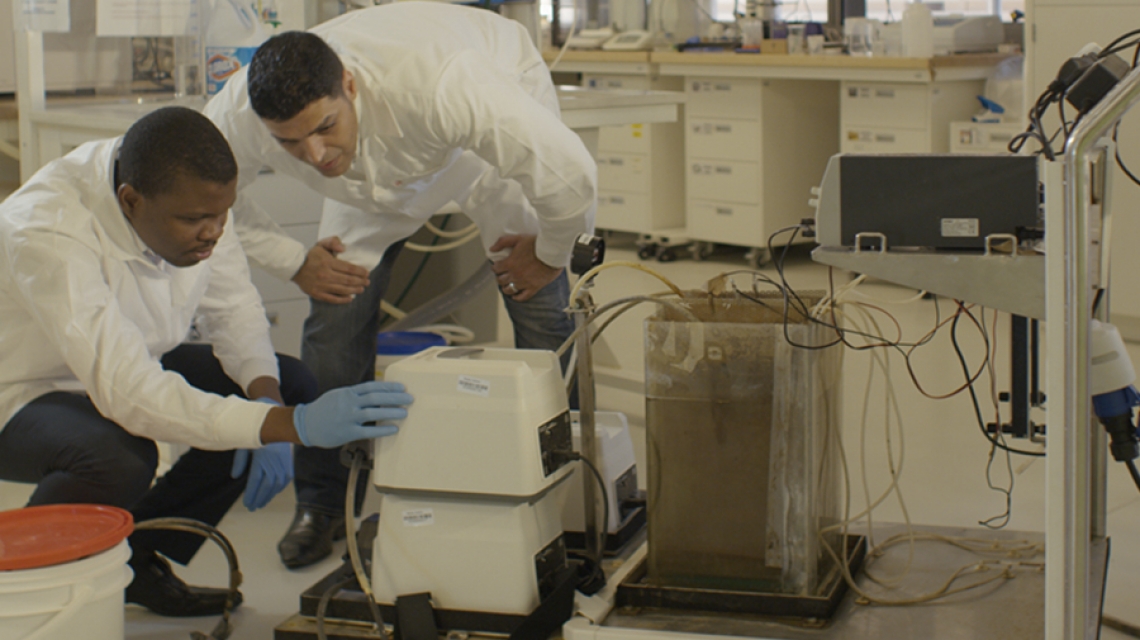
The all-in-one wastewater treatment system developed by Masdar Institute’s Dr. Shadi Wajih Hasan, Assistant Professor of Chemical and Environmental Engineering, is being further enhanced in an effort to advance the field of wastewater purification.

Dr. Hasan’s advanced system, known as a submerged membrane electro-bioreactor, or an SMEBR, is an integrated hybrid wastewater treatment unit that is significantly more efficient at treating wastewater and considerably less susceptible to fouling, which is the unwanted build-up of salt and bio-material on a membrane that reduces the membrane’s ability to filter impurities.

An SMEBR is an electrically enhanced membrane bioreactor (MBR), which is a novel wastewater treatment technology. While an MBR combines membrane processes like microfiltration with biological treatment processes to purify wastewater for a high quality effluent, an SMEBR adds a third electrokinetic process, which employs an electric current to remove various contaminants from wastewater.

The SMEBR is able to generate higher quality treated wastewater while consuming less energy than an MBR, as the inclusion of the enhanced biological and electrokinetic processes reduce the system’s dependency on primary- and secondary-related treatment operations.

Dr. Hasan contributed to the development of the first SMEBR system at a pilot scale during his doctoral studies at the University of Concordia in Canada and has continued his work to enhance and improve the SMEBR while at MI, with a focus on optimizing the system for efficient operation in the UAE. Dr. Hasan and his colleagues have published over 20 papers on this topic in international journals and conference proceedings like Nature Scientific Reports, Bioresource Technology, Chemosphere, Electrochimica Acta, Environmental Management and Environmental Sciences. One of those articles, which is co-authored by his PhD student Adewale Giwa, has remained in the first place among the top 20 articles in the BioMedLib search engine in the domain of membrane bioreactors for wastewater treatment since 2015.

Interest in Dr. Hasan’s SMEBR work is also evidenced by the recent publication of a review article on the topic of electrochemical processes with MBRs, which was published in the journal Frontiers in Environmental Science in August 2016 by a team of researchers from Italy and the Philippines.

“The publishing of a review article that focuses heavily on my SMEBR work reflects the fact that the field is becoming more important globally and that several researchers around the world have started working with the same wastewater technology,” Dr. Hasan remarked.

A review article summarizes previously published studies and provides the current state of understanding on a particular research topic. When a review article is published, it signifies that a rising number of scientists are showing interest in the particular research topic.

Dr. Vincenzo Naddeo, Associate Professor of Environmental Engineering from the University of Salerno, co-authored the review paper and commented on the benefits of electrically enhanced MBR technology for wastewater treatment: “Electro membrane bioreactor (eMBR) technology is getting ever more attention from the researchers, as corroborated by the increased number of publications on this topic, due to the unique advantages it offers to wastewater treatment. Compared to traditional methods for fouling mitigation in MBRs, such as physical and chemical cleaning, which increase energy demand and operating costs as well as reduce the membrane lifespan, the application of electrochemical processes inside an MBR represents an advanced and alternative strategy for membrane fouling reduction.”

“Recent research studies, also carried out by Dr. Hasan, have indeed demonstrated that in an eMBR different electrochemical mechanisms are created, due to the electric field applied, that help in pollutant degradation and, at the same time, control the mobility and deposition of foulants onto and into the membrane surface reducing fouling and, thus, energy consumption,” Dr. Naddeo added.

In his efforts to further advance the lab-scale SMEBR system developed at MI, Dr. Hasan has worked with Giwa to develop the first numerical computer-based model of the SMEBR. The model simulates the removal process of contaminants, such as organic and inorganic compounds, as wastewater passes through the SMEBR unit and models the effects of the SMEBR processes on the quality of the effluent, which is the discharged water.

The SMEBR model showed that the effluent produced by the novel technology had the lowest concentrations of ammonia, nitrogen, phosphorous and metals compared to the effluent produced by the two other most common treatment processes, including the conventional activated sludge process and the MBR process. The model was then validated through experimental work that produced similar results to what the model predicted.

“To create our model, we had to develop different models that represent each of the three treatment processes used in a SMEBR system and integrate them so that they work collaboratively to predict the performance of the reactor, and this has never been done before,” Dr. Hasan explained.

The model enables a better understanding of how an SMEBR system will react to different wastewater qualities and would be particularly useful for optimizing the design and construction of wastewater treatment plants that plan to leverage SMEBR technologies.

To further advance the efficacy and efficiency of the SMEBR technology to produce high quality water, Dr. Hasan is working with MSc in Chemical Engineering student Menatalla Ahmed to enhance the hybrid system with a second treatment cycle – a post-treatment process that utilizes nanotechnology.

The project was initiated in collaboration with researchers from the Massachusetts Institute of Technology (MIT) with the intent to improve the quality of the effluent produced by the SMEBR system by coupling nanowire filtration – which are filters made of thin manganese dioxide and titanium dioxide nanoparticles – as a post-treatment process.

“The nanowire material developed through this project has already demonstrated a strong ability to eliminate the pollution caused by the presence of heavy metals and organic contents in wastewater,” Dr. Hasan said. “An integration technology combining this with the SMEBR system offers great potential for wastewater treatment.”

Currently, Masdar Institute MSc and PhD students are also testing other nanomaterials to optimize the post-treatment membrane based nano-filtration. Dr. Hasan is currently working to integrate the SMEBR unit and nano-filtration to develop a prototype to begin pilot testing the integrated system.

By leveraging Dr. Hasan’s expertise, Masdar Institute is developing an innovative wastewater treatment system and is contributing to the advancement of scientific knowledge of novel water technologies.

The work being conducted by Dr. Hasan and his team is supporting the development of a resilient water infrastructure in the UAE while strengthening the country’s position as a global leader in treated wastewater reuse.


Erica Solomon
News and Features Writer
19 February 2017


Turning Water into Clean Fuel

A pioneering research project between Masdar Institute and the Massachusetts Institute of Technology (MIT) is a step closer to using sunlight to turn water into fuel in the form of hydrogen. The team have identified materials and developed unique structures that optimize the process that splits water into its component elements so the hydrogen can be captured and used as a fuel source.

“This research is at the frontier of materials science, photonics and nano-fabrication. It is not yet mature, but we are looking to build the capability and know-how not only for water-splitting but also for other photochemical reactions of interest, like wastewater treatment and high-value chemical production,” explained Dr. Jaime Viegas, Assistant Professor of Microsystems Engineering at Masdar Institute.

He is part of a collaborative team of faculty from both institutes, including Dr. Mustapha Jouiad, Microscopy Facility Manager and Principal Research Scientist at Masdar Institute, and MIT’s Professor of Mechanical Engineering Dr. Sang‐Gook Kim, W.M. Keck Professor of Energy Professor of Mechanical Engineering Professor of Materials Science and Engineering Dr. Yang Shao-Horn, and Rockwell International Career Development Professor Dr. Alexie Kolpak, which is exploring how to access the full spectrum of solar energy to split water to produce hydrogen.

While hydrogen is an energy dense fuel with many uses, there are no naturally occurring geological hydrogen reserves. That is why hydrogen is currently produced through high-energy processes that depend on fossil fuels, particularly natural gas. But if a sustainable and clean source of hydrogen could be developed for commercialization, it could provide the world with a truly carbon neutral energy source that can be used in place of many of our carbon intensive energy sources.

“We have lots of solar energy and we have seawater. If we could use water-splitting to produce hydrogen from water with minor pretreatment and limited requirement for fossil fuel sources, then we could open up significant avenues for sustainable and affordable hydrogen fuel use,” Dr. Viegas said.

Water-splitting is a chemical reaction in which water is separated into its component elements of oxygen and hydrogen, so energy-rich hydrogen can play a role in the sustainable energy future. However, breaking a compound into its component elements requires a significant amount of energy, which would typically negate the value of the stored energy storage from the produced hydrogen. That is why water-splitting for hydrogen production has not been able to meaningfully contribute to a sustainable energy equation.

To overcome the energy demand of water-splitting Dr. Viegas and his team have been exploring the use of catalysts that can make water splitting more efficient and sustainable using solar energy. They have identified a number of metal oxide materials and configurations that can capture more of the sun’s energy to split water into its component elements.

“The rationale behind this area of research is to use the light from the sun to power the photochemical splitting of water into hydrogen and oxygen, which you could then store and use later. This offers us a reversible energy cycle, with a hydrogen fuel that, when burned, again produces water as a byproduct,” Dr. Viegas revealed.

The joint research team, which includes UAE National student Meera Al Muhairi, international students Jehad Abed and Frazly Alexander and Class of 2016 alumni Pabitra Dahal, has identified a number of metal oxide materials that can act as effective catalysts, absorbing a greater range of the solar spectrum to facilitate the chemical reaction that splits water into its component elements.

“Most of the sun’s energy exists in the visible and infrared range, with very little in the ultraviolet. Unfortunately the most efficient photocatalysts, such as titanium dioxide, are only sensitive to ultraviolet light, thus only harnessing much less than 5% of sun’s available energy. To be able to absorb as much of solar energy as possible we have used very thin layers of selected metals to assist in the absorption of light in the visible and infrared spectrum, so we can have the same chemical reaction as from UV, but from the entire solar spectrum,” Dr. Viegas explained.

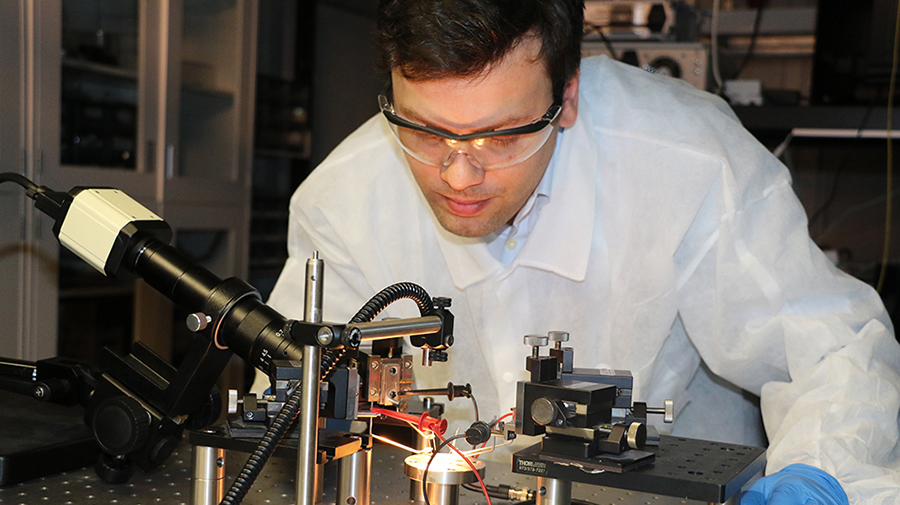
His team has leveraged the same technology and techniques used for the fabrication of microchips to produce a wafer that incorporates the metal oxides on a silicon substrate. The wafer surface is patterned in unique nanocones with tips on the order of 100 nanometers in size, with varying height and spacing, to achieve peak solar energy absorption.

The nanocones are then given coatings of the various metal oxides to tune the optical and electronic properties to achieve the strongest water splitting. This interplay of matter and light produces what is known as a ‘plasmonic effect’, which provides the surface energy boost needed to break the water bonds to produce hydrogen and oxygen.

“In this process of using light on the surface of metal oxides, assisted by the unique patterns we have designed in the metal oxide layers, we can tailor the absorption characteristics of the sunlight and induce the chemical reaction – splitting it to produce water and hydrogen,” he said

The team has recorded promising results for hydrogen generation with some of the identified metal oxides, and has filed an invention disclosure on their discovery. The research has garnered a significant amount of interest in the international scientific community, and was selected to be presented at Frontiers in Optics, Optical Society of America’s centennial meeting held last October in New York.

That is how this research may ultimately contribute to the development of a sustainable and commercially viable hydrogen from from water, which has been a goal of the sustainable energy community for some time.

“We envision a more distant future where we take seawater, drive it through a large panel embedded with the photocatalytic metal oxides, and produce hydrogen and oxygen. When that hydrogen is later used as a fuel source, it produces water that can either be consumed, or again used to produce hydrogen.”

Unlocking the potential of hydrogen using photocatalysis could also expedite a number of innovations and useful advancements. Photocatalysis has the potential to support the transformation of carbon dioxide, an undesirable greenhouse gas, into more valuable fuels like methanol and ethanol. It also has the potential to improve purification technologies, assisting in the decomposition of organic pollutants. The baseline knowledge derived from this area of research can even be applied to petro-chemical reactions through the use of new catalysts to make high-value chemicals, which fits in with the UAE’s industrial and economic goals.

“This dynamic joint project is something very unique in that it has a significant fundamental research focus but with clear potential application, which means it can not only meet a current and identified need, but also potentially be a game-changer in many other areas. We are excited by the promise photocatalytic water-splitting can achieve for the UAE and the world,” Dr. Viegas concluded.


Zarina Khan
Senior Editor
28 February 2017


Raising the Bar for Membraneless Flow Batteries

Membraneless flow batteries are emerging as a promising kind of low-cost battery for large-scale energy storage. But if they are to achieve commercial success against other energy storage solutions, they must be designed with scalability in mind.

Many of today’s membraneless flow batteries are designed at the micro-level, at a size no bigger than the palm of your hand. These batteries store and release energy efficiently, but when scaled to a size large enough to generate and store the amount of energy needed to power a single household, they prove ineffective.

To help advance the research and development of membraneless flow batteries, Masdar Institute Assistant Professor of Mechanical and Materials Engineering Dr. Saif Al Mheiri has developed a method for determining whether or not a membraneless flow battery design has the potential to be commercialized. He has presented his findings in a review paper co-authored by his PhD student Musbaudeen Bamgbopa and Dr. Hong Sun from the Shenyang Jianzhu University. The paper was published in the journal of Renewable and Sustainable Energy Reviews in November 2016.

The aim of his work was to develop a method for comparing and contrasting the performance of different membraneless flow battery designs when it comes to their potential utility-scale performance, which is measured in terms of two performance metrics – scalability and electrolyte reusability.

“The performance metrics we developed for reusability and scalability enable researchers designing membraneless flow batteries, or potential investors, to compare different designs for their potential commercial development. We also hope that the performance metrics we developed will direct future research and development of membraneless flow batteries that have a greater potential for large-scale energy storage,” Dr. Al Mheiri remarked.

By creating a method for determining whether or not a design can meet the requirements of a large-scale energy storage system – being scalable and reusable – Dr. Al Mheiri expects that this research will help guide future membraneless flow battery design work.

Through their extensive research of membraneless flow cells reported in the literature from 2004-2016, Dr. Al Mheiri’s team noticed that the focus thus far has been on maintaining separation of the electrolytes without the membrane. “They have missed on other important parameters, including the fact that electrolytes must be reused and that the performance should remain effective even if scaled up,” Dr. Al Mheiri asserted.

A typical membrane-based flow battery includes two electrolytes – one positively charged anolyte and a negatively charged catholyte – which are separated by a membrane. When the two electrolytes flow past the membrane, they exchange ions creating an electric current at electrodes where electrochemical reactions take place. The membrane has the critical role of keeping the electrolytes separated and inducing the ion exchange required to create a current.

However, the membrane in a typical flow battery presents two major challenges – they are the most expensive component in the battery and the most unreliable, as they can become corroded, reducing the battery’s lifetime. To get around these issues, researchers are attempting to design flow batteries without a membrane.

“If you remove the membrane, there is a significant opportunity to reduce the overall cost of the battery. But of course, this introduces a new challenge, where a cell has to be designed in such a way that separation between the two electrolyte solutions is maintained without a membrane,” said Bamgbopa.

To demonstrate the fact that the membraneless flow cells designed over the last decade have neglected the key issues of scalability and electrolyte reusability in their design concepts, Dr. Al Mheiri and his team analyzed the design concepts and categorized them into five main designs. They then found all the designs that fall under each category and selected two of them to compare to validate their performance metrics in comparing designs.

While many of the designs Dr. Al Mheiri’s team studied demonstrated excellent separation at the micro level, once the designs were considered against the scalability performance indicator, they displayed an inability to keep the electrolytes separated. This is a serious flaw, as one of the most important characteristics of a membrane-based flow battery is its ability to easily scale up by increasing the tank sizes that hold the electrolytes. It is essential that a membraneless flow battery demonstrates the same scalability if it is going to be considered as a viable alternative for large-scale energy storage.

“We define a ‘scalable’ design as one in which its performance (particularly fuel utilization, efficiency and electrolyte reusability), at worst doesn’t decrease (could either increase or stay the same) as a result of the upscale,” explained Dr. Al Mheiri.

Another crucial characteristic of a flow battery is its ability to reuse the electrolyte. The same electrolyte is reused repeatedly; in fact, typical membrane-based flow batteries are said to deliver more than 10,000 full cycles with the same electrolyte. The recovery of the charged or discharged electrolyte solution depends on the ease of separation of the electrolyte mixture after the first pass through the system.

However, Dr. Al Mheiri found that this critical feature of reusability was not reflected in the designs reported in the literature.

“Fuel utilization was not present, or reusability, which is one of the new parameters we have introduced. Most of the publications indicate that the designs are good, but when you go back and check, they only performed a single pass of the electrolyte. But in a flow battery, the electrolyte must be continuously reused and cycled back through the battery,” Dr. Al Mheiri remarked.

Dr. Al Mheiri’s team developed a way to determine the feasibility of separating the positive and negative electrolyte streams after a single pass through the battery in each design, expressed as a ratio of electrolyte volumes.

In order for membraneless flow batteries to compete with membrane-based flow batteries, the batteries must be scalable and the electrolytes must be able to be recirculated through the system.

Dr. Almheiri is currently working on a novel design for a membraneless flow battery that meets the two key requirements of scalability and reusability.

Membraneless flow batteries offer a low-cost solution to electrochemical energy storage and have the potential to facilitate widespread use of renewable energy, like solar and wind power, which is why Dr. Al Mheiri wants to see research of membraneless flow batteries continue, but with a new focus on scalability in the design concept. He hopes that his findings will direct future research and development of membraneless flow batteries by enabling researchers to compare and contrast existing designs in order to develop the most efficient and scalable design yet.

Dr. Al Mheiri’s pioneering work to develop a method for determining whether a design meets key performance indicators is a critical step towards ensuring that future membraneless flow battery designs will be able to meet the world’s renewable energy storage needs in the real world.

Erica Solomon
News and Features Writer
16 March 2017


Pioneering Treatment Method Turns Sewage Sludge into Farm-Safe Fertilizer

Biological waste from livestock has long been used to help make farm soil more fertile, but while human waste has similar potential benefits, its use presents more challenges. Sewage contains high concentrations of heavy metals and current treatment methods are unable to remove enough of these toxic metals to make biosolids safe for use on farms as fertilizer, so it often ends up being landfilled instead.

Now, however, researchers from Masdar Institute have developed an energy-efficient, low-cost method for removing heavy metals from biosolids. The novel process has demonstrated the ability to remove over 90% of zinc and over 60% of copper from sewage sludge collected from the Masdar City wastewater treatment plant. This removal rate is significantly higher than any previously reported removal rates, and in the case of zinc, the removal was well below the tolerable concentration levels set by regulatory agencies.

Dr. Shadi Wajih Hasan, Assistant Professor of Chemical and Environmental Engineering at Masdar Institute, developed the novel three-step treatment process that combines chemical conditioning, electrokinetic remediation and a post-treatment washing. He was lead author on a paper describing the process, which was published in August 2016 in the Nature affiliated journal Scientific Reports, along with co-authors, PhD student Adewale Giwa, former MSc student Amna Al Housani and postdoctoral researcher Iftikhar Ahmed.

“If the UAE could convert the 26,000 tons of biosolids that are generated yearly from Abu Dhabi’s urban wastewater treatment plants into fertilizer, the environmental impact of keeping this waste out of the landfill and the economic benefits of creating a valuable fertilizer product that could be sold would be significant. I think this is an opportunity that the UAE should explore in greater depth,” said Dr. Hasan.

In his paper, Dr. Hasan briefly explains the economic benefit of converting biosolids to fertilizer. He concluded that the use of sludge as land fertilizer would potentially yield over US$2 million per year as revenue for Abu Dhabi, giving a boost the country’s fertilizer industry, which has grown by more than 50% in the last ten years. In 2014, the country’s fertilizer producers manufactured 5 million tons of products, earning US$653 million in revenues. Currently ranked as the third largest fertilizer producer in the GCC, the UAE’s fertilizer industry would greatly benefit from any technological advancement that would reduce production costs while improve the product quality of its fertilizer.

In addition to being a potential boon for the country’s revenue stream, the conversion of biosolids to fertilizer would also result in significant environmental savings.

Sewage sludge contains high concentrations of heavy metals that are not degraded through conventional physical, biological, and chemical treatment processes. In many countries, including the UAE, the current approach to handling municipal sludge is to landfill it, which can contaminate the environment around it.

And his treatment method is being scaled to commercial levels. Dr. Hasan ran a pilot-scale experiment of the system to determine its economic viability. The pilot-scale experiment showed excellent reproducibility of the technology, indicating that it could be scaled up for industrial process design.

This scalability factor is important if the novel treatment method is going to be able to reproduce these high removal levels on a large scale. One reason why sewage sludge is landfilled is because of the high cost of treating it. Attempts to treat and remove the heavy metals from sewage sludge are usually expensive and energy-intensive, and yield only a slight reduction in the overall metal content. Thus, any potential solution to reduce the presence of heavy metals in biosolids must be low-cost and energy-efficient if they are to be applied on a mass-scale.

Dr. Hasan’s three-stage treatment process not only meets the requirements of being potentially cost-effective and low-energy, but also results in a high-value product in the form of a nutrient-rich fertilizer.

THREE-STEP TREATMENT PROCESS

The novel treatment process uses a low electric field treatment, making it significantly more energy-efficient than conventional electrokinetic (EK) remediation processes. The kinetics of this low-strength EK treatment was improved through the use of aqua regia acid.

“Aqua regia contains nitrite which gives rise to free nitrous acid that can increase biodegradability, disrupt extracellular polymeric substances (EPS) and microbial cells, and reduce sludge particle size by breaking down EPS. More importantly for this study, the nitrous acid can disrupt the organically bounded zinc and copper trapped in EPS,” Dr. Hasan explained.

EK treatment involves running an electric current through the sludge between two electrodes to break the bonds of the metal ions. While EK remediation can be very effective at removing metal ions, its widespread application has been hindered because it is energy-intensive and expensive.

Dr. Hasan’s team found a way around these limitations by conditioning the biosolids first with the aqua regia. While the two steps of chemical conditioning and electrokinetics are quite effective – removing 84% of zinc and 63% of copper from the biosolids – Dr. Hasan introduced a third step which led to even higher metal removal rates.

A biogenic chelating agent was used to post-treat the sludge after the low strength, acidified EK process. This agent is a cation-capturing organic extract from citrus fruit peel waste known as pectin. Pectin from citrus peels is physically stable, exhibits a particularly high degree of metal uptake, and is also suitable for coagulating residual ions in sludge after EK treatment.

Dr. Hasan discovered that washing the biosolids in pectin removes more of the free ions that were not pulled to the electrodes during the electrokinetic treatment, and settled to the bottom of the sludge.

“We are very excited by our discovery of the use of pectin as a post-treatment option. Pectin is also sourced from waste, which means we have developed an innovative method that leverages two separate waste streams to create a value-added product,” Dr. Hasan remarked.

This innovative three-step treatment strategy has successfully eliminated the presence of zinc to levels below the prescribed standard for unrestricted use of biosolids locally and globally, achieving a removal rate of 94%. Copper levels were also brought much closer to their unrestricted standard, with a 64% removal rate achieved.

Compared to landfilling and incineration, utilization of sludge for agricultural use is considered the best alternative for sludge disposal. And now, thanks to research conducted at Masdar Institute, an innovative, potentially low-cost method for removing heavy metals from sludge has been developed, bringing the UAE closer towards its objectives of eliminating waste, diversifying the economy, and preserving the environment.


Erica Solomon
News and Features Writer
27 March 2017


Self-Cleaning Membranes for Sustainable Desalination

An advanced water treatment membrane made of electrically conductive nanofibers developed at Masdar Institute was highlighted by Dr. Raed Hashaikeh, Professor of Mechanical and Materials Engineering at Masdar Institute, in his keynote speech during the 3rd International Conference on Desalination using Membrane Technology held last week in Spain.

Self-cleaning membranes offer a critically needed solution to the problem of fouling, which is the unwanted build-up of organic and inorganic deposits on a membrane’s surface that reduces the membrane’s ability to filter impurities. Water treatment and purification membranes that can easily clean themselves when fouled could make pressure-driven membrane filtration systems used to treat and desalinate water more energy-efficient.

“Keeping membranes clean, permeable and functional is a great challenge to membrane desalination technologies. When a membrane becomes fouled, its pores get blocked and its flux is severely reduced, which means that much less water can pass through the membrane at a constant pressure,” Dr. Hashaikeh explained.

Conventional methods for cleaning fouled membranes involve expensive and harsh chemical treatments, and often lead to water treatment plant shut-downs, which can cost millions of dollars in lost operational hours. In the UAE, annual spending on desalination is already estimated to cost AED12 billion, indicating a pressing need for solutions that avoid costly shut-downs and treatments.

In addition to posing a heavy financial burden, fouled membranes are also a sustainability issue, as once a membrane becomes fouled, the higher pressure needed to push water through clogged pores significantly increases the plant’s energy consumption. The harsh chemicals used to clean a fouled membrane are also bad for the environment and require neutralizing. Thus, finding a way to easily and quickly clean fouled membranes not only makes financial sense, but environmental sense.

In a country like the UAE, where natural gas-powered thermal desalination produces over 80% of the country’s domestic water, innovative technologies like self-cleaning membranes to support a shift toward lower-energy and lower-cost membrane-based desalination are essential for achieving economic and environmental balance while meeting the UAE’s water demands.

And now, Dr. Hashaikeh’s research group may have brought the UAE closer towards realizing a more sustainable and economic approach to membrane desalination through their research on the application of advanced nanofibers for enhanced, self-cleaning membranes.

The group has leveraged the electrically conductive nature of a special kind of nanofiber, called carbon nanotubes (CNT). CNTs are tiny cylindrical tubes made of tightly bonded carbon atoms, measuring just one atom thick. But the CNTs Dr. Hashaikeh’s team used, which were provided by global security, aerospace, and information technology company Lockheed Martin, are not ordinary CNTs.

“The carbon nanostructures supplied by Lockheed Martin are special; they are networked. This means that they are composed of many interconnecting channels that branch off in all directions. This interconnectivity is what enables the entire membrane to become completely cleaned when electricity is applied to it,” Dr. Hashaikeh said.

The networked CNTs, also known as carbon nanostructures (CNS), coupled with the team’s expert membrane fabrication know-how, resulted in the development of two different types of membranes that can clean themselves when a low-voltage electric current is run through them.

The first type is a microfiltration membrane, which has pores sizes ranging from 100 nanometers to 10 micrometers, where a nanometer is approximately one hundred thousand times smaller than the width of a human hair and a micrometer one thousand times larger than a nanometer. The second is a nanofiltration membrane with pore sizes ranging from one to ten nanometers. Both membranes demonstrated the ability to clean themselves in response to an electric shock, which resulted in the immediate restoration of the membranes’ flux.

Dr. Hashaikeh’s investigation of a self-cleaning membrane began four years ago, when he realized that electrolytic cleaning – which is the process of removing soil, scale or corrosion from a metal’s surface by subjecting it to an electric current – could also be used to clean membranes. To prove his theory, he coated a membrane with ordinary CNTs. When a voltage was applied to the membrane, the parts of the membranes that were coated with CNTs were successfully cleaned. Dr. Hashaikeh filed a patent for this in-situ electrolytic cleaning process with the United States Patent and Trademark Office (USPTO) in 2014.

However, there were limitations to this discovery, namely that only specific areas in the coated CNTs were cleaned, not the entire membrane. Thus, to develop an efficient, self-cleaning membrane with commercial potential, Dr. Hashaikeh required a material that would easily allow electric shockwaves to penetrate through the entire membrane’s surface area.

The unique, interconnected structure of Lockheed Martin’s carbon nanostructures proved to be just the right type of electrically conductive, nano-fibrous material required.

“We immediately recognized that Lockheed Martin’s CNTs might enable electricity to pass through the entire surface, but we had to modify the nanostructures to transform the material into a membrane. To do this, we controlled certain properties, such as wettability and pore size, and improved its mechanical strength by incorporating polymer materials,” he explained.

Dr. Haishaikeh’s team successfully developed a self-cleaning microfiltration membrane in 2014 and a paper describing the research was published in the Journal of Membrane Science. But they did not stop there; they wanted to take their research a step further and find a way to develop a self-cleaning nanofiltration membrane. While microfiltration membranes are useful for removing larger particles, including sand, silt, clays, algae and some forms of bacteria, nanofiltration membranes can go a step further, removing most organic molecules, nearly all viruses, most of the natural organic matter and a range of salts. Nanofiltration membranes also remove divalent ions, which make water hard, making nanofiltration a popular and eco-friendly option to soften hard water.

To create self-cleaning nanofiltration membranes out of Lockheed Martin’s networked CNTs, the team needed to overcome the problem of the CNTs’ large pore sizes, which prevented the material from functioning as a nanofiltration membrane.

To achieve this they looked to a second advanced nanofiber material previously developed by Dr. Hashaikeh’s research group, known as networked cellulose. Networked cellulose is a modified type of cellulose made from wood pulp. When dried, the networked cellulose gel shrinks in volume, but maintains its integrity and shape, becoming harder as it shrinks. The research team asserted that the networked cellulose gel could reduce the membrane’s pore sizes while maintaining its structural integrity.

The researchers then mixed the carbon nanostructures with the networked cellulose gel and as the mixture dried, the networked cellulose shrank. The shrinking of the network cellulose in turn pressurized the nanostructures in the membrane. The resulting membrane is strong with much smaller pore sizes. Dr. Hashaikeh reports that the pore size dropped from 60 nanometers to just three nanometers with the addition of the networked cellulose in a paper describing the study, which was published in the journal Desalination last month. Co-authors from Masdar Institute include PhD student Farah Ahmad and postdoctoral researcher Boor Lalia, along with Dr. Nidal Hilal of Swansea University.

Dr. Hashaikeh’s prolific scientific contribution to the field of membrane desalination has led to his recent appointment as an associate editor for the journal Desalination; a position that is essential to the quality of the international journal and its peer review process.

The innovative research conducted by Dr. Hashaikeh and the team will help position Abu Dhabi as a leader in membrane desalination research and technology development. This project has already yielded a patent filing, and is hoped to provide the emirate with novel intellectual property in the critical industry of desalination.


Erica Solomon
News and Features Writer
13 April 2017

Acknowledgement:

The authors would like to thank Lockheed Martin (13NZZA2) for providing the CNS material and partially funding this work.


Chemical Mapping of DNA Molecule Achieved

A novel imaging technique that leverages atomic force microscopy (AFM) to accurately measure the chemical diversity within a DNA molecule has been developed by a research team from Masdar Institute (MI) and the Petroleum Institute (PI).

Dr. Matteo Chiesa, Professor of Mechanical and Materials Engineering at Masdar Institute, shared the process at the first New York University (NYU) Biomedical and Biosystems Conference, which was held from 9-11 April at NYU Abu Dhabi (NYUAD). Dr. Chiesa, MI intern Mashael Alshehhi and PI professor Dr. Saeed Alhassan discovered two critical experimental parameters for the use of AFM to image accurately a biomolecule’s surface, which could in turn accelerate the development of critical biomedical technologies.

Until now, determining the exact topography of a biomolecule’s surface, such as its height or arrangement of its parts, has been difficult to measure with certainty. AFM – which is an advanced tool to image and characterize structures as small as a fraction of a nanometer, or a million times smaller than the width of a human hair – was only able to interpret “apparent height” as opposed to “true height.”

The inability to determine the precise topography of a biomolecule limits bioengineers’ ability to develop important biomedical technologies. For example, accurate imaging of a biomolecule’s surface, such as DNA, would enable scientists to engineer other biomolecules, like proteins, with the precise structure and morphology required to latch onto the DNA, where they could then administer drugs or provide the DNA with a set of instructions to carry out a desired task.

Dr. Chiesa’s team has brought the scientific community closer towards developing such biomedical breakthroughs through their advanced imaging process that leverages multifrequency AFM to determine chemical heterogeneity (chemical diversity) and height of a DNA molecule. The team described the imaging process in a paper published earlier this year in the journal Physical Chemistry Chemical Physics. The paper made the front cover of the journal’s 28 April 2017 issue.

MULTIFREQUENCY MODE

In the course of their research, the team investigated the impact of various experimental parameters that must be considered when imaging a biomolecule with AFM, including the ideal AFM operational mode, the role of the substrate used, and the ideal imaging timeline.

The first finding was the appropriate AFM operational mode for biomolecule imaging. In a typical AFM experiment, an ultrafine probe needle, scans over a surface while tracing its topography to produce an image based on the forces the tip experiences as it interacts with molecules or atoms on the surface. The cantilever, which is the arm controlling the microscope’s probing needle, oscillates at a single frequency across the material’s surface, producing an atomic-scale map of the material’s topography.

In this study, the team explored a new AFM operation, called bimodal AFM mode, which involves oscillating the cantilever with two separate frequencies simultaneously. This multifrequency approach yielded images of the DNA’s surface with higher compositional resolution, sensitivity and throughput, which in turn led the team to better understand how a key experimental parameter affects how a biomolecule’s surface characteristics are altered over time.

THE ROLE OF THE SUBSTRATE AND TIME

The second key finding for the DNA biomolecule AFM technique considers the impact of the substrate on which the biomolecule is fixed, the impact of which is often overlooked.

“We felt that while advances in hardware, software, physical models and interpretation of data in the AFM field are drastically improving, robust characterization of the substrate is a key parameter in the experimental set-up that requires deeper investigation,” Dr. Chiesa explained.

The team found that the crystal mica substrate that is preferred for AFM due to its atomically flat and smooth surface, which is transparent and free from scratches and contamination, does not retain its suitability as a constant over time.

To determine how the substrate affects the scanning probe microscope’s ability to measure a DNA molecule’s topography, the team investigated the impact that a mica substrate’s age – measured as the amount of time passed since the mica was freshly cleaved – has on the DNA molecule. They compared measurements of DNA height on the mica substrate that was freshly cleaved, with DNA measurements taken from a mica substrate that sat out for 48 hours. This led to the third aspect of the AFM technique discovery – importance of timeline.

The rapid accumulation of pollutants over the substrate is a phenomenon the team termed “adsorption.” As the substrate becomes increasingly contaminated by adsorbates over time, the topographical measurements of the DNA molecule become difficult to obtain. This happens because AFM relies on physically feeling the atomic forces between the microscope’s needle and the material’s surface. As more materials, or adsorbates, build up over the DNA molecule over time as the substrate is exposed to air, the adsorbates prevent the microscope’s needle from feeling the DNA.

In their paper, Dr. Chiesa’s team reveals their findings that mica substrates render biomolecules essentially invisible up to 48 hours after it has been cleaved, exposing the critically important role the substrate plays in obtaining accurate and reliable topographical data of a biomolecule’s surface.

“We found that as the substrate is exposed to air over the course of 48 hours, a layer of water molecules, potassium ions and carbonates build up over the substrate, rendering the molecule of DNA invisible to the AFM,” Alshehhi explained. “Thus, we asserted that imaging of the DNA should be carried out as soon as possible after the mica substrate is cleaved and the DNA sample is prepared.”

The team thus demonstrated that the successful imaging of a biomolecule using AFM not only depends on the biomolecule’s properties, the preparation of the biomolecule, or the cantilever calibration, but also on the exposure time of the substrate to the air environment. This information will enhance scientists’ ability to collect accurate, reliable data on biomolecules and other materials studied with atomic force microscopes in the open-air environment, which will in turn enrich scientific knowledge of biomolecule characteristics.

“Until now, scientists did not know how to account for the aging of the substrate and sample in the air due to adsorption,” Dr. Chiesa said. “To get around the challenge of imaging biomolecules in air environments, most AFM studies of biomolecules are conducted in water, as water keeps the sample stable. But our bimodal AFM scheme coupled with our findings on the role of the aging substrate enabled us to develop a standardized mode of operation that, if applied by the wider AFM community, will lead to a significant compilation of information on biomolecules.”

With the newfound realization that accurate height measurements of DNA molecules can be determined with multifrequency AFM under the condition that a freshly cleaved mica substrate is used, Dr. Chiesa and his team hopes their findings generate a wave of new research of biomolecules and other materials using their imaging approach that will bolster the development of biotechnologies needed to improve human health and well-being.

Zarina Khan, Senior Editor and Erica Solomon, News and Features Writer
13 April 2017

Masdar Institute Files Patent on Design of Novel Catalytic Converter Substrates to Reduce Toxic Vehicle Emissions

A Masdar Institute professor and student have filed a patent application with the US Patent and Trademarks Office for a novel catalytic converter prototype that has the potential to significantly reduce the amount of toxic greenhouse gases emitted through vehicle exhaust.

In most developed countries, the majority of global warming gases that are produced by the transportation sector come directly out of cars’ and trucks’ tailpipes in the form of exhaust. To reduce such high levels of toxic vehicle emissions, Dr. Rashid Abu Al-Rub, Associate Professor of Mechanical and Materials Engineering at Masdar Institute, and PhD student Oraib Al-Ketan have developed an optimized catalytic converter that may boost automobile manufacturers’ ability to produce low-emissions vehicles.

Dr. Steve Griffiths, Vice President for Research, Masdar Institute, said: “The technology developed by Dr. Abu Al-Rub and Oraib demonstrates MI’s commitment to conducting use-inspired research that has direct relevance to UAE enterprises and local human capital development. This innovative prototype for transportation demonstrates Masdar Institute’s interest in leveraging research and development to make fossil energy cleaner and more sustainable.”

Attempts to reduce the amount of greenhouse gases emitted by cars and trucks have resulted in mandatory emission standards, which automobile manufacturers are reportedly struggling to meet. In 2015, Volkswagen admitted to equipping some of their diesel vehicles with software that allowed the cars to pass emissions tests by appearing as if they emitted lower levels of greenhouse gases than they actually did. And earlier this year a second automobile company, Renault, came under the spotlight for similar practices that reports suggest are not uncommon in the industry.

The excess emissions produced by the thousands of automobiles failing to meet mandatory emission regulations are causing an increase in air pollution, which has an immediate impact on the health and well-being of people across the world, as well as significantly increasing concentrations of global-warming gases in the atmosphere.

“The reason that automobile manufacturers are choosing to cheat emissions inspections rather than manufacture vehicles that are able to legally pass them, is due to the high costs associated with producing cars that meet emission targets,” Dr. Abu Al-Rub explained.

All automobiles are made with catalytic converters whose job it is to capture harmful compounds in car exhaust ‒ namely unburned hydrocarbons, carbon monoxide and nitrogen oxides ‒ and convert them into harmless compounds. But catalytic converters are expensive, costing thousands of US dollars, as their ceramic-based honeycomb structures are coated with precious metals like platinum and palladium. The high cost of catalytic converters leads many automobile companies to fabricate catalytic converters that are less efficient at scraping up toxic compounds in order to reduce the vehicle’s manufacturing cost.

In response to this situation, the MI team has developed novel catalytic converter substrates that will enable automobile companies to manufacture vehicles that meet tighter emission regulations while also reducing their manufacturing costs.

“Compared to conventional catalytic converters, our catalytic substrates have a higher chemical conversion efficiency – which refers to the conversion of toxic gases like unburned hydrocarbons and carbon monoxide into carbon dioxide and water – and can begin the chemical conversion process as soon as one minute after the car is started, resulting in greater emission reductions,” Al-Ketan explained.

The MI catalytic converter’s high conversion efficiency can be attributed to its unique structure, which involves an intricate and intertwined architecture that increases its internal surface area while minimizing its weight. The larger surface area allows more chemical interactions to take place between the gases leaving the engine and the precious metals, resulting in higher toxin removal rates.

The unique structure also reduces the converter’s weight and cost. The lightweight structure in turn reduces the back pressure on the engine, which increases the efficiency of the engine itself and reduces overall fuel consumption, and requires less precious metal, thereby reducing its cost.

In comparison to other trial and error methods used in the making of catalytic converter substrates, the uniqueness of the design of the MI converter substrate is made possible through optimization by a mathematical model, which ensures the converter has the highest chemical conversion efficiency while also maintaining other important characteristics, including durability and lightweight.

With a provisional patent filed for the MI catalytic converter, the researchers are exploring options to launch a spin-off with their innovative technology soon and seeking new collaborators for technology development.

As of January 2017, the innovative research conducted by Masdar Institute students and faculty has resulted in 14 issued US patents, over 90 filed US patent applications, over 140 invention disclosures and more than 1200 published articles in peer reviewed journals, firmly establishing the Institute’s place as a leader in intellectual capital development in the UAE.


Erica Solomon
News and Features Writer
24 May 2017

Diabetes And Vitamin D Deficiency Genetically Linked In Emiratis

The unprecedentedly high prevalence of Type 2 Diabetes Mellitus (T2DM) among Emiratis may be linked to a genetic inability to metabolize Vitamin D properly, research at Khalifa University has indicated, and further exploration is underway to better understand the potential association.

“The UAE has one of the highest rates of T2DM in the world and also one of the highest rates of vitamin D deficiency. This has often been considered a coincidence, but international research has been linking these two medical issues, and we sought to see if the Emirati genetic code had any answers to this association,” explained revealed Dr. Habiba Al Safar, Associate Professor of Biomedical Engineering Department and Director of Khalifa University Center for Biotechnology.

“Our results demonstrate a possible link between specific vitamin D receptor (VDR) in a common type of genetic variation among people and Type 2 Diabetes Mellitus (T2DM) in the Emirati population,” she revealed.

Dr. Al Safar co-authored a paper titled ‘Vitamin D receptor gene polymorphisms among Emirati patients with type 2 diabetes mellitus’ that was published in the Journal of Steroid Biochemistry and Molecular Biology. Her co-authors included Dr. Sarah El Hajj Chehadeh Post-Doc Researcher at Khalifa University, Dr. Laila Abdel-Wareth Chief of Clinical Pathology, Pathology & Laboratory Medicine Institute, Cleveland Clinic Abu Dhabi, Dr. Afrozul Haq Principal Scientist at VPS Healthcare, Dr. Dr. Herbert F. Jeline Associate Professor in the School of Community Health at the Charles Sturt University, Dr. Gehad El Ghazali Consultant and Service Lead Immunologist Sheikh Khalifa Medical City, and Dr. Fatme Al Anouti Associate Professor and Assistant Dean of College of Natural and Health Sciences, Zayed University.

Their project involved a total of 355 Emirati volunteers, of which 264 were diabetic individuals and 91 were healthy individuals, all of whose genomic DNA was extracted and examined. The study sought to examine the association of VDR polymorphisms and T2DM in the Emirati population. A polymorphism involves one of two or more variants of a particular DNA sequence. The most common type of polymorphism involves variation at a single base pair, called single nucleotide polymorphism, or SNP. SNPs in the human genome are believed to correlate with disease, drug response, and other observable characteristics of an individual resulting from the interaction of its genotype with the environment.

“The results suggested that a specific cluster of SNPs is associated with the susceptibility to Type 2 diabetes in the Emirati population while another cluster provides a degree of protection from it,” Dr. Al Safar shared.

The presence of the beneficial or the detrimental inherited SNP cluster – called a haplotype — may be due to the specific racial mixes of individuals, and requires further studies to confirm its origin and role. By examining haplotypes, scientists can identify patterns of genetic variation that are associated with health and disease states. The research also found that a specific cluster of SNPs influenced total cholesterol and low-density lipoprotein, suggesting it may play a role in in the progression of diabetes and its complications.

The project follows on research into a link between vitamin D receptors and Type 2 Diabetes that have been taking place around the world. In Saudi Arabia, a recent study found that VDR genetic variants were significantly associated with T2DM as well as cholesterol disorders that are often associated with type 2 diabetes – dyslipidemia, hypertriglyceridemia, and low high-density lipoproteins (HDL) levels. Similar results have been found in Caucasians in of European descent, but explorations in Indian, Turkish and Chinese populations have not been able to reproduce such findings. This has led scientists to believe the genetic VDR-TD2M link may only appear in certain population groups.

Humans receive vitamin D partially through diet but mostly from exposure to the ultra-violet radiation from the sun, which allows the body to produce its own vitamin D. It is used by the body for many functions, like bone metabolism, immunity, nerve function, and now scientists believe it may also play a role in the function of pancreas and insulin sensitivity, malfunction of which are linked to diabetes.

The next step for this research is to perform validation studies in other ethnic groups. Dr. Al Safar is also looking to expand the cohort size to confirm the project’s findings. The goal is to confirm the identified genes, so they can be added to diagnostic panels for use in clinic to improve diagnoses and treatment of T2DM patients.

“To understand the genetic components of a disease like Type-2-Diabetes, we need to compare associations between different ethnic groups. In combination, these comparative analyses provide improved powers of discernment. It is also important to validate findings across different ethnic groups. Some genetic associations are strong in one ethnic group, but weak in others. These biomarkers are useful for diagnostic applications and could even lead to treatments,” Dr. Al Safar explained.

Cooling Amine Solvent Using Vortex Tubes

Team Demonstrates Energy and Cost Savings Potential for Acid Gas Enrichment Units

A collaborative project at the Khalifa University Center for Catalysis and Separation has explored how to improve the sustainability of the acid gas enrichment (AGE) process in natural gas processing plants operating in hot countries, to reduce their carbon footprint and improve energy efficiency.

When natural gas contains containing significant amounts of hydrogen sulfide and carbon dioxide, it is considered ‘sour gas’ and has to undergo processes that remove the acidic components through a process called ‘gas sweetening’.

Gas sweetening units produce a by-product known as ‘acid gas’ besides the main product named ‘sweet gas’. Acid gas, which is a mixture of H2S and CO2 predominately, is processed further in sulfur recovery units to prevent the emission of sulfur species and recover the elemental sulfur. If the acid gas contains low concentrations of H2S, an AGE unit is employed to enrich the H2S content of the acid gas. AGE units also produce a CO2-rich stream besides the enriched acid gas. In hot climates like in the UAE, high ambient temperature leads to AGE operation with hotter solvents, which results in higher energy consumption in the regeneration section of the plant. In order to reduce this inefficiency, the team considered the use of a scheme for cooling the solvent within an AGE unit, to reduce the operational energy.

The team was composed of Khalifa University Associate Professor Dr. Abdallah S. Berrouk, Assistant Professor Dr. Yasser F. AlWahedi, Research Engineer Satyadileep Dara, and Chemical Engineering alumna Aisha A. AlHammadi, along with Abdulla Al Shaiba from Al Yasat Petroleum Operations Company Ltd and Fadi Al Khasawneh from the Abu Dhabi National Oil Company.  

“We looked to integrate a Ranque-Hilsch vortex tube (RHVT) within the acid gas enrichment unit to decrease its energy consumption while enhancing the purity of the resulting gas product,” Dara explained. He was the lead author on a recently published paper in the Journal of Cleaner Production titled ‘Carbon footprint reduction of acid gas enrichment units in hot climates: A techno-economic simulation study’.

A RHVT is a mechanical device that separates a compressed gas into hot and cold streams. Requiring no moving parts, electricity, or Freon, it instead leverages principles of physics to separate the gases into a hot end that can reach temperatures of 200 °C and a cold end that can reach −50 °C, making it an energy-efficient cooling tool. RHVTs are often used in to cool cutting tools that heat up during use.

This potential solution to reduce the energy waste of AGE was inspired by the team’s knowledge of the UAE’s Mirfa plant.

“We were aware that the Mirfa plant produced high pressured nitrogen as a by-product of the air separation unit in the same plant complex, and realized that integrating a nitrogen-fed RHVT was the best option to reduce energy wastage, given the available resources and resulting economics,” Dara shared.

In the team’s proposed solution, the high-pressure nitrogen enters the RHVT and is separated into hotter and colder streams. The latter is then mixed with ambient air in an air-nitrogen mixer to provide a coolant stream at sufficiently lower temperatures, such that it cools down the lean solvent to the desired levels. Lower lean solvent temperature in turn results in significant reduction in energy consumption and higher product purities.

The solution they proposed was tested and validated in process simulator ProMax, which found that at the optimal temperature, their proposed RHVT solution can achieve 13 kg/s in steam savings (equivalent to 40% reduction in total steam rate). This reduced energy consumption leads to an annual carbon dioxide footprint reduction of 83.7 million kg, which is equal to a 40% reduction in the plant’s total carbon dioxide footprint. Economically, the evaluated annual energy savings translate to USD11.2 million.

The team believes that the solution they have hit upon can be utilized in sour gas processing plants in hot climates, all of which struggle with reducing energy wastage due to the high temperatures of the solvents.

“Hot climate regions like that of the Gulf would benefit significantly from the proposed scheme, since it results in a coolant stream that is not readily available in hot regions due to the high ambient temperature. And while our project used pressurized nitrogen from a specific facility, in fact any high pressure stream can be used as the working fluid for the RHVT, like compressed ambient air. Regardless what gas is used, we have demonstrated that the integration of RHVT can help a natural gas processing plant operating in hot climate achieve increased operational efficiency in terms of product quality and energy consumption,” Dr. AlWahedi added.

Following their simulation based work, the team are now doing laboratory-scale tests to assess the performance of RHVT to provide a quantitative prediction of levels of cooling achieved using the RHVT.

Zarina Khan

Senior Editor

26 November 2018

Cellular Uptake of Silver Nanoparticles Explored

[vc_row][vc_column][vc_column_text]Mollusks Dosed with Amantadine Reveals Intracellular Trafficking Pathway

A paper published by Khalifa university faculty has enhanced understanding of nanoparticle toxicity, specifically which uptake pathway contributes most to the damaging effects of silver on a cellular level.
Nanoparticles are defined as materials that are between 1 and 100 nanometers. Metal and metal oxide nanoparticles (NPs) are used in many different kinds applications and products – like deodorants,
sunblock, electronics and even clothing, for their known and beneficial functions on macro scale. The Global Nanomaterials market was valued at USD7.3 billion in 2016 and is growing at a rate of 15%
annually, with a projected value of USD16.8 billion by 2022. However, how they behave on the nanoscale is not as well known, resulting in unplanned and unwanted impacts to plants and animals in
our environment.

“There is a growing body of literature to which I and my collaborators have contributed, that many nanoparticles cause oxidative stress because they stimulate production of reactive oxygen species. We
have found that this damages proteins in the cell by oxidizing them directly. It is unclear presently why some nanoparticles are very toxic while others are not,” said Dr. David Sheehan, Professor of Chemistry
and Dean of the College of Arts and Sciences.

Dr. Sheehan recently coauthored a paper titled “Redox proteomic insights into involvement of clathrin-mediated endocytosis in silver nanoparticle toxicity to Mytilus galloprovincialis” in the journal PLoS One
in collaboration with a research group at the University of Carthage in Tunisia.

Mollusks, as filter-feeders, are particularly sensitive to metallic micro-pollutants, as they extract and concentrate metals in their tissues. This makes them an ideal organism to study to research the impact
of nanoparticles.

“Bivalves like mollusks can be seen as a type of lab rat to assess aspects of nanoparticle toxicology, which is also relevant to human health. The idea was to selectively block uptake of the silver
nanoparticles by inhibiting each of the two main uptake mechanisms. In this way we could assess which was contributing most to protecting against toxicity,” explained Dr. David Sheehan, Professor of
Chemistry and Dean of the College of Arts and Sciences.

The silver nanoparticle is mainly absorbed by the mollusk through clathrin-mediated endocytosis – which is a cellular process where a eukaryotic cell absorbs proteins and fats through its membranes. In
their experiment, the team selectively blocked the clathrin-mediated uptake pathway with an inhibitor, the Parkinson’s Disease drug amantadine. Clathrin is a protein that plays a major role in the formation of
the large coated large structures within a cell that are made up of a liquid enclosed by a lipid bilayer, known as vesicles.

“This resulted in reduced toxicity of the silver nanoparticles, thus showing that this uptake pathway facilitates NP toxicity. Our study really just wanted to ask the question, which uptake pathway
contributes most to NP toxicity and was not primarily intended to point to prevention of NP toxicity,” Dr. Sheehan added.

He explained that this points future research to exploring the fate of clathrin-coated pits within the cell in assessing the role of intracellular trafficking in nanoparticle toxicity.

“We would like to generalize this study to see if other nanoparticles are taken up in the same way. In particular, I want to study iron NPs because iron is a toxic chemical that triggers production of “reactive
oxygen species” but also, iron is magnetic. In preliminary work with cultured human cells, I have found the cells become magnetized once iron NPs are taken up. This would, in principle, mean that we could
select subcellular organelles as the NPS are trafficked through the cell towards lysosomes and build up a picture of the trafficking process and how it contributes to toxicity,” Dr. Sheehan concluded.

Zarina Khan
Senior Editor
24 December 2018[/vc_column_text][/vc_column][/vc_row]