
Masdar Institute’s iSmart Advances Abu Dhabi’s Economic Development Aspirations with Projects on Critical Infrastructure, Transportation and Energy Policy

Abu Dhabi-UAE: 27 May, 2014 –The Institute Center for Smart and Sustainable Systems (iSmart) at Masdar Institute of Science and Technology has advanced several research projects in collaboration with Abu Dhabi partners to meet the economic aspirations of the emirate.

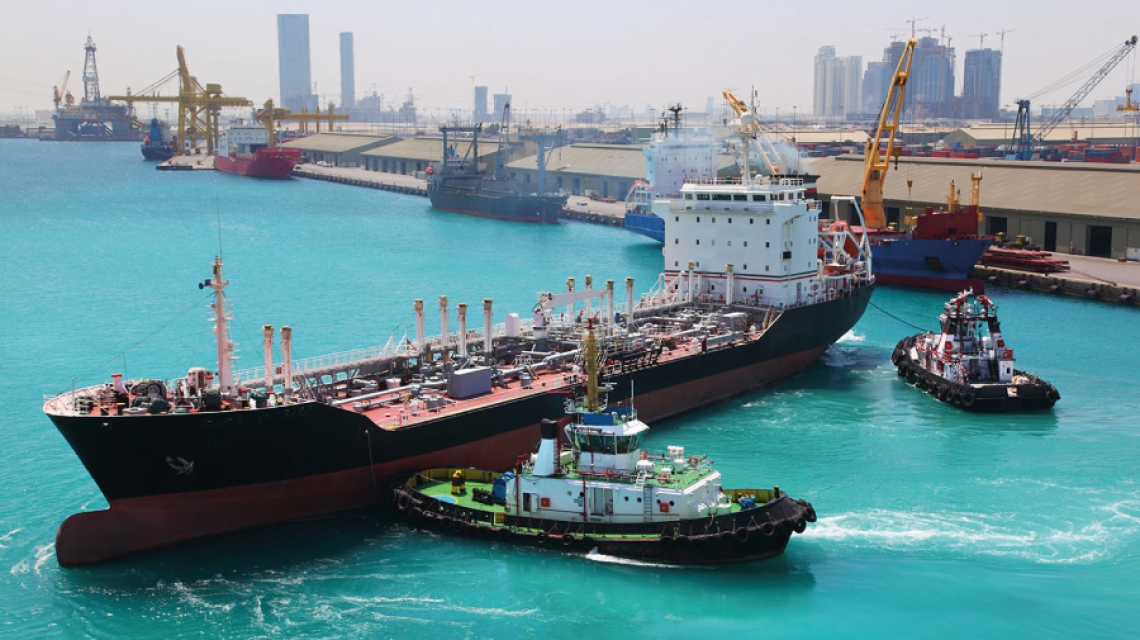
The center, which was launched early this year, recently signed a research agreement with the Abu Dhabi Ports Company to optimize operations at Mina Zayed Port, which can help contribute to Abu Dhabi’s efforts to position itself as a leading global port and diversify its economy.

Dr. Fred Moavenzadeh, President, Masdar Institute, said: “The growing relevance of smart systems infrastructure in today’s world makes research in this area highly essential. The support of the UAE leadership continues to guide us and encourage our researchers to seek productive solutions, as witnessed by the number of research papers. We hope faculty and students associated with iSmart will continue to undertake cutting-edge research for the benefit of humanity in general.”

iSmart is also working with the International Renewable Energy Agency (IRENA) and the UAE Ministry of Foreign Affairs’ Department of Energy and Climate Change (DECC) to develop scenarios and models supportive of realizing a renewable energy vision for Abu Dhabi, which can play a significant role in helping the emirate achieve its economic and development goals. iSmart is also leading collaborative research with the Abu Dhabi Department of Transport to understand how electric vehicles and wider adoption of public transportation canreduce carbon emissions and promote sustainable transport in Abu Dhabi. New areas of iSmart research will begin this fall, when Masdar Institute launches its Sustainable Critical Infrastructure Master’s program, with the aim of providing graduates, research and intellectual property that will contribute to the sustainability of Abu Dhabi’s development efforts.
 
In addition to these activities, research is ongoing iSmart in areas ranging from machine learning and neural network algorithms to biofuels, smart grids and energy policy, with multiple peer-reviewed papers published since the center’s launch.

Dr. Sgouris Sgouridis, Associate Professor, Engineering Systems and Management, and Head of iSmart, said: “At this point, our aim is to strengthen our capabilities and so that the UAE government and private sector organizations will entrust our research teams with their medium and longer-term needs. Organizations like Abu Dhabi Ports Company and the Ministry of Foreign Affairs have already awarded significant projects.”

iSmart is mandated to apply systems analysis techniques in the design and development of sustainable infrastructure systems that interface between technology and society. Since its launch, the center has been active and recently hosted a symposium on sustainable critical infrastructure with significant industry participation, where the new Master’s program in sustainable critical infrastructure was launched, taking the total number of Master’s programs currently offered at Masdar Institute to nine.

Dr. Sgouridis explained: “We intend to create a strong core of students before scaling up activities. What we are looking for now is a small group of dedicated and engaged students, willing to put extra effort to build up our course and research portfolio with their support.”

One of the graduating students associated with iSmart is Reem Ketait, of the Engineering Systems and Management program, who has been working under Dr. Toufic Mezher, Professor. Her research focuses on the ‘Formulation of an integrated energy strategy for Abu Dhabi based on a holistic optimization of the country’s electricity sector’.

Ketait said: “I plan to seek the next challenge and allow the knowledge I have acquired from Masdar Institute to fuel my curiosity and propel me to contribute to making the UAE’s sustainability goals a reality.”

Through such research initiatives, iSmart aims to facilitate faculty and student research in the envisioning, design, and analysis of sustainable infrastructure transformation on the urban and regional scale integrating socioeconomic, technical, and policy-oriented perspectives.

As iSmart expands its activities, it will be participating in workshops and exploring project collaborations with some of the leading global corporate brands like GE and Siemens. The center will also be also hosting events on smart cities and smart infrastructure in collaboration with leading institutions such as the INCONET-GCC, a science and technology international cooperation network for Gulf Cooperation Council countries aiming at the promotion of bi-regional dialogue. The center is also in talks with the Institute of Electrical and Electronics Engineers (IEEE) to host another event on sustainable cities.
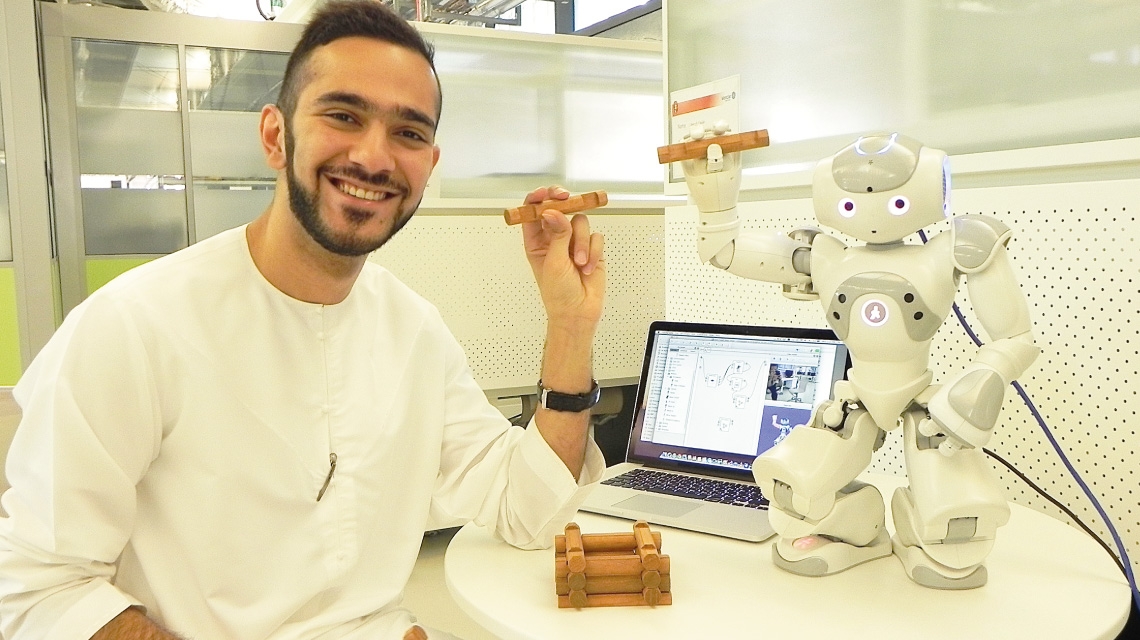
 

Masdar Institute’s iInnovation Keen to Lead Active Dialogue on Innovation and Entrepreneurship

Abu Dhabi-UAE: 02 June, 2014 – Since its launch earlier this year, the Institute Center for Innovation and Entrepreneurship (iInnovation) at Masdar Institute of Science and Technology has been focused on developing new programs and partnerships to leverage the UAE’s strengths with other innovation hubs across the world.

It is helping to develop a new Masdar-centered innovation hub in the UAE, learning from the best of other innovation hubs such as Silicon Valley and building mutually beneficial collaborations between academia and industry. 

As part of its mission, iInnovation seeks to contribute useful new ideas for discussion with government, industry and other stakeholders, in response to the UAE government’s active leadership in innovation and entrepreneurship. During the coming year the Center will contribute creative proposals for new programs in response to the UAE government’s increasing willingness to experiment and seek innovative solutions. The Center plays a key role in translating technology developed by the four other Masdar Institute Research Centers (iCenters) into commercial products, services and processes.

Masdar Institute’s graduate engineering students already show entrepreneurial instincts. Recently, a Masdar Institute MSc student won the Khalifa Fund’s Technopreneur competition for his technology-focused business concept. Two students have also formed startup companies, while five students have won national or regional business plan competitions. Additionally, two students have been selected to compete in the second round of the Khalifa Fund Ibtikari Competition.

One of the most exciting developments of the year for iInnovation was the formation of a new multi-year collaboration with BP to develop new ways to accelerate technology innovation in the UAE. The collaboration with BP has already accelerated the introduction of new student scholarships, seed grants and seminar speakers. The new scholarships are expected to further encourage pre-graduation student start-ups.  Two new iInnovation seed grant programs for faculty, one conducted jointly with MIT, will focus on translational research with commercial outcomes. At the same time, the iInnovation Laboratory (iLab) offers space and basic facilities for small faculty-student teams internally working on technology translation.

Dr. Fred Moavenzadeh, President, Masdar Institute, said: “The research and innovation drive at Masdar Institute assumes significance not because it is a novelty but more so, it is a necessity considering today’s economic and social realities. The UAE leadership recognizes this and supports us in continuous innovation that remains relevant to the wider community and targets future generations. We hope the initiatives undertaken by iInnovation will encourage young entrepreneurs and help more technology start-ups to be established in the UAE.”

Dr. Bruce Walker Ferguson, Head of iInnovation and Professor, Engineering Systems and Management, Masdar Institute, said: “At this stage, iInnovation is more action-oriented than research-oriented, with most of our work directed to developing new programs and partnerships. We are proud of the new BP Innovation Scholarships, which represent an innovative way to integrate entrepreneurship and education by encouraging students to create new companies before they graduate.”

In March 2014, the Center completed a case study on a UAE-based sustainability company Keep It Clean. Authored by Dr. Ferguson along with Noora Ahmad Abdulrahman and Yusra Ahmad Abdulrahman – two UAE National interns from the University of Arizona  –  the case study provides insights into the challenges and opportunities of sustainability-focused entrepreneurship in the UAE.

Dr. Ferguson added: “We have also considered the question of how to create a UAE-optimized entrepreneurial ecosystem that supports the formation of new companies. The UAE Forum on Innovation and Entrepreneurship, co-sponsored by Masdar Institute and MIT in 2013 and also co-sponsored by BP in 2014, helps to identify how the UAE can ensure growth in entrepreneurship and innovation. Given the UAE’s potential to play a dynamic role in global innovation, I foresee tremendously interesting and productive new relationships over the next year.”

Masdar Institute’s Summer Research Internships Help Develop UAE Nationals in Science and Technology

Abu Dhabi-UAE: 24 July, 2014 – Masdar Institute of Science and Technology, an independent, research-driven graduate-level university focused on advanced energy and sustainable technologies, today announced that its summer research internship programs for undergraduate students is working to contribute to Abu Dhabi’s human capital development.

The summer research internship program is targeted at talented UAE national undergraduates majoring in Science, Engineering or Math. The program offers students a critically important research experience, motivating them to innovate and obtain new solutions in clean energy and advanced technologies. It is also expected to encourage them to seek higher learning opportunities at Masdar Institute. To be accepted for the highly competitive internship, interested students must apply for specific projects proposed by Masdar Institute faculty. Selected students then undergo a six-.week long internship.

This internship program reflects only one aspect of Masdar Institute’s initiative to contribute to the overall human capital development efforts in Abu Dhabi. Throughout the year, Masdar Institute organizes knowledge-sharing forums, workshops and other such events, in line with the Abu Dhabi leadership’s directive to transform the emirate and the UAE into a center for knowledge and intellectual capital.

Dr. Lamya Fawwaz, Executive Director, Public Affairs, Masdar Institute, said: “Supported by the country’s leadership, our annual research internship programs are designed to build capabilities of UAE nationals in science and technology. In line with the UAE directive, Masdar Institute will continue to develop future programs in areas of new technology that will be offered to undergraduate interns every year. We believe the current group of students has gained fresh insights into conducting research with advanced laboratory equipment.”

Dr. Ken Volk, Outreach Manager, Masdar Institute, said: “We have 15 UAE nationals participating in the summer research internship program, which we believe will enrich their academic and laboratory experience . We thank the UAE leadership for their continuous support to our human capital development initiatives.”

Participating interns under the summer internship program are excited about the research experience they are receiving and the modern cutting-edge laboratory facilities at Masdar Institute.

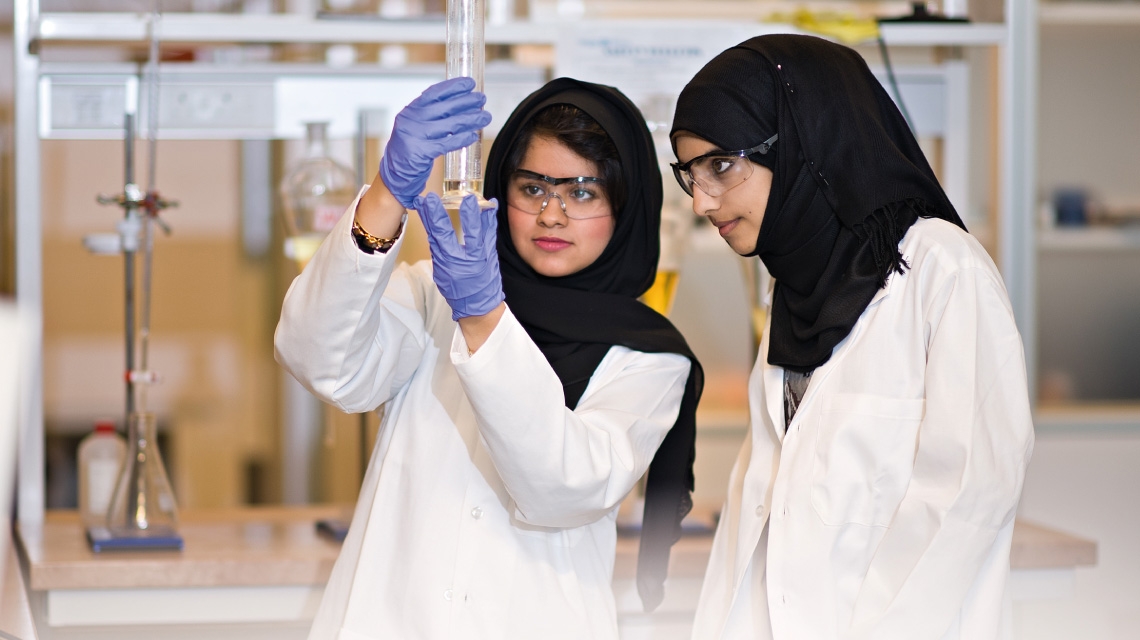
Asmaa Almazrouee’s research focuses on ‘Graphene Nanostructure Advanced Characterization’ and she is advised by Dr. Adel Gougam, Assistant Professor, Material Science and Engineering. A University of Sharjah student, Almazrouee said: “This research experience has been special because I was working with two doctors, instead of just another intern student. With more practical experience, I hope I can do something useful at Masdar Institute and publish a paper in the near future.”

Mariam Ahmed Ali Salem Al Dhaheri from the UAE University participated in Masdar Institute Ektashif program last summer and she loved the experience. Al Dhaheri is doing her ‘Core Research Laboratory’ internship, advised by Dr. Mustapha Jouiad, Microscopy Suite Manager and Principal Research Scientist at the Department of Mechanical and Materials Engineering. The program involves learning to set up and operate electron microscopes. Her project is titled ‘Characterization of API X52 steel pipelines using metallography and electron microscopy’.

About her experience, Al Dhaheri said: “This is a golden chance for me to get engaged in research and learn the proper scientific approach. I will definitely apply for Master’s degree at Masdar Institute after my graduation.”

Dina Muraish from Abu Dhabi University is also doing a ‘Core Research Laboratory’ internship with electron microscopes. She feels that, unlike other educational institutes or even companies, Masdar Institute, has within a short period of time, proven its place not only in the UAE but also worldwide because its dedicated researchers seek worldwide sustainable solutions – an area she is keenly interested in.

Muraish added: “I have acquired more practical skills in high-tech laboratories, which I have never experienced before. I have gained worthy knowledge from highly qualified faculty that definitely did help me in getting a better insight into the many environmental problems that the UAE and other countries face and how they could be resolved. The knowledge that I gained over here has given me more awareness to assist in making the UAE an environmentally better place for future generations.”

Masdar Institute: How Abu Dhabi’s waste can help energy and farming

Abu Dhabi produces almost a million tons of municipal solid waste every year, as well as a considerable amount of garden, agricultural and industrial waste.

As the emirate develops and grows, there’s only going to be more. Much of this waste ends up in landfill. Unchecked, that would make the emirate’s landfill in Al Dhafra the size of Abu Dhabi city within 35 years.

It’s a lot of landfill. As well as being unsightly and unpleasant, it contributes to greenhouse gas emissions and can contaminate soil and groundwater.

It is a problem that Abu Dhabi’s leadership takes so seriously that it has set a target of near-zero waste in Abu Dhabi by 2018.

One potential solution could be to turn Abu Dhabi’s waste into biofuel and biochemicals. Biological conversion of organic fraction waste has great potential to produce renewable fuels and biochemicals. It also has a valuable byproduct – a nutrient-rich residue that can be used as fertilizer or compost in combating desertification by putting nutrients back into the UAE’s farmlands.

We at the Masdar Institute are engaged in a comprehensive research project that aims to address Abu Dhabi’s waste problems in a sustainable way that affords multiple benefits.

We are exploring technologies and methods to produce biofuels and useful biochemicals from Abu Dhabi’s waste. Our research specifically aims to provide the protocols for production of biofuels from plant dry matter and waste from agriculture, industry and municipal activities.

We are also exploring how to integrate the production of biofuels and added-value products such as fertilizer; making sustainability assessments; and implementing sustainable production schemes in Abu Dhabi.

We have divided our scientific research into four areas: biogas, assessments and experimental work; dark fermentation, assessments and experimental work; energy crops assessment; and compost assessment.

The biogas-focused research aims to assess the potential of biogas production from organic wastes in Abu Dhabi, and perform experimental biomethane potential quantification of organic residues.

Initial results show that biogas produced from municipal organic waste could generate 18 megawatts of power a year for Abu Dhabi, which would help Abu Dhabi achieve its goal of generating 7 per cent of its power needs from renewable sources by 2020.

The electricity surplus generated from the biogas and compost could respectively earn Abu Dhabi US$6.2 million (Dh22.76m) and $23m a year. Turning biogas into liquid fuels to be used in place of diesel or petroleum is also being explored.

The dark fermentation-focused research is assessing and experimenting on organic acids produced from organic waste.

It aims to do the following: convert organic waste into valuable products via dark fermentation; complete experimental work on dark fermentation of organic waste, and upgrade organic acids into the more useful hydroxyacids by using metabolically engineered E. coli bacteria in the laboratories of our partner, the Massachusetts Institute of Technology.

Research on energy crops is focused on crops that could be turned into aviation biofuels, in response to Etihad Airways’ goal of using such fuels.

It is a preliminary effort to estimate how much biofuels – bioethanol, biobutanol, or methane – could be produced from the fermentation of energy crops.

Research on compost is focused on assessing the compost and water availability in the UAE in relation to food security. Agricultural activities in the UAE face challenges from the country’s extreme climate, shortage of rain and poor soil nutrient content.

Preliminary results show that converting all of Abu Dhabi’s agricultural waste into compost could meet 4 per cent of the UAE’s total fertilizer demand.

With this research project, we hope to contribute to Abu Dhabi’s goals of near-zero waste, while contributing to its renewable energy aspirations and overall economic strength.

Dr. Jens Ejbye Schmidt is a professor at the Masdar Institute of Science and Technology and the head of the Institute Centre for Energy.


UAE Increasing Contributions to Achieving UN’s Millennium Development Goals, Says Her Excellency Shaikha Lubna

Abu Dhabi-UAE: 08 September, 2014 – The UAE continues with its concerted action to overcome the urgent global challenges of food security, climate change, water insecurity and infrastructure development, following the UAE government’s commitment to achieving the United Nations’ Millennium Development Goals (MDGs)  by 2015, remarked Her Excellency Sheikha Lubna Al Qasimi, UAE Minister for International Cooperation and Development.

Delivering a lecture titled ‘Towards Sustainability: The Role Of The UAE As A Key Player In Global Human Development’, Her Excellency Sheikha Lubna added that the UAE’s initiatives are the outcome of the vision and commitment of the leadership to widen the country’s contribution to sustainable development goals. Sustainable development goals are expected to be adopted as the next stage of action for the eight MGDs by the United Nation’s member states at a summit in September 2015.

The lecture was organized under the Distinguished Lecture Series at the Masdar Institute campus. Her Excellency Sheikha Lubna was earlier received by Dr. Fred Moavenzadeh, President, Masdar Institute, who introduced her to the audience. A number of government, non-government and private sector stakeholders including His Excellency Dr. Sultan Al Jaber, UAE Minister of State, Chief Executive Officer of Energy at Mubadala and Chairman of Masdar, His Excellency Philip Parham, British Ambassador to the UAE and official representatives from United Nations in the UAE were present. Students, faculty and staff members from Masdar Institute and other universities also attended the lecture.

During her talk Her Excellency Sheikha Lubna pointed out that the UAE remains committed to helping partner countries achieve their MDGs through the delivery of foreign aid in the form humanitarian and development assistance. The country also prioritizes ‘developing global partnerships for development’ and ‘eradication of poverty and hunger’, while seeking to achieve the MDGs locally. She emphasized that the programs and projects initiated by the UAE leadership in poor countries will contribute to improved food supply, greater environmental sustainability and biodiversity conservation, as well as better water management, child vaccination campaigns and meaningful support for global polio eradication efforts.

In order to achieve a world of prosperity, equity, freedom, dignity and peace, the United Nations is working with governments, civil society and other partners to build on the momentum generated by the MDGs and carry on with an ambitious post-2015 sustainable development agenda. The sustainable development agenda, which covers sustainable development goals, includes leaving no one behind; putting sustainable development at the core; transforming economies for jobs and inclusive growth; building peace and effective, open and accountable institutions for all; as well as forging new global partnerships.

Her Excellency Sheikha Lubna added: “As part of its contribution towards achieving sustainable development goals, the UAE specifically will endeavor to address the causes of poverty including conflict, fragile statehood, social exclusion, economic under-performance, under-mobilization of national resources in poor countries, inadequate governance and under-investment in education and health.”

According to the UN 2013 MDG report, there are new and emerging global challenges. Annual earth depletion has jumped from 60% in 1990 to an alarming 150% in 2010, while the bottom billion of the world’s population is severely impacted by widespread deprivation despite progress towards MDGs. The challenge is growing manifold since the earth’s population is forecast to reach eight to 10 billion by 2050, the report adds.

The Masdar Institute Distinguished Lecture Series frequently hosts corporate leaders, renowned professionals and academicians for knowledge sharing and interactive sessions as part of its human capital development efforts.

Masdar Institute’s iSmart and Regional Stakeholders Join European Commission to Launch Horizon 2020 Initiative in Abu Dhabi

Abu Dhabi-UAE: 01 October, 2014 – Masdar Institute of Science and Technology, an independent, research-driven graduate-level university focused on advanced energy and sustainable technologies, today announced the Institute Center for Smart and Sustainable Systems (iSmart) will join the EU-funded international research and innovation cooperation project INCONET-GCC-2 to host a conference on smart cities and launch the Horizon 2020 program.

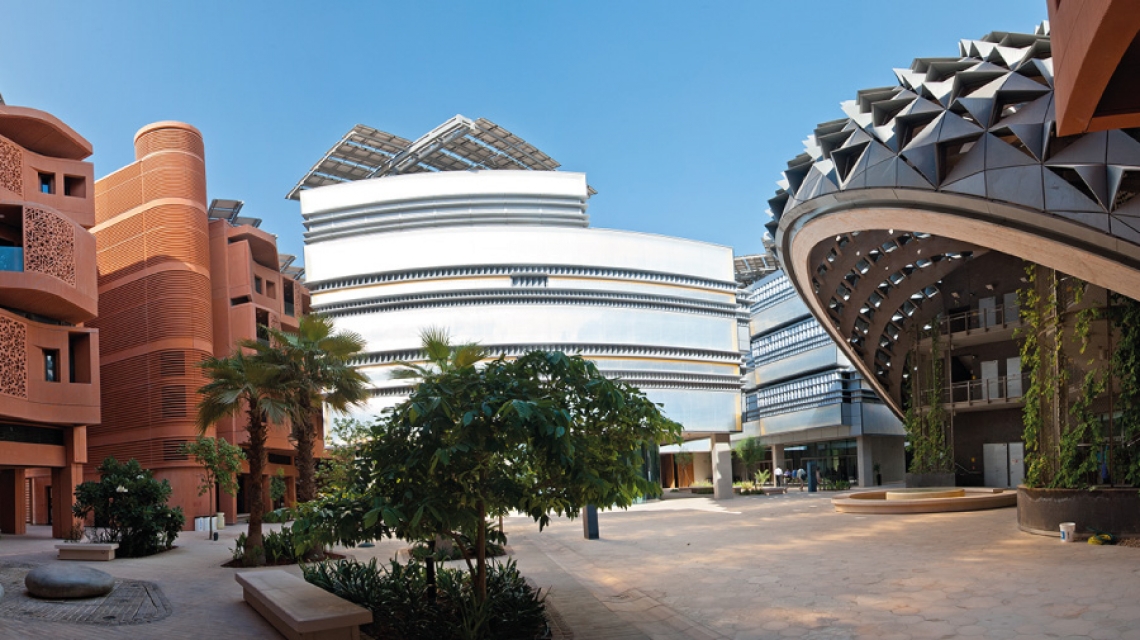
Titled ‘Smart Cities for Sustainable Development: European and GCC Perspectives & Horizon 2020’, the conference will be held from 14-15 October in Abu Dhabi. The first day of the event will focus on smart cities and sustainable urban development including a visit to Masdar City and Masdar Institute to view the smart features and sustainable architectural elements. The second day will witness the launch of Horizon 2020 in the UAE. Global leaders in the smart infrastructure, city planning and sustainability fields are expected to attend the event.

The inter-regional collaboration comes under Inconet-GCC2 – a network of 20 partner organizations from all over Europe and Arab Gulf countries, working together on strengthening bi-regional cooperation on research and innovation. It has a duration of three years (2014-2017) and is sponsored by the European Commission’s Directorate General for Research and Innovation. Horizon 2020 is the biggest-ever EU Research and Innovation program with nearly €80 billion (more than AED380 billion) of funding available over seven years (2014 to 2020) – in addition to private investment. It promises more breakthroughs, discoveries and world-firsts by taking great ideas from the lab to the market.

Dr. Fred Moavenzadeh, President, Masdar Institute, said: “The region’s leading research-based institution is privileged to partner with other stakeholders to lay greater emphasis on smart infrastructure and sustainable development. With the support of the UAE leadership, we have effectively raised our profile through hosting global and inter-regional conferences such as the Inconet-GCC2 for the Horizon 2020 initiative. We believe the conference will immensely help raise awareness on smart infrastructure, leading to the arrival of innovative new green solutions.”

Faculty from Masdar Institute will join the government, non-government and private sector stakeholders in leading regional participation in the event. Dr. Mohammed Atif Omar, Head of iSmart, and Associate Professor, Engineering Systems and Management, Dr. Hatem Zeinaldin, Masdar Institute, Smart Grid Specialist, and Dr. Khaled Al Awadi, Urban Planning Specialist, and Assistant Professor-Engineering Systems and Management, will each lead panel discussions on smart cities’ current achievements, ‘infrastructure’, as well as ‘city planning and resource management’.

Paula Hirst, Advisor to the World Cities Network, Dr. Thanasis Korakis, Lecturer at the Department of Electrical and Computer Engineering in the University of Thessaly, Greece, and Muir Livingstone, who worked on Masdar City master plan, as well as Colette Maloney, Head of the Unit Smart Cities and Sustainability unit at the European Commission’s Directorate-General for Communications Networks, Content, and Technology, will participate in the event.

Various stakeholders will discuss challenges to strengthening EU-GCC cooperation on research and innovation, while a special open discussion session will hear views from diverse participants.

The ‘Smart Cities for Sustainable Development: European and GCC Perspectives & Horizon 2020’, seeks to highlight the challenges linked to urban development and the significance of adopting and promoting a coherent plan for tackling those challenges. At the same time it also aims to promote the ‘Smart Cities’ model and the related technologies and solutions linked to it with a particular focus to energy and environment.

Additionally, the conference will promote the dialogue among international key institutions and experts focusing on smart cities, to identify common areas for cooperation and promote action plans. Moreover, it will highlight various funding opportunities available for the promotion and development of the ‘smart cities’ model, the related technologies and the cooperation paths through EU’s Horizon 2020 Program as well as other national GCC programs and initiative.

Under the Horizon 2020 initiative, several regional projects are being implemented at present. In June this year, the Dasman Diabetes Institute (DDI) in Kuwait City hosted a series of workshops. The events were designed to present opportunities for EU and the Arab Gulf Countries to cooperate in the field of diabetes, by taking advantage of the European Commission research and innovation program Horizon 2020 (H2020).

10 UAE Nationals from Masdar Institute’s YFEL Program Experience Japan’s Smart Technology World

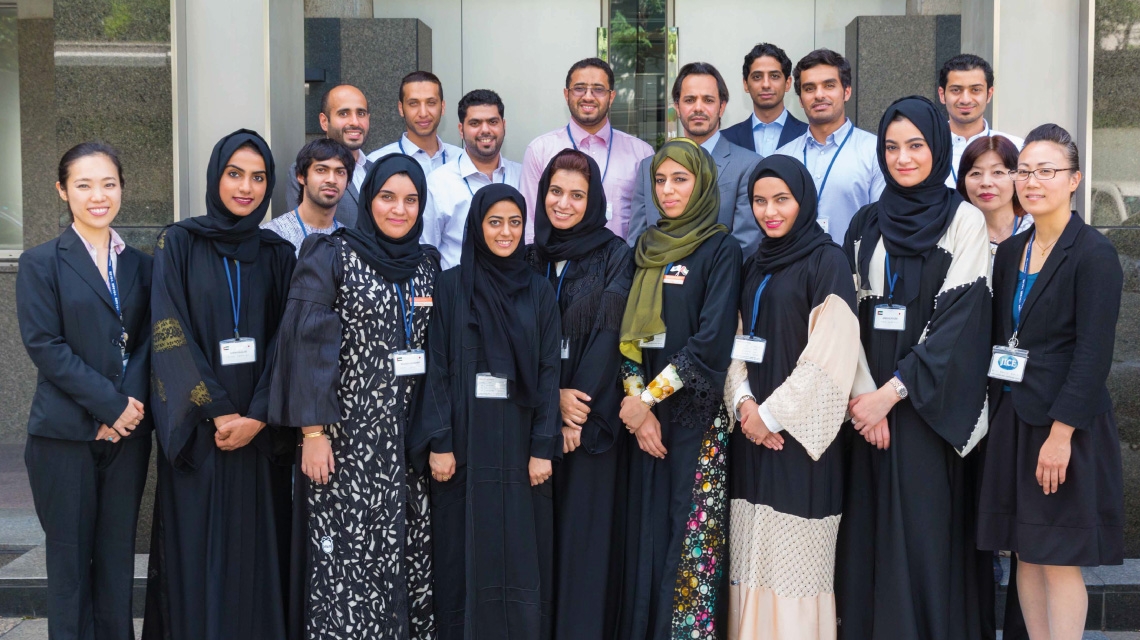
Abu Dhabi-UAE: 08 October, 2014 – Masdar Institute of Science of Technology, an independent, research-driven graduate-level university focused on advanced energy and sustainable technologies, today announced that 10 select UAE national members of the Young Future Energy Leaders (YFEL) program gained insights into Japan’s experience in smart technologies under the YFEL-Japan Government initiative.

The program was organized in collaboration with Japan’s Ministry of Economy, Trade and Industry (METI) and the Japan International Cooperation Center (JICE) in various cities across Japan. The initiative helped strengthen the knowledge and expertise of YFEL members, while giving them an opportunity to learn from Japan’s achievements in areas of technology and sustainability. The 10 selected YFEL members were all UAE National students.

Ms. Sachiko Yamano, President of JICE, Mr. Khaled Omran Al Ameri, Minister Plenipotentiary (Charges d’affaires) of the UAE Embassy in Tokyo, Omran Rashid Taryam, Energy & Climate Change Attache at the UAE Embassy in Tokyo, and other officials commended the YFEL members for their commitment during their Japan visit.

Mr. Al Ameri said: “The UAE Government ensures human capital – building remains one of the key focus areas of long-term strategy for economic growth. In order to achieve this objective, encouraging and facilitating high-quality individual development of youth would be crucial. This is one of the major reasons why initiatives such as YFEL need to be acknowledged for their impactful programs. We hope the Japan visit helped YFEL members to further expand their skill base and become competent professionals.”

Dr. Lamya N. Fawwaz, Executive Director, Public Affairs, Masdar Institute, said: “Thanks to the support of the UAE Leadership, the YFEL program is able to accomplish its mission to educate students on ways to deal with challenges in the sustainability arena. The YFEL-Japan Government initiative provided participating students with critical leadership skills in future energy areas. The visit has had a positive impact on the academic and professional lives of the YFEL participants who were selected through a highly competitive process.”

During the trip the YFEL members visited some of Japan’s most notable sustainable developments including the Smart House at the Panasonic Center Tokyo, which presents an eco-friendly, comfortable, and secure ‘smart lifestyle’. They also visited the 43,000-square foot urban farm that grows up, down, and across the nine-story high 215,000-square foot corporate office building which houses Pasona Group, the Japanese recruitment company.

In addition, the YFEL members learnt about the Toshiba Smart Community Center, which can quickly process, store, and analyze data vital for the support of smart grid societies. They also interacted with students at the University of Tokyo’s Graduate School of Frontier Science, and observed key aspects of the solar power satellite/station at the Kyoto University’s Shinohara Laboratory.

Spera Hydrogen, the hydrogen supply facility of Chiyoda Corporation, and Kyocera Fine Ceramics, which deals in fine ceramics, were among the key advanced technology facilities that the YFEL members visited. The agenda also included visits to the Hiroshima Peace Memorial Museum and Edo-Tokyo Museum.

YFEL member Aziza Sarhan Al Sawwafi said: “Japan is one of the world’s most pioneering countries, and with the support of the UAE leadership we got the opportunity to live such a great experience. I gained a lot and I have been strongly influenced by Japanese culture and lifestyle. But my ambition is to achieve even more for my country. That is my way of looking at things.”

Masdar Institute’s iEnergy to Launch Global Partnership in Waste Management at 3GF2014 in Copenhagen

Abu Dhabi-UAE: 12 October, 2014 – Masdar Institute of Science and Technology an independent, research-driven graduate-level university focused on advanced energy and sustainable technologies, today announced that its Institute Center for Energy (iEnergy) will join several stakeholders to launch a new global partnership in waste management during the fourth Global Green Growth Forum (3GF2014).

The forum will take place on 20-21 October 2014 in Copenhagen, where a select high-level group of 250 green growth leaders and decision-makers will convene. Themed ‘Changing Production and Consumption Patterns through Transformative Action’, each of the plenary sessions at the forum is designed to examine global trends, big picture issues and provide deeper thinking into the new directions of the green growth agenda and what it entails for public and private stakeholders.

The new initiative, ‘Unlocking the value of waste’, to be launched at the forum aims to holistically and sustainably manage waste and create value for all stakeholders – those responsible for waste collection, separation, treatment and disposal such as governments, cities, municipalities, NGOs, service users and technology providers.

This partnership aims to match partners with the problem of managing municipal solid waste with solution providers to join forces to unlock the value of waste. Titled ‘Turning Waste Into a Resource: Integrated Sustainable Waste Management Partnership’, the partnership aims to leapfrog existing techniques and long standing approaches to waste treatment and the processing of organic solid waste into biofuels and bio-chemicals.

Dr. Fred Moavenzadeh, President, Masdar Institute, said: “Leading the development of sustainable solutions, as supported and directed by the UAE leadership, remains one of the key principles of Masdar Institute. We are delighted to join other stakeholders in this global partnership for waste management to usher in an era that will help tap the potential of waste. We believe the new initiative will provide further momentum to other waste management efforts across the sustainability spectrum.”

Masdar Institute will be represented by Dr. Steven Griffiths, Executive Director of Institute Initiatives, Professor of Practice, Chemical Engineering /Engineering Systems and Management, Dr. Jens Ejbye Schmidt, Head of Institute Center for Energy (iEnergy), and Professor, Chemical Engineering, Dr. Mette Hedegaard Thomsen, Assistant Professor, Chemical Engineering, and Dr. Alejandro Ríos Galvan, Director of the Sustainable Bioenergy Research Consortium and Professor of Practice, Engineering Systems and Management.

In the near-term, this partnership will offer roadmaps for implementing ISWM of municipal solid waste (MSW) from an integrated technical, political, social, financial and environmental perspective. It will also explore best practices and pursue innovation for the different stakeholders within the area.

The launch of the partnership in Copenhagen will be followed by a workshop to be hosted during the World Energy Future Summit during the Abu Dhabi Sustainability Week in January 2015. The workshop will present the expansion of the partnership including new members. The next step will be real life demonstrations of ISWM in two countries –Ghana and the UAE. These demonstration plants will illustrate how ISWM solutions can be implemented and adjusted to different contexts.

A center for integrated sustainable waste management will then be established. The final goal of this initiative will be to see ISWM used globally, turning waste in a resource, supporting green growth worldwide.

Masdar Institute’s iWater to Host Statistics in Hydrology 2014 Conference in Abu Dhabi


Abu Dhabi-UAE: 28 October, 2014
– Masdar Institute of Science and Technology an independent, research-driven graduate-level university focused on advanced energy and sustainable technologies, today announced that its Institute Center for Water and Environment (iWater) will showcase its research capabilities and achievements in the field of statistical hydro-climatology at the Statistics in Hydrology (STAHY) 2014 workshop taking place in Abu Dhabi.

Organized in conjunction with the International Commission on Statistical Hydrology (ICSH) of the International Association of Hydrological Sciences (IAHS), the STAHY 2014 event will be held from 10-11 November in the UAE capital. The event aims to raise awareness about the crucial hydro-climatology research challenges faced by the region and internationally, and facilitate collaboration and increased IAHS membership.

Three keynote addresses at the event will deal with new developments in the field of statistical hydrology, including regional hydrological frequency analysis. The speakers include faculty/representatives from the University of Stuttgart, Germany, the University of New South Wales, Australia, and the Université Pierre et Marie Curie, France. Dr. Taha B.M.J. Ouarda, Head of Institute Center for Water and Environment (iWater), and Professor, Water and Environmental Engineering, Masdar Institute, will lead participation in the conference.

A total of around 30 oral and 10 poster presentations are scheduled with nearly 40 delegates expected to attend along with Masdar Institute faculty, researchers, and students. Office-bearers of IAHS including Dr. Salvatore Grimaldi, Università degli Studi della Tuscia, Viterbo, Italy, Dr. Uwe Haberlandt, Leibniz University of Hannover, Germany, Dr. Emna Gargouri, Ecole Nationale d’Ingénieurs de Tunis, Tunisia, Dr. Simon Micheal Papalexiou, National Technical University of Athens, Greece, and Dr. Ebru Eris, Istanbul Technical University, Turkey, are also expected to attend the event.

The event will focus on new developments in the field of statistical hydro-climatology. The main focus will be on technologies and approaches with a significant proportion of the contributions expected to deal with applications related to arid and semi-arid regions.

Dr. Ouarda said: “The STAHY 2014 Abu Dhabi conference will prove valuable to the region in several ways. It will give an international platform to discuss the critical issues of the Middle East and North Africa (MENA) region related to climate, water and the environment. We hope the assembly of international experts will raise awareness about the challenges faced by the industry and seek solutions.”

In addition, the event is expected to serve as a starting point for increasing the engagement of Masdar Institute students in these yet underdeveloped research fields and bring them into contact with researchers from all over the world.

The Recipient of STAHY Best Paper Award for this year will be presenting at the event as one of the keynote speakers.

Masdar Celebrates ‘Flag Day’

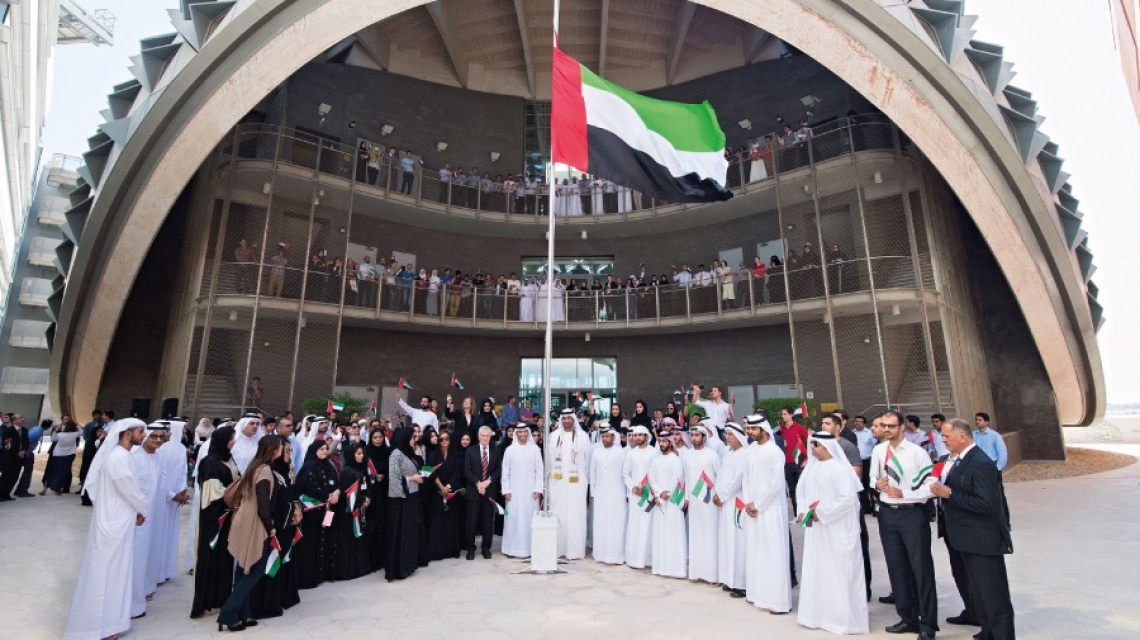
Abu Dhabi, UAE – 3 November, 2014: Masdar, Abu Dhabi’s renewable energy company, today joined the nation-wide celebration of Flag Day. The UAE flag was raised as part of a special ceremony held at the Masdar Institute of Science and Technology, an independent, research-driven university focused on advancing energy and sustainable technologies.

Flag Day celebrations this year coincide with the 10-year anniversary of His Highness Sheikh Khalifa Bin Zayed Al Nahyan’s Presidency of the UAE.

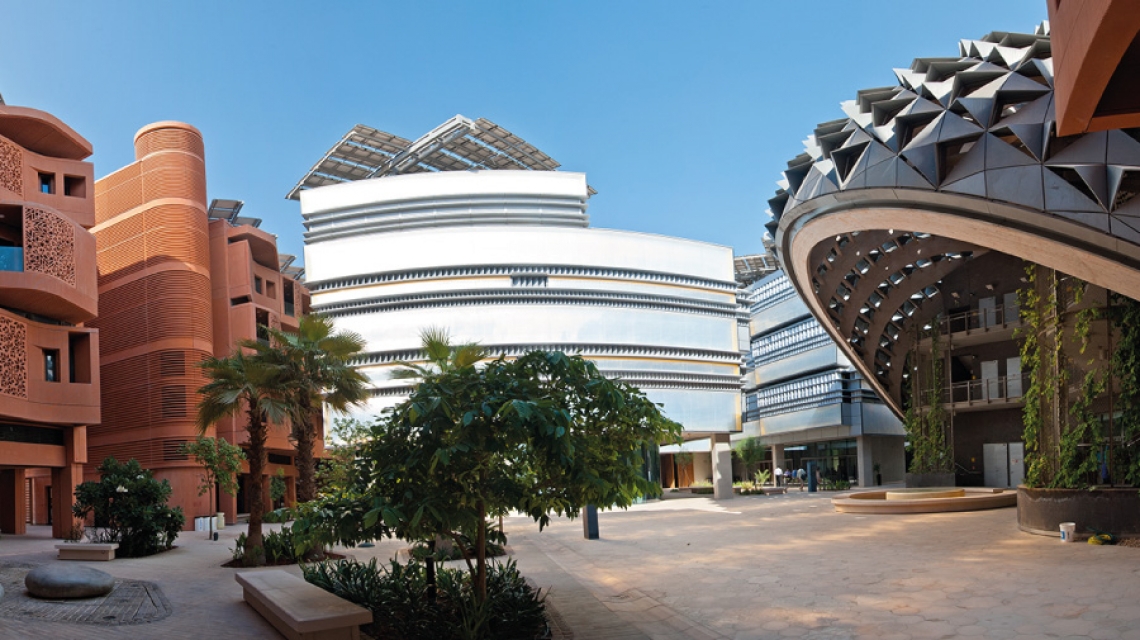
His Excellency Dr. Sultan Ahmad Al Jaber, minister of state and chairman of Masdar, led the ceremonial raising of the flag, along with Dr. Ahmad Belhoul, CEO of Masdar, and Dr. Fred Moavenzadeh, president of Masdar Institute. They were joined by Masdar staff, along with faculty members and students of Masdar Institute. The event was held in the heart of Masdar City, Abu Dhabi’s low-carbon urban development.

Since its launch in 2006, Masdar has been a leader in advancing the development of renewable energy and clean technology in the UAE, across the Middle East and globally. Through its holistic approach – merging research, investment and commercialization – the company is supporting Abu Dhabi’s economic transformation with human capital development and adding knowledge-based sectors. Today, Masdar is a leading university, an investor, deploying clean energy and building the world’s most sustainable city.

Masdar Institute’s iSmart Joins Regional Stakeholders to Host AMPT 2014 for the First Time in UAE

Abu Dhabi-UAE: 12 November, 2014 – Masdar Institute of Science and Technology an independent, research-driven graduate-level university focused on advanced energy and sustainable technologies, today announced that its Institute Center for Smart and Sustainable Systems (iSmart) has joined regional stakeholders to organize the Advances in Materials and Processing Technologies (AMPT 2014) conference for the first time in the UAE.

This premier international conference, being hosted in Dubai from 17-20 November, is one of the largest metal forming, fabricating, welding and finishing events and is designed to be an interface between research and engineering for the presentation of ideas, work and results. More than 2,000 delegates from across the world are expected to attend the event and the number of abstract submissions for the conference has surpassed the 350 mark.

AMPT 2014 is a conference that covers multiple topics in advanced materials and brings experts from within and outside the Middle East to discuss some of the latest technologies and concepts for the advanced material sector. It will cover areas including manufacturing, machining, repairing, welding, coating, and monitoring. As part of the conference, an exhibition will showcase the latest products and technologies.

The conference keynote speakers from the region include Saudi Aramco Industrial Services Executive Director Nabeel A. Al-Jama, Saudi Aramco Mechanical Services Shop Manager Mohammed Al-Sultan, and Saudi Basic Industries Corporation (SABIC) Vice President of High Density Polyethylene Business Unit, Dr Waleed Al-Shalfan.

Keynote speakers from other regions include Aramco Research Center Leader Dr. Michele Ostraat, Universidad Carolos III De Madrid Professor of Material Science and Engineering Dr. Jose M. Torralba, Dublin City University National Center for Senior Research Director Dr. Dermot Diamond, University of Illinois Professor of Physics Dr. Munir Nayfeh, Canadian National Research Council (NRC) Materials and Manufacturing Laboratory Advanced Material Removal Process Manager Dr. M. Helmi Attia, Korea Institute of Machinery and Materials President Dr. Yong-Taek Im and  University of Kentucky Institute for Sustainable Manufacturing (ISM) Director Dr I. S. Jawahir.

The co-chairs for the conference are Dr. Hussain Al Fadhli, from Saudi Aramco, and Prof. Abdel Majid Hamouda, Associate Dean for Research and Graduate Studies, College of Engineering, Qatar University. The Honorary Chairman will be Dr. M. S. J. Hashmi, Chairman, International Steering Committee of AMPT International Conference Series.

The Technical Review committee is led by Dr. Mohammad A. Omar, Head of the Masdar Institute Center for Smart and Sustainable Systems and the Masdar Institute Department of Engineering Systems and Management, and includes from Masdar Institute Dr. Raed Hashaikeh, Associate Professor, Materials Science and Engineering, Dr. Kumar Shanmugam, Assistant Professor, Mechanical and Materials Engineering, Dr. Amal Al-Ghaferi, Assistant Professor, Materials Science and Engineering, Dr. Rashid Abu Al Rub, Assistant Professor, Material Science and Engineering and Dr. Ahmed Al Jaberi, Assistant Professor, Material Science and Engineering, as its members.

Dr. Omar said: “Co-hosting a conference of global stature in the UAE bears testimony to Masdar Institute’s commitment towards collaborating with regional stakeholders. This knowledge sharing event in advanced technology aims to benefit the oil and gas industry through discussing cost-efficient technologies. We believe leading researchers and scientists gathering for the conference will highlight innovative solutions through poster presentations and technical papers.”

The previous AMPT conferences have been held in Taiwan, Australia, Turkey, France, Malaysia, Bahrain, South Korea, the US, Poland, Spain and Portugal. Ireland has the distinction of hosting the event in 1993, 1995, 1999 and 2003, while Malaysia hosted the conference in 1998 and 2009.

Masdar Institute’s iSmart contributes to turning the UAE into a global leader in engineering systems methods and applications by providing strategic and operational direction to research in data, industrial and urban systems. iSmart covers topics under energy and water policy, transportation and logistics, smart cities planning operations and building design, as well as industrial management, supply chains, and sustainability more broadly.

Masdar Institute “Open Day 2014” to Target Enthusiastic Undergraduates and Graduates with Passion for Innovation

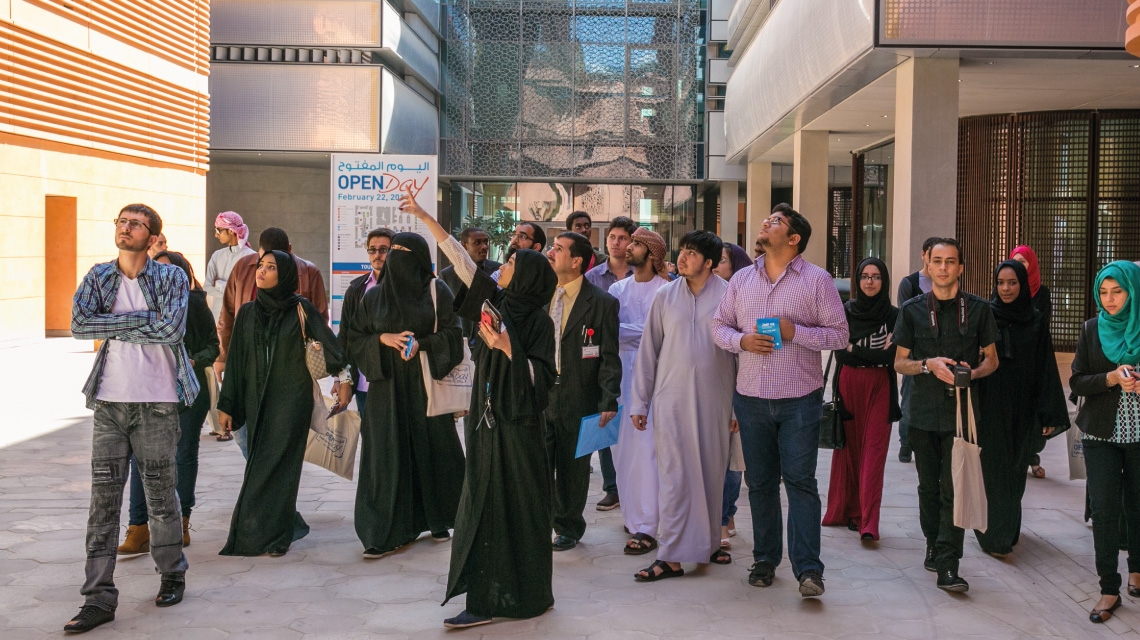
Abu Dhabi-UAE: 19 November, 2014 – Masdar Institute of Science and Technology, an independent, research-driven graduate-level university focused on advanced energy and sustainable technologies, today announced it will be welcoming enthusiastic undergraduate and graduate students keen on becoming the scientists, engineers and innovators contributing to the UAE’s aspirations to be an innovation leader, at its annual Open Day, on Saturday, 22 November, 2014.

Taking place at the Masdar Institute campus in Masdar City, the Open Day provides an opportunity for prospective students to learn more about Masdar Institute’s degree programs and research focus, and how to be a part of this. Masdar Institute offers nine Master’s degrees and an interdisciplinary Doctorate, all in engineering disciplines, with research and focused in important areas that include – renewable energy, transport, education, health, technology, water and space.

The day-long event will inform attendees of Masdar Institute’s holistic academic, research and outreach offerings, scholarship opportunities as well as ‘on and off campus’ student facilities. Presentations will be made by heads of Masdar Institute’s academic departments and research centers, which drive the innovation mandate of the Institute. Additional presentations will be made by faculty members and current students, while a number of events and informative activities for general visitors will also take place during the Open Day.

Dr. Fred Moavenzadeh, President, Masdar Institute, said: “The Open Day provides visiting university students and graduates an ideal opportunity to learn about the academic and research capabilities, student facilities and the sustainable environment at Masdar Institute. With the support of the UAE leadership, Masdar Institute has gradually evolved into a world ranking academic institution renowned for clean energy and advanced technologies. We hope the Open Day will guide the visiting students in selecting the appropriate Master’s program of their choice for higher learning.” 

The Open Day will showcase the Institute’s five Research Centers (iCenters) and the four academic departments under which its nine Master’s programs and Doctorate program are grouped. Further information will be provided to prospective students on individual programs including course details, research activities, career options and the benefits of studying and researching at Masdar Institute.

Dr. Lamya N. Fawwaz, Executive Director, Public Affairs, Masdar Institute, said: “Masdar Institute Open Day provides the opportunity for us to showcase what Masdar Institute has to offer to students and young professionals. This year in particular, we are highlighting Masdar Institute’s focus on innovation and how we enable our students to become innovators of sustainable solutions that will benefit not only Abu Dhabi and the UAE, but also the wider global community. The importance we give research with a real-world application and local relevance has ensured the creation of an innovative and entrepreneurial culture at Masdar Institute, bringing about technological advancements in the areas of advanced energy and sustainability. The UAE has already cemented its position as the most innovative Arab nation, in which Masdar Institute has assumed a leading role. By showcasing the innovative projects and research that our current students are conducting, we hope to further encourage students that are enthusiastic about innovation and sustainability to join Masdar Institute.”
 
The Admissions Department will also be on hand to answer any queries prospective students may have. Information relating to Masdar Institute’s Outreach Programs including the Young Future Energy Leaders (YFEL) Program, Ektashif and Summer Research Internships, will be available from a dedicated stand with representatives from the Outreach Department.

Prospective students with queries in relation to on-campus facilities and student clubs will be able to direct these to Student Affairs Representatives on the day. Hourly tours of the campus will be conducted during the Open Day, giving students the opportunity to visit the research centers (iCenters) and to view Masdar Institute’s the state-of-the-art laboratories and facilities.

Masdar Institute of Science and Technology serves as a key pillar of innovation and human capital by providing real-world solutions to issues of sustainability through its focus on innovation, advanced energy and sustainable technologies. The Institute was established in collaboration with Massachusetts Institute of Technology (MIT) to incubate a culture of innovation and entrepreneurship, working to develop the critical thinkers and leaders of tomorrow.

The Masdar Institute Open Day takes place between 10am and 5pm this Saturday, 22 November 2014 at the Masdar Institute campus, Masdar City. For more information visit http://www.masdar.ac.ae/openday/