
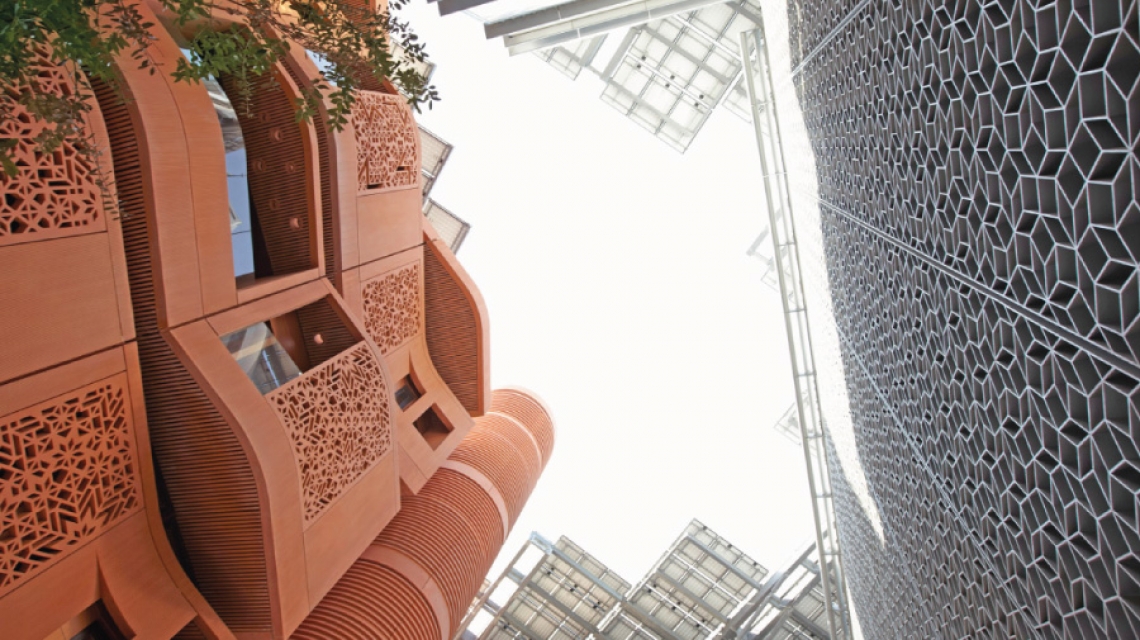
Masdar Institute Establishes iMicro to Serve Abu Dhabi’s Emerging Semiconductor Ecosystem

Abu Dhabi-UAE: 10 March, 2014 – Masdar Institute of Science and Technology, an independent, research-driven graduate-level university focused on advanced energy and sustainable technologies, today announced the creation of its Institute Center for Microsystems (iMicro) that will serve as a research and development hub for Abu Dhabi’s emerging semiconductor ecosystem.

The center has been established to provide strategic and operational direction to basic and applied microsystems research to achieve excellence and generate knowledge and technologies that will help establish the UAE as a global leader in microsystem devices and materials research, process technology, circuit and system design, and photonics. iMicro will serve Masdar Institute’s faculty, students and stakeholders by supporting a collaborative environment for cutting edge microsystems research aligned with Abu Dhabi’s economic diversification plans into the semiconductor industry.

Most of the iMicro research projects are currently sponsored by the Advanced Technology Investment Company (ATIC) and are guided by the Semiconductor Research Corporation (SRC) – the world’s leading university-research consortium for semiconductors and related technologies. Its scope will cover nano-scale device design and fabrication, circuit and system design, integrated photonics, micro-electro mechanical systems (MEMS), energy storage microsystems, high-efficiency photovoltaics, and advanced materials for energy-efficient microsystems.

Dr. Fred Moavenzadeh, President, Masdar Institute, said: “The Institute Center for Microsystems will play a crucial role in advancing research in cutting edge technology industries. Supported by the UAE leadership, Masdar Institute continues to move ahead, further consolidating its pioneering status in knowledge development and charting the course for innovations in new areas. Our aim is to enable iMicro contribute to placing Masdar Institute among leading innovators in fast-emerging advanced technology sectors.”

Headed by Dr. Ibrahim Elfadel, Masdar Institute Professor of Microsystems Engineering, iMicro will pool resources to support world-class research and strategic partnerships. It will also align closely with existing and projected sponsored research centers such as the TwinLab 3-Dimensional Stacked Chips Research Center (TL-3DSC) jointly led by Masdar Institute and the Technical University of Dresden, the ATIC-SRC Center of Excellence for Energy-Efficient Electronic Systems (ACE4S) jointly led by Masdar Institute and the Khalifa University of Science, Technology and Research, and the MEMS TwinLab jointly led by Masdar Institute and the Institute of Microelectronics (IME) Singapore.

Dr. Elfadel said: “The overarching research theme of iMicro is microsystem energy-efficiency in sensing, computing, data storage, and communication. The center’s goal is to innovate in all areas of low-power and energy-efficient microsystems design. The research portfolio of the center includes projects on low-power digital, mixed-signal and analog CMOS design of circuits and systems, energy-efficient photonic integrated circuits for communication and sensing, low-power non-volatile memories, advanced nano-materials for energy storage, interconnect, and heat transfer, and novel material systems for MEMS, photovoltaics, and photonics. iMicro is expanding its research to include a focused effort on novel MEMS devices for energy harvesting, ultrasound transducers, and motion sensing using both micro-mechanical and opto-mechanical modalities.”

The establishment of iMicro along with the recent launch of the ATIC Cleanroom is a clear indicator of the ongoing growth and increasing relevance of the semiconductor industry to the UAE and the wider region. According to the latest data from the International Data Corporation’s (IDC), worldwide semiconductor revenues are expected to reach more than US$320 billion by the end of 2014.

Abu Dhabi has already taken several measures towards its goal of establishing its own semiconductor sector, including setting up Masdar Institute’s Microsystems Master’s program, and support for ongoing collaboration between Masdar Institute and GLOBALFOUNDRIES, which is owned by the Advanced Technology Investment Company (ATIC), a wholly-owned subsidiary of Mubadala Development Company. Three Masdar Institute students have successfully completed a chip design using 65nm process, the first GLOBALFOUNDRIES tape-out from the Middle East and North Africa (Mena) region.
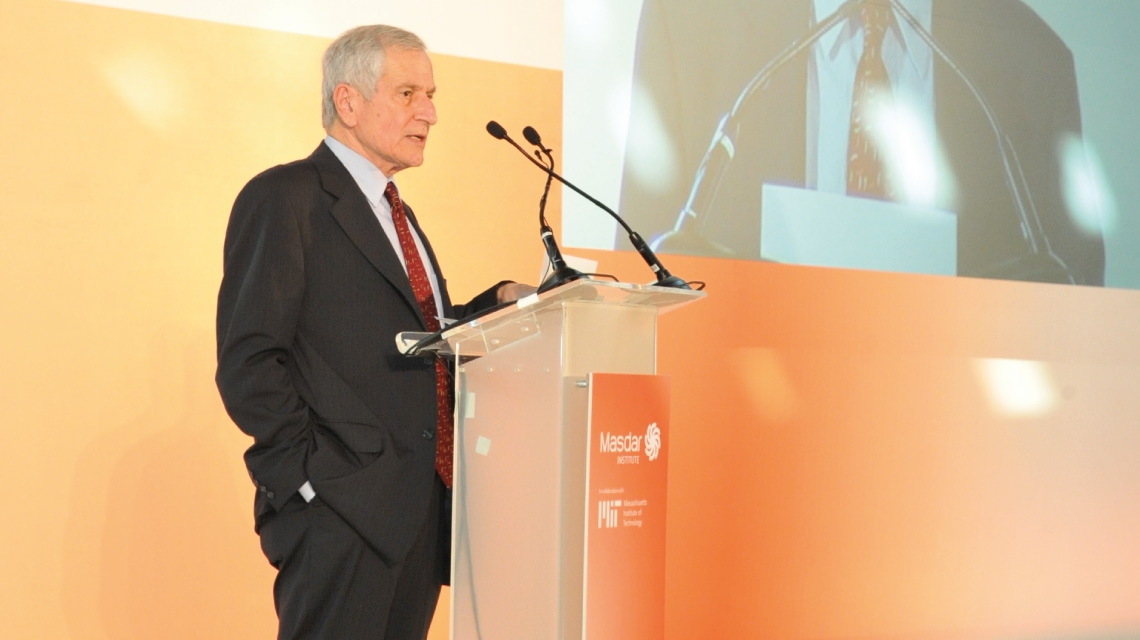
Masdar Institute Receives UAE Government Accreditation for MSc in ‘Sustainable Critical Infrastructure’ Program

Abu Dhabi-UAE: 24 March, 2014 – Masdar Institute of Science and Technology an independent, research-driven graduate-level university focused on advanced energy and sustainable technologies, today announced that the Commission for Academic Accreditation of the Ministry of Higher Education and Scientific Research has granted approval for its Master’s in ‘Sustainable Critical Infrastructure’.

The new MSc program will function under the Department of Engineering Systems and Management (ESM). It aims to offer learning in integrated sustainable infrastructure planning and development, with initial focus on urban operations planning and transportation systems. The ‘Sustainable Critical Infrastructure’ program will be launched in Fall 2014.

The ‘Sustainable Critical Infrastructure’ program takes the total number of Master’s programs offered by Masdar Institute to nine. The ESM department currently has 17 faculty members and administers the MSc Engineering Systems and Management program.

The accreditation announcement was made during the Masdar Institute- Massachusetts Institute of Technology 2014 Symposium ‘Perspectives on Sustainable Critical Infrastructure’ that was held on 24 March at the Yas Marina Circuit in Abu Dhabi. The event was attended by a large number of high-ranking officials and professionals from government, academia and industry. The symposium included three sessions with short presentations from academia, government and industry, followed by moderated discussions on topics related to infrastructure development from a sustainability perspective.

Dr. Fred Moavenzadeh, President, Masdar Institute, said: “Worldwide, governments battered by the financial crisis seek to prune allocations towards infrastructure despite the growing need for ongoing infrastructure developments. At this crucial juncture, the strain on financial and physical resources may be well-managed if the sustainability concept could be incorporated into the infrastructure ecosystem. With the support of the UAE’s leadership, we are launching the new program on ‘Sustainable Critical Infrastructure’ and we hope this will develop knowledge and skillsets urgently required for the future.”

The launch of the program is apt at a time when Abu Dhabi has announced US$100 billion investment in various infrastructure projects over the next five years. Some of the investments will go into projects such as the Khalifa Port, Khalifa Industrial Zone-Abu Dhabi (Kizad), metro and light rail public transit, and Etihad Rail. Infrastructure projects like these will require qualified and trained professionals with the right expertise for their implementation, which the ‘Sustainable Critical Infrastructure’ program can provide.

Masdar Institute’s ‘Sustainable Critical Infrastructure’ program requires a total of 48 credits – 24 each from coursework and the Master’s thesis. It will be based on a basic theory of urban infrastructure systems and have two self-contained tracks – ‘Sustainable urban planning and design’ and ‘Transport planning and systems’. Additional tracks in ’Building Technologies’ will be developed in the future. The program consists of eight courses with one required university core course (UCC501),     three infrastructure planning and engineering core courses (SCI501, SCI502, SCI503 and SCI504), and four electives from within the program’s two concentration areas.

The ‘Sustainable Critical Infrastructure’ program is expected to attract students with previous degrees in architecture, urban planning, building science, civil engineering and other engineering disciplines related to infrastructure systems.

Masdar Institute’s iWater to Lead Research in Water and Environmental Technologies

Abu Dhabi-UAE: 25 March, 2014 – Masdar Institute of Science and Technology, an independent, research-driven graduate-level university focused on advanced energy and sustainable technologies, today announced the launch of its Institute Center for Water and Environment (iWater) to consolidate and drive research projects in this key strategic area.

iWater will produce knowledge and technologies that address the clean water production, climate change, and water resource management challenges faced by Abu Dhabi and the region.

Some of the research areas iWater will cover include water and environmental technologies, (including desalination, water and wastewater treatment), water re-use and recycling, and advanced materials for water applications. Additionally, it will cover water resource management and engineering, environmental sensing and monitoring, and climate change and adaption.

Water and environmental research is a key theme of the research-based Masdar Institute.

Dr. Fred Moavenzadeh, President, Masdar Institute, said: “The creation of iWater further illustrates our earnest drive towards more dedicated multidisciplinary research that encompasses all aspects of sustainable energy. Such centers will provide us with a means to achieve inventions and innovations of direct benefit to the UAE. With the support of the UAE leadership, Masdar Institute continues to develop into a hub for leading-edge research, and we hope the new center will achieve results that will benefit the wider global community.”

Dr. Taha B.M.J. Ouarda, Head of iWater, and Professor of Water & Environmental Engineering, said: “The launch of iWater signifies the consolidation of our research projects for better impact and visibility locally, regionally, and internationally. In addition to facilitating resource sharing, the center will lead to enhanced funding opportunities while offering flexibility and maintaining a nimble research task force. It will also provide the critical mass and a better platform for faculty recruitment. We believe iWater will bring about innovations that will further the adoption of clean technology.”

iWater will be associated with sponsored research centers such as the Sustainable Bioenergy Research Consortium (SBRC), which is primarily linked to the Institute Center for (iEnergy) but will also be associated with iWater. It will also be associated with a sponsored research center in water technologies that will be launched later this year.

iWater will engage and inform domestic and international stakeholders of Masdar Institute’s research activities and capitalize on the Institute’s existing capabilities to facilitate future research development in core water and environment domains. It will focus on application of research findings locally and internationally, publication of influential academic papers, and organization of and participation in high caliber international conferences.

In addition, iWater will offer resources to support world-class research through the coordination of funding opportunities and by supporting strategic partnerships that catalyze external funding opportunities.

The creation of iWater is part of Masdar Institute’s strategy to consolidate its research efforts and provide the right channel to achieve innovations in areas that are of strategic importance to Abu Dhabi and the UAE.

Masdar Institute’s YFEL Members Gain Insights into Advancements in Desalination Technology

Abu Dhabi-UAE: 26 March, 2014 – More than 25 members of the Young Future Energy Leaders (YFEL) program, an outreach initiative by Masdar Institute of Science of Technology, gained insights into new advancements in water resources and desalination, one of the strategic sectors for the UAE, during a specially organized two-day course led by faculty and staff members.

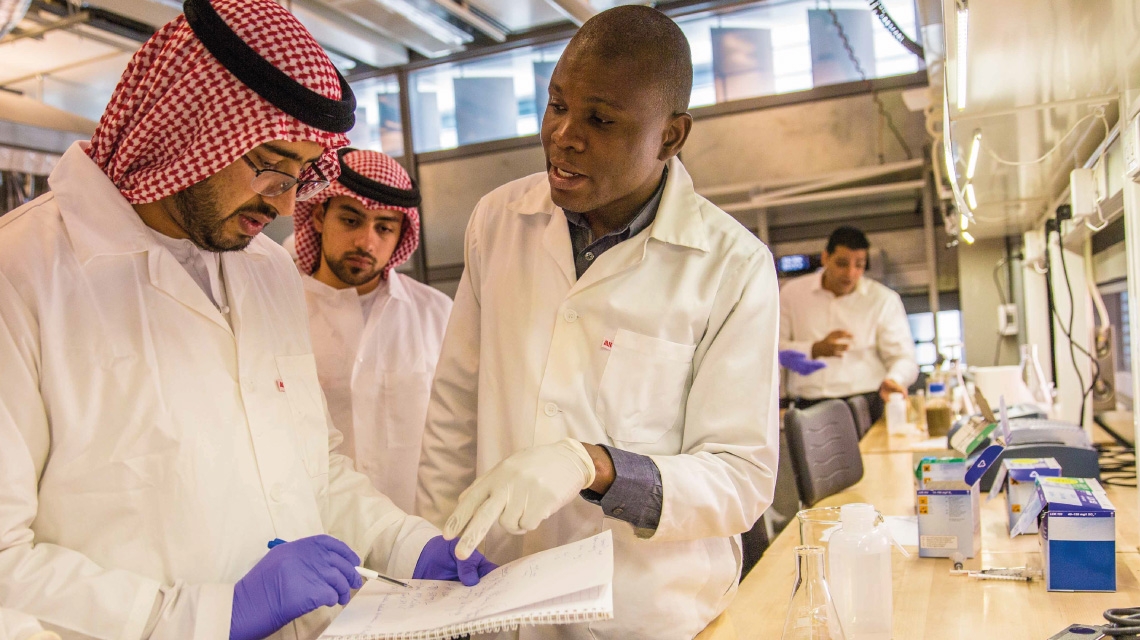
Held at the Masdar Institute campus, the Water Science and Technology Course was led by two Masdar Institute faculty members – Dr. Taha Ouarda, Head of Institute Center for Water and Environment (iWater), and Professor – Water & Environmental Engineering, and Dr. Shadi Wajih Hasan, Assistant Professor, Chemical and Environmental Engineering. The three-module course offered insights into areas including ‘Water Science’, ‘Membrane and Thermal Desalination Processes in Water Treatment’, and ‘Physical, Chemical and Biological Characterization of Wastewater’. It also included a lab safety introduction by Ahmed Basheer, Lab Health and Safety Specialist, a laboratory tour led by PhD student Faisal Al Marzooqi, and a site visit to Masdar City wastewater treatment plant . PhD students Shaik Basha, Celia Lopez and Faisal Al Marzooqi spoke about their water-related research works.

The first module conducted by Dr. Ouarda offered YFEL members an overview of the water situation in the UAE and technical issues associated with water resources estimation, analysis, planning and management. This module prepared participants for more advanced activities related to specific issues such as statistical hydrology, deterministic hydrology, or risk analysis in water resources.

During the second module Dr. Hasan introduced desalination technologies and its integration with energy resources. The last module offered participants a hands-on experimental experience on wastewater characterization, as well as an introduction on wastewater lab and facility.

The theoretical and hands-on aspects of the Water Science and Technology Course offered participants complete understanding of the emerging industry trends and the widely used technologies in desalination. The course was part of YFEL’s year-long activities that build capabilities and contribute to overall professional development.

According to market research firm Visiongain, the global desalination market is expected to be worth US$3.9 billion by the end of this 2014. The UAE has already announced it would establish the world’s largest solar-powered desalination plant that will process more than 22 million gallons of potable water per day. It will also generate 20 MW of electricity.

YFEL member Fatima Al Hameli, a professional from Borouge, said: “Attending the ‘Water Science and Technology’ course was an eye opener. I was amazed to learn that the UAE is one of the countries with highest consumption of water per person in the world, yet it does not have easily accessible sources of water such as rivers and lakes and is highly dependent on thermal desalination. This means that we do not just need technological solutions, but we need to raise the awareness in the society on the importance of conserving water.”

Ibrahim Salim Bin Madhi, student from Abu Dhabi University and YFEL member, said: “Through the course, we learnt about the types of water available on our planet, and how we can tackle the world’s water problems and reduce water consumption. Moreover, we covered the methodologies of desalinization and recycling of water, and the widely used methods.


Masdar Institute’s iInnovation to Strengthen Technology-Based Innovation and Entrepreneurship in UAE

Abu Dhabi-UAE: 07 April, 2014 – Masdar Institute of Science and Technology, an independent, research-driven graduate-level university focused on advanced energy and sustainable technologies, today announced that its Institute Center for Innovation and Entrepreneurship (iInnovation) will contribute to developing and maintaining a leadership role for the UAE in technology-based innovation and entrepreneurship.

iInnovation is mandated to initiate measures to adapt best practices from world-class innovation hubs to the UAE, while working with UAE stakeholders to improve the local innovation ecosystem. In addition, it will support the translation of technology research into innovative commercial products, services and processes. As part of its mission, iInnovation will be hosting the ‘UAE Forum on Innovation and Entrepreneurship 2014’ on 28 April in Abu Dhabi, co-sponsored with the Massachusetts Institute of Technology (MIT) and BP.

Dr. Fred Moavenzadeh, President, Masdar Institute, said: “The launch of iInnovation forms part of our mission towards creating and developing human capital, especially in clean energy innovation and entrepreneurship. With the support of the UAE leadership, Masdar Institute continues to implement initiatives and host international forums to raise awareness of the importance of technology start-ups. We hope iInnovation will develop capabilities, encourage youth to launch start-up companies and facilitate government support for young entrepreneurs.”

Headed by Dr. Bruce W. Ferguson, Professor in Engineering Systems and Management, iInnovation will operate in three thematic areas – establishing the commercial viability of research, further advancing technology entrepreneurship among the youth in the UAE and strengthening the innovation policy framework in the UAE.

iInnovation will design and implement new programs in collaboration with other UAE stakeholders across a broad range of industries. In this area, it will initiate an open technology entrepreneurship lecture series to be hosted at Masdar Institute and create a funding program for late-stage faculty research that shows commercialization potential. In January 2014, iInnovation announced a US$7 million, multi-year Technology Innovation Collaboration Agreement with BP to develop novel ways to speed development and adoption of new sustainable technologies. More recently, a two-year, fully-funded merit-based BP Innovation Scholarship Program was launched to help students develop the business potential of  their own sustainable technology ideas or ideas they adopt at Masdar Institute.

The UAE is currently ranked 25th in the world on the ‘Innovation and Sophistication’ scale by the World Economic Forum’s Global Competitiveness Index (GCI). According to the Emirates Competitiveness Council (ECC), the UAE is continuously upgrading its capabilities, research institutions, as well as its human resources, in order to foster the innovation that competitive SMEs and large businesses across the UAE require for success.

Dr. Ferguson will work with various stakeholders to further drive technology-based innovation and entrepreneurship in Abu Dhabi and the UAE. Masdar Institute already leads in several areas including knowledge generation through research and development (R&D), and collaboration with major industries and government particularly in energy sustainability, water and nanotechnology, according to the ECC.

Dr. Ferguson is a co-founder and former Chief Operating Officer of Orbital Sciences Corporation, a space technology company listed on the New York Stock Exchange, and a co-founder and former Chief Executive Officer of Edenspace Systems Corporation, a plant biotechnology company developing new renewable energy and environmental products.  He is also a Trustee of the Carnegie Institution for Science.

Masdar Institute’s Project among 10 Finalists Selected from Over 650 Entries at Telecom Italia Big Data Challenge

Abu Dhabi-UAE: 14 April, 2014 – Masdar Institute of Science and Technology, an independent, research-driven graduate-level university focused on advanced energy and sustainable technologies, today announced that a project presented by its Social Computing & Artificial Intelligence Lab has become one of the 10 finalists out of 652 entries submitted for the Telecom Italia Big Data and Trentino Open Data Challenge 2014.

The Masdar Institute project was presented in Italy by Aamena Alshamsi, a UAE national PhD student, who is part of a team headed by Dr. Iyad Rahwan, Associate Professor, Computing & Information Science. Other team members include Maryam Almehrezi, Edmond Awad, Vahan Babushkin, Pai-Ju Chang, Zakariyah A. Shoroye, and Attila Peter Toth.

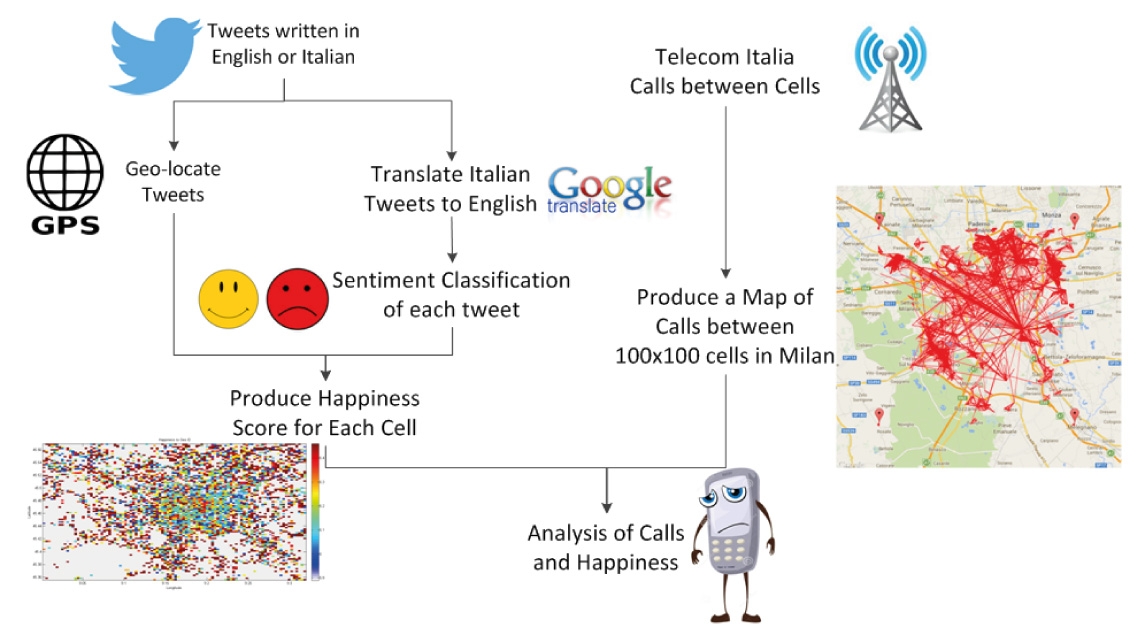
The Masdar Institute entry titled ‘Misery Loves Company: Twitter Sentiment Reveals Assortative Mixing of Aggregate Happiness in Urban Communication Networks’ was chosen from among 652 entries submitted to the Challenge. A committee comprising prominent international experts in academia and research evaluated the ideas for the contest that was open to individuals and teams belonging to any academic institution or companies.

The Big Data Challenge was organized by Telecom Italia, in collaboration with Massachusetts Institute of Technology (MIT) Media Lab, Politecnico di Milano, Trento RISE (with the contribution of Fondazione Bruno Kessler and University of Trento) and European Institute of Innovation and Technology (EIT) ICT Labs.

The contest was designed to stimulate the creation and development of innovative technological ideas in the field of ‘Big Data’. Participants were asked to transform existing data sets into innovative final products such as applications and ‘infographics’. Professionals and enthusiasts in the industry competed globally by choosing one of the three ‘Tracks’ – app, data analytics and data visualization. The Masdar Institute entry also came among the six finalists in the ‘data analytics’ track.

The ‘Misery Loves Company’ project by Masdar Institute’s Social Computing & Artificial Intelligence Lab investigated the relationship between communication among different geographic areas within an urban center and the ‘happiness’ levels in those areas, as measured by social media content production. The study has revealed that ‘unhappy cells attract a disproportionately larger volume of communication compared to happy cells’ and ‘communication plays an important role within each cell’.

Results from the study may help contribute to greater understanding of the relationship between social structure and urban psychological well-being, which has consequences on productivity, innovation, and crime. Furthermore, the findings also inform the design of policies and strategies for improving urban well-being by taking into account the urban communication structure.

Dr. Rahwan said: “Being among the 10 finalists out of 652 teams in an open international challenge means we were in the top 1.5%. This victory is a testimony to the fact that Masdar Institute is now among the leading research universities in the world in the analysis of big data. We could not have done this without the tremendous effort by the MSc and PhD students, who worked relentlessly on making a solid submission. Congratulations to the students whose dedication has brought us this success.”

Team member Aamena Alshamsi said: “Some members of the committee showed genuine interest in our project and encouraged us. Many including some of the organizers and members of the committee found our project very interesting.”

The Social Computing & Artificial Intelligence Lab has had a number of international successes in recent years. In 2012, Alshamsi won the ‘Young Emirati Researcher’ Award, which was convened by the National Research Foundation (NRF). Also in 2012, the Lab won the ‘US State Department’s Tag Challenge’, a one-off international competition to test the power of social media in locating individuals. The Lab also has the distinction of publishing the first-ever paper from the UAE in the respected journal Science.

Masdar Institute’s iMicro to Host Global and Local Industry Leaders Meet on 22 April

microAbu Dhabi-UAE: 17 April, 2014 – Masdar Institute of Science and Technology an independent, research-driven graduate-level university focused on advanced energy and sustainable technologies, today announced that its Institute Center for Microsystems (iMicro) will be gathering top delegates from the major global semiconductor industry leaders for an Open House in Abu Dhabi.
The event will showcase the world-class research currently being conducted at Masdar Institute’s iMicro in all areas of micro- and nano-technologies, including semiconductors, photonics, Microelectromechanical Systems (MEMS), and photovoltaics. iMicro focuses on advanced research and innovations in microsystem technologies that are vital to the UAE’s emerging semiconductor industry.

Scheduled to be held on 22 April 2014 at Masdar Institute, the Open House will coincide with the first anniversary of the ATIC-SRC Center of Excellence for Energy Efficient Electronic Systems (ACE4S) that was set up last year by the Advanced Technology Investment Company (ATIC) and the Semiconductor Research Corporation (SRC). The event will be attended by Technical Advisory Board (TAB) delegates from GLOBALFOUNDRIES, Intel, Texas Instruments, IBM, Freescale, Applied Materials, and Mentor Graphics. In addition, high-ranking officials from Siemens, GE, Air Liquid, Tawazun, BP, Petroleum Institute, Abu Dhabi National Oil Company (ADNOC), Khalifa University of Science, Technology and Research, and NYU Abu Dhabi will also attend the event.

Dr. Rafic Makki, Executive Fellow for GLOBALFOUNDRIES, will give a keynote address on the innovative spirit the has driven the phenomenal grow of the semiconductor industry, while Ms. Canan Anli, Head of Technology Ecosystem, ATIC, will highlight the need for building an R&D ecosystem in Abu Dhabi. Dr. Ibrahim Elfadel, Head of iMicro, will offer an overview of the research center, while Dr. Bruce Ferguson, Head of the Institute Center for Innovation and Entrepreneurship (iInnovation), will speak about how Masdar Institute continues to remain an innovation hub. A tour of the ATIC Clean Room and Microscopy Suite will be led by Mike Tiner, Acting Director, Research Infrastructure and Laboratories, Masdar Institute. Several Masdar Institute faculty affiliated iMicro will give focused research presentations highlighting the multifaceted advanced work being conducted in nano and micro technologies at the Masdar Institute. In addition students working on iMicro research projects will present posters showcasing the important educational role iMicro is playing in the formation of high-skilled professionals for the emerging semiconductor ecosystem in the UAE.

Dr. Fred Moavenzadeh, President, Masdar Institute, said: “The Open House reflects our intense involvement in cutting-edge research projects taken up in collaboration with various global leaders with the support of the UAE leadership. We believe experts gathering for events such as the iMicro Open House will provide us with further encouragement and the right guidance to pioneer breakthrough innovations.”

Dr. Elfadel said: “This Open House is essential for us as it is not only gathering experts in semiconductor industry but also professionals from the oil & gas, manufacturing, healthcare, and utilities sectors as well. We hope this interaction will strengthen our ties with existing local and international stakeholders, while paving the way for more collaborations that will bring true benefits to the UAE and the region.”

iMicro was established earlier this year to provide strategic and operational direction to basic and applied microsystems research to achieve excellence and generate knowledge and technologies that will help establish the UAE as a global leader in microsystem devices and materials research, process technology, circuit and system design, and photonics.

ACE4S is hosted jointly by Khalifa University of Science, Technology and Research, and Masdar Institute in Abu Dhabi. In addition, iMicro also works with other sponsored research centers such as the TwinLab 3-Dimensional Stacked Chips Research Center (TL-3DSC) jointly led by Masdar Institute and the Technical University of Dresden, and the MEMS TwinLab jointly led by Masdar Institute and the Institute of Microelectronics (IME) Singapore.

Cleaned wastewater may be the answer to the Gulf’s needs

As the UAE grows, its people need more water. We can’t keep taking ever more from the Arabian Gulf – so instead we are increasingly turning to wastewater as a source of fresh water.

There are already many ways of doing this, but they take time and money, and come with their own environmental impacts. We have to make wastewater treatment more effective, efficient and affordable.

MBRs offer a compact way to produce high quality water that can even be coupled with biogas recovery, resulting in two useful products – water and biogas. But this technology still faces challenges.

Nothing can get through the membrane’s pores, making it no use as a filter for wastewater – so treatment has to stop for the membrane to be either cleaned or replaced. The loss of productivity, along with the cost of the treatment chemicals or new membranes, reduces the cost effectiveness of the MBR.
A membrane that prevented biofouling could make MBRs a far more attractive option for water treatment. That is where our novel membrane comes in.
Building on European research, we have created a membrane that is highly resistant to biofouling and also improves the through-flow of water. This was achieved by improving the membrane structure, porosity, and surface chemistry.

The 3D pattern also increases the effective filtration area of membrane, giving it twice the filter surface area – and therefore twice the productivity. Lastly and most importantly, the improved flow hydrodynamic makes it harder for unwanted organisms to stick to the membrane.

Standard membrane bioreactor membranes need to be cleaned or replaced daily. After a month, our membranes were still fairly clear of biofouling and functioning as they should.

We hope this research can be utilized by industry and academia to make wastewater treatment and reuse through membrane bioreactors more widely adopted not only here in the UAE, but around the world.

 
Dr. Hassan Arafat is an associate professor of chemical and environmental engineering at the Masdar Institute of Science and Technology. Dr. Muhammad Ro’il Bilad is a post-doctoral associate and Jehad Kharraz is a master’s student in the same department.

Over 200 Stakeholders in Higher Education, Energy and Aerospace Gathering for ‘UAE Forum on Innovation and Entrepreneurship 2014’

Abu Dhabi-UAE: 27 April, 2014 – More than 200 key stakeholders from government, academia, finance, business, industry and private foundations will be gathering for the UAE Forum on Innovation and Entrepreneurship 2014 in Abu Dhabi, the organizers announced today.

Hosted by Masdar Institute of Science and Technology, an independent, research-driven graduate-level university focused on advanced energy and sustainable technologies, in collaboration with BP Exploration Operating Company Limited and the Massachusetts Institute of Technology (MIT), the second annual invitation-only Forum will be held on 28 April at the St Regis Abu Dhabi Corniche.

A plenary session, three simultaneous panel discussions and two innovation workshops will explore opportunities to accelerate innovation in higher education, energy, and aerospace. This industry-based approach to optimizing the innovation ecosystem follows recommendations of the previous Forum held last year. It will conclude with a tour of Masdar City.

Dr. Fred Moavenzadeh, President, Masdar Institute, said: “This year’s Forum focuses on one of the nine recommendations made in the previous Forum to provide a strong foundation for future stakeholder initiatives. The support of the UAE leadership continues to enable us to organize regionally relevant forums on building capacities with an eye on the future. We believe this Forum will generate concepts that could inspire an innovation ecosystem for the benefit of the region.”

Dr. Charles C. Cooney, Faculty Director, Deshpande Center for Technological Innovation and the Robert T. Haslam Professor of Chemical Engineering, MIT said: “As a research-driven academic institution, MIT is keen to collaborate with others in organizing events that highlight the need to boost innovation. Actively engaging various industry stakeholders is one of the key options to drive innovation and build an effective ecosystem for the UAE. We hope the forthcoming UAE Forum on Innovation and Entrepreneurship 2014 in Abu Dhabi will analyze specific opportunities that will help usher in new concepts in the industry sectors.”

AbdulKarim Al Mazmi, General Manager and Chief Representative for BP UAE, said: “BP focuses a great deal on innovation in our business. We see opportunities like this to bring together experts from different industries and academia as a great way to collaborate and to share knowledge. Our support for the UAE Forum on Innovation and Entrepreneurship 2014 is about taking an opportunity to engage with others on how to develop an innovation ecosystem and to think about the role that BP can play in promoting and harnessing technology innovations to meet the challenges of the future.”

Speakers at the Forum will include Frank Wouters, Deputy Director General, International Renewable Energy Agency (IRENA), Tony Douglas, CEO of Abu Dhabi Airports, and Dr. Anant Agarwal, edX President. Panelists will include Professor Brian Norton, President, Dublin Institute of Technology, Professor Karen Gleason, Department of Chemical Engineering, MIT, Jeffrey Johnson, President, Boeing Middle East, Mohammed Alaoui, Senior Vice-President, Aerospace & Engineering Services Unit, Mubadala, Dr. John Evans, Vice President for International Engineering and Technology, Lockheed Martin Corporation, Dr. Arif Sultan Al Hammadi, Executive Vice President, Khalifa University of Science and Technology, Prof. Mohamed Yousif Baniyas, Vice Chancellor, Emirates College for Advanced Education, Graham Walker, VP Reservoir Development, Middle East Region, BP, Her Excellency Fatima Al Shamsi, Assistant Undersecretary, Ministry of Energy, and Dr. Alejandro Ríos Galvan, Director, Sustainable Bio-energy Research Consortium, and Professor of Practice, Masdar Institute.

Dr. Charles C. Cooney, Faculty Director, Deshpande Center for Technological Innovation, will moderate the panel discussion on Innovation and Entrepreneurship in Higher Education, while Dr. Nawal Al Hosany, Director, Zayed Future Energy Prize, and Director of Sustainability, Masdar, will lead the discussions for the panel titled ‘Innovation and Entrepreneurship in Energy’. Dr. Bruce W. Ferguson, Professor, Masdar Institute, Head of Masdar Institute Center for Innovation and Entrepreneurship (iInnovation), and Co-Founder, Orbital Sciences Corporation, will moderate the panel on aerospace. Dr. Mohamed Sassi, Interim Dean of Faculty, and Professor of Mechanical and Materials Sciences, Masdar Institute, will lead the innovation workshop on ‘Fracturing’, while Ms. Sarah Amiri, Project Manager, Advanced Projects, Emirates Institution for Advanced Science & Technology (EIAST), will conduct the ‘Aerospace Innovation Workshop: How to Build a Small Spacecraft, and Why You Might Want To?’.

Rising Number of Issued and Pending Patents Place Masdar Institute among Key Contributors to Abu Dhabi’s Economic Diversification

Abu Dhabi-UAE: 10 May, 2014 – Within five years since its inception, Masdar Institute of Science and Technology has earned the distinction of obtaining three approved patents with an additional 39 patent applications pending and over 60 invention disclosures. These achievements are in addition to over 400 papers published in peer-reviewed journals, as well as 280 conference proceedings, 19 book chapters, and two full books.

But even more significant are the startup companies established by two Masdar Institute students. The start of these companies based on student research is a result of Masdar Institute’s drive to create an entrepreneurial ecosystem in Abu Dhabi. In addition, there are several negotiations currently under way with some national and international companies to explore current commercial opportunities that will be based on the technology innovations achieved by faculty members.

This list of achievements shows how Masdar Institute is working to help establish ‘Silicon Valley-style’ technology parks in Abu Dhabi to help it achieve its knowledge economy transformation targets.

As part of its efforts, Masdar Institute has developed core capabilities in its research and academic programs that underlie the complex systems solutions that are critical to the development of technology-based industries in Abu Dhabi.

Five Masdar Institute Research Centers (iCenters) and a number of sponsored research centers work to focus its research activities into areas of importance to Abu Dhabi and its industries. Masdar Institute announced during the World Future Energy Summit 2014, the launch of the five iCenters – Institute Center for Innovation and Entrepreneurship (iInnovation), Institute Center for Energy (iEnergy), Institute Center for Water and Environment (iWater), Institute Center for Microsystems (iMicro) and Institute Center for Smart and Sustainable Systems (iSmart).

Currently, these five iCenters are collectively inspiring Masdar Institute’s continued evolution into a regionally-focused but globally-recognized university that produces knowledge and technologies across the sustainability spectrum. The iCenters also reflect the outcome of more than 40 successful research collaborations Masdar Institute has entered into with government and private sector organizations over the last few years.

More recently, iMicro marked the first anniversary of the ATIC-SRC Center of Excellence for Energy Efficient Electronic Systems (ACE4S), one of the key sponsored research centers at Masdar Institute, by gathering an array of industry stakeholders. At the gathering several Masdar Institute faculty affiliated to iMicro gave research presentations reiterating Masdar Institute’s role in driving research in semiconductor sector. ACE4S was set up last year by the Advanced Technology Investment Company (ATIC) and the Semiconductor Research Corporation (SRC).

Earlier in the academic year, Masdar Institute announced a far-reaching regrouping of its eight academic programs under four departments. They are: the Department of Electrical Engineering and Computer Science (EECS), Department of Engineering Systems and Management (ESM), Department of Mechanical and Materials Engineering (MME) and the Department of Chemical and Environmental Engineering (CEE). The new structure has successfully created a strong synergy amongst the programs and new opportunities for interdisciplinary research.

The departments have helped in fostering research in core domains aligned with the UAE’s evolving research and human capital needs. Additionally, the launch of a new Master’s program in Sustainable Critical Infrastructure further amplifies Masdar Institute’s pledge to continue driving innovations while developing human capital in clean energy and advanced energy areas.

Currently, a total of 428 students are enrolled in Masdar Institute’s eight Master’s and one PhD programs. They are guided and supported by a globally acclaimed faculty numbering 81.

Three Outreach Initiatives Offer A Taste of Masdar Institute’s Academic and Research Offerings

Abu Dhabi-UAE: 18 May, 2014 – Three outreach initiatives are offering  aspiring scientists in the UAE a taste of the learning process that university students and young professionals can expect from the research and academic offerings of Masdar Institute of Science and Technology.

The three programs – Young Future Energy Leaders (YFEL), Summer Research Internships, and ‘Ektashif’ – aim to reinforce students’ knowledge, interest and academic skills in science, engineering and technology as they relate to the graduate, doctoral and post-doctoral research projects being conducted at the Masdar Institute. These programs are part of Masdar Institute’s contribution to knowledge and human capital development in the UAE, as well as regionally and globally.

The YFEL program is under the patronage of His Highness Sheikh Mohamed bin Zayed Al Nahyan, Crown Prince of Abu Dhabi and the Deputy Supreme Commander of the UAE Armed Forces. One of the more popular offerings, YFEL provides young professionals and students from the UAE and abroad with an opportunity to become more engaged in finding solutions to the world’s biggest challenges – achieving energy efficiency and tackling climate change. The YFEL 2014 program, sponsored consecutively for four years by the Abu Dhabi National Oil Company (ADNOC), has over 100 members. Now in its fourth year, the YFEL continues to interact with leaders in sustainability fields across the world.

In January 2014 the YFEL 2013 members completed their year-long courses and received their certificates of completion after a year of actively spearheading individual projects and taking concepts of sustainability to far-flung regions. 

The YFEL program is open to UAE national and international graduate students and young professionals, while the Summer Research Internship and the Ektashif programs are offered to UAE national undergraduates.

Dr. Lamya Fawwaz, Executive Director, Public Affairs, Masdar Institute said: ““The support and vision of the UAE Leadership has been instrumental in highlighting the importance of renewable energy sources, sustainability and the need to find solutions to these global issues. As such, the Outreach initiatives offer students and young professionals an opportunity to obtain in-depth knowledge on sustainability, renewable energy and climate change and work towards finding these solutions. Due to the multiple options these initiatives offer for development in these fields, the 3 programs have become increasingly popular among a growing number of students.”

Yamrot Amha, YFEL member and student of Water and Environmental Engineering, said: “Through my training with YFEL I have become a more confident leader, who is ready to make an impact using the knowledge I have gained. Furthermore, I was given a chance to attend the 22nd World Energy Forum in South Korea and interact and engage with the leading global energy professionals because of the YFEL program.”

In addition, Masdar Institute’s Summer Research Internship program for UAE national undergraduate students aims to nurture qualified university students with a penchant for research and innovation and inspire them to gain additional knowledge. In 2013, the program offered a total of nine research projects for the interns to learn from, focusing on water, solar energy and fuel cells – areas that are identified as strategically important to the UAE.

Through the program, six interns receive an opportunity to gain new insights into applying their knowledge in technical and laboratory skills. This year, intern Hend Al Zeyoudi, who worked during the summer under the guidance of Dr. Tariq Shamim, Head of Mechanical Engineering, co-authored a scientific research paper that won international acclaim at the 17th Asia Pacific Automotive Engineering Conference held in Bangkok. It was titled ‘Effect of Ambient Conditions on the Performance of an Open-Cathode PEM Fuel Cell Stack: Case Study United Arab Emirates’. Many of the projects to be offered under Summer Research Internship this year will focus on solar cell and biomass research. There is also a training program for students on how to operate electron microscopes and work in a ‘Clean Room’ to fabricate advanced materials and devices on the micron and sub-micron scale. (For inquiries, please contact: internships@masdar.ac.ae)

Another Masdar Institute outreach initiative is the two-week ‘Ektashif’ residential program, which brings together talented UAE undergraduate engineering and science students to learn about renewable energy, sustainability and the environment. In the summer of 2013, a total of 22 UAE national undergraduates concluded their experience with a variety of hands-on laboratory workshops. The program this summer will run in August, with nominations now being accepted. Students wishing to participate in Ektashif this summer need to have nominating letters sent by their Department Head or Dean to the Masdar Institute Outreach program. (For inquiries, please contact: outreach@masdar.ac.ae)

Maryam Rashed AlMazrouei, Chemical Engineering student at UAEU and Ektashif participant, said, “I always wondered what was happening up there in Masdar Institute and I really wanted to discover it. The Ektashif program gave me that chance, and it was one of the best experiences I ever had. I learnt new things about lasers, electronics, biofuel and other technologies.”

These outreach initiatives not only give potential students an indication of what to expect at Masdar Institute but also inspire them towards taking up subjects in sustainability for Master’s studies.


International Seawater Monitoring Experts Keen to Partner with Masdar Institute’s Ocean Color Group

Abu Dhabi-UAE: 19 May, 2013 – Masdar Institute of Science and Technology, an independent, research-driven graduate-level university focused on advanced energy and sustainable technologies, today announced the participation of its Ocean Color Group in an international conference in Oman, where they generated significant interest for collaboration in seawater quality monitoring, including detection and tracking of coastal water threats.

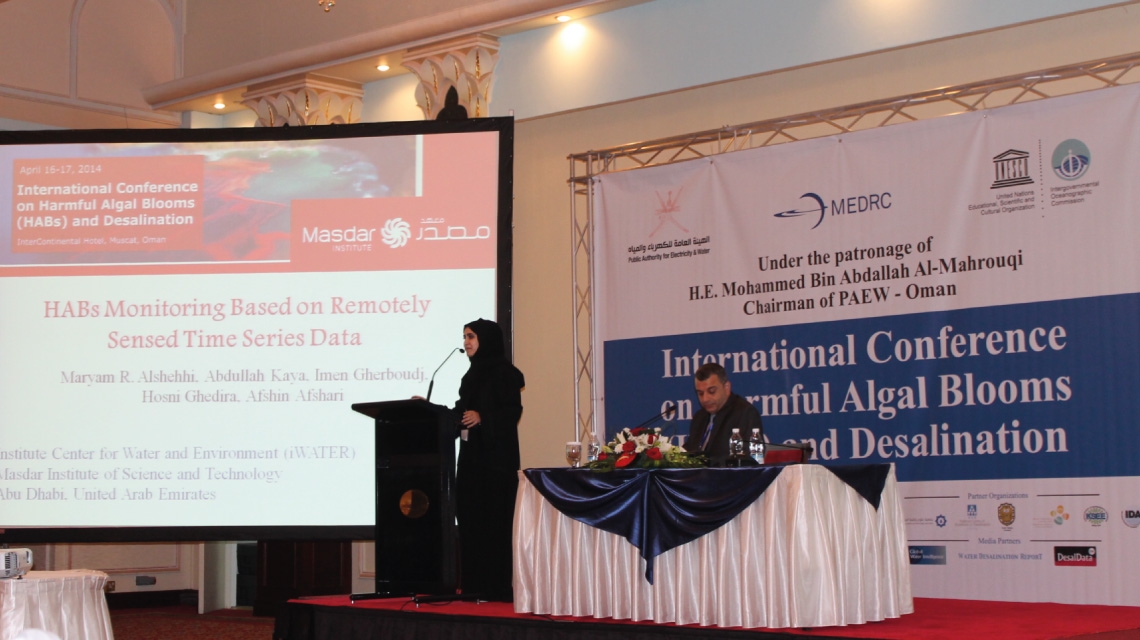
The Masdar Institute Ocean Color Group participated in the International Conference on Harmful Algal Blooms (HABs) and Desalination 2014 that was held recently in Muscat, Oman. Hosted by the Middle East Desalination Research Center (MEDRC), the conference attracted more than 150 world-known scientists and stakeholders from seawater monitoring and desalination sectors.

The participation was led by Dr. Marouane Temimi, Associate Professor, Water and Environmental Engineering program, and included post-doctoral scientist Dr. Jun Zhao, PhD students Muna Al Kaabi and Maryam Al Shehhi, Research Engineer Nahla Mezhoud, and Master’s student Sheikha Al Kitbi.

The Ocean Color Group focuses on studying coastal processes in terms of hydrodynamic circulations and seawater quality monitoring, which includes detection and tracking of Harmful Algal Blooms (HABs) and oil spills using satellite imagery. The Group’s research activities triggered the interest of several regional and international collaborators. 

Dr. Temimi said: “The presentations given by our students and post-doc have generated interest among regional managers and decision-makers, who expressed their willingness to build a partnership with Masdar Institute. We believe that our remote sensing capabilities, the numerical models that we developed, the regular field experiments that we conduct in the Arabian Gulf, and the exceptional lab facilities we have at Masdar Institute position us as a key regional player in marine ecosystem monitoring and assessment because of the support of the UAE’s leadership.”

Dr. Temimi chaired a technical session on ‘Technologies for HAB Detection and Forecasting’ that included presentations about techniques to detect harmful blooms using satellite imagery and in situ observations, and monitoring and forecasting algal toxins in seawater and drinking water. The presentations emphasized the role of remote sensing and the importance of early detection and monitoring of HABs in the region. Panelists also focused on novel pretreatment technologies and the best management practices for desalination plant operators to address algal bloom outbreaks.

Three posters on research at Masdar Institute were also presented at the conference in Muscat. Muna Al Kaabi’s poster focused on mapping water turbidity in the Arabian Gulf using satellite imagery. Nahla Mezhoud, a Research Engineer with the Ocean Color Group, presented, in collaboration with Sheikha Al Kitbi, a poster on the field experiments conducted in the Arabian Gulf by the Ocean Color Group team members. The third poster from Masdar Institute by Dr. Jun Zhao focused on the mapping of HABs and oil spills in the Arabian Gulf region as main threats to operational water desalinations.

In the oral presentations, Maryam Al Shehhi, highlighted the analysis of the frequency of harmful algal bloom outbreaks in the Arabian Gulf region through satellite observations. Dr. Jun Zhao’s presentation focused on the characterization and the monitoring from space of a specific outbreak that occurred in the fall of 2013.

The Ocean Color Group’s marine environment monitoring strategy is based on numerical models to determine sea currents and weather conditions in the Arabian Gulf and satellite remote sensing for an early detection, tracking, and potential landfall forecast of HABs and oil spills. With vessels provided by the UAE Navy and Bayanat, students and researchers of Masdar Institute conduct field ship-based surveillance cruises to collect sea water samples and analyze them in Masdar Institute’s labs for a thorough characterization of the Arabian Gulf waters.