KU Launches Golden Key Honor Society Chapter

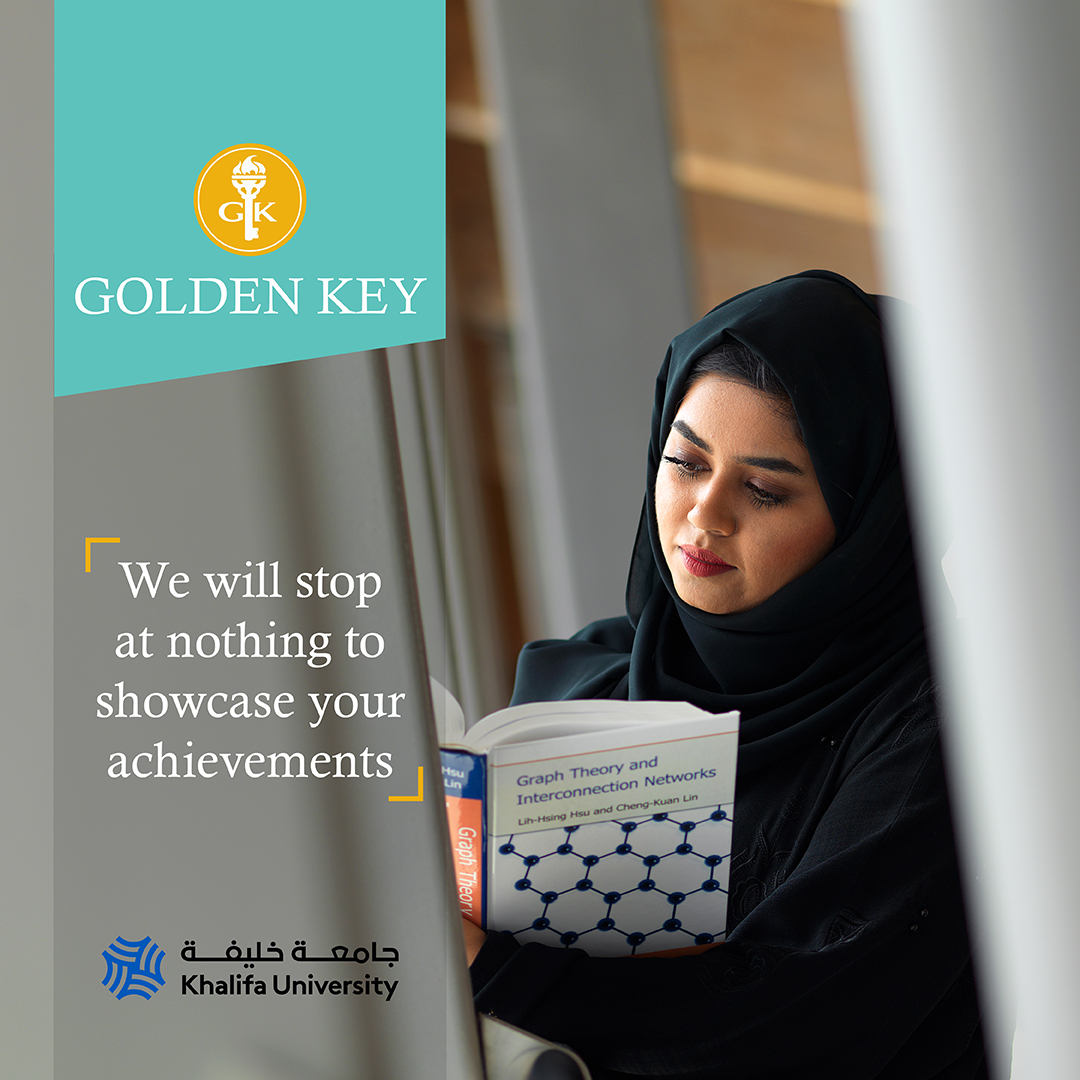
Khalifa University has launched the KU Golden Key Chapter, and will offer Golden Key membership to high-achieving students at Khalifa University.

At an award ceremony to take place during the Spring semester, KU will extending membership to the top 15% of its sophomores, juniors, seniors, and graduate students. These students will become part of an international honor society that has over two million members across the globe, and includes honoraries like Desmond Tutu, Elie Wiesel and Bill Clinton.

Golden Key is one of the world’s best networking groups. Thousands of Golden Key members have utilized the opportunities of this society to develop their leadership skills, engage in community service, and enhance their personal network. KU Golden Key members will receive exclusive opportunities and connections through access to over half a million dollars in scholarships and awards, partnerships with major corporations, career advancement and graduate programs.

The Khalifa University chapter is Golden Key’s only Middle East chapter. Membership into the chapter is by invitation only to those students performing in the top 15% of their class. By extending Golden Key membership to our top-achieving students, KU is not only reaffirming its commitment to help students realize their full potential, but it is also setting a new standard of academic excellence in the region.


Erica Solomon
Senior Editor
20 December 2019

Engineering Exhibit Showcases Freshmen Students’ Innovative Projects

Around 50 innovative projects by Khalifa University students were presented at the Engineering Design Fall 2019 (ENGR111) Term Project Presentation Day on 4 December 2019 at the Main Campus.

ENGR111 Term Project Presentation Day is a regular event where freshmen engineering students showcase different projects they have worked on as they learn the different disciplines and fundamentals of the engineering design process. The students interact with visitors as they present their projects and answer questions about their work. At the end of the event, two awards were given, the Judges’ Award and Audience Award.

The Audience Award, chosen by those who attended the exhibition through votes via a mobile app, was presented to the Protected Live Coral Farm project by Mohamed Alshamsi, Khalfan Alnaqbi, Mohamed Nasr, Abdulkareem Harthi, and Saif Alali. The team’s project focuses on developing a feasible strategy to revive, as well as protect the Arabian Gulf coral reefs, taking into consideration the Gulf’s unique conditions. The plan is to construct a land-based coral farm where coral is cultivated and then moved from the farm to the ocean. The team presented a working prototype of the farm design, including live coral, showing how the strategy will work.

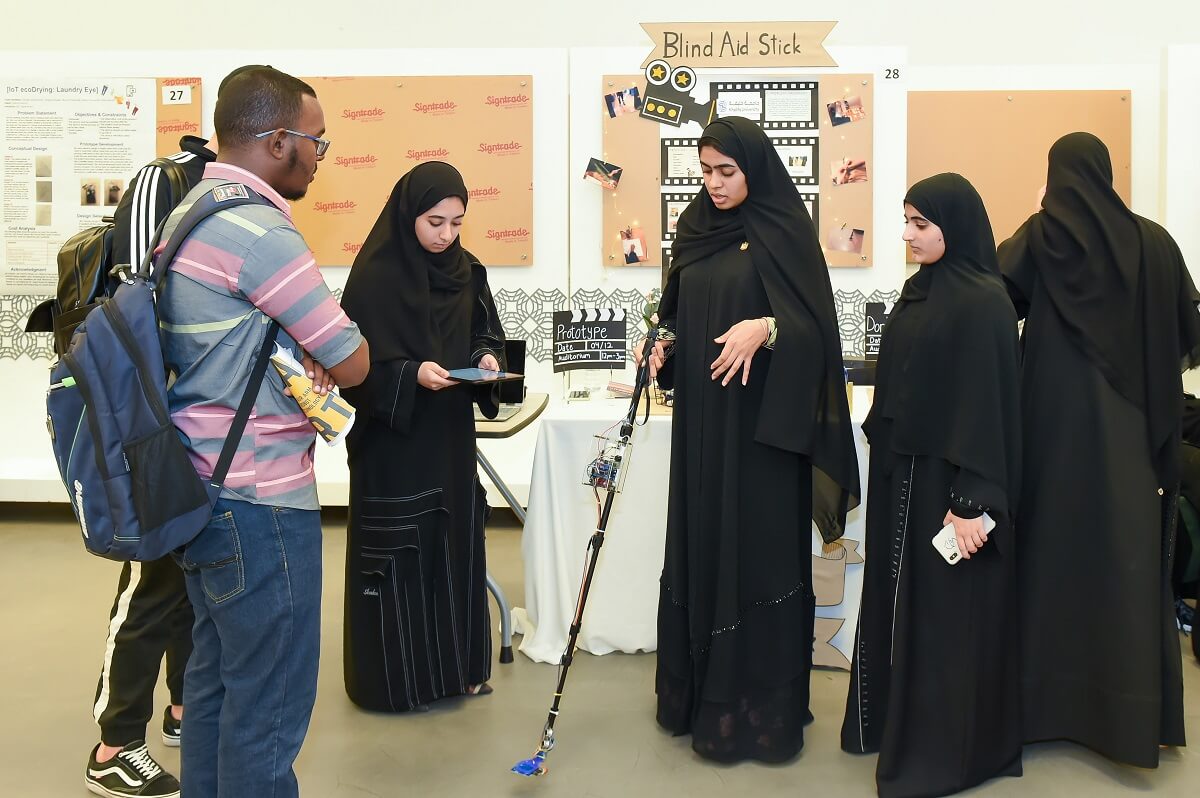
The Blind Aid Stick project by Shaikha Alteneiji, Aisha Alzahmi, Asma Almansoori, Maryam Almheiri, and Banan Abedalhaq was the recipient of the Judges’ Award, which was chosen by a committee of 24 judges. The project is a walking stick for those who have visual impairment to detect if an obstacle or another person is in the way of the user’s movement. The stick’s built-in sensor estimates the distance between the stick and the potential obstacle, and then sends a signal to give sound or voice feedback.

The event attracted a huge number of visitors who enjoyed learning about the different projects that highlighted the creative and ingenious talents of KU students in conceptualizing solutions and building prototypes for real-life challenges.

Ara Cruz
News Writer
8 December 2019

KU’s Center on Digital Supply Chain and Operations Builds Connections and Knowledge in Logistics

Faculty from KU’s Research Center on Digital Supply Chain and Operations Management (DSO) have returned from a visit to the Netherlands where they met with experts from industry and academia to learn about the country’s logistics industry.

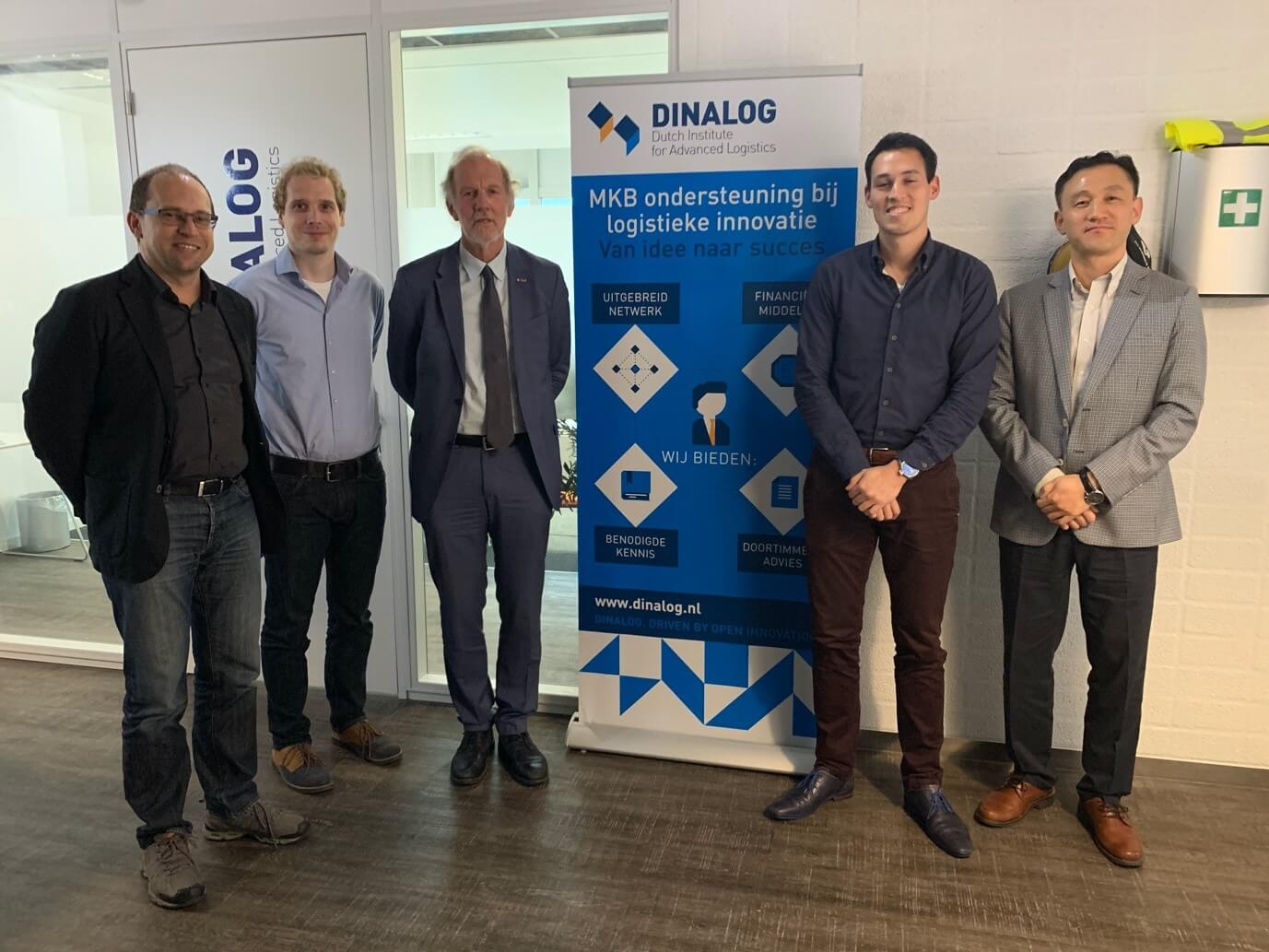
From 28 – 30 October, Assistant Professors of Industrial and Systems Engineering Dr. Andrei Sleptchenko and Dr. Heungjo An met with representatives from TKI-Dinalog (Dutch Institute for Advanced Logistics), a Dutch-based logistics and supply chain company; faculty and students from Erasmus University Rotterdam; and professionals from Fokker Services, an independent aerospace service provider.

The visit centered around potential collaboration opportunities with the DSO Center, which has set a major focus on digitalizing and optimizing areas like maritime logistics and production lines.

The Netherlands’ Port of Rotterdam, the largest port in Europe, is a pioneer in port digitalization and a perfect case study for researchers in the DSO Center. The organizations and research centers the KU faculty visited throughout their trip are heavily involved in the Port’s ongoing transition into the world’s smartest port.

At TKI-Dinalog’s headquarters, Dr. Sleptchenko and Dr. An met with Prof. Henk Zijm, former Research Director of DINALOG, and active collaborator of the DSO Center; Dr. Nils Knofius, postdoc at the University of Twente; Bas van Bree, Program Manager at TKI Dinalog; and Jasper de Graaf, Program Developer at TKI Dinalog.

TKI-Dinalog mediates collaborations between Dutch logistical companies, national research funds, and Dutch universities. Dr. Sleptchenko and Dr. An were keen to learn more about how TKI-Dinalog is organized, and how they could bring that experience back to KU.

During their visit to Erasmus University, the KU faculty met with Dr. Rob Zuidwijk, Professor of Global Supply Chains and Ports at the Rotterdam School of Management (RSM) and a DSO center steering committee member, and Dr. Rommert Dekker, Professor of Operations Research, Quantitative Logistics, and IT at the Erasmus School of Economics (ESE), along with some PhD students. Discussions were centered around the DSO’s planned research activities and potential collaboration projects, the ESE’s maritime logistics research, and the activities and developments at the SmartPort research center at RSM. SmartPort is a center of excellence offering port-related education and research designed to address the Port of Rotterdam’s need for solid knowledge.

The trip concluded with a visit to Fokker Services, where the KU team met with Kaveh Alizadeh, Proposition Manager Aircraft Programs, Charlotte Zohlandt, Team lead Product Management, and postdoc Dr. Nils Knofius. They discussed potential collaboration opportunities on the research projects related to additive manufacturing (or 3D printing) of service parts, directly related to Research Theme 1 of the DSO Center, which addresses the need for optimizing spare parts management for aerospace and defense industries.

Erica Solomon
Senior Editor
8 December 2019

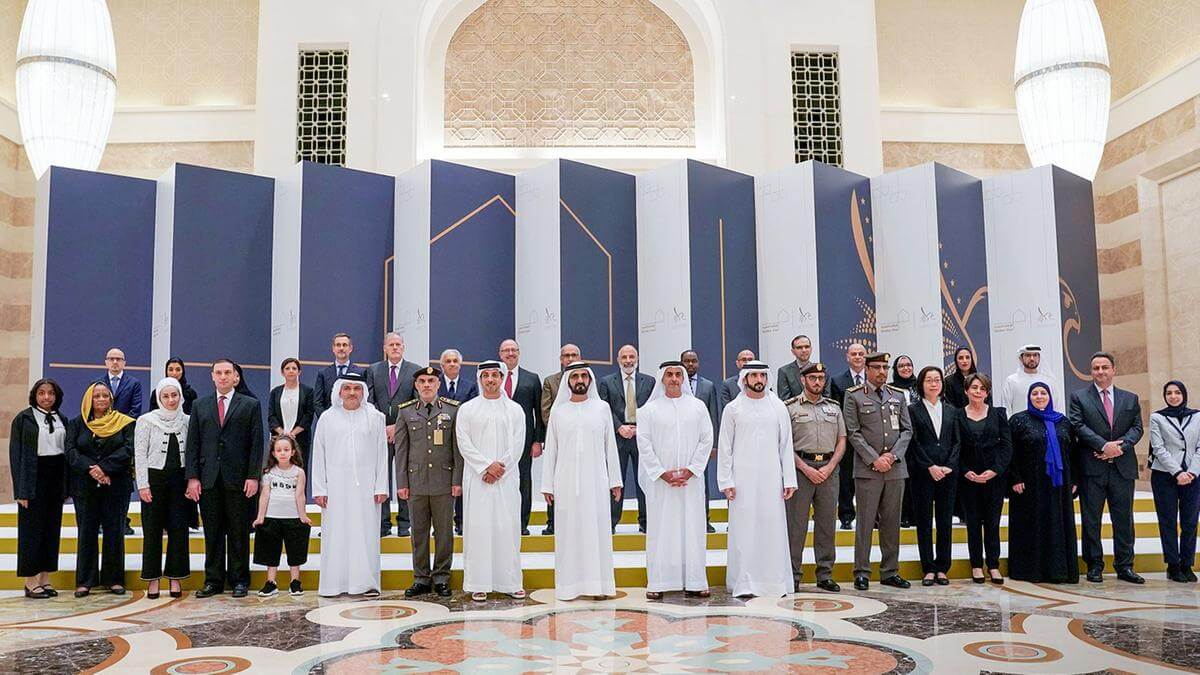
UAE Honors Nine Faculty Members with Golden Residency Visas

UAE Honors Nine Faculty Members

Nine Khalifa University faculty members were granted permanent residency during a special ceremony in Abu Dhabi on 12 November 2019. The permanent residency, also known as the Golden Card Visa, is a renewable 10-year residency program granted to qualified investors, entrepreneurs, chief executives, scientists, and outstanding students.

The following are the nine deserving KU professors who received permanent residency:

Dr. Lourdes Vega
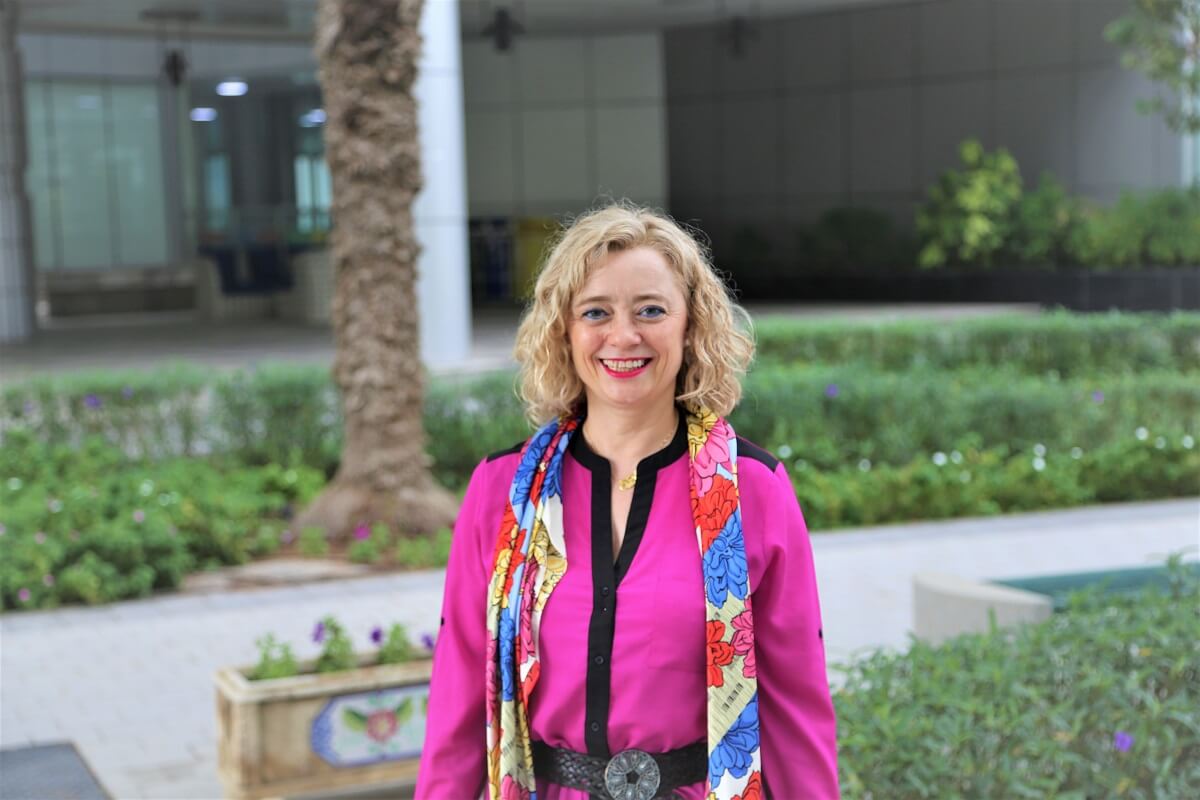
Dr. Vega is a Professor of Chemical Engineering and the Director of the Research and Innovation Center on CO2 and H2 (RICH Center). A recognized authority of molecular thermodynamics, clean energy, and sustainability, she has authored and co-authored more than 200 publications and has five patents to her name.

“I feel very excited, honored, and immensely grateful to the leaders of this country for granting me this permanent visa. One of the things that attracted me the most when I decided to come to the UAE to continue my research on clean energy and sustainability was the eagerness of its people to learn, to progress, and to contribute from this country to a better future for the next generation. This motivated me to work from here and to try to make an impact in the UAE, addressing its needs, and helping shape the expertise and education of its people, so I decided I wanted to be part of this adventure in which I’m fully engaged now, and I’m very happy about it. I have also been fascinated since the beginning by the vision and commitment of the UAE leaders regarding the advancement of science and education, as shown by the support of research and innovation we receive through Khalifa University and the activities developed through the Mohammed bin Rashid Academy of Scientists, among other things. Granting this golden visa to scientists is, once more, a clear example of the deep commitment of this country to the advancement of science, technology and innovation.” – Dr. Lourdes Vega

Dr. Linda Zou
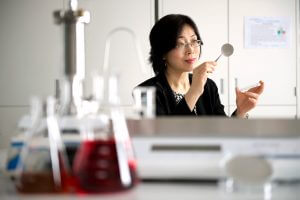
Dr. Zou is a Professor of Civil Infrastructure and Environmental Engineering at KU. She is known for leading the ground-breaking research project of using nanotechnology to develop cloud seeding materials, which was awarded a three-year grant by the UAE Research Program for Rain Enhancement Science (UAEREP) in 2016. Now, actual seeding operations using her research have begun in the UAE.

“It is a good feeling when your work and effort as a scientist and researcher have been directly recognized by the government and such honor is only possible with the great opportunity and continued support provided by Khalifa University and other UAE sponsors on advancing scientific research and innovation.” – Dr. Linda Zou

Dr. Hassan Arafat
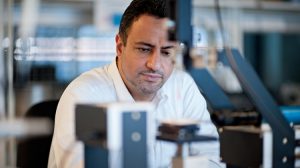
Dr. Arafat is a Professor of Chemical Engineering and Director of the Center for Membrane and Advanced Water Technology (CMAT). His expertise in developing desalination technologies and systems, with particular focus on sustainable, low-energy technologies has tremendous impact since the UAE relies on desalination plants for most of its potable water. Dr. Arafat was also one of the awardees of the Khalifa Award for Education in 2017. He won the ‘Distinguished University Professor in the Field of Scientific Research’ award in the ‘Higher Education within the UAE and the Arab World’ category.

“The permanent residency is a major step in the right direction in cementing the UAE’s position as a knowledge hub in this region. It ensures the sustainability and long term stability of our activities as scientists and researchers working in the UAE. Surely, the research ecosystem available to us at KU has played a key role in me achieving the status of research excellence that led to this residency.” – Dr. Hassan Arafat

Dr. Wesley Cantwell
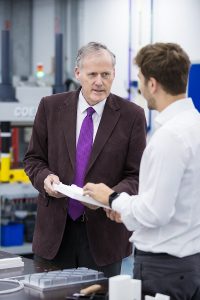
Dr. Cantwell is a Professor of Aerospace Engineering and Director of the Aerospace Research & Innovation Center (ARIC). The ARIC is a research initiative funded by Mubadala and Khalifa University, which focuses on manufacturing strategies for producing high-quality composite structures, as well as the automated assembly of composite parts. The center is unique in the region as it hosts a range of manufacturing, non-destructive testing, and robotic equipment. It also supports manufacturing initiatives at Strata in Al Ain and works closely with leading aerospace OEMs.

“I am honored to be among the first scientists to receive this award. It is nice to be recognized by the nation for one’s efforts to build a knowledge-based economy here in the UAE. I believe that 10-year visas will serve to attract leading international scholars to the UAE. Research often involves long-term horizons and having the option to stay in the UAE for a long period, build a research group and establish a strong research activity will be appealing to many internationally-recognized academics. The research facilities and funding levels in my own university are excellent and this is creating a highly attractive environment in which to work and undertake cutting-edge research.” – Dr. Wesley Cantwell

Dr. Lakmal Seneviratne
Dr. Seneviratne is a Professor of Mechanical Engineering and Director of the Khalifa University Center for Autonomous Robotic Systems (KUCARS). As director of KUCARS, he leads his team of researchers working on innovations that could potentially save lives. His projects include building drones to fight fire in high-rise buildings, systems designed to prevent industrial accidents, and even developing self-driving cars.


Dr. Ernesto Damiani

Dr. Damiani is a Professor of Electrical and Computer Engineering, Senior Director of the Artificial Intelligence and Intelligent Systems Institute, and Director of the Cyber-Physical System (C2PS) Center. His research interests include secure service-oriented architectures, privacy-preserving big data analytics, and cyber-physical systems security. In 2015, the Bill and Melinda Gates Foundation granted US100,000 for Dr. Damiani’s ‘Pay with a Selfie’ technology to be developed.
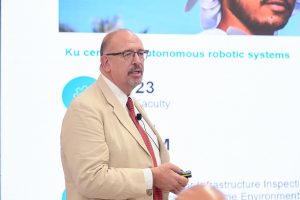
Dr. Hatem Zeineldin

Dr. Zeineldin is a Professor of Electrical Engineering and Computer Science. His research focuses on renewable energy, smart grids, energy systems and renewable energy integration and its impact on the operation of energy systems.
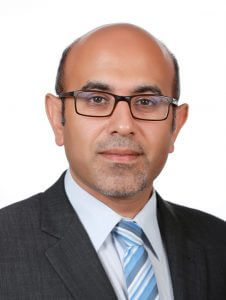
Dr. Enas Nashef

Dr. Nashef is an Associate Professor of Chemical Engineering whose research interest is in green engineering and sustainability, focusing on the use of ionic liquids and deep eutectic solvents in engineering applications. He has co-authored more than 100-peer reviewed journal publications and has eight patents from the US and EU patent offices. He has also received the ‘King Abdullah Award for Best Innovation’ in 2013.

“Everyone nowadays is looking for stability and peace of mind, and so this initiative will really help when it comes to attracting the best scientists from around the world. Personally, I am really happy with the 10-year visa, it shows that you and your work are appreciated. Having the long-term visa also encourages me to strive harder in my work now because we have received a big honor from the government of the UAE. This s a very big motivation.” – Dr. Enas Nashef

Dr. Ehab El-Saadany

Dr. El-Saadany is a Professor of Electrical Engineering and Computer Science and Director of the Advanced Power and Energy Center (APEC). His research interests include distribution system operation and control, smart/micro grids, renewable integration, and power quality and protection systems. Dr. El-Saadany also has five US patents.
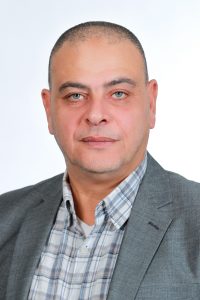
“The UAE has set many ambitious and strategic energy goals and launched many pioneering energy projectst to achieve said goals. Our objective at APEC is to develop the country’s intellectual and human capital to provide innovative ideas and solutions. We are also working on electric energy systems, allowing seamless and economical operations of renewable and clean energy resources.” – Dr. Ehab El-Saadany

The group was among the first batch of scientists to receive permanent residency visas as part of the government’s move in strengthening the nation’s talent pool and positioning the UAE as an incubator and hub for talents, creatives, and innovators.

Ara Cruz
News Writer
5 December 2019

Members of Masdar Institute’s YFEL Program Launch Two Project Initiatives at WFES 2013

YFEL Members Interact with Global Industry and Government Stakeholders on Sustainability and Future Energy

Abu Dhabi-UAE: 22 January, 2013: Masdar Institute of Science of Technology, an independent, research-driven graduate-level university focused on advanced energy and sustainable technology, today announced the launch of two new clean energy projects that underscored the participation of the Young Future Energy Leaders (YFEL) at the World Future Energy Summit (WFES) 2013.
 
A Masdar Institute outreach initiative and a key element of WFES, the YFEL program justified its inherent effectiveness among the students and young professionals with the launch of two extraordinary proposals “ an inexpensive clean energy project and an innovative off-grid solar power project. These projects illustrate the remarkable contribution of YFEL in triggering the creativity of the youth and guiding them into developing projects dedicated to clean energy and sustainability.
 
In addition, the YFEL stand also witnessed a presidential address and speeches by government and non-government leaders, expert panels and debates. The events further demonstrated the status of YFEL as a vital platform for members to participate in global forums and engage industry leaders in discussions on developments in advanced energy and sustainability.
 
Nearly 30,000 participants convened for the WFES 2013 that was held from 15-17 January at the Abu Dhabi National Exhibition Center (ADNEC). The event was organized under the patronage of His Highness General Sheikh Mohammed bin Zayed Al Nahyan, Crown Prince of Abu Dhabi and the Deputy Supreme Commander of the UAE Armed Forces.
 
Among the dignitaries received at the YFEL stand during WFES 2013 included His Excellency Ólafur Ragnar Grímsson, President of Iceland, who interacted with YFEL members and urged them to pursue their ambitions in obtaining innovations in sustainable technologies. Emirati philanthropist His Excellency Sultan bin Rashed Al Dhaheri, member of the Federal National Council and the Chairman of the Committee on Finance and Economic Council, also visited the stand and cheered the YFEL members for their commitment to finding clean energy solutions.
 
Maria van der Hoeven, Executive Director of the International Energy Agency, addressed the gathering on “Sustainability, renewable energy and climate change” at the YFEL stand, while Connie Hedegaard, European Commissioner for Climate Action, spoke on “Climate and energy policies: Key future challenges.”
 
A group of 10 members the Young Future Energy Leaders (YFEL) program proposed an innovative off-grid solar power project that seeks to bring electricity to healthcare facilities in remote areas of the UAE. The proposal envisions three power-generating options, including a self-contained PV system, a hybrid system integrating PV with other available renewable energy, such as biomass, and wind, or a hybrid system using PV combined with a fossil-fuel engine generator.
 
Another team of seven Emirati entrepreneurs has developed a project to bring clean-energy rice-husk gasifiers to farms and ranches across the UAE, with initial support from the YFEL. Titled “Moving toward a Sustainable Environment: Replacing Diesel-based Generators with Eco-friendly Rice-Husk Gasifiers”, the project was inspired by their visit to rural areas in northern India, where villagers were generating electricity through clean, inexpensive rice-husk gasification, rather than diesel-powered generators. Ras Al Khaimah’s Awafi area has been chosen for the first phase of implementation by Mohamed Al-Sharhan, Abdulla Al Shamsi, Iman Ustadi, Ameirah Aldahmani, Jasem Al Hammadi, Walid Shakari, and Sultan Al Awadhi.
 
Other leaders who addressed the members at the YFEL stand included Helen Clark, Administrator, United Nations Development Program (UNDP), Achim Steiner, Executive Director, United Nations Environment Program (UNEP), and Adnan Amin, Director-General, International Renewable Energy Agency (IRENA).
 
Energy industry leaders including Roy Adair, CEO, Hydro Tasmania, Australia, Bader Al Lamki Director, Clean Energy Masdar, UAE, Santiago Seage, Chairman & CEO Abengoa Solar, Spain, Tulsi R Tanti, Chairman and Managing Director, Suzlon Group, India, and Jean-Pascal Tricoire, President and CEO, Schneider Electric, France, offered their views at the plenary session titled “The view from Industry: a CEOs of Renewable Energy Companies.”
 
An expert panel that included Dr. Nawal Al Hosany, Director – Sustainability, Masdar, and Director, Zayed Future Energy Prize Masdar, UAE; Morgan D. Bazilian, Deputy Director, Joint Institute for Strategic Energy Analysis (JISEA), National Renewable Energy Laboratory, US; Harish Hande, Founder Selco, Social Entrepreneur, India; Martin Hiller, Director-General, Renewable Energy and Energy Efficiency Partnership (REEEP), Austria; and Richard Kauffman Senior Advisor to Secretary, US Department of Energy, US, discussed “How Technology and Innovation Will Shape the Future?” during one of the plenary sessions.
 
Dr Steven Griffith, Executive Director of Institute Initiatives and Professor of Practice, Masdar Institute, facilitated the first debate that was titled “Should China, India and the US be required to immediately place legally binding limits on their greenhouse gas emissions?” Dr Ken Volk, Outreach Manager, Masdar Institute, moderated a debate titled “Should countries implement actions that address population issues impacting worldwide sustainability?”
 
YFEL celebrated the successful completion of more than 60 members during the WFES 2013, awarding them certificates during a ceremony that was held in Yas Island, Abu Dhabi. YFEL 2012 had more than 160 members out of which 122 are from various universities in the UAE as well as from 20 top-ranked overseas academic institutions.
 
Part of the Masdar Institute’s Outreach program, YFEL offers young professionals and students from the UAE and abroad an opportunity to become more engaged in finding solutions to the world’s biggest challenges  achieving energy efficiency and tackling climate change. It also aims to bring young professionals closer to government representatives, business leaders and other organizations active in the area of alternative energy and sustainability.

Minerals in saltflats show we might ‘grow’ new materials

Minerals in saltflats

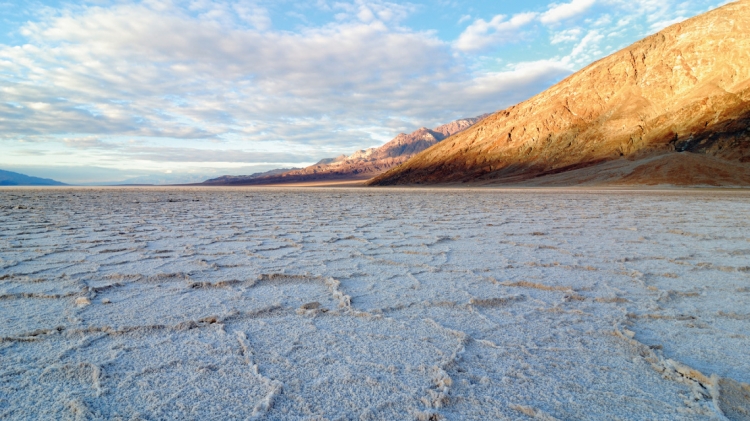
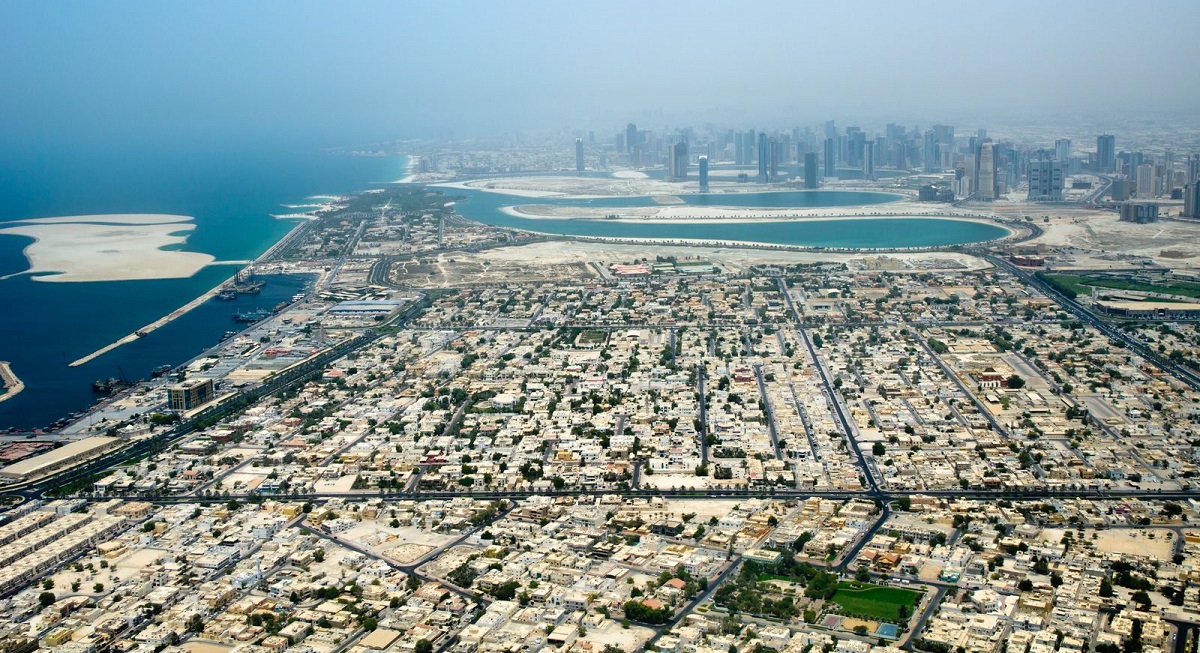
Something unusual is happening on the UAE’s coastal saltflats. A mineral known as dolomite – a crystalline rock containing calcium, magnesium and carbon – is slowly being formed.

Not so odd, you might think – rocks are laid down all the time, albeit over many millions of years and under the right conditions.

But dolomite is different. Until recently it was thought that it formed only under the kind of extremes of heat and pressure that haven’t been seen on Earth for many millions of years. So what is going on in Abu Dhabi?

The answer, it seems, is down to the unique and resilient community of microbes that inhabit these barren, salt-crusted sabkha sediments.
These microbes have a remarkable ability to modify their environmental chemistry and overcome the barriers that otherwise prevent dolomite formation. They form sticky biofilms, some thick enough to be visible, which appear to act as highly customised templates on which the mineral can grow.

In this regard, the communities  can be likened to living, breathing catalysts, pulling together the building blocks of dolomite from the environment to make a layered, organised and growing dolomite crystal. They are not the only organisms to pull off biomineralisation, of course.

Various others manage it, synthesising countless structures that are among nature’s toughest and most intricate, such as seashells, pearls and even our own teeth – all formed under remarkably low-energy, low-pressure and non-toxic conditions.

To further explore this subject, our research team at Masdar Institute took to Abu Dhabi’s sabkhas to investigate the processes behind the formation of dolomite here, in the hope of speeding up the process and similar reactions in the lab.

Looking at the precise molecular structures at play here has helped us understand how dolomite is assembled molecule by molecule through dynamic interactions between sabkha microbes, the sticky ‘mortar’ that makes up their biofilms, and the local chemistry.

Eventually, the mechanisms we are piecing together could help our industries develop greener ways of repairing or fabricating materials than the classic industrial “heat, beat and treat” methods, which typically require intensive energy, pressure and toxic chemical input.

It works the other way, too. Several organisms have natural mechanisms that regulate the growth of hard structures – such as sea shells that stop growing once sufficiently large. Understanding these processes could lead us to gentler and more effective ways of suppressing undesirable mineral buildup in pipelines or on buildings, which if left untreated can cause damage, line losses, and great expense.

Such strategies are made even more compelling by the prospect of permanently sequestering atmospheric or dissolved carbon dioxide into inert, solid structures – preventing potential climate-harming effects.

And the UAE has no shortage of raw materials – its huge desalination plants produce vast amounts of concentrated brine.

This research could provide a better outlet for all that brine than returning it to the Arabian Gulf, which over time will make that body of water ever more saline, and eventually degrade its ecosystems.

The challenge now is to replicate these ingenious, natural processes in a way that is cost and time-effective.

Wan Abdul Matiin is a research engineer at the Masdar Institute’s Bio-Energy and Environmental Laboratory where Dr Farrukh Ahmad is an associate professor of water and environmental engineering. 


Masdar Institute Joins Consortium of Libraries under UAE’s ‘Ankabut’ Umbrella

UAE-led ‘eFADA’ Project Offers Large e-Resources Collection through Single Platform, Benefiting Faculty and Students Nationwide

Abu Dhabi-UAE: 04 March, 2013 – Masdar Institute of Science and Technology, an independent, research-driven graduate-level university focused on advanced energy and sustainable technologies, today announced it joined eFADA, a consortium of libraries under the umbrella of Ankabut, the UAE’s Advanced Network for Research and Education.

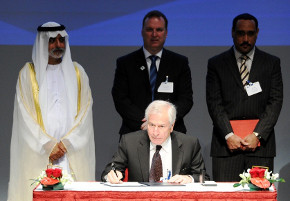
A memorandum of understanding (MoU) was signed at a ceremony during the 8th Ankabut Users’ meeting – ‘Discover Ankabut’ – held from 20-21 February at Paris-Sorbonne University Abu Dhabi. Organized under the patronage of His Highness Sheikh Nahyan bin Mubarak Al Nahyan, Minister of Higher Education and Scientific Research, the event was attended by academicians and librarians from several high-profile institutions in the UAE. Dr Fred Moavenzadeh, President, signed the MoU on behalf of Masdar Institute.

Dr Fred Moavenzadeh said: “By signing the MoU, Masdar Institute joins select group of universities that offer this advanced services through sharing electronic resources. The sustainable campus already hosts several pioneering innovations and special features in addition to state-of-the-art laboratory and student facilities. With the support and guidance of the UAE’s leadership, we will continue to provide top-class amenities and we hope joining the eFADA will help us offering even better services.”

A UAE-led project, eFADA is expected to offer all students and faculty in the country access to large electronic resources collection through a single platform. It aims to deliver a comprehensive development of physical objects among institutions, a repository for archiving and disseminating faculty and research output, as well as a consortium purchasing for e-resources. The eFADA is a new addition to Ankabut services that supports the national goal of developing a knowledge economy, and contributes to achieving Abu Dhabi’s 2030 Vision.
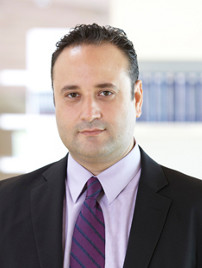
Dr. Abdullah Al Hefeiti, Library Director, Masdar Institute, said: “The MoU will benefit the library at Masdar Institute from sharing the costs of the subscription, consultation, advanced training, , document delivery services, inter-library loan and best practices. We are already offering advanced services through our library portal, network, e-services and overall IT infrastructure. We hope being part of the eFADA platform will further facilitate the research projects of our faculty and students.”

Dr. Mohamed Mekias, Computational Lab Manager and Senior Lecturer, Masdar Institute, participated in a panel discussion titled ‘Opportunities and Challenges in UAE-based HPC research’ that was organized by the University Leadership Council, a platform for academic leaderships to share creative ideas, foster common interests and spearhead new initiatives for innovation and technology transfer in the region. The panel discussed the high performance computation (HPC) needs of the researchers in the region and set the stage for collaboration among the various universities and institutions in this area.

Introducing the audience to the current HPC infrastructure at Masdar Institute and expansion plans for meeting future needs of researchers, Dr. Mohamed Mekias offered examples of some heavy simulations researchers conduct at the sustainable campus.

Dr. Mohamed Mekias said: “The panel engaged the audience to gauge if there is a critical mass for using HPC in the region and analyzed various concrete plans to share the resources for optimal utilization. Some Masdar Institute researchers are already using heavy simulations and we hope other institutions will be encouraged to integrate simulation as part of their research. We hope to use the Ankabut network as a platform for delivering HPC and data visualization services.”

Dr. Tod Laursen, President, Khalifa University, Dr. Fadi Aloul, Associate Professor, Department of Computer Science and Engineering, American University of Sharjah, and Dr. Thomas Burton, Professor and Chair, Department of Aerospace Engineering, Khalifa University, participated in the panel discussions.

On the second day, Dr. Abdullah Al Hefeiti moderated a roundtable session on libraries. Participants discussed key issues facing the UAE librarians including best practices, challenges, and training and development. The session also witnessed presentations from companies such as Serial Solutions, which provides technology solutions to libraries worldwide, and Biomed Central, publishers of 243 open access, online, peer-reviewed journals in Science, Technology and Medicine (STM).

Ankabut interconnects universities with a 10G backbone and 1G access links. Ankabut also provides international connectivity of 155 Mbit/s to its members via Internet2. Organizations within the UAE including higher education, K-12 schools, libraries and museums are eligible to be connected to Ankabut. It enables a closed society network, which allows the transfer of services in real-time such as converged instant messaging, video communication, time-sensitive services such as grid computing linkage (cloud computing), and services that are not completed in real time such as e-learning, e-mail, libraries linkage, off-site disaster recovery and unified single sign registration.

Serving as a key pillar of innovation and human capital, Masdar Institute remains fundamental to Masdar’s core objectives of developing Abu Dhabi’s knowledge economy and finding solutions to humanity’s toughest challenges such as climate change.
Established as an on-going collaboration with the Massachusetts Institute of Technology (MIT), Masdar Institute integrates theory and practice to incubate a culture of innovation and entrepreneurship, working to develop the critical thinkers and leaders of tomorrow.  With its world-class faculty and top-tier students, the Institute is committed to finding solutions to the challenges of clean energy and climate change through education and research.

Masdar Institute Takes Research on ‘Urban Heat Island’ Effect to Dubai and Doha

Prestigious Journal Publishes Masdar Institute Faculty’s First In-Depth Study on Climate of Desert Cities

Abu Dhabi-UAE: 06 February, 2013 – Masdar Institute of Science of Technology, an independent, research-driven graduate-level university focused on advanced energy and sustainable technologies, today announced its research into ‘urban heat island’ effects in the Abu Dhabi metropolitan area is being extended to cover Dubai and Doha.

This is the first time urban climate of desert cities gets investigated at such great depth. The research projects in Dubai and Doha will start later this year.

The study on Abu Dhabi titled ‘Temperature-land cover interactions: The inversion of urban heat island phenomenon in desert city areas’, has been recently published in the prestigious journal Remote Sensing of Environment. It was co-authored by Dr. Michele Lazzarini, Postdoctoral Researcher at Masdar Institute, Dr. Hosni Ghedira, Director, UAE Research Centre for Renewable Energy Mapping and Assessment, and Prashanth Reddy Marpu, Researcher at Masdar Institute.

Remote Sensing of Environment is an interdisciplinary journal that publishes results on theory, science, applications and technology of remote sensing of earth resources and environment.

Dr Fred Moavenzadeh, President, Masdar Institute, said: “The extension of the urban heat island project that covers the Abu Dhabi metropolitan areas to Dubai and Doha bears testimony to the highly relevant nature of our research not only to the UAE but the entire region. With the guidance and vision of the country’s leadership, Masdar Institute’s research projects are being acknowledged and adopted widely. We hope the outcome of this research will help formulate better city planning and smart urban development measures.”
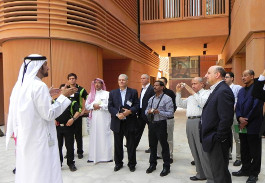
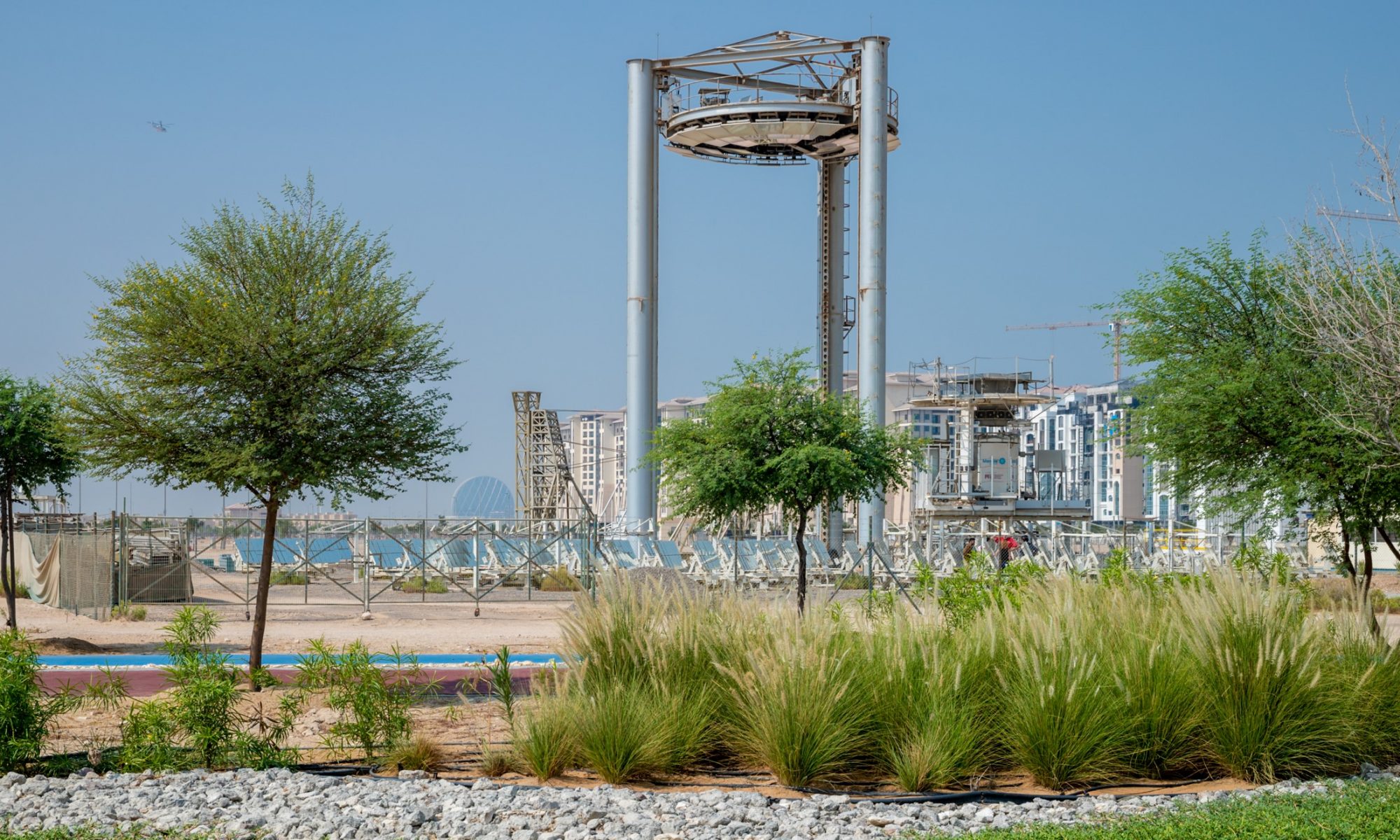
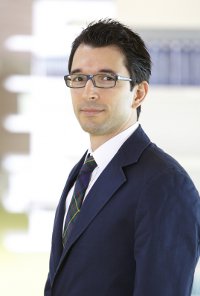
Dr. Ghedira said: “In dynamic environments such as urban areas, the changing landscape affects quality of life and it can have a significant impact on the local climate. The analysis of these changes is therefore essential for several decision-making processes. This paper aims to provide a detailed study of a particular scenario that investigates the relationship between land cover and Land Surface Temperature (LST) trend in the desert environment of the UAE, with a case study of Abu Dhabi City.”

‘Urban heat island’ is the tendency of metropolitan areas to be significantly warmer than surrounding rural areas. Generally, inner cities have warmer temperatures than the suburban areas. However, in desert environments such as Abu Dhabi, this phenomenon is frequently inverted. One of the main reasons for this inversion is the relatively high amount of vegetation in urban areas compared to the suburbs, where bare ground and abundant sand trap more heat.

Dr. Michele Lazzarini was the lead researcher in this study where he investigated the land cover and temperature interactions in Abu Dhabi metropolitan area for the period between 2000 and 2010. These studies provide valuable insights for the analysis of urban environment as well as assistance in various decision-making processes for city planning and development.

Dr Ghedira was closely involved in the development and launching of the global solar and wind atlas during the third annual conference of the member states of International Renewable Energy Agency (IRENA) during the World Future Energy Summit 2013 in Abu Dhabi. The Global Atlas for solar and wind brings together solar insolation data and wind speed and direction to show where the greatest potential lies for both technologies. Although the Atlas currently only includes solar and wind resources, other technologies such as wave and tidal power can be added in the future.

Before moving to the UAE, Dr Ghedira spent six years at the City University of New York as assistant professor and research associate professor. He also acted as director of the Environmental Remote Sensing and Image Processing Laboratory at the NOAA Cooperative Remote Sensing Science & Technology Center (NOAA-CREST) in New York for more than four years.

Dr. Ghedira’s current research activities include application of remote sensing in environmental monitoring; solar and wind potential mapping; water resources management in water-scarce regions; satellite image processing; and remote sensing algorithm development. Dr. Ghedira has authored and co-authored more than 80 publications in peer-reviewed journals and referred conference proceedings. He has also supervised four PhD theses and 15 M.Sc. theses in the US and the UAE. Over the last two years, Dr. Ghedira has participated as invited speaker, panelist and session chair in several international conferences and forums covering solar resource assessment and solar technologies.

In his capacity as Director of the Research Center for Renewable Energy Mapping and Assessment at Masdar Institute, Dr. Ghedira has lead the effort to develop regional knowledge and leadership in renewable energy assessment and mapping for the Arabian Peninsula and countries with similar climate through partnership with regional and international partners. The Center is now recognized as an international leader in solar resource assessment in arid and dusty environments.

Serving as a key pillar of innovation and human capital, Masdar Institute remains fundamental to Masdar’s core objectives of developing Abu Dhabi’s knowledge economy and finding solutions to humanity’s toughest challenges such as climate change.

Established as an on-going collaboration with the Massachusetts Institute of Technology (MIT), Masdar Institute integrates theory and practice to incubate a culture of innovation and entrepreneurship, working to develop the critical thinkers and leaders of tomorrow.  With its world-class faculty and top-tier students, the Institute is committed to finding solutions to the challenges of clean energy and climate change through education and research.

Masdar Institute Presents Experts Details on UAE’s Biofuel-from-Algae Potential

Global Biofuels Market Projected to Reach US$139 billion by 2021

Abu Dhabi-UAE: 07 March, 2013 – Masdar Institute of Science and Technology, an independent, research-driven graduate-level university focused on advanced energy and sustainable technologies today announced it presented details on the UAE’s growth and export potential in the biofuels-from-algae sector to a delegation of industry and academic experts.

The experts visited Masdar Institute and commended the novel research projects being undertaken at the laboratories in the sustainable campus. Currently, the Algae Research Laboratory and Microbial Environmental and Chemical Engineering Laboratory (MECEL) are undertaking research that looks into making new types of fuels that could be used for specialized high-end needs – such as aviation fuel and jet fuel.

The algae industry specialists were delegates of the AlgaeWorld MENA 2013 Conference, Seminar and Summit that was held from 25-27 in Dubai. The event, organized by the Centre for Management Technology (CMT), gathered global algae experts to analyze and assess the future growth for an algae-driven economy and seek to address the diverse complexities in geo-politics, technology and business models in the region.

Dr. Hector H. Hernandez, Assistant Professor, Chemical Engineering program, Masdar Institute, said: “The algae available in the UAE desert is unique because it is local to the UAE, and can stand a wide change in temperature. It can also live under high salinity ranges, one of the ‘highest’ to date of any algae species, and can be used throughout the year, offering a long harvesting season. Algae from the UAE and from deserts are a very new area of research and we are still working with industrial partners to identify the upper limit of how much algae we can grow in the UAE.”

Biofuels as a commercial venture is still in the implementation and growth phase. In the US, the size of the venture capital investment in clean technologies, of which biofuels is a large component – was US$6.576 billion or 23.1% of all venture capital investment during 2001-2012. According to a report by Clean Edge, Inc, the global biofuels market alone is projected to grow to US$139 billion by 2021.

In the biofuels-from-algae market, the UAE is uniquely positioned to make a strong impact, say industry experts. The native algae have evolved to grow under a wide range of temperatures and salinities and the production of biofuels using these strains of algae are not expected to compete with the fresh water supply or with food production in the UAE. In addition, the development of the algae-for-biofuels industry can be used to supplement the growth of the aquaculture industry in the UAE. These, and other special traits, make the UAE an ideal place to develop a world class and internationally competitive algae for biofuels industry.

In addition, algae do not depend on being grown in the ocean. In fact, in the UAE, there is the ability to use non-habitable land, such as the desert in the western region, for algae growth. As such, a properly designed and constructed algae growth facility will not have an impact in the marine ecosystem of the Arabian Gulf.

The UAE also has the potential to become a world leader in the biofuels from algae industry. Not only is there the potential for biofuels export, but the establishment of this industry in the UAE will create a unique knowledge base for algae growth that will allow the UAE to also export the necessary know-how to help implement this industry in other parts the world.

The cost of producing energy is currently projected between US$8.00 to US$20.00 per gallon of biodiesel produced from algae. But recent technologies and co-production schemes, producing nutritionals, pharmaceuticals, and high-value chemical projects, along with novel growth production schemes are making the overall cost of producing biofuels from algae a profitable venture. Profitable production schemes are expected to come online in the next 3 to 4 years.

In the recent years, there has been a large push to establish a biofuels-from-algae industry in many places. The first places that started the use of algae for biofuels were the US, EU and Australia. Recently, China, India and the Far East have begun to make large investments in the biofuels market to help meet their ever increasing energy needs. These countries are expected to double their capacity of biofuels production and use in the next decade.

During the AlgaeWorld MENA Summit, Dr Hector H. Hernandez offered a presentation on ‘Isolation and characterization of microalgae strains from the UAE for biofuels and other high value chemicals’, while Dr. Robert M. Baldwin, also from Masdar Institute, highlighted ‘Co-Production of Biofuels and Value-Added By-products from Algae’.

Serving as a key pillar of innovation and human capital, Masdar Institute remains fundamental to Masdar’s core objectives of developing Abu Dhabi’s knowledge economy and finding solutions to humanity’s toughest challenges such as climate change.

Established as an on-going collaboration with the Massachusetts Institute of Technology (MIT), Masdar Institute integrates theory and practice to incubate a culture of innovation and entrepreneurship, working to develop the critical thinkers and leaders of tomorrow.  With its world-class faculty and top-tier students, the Institute is committed to finding solutions to the challenges of clean energy and climate change through education and research.

Masdar Institute’s Ph.D. Program Receives Accreditation from the UAE Ministry of Higher Education and Scientific Research

Recognition Marks Growing Stature of Masdar Institute among Higher Education Institutions Worldwide
Abu Dhabi-UAE: 07 April, 2013 – Masdar Institute of Science and Technology, an independent, research-driven graduate-level university focused on advanced energy and sustainable technologies, announced the Commission for Academic Accreditation (CAA) at the UAE Ministry of Higher Education and Scientific Research has granted initial accreditation to its Interdisciplinary Doctoral Degree Program (IDDP). 

The PhD in Interdisciplinary Engineering aims to maintain breadth, while emphasizing the necessary depth to produce consummate experts in one or more fields of specialization.

A three-member External Review Team recently held discussions with officials and faculty members of Masdar Institute. The team was received by Dr. Youssef Shatilla, Dean of Academic Programs, Masdar Institute, Dr. Mohamed Sassi, Coordinator of the IDDP Program, and others who presented details about the institution’s role in supporting faculty, staff and students in teaching and research activities.

The External Review Team’s assessment covered Masdar Institute’s governance, policies and procedures, quality assurance measures, education program, fiscal resources and community engagement. The CAA assessment utilizes standards-based quality assurance processes to evaluate educational quality and offer an assurance to the community that licensed academic institutions and their accredited programs truly meet internationally recognized benchmarks.

Dr Fred Moavenzadeh, President, Masdar Institute, said: “The Interdisciplinary Doctoral Degree Program is designed to allow students the flexibility to respond to complex problems by crossing the boundaries of more than one scientific or technical academic program. With the support of the country’s leadership, we have gradually increased the number of highly specialized programs offered to students. The accreditation for the doctoral program reflects the growing stature of Masdar Institute among the higher education institutions and we encourage students to fully utilize the academic options we provide.”

The PhD in Interdisciplinary Engineering will be awarded by Masdar Institute to all PhD candidates who have completed the IDDP requirements. The specific title of the PhD thesis will be determined by the IDDP Research Supervisory Committee (RSC) of the PhD candidate and will also be included in the PhD degree.

Through the IDDP, Masdar Institute aims to produce doctoral graduates with an ability to work across multiple disciplines to solve complex problems and adopt a global approach to solving complex scientific and technical challenges. It also seeks to develop knowledge and skills for independent research, while developing a unique academic, professional and career focus.
 
Admission criteria for the IDDP include a minimum GPA of 3.2 or equivalent, a relevant undergraduate and Master’s degree in Science, Engineering or Computing and Information Science, a minimum GRE score of 155 on the GRE Quantitative (700 on the old scale), a minimum TOEFL score of 91 (IBT) on the international TOEFL and 6.5 on the academic IELTS, as well as a statement of objectives. 
 
As the flagship partner, MIT faculty serve as members on the IDDP Research Supervisory Committee (RSC) at Masdar Institute and may serve as co-advisors for the Abu Dhabi institution’s PhD students. Moreover, PhD students from Masdar Institute may spend up to  one semester at MIT prior to their graduation.
 
Further information on the program is available on http://www.masdar.ac.ae/PhDProgram.html. Details on admission criteria can be accessed from http://www.masdar.ac.ae/Admissions.html.
 
Serving as a key pillar of innovation and human capital, Masdar Institute remains fundamental to Masdar’s core objectives of developing Abu Dhabi’s knowledge economy and finding solutions to humanity’s toughest challenges such as climate change.
 
Established as an on-going collaboration with the Massachusetts Institute of Technology (MIT), Masdar Institute integrates theory and practice to incubate a culture of innovation and entrepreneurship, working to develop the critical thinkers and leaders of tomorrow.  With its world-class faculty and top-tier students, the Institute is committed to finding solutions to the challenges of clean energy and climate change through education and research.

Masdar Institute Researchers Quantify the ‘Reliability’ of Social Media for Time-Critical Mobilization

‘Proceedings of the National Acadpy of Science’ Publishes Paper Developed at Social Computing and Artificial Intelligence Laboratory  Led by Dr Iyad Rahwan and Co-Authored by Peers

Abu Dhabi-UAE: 18 April, 2013

– Time-critical social mobilization is the ability of social networks to mobilize rapidly to address challenges such as disaster response or finding a missing child. While social media is a very effective tool for mobilizing volunteers, it still has its limits, according to a research paper published by the Proceedings of the National Acadpy of Science (PNAS) journal, considered the second most-cited scientific journal in the world. 

The scientific paper is a result of two years of research at the Social Computing and Artificial Intelligence laboratory, led by Dr. Iyad Rahwan, Associate Professor and Head of Computing & Information Science at Masdar Institute of Science and Technology.

The first author of the paper is Dr Alex Rutherford, post-doctoral fellow at Masdar Institute and mpber of Dr. Rahwan’s lab. The other co-authors are Prof. Alex (Sandy) Pentland of Massachusetts Institute of Technology (MIT), Dr. Manuel Cebrian, from National ICT Australia, Sohan D’Souza of Masdar Institute, and Prof. Esteban Moro, Universidad Carlos III de Madrid.

Dr Fred Moavenzadeh, President, Masdar Institute, said: “Such papers published in respected science journals identify valuable opportunities for the ICT sector while showcasing our expertise in advanced analysis and research. With the support of the UAE’s leadership, Masdar Institute has consistently published scientific papers in global journals and raised its profile as a world-ranking research institution. We foresee many such papers panating from our renowned faculty and their labs in the coming months, illustrating our contribution to Abu Dhabi’s human capital development objectives.”

The paper, titled ‘Limits of Social Mobilization’, analyzes the results of the United States Defense Advanced Research Projects Agency’s (DARPA) Red Balloon Challenge, which was held in 2009. The challenge, with a prize of US$40,000, was designed to test the power of social media at its absolute limit. It required competing teams to locate the GPS coordinates of 10 weather balloons placed at undisclosed random locations all over the continental US. A team from MIT found all balloons in 8 hours and 52 minutes by mobilizing volunteers through social media. 

According to the paper, social media is capable of significantly rapid mobilization, without the complpentary role of ‘mass media’. Computer simulations indicate the possibility to replicate what was done in the DARPA Red Balloon Challenge with 90% chance of success.

However, such outcome requires all conditions to be ideal, in what can be termed as ‘the perfect storm’. Success is extrpely sensitive to various key factors. And this sensitivity poses a limit on the power of social media in rapid response.

The paper found that the success of social media in mobilization relies critically on highly connected individuals, with very rapid response time, willing to mobilize people in distant locations. Even under these highly favorable conditions, sometimes the risk of an unsuccessful search rpains significant, it adds. Further, success requires a large number of so-called passive recruits, people who do not necessarily participate in mobilizing others, but who may help if they come across the balloon.

Dr Iyad Rahwan said: “Our first finding is to establish the plausibility of achieving a highly distributed, time-critical search task without any use of mass media. In the aftermath of the DARPA Red Balloon Challenge, it was not yet clear whether ‘social media’ could be solely relied upon to achieve such task, without any help from ‘mass media’. We showed that this is indeed possible.

“We also found that the challenge lies at the limit of human capability; it depends on all conditions being at the limit of what we know about human social networks and interaction speed. Otherwise, we have a very high chance of failure.” Dr. Manuel Cebrian, paper co-author and one of the MIT winning team mpbers, said “basically, we cannot find 20 balloons in nine hours, and we could not have found the 10 balloons in less time than it took us.”

An abstract of the paper can be accessed at http://www.pnas.org/content/early/2013/03/27/1216338110.abstract

Masdar Institute of Science and Technology, is an independent, research-driven graduate-level university focused on advanced energy and sustainable technologies. Serving as a key pillar of innovation and human capital, Masdar Institute rpains fundamental to Masdar’s core objectives of developing Abu Dhabi’s knowledge economy and finding solutions to humanity’s toughest challenges such as climate change.

Established as an on-going collaboration with the Massachusetts Institute of Technology (MIT), Masdar Institute integrates theory and practice to incubate a culture of innovation and entrepreneurship, working to develop the critical thinkers and leaders of tomorrow. With its world-class faculty and top-tier students, the Institute is committed to finding solutions to the challenges of clean energy and climate change through education and research.

Masdar Institute PhD Student’s Contribution on Solar Cells for Satellites Receives Recognition

Alaeddine Mokri’s Contribution at NASA’s Ames Research Center Rated among Top 100 Technology Projects by ‘Popular Science’ Magazine

Abu Dhabi-UAE: 21 April, 2013 – Masdar Institute of Science and Technology, an independent, research-driven graduate-level university focused on advanced energy and sustainable technologies, today announced one of its students contributed to a project that has been selected among the top 100 technology projects in the ‘Best of What’s New’ Award by Popular Science magazine.

Alaeddine Mokri, a student and Research Assistant at Masdar Institute, worked on the project titled ‘Phonesat’, that was selected for innovation in aerospace category, for its annual ‘Best of What’s New’ issue in December 2012. Mokri worked on this project while serving as a research associate based at the NASA’s Ames Research Center, Moffett Field, California, US, straight after earning his Master’s degree from Masdar Institute in 2011. Currently, he is a research assistant at Masdar Institute.

Popular Science magazine reviews thousands of fascinating new products, and selects the top 100 across 12 categories. Innovation and execution are the quality of the selected projects that should be characterized by a significant step forward in its category, and incorporate entirely new ideas and functions.

Dr Fred Moavenzadeh, President, Masdar Institute, said: “Our students are trained to take up challenges in the advanced energy and clean technology areas. We congratulate Alaeddine for this achievement. This recognition for Alaeddine strongly reflects the quality of knowledge offered by faculty at Masdar Institute. With the support of the UAE’s leadership, our students will continue to contribute to the field of sustainable clean energy and advanced technology.”

Alaeddine Mokri said: “I am proud to be part of this NASA project and the great team working on it. My contribution was towards finding the best solar cells, in terms of both cost and performance, for use in such satellites. The skills that I have learned in Masdar Institute during my Master’s studies have enabled me to undertake such a challenge. This brings lot of self-confidence to take tougher challenges and add more contributions to the field.”

NASA’s Phonesat project aims to build the most affordable satellite to date – in the size of a mug, or a cube of 10 cm x 10 cm. The US$3,500 device is composed of commercial-off-the-shelf materials, including an unmodified HTC Nexus One smartphone as a central processor, as today’s smartphones offer a wealth of capabilities needed for satellite systems, such as fast processors, various operating systems, multiple sensors, high-resolution cameras, and GPS receivers.

This NASA project also changes the way space missions are designed by rapidly prototyping and incorporating existing commercial technologies and hardware, which allows engineers to mine the capabilities of commercial technologies, rather than trying to custom-design technology solutions.

Mokri added: “Phonesat has the potential of changing the way of designing and launching satellites into space. Satellites today are similar to the first days of computers production, when they were expensive, complex to make and install, large in size, and used for very specific applications only. However, like computers, this project will facilitate the production of satellites, as anyone with basic engineering skills and few thousand dollars will be able to make and send their own satellite to space.”

Mokri’s research at Masdar Institute focuses on developing new methods for harvesting the power of the sun, and his contributions include conducting detailed quantitative analysis of the solar energy situation in the UAE, studying the importance of solar energy to power generation, benefits for desalination and transportation sectors, tracking the status of solar-energy projects and initiatives in the UAE, and designing several solar power systems.

In November 2012, he was awarded by Emirates Solar Industry Association (ESIA) for his pioneering research on designing novel solar power systems and the best ways to overcome challenges in operating and implementing solar power projects in the UAE.

Serving as a key pillar of innovation and human capital, Masdar Institute remains fundamental to Masdar’s core objectives of developing Abu Dhabi’s knowledge economy and finding solutions to humanity’s toughest challenges such as climate change.

Established as an on-going collaboration with the Massachusetts Institute of Technology (MIT), Masdar Institute integrates theory and practice to incubate a culture of innovation and entrepreneurship, working to develop the critical thinkers and leaders of tomorrow. With its world-class faculty and top-tier students, the Institute is committed to finding solutions to the challenges of clean energy and climate change through education and research.