
Mubadala Industry Contributes to Development of Abu Dhabi’s Manufacturing Sector

Share of Manufacturing in Abu Dhabi’s Economy Set for Continuing Growth
Abu Dhabi-UAE: 23 April, 2013 – The manufacturing industry continues to help drive diversification of the Abu Dhabi economy, according to the most recent report by the Statistics Centre Abu Dhabi (SCAD).  Manufacturing in 2011 accounted for 16.6 per cent of the total gross output of economic activities, second only to the oil and gas sector which led with 41.7 per cent. 

Mubadala Industry, a business unit of Mubadala Development Company (Mubadala), is supporting this shift  to underpin the diversification of Abu Dhabi’s revenue sources. Through world-scale metals and mining businesses, and interests in the utilities sector, Mubadala Industry continues its contribution, according to Ahmed Yahia Al Idrissi, Executive Director.
Al Idrissi was speaking during a lecture at a knowledge-sharing platform organized by Masdar Institute of Science and Technology. The lecture was attended by staff, faculty and students from Masdar Institute.

Dr Fred Moavenzadeh, President, Masdar Institute, said: “Our knowledge-sharing events truly bring out the expertise that drives the success of some of the Mubadala entities. The support of the country’s leadership has enabled us to grow into an effective academic institution with the capability to host forums for the benefit of the wider community. We hope the rich insights shared by Mubadala Industry’s Ahmed Yahia Al Idrissi during his lecture will offer value to all stakeholders.”

Al Idrissi said: “Mubadala Industry pursues investment and development opportunities in capital, resource or intellectual property-intensive sectors that can contribute to the diversification of Abu Dhabi’s economy. Our objective is to favorably position the Emirate in fast-growing global resource markets. Our focus is to support the development of businesses in a range of strategic sectors for Abu Dhabi to make a significant contribution to non-oil GDP.”

Mubadala Industry’s assets include Al Rusail Independent Power in Oman, Barka 2 Independent Water & Power Project in Oman, Emirates Aluminium (EMAL), Suyadi – Jiangsu Suyadi Tancai Company Ltd In China, and Tabreed (National Central Cooling Company PJSC).

These companies have effectively contributed to the economy of the Emirate of Abu Dhabi and consolidated the pace of growth.

Al Idrissi added: “We  are building a world-scale metals and mining business, with a specific emphasis on the creation of metals cluster  in Abu Dhabi based on the aluminium value chain. We are working collaboratively with our commercial and government partners across the world to support this objective, with resulting sustainable social and commercial benefits.”

Mubadala Industry’s assets such as Emirates Aluminium (EMAL) have already registered a number of notable milestones. In July 2012, EMAL achieved a cumulative production of 1.5 million tons of hot metal, the fastest production achieved by a single site smelter in the global aluminium industry to date. EMAL also exported its first shipment through the new Khalifa Port in Abu Dhabi in 2012. First hot metal production from the EMAL Phase II expansion will take place at the end of 2013, with annual production reaching 1.4 million tons by 2014. 

Serving as a key pillar of innovation and human capital, Masdar Institute remains fundamental to Masdar’s core objectives of developing Abu Dhabi’s knowledge economy and finding solutions to humanity’s toughest challenges such as climate change.

Established as an on-going collaboration with the Massachusetts Institute of Technology (MIT), Masdar Institute integrates theory and practice to incubate a culture of innovation and entrepreneurship, working to develop the critical thinkers and leaders of tomorrow.  With its world-class faculty and top-tier students, the Institute is committed to finding solutions to the challenges of clean energy and climate change through education and research.

His Excellency Sheikh Nahayan to Address MIT-Masdar Institute ‘UAE Innovation and Entrepreneurship Forum 2013’

Over 200 Primary Stakeholders to Attend; Discussions to Focus on Key Areas for Healthy Innovation and Entrepreneurship Ecosystem in UAE

Abu Dhabi-UAE: 27 April, 2013 – Masdar Institute of Science and Technology, an independent, research-driven graduate-level university focused on advanced energy and sustainable technologies, and the Massachusetts Institute of Technology (MIT) today announced they will jointly host a forum on innovation in the UAE.

His Excellency Sheikh Nahayan Mabarak Al Nahayan, UAE Minister of Culture, Youth and Community Development, will offer the opening address at the forum that will be held on 29 April in Abu Dhabi. The event is titled ‘UAE Innovation and Entrepreneurship Forum 2013’.

His Excellency Dr. Matar Hamed Al Neyadi, Undersecretary, Ministry of Energy, and Waleed Mokarrab Al Muhairi, Chief Operating Officer of Mubadala, will present the keynote addresses. Dr. Fred Moavenzadeh, President, Masdar Institute, will provide the welcome remarks.

The forum will bring together approximately 200 primary private and public stakeholders in innovation and entrepreneurship to discuss the need for and elements of a healthy innovation and entrepreneurship ecosystem in the UAE. A networking event will provide further momentum for interaction and knowledge exchange.

In addition to faculty and officials from Masdar Institute and MIT, experienced entrepreneurs, investors, industry executives, government officials, and academicians from other universities will be sharing their expertise in panel discussions.

Dr. Fred Moavenzadeh said: “In line with our mandate to create critical thinkers and future leaders, it is Masdar Institute’s privilege to host this forum jointly with MIT. The support of the country’s leadership has helped us to develop the infrastructure and the capability for guiding students in the right direction for the future. Distinguished participants representing various stakeholders instrumental to developing an “innovation culture” will address key issues at the forum. Through this event, we hope to create the momentum required for the UAE to move forward in formulating policies that will help young people to emerge as innovators and entrepreneurs.”

Dr. Charles C. Cooney, Professor and Faculty Director, Deshpande Center for Technological Innovation, MIT, said: “The ‘UAE Innovation and Entrepreneurship Forum 2013’ provides an opportunity to convene the Abu Dhabi innovation ecosystem and celebrate the launch of the Masdar Institute’s Center for Innovation System and Entrepreneurship. Bringing together leaders from the government, industry and academia underscores the importance of collaboration in nurturing technology-based entrepreneurship. The multiple panel discussions bring innovative thought leaders together to expand the collaborative dialogue that will foster networks of partnerships across the UAE.”

The panels will be moderated by Dr. Charles C. Cooney, who will also provide the concluding remarks. Prior to the panel discussions, Dr. Bruce W. Ferguson, Professor, Masdar Institute, will introduce Center for Innovation Systems and Entrepreneurship, a new initiative at Masdar Institute.

The forum will include three panels focusing on perspectives from each of the key stakeholder groups that make up the basic infrastructure for creating, sustaining and developing innovation. The sessions will aim to identify issues and challenges, success stories and the right incentives to trigger innovative and entrepreneurial activity throughout the Emirates. In addition, poster presentations on potentially ‘commercializable’ research will be offered by students from UAE universities.

The first panel titled ‘Entrepreneurial and SME Perspectives’ will have experts including Dr. Douglas Hart, Professor and Co-Chair, Entrepreneurship Studies, MIT, Rabea Ataya, CEO, Bayt.com, Sami Khoreibi, CEO, Enviromena Power Systems, and Dr. Raed Hashaikeh, Associate Professor, Masdar Institute.

The second panel titled ‘Perspectives of Innovation Beneficiaries: Industry, Government, Investors’ will have three groups addressing each perspective. His Excellency Ahmed Saeed Al Calily, Director-General, Abu Dhabi Technology Development Committee, Colonel Faisal Sultan

Al Shuaibi, Director of Strategy and Performance Department, Abu Dhabi Police, and Dr. Nawal Al Hosani, Director of Sustainability, Masdar and Director of Zayed Future Energy Prize, will share their views on the ‘Government’ perspective.

The ‘Industry’ perspectives will be offered by Abdelhakeem Al Mushtaghil, Vice-President, HR & OE, Emirates Aluminium (EMAL), Dr. Yehya Al Marzouqi, Director of Strategic Learning and Development, Tawazun Economic Council, and Khaula Al Badi, Head of Innovation and Technology Exploitation, Etihad Airways. The perspectives of the ‘Investors’ will be highlighted by His Excellency Abdullah Saeed Al Darmaki, CEO, Khalifa Fund, Roberto de Diego Arozamen, CEO, ALJ Energy, Ovais Naqvi, Managing Director, Abraaj Group.

The concluding panel titled ‘Perspectives from the Innovation Cradle: Universities’ will have panelists including Dr. Abdullatif Al Shamsi, Managing Director, Institute of Applied Technology, His Excellency Dr. Mansoor Al Awar, Chancellor, Hamdan Bin Mohammed e-University, Lita Nelson, Director, Licensing, MIT, Dr. Mohamed Yousef Hasan Baniyas, Provost, UAE University, Dr. Mohammed Ebrahim Al-Mualla, Senior Vice-President of Research and Interim Provost, Khalifa University, Dr. Thomas Hochstettler,  Provost and Acting Chancellor, American University of Sharjah, and Dr. Nabil Ibrahim, Chancellor, Abu Dhabi University.

Established as an on-going collaboration with the Massachusetts Institute of Technology (MIT), Masdar Institute integrates theory and practice to incubate a culture of innovation and entrepreneurship, working to develop the critical thinkers and leaders of tomorrow. With its world-class faculty and top-tier students, the Institute is committed to finding solutions to the challenges of clean energy and climate change through education and research.

His Excellency Sheikh Nahayan Opens ‘UAE Innovation and Entrepreneurship Forum 2013’

Masdar Institute Announces Plans to Launch Center for Innovation Systems and Entrepreneurship to Further Develop and Nurture Youth


Abu Dhabi-UAE: 29 April, 2013 – His Excellency Sheikh Nahayan Mabarak Al Nahayan, UAE Minister of Culture, Youth and Community Development, today opened the ‘UAE Innovation and Entrepreneurship Forum 2013’ in Abu Dhabi.

During the forum, Masdar Institute of Science and Technology, an independent, research-driven graduate-level university focused on advanced energy and sustainable technologies, announced its plans to launch the Center for Innovation Systems and Entrepreneurship (CISE) – a new initiative to further develop and spread entrepreneurial spirit among youth in the UAE.

The Forum was jointly organized by Masdar Institute with Massachusetts Institute of Technology (MIT). His Excellency Sheikh Nahayan Mabarak Al Nahayan, His Excellency Dr. Matar Hamed Al Neyadi, Undersecretary, Ministry of Energy, Waleed Mokarrab Al Muhairi, Chief Operating Officer of Mubadala, and Dr. Fred Moavenzadeh, President, Masdar Institute, addressed the Forum.

The event gathered more than 200 primary private and public stakeholders in innovation and entrepreneurship to discuss the need for and elements of a healthy innovation and entrepreneurship ecosystem in the UAE.

Thanking the wise leadership of the country, His Excellency Sheikh Nahayan said: “The UAE is committed to creating a knowledge-based society, to encouraging investments in new companies, and to supporting entrepreneurial activities. We recognize the importance of creating the environment that will sustain vigorous growth.

“Innovators always face difficulties initially because they challenge the status quo. New opinions are always looked at with suspicion and usually opposed without any reason because they are not already common. The UAE, on the other hand, is blessed with leadership that has taken the initiative to creating the right environment to support entrepreneurship, making the country the land of entrepreneurs. The UAE offers assistance, advice, support and training to encourage entrepreneurship and innovation. Masdar City is one of the best examples in this regard.”

With the support of Masdar and other key stakeholders including globally-renowned universities and academic leaders, the Center will help formulate a new innovation ecosystem that encourages entrepreneurs to form new companies, bringing benefits to investors and eventually to the wider community.

The Center will create new graduate and executive education programs in technical management, entrepreneurship and innovation, while adopting the world’s best practices in these areas to meet local needs.
It will aim to arrange new funding sources and mentoring, act as an incubator and offer other resources, while supporting similar existing programs in the UAE.

Dr Fred Moavenzadeh said: “Innovation remains at the core of Masdar Institute’s mission. As an institution that aims to develop critical thinkers and decision-makers of the future energy industry, we believe only a new ecosystem that addresses the requirements of the community will help nurture the youth. With the support of the country’s leadership, we have initiated several measures to build human capacity and the launch of the CISE is one more step in this direction. We hope the new Center will help us in our efforts to build a new breed of entrepreneurs in the UAE and the region.”

Recent estimates indicate that the UAE’s business-friendly atmosphere is quite conducive to young entrepreneurs. The UAE is ranked fifth among countries globally and first in the Arab world for stability and resilience, according to a global risk report issued by the World Economic Forum in January 2013. The UAE received 3.28 points compared to 3.66 points to Singapore, which topped the list.

Lack of early-stage funds, however, particularly for technology start-ups, is a key factor that has effectively stymied emerging entrepreneurs throughout the Middle East and North Africa (MENA) region. According to Dow Jones’s VentureSource 2012, and Ernst & Young’s Globalizing Venture Capital 2011, out of the largest 14 venture capital companies, six were in North America and four in Europe, with only four outside these regions.

The US-based Khosla Ventures, started in 2004 by the co-founder of Sun Microsystems, is a cleantech-focused venture capital company that in October 2011 raised more than US$1 billion in a single fundraising round. This fund alone dwarfs the entire venture capital industry of the UAE, of which the largest member may be a US$400 million Dubai-based fund.  Such venture capital portfolio companies are an important part of the innovation ecosystem because the individual risk faced by a single entrepreneur is much greater than the diversified, pooled risk faced by a fund that invests in many entrepreneurs.

Other changes to the innovation ecosystem that might encourage young entrepreneurs include increasing public acceptance of startup risk, simplifying laws for business incorporation and exit, and amending bankruptcy laws for startups.

Dr. Bruce W. Ferguson, a faculty member in Engineering Systems and Management at Masdar Institute, will be heading the Center. Offering an overview, Dr Ferguson explained how the Center fits into the goals of Masdar Institute, as well as those related to entrepreneurship, innovation and development of a more supportive ecosystem in the UAE. Importantly, the Center will help increase the rate of innovation in the UAE, with a simultaneous increase in national economic competitiveness and employment. Several faculty affiliates from Masdar Institute will assist the Center in teaching, research and outreach activities.

Dr. Bruce Ferguson said: “Education at the graduate and executive level, particularly for engineers and scientists, is the Center’s focus. An education program that encourages bright young people to form new companies and to create new products and services within large companies will enormously benefit not only investors but the economy in the UAE and the region as a whole.

“At the same time, we will support other changes to the ecosystem that provide new sources of venture capital, mentorship, and other resources, as well as policy changes, to help promote entrepreneurship in the UAE. We thank all the stakeholders for their support and hope the Center will contribute to achieving objectives spelt out in Abu Dhabi’s Vision 2030 plan.”

Dr. Ferguson is a co-founder and former Chief Operating Officer of Orbital Sciences Corporation, a space technology company listed on the New York Stock Exchange, and a co-founder and former Chief Executive Officer of Edenspace Systems Corporation, a plant biotechnology company developing new renewable energy and environmental products.  He is a Trustee of the Carnegie Institution for Science.

Dr. Ferguson has been a Vice-Chairman of the Kansas State University Research Foundation and a Fellow at the George Washington University Center for International Science and Technology Policy.  He received his Juris Doctor (JD), Master of Business Administration, Master of Education, and Bachelor of Arts degrees from Harvard University, where he was an honorary Harvard National Scholar and an Editor of the Harvard Law Review.

Serving as a key pillar of innovation and human capital, Masdar Institute remains fundamental to Masdar’s core objectives of developing Abu Dhabi’s knowledge economy and finding solutions to humanity’s toughest challenges such as climate change.

Established as an on-going collaboration with MIT, Masdar Institute integrates theory and practice to incubate a culture of innovation and entrepreneurship, working to develop the critical thinkers and leaders of tomorrow.  With its world-class faculty and top-tier students, the Institute is committed to finding solutions to the challenges of clean energy and climate change through education and research.

Masdar Institute Summer Intern’s Research Paper Presented at 17th Asia Pacific Automotive Engineering Conference

Internship Contributes to Developing Human Capital in UAE and Serves as Excellent Preparatory Ground for Higher Studies in Advanced Technology 

Abu Dhabi-UAE: 01 May, 2013 – Masdar Institute of Science and Technology, an independent, research-driven graduate-level university focused on advanced energy and sustainable technologies, today announced a scientific research paper based on last year’s summer internship project has received international acclaim at a major conference on automotive engineering in Bangkok.
The scientific paper titled ‘Effect of Ambient Conditions on the Performance of an Open-cathode PEM Fuel Cell Stack: Case Study United Arab Emirates’ was presented at the 17th Asia Pacific Automotive Engineering Conference that was held from 1-3 April in Bangkok, Thailand. It was based on the research work of Hend Al Zeyoudi, an intern at Masdar Institute during the summer of 2012, conducted under the guidance of Dr. Tariq Shamim, Head of Mechanical Engineering, Masdar Institute.

Co-authored by Hend Al Zeyoudi, Dr. Agus P. Sasmito and Dr. Tariq Shamim, the paper focused on developing a sustainable mobility solution by exploring the use of open-cathode fuel cell in vehicles under hot and arid environment. Using the annual climate data of Abu Dhabi, the paper presented the results of a computational investigation of the effect of temperature and relative humidity on the performance of the innovative fuel cell design, which has the advantages of significant weight, space and cost reduction.

Dr Fred Moavenzadeh, President, Masdar Institute, said: “The summer internship program serves as an excellent preparatory ground for higher studies as well as careers in advanced technology and renewable energy research. The presentation of the paper about an intern’s research at the Bangkok Conference reflects Masdar Institute’s distinctively different learning experience. The credit goes to the faculty and the intern.

“Masdar Institute effectively contributes to the UAE’s existing R&D and human capacity development measures that will make the country a regional and eventually a global leader in the creation of knowledge capital. With the support of the country’s leadership we have developed the capability to provide such niche research opportunities to undergraduate UAE nationals. We hope student interns during this summer’s upcoming program too will use this opportunity to equip themselves with fresh skills in science-related areas.”

The Bangkok conference was organized by SAE International, a global association of more than 128,000 engineers and related technical experts in the aerospace, automotive and commercial-vehicle industries. Dr. Shamim is a senior SAE member and a past recipient of the SAE Ralph R. Teetor Educational Award.

Dr. Tariq Shamim said: “The presentation based on Masdar Institute summer intern Hend Al Zeyoudi’s research paper at the Bangkok Conference indicates the intense academic and laboratory experience offered at Masdar Institute. It also reiterates the world class facilities available at the sustainable campus for conducting advanced research. I congratulate Hend and assure a productive learning experience awaits those undergraduates keen to sign up for research internship this year at Masdar Institute.”

Similar to last year, the four-week summer research internship program this year offers undergraduate students a wide range of project opportunities in areas strategically important to the UAE such as water, solar energy and fuel cells. The project options are designed to help students develop into career-oriented professionals in clean energy and advanced technology. The internship program also represents one more aspect of the research-based university’s consistent contribution to the UAE’s human capital development objectives.

Undergraduate UAE national students that are current university seniors will be eligible to apply for the summer internships this year. Multiple applications are required for those seeking to register for more than one research projects under the program that commences on 1 July.

UAE national undergraduates interested in applying for the internship program must have Science or Engineering as ‘major’ subjects in their degree course and a GPA of no less than 3.0 (on a 4.0 scale). An IELTS score of at least 6.0 (or equivalent) is mandatory along with a letter of recommendation.

Mirroring the vision of Abu Dhabi’s leaders, Masdar Institute continues to position itself and Abu Dhabi among the world’s innovation-based economies. Furthermore, serving as a key pillar of innovation and human capital, Masdar Institute remains fundamental to Masdar’s core objectives of developing Abu Dhabi’s knowledge economy and finding solutions to humanity’s toughest challenges such as climate change.

Established as an on-going collaboration with the Massachusetts Institute of Technology (MIT), Masdar Institute integrates theory and practice to incubate a culture of innovation and entrepreneurship, working to develop the critical thinkers and leaders of tomorrow.  With its world-class faculty and top-tier students, the Institute is committed to finding solutions to the challenges of clean energy and climate change through education and research.

Masdar Institute’s YFEL Program to Organize Course on Energy Systems Design for Rural Development

YFEL Members to Attend 10-Day Intensive Course Organized in Collaboration with MIT and Jamyang School in Ladakh Region of India

Abu Dhabi-UAE: 09 May, 2013– Masdar Institute of Science of Technology, an independent, research-driven graduate-level university focused on advanced energy and sustainable technologies, today announced members of Young Future Energy Leaders (YFEL) outreach program will attend a 10-day workshop on ‘Energy Access, Ethics and Development’ in the Ladakh region of India.

The intensive field-based course in India’s far northern region on the Himalayas Mountains aims to offer the YFEL members an opportunity to learn skills and methods in energy system design, community participation, and social entrepreneurship that will motivate them to become leaders in expanding energy access. The course is being organized jointly by YFEL, the Dalai Lama Center for Ethics and Transformative Values at MIT and the Jamyang School in Leh, India.

Heavy rains and avalanches every year cut off key passes in Ladakh, leading to poor connectivity of the region to the rest of India. Currently, plans are afoot to build a tunnel at Zojila to open up Kargil-Leh sector throughout the year. However poor connectivity has led to humble socio-economic conditions, adversely affecting sustainability. The YFEL students will help the community design energy-efficient systems and formulate other socio-development measures.

A team of expert researchers and practitioners specialized in community development, energy technology and social entrepreneurship will deliver the course content and supervise the group projects. The course will have lecture-based modules including ‘Human development and energy poverty (basic introduction)’, ‘Needs assessment and stakeholder analysis’, ‘Microenergy technology options (solar home systems, hybrid mini-grids, etc.)’, ‘Business models for microenergy systems’, ‘Microfinance’, ‘Methods for community participation and capacity building’, and  ‘Social entrepreneurship’.

Dr Fred Moavenzadeh, President, Masdar Institute, said: “The 10-day summer program being offered to YFEL students aims to bring together students and young community leaders interested in learning the designing and implementation of energy access programs that directly impact human development. With the support of the country’s leadership, we bring programs that offer YFEL members an opportunity to enhance their knowledge and strengthen their practical skills for tackling everyday challenges in bringing energy to far-flung areas. We thank our partners at MIT and hope the course will help the members draw up effective programs, sustainable from a technical, economic and social perspective for the benefit of the community in Ladakh.”

A unique aspect of the course is that it will have equal number of international and local Ladakhi participants. The international participants comprise members of the YFEL program and students from MIT.

Dr, Scott Kennedy, Dean of Research, Masdar Institute, said: “The course aims to bring the student YFEL members in touch with the isolated community’s daily challenges in Leh and engage with the elders to obtain clean and green solutions. Such practical experiences adequately equip the students with skills to address concerns in their future professional lives. We hope the Ladakh experience will help the students learn the ground realities in designing and implementing energy projects that can make remote rural areas self-sufficient.”

The course will include a combination of lecture-based content and hands-on projects with an emphasis on designing effective sustainable programs that help economic development. Participants will spend approximately half of their time engaged in field-based activities that may include renewable energy resource assessment, energy needs assessment, community observation and engagement, energy system design and pilot deployment, participatory design exercises, designing and evaluating options productive energy consumption, and evaluating development impacts.

Part of the Masdar Institute’s Outreach program, YFEL offers young professionals and students from the UAE and abroad an opportunity to become more engaged in finding solutions to the world’s biggest challenges – achieving energy efficiency and tackling climate change. It also aims to bring young professionals closer to government representatives, business leaders and other organizations active in the area of alternative energy and sustainability.

Masdar Institute’s UAE National Students Find Projects at ‘Taaleem Science Fair’ Highly ‘Innovative’

Young Students’ Projects on Designing Smaller-Scale Wind Turbines and Greenhouse Gas Impact Reflect Awareness on Sustainability
Abu Dhabi-UAE: 12 May, 2013 – Masdar Institute of Science and Technology, an independent, research-driven graduate-level university focused on advanced energy and sustainable technologies, today announced its three student judges found the participating projects at the first-ever Taaleem Science Fair highly creative and innovative in sustainability and green energy.

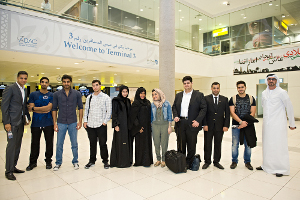
The three are additionally members of the Young Future Energy Leaders (YFEL) program, a Masdar Institute outreach initiative.

The first Taaleem Science Fair held on 1 May at the American Academy in Al-Mizhar, Dubai, attracted 43 participants. Students spanning ages 11-15 years in elementary and middle school were grouped by grades from Grade 6 to and Grade 9. The high school students in Grade 10 and above competed in either the ‘High School Life Science’ or ‘High School Physical Science’ categories.

YFEL members Mohammed Al Sharhan, Sultan Al Awadhi and Reem Al Junaibi – Master’s students and research assistants in Engineering Systems and Management at Masdar Institute, were the three judges. They used a rubric to assess the projects in areas such as the quality of a testable scientific question, choosing measurable ways to test their question, and their ability to evaluate their data accurately and appropriately.

Each was assessed for the strength of creativity and younger students were enquired the about the concept behind their presentation. Most of the projects focused on clean energy and sustainability, offering the Masdar Institute students a glimpse into the minds of the children and their awareness about energy conservation and preservation of natural resources. They spent five-to-10 minutes meeting with each student individually about their projects. Each YFEL participant reviewed approximately five projects alongside a partner judge

Dr Fred Moavenzadeh, President, Masdar Institute, said: “The special expertise our students gain from Masdar Institute’s world-class faculty is truly exemplary as could be gauged from the way they judged entries at the Taaleem Science Fair. With the support of the country’s leadership, we continue to develop talented students with the capability to guide today’s children in sustainable ways as well as lead future energy industry. Our students will continue their close involvement in such activities to widen the awareness about clean and green energy in the community.”

Dr. Samia Al Farrar, Chief Education Officer, Taaleem, said: “The Taaleem Science Fair could not have become so successful without the dedication and support of the Masdar Institute graduate students. They were the key in assessing our winners and encouraging young students to study science and pursue it as a career. It was encouraging to see UAE nationals encouraging younger participants, who looked up to the Masdar Institute students for guidance. We thank Masdar Institute for sending these students to judge the entries at the Science Fair.”

Sultan Al Awadhi, an Engineering System Management student at Masdar Institute was one of the judges, found the projects displayed at Taaleem Science Fair truly inspiring.

Al Awadhi said: “Although I was judging projects of students from Grade 6, some of them related to impacts of greenhouse gases and designing of wind turbines on smaller scale. The level of creativity of those students was really inspiring. I found the competing young minds conducting scientific experiments that are bigger than their age. I believe such science fairs will help young students increase their self-confidence and their abilities to think differently, which is a key to innovation.”

Reem Al Junaibi said: “Because they were so young, most of the research questions formulated in the projects showed curiosity, which is the first step to learning. It gladdens me to think that a lot of these questions were focused on figuring out ways to mitigate global warming. These children do understand the vital issues and they do care for Mother Earth, which to me is the most important thing. It was really tough judging them and I believe they all deserve to win. The level of creativity exceeded my expectations.”

Mohamed Al Sharhan said: “Judging the projects from Grade-7 students, I could see that the renewable and sustainability trends are evolving. Out of a couple of projects related to these topics, one was to build a solar oven and the other one was to test the effect of desalinated water on human hair. I was really impressed by the level of awareness the students have about sustainability and their passion about science. Compared to their level of education, these projects were truly amazing.”

Serving as a key pillar of innovation and human capital, Masdar Institute remains fundamental to Masdar’s core objectives of developing Abu Dhabi’s knowledge economy and finding solutions to humanity’s toughest challenges such as climate change.

Established as an on-going collaboration with the Massachusetts Institute of Technology (MIT), Masdar Institute integrates theory and practice to incubate a culture of innovation and entrepreneurship, working to develop the critical thinkers and leaders of tomorrow.  With its world-class faculty and top-tier students, the Institute is committed to finding solutions to the challenges of clean energy and climate change through education and research.

Mangroves Integral to UAE’s Sustainable Ecosystem, Says Masdar Institute

Masdar Institute Students Actively Participate in Green Abu Dhabi 2013 Events to Support Preservation of Environment and Natural Resources

Something you dont see in the brochures, Abu Dhabi has hundreds of islands and inlets . A huge area of the emirate is unspoilt as you can see from the photo, taken within 5 minutes flight from the City Airport.

Abu Dhabi-UAE: 19 May, 2013 – Masdar Institute of Science and Technology, an independent research-driven graduate-level university focused on advanced energy and sustainable technologies, has announced that the mangroves of Abu Dhabi are crucial to the very concept of sustainable development and commended the efforts of various organizations towards  preserving one of the rare natural resources of the UAE.

As part of its contribution to preserving the mangroves, students of Masdar Institute are actively participating in Green Abu Dhabi 2013 to ensure the success of the month-long exhibition of art that opened on 2 May.

Organized under the patronage of His Excellency Sheikh Nahyan bin Mubarak Al Nahyan, Minister of Culture, Youth and Community Development, the exhibition is created by Suhail Jashanmal, founder of Green Abu Dhabi, and supported by Masdar Institute. The show at the Eastern Mangroves Hotel & Spa by Anantara aims to support the ‘mangroves project’ that seeks to preserve the UAE’s natural resources.

George Lewis, an emerging artist who earlier exhibited at Green Art Abu Dhabi 2010, is showcasing his selection of works, underscoring the importance of integrating the environment into our daily life. The artworks also aim to drive home the ‘green message’ of the on-going environmental efforts and sustainable development in Abu Dhabi.

Partial proceeds from the auction of artworks and other items at the event will go towards helping partners including the Emirates Wildlife Society-World Worldwide Fund (EWS-WWF), Future Center for Special Needs (FCSN) in Abu Dhabi, and 21’st Century Leaders Foundation.

Additionally, Green Abu Dhabi 2013 will organize events throughout May, including the YAS Waterworld Sculpture Weekend, the first cleanup of the Landmark Mangrove Project, and the Community Celebrity Auction. The month-long show will conclude with an art auction at Eastern Mangroves Hotel & Spa by Anantara on 8 June.

Dr Fred Moavenzadeh, President, Masdar Institute of Science and Technology, said: “As a graduate-level institution that drives research to obtain clean and green energy solutions while propagating preservation of natural resources, we are privileged to join our partners and support Green Abu Dhabi 2013 program. The Mangroves of Abu Dhabi are integral to the UAE’s coastal ecosystem and Masdar Institute researchers play a major role in the preservation and up-keep of this natural habitat to continue their research activities for the benefit of the global community.

“At the same time our students’ active involvement in the art exhibition and the initiative to clean up the mangrove further demonstrate Masdar Institute’s commitment to the preservation of this natural marine system. With the guidance of the country’s leadership, we will continue to support such projects that remain a symbol of community activism and effective outreach, enabling the society to learn more about our environment.”

Except for the summer months of June, July, and August, the following months will see around 50-60 people from different walks of life volunteer for the mangroves clean-up campaign. Students from Masdar Institute will also be participating in the clean-up program, which the organizers plan to hold as part of Green Abu Dhabi every year.

Suhail Jashanmal Jhangiani, Founder/Artist of Green Abu Dhabi, said: “This year’s art exhibition celebrates diversity and sustainability, and the UAE is a great example of how these two principles can generate growth and prosperity. Emiratis have always found a way of living with their harsh environment. And it was this adaptability and ability to integrate various ideas that have led to their success. Today, very few people actually realize how crucial the mangroves are to a healthy fish stock or to many other environmental issues.

“Abu Dhabi’s mangroves are rare to find in such an arid environment and remain instrumental in protecting the fish-stock. They also help reduce global warming and protect our coastline from storms and beach erosion. Therefore, it is the responsibility of everyone in the UAE to support the project.”

Noura Al Dhaheri said: “As a student at Masdar Institute, I firmly believe in sustainability and preservation of natural resources. That is why I feel proud to be part of the Green Abu Dhabi initiative, which aims to protect the mangroves and the marine ecosystem. I sincerely hope this initiative will help raise awareness about preserving the environment among the wider community in the UAE.”

Serving as a key pillar of innovation and human capital, Masdar Institute remains fundamental to Masdar’s core objectives of developing Abu Dhabi’s knowledge economy and finding solutions to humanity’s toughest challenges such as climate change.

Established as an on-going collaboration with the Massachusetts Institute of Technology (MIT), Masdar Institute integrates theory and practice to incubate a culture of innovation and entrepreneurship, working to develop the critical thinkers and leaders of tomorrow.  With its world-class faculty and top-tier students, the Institute is committed to finding solutions to the challenges of clean energy and climate change through education and research.

Five Japanese Corporations Offer Internships to Masdar Institute’s UAE National Students

Seven Select Students Leave for Japan for Eight-Week Internship Coordinated by Japan International Cooperation Center

Abu Dhabi-UAE: 21 May, 2013 – Masdar Institute of Science and Technology, an independent, research-driven graduate-level university focused on advanced energy and sustainable technologies, today announced five major Japanese corporations are offering eight-week summer internships to UAE national students in Japan for the second successive year.

Seven UAE national students selected from four Master’s programs – Engineering System and Management, Mechanical Engineering, Electrical Power Engineering and Microsystems Engineering – are participating in this internship that runs until July 19. The internships are being coordinated by the Japan International Cooperation Center (JICE), and supported by Japan’s Ministry of Economy, Trade and Industry (METI).

The first two ‘Foundation’ weeks will include intensive classes for the Japanese language, culture, and basic information. They will then go to their respective companies for five weeks with a final week reserved for meetings that will include a JICE review of the internship process and companies. JICE is also expected to take the students on a number of cultural and work-related field-trips throughout Japan.

Ms. Sachiko Yamano, President of JICE, said: “The second annual internships offered at five Japanese corporations will enable the students to understand the latest technologies in their respective fields. We hope the students will find the language classes, business etiquette, practices and cultural field-trips encouraging for better interaction with company officials during the internship. We welcome the UAE national students from Masdar Institute to Japan and hope they will have a productive learning experience throughout their eight-week stay.”

Dr Fred Moavenzadeh, President, Masdar Institute, said: “The students will intern with the major Japanese companies to learn the latest technology in their areas of study, acting as instruments of knowledge transfer. With the support of the UAE’s leadership, Masdar Institute continues to create additional learning opportunities overseas for the students through the JICE internship. We hope the students will gain fresh insights during their stay in Japan and bring back clean technology expertise that will further contribute to the country’s economic growth.”

Two UAE national students Mohamed Al Musharrekh and Iman Ustadi will intern with Mitsubishi Heavy Industries, LTD, (MHI), while Abdulla Al Shammari will do his internship at Chiyoda Corporation. JGC Corporation will host Jasem Al Hammadi and Majed Al Marzouqi as interns, while Hitachi, Ltd., Infrastructure Systems Company will have Hasan Alhashmi for the internship program. Ahmed Mukhayer will spend the summer interning with Mitsubishi Electric Corporation.

Iman Ustadi said: “As a research assistant at Masdar Institute, I believe that the value of my research will not be sharpened without the collaboration of an industry major. Therefore, I believe that being an intern at one of these big companies such as Mitsubishi will definitely add value to my current research. I have always been fascinated about the unique lifestyle of the Japanese people and I will try to position myself as an ambassador for my country, my academic institution and personally, for myself.”

Mohamed Al Musharrekh said: “The Japan internship is a unique opportunity that gives me the chance to learn more about the latest technologies in desalination and waste recycling and work towards transferring the knowhow at a later stage to the UAE. Another objective is to learn about the culture and to represent the Masdar Institute students in Japan.”

Jasem Al Hammadi, a student of Engineering System and Management, aims to focus more on the development and management of technologies in building smart and green communities, as well as a strong and sustainable infrastructure that are essential in these fields.

He said: “I am keen to experience the productive and unique Japanese ‘working style’, learn about the Japanese business and management model, and how different it is compared to the UAE. Also, I expect to learn more about the Japanese’s popular culture and the tradition, education, manners, etiquette, food, and modern urban life. Moreover, I am looking forward to learn the Japanese language and interact with new people and my peers in Japan.”

During the internship, Mohamed Al Musharrekh and Iman Ustadi will learn the concept of integrated waste treatment systems in Japan and run the ‘Model & Simulation’ to find out the best solution of waste treatment in the region. This program is offered at Mitsubishi Heavy Industries Environmental & Chemical Engineering Co.,Ltd., a subsidiary of MHI.

Abdulla Al Shammari, who interns with Chiyoda Corporation’s Green Infrastructure Project Unit, will learn the technology and the policy in the fields of solar energy such as PV and CSP projects. The Unit is in charge of social infrastructure and industrial facility projects. Jasem Al Hammadi and Majed Al Marzouqi will learn the technology at JGC Corporation’s department that is in charge of development and promotion of business and technology in the fields of CO2 capture, renewable energy, biomass, coal, environmental protection, energy saving and smart community.

At Hitachi, Ltd., Infrastructure Systems Company, Hasan Alhashmi will learn about bio plastics polymerization process design, experiments for process development by using pilot facility, plant design, and mass and heat balance calculation, as well as cell culture tank design. He will aim to gain an understanding of the operations of a pharmaceutical plant, the scaling up technique of culture tank by using CFD, and possibly the trial run of real plant.

Ahmed Mukhayer who will intern with Mitsubishi Electric Corporation will seek to understand the development of water quality management using ozone in order to apply in water heaters, refrigerators and at water purification plants.

Serving as a key pillar of innovation and human capital, Masdar Institute remains fundamental to Masdar’s core objectives of developing Abu Dhabi’s knowledge economy and finding solutions to humanity’s toughest challenges such as climate change.

Established as an on-going collaboration with the Massachusetts Institute of Technology (MIT), Masdar Institute integrates theory and practice to incubate a culture of innovation and entrepreneurship, working to develop the critical thinkers and leaders of tomorrow.  With its world-class faculty and top-tier students, the Institute is committed to finding solutions to the challenges of clean energy and climate change through education and research.

Mubadala Healthcare Shares Insights at Masdar Institute’s Knowledge-Sharing Platform

Mubadala Healthcare Contributes to Achieving Abu Dhabi’s Vision 2030 Objectives

Abu Dhabi-UAE: 23 May, 2013 – The Emirate of Abu Dhabi continues to invest in healthcare facilities as part of its Vision 2030 plan to develop a robust, world class healthcare system and Mubadala Healthcare plays an instrumental role in the implementation of this plan, according to Suhail Mahmood Al Ansari, Executive Director, Mubadala Healthcare.

Al Ansari was speaking during a lecture at a knowledge-sharing platform organized by Masdar Institute of Science and Technology. The lecture was attended by top officials from the government and private sector in the UAE, international healthcare industry leaders, as well as faculty and students from Masdar Institute.

Dr Fred Moavenzadeh, President, Masdar Institute, said: “The lecture follows a successful knowledge-sharing initiative that was organized earlier this month under the framework of developing Abu Dhabi’s human capital. We thank the country’s leadership for supporting us to play an important role in strengthening the knowledge development in the UAE and we believe the knowledge exchange will benefit all stakeholders.”

l Ansari said: “Mubadala Healthcare’s network of facilities and services are helping to address the region’s most pressing healthcare needs. These facilities, coupled with the clinical expertise of our globally renowned medical partners, help to enable the delivery of the highest standards of care, safety and patient experience.”

According market research firm Frost and Sullivan, the global medical tourism industry is worth US$100 billion with a fifth of healthcare seekers worldwide originating from the Arab world. A research report by Euromonitor International indicates that the UAE’s medical tourism market, worth US$1.58 billion (AED5.8 billion) in 2012, is expected to grow a further 6.5 per cent to US$1.69 billion in 2013.

Such signs reflect the presence of a growing number of globally-renowned healthcare providers in the GCC region, especially the UAE. Mubadala Healthcare alone has eight facilities offering healthcare in a range of primary and specialty care areas, through collaborations with medical organizations like Imperial College London and Cleveland Clinic.  

Al Ansari added: “The UAE’s healthcare needs continue to grow and Mubadala Healthcare continues to place great importance on the development of healthcare professionals. Their commitment to providing world class care will play a critical and long term role in sustaining the Emirate’s healthcare system and will help to keep citizens and residents from having to travel overseas for medical care.”

Serving as a key pillar of innovation and human capital, Masdar Institute remains fundamental to Masdar’s core objectives of developing Abu Dhabi’s knowledge economy and finding solutions to humanity’s toughest challenges such as climate change.

Established as an on-going collaboration with the Massachusetts Institute of Technology (MIT), Masdar Institute integrates theory and practice to incubate a culture of innovation and entrepreneurship, working to develop the critical thinkers and leaders of tomorrow.  With its world-class faculty and top-tier students, the Institute is committed to finding solutions to the challenges of clean energy and climate change through education and research.

UAE’s Solar Power Capacity to Reach 20GW by 2030, Predicts Masdar Institute Faculty

MENA Region May Require 120GW in New Generation Capacity with US$250 billion Investments by 2017

Abu Dhabi-UAE: 28 May, 2013 – The UAE could economically deploy solar power generation capacity of more than 20GW by 2030 if avoided and opportunity costs of new fossil power generation are fully considered and transparent, stable, predictable and enforceable regulatory and policy frameworks are implemented, according to Dr. Steve Griffiths, Executive Director, Institute Initiatives, Masdar Institute of Science and Technology and Board Member, Emirates Solar Industry Association (ESIA).

Dr. Griffiths was speaking during the 5th Middle East & North Africa Solar Conference & Expo (MENASOL 2013) held from 14-15 May in Dubai. A plenary panel of experts analyzed the prospects of concentrated solar power (CSP), photovoltaics (PV), and concentrated photovoltaics (CPV) in the UAE and the broader Middle East and North Africa region. Nearly 300 delegates attended the event that was organized by CSP Today, part of FC Business Intelligence. ESIA was one of the sponsors.

Offering details, Dr. Griffiths indicated that by 2017, the MENA region may require more than 120GW in new generation capacity at a total cost of over US$250 billion in order to meet the rapid growth in regional electricity demand. He added that sustainable energy is economically viable but can only be implemented if robust supply-side and demand-side policies are implemented to stimulate deployment.

Dr. Griffiths said: “A sustainable energy strategy considering both demand and supply side considerations will be required for the MENA region. Clean energy including natural gas, nuclear and renewables will play an important role in sustainable supply. However, there is significant but unrealized opportunity for solar. The UAE and other Gulf countries have solar insolation levels that far exceed levels found in European countries, such as Germany, that already have achieved substantial solar deployment.

“However, there is a strong need to translate technical potentials to economic benefits to guide solar energy policy development that will stimulate solar energy technology deployment. This may call for site-specific, long-term data with high spatial resolution, adjusted for local climate conditions. The UAE Research Center for Renewable Energy Mapping and Assessment (ReCREMA) at Masdar Institute can offer guidance in this area.”

The conference generated a great deal of interest in the work being done at ReCREMA, which is Directed by Dr Hosni Ghedra, because the bankability of solar projects in the region critically depends on accurate solar resource data. The Center has played a critical role in the development of the Global Solar Atlas, which is led by the International Renewable Energy Agency (IRENA) and involves other global stakeholders. The hourly/daily/yearly solar irradiance maps provided by the Atlas are produced by a robust satellite-based mapping tool developed and validated at ReCREMA. The Masdar Institute research center officially launched the UAE solar atlas during RIO+20 UN Conference held in Rio de Janeiro in June 2012.

Both photovoltaics (PV) and concentrated solar power (CSP) offer advantages but a mix of both technologies that accounts for their different attributes can bring maximum benefits, according to industry experts.

Dr. Griffiths added: “CSP offers the value of ‘dispatchable’ electricity when coupled with thermal storage and can also be coupled with combined cycle fossil power generation for a cleaner form of fossil power. PV, however, is much cheaper today than CSP in most geographic locations. Therefore, both CSP and PV make sense when used in a complimentary way with consideration of their optimal roles in the overall energy system. PV can be utilized particularly well in the Gulf to meet the peak mid-day demand from cooling loads. CSP can be utilized for supplying late day or early evening demand, which is particularly relevant in countries where peak demand does not always correspond with good solar resource conditions in the mid-day.”

Prior to his role at Masdar Institute, Dr. Griffiths was the Executive Director of the MIT Technology and Development Program’s MIT/Abu Dhabi Program and the founding Executive Vice President of Light Pharma Inc. In these roles, he worked in the US, India and the Middle East, leading the development and implementation of technical and strategic relationships. His interests and expertise are process design, technology strategy and financial analysis in the areas of information technology, biotechnology, and advanced energy technologies.

Dr. Griffiths’ notable current positions include the Emirates Solar Industry Association (ESIA) Board of Directors, Abu Dhabi Science, Technology and Innovation R&D Taskforce, and the Zayed Future Energy Prize Selection Committee. Dr. Griffiths is Associate Editor and member of the Editorial Board of Elsevier’s international journal Energy Strategy Reviews.

Serving as a key pillar of innovation and human capital, Masdar Institute remains fundamental to Masdar’s core objectives of developing Abu Dhabi’s knowledge economy and finding solutions to humanity’s toughest challenges such as climate change.

Established as an on-going collaboration with the Massachusetts Institute of Technology (MIT), Masdar Institute integrates theory and practice to incubate a culture of innovation and entrepreneurship, working to develop the critical thinkers and leaders of tomorrow.  With its world-class faculty and top-tier students, the Institute is committed to finding solutions to the challenges of clean energy and climate change through education and research.

‘Ecosystem’ and Technology Innovations Needed for Sustainable Growth, Says Masdar Institute Faculty

Dr Bruce Ferguson Addresses Middle East’s First-Ever TEDxWWF Conference in Abu Dhabi

Abu Dhabi-UAE: 30 May, 2013 – Success in meeting the challenges of economic development and environmental protection is greatly dependent on innovation, ‘ecosystem’ innovation as well as technological innovation, according to Dr Bruce Ferguson, a Professor in Engineering Systems and Management program and Director of the Center for Innovation Systems and Entrepreneurship (CISE) at Masdar Institute of Science and Technology.

Dr Ferguson addressed more than 250 participants, as well as a large on-line audience, at the Middle East’s first-ever TEDxWWF conference that was organized on 21 May by the World Wildlife Fund (WWF) and Emirates Wildlife Society (EWS-WWF) in Abu Dhabi. Several students from Masdar Institute and youth from the wider community attended the non-profit event, themed ‘One Planet Living.’ This was the third annual conference in the TEDxWWF series, which is designed to encourage the exchange of innovative and sustainable ideas in the global community.

Dr Ferguson said: “Unless we innovate, in the long run everything we care about will disappear, even the modern world around us. To protect the environment for the future, we must innovate today.  But, innovation is messy, inefficient and unpredictable. So, we need to be careful about imposing constraints on innovation because good ideas need shelter in their early stages.

“In addition, more than technological innovation is needed. One billion people need to be supplied electricity, and the solutions primarily require political and social innovation. We need to find new ways to secure food, water and energy for people around the world, while protecting other living things as much as possible.”

Dr. Ferguson pointed out that the laws and regulations, guidelines and permits, review boards and best practices that make the world cleaner, safer and more predictable, often have the unintended consequence of slowing down necessary change. He emphasized that the ‘innovation ecosystem’ of rules and stakeholders needs to be adjusted to help speed innovation in government and all sectors of the economy. Citing the example of the US, where many laws are waived for small companies, he called for the creation of new “innovation safe harbors” around the world in which many laws and regulations would be waived for innovative enterprises.

Dr. Ferguson noted that the need for innovation is urgent and added: “There is a balance to be struck between preserving what we have today and ensuring a better tomorrow. Let’s improve our innovation ecosystem in order to innovate faster and increase the sustainability of all the things we care about. Let us innovate in a respectful manner, with careful attention to preserving that which makes life worth living, but let us innovate, and quickly. For, if we don’t build a better future, then we may regret the past.”

At Masdar Institute, Dr Ferguson dedicates his research and teaching in the fields of entrepreneurship, technology management and the ‘innovation ecosystem’.

Dr Ferguson is the co-founder and former COO of Orbital Sciences Corporation, an industry leader in small- and medium-class space and rocket systems, and a co-founder and former CEO of Edenspace Systems Corporation, a crop technology company. He was an attorney in the corporate and securities department of the Chicago law firm of Kirkland & Ellis.

In addition, Dr. Ferguson is a Trustee of the Carnegie Institution of Washington and a former Fellow at the George Washington University Center for International Science and Technology Policy. He received his Juris Doctor, Master of Business Administration, Master of Education, and Bachelor of Arts degrees from Harvard University.

Serving as a key pillar of innovation and human capital, Masdar Institute remains fundamental to Masdar’s core objectives of developing Abu Dhabi’s knowledge economy and finding solutions to humanity’s toughest challenges such as climate change.

Established as an on-going collaboration with the Massachusetts Institute of Technology (MIT), Masdar Institute integrates theory and practice to incubate a culture of innovation and entrepreneurship, working to develop the critical thinkers and leaders of tomorrow.  With its world-class faculty and top-tier students, the Institute is committed to finding solutions to the challenges of clean energy and climate change through education and research.

Masdar Institute’s Academic Experience Highly Enriching, Say International Students

Instills Confidence, Builds Expertise and Remains A Source of Inspiration, Say Students Waiting for Graduation in June 2013

Abu Dhabi-UAE: 03 June, 2013 – A Chinese graduation application forum on the web, a global news television channel based in the West and volunteer teaching in an African country – these are some of the assorted sources from where international students came to know about Masdar Institute of Science and Technology.

But for Enas Alkawasmi, Computing and Information Systems student, who resides in the UAE, it happened to be a local newspaper report on Masdar Institute’s ‘Open Day’. 

As Fazil Abdul Rahiman, Wen Shen, Kyle Weber, Ayoola Brimmo, Khalid Rashid and Enas Alkawasmi are looking forward to receiving their Master’s degrees on 12 June, it was time for them to go down memory lane.

Alkawasami’s says: “The time I spent at Masdar Institute was a seven-year dream that eventually materialized. This is special from all perspectives – academic, personal and professional.”

Alkawasami’s research focuses on using smart metering techniques to get the carbon emissions reduction and make them available for trading via a distributed and private trading platform that supports user anonymity. She adds: “User privacy protection will ensure more personal engagement in reducing carbon emissions globally. The platform model, if implemented locally here in the Middle East, will increase this region’s contribution to such efforts.”

Fazil Abdul Rahiman, an Electrical Power Engineering student, is also a UAE resident. His thesis illustrates the potential problems while utilizing Demand Response (DR) in distributing grid operations and thereby the grid’s impact in reducing the effectiveness of the DR implementation. The research also seeks to mitigate these identified problems during large scale DR integration with the grid.

As the President of Student Government Association and guided by the spirit of sustainability Rahiman has organized and become part of campaigns such as ‘Clean the Desert’, and ‘Clean the Beach’. He has also participated in several competitions.

Rahiman says: “My advisors and the faculty members have been instrumental in molding a student like me to become suitable for research-oriented course at Masdar Institute. To be with a group of fellow mates from around 52 countries of the world, be like a family and then working together for a single cause – have given me a special feeling at Masdar Institute.”

Wen Shen is a Computing and Information System student, trying to regulate self-adaptive multi-agent systems such as transportation systems, building management systems, water distribution systems, and smart girds by using real-time interventions.

Wen thanks the Masdar Institute community and says: “The experience of receiving education and undertaking research at Masdar Institute has become an exciting and precious part of my lifelong pursuit for personal fulfillment.”

Kyle Weber, an Engineering Systems & Management student, was volunteer teaching in Somaliland and was in charge of erecting a wind turbine at the school to power the off-grid system with his wife. His research turned up the name of Dr. Scott Kennedy, Dean of Research, Masdar Institute, who helped him with the project. And the result – the two became students with Dr. Kennedy as the advisor.

Weber says: “Everything I do in my personal life has to meet a certain sustainability requirement I have set for myself, due to Masdar Institute. In my academic life, the ideals of sustainability have influenced my research that focuses on evaluating case-finding approaches in a tuberculosis control program in Bihar, India. The target is to make healthcare more sustainable.”

He fondly remembers his first year when their son was born during finals week in the first semester. He adds: “The entire community which has helped us raise him and nurture him and this support has really changed the experience from just another highly ranked advanced degree to a thoroughly vital part of my life.”

Ayoola Brimmo, a Mechanical Engineering student is also the inaugural Masdar Institute-Toyota Scholar. Toyota established the scholarship for Masdar Institute students as a generous response to winning the Zayed Future Energy Prize in 2010. The scholarship provides a special two-week “Japan Experience” arranged by the Toyota Motor Corporation to work on projects in technologies for sustainable development. Brimmo’s research in Japan focused on conversion of biomass products into hydrogen through the gasification reaction as a replacement for hydrocarbon-based fuels. 

In fact, Ayoola also joined two faculty members for The Minerals, Metals and Materials Society (TMS) 2013 Annual Meeting & Exhibition conference in San Antonio, Texas. He presented a paper titled, ‘Effect of Watering and Non-Watering Cooling Rates on the Mechanical Properties of an Aluminum Smelter’s Potshell’. And he acknowledges the ‘effective’ nature of his academic advisor and other faculty members.

Khalid Rashid, student in Chemical Engineering, chose Masdar Institute because it is ranked among the top universities in renewable energy and sustainability. His research focuses on ‘biofuels from microalgae’. Khalid says: “As fossil fuel is fast depleting, the need for research on green and biofuels has increased. Many countries including the UAE and my home country Bangladesh are looking at sustainable, green and renewable fuels such as biofuels from microalgae.”

Grateful to his faculty for the guidance, Khalid believes Masdar Institute is a venue of promising people. He says: “I am very lucky to have such a motivating environment. It is the people who have made Masdar Institute so special.”

Such remarkable experience these graduates will taking with them after graduation.

Serving as a key pillar of innovation and human capital, Masdar Institute remains fundamental to Masdar’s core objectives of developing Abu Dhabi’s knowledge economy and finding solutions to humanity’s toughest challenges such as climate change.

Established as an on-going collaboration with the Massachusetts Institute of Technology (MIT), Masdar Institute integrates theory and practice to incubate a culture of innovation and entrepreneurship, working to develop the critical thinkers and leaders of tomorrow.  With its world-class faculty and top-tier students, the Institute is committed to finding solutions to the challenges of clean energy and climate change through education and research.