
Khalifa University’s RIC2D and LOLC Advanced Technologies Sign MoU to Collaborate in Advanced Materials Innovation

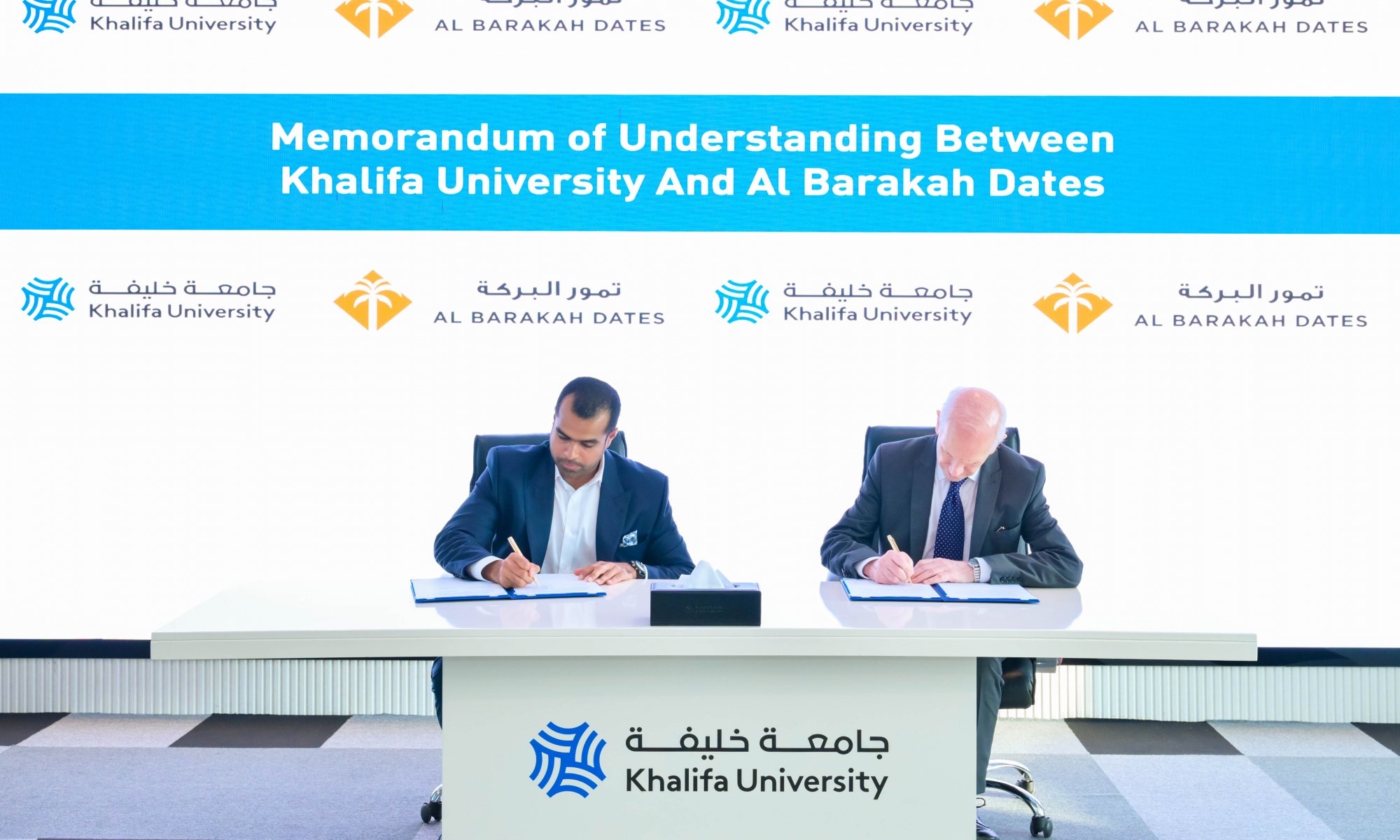
Khalifa University of Science and Technology’s Research and Innovation Center for Graphene and 2D Materials (RIC2D) and LOLC Advanced Technologies, part of the Sri Lanka-based LOLC Group, today announced they have signed a memorandum of understanding (MoU) to cooperate in identifying opportunities in advanced materials innovation and exploring UAE market potential.


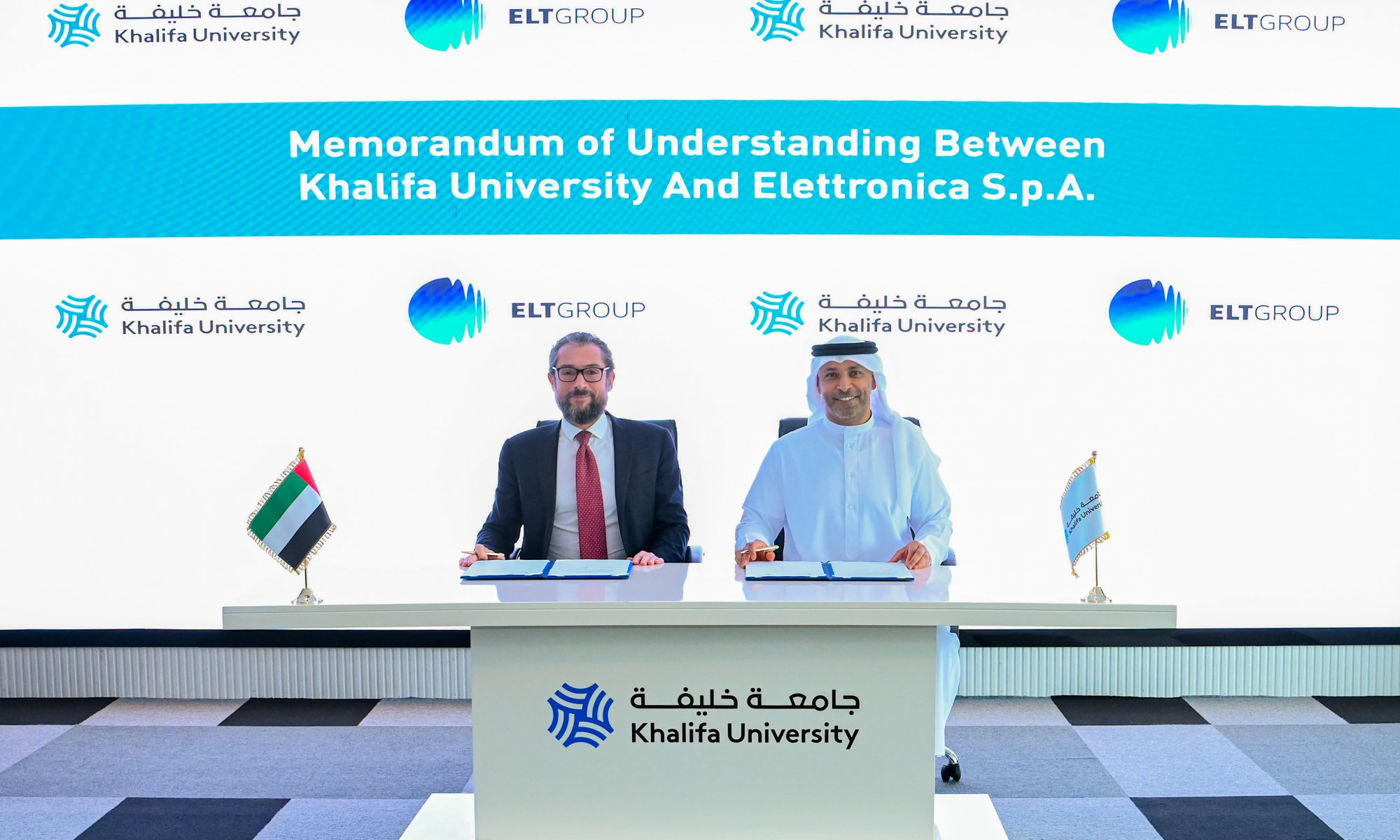
The MoU was signed by Dr. Hassan Arafat, Senior Director, RIC2D, and Manju Gunawardana, Director, LOLC. The MoU aligns with and supports the UAE leadership’s vision towards achieving net-zero targets and diversifying the economy.


Dr. Arafat said: “This MoU with LOLC Advanced Technologies will facilitate the role of Abu Dhabi and the UAE towards developing an advanced materials innovation ecosystem for which Khalifa University plays an integral role. It will further strengthen RIC2D’s efforts in advancing the scientific development and commercial deployment of technologies derived from graphene and other 2D and advanced materials.”


Gunawardana said: “As a foremost industry leader in graphene manufacturing, we are thrilled to embark on this Memorandum of Understanding (MOU) with Khalifa University’s Research and Innovation Center for Graphene and 2D Materials (RIC2D).


Together, we are poised to pioneer groundbreaking advancements in graphene and its versatile applications. The unwavering dedication and enthusiasm demonstrated by Khalifa University for this collaborative venture have left an indelible impression on us. We are highly confident that our joint efforts will harness the full potential of graphene’s remarkable properties.”


RIC2D and LOLC will be involved in the joint development of advanced materials manufacturing optimization research. LOLC is currently engaged in the manufacturing and distribution of high quality e, graphene products for precision application developments.


LOLC Group has operations in 22 countries, and a few of its entities engaged in digital technology and innovation are also incorporated in the UAE.

Emirates Mars Mission Accepts Khalifa University PhD Research to Further Understand the Planet’s Atmospheric Composition

Unique Research on CO Emission Properties Could Encourage Further Martian Explorations


The UAE’s Emirates Mars Mission (EMM) science team has accepted research output from Khalifa University Professor Dr. Nayla El-Kork’s research team, under the umbrella of Ph.D. student Malathe Khalil’s research study focused on the emission properties of Carbon Monoxide (CO) and its implications for understanding the composition of Mars’ atmosphere at an EMM meeting.


As CO is one of the target molecules studied by the EMM team, the research is particularly valuable for the Mars 2117 program, which aims to establish a sustainable human settlement on Mars within the next 100 years, in line with the UAE Centennial Plan 2071. The research study provides crucial insights to help understand future possible explorations to the red planet and its habitability. The data also gives access to the deconvolution of spectra acquired by the Emirates Mars Ultraviolet Spectrophotometer, an instrument onboard the EMM spacecraft.


These results have been shared and discussed at the last Emirates Mars Mission Science Team meeting, which took place in Dubai. Along with this research project, up to 20 other research papers have also been presented at the upcoming annual American Geophysical Union (AGU) Fall Meeting 2023, which took place in San Francisco, US.


With support from the Khalifa University’s Space and Planetary Science Center (SPSC), the Khalifa University team behind this research includes – Khalil, Post-doctoral fellow Dr. Salman Mahmoud, and their research supervisor, Dr. Amal Alghaferi, Associate Professor, Mechanical Engineering, with co-supervisor Dr. Marko Gacesa, Assistant Professor, Department of Physics, and Dr. Nayla El Kork, Associate Professor, Physics – who is also the Principal Investigator of the Abu Dhabi Award for Research Excellence (AARE) grant that funded the project. This work is done with the collaboration of the ExoMol team members, University College London, U.K.


The Ph.D. thesis delves deeper into the investigation of relatively high electronic states of CO molecules, a field that had not been explored theoretically until now. This research holds significant importance for understanding the behavior of CO and other species in the Martian atmosphere, particularly in terms of their emission and absorption properties. Moreover, what sets this research apart is its interdisciplinary collaboration between scientists specializing in molecular physics and planetary atmospheric science.


The quantum chemical calculations provided by Khalifa University’s molecular physics team have unlocked previously inaccessible information about CO molecules and other species in the Martian atmosphere. This goes beyond simply analyzing the data collected by EMM’s spacecraft instruments, enabling a deeper understanding of the underlying mechanisms behind the obtained results.


Another key contribution of this research to the EMM is its role in enhancing the understanding of Mars’ composition in relation to specific molecular abundance and its variation with altitude. By analyzing the abundance of CO molecules and other constituents, researchers can gain fresh insights into the dynamics, chemistry/photochemistry, temperature variations, and the escape of molecules from the Martian atmosphere.


The research could also open up numerous possibilities for further developments and applications in atmospheric science and the broader field of Mars exploration. The work involves understanding the properties of light emitted by a molecule when it absorbs light. By examining the electronic structure and transition properties of CO molecules, one can understand their emission properties, and through calculations, determine the wavelength and intensity of the light emitted when the molecules are excited by specific energies.


Understanding the abundance and dynamics of species in the Martian atmosphere is crucial for comprehending the chemical processes that occur under different conditions.


Dr. El Kork said: “To give an example, the composition of the Martian atmosphere during dust storms differs from that under storm-free seasons. Atomic species created due to the photo dissociation of molecules can mainly occur during the day. Photon flux reaching the Martian atmosphere at different levels also plays a role in the molecular composition there. The gathering of information among all these conditions is vital for future Mars exploration missions and, most notably, the Mars 2117 program.”


Alisha Roy
Science Writer
22 December 2023

Khalifa University Research Team Develops Next-Generation Triboelectric Nanogenerators for Sustainable Electronics

Advancements in devices that convert mechanical energy to electricity offer a greener future for wearable electronics and microelectronic devices. 


A team of researchers from Khalifa University has developed a novel triboelectric nanogenerator (TENG) using advanced 2D nanomaterials to achieve high-power density and improved cycling performance. TENG devices convert mechanical energy into electricity but their use is hindered by several challenges, including low and inconsistent output power, high internal resistance, and a need for improved charge transfer mechanisms. 


To overcome these challenges, the research team used MXenes, a family of 2D materials with excellent electrical conductivity and hydrophilicity. Their work propels TENG technology forward, demonstrating that advanced materials like MXenes can be harnessed to overcome previous limitations. By integrating these materials into innovative device architectures, the TENGs developed offer a blueprint for reliable, efficient, and environmentally friendly power sources suitable for modern technologies. 


Dr. Shoaib Anwer and Prof. Lianxi Zheng, both Department of Mechanical Engineering, Dr. Muhammad Umair Khan, Prof. Baker Mohammad and Dr. Moh’d Rezeq, System on Chip Lab, and Prof. Wesley Cantwell, Advanced Digital and Additive Manufacturing Center, collaborated with Dongming Gan, Purdue University. Their results were published in Chemical Engineering Journal, a top 1% journal for industrial and manufacturing engineering. 


“As the world marches into the era of the Internet of Things and machine learning, trillions of microelectronic devices and sensors are developed and employed to monitor the environment, human health, wearable technology, security, and robotics,” Dr. Anwer said. “Traditionally, these devices are mainly powered by various chemical batteries. However, due to their limited capacity, they need to be charged and replaced frequently, which increases the cost, requires frequent maintenance, and poses a serious risk to environmental pollution.”


As a 2D material, MXenes can be used as sheets and stacked on top of each other to form flexible and stable films. The team introduced a layer-by-layer stacked structure, which sandwiches a thin layer of MXenes within the tribo-negative electrode, while the tribo-positive layer uses a sodium chloride-infused polymer matrix. This design capitalizes on the ability of MXenes to trap and accumulate charge, paired with sodium chloride’s ability to enhance charge separation. 


By doing so, the team’s newly designed TENGs have demonstrated impressive output voltages and power densities, significantly outperforming many current TENG technologies. In testing, they were able to light up over 500 LEDs and swiftly charge capacitors, marking a substantial leap in performance and practicality. 


Beyond energy harvesting, the refined sensitivity of these TENGs allows them to detect subtle human physiological motions, highlighting their potential in wearable health-monitoring devices and as an integral part of sustainable electronic applications. 


“Because of the cost-efficiency and sustainability, this work paves a new way to design a self-powered sensor for body movement monitoring in future green electronics,” Prof. Zheng said. 

Jade Sterling
Science Writer
20 December 2023

1st International AMCC Conference on New and Advanced Materials Showcases Khalifa University’s Strengths in Materials Chemistry Research

International Scholars from the World’s Top 100 Universities Collaborate with Khalifa University’s Advanced Materials Chemistry Center 


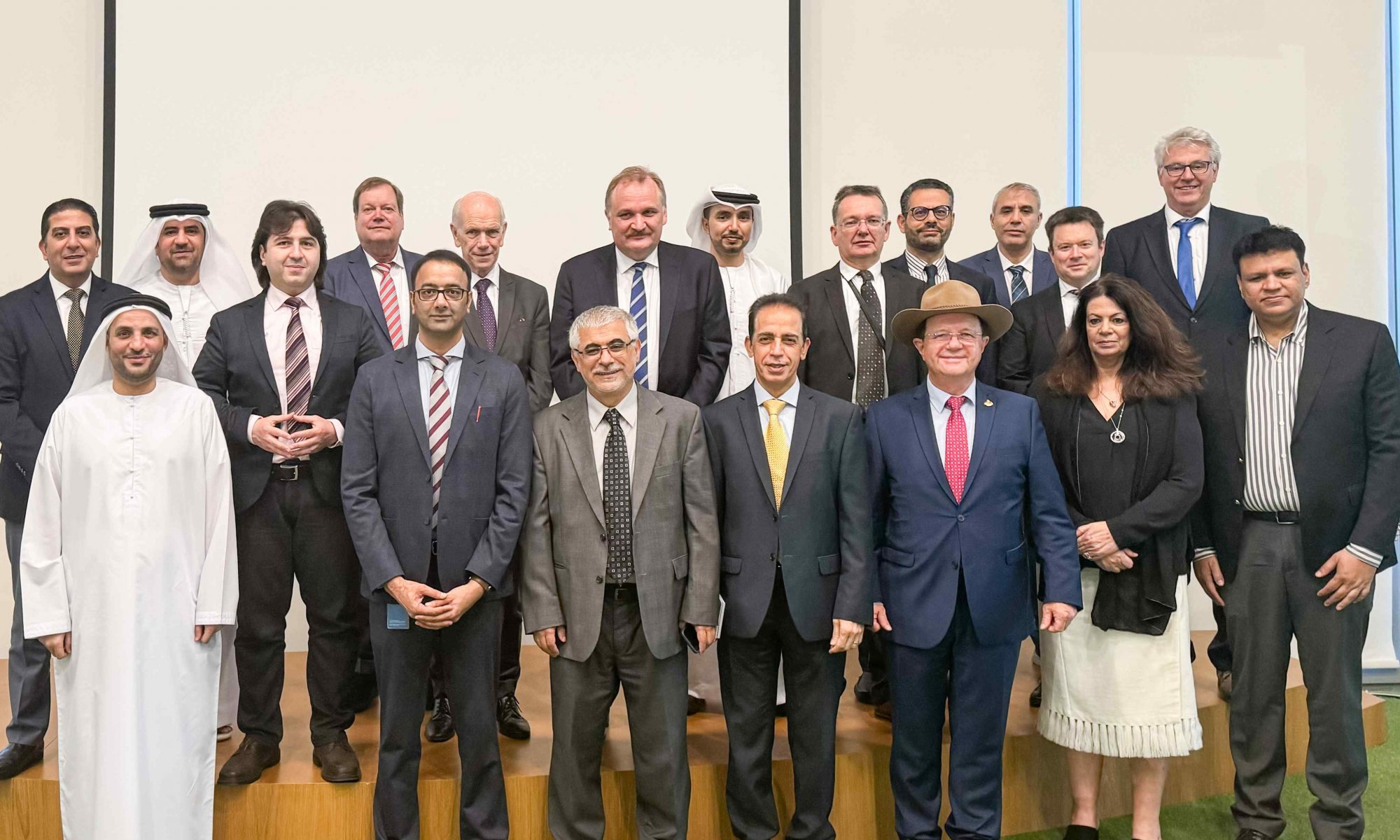
Khalifa University’s Advanced Materials Chemistry Center (AMCC) hosted the 1st AMCC Conference on New and Advanced Materials bringing together over 120 registered attendees from leading research-intensive universities in Europe, Asia, and the Middle East to explore the advances in materials chemistry being made by Khalifa University’s AMCC researchers. The conference focused on the role that chemists play in developing advanced materials for a range of industries including energy, healthcare and the environment. 


The conference included keynote lectures from distinguished international chemists such as Professor Derek Woollins, St. Andrews University, UK; Professor Sanjay Mathur, Cologne University, Germany; and Professor Andrey Roghach, City University of Hong Kong, reflecting the strong collaborative research relationships that exist between AMCC and global research powerhouses around the world.


The conference was also attended by Dr. Steve Griffiths, Senior Vice-President, Research and Development and Professor of Practice, Chemical and Petroleum Engineering, Khalifa University; Dr. Ahmed Al-Durra, Associate Provost for Research and Professor, Electrical Engineering and Computer Science as well as Professor Ehab El-Saadany, Acting Dean, College of Engineering and Physical Sciences.


Dr. Steve Griffiths said: “The work being done at AMCC is part of the wider research strategy at Khalifa University and it is setting the foundations for some of the most important research innovations we will see in the coming decades. Advanced materials chemistry is a critical platform for innovations in all the important economic sectors that are vital to the growth of the UAE economy.”  


An important deliverable of AMCC in preparing the next generation of researchers is allowing junior researchers to present their work to their peers. As a key part of the conference, 22 poster presentations were given by graduate students, postdoctoral research fellows, research scientists, and junior researchers working on cutting-edge applied materials chemistry projects spanning functional inorganic materials, functional polymer materials and multiscale materials simulations. The award ceremony for the best poster presentations for junior researchers was officiated by Dr. Ahmed Al-Durra.


Prof. Sharmarke Mohamed, Chair of the Conference and Theme Leader, AMCC said: “We set out from the beginning to put together an international conference where our students at all levels – undergraduates, MSc and PhD – are empowered to present their work. The quality of the poster presentations from junior researchers was impressive and this reflects the diversity of research being done within AMCC and more broadly in the Chemistry Department of Khalifa University.”


AMCC is dedicated to advancing research in the field of materials chemistry, with a focus on developing new materials, new methods and establishing their structure-property relationships through advanced characterization methods and multiscale modeling for various potential applications.


Professor Ahsan Ul Haq Qurashi, Director, AMCC, said: “AMCC is focused on groundbreaking research themes including advanced materials characterization and modeling, polymer and hybrid materials as well as functional inorganic materials. We have made significant efforts to align our research with the needs of the UAE and are already developing new materials with the potential for commercialization”.

Alisha Roy
Science Writer
18 December 2023


Khalifa University Top in UAE and among Top 40 in Asia in Sustainability

Khalifa University of Science and Technology today announced it is ranked top in the UAE, and among top 40 in Asia out of nearly 1400 institutions, in the QS World University Rankings: Sustainability 2024.


Khalifa University also came among the top 200 in Environmental Impact in the 2024 QS World University Rankings: Sustainability that highlights different ways in which universities are taking action to tackle the world’s greatest Environmental, Social and Governance (ESG) issues. 


The QS Sustainability Rankings analyzes Environmental Education, Research, Sustainability, Employability and Outcomes, Equality, Knowledge Exchange, Social Impact of Education, as well as Health and Wellbeing not only of its students, but society more widely. In order to be included for the second QS Sustainability ranking, institutions must be eligible for QS World University Rankings, QS Rankings by Region or QS Rankings by Subject. 

Clarence Michael
English Editor Specialist
18 December 2023

UAE-UK One Health AMR Biosecurity Consortium Meeting Focuses on Combating Antimicrobial Resistance

‘One Health’ Approach Recognizes the Interconnectedness of Human, Animal, and Environmental Health


A significant gathering aimed at addressing the urgent need for innovation and action in combating Antimicrobial Resistance (AMR) – the UAE-UK One Health AMR Biosecurity Consortium Meeting, was hosted by Khalifa University. The meeting brought together speakers, professionals, and stakeholders from the UAE, the UK, and the wider region to discuss strategies for tackling AMR through the ‘One Health’ approach, which recognizes the interconnectedness of human, animal, agriculture and water sectors, and environmental health.


Professor Sir John O’Reilly, President, Khalifa University, gave the welcome speech and emphasized the significance of hosting the consortium meeting, showcasing the trust and recognition placed in Khalifa University’s expertise and capabilities in convening specialists and stakeholders from multiple sectors.


The meeting took stock of the progress made since the first gathering in March 2023 and explored possibilities for international collaboration, particularly in utilizing big data genomic approaches for molecular epidemiology.


Dame Sally Davis, the UK Special Envoy on AMR, delivered a video address, providing valuable perspectives on the global context of AMR and emphasizing the need for immediate action. Dr. Najiba Abdulrazzaq, Co-Chair, UAE National Higher Committee on AMR, highlighted the remarkable efforts undertaken by the UAE in combating AMR and showcased the collaborations established through the National AMR Action Plan.


Dr. Will Le Quesne from the Centre for Environment, Fisheries, and Aquaculture Science provided an introduction to the UAE-UK One Health AMR Biosecurity Consortium, emphasizing the importance of collaboration and knowledge exchange between the two countries. Dr. Dean Everett, Professor in Infectious Diseases and Lead, Khalifa University’s Infection Research Unit, presented a research vision for the UAE-UK Consortium, outlining collective aspirations and ambitions for the future.


Other speakers discussed the AMR management and surveillance in medical settings, the human population, veterinary and agriculture sectors including Dr. Jens Thomsen, Chair, UAE National Sub-Committee for AMR surveillance, Dr. Ghada Ahmed Abdel Wahab from the Abu Dhabi Agriculture and Food Security Agency, and Professor Ed Feil from Bath University.

Alisha Roy

Science Writer

18 December 2023

Her Excellency Sarah bint Yousef Al-Amiri, UAE Minister of State, Public Education and Advanced Technology, and Chairwoman, UAE Space Agency, visited the #KhalifaUniversity stand

Her Excellency Sarah bint Yousef Al-Amiri, UAE Minister of State, Public Education and Advanced Technology, and Chairwoman, UAE Space Agency, visited the #KhalifaUniversity stand during her tour at the #COP28 conference. Her Excellency received an overview of our innovative research projects that continuously contribute to overcoming challenges from climate change, ensuring a sustainable future, and providing scientific solutions to environmental challenges.

We are privileged to have Her Excellency Sarah bint Yousef Al-Amiri at our stand, and we are honored to witness her insightful contributions at #COP28UAE and her commitment to addressing the challenge of climate change.

Khalifa University Celebrates Outstanding Achievements of 2023 YFEL Members

In Just 14 Years, the Program Has Created a Robust 600-Strong Network of Future Leaders in Alternative Energy and Sustainability


Khalifa University of Science and Technology today announced members of the 2023 Young Future Energy Leaders (YFEL) outreach program received their certificates of completion during a gala ceremony for successfully concluding their year-long schedule of commitments, becoming fully equipped in finding sustainable clean energy solutions and tackling climate change.


Launched in 2010 by the UAE President His Highness Sheikh Mohamed bin Zayed Al Nahyan, the YFEL program offers members exceptional and unmatched access to top global leaders, senior business executives, and academics engaged in alternative energy and sustainability. The YFEL program enters its 14th year of existence in 2024. Members of the Khalifa University Board of Trustees, and sponsors of the 2023 YFEL program, as well as dignitaries, and guests were present at the ceremony.


The certificates of completion were presented to the 2023 YFEL members which includes UAE Nationals, locally-based students and professionals, as well as international young professionals from 11 countries. Also present were the 2024 YFEL members, for whom the occasion served as an ‘orientation’ ceremony. They include UAE Nationals among whom were young professionals, and international and locally-based students. So far, the YFEL program has created an alumni body of nearly 600 students and young career professionals.


Dr. Yousof Al Hammadi, Senior Vice-President, Academic and Student Services, Khalifa University, said: “Khalifa University’s YFEL program qualifies, enables, and trains young professionals to address core issues in clean energy and sustainability. The graduation of the 2023 YFEL members serves as a crucial stepping stone, fostering a sense of community and setting the tone for rewarding experiences that lie ahead for these students and young professionals. Khalifa University is proud to support these talented individuals in their journey towards becoming future leaders in the field of advanced energy and sustainability, in the region and across the globe. Congratulations to the 2023 YFEL members, as we warmly welcome the 2024 YFEL members who will definitely emulate their predecessors and innovate even more sustainable concepts.”


Throughout the year, the 2023 YFEL members undertook projects aligned with their annual commitments, focusing on critical areas such as green hydrogen production, bio-waste-to-fuel solutions for transportation in rural communities, 2D materials for hydrogen storage, real-time non-destructive early assessment of date fruit, improving photovoltaic (PV) panels performance, swappable battery system for sustainability, combined heat and power systems for hydrogen production, and many more. 


In addition to their projects, the 2023 YFEL members had the opportunity to enhance their skills through a series of workshops and lectures on Leadership, Battery Tech, Sustainable Catalysis, Space Mining, Waste Energy, Robotics, and Energy Harvesting.


Gianluca Di Bella, a 2023 YFEL graduate from Italy, said: “The YFEL program gave me the privilege to work with colleagues from across the world on the ‘Swappable Battery System’ project. The YFEL technical sessions, projects and conferences have widened my horizon and network in the energy sector, essential for us and the future of our planet.”


Emirati Engineer and 2023 YFEL graduate Abdulrahman Rashid Albuflaseh said: “As a YFEL member, I had the privilege to work on two significant projects and going forward, I plan to leverage the knowledge and experience I have gained through the YFEL program to pursue a career in sustainable urban planning, and advocate for more inclusive, and eco-friendly policies.”


Over the years, the YFEL program has received support from community leaders and UAE-based corporate sponsors. Notable among them were Emirati philanthropists His Excellency Mohammed bin Kardous Al Ameri, and His Excellency Sultan bin Rashed Al Dhaheri. In addition, the German Emirati Joint Council for Industry and Commerce – AHK, along with industry leaders BASF, Siemens, and Wintershall Dea continue to support the program.

Khalifa University and QS Gather Visionaries, Innovators, and Educators for QS Reimagine Education Awards and Conference 2023 in Abu Dhabi

Landmark Conference Aims to Shape the Future of Education


Khalifa University of Science and Technology and Quacquarelli Symonds (QS) today announced they will be gathering visionaries, innovators, and educators from around the world for the 10th edition of the Quacquarelli Symonds (QS) Reimagine Education Awards and Conference 2023 with the aim to shape the future of education.


The three-day hybrid event from 11-13 December to be held at the Main Campus and virtually, involves a judging panel from institutions across the globe who will declare the 2023 Overall Award Winners at a Gala Dinner that concludes the many fireside chats, workshops, and keynote lectures set to take place at Khalifa University and online, as part of the conference.


Professor Sir John O’Reilly, President, Khalifa University, said: “We are pleased to host the QS Reimagine Education Awards and Conference 2023. These forward-thinking sessions at Khalifa University will help global participants to shape a discourse that fosters innovation, inclusivity, and lifelong learning, keeping pace with the new trends ahead in education around the world. And, as population growth in emerging markets and technology drive unprecedented changes, we recognize the critical importance of nurturing employability, values and ethics, wellbeing and purpose, and sustainability in reimagining education. In hosting the conference, Khalifa University underscores its commitment to remaining proactive in exploring innovative approaches appropriate to the rapidly developing global education market, giving due priority to diversity and inclusion, and to sustainability, ensuring that our efforts positively impact future generations.”  


Prof. Dr. Mohamed Yousif Baniyas, Director, Commission for Academic Accreditation (CAA), Ministry of Education, UAE, will offer his perspectives during the event at Khalifa University for a fireside chat with Nunzio Quacquarelli, President, QS, on reimagining the future of education in the UAE and the global future of learning.


By hosting the event, Khalifa University aims to facilitate partnerships between ed-tech companies, universities, schools, and educational non-profits on a global scale, in line with the event’s central theme of reimagining education. Igniting Innovation and Collaboration, Challenging Norms and Driving Transformation, and Reimagining the Future – Students as Change-Makers, Rethinking Education, and Harnessing AI are some of the other themes discussed during the landmark event.


The conference will commence with a speed roundtable that connects startups with potential investors, acting as a launchpad for innovation and collaboration. The attendees will engage in thematic Peer Learning sessions covering topics on teaching and learning, talent development, ed-tech solutions, and sustainability. Shortlisted innovators competing for the Reimagine Education Awards will present their projects in speed presentations across four rooms at Khalifa University, dedicated to the Future of Learning, Universities, Work, and Sustainability. The regional winners of the awards were honored soon after.


Professor Sir John O’Reilly, Nunzio Quacquarelli, and Professor Jerry Wind, Emeritus Professor, The Wharton School will be delivering the welcome addresses, whilst Jeff Maggioncalda, CEO, Coursera will give a keynote speech on Generative AI’s ongoing progress in learning. Professor Sir John will also participate in a fireside chat with Amy Baker, CEO, The Pie (Professionals in International Education), on the future of educational research.


The event will include debates on the relevance of traditional degrees and a panel discussion on The Future of AI in Higher Education that includes Dr. Sarah Grant, Interim Executive Director, IDEA Lab, Imperial College Business School and Gabriel Rossi Assistant Dean, Faculty and Curriculum, Yale School of Management on the Future of AI in Higher Education, and others.


Several discussions will also explore strategies for unlocking students’ potential to become innovative entrepreneurs and incubating success within university ecosystems. These include a panel on Empowering Gen Alpha: Innovative Learning Models for a Digital Generation with the likes of Monica Ares, Executive Director, IDEA Lab, Imperial College Business School, Audrey Giacomini, Director of Partner Programs, Minerva Project, Anant Agarwal, Founder, edX, Sarah Toms, Chief Learning Officer, IMD, and Viggo Stacey, Editor, The Pie News.

Khalifa University Brings ICAR 2023 to UAE in Collaboration with Abu Dhabi Convention and Exhibition Bureau

Organizers Line Up Four Crucial Sessions for FORUMs Including a Panel Discussion Covering the Entire Gamut of Robotics Sector


Khalifa University of Science and Technology today announced it will be hosting the 21st International Conference on Advanced Robotics (ICAR 2023), one of the most established robotics conferences that have a significant impact on the development of robotics science. 

Brought to Abu Dhabi with the support of the Abu Dhabi Convention and Exhibition Bureau, ICAR 2023 is technically co-sponsored by the IEEE Robotics and Automation Society and will be held from 5 – 8 December 2023 at the Khalifa University Main Campus. The conference will feature plenary talks, workshops, and oral presentations from all areas of robotics, including vision and cognitive, as well as humanoid robots. Four crucial sessions for FORUMs, including a panel discussion to cover the entire gamut of the robotics sector, will also be part of the event that will attract a large number of researchers, academics, and industry professionals from across the world. 


The individual sessions of the FORUMs will be held at the Khalifa Innovation Center (KIC), a deep-tech incubator located at Khalifa University and supports commercialization of scientific research through tailored and mentored incubation, nurturing business concepts into successful startups. 


Among the four sessions under FORUMs, Dr. Hend Al Tair, Director of Department of Science, Technology and Scientific Research, UAE Ministry of Education, will lead a session titled ‘Robotics Education in the UAE’, organized in collaboration with the Ministry of Education and Abu Dhabi’s Advanced Technology Research Council (ATRC). Other sessions include Robotics for Emerging Industries, Robotics for Africa, ‘Women in Robotics: challenges and worldwide perspectives’, and Robotics Education in the UAE. 


Dr. Arif Sultan Al Hammadi, General Co-Chair and Forum Chair, ICAR 2023 said: “Khalifa University is delighted to partner with local and international stakeholders to bring ICAR 2023 to the UAE and facilitate in pushing the boundaries and establishing new research areas in robotics science and technology. Since 1985 this international conference has stimulated original contributions, new ideas and views. We believe these interactive sessions will highlight the extent of advanced research that happens in the UAE and the region, while the knowledge exchange at this global platform will further encourage research and innovation in this area.” 

Dr. Jorge Dias, General Chair, ICAR 2023, and Deputy Director of KU Center for Robotics and Autonomous Systems, said: “We are glad to bring the Forum as part of the main event. The session on ‘Robotics for the Emerging Industries’ aims to focus on the role of robotics in today’s industrial settings within various sectors including sustainability, food, logistics, aviation, transportation, and construction. Additionally, it will highlight the direction and vision of robotics, as well as its future use in the industry. The session on ‘Robotics for Africa’, will be led by Dr. Chinwe Pamela Ekenna, Assistant Professor, Department of Computer Science, University at Albany, New York.”

Organized in collaboration with IEEE Women in Engineering (WIE), the panel titled ‘Women in Robotics: challenges and worldwide perspectives’, will have three distinguished panelists sharing their experiences and perspectives, and focusing on  Diversity, Equity and Inclusion in Robotics. It will aim to educate young generations of engineers and scientists to respect the inclusion of different contributions across genders and cultures in Robotics and Engineering, while identifying the main challenges faced by young professional women and possible useful countermeasures to encourage and increase their ‘retainment’ in the job market. 


Keynote speakers include Dr. Giulia De Masi, Technology Innovation Institute (TII), UAE, who will share her perspectives on ‘Smarter Together: Collective Intelligence from Biological Systems to Robotic Systems’ and Dr. Eric Feron, Director of Robotics, Intelligent Systems, and Control (RISC) Laboratory, KAUST, Saudi Arabia, will speak about ‘Robots as Engineered Systems’. 


Dr. Kostas Alexis, Norwegian University of Science and Technology (NTNU), Norway, who will speak on ‘Resilient Autonomy in Perceptually-degraded Environments’, and Dr. David Vernon, Carnegie Mellon University Africa, Rwanda, will deliver his keynote on ‘The Situation Model Framework for Cognitive Behavior: Implications for the Design of Robot Cognitive Architectures’.

Emirates Steel Arkan, Khalifa University and Ohmium International Collaborate on Green Hydrogen Research Hub

Decarbonization and clean energy pioneers sign Strategic Collaboration on Hydrogen Research and Development to help accelerate adoption of green hydrogen to support low-carbon transformation of the steel sector.


Emirates Steel Arkan (ESA), Ohmium International (Ohmium) and Khalifa University of Science and Technology today announced the signing of a Strategic Collaboration on Hydrogen Research and Development, which was witnessed by the UAE Ministry of Industry and Advanced Technology (MoIAT).


The agreement was signed at MoIAT’s pavilion in the Green Zone of COP28, which takes place until 12 December at Expo City Dubai. It was signed by Eng. Saeed Al Ghafri, CEO of Emirates Steel, Arne Ballantine, CEO and Co-Founder of Ohmium International and Dr. Ebrahim Al-Hajri, Senior Vice President, Support Services at Khalifa University. The signing was witnessed by His Excellency Omar Al Suwaidi, Undersecretary of the Ministry of Industry and Advanced Technology.


ESA is one of the largest publicly traded steel and building materials manufacturers in the region; Ohmium is a leading green hydrogen company that designs, manufactures, and deploys advanced Proton Exchange Membrane (PEM) electrolyzers. Khalifa University is an internationally recognized academic institution based in the UAE.


The collaboration, under MoIAT’s ‘Make it in the Emirates’ initiative, aims to deliver a comprehensive research and development program to help accelerate the uptake of green hydrogen, a clean energy source across the steel sector, ultimately enabling ESA to be among the leading manufacturers of green steel. This strategic collaboration between the private sector and academia will help to advance the low-carbon transformation of the UAE steel sector. Under the agreement, the three entities will develop cleaner production methods for steel products i.e., green steel, which can be used in sustainable construction and infrastructure projects.


The agreement is in line with the UAE National Strategy for Industry and Advanced Technology, which aims to decarbonize hard-to-abate sectors while increasing the competitiveness of national industries. The strategy supports the UAE Net Zero by 2050 strategic initiative as well as the country’s economic diversification plans.


The contribution of each organization’s unique perspective and knowledge will be instrumental in helping rapidly build the expertise to fully optimize the application of green hydrogen in the production of Direct Reduced Iron (DRI). The collaboration will also support the optimization of Ohmium’s advanced power electronics capabilities to further enhance the power quality of the power grid in a steel plant.


Abdulla Al Shamsi. Assistant Undersecretary for the Industrial Growth Sector at the Ministry of Industry and Advanced Technology said: “The UAE is pioneering future industries, such as green steel, in line with its efforts to decarbonize its industries. Research and development plays a crucial role in this, helping to foster new technologies and innovations that enable industrial decarbonization. The most productive R&D ecosystems are underpinned by strong partnerships and alignment between government, industry, finance and academia. That is why MoIAT is overseeing and supporting partnerships that align with its Technology Transformation Program to unlock the potential of innovation to drive sustainable industrial development.”


“At Emirates Steel Arkan, our ambition is to achieve net zero by 2050 through driving the industry’s decarbonization at scale, supporting the nation’s strategic initiative to achieve climate neutrality by 2050. That means incorporating the latest innovative technologies in manufacturing, efficiency, and sustainability to deliver the high-quality, low-carbon products of tomorrow,” said Saeed Alghafri, CEO of Emirates Steel, an Emirates Steel Arkan company.

“We’re delighted to be working with Ohmium and Khalifa University on this pioneering research and development program. Bringing together Ohmium’s advanced PEM electrolyzers with the academic excellence of Khalifa University is a critical step in our journey to adopting green hydrogen to produce greener steel.”


Professor Sir John O’Reilly, President, Khalifa University, said: “This collaboration with Emirates Steel Arkan and Ohmium International provides Khalifa University with a special opportunity to further optimize the application of green hydrogen into the production of steel. With our research expertise, gained especially through our previous partnerships with ESA, we have acquired the capability that will contribute towards cleaner production methods and optimize the application of green hydrogen. We are excited to assist our partners in fast-tracking production on a much bigger scale and support decarbonization efforts within the UAE and beyond.”


“It’s great to be working with Emirates Steel Arkan and Khalifa University, two industrial and academic trailblazers in the innovation and application of clean energy. Ohmium is excited to contribute our advanced modular PEM electrolyzer technology to this collaboration, enabling the use of green hydrogen to help produce high value, low carbon impact steel,” said Arne Ballantine, CEO, Ohmium International.


“This unique collaboration leverages each organization’s respective strengths to go faster, wider and deeper when it comes to supporting the steel sector’s ambitions to decarbonize.”

Khalifa University to Showcase Innovative Sustainability Projects and Solutions at COP28 UAE Summit

University Remains Proactive in Sustainable Community Engagement through Research and Outreach Initiatives


Khalifa University of Science and Technology will be showcasing several sustainability-focused research projects at the 28th session of the Conference of the Parties (COP28) to the UN Framework Convention on Climate Change (UNFCCC), in the UAE, validating its status as an academic institution that remains proactive in engaging the community through eight outreach programs.


Khalifa University’s stand is located at the ‘Technology & Innovation Hub’ in the Green Zone, displaying projects encompassing all areas of sustainability. The projects include the SAVE software that predicts the stability of power grids; Beam-Down Solar Thermal System serves as an alternative to the central receiver design of a concentrated solar tower; a project to assess weather extremes, and 3D-printed membranes for water treatment, a system that exploits the complementary advantages of Internal Combustion Engines (ICE) and electric propulsion; a 3U CubeSat for  climate change assessment; a water-from-air system, powered only by solar energy; and the Seawater Energy and Agriculture System (SEAS) – the world’s first research facility to minimize waste, and grow both food and fuel using desert land irrigated by seawater, and produce sustainable biofuels for aviation. 


As a research-intensive institution that seeks innovation in all sustainability areas, Khalifa University has always gone the extra mile to be among the front-runners, implementing over 30 sustainability initiatives in various areas. These include a global sustainable aviation forum, an energy transition conference, a sustainability project exhibition, a COP28 model exhibition, a climate change activities exhibition, a hackathon on food waste, stopping use of plastic bottles on-campus, a plant distribution campaign, a waste-to-clothes conversion initiative, a logo design competition for students, a climate action pledge, podcasts on sustainability, and new initiatives from the Students Sustainability Club. 


Moreover, Khalifa University is one of the few institutions that has eight community outreach programs, demonstrating the university’s deep-rooted commitment to supporting the implementation of the United Nations Sustainable Development Goals (SDGs) at national and global scales.The Khalifa University outreach initiatives such as the KU-SDG Ambassador Program, Young Future Energy Leaders (YFEL), Al Nokhba program, Visiting Undergraduate Student Research Experience program, Ektashif Camp, National Ambassadors Program ‘Estedad,’ and the Ro’ya program, help in contributing towards the UN SDGs.


Not stopping with innovation, Khalifa University also assists students and researchers in developing their transformative science or engineering ideas into  successful startups through the Khalifa Innovation Center (KIC).


Alisha Roy
Science Writer
5 December 2023