
From Synthesis to Application: Metal Oxyhydroxides in Energy Technologies

Metal oxyhydroxides represent a promising path towards a sustainable energy future but research needs to optimize synthesis and explore new nanostructures to fully realize their potential 


The transition from fossil fuels to renewable energy is a pressing challenge, with climate change, environmental degradation, and resource depletion driving the search for sustainable alternatives. Electrochemical energy conversion and storage (EECS) technologies hold significant promise and central to these are advanced materials that enhance their efficiency and performance. One such group of materials, metal oxyhydroxides (MOOHs), is poised to play a crucial role in the future of energy.


In this review article, a team of researchers including Khalifa University’s Dr. Karuppasamy Karuppasamy, under the guidance of Prof. Akram AlFantazi, reported on the advancements in MOOHs, focusing on their synthesis, structural engineering and applications in EECS. Dr. Karuppasamy collaborated with researchers from Gyeongsang National University, South Korea; Vellore Institute of Technology, India; Federal University of Mato Grosso do Sul, Brazil; The Oxford College of Science, India; Chulalongkorn University, Thailand; and Dongguk University-Seoul, Republic of Korea.


Their results were published in Coordination Chemistry Reviews, a top 1% journal.


Metal oxyhydroxides are a type of transitional metal compound that includes elements like manganese, nickel, iron, and cobalt. These materials have unique electronic structures and variable valence states, which make them particularly effective as electrocatalysts and electrode materials. Their 2D layered structures, comprising edge-sharing octahedral subunits, allow for high conductivity and improved surface texture. Various ions are also inserted into the structure to enhance the material’s overall electrochemical performance.


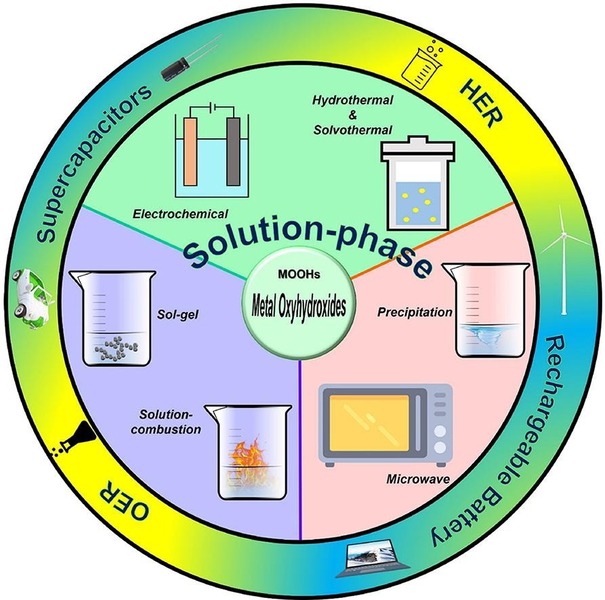
MOOHs are especially promising in supercapacitor applications. Supercapacitors are energy storage devices with high power density, long cycle life, and fast charge-discharge capabilities.


“MOOHs such as cobalt oxyhydroxide and nickel oxyhydroxide have shown remarkable performance as supercapacitor electrodes,” Dr. Karuppasamy says. “For instance, cobalt oxyhydroxide exhibits a high specific capacitance and stability due to its mixed valence states, which facilitate excellent reversible redox reactions.”


In battery technology, transition metal oxyhydroxides can serve as electrode materials in alkali metal ion batteries, providing high energy density and cycling stability. Their ability to undergo reversible redox reactions makes them ideal for next-generation battery applications, with the potential to surpass traditional materials in performance.


MOOHs are also effective catalysts for water electrolysis, a process which produces hydrogen fuel by splitting water into hydrogen and oxygen and is vital for the development of clean hydrogen energy. The MOOH structural properties allow for efficient electron transfer and ion diffusion, making them highly effective for both the hydrogen evolution reaction and the oxygen evolution reaction.


Synthesizing MOOHs involves various innovative methods, each with their own advantages. Hydrothermal and solvothermal processes allow for precise control over the nanostructures and chemical compositions, producing high-purity materials with desirable properties, while the sol-gel process produces multicomponent systems at low temperatures. Microwave-assisted synthesis is rapid and energy efficient but requires specialized equipment.


Despite their potential, MOOHs face several challenges. Scaling up production while maintaining quality and performance is a significant hurdle. Additionally, ensuring the long-term stability of MOOH-based materials in various electrochemical environments remains a concern.


MOOHs could revolutionize the field of EECS but continued research and development will be essential to fully realize their potential.


Jade Sterling
Science Writer
3 July 2024

Greener Ammonia with Innovative Bifunctional Catalyst

New catalyst offers higher yield and reduced energy consumption to transform ammonia synthesis in the chemical industry


Representing a significant step towards more sustainable industrial processes, a team of researchers from Khalifa University and the Indian Institute of Technology Ropar has developed a novel catalyst designed to revolutionize the production of ammonia.


Ammonia is a crucial component for fertilizers and a promising carbon-free fuel. The Center of Catalysis and Separations (CeCaS) researchers published their innovative approach in ACS Energy Letters, a top 1% journal. Safa Gaber, Dr. Kayaramkodath Chandran Ranjeesh and Dr. Dinesh Shetty leveraged a covalent organic framework (COF) to efficiently couple two electrochemical reactions, achieving new highs in efficiency and yield.


Ammonia is a cornerstone of modern agriculture, essential for the fertilizers that support global food production. It also holds potential as a clean fuel. However, the current method of producing ammonia, the Haber-Bosch process, is highly energy-intensive and accounts for over 2% of annual global CO2 emissions. This has prompted research into greener alternatives, with electrochemical methods emerging as a promising solution.


While the nitrogen reduction reaction has been explored, it presents significant challenges of its own. The KU and IIT research team shifted their focus to the nitrate reduction reaction, which offers higher feasibility due to the greater solubility of nitrate ions and their lower bond dissociation energy. Plus, nitrate is a prevalent pollutant in agricultural runoff, meaning their method offers the additional benefit of pollution remediation.


The team developed a bifunctional catalyst that integrates ruthenium nanoclusters within a covalent organic framework. This design allows precise control over the diffusion of nitrate and protons, resulting in a highly selective and efficient conversion of nitrate to ammonia.


The researchers also coupled the glucose oxidation reaction at the anode of the catalyst, replacing the traditional oxygen evolution reaction. The glucose oxidation reaction requires less energy, significantly reducing the overall energy consumption of the ammonia synthesis process. It also produces valuable by-products such as gluconic and glucaric acids that can be used in other industries.

The novel catalyst achieved a 2.5 times higher ammonia yield rate compared to traditional catalysts, marking a significant step towards sustainable ammonia production. By addressing both pollution and energy efficiency, the bifunctional COF catalyst offers a practical solution for greener industrial processes.


Jade Sterling
Science Writer
2 July 2024

ENTC FANR Led MORAD Research Program Completes Phase 1, Sheds Light on UAE Radiological Environmental Aspects

11 Published Papers Highlight Crucial Radionuclide Dispersion


In a significant stride towards achieving the UAE’s peaceful nuclear goals, Khalifa University’s Emirates Nuclear Technology Center (ENTC), in collaboration with the Federal Authority for Nuclear Regulation (FANR) and the French Institut de Radioprotection et de Sûreté Nucléaire (IRSN) has successfully completed Phase 1 of the Numerical Modelling of Radionuclides Dispersion (MORAD) research program. The collaboration has yielded 11 published papers, highlighting crucial environmental aspects. 


 Playing a vital role in supporting the UAE’s peaceful nuclear energy sector, the primary objective of the MORAD program is to augment the UAE’s capacity to simulate the dispersion of radionuclides across marine, atmospheric, and continental environments as well as regional and local features. In addition to FANR’s contribution to the ENTC fund, the Federal Authority also funds two projects, which include the MORAD project, and the OECD-ATLAS-III project, currently in its second phase, after successfully completing Phase I in 2021. Both projects foster a proficient workforce among UAE Nationals alongside Khalifa University’s Nuclear Engineering Master’s program which also remains one of the key factors shaping the UAE’s nuclear capabilities for a science-oriented workforce.


Dr. Yacine Addad, Deputy Director, Emirates Nuclear Technology Center, and Associate Professor, Mechanical and Nuclear Engineering, Khalifa University, said: “In light of the UAE’s commencement of its peaceful nuclear program, marked by the construction of four nuclear power plants, Khalifa University remains committed to bolstering the country’s human capital in the field of nuclear safety. The completion of Phase-1 of the OECD-ATLAS-III Project in 2021 and Phase-1 of the MORAD research program in 2024 aligns with the country’s overarching aspiration for optimal and managed energy mix, in addition to diversifying the Emirate’s economy. The ENTC’s success has set the path toward mitigating the impact of this newly embraced sustainable energy source on the natural environment, while new research continues to enhance the collective understanding of radionuclide dispersion and its environmental impact, locally and globally.” 


Collaboration with FANR continues, following Khalifa University’s successful participation in Phase 2 of the OECD-ATLAS project. During this phase, researchers achieved important safety analysis milestones by validating and verifying safety analysis codes and assessing the thermal-hydraulic behaviors of Advanced Power Reactor 1400 MWe (APR1400). The ENTC research team is now focused on implementing Phase 3 activities within the ATLAS project to produce numerical results for pre-test and post-test simulations.  


Moreover, this project aims to broaden its scope by comparing two main system codes, the RELAP5 and TRACE computer programs that simulate and analyze the behavior of nuclear power plants under different operating conditions. In order to help improve the safety and efficiency of nuclear power plants, the project also aims to develop and utilize specialized facilities at Khalifa University, for conducting specific tests and experiments. 

Alisha Roy
Science Writer
16 April 2024


A Deep Learning Approach to Smart City Energy Management

Smart cities can harness machine learning for greener grids, revolutionizing urban energy management with renewables 


Integrating renewable energy sources and electric vehicles (EVs) into modern cities is a necessary evolution for the urban landscape. However, the variability introduced by these green technologies poses significant challenges for traditional energy management systems.


A team of researchers including Khalifa University’s Prof. Ahmed Al-Durra has introduced an innovative approach that could redefine energy management in smart cities. Prof. Al-Durra collaborated with researchers from Politecnico di Milano University, Italy; Islamic Azad University, Iran; Arman Niroo Hormozgan Company, Iran; and Aalborg University, Denmark, to develop an intelligent energy management strategy for networked microgrids (NMGs) in smart cities considering renewable energy source uncertainties and power fluctuations. Their approach leverages a sophisticated combination of technologies including neural networks and deep reinforcement learning algorithms.


The team published their research in Sustainable Cities and Societies, a top 1% journal.


Smart cities are increasingly turning to NMGs as a solution to enhance energy reliability and efficiency. These microgrids can operate independently or in conjunction with the main power grid and are essential for integrating renewable energy sources and electric vehicles effectively. However, managing them in real-time, considering the unpredictable nature of solar power, for example, and EV battery usage, requires a robust, adaptable solution.


The research team’s solution leverages the power of machine learning to manage the active power and frequency of NMGs dynamically. Key to this strategy is its dual structure: offline training for the algorithm and decentralized operation for real-world application. This setup allows for continuous adjustment based on the operational data each microgrid collects, ensuring optimal decisions for frequency and power control.


The system can adapt in real-time. Offline training fine-tunes the algorithm’s responsiveness, and the decentralized operation allows for individual microgrids to make autonomous decisions based on local data.


The team’s system demonstrated a computation accuracy exceeding 98 percent, significantly outperforming traditional methods, with a 7.82 percent reduction in computation burden and a 61.1 percent decrease in computation time. These enhancements mean that NMGs can operate more smoothly and efficiently, with less downtime and faster responses to changes in energy demand or supply. This is particularly important in urban settings where energy demands can be unpredictable.


For urban planners and energy managers, this represents a step towards more sustainable urban energy practices, where green technology integration is efficient and reliable. The potential for scalability and further development opens new pathways for even smarter, more responsive urban energy grids, powered by the capabilities of machine learning.


Jade Sterling
Science Writer
26 June 2024

Enhancing Clean Oxygen Production with Copper-Nickel Dual-Atom Catalysts 

Development of copper-nickel catalysts pioneers environmentally friendly and more efficient oxygen and hydrogen production from water electrolysis 


Research at Khalifa University has led to the development of catalysts designed to improve the electrocatalytic performance of oxygen evolution reactions (OER) in water splitting. This advancement could potentially reduce the reliance on rare and expensive materials currently used in clean oxygen and hydrogen production technologies.


Suleiman Musa, Dr. Bilal Masood Pirzada, Shamraiz Hussain Talib, Dr. Dalaver Anjum, Dr. Mohammad Abu Haija, Dr. Sharmarke Mohamed and Dr. Ahsan Ul Haq Qurashi created copper-nickel dual atom catalysts supported on graphene. Their catalysts have demonstrated promising electrochemical properties crucial for efficiently splitting water molecules into oxygen and hydrogen during OER. The graphene base stabilizes the metallic atoms and enhances their activity by facilitating better electron mobility.


The team published their results in Nano Energy, a top 1% journal, with the work conducted at the Khalifa University Advanced Materials Chemistry Center.


Using advanced characterization techniques like X-ray diffraction and scanning electron microscopy, the team confirmed the successful dispersion of copper and nickel atoms across the graphene surface. Electrochemical tests revealed that the catalysts supported on reduced graphene oxide exhibited the lowest overpotential ­­— a measure of energy efficiency in catalysis — and the highest current density at lower voltages compared to other samples. This indicates a superior catalytic performance and the synergistic effect of the copper-nickel combination, which lowers the energy barrier for oxygen production.


By lowering the cost and increasing the efficiency of oxygen production, these copper-nickel graphene catalysts could revolutionize industries that rely on high-purity oxygen, such as healthcare, aerospace, and environmental engineering. Further insights provided by density functional theory calculations helped in understanding the interaction between the copper and nickel atoms and the graphene support at an atomic level. These computational models validated the experimental results and offered a theoretical explanation for the observed increase in catalytic efficiency: The unique electronic interaction between the dual atoms facilitates a more efficient catalytic process compared to single atom setups.


As the world continues to seek ways to reduce reliance on fossil fuels and decrease carbon emissions, the implications for sustainable energy technologies are particularly profound, given the potential for these catalysts to facilitate more environmentally friendly approaches to oxygen and hydrogen production.


Jade Sterling
Science Writer
24 June 2024

New Evidence for Fresh Water on Earth as Early as Four Billion Years Ago 

Analysis of zircon crystals unveils the start of Earth’s hydrological cycle


Four billion years ago, Earth was a vastly different place. There were no continents as we know them today, no breathable atmosphere, and life, if it existed at all, was in its most primitive forms. However, one of the fundamental processes that has shaped the evolution of life and the surface of our planet might have already been in operation.


Khalifa University’s Dr. Hamed Gamaleldien investigated the ancient history of the hydrological cycle to discover when and how the Earth’s water cycle began, helping to reshape our understanding of the planet’s early environment and its capacity to harbor life.


With researchers from Curtin University, Australia, Chinese Academy of Sciences, and China University of Petroleum, Dr. Gamaleldien focused on the oxygen isotopic signatures of zircon crystals, robust minerals that can endure geological processes without altering their primary characteristics. Found in the Jack Hills of Western Australia, these crystals can be considered geological time capsules, preserving records of environmental conditions dating back to the early stages of Earth’s formation. By examining the oxygen isotopic composition, the research team have pinpointed the onset of significant interactions between fresh water and the newly emerged continental crust.


The team published their results in Nature Geoscience, a top 1% journal.


Their results reveal two significant periods of magmatism around four billion years ago and 3.5 billion years ago, marked by very light oxygen isotopic compositions that typically came from hot, freshwater interaction with dry land. This timing is crucial, as it suggests that the hydrological cycle — crucial for creating the conditions necessary for life — began less than 600 million years after the planet’s formation.


“We know that minerals in rocks are chemically altered by interactions with water and this was likely happening as far back as 4.4 billion years ago,” Dr. Gamaleldien says. “We weren’t sure whether this water was saline oceanic water, meteoric (fresh), or some combination thereof, but our results show that it would be impossible for the zircon crystals to contain such light oxygen isotope signatures if the water was only salt water. There had to have been some fresh water to get these oxygen levels.”


The research team simulated the interactions between fresh water and the zircon crystals and demonstrated that fresh water was required to yield the very isotopically light compositions found in the Jack Hills. This provides compelling evidence for the existence of shallow magmatic-hydrothermal systems involving meteoric water at least as far back as four billion years ago.


“These results constrain the time period possible for the earliest presence of dry land and freshwater reservoirs, and the start of the hydrological cycle on Earth,” Dr. Gamaleldien says. “which represent the main gradients for the evolution of life.”


As the continents formed and stabilized, they provided platforms for the accumulation of sediments and organic materials, necessary components for the development of life.


The team’s results push back the timeline for the onset of the hydrological cycle and underscore the interconnectedness of geological processes and biological evolution. The presence of fresh water interacting with solid rock not only shaped the physical landscape but also created conditions perfect for the evolution of life from simple single-celled organisms to complex ecosystems. The results also challenge previous notions about the barrenness of early Earth and provide insights into the resilience and adaptability of planetary environments.


Understanding the timing and evolution of Earth’s hydrological cycle helps reconstruct the planet’s climatic history and can even offer clues about how life might arise on other planets, providing a broader context for the search for extraterrestrial life. 


Jade Sterling
Science Writer
24 June 2024

Italian Research Institutions Explore Collaboration with APEC

Discussions Cover Energy Transition and International Engagement  


A senior delegation from the University of Salerno and the Consiglio Nazionale delle Ricerche (CNR) or the National Research Council (NRC) of Italy visited Khalifa University to explore potential research collaborations between the institutions, focusing on energy transition and international engagement.


Professor Massimo de Falco, Associate Professor, Department of Business Sciences and Dr. Nicola Mastrandrea, PhD Fellow, Department of Business Studies and Research from the University of Salerno led the delegation. Joining them were Senior Researchers Dr. Giovanna Ruoppolo and Dr. Massimo Urciolo from the Institute of Sciences and Technologies for Sustainable Energy and Mobility (ISEM) at NRC.


Khalifa University faculty from the Advanced Power and Energy Center (APEC), including Prof. Ehab Fahmy El Sadaany, Dean, Engineering and Physical Sciences, Prof. Hatem Zeineldin, Chair, Electrical Engineering Department, and Prof. Mohamed El Moursi, Director, APEC, organized discussions and explored potential areas of collaboration with the representatives from the Italian institutions.


Talks also covered a co-funded research program and joint projects focus on addressing global challenges related to energy transitions and sustainability. Prof. de Falco, who is also an Advisory Board member for APEC, was briefed on the center’s research achievements and ongoing projects.

Revolutionizing Last-Mile Delivery with Blockchain

New framework demonstrates significant improvements in last-mile delivery, pairing modern UAVs with traditional vehicles and leveraging blockchain technology


Last-mile delivery is the final step in the delivery process from a distribution center to the recipient. It is also often the most complex and expensive part of the supply chain. Last-mile delivery involves navigating local roads, dealing with traffic, and meeting customer expectations for rapid delivery, and as e-commerce continues to boom, the demand for efficient and cost-effective last-mile solutions has never been higher.


A team of researchers at Khalifa University has introduced a new framework that could significantly transform last-mile delivery. Their approach leverages both unmanned aerial vehicles (UAVs) and crowdsourced vehicles, coordinated through a blockchain-hosted matching mechanism. Prof. Hadi Otrok, Dr. Maha Kadadha, Dr. Rabeb Mizouni, Dr. Shakti Singh, and Dr. Azzam Mourad published their results in Vehicular Communications, a top 1% journal.


“The supply chain industry bloomed in recent years to reach $21 billion in 2022,” Prof. Otrok says. “Last-mile delivery has become hugely important as consumers expect their products to be delivered to their location. While dedicated distributors can and do perform last-mile delivery, the crowd-sourcing paradigm can be adopted for the delivery of products by crowd-sourced vehicles in a timely and cost-efficient manner.”


The team’s innovative system promises to optimize delivery processes, enhance transparency, and reduce costs as their framework integrates UAVs with traditional vehicular transport, all supported by the blockchain. While drones can quickly bypass road traffic and deliver goods in urban settings, ground vehicles are capable of handling heavier loads and navigating areas less accessible to UAVs.


“UAVs can offer fast delivery even during peak traffic hours,” Prof. Otrok says. By employing both modes of transport, the framework aims to take advantage of the strengths of each method, adapting to varying delivery needs and conditions.


The blockchain-based platform is at the core of the system and serves several critical functions. It hosts a matching algorithm which efficiently allocates delivery tasks to the most suitable drones or vehicles. This allocation considers factors like delivery urgency, vehicle availability, and geographical efficiency. The blockchain also provides a transparent and immutable record of all transactions and interactions. This not only ensures data integrity and security but also builds trust among users and providers with a clear, unalterable history of deliveries.


The smart contracts hosted on the blockchain automate the logistics, with supply chain management contracts handling interactions and data among supply chain members, and last-mile delivery contracts managing the actual delivery tasks, assigning vehicles, tracking progress, and facilitating automatic payments.


The results from the team’s initial testing are promising. Comparisons with traditional delivery methods show that this blockchain-integrated approach can reduce delivery times by 23 percent, increase task allocation efficiency by 6 percent and enhance payment for delivery agents by 50 percent. These improvements represent both significant logistical benefits and potential cost reductions for businesses and their consumers.


Integrating UAVs and vehicles in a blockchain-based framework could speed up deliveries, reduce traffic congestion and lower the environmental impact of transport. The team’s next steps include refining the technology, expanding its capabilities, and eventually implementing it in real-world scenarios. 


Jade Sterling
Science Writer
14 June 2024

Harnessing Microgrid Technology to Enhance Stability Against Communication Delays

Research develops a novel control approach to mitigate delays in communication to enhance microgrid resilience


Microgrids, localized groups of electricity sources and loads, have become pivotal in decentralized energy systems. Their dependency on communication for distributed control introduces vulnerabilities, particularly in the form of communication delays that can destabilize the system. Prof. Ahmed Al-Durra, Dr. Khaled Ali Al-Jaafari, Prof. Hatem Zeineldin and Prof. Ehab El-Saadany, with researchers from University of Alberta, Canada, explored innovative modifications to microgrid control structures that can enhance their robustness against such delays, ensuring improved system stability without compromising control responsiveness.


The team published their results in Applied Energy, a top 1% journal.


Microgrids use distributed secondary control strategies to manage energy resources like solar panels, wind turbines and batteries efficiently. This control is crucial for maintaining system stability, frequency, and voltage within desired limits but the inherent delays in communication networks can pose significant challenges.


The research team proposed an enhanced control strategy that incorporates additional feedback loops into the distributed generator’s control mechanism. These modifications aim to improve the system’s ability to handle communication delays by enhancing the dynamic response of the control system. This approach differs from traditional methods that often require significant bandwidth and computational resources, focusing instead on local adjustments that reduce the system’s overall sensitivity to delays.


In developing their strategy, the team used a combination of mathematical modelling and simulation tests to evaluate effectiveness. By incorporating supplementary local feedback signals within each distributed generator, the modified control structure was able to maintain stability and respond to disturbances more effectively than conventional systems.


Simulation results demonstrated a significantly improved resilience to communication delays, with the additional feedback loops allowing a wider range of permissible control parameters and greater flexibility in system tuning. This is particularly key in environments where communication delays are unpredictable and vary widely, such as in remote or heavily networked microgrids.


As microgrids become more common and renewable energy sources are further incorporated, robust control mechanisms are increasingly important for more reliable and resilient power systems. The research team’s proposed control structures not only stabilize the microgrid under varying communication conditions but also ensure that the energy distribution remains efficient and stable, even in challenging operational environments.


Jade Sterling 
Science Writer 
14 June 2024

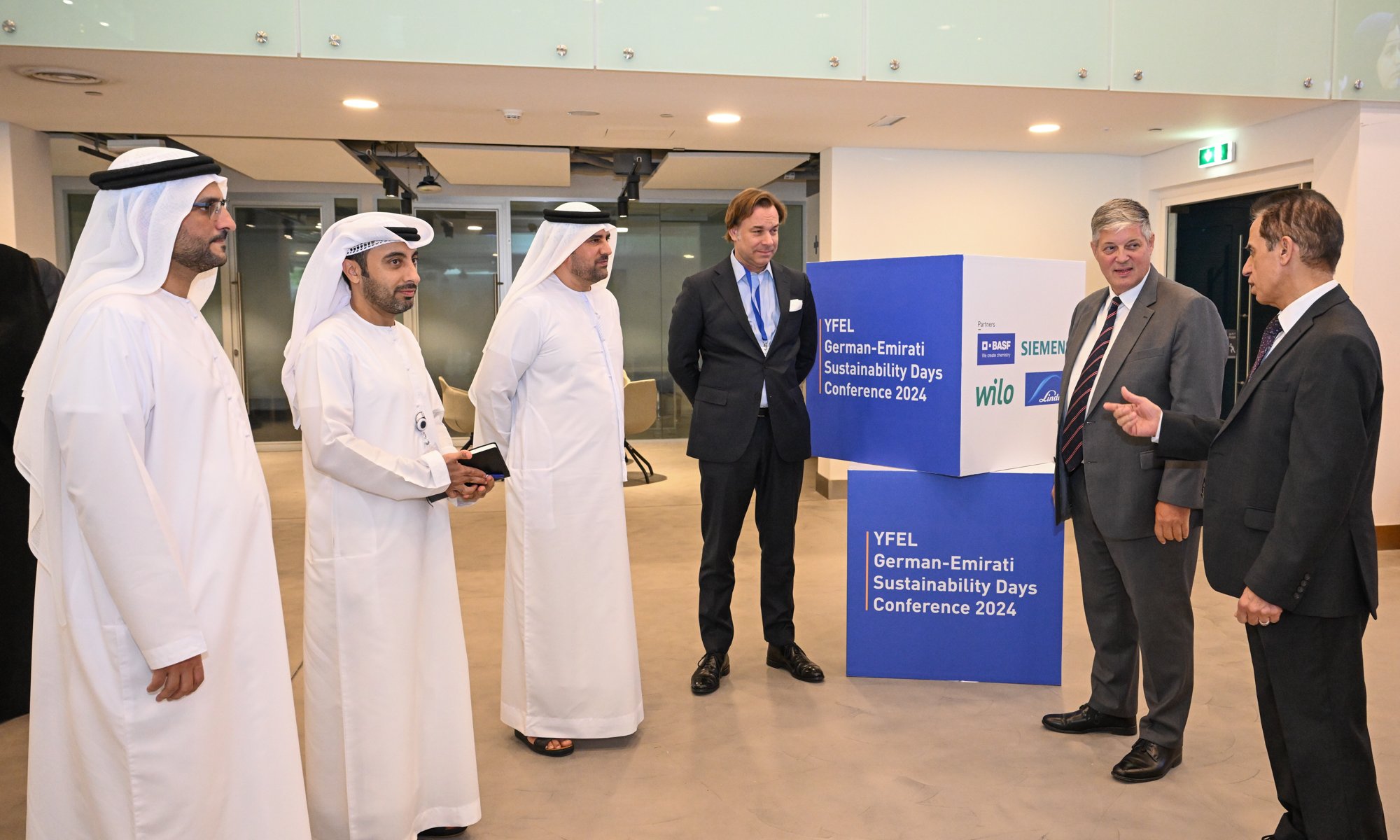
YFEL-German Emirati Sustainability Conference 2024 Concludes, Fostering Environmental Progress

Interactive Dialogue Between UAE Stakeholders, German Industry and YFEL Members Mark Closing Session 


Khalifa University and the German Emirati Joint Council for Industry and Commerce (AHK) concluded the fourth edition of the YFEL German-Emirati Sustainability Days Conference, a unique initiative to accelerate knowledge sharing and driving solutions for a net-zero future, held under the umbrella of the Emirati-German Energy and Climate Partnership.


Inspiring debates, panel discussions and interactive dialogue between UAE stakeholders, German industry and YFEL members marked the conference and served as an opportunity to further strengthen the engagement between AHK and Khalifa University’s Young Future Energy Leaders (YFEL) outreach program members and German companies BASF, Siemens, Linde, and Wilo. Earlier in May 2024, nearly 40 YFEL members attended the opening session as well as technical workshops to highlight the future of sustainability. 


A keynote on ‘The Emirati-German Energy and Climate Partnership – Paving the way to a net zero future’ was presented by Henrik Schult, Managing Consultant, Guidehouse, while representatives from BASF, Siemens, Linde, and Wilo participated in an open discussion on ‘The Way to a Decarbonized and Greener Future’, moderated by Karin Zangerl, Director of the AHK, Abu Dhabi Office, representing the Emirati German Energy Partnership. Several technical sessions were conducted during the conference, which also facilitated exchange of expertise, and included study tours, delegation visits and bilateral workshops.


The 2024 YFEL members shared their ideas and insights that covered key sustainability topics including ways to solve an environmental problem using renewables, their vision for a country’s energy industry, and incentives/regulations to significantly accelerate higher rate of adoption for renewable sources in the near future.


Alisha Roy
Science Writer
12 June 2024

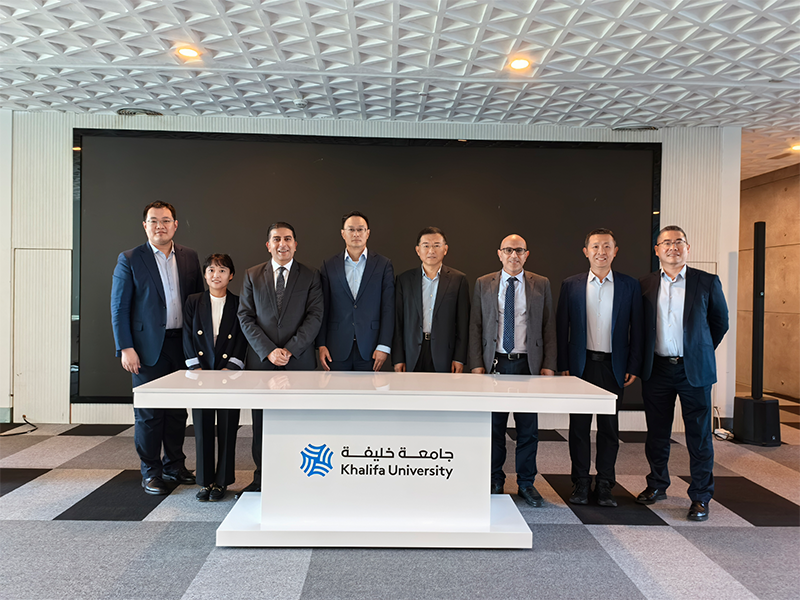
Senior Delegates from the State Grid China Technology College (SGTC) visited Khalifa University

Senior Delegates from the State Grid China Technology College (SGTC) visited Khalifa University on Wednesday, June 5. During this visit, the SGTC delegates discussed the collaboration with the Electrical Engineering (EE) Department and the Advanced Power and Energy Center (APEC).


In this meeting, Dr. Tiejun Zhang, Associate Dean of Graduate Studies, Dr. Hatem Zein eldin, Chair of EE Department and Dr. Mohamed El Moursi, Director of APEC explored the potential research collaboration with focused on Energy Transition towards renewables, as well as developing industrial internship program.


Khalifa University Research Team Joins with Two Other Institutions to be among Shortlisted Finalists for 2024 NASA RASC-AL Competition

Qualifying Space Exploration Project ‘AUTONOMY’ Developed in Collaboration with Clarkson University and The Royal Melbourne Institute of Technology


An Aerospace Engineering student team from Khalifa University in collaboration with Clarkson University, US, and the Royal Melbourne Institute of Technology, Australia, has been shortlisted as one of the finalists in the ‘AI-Powered Self-Replicating Probe’ category, in the 2024 Revolutionary Aerospace Systems Concepts – Academic Linkage (RASC-AL) competition, NASA’s longest running and most prestigious annual student challenge. This marks the first time a team from the Arab region has achieved such a milestone.


Other finalists include teams from universities, such as Stanford, MIT, Virginia Tech, Maryland, and the University of Illinois Urbana-Champaign.


Studying new metal-rich asteroids and testing novel technology crucial for future autonomous space programs is the focus of the ‘Augmented Unmanned Technology Operating in Navigating Objects of Mining Yield’ (AUTONOMY) project, which includes a team of 12 students and four faculty advisors. Led by Ahmed Alhammadi from the Aerospace Engineering program, include Meweal Afeworki, Noora AlAli, Ahmad Al Omari, Bushra Alzadjali, Hessa Alqattan, and Mohammed Al Haddad. Dr. Roberto Sabatini, Professor, and Dr. Alessandro Gardi, Assistant Professor, are faculty advisors.


The finalist team received a US$6,500 stipend to further develop their research. Technical papers and their concepts will be presented at the final round on 9 to 12 June 2024 during the RASC-AL Forum in Cocoa Beach, Florida, to a judging panel of NASA and industry experts. The teams with the top two winning papers will be invited to present their design projects to industry experts at AIAA’s 2024 ASCEND Conference in Las Vegas, Nevada, from 30 July to 1 August.


The AUTONOMY project combines a large satellite with a swarm of autonomous probes to explore and harvest asteroid materials. Equipped with advanced hardware and software, the scouting probes – 38 kg each, with spectrometers, IR imagers, cameras, and 2-meter solar panels – perform surface mapping, shape analysis, and gravitational and magnetic field modeling. 


The harvesting probes, which are expected to mine, refine, and transport resources on asteroids, will use 3D printers for manufacturing, and robotic arms for maintenance. The project aims to launch on 12 December 2029, aboard a SpaceX Falcon Heavy rocket, and will use a gravitational slingshot around Mars to reach the asteroid belt. The process also involves transporting materials from the asteroids back to the mothership, ultimately returning valuable data to Earth. 


Dr. Roberto Sabatini said: “Having taught courses on aerospace systems for many years, I have always been inspired by our students’ dedication to astronautics and space engineering. Last year, when the opportunity to compete in RASC-AL 2024 arose, our students immediately embraced the challenge, collaborating with colleagues from the US and Australia. The team faced numerous challenges throughout the project, which they overcame with exceptional determination and resilience. I am thrilled that our team has been selected as a finalist in such a competitive field.”


The NASA RASC-AL competition, organized by NASA Headquarters and the US National Institute of Aerospace (NIA), challenges collegiate teams to propose novel solutions to real-world space exploration challenges. 


Alisha Roy
Science Writer
11 June 2024