IEEE ICIP 2024 Now Open in Abu Dhabi

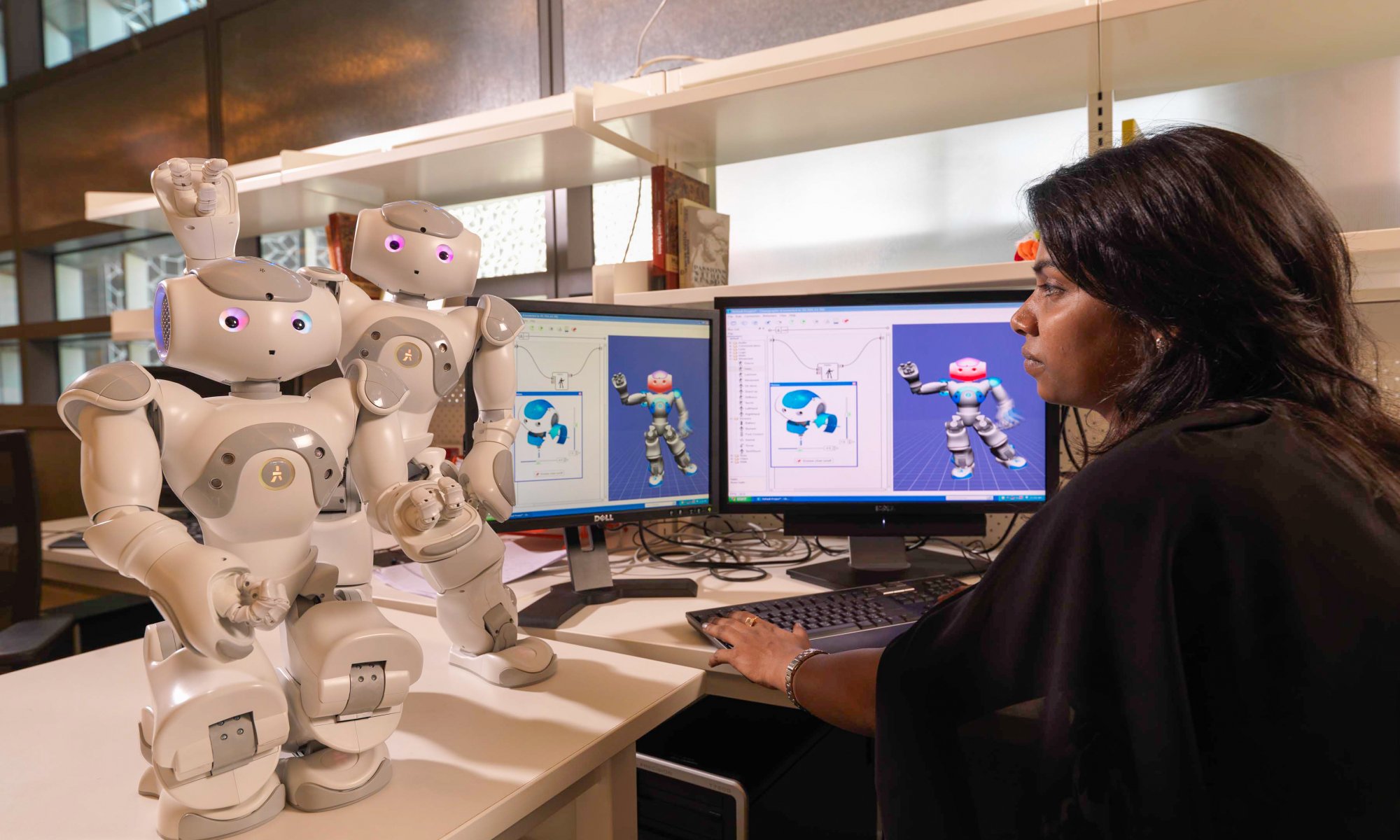
The 2024 IEEE International Conference on Image Processing (ICIP 2024), the flagship conference of the IEEE Signal Processing Society, opened in Abu Dhabi with a theme focusing on ‘Trustworthy Visual Data Processing’.


Khalifa University is one of the Education Partners and some faculty, also on the organizing committee, will lead discussions during the conference that aims to explore trustworthiness from a wide perspective covering various aspects such as fidelity with respect to the original data, reliability, reproducibility, robustness, sampling and explainability.


Alisha Roy
Science Writer
25 Oct 2024

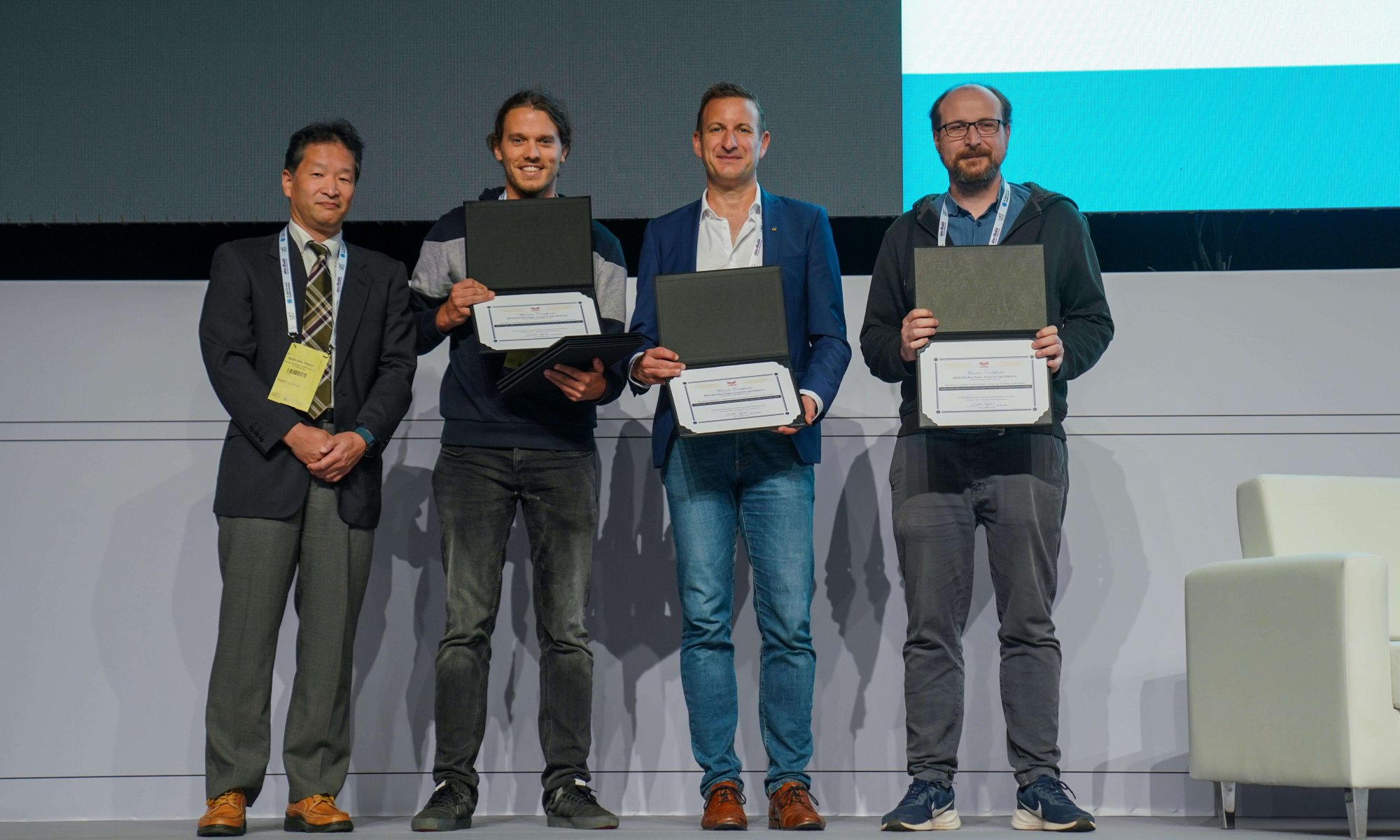
Aerospace Systems Group Wins Two Awards at 43rd Digital Avionics Systems Conference in San Deigo, US

‘Best of Session’ Awards in Space Systems and Digital Flight Rules Reflect Impactful Innovations in Advanced Air Mobility and Spaceflight


Khalifa University’s Intelligent and Autonomous Aerospace Systems Group (FALCON Program) has won two ‘Best of Session’ awards, at the AIAA/IEEE 43rd Digital Avionics Systems Conference (DASC) 2024, held in San Diego, US. The event is one of the most prestigious and longest running international annual gatherings of industry leaders, professionals, and experts in avionics systems for atmospheric and space flight.


The two awards for the Space Systems and Digital Flight Rules sessions highlight the university’s commitment to address key contemporary challenges in Advanced Air Mobility (AAM) and Space Domain Awareness (SDA), areas that are crucial for the future of aviation and spaceflight operations.


The paper at the Space Systems session titled ‘Resident Space Objects Tracking Using Estimation-Based Data Fusion’ addresses the important challenge of orbital congestion due to the increasing number of Resident Space Objects (RSOs). It proposes a Space-Based Space Surveillance (SBSS) system designed to enhance the tracking of RSOs and support the evolution of SDA into an effective Space Traffic Management (STM) framework. This is key to mitigating the risks associated with the Kessler syndrome, a scenario where the density of objects in Low Earth orbit (LEO) is high enough to cause collisions that generate more debris, while ensuring satellite operations remain safe and efficient.


The paper at the Digital Flight Rules sessions on ‘Intelligent Cyber-Physical System for Advanced Air Mobility and UAS Traffic Management’ focuses on integrating conventional Air Traffic Management (ATM) with Unmanned Aircraft Systems Traffic Management (UTM) to ensure the safe and efficient operation of increasingly automated and autonomous flight vehicles. It discusses the integration of ATM, UTM/AAM, and Space Traffic Management (STM) into a cohesive Multi-Domain Traffic Management (MDTM) system, crucial for managing the complexities includes an expansion of both low-altitude and high-altitude operations.


The FALCON program is led by Dr. Roberto Sabatini, Professor of Aerospace Engineering and Vice President of Technical Operations at the IEEE Aerospace and Electronic Systems Society. With several industrial and academic partners across five continents, the FALCON program aims to establish a transdisciplinary research and training center devoted to future aviation and spaceflight systems.


This initiative focuses on highly automated and autonomous flight vehicles, ground-based infrastructure, and decision support systems for the optimal management of airspace, traffic flows, and missions. Key contributors to the DASC 2024 award-winning articles were PhD student Khaja Faisal Hussain, Post-Doctoral Fellows Dr. Nour Eldin Safwat and Dr. Kathirvan Thangavel, and Dr. Alessandro Gardi, Assistant Professor, from the Department of Aerospace Engineering.


Professor Sabatini said: “Our success at DASC 2024 is a testament to the hard work and innovative spirit of our research group. By addressing critical challenges in advanced air mobility and space domain awareness, we are not only contributing to the advancement of aerospace technology but also paving the way for safer, more efficient, and sustainable management of airspace resources. Khalifa University’s innovative work on MDTM systems, coupled with thorough preparation and strong alignment with industry needs, led to these significant recognitions. I am very proud of our team’s achievements and their commitment to excellence in research and innovation.”


Clarence Michael
English Editor Specialist
15 October 2024

Khalifa University Jumps Three Slots to Rank 4th in Arab World and Top in UAE: QS Arab Region Rankings 2025

Khalifa University of Science and Technology today announced it has jumped three slots to be ranked top in the UAE and 4th in the Arab region in the QS Arab Region Universities Ranking 2025, which assessed over 246 institutions across the region. 


With a score of 100 in Papers per Faculty and International Faculty Ratio, Khalifa University also scored 94.4 in Citations per Paper in the QS Arab University Rankings 2025, using 10 key indicators. 


The QS Arab University Rankings assess each academic institution on several metrics, including its reputation amongst academics and employers. The criteria include Academic Reputation, Employer Reputation, Faculty/Student Ratio, Citations per Faculty, International Faculty Ratio, International Student Ratio as well as International Research Network.


Additionally, Khalifa University has moved higher to be ranked within the 201-250 band in the Times Higher Education (THE) World University Rankings 2025. 

With Record Number of Nearly 10,000 Delegates and Visitors, IROS 2024 Successfully Concludes in Abu Dhabi

Event Emphatically Raises Profile of Abu Dhabi as Global Destination for Robotics, Intelligent Systems and Advanced Technology Innovation.


The 36th edition of the IEEE/RSJ International Conference on Intelligent Robots and Systems (IROS 2024) successfully concluded in Abu Dhabi today, with record number of nearly 10,000, visitors, delegates and participants in attendance, emphatically raising the profile of Abu Dhabi as a global destination for robotics and artificial intelligence, as well as for advanced technology innovation. 


Researchers, academics, scientists and regulatory stakeholders inspired guests and visitors with their impactful plenary talks, keynote sessions, and individual poster and oral presentations at IROS 2024 that opened on 14 October at the Abu Dhabi National Exhibition Center (ADNEC). The five-day conference and exhibition also witnessed a host of new technology demonstrations in various challenges and competitions across the fields of applied research in robotics and intelligent systems, captivating the audience for their global appeal and reach.


Dr. Jorge Manual Dias, General Chair, IROS 2024, said: “MENA region’s first-ever IROS 2024 turned out to be a massive success in all areas, including the record number of delegates and visitors, the number of innovations that were presented through research papers, the technology demonstrations at the expo, and the massive interest generated for talent hunting that resulted in robotics experts from across the spectrum gathering for the event. The enthusiasm and the topics of general discussions created by IROS 2024 will linger in our minds for a long time in this region, more specifically for scientific exploration and business collaborations. We thank all the sponsors, especially the government stakeholders who supported us in getting IROS 2024 to Abu Dhabi, as well as all the partners who have made this a grand success.”


On 18 October, the plenary session was delivered by Dr. Magnus Egerstedt, Dean of the Henry Samueli School of Engineering at the University of California, Irvine, US, who focused on ‘From Coordination to Collaboration in Multi-Robot Systems: Lessons from Ecology’, providing insights into deploying multi-robot systems that could lead to new capabilities and skill-sets. 


The Keynote Session on ‘Robotic Competitions’ was moderated by Dr. Lakmal Seneviratne, Director, Center for Robotics and Autonomous Systems, and Professor, Mechanical Engineering, Khalifa University. Speakers included Pedro U. Lima, Full Professor, Institute for Systems and Robotics, Instituto Superior Técnico, University of Lisbon, Portugal, who focused on ‘Robot Competitions in Europe: European Robotics League and EuROBIN Coopetitions’, and Dr. Timothy Chung, General Manager, Autonomy and Robotics, Microsoft, US, who highlighted the salient features of the Defense Advanced Research Projects Agency (DARPA) Challenges. 


Professor Thomas McCarthy, Executive Director ASPIRE, UAE, spoke about ‘Grand Challenges as a Mechanism to Hasten Translation from Lab to Market’, while Dr. Ubbo Visser, President, RoboCup Federation, Director of Graduate Studies & Associate Professor of Computer Science, University of Miami, US, also shared his perspectives. 


There were four forums for the last day of IROS 2024 which included one on ‘Marine Robotics in Ocean Decade Initiative for Sustainable Development’, led by Dr. Giulia De Masi, and Dr. Federico Renda from Khalifa University, along with Dr. Gabriele Ferri, from NATO’s Science and Technology Organization – Centre for Maritime Research and Experimentation (STO-CMRE), LaSpezia, Italy. The forum on ‘Future of Work: AI-Enhanced Robotics and Human Interaction Research in M3S’, led by Dr. Alok Prakash, Singapore MIT-Alliance for Research and Technology’s Mens, Manus, and Machina (SMART – M3S), had seven other speakers.


The forum on ‘Industrial Opportunities in Medical Robotics’, led by Dr. Cesare Stefanini, Dr. Gastone Ciuti from the BioRobotics Institute, Scuola Superiore Sant’Anna, Pisa, Italy, had nine speakers, while the forum on ‘Robots for a Better Tomorrow: Wellbeing Through Advanced Technology’, led by Dr. Paulo Menezes, University of Coimbra, Portugal, and Dr. Filippo Cavallo, University of Florence, Italy, had five speakers. 


In all, more than 500 research papers were presented on the last day, including Pitch Oral Sessions and selected submissions. 


More information at https://iros2024-abudhabi.org/ 

Final Winners Announced for All Award Categories and Robotics Competitions at Largest-Ever IROS 2024

 Sessions Covering ‘AI & Robotics’ Narrow the Gap Between Human Capabilities and Robotic Performance

Final winners were announced for all award categories and the robotics competitions and challenges on the penultimate day as groundbreaking sessions on artificial intelligence, biomechanics, and neuroscience also took center stage at the 36th IEEE/RSJ International Conference on Intelligent Robots and Systems (IROS 2024).


IROS 2024 witnessed today the announcement of winners for challenges including the Earth Rovers Challenge, the IEEE/RAS Quadruped Robot Challenge, the Robotic Construction Challenge, euROBIN Manipulation, Underwater Robotics Challenges, F1 Tenth Autonomous Racing Competition, and the Falcon Monitoring System.  


Winners of the ‘Awards by Sponsors’ were announced in the categories including the IROS Best Paper Award on Cognitive Robotics sponsored by KROS, IROS Best RoboCup Paper Award sponsored by RoboCup Federation, IROS Best Application Paper Award sponsored by ICROS, IROS 2024 Best Conference Student Paper Award, IROS 2024 Best Conference Paper Award.


Among the ‘Awards by Steering Committee’, winners were announced for the IROS Fellow, IROS Harashima Award for Innovative Technologies, IROS Distinguished Service Awards, and IROS Toshio Fukuda Young Professional Award. Reviewer ‘Awards’ were also presented.


The plenary talk exploring the ‘Embodiment of AI and Biomechanics/Neuroscience,’ by Professor Yoshihiko Nakamura, Chair of Robotics Department, Mohamed Bin Zayed University of Artificial Intelligence, generated significant interest and discussion among participants on new avenues of research, promising robots with enhanced human-like capabilities.

Beyond the central theme of AI and Robotics, the fourth day of IROS 2024 showcased a wealth of innovation across the robotics and technology field. Six keynote addresses featured a broad spectrum of topics including ‘Frugal AI’, delivered by Professor Barbara Caputo, Politecnico Di Torino, Italy, while ‘TelecomGPT’ was presented by Professor Merouane Debbah, Khalifa University. The ‘Future of generalist robots’ by Dr. He Wang, Peking University, ‘Soft robot control’ by Dr. Jianwei Zhang, University of Hamburg, Germany, and ‘Crossmodal Learning’ by Professor Eric Xing, President, Mohamed bin Zayed University of Artificial Intelligence (MBZUAI), showcased the breadth of current research and innovation. 


A series of specialized forums exploring critical issues at the forefront of robotics including ‘Sustainable Medical and Surgical Robotics’ on creating environmentally conscious and accessible medical robots, while ‘Empowering Diverse Voices in Robotics’ fostered discussions on inclusivity and representation within the field. A forward-looking forum on ‘Human-Avatar Symbiosis,’ examined the potential societal impact of remotely controlling multiple avatars. The ‘Moonshot R&D Program Goal 3: Envisioning a Future of Human-Robot Co-Living’ explored the transformative potential of robotics to reshape human lives and living environments, highlighted the broad scope of robotics research and its implications for the future.


Over 80 workshops further enriched the conference and knowledge sharing among experts in legged robot systems, healthcare robotics, human-robot interaction, and numerous other specialized areas. The day’s program encompassed a wide array of specializations, including robot vision, deep learning, robot motion planning, navigation, simultaneous localization and mapping, multi-robot systems and swarms, and aerial systems. Reflecting the diverse and rapidly evolving nature of the field were workshops on marine robotics, multifingered hands, soft sensors and actuators, aerial systems mechanics and control, surgical robotics, imitation learning, and flexible robots.


More information at https://iros2024-abudhabi.org/

Khalifa University Showcasing 23 Innovative Robotics and AI Solutions at IROS 2024 

Pioneering Advancements in Drone Technology, and Marine Robotics, Automation to Enhance Efficiency Across Industries 


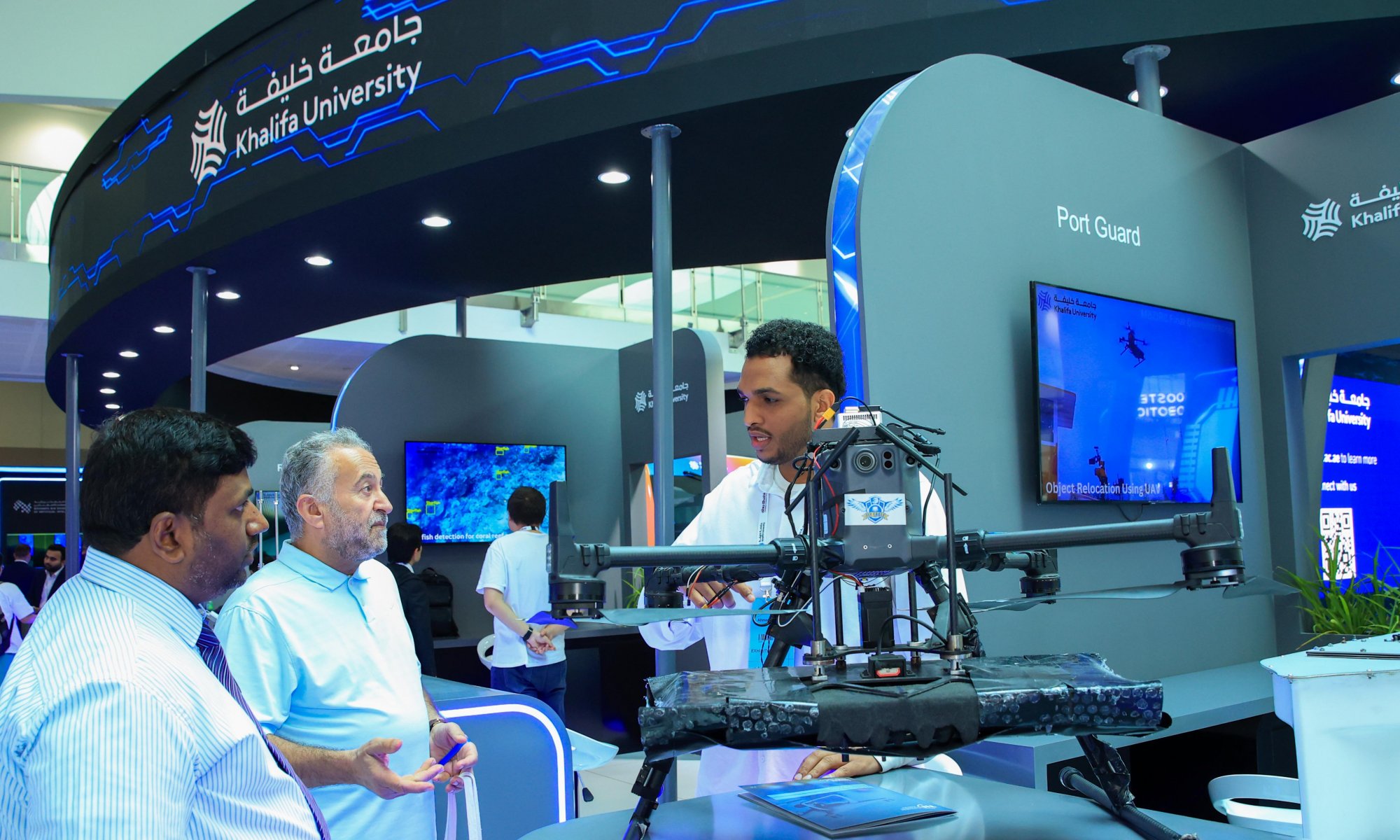
Khalifa University of Science and Technology today announced it is showcasing 23 innovative robotics and AI solutions as well as drone technology, during the 36th edition of the International Conference on Intelligent Robots and Systems (IROS 2024), validating its status as an academic institution that remains proactive in advancing automation and technology. 


With its theme ‘Robotics for Sustainable Development’, the event marks the Middle East and Africa (MENA) region’s first-ever IROS 2024 to be held in Abu Dhabi. The Khalifa University stand at the Abu Dhabi National Exhibition Center (ADNEC) is displaying projects encompassing all areas of robotics and AI solutions for sustainable development in the marine sector, as well as industries such as Space, Telecom, Computing, Transportation, Agriculture and wildlife conservation.  


The projects include ‘TomFormer’ for real-time disease detection in tomato leaves, ‘UTM: Unmanned Traffic Management’, ‘Lunar Rover’ for lunar exploration, Exoskeleton wearable robot for enhancing human capabilities, ‘Smart Trash Bin’ using computer vision for efficient waste separation, ‘Ocean Monitoring and Cleaning’ for sustainable marine ecosystems, ‘Autonomous Port Inspection’ for maritime security, ‘Houbara Robot’ for behavioral studies of the Houbara bird in its natural habitat, ‘Coral Reef Inspection’, ‘Autonomous Driving Platform’, and various drone projects including firefighting drones and UAV swarms for inspection and tracking.  


Also featured at the Khalifa University stand are the Droneleaf project which focuses on monitoring and analyzing agricultural field, ‘Spider Robot’ for various applications in climbing different terrains, ‘Soft Robotics at KU’ feature flexible and adaptable applications of technology, a ‘Heterogeneous Swarm of Underwater Autonomous Vehicles’ for underwater tasks, ‘Quadrotor Control Projects’ enhancing quadrotor flight control, ‘Satellite Control Levitation Setup’ demonstrates satellite control mechanisms, as well as the project on ‘Design and Performance Evaluation of a Marine-Compliant Gripper’ for handling uneven large objects in marine environments. 


‘Autonomous Underwater Robotic System for Aquaculture’, ‘Autonomous Driving Platform’ for developing and testing autonomous technologies, ‘Robotic Manipulator’ for precise manipulation tasks and projects focused on innovative maritime solutions are part of the Maritime Grand Challenge. 

Building Smart, Sustainable Cities: Pioneering Role In Ai-driven Development With Robots

Features the world shifts towards a future where sustainability and technological innovation go hand in hand, smart cities are emerging as a key solution to address growing urban challenges. In the heart of this transformation, the UAE is taking the lead by embracing advanced technologies such as artificial intelligence (AI), machine learning (ML) and robotics to build cities that are not only intelligent but also sustainable.


At the forefront of this endeavour is Khalifa University of Science and Technology, a leading research-intensive and innovation-oriented higher education institution in the UAE, which is spearheading groundbreaking research in AI, ML, and Robotics. The university remains instrumental in realizing the vision of smart, sustainable cities-cities that harness technology to improve the quality of life for citizens while minimizing environmental impact. The forefront of these efforts, with researchers developing AI-driven robotic systems that can predict and act, solving issues in real time. For example, AI algorithms are being used to analyse pedestrian patterns and optimize transportation systems, reducing congestion and lowering vehicle emissions.


Abu Dhabi is hosting the 36th edition of IEEE/ RSJ International Conference on Intelligent Robots and Systems (IROS 2024), one of the world’s most prestigious conferences in the field of robotics and AI. This event is coming to the Middle East and North Africa (MENA) region for the first time. Organized by Khalifa University, it will provide a global platform for researchers, industry leaders, and policymakers to explore the latest innovations in smart city technologies.


A key focus of IROS 2024 will be the role of AI and robotics in creating sustainable environments. Through workshops, keynote speeches, and panel discussions, the conference will highlight how AI-driven technologies can address critical challenges such as climate change, resource management, and safety in cities around the world.


IROS 2024 will also showcase cutting-edge research, offering insights into how AI and robotics are being applied to improve urban mobility, mobility efficiency, and environmental sustainability. The conference will not only foster collaboration among global experts but also provide a platform for sharing best practices in smart city development.


As the General Chair of IROS 2024, I am excited to highlight how this global event, hosted by Khalifa University, will showcase the critical role of AI and robotics in driving this smart city revolution.


Khalifa University plays a critical role in advancing smart city technologies in the UAE. Through its cutting-edge research and partnerships with government and industry, the university is helping to transform the UAE’s urban landscape into a model for future cities. Its projects align with the UAE Strategy for Artificial Intelligence, which aims to position the country as a global leader in artificial intelligence by 2031.


Researchers at Khalifa University are developing autonomous systems that can enhance urban transportation by integrating AI into vehicle management and vehicle control systems. By enabling vehicles to communicate with each other and interact with city infrastructure, AI-powered smart mobility systems can reduce traffic congestion, improve road safety, and lower carbon emissions. These systems use real-time data to monitor energy use and automatically adjust heating, cooling, and lighting to reduce waste. This not only lowers energy costs but also contributes to the UAE’s broader sustainability goals.


Moreover, Khalifa University’s work in AI-powered public safety systems is helping to create safer urban environments. These systems use AI and ML to analyze data from surveillance cameras and other sensors, enabling authorities to respond quickly to potential threats or emergencies. By enhancing the efficiency of public safety operations, AI technologies are helping to build cities that are not only smarter but also safer for their citizens.


AI and Robotics technologies are also being used to promote green mobility. Autonomous vehicles and AI-driven traffic management systems help reduce congestion and emissions, making urban transportation more sustainable. By integrating AI and Robotics into every aspect of city development and management, the UAE is building cities that are not only intelligent but also environmentally responsible.


As the UAE continues its journey toward becoming a global leader in AI, Robotics and smart city technologies, Khalifa University’s contributions are proving to be invaluable. Through its research, partnerships, and leadership in events like IROS 2024, the university is driving innovation that will shape the cities of the future-cities that are smarter, safer, and more sustainable. As the world looks to the future, the IROS 2024 in Abu Dhabi will lead the way of turning the vision of smart, sustainable cities into a reality.


Source: Integrator Media

IROS 2024, MENA Region’s First-Ever Major Global Conference and Exhibition on Robotics and AI, Officially Opens in Abu Dhabi 

Plenary and Keynote Speakers Highlight ‘Human-Robot Collaboration’ and ‘Speeding up Flying Machines’ 


The 36th edition of the IEEE/RSJ International Conference on Intelligent Robots and Systems (IROS) officially opened in Abu Dhabi today, emphatically illustrating the advanced state of research and innovation in the UAE and the Middle East and North Africa (MENA) region. 


Hosted by Khalifa University of Science and Technology and supported by various local and international stakeholders, IROS 2024 will run until 18 October at the Abu Dhabi national Exhibition Center (ADNEC).  


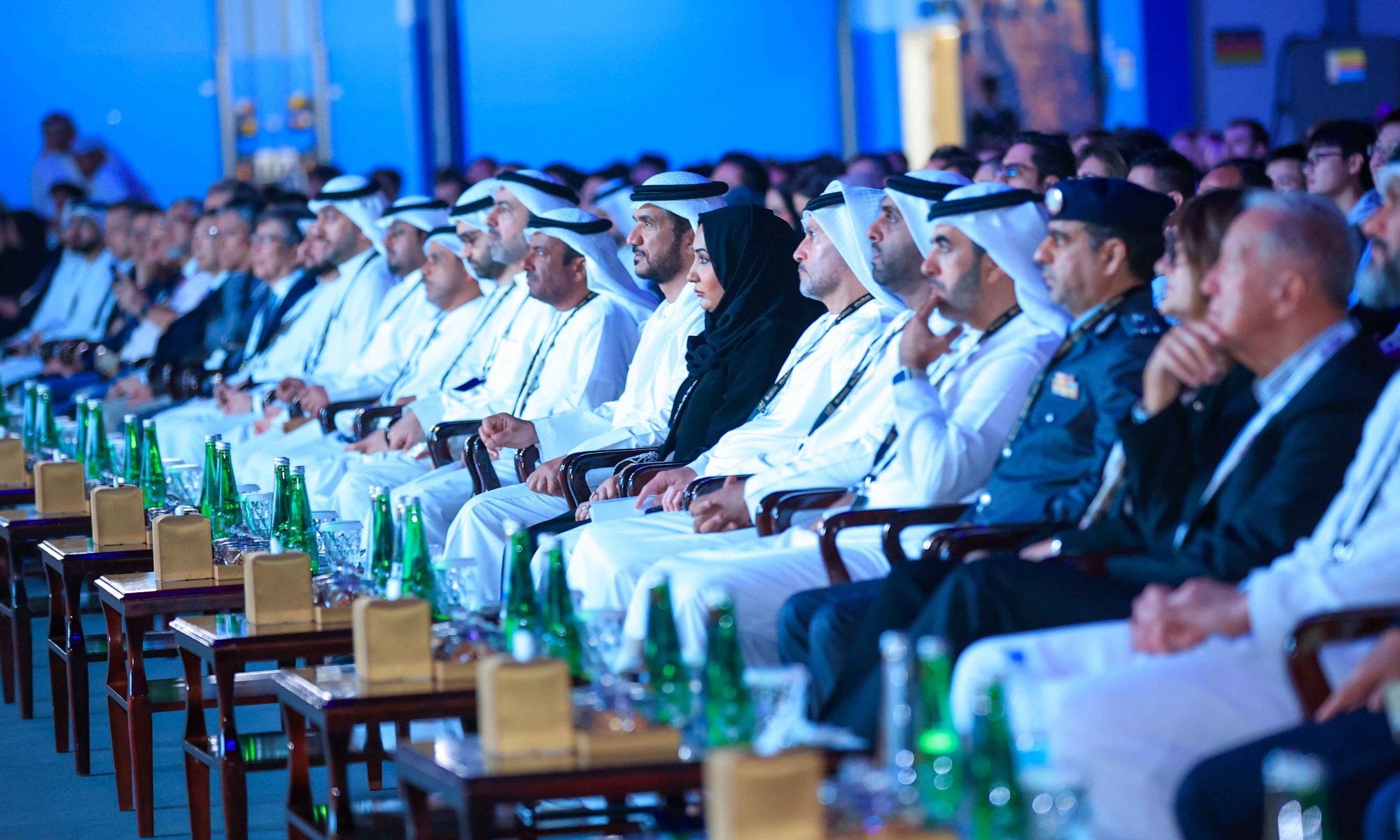
Among the officials who visited the event and toured the exhibition include Her Excellency Dr. Amna bint Abdullah Al Dhahak, Minister of Climate Change and Environment, His Excellency Engineer Awaidha Murshed Ali Al Marar, Chairman, Abu Dhabi Department of Energy, H.E. Dr. Hamad Al Yahyai, Advisor to the Minister of Education and Director General of the Mohammed bin Rashid Smart Learning Program at the Ministry of Education, H.E. Dr. Shaikha Salem Al Dhaheri, Secretary General of the Environment Agency – Abu Dhabi (EAD), H.E. Abdulla Ghurair Al Qubaisi as Director General of International Fund for Houbara Conservation, H.E. Dr. Salem Khalfan Al Kaabi, Director General of Operational Affairs, H.E. Engineer Mohamed Al Hammadi, Managing Director and Chief Executive Officer of the Emirates Nuclear Energy Corporation, H.E. Mohamed Alqadi, Director General of Strategic Affairs, H.E. Major General Dr. Rashid Mohammed Ahmed Al Marri, Director General of the General Directorate of Residency and Foreigners Affairs (GDRFA), H.E. Dr. Abdulwahab Abdulaziz Al Anzi, associated with the GCC Emergency Management Center, and H.E Ali Rashid Al Neyadi, Director General of the National Emergency Crisis and Disaster Management Authority (NCEMA). 


Others included Nasser Obaid Al Nasseri, CEO of Barakah One Company, Rashed Humaid Al Qubaisi, Chief Executive Officer, Abu Dhabi Media, and Salem Mohammed Hamad Salem Al Darei, CEO of Abu Dhabi Global Market Authority.  


The event has gathered more than 4,000 delegates and participants who will engage in knowledge exchange in addition to sharing of expertise and networking. An elite club of plenary and keynote speakers offered their perspectives on the increasing role of robotics that spans industries and economic segments. 


In their welcome address, Dr. Jorge Dias, General Chair, IROS 2024, and Dr. Arif Sultan Al Hammadi, General Co-Chair, spoke about how Abu Dhabi has evolved over the years into a modern technology-driven metropolis, utilizing innovations to preserve its culture, heritage and natural resources, while attracting global talent and expertise to establish itself as a destination for academics, research, and scientific exploration.  


Dr. Dias said: “I stand here as the General Chair of this special edition of IROS, the first in the MENA region, and gathered here are the brightest minds from around the world, drawn to Abu Dhabi, the land of opportunities. Known for being the safest city globally, Abu Dhabi is rapidly growing and integrating nature with technology. In fact, ‘Robotics for Sustainable Development,’ the theme for IROS 2024, reflects this harmony.” 


Dr. Al Hammadi said: “Technology advancements deeply intertwine with heritage  influencing daily life for people and the environment alike in Abu Dhabi and the UAE. The country has not forgotten its roots just because today’s life offers advanced technology amenities. For example, our scientists have developed a houbara robotic bird for conservation efforts, combining tradition with cutting-edge technology. These decoys gather crucial data without disturbing nature, helping researchers learn more about this special bird.” 


The plenary session was delivered by Professor Oussama Khatib, Stanford University, United States, who offered his insights on ‘Human-Robot Collaboration: Extreme Environments, Health Care, and the Workplace’. 


In their keynotes on ‘Speeding up Flying Machines’, moderated by Dr. Yahya Zweiri, Professor, Director, Aerospace Research and Innovation (ARIC), Khalifa University, Professor Davide Scaramuzza, University of Zurich, Switzerland, covered ‘Drone Racing: from a Game to Real World Impact’, while Professor Guido De Croon, TU Delft, Netherlands, focused on ‘Neuromorphic AI for bio-inspired, agile flight’. 


Dr. Giuseppe Loianno, Professor, New York University, US, highlighted ‘Enhancing Aerial Autonomy through Agility and Collaboration’, while Dr. Mirko Kovac, Professor, École Polytechnique Fédérale de Lausanne (EPFL)-Empa campus, Imperial College London-Switzerland, shared his perspectives on ‘Drones for Environmental Health’. Professor Naira Hovakimyan, University of Illinois Urbana-Champaign (UIUC), US, spoke about ‘Safe Learning in Autonomous Systems’. 


Practice sessions also started during the day for Robotic Construction Challenge, and Underwater Robotics Challenges, as well as for AI Olympics With RealAIGym, The Earth Rovers Challenge, Automatic Data Annotation Challenge, and Falcon Monitoring System. At the same time, practice sessions continued for euROBIN Manipulation, F1 Tenth Autonomous Racing Competition, and IEEE/RAS Quadruped Robot Challenge (QRC).  


There were 16 workshops, the forum on ‘Robotics and AI for a Sustainable World’, and nearly 300 paper and poster presentations during the day, highlighting the diverse nature of robotics, its role in different areas and innovations that will be coming to transform the way humans interact with the machines. 

Falcon monitoring challenge unites tech, conservation

IROS 2024 fosters collab between AI innovators and wildlife experts to protect species


In recent years, the field of wildlife conservation has seen advancements driven by technology and artificial intelligence. From drone surveillance to camera traps and data management tools, these innovations are transforming how we monitor and protect endangered species while prioritising non-invasive methods.


In the wild, these advanced techniques must effectively rub shoulders with traditional practices and the people who implement them, ensuring we respect natural habitats.


It is crucial that we recognise this synergy, as a significant gap remains between tech innovators and traditional conservationists — one that the Falcon Monitoring Challenge in the 36th edition of the IEEE/RSJ International Conference on Intelligent Robots and Systems (IROS 2024), in Abu Dhabi — has the potential to bridge.


Traditional conservationists possess invaluable knowledge about
ecosystems, species behaviour, and the intricacies of habitat management and their experience is essential for developing effective preservation strategies. Yet, they often operate within constraints, relying on methods that can be outdated or invasive. On the other hand, innovators possess the tools to gather and analyse data, often lacking the ecological context and understanding of wildlife needs.


Falcon Monitoring Challenge The Falcon Monitoring Challenge, part of IROS 2024 being held from 14-18 October 2024 at the Abu Dhabi National Exhibition Centre (ADNEC), presents a unique opportunity to foster collaboration. By bringing together robotics experts, computer vision specialists, and seasoned conservationists, the challenge encourages a dialogue that can lead to innovative solutions tailored to the needs of wildlife conservation in the UAE and the world.


Participants at the Challenge will design, develop, and deploy sophisticated non-invasive systems to track the movement of falcons, within a large enclosure, promoting innovation in wildlife monitoring technology. The challenge will take place in a purpose-built arena in Abu Dhabi during IROS 2024 where the full challenge includes prototyping the solution with hardware and custom software.


Participants can also take part in a partial challenge where teams or individuals propose custom software using cameras to monitor falcons in realistic and dynamic environments, focusing on precision, innovation, and the ability to analyse complex behaviours.


Leverage cutting-edge technology
The challenge could result in robots designed to track falcons in real-time, which can help wildlife biologists understand the bird’s hunting patterns and social dynamics. Such a partnership can yield technologies that are not only advanced but aligned with the ecological realities that conservationists face every day.


A prime example of this progress can be seen at Khalifa University, which has made significant contributions to wildlife conservation through its innovative research and interdisciplinary approach. Faculty members are actively engaged in projects that leverage cutting-edge technology to monitor ecosystems and protect the houbara species.


By collaborating with the International Fund for Houbara Conservation (IFHC), Khalifa University focuses on scientific research and training including robotics, intelligent systems, genetics and genomics in breeding projects, implementing practical solutions to conservation challenges.


Khalifa University’s commitment to world-class learning and research fosters a new generation of conservationists, equipped with the skills necessary to address the complexities of wildlife preservation in a rapidly changing world.

By allowing tech developers to gain insights into the on-ground challenges faced by conservationists, the challenge also serves as a platform for shared learning through several workshops, seminars, exhibitions and conferences at IROS 2024.


When conservationists are actively involved in the design and
implementation of technological tools, they are more likely to advocate for their use and ensure that these innovations are employed ethically and responsibly.


As we face unprecedented biodiversity loss, we must harness the strengths of innovation and traditional methods to create a comprehensive approach to wildlife preservation. The Falcon Monitoring Challenge at IROS 2024 represents a critical step in this direction, and it is imperative we unite these two vital forces for conservation.


Dr. Hamad Karki is the Competitions Local Chair at IROS 2024
Competitions Technical Committee and Associate Professor at the
Department of Mechanical and Nuclear Engineering, Khalifa University.


Source: Gulf News

KUCARS set to showcase rich portfolio of research projects at IROS 2024

The Khalifa University Centre for Robotics and Autonomous Systems (KUCARS) is set to showcase its rich portfolio of research projects in the field of robotics at the IEEE/RSJ International Conference on Intelligent Robots and Systems (IROS 2024).


The event is expected to further cement the UAE’s position as a global hub for research and innovation in robotics and Al, said Prof. Lakmal Seneviratne, the founding Director of KUCARS at Khalifa University, in an exclusive interview with Aletihad.


Advancing National Goals

Prof. Seneviratne shared insights into the university’s pivotal role in this transformative field and its alignment with the UAE’s broader goals.


“Robotics and Al play a prominent role in the UAE’s national vision for innovation and technological advancement,” he said. Prof. Seneviratne added that KUCARS is one of the top robotics research centres in the region with a vibrant community of 80+ multi-disciplinary researchers, state-of-the-art labs, and an established international reputation, “as evidenced by the award to host IROS 2024”.


He noted that KUCARS’s contributions to research, innovation and education uniquely position it to play a crucial role in advancing the UAE’s vision of becoming a technology hub for robotics and AI.


A First in the Middle East

Hosted for the first time in the Middle East by Khalifa University of Science and Technology (Khalifa University), the 36th edition of IROS runs from October 14 to 18, at ADNEC Centre Abu Dhabi. The event not only marks a significant achievement for Khalifa University but also a defining moment for the UAE’s research community.


Prof. Seneviratne said: “IROS has been in operation for 35 years now and this will be the first time IROS will be held in the Middle East and outside Europe, North America and the far east. This is a great achievement for KU and the UAE, and testament to the strong international reputation in robotics at KUCARS.”


Sustainability Focus

Sustainability is a key focus area for KUCARS. Prof. Seneviratne noted that IROS 2024 will delve into how robotics and Al can be leveraged to further the UN’s 17 sustainable development goals (SDGs). KUCARS is currently leading research projects related to robotics and SDGs in areas of food security, smart cities, manufacturing, conservation, ocean monitoring and education, he added.


Innovative Al Applications

According to Prof. Seneviratne, IROS 2024 will also showcase how AI is revolutionizing various industries and everyday life, from autonomous vehicles and UAV taxis in transport to robotic surgeons and telemedicine solutions in healthcare, factory automation in manufacturing, home robots for domestic chores, marine robots for underwater exploration, Agri robotics, robotics for smart cities, space rovers, conservation robotics, and climate change mitigation robotics.


“Robotics and Al is the engine of the 4th industrial revolution now underway. These technologies will transform the way we live and work. They will have a wide range of impacts in all spheres of life,” said Prof. Seneviratne.


Under the theme “Robotics for Sustainable Development”, IROS 2024 will gather researchers, academics, leading corporate majors, and industry professionals from around the globe. The event provides a platform for the international robotics community to exchange knowledge and ideas about the latest advances in intelligent robots and smart machines.


Source: Aletihad News Center

Mubadala Investment Company, EGA, Strata and Khalifa University partner to develop UAE’s first national high temperature materials laboratory and research programme 

Mubadala Investment Company and Emirates Global Aluminium, the largest industrial company in the United Arab Emirates (UAE) outside oil and gas, Strata Manufacturing Company and Khalifa University of Science and Technology, a leading research-intensive higher education institution signed an agreement to develop the UAE’s first-of-its-kind national laboratory and research programme including high temperature materials.


This state-of-the-art facility will be located at Khalifa University’s Main Campus in Abu Dhabi and is expected to significantly expand high temperature materials research in the UAE both for practical applications in industry and academic study. Currently, research in high temperature materials for institutions and the industries in the UAE can only be conducted abroad.


The goal is to build long-term strategic partnerships where academia and industry are proactively engaged and committed to success in collaborative and multidisciplinary advanced R&D efforts. EGA expects to use the laboratory and programme for practical research into refractories, carbon-based materials, anode baking furnaces, and waste.


EGA’s research is expected to focus on capturing and recovering heat energy generated from the company’s industrial processes, improving energy efficiency and reducing greenhouse gas emissions. In aluminium smelting, approximately half of all energy is lost as waste heat.  Abdulnasser Bin Kalban, Chief Executive Officer of Emirates Global Aluminium, said: “At EGA, one of our core values is to continuously improve our business and operations through innovation. This new state-of-the-art laboratory and research programme will strengthen the UAE’s position as a leader in industrial technology development and drive forward the country’s Operation 300bn industrial growth strategy. For EGA, it means we can conduct even more of our practical research here in the UAE, solving challenges locally and contributing to the UAE’s research capabilities. I look forward to some ground-breaking results from this collaboration.”


His Excellency Prof. Ebrahim Al Hajri, President, Khalifa University, said: “We are glad to see the enduring and fruitful relationship with Emirates Global Aluminium, Mubadala Investment Company, and Strata. Manufacturing remains cemented through the development of capability and capacity at Khalifa University. The trust of the industry in Khalifa University to provide localized solutions and adapt to their unique industrial challenges is a testament to the advanced and applied research competencies that the university offers. This achievement is a result of over a decade of collaboration with our industrial partners, which has enabled us to build capacity and gain a deeper understanding of industrial needs. Today, we are cementing that trust and confidence from the industry by localizing research, development, and innovation in the UAE. We look forward to seeing industries across the region and globally follow suit as we continue to provide tailored solutions and adapt to industry trends.”


Mubadala Investment Company is committed to launching advanced R&D programs aimed at developing capabilities in areas critical to Mubadala and of national priority. Priority will be given to applied research and providing solutions in areas of critical technical need. Additionally, we it aims to develop capable UAE scientists, technologists, and innovators for careers in R&D. 


EGA is committed to reaching net zero by 2050 in line with the UAE’s Net Zero by 2050 Strategic Initiative, and has a roadmap to decarbonise its operations.


EGA has worked for more than a decade with other industries in the UAE to find productive uses for by-products from aluminium production. EGA has already developed re-uses for many waste streams from its industrial activities, including bauxite residue, spent pot lining, carbon dust and dross.


EGA’s technology and development team works extensively with universities in both the UAE and internationally, with academic partnerships that include Khalifa University, the American University of Sharjah, Rochester Institute of Technology, Abu Dhabi University and American University in Dubai in the UAE, as well as the University of Auckland, University of New South Wales, and MIT. 

36th Edition of IROS to Open Tomorrow in Abu Dhabi 

MENA Region’s First-Ever Conference and Exhibition on Robotics Technology Attracts Several Thousand Scientists, Researchers, Industry Leaders and Government Stakeholders 


Khalifa University of Science and Technology announced the 36th edition of the IEEE/RSJ International Conference on Intelligent Robots and Systems (IROS 2024), Middle East and North Africa (MENA) region’s first-ever global conference, is opening in Abu Dhabi tomorrow, to highlight the rapidly advancing capabilities in the robotics and intelligent transport systems in the region. 


Supported by the Abu Dhabi Convention and Exhibition Bureau and others, IROS 2024, which is running from 14-18 October 2024 at the Abu Dhabi National Exhibition Center (ADNEC), has gathered several thousand researchers, academics, leading corporate majors, and industry professionals from across the globe. One of the largest and most important robotics research conferences in the world, IROS 2024 is themed ‘Robotics for Sustainable Development’ and provides a platform for the international robotics community to exchange knowledge and ideas about the latest advances in intelligent robots and smart machines. Four plenary and more than 20 keynote speakers will focus on various robotics fields. 


Several oral and poster presentations will exemplify the latest trends in the evolving robotics technology fields as leading researchers and industry experts present a total of 3,753 papers, representing 60 countries, of which more than 1,000 papers are from China, 777 from the US, 302 from Germany, 253 from Japan, and the UK and South Korea with 173 each. With a total of 68 papers, the UAE remains top in the Arab region. A total of 13 forums, along with eight global-level competitions and challenges covering various aspects of robotics and AI, an IROS Expo, as well as an exclusive Career Fair will also be part of IROS 2024. 


The next generation of sustainable robotics will be the focus of the conference and exhibition. A major component of the conference will be the exhibits of the latest robotics technologies and products, while poster sessions, keynotes, panel discussions, and networking events are also lined up for the major international conference. 


The event is sponsored by IEEE Robotics and Automation Society, the Robotics Society of Japan (RSJ), the Society of Instrument and Control Engineers (SICE), the New Technology Foundation, and the IEEE Industrial Electronics Society (IES). 


The Technology Innovation Institute (TII) of Abu Dhabi is a strategic sponsor for IROS 2024 while Astribot, and Dubai Electricity and Water Authority (DEWA) are Platinum sponsors. The Dubai Future Foundation and the Mohamed bin Zayed University of Artificial Intelligence are gold sponsors, while NOKOV Motion Capture Company and Emirates Nuclear Energy Corporation (ENEC) are silver sponsors. The Beijing Institute of Technology is the University partner. DEEP Robotics and ITT Project Management Services will join the 12 startups that will showcase their robotics innovations. 


More information at https://iros2024-abudhabi.org/