
New technique to use light to give early warning of illnesses

Sunlight provides Earth with a continuous stream of energy that sustains life in this planet. It lets us see, too. Not only can we see whether the fruit on a tree is an apple or an orange, the characteristics of light allows us to tell how old a star is, to probe proteins in the brain, and even detect single atoms.

At the Masdar Institute, we are taking advantage of these properties to design advanced light-sensing circuits that will help colleagues researching biofuels, solar cells, lightweight aircraft materials and more efficient desalination plants.

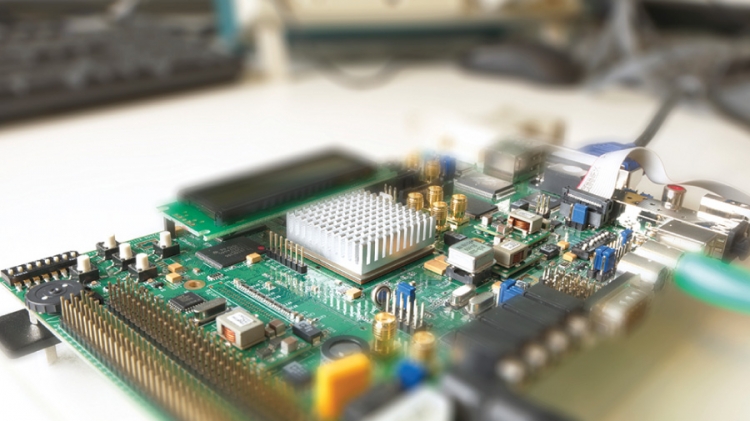
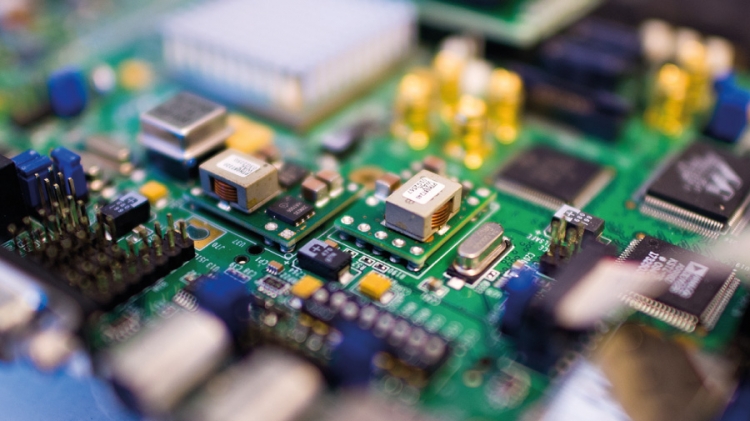
On one project, we are designing miniaturised chips that include lasers, optical sensing heads, micro-pumps and micro-channels, together with electronic control circuitry that can monitor glucose levels in diabetics, and diagnose asthma or even risk of severe heart failure. These chips will be made and tested at Masdar Institute, using cleanroom techniques similar to those used in making any other microchip.

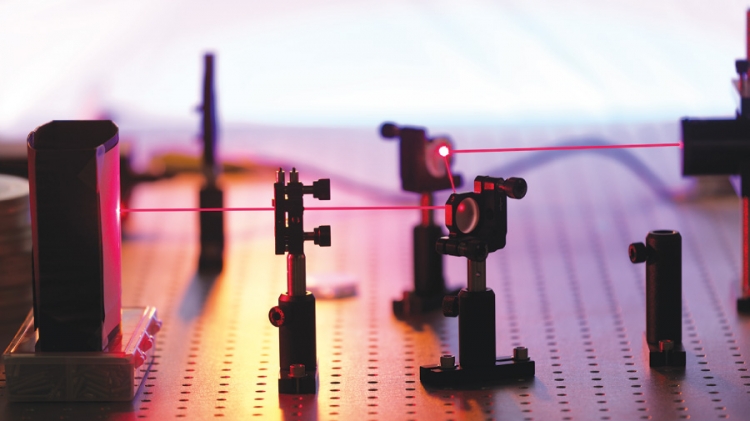
We are looking at the “chemical fingerprints” left by some of these conditions – in exhaled breath, for example. These chemical compounds absorb light of specific frequencies – particularly at the two extremes of the visible spectrum, ultraviolet and infrared. Like a fingerprint, this absorption is unique, allowing us to distinguish the exact compound present.

Our project aims to design, build and test a compact and portable system that can spot the unique signatures of various gases. Such a device would have many uses. It could be used by doctors to test for diseases by checking for the presence of telltale chemicals in the breath of sufferers of diseases like lung fibrosis disorders, heart failure, asthma and diabetes.

It could also be used to monitor air quality for environmental threats to workers, like toxic industrial chemicals. Risk exposure is a serious concern in many industries, from manufacturing, to mining, oil and gas, and laboratory work.

Currently, environmental monitoring is done with devices specific to a single chemical, such as dosimeter badges for ionic radiation and personal pump-and-particle-entrapment monitors for asbestos. There is no wearable device that can monitor and measure a range of chemicals, and provide that data live to the user.

The best devices currently available – mass spectroscopy detectors – are bulky and expensive, limiting their use to only a few research labs. A portable and highly integrated optical and microelectronic system would be useful in a wide range of situations. The technology can also be deployed remotely, at site, to monitor for pollutants in the air, earth or water. This would help provide far more accurate and current data on how activities like quarrying, mining or water desalination were affecting the area around them.

The device will be sensitive enough to monitor for man-made nanoparticles, new forms of materials like metals and semiconductor particles, whose environmental effect is unknown.

Having access to this kind of data will help provide a clearer picture of the cause and effect of our actions, thus allowing for appropriate mitigation and correction.

Last but not least, having an advanced system for detecting trace contaminants will give us a better picture of the environmental effect of Abu Dhabi’s increasingly diverse industry.

The creation of such a device – and the technology it requires – could thus not only help the UAE better monitor the health and welfare of its people and environment, but also provide a useful new product to the global market, thus contributing to the country’s knowledge economy exports and intellectual property.

Dr. Jaime Viegas is an assistant professor of microsystems engineering at the Masdar Institute of Science and Technology.

Fishy waste to sow salty fields

As the world’s population increases, so does its demand for fish. 

And as overfishing of the oceans has hit global fish stocks, that demand is increasingly being met by aquaculture. The fastest-growing animal food producing sector, aquaculture already accounts for almost half the world’s fish consumption.

While this “blue revolution” has the potential to limit the pressure on stocks of wild fish, while providing protein for the growing population, aquaculture still poses environmental challenges.

Many aquaculture operations discharge wastewater containing fish wastes and uneaten fish feed. High in nutrients, this wastewater can cause a rapid growth in the population of algae, some toxic. And when the algae die, their decomposition uses substantial amounts of the oxygen in the water, which may cause many other organisms to die.

For freshwater fish, such as trout or catfish, a convenient solution is to use the wastewater to irrigate crops such as corn or soybeans. But with marine fish or shrimp, which are grown with seawater, the effluent is salty, and unsuitable for irrigation.

There are, however, some plants, known as halophytes, that can grow in very saline conditions.  Common halophytes that most of us are familiar with are mangroves. 

If halophytes could be domesticated into useful crops – oilseeds (similar to soybeans), forage for livestock feed (similar to alfalfa), or even vegetables – perhaps that salty, nutrient-rich wastewater could be an excellent source of irrigation water for them.

Here in Abu Dhabi, the Masdar Institute of Science and Technology is beginning a five-year project to examine the feasibility of doing exactly that.

Its Integrated Seawater Energy and Agriculture System project is the flagship of its Sustainable Bioenergy Research Consortium (SBRC), a partnership between the institute, the government of Abu Dhabi, Boeing, Etihad Airways, UOP/Honeywell and Safran. One of the project’s goals is to get energy from the halophyte plant material and oil.

The plan is for fish or shrimp to be grown in ponds using seawater pumped from the Arabian Gulf.  The wastewater from these ponds will be used to irrigate fields of halophytes selected for their potential yields.

Nutrients from the wastewater will act as fertiliser for the halophytes – which will effectively filter out those nutrients.

At the same time, the halophytes will produce a useful product, such as an oilseed to be turned into biofuel, and a woody biomass that can be further processed into fuel or other products, and fodder.

Water draining from these halophyte fields will eventually drain into managed mangrove forests – including some areas where there are currently no mangroves. The mangroves will remove any further nutrients from the wastewater.

Additionally, the mangroves will serve another important environmental purpose, as nursery areas for coastal fish and a habitat for birds.

All this should use very little precious freshwater, as it will rely on seawater, without degrading arable land that could be used to grow conventional crops.

The salty land it will use would not support conventional crops – so the project will in effect turn previously commercially useless land into a useful, biologically active area. And it should all be sustainable in its energy use and greenhouse gas emissions.

With the potential to produce fish and sustainable energy with limited waste, this technology could hold great promise for coastal desert areas.

Dr J Jed Brown is the director of the Masdar Institute’s Integrated Seawater Energy and Agriculture System project.
http://www.thenational.ae/news/uae-news/technology/fishy-waste-to-sow-salty-fields

For nation’s school-weary youth, hands-on science holds the key

In an inspiring speech at the recent TEDx Ajman, the columnist Khalid al Ameri pointed to the alarming dropout rate at Emirati high schools – one in four boys and one in five girls.

That brought to my mind another teacher who casually mentioned that from his own observations in the UAE, children who otherwise seemed to hold back were transformed into leaders when placed in team settings with a clear project objective.

This leads to the obvious question: how can we help lagging students rise up and meet their potential before they are so lost to education that they drop out?

It is a challenge many are working to address, just as developed economies try to reverse the flight away from maths and science.

The success of initiatives such as the Masdar Institute is absolutely dependent on finding enough students who are not only talented – of whom there is no shortage in the UAE – but also trained and proficient in the rigours of maths and science. Without them, we have no purpose as educators.

The slow, difficult process of adapting the education system and the maths and science culture has been under way for some time. Beyond the Government setting standards, checks and incentives, there have also been some remarkable efforts from others to help inspire young people.

That is why the Masdar Institute has launched its Young Future Energy Leaders programme, which exposes talented and ambitious young people to the energy sector, its leaders and its dialogues.

Such programmes, which provide young people with hands-on practical experience, are extremely effective in teaching. Experience is worth a thousand memorised facts.

Similarly, for the critically important high-school population, the World Robot Olympiad that was tried out last year by the Abu Dhabi Educational Council shows fantastic potential.

Also aimed at that age group is the Lego League, a worldwide robotics tournament that could serve to excite, involve and motivate the nation’s youngsters to pursue maths and science

Organised by the For Inspiration and Recognition of Science and Technology (First) group, these events are an annual, worldwide robotics competition intended to show that science, technology and problem-solving can be exciting and rewarding.

This effect is not simply a conjecture. Data from Norway, where First Scandinavia has been organising tournaments since 2000, showed a tangible increase in enrolment in science and engineering education, especially among girls.

Not only did it reverse a downward trend, it actually increased enrolment by 17 per cent in a decade. And the proportion of women in science rose from 27 per cent in 2000 to 32 per cent in 2010.

These successes were a result of a concerted attempt by the Norwegian public and private sectors to promote innovation, with hands-on education at the heart of it.

In the United States, a study by Brandeis University found that First students were three times more likely to take engineering degrees and 10 times more likely to pursue an internship after their first year of university than the control group.

The World Robot Olympiad, a sister event to First, was held in Abu Dhabi in November. We believe Abu Dhabi and the UAE should make such events a regular fixture, and lead the Gulf region in winning young hearts and minds for science.

The Masdar Institute and its professors should surely support such efforts, as will industrial leaders that rely on the engineering excellence of the young Emirati workforce, such as Adnoc, Mubadala, Adewa, Emal, Enec, Atic and Etisalat. Their support is critical for the UAE’s First Lego League to take shape.

With that, and more events like it, we hope that more of the nation’s young people will be able to experience first hand the amazing potential of science and advanced studies.

If we can save just one child from dropping out and inspire them instead to become one of the scientists, engineers or technicians that the nation needs, we will have done something of real benefit to the country and its people.

Dr. Matteo Chiesa is an associate professor of mechanical engineering and materials science and engineering; Dr Sgouris Sgouridis is an associate professor of engineering systems and management, both at the Masdar Institute of Science and Technology
http://www.thenational.ae/news/uae-news/technology/for-nations-school-weary-youth-hands-on-science-holds-the-key

Nothing ventured, nothing gained

Money drives businesses and states. And the secret to making it is often innovation.

Innovation creates wealth by providing a product, system or service that is either cheaper or better than those already available, or something that disrupts the status quo by providing something completely revolutionary.

This third option – a disruptive technology – is the holy grail of innovation, as it creates a new market where there was none before.

Think of computers or mobile phones. Each met a need that was not yet even properly identified, let alone being met. They carved out a new market for themselves, and in the process, provided massive returns to those involved in their design and marketing.

But most successful innovators – Alexander Graham Bell, Thomas Edison, Steve Jobs, Bill Gates – failed repeatedly before they succeeded. What allowed them to continue to tweak their concepts until they reached a successful formula was a spirit of risk-taking.

To inculcate that spirit, we need to develop a culture that understands that failure is part of research and exploration – and decriminalise failure in business.

Apple would not be the company we know today had Steve Jobs not been able to recover from the failure of his workstation company NeXT, which lost hundreds of millions of investors’ dollars. It is said the average entrepreneur has 3.8 business failures before they succeed.

We must embrace this as part of the learning and idea-honing process to develop a true innovative culture in the UAE.

There needs to be the potential of payoff for those who take risks. Some of the world’s wealthiest people today were technological innovators who got rich because helpful laws and strong protection of intellectual property let them collect and reinvest the wealth their innovations generated.

Not everyone succeeds. If you try to innovate, you may lose money. But if you fail to innovate, you may lose business and thus still lose money – as the fallen camera giant Kodak can testify.

The UAE has made great progress in promoting innovation. This year, the GE Global Innovation Barometer report rated the country as “above average”.

However the report also noted areas where there is more to be done, particularly in venture capital deals – respondents said venture capital is quite difficult to obtain – and high-technology exports.

Both could be improved through better collaboration across academia, industry and government, as well as by tightening intellectual property rights and easing bankruptcy laws.

With more conducive investment laws, the UAE would be able to enjoy the spirit of risk-taking. And in time that would surely result in meaningful innovation, creating and accumulating wealth for the nation and providing it with a brighter and more economically diverse future.

Dr. Fred Moavenzadeh is president of the Masdar Institute of Science and Technology
http://www.thenational.ae/news/uae-news/technology/nothing-ventured-nothing-gained


How enzymes deal with rubbish we cannot afford to waste

Most of us don’t bat an eyelid at throwing out leftover food, peels, cores, scraps from the table and wrappers. Metal, glass and plastic, yes, we realise these things can be recycled. But organic waste such as a banana peel? What value does that have?

How about powering a jet plane? Or making shampoo that’s better for the environment? Organic and cellulosic municipal solid waste – the food and paper we mostly throw out – can be broken down into their most basic form, providing a ready supply of sugars. These can be used to produce biofuels and biochemicals that could help replace the petrochemicals we rely on so heavily.

In Abu Dhabi alone, there is very large potential to put this organic waste to use. The capital’s residents produce more than 2,000 tonnes of the stuff every day, nearly all of which goes into landfill.

That is neither efficient nor sustainable – it takes up land that could otherwise be used more productively and risks contaminating the soil and groundwater.

Turning it instead into biofuel or biochemicals would avoid this loss of land while producing a renewable energy or resource that can be used or sold.

But there is a major stumbling block. Collecting, sorting and processing waste is a relatively expensive and complicated process. It requires the creation of an infrastructure where waste can be sorted – ideally at the point of disposal through separated bins – and then processed in an easy and cost-effective way to quickly break down the waste so that its caloric value – the energy it contains – can be utilised.

At the Masdar Institute we are researching the latter question, looking at Masdar City as a model for Abu Dhabi as a whole. We will evaluate the available technologies and methods, economic feasibility, and the processes that turn the biomass into biogas and biochemical. This information can then be used to develop a realistic and detailed strategy for Abu Dhabi and similar urban landscapes.

One way we are exploring is the use of enzymes to act on the various components of household waste. This kind of “pre-processing” can save time and money. The enzymes liquefy the organic part of the waste while nonorganic waste like plastics stays solid. The liquid can be easily drained off to be used as food for microorganisms, producing biofuels or biochemicals. Different microorganisms can make a variety of products – methane (biogas) that can be used for to generate heat and electricity or power cars, bioethanol or bio-butanol, liquid fuels that can also power cars, and “green” chemicals that can replace petrochemicals in everything from beauty products to polymer production.

The global petrochemical market is estimated at more than US$3 trillion a year and rising.
As fossil fuels become more costly to extract – both financially and environmentally – mankind will need affordable and secure alternatives.

Research such as ours will help provide a necessary alternative, not only to help sustainably power Abu Dhabi’s further growth, but also provide it with valuable export products while solving the problem of waste disposal.

Biofuels and biochemicals will surely have a greater role to play in our carbon-constrained future. Our waste is a resource we cannot afford to “waste”. And research projects like ours will help ensure that green alternatives are economically feasible and ready when we need them.

Dr. Mette Hedegaard Thomsen is an assistant professor of chemical engineering at the Masdar Institute of Science and Technology
http://www.thenational.ae/news/uae-news/environment/how-enzymes-deal-with-rubbish-we-cannot-afford-to-waste

Weaving the sun’s power into life’s fabric

You can develop the most amazing product, but if it’s too expensive no one will buy it. By the same logic, if your product is cheaper than the existing option, regardless of whether there is a great difference in performance, it is quite likely to sell well.

One critical technology that has been particularly limited by cost is solar power. Solar energy is plentiful, free and a far better alternative to the fossil fuels that are blamed for global climate change.

But still it accounts for only a tiny slice of the world’s energy; less than one per cent, compared with more than 80 per cent from coal, oil and gas. A major reason has been the cost of the materials needed to harvest and store solar energy, most of which require extensive, expensive and sensitive processing.

One possible way of bringing the cost down would be to replace those high-intensity materials with others that are more readily available.

Scientists at the Masdar Institute, in collaboration with others at the Massachusetts Institute of Technology, have been looking at ways to integrate organic materials and nanomaterials into solar cells to create an efficient and cost-effective alternative to silicon-based cells.

Organic materials – plastics, polymers and other small molecules – are based on carbon, which is much cheaper and more readily available than the inorganic conductors – primarily silicon and copper – used in conventional electronics.

Carbon can be made into nanotubes, tiny tubes just one or two millionths of a millimetre across and maybe six to ten millionths of a millimetre long. These tubes transfer electrons efficiently – giving them great potential for the capture and transfer of solar energy.

They are mechanically flexible and transparent, which in theory could allow bendable and even wearable solar panels that could be integrated not just into structures as windows or curtains, but even within a device.

At the Masdar Institute we are trying to develop hybrid organic/inorganic photovoltaic solar devices, using electron microscopy, atomic force microscopy and optical absorption measurements to investigate the structural and optical properties of these composites.

So far, they look promising. Next, we will further explore the behaviour of the nanotubes; how can we increase the efficiency of the photovoltaic device by changing the nanotubes’ alignment, mixing them with other nanoparticles or dispersing them with other organic materials.

Organic/inorganic hybrid solar cells should eventually be cheaper than existing silicon-based cells, and far more flexible in their potential applications.

They offer the potential for a major change in solar technology, taking us beyond rigid panels on top of fixed structures, to dynamic, lightweight, flexible and transparent solar cells that can be cheaply, efficiently and easily integrated into modern life.

And with cells that you can fold, wear, see through and maybe even paint on, solar power could be nearly woven into the fabric of our future lives.

Dr. Amal Al Ghaferi is an assistant professor of materials science and engineering at the Masdar Institute of Science and Technology
http://www.thenational.ae/news/uae-news/technology/weaving-the-suns-power-into-lifes-fabric

Why computers need to chill out

In February last year, the US quiz show Jeopardy hosted a contest between its two best contestants and an IBM supercomputer named Watson.

In the battle of brain versus machine that ensued, the computer Watson won. While its victory was cause for celebration for some, for others it was an occasion for deep questioning.

What, some wondered, was the engineering cost of Watson’s victory?

While it met its objectives of speed (giving an answer in 3 seconds) and accuracy, the price paid in terms of energy consumption was relatively huge.

In answering a question, a human will use around one-sixtieth of a watt-hour. By contrast, Watson consumes about 114 watt-hours. On top of that, it gets hot – and keeping Watson’s temperature within acceptable limits means an even higher electricity bill.

Researchers at the Masdar Institute of Science and Technology are tackling this very question: how to control, reduce, and ultimately minimize, the amount of energy consumed by integrated micro- and nano- electronic circuits – the fundamental building blocks of all our electronic gadgets.

Reducing the energy consumed by our mobile and portable devices means more battery life between charges, and ultimately longer until the battery needs to be replaced.

Cardiologists love nothing more than an ultra-low-power integrated circuit in pacemakers and defibrillators implanted in their patients.
It means patients don’t need to go through the painful process of device maintenance and replacement so often. More life from batteries simply means more life for their patients.

There are many levels at which this can be achieved. One can work at the physical level of the transistor, the fundamental switching device in integrated circuits, and make each one consume less energy as it switches between its two logic states of conduction and non-conduction.
Or one can work at the level of the wires connecting these transistors into circuits. For a given function, there are several patterns of transistors and wiring that could do the job; the question for circuit design engineers is which will consume least energy.

At another level, the energy use of the part of the integrated circuit that communicates with the outside world can be reduced.
Driving signals off-chip (to use an engineering expression) uses energy. The more energy-efficient the output circuitry is, the better for the whole integrated circuit.

Other methods are more architectural in nature. One common theme is that of hardware parallelism. The concept is somewhat counter- intuitive; one might expect that putting more circuits on the same task would use more, rather than less, power. But in fact, using parallel circuits to perform the same processing on independent pieces of data allows your chips to run slower, which in turn allows supplied voltage to be decreased, thus resulting in a net decrease in consumed energy. This insight, achieved in the early nineties, turned out to be a decisive step towards making lower-power chips. It has resulted, among other things, in the multiple-core chips that now drive our phones and computers.

All these efforts to cut the power used by our servers and data centres has been grouped together under the moniker of “green computing”.
The US-based Semiconductor Research Consortium (SRC) has identified energy reduction as one of the Grand Challenges facing the microelectronics industry.

With generous support from the Abu Dhabi Advanced Technology Investment Company, SRC is funding my work on this Grand Challenge, and that of several colleagues at UAE universities.

It is my hope one day it will enable our future grandchildren to play Jeopardy on their grandparents’ iWatson tablet with the same intuitive ease that my three-year-old daughter now plays Dora on her mum’s iPhone.

Dr. Ibrahim Elfadel is a professor of microsystems engineering at the Masdar Institute of Science and Technology.
http://www.thenational.ae/news/uae-news/technology/why-computers-need-to-chill-out

Tiny workers fuel energy research

We are surrounded by microorganisms. Tiny bacteria and other unicellular living things inhabit our bodies, our homes and the environment. They are everywhere. Fortunately, most are harmless; indeed, we need them to stay healthy and to keep the Earth’s ecosystems running. Without their hard work, we would not be here. Microbes are hard workers, dedicated to consuming certain materials and producing other materials while keeping a small share so they themselves can grow and reproduce. Although the number of microbial species is so vast we know about only a small percentage of them, some families of microbes have been used for centuries – for making bread, cheese and yogurt, for example.

And as society faces new challenges, microbes can help. They can help in treating water and solid waste and producing renewable biofuels. If these processes are properly designed and controlled, they can run at very low cost compared with technologies that might need higher temperatures or pressures, or require the use of chemicals.

Many well-established examples exist. Sewage treatment (including that of Abu Dhabi) is to a large extent conducted by natural microbes that remove organic pollution from water. In many countries sewage treatment is extensively performed in constructed wetlands in which green reed plants and the microbes in their roots work together to eliminate water pollution while creating green areas for recreation or wildlife. Hundreds of anaerobic digesters worldwide produce biogas, using microbes to make methane – natural gas – out of waste.

At our environmental bioprocess modelling lab at the Masdar Institute, we are developing rigorous mathematical models to help us understand microbial bioprocesses. Our focus is on a number of promising novel processes and applications that could yield great benefits to Abu Dhabi and the world by converting pollution and waste into resources such as clean biofuels at a very low cost.

An example of this is the production of biofuels from anaerobic fermentation of agro-industrial organic waste or local plant residues. Once we have described in detail the physical, chemical and biological mechanisms involved, we can design reactors and develop strategies to control and direct those microbes to produce biofuels such as methane, bio-hydrogen and ethanol.

We focus mainly on natural mixtures of microbes, which should eventually allow us to replace costly sterile operations with much cheaper bioprocesses. With others, we are working on mathematic models of other promising bioprocesses, including microalgae systems to produce biofuel from light and carbon dioxide, and microbial fuel cells that can make electricity directly from sewage.

Eventually our research will benefit not only industry, but also the environment and, crucially, wider society by training highly capable local and international engineers who will be great assets for Abu Dhabi’s economy in the years to come.

Dr. Jorge Rodríguez is assistant professor of water, environmental and chemical engineering at the Masdar Institute of Science and Technology.
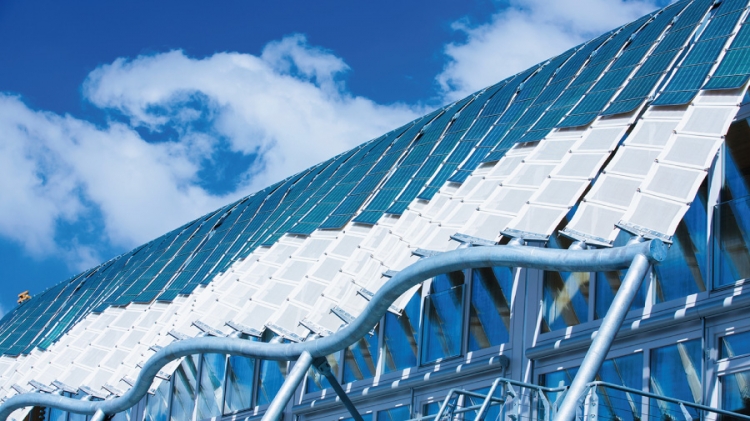
Photonics…. a sense of the future

If you’re deciding what to do, you need to know what’s going on.

Knowledge of what is happening in a given area – a building, airspace, a human body – can make the difference between a successful critical intervention and disaster. Finding that out, though, is not always easy.

Monitoring for specific changes or content takes tools and infrastructure. The tools we use today – to monitor for greenhouse gas emission from a manufacturing plant, for example, or insulin in a diabetic’s blood – are limited, and often intrusive, unwieldy and expensive.  

So we need a way to monitor more extensively, conveniently, and accurately.

One area of research that shows great promise is photonics – sensing changes in an area using light.

Different gases – and gases at different densities – absorb different amounts of light, at different wavelengths. Measure the exact spectrum of light that a gas absorbs, and it’s fairly easy to work out what the gas is and how much of it is there.

Most useful for this purpose is light in the middle of the infrared range, because it matches well with the frequencies at which gas molecules vibrate. Such systems can spot a gas even at concentrations as low as a few parts per billion, allowing detection of a tiny leak even in a huge area.

So they can be put to use in manufacturing plants, checking for emissions, toxic leaks and volatile organic compounds. Environmental agencies can use them to monitor greenhouse gas emissions; and breath analyzers can help diagnose diabetes or cancer.

One recent estimate put the global market for such sensors at more than half a billion dollars last year, and predicted it could expand tenfold to $5bn by 2018.

They could help Abu Dhabi, too. The Abu Dhabi Water and Environment Authority (ADWEA) and the Environmental Agency of Abu Dhabi (EAD) are keen to improve air quality, and to that end plan to monitor greenhouse gases, ozone and particulates near power and manufacturing plants in line with the ambitious environmental goals of Abu Dhabi Vision 2030. Mid-IR sensing technology could also help Abu Dhabi residents stay healthy. Wearable infrared sensors could check for motion, breathe and vital signs to signal local medical care in adverse and emergency situations.

But a huge hurdle remains, both to the global industry and to Abu Dhabi’s aims: current mid-IR sensors are far too expensive for many of the uses to which they could be put.

One way of bringing the price down would be to make a photonic sensor- on-a-chip, which would be far cheaper to make, package, and power than current multi-chip based sensors.

So far, the big bottleneck to a fully integrated photonic sensor is in integrating the light source with the other components – impossible with current materials. Research I lead at the Masdar Institute is trying to do exactly that, developing next-generation mid-IR lasers based on a glass material that can be fabricated at low temperatures on to electronics and detector arrays – hence an integrated light source. Combining all the photonic components – a light source, detector, and signal processing circuitry – on a single chip would reduce cost, manpower and packaging (which alone can be half the total cost).

The chip would also use less energy, as it would avoid having to transmit light from one chip to another. That way, we can add more functionality – putting several lasers on a single chip, for example.

Single chips would be more reliable, and could be fabricated in batches, cutting the cost and the environmental footprint still further. With this research, the Masdar Institute hopes to bring a significant improvement in health, environment and safety and sustainability not only in the UAE, but worldwide.

Dr. Clara Dimas is assistant professor of Microsystems Engineering at Masdar Institute of Science and Technology.
Managing energy demand

There is no free lunch in economy. In the same way that a debt-based global financial system is doomed to fail, the dream of unlimited economic growth sustained by abundant and cheap energy from fossil fuels is turning into an environmental nightmare. For the first time in its history, mankind is facing a formidable test of its ability and resolve to co-exist harmoniously and durably with its environment.

In this regard, the next decade will be decisive and the outcome likely to be irreversible. There are two important aspects to sustainable and environmentally friendly energy use. One is the provision of “clean” energy that does not damage the environment or contribute to global warming, which is achieved mainly through the development of renewable energy. The other facet of sustainable energy is demand-side management (DSM), which seeks  to reduce the overall ecological footprint of the community through conservation or rationalization of energy consumption. Both are crucial levers in humanity’s last line of defense against irreparable damage to the environment.

Carbon abatement studies by the International Energy Agency and others show that DSM is the most cost-effective carbon emissions reduction lever—often far ahead of renewable energies. DSM strategies generally fall into one of three main categories: energy conservation, energy efficiency and peak load shedding/shifting. The importance of this latter category is obvious in presence of “non-dispatchable” (intermittent/unpredictable) renewable resources or nuclear plants which cannot modulate their generation level in response to rapid demand fluctuations. But even with a fully conventional supply line-up, the ability to reduce or displace peak demand has significant economic and environmental value since “peaking units”, power plants that are called upon only during peak demand periods, 300 to 400 hours in a typical year, are generally expensive and polluting.  

DSM can be incredibly effective, especially in countries that are just starting their transition from old era usage patterns and habits to environmentally-conscious behavior. In these initial stages, when DSM preferentially targets the so-called “low hanging fruits”, well designed and executed interventions often have a negative life-cycle cost which means that the value of energy savings over the life cycle of the DSM measure exceeds its upfront cost. Why then is DSM not enjoying widespread adoption, sometimes lagging behind more costly/risky supply-side options, even in those countries where the demand-side low-hanging fruits are far from being exhausted? From the economic point of view, a major hurdle is the “principal-agent” problem whereby the upfront costs of the DSM measure befell the owner while the life-cycle benefits (energy savings) accrue to the tenant. Another issue that DSM has to face is the difficulty for decision-makers and program administrators to identify a priori the low-hanging fruits and accurately assess their ex-post energy/cost impact. These are not insurmountable problems. 

Standardization or special financial arrangements can address the principal-agent problem. The lack of a proper framework for selection, implementation and verification of DSM measures is a more challenging issue and has not yet been addressed in a systematic and rigorous way because of the bewildering variety of buildings and energy-consuming systems, their complexity especially when considered in a fully integrated urban context, the relative unpredictability of the human and climatic factors and the lack of reliable experimental data. As a Professor of Practice in Engineering Systems and Management at Masdar Institute, I am heading a research project that aims to address this need. 

This project has three long-term goals. The first goal is to sustain Abu-Dhabi’s nascent efforts to improve the energy efficiency of the Emirate’s existing building stock and offset peak load: building retrofit and advanced controls to reduce the overall load; incorporation of peak load signals in the control scheme to shave or shift a portion of the peak demand.

A second application of the tool will be in new urban developments, such as Masdar City, where the energy efficiency decisions need to be integrated into the urban planning concept from the very start. The demand on the tool for this application is more complex as it must take into account not only individual buildings but also transportation, microclimate, district cooling, etc., in the overall decision-making scheme. The tool then informs designers/planners on how to build, shape and size the city’s buildings, public space and infrastructure given project-specific constraints.

The third long-term application for this tool is actual city operations management according to a command-and-control concept.

Once a sustainable city is fully built and instrumented, the tool will be able to provide an accurate “live” model of the urban energy use working hand-in-hand with the smart grid. The tool would be able to continuously analyze energy consumption data coming from all metered end-use points within the city and use that data for different applications such as forecasting, benchmarking, fault detection/diagnosis and continuous improvement of the demand-side energy performance.

Dr. Afshin Afshari is Professor of Practice at the Masdar Institute of Science and Technology.