

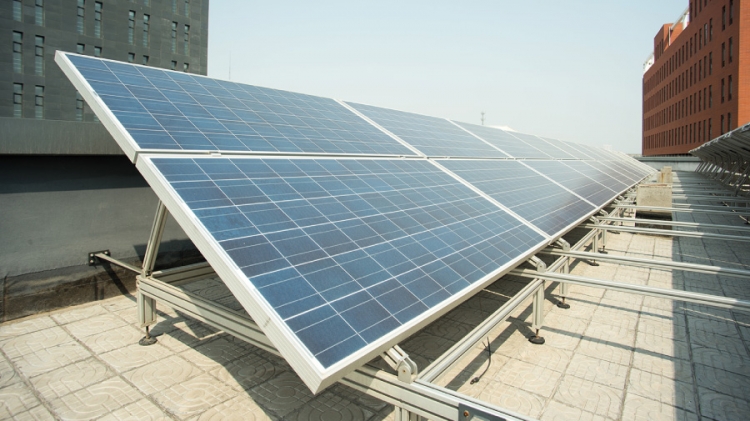
How to put solar cells on the Gulf’s buildings

Buildings account for about two-thirds of the Gulf’s energy consumption. As the region’s cities grow, the need to reduce this figure is ever more pressing.

One answer is to integrate solar cells into buildings. This is particularly advantageous for the UAE, where many people live in areas where it is not economically feasible to provide electricity through the national grid.

Building-integrated photovoltaics not only generate energy but also contribute to buildings’ architecture, as roofs, façades, skylights and glass cladding. If you use a solar panel for your roof, you may not need to spend so much on the roof itself.

So why is it still rare in the Gulf? One reason is that the atmospheric conditions here are quite different from other regions – the air, for one thing, is much dustier. This means many of the lessons learnt and technologies fine-tuned elsewhere are not wholly transferable.

So we need to look at different solar panel technologies. For each, we need to assess cost, efficiency, climate, flexibility, use of diffuse sunlight, long-term stability, sensitivity to the angle of inclination, transparency, aesthetics and long-term operation costs.

Cost has long been the biggest barrier to large-scale use of solar cell technologies. We need to work out how to make them more cheaply, and put in place a system of feed-in tariffs to make the pay-off of installing them worth it. In a solar plant out in the desert, efficiency is less important – you can happily have thousands upon thousands of low-yield cells that sprawl over many square kilometres and add up to a large total production. But in cities, space is limited, so the technology has to be compact and collect as much energy available as possible.

This is where climate – namely temperature – becomes a problem. Some photovoltaic technologies work dramatically less well when it is hot, making them unsuitable for the Gulf. We need to look at technologies that do not suffer this temperature drop-off.

Flexibility is important, too. Buildings can be nearly any shape, making a flexible photovoltaic module more useful than a rigid one.

Even square buildings are an awkward shape for solar panels. They are often tall, with lots of vertical but few horizontal surfaces. And they are of course immobile, so the amount of power received by any one panel changes as the sun moves.

So they need to be as tolerant as possible to various angles of inclination, giving a similar power output when installed on either the facade or the roof.

And they need to be able to efficiently harvest energy both from full direct sunlight and more diffuse light – perhaps reflected from another surface.

Transparency is useful – a transparent cell can be used as a window, dramatically increasing the area on which it can be used. And if not transparent, they at least need to look good, or architects are unlikely to want to use them.

They need to last, too. If incorporated into buildings, solar cells need to last as long as possible without losing power over time.

While operation and maintenance costs for photovoltaics tend not to be high, they still contribute to overall cost. Their maintenance requirements must be manageable for the Gulf market.

All these parameters need to be assessed together to meet the local needs. To this end the solar energy materials and devices laboratory, which I head at the Masdar Institute, has received funding from abroad to test flexible solar cell technologies in the built environment within our campus and under the real outdoor conditions.

This joint project is allowing us to investigate the performance and other key features of these flexible solar cells for integration into the built environment.

Abu Dhabi is a very good model for a coastal Gulf city, so our results could be used as reference for applications throughout this region, as well as feeding into the Abu Dhabi solar rooftop plan, which aims to install 500 megawatts of photovoltaic panels on the emirate’s buildings over the next 20 years.

Dr. Mahieddine Emziane is associate professor of materials science and engineering at the Masdar Institute of Science and Technology.
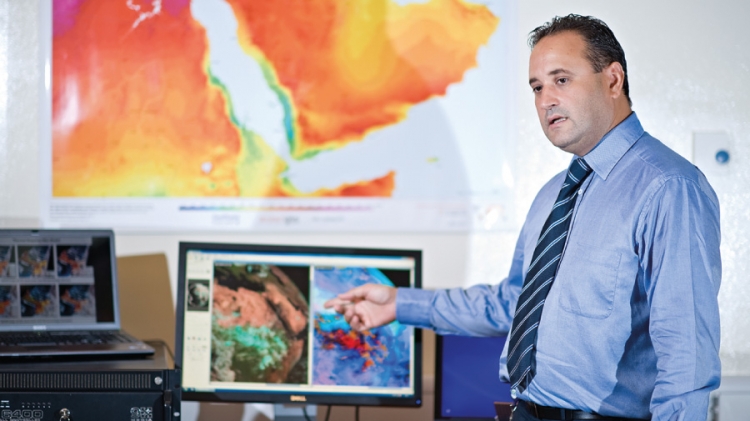
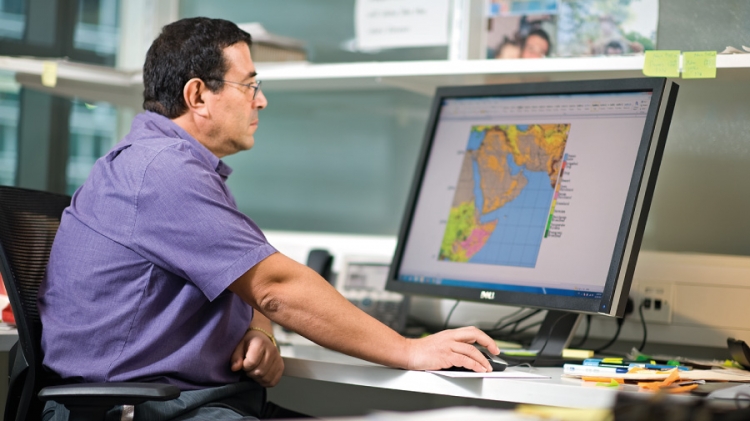
Solar atlas can show the way to renewable energy target

To solve a problem, you need to know what it is – and that means having the best data available to define its parameters. Otherwise, the solution may be useless, and the effort of solving it wasted.

We’ve seen a prime example of this in the field of solar energy in the UAE. Initial assessments for solar energy projects were made using data and models borrowed from Europe and North America. But that failed to take into account the Gulf’s unique climate.

While in theory, the UAE receives the same if not far more solar energy than Europe or North America, in reality the dusty atmosphere cuts out as much as 90 per cent of the sun’s energy during a heavy dust storm. Even on cloud-free days, there is often far less solar energy than might be expected for such a hot and sunny country.

To ensure future projects are more realistic, we need local data. To that end, scientists at the Masdar Institute are helping to draw up solar and wind resource atlases for the region.

Such atlases will allow us to create models based on the specific conditions in the UAE and other similar regions. They should also help attract inward investment into the renewable energy sector and underpin policy decisions on legal and financing frameworks The project will combine existing databases into one open website from which solar energy maps can be accessed. It will also provide valuable experience for university students and researchers, both to run future data collection and analysis projects and to train others to do likewise.

And the hope is for the project eventually to be expanded to other Gulf countries as well as into Africa.

To create the solar atlas, we need to account for the impact of airborne dust and vapour on solar energy. The first step is collecting data from the Masdar Institute’s satellite receiving station. It received images of the region every 15 minutes; each set of data is used to calculate the intensity of solar energy, using modified models developed and validated at the institute.

Additionally, we are using ground measurements to recalibrate existing mapping tools for our environment. Through a collaboration with Masdar Power, the team has access to six ground stations that have gathered measurements over the last four years; that gives us the ability to create critical resource simulations in near real-time.

The solar map will divide the country and its neighbours into patches three kilometres square, and giving measurements every 15 minutes foreach patch.

By simulating archived satellite data from the last 10 years, we can produce hourly, daily, monthly and yearly maps showing long term averages, annual variability – and, crucially, an indication of how reliable or otherwise those measures are likely to be in predicting future climate trends.
For the wind atlas, much of the monitoring will be among the first of its kind in the region. As there is little pre-existing wind resource data available, the analysis will initially be mainly derived from numerical models.

As you can imagine, the atlas project is complex and challenging. It spans computer sciences, civil and environmental engineering, atmospheric science and remote sensing through satellite data processing.

Our satellite receiving station captures a terabyte of image data – a full hard disk’s worth – every week, all of which must be processed in near real-time.

But its potential gains are great. In real terms, the atlases can help not only give a better overall picture of the available solar resources in the UAE and the wider region. It can also give investors clear guidance on where to build solar plants.
This will surely prove helpful in the UAE achieving its goal of getting seven per cent of its energy from renewable sources by 2020, and providing the country’s youth with a brighter and more sustainable future.

Dr Hosni Ghedira is director of the UAE Research Centre for Renewable Energy Mapping and Assessment at the Masdar Institute of Science and Technology.
http://www.thenational.ae/news/uae-news/technology/solar-atlas-can-show-the-way-to-renewable-energy-target

Modeling the climate and the hydrology of the UAE

Weather and climate here in the UAE might seem a one-dimensional affair: it is nearly always hot and dry. But there is far more to it than simply an abundance of warmth. The weather has a great bearing on the country, the health of its people, and its energy and water efficiency. Climate is not just temperature, but humidity, sun light, wind, and rain – all of which affect daily life and the viability of any sort of project. In order to understand that impact, and plan for it, scientists and engineers use hydro-climatic modeling, gathering and analysing past climatic data to accurately predict future weather and its patterns. The model can then be put to all kinds of uses – from designing buildings that stand up to extreme wind gusts, to assessing the impact of dust storms on health.

The Masdar Institute’s hydro-climatic modelling lab is studying the evolution of the climatic and the hydrologic variables in the UAE. As well as helping conserve our scarce water resources, it should help plan future wind and solar energy production. For example, we have been looking at the impact of dust on solar energy potential – something overlooked by previous models. We are also trying to model the evolution of the UAE’s overall availability of resources, as well as the uncertainty associated with these estimates – the aim being to plan for rare and extreme weather events.

The models we generate should help others make decisions in a number of fields. For instance, public health officials need estimates of the future range of temperature and humidity – which are linked to cardio- respiratory diseases – and wind – which because of its link to dust in the air has a strong impact on respiratory diseases. We can help in renewable energy projects, too. Projections of radiation, wind, temperature and so on will feed into realistic estimates of the future potential of wind and solar energy.

Those planning new infrastructures – of which there will continue to be plenty in the UAE – also need to know the conditions under which it will have to function. And not just how strong the wind  (for example) will be on average, but what is the strongest gust of wind it might have to withstand during the several decades of its life. Similar, planners need to know how much, how often and how hard it is likely to rain, to build adequate urban drainage networks, and to build small dams and other water retention structures in wadis. In each case, we need not just an average, but the most that will ever be required. Failure to allow for this could be catastrophic.

The Lab will hence have strong interactions with other groups at Masdar Institute such as the Center for Renewable Energy Mapping and Assessment and the newly announced Centre for Water Technologies.

We need to look at the oceans, too, as they play a major role in climate systems and affect weather patterns through their thermal and dynamical inertia. So we are trying to model the interactions between oceans, land and atmosphere. That research, naturally, will focus on simulating the conditions in the Gulf, partly in order to assess the present and future environmental impacts of the desalination plants it feeds. This, in turn, will help others analyse the future state of fish habitats, to work out what rate of fishing is likely to be sustainable.

Finally, we are developing forecasting tools and early warning systems for extreme weather events such as dust storms and flash floods, to avoid a breakdown of infrastructure and prepare response plans in the case of natural disasters. The UAE needs plans for a wide range of natural disasters (floods, droughts, storm surges, and so on) under changing climatic conditions.

This kind of modelling is vital for the UAE. With the establishment of this lab, Abu Dhabi is taking a step closer to its goals of increased welfare, security and sustainability for its people and their future.

Dr. Taha BMJ Ouarda is director of the Masdar Institute’s hydro-climatic modelling lab.

Masdar Institute to Further Build on Its Landmark Success in 2012-13 Academic Year

Patent Filings, Journal Submissions, Presentations at Global Conferences, and Membership in Elite Clubs Consolidate Masdar Institute’s Status

Abu Dhabi-UAE: 03 September, 2012 – Masdar Institute of Science and Technology, an independent, research-driven graduate-level university focused on advanced energy and sustainable technologies, has announced it will continue to build on last year’s landmark success in the coming academic year.

During the last academic year, Masdar Institute filed for one provisional patent with several more patents in line for filing, while its faculty members and students presented a record number of papers at major international conferences and reviewed more than 200 journal submissions. Moreover, top officials were accorded special rankings and status by elite scientific organizations, while research collaborations were signed with several leading national and global institutions.

In order to further build on the continuing success in the year ahead, Masdar Institute is strengthening the program offerings across the board, adding fresh courses and facilitating more inter-disciplinary research projects. The enrolments from locally practicing professionals this year, accommodating working student’s professional responsibilities with liberal rate-of-progress and course load expectations will mark one of the most unique offerings from Masdar Institute in the new year.

Dr Fred Moavenzadeh, President of Masdar Institute, said: “Our mandate is to remain among the globally top-ranked academic institutions and be recognized as a regional and international model for research-intensive universities of the 21st century, while underpinning Abu Dhabi’s economic growth. With continuous support from the UAE leadership, we seek to build human capital and expand the knowledge base of the country through our niche program and research offerings.”

The UAE National Foundation program and the eight academic streams have steadily increased the intake of indigenous students.

During the last year, Masdar Institute signed several research collaboration agreements to facilitate the onset of cleaner technology at various national and international organizations such as Emirates Aluminium, Masdar PV GmbH and Siemens. In addition, Toyota Motor Corporation of Japan, the International Renewable Energy Agency (IRENA) and the ICT Fund of the UAE have signed scholarship agreements with Masdar Institute to bolster knowledge development in sustainable transport, clean energy and the IT sectors.

Stamping its mark as an institution that continuously evolves in innovation, a team led by Dr. Iyad Rahwan, Associate Professor – Computing and Information Science, Masdar Institute, in collaboration with Dr. Manuel Cebrian, Research Scientist at University of California, San Diego (UCSD), won the international Tag Challenge competition in April 2012. The teams’ singular feat redefined the limits of technology-mediated social mobilization and rapid information gathering.

Furthermore, a team of scientists and researchers led by Dr. Raed Hashaikeh, Associate Professor – Materials Science and Engineering, successfully developed the first operational 2032-coin cell type lithium battery, paving the way for the filing of a provisional patent application with the US Patents and Trademarks Office.

For the new academic year, each program faculty has already worked towards further expanding the scope of contributions to human capital development in renewable energy and advanced technologies. The funding of two flagship proposals that was approved by the Joint Massachusetts Institute of Technology-Masdar Institute Steering Committee, and the involvement in the organization of the first International Water Summit in Abu Dhabi in 2013 will mark another successful year ahead for the Water and Environmental Engineering program.

Similarly, at least four new courses are expected to be added to expand the scope of the Electrical Power Engineering (EPE) program in the coming academic year. The expertise of Masdar Institute’s EPE has been recognized by the Institute of Electrical and Electronics Engineers (IEEE) societies, including industrial electronics, power electronics and power & energy systems.

Likewise, the faculty and students from the Microsystems Engineering program and the Materials Science and Engineering participated in the Second International Workshop on ‘Cleanroom Training for Critical and Sustainable Technologies’ program as part of Masdar Institute’s plan to commission the region’s first cleanroom laboratory by the end of this year.

Masdar Institute received accreditation for its Chemical Engineering Master’s program last year, while the Microsystems Engineering program continues to provide students with broad exposure in areas including analog and digital circuit design as well as research and development of new electronic, photonic, and MEMS devices.

Among the alumni of 2011 batch, two students – Rana Qudeh and Steven Meyers – won international acclaim, bringing honor to Masdar Institute. Qudaih received the Borealis Student Innovation Award, while Meyers was selected in the esteemed Forbes 30 ‘Under 30’ achievers list in the ‘clean energy’ category.

Capping the achievements of the year was the commencement ceremony in May 2012 when a total of 55 graduates received their Master’s degrees. In June 2011, a batch of 71 students received their degrees at Masdar Institute’s first-ever commencement ceremony. The caliber of these exemplary students clearly bears testimony to the effectiveness of Masdar Institute’s dynamic and responsive academic programs and research offerings.

Established as an on-going collaboration with the Massachusetts Institute of Technology (MIT), Masdar Institute integrates theory and practice to incubate a culture of innovation and entrepreneurship, working to develop the critical thinkers and leaders of tomorrow.  With its world-class faculty and top-tier students, the Institute is committed to finding solutions to the challenges of clean energy and climate change through education and research.
 

Masdar Institute to Host Orientation Program for Fourth Batch of Students

Over 170 Students Enrolled for 2012-13 Academic Year Seeking Excellence in Renewable Energy and Advanced Technologies

Abu Dhabi-UAE: 01 September, 2012 – Masdar Institute of Science and Technology, an independent, research-driven graduate-level university focused on advanced energy and sustainable technologies, today announced it will host a two-day orientation program to welcome the fresh batch of more than 170 students enrolled for the 2012-13 academic year.

To be held from 2-3 September, the program will be followed by a welcome dinner on 5 September. A city-wide tour and a cultural presentation on 8 September will wind up the orientation program that will seek to acclimatize the newly registered students to life within the sustainable campus in Abu Dhabi.

The students will be welcomed by Dr Fred Moavenzadeh, President, Masdar Institute, and Dr Lamya N. Fawwaz, Executive Director, Public Affairs.

Others who are scheduled to focus on specific areas during the two days of orientation include Dr. Marwan Khraisheh, Dean of Masdar Institute, Dr. Youssef Shatilla, Associate Dean for Graduate Education, Dr. Scott Kennedy, Associate Dean for Research, and members of the Recruitment Team. In addition, there will also be presentations on accessing IT services, use of library, as well as environment, health, safety and security (EHSS) and other facilities available at Masdar Institute.

The orientation program aims to offer the newly enrolled students an overview of the holistic offerings of Masdar Institute including the eight Master’s programs and research options, as well as the housing and residency policies and sustainable living.

Dr Fred Moavenzadeh said: “The Orientation program is designed to bring the students closer to their new home and make them feel comfortable to continue their academic life. Our specially crafted Master’s programs aim to develop future leaders in the energy industry, and we are confident the present batch of students will emulate the achievements of the alumni that has brought honor to Masdar Institute through exemplary research work.”

An introduction to the Student Affairs Office & Career Services Office, as well as the Student Government Association and Clubs is also scheduled to provide the newly joined students an opportunity to spend their time usefully while at the campus. Students will be additionally provided details on the Masdar Institute Ambassadors Program and the scholarship program from ICT Fund that targets the UAE nationals.

Established as an on-going collaboration with the Massachusetts Institute of Technology (MIT), Masdar Institute integrates theory and practice to incubate a culture of innovation and entrepreneurship, working to develop the critical thinkers and leaders of tomorrow.  With its world-class faculty and top-tier students, the Institute is committed to finding solutions to the challenges of clean energy and climate change through education and research.
 

Two Masdar Institute Interns Learn Intelligent Transportation at Mitsubishi Heavy in Japan

Interns Gain Knowledge in New Technology Systems for Implementation in Abu Dhabi

Abu Dhabi-UAE: 29 August, 2012 – Two students from Masdar Institute of Science and Technology preferred to do their internship at the Kobe facility of Mitsubishi Heavy Industries (MHI), a global leader in the design and supply of energy, aerospace, machinery, transportation, as well as environmental systems and equipment.

Their objective was to assess the new intelligent transportation technologies that could be implemented in Abu Dhabi.

During their internship in Japan, they focused on ‘Simulation of the electrification of transportation in Abu Dhabi’ and the ‘Clean mobility simulator’ – areas that concur with Abu Dhabi’s long-term plans on intelligent transportation through the use of clean energy. The two students – Reem Al Junaibi and Mohamed Al Hadhrami – were part of a group of five UAE national graduates selected from the Foundation program and First Year M.Sc. for summer internship at four Japanese corporations.

Working in the transportation systems and advanced technology division at Mitsubishi Heavy Industries has helped Al Junaibi gain a comprehensive understanding of the various technologies that have the potential to reduce carbon footprint. She gained adequate exposure to some of the most advanced and efficient technologies covering railways, trains, traffic control systems, intelligent transportation systems, and other types of research-related traffic simulators.

A student in Engineering Systems Management, Al Junaibi was trained on how to use the various functionalities in the clean mobility simulator, which is an important part of her thesis. She says: “The clean mobility is the tool I will use to calculate the charging requirements of various hypothetical scenarios in the introduction of electric vehicles in Abu Dhabi. The results of the simulator will be further studied to understand the potential and challenges in charging these vehicles on Abu Dhabi’s electric grid.”

Al Junaibi’s internship and research have become even more relevant in Abu Dhabi, where the government recently installed the Middle East’s first rapid charging station that can reduce the time taken to recharge electric cars by over 90%. Additionally, Masdar City, where Masdar Institute is located, and Mitsubishi Heavy Industries are testing the feasibility of EV technology as a point-to-point transportation solution, and in particular, testing and validating the performance of EVs and various charging solutions given the region’s climate and usage patterns.

At the same time, Mohamed Al Hadhrami, another Engineering Systems and Management student, also interned at the Kobe facility on ‘simulation of the electrification of transportation in Abu Dhabi’.

Al Hadhrami’s internship was closely related to his thesis at Masdar Institute – ‘Feasibility assessment of low-carbon vehicles in Abu Dhabi’. He says: “I focused on studying the effects of the simulation of the dedicated EV-lane. However, we got a chance to learn about MHI’s various products related to the field and visited some factories too.”

Mitsubishi Heavy Industries sent the two students to various facilities including the Mihara factory in Hiroshima, the Yokohama factory, and the shipyard in Kobe. These site visits were related to transportation and power systems, where advanced technologies were highlighted. The students also gained an insight on the supply chain management of each factory.

Moreover, a number of workshops were organized in conjunction with Yokohama National University, Tokyo University, Centralized Traffic Control (CTC), Interaction Technology Laboratory (ITL), which is dedicated to the development of innovative systems and artefacts related to the field of Human-Computer Interaction (HCI). The events further helped expand the students understanding of intelligent transportation.

One of the key elements that amazed the students during the internship was the office culture, which brings out the dedication, persistence, and competitiveness among the Japanese workforce. Al Junaibi says: “I believe these factors remain the cornerstone of Japan’s economic success. The whole system is perfectly aligned and integrated, leading to an efficient and well established business processes.”

For Al Hadhrami, in addition to simulation, the two-month internship helped him learn about the Japanese way of work. He says: “In Japan, work comes first and they are highly dedicated to what they are doing. I also noticed that meetings form an important aspect of the Japanese work culture and there are some wonderful lessons to be learnt.”

Technology apart, both students learnt about the process of development of technologies and bringing technologies from R&D to the mass market. They were also inspired by the attention to detail, precision engineering and the quality of technology that comes from the design stages to assembly lines.

Established as an on-going collaboration with the Massachusetts Institute of Technology (MIT), Masdar Institute integrates theory and practice to incubate a culture of innovation and entrepreneurship, working to develop the critical thinkers and leaders of tomorrow.  With its world-class faculty and top-tier students, the Institute is committed to finding solutions to the challenges of clean energy and climate change through education and research.
 

Faculty and Hi-tech Laboratory Facilities Make Masdar Institute More Appealing to Summer Interns

UAE National Students Gain Valuable Research Experience from Six-Week Summer Internship Program

Abu Dhabi-UAE: 16 August, 2012 – Student participants in the recently concluded summer internship program have commended the approachable faculty, high-technology laboratory facilities and the right ambience at Masdar Institute of Science and Technology for encouraging research outcomes in clean energy and advanced sustainable technologies.

A total of 16 UAE national interns spent six weeks conducting research in projects relevant to the region including desalination, recycled water and power grid systems. At a much deeper level, they also covered advanced technology topics including carbon capture and solvents for post-combustion.

Dr Ken Volk, Head of Outreach, Masdar Institute said: “Masdar Institute’s summer internship program provided students with a preview of the post-graduate programs that are currently offered. The internship also provided a unique opportunity for students interested in learning and conducting research in clean and advanced energy, sustainable technologies and environment-related areas. The program was also ideal for UAE national students to understand the significance of this emerging renewable and sustainable energy industry that the UAE is seeking to develop with the support of the country’s leadership.”

During the internship, Mooza Saeed Abdulla Bin Yeem worked on implementation strategies for renewable energy, learnt new practical skills, such as conducting data analysis and preparing materials for project.

She was impressed with the welcoming atmosphere of the Institute. She said: “My professor has supported me and treated me like a Masdar institute member. He used to ask me to join some presentations, where I can learn more about the renewable energy projects. The marvelous labs that are characterized with clinical-precision and organization encouraged me to work in the perfect environment. Most importantly, I learnt about the renewable energy policies in the UAE and the contribution of our leadership in building this industry in the UAE.”

In addition to the laboratory facilities, highly focused program streams were equally appealing to the interns.

Mariam Mohamed Al Kaabi, worked on a research project titled ‘Phylogenetic for Mixed Microbial Cultures’. She gained new techniques on how to work in a research lab. She believes that this summer internship has helped clear the confusion about her future plan – which was combining work and study at the same time. And she found this at Masdar Institute.

Al Kaabi said: “This summer internship was an interesting experience, where I worked and interacted with highly experienced and qualified professors in fully equipped and advanced labs. Living in this fascinating sustainable design of the Masdar Institute campus and dorms are themselves a source of inspiration for students. This internship has inspired me to pursue my graduate studies at Masdar Institute. I would seriously consider joining the Water and Environmental Engineering program that will help me utilize my knowledge in biotechnology and seek solutions for the environmental challenges in the UAE.”

Zayed Al Mansouri, who worked on the desalination and renewable energy project, believes that the internship exposed him to the research world and invaluable hands-on experience. He said: “My experience at Masdar Institute was incredible. The institute is defined with its very friendly and helpful environment, which qualifies the learning atmosphere for students.” Al Mansouri is keen to join the Mechanical Engineering program.

Reflecting its inherent strength in developing new skills, the summer internship program additionally guided some students to be creative in obtaining new solutions.

Alaa Noman Hail Saif worked on the optical filters for beam splitting system, in which he would like to pursue his graduate studies. During the six-week program, Alaa understood solar cell structure and its operation mechanism, the optical filter types and structure, and designed a whole program in MATLAB for simulation optical filters. He said, “This internship was very generous in providing us with all the knowledge, equipment, activities, and data that we need to work on our projects.”

Among the internship programs, ‘MATLAB Simulation Development for Power Grid Systems Development’ project led by Dr Amro Farid, Assistant Professor – Engineering Systems and Management program, and the ‘Detection and Quantification of Emerging Contaminants in Abu Dhabi Recycled Water Using Gas Chromatography/Mass Spectrometry (GC/MS)’ project led by Dr Farrukh Ahmad, Associate Professor – Water and Environmental Engineering program, have attracted a sizeable number of students.

Part of Masdar Institute’s outreach initiative, the summer internship program aims to instill a keen sense of awareness among Emirati university students on the environmental, energy and sustainability issues that impact their everyday lives, in addition to focusing on critical research areas of relevance.  Undergraduate students, however, need to possess the right academic skills, talents and dispositions necessary to obtain graduate education and eventual employment in these challenging areas.

Established as an on-going collaboration with the Massachusetts Institute of Technology (MIT), Masdar Institute integrates theory and practice to incubate a culture of innovation and entrepreneurship, working to develop the critical thinkers and leaders of tomorrow.  With its world-class faculty and top-tier students, the Institute is committed to finding solutions to the challenges of clean energy and climate change through education and research.
 

Two Scientific Papers from Masdar Institute Faculty Members Rated Most Downloaded Articles during Last 90 Days

First Time Distinction for Scientific Papers on Desalination from UAE Reiterates Masdar Institute’s Pioneering Contribution to Innovation

Abu Dhabi-UAE: 8 August, 2012 – Masdar Institute of Science and Technology, an independent, research-driven graduate-level university focused on advanced energy and sustainable technologies, today announced two papers co-authored by faculty members have become the most downloaded articles in the last three months from SciVerse ScienceDirect, a leading full-text scientific database.

This is the first time scientific papers on desalination submitted from the UAE have earned this distinction, further reiterating the pioneering contribution by Masdar Institute towards innovation of new technologies. ScienceDirect offers journal articles and book chapters from more than 2,500 peer-reviewed journals and over 11,000 books. The two papers have become the most downloaded among the papers published by leading publisher Elsevier in all scientific fields.

Both the papers were published in the international journal Desalination. The paper titled ‘Membrane distillation: A comprehensive review’ was co-authored by Dr Nidal Hilal, and Abdullah Alkhudhiri, a Ph D student working under the supervision of Dr Hilal, and Dr. Naif Darwish, was published in Desalination, Volume 287, 15 February 2012, (http://dx.doi.org/10.1016/j.desal.2011.08.027)

The paper titled ‘Techno-economic assessment and environmental impacts of desalination technologies’ was co-authored by Dr. Toufic Mezher, Dr Hassan Fath, Zeina Abbas, and Arslan Khaled, appeared in Desalination, Volume 266, Issues 1–3, 31 January 2011, (http://dx.doi.org/10.1016/j.desal.2010.08.035)

Dr. Fred Moavenzadeh, President, Masdar Institute, said: “The remarkable achievement reflects the extent of our faculty’s contribution towards leading the development of new technologies. The two papers have become the most downloaded in the most recent 90 days, a feat that is unsurpassed by any other paper submitted from the UAE. The faculty members deserve our commendation and we are confident these achievements will continue to keep Masdar Institute in the forefront of scientific innovations.”

Dr. Nidal Hilal, is a Professor in Nano-membranology and Water Technologies at Masdar Institute and the Editor-in Chief of Desalination, the international journal on the science and technology of desalting and water purification. Dr. Toufic Mezher is Professor and Head of Engineering Systems and Management program at Masdar Institute. His research interests include sustainable development, renewable energy policy, building knowledge-based economies and innovation systems, as well as knowledge management.

Dr. Hilal said: “The interest in desalination technologies is growing due to the fact that there is insufficient fresh water to meet the daily drinking and sanitation needs of all the earth’s inhabitants. Worldwide desalinated water supply must triple by 2020 to meet the demands of a growing human population. It is a fact now that desalination is a technology of choice, as the global water desalination market is expected to expand at a compound annual growth rate of 9.5% over the next 10 years.

“We are delighted to know that our work is cited and downloaded by other researchers and industrialists in the desalination community. This truly reflects Masdar Institute’s internationally leading research in water and desalination technologies. We hope our findings play significant role in providing clean water to humanity as 780 million – approximately one in nine on the planet – lack access to an improved water source.”

Dr. Toufic Mezher said: “The papers downloaded on an international level by academics, researchers, industrialists and students reflect the importance of the research and the findings for other researchers and industrialists, and therefore their significance to scientific and industrial communities. The most downloaded status also demonstrates that desalination is generating substantial interest among the scientific and industrial communities and the public, strongly indicating that it could be a viable option to the world that is severely suffering from lack of fresh water.”

The paper on ‘Membrane distillation: A comprehensive review’ addresses membrane characteristics, membrane-related heat and mass transfer concepts, fouling and the effects of operating condition. Membrane Distillation (MD) process has various applications, such as desalination, wastewater treatment and in the food industry.

The paper on ‘Techno-economic assessment and environmental impacts of desalination technologies’ presents a comprehensive review and assessment of desalination technologies such as thermal which includes multi-stage flash (MSF) and multiple effect distillation (MED), membrane reverse osmosis (RO), and hybrid (MSF/MED-RO). It also includes global desalination policies for the major user countries such as Saudi Arabia, the US, Spain, China and Kuwait, as well as more detailed analysis of desalination, cogeneration, and water situation in the UAE with recommendations on future policy.

SciVerse ScienceDirect database is the measure of papers’ importance, with statistics on papers and how many times they are cited or downloaded by academics, researchers and industrialists across the world. The database also has full information about the authors in terms of their research fields and how many times their work is cited, to grade them accordingly in the H-index. Each academic and researcher around the world has a H-index number; the highest the H-index number, the more cited the work of the researcher.

Established as an on-going collaboration with the Massachusetts Institute of Technology (MIT), Masdar Institute integrates theory and practice to incubate a culture of innovation and entrepreneurship, working to develop the critical thinkers and leaders of tomorrow. With its world-class faculty and top-tier students, the Institute is committed to finding solutions to the challenges of clean energy and climate change through education and research.

Stanford Student Conducts Advanced Research in Solar Technology at Masdar Institute

Saudi National Samar Alqatari Says Masdar Institute Provides Stimulating Environment for Research and Innovation

Abu Dhabi-UAE: 5 August, 2012 – Masdar Institute of Science and Technology, an independent, research-driven graduate-level university focused on advanced energy and sustainable technologies, today announced a student from Stanford University in the US conducted advanced research in solar technology under a six-week internship program.

A Saudi national, Samar Alqatari is an Engineering Physics student with a focus on Renewable Energy at Stanford. As a research assistant, Alqatari has spent the summer in the Nano Electronics and Photonics Lab (NEP) of Dr Ammar Nayfeh and at the lab of Dr Matteo Chiesa.  She has been conducting nanomaterial research on Zinc Oxide (ZnO) using the Atomic Force Microscopy (AFM). Dr. Nayfeh is the Assistant Professor, Microsystems Engineering, while Dr Chiesa, is the Associate Professor – Mechanical Engineering/Materials Science and Engineering, at Masdar Institute.

Samar’s research focuses on the characterization of ZnO using AFM which has the ability to analyze the surface and electric (as well as other) properties of nanomaterials, to look at the topography and conductivity properties of a ZnO thin film coating on a Silicon wafer. The results have many applications in electric devices, flexible electronics, and most importantly solar cells. The technique could benefit the researchers to study materials and deduce their properties, and industries can benefit from the application of the ZnO thin film to improve their products.

Alqatari got the opportunity to work as a research assistant in summer at Masdar Institute when she interacted with Dr. Ammar Nayfeh during his visit to Stanford University recently.

Dr. Nayef said: “The Nano Electronics and Photonics Lab at Masdar Institute is the perfect location for promising students such as Samar Alqatari to conduct advanced research. Her research has already produced significant results, which we hope will benefit the academia and the solar energy industry. Samar has the passion and the potential to make a change and her presence at Masdar Institute bears testimony to the Abu Dhabi-based institution’s appeal to students from across the region as a place that encourages innovation.”

Samar Alqatari received her scholarship from King Abdullah University of Science and Technology (KAUST) in Saudi Arabia to study at Stanford University.

Alqatari said: “The research I conducted at Masdar Institute has many applications in renewable energy, specifically solar power. I have also learned a lot of physics that I typically wouldn’t learn otherwise until my junior or senior years in college. In fact, my research with the materials science group here at Masdar Institute has made me shift my Master’s degree major to Materials Science, quite different from my initial plans.”

Since reading about Masdar Institute in a Newsweek article when she was in her high school, Samar found the idea of a completely sustainable, self-sufficient city in the Gulf absolutely intriguing. That was the when she decided to visit and be affiliated with Masdar Institute.

Alqatari added: “My experience has been amazing. I met a diverse, awesome group of people, and the materials science group I have been working with is incredible. The lab environment is very relaxed but at the same time our work on cutting-edge projects remains productive. The professors and colleagues come up with innovative research ideas and publish papers. I have enjoyed being part of this stimulating environment and learned a lot, from operating advanced lab equipment to solid state physics. Masdar Institute also helped me decide on pursuing a career in academia with a focus on solar energy.”

Established as an on-going collaboration with the Massachusetts Institute of Technology (MIT), Masdar Institute integrates theory and practice to incubate a culture of innovation and entrepreneurship, working to develop the critical thinkers and leaders of tomorrow.  With its world-class faculty and top-tier students, the Institute is committed to finding solutions to the challenges of clean energy and climate change through education and research.
 

Tricky task of harvesting the sun

By Dr Adel Gougam

ABU DHABI // As an alternative to fossil fuels, solar energy is promising – it is readily available, abundant and free. But to harvest it, a range of technology types will be needed.

Each has its own advantages, but also its challenges and trade-offs. The most common is photovoltaic (PV), currently used in the UAE as rigid panels on the likes of speed radar cameras and bus stations. But for other applications, new technologies are being developed.

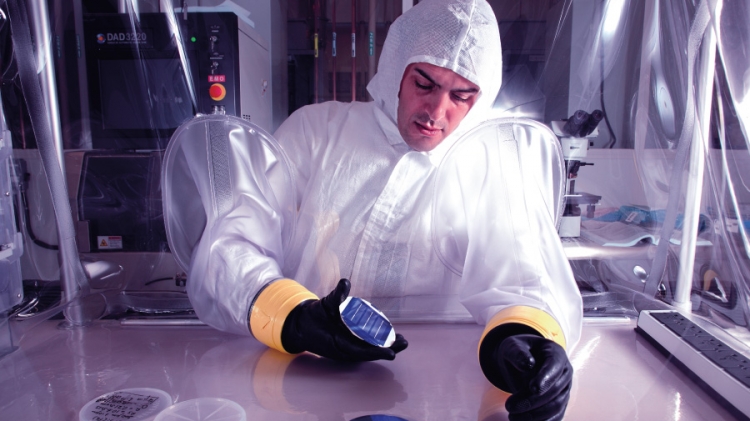
One of these is thin-film photovoltaics. Like their rigid counterparts, thin solar cells work by using sunlight to dislodge electrons to create an electrical current.

Where they differ is in the design and materials used. Thin-films are made by depositing one or more thin layers of photovoltaic material on glass layers that can be between a few nanometres to tens of micrometres thick. Because the layers are so thin, they can be deposited on a much larger area of glass than conventional solar panels made out of small cells connected together within the panel.

Until now, thin- film PV has been less efficient at harvesting solar energy than conventional PV. Improving this, while keeping the cost low, could put solar energy technologies within reach of more users.

At the Masdar Institute, we are working with Masdar PV to help do just that. We are developing new anti-reflective coatings for the thin-film cells that will allow the cells to trap more light. This coating is also a metallic conductor, making it easier to get the current generated out of the cell.

The material we’re working with is promising, having both good optical properties – letting in plenty of light – and good metallic conduction – helping get the energy out to the grid.

Beyond researching better materials, we are also exploring the benefit of patterning the layer for capturing even more solar energy.

When a thin-film cell layer is completely flat, some light is reflected back into the sky and is lost. But with patterning, the film is laid out at various angles that allow the reflected light rays to hit another angled surface, returning it to the cell. This can greatly improve the cell’s energy yield.

But there are several challenges. Not only do we need to find the most efficient thickness and pattern for the antireflective/conductive layer, we need one that is attractive to industry. It can’t just work in the lab; it needs to be scaled up to industrial production in a way that is cost effective.

It is our aim that, with this collaborative research, we will be able to increase the efficiency of thin-film solar cells. From currently converting around 9-10 per cent of the solar input power to electrical output, we hope to achieve 11-12 per cent while retaining the attraction of being nearly half the cost of conventional PV.

This could help not only in providing Abu Dhabi with a greater range of options to help it reach its goal of seven per cent of its energy from alternative sources by 2020, but it could also provide valuable intellectual property and an important product for the Emirate’s economy.

Dr Adel Gougam is assistant professor of materials science and engineering at the Masdar Institute of Science and Technology.
http://www.thenational.ae/news/uae-news/technology/tricky-task-of-harvesting-the-sun


Two UAE universities to start water institutes

By Dr Nidal Hilal

AL AIN // Two universities are setting up water institutes in an attempt to tackle the UAE’s growing water scarcity.

In the autumn, Dr Nidal Hillal will be launching the Masdar Institute’s dedicated centre which will focus on the development of clean water technology, desalination technology, waste water and water treatment technology and water reuse.

“In Abu Dhabi, water consumption has always been among the highest in the world but now we know it’s more than 24 times its natural recharge capacity,” he said. “It’s frightening in a way and this issue is key for the UAE’s economy and security.

“The UAE is one of the world’s most water-scarce nations.”

Dr Fred Moavenzadeh, president of the Masdar Institute, said other areas such as conservation and policy will also top the agenda.

“We have had several discussions with the likes of the Abu Dhabi Water and Electricity Authority,” he said. “We know punitive measures don’t work here, like telling people you only have so much water to use per day will not work here. We’re looking at developing more incentive-based policy to encourage people not to use so much.”

United Arab Emirates University’s water institute was given the seal of approval last month and will launch in October.

Dr Moavenzadeh said the two centres’ goals will vary slightly, with the institutions trying to complement each other’s work as opposed to competing. Both, however, have expressed the necessity of running short courses and workshops for local government and industry professionals, as well as more water-focused graduate programmes.

Dr Peter Werner, dean of the college of science at UAEU in Al Ain, will head up the centre, which will be a dedicated applied research centre, conducting projects for government entities such as local municipalities and water authorities, and private companies. Despite the challenges of garnering research funding for universities, he said this focus will ensure funding, secured through contracts targeting industry needs such as waste water management.

The university has given seed money of between Dh2 million and Dh5m to the centre, but industry contracts will be a primary source of funding, Dr Werner said. He added that mobile laboratories, to be used to go into the field and take water samples, are among the equipment needed.

“We have to reduce water consumption,” he said.

“The UAE has the highest water consumption in the world. It is 10 times more than Europe and 20 times more than Germany per capita.”

Issues to be tackled will include desalination, corrosion in the drinking water system and treatment of sewage and waste water.

In Al Ain, the municipality wants to address overflowing groundwater, which Dr Werner said will have many implications, not least, cracking the roads.

The centre will initially be staffed by academics from the colleges of health science, agriculture, science and engineering. Dr Werner will make additional hires as the agenda becomes clearer.

Professor Mohamed Baniyas, provost of UAEU, said there is much expertise at the university to man the centre even before any new staff are hired.

“The purpose of this centre is to bring all this expertise together. We found that engineering had good expertise in the areas such as desalination, science had people with good experience with natural water resources and their preservation and in medicine we found there was the expertise on contamination and extracting materials from water.”

http://www.thenational.ae/news/uae-news/two-uae-universities-to-start-water-institutes


Masdar Institute Student and YFEL Member Attends Symposium in Rome to Initiate Steps for Opening INCOSE Chapter in UAE

Wail Farouq Almaeeni Hopes to Facilitate GCC’s First-Ever Tutorial for ‘Associate Systems Engineering Profession Certification’ Course

Abu Dhabi-UAE: 8 July, 2012 – A member of the Young Future Energy Leaders (YFEL) program, an outreach initiative of Masdar Institute of Science and Technology, has begun initiating measures that will facilitate the opening of the UAE Chapter of International Council on Systems Engineering (INCOSE) and eventually establish its student’s division at Masdar Institute.

Wail Farouq Almaeeni from the Engineering Systems and Management program at Masdar Institute is currently selected to participate in the 22nd international INCOSE symposium, which is being held from 7-13 July in Rome, Italy. The symposium will host market leaders in Systems Engineering along with researchers, academicians and representatives from INCOSE.

The Masdar Institute student aims to actively engage stakeholders at the event that will include seminars and lectures on systems thinking, system design, and modeling systems – areas that may help him with his thesis. More specifically, Almaeeni will explore the opportunities to learn about the latest developments in tools, methodologies and approaches in systems engineering.

Dr. Toufic Mezher, Professor, Engineering Systems and Management, Masdar Institute, said: “Such students bring a totally different perspective to the academic and learning experience in Masdar Institute. We are proud to have students such as Wail Farouq Almaeeni, whose purview of interests expand far beyond his own benefits. Students like him represent the stature of any academic institution and we believe his efforts will bear fruits and bring long-term benefits to Masdar Institute, the local community and the UAE, as directed by the country’s leadership.”

A total of 116 papers, all related to the ESM program, will be published at the INCOSE symposium in Rome. Almaeeni is looking forward to attending seminars and lectures at the event in addition to meeting industry leaders in Systems Engineering.

Almaeeni said: “My objective is to open a student division of INCOSE at Masdar Institute and in order to do that we should have an INCOSE Chapter in the UAE. My main purpose of attending the event in Rome is to gather information about the organization that will help me achieve this goal. As an ESM student, I will have the chance to attend Associate Systems Engineering Profession (ASEP) certification preparation tutorial, which I have been trying to obtain for the past two years. This tutorial is not yet offered in the region.

“Once a student division is established, the INCOSE journal, international symposium and other events would become platforms for Masdar Institute students to publish their papers. Students in the UAE would also have the chance to access the INCOSE database. Moreover, Masdar Institute will be listed on the INCOSE website as an institute that offers Engineering Systems and Management program.”

Wail Farouq Almaeeni is also keen to visit the Laboratory for Nuclear Physics in Rome with a group of professionals, part of the INCOSE symposium agenda. Almaeeni added that with the UAE entering the nuclear era, some of the students are eagerly waiting for the introduction of a Master’s program in Nuclear Engineering at Masdar Institute.

He added: “The Rome INCOSE symposium will be an opportunity to promote YFEL and Masdar Institute. I plan to wear the Masdar insignia and YFEL logos and talk about Masdar Institute. I strongly believe this would one day result in rewarding deals such as sharing experiences and MOUs with Masdar Institute or the UAE’s Emirates Nuclear Energy Corporation (ENEC).”

YFEL offers participants exceptional and unmatched access to top global leaders, senior business executives and academics engaged in alternative energy and sustainability through events such as World Future Energy Summit (WFES) in Abu Dhabi and other major events held globally. It is mandated to educate, inspire and empower students and young professionals to become future leaders capable of solving the world’s most pressing challenges in advanced energy and sustainability.