

Enhancing 2D Face Recognition Systems Associate Professor of Computer Engineering

Dr. Naoufel Werghi how his Research Leverages Deep Learning to Develop Robust 2D Face Recognition Systems

Face recognition systems are ubiquitous. We use them for security in places like airports, at borders and in venues that manage large volumes of people, like stadiums and theaters. They are also integrated into smartphones as biometric locks, are used to track lost children across areas, and are part of the next generation of targeted marketing, where they scan your face to determine your age and gender to select the appropriate digital ads to show you. The more reliable, accurate and speedy facial recognition systems become, the more ways they can be integrated into sectors to provide enhanced security and convenience.

One of the common face recognition systems is two dimensional (2D) face recognition systems, which is the type we often see in airports. 2D face recognition systems can use computer vision and photometric methods to scan through available photographs of a person’s face, to ‘learn’ how to identify them when they appear before the system’s cameras. But the cutting-edge of this technology has been struggling to meet our growing needs and expectations, particularly facial identification when the face is only seen incompletely, or at a different angle, or under different lighting, or with different facial expressions, or even disguising makeup.

While engineers have been able to develop algorithms that can identify faces in these scenarios in constrained situations, when it comes to real-world use, they have often failed to manage the range of changeable parameters. They particularly struggle to recognize faces when they are not front facing and centered, and the more extreme the angle and pose, the more challenging it is for the system.

That is why I have been working with students and faculty in halifa University and abroad to develop an unconstrained face identification template that can handle all of the challenges of 2D facial recognition in real-life scenarios. We developed a first prototype to recognize faces using 3D facial images. This
modality relies on the facial shape as a main information and therefore is less sensitive to variations in pose and light conditions. Our system has been validated on two public datasets containing more six thousand images, and reached an accuracy above 95% even in the presence of facial expressions.

Building on advances in deep learning we have developed another system that is able to automatically learn facial image registration, which transform a face pose in the image from a lateral view to a frontal view. It is also able to learn a face signature as part of an end-to-end trainable Convolutional Neural Network.

The first part of network is the registration module, which learns from 2.6 million images of 2,622 faces of YouTube celebrities, to ‘understand’ how they can look different from different angles, in different lighting, with different types of makeup, and when wearing different expressions. That provides the system with a baseline understanding that is then enhanced by the second part, the representation module, which is able to learn meaningful feature encoding of input face images. Images of a targeted
face can be uploaded, which it then ‘learns’ and can seek out using the lessons applied from the registration module.

The system we developed performed better than the existing state of the art methods. We ran it through three different types of face image datasets – the IJB-A dataset that contains 5,712 images and
2,085 videos of 500 subjects captured in real life scenarios around the world; the COX dataset that contains 4,000 uncontrolled low resolution video sequences of 1,000 subjects walking in a gymnasium without enforcing any constraints on their facial expressions, lighting conditions and head poses; and the YouTube Celebrities dataset of 1,910 low-resolution face videos of 47 celebrities downloaded from YouTube. We reached a recognition accuracy of 96%, 90% and 97%.

But the part of which I am proudest of is having involved undergraduate student in face recognition research. From 2009 till today, seven face identification projects have been proposed and undertaken by student groups in the Senior Design Project and the Artificial Intelligence course in which I participate.

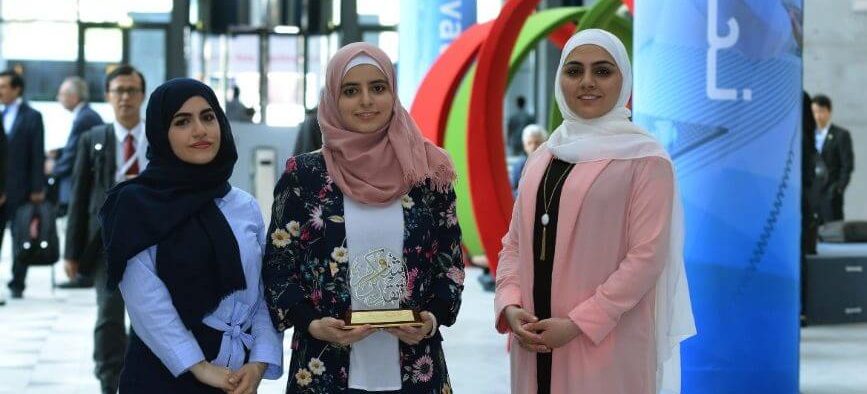
My most recent group of students – Mohamed Khalid Almansoori, Ali Alshkeili, Abdullah Alenezi, and Eissa Alromaithi – are currently working on a face identification system using a simple 2D camera that can authenticate an individual or detect a suspect. In the first mode the user identifies himself by entering a pin code or swiping an ID card. The system captures the face image of the user, compares the input image with the reference image stored in the system and decides whether or not the user corresponds to the identity that they claim to be. This is the kind of authentication system currently used in Abu Dhabi Airports at the passport check gates.

In the second mode, the system detects faces in a scene and tries to find the face that correspond to a targeted face. If the targeted individual is found, an alarm will be then triggered, signaling the presence of that suspect. The second mode is the most challenging, as the camera has to scan faces from various
angles and in different light conditions. We recently featured this project at Dubai’s annual Water, Energy, Technology, and Environment Exhibition 2018 (WETEX).

My research and the project led by my students, both aim to enhance the UAE’s expertise in the growing field of face recognition systems. The global facial recognition technology market is expected to exceed $9.6 billion by 2023, making it a valuable market in which to develop intellectual and human
capital.

Dr. Naoufel Werghi is Associate Professor of Computer Engineering at the Khalifa University of Science
and Technology
UAE at the Forefront of Cloud-Seeding

National Center of Meteorology Director Dr. Abdullah Ahmed Al Mandous Explains how Research and Collaboration have Advanced the Mission of the UAE Research Program for Rain Enhancement Science

The UAE leadership has always been far-sighted and, as early as the 1990s, it recognized that our country – one of the world’s most water-scarce – would benefit from the potential of cloud-seeding research. Though the science of rainfall enhancement was then quite limited, the UAE Ministry of Presidential Affairs led collaborations with the world’s leading institutions to explore what research and development in the science and technology of the field could bring to water security. After all, securing access to water is not a challenge faced by the UAE alone; the United Nations estimates that by 2030, almost half of the world’s population could be faced with high water stress.

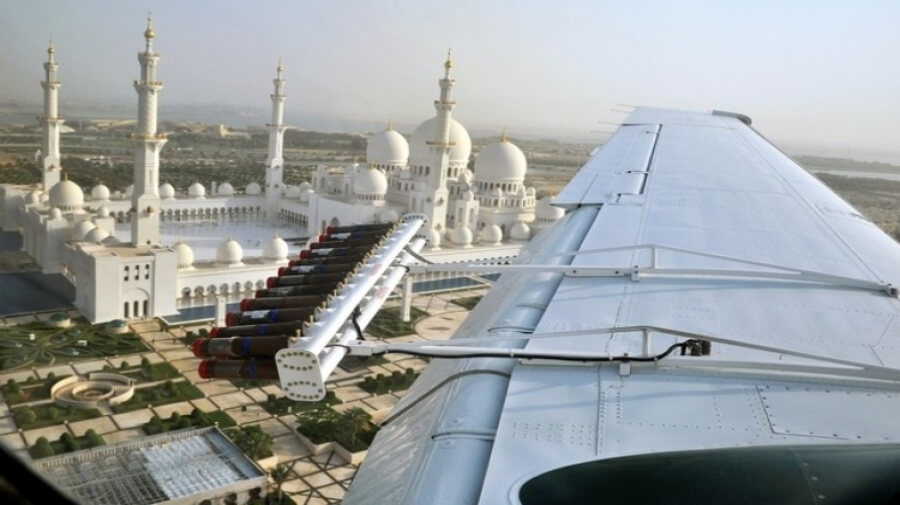
Nearly three decades on from its initial work on cloud seeding, the UAE has shown the world what can be achieved by capitalizing on the UAE’s vision and rapidly evolving innovation ecosystem through its world-renowned UAE Research Program for Rain Enhancement Science (UAEREP). The National Center of Meteorology (NCM), of which I am the director, leads the country’s rain enhancement efforts through the UAEREP, and we are proud to continue to advance the vision of the UAE leadership in leveraging cloud seeding for water security.

The program was launched in 2015 under the patronage of His Highness Sheikh Mansour bin Zayed Al Nahyan, Deputy Prime Minister and Minister of Presidential Affairs, with a call for research ideas seeking the best in rain enhancement research. Hundreds of international scientists and engineers were invited to submit their proposals for promising research to improve rain enhancement, from which over three cycles so far we have selected nine winners to receive grant funding for further research and development

The result is that the UAEREP has nine awardees that today are running active projects covering a number of key topics in rainfall enhancement, ranging from the development of new seeding materials, to the use of unmanned drones for cloud seeding operations, to advanced weather modeling to understand atmospheric chemistry and physics as they relate to rainfall and cloud seeding operations. Major achievements have been made through these awarded projects. For example, Dr. Linda Zou, a 2015 UAEREP winner and Khalifa University Professor of Chemical and Environmental Engineering, is working to scale up the novel cloud seeding material she developed.

Recently, the National Center of Meteorology has announced a new project that establishes a rigorous, scientifically-based international research and development program to further leverage the value of the UAEREP projects. This R&D program, in coordination with Khalifa University of Science and Technology; will support and add to the efforts the UAEREP as an international research initiative to stimulate and promote scientific advancement and the development of new technology.

The UAEREP will integrate the program’s nine awarded projects, which are currently running in three program cycles, into an advanced model titled “Integrating Schemes from UAEREP projects into a unified multi-component atmospheric model”.

This integration is aimed at improving weather forecasting accuracy by leveraging the research findings of the awarded projects. This will be done by developing a unified model that integrates studies of micro physics, cloud chemistry, and cloud electrical properties. The model is to be developed at Khalifa University’s facilities and made operational in time for the completion of the UAEREP’s current third cycle at the end of 2020. KU is also hosting a research platform for integrated weather research and forecasting models and we are working with the university to study the models for potential later adoption into NCM operations. The researchers will also examine the effect of aerosols on cloud accumulation and development and the role terrain plays in the formation of various types of clouds.

The goal of this initiative is translation of the solid research achievements of the UAEREP into successful outcomes that benefit arid and semi-arid regions around the world through new technologies. These will improve the quality of cloud-seeding operations while also providing sustainable solutions to water-scarcity challenges.

We look forward to working with Khalifa University and other leading scientific institutions to leverage advanced scientific innovation to bring the crucial benefits of enhanced rain as a viable water source to the UAE and other arid countries.

Dr. Abdullah Ahmed Al Mandous is the Director of the National Center of Meteorology, UAE.

An edited version of this op-ed appeared in the Khaleej Times on 7 January 2019.

HH Sheikh Hamed bin Zayed Witnesses Khalifa University’s Class of 2019 Graduation Ceremony

Degrees Presented to 285 Bachelor’s, Master’s and PhD Graduates

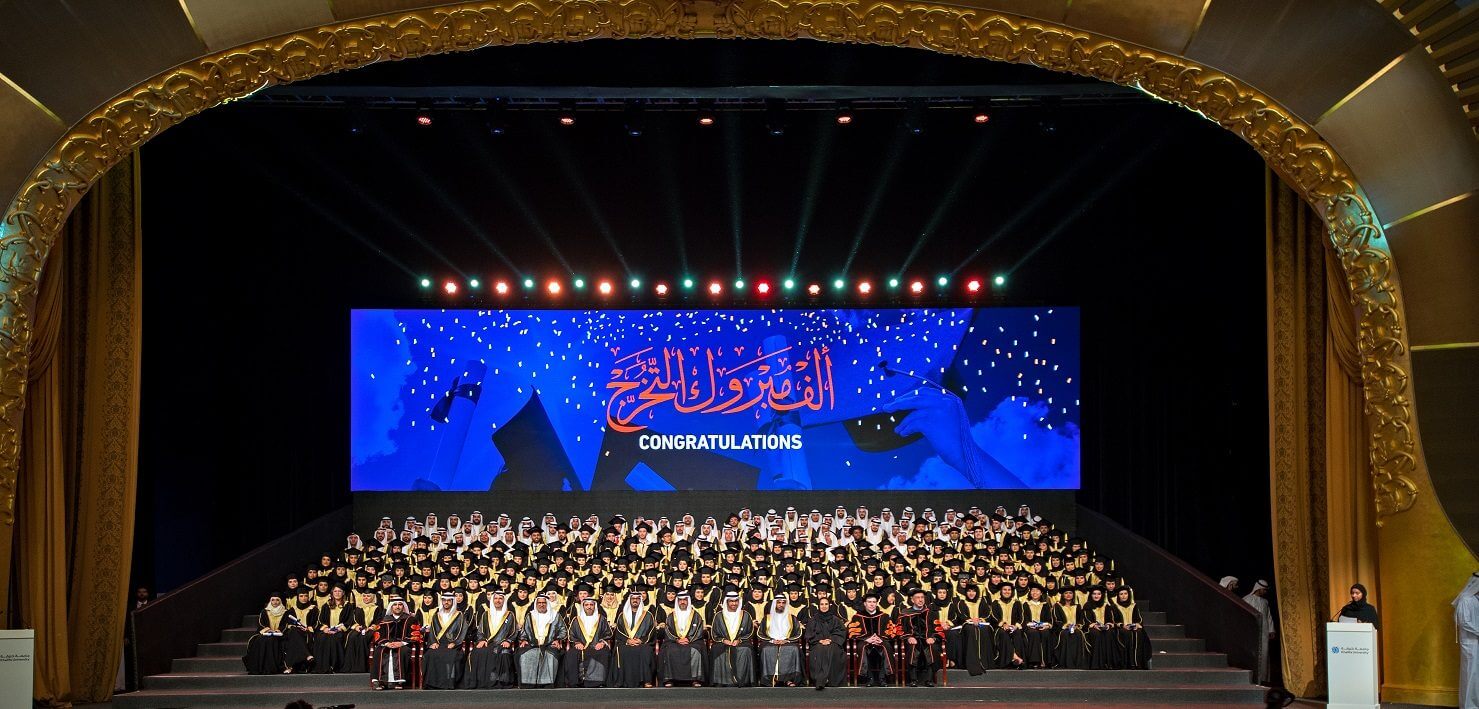
Under the patronage of His Highness Sheikh Mohamed Bin Zayed Al Nahyan, Crown Prince of Abu Dhabi and Deputy Supreme Commander of the UAE Armed Forces, His Highness Sheikh Hamed Bin Zayed Al Nahyan, Chairman of Abu Dhabi’s Crown Prince’s Court and Chairman of Khalifa University’s Board of Trustees, attended on 17 February the graduation ceremony of Khalifa University Class of 2019, which included 285 Bachelor’s, Master’s and PhD students.

Others who were present at the ceremony included members of Khalifa University Board of Trustees, HE Eng. Hussain bin Ibrahim Al Hammadi, UAE Minister of Education and Cabinet Member, HE Dr. Sultan Ahmed Al Jaber, Minister of State, Chief Executive Officer, Abu Dhabi National Oil Company (ADNOC) and Chairman, Masdar, HE Sheikh Abdulla Bin Mohamed Al Hamed, Chairman of Department of Health, HE Eng. Suwaidan Rashed Al Dhaheri, Musanada’s Chief Executive Officer, HE Ali Rashid Qanas Al Ketbi, Acting Director, Human Resources, Abu Dhabi Government, HE Abdul Munim Al Kindy, Director, Exploration, Development and Production Directorate, ADNOC, and HE Abdulaziz Abdulla Alhajri, Director, Refining and Petrochemicals Directorate, ADNOC, Dr. Nawal Khalifa A Hosany, Deputy Director-General, Emirates Diplomatic Academy, in addition to members of the University’s faculty and staff, the graduates and members of their families.

The ceremony celebrated graduation of a total of 285 students, 14 of which were PhD students, 79 Master’s and 192 Bachelors of Science and Engineering programs. Of the total, 117 were male students and 168 female. The number of UAE nationals totaled 212, while international students were 73.

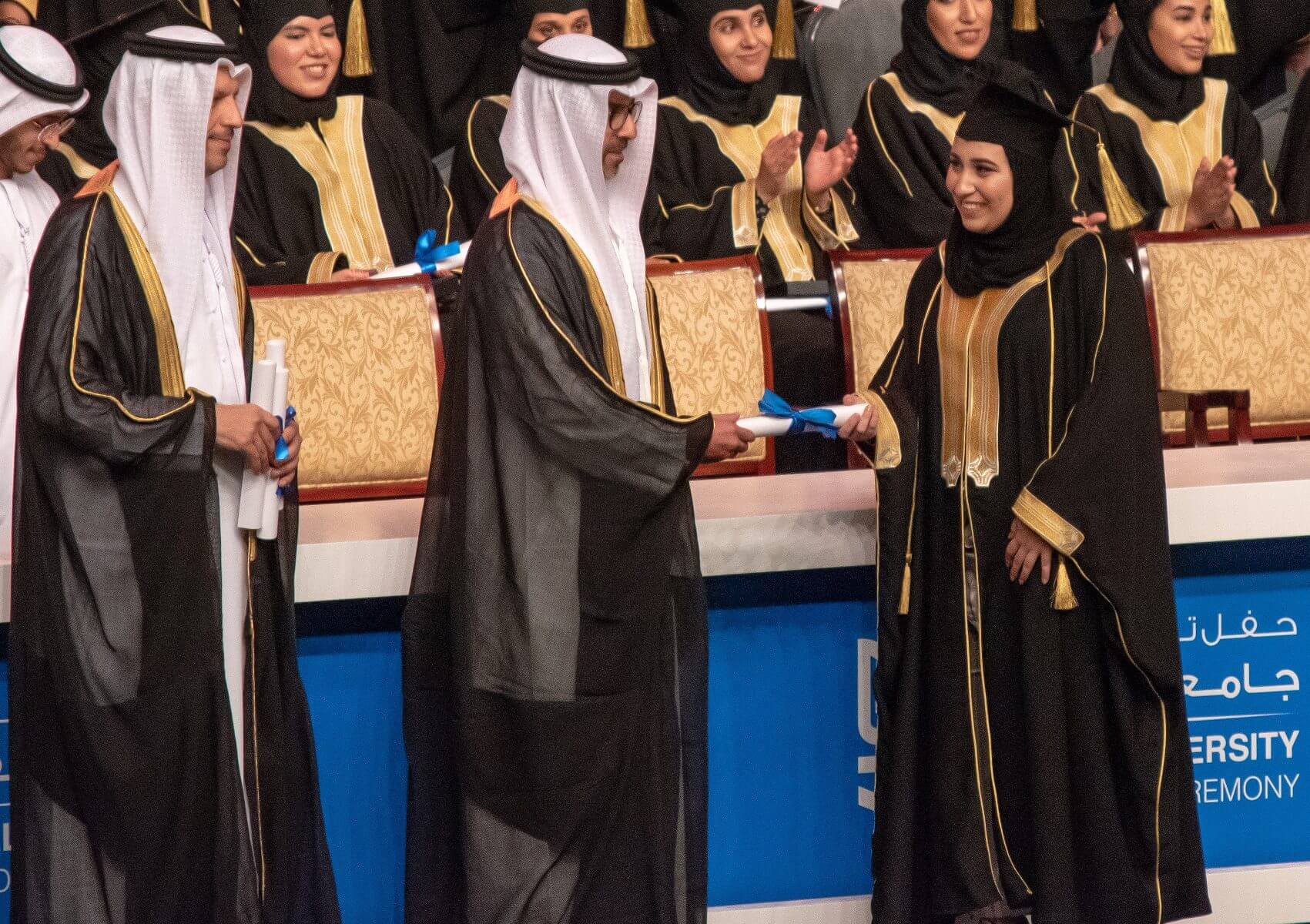
HH Sheikh Hamed Bin Zayed Al Nahyan handed over the degrees to the graduates and congratulated them on the success and graduation from the university with competence and excellence. He wished them continued efforts in furthering their education and enhancing their knowledge gained through research and keeping up with the latest advances, in their respective fields of study.

His Highness Shaikh Hamed stressed that Khalifa University, thanks to the wise directives of His Highness Sheikh Khalifa bin Zayed Al Nahyan, President of the UAE, and the support of His Highness Sheikh Mohamed bin Zayed Al Nahyan, has enjoyed prestigious ranking both regionally and internationally through its distinguished academic programs and advanced research programs. He also pointed out that achieving these milestones will continue to further cement the University’s position to be among the top in the world.

In his speech, Dr. Arif Sultan Al Hammadi, Executive Vice President, Khalifa University, expressed his gratitude to His Highness Sheikh Khalifa Bin Zayed Al Nahyan, the President of the UAE, for his wise leadership, and HH Sheikh Mohamed bin Zayed Al Nahyan, Crown Prince of Abu Dhabi, Deputy Supreme Commander of the UAE Armed Forces and Chairman of the Abu Dhabi Executive Council, for his role in bringing about a qualitative leap not only in Khalifa University but also in the education and research sector in the country in general.

Dr. Arif Sultan Al Hammadi said: “We are grateful to the University’s Board of Trustees, headed by His Highness Shaikh Hamed bin Zayed Al Nahyan, for their time, efforts, leadership, and guidance that put the University in an advanced position in research and innovation, in the fields of science, engineering and technology.”

He added: “Over the last few years, Khalifa University has played a pivotal role in supporting the country’s key economic sectors by providing human capital equipped with required competencies in innovation and science. The university has also been collaborating directly with various institutions in these sectors to produce research aimed at upgrading local industries to international standards, thereby supporting research and development as well as finding solutions for improving performance, reducing costs and thus achieving greater returns.”

Citing more specific examples of the role of research at Khalifa University in supporting the country’s economy, Dr. Al Hammadi made special mention of the ones achieved by researchers at the Emirates ICT Innovation Center (EBTIC) , the Masdar Institute and the Petroleum Institute and Khalifa University Center for Biotechnology, and other research projects that have helped the University achieve a large number of patents for the UAE, which aim to support the economy, thus bringing the University top ranking in “research” and “Industry Income”, among other universities in the Arab world according to the globally respected Times Higher Education ranking organization.”

During the ceremony, Mechanical Engineering graduate Sara Mohammed Al Muhairi, delivered the graduates’ speech.

In academic rankings, for the third year in a row, Khalifa University ranked first in the country, and the 32nd among Asian universities, while remaining among the top 200 for Engineering & Technology subjects in the Times Higher Education (THE) rankings. It is also placed among the top 31% of the 1,011 global institutions assessed by the 2019 Quacquarelli Symonds (QS) World University Rankings.

Clarence Michael
News Writer
18 February 2019

First Student with Applied Math and Statistics ‘Major’ Graduates from Khalifa University

Nada Wael Samir Elsokkary, Only Undergraduate Presenter at 2018 IEEE Globecom Conference in Abu Dhabi, Also Receives ‘Excellent with Highest Honor’ Award

When Nada Wael Samir Elsokkary walked among the 285 PhD, Master’s and bachelor students as part of the Class of 2019 Graduation ceremony, she had reason to be proud. She was the first student to graduate with a BSc in Applied Mathematics and Statistics (AMST) from Khalifa University.

However, this graduation milestone is not all. Elsokkary appeared on the Khalifa University President’s List in seven out of nine semesters, completing the AMST program with a Cumulative GPA of 3.82 and an award of ‘Excellent with Highest Honour’. She was also the only undergraduate presenter at the Quantum Communication and Information Technology workshop during the IEEE Globecom Conference held in Abu Dhabi in December 2018, where she won accolades from experts in the field of quantum technologies for her technical work and clarity of presentation.

Dr David Sheehan, Dean, College of Arts & Sciences, Khalifa University, said: “Congratulations to Nada Elsokkary who has become the first B.Sc. graduate from Khalifa University’s Applied Mathematics and Statistics program. Her achievements reflect the quality of knowledge that is imparted to students of this program and across other undergraduate, graduate and PhD programs at our university. It is this sharing of knowledge in inter-disciplinary streams that makes us one of the top-ranking institutions in the region. I wish Nada the best and I am sure she will continue to excel in all her endeavors.”

A jubilant Elsokkary said: “When I think about the journey I took to get here, I am overjoyed and inspired to keep following my passion and use it to create some meaning in my life. I am beyond grateful for the opportunity that Khalifa University has given me and the many doors it has opened up. I truly look forward to representing Khalifa University as an alumnus in my future endeavors and achievements.”

Elsokkary, who had to change schools seven times in three different continents by the time she was 12 years old, declared the AMST program as her major at the commencement of her sophomore year because of her sheer love and enthusiasm for Mathematics.

She said: “Changes during my childhood were never easy, but I found much comfort and fascination in Mathematics which seemed to be the only constant – a universal language. As I got older, I noticed how thrilling it was for me to solve math problems and study proofs. I did not realize it at that time, but mathematical reasoning was shaping my personality, my thoughts, and my decisions. Thus, when it was time to choose what I wanted to learn as an undergraduate, Mathematics had to be it!”

Of course, she had to overcome many who attempted to dissuade her from taking up Applied Mathematics and Statistics major. She added: “Completing this degree was an uphill battle against misconceptions and the difficulties of being the first and only person taking the courses. There were many times when I felt like a leader and at other times felt so dejected, but my certainty that this was the right decision never wavered.”

The B.Sc. in Applied Mathematics and Statistics program was the first non-engineering undergraduate degree to be offered by Khalifa University, and it has shown steady growth in enrollment over the last four years. At present the total enrollment in the program is 59 students, of whom 44 are scholarship students supported by the UAE Ministry of Education on the ‘Future Teachers Program’.

Earlier, Elsokkary’s Senior Research Project, “Quantum Computational Methods in Financial Mathematics”, began in January 2017. She was tasked with gathering data from the Abu Dhabi Securities Exchange (ADSE) and calculating relevant statistics using Microsoft Excel. She then wrote a short program in MATLAB to optimize the Markowitz financial portfolio. The results were presented at the IEEE 21stAnnual High Performance Extreme Computing Conference (HPEC ’17) that was held from 12-14 September 2017 in Massachusetts, US, and were published in the proceedings.

Elsokkary pursued this research further for her year-long Senior Research Project – a required research activity in the final year of the AMST B.Sc.

Dr. Robert Bennell, Interim Associate Dean for Undergraduate Studies, College of Arts and Science, said: “For this extended project, Elsokkary was given two tasks – to work with our collaborators at Oak Ridge National Laboratory to develop a graphical-user-interface (GUI) for the D-wave quantum processor using the Python programming language. This GUI will enable Khalifa University to showcase applications of quantum computing technology to the local and regional scientific community and industry.”

Dr. Bennell added: “Secondly, Elsokkary had to explore the loading and compilation of programs in adiabatic quantum computers. It was these results that she presented at the IEEE Globecom Conference in Abu Dhabi, earning a name for herself and for Khalifa University.”

A truly delighted Elsokkary is looking ahead with even more enthusiasm. “I am pursuing a career in data science and analytics in order to utilize my mathematical background to make a societal contribution,” she added.

Clarence Michael

News Writer

21 February 2019

UNESCO Selects Alumni’s Research for ‘2019 Remarkable Women in Technology Exhibition’ in Paris

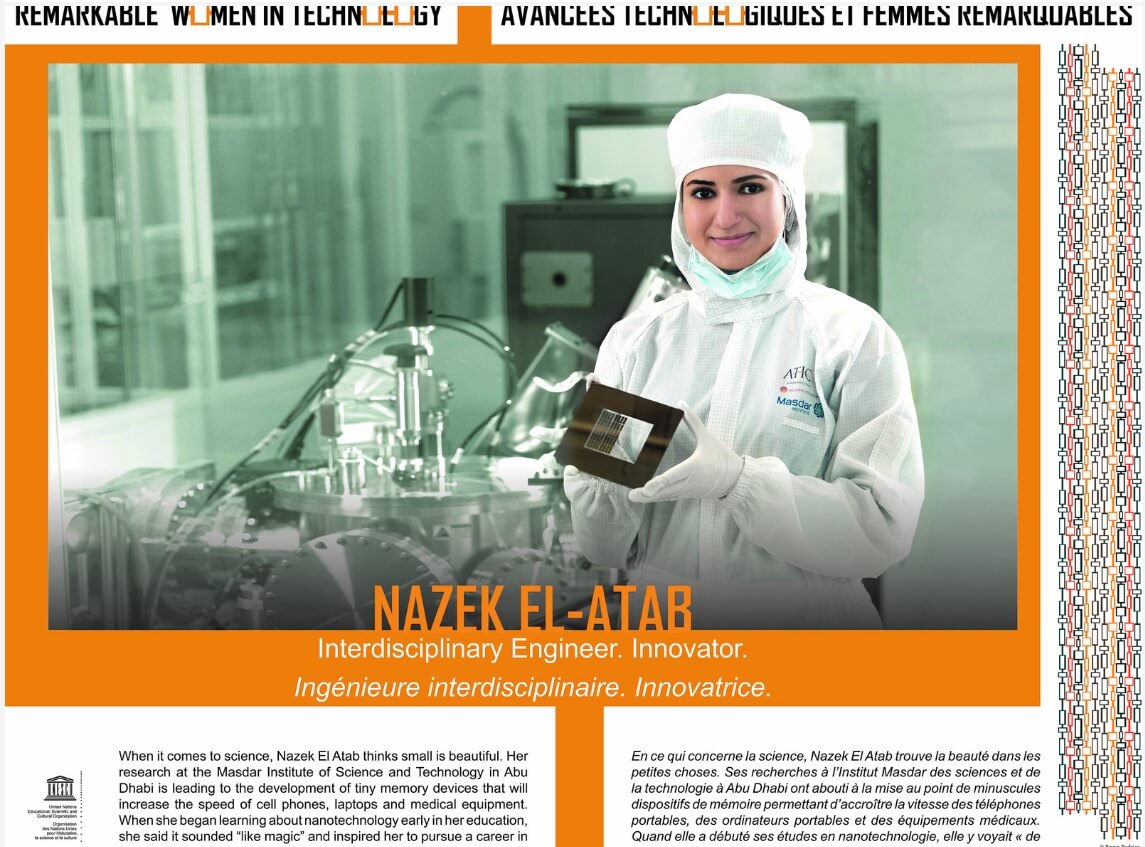
Dr Nazek El Atab’s Work on Nanomaterials-Based Memory Devices Selected to be Among Portraits of 23 Significant Women Contributors

The research works of Dr Nazek El-Atab, an alumni of Khalifa University’s Masdar Institute, is being featured at the 2019 UNESCO Remarkable Women in Technology Exhibition along with 22 other leading women contributors and innovators.

From quantum physicists to artificial intelligence experts, the exhibition celebrates 23 women in a wide range of technological fields, divided into three groups – pioneers, leaders and influencers. The portrait of Dr El-Atab’s work on nanomaterials-based memory devices was selected in the ‘Leaders’ group, and is being showcased in Paris until 31 March.

In its citation, UNESCO said the exhibition presents the portraits of 23 women who “have made significant contributions to one of the most impactful sectors of our time and made their mark in a field in which women are typically under-represented. Their career paths are an inspiration to women and girls all over the world to take the leap into impactful technology careers and use their skills for sustainable development.”

Dr El-Atab said she felt extremely honored to have been selected for the 2019 UNESCO ‘Remarkable Women in Technology Exhibition. She said: “It is absolutely delightful to receive recognition for my work. Also, by shedding more light on my research and profile in this exhibition, I hope that more women and girls will be motivated to work in STEM fields in which women are usually under-represented.”

She added: “Khalifa University’s Masdar Institute paved the way for my success by providing me with access to state-of-the-art laboratories and cleanroom facilities in addition to a  providing me with a strong technical background. Also, this would not have been possible without the support and guidance from my PhD advisor, Dr. Ammar Nayfeh.

Dr El-Atab’s faculty advisor Dr Ammar Nayfeh, Associate Professor, Department of Electrical and Computer Engineering, said: “I would like to congratulate Dr Nazek El-Atab on being selected for the UNESCO Remarkable Women in Technology Exhibition. She did remarkable research as a PhD student at Masdar Institute, now part of Khalifa University.  She has distinguished herself with scientific research and publication, and is a great ambassador for women in science. We are all proud of Dr El-Atab’s achievements.”

International honor is not new to Dr El-Atab, who was selected for the 2017 L’Oréal-UNESCO For Women in Science (FWIS) Rising Talent Award for the African and Arab region. She was among 15 international female researchers to have won the award, when she received €15,000 (AED58,700) for her research that focused on fabricating non-volatile, low-power memory devices with enhanced performance. The women were awarded for their contribution to quantum physics, physical sciences and astrophysics.

That year, His Excellency Michel Aoun, President of Lebanon, and His Excellency Saad Hariri, Prime Minister of Lebanon, honored Dr. El-Atab, for winning the 2017 L’Oréal-UNESCO For Women in Science (FWIS) Rising Talent Award for the African and Arab region.

Earlier Dr El-Atab was also one of the four recipients of the 2015 L’Oreal-UNESCO For Women in Science (FWIS) Middle East Fellowships, which included a €20,000 (AED78,500) grant towards her research. She had used part of the fellowship money to present her research at the IEEE Nanotechnology Conference in Japan in 2016. Dr El-Atab also used the monetary award to conduct research at Stanford University, US.

Dr El-Atab is looking forward to become a successful faculty, working on impactful research projects related to futuristic electronics, contributing to the society, while inspiring and encouraging more women to pursue careers in STEM areas.

News Writer

18 March 2019

Khalifa University Wins 2019 MENA SPE PetroBowl® Regional Championship in Bahrain

Five-Member SPE Student Chapter Team Now Eligible to Take Part in International PetroBowl® Championship at ATCE 2019 in Canada

 A five-member team of the Society of Petroleum Engineers (SPE) Student Chapter from the Khalifa University of Science and Technology has become the first place winners of the 2019 MENA SPE PetroBowl® Regional Competition in Manama, Bahrain.
The SPE Student Chapter team comprising of Petroleum Engineering students Anoud Al Shukaili, Deena Elhossary, Omar Chaabi, Thaer Ismail and Waleed Diab competed against 10 teams including regional heavyweights and previous champions to win a place in the international PetroBowl® Championship that will be held during the SPE Annual Technical Conference (ATCE 2019) from 30 September – 2 October in Calgary, Canada.

The PetroBowl competition pits SPE student chapter teams against each other in a series of quick-fire rounds, answering technical and nontechnical industry-related questions. The challenge was organized in conjunction with the 21st Society of Petroleum Engineers Middle East Oil & Gas Show and Conference (MEOS 2019) from 18-21 March in Bahrain.

Team members, elated by their regional win, are looking forward to the final stage when they will compete against other regional champions.

Professor Dr John Williams, Associate Professor Dr Hadi Belhaj and Assistant Professor Dr. Emad Walid Al Shalabi from Petroleum Engineering department were the faculty advisors who trained the students for the event.

Deena Elhossary said: “I feel overjoyed that my team members and I have achieved great success at the 2019 MENA SPE PetroBowl® Regional Competition, proudly representing Khalifa University and the UAE. I am honored to be part of the team which consists of very hard working, intelligent and supportive individuals.”

Omar, who led the KU SPE team, felt overcoming teams from King Fahd University of Petroleum and Minerals (KFUPM) in the semi-final and King Abdullah University of Science and Technology (KAUST) in the finals was truly amazing.
Omar said: “I feel really proud and honored to be part of this team, let alone being the captain. Everyone worked so hard for it, and thankfully we were able to become the MENA Regional Champions.”

It was Waleed who summed up the team’s persistence that brought them the success. He said: “In 2017, we came third in the regional competition and then went out in the second round of the international competition in Texas. Both were heavy losses, as we felt we really could have done much better.”

Waleed was referring to the SPE Student Chapter team that became the only one from the Middle East region to make it to the second round with the highest scores in the fiercely contested 2017 PetroBowl International Competition in Texas, US.

Explaining what brought about their success this time around, Waleed said: “We went the extra mile at every level, reviewed everything we have ever studied in Petroleum Engineering, even covered subjects not taught at our university, and memorized industry statistics. In addition, we read history books looking for all the important milestones, technological achievements and historical events related to the oil and gas industry. Furthermore, we met two or three times per week to rehearse and practice. In the end, our efforts paid off, and despite being the under-dogs, we won.”

The toughest round was the semi-final, when the team had to face 2017 champions, who knocked the KU team out that year, according to Waleed. But with a spectacular performance, the KU team played the best game ever and correctly answered one question after the other, not giving the opponent any chance. “From then on, it was only a matter of time although the final was just as tough. The semi-final win gave the level of confidence we needed,” remarked Waleed.

Thaer Ismail believes that the training and hard work brought the team victory. Thaer said: “I feel that the confidence and experience we got from the regional win will help us vastly in the international PetroBowl® to be held in Calgary, Canada in October.”

Omar concluded “Now, we are looking forward to the international competition and we are planning to give it our best and hopefully, we will come back as global champions.”

News Writer

24 March 2019

EBTIC to Mark 10 th Anniversary with Latest Technology Demonstrations at Khalifa University Main Campus in Abu Dhabi

Celebrations on 24 April to Showcase EBTIC’s Alignment with UAE’s Knowledge Economy Transformation Goals and Abu Dhabi Vision 2030

The Emirates ICT Innovation Center (EBTIC), founded by Khalifa University, Etisalat and BT (British Telecom), and supported by the UAE’s ICT Fund, will mark its 10<> year anniversary with the latest technology demonstrations on an array of research projects.

The celebrations scheduled for Wednesday 24 April 2019 will mark a decade of successful contributions by EBTIC. During the event, three members of EBTIC’s Technical Advisory Board will highlight current research directions and challenges, artificial intelligence (AI) applications that impact the society, and EBTIC’s evolution over the decade.

In addition, accounts of how EBTIC has collaborated with partners that has helped students and researchers, as well as EBTIC’s landmark achievements over the years will be highlighted. Details of success on EBTIC’s technology startup initiatives will also be shared with guests at the event.

Dr. Nawaf Al Moosa, Acting Director of EBTIC and Assistant Professor at Khalifa University said: “The 10th year anniversary celebrations provide us an opportunity to showcase our landmark achievements that continue to benefit the industry and the community. As an industry-government-academia partnership, EBTIC possesses unique capabilities to develop intelligence systems and applications-focused research and innovation, delivering business benefits to partners locally and internationally. With over 40 patents granted and 60 more currently being filed in ICT, big data, and data storage, EBTIC is delivering on the promise for scientific excellence, as we enter the next decade.”

Over the years, EBTIC has produced more than 400 scientific publications, trained more than 400 students, developed their expertise and refined their skills in innovation and research, and organized 10 specialized exhibitions globally in communications and information technology. It currently hosts 40 Master’s and PhD program students and has 35 full-time staff guiding researchers, including 16 UAE nationals.

EBTIC’s activities include a training course organized for UAE Government employees, which focuses on theoretical principles and development of practical skills in artificial intelligence. The course, which began in 2015 and is organized in cooperation with The Telecommunications Regulatory Authority (TRA), has promoted the transfer of technology to various government entities, with more than 100 employees trained in more than 20 government agencies.

For four successive years, EBTIC has also organized the Innovation and Entrepreneurship Bootcamp, teaching young Emirati students ways to turn fledgling ideas into a feasible business ventures in the future

In alignment with the UAE’s knowledge economy transformation objectives and Abu Dhabi Vision 2030, EBTIC aims to advance intelligent systems technologies for the Next Generation Networks (NGNs) and NGN-enabled ICT applications and services, to put in place the support infrastructure to facilitate, develop and enable the digitally networked economy in the UAE and overseas.

News Writter

17 April 2019

Khalifa University Wins Five Out of 11 Best Paper Awards at UAE Graduate Students Research Conference 2019

Nearly 50% of Total 120 Papers for GSRC 2019 Came from Khalifa University Students and Faculty

Khalifa University students and faculty have won five out of 11 Best Paper Awards at the fifth UAE Graduate Students Research Conference (GSRC 2019) that concluded recently.A total of 120 papers were presented at GSRC 2019, of which nearly 50% came from Khalifa University graduate students across various engineering disciplines.

In the ‘Information Technology, Computer Science, And Information Systems Track’, Khalifa University won both the first and second places, while in the Engineering And Physical Sciences Track, the university won the first and third places. The other second place award came in the Business And Management Track.

Khalifa University won first place in the Information Technology, Computer Science, And Information Systems Track for the paper titled ‘Automatic Arabic Text Summarization Based on Fuzzy Logic’ submitted by Lamees Al Qassem, Di Wang and Dr. Hassan Barada, Associate Dean for Graduate Studies and Professor, Department of Electrical and Computer Engineering.

The other first place award came in the Engineering And Physical Sciences Track for the paper titled ‘Lipoic Acid and Ascorbic Acid as Inhibitors of Human Amylin Aggregation and Cellular Toxicity’ submitted by Sarah Azzam, Suryani Lukman and Dr. Sung Mun Lee, Associate Professor, Department of Biomedical Engineering.

The paper titled ‘Cryptomining Detection in Container Clouds Using System Calls and Explainable Machine Learning’ submitted by Rupesh Karn and Dr Ibrahim Elfadel, Professor, Electrical and Computer Engineering, won the second place in the ‘Information Technology, Computer Science, And Information Systems Track’. The other second place award came in the Business And Management Track for the paper titled ‘Utilizing System Modelling Techniques in Lean Healthcare Applications’ submitted by Maitha Alkaabi, Dr. Raja Jayaraman, Associate Professor, Department of Industrial and Systems Engineering, and Dr. Mecit Can Emre Simsekler, Assistant Professor, Department of Industrial and Systems Engineering.

A paper titled ‘Engineering an Artificial Biomimetic Lymph Node’ submitted by Aya Shanti, Dr.Cesare Stefanini, Associate Professor, Department of Biomedical Engineering, Khalifa University, Bisan Samara, Amal Abdallah, Dr. Jeremy Teo, and Dr. Jiranuwat Sapudom won the third place in the Engineering And Physical Sciences Track.

Khalifa University continues to be a frontrunner in producing cutting-edge research. The University had earlier won five Best Paper Awards at the 2018 GSRC, an exciting interdisciplinary academic platform to share the research being conducted at universities across the UAE.

The GSRC aims to provide opportunities for graduate students to share their research work,receive scholarly feedback and network professionally.

News Writer
22 April 2019

An Inspiring Look: The Black Hole Illuminated

A Global Effort to Capture the Most Elusive Culprit

For something presumed so essential to the structure of galaxies and, by extension, the universe, we know surprisingly little about black holes. A major reason for knowing so little is due to the fact we can’t even see them; we see light, and not even light can escape a black hole’s immense gravitational pull. Nearly a century’s theoretical physics indicates that black holes were pervasive throughout the cosmos, a widely accepted view among physicists, despite the absence of any tangible evidence.

Albert Einstein had a few doubts as to whether his theory -that matter can curve space and time- was correct. His theory of general relativity hinged on the idea of areas of space with massive amounts of gravity. We’ve witnessed hints of the existence of black holes since 1990, typically when a star ventured too close to one, but a direct observation of an event horizon remained elusive. Until now.

With the publication of the first ever picture of a black hole this month, any residual doubt that they exist is gone. The image is a groundbreaking achievement for the Event Horizon Telescope (EHT), an international observatory spanning the globe. Two years ago, an international collective of scientists joined forces to take pictures of two black holes located at the centers of galaxies: one in the Milky Way, known as Sagittarius A*, and one in a nearby galaxy called M87, known as M87. Scientists linked eight radio telescope observatories in Chile, Mexico, Antarctica, Spain, Arizona and Hawaii and combined their images taken over the course of a week in April 2017. Linking radio dishes across the Earth created a virtual planet-sized telescope with a magnifying power capable of imaging black hole event horizons.

“Rather than looking at the black hole itself—which does not permit light to escape—researchers looked at gas surrounding it in the event horizon. The gas in this area heats up to billions of degrees, creating a silhouette which can be measured,” said Dr. Jorge Dias, Professor of Computer Imaging at Khalifa University. “Just taking pictures of the black hole from various points around the Earth isn’t enough, as the light waves rolling in from M87 were never collected at a single focal point. Instead, the data was received by each telescope and physically carried to a single location to be processed”.

Dr. Jorge Dias is part of the team at Khalifa University that works on Image and Signal Analysis. His work impacts the viability of a vast swath of future tech, from computer vision, to robotics, and machine learning. Unlike our own vision, which we primarily experience seamlessly and simultaneously to cognition, machines take in data through sensors and transmit numbers, which are interpreted through predefined algorithms. Machine learning is tightly related to sensory input and remains a focus for researchers.

“The Global mm-VLBI Array had to cancel out the background static created by taking images from across the world and sharpen them. As there are no direct connections between the radio dishes, the recordings at each site needed to be stable enough to be compared without ‘jitters’, with VLBI using atomic clocks to time-stamp the recorded data. To ensure recordings were made simultaneously, VLBI required synchronization at the level of a millionth of a second, achieved through using Global Positioning Service clocks at each geographical location,” explained Dr. Dias.

Once all the data was measured and aggregated, the picture still needed to be created. The light collected gives an indication of the structure of the black hole, but since there are only eight telescope locations, there still wasn’t enough data to reconstruct a picture. To make an image possible, imaging algorithms were developed to fill in the gaps.>

“Emerging computational methods push the boundaries of interdisciplinary imaging to fantastic results. The Continuous High-resolution Image Reconstruction using Patch priors (CHIRP) algorithm used machine learning to fill in the gaps, much like completing a jigsaw puzzle with missing pieces,” Dr. Dias.

Astronomers had so far only observed black holes by the behavior of the objects around them. The visible light, x-rays and radio waves emitted by stars can be seen by advanced telescopes to measure a black hole’s effect on its surroundings—meaning scientists had an idea of what a black hole would look like. Computer-powered observatories scan for and record bright points of light that are emitted as a black hole affects a nearby star; the CHIRP algorithm takes this data and identifies common patterns among black holes. It then learns these patterns and uses them to predict what would appear in the areas we can’t get data for using the EHT. And it’s not like we didn’t have a lot of data: in one night, the EHT generated enough data to fill half a ton of hard drives. Getting access to the data from the South Pole Telescope required waiting for the end of the Antarctic winter, so the hard copies could be shipped out.

The CHIRP algorithm is an example of the concept of neural networks. Their mechanism is closely related to how the human biological neural network functions—learning from examples. Neural networks have a set of inputs and one output, which they are taught to give based on some fixed input patterns. If a neuron encounters an input pattern it has not been taught, it outputs something as closely associated with its taught input pattern as possible.

Continuing the puzzle analogy, if you know the puzzle is supposed to show a face, you can assemble the outline and then use the computer algorithm to create a recognizable image. The problem? There are billions of different faces and it’s impossible to know which face would be the right one. We could have an infinite number of possibilities for the image of a black hole, so how do we know which is correct when we don’t know what it looks like in the first place?

To combat this, the Event Horizon Telescope Collaboration split into four separate teams to analyze the data independently and ensure no bias affected the resulting image. Different features were imposed on the input to the algorithms, and the output images were compared. If a lot of different features give the same kind of final image, the algorithm can be trusted. An elaborate series of tests was conducted to ensure the image was not the result of a technical glitch or fluke, especially since creating the image required filtering out the noise caused by atmospheric humidity warping radio waves and precisely synchronizing the signals captured by the telescopes, among other factors adding to the difficulty.

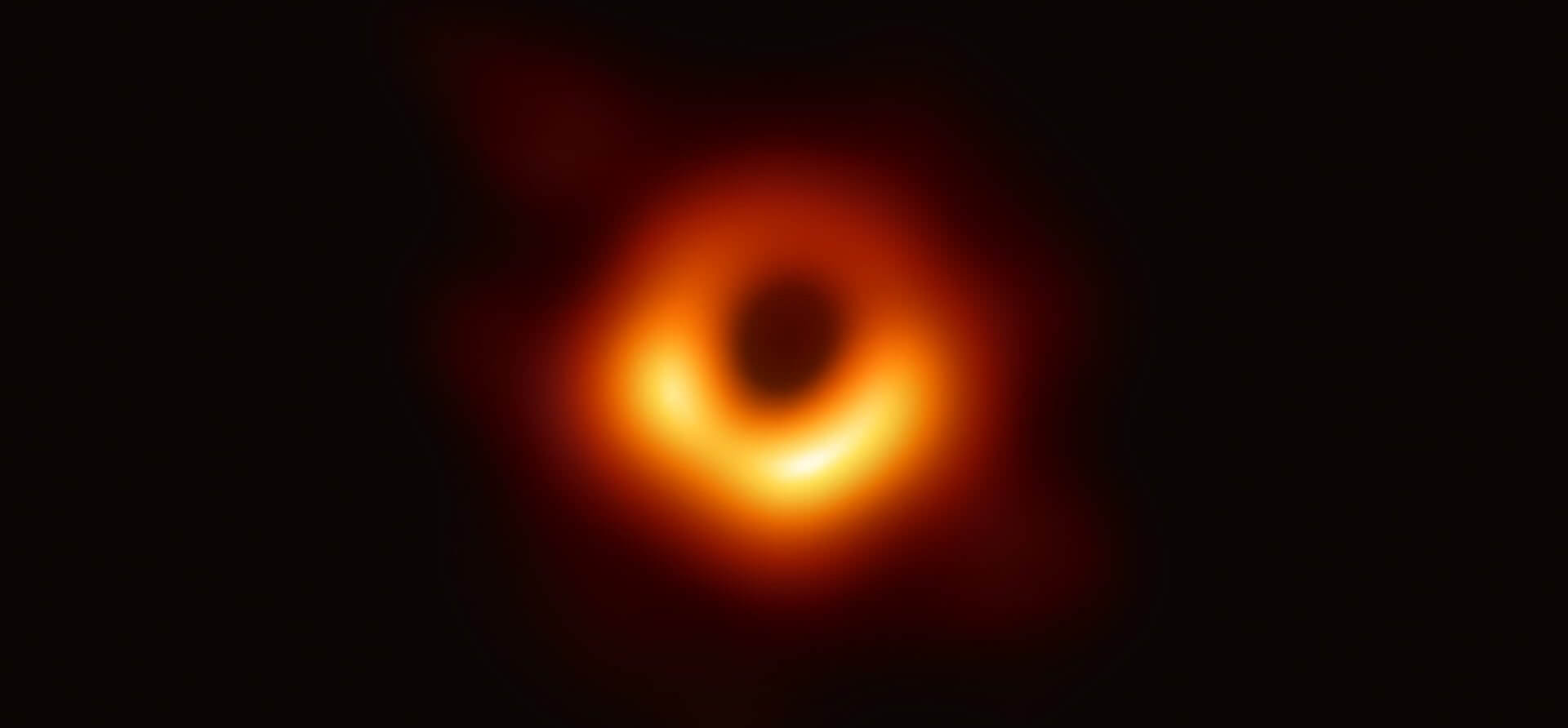
After months of the teams working independently, they reconvened in Cambridge, Massachusetts, and ran their algorithms in the same room, at the same time. The result? The now famous image of the supermassive black hole at the center of the M87 galaxy.

The image shows a bright ring formed as light bends in the intense gravity around a black hole that is 6.5 billion times more massive than the sun. The accretion disk—the ring of light—is on its side with regards to Earth, with the hole facing us and spinning clockwise. The image is brighter where gas flows around towards us. M87* is massive even by supermassive standards but located 54 million light-years away. Despite Sagittarius A* sitting a mere 26,000 light-years away, M87* was easier to image—and what we’re seeing in the black hole image.

Photo evidence of a black hole has been postulated for years, but finally accomplishing it is a stunning accomplishment of machine learning and Image and Signal Analysis. Modern physics starts with basic assumptions, builds verifiable theories, and then verifies them: that’s what’s happened here. A theory has to be given every possible new opportunity to fail, and the theory of General Relativity has withstood this one. This image represents the first steps into a profound new kind of astronomy and paves the way for an array of space telescopes throughout cislunar space (the volume inside the Moon’s orbit) as we seek ever sharper and clearer images of M87*, Sagittarius A* and the supermassive black holes to be found in the center of every nearby galaxy.

Jade Sterling
News and Features Writer
1 May 2019

Turmeric, Garlic and Elemental Sulfur

By Dr. Saeed Alhassan Alkhazraji

The title of this article may lead readers to assume that I will be talking about a traditional Emirati cooking recipe, or delving into the UAE’s rich culinary art.

But the idea behind this title is quite different: We use extracts of turmeric and garlic with elemental sulfur at Khalifa University to develop polymers for high-density batteries and materials with good thermal insulating properties.

Elemental sulfur is a national resource for the UAE – the country is ranked among the top producers of this raw material. The production of elemental sulfur comes from the refining and processing of oil and gas, especially acid gas.

Acid gas contains large quantities of carbon dioxide and hydrogen sulfide, which are toxic. Thus, it is imperative to remove these two acid gases from natural gas before transporting the latter to consumers.

The majority of gas fields in the UAE contain large quantities of hydrogen sulfide gas, which is processed and converted to elemental sulfur – a far less dangerous chemical than hydrogen sulfide gas. The UAE needs natural gas to meet the country’s energy demand, and the production of elemental sulfur coincides with the production of natural gas. The increase in natural gas production, however, will increase the production of sulfur, which will eventually impact the sulfur market as supply supersedes demand.

We, at Khalifa University, initiated and executed research projects focusing on the development of new materials and uses of elemental sulfur to add value to this natural resource regardless of its market value.

We have conducted many experiments to develop polymeric materials and hybrid materials containing a large proportion of elemental sulfur. These materials have the potential to be used in several applications such as desalination membranes, plastic pipes, catalysts and optics.

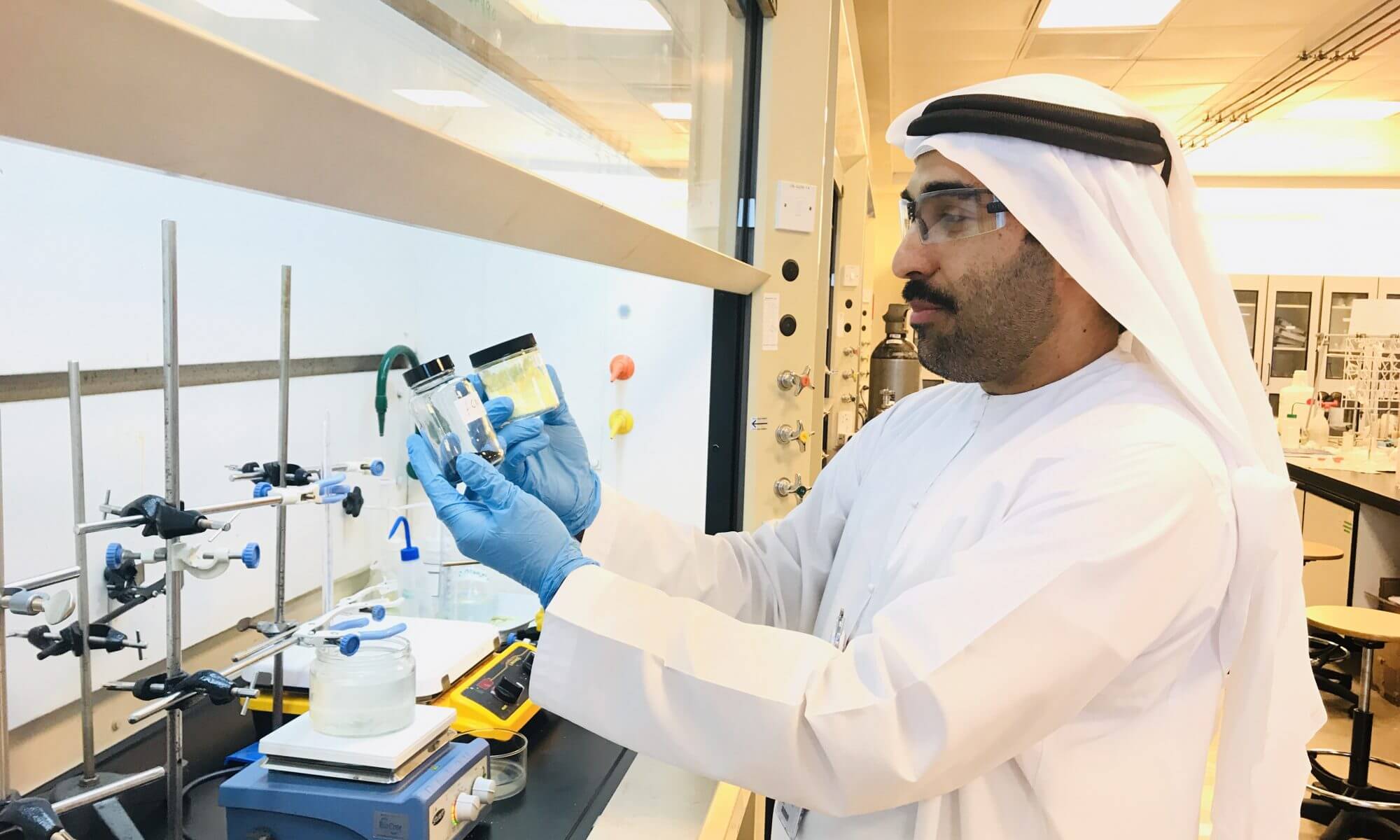
In one project, we used sulfur to prepare polymeric materials by reacting it with curcumin, a derivative of turmeric, which is a major component of UAE and international cuisines. Curcumin’s chemical structure contains unsaturated carbon bonds that react with sulfur when heated above 170 °C. This type of material is used as a cathode in lithium-sulfur batteries, which have high energy densities and lower costs compared to other batteries. The research is being conducted by Khalifa University students as part of their graduation project.

In another project, we reacted sulfur with a garlic extract called allyl sulfide. This extract is responsible for the distinctive smell of garlic and has many useful medical properties.

We produced flexible polymer materials by carrying out a reaction between the sulfur and garlic extract. These materials have unique mechanical properties compared to other polymers made of sulfur. The novel material is useful as a thermal insulator due to sulfur’s low thermal conductivity. We published the results of this study in a scientific journal and are continuing to develop the material with Khalifa University students to further improve its performance both mechanically and in battery applications.

By exploring new ways to transform a waste byproduct of natural gas processing (sulfur) with other naturally occurring compounds (like turmeric and garlic), we are creating novel materials with unexpected unique properties. This research underscores Khalifa University’s efforts to contribute to the UAE’s emerging knowledge economy while capitalizing on its vast natural resources.

Dr. Alhassan is Associate Professor of Chemical Engineering at Khalifa University of Science and Technology and Director of the Gas Research Center at the Petroleum Institute.

Paper-Thin and Flexible Batteries May Mean Better Power Sources for Space Travel & IoT Devices

By Dr. Daniel Choi, Associate Professor of Mechanical and Materials Engineering, Khalifa University of Science and Technology
 

Batteries are ubiquitous in our daily lives: they power everything from cell phones to cars, homes, aircraft and even spaceships. They are critical in enabling the next generation of electric vehicles and large-scale stationary energy storage. Yet, despite rapid advances in battery performance, battery applications are also advancing rapidly and this is creating the need for even higher performing batteries.


What is the future of battery development? Can we make better batteries that can store more energy, safely?


I am leading a team of researchers at Khalifa University looking to achieve just that in an affordable and scalable manner by advancing a paper-thin, flexible lithium-ion battery with all the energy density and safety features necessary for space applications, but which will also have huge implications for robotics and emerging Internet of Things (IoT) technologies in the post-Fourth Industrial Revolution world.


In most batteries, a liquid electrolyte allows electric charge, or ions, to flow between the electrodes of a battery. When ions are collected at either electrode, energy is stored and when ions are released, electrons flow as well to provide electricity


In current battery designs, energy limits are set by the number of ions each electrode can hold – this determines the battery’s energy density – which is the result of the chemical reactions taking place within the electrodes and at the electrode and electrolyte interfaces. With lithium-ion, today’s most commonly used rechargeable battery chemistry, the upper limits for energy density are somewhere around five times the current performance for realistic designs. In other words, the energy density of today’s lithium-ion battery chemistries can be increased significantly but is nonetheless limited.


Another limiting factor for conventional lithium-ion batteries is the issue of flammability. Non-solid electrolytes are not particularly stable at very high temperatures. These flammable electrolytes can cause batteries to explode. There are a few reasons a battery bursts into flames: most commonly, too much heat or bad battery design makes the electrolytes react in such a way that an uncontrolled positive feedback loop called ‘thermal runaway’ occurs and leads to a fire.


Solid electrolytes improve a lithium-ion battery’s thermal and mechanical stability at high temperatures, greatly reducing the risk of explosion. However, it is harder for ions to move through solids than through liquids, which makes a solid electrolyte an interesting materials science and engineering challenge.


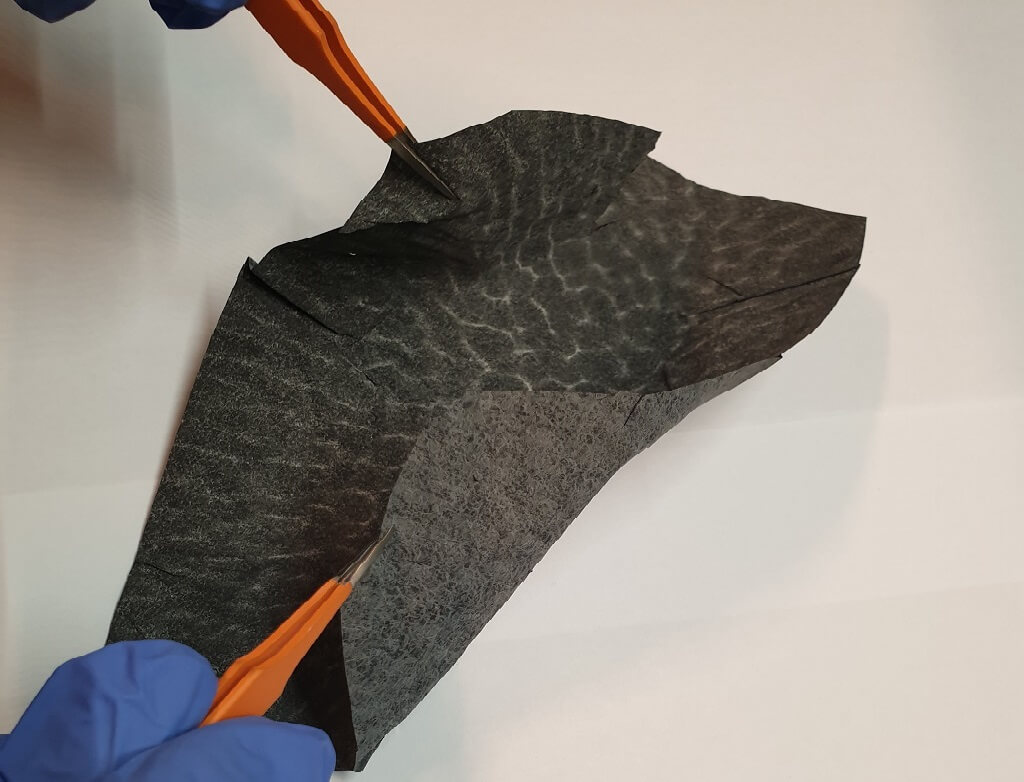
My team has come up with a novel battery design that addresses both of these performance limitations: A lithium battery that employs thin-film electrodes made from carbon nanotubes-based nanocomposites sandwiching a thin-film polymer-based solid electrolyte, which is designed for enhancement of ion transport. Essentially, our battery is a flexible, lightweight, ultra-thin sheet with a myriad of potential applications.


Carbon nanotubes (CNTs) are tiny cylindrical tubes made of tightly bonded carbon atoms, measuring just one atom thick. A CNT’s cylindrical and porous shape contributes to its large surface area, which allows it to potentially hold more ions and maintain better contact with the electrolyte that current electrodes.


The super-thin CNT-based nanocomposite anodes and cathodes mean our battery can also be super-thin and functional. The flexibility of the nanocomposite material means it can be shaped to fit any odd or underutilized space, and the large surface area means any heat produced is easily dissipated.


Our research stemmed from space application considerations, which meant we had to develop the technology appropriate for a space-faring craft. Spacecraft have important requirements including lowering the weight of the battery and ensuring safety – no one wants a battery failure in orbit. Current batteries in spacecraft comprise much of the weight of the overall craft, using very heavy materials (metal and ceramic) for the electrodes and current collectors, so reducing the weight was our primary concern.


The new battery weighs less than 20 percent of the weight of a traditional battery and while you’d expect a large trade-off in energy, for the same volume of a traditional battery, ours offers approximately 90 percent the same energy. A patent resulting from our research is now pending with the US Patents Office.


Spacecraft have all sorts of left-over space into which our batteries could be easily folded. You could layer them into areas traditionally reserved for rectangular, blocky batteries in the next Mars rover, or layer them on unmanned aerial vehicle (UAV) surfaces to maximize space and power available to said UAV. Our ultra-thin batteries can also expand functionality for a broad range of electronic products, including sensors and other technologies at the heart of IoT systems.

Mission Possible: KU’s Senior VP for Research and Development Discusses the Global Energy Prize as a Driver for Sustainable Energy for All at World Energy Congress 2019

As a side event to the World Energy Congress 2019 held in Abu Dhabi, the Global Energy Prize Association held a panel discussion session including members of the Association’s International Award Committee, Chairman of the Board of Trustees, and previous laureates of the Prize to consider sustainable energy for all.

Sustainability continues to be the main concept around which development is built; however, the challenge is far from being solved and there needs to be more access to affordable and reliable energy for all populations, and far more progress needs to be made in clean energy production. As energy is the world’s largest industrial sector—contributing to 70 percent of the world GDP—access to energy could contribute to reducing inequality and poverty worldwide.

The United Nations agrees, as access to affordable, reliable, sustainable and modern energy is the seventh of the 17 sustainable development goals. Energy is central to nearly every major challenge and opportunity the world faces today, per the UN, and be it for jobs, security, climate change, food production or increasing incomes, access to energy for all is essential.

Increasingly, solution providers are realizing sustainability is about more than where that energy comes from; it’s about meeting the basic needs of all people and extending to them the opportunity to fulfill their aspirations for a better life. But with some seven billion people on the planet today, and another three billion expected by 2050, society cannot hope to give them a comfortable standard of living without heavy dependence on energy and technology. It seems pertinent, then, that the discussion centered around whether sustainable development were myth or reality.

“That depends on us,” acknowledged Dr. Steve Griffiths, Senior Vice President of Research and Development at KU. “Sustainable development is becoming a reality but we are certainly not there yet. Particularly in the energy sector, we are not yet on track to achieve the climate goals of the Paris Agreement or the many goals of the Sustainable Development agenda. Further scientific efforts balanced with appropriate policy measures will be needed.”

Dr. Griffiths is a member of the Global Energy Prize International Award Committee, which comprises 20 members from 14 countries, all of whom are representatives of the most reputable scientific and academic organizations as well as governmental and public figures from Russia and abroad.

The Global Energy Prize is an international award which recognizes outstanding scientific innovations and solutions in global energy research and its concurrent environmental challenges. Awarded annually in Russia, each laureate receives a commemorative medal and a monetary prize for outstanding scientific developments in the field of energy that help solve the most acute and difficult energy problems. The Prize was established in 2002 and has been awarded to the world’s leading scientists, whose discoveries and technological innovations meet global energy challenges in traditional energy, non-traditional energy and energy application.

Dr. Griffiths was keen to highlight the UAE’s contributions to the move towards sustainable clean energy for all, pointing out that several of the largest and most cost-effective demonstrations of renewable energy in the world can be found in Abu Dhabi.

Renewable energy sources including solar, wind, geothermal and hydropower are limitless and, most importantly, cheap, thanks to many recent improvements in technology. When the Noor Abu Dhabi solar power plant was switched on in June 2019, it became the cheapest operational solar plant in the world, and the third time within two years that the UAE has broken the record for cheap solar.

“Developments in sustainable energy production are happening not just because they should, but because there’s an economic reason,” explained Dr. Griffiths.

Innovative partnerships and continuously improving technologies will help to achieve a sustainable future, with the Global Energy Prize one such example driving sustainable energy for all.

Jade Sterling
News and Feature Writer
18 September 2019