

Detecting Asteroids Before They Hit Earth

Khalifa University Researchers Advance Algorithms to Quickly and Accurately Calculate the Minimal Orbital Intersection Distance of Near-Earth Objects

Far from merely a subgenre of science and disaster fiction, how to detect large asteroids that may collide with Earth is a real field of study and concern. A sufficiently large impact by an asteroid could cause massive tsunamis, multiple firestorms and an impact winter from dust and other debris in the stratosphere blocking sunlight, such as the collision 66 million years ago thought to have caused the Cretaceous-Paleogene extinction event, widely held responsible for the extinction of most dinosaurs.

According to the US National Aeronautics and Space Administration (NASA), efforts to deflect a large object on a collision course with Earth would require at least five years of preparation.

Khalifa University’s Dr. Elena Fantino, Assistant Professor of Aerospace Engineering, recently published an article in the journal Astronomy and Astrophysics to add to the body of research on asteroid impact avoidance. Her paper contributes two new computations to aid in determining the ‘minimum orbital intersection distance’, or MOID, of near-Earth objects in space quickly and accurately. The MOID is the first measure of how close to Earth an asteroid could come before an impact may occur.

A potentially hazardous object (PHO) is a near-Earth object—either an asteroid or a comet—with an orbit that can make close approaches to the Earth and large enough to cause significant regional damage in the event of impact. A PHO can be determined as non-threatening to Earth for the next 100 years or more, if its orbit is reasonably well determined.

In astronomy, the MOID is defined as the distance between the closest points of the osculating orbits of two bodies and is of greatest interest when it comes to assessing the risk of a collision with Earth.

One of the orbits is considered the reference or primary orbit, and any orbit facing the primary is called a secondary orbit. Since the sets of secondaries—and therefore the number of objects that may collide with the primary orbit—are usually large, MOID can be used as a pre-filter to discard those that don’t pose a risk in the immediate future.

“The minimum orbital intersection distance is used as a measure to assess potential close approaches and collision risks between astronomical objects. Fast MOID computation is in high demand but accuracy is also a key issue,” said Dr. Fantino. “Many methods for computing the MOID have been published over the past seven decades, and the majority are approximate numerical methods. However, more recently, algebraic approaches have been established and some hybrid methods have appeared, including the SDG-MOID method.”

The SDG-MOID method was developed by the Space Dynamics Group (SDG) at the Technical University of Madrid and is a fast and accurate numerical method based on two algorithms. The first determines the distance between a point and an ellipse in three-dimensional space, and the second calculates the minimum distance between two confocal ellipses. Dr. Fantino’s research builds on this method by including asymptotic expansions for the computation of the in-plane distance component in the first algorithm of the SDG-MOID method.

“We tested these asymptotic procedures to assess the gain in computing speed, the corresponding accuracy loss, and the benefits of their introduction,” explained Dr. Fantino. “We are also looking at improving the second algorithm of the SDG-MOID method, aiming to preserve accuracy.”

Dr. Fantino’s approach saw a 40 percent reduction in computing time without degrading the accuracy of the determinations. Such a remarkable result means this method is the ideal choice for all applications in which a fast and accurate MOID computation is required.

Computing the MOID is an old but increasingly relevant problem. While the chances of a major collision of a near-Earth object with the planet are low in the near term, it is almost inevitable that one will happen eventually. Astronomical events such as the 2013 Chelyabinsk meteor and the growing number of objects on the Sentry Risk Table (an automated impact prediction system operated by the Jet Propulsion Laboratory since 2002) have drawn renewed attention to such threats.

“The problem of computing the MOID is as old as Kepler’s laws,” explained Dr. Fantino. “However, the need for a quick and accurate solution has increased as its role in several branches of Celestial Mechanics and Astrodynamics has become more and more prominent. Nowadays, the MOID is used primarily to discard objects from large space debris as collision risk to spacecraft, and to predict possible close encounters of asteroids and comets with planets, mainly Earth, Mars, and Jupiter.”

The MOID between an asteroid and Earth is one of the most important parameters when assessing impact risk. However, a low MOID does not mean that a collision is inevitable as the planets in the Solar System frequently perturb the orbit of small bodies.

“Calculating the MOID involves two Keplerian orbits, represented by their classical orbital elements,” said Dr. Fantino. “The orbital elements change over time due to perturbations.”

Perturbation is the complex motion of a massive body subject to forces other than the gravitational attraction of a single other massive body—such as the effects of the Sun on the Earth’s Moon. Other forces could include a third (fourth or fifth, etc.) body, resistance from an atmosphere, or the off-center attraction of an oblate or otherwise misshapen body. In the Solar System, the orbits of many of the minor bodies, such as comets, are often heavily perturbed, particularly by the gravitational fields of the gas giants. Perturbations can alter orbits over time: in 25,000 years, Earth will have a more circular orbit than Venus, which is currently the orbit with the least eccentricity, meaning, it is the closest to circular of all the planetary orbits.

“Due to the time evolution of the orbital elements, the MOID itself is a function of time,” added Dr. Fantino. “Thus, understanding the evolution of the MOID over long time frames is important for impact risk assessment. For asteroids, such MOID monitoring allows us to better assess the risk of a possible impact with Earth.”

Once the MOID has been established, it can be quickly determined whether an object poses a risk and whether it merits more sophisticated investigation. The faster an object can be assessed, the faster a response could be initiated in the case of impact with Earth. The MOID can also be used to identify near-Earth objects coming close to perturbing planets, which could change their orbits significantly, and manage growing catalogues of space debris.

Jade Sterling
News and Features Writer
8 March 2020
 

Khalifa University Launches 4+1 Accelerated Master of Science Programs, Encouraging Students at All Levels to Go for Higher Studies

Program Enables Exceptional Students to Jump-Start Graduate Education and Integrating and Aligning Different Educational Levels

Khalifa University of Science and Technology has announced the launch of 4+1 Accelerated Master of Science Programs to enable exceptional senior undergraduate students in the College of Engineering to start their Master’s studies even while pursuing their undergraduate education.

Through the Accelerated MSc program option, a highly motivated student, with the help of her/his academic advisor, can finish undergraduate and Master’s degrees within a nominal period of five-years. The accelerated program targets students for whom a Master’s degree will provide the necessary preparation to achieve career goals, or for pursuing a doctorate degree.

In parallel, the accelerated program also reflects Khalifa University’s efforts towards accelerating, integrating and aligning different educational levels, by allowing outstanding high school students to take Bachelor-level courses for credit, and brilliant Bachelor’s students to take Master’s level courses for credit. This is expected to bridge the gap between educational levels, providing an opportunity for exceptional students to obtain their degrees in a shorter duration.

Dr Arif Sultan Al Hammadi, Executive Vice-President, Khalifa University, said: “The accelerated Master’s program at Khalifa University enables excellent students to jump-start graduate education with significant advantages such as saving on time, and lower expenses. Through this program, Khalifa University facilitates students right from the high-school and undergraduate levels, to continue learning right up to their Master’s, either to be eligible to join a workplace or continue their journey towards a PhD. We believe this program will encourage eligible students enthusiastic about pursuing their advanced degrees by offering them a fast-track option.”

In order to be eligible for the Accelerated MSc program, a student must have a minimum cumulative Grade Point Average (CGPA) of 3.7 (equivalent to A-), out of 4 with a minimum of 90 credits of undergraduate study. A conditional admission may be granted, if an application is made during the student’s junior year of undergraduate study. However, the student must meet all the Master’s admission requirements, including finishing the Bachelor’s degree, before being granted full admissions to the program.

A student can register for up to six credits of Master’s level courses that can be used towards the elective courses during the undergraduate program. A Master’s-level course taken during the senior year of undergraduate studies will count towards the accelerated Master’s program courses requirement, provided the student achieves a minimum of B-grade in that course.

Through its three colleges – the College of Engineering, College of Arts and Sciences and the College of Medicine and Health Sciences – Khalifa University currently offers 16 bachelors and 17 Master’s degree programs, in addition to three doctoral degree (PhD) programs with 12 Concentrations.

Khalifa University has three research institutes – Masdar Institute, Petroleum Institute and the AI Institute, in addition to 19 core research centers exploring sectors ranging from artificial intelligence and robotics to clean energy, hydrocarbons and aerospace, as well as challenges of critical importance to the UAE’s knowledge economy transformation. The University has a strong IP portfolio – a total of 167 issued patents – the highest among universities in the UAE, as well as 228 filed patent applications, resulting from 417 invention disclosures.

Clarence Michael
News Writer
9 March 2020

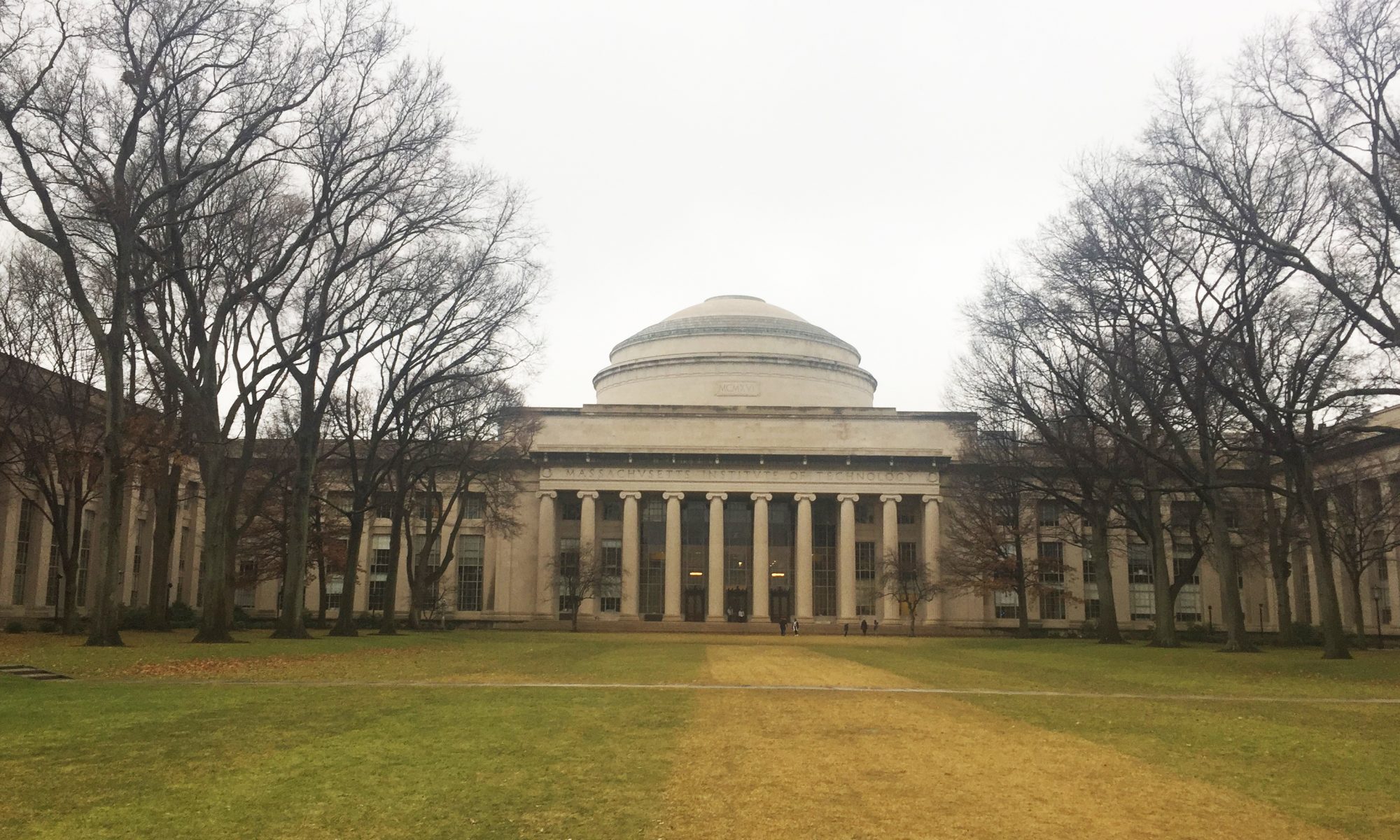
Data for Good: A KU Postdoctoral Fellow’s journey at MIT to impact the healthcare sector through data analytics

KU Postdoc and 2017 Masdar Institute PhD graduate, Dr. Aamna Al Shehhi, has spent the last two years pursuing her postdoctoral fellowship at MIT, where she is applying data analytics for drug repositioning and early detection of serious diseases.

She is using Artificial Intelligence (AI) and Machine Learning to screen drugs that can delay dementia and spot early-stage tumors in two separate research projects with leading researchers at MIT, Harvard, Imperial College London, and Novartis Institute for Biomedical Research.

Dr. Al Shehhi is an Emirati PhD graduate who was accepted into KU’s new postdoctoral study abroad program, which funds qualified PhD graduates to pursue their postdoctoral fellowships abroad. The aim of the program is to prepare and equip Emirati PhDs with the skills and know-how to become highly qualified faculty at Khalifa University.

In the first project, Dr. Al Shehhi is screening a range of drugs to identify those that could potentially be used to delay the onset of dementia in patients with diabetes.

“Dementia is an insidious, progressive, and degenerative neurodegenerative diseases. It destroys normal brain functionality, such as memory access and decision making, because of the overabundance of tau neurofibrillary tangles and amyloid-beta plaques in the brain,” Dr. Al Shehhi explained.

Patients with diabetes are particularly prone to developing dementia since diabetes is associated with increased dementia risk by 60 percent. Unfortunately, there is a high rate of failure in dementia drug development, with drug candidates having a 99 percent failure rate.

This high failure rate has motivated researchers like Dr. Al Shehhi to use a data-driven approach to investigate the potential of repurposing ‘old’ drugs that show promise as medicines that could delay the onset of cognitive impairment in the diabetic population.

She is using the Clinical Practice Research Datalink (CPRD) – an electronic health records database in the UK – to screen different drugs to identify the ones that can be repurposed to delay dementia’s risk and its progression in the patients with diabetes.

In her second project, Dr. AlShehhi is working with researchers from the Novartis Institute for Biomedical Research to build models programmed with Machine Learning and Deep Learning algorithms that can detect early-stage cancer.

“Because no single biomarker, or layer of genomic data, can provide the whole information necessary to detect and predict the behavior of tumors, our model uses multi-level genomic information obtained from sequencing of plasma samples,” Dr. Al Shehhi explained.

The model is programmed to identify the presence of cell-free circulating tumor DNA (ctDNA), which is DNA that is released from cancerous cells and tumors into the blood when they die. “ctDNA can provide a general portrait of the tumor, monitor tumor response to therapy and discover early resistance mutations,” Dr. Al Shehhi said.

For the early-stage cancer, it is challenging to distinguish tumor mutations (ctDNA) from a healthy individual’s own DNA mutations. For this reason, the team is focusing on increasing model sensitivity and specificity at this stage. “Being able to distinguish between the ctDNA produced by early-stage tumors, and the cell-free DNA (cfDNA) produced by white blood cells is critical to be able to develop interventions, and improve cancer management and patient treatment.”

Dr. Al Shehhi says that her experience as a PhD student at Masdar Institute prepared her for a postdoctoral fellowship at one of the world’s leading universities.

Her MIT fellowship has enriched her academic and research capabilities and increased her self-confidence. She served as a teaching assistant for a graduate-level course at MIT and delivered several lectures about Machine Learning and Artificial Intelligence. She hopes to get the opportunity to make pedagogical changes in existing courses at KU, to reflect MIT’s methods.

She also learned first-hand the importance of collaboration in research.

“Being a part of a multi-disciplinary team of medical doctors, bioinformatics, statisticians, and computer scientists helps me to recognize the value of tackling the problems from various perspectives,” Dr. AlShehhi shared.

“I am proud to be the first Emirati postdoctoral accepted at MIT for two years. The experience has enhanced my academic capabilities and has greatly enriched and expanded my current knowledge. I hope to put the knowledge and skills I’ve gained over the years to use and give back to the UAE by contributing to the development of new innovations and the next generation of highly qualified engineers and researchers.”

Erica Solomon
Senior Editor
4 March 2020

Khalifa University Hosts Workshop on Training Best Practices for the Nuclear Industry

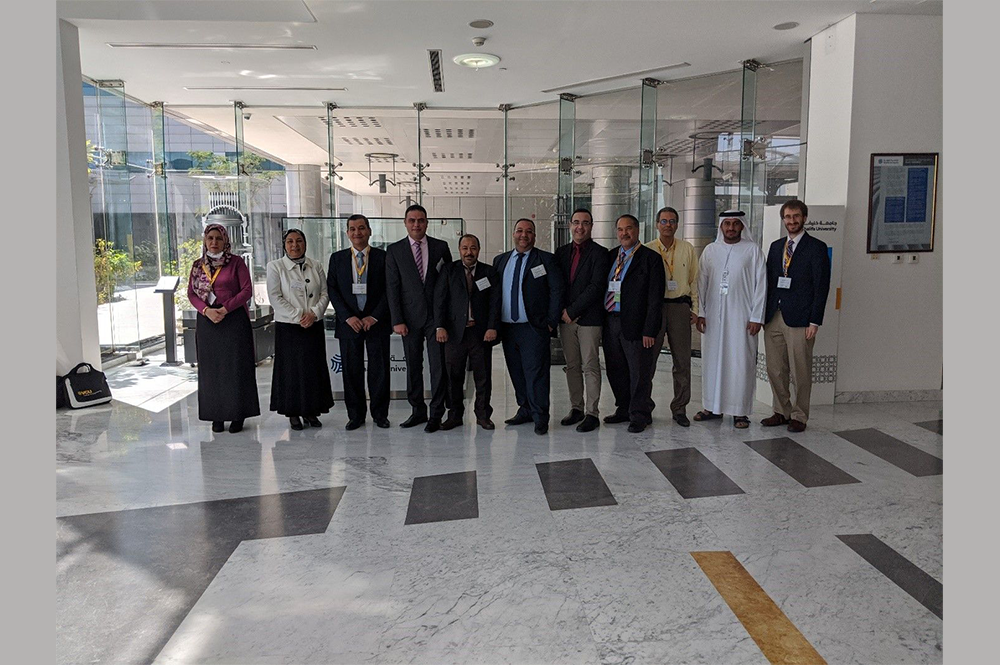
Khalifa University hosted a Workshop on the Best Practices in Nuclear Training and Education Approaches led by Khalifa University Assistant Professor Saeed Al Ameri and Virginia Commonwealth University Assistant Professor Braden Goddard on 17–19 February 2020.

As peaceful nuclear power and technology is developed in the Middle East region, it is important to know the best practices when it comes to human capital development. The event was attended by industry representatives, regulators, and academics from the UAE and Egypt, two of the leading nuclear countries in the region. Participants of the event have taken the material they have gained from the workshop and have started implementing it in their own training and education program to help produce the best nuclear employees.

Ara Cruz
News Writer
1 March 2020

Students Enjoy Games, Music, and Crafts at KU’s Winter Night

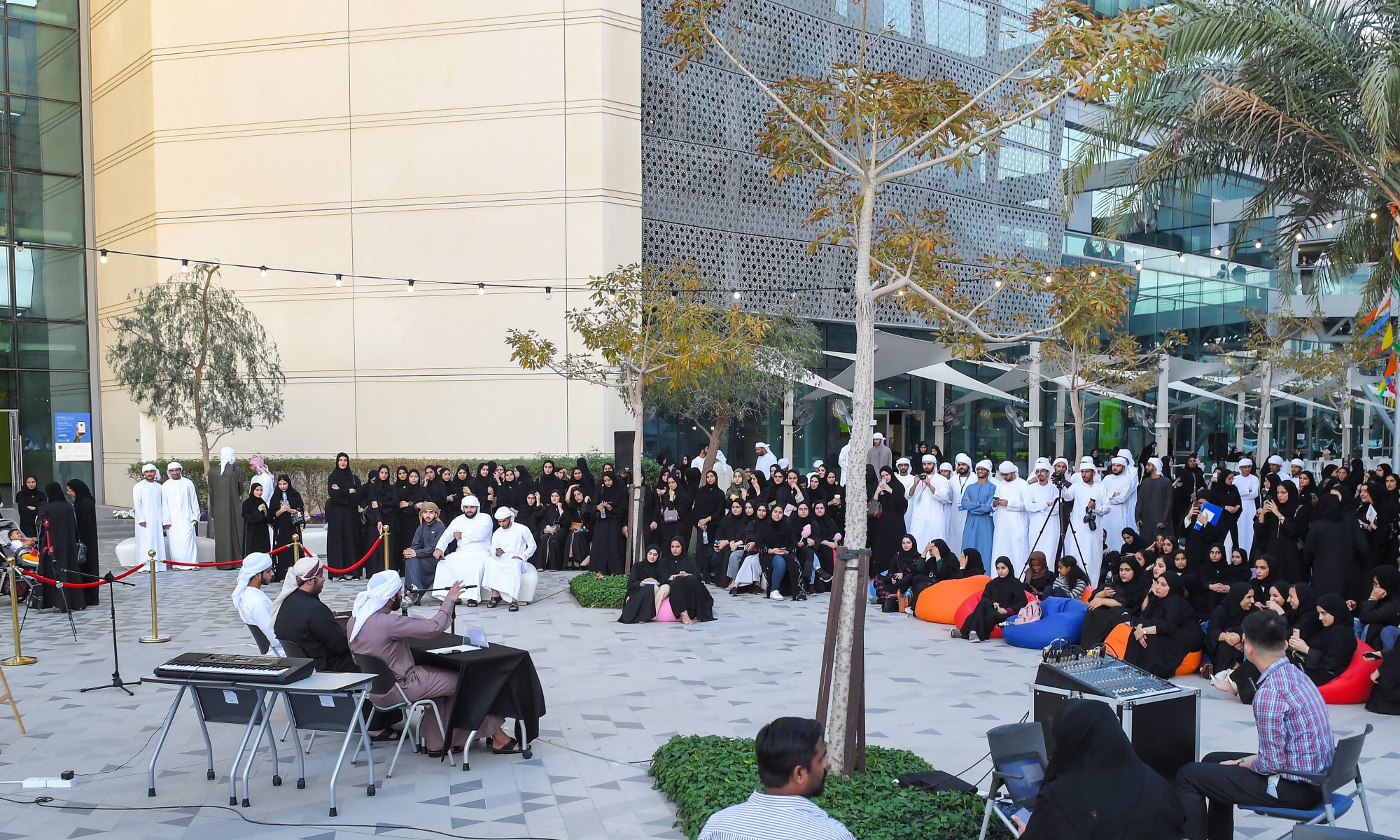
It was a night of fun activities and bonding for Khalifa University students as the University hosted a Winter Night event at the Main Campus outdoor area on 18 February 2020.

The student-led event was organized by the Aventure Club in collaboration with the other student clubs, namely the Jjang Club, Literature Club, Music and Art Club, Japanese Club, Intellectual & Electronic Sports Club, and Debate Club.

The participating clubs prepared activities for the attendees such as traditional Japanese and Korean games, arts and crafts, and film showings. The event also had a night bazaar where students were able to exhibit and even sell items that they made themselves. Some of the items displayed were calligraphy work, paintings, natural soaps, and jewelry.

The night was also full of entertainment. The Music and Arts Club performed a series of musical performances and a live painting show, while the Literature Club organized a reading of Arabic poetry. A few students showcased their talents by singing and playing instruments such as the piano and guitar.

The KU Winter Night was a nice respite for the students to relax and socialize and a great way to get to know more about the different clubs at KU.

Ara Cruz
News Writer
1 March 2020

Khalifa University Researchers Publish Book on Next Generation Power Management Integrated Circuits for Energy Efficient Wearable Devices

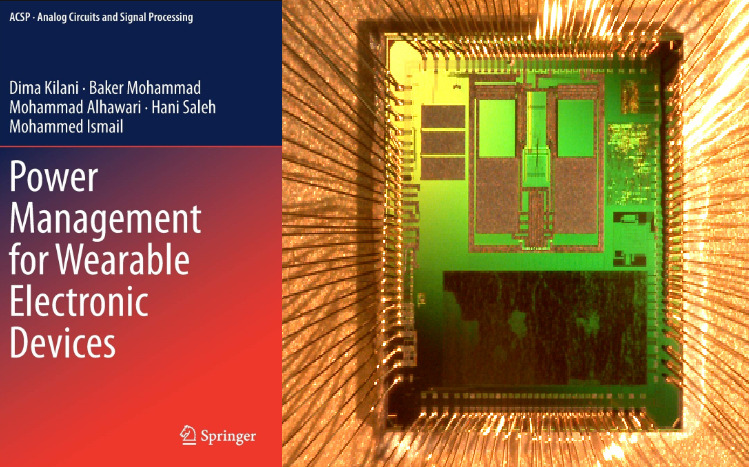
A team of researchers from Khalifa University’s System-on-Chip Lab (SoCL) have contributed to the advancement of energy-efficient wearable electronic devices with extended battery life, and documented their contributions in a new book on power management integrated circuits for wearables.

The co-authors include KU’s Dr. Dima Kilani, Postdoctoral Fellow, Dr. Baker Mohammad, Associate Professor of Electrical Engineering and Computer Science and SoCL Director, and Dr. Hani Saleh, Associate Professor of Electrical Engineering and Computer Science. The book, titled “Power Management for Wearable Electronic Devices,” is published by Springer, one of the leading international science and technology publishers.

As Khalifa University celebrates the UAE’s Month of Reading, the recent book publication underscores the significant role KU researchers play in expanding scientific literacy and disseminating cutting-edge knowledge to readers in the UAE and around the world.

The book, which is composed of six chapters, presents a comprehensive overview of the research conducted by SoCL researchers in the field of power management integrated circuits (PMICs), which are used to power small, battery-operated electronic devices within a single chip.

Forecasts suggest that by 2030 there will be around 50 billion Internet-of-Things (IoT) devices in use around the world offering new ways to improve our productivity, health, and lifestyle. Hence, the book’s publication is very timely as it provides important insights into optimal power management designs for researchers and industry leaders working in the area of connected, low-power wearable devices.

“We are entering an era of IoT and artificial intelligence (AI), which is giving rise to great opportunities for electronic devices with low power consumption and energy efficiency,” Dr. Mohammad shared.

PMICs provide critical power management functions in wearable devices, especially in ultra-thin sensors used in hard-to-reach places, like medical implantable and smart structures. These ultra-thin sensors require a new generation of IPICs that can facilitate charging and keep up with the highest-performing wearable requirements.

The book presents different PMIC design architectures that will reduce power consumption and utilize energy harvesting sources to achieve efficient power management in ultra-thin wearables and near perpetual operation.

“The circuits presented in our book support voltage scaling to reduce the overall average power consumption of a wearable device, resulting in longer device operating time. The discussion includes many designs, control techniques and approaches to distribute efficiently the power among different blocks in the device,” said Dr. Kilani.

The book gathers all the ideas the team has previously published in scientific journals, along with new insights, to be a reference for both academic and industry.

The book’s chapters present the researchers’ experimental results of energy harvesting-based power management units (PMUs) using different combinations of power converters and voltage regulators.

“The results give a good guide for designers to select the appropriate option based on the device requirements,” Dr. Kilani explained.

The designed PMICs underwent verification and silicon validation, which means that the circuits were tested and successfully demonstrated on silicon-based integrated circuit prototypes manufactured at GLOBALFOUNDRIES (owned by Mubadala), proving that the chips work as designed.

Erica Solomon
Senior Editor
3 March 2020

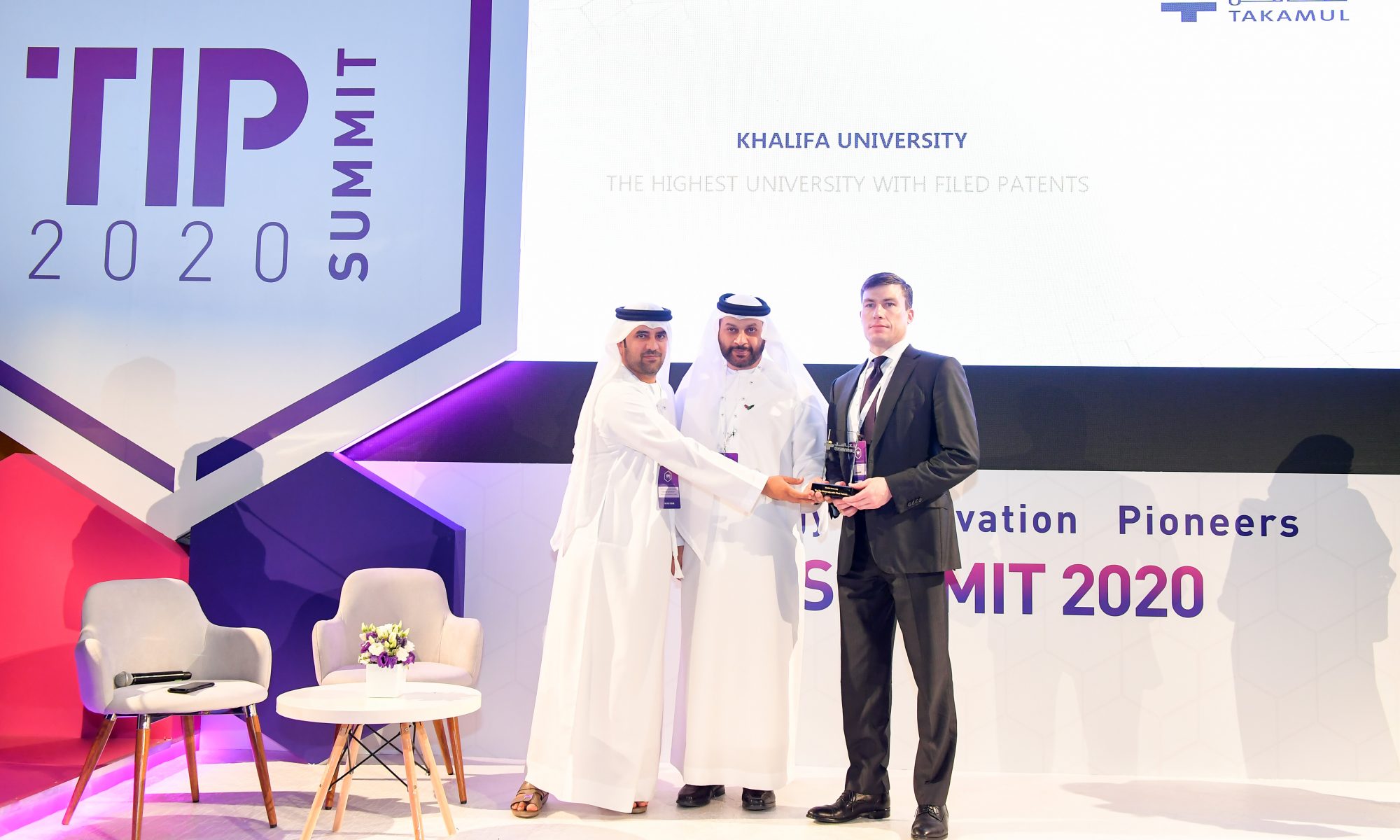
Khalifa University Wins Award for Highest Number of Filed Patents in UAE, as EBTIC Wins ‘Most Inventive Innovation Center’ Award

Recognitions at Abu Dhabi Awards for Intellectual Property during TIP 2020 Summit Validate Khalifa University’s Status in Driving Technology Innovations

Khalifa University of Science and Technology has won two top recognitions at the Abu Dhabi Awards for Intellectual Property, validating once again its status as a pioneering research-intensive higher education institution, driving innovation in new technologies.

Khalifa University was presented with the ‘Top University with Filed Patents’ award that was received by Dr Steve Griffiths, Senior Vice-President, Research and Development, Khalifa University. Moreover, Khalifa University’s Emirates ICT Innovation Center (EBTIC) sponsored by the UAE Telecom Regulatory Authority’s ICT Fund, received the ‘Most Inventive Innovation Center’ award that was received by Dr Nawaf I. Almoosa, Acting Director, EBTIC and Assistant Professor, Khalifa University. The awards were presented during the Technology Innovation Pioneers (TIP) 2020 Summit organized by the Department of Economic Development – Abu Dhabi in cooperation with the Ministry of Economy.

Khalifa University currently has a total of 167 issued patents, which is considered the highest number among universities in the UAE. The University has also 228 filed patent applications, resulting from 417 invention disclosures. EBTIC, a Khalifa University research and innovation center focused on systems and technologies for the Next Generation Networks (NGNs) and NGN-enabled ICT applications and services, was awarded in recognition of its leadership in IP generation, specifically the volume and quality of patents and its contribution to the UAE’s status in innovation globally. EBTIC alone currently has 40 issued patents with over 60 pending patent applications.

Dr. Arif Sultan Al Hammadi, Executive Vice-President, Khalifa University of Science and Technology, said: “The two awards – ‘Top University with Filed Patents’ and the ‘Most Inventive Research Center’ for our research center EBTIC – place us among the top league of well-established universities that contribute to creating intellectual capital. Our research thrust in the UAE’s strategic sectors, world-class faculty experts, and cutting-edge laboratory facilities have together helped us to achieve these recognitions. We believe these awards will further strengthen our resolve to consistently contribute not only to the creation of IP but also in capacity building, thus facilitating the country’s knowledge-economy transformation.”

At the TIP 2020 Summit, Dr Steve Griffiths joined a panel of experts to share his perspectives on ‘The Next Big Thing: DeepTech’ and MENA’s Cleantech start-ups: Growing the ecosystem to solve environmental challenges’. Dr. Nawaf Al Moosa offered his views on ‘IP from Ideation to Implementation’, while Dr. Daniel Choi, Associate Professor, Mechanical Engineering, spoke about ‘How Universities Can Support Innovation’.

Currently, Khalifa University has 19 research centers and 228 laboratories housing state-of-the-art equipment to investigate a broad range of science and engineering subjects.

The research-intensive university’s focus sectors include clean and renewable energy, hydrocarbon exploration and production, water and environment, health, aerospace, and supply chain and logistics. Research in these sectors is enhanced by the research platforms of robotics, AI and data science, information and communication technologies, advanced materials and manufacturing.

Clarence Michael
News Writer
3 March 2020


US$5-Million Mohamed Bin Zayed International Robotics Challenge 2020 Successfully Concludes in Abu Dhabi

MBZIRC 2020 Reiterates Relevance to Future Smart City Solutions in ‘Security and Defence’, ‘Construction and Infrastructure’, and ‘Fire-Fighting and Emergency Response’

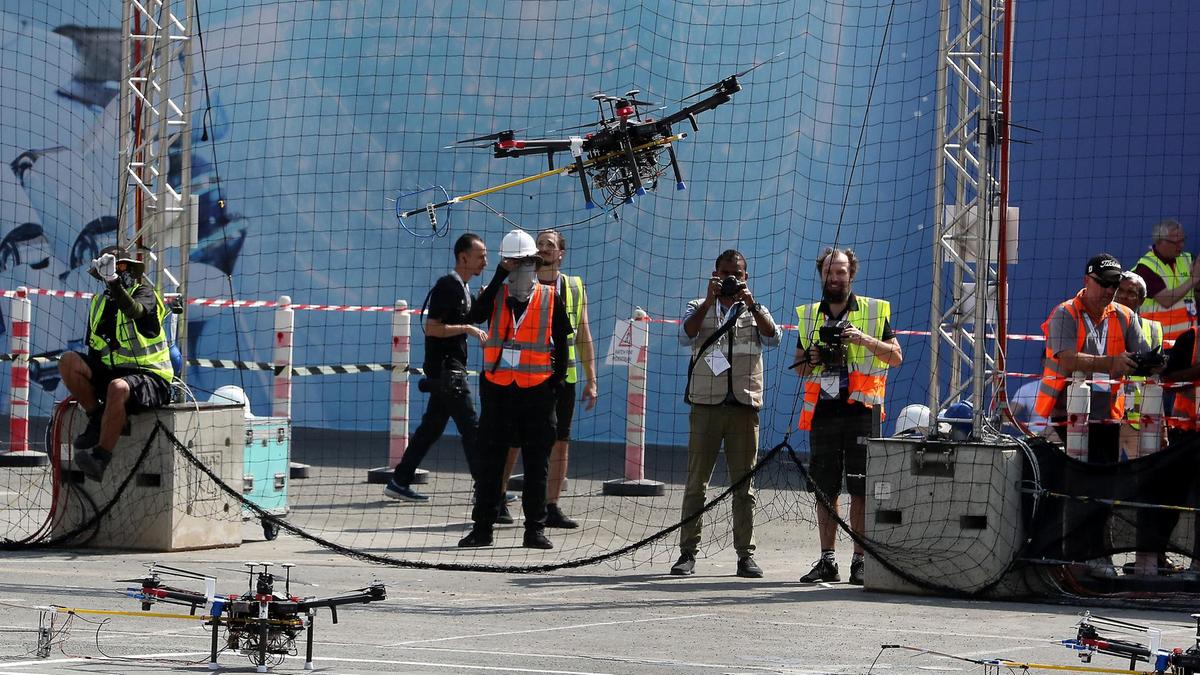
The Mohamed Bin Zayed International Robotics Challenge (MBZIRC) 2020, the second edition of the prestigious biennial international competition, drew to a successful conclusion in Abu Dhabi, reiterating its relevance to future smart city solutions including security and defense, construction and infrastructure, as well as fire-fighting and emergency response.

The three-day Challenge witnessed the participation of 32 teams from 17 countries, selected out of 134 teams that had originally applied to compete, while gathering a large assembly of more than 400 robotics and artificial intelligence experts at the Abu Dhabi National Exhibition Center (ADNEC) from 23-25 February. MBZIRC 2020 was supported by Tawazun Economic Council, and Abu Dhabi Police, while EDGE was the advanced technology partner.

The Challenge was immediately followed by the first-ever two-day MBZIRC Symposium, offering the teams an opportunity to learn about each other’s UAVs and UGVs, and showcase the projects directly to industry representatives, in order to further increase interest and raise awareness, while facilitating opportunities for research collaborations.

Dr Arif Sultan Al Hammadi, Steering Committee General Co-Chair for MBZIRC 2020, said: “The intensely exciting MBZIRC 2020 and its successful conclusion, comprehensively illustrated the pivotal role of Khalifa University in furthering innovation in robotics and artificial intelligence. The competition adequately highlighted the role of UAVs and UGVs in a smart city’s vital areas such as security, infrastructure and emergency.”

Dr Al Hammadi added: “We thank the UAE leadership for their consistent support to Khalifa University and all our research and academic-related endeavors, encouraging the university to widen the industry-academia-government collaborations to drive innovation in science, technology and engineering fields. We thank the sponsors, panel of judges and everyone who contributed to the success of the second edition, as we look forward to the next edition of MBZIRC.”

Shahab Issa Abushahab, Chief Strategy Officer, Tawazun Economic Council, said: “We are proud of the notable results of the second edition of MBZIRC, and extend our appreciation to all stakeholders for making the challenge a home for cutting-edge technology and innovation. Our support for MBZIRC 2020 is aligned with Tawazun’s mandate to support technology and innovation and create opportunities for the young generation to contribute towards building a diversified economy in the UAE, driven by innovation and creativity. At Tawazun, we continually invest in the creative ideas of our people and promote a strong culture of innovation to achieve a competitive position for our country in advanced high-tech industries.”

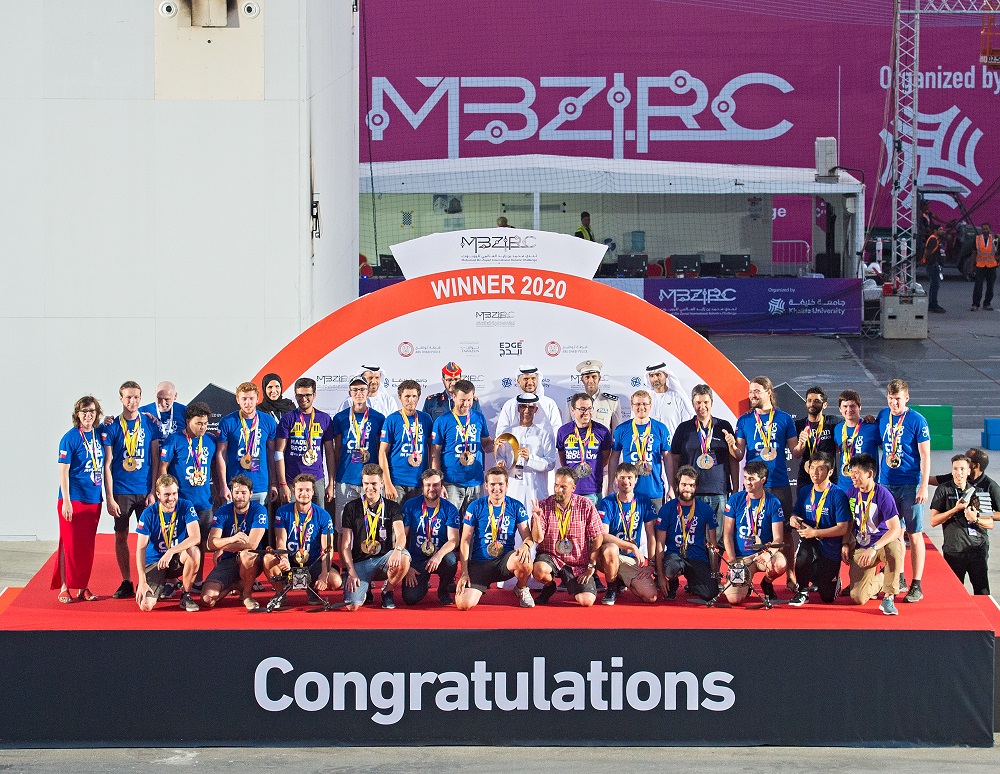
There were four iconic challenges – Challenge 1, Challenge 2, Challenge 3 and the triathlon Grand Challenge – to test advanced embodied AI technical skills. The Czech Technical University-University of Pennsylvania-NYU team, the Grand Challenge winner, demonstrated exemplary skills in safety, construction automation and fire-fighting.

Each of the winners in the Challenge categories had individually displayed their drones’ performance, stamping their authority in integrating machine learning algorithms. Challenge 1 tested the UAVs and UGVs in autonomously tracking, capturing and neutralizing intruder drones, while Challenge 2 was a test of skills in construction automation and robot-based 3D printing of large structures. Challenge 3 assessed how a team of UAVs and a UGV collaborate to autonomously extinguish a series of simulated fires in an urban high-rise building.

Keeping in line with the UAE leadership’s objective towards capacity building, the young Emirati team Al Nokhba, performed strongly in the MBZIRC 2020 categories, emerging among some of the most prestigious universities and research centers worldwide.

The criteria the judges looked for in each team’s performance included robust perception and tracking of dynamic objects in 3D, sensing and avoiding obstacles, GPS-denied navigation in indoor-outdoor environments, physical interactions, complex mobile manipulations, and air-to-surface collaboration.

The MBZIRC 2020 was officiated by an elite panel of judges that included globally-renowned scholars and eminent researchers in robotics and artificial intelligence from some of the top universities and research labs in the world. The international judges were supported by over 10 judges from among Khalifa University faculty, as well as arena managers and scorers.

Clarence Michael
News Writer
27 February 2020


Khalifa University robotics competition takes on real-world challenges for cash prize

Thirty-two teams from universities around the world brought their best drones and robots to compete in Abu Dhabi this week at the Mohamed Bin Zayed International Robotics Challenge.

The international competitors demonstrated their abilities to tackle real world challenges like taking another drone out of the sky, building a wall and putting out a fire in a high-rise during the hi-tech event.

Khalifa University of Science and Technology, organisers of the MBZIRC 2020, whittled down the field from 134 applicants to those elite 32, granting $3 million (Dh11 million) to the competitors to hone their projects and come to the UAE to compete for a $2 million prize (Dh7.35 million).

Read the full story on The National, here:  https://www.thenational.ae/uae/education/khalifa-university-robotics-competition-takes-on-real-world-challenges-for-cash-prize-1.984596

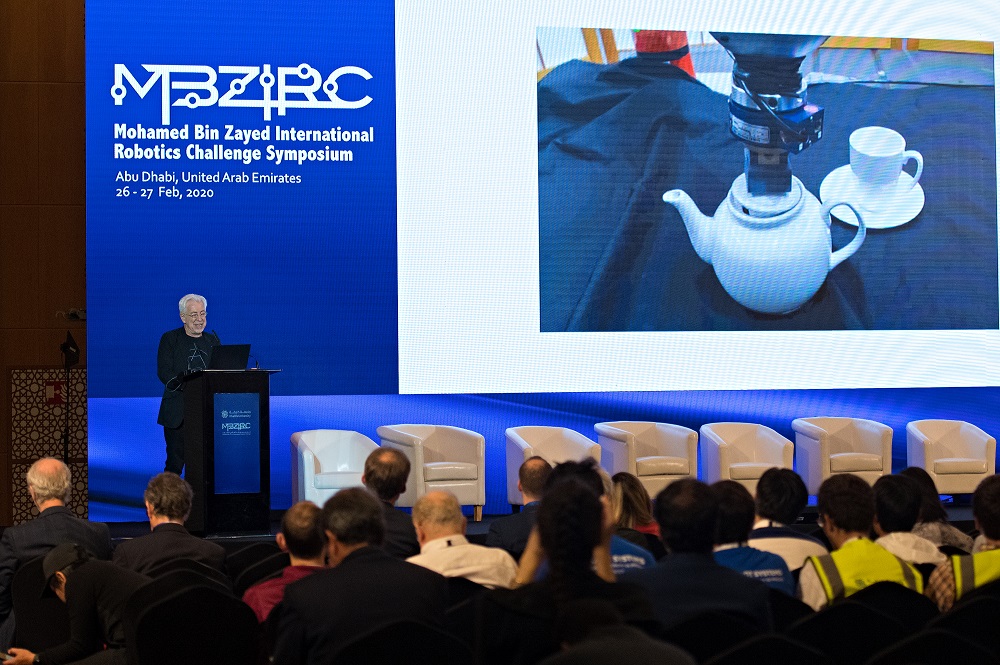
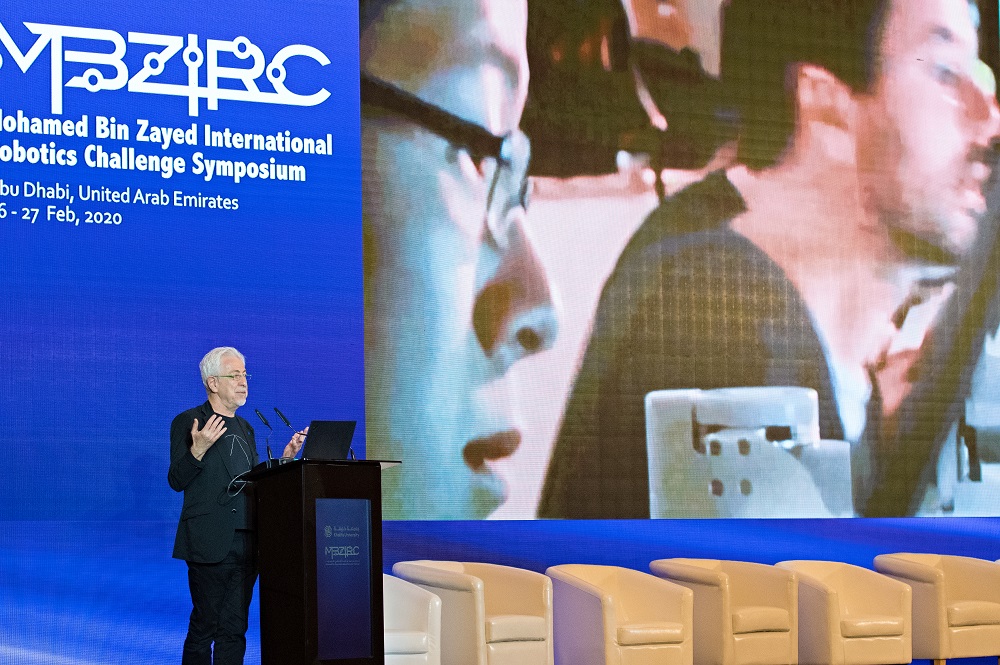
First-Ever MBZIRC Symposium Opens in Abu Dhabi with More Than 400 International Robotics and Artificial Intelligence Experts

Elite Networking Event Gathers MBZIRC 2020 Teams and Industry Representatives to Discuss Role of Competitions in Advancing Future Innovations

The first-ever Mohamed Bin Zayed International Robotics Challenge (MBZIRC) Symposium got under way in Abu Dhabi today with more than 400 international robotics and artificial intelligence experts in attendance, discussing the role of competitions in advancing future innovations.

The two-day symposium (26-27 February) at the Abu Dhabi National Exhibition Center (ADNEC) offers the MBZIRC 2020 teams an opportunity to showcase their projects directly to industry representatives, in order to further increase interest and raise awareness, while facilitating opportunities for research collaborations.

A plenary discussion by the MBZIRC organizing committee, jury members and the international teams is scheduled to focus on current challenges in robotics development and recommendations for future robotics competitions. They also evaluated to what extent competitions such as MBZIRC 2020 help foster research and innovation robotics and artificial intelligence.

Dr. Oussama Khatib, Artificial Intelligence Laboratory, Department of Computer Science, Stanford University, spoke about ‘Robotic Divers for Oceanic Discovery’, while Dr. Paolo Dario, Professor of Biomedical Robotics and Director of The BioRobotics Institute of the Scuola Superiore Sant’Anna (SSSA), shared his perspectives on ‘Frontiers of Biorobotics and Bionics Science and Engineering’

Dr. Tamim Asfour, Institute for Anthropomatics and Robotics, Karlsruhe Institute of Technology, Germany, focused on Engineering Humanoids with Motion Intelligence’, while Dr. Rainer Bischoff (Robotic Industry), Chair of the Department of Analytical Biochemistry, University of Groningen, offered his views on ‘From Challenges to Innovation in Robot-Based Automation’.

Dr. Jianwei Zhang, Professor and Head of Technical Aspects of Multimodal Systems (TAMS), Department of Informatics, University of Hamburg, spoke about ‘Cross-Modal Learning of Intelligent Robot Systems’. There were also special sessions on cooperative robotics and aerial robotics.

Leading robotics experts presenting at the symposium include Dr. Pedro Lima, Electrical and Computer Engineering, Instituto Superior Técnico (IST) – University of Lisbon; Dr. Marcello Ang, Associate Professor Department of Mechanical Engineering National University of Singapore; and Dr. Ronald Arkin (Robotic Colonies), Regents’ Professor, Director of Mobile Robot Laboratory, Georgia Tech.

Dr. Rachid Alami, Senior Scientist (Directeur de Recherche) at French National Centre for Scientific Research (CNRS), will also speak at the symposium.

Participating teams and other robotics experts presented papers at the symposium that included an engaging, and informative lineup of invited talks, presentations, and workshops seeking to foster innovation and research excellence in robotics and artificial intelligence.

Clarence Michael
News Writer
26 February 2020

US$5 Million MBZIRC 2020 Winners Awarded

Czech Technical University-University of Pennsylvania-NYU Team Wins MBZIRC 2020 Grand Challenge

H.E. Dr. Mugheer Khamis Al Khaili, Member of the Executive Council, and Chairman of Department of Community Development, today honored the Grand Challenge winners Czech Technical University-University of Pennsylvania-NYU team and winners of the three Challenge categories at the three-day US$5-million Mohamed Bin Zayed International Robotics Challenge (MBZIRC 2020) that concluded in Abu Dhabi, organizers Khalifa University of Science and Technology announced today.

The winning teams in all three categories – Challenge 1, 2, and 3 – also received awards from H.E. Dr. Mugheer Khamis Al Khaili at the ceremony that was attended by H.E. Eng. Awaidha Murshed Al Marar, Chairman of the Department of Energy, H.E. Mohammed Salem AlDhaheri, Director, National Rehabilitation Centre (NRC), H.E Mohammed Hamad Al Hameli, Undersecretary of the Abu Dhabi Department of Health, and His Excellency Hamad Salem Bin Kordous Al Ameri, Director General of the Zayed Bin Sultan Al Nahyan Charitable & Humanitarian Foundation.

Also present on the occasion were His Excellency Hussein Bin Ibrahim Al Hammadi, Steering Committee General Chair, MBZIRC 2020, Dr. Arif Sultan Al Hammadi, Steering Committee General Co-Chair, and His Excellency Dr. Mohammed Al Mualla, Steering Committee Member.

Others who attended the ceremony at Abu Dhabi National Exhibition Center (ADNEC) included high-ranking UAE government officials, Challenge partners, stakeholders from the academia, research, industry and government sectors, as well as all the MBZIRC 2020 participating team members.

The Czech Technical University-University of Pennsylvania-NYU team won the first position in the Grand Challenge. The University of Bonn team came second, while the combined team of Universidad Politecnica Madrid-Universidad Pablo Olvide Poznan University of Technology- Centre National de la Recherche Scientifique won the third place.

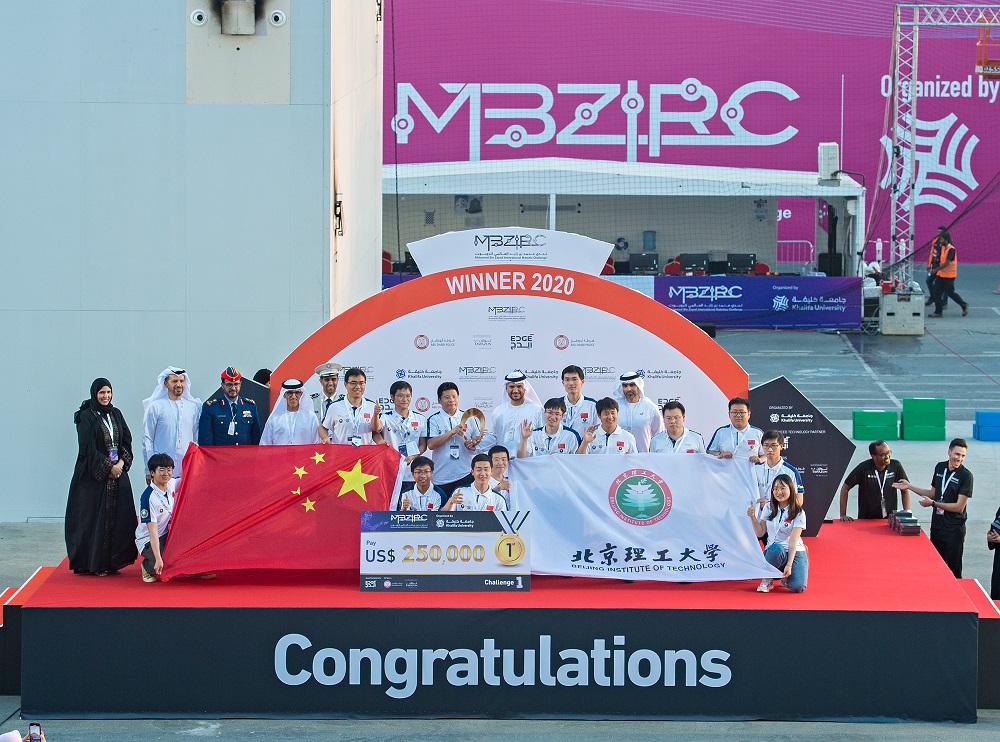
Beijing Institute of Technology won 1st place in Challenge 1

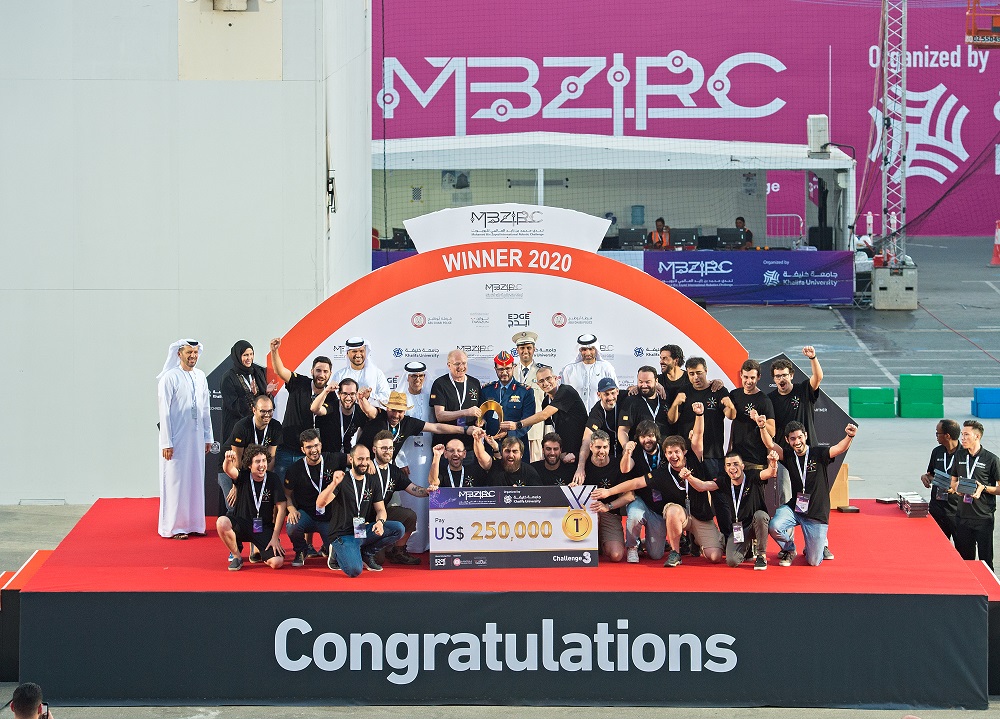
The Beijing Institute of Technology topped Challenge 1 category with the Czech Technical University-University of Pennsylvania-NYU team and the University of Tokyo in the second and third places, respectively, while the Czech Technical University-University of Pennsylvania-NYU team won the Challenge 2 category with Nimbro (University of Bonn) and Technical University of Denmark in the second and third places. The Challenge 3 was won by University of Seville-Tecnico Lisboa-CATEC team, while the Technical University of Denmark and the University of New South Wales-Sydney tied for the second place.

The Czech Technical University-University of Pennsylvania-NYU team won 1st place in Challenge 2

The 32 participating teams, representing 19 countries, were shortlisted as finalists out of a total of 134 teams from across the globe that applied to compete in MBZIRC 2020.

The University of Seville-Tecnico Lisboa-CATEC team won 1st place in Challenge 3

Dr. Arif Sultan Al Hammadi said: “The second edition of MBZIRC has emphatically placed MBZIRC as one of the most prestigious competitions in robotics and artificial intelligence globally, while positioning Khalifa University as the leading higher education institution driving innovation in all areas of science, engineering, and newly-emerging technologies.”

Dr. Al Hammadi added: “Congratulations to all the winners of MBZIRC 2020, especially the Grand Challenge winner and winners of all three Challenge categories. However, all the participating teams deserve credit for their commitment, determination and perseverance during the competition, consistently raising the bar of excellence as displayed by various autonomous drones. Through this Challenge, we have witnessed how technology continues to evolve and we firmly believe the advancements demonstrated by these UAVs and UGVs will very soon become part of our everyday lives.”

A two-day MBZIRC Symposium begins tomorrow (26 February) at ADNEC and will feature leading experts in robotics and autonomous vehicles from 32 MBZIRC 2020 teams, other international robotics and artificial intelligence experts, as well as industry representatives, sharing their insights on the Challenge and other developments in the sector.

The MBZIRC teams will be given the opportunity to showcase their projects directly to industry representatives, in order to further increase interest and raise awareness, while facilitating opportunities for research collaborations.

Clarence Michael
News Writer
25 February 2020

Five KU Faculty Visit Barakah Nuclear Energy Plant and Witness Historic Milestone

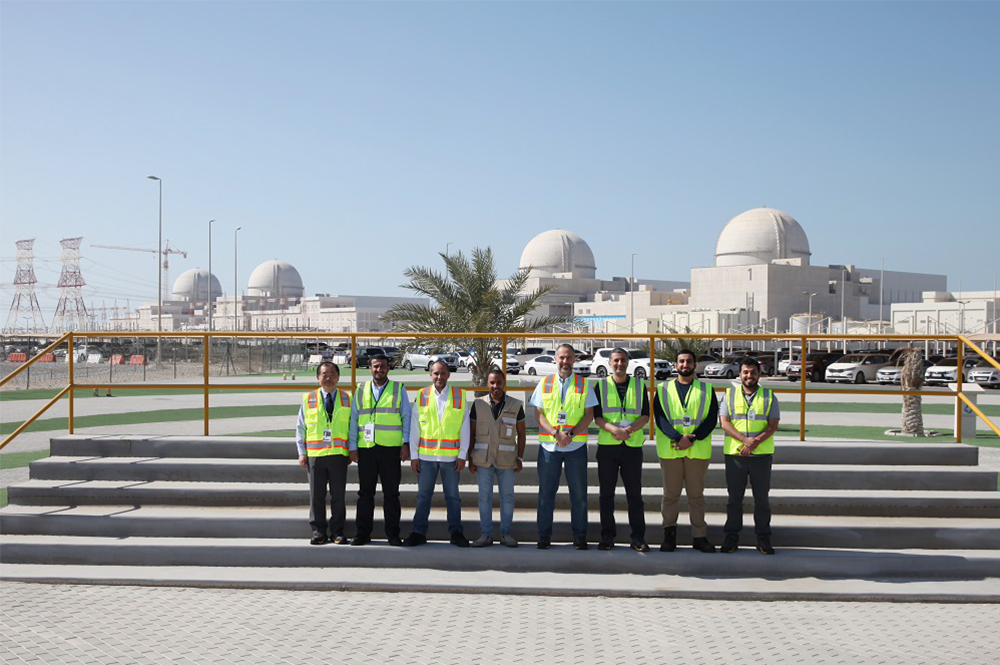
As part of the ongoing research and education partnership with Emirates Nuclear Energy Corporation (ENEC), five faculty members from the Nuclear Engineering Department at Khalifa University were given a unique opportunity to visit Barakah Nuclear Energy Plant.

During the visit, Dr. Yacine Addad, Dr. Youssef Shatilla, Dr. Akihide Hidaka, Dr. Saeed Al Ameri, and Dr. Ahmed Alkaabi witnessed firsthand the high safety standards that are embedded at the Barakah Nuclear Energy Plant. Upon completion of its four Units, the Barakah plant will generate 5,600 MW of clean electricity, providing up to 25 percent of the UAE’s electricity demand when fully operational, while preventing the release of 21 million tons of carbon emissions annually, equivalent to removing 3.2 million cars off the Nation’s roads each year.

The visit was timely as it came right before the completion of Unit 1 fuel load. The Barakah Unit 1 has since commenced the start-up process following successful completion of fuel loading in March 2020. Over a number of months, power levels will safely and steadily be raised, once reaching full capacity the unit will generate 1,400 MW of abundant baseload electricity.

This milestone reflects the vote of confidence that the plant specifically, and the UAE in general, have received after a lengthy licensing process by the UAE’s independent regulator, the Federal Authority for Nuclear Regulation (FANR). This process is followed for each of the four units.

The KU faculty expressed their gratitude and pride in witnessing this historic moment for the UAE.

Erica Solomon 
Senior Editor
10 February 2020