Hamad Eissa Abdullah Al Marzooqi, a BSc Biomedical Engineering student at Khalifa University, was one of the winners of “The Fifty-Year Challenge”, a competition launched in February 2020 as part of the UAE Innovation Month celebrations to encourage individuals to contribute in designing the future and enriching life in the UAE.
The Challenge, organized by the Mohammed Bin Rashid Center for Government Innovation (MBRCGI), called on all UAE citizens and residents to come up with innovative and practical solutions focused on four areas—zero accidents, zero carbon emissions, zero child obesity, and zero plastic waste—that will help form a safer and more sustainable way of life in the UAE in the next 50 years.
Around 400 ideas were submitted and a panel of experts chose 92 finalists to present their innovations. The projects were judged based on their feasibility, novelty, replicability, and impact and the panel was able to recognize 13 inventions that encapsulated these. MBRCGI will support these inventions and they will be tested, developed, and used in practical and real-life situations in partnership with the Abu Dhabi Police, the Center for Public Health of the Abu Dhabi Department of Health, and the Emirates Nature Association in cooperation with the World Wide Fund Nature.
The 13 innovators were honored during the closing ceremony of the UAE Innovation Month 2020 that was held at the Burj Khalifa on 27 February 2020. Among the innovators honored was KU’s Hamad Eissa Abdullah Al Marzooqi, whose Hands on the Steering (HONS) device was one of the winners in the Zero Accident category.
A simple device that could save lives
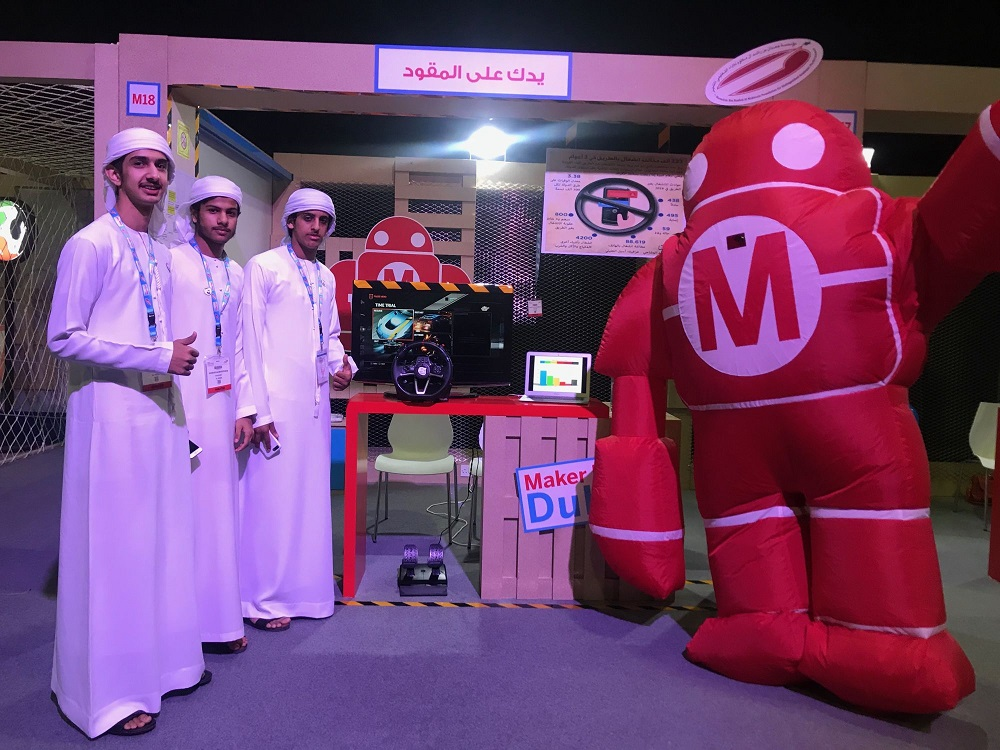
One of the main causes of road accidents in the UAE is negligence or not paying attention to the road while driving. To help lessen traffic accidents, Hamad thought of a simple and practical solution that can be used in all types of vehicles. The Hands on the Steering (HONS) device he developed is a small apparatus that can be easily installed in cars and provides steering control in the event that the driver lets go of the steering wheel while driving.
The HONS device consists of sensors for both the right and left hand programmed to let out a warning sound every time the driver takes their hand off the steering wheel for more than 5 seconds. If the driver ignores the warning or does not put their hand back on the steering wheel, the device sends out a command to the car engine to gradually reduce the speed of the car according to the speed limit of the road, which is determined by GPS. To keep the driver safe, the car speed is reduced in increments so that the vehicle does not abruptly slow down.
Hamad’s road safety solution has also been recognized in other exhibitions and competitions. The project won the People’s Choice award at the Innovators 2020 Competition, which was part of the Abu Dhabi Science Festival 2020. The HONS also won third place in the Best Innovation for Investment category at the Future Pioneers Awards 2019. It was one of the distinguished projects during the Dubai Maker Faire 2019 and was one of the finalists in the Seeds of the Future Competition organized by the Telecommunications Regulatory Authority (TRA) in collaboration with the Ministry of Education and Huawei.
There have been other technologies that try to minimize traffic accidents, but what sets Hamad’s HONS device apart is its simplicity. Other devices require complex technology and may not be compatible with all vehicles but the HONS device is easy to install and use, proving that something simple can make a great difference.
In the 1600s, Johannes Kepler proposed an elegant model for planetary motions—all planets move in elliptical orbits. Each orbit is the result of the gravitational attraction exerted by another body on an object in motion.
“If you drop an object from a certain height, it will fall towards the center of the earth starting from zero velocity, and it will acquire speed as a result of the gravitational acceleration,” explained Dr. Elena Fantino, Assistant Professor of Aerospace Engineering at Khalifa University. “If you give that same object enough velocity in a ‘forwards direction’ instead, it will fly in a circular orbit around the center of the earth. The speed that the object has, determines the type of orbit that it will follow.”
However, over time, orbits will degrade. Dr. Fantino has published an article in the journal Astronomy and Astrophysics investigating the formulae and equations used to determine changes in orbits. Predicting the orbit of various astronomical objects seen from Earth is crucial to various modern day applications, especially traditional celestial navigation, which is still used as a backup to the Global Positioning System, or GPS.
Orbital elements change over time due to perturbations, where an orbit is subject to forces other than the gravitational attraction of a single other massive body. The Moon’s orbit around the Earth, for example, is affected by the gravitational force of the Sun. Other forces can include a third body or resistance from an atmosphere.
In celestial mechanics, a Keplerian orbit is the motion of one body relative to another; it only considers the gravitational attraction of two bodies and in most applications, there is a large central body and a smaller body in orbit around it. The Sun and its orbiting planets of our Solar System form Keplerian orbits.
For most applications, Keplerian motion approximates the motions of planets and satellites to relatively high degrees of accuracy, but the two objects in a Keplerian orbit are not alone. Gravitational forces from other objects can cause perturbations to an orbit.
In astronomy and celestial navigation, the trajectory of naturally occurring astronomical objects in the sky is given as an ‘ephemeris’. An ephemeris is a piece of information that allows users to calculate the positions of planets and their satellites, asteroids, or comets at virtually any time. They cover past positions and future, generated through several accurate observations and theories arising from celestial mechanics. But uncertainty remains, the greatest of which are caused by unmodelled perturbations.
“Perturbed Keplerian motion is a multi-scale problem, where orbital elements evolve slowly when compared to the change of time of ephemeris, whose fast evolution is determined by the rate of variation of the mean anomaly,” explained Dr. Fantino. “Keplerian orbits are commonly represented by sets of so-called orbital elements, a collection of six geometrical parameters which fully and unambiguously define an orbit. These six parameters are constants of motion; in other words, they do not change with time. When a perturbation is acting, the orbital elements change and these changes express the evolution of the orbit. The way in which the orbital elements change depends on the characteristics of the perturbation. These rates or modes of variation can differ considerably and, in particular, astrodynamicists classify the variations as slow or fast. Many effects can be understood and analyzed by isolating the slowly-varying terms and neglecting the rapidly varying components (which typically are the angles, like the mean anomaly), in this way saving computing time. This separation can be accomplished by analytical theories and not by numerical techniques, such as the Cowell method, which is just numerical integration of the equations of motion of an object, perturbations included. Numerical techniques simply approximate numerically the solution of the whole set of differential equations (acceleration equals the sum of all terms that generate it) and cannot separate, discard or isolate terms.”
Dr. Fantino proposed an analytical theory to isolate or consider the slowly-varying part of the third-body perturbation and remove the fast component.
“Usual integration schemes that look for the separation of fast and slow frequencies of motion may be superior to the simpler integration done with the Cowell method,” said Dr. Fantino. “The description of the long-term dynamics of highly elliptic orbits under third-body perturbations may require an expansion of the disturbing function in series of the semi-major axes ratio up to higher orders.”
Vectorial formulation has proved useful in the case of third-body perturbations and may be an efficient alternative to classical formulations when orbits are highly elliptic, such as in extrasolar planetary systems, artificial satellite theory, and in hierarchical n-body systems in general.
“When approximating the long-term dynamics of a system under third-body perturbations, the vectorial approach is much more simple compared with classical expansions based in trigonometric terms,” explained Dr. Fantino.
Jade Sterling
News and Features Writer
15 March 2020
Dr. Juan Acuna, Associate Professor of Epidemiology & Population Health at Khalifa University, Provides an Overview of Coronavirus. He Explains Why the Virus Spreads Quickly, and Offers Important Precautionary Tips to Prevent it from Spreading Further
What is Coronavirus?
There are numerous coronaviruses (CoV) out there, some are the cause of many mild common cold cases in humans every year, and some cause diseases in animals. (Rarely does an animal CoV transmit to humans.)
Seven coronaviruses are known to cause disease in humans, and four of these are the culprits behind the common cold. Coronaviruses 229E and OC43 cause the common cold with their catchy names, while NL63 and HUK1 are also associated with colds. The new kid on the block, SARS-Cov2, is a novel coronavirus identified as the cause of coronavirus disease 2019, named COVID-19, that began in Wuhan, China in late 2019, and has since spread worldwide.
SARS-CoV2 is one of the three coronaviruses that cause much more severe respiratory infections in humans and have caused major outbreaks of pneumonia in the 21st century. MERS-CoV was identified as the cause of Middle East respiratory syndrome (MERS) that rocked the Middle East in 2012, while SARS-CoV2 was identified in 2002 as the cause of the outbreak of severe acute respiratory syndrome (SARS).
The coronaviruses are spherical viruses containing a single strand of RNA with an envelope of glycoproteins that produce the corona (crown) effect in electron microphotographs, hence the name: coronavirus. They produce frequent, mild respiratory infections in humans, but once infected, the subject develops an immunity that will typically last a few years. Fortunately, humans are very good at developing immunity towards coronaviruses. This means, once you get it, you won’t get it again… unless it mutates. Occasionally, these viruses may produce a more severe form of disease such as SARS and MERS.
COVID-19 was first reported in Wuhan, but has since spread extensively in China and now worldwide. But the virus does not have legs or wings, and therefore does not have mobility on its own; it must be transmitted by sneezing or coughing (respiratory aerial transmission) or by direct contact between people.
While seasonal flu has a mortality rate of 0.1 percent, COVID-19 has a mortality rate of 1 to 2 percent. So this new disease has a ten to twenty times higher mortality rate, which is important. Seasonal flu kills 30,000 people every year in the US alone, because it infects millions of people every year. COVID-19 has killed about 4,000 people up to the writing of this article (10 March), with a bit more than 110,000 people infected. If we let it infect the same number of people as the common cold, it would kill many more because the death rate proportion is much higher than that of the seasonal flu, which is why COVID-19 has raised such a high level of concern.
Why has COVID-19 spread so rapidly?
COVID-19 took the world by surprise; we were unprepared and no one is immune to the new virus. If we would have been able to prepare, there would probably have been no pandemic.
A pandemic happens when something that is easy to transmit, and for which there is no preparedness or immunity, spreads rapidly. In this case, global panic is coming from the type of virus this one is, and the fact that we have no information as to any treatments or vaccines, as of yet.
Our lack of information, however, is understandable. Prior to this outbreak, nobody was studying this new virus, because it is impossible to prepare for one particular new mutation of a virus. Even with limitless resources and funds, it would be impossible to prepare for each and every possible mutation of a virus, because each and every mutation could cause a different next disease. It is impossible to predict. Even the seasonal flu vaccine each year is a guess as to which strain will become the most widespread—a very educated and carefully predicted guess, but still a guess. You would have to spend hundreds of years on this process to be able to model every single possibility.
That’s why we had no knowledge about COVID-19, and the lack of knowledge has been the most important reason for the rapid spread, panic and reaction.
Khalifa University supports research into epidemiological behavior, diagnosis of, and prevention against viruses like coronavirus. But the reality is that nobody was doing anything specific on immunization and treatment because the new behavior (product of the new mutation) was completely unexpected.
Will the spread of COVID-19 slow down?
Containment is literally in our hands! Containing and preventing the spread of COVID-19 can be achieved by sneezing or coughing into a tissue or your sleeve rather than into the open, by being far away from those that are ill (no contact), and by avoiding physical contact with ill people or with surfaces that may be contaminated. Additionally, to help prevent transmission and contain the outbreak, quarantine and isolation measures are being applied to limit the local, regional, and global spread of COVID-19.
The previous versions of novel coronavirus were very, very nasty. SARS and MERS had high mortality rates and swept through populations causing real concern. That this COVID-19 comes from a novel coronavirus is worrying. But, after carefully observing the cases that have occurred, we have gained knowledge and built some expectations of what could happen, which helps considerably in our efforts to tackle this virus. We’re already seeing a plateau in the curves of new cases, especially in China. China is not seeing as many new cases as in the weeks before, because every susceptible person either has it or is isolated from the sick people—or they’re immune by now.
Khalifa University’s Department of Epidemiology and Public Health is working in support of the health authorities in the UAE, including the Ministry of Health, to put the lid back on the coronavirus box. We support the UAE’s efforts aimed at reducing and avoiding public gatherings, which help to prevent the disease from entering new places, and slow the spread of the disease across the country.
Most importantly, however, we advocate for increased awareness and preparedness among authorities and the general public. It’s vital that people have accurate information about the virus, that measures are in place for public health protection, and health recommendations are promoted and made easily accessible. We need to guide people to appropriate sources of information that is adequate, truthful and unprocessed by untrusted media outlets.
Dr. Juan Acuna, Associate Professor of Epidemiology & Population Health at Khalifa University, researches epidemiological behavior of, diagnosis of, and prevention against viruses like coronavirus.
What you can do to stay protected from COVID-19
I don’t recommend using a mask, for starters. A healthy person can’t avoid contact with the virus by using a regular mask, and ill people should already be isolated or confined to their home or healthcare facilities. If you are ill, you shouldn’t use a mask either: pulmonary lesions may be worsened by using a mask. You should be isolated.
Wash your hands regularly and attentively and make sure you cough or sneeze into a tissue or your sleeve. Clean frequently all surfaces, especially those that many people touch. Try to avoid contact with other people where and when possible and don’t touch surfaces that may be contaminated. And stop touching your face! But most importantly, don’t panic.
Most of the information currently available points towards caution and containment and to the management of those ill, so there’s no need to panic buy or hoard anything. Instead, follow the advice and directives issued by the people working to keep the public safe and understand that the aim is to prevent more people from getting coronavirus.
Hopefully, these measures will stop you from getting the disease, but you may have to sacrifice a holiday or attending an event. We will all be affected by COVID-19, but we want to be impacted as little as possible.
The silver lining to any worldwide disease outbreak is the sudden interest in pursuing a career in medicine and public health. Many people go into medicine for altruistic reasons: they want to help cure a disease or look after others. We’re expecting an uptick in applications to our medical programs and we’re looking forward to welcoming a new generation of students inspired by the fight against this and any future pandemic.
The sites where you can find useful and truthful information are:
University Once Again Demonstrates Its Status as a Pioneering Institution Focusing on Innovation and R&D in UAE’s Strategic Sectors
Khalifa University of Science and Technology has once again demonstrated its status as a premier research-intensive institution focusing on the UAE’s strategic sectors by winning nearly half of all the research grants awarded under the 2019 Abu Dhabi Award for Research Excellence (AARE).
Khalifa University received a total of 23 out of 48 awards, with an overall value of more than AED 21 million. The AARE marked its fourth round of funding this year.
Of the 23 selected proposals from Khalifa University, 17 were from the College of Engineering, five were from the College of Arts and Science and one from the College of Medicine and Health Sciences.
Dr Arif Sultan Al Hammadi, Executive Vice-President, Khalifa University of Science and Technology, said: “We have once again validated our status as a pioneering research-intensive university that is focused on the UAE’s strategic sectors, contributing the country’s drive towards becoming a knowledge-based economy. This remarkable performance would not have been possible without the expertise of our world-class faculty, which we believe will firmly keep us on the path of scientific exploration, while developing and training talented students.”
The number of project proposals and the total grants received this time has far exceeded the university’s performance in the AARE 2017 cycle, when Khalifa University won a total of 18 AARE awards with research grants totaling AED5 million.
The AARE is a competitive funding program for outstanding research proposals in targeted areas within Abu Dhabi. The targeted sectors of strategic importance to Abu Dhabi for the 2019 cycle of research grants include ‘Aerospace’, ‘Energy, ‘Environment’, ‘Health, Food and Agriculture’, ‘Information and communication Technology (ICT)’, ‘Manufacturing’, ‘Education and Social Sciences’.
Research funded by the AARE program is expected to advance scientific and technological development within the Emirate of Abu Dhabi, as well as develop meaningful partnerships between Abu Dhabi scientists and leading academic and industrial collaborators, both nationally and worldwide.
With a total of 19 research centers focusing on the strategic economic sectors of the UAE, Khalifa University leads in pioneering innovation in hydrocarbon exploration and production, clean and renewable energy, water and environment, healthcare, aerospace, supply chain and logistics, artificial intelligence, robotics and data science, information and communication technologies (ICT) and advanced materials and manufacturing.
Khalifa University currently has over 140 issued patents, with around 360 patent applications pending and more than 400 invention disclosures.
EDGE, the advanced technology group for defence and beyond, today announced that it has signed a Memorandum of Understanding (MoU) with Tawazun Economic Council (Tawazun), the defence and security industry enabler responsible for the creation and development of a sustainable industry in the UAE.
Part of the latest initiative under the Tawazun Economic Program, SEEDS will empower EDGE to bring together and train talented UAE nationals from Khalifa University, Abu Dhabi Polytechnic, United Arab Emirates University, and the Higher College of Technology, who are pursuing degrees in engineering and computer science. SEEDS will also help facilitate EDGE’ss presence in universities, allowing the company to showcase its capabilities
Khalifa University Researchers Advance Algorithms to Quickly and Accurately Calculate the Minimal Orbital Intersection Distance of Near-Earth Objects
Far from merely a subgenre of science and disaster fiction, how to detect large asteroids that may collide with Earth is a real field of study and concern. A sufficiently large impact by an asteroid could cause massive tsunamis, multiple firestorms and an impact winter from dust and other debris in the stratosphere blocking sunlight, such as the collision 66 million years ago thought to have caused the Cretaceous-Paleogene extinction event, widely held responsible for the extinction of most dinosaurs.
According to the US National Aeronautics and Space Administration (NASA), efforts to deflect a large object on a collision course with Earth would require at least five years of preparation.
Khalifa University’s Dr. Elena Fantino, Assistant Professor of Aerospace Engineering, recently published an article in the journal Astronomy and Astrophysics to add to the body of research on asteroid impact avoidance. Her paper contributes two new computations to aid in determining the ‘minimum orbital intersection distance’, or MOID, of near-Earth objects in space quickly and accurately. The MOID is the first measure of how close to Earth an asteroid could come before an impact may occur.
A potentially hazardous object (PHO) is a near-Earth object—either an asteroid or a comet—with an orbit that can make close approaches to the Earth and large enough to cause significant regional damage in the event of impact. A PHO can be determined as non-threatening to Earth for the next 100 years or more, if its orbit is reasonably well determined.
In astronomy, the MOID is defined as the distance between the closest points of the osculating orbits of two bodies and is of greatest interest when it comes to assessing the risk of a collision with Earth.
One of the orbits is considered the reference or primary orbit, and any orbit facing the primary is called a secondary orbit. Since the sets of secondaries—and therefore the number of objects that may collide with the primary orbit—are usually large, MOID can be used as a pre-filter to discard those that don’t pose a risk in the immediate future.
“The minimum orbital intersection distance is used as a measure to assess potential close approaches and collision risks between astronomical objects. Fast MOID computation is in high demand but accuracy is also a key issue,” said Dr. Fantino. “Many methods for computing the MOID have been published over the past seven decades, and the majority are approximate numerical methods. However, more recently, algebraic approaches have been established and some hybrid methods have appeared, including the SDG-MOID method.”
The SDG-MOID method was developed by the Space Dynamics Group (SDG) at the Technical University of Madrid and is a fast and accurate numerical method based on two algorithms. The first determines the distance between a point and an ellipse in three-dimensional space, and the second calculates the minimum distance between two confocal ellipses. Dr. Fantino’s research builds on this method by including asymptotic expansions for the computation of the in-plane distance component in the first algorithm of the SDG-MOID method.
“We tested these asymptotic procedures to assess the gain in computing speed, the corresponding accuracy loss, and the benefits of their introduction,” explained Dr. Fantino. “We are also looking at improving the second algorithm of the SDG-MOID method, aiming to preserve accuracy.”
Dr. Fantino’s approach saw a 40 percent reduction in computing time without degrading the accuracy of the determinations. Such a remarkable result means this method is the ideal choice for all applications in which a fast and accurate MOID computation is required.
Computing the MOID is an old but increasingly relevant problem. While the chances of a major collision of a near-Earth object with the planet are low in the near term, it is almost inevitable that one will happen eventually. Astronomical events such as the 2013 Chelyabinsk meteor and the growing number of objects on the Sentry Risk Table (an automated impact prediction system operated by the Jet Propulsion Laboratory since 2002) have drawn renewed attention to such threats.
“The problem of computing the MOID is as old as Kepler’s laws,” explained Dr. Fantino. “However, the need for a quick and accurate solution has increased as its role in several branches of Celestial Mechanics and Astrodynamics has become more and more prominent. Nowadays, the MOID is used primarily to discard objects from large space debris as collision risk to spacecraft, and to predict possible close encounters of asteroids and comets with planets, mainly Earth, Mars, and Jupiter.”
The MOID between an asteroid and Earth is one of the most important parameters when assessing impact risk. However, a low MOID does not mean that a collision is inevitable as the planets in the Solar System frequently perturb the orbit of small bodies.
“Calculating the MOID involves two Keplerian orbits, represented by their classical orbital elements,” said Dr. Fantino. “The orbital elements change over time due to perturbations.”
Perturbation is the complex motion of a massive body subject to forces other than the gravitational attraction of a single other massive body—such as the effects of the Sun on the Earth’s Moon. Other forces could include a third (fourth or fifth, etc.) body, resistance from an atmosphere, or the off-center attraction of an oblate or otherwise misshapen body. In the Solar System, the orbits of many of the minor bodies, such as comets, are often heavily perturbed, particularly by the gravitational fields of the gas giants. Perturbations can alter orbits over time: in 25,000 years, Earth will have a more circular orbit than Venus, which is currently the orbit with the least eccentricity, meaning, it is the closest to circular of all the planetary orbits.
“Due to the time evolution of the orbital elements, the MOID itself is a function of time,” added Dr. Fantino. “Thus, understanding the evolution of the MOID over long time frames is important for impact risk assessment. For asteroids, such MOID monitoring allows us to better assess the risk of a possible impact with Earth.”
Once the MOID has been established, it can be quickly determined whether an object poses a risk and whether it merits more sophisticated investigation. The faster an object can be assessed, the faster a response could be initiated in the case of impact with Earth. The MOID can also be used to identify near-Earth objects coming close to perturbing planets, which could change their orbits significantly, and manage growing catalogues of space debris.
Jade Sterling
News and Features Writer
8 March 2020
Program Enables Exceptional Students to Jump-Start Graduate Education and Integrating and Aligning Different Educational Levels
Khalifa University of Science and Technology has announced the launch of 4+1 Accelerated Master of Science Programs to enable exceptional senior undergraduate students in the College of Engineering to start their Master’s studies even while pursuing their undergraduate education.
Through the Accelerated MSc program option, a highly motivated student, with the help of her/his academic advisor, can finish undergraduate and Master’s degrees within a nominal period of five-years. The accelerated program targets students for whom a Master’s degree will provide the necessary preparation to achieve career goals, or for pursuing a doctorate degree.
In parallel, the accelerated program also reflects Khalifa University’s efforts towards accelerating, integrating and aligning different educational levels, by allowing outstanding high school students to take Bachelor-level courses for credit, and brilliant Bachelor’s students to take Master’s level courses for credit. This is expected to bridge the gap between educational levels, providing an opportunity for exceptional students to obtain their degrees in a shorter duration.
Dr Arif Sultan Al Hammadi, Executive Vice-President, Khalifa University, said: “The accelerated Master’s program at Khalifa University enables excellent students to jump-start graduate education with significant advantages such as saving on time, and lower expenses. Through this program, Khalifa University facilitates students right from the high-school and undergraduate levels, to continue learning right up to their Master’s, either to be eligible to join a workplace or continue their journey towards a PhD. We believe this program will encourage eligible students enthusiastic about pursuing their advanced degrees by offering them a fast-track option.”
In order to be eligible for the Accelerated MSc program, a student must have a minimum cumulative Grade Point Average (CGPA) of 3.7 (equivalent to A-), out of 4 with a minimum of 90 credits of undergraduate study. A conditional admission may be granted, if an application is made during the student’s junior year of undergraduate study. However, the student must meet all the Master’s admission requirements, including finishing the Bachelor’s degree, before being granted full admissions to the program.
A student can register for up to six credits of Master’s level courses that can be used towards the elective courses during the undergraduate program. A Master’s-level course taken during the senior year of undergraduate studies will count towards the accelerated Master’s program courses requirement, provided the student achieves a minimum of B-grade in that course.
Through its three colleges – the College of Engineering, College of Arts and Sciences and the College of Medicine and Health Sciences – Khalifa University currently offers 16 bachelors and 17 Master’s degree programs, in addition to three doctoral degree (PhD) programs with 12 Concentrations.
Khalifa University has three research institutes – Masdar Institute, Petroleum Institute and the AI Institute, in addition to 19 core research centers exploring sectors ranging from artificial intelligence and robotics to clean energy, hydrocarbons and aerospace, as well as challenges of critical importance to the UAE’s knowledge economy transformation. The University has a strong IP portfolio – a total of 167 issued patents – the highest among universities in the UAE, as well as 228 filed patent applications, resulting from 417 invention disclosures.
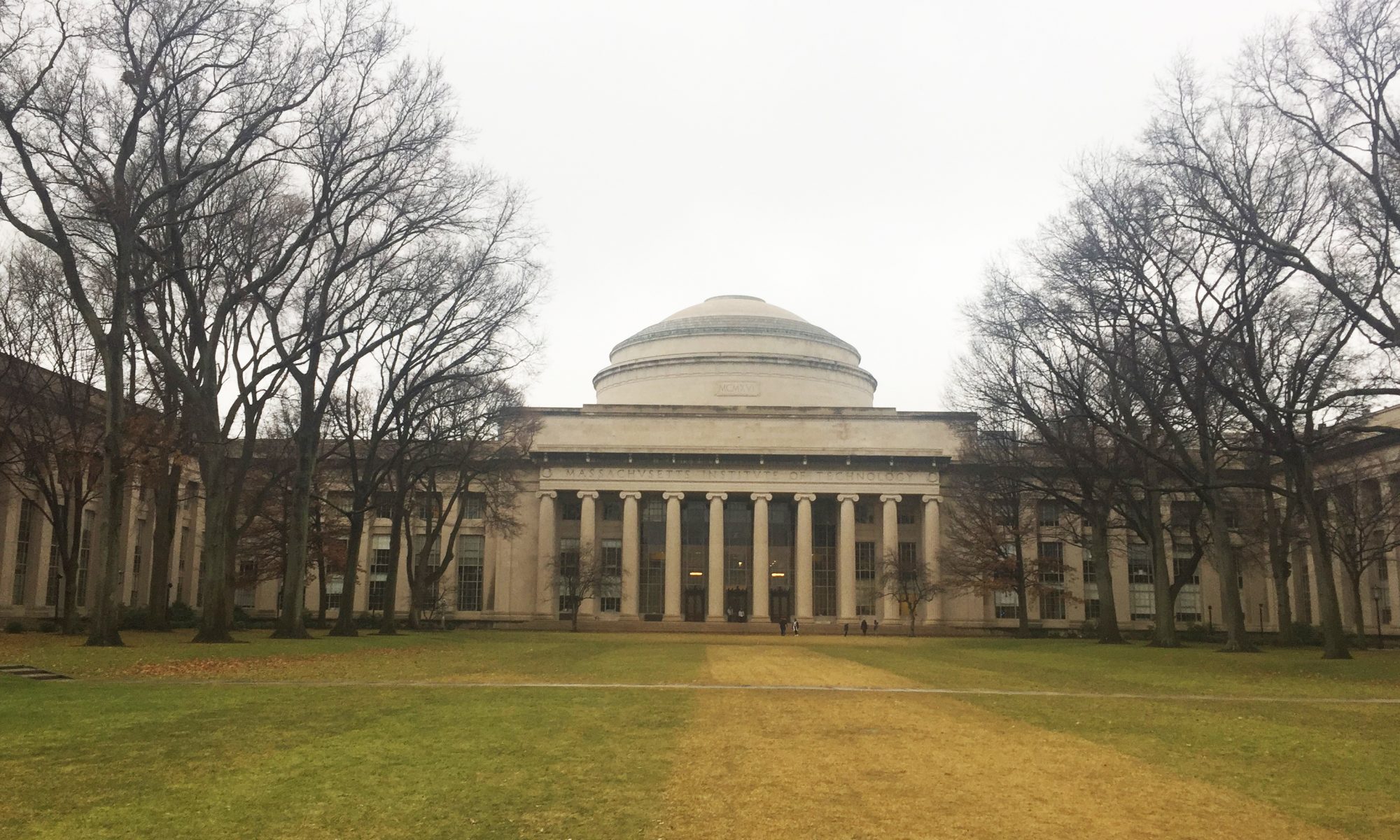
KU Postdoc and 2017 Masdar Institute PhD graduate, Dr. Aamna Al Shehhi, has spent the last two years pursuing her postdoctoral fellowship at MIT, where she is applying data analytics for drug repositioning and early detection of serious diseases.
She is using Artificial Intelligence (AI) and Machine Learning to screen drugs that can delay dementia and spot early-stage tumors in two separate research projects with leading researchers at MIT, Harvard, Imperial College London, and Novartis Institute for Biomedical Research.
Dr. Al Shehhi is an Emirati PhD graduate who was accepted into KU’s new postdoctoral study abroad program, which funds qualified PhD graduates to pursue their postdoctoral fellowships abroad. The aim of the program is to prepare and equip Emirati PhDs with the skills and know-how to become highly qualified faculty at Khalifa University.
In the first project, Dr. Al Shehhi is screening a range of drugs to identify those that could potentially be used to delay the onset of dementia in patients with diabetes.
“Dementia is an insidious, progressive, and degenerative neurodegenerative diseases. It destroys normal brain functionality, such as memory access and decision making, because of the overabundance of tau neurofibrillary tangles and amyloid-beta plaques in the brain,” Dr. Al Shehhi explained.
Patients with diabetes are particularly prone to developing dementia since diabetes is associated with increased dementia risk by 60 percent. Unfortunately, there is a high rate of failure in dementia drug development, with drug candidates having a 99 percent failure rate.
This high failure rate has motivated researchers like Dr. Al Shehhi to use a data-driven approach to investigate the potential of repurposing ‘old’ drugs that show promise as medicines that could delay the onset of cognitive impairment in the diabetic population.
She is using the Clinical Practice Research Datalink (CPRD) – an electronic health records database in the UK – to screen different drugs to identify the ones that can be repurposed to delay dementia’s risk and its progression in the patients with diabetes.
In her second project, Dr. AlShehhi is working with researchers from the Novartis Institute for Biomedical Research to build models programmed with Machine Learning and Deep Learning algorithms that can detect early-stage cancer.
“Because no single biomarker, or layer of genomic data, can provide the whole information necessary to detect and predict the behavior of tumors, our model uses multi-level genomic information obtained from sequencing of plasma samples,” Dr. Al Shehhi explained.
The model is programmed to identify the presence of cell-free circulating tumor DNA (ctDNA), which is DNA that is released from cancerous cells and tumors into the blood when they die. “ctDNA can provide a general portrait of the tumor, monitor tumor response to therapy and discover early resistance mutations,” Dr. Al Shehhi said.
For the early-stage cancer, it is challenging to distinguish tumor mutations (ctDNA) from a healthy individual’s own DNA mutations. For this reason, the team is focusing on increasing model sensitivity and specificity at this stage. “Being able to distinguish between the ctDNA produced by early-stage tumors, and the cell-free DNA (cfDNA) produced by white blood cells is critical to be able to develop interventions, and improve cancer management and patient treatment.”
Dr. Al Shehhi says that her experience as a PhD student at Masdar Institute prepared her for a postdoctoral fellowship at one of the world’s leading universities.
Her MIT fellowship has enriched her academic and research capabilities and increased her self-confidence. She served as a teaching assistant for a graduate-level course at MIT and delivered several lectures about Machine Learning and Artificial Intelligence. She hopes to get the opportunity to make pedagogical changes in existing courses at KU, to reflect MIT’s methods.
She also learned first-hand the importance of collaboration in research.
“Being a part of a multi-disciplinary team of medical doctors, bioinformatics, statisticians, and computer scientists helps me to recognize the value of tackling the problems from various perspectives,” Dr. AlShehhi shared.
“I am proud to be the first Emirati postdoctoral accepted at MIT for two years. The experience has enhanced my academic capabilities and has greatly enriched and expanded my current knowledge. I hope to put the knowledge and skills I’ve gained over the years to use and give back to the UAE by contributing to the development of new innovations and the next generation of highly qualified engineers and researchers.”
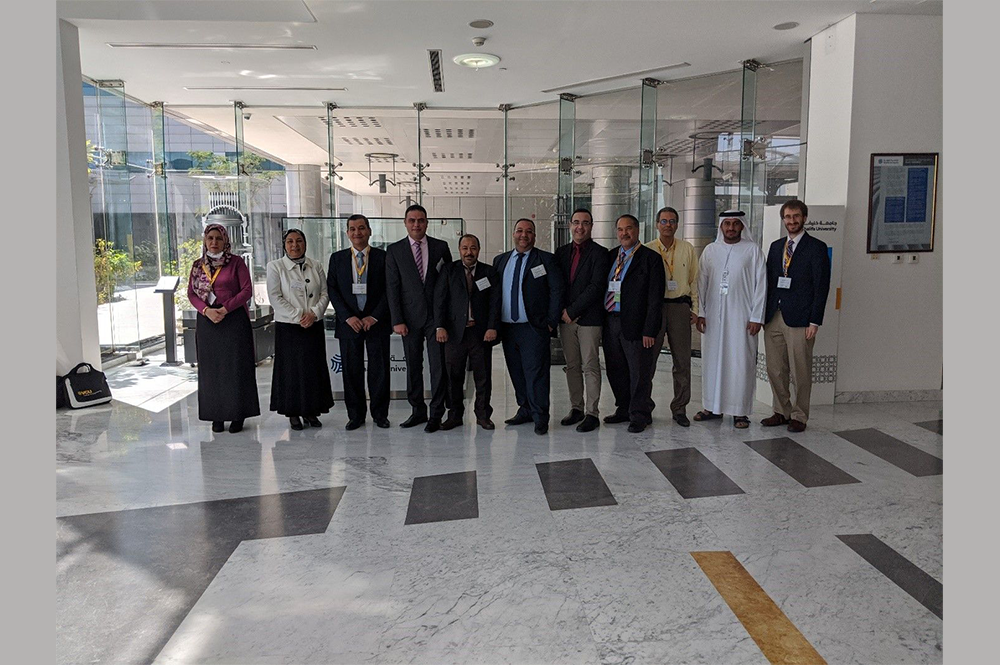
Khalifa University hosted a Workshop on the Best Practices in Nuclear Training and Education Approaches led by Khalifa University Assistant Professor Saeed Al Ameri and Virginia Commonwealth University Assistant Professor Braden Goddard on 17–19 February 2020.
As peaceful nuclear power and technology is developed in the Middle East region, it is important to know the best practices when it comes to human capital development. The event was attended by industry representatives, regulators, and academics from the UAE and Egypt, two of the leading nuclear countries in the region. Participants of the event have taken the material they have gained from the workshop and have started implementing it in their own training and education program to help produce the best nuclear employees.
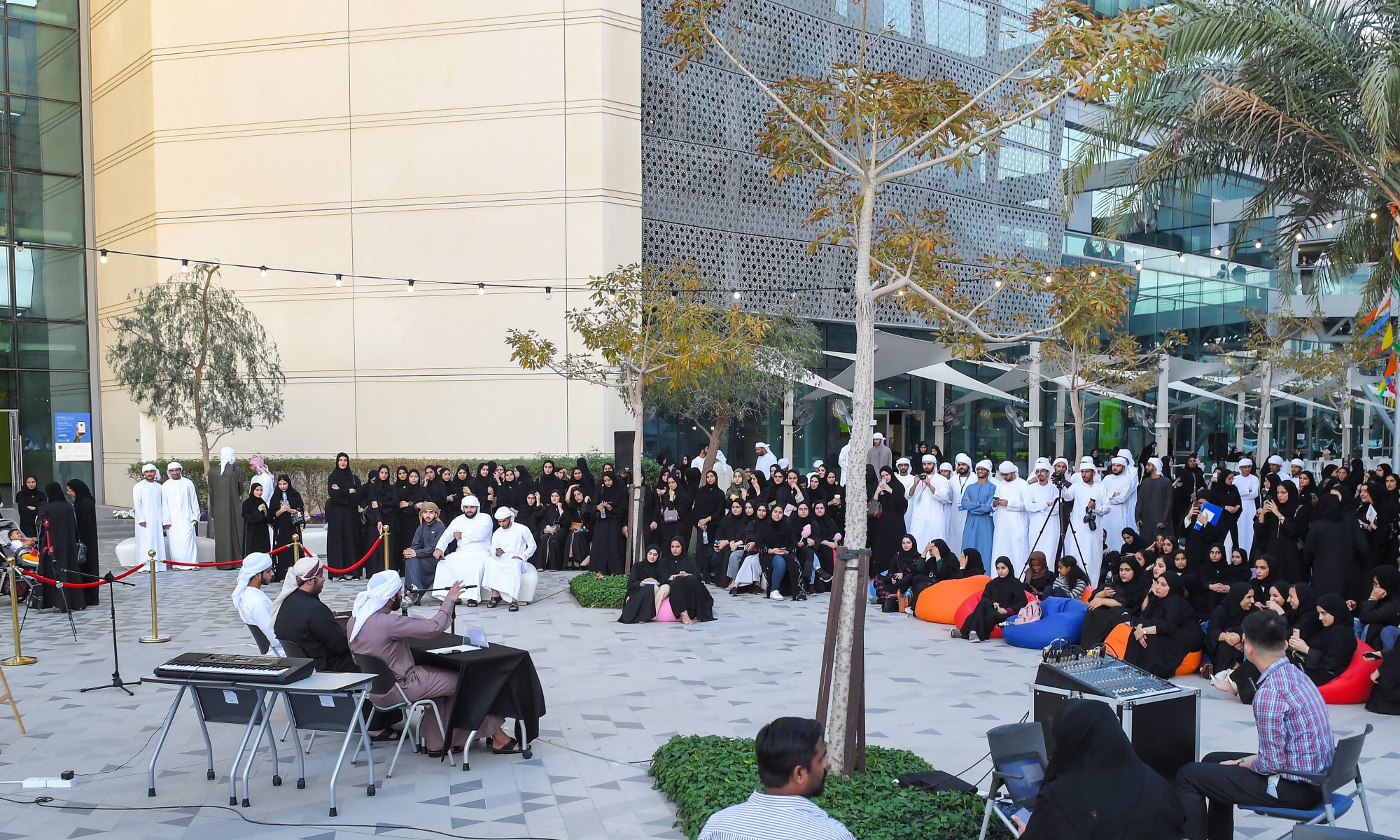
It was a night of fun activities and bonding for Khalifa University students as the University hosted a Winter Night event at the Main Campus outdoor area on 18 February 2020.
The student-led event was organized by the Aventure Club in collaboration with the other student clubs, namely the Jjang Club, Literature Club, Music and Art Club, Japanese Club, Intellectual & Electronic Sports Club, and Debate Club.
The participating clubs prepared activities for the attendees such as traditional Japanese and Korean games, arts and crafts, and film showings. The event also had a night bazaar where students were able to exhibit and even sell items that they made themselves. Some of the items displayed were calligraphy work, paintings, natural soaps, and jewelry.
The night was also full of entertainment. The Music and Arts Club performed a series of musical performances and a live painting show, while the Literature Club organized a reading of Arabic poetry. A few students showcased their talents by singing and playing instruments such as the piano and guitar.
The KU Winter Night was a nice respite for the students to relax and socialize and a great way to get to know more about the different clubs at KU.
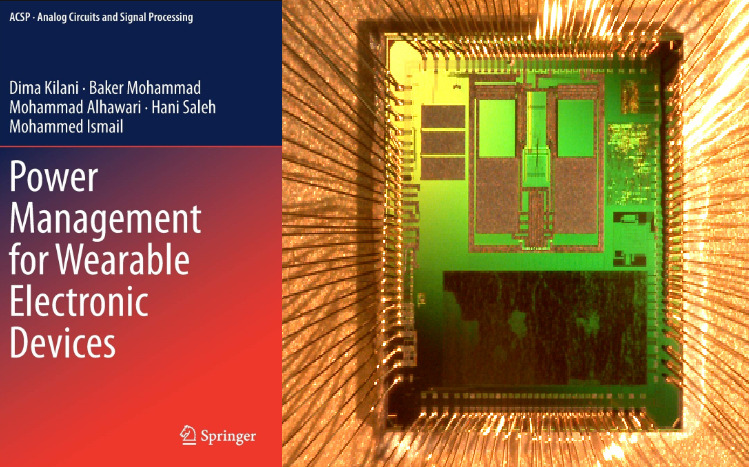
A team of researchers from Khalifa University’s System-on-Chip Lab (SoCL) have contributed to the advancement of energy-efficient wearable electronic devices with extended battery life, and documented their contributions in a new book on power management integrated circuits for wearables.
The co-authors include KU’s Dr. Dima Kilani, Postdoctoral Fellow, Dr. Baker Mohammad, Associate Professor of Electrical Engineering and Computer Science and SoCL Director, and Dr. Hani Saleh, Associate Professor of Electrical Engineering and Computer Science. The book, titled “Power Management for Wearable Electronic Devices,” is published by Springer, one of the leading international science and technology publishers.
As Khalifa University celebrates the UAE’s Month of Reading, the recent book publication underscores the significant role KU researchers play in expanding scientific literacy and disseminating cutting-edge knowledge to readers in the UAE and around the world.
The book, which is composed of six chapters, presents a comprehensive overview of the research conducted by SoCL researchers in the field of power management integrated circuits (PMICs), which are used to power small, battery-operated electronic devices within a single chip.
Forecasts suggest that by 2030 there will be around 50 billion Internet-of-Things (IoT) devices in use around the world offering new ways to improve our productivity, health, and lifestyle. Hence, the book’s publication is very timely as it provides important insights into optimal power management designs for researchers and industry leaders working in the area of connected, low-power wearable devices.
“We are entering an era of IoT and artificial intelligence (AI), which is giving rise to great opportunities for electronic devices with low power consumption and energy efficiency,” Dr. Mohammad shared.
PMICs provide critical power management functions in wearable devices, especially in ultra-thin sensors used in hard-to-reach places, like medical implantable and smart structures. These ultra-thin sensors require a new generation of IPICs that can facilitate charging and keep up with the highest-performing wearable requirements.
The book presents different PMIC design architectures that will reduce power consumption and utilize energy harvesting sources to achieve efficient power management in ultra-thin wearables and near perpetual operation.
“The circuits presented in our book support voltage scaling to reduce the overall average power consumption of a wearable device, resulting in longer device operating time. The discussion includes many designs, control techniques and approaches to distribute efficiently the power among different blocks in the device,” said Dr. Kilani.
The book gathers all the ideas the team has previously published in scientific journals, along with new insights, to be a reference for both academic and industry.
The book’s chapters present the researchers’ experimental results of energy harvesting-based power management units (PMUs) using different combinations of power converters and voltage regulators.
“The results give a good guide for designers to select the appropriate option based on the device requirements,” Dr. Kilani explained.
The designed PMICs underwent verification and silicon validation, which means that the circuits were tested and successfully demonstrated on silicon-based integrated circuit prototypes manufactured at GLOBALFOUNDRIES (owned by Mubadala), proving that the chips work as designed.
Recognitions at Abu Dhabi Awards for Intellectual Property during TIP 2020 Summit Validate Khalifa University’s Status in Driving Technology Innovations
Khalifa University of Science and Technology has won two top recognitions at the Abu Dhabi Awards for Intellectual Property, validating once again its status as a pioneering research-intensive higher education institution, driving innovation in new technologies.
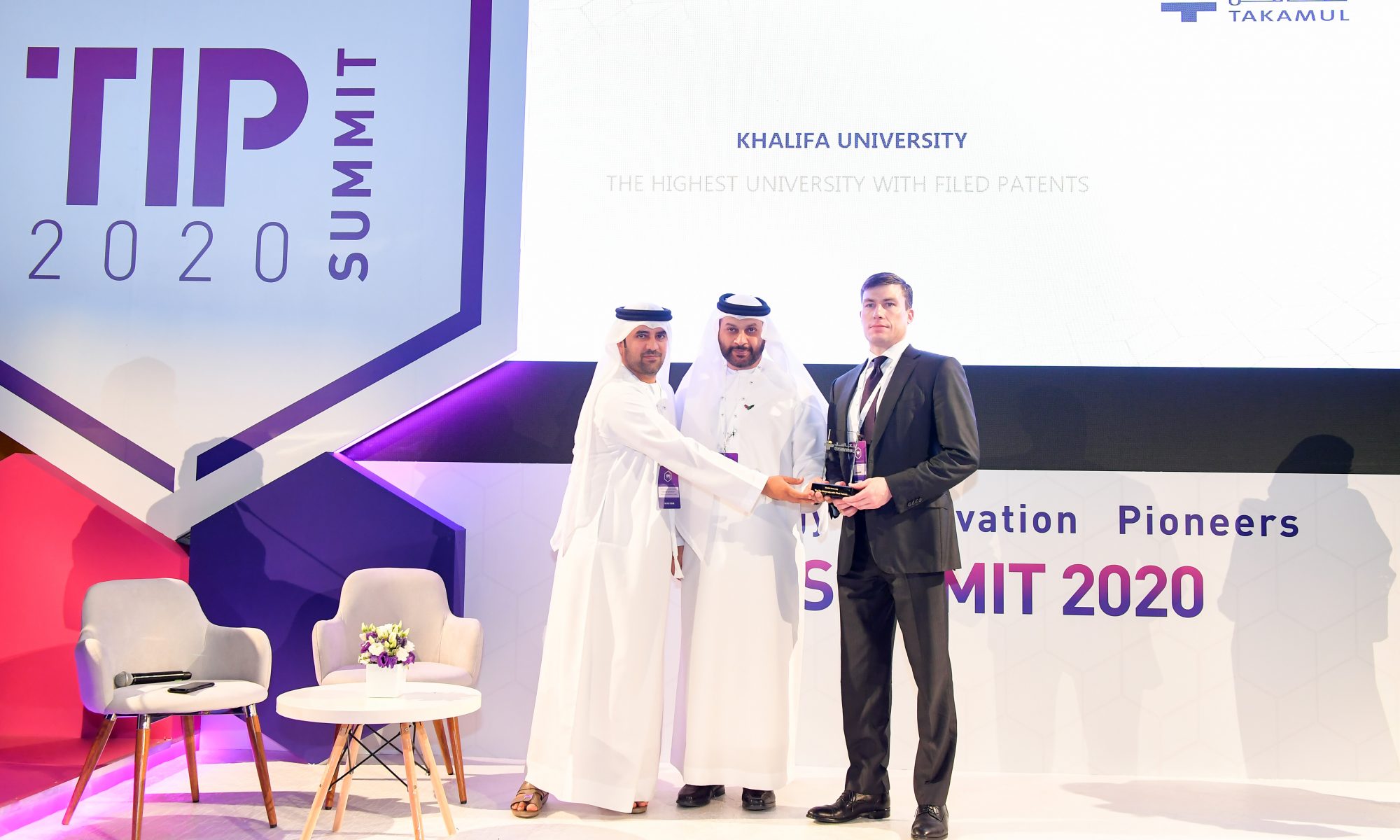
Khalifa University was presented with the ‘Top University with Filed Patents’ award that was received by Dr Steve Griffiths, Senior Vice-President, Research and Development, Khalifa University. Moreover, Khalifa University’s Emirates ICT Innovation Center (EBTIC) sponsored by the UAE Telecom Regulatory Authority’s ICT Fund, received the ‘Most Inventive Innovation Center’ award that was received by Dr Nawaf I. Almoosa, Acting Director, EBTIC and Assistant Professor, Khalifa University. The awards were presented during the Technology Innovation Pioneers (TIP) 2020 Summit organized by the Department of Economic Development – Abu Dhabi in cooperation with the Ministry of Economy.
Khalifa University currently has a total of 167 issued patents, which is considered the highest number among universities in the UAE. The University has also 228 filed patent applications, resulting from 417 invention disclosures. EBTIC, a Khalifa University research and innovation center focused on systems and technologies for the Next Generation Networks (NGNs) and NGN-enabled ICT applications and services, was awarded in recognition of its leadership in IP generation, specifically the volume and quality of patents and its contribution to the UAE’s status in innovation globally. EBTIC alone currently has 40 issued patents with over 60 pending patent applications.
Dr. Arif Sultan Al Hammadi, Executive Vice-President, Khalifa University of Science and Technology, said: “The two awards – ‘Top University with Filed Patents’ and the ‘Most Inventive Research Center’ for our research center EBTIC – place us among the top league of well-established universities that contribute to creating intellectual capital. Our research thrust in the UAE’s strategic sectors, world-class faculty experts, and cutting-edge laboratory facilities have together helped us to achieve these recognitions. We believe these awards will further strengthen our resolve to consistently contribute not only to the creation of IP but also in capacity building, thus facilitating the country’s knowledge-economy transformation.”
At the TIP 2020 Summit, Dr Steve Griffiths joined a panel of experts to share his perspectives on ‘The Next Big Thing: DeepTech’ and MENA’s Cleantech start-ups: Growing the ecosystem to solve environmental challenges’. Dr. Nawaf Al Moosa offered his views on ‘IP from Ideation to Implementation’, while Dr. Daniel Choi, Associate Professor, Mechanical Engineering, spoke about ‘How Universities Can Support Innovation’.
Currently, Khalifa University has 19 research centers and 228 laboratories housing state-of-the-art equipment to investigate a broad range of science and engineering subjects.
The research-intensive university’s focus sectors include clean and renewable energy, hydrocarbon exploration and production, water and environment, health, aerospace, and supply chain and logistics. Research in these sectors is enhanced by the research platforms of robotics, AI and data science, information and communication technologies, advanced materials and manufacturing.