
Faculty Teaching Excellence Award Winners Recognized

Khalifa University recognized several of its outstanding faculty by awarding three faculty members – one from each of the University’s three colleges – with the “Faculty Teaching Excellence Awards.” The recipients have been recognized for their excellence in teaching.


The Khalifa University Teaching Awards is an annual event that recognizes faculty, laboratory teaching staff, and teaching assistants who had a profound impact on students’ learning through their exemplary teaching.


 KU students played a vital role in this year’s nominations. The top nominees from each category were requested to submit an electronic portfolio of teaching evidence.  Through a rigorous selection process, the finalists for the year 2020 have been announced on World Teachers’ Day by the Provost’s Office.  


The focus for this year’s awards was on teachers who had a profound impact on students during the transitioning to online learning which coincides with the World Teachers’ theme of “Teachers: Leading in Crisis, Reimagining the Future”.


The three awardees are:

  • Nadia Nwayhed, Lecturer of Mathematics
  • Faisal Al Marzooqi, Assistant Professor of Chemical Engineering
  • Lujain Aloum, Lecturer of Pharmacology


Following is a brief bio of each of the winners.


Ms. Nadia Nwayhed, Lecturer of Mathematics. College of Arts and Sciences
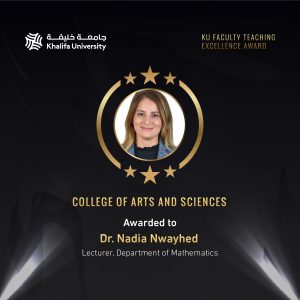
 

Nadia Abdel Baki Nwayhed is a lecturer in the Department of Mathematics. She received her BA in Mathematics from the American University of Beirut, Lebanon, in 2004 with high distinction and an award for Academic Excellence. She was then awarded a full scholarship to complete her Masters in Mathematics at the same institution.


Previously, Nadia worked at SABIS® Educational Services as a Mathematics Subject Analyst, a Mathematics and Work Skills Teacher in the Work Readiness Program at the Higher Colleges of Technology (HCT) in Madinat Zayed – Western Region, and a Math faculty member at the HCT Men’s College in Abu Dhabi. She joined the Petroleum Institute as a Math Lecturer in the College of Arts and Sciences in 2015.


Dr. Faisal Al Marzooqi, Assistant Professor of Chemical Engineering, College of Engineering
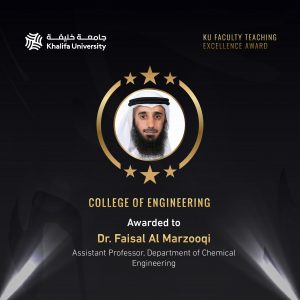
Dr. Faisal Al Marzooqi is an Assistant Professor of Chemical Engineering of the Chemical Engineering Department at Khalifa University. He received his PhD degree in Interdisciplinary Engineering from the joint program of Masdar Institute and Massachusetts Institute of Technology in 2015, with a focus in the application of membrane fabrication and nanotechnology in seawater desalination. Dr. Al Marzooqi obtained his Master’s degree in Chemical Engineering from Imperial College London in 2009. His M.Sc. research focused on the use of ionic liquids in the determination of surface energies, which led him to receive the Lonza award in 2009.


He is a member of the Center of Membrane and Advanced Water Technology (CMAT) at Khalifa University and his research interests are in nano-transport phenomena in general with a focus on water applications.


Ms. Lujain Aloum, Lecturer of Pharmacology, College of Medicine and Health Sciences
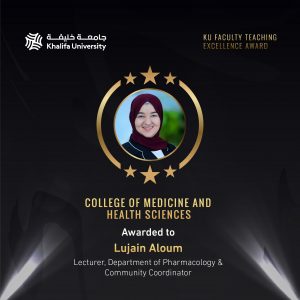
 

Lujain Aloum is a lecturer in the pharmacology department and coordinator of the learning communities at the College of Medicine and Health Sciences. She is a pharmacy graduate and HAAD licensed pharmacist. She completed her Master’s degree in experimental pharmacology and therapeutics at University College London. Previously she worked as a clinical instructor at University of Sharjah.


Aloum has always been very passionate about teaching and she is dedicated to finding innovative ways to deliver information to students. She has diverse experience in molecular, biochemical, pharmacy practice, and drug discovery and development research. Aloum has won several regional research awards such as Think Science competition and Sharjah science festival.


Erica Solomon
Publication Senior Specialist
5 October 2020
Supporting Student Clubs & Chapters Virtually

Khalifa University’s First-Ever Virtual Club Fair Kicks Off with New Webpage Viewed by over 1,000 Interested KU Community Members 


Despite the mandate for social distancing across the country, Khalifa University students can still join one of the University’s student clubs and professional chapters, and by doing so, gain more opportunities for meaningful personal and professional growth.


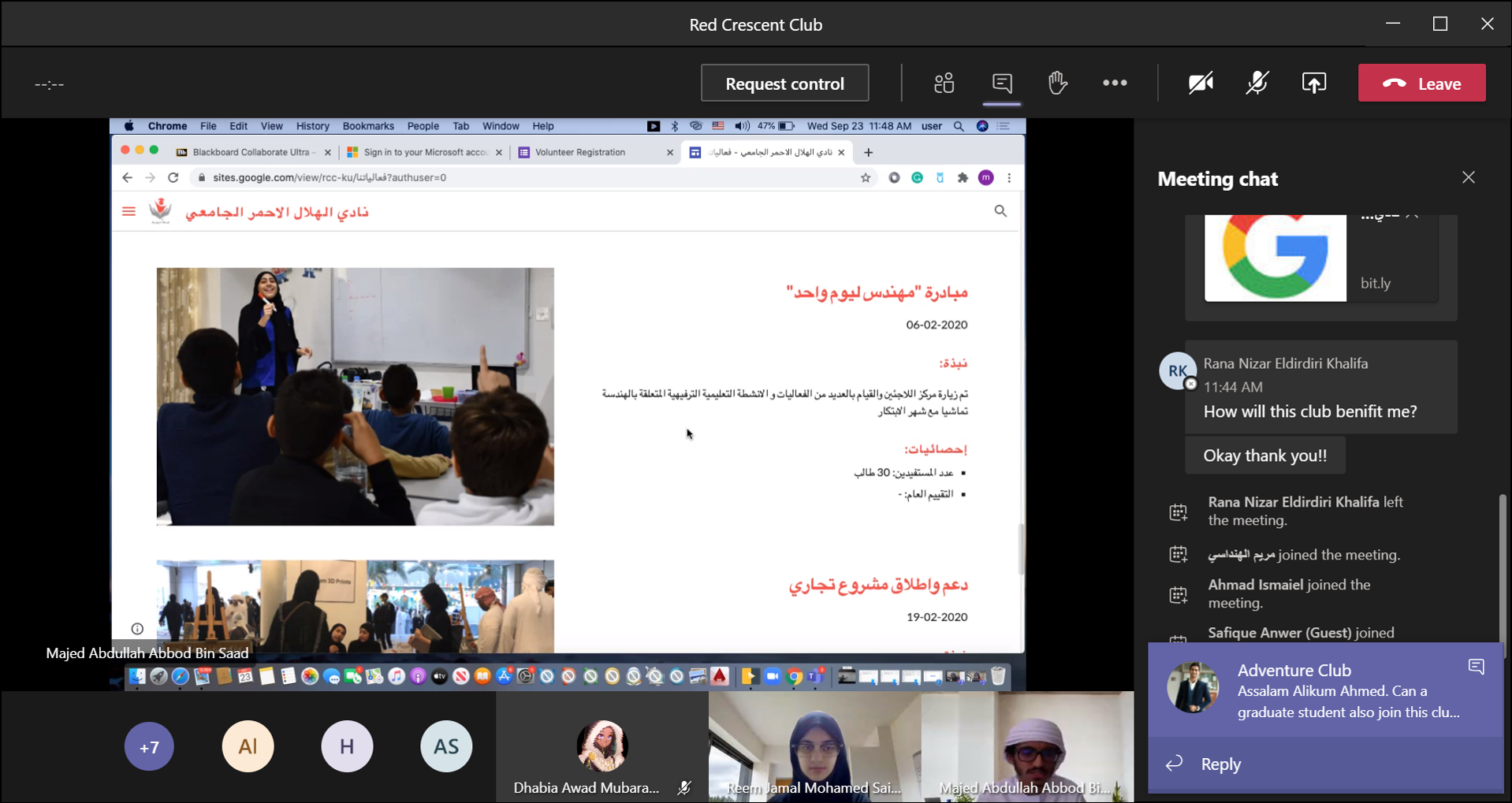
The Student Life Department has made it easy for students to engage with and join one of KU’s 13 student clubs and five professional chapters by launching the KU Virtual Club Fair webpage. 


The new online platform allowed the clubs and professional chapters to showcase their goals, initiatives and activities, while giving students and prospective members the chance to join the clubs remotely. Three new Clubs that were established earlier this year also participated, including Cooking Club, Physics Club and Volunteering Club.  


Since the launch of the webpage, over 1,000 prospective new members have visited the page to explore the wide variety of opportunities offered by the Clubs and Chapters. Interested students can still visit the Clubs and Chapters webpage on the KU Portal to learn more and register. 


In addition to the webpage, Student Life hosted a live Q&A session with members from ten KU student clubs and five professional chapters on Wednesday, 23 September. Over 250 students attended and learned in-depth about the different clubs’ and chapters’ extracurricular activities and goals, and how they can engage with the clubs throughout the year.


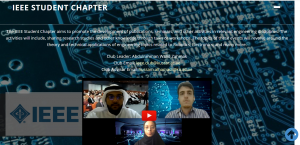
When Abdulrahman Zahmak, Electrical Engineering major and IEEE Chapter member was asked about his experience during the Q&A sessions, he said: “It was smooth and very interactive, and successfully delivered the essence and the objective of the club to the students.”  

The IEEE Student Chapter aims to promote the development of Publications, seminars, and other activities relevant to engineering disciplines.

Another student, Ahmed Almessabi, Chemical Engineering major and Volunteering Club member commented: ”It was an amazing experience answering questions about the club, and it showed that a large number of students are interested in the club.”


Recognizing the important role that co-curricular and extra-curricular activities play in developing the “whole student,” KU’s Student Life Department strives to offer KU students meaningful opportunities to grow personally and professionally. 

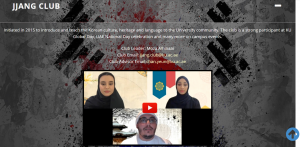
The Jjang Club was formed in 2015 to introduce and teach Korean culture, heritage, and language to the KU community.

On the personal side, extracurricular activities can provide students with the camaraderie they need to feel a sense of belonging to their university community. On the professional side, such involvement pushes students to develop the real-life skills and experiences that will be useful in their future careers.

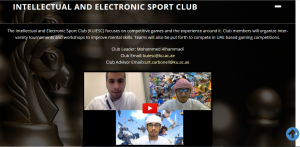
The Intellectual and Electronic Sport Club (KUIESC) focuses on competitive games and the experience of playing with other members.

For more information about the student clubs and professional chapters offered at KU, visit the Virtual Club Fair webpage on the KU Portal here.


Erica Solomon
Publication Senior Specialist
25 September 2020

Khalifa University Research Team Develops New Portable Cost-Effective PCR Test To Help Detect COVID-19 in 45 Minutes


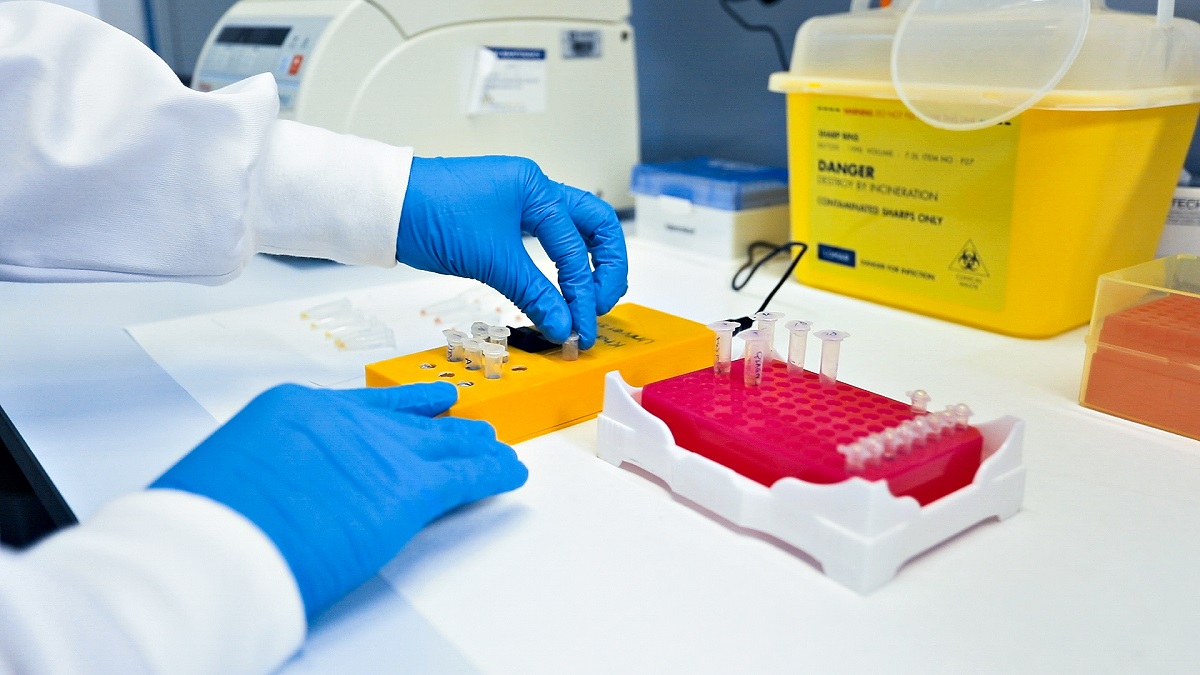
A team of researchers from Khalifa University has developed a portable Covid-19 testing kit, no larger than your average smartphone. The new kit is both portable and can deliver the results in 45 minutes only.

https://www.instagram.com/tv/CF113qSpLb4/?utm_source=ig_web_button_share_sheet

Dr. Anas Alazzam, Associate Professor of Mechanical Engineering and member of the System-on-Chip Lab (SoCL) is the primary investigator for the project with Dr. Habiba AlSafar, Director of the Khalifa University Center for Biotechnology and Associate Professor of Genetics and Molecular Biology, as co-principal investigator. The research team includes the Postdoctoral Researchers Dr. Waqas Waheed, and Dr. Sueda Saylan, along with Research Associate Hussein Kannout.


While PCR testing is always highly accurate, and the gold standard for detecting viruses, it can be complex to use. The researchers at KU used the Loop-mediated Isothermal Amplification method (LAMP) to provide a rapid, sensitive, and specific detection of the Covid-19 virus. It is faster than the conventional PCR method and uses primers that target two specific regions of the viral RNA. The majority of PCR methods rely on thermal cycling where the reactants are exposed to repeated cycles of heating and cooling to start the RNA replication process. While laboratory PCR tests require a programmable thermocycler, LAMP can be carried out with a simple heat block, making it much more amenable to portable testing.


As complicated as this sounds, it’s all completed within the device and needs minimal knowledge to operate. For the KU testing kit, there is no need for any sophisticated equipment as the kit performs Covid-19 detection directly from a patient’s swab. A simple color change shows the result: pink for negative, yellow for positive.


Currently in the clinical validation stage, this testing kit can detect active infections in 45 minutes, meaning it can be used in rapid testing while being cost-effective at the same time.


When the coronavirus pandemic is over, the kits remain useful, as they can be used with any virus detecting primer. The LAMP method will still replicate the RNA to make it testable and then the sample can be tested with a reagent looking for the influenza virus, for example.


Primers to detect an infectious agent can be produced quickly once the viral sequence is known, so if a new virus were to emerge, this PCR test from the team at Khalifa University would be able to detect it.


Jade Sterling
Science Writer
2 October 2020

NeuroMem: Mimicking the Synapses in the Human Brain

A team from Khalifa University has developed a new type of flexible memristor device, called ‘NeuroMem’, that will extend the application of memristors to flexible electronic technologies like wearable smart devices.


Read Arabic story here.


Computer scientists have long been inspired by the human brain, aiming to design a computer that is able to store, retrieve and process information just as efficiently as the brain. The memristor, short for memory resistor, could be the key to designing such a computer as it processes information in a way that mimics the brain’s synapses and enables efficient neural network architecture. 


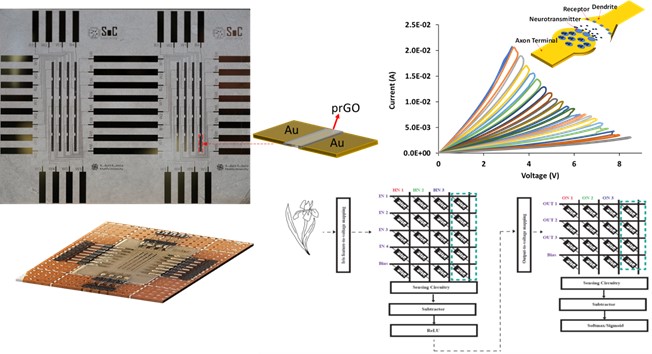
A team from Khalifa University has now developed a new type of flexible memristor device, called ‘NeuroMem’, that will extend the application of memristors to flexible electronic technologies like wearable smart devices. The team, including Dr. Baker Mohammad, Associate Professor of Electrical Engineering and Computer Science and Director of the System on Chip Center (SoCC), Dr. Heba Abunahla, Research Scientist, Dr. Yasmin Halawani, Postdoctoral fellow, and Dr. Anas Alazzam, Associate Professor of Mechanical Engineering, published their findings recently in Scientific Reports.


A memristor device consists of metal oxide sandwiched between two electrodes. It has the ability to change its resistance state under the application of suitable voltage. As the name implies, the memristor can remember its last written state, even if power is turned off, which provides it great potential to be deployed as a solid-state computer memory device.


Unlike traditional solid-state storage technologies, memristors require less energy to operate, last longer, and store at least twice as much data. They use brain-inspired architectures that allow them to perform in-memory-computing (IMC). This solves a big issue in traditional computer architectures, referred to as the memory wall, by eliminating the need to move data from memory to the processing unit in order to perform computing functions. This unification of memory and computing imitates the way the human brain works.


Computers traditionally have separate processing and memory storage units, while the brain uses neurons to perform both functions. With the unique characteristics of memristors, they also have this ability to process and store data at the same memory element. This is achieved by using a similar mechanism used by synapses in a human brain to transfer information between neurons.


Unlike an electrical resistor with a fixed resistance, a memristor has a voltage-dependent resistance. This means that the resistance increases or decreases depending on the amount of voltage applied. In other words, a memristor integrates the flux applied over time, which is the key element to its function. Thus, the electrical properties of the used material are crucial; the active material must have the ability to switch its resistance state with the applied voltage.


The KU research team developed NeuroMem with graphene – a material known for its advanced electrical properties.


“Many metal oxides are used as the switching medium in memristor devices but few researchers are investigating using graphene or graphene oxide as electrodes or the switching materials,” explained Dr. Mohammad. “Using graphene oxide in memristor can improve the device’s performance and its switching ability. Our device is the first to exhibit a full analog resistance switching value within a given range.”


Graphene is already widely used in a range of applications for its outstanding features: it is flexible, low-cost, adaptable and more environmentally-friendly. By using reduced graphene oxide, the researchers can manufacture NeuroMem with standard microfabrication processes, making it simple, cost-effective and scalable for mass production.


Plus, their new NeuroMem device is flexible, meaning it can be integrated into electronics that involve building circuits on flexible polymer surfaces for applications such as smart wearable devices, where flexible memory and artificial intelligence (AI) elements capabilities are vital.


There is a huge effort underway to use memristor devices in computer chips designed to mimic the human brain. By combining this functionality with the flexibility and scalability of graphene-based materials, it is easy to imagine the development of a new generation of intelligent devices with very low power consumption and ultra-fast performance.


The team has demonstrated the analog memristor behavior in the fully connected layer part of an AI neural network algorithm and has shown the potential of deploying this technology for pre-trained neural networks to perform computing directly on distributed devices as opposed to central servers.


Jade Sterling
Science Writer
1 October 2020

Khalifa University Designs Ultra-Small Memory Cell that Could Boost Storage Density in Computers


The new ‘nano-memory’ cell is designed as a type of non-volatile memory that can complete ‘read-write’ operations with a significantly smaller footprint and simple design using a single gold nanoparticle


To meet the growing demand for faster, smaller and more powerful electronics, a team of researchers from Khalifa University has developed a new type of ultra-small memory cell that could provide greater memory storage and improved processing speed on extremely small computer chips. 


The new ‘nano-memory’ cell is tiny – only one gold nanoparticle thick, or about one-one thousandth the size of a human hair – and is sandwiched between very thin layers of aluminum oxide. It has a unique and simple structure that allows data to be ‘written’ onto it and ‘read’ from it by charging and discharging a single nanoparticle. Its simple design makes it easy to fabricate, and in turn, easily scalable and commercially viable. 


Lead author Dr. Moh’d Rezeq, Associate Professor of Physics, along with Dr. Irfan Saadat, Professor of Electrical Engineering and Computer Science, Dr.  Ammar Nayfeh, Associate Professor of Electrical Engineering and Computer Science, and Postdoctoral Fellows Dr. Ayman Rezk and Dr. Yawar Abbas,  describe the new memory cell in a paper published in June 2020 in the journal Applied Physics Letters. 


Computer Memory and MOSFETs


Computers represent information in binary code, which is written as sequences of 0s and 1s, known as a binary digit, or ‘bit.’ The files and programs on our computers comprise millions of these bits, which are stored in the computer’s memory, and then executed by the computer’s central processing unit. 


There are two types of memory systems in a computer: Non-volatile memory (NVM), which is memory that can retrieve stored information even when the power to a computer has been turned off, and volatile memory, which is memory that processes information only when the computer is running. 


NVM systems like flash memory use floating gate metal-oxide semiconductor field effect transistors to store each bit in a specific memory cell as an electric charge. 

Metal-oxide semiconductor field effect transistors, or MOSFETs, are the building blocks of modern day computers. The billions of transistors found in all electronics today to switch and amplify electric signals are designed as MOSFETs. 


Floating gate MOSFETs are designed in a way that allow the charge, which would normally pass through in a typical MOSFET, to be trapped in the ‘floating gate’ part of the system. This trapped charge represents a stored bit.


Dr. Rezeq and his team from KU have proposed a new, simpler memory cell structure to replace the floating gate MOSFET architecture.


The KU Nano-Memory Cell Design


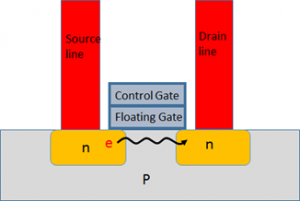
In a typical floating gate MOSFET, a stack of gates is arranged on a base, known as a substrate, that is made up of n- and p-type silicon semiconductors. The gates are insulated from the substrate by metal oxide insulating layers, also known as dielectrics. Source and drain terminals are connected directly to the substrate so that electrons can flow through a channel underneath the floating gate (see Figure A). The electrons don’t flow until a voltage is applied to the gate. 


This structure, however, imposes some limitations on device performance and scaling, and also introduces some fabrication complexity.


Figure A: Typical design for a Flash memory floating gate MOSFET memory cell structure


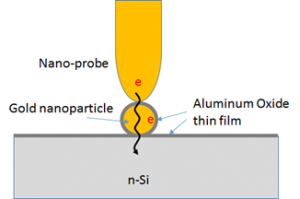
In Dr. Rezeq’s work the design is simpler. A single gold nanoparticle is placed on a silicon substrate that has been covered with a thin layer of aluminium oxide. Then, another thin layer of aluminium oxide is placed around the entire nanoparticle. In this design, the gold nanoparticle itself is the cell in which the charge is stored. 


Their design does not involve the use of conventional source and drain terminals, and the substrate is only an n-type silicon semiconductor. Instead of source and drain terminals, they attach one electrode above the gold nanoparticle (see Figure B). In their proof-of-concept prototype, they used a nano-probe as the electrode. 


After injecting an electrical charge (i.e. electrons) into the nanoparticle through the nano-probe, the researchers observed that a few electrons successfully tunnelled their way into the nanoparticle and became trapped in the nanoparticle itself. Thus, the team observed what would be called in a working computer as the ‘writing’ process.


Figure B: Nano-particle based memory cell structure (Dr Rezeq’s group design)


To complete the ‘reading’ process, which is the process that takes place when the computer’s central processing unit executes and ‘reads’ from the memory cell, another voltage is applied through the electrode, allowing the CPU to read the current signal. If there is a charge in the nano-particle (which represents the ‘on’ state, or a 1 in binary code) the current signal will be less than the case when the nano-particle is discharged (which represents the ‘off’ state, or a 0 in binary code).


Dr. Rezeq credits the success of the nano-memory cell to the right size of the gold nanoparticle and the right thickness of the aluminum oxide layers. 


“The selection of the nanoparticle size and the highly insulating – or high-K – aluminum oxide thickness is critical to optimize the tunnelling current and increase the charge retention time,” he said. 


Metal oxides that are very good at insulating, including aluminium dioxide, are known as ‘high-k’ dielectrics. In floating gate MOSFETs, these insulating layers play a key role in ensuring the flow of electrons between the source and drain terminals does not affect the charge in the floating gate. In Dr. Rezeq’s nano-memory cell, the dielectric ensures that the charge stays trapped in the gold nanoparticle, and does not leak out. The dielectric has to be thin enough to let the charge in via the electron tunnelling process, but thick enough to keep it there when there is no voltage bias applied. Furthermore, their design allows erasing and writing memory data regularly. 


“The nanoparticle itself here is used as a storage site of electrons but also regulates the current. Since the size of the nanoparticle can be controlled down to a few nanometers, this can result in a significant improvement in the capacity of the memory storage devices,” explained Dr. Rezeq. “Such devices are particularly interesting for their endurance, small operating voltage, and faster write/read cycles. These improvements are related to unique characteristics from the nanoparticles, particularly when combined with very thin high-k dielectrics.”


It is well accepted that nanotechnology will play a vital role in the ability to increase computing device performance across a broad range of applications and this work demonstrates where the future lies. 


Dr. Rezeq plans to continue working on his nano-memory cell proof-of-concept and bring it into the next phase of development. 


Jade Sterling, Science Writer and Erica Solomon, Publication Senior Specialist
30 September 2020

Turning Catalyst Production Inside Out


Researchers from Khalifa University have developed a simple method to produce catalysts more efficiently and precisely, which could help accelerate the development of super effective catalysts for numerous industries.


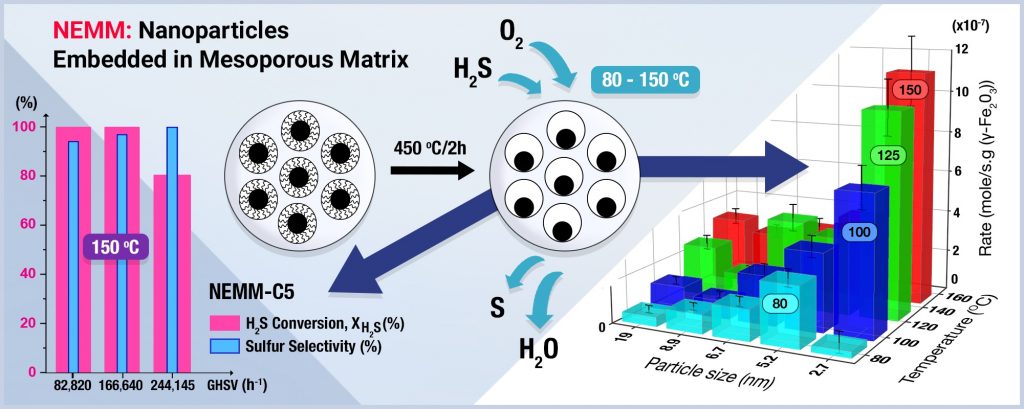
A team of researchers led by Dr. Yasser Al Wahedi, Assistant Professor of Chemical Engineering at Khalifa University and a member of the Center for Catalysis and Separations (CeCaS), and Dr. Georgia Basina, Post-Doctoral Fellow in the same department, have developed a new way of making catalysts that is more precise and effective. This simple and effective method involves embedding nanoparticles in a material dotted with ultra-small pores, known as the ‘NEMMs’ approach. The team recently published their work in Applied Catalysis B: Environmental.


A catalyst is a substance that can be added to a reaction to increase the reaction rate without being consumed in the process. They typically speed up a reaction by reducing the energy needed to activate the process by providing an alternate reaction pathway.


Heterogeneous catalysts, commonly used in the oil and gas industries, are catalysts that exist in a different state than the reactants—for example, the catalyst may be in a solid state, while the reactants are liquid or gas.


“Heterogeneous catalysts are crucial in many industries such as oil, gas, petrochemicals, and pharmaceuticals,” explained Dr. Al Wahedi. “A typical heterogeneous catalyst is composed of an active phase, which performs the catalytic function, and a support which enhances the active phase and its stability.”


One such example is the catalytic converter in a gasoline or diesel-fueled car. Transition metal catalysts are embedded on a solid phase support, which comes into contact with gases from the car’s exhaust stream, increasing the rate of reactions to produce fewer toxic products from pollutants in this exhaust stream. The catalytic converter is also an example of surface catalysis, where the reactant molecules are adsorbed onto a solid surface before they react with the catalyst. The rate of a surface-catalyzed reaction increases with the surface area of catalyst in contact with the reactants, and so the solid support is designed to have a very high surface area with a porous structure and honeycomb-like appearance.


“Typically, the support structure accounts for 60 to 99 percent of the weight of the total catalyst, while its role is limited to stabilizing the active component nanoparticles,” said Dr. Al Wahedi. “To enhance the catalytic performance, we need to increase the amount of active component in the structure, while keeping particle size and state optimal.”


Conventional methods to prepare catalysts often start with the support structure and then introduce the active ingredient via insertion methods such as impregnation, chemical vapor deposition or ion exchange. When manufacturers want to increase the amount of the active ingredient using these methods, it often results in poor dispersions, or a lack of control over the size of the ingredient particles.


“To overcome this issue, we can encapsulate the active nanoparticles in a mesoporous matrix comprised of the supporting material to produce a structure we term the NEMMs,” explained Dr. Basina. “This approach allows us to develop catalysts with high active component loadings while keeping the size optimal for efficient catalysis.”


The NEMMs approach involves growing a porous support material around nanoparticles of the active ingredient. They use nanoparticles that are the perfect size to serve as nucleation centers, around which a mesoporous silicon oxide (a material containing pores with diameters between 2 and 50 nanometres) matrix grows. The approach also uses surfactant molecules to create a ‘crown’ around the active component particles, which is removed after the matrix has been grown in order to leave an empty space between the active component and the mesoporous material. It is in this empty space that the catalysis reactants can be adsorbed.

The research team tested their catalyst on the selective oxidation of hydrogen sulphide, an important industrial reaction whereby toxic hydrogen sulphide is oxidized to produce sulphur.


“Our approach circumvents the limitations rooted in conventional catalyst design by allowing complete independent control over the active component nanoparticle shapes and size,” said Dr. Al Wahedi. “ We have investigated this approach on the selective oxidation of H2S reaction (commercially denoted as SuperClausTM). Compared with previous studies, our catalysts achieve near complete conversions and more than 95 percent selectivity at a fraction of the catalyst mass required.”


The ease of this synthesis method and the stability and efficiency of the resulting catalyst promise a wide spectrum of applications beyond the selective oxidation of hydrogen sulphide in myriad industries.


Jade Sterling
Science Writer
29 September 2020

UAE’s MeznSat Successfully Launches into Space


The mini CubeSat was developed by students from Khalifa University and the American University of Ras Al Khaimah, with support from UAE Space Agency

The MeznSat, a mini satellite developed through a collaboration between Khalifa University, the American University of Ras Al Khaimah (AURAK), and the UAE Space Agency, has been successfully launched into space aboard a Soyuz-2b rocket from the Plesetsk Cosmodrome in Russia.

https://www.instagram.com/p/CFrcz5Cp0ij/?utm_source=ig_web_button_share_sheet

MeznSat is a nanosatellite that weighs around 2.7kg, and measures 10cm x 10cm x 30cm, making it a 3U CubeSat.

A team of KU postgraduate students and AURAK undergraduate students developed the CubeSat. They will monitor, process and analyze the data MeznSat will send to the ground station at KU’s Yahsat laboratory and the supporting ground station at AURAK.

The goal of MeznSat is to provide data on greenhouse gas concentrations, including carbon dioxide and methane, using shortwave infrared spectrometer, in the UAE’s atmosphere. It will also collect data on the red tide phenomenon in the UAE.

The UAS Space Agency confirmed that all preparations for placing the satellite on the launch pad and successfully conducting experiments and final checks regarding the readiness of the satellite were completed in time.

With this launch, MeznSat will join the 10 satellites launched by the UAE to develop national capabilities, enhance scientific research activities, and regulate the activities of the national space sector. The project will also support Emirati young people in developing the skills necessary for the UAE’s ambitious National Space Program and its future projects.

The satellite is scheduled to reach orbit next November, one month after its launch.

https://www.instagram.com/p/CFhAekqJVL4/?utm_source=ig_web_button_share_sheet

The processes and expertise involved in monitoring the atmosphere are similar to those employed during conventional earth observation programs.

Using a visible camera, as well as a shortwave infrared spectrometer, the satellite will measure the abundance and distribution of methane and carbon dioxide in the atmosphere.

It will also provide valuable insight into the concentration of nutrients in the coastal waters of the Arabian Gulf, which will allow for more accurate predictions of algal blooms and support the timely implementation of relevant precautionary measures.

Erica Solomon
Publication Senior Specialist
29 September 2020

Science of Well-Being Workshops Promotes Student Happiness & Success

Workshop Designed to Ease Stress and Increase Well-Being Amidst Pandemic

The Student Success department successfully delivered a series of workshops to students under the theme “The Science of Well-Being,” which were aimed at helping students approach stressful situations positively and mitigate the adverse effects of Covid-19.

The series of workshops were classified into four distinct, yet interrelated categories.

The first workshop presented practical techniques to increase one’s own happiness, and build more productive habits.

The second group of workshops promoted positive thinking so students can approach unpleasant situations in a more positive and productive way.  The workshops in this category included:

  • Positive spirit
  • How to Think Positively Online Workshop
  • The Happy Me
  • The keys to Happiness and Positivity in a Crisis
  • How to Create an Encouraging Distance Learning Environment

The third group of workshops focused on techniques and helped students deal more effectively with stress in their lives by analyzing specific stressors and taking positive actions to minimize their effects.  The workshops in this category included:

  • Stress Management
  • How to Stop Worrying and Start Relaxing

The final group of workshops helped students deal with anxiety and depression.  The workshops in this category included:

  • What is Depression and How to Overcome it?
  • Test Anxiety
  • How to Succeed with Distance Learning
  • Corona Virus and Crisis Management Skill

This workshop series reflects Khalifa University’s commitment to building a diverse community of service-oriented, ambitious and talented individuals through an environment that encourages and nurtures creative inquiry, critical thinking, and human values.

Their efforts are especially needed at this time to tackle the challenges brought about by Covid-19.  The stress associated with a high pressure academic environment at a critical developmental period often leads to or reveals problems that are exacerbated due to events such as a pandemic.

The Student Success department endeavors to promote a holistic approach to the psychological health and development of all students. These efforts support students’ educational objectives, as well as enhance the well-being of the KU community. 

Student Success accomplishes this by offering a wide variety of services which facilitate students’ personal development, assist in the alleviation, remediation, and prevention of distress, as well as services that educate students in ways that develop self-awareness, self-reliance, and self-confidence.

Staff Report
27 September 2020


PhD Graduates Receive Best Research Recognition from the Federal Authority of Human Resources

Awarded Paper Demonstrates Key Role of Data Mining to Uncover Job Market Trends in the Region 

A paper written by two Khalifa University graduates, Dr. Abdulla Al Shimmari, PhD in Interdisciplinary Engineering, and Dr. Armin Alibasic, PhD in Interdisciplinary Engineering, was recognized by the Federal Authority of Human Resources (FAHR) with the H.H. Sheikh Mansour Bin Zayed Award for Best Research in Human Resources – 2019. The award is given to academic research papers related to human resource capital in the UAE that provide innovative suggestions and initiatives that can be adopted and applied in the country.

Dr. Al Shimmari and Dr. Alibasic’s paper, titled “Analyzing the UAE and GCC Job Market Reliability for a Transition from an Oil/Gas-based Energy Economy toward a Renewable Energy Economy,” aims to provide guidance for decision makers, employers, managers, and firms to utilize a standardized dataset of skills and attributes of different occupations to help them access information related to requirements and needs of emerging job markets. The paper was based on the research project “The Economic Impact of Advanced Technology and Automation on the Oil and Gas Sector”, which was conducted collaboratively with MIT.

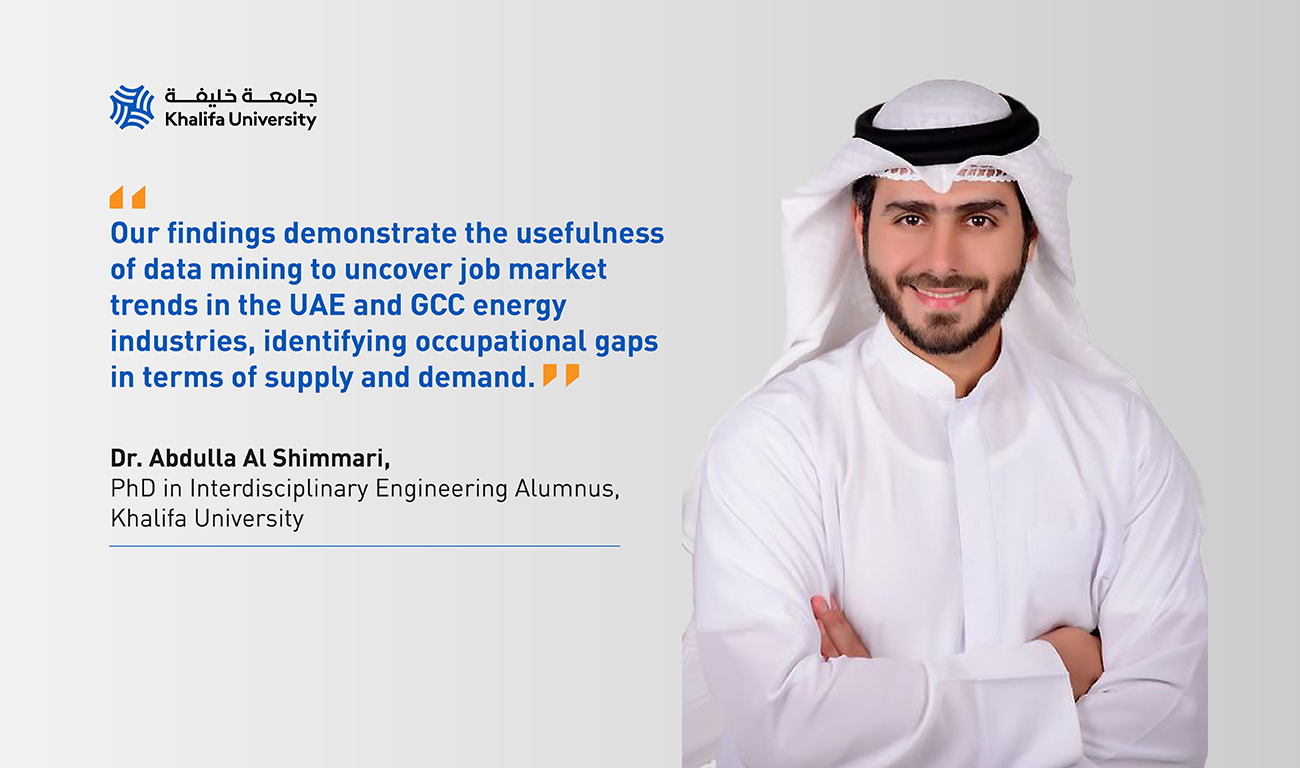
 “This paper’s findings demonstrate the general usefulness and applicability of data mining methods through the utilization of Natural Language Processing (NLP) techniques to uncover job market trends in UAE and GCC energy industries, identifying occupational gaps in terms of supply (syllabuses provided by universities) and demand (jobs available in the market measured through the online job postings),” Dr. Al Shimmari explained.

Although the UAE is setting clear renewable energy-related visions, policies, and regulations to ensure that the country’s transition away from a hydrocarbon-based energy system is smooth, readiness of the UAE’s labor force for the transition is an open question.

“This research contributes toward the enrichment of HR strategy, specifically here in the UAE, through the application of data science methods that enable decisions to be driven from data insights rather than assumptions,” commented Dr. Alibasic.

Both former Khalifa University students are honored to receive such a prestigious award and are proud of what they have achieved.

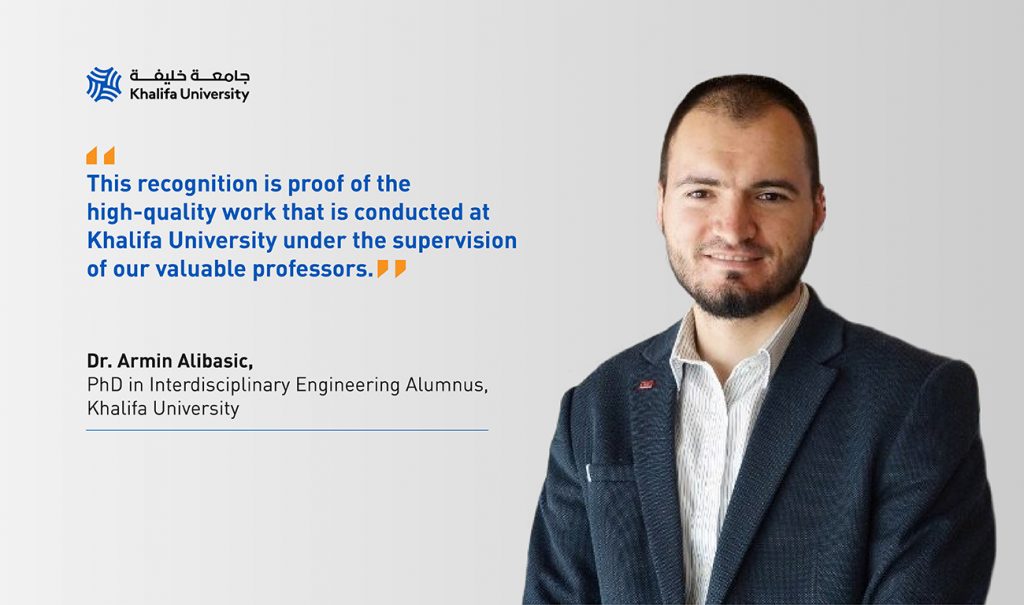
“It is proof of the high-quality work that is conducted at Khalifa University under the supervision of our valuable professors,” Dr. Alibasic said.  

“I would like to acknowledge the incredible efforts and guidance provided by our research team, especially Dr. Mohammed Atif Omar, Department Head of Engineering Systems and Management. I would also like to acknowledge the great collaboration work which has been done with the research team at MIT,” noted Dr. Al Shimmari.

Dr. Al Shimmari and Dr. Alibasic are continuing their work in data science and machine learning models. They are also working closely with authorities to ensure that the benefits of the research will be applied in the UAE’s human capital development.

Ara Cruz
Creative Writer
24 September 2020

KU Student Receives Prestigious Founding Leader Award

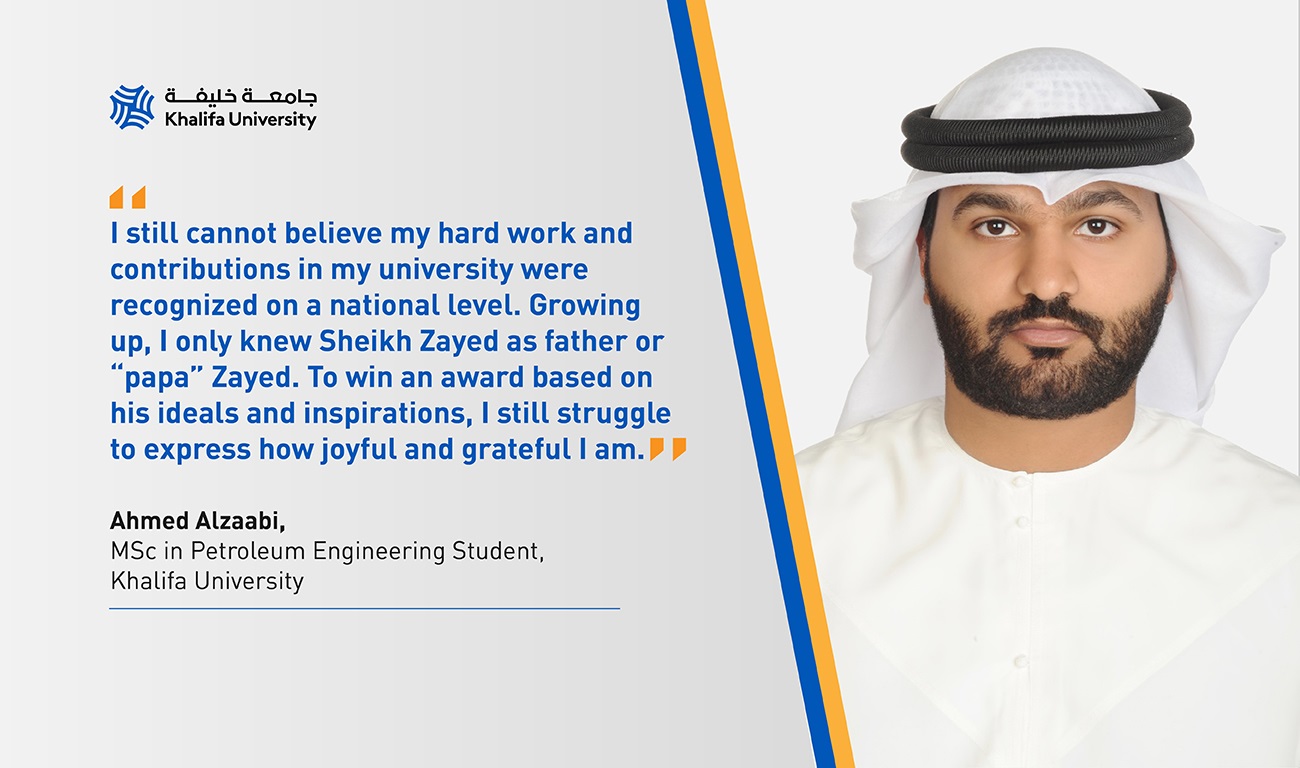
Photo Caption: Ahmed Alzaabi, MSc student in Petroleum Engineering Program at Khalifa University


Award Established by MoE to Reward those who Contribute to the Education Sector

Khalifa University student Ahmed Alzaabi was one of the recipients of the Founding Leader Award 2019 for the category “Distinguished University Student (BSc).” 

The Award was established by the Ministry of Education to highlight the contributions of those in the education sector by acknowledging and recognizing the valuable achievements and accomplishments of the faculty, staff, and students in the UAE. It aims to continue the legacy of the Founding Leader, Sheikh Zayed bin Sultan Al Nahyan, inspiring everyone to carry on his vision and ideologies to develop and advance further the country, especially the education sector. 

Ahmed was a BSc in Petroleum Engineering student and is now pursuing his Master’s degree in Petroleum Engineering at KU. He is currently working at ADNOC Onshore as a Production Engineer. Ahmed is also a member of the Society of Petroleum Engineers (SPE) and a Young Future Energy Leader (YFEL) alumnus. 

Associate Professor Dr. Hwee Lim, Department of English, worked with Ahmed on one of her projects. “I hired Ahmed as a student researcher from 2018-2019. Engineering undergraduates generally lack motivation to be involved in social sciences research. This largely stems from the belief that qualitative social sciences research is less relevant to engineering students than quantitative research in engineering science. Ahmed did not have this misconception but was motivated to be part of my research team because he valued expanding his experience of research in different disciplines,” she commented. 

“As Ahmed’s research supervisor, I observed that in his two-year journey as a student researcher, he learned to work as part of a research team and developed valuable work skills such as problem-solving, perseverance in face of obstacles, and collaboration with a research supervisor. He built better communication skills from interacting with the public in data collection and expanded his technical skills in qualitative research software such as Inqscribe and NVivo 10. 

“Ahmed also presented at the 3rd annual AARE Conference 2019 on behalf of the research team and was co-author in two publications from the project. Ahmed’s decision to undertake an MSc degree while working at ADNOC is evidence of his enduring interest in learning and professional development. He is a worthy recipient of The Founding Leader Award – Distinguished University Student category,” Dr. Lim noted. 

Commenting on his accomplishment, Ahmed said: “I still cannot believe my hard work and contributions in my university were recognized on a national level. Growing up, I only knew Sheikh Zayed as father or “papa” Zayed. To win an award based on his ideals and inspirations, I still struggle to express how joyful and grateful I am.” 

Ahmed is also now working on his MSc thesis that will be titled “Investigation of Wetting Alteration Potential of Surfactants as a Function of Rock Minerology.” The thesis will focus on the surface tension and the extended effect of high pressure and temperatures on surfactants. Surfactants are widely used in the petroleum industry for wettability alteration especially in Enhanced Oil Recovery (EOR) operations. For the last decade, surfactant EOR has been a subject of active interest due to the commercial availability and its technical benefits. Furthermore, surfactants have the potential to achieve a feasible increased oil recovery in the presence of economic and technological limitations.

Ahmed’s thesis topic is very much in line with one of the areas ADNOC is interested in developing. Since ADNOC’s vision is to increase oil production, new technologies and their feasibility in ADNOC fields are being explored. Conducting this study will add to Ahmed’s experience, as well as expand the scope of his expertise beyond his current work. 

“The Founding Leader Award is a materialization of my endeavors to excel as a professional engineer and as a young leader who wishes to serve and lead in a dynamic industry. My goal is to give back to my country by adding value to my professional life as a student and as an engineer.”

Ara Cruz
Creative Writer
24 September 2020

Two Khalifa University Proposals Awarded in Mubadala-SRC’s Intelligent Systems Hardware Research Program

Projects to Focus on Energy-Efficiency and High-Speed Communications between AI Devices  

US-based Semiconductor Research Corporation (SRC), Mubadala Investment Company, and GLOBALFOUNDRIES® (GF®)  announced that two proposals from Khalifa University of Science and Technology have been awarded as part of the SRC Global Research Collaboration intelligent systems Hardware (AIHW) research program.


The two projects are ‘Alternative Numbering Systems and Architectures for AI Edge Devices’ by Dr. Thanos Stouraitis, Professor, and Chair, Electrical and Computer Engineering, and ‘Silicon Photonics intelligent systems Accelerators for Data Center Integration’ by Dr. Jaime Viegas, Associate Professor, Electrical Engineering and Computer Science. The announcements were made during a virtual kick-off event that gathered representatives of all stakeholders from the government, academic and industry sectors. 

Dr. Arif Sultan Al Hammadi, Executive Vice-President, Khalifa University of Science and Technology, said: “The two winning proposals from Khalifa University on intelligent systems hardware strongly suggest our commitment to develop high technology areas that are relevant to Abu Dhabi and the UAE. Our researchers are driving innovation in semiconductors for AI, while equipping our students with technology expertise. We believe the winning research proposals will help establish the status of Khalifa University as a leader in AI hardware and bring multiple long-term benefits to Abu Dhabi and the UAE.” 

Dr. Todd Younkin, newly named CEO of SRC said: “We are excited to select Khalifa University for inclusion in SRC’s AI Hardware program as the research will result in innovations for the UAE and beyond. We applaud UAE’s emphasis on AI as a foundational technology and support their Minister of intelligent systems as he shapes the AI landscape.” 

“The proliferation of AI in the cloud and at the edge of the network is driving the next digital transformation that will reshape our world in profound ways,” said Ted Letavic, CTO of Computing and Wired Infrastructure at GF. “Through critical research, in partnership with Khalifa University, GLOBALFOUNDRIES is advancing next generation compute architectures through hardware differentiation to support the compute workloads required for future AI solutions.”

Dr. Stouraitis’ project aims at achieving energy-efficient hardware for implementing AI on edge devices. The research will train graduate students in the fields of AI, application-specific integrated circuit (ASIC) design and testing. Dr. Viegas’ project proposes to develop an integrated silicon photonics platform for high speed interconnect between AI chips, as well as to develop components that can be used for photonic compute architectures.

Fabrication support for the two research projects will be provided by GLOBALFOUNDRIES, which is an SRC member company and partner in this AI Hardware program. 

Semiconductor Research Corp. (SRC) Global Research Collaboration (GRC) had invited the white papers under the AIHW research program. The program’s goal is to create new highly efficient AI platforms, enabling neuro-inspired, cognitive and learning abilities which will address the vast range of future data types and workloads as intelligence is enabled from edge devices to the cloud. 

Clarence Michael
Senior English Editor
22 September 2020

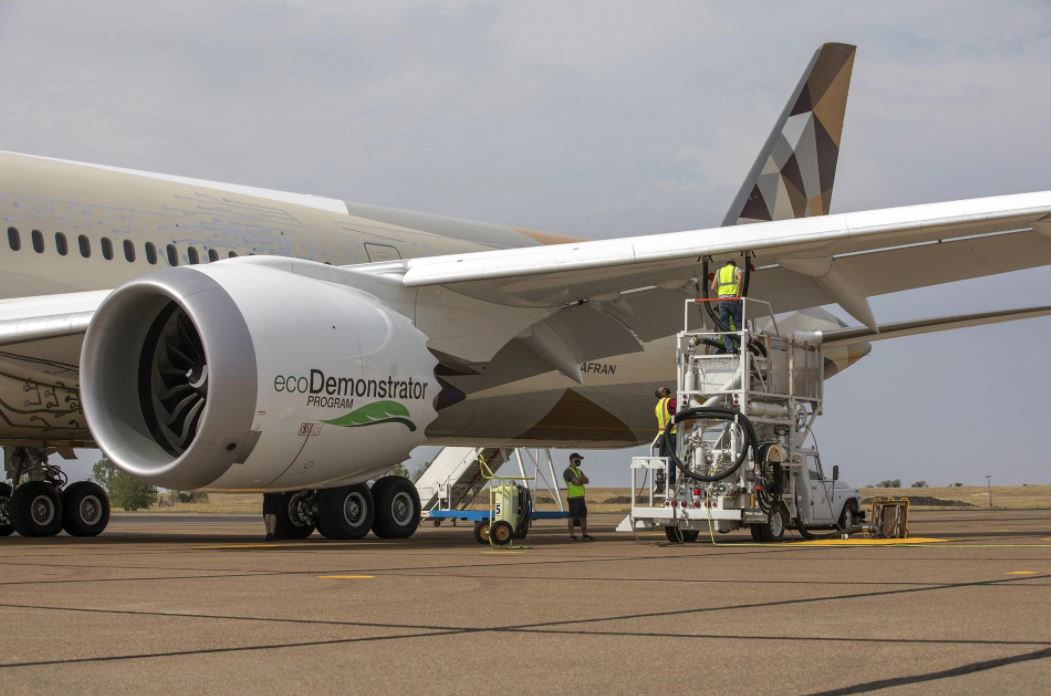
Boeing, Etihad Airways and World Energy lift sustainable aviation fuel to the next level on ecoDemonstrator programme

  • 50,000 U.S. gallons of 50/50 blend used on Boeing ecoDemonstrator 787-10 flight
  • A longstanding manufacturer-airline partnership to make flying more sustainable

ABU DHABI, United Arab Emirates, Sept. 14, 2020 — Boeing [NYSE:BA] and Etihad Airways concluded testing on the aerospace company’s 2020 ecoDemonstrator programme last week with a cross-country flight using a 50/50 blend of sustainable and traditional jet fuel.

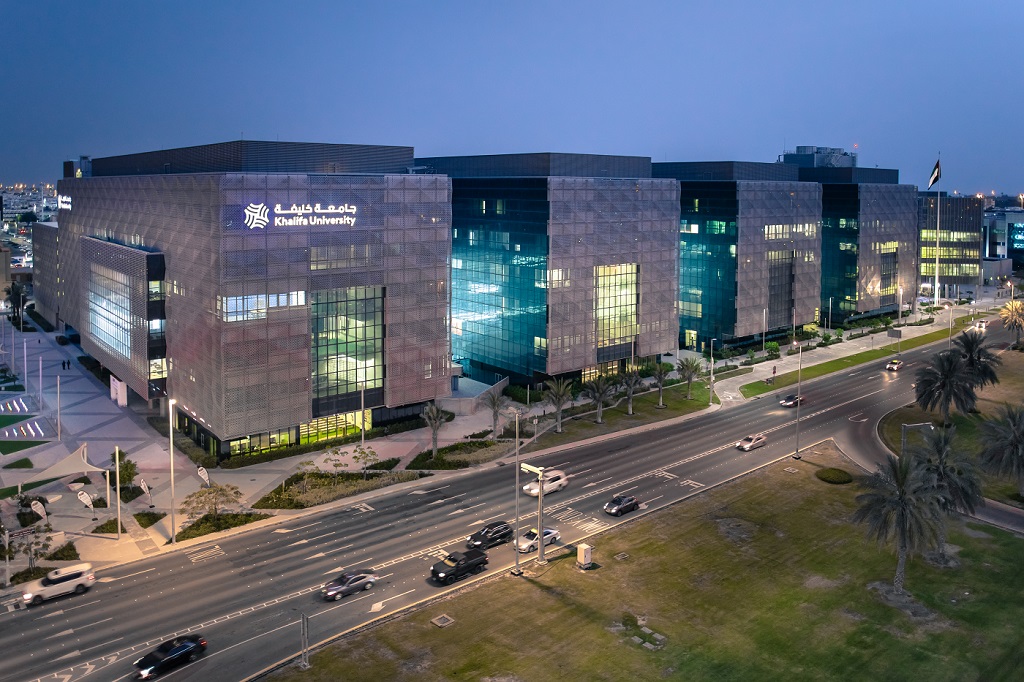
The partnership between Boeing and Etihad Airways represents a longstanding collaboration to make flying more sustainable. The two companies were among the founding partners that created the Sustainable Bioenergy Research Consortium in 2010. Based at Khalifa University near Abu Dhabi, the pilot project for a unique desert ecosystem produces sustainable fuel from plants that grow in the desert, irrigated by coastal seawater. Etihad used the initial batch of fuel from the pilot project in January 2019 on a passenger flight from Abu Dhabi to Amsterdam.

Read full story here: https://www.etihad.com/en/news/boeing-etihad-airways-and-world-energy-lift-sustainable-aviation-fuel-to-the-next-level-on-ecodemonstrator-programme