
Khalifa University Hosts Polar Futures Seminar with International Polar Foundation to Advance Zero-Emission Research Collaboration

Event Highlights Sustainable Polar Research Models and Future-Ready Infrastructure for Environmentally Responsible Exploration


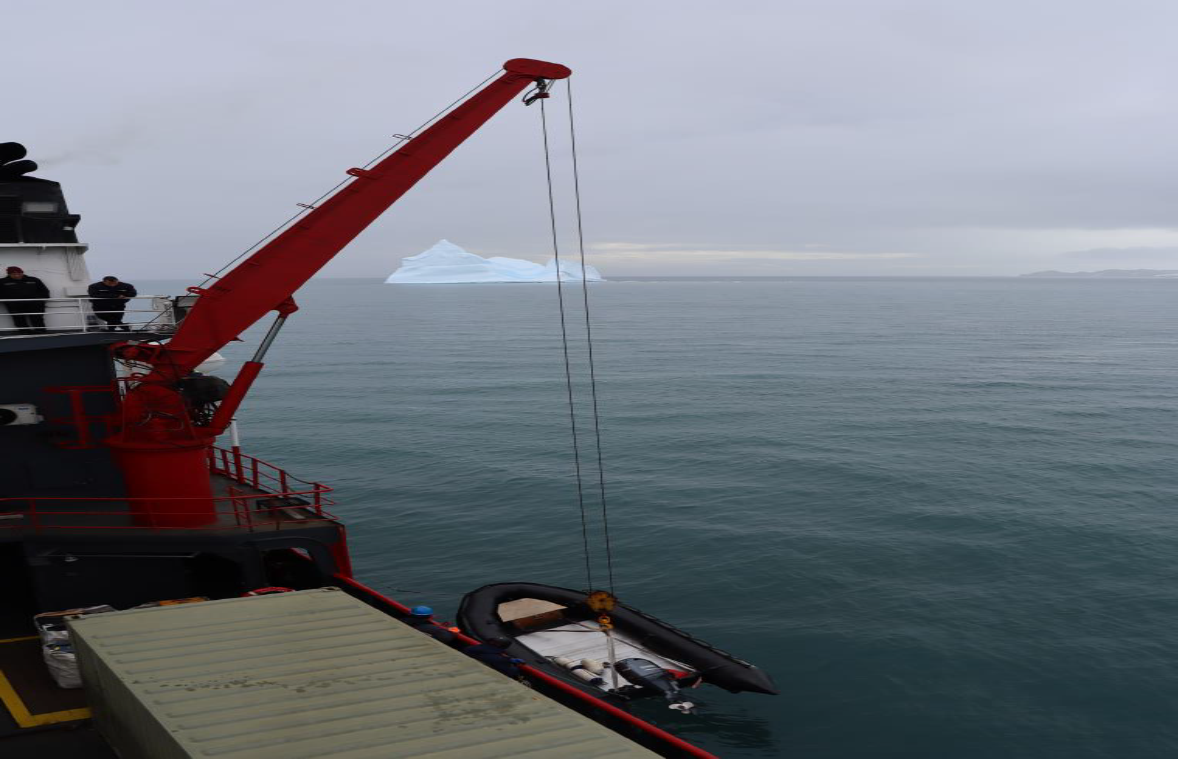
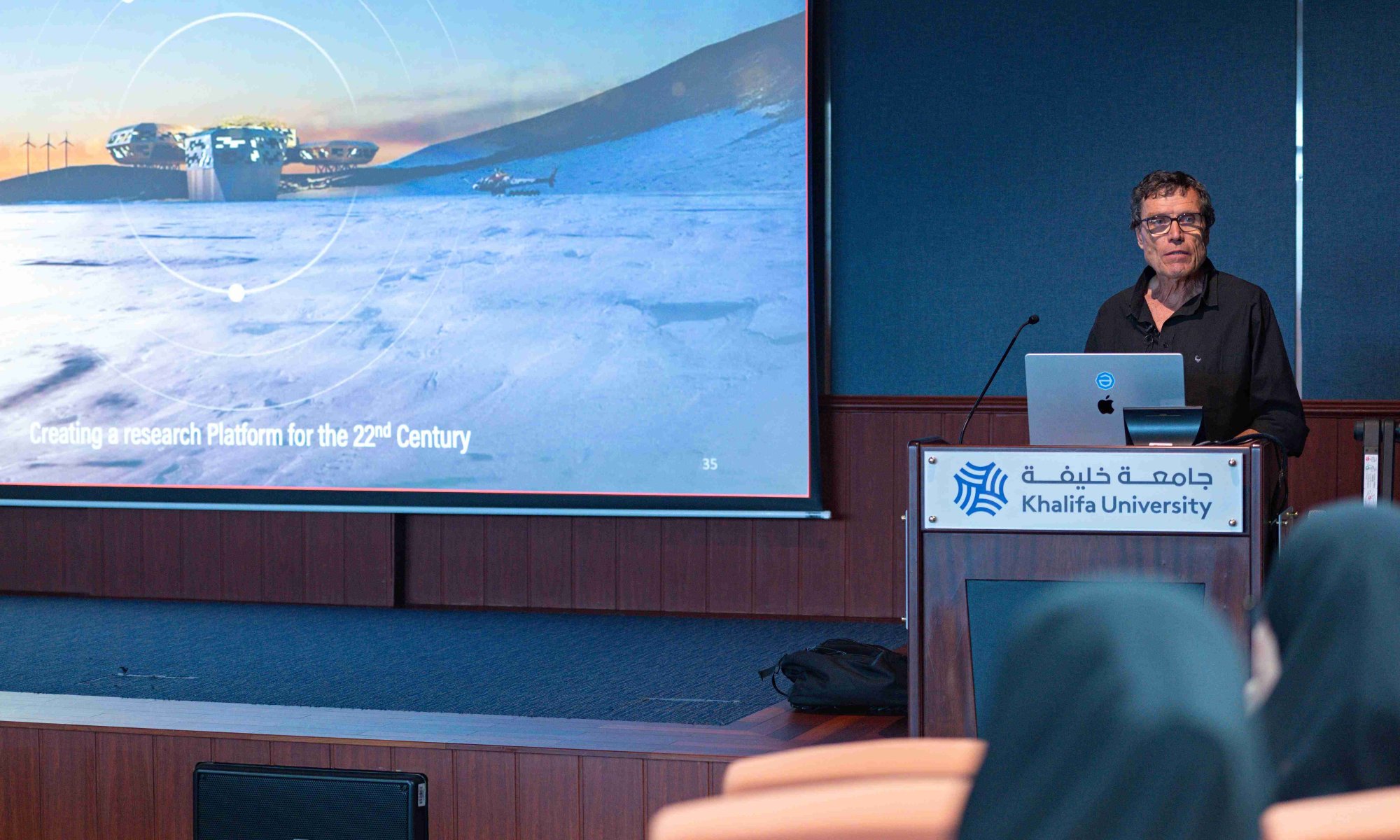
The world’s first zero-emission polar research facility, the Princess Elisabeth Antarctica Station, was showcased at Khalifa University’s ‘Polar Futures: Collaborative Innovation for a Sustainable Earth’ seminar, held in collaboration with the Brussels-based International Polar Foundation (IPF) and organized by the Khalifa University Polar Research Center (PRC).


Designed to operate entirely on renewable wind and solar energy, the Princess Elisabeth Antarctica Station minimizes its carbon footprint through smart architecture, advanced waste-management systems, and optimized energy storage. Serving as a model for sustainable research operations in extreme environments, the station supports international missions in glaciology, meteorology, and climate history, while demonstrating how science can advance with minimal environmental impact.


During the session, Dr. Alain Hubert, Founder and President, IPF, detailed how the station demonstrates the feasibility of energy-independent, low-impact polar research. Professor Nighat Johnson-Amin, Director of the International Polar Foundation (UK) and Vice-President, Environmental & International Affairs at IPF, introduced the Andromeda Earth Observatory and Antarctic University Hub, which is a next-generation concept for a fully autonomous, zero-emission research platform in East Antarctica that integrates research, education, and technology development.


The seminar brought together global experts to explore how zero-emission practices and future-ready infrastructure can redefine scientific exploration in the world’s coldest regions with the aim of developing collaboration with the IPF and enhancing Khalifa University’s polar research capacities while maintaining sustainability goals. The discussions also showcased examples of future-ready research infrastructure, including modular, autonomous research stations and AI-enabled remote sensing platforms designed to reduce the environmental footprint of scientific exploration.


Opening and closing the seminar, Dr. Diana Francis, Head, Environment and Geophysical Sciences (ENGEOS) Lab highlighted the UAE’s commitment to sustainability and its ambition to expand polar research capabilities through international partnerships.


Dr. Diana Francis said: “Our collaboration with the International Polar Foundation marks an important step toward developing sustainable, zero-emission research practices. By drawing inspiration from pioneering models like Princess Elisabeth Antarctica and Andromeda Earth Observatory, we aim to strengthen the UAE’s role in advancing global climate and polar science. Through initiatives such as Polar Futures, Khalifa University continues to foster dialogue and innovation in sustainable research, reaffirming its role as a regional leader in climate, environmental, and Earth-system studies.” 

Alisha Roy
Science Writer
Khalifa University Showcasing Four Agri-tech Startups and Four Regionally-Relevant Innovative Solutions at Global Food Week 2025

Research Initiatives in Food Supply Security and Farm Infrastructure in Line with UAE’s 2031 Vision Objectives


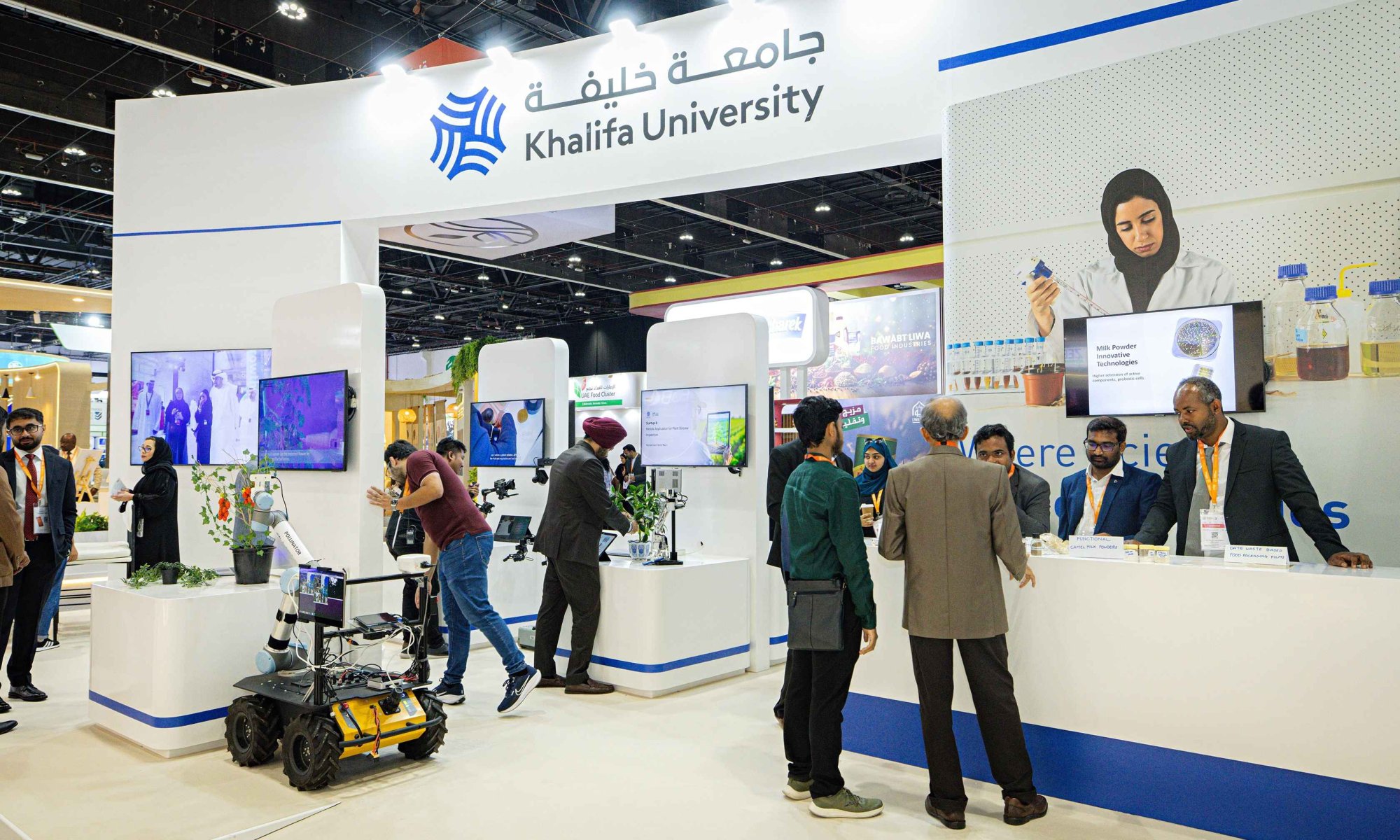
Khalifa University of Science and Technology today announced it is showcasing eight innovative agri-tech solutions and startups at the Global Food Week 2025, being held in Abu Dhabi from 21–23 October 2025, a platform that showcases the UAE’s leadership in food resilience and its role as a global hub for sourcing, investment, and innovation.


Khalifa University’s project showcase includes the recently launched TouchRipe – a tactile thumb firm sense device, as well as three other startups focusing on AI-powered solutions that are collaborative initiatives with Silal Food. At the same time, Khalifa University’s showcase also includes four research initiatives from its Food Security and Technology Center (FSTC). Researchers will be at hand to offer details about Khalifa University AgX – the 65,000-square-foot indoor vertical farm in Abu Dhabi that is part of FSTC.


Professor Bayan Sharif, Provost, Khalifa University, said: “Khalifa University’s agri-tech solutions being featured at Global Food Week 2025 demonstrate the advanced technology research that focuses not only on the region’s farm and agriculture sector but also the global stakeholders. These initiatives are in line with the UAE’s 2031 Vision objectives on food supply security and farm infrastructure. Designed and developed at Khalifa University’s research labs, these technologies could be used anywhere in the world where agriculture remains the mainstay of economies, thereby facilitating modernization of this sector, while enabling sustainable production and accessibility of farm produce. We believe this event highlights Khalifa University’s leading role in research outcomes that benefit cutting-edge innovations in the food supply chain, and environmental sustainability.”


The Khalifa University showcase also features FSTC’sProbiotic Camel Milk Powder’ project that focuses on developing a powdered form of camel milk enriched with probiotics to enhance digestive health, ‘Camel Milk White Cheese’ that aims at producing a high-quality cheese from camel milk, which is both nutritious and unique in flavor, the flavorful and healthy ‘Date Seed Tea’ that is made from date seeds – typically a byproduct of date processing, and sustainable biodegradable and eco-friendly food packaging films made from date seeds.


Apart from the recently launched fruit firmness tester TouchRipe, the three other startups being showcased focus on AI-powered solutions include PollenMatic, a reliable, efficient, low cost, and user-friendly handheld robotic pollination device, mobile app for plant health monitoring, and the Smart AgriTech Drone, a drone-based plant health monitoring and yield estimation, reflecting Khalifa University’s scope of research that covers strategic sectors of the UAE.

Khalifa University Wins Global Hackathon for Sustainable Water Desalination and Reuse in 2024

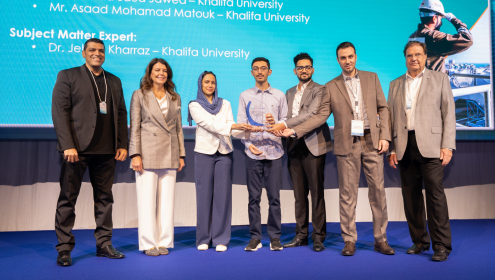
The inaugural Global Hackathon for Sustainable Water Desalination concluded with an awards ceremony during the World Congress 2024 closing luncheon in Abu Dhabi. Organized by ACWA Power in collaboration with IDRA and hosted by the Center for Membranes and Advanced Water Technology (CMAT) at Khalifa University, the event showcased groundbreaking innovations addressing the global water crisis. 

The hackathon culminated in a full-day ideation session, where participants collaborated to develop new ideas and innovative solutions to advance sustainability in desalination and water reuse. This immersive session fostered creativity, cross-disciplinary thinking, and practical strategies to tackle the challenges of water scarcity on a global scale. 

The Hackathon culminated in the recognition of three standout ideas that demonstrated ingenuity, feasibility, and potential for real-world application. 

1st Place: PureDrop – Portable Photothermal Membrane Desalination System 

This team introduced a portable system using advanced photothermal membrane technology for efficient water desalination. 

Team Members 

Khalifa University Student to Join UAE Team on Antarctic Research Expedition Organized by NCM in Collaboration with Bulgarian Antarctic Institute

Emirati PhD Researcher Omar Abdulrahman Alattas to Represent UAE’s Polar Research Centre, Khalifa University in 34th Annual Bulgarian Antarctic Research Expedition


In a milestone that extends the UAE’s scientific reach to one of the most remote regions on Earth, Khalifa University PhD researcher Omar Abdulrahman Alattas, has been selected by the National Center of Meteorology (NCM) to join the UAE scientific team participating in the 2025–2026 Bulgarian Antarctic Research Expedition. 


Supervised by Dr. Frantz Gerard Ossa Ossa from the Earth Science Department and Polar Research Centre (PRC), Omar Alattas will join the expedition, heading to Livingston Island, Antarctica. Beginning on 15 December 2025, and expected to conclude on 19 January 2026, this international collaborative expedition will contribute valuable findings to the UAE’s broader efforts in climate monitoring and environmental sustainability.


The research expedition aligns with the goals of the Emirates Polar Program, supporting global climate and environmental initiatives, while advancing scientific collaboration. It also complements the work of the UAE’s PRC at Khalifa University, which aims to strengthen the UAE’s leadership in polar science and applied technologies through Scientific Exploration in the Poles. 


Organized by the NCM in collaboration with the Bulgarian Antarctic Institute, the expedition is part of the 34th annual Bulgarian Antarctic Research Expedition, which brings together international scientists to monitor the health of the Antarctic ecosystem and study climate dynamics, seismic activity, and glacial movements in one of the planet’s most extreme environments. The collaboration, launched during last year’s expedition, was commended by Dr. Abdulla Al Mandous, President of the World Meteorological Organization (WMO), for advancing the UAE’s contribution to global polar and climate research.


The UAE delegation will follow the established Antarctic route, traveling more than 33,000 kilometers across several continents – from Sofia, Bulgaria, to Buenos Aires and Ushuaia, the world’s southernmost city – before boarding a research vessel bound for Livingston Island, Antarctica. Once there, the team will build on the achievements of the 2024 UAE scientific mission, which supported the installation of advanced meteorological and seismic monitoring stations to study climate variability and environmental change across the Antarctic region.


Representing Khalifa University, Omar Alattas will work alongside scientists from several countries during a two-week field study at the St. Kliment Ohridski Bulgarian Antarctic Base, located on Bulgarian Beach in the eastern part of Livingston Island, South Shetland Islands. The data collected will help improve our understanding of how soil biospheres respond to greenhouse gas releases during permafrost thawing in polar regions, and what these responses mean for global climate change and planetary health.


Prof. Mohammed Ali, Chair of Earth Science at Khalifa University, said: “Our PhD student Omar Abdulrahman Alattas’ participation marks a proud moment for Khalifa University and underscores the UAE’s growing role in global polar science. Through such collaborations, Khalifa University continues to build national expertise in areas vital to climate resilience, sustainability, and scientific diplomacy. This mission also reflects a new generation of Emirati scientists advancing the UAE’s contribution to global discovery—from the deserts of the Arabian Peninsula to the icy frontiers of Antarctica.”


Omar Abdulrahman Alattas added: “The UAE’s participation in this global scientific effort reflects the nation’s commitment to advancing climate research and empowering Emirati scientists. It is truly an honor to represent Khalifa University on a journey to one of the most remote and extraordinary places on Earth. Phenomena affecting Antarctica are not confined to the continent—they can influence our environment here in the UAE, thousands of kilometers away.”


Alisha Roy
Science Writer

GSMA Open-Telco LLM Benchmarks 2.0 Launch Sets a New Standard for AI in Telecom

Khalifa University’s 6G Research Center, in collaboration with GSMA and a global coalition of operators, researchers, and technology partners, is proud to announce the launch of GSMA Open-Telco LLM Benchmarks 2.0: The first comprehensive evaluation suite purpose-built to measure how large language models perform on real-world telecom tasks.

This first-of-its-kind initiative rigorously assesses models on critical operator workflows, including intent-to-configuration, network troubleshooting, standards interpretation, domain Q&A, and telecom math reasoning, bringing objective, transparent metrics to the heart of AI-native network operations.

Built by the industry, for the industry, the benchmark advances trustworthy AI adoption by combining deep domain understanding, structured reasoning, and operational realism across datasets such as TeleYAML, TeleLogs, 3GPP-TSG, TeleQnA, and TeleMath.


Khalifa University’s 6G Research Center co-leads the Network Management & Configuration track, shaping TeleYAML—the intent-to-configuration benchmark that translates operator intents into standards-aligned YAML for 5G Core functions, subscriber provisioning, and network slicing.

“Benchmarks that reflect real NOC conditions are essential. Open-Telco 2.0 brings much-needed clarity on where models excel and where domain fine-tuning is required to deliver measurable impact in live networks.” From intent-driven management to autonomous RCA, GSMA Open-Telco LLM Benchmarks 2.0 marks a pivotal step toward transparent, reproducible, and deployment-ready AI in telecom. This reinforces the UAE’s commitment to global leadership in next-generation networks.

Learn more and explore results

Khalifa University launches TouchRipe, UAE’s 1st fruit ripeness device at GITEX Global 2025

Khalifa University of Science and Technology has launched TouchRIPE, the UAE’s first handheld fruit ripeness device as part of its latest research-driven innovations, while also featuring 10 Deep Tech startups at two of the world’s largest tech events, GITEX Global 2025 and Expand North Star 2025, reinforcing its leadership in research innovation, talent development, and technology commercialisation.

A US patent has already been filed for TouchRIPE, which is being showcased within the Abu Dhabi Government Pavilion, Hall-19, at GITEX. At Expand North Star 2025, hosted by the Dubai Chamber of Digital Economy, (Hall 6, Stand H6-A30) the Khalifa Innovation Centre (KIC), an incubation centre that supports startups through commercialisation of locally developed high-technologies, is featuring 10 Deep Tech startups led by Khalifa University researchers focusing AI, robotics, health, energy, and sustainability solutions.

GITEX Global 2025, taking place from 13-17 October at the Dubai World Trade Centre, and Expand North Star 2025, from 12-15 October at Dubai Harbour, bring together global leaders, innovators, and startups shaping the future of digital transformation.

Prof. Bayan Sharif, Provost at Khalifa University, said: “Khalifa University’s participation at GITEX Global 2025 and Expand North Star underscores its role as a catalyst for national talent development, technology commercialisation, and the UAE’s vision for a knowledge-based economy. A key spotlight, in addition to 10 startups by KIC, is the launch of the TouchRIPE agri-tech innovation, built and developed in the UAE by Khalifa University researchers. These future technologies remain an example of how Khalifa University’s research translates into real-world impact, advancing the UAE’s leadership in innovation and technology-driven sustainability.”

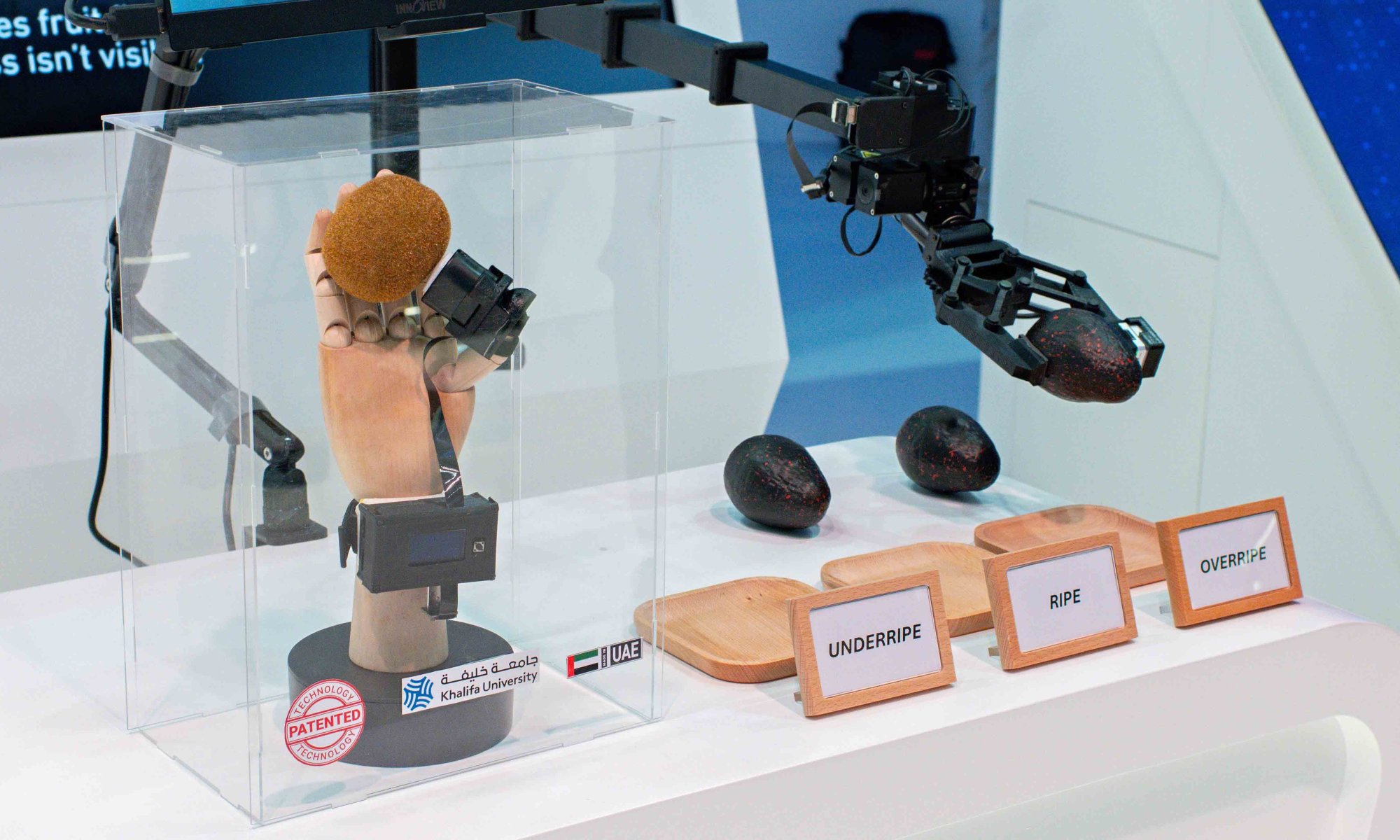
Developed by researchers at Khalifa University, TouchRIPE, which weighs only 135 grams, can operate without an internet connection, making it ideal for on-field use. The thumb-mounted, wrist-connected device estimates fruit firmness in under 30 seconds using a vision-based tactile sensor and embedded AI. It mimics human touch, enabling farmers, inspectors, and agri-businesses to assess fruit ripeness non-destructively, helping reduce waste, improve harvest timing, and enhance quality control across the food supply chain.

Among the featured startups by KIC at Expand North Star is Nutrigenics Care, an AI-powered clinical nutrition platform to streamline dietary management, which has been accepted into the Microsoft Founders Hub. Also showcased are Deep Forecast, which delivers AI-based geospatial intelligence for environmental monitoring; DroneLeaf, developing autonomous AI-driven UAV solutions; and Kumrah AI, a spin-off from Khalifa University’s Advanced Research and Innovation Center (ARIC) specialising in neuromorphic vision systems for robotics and industrial inspection.

The lineup further features IBSAR Technologies, an AI research and consultancy specializing in image and video analytics; Laboos Technologies, which develops energy-efficient medical wearables; and Mashyah Health, offering data-driven rehabilitation tool. Also included are Biotechnology startup Proscreenix; Stellaria (formerly Farmin), to deliver urban and environmental insights for smart city planning; and Verdisol, which advances sustainable agriculture and circular economy practices.

Khalifa University’s RIC2D Partners with Max Planck Institute and TU Dresden to Organize Symposium on 2D Materials in Germany

Leading Scientists, Industry Partners, and Start-Ups to Explore Research, Commercialization, and Industry Applications in 2D Materials  


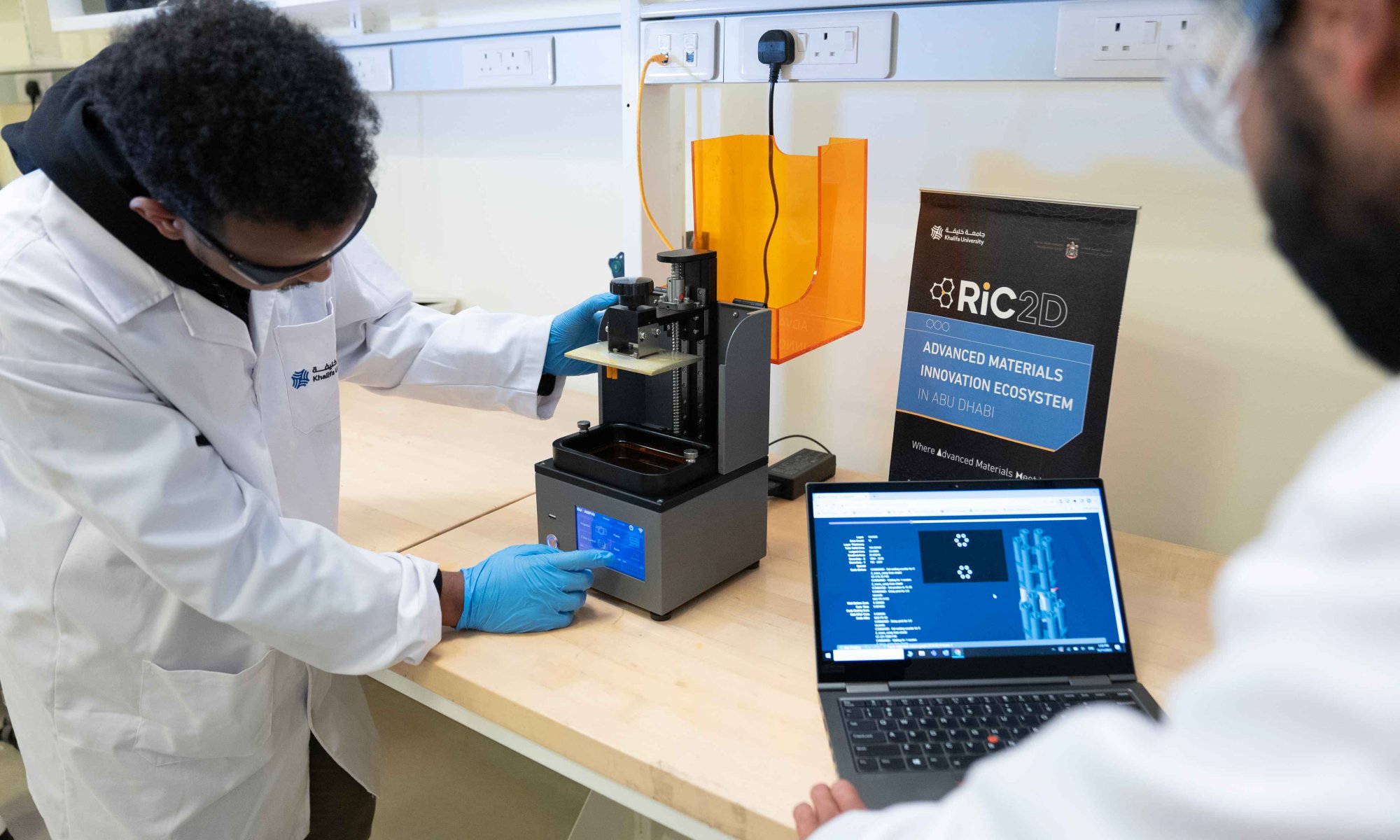
Khalifa University of Science and Technology today announced that its Research and Innovation Center for Graphene and 2D Materials (RIC2D) will co-host the international symposium ‘2D Materials in Action: Energy Technologies’ on 20–21 October 2025 in Dresden, Germany, in collaboration with the Max Planck Institute of Microstructure Physics (MPI) and the Technical University of Dresden (TUD).


The two-day, invitation-only event aims to bring together scientists, industry leaders, start-ups, and policymakers from around the world including the UAE, Europe, and Asia to explore the latest research, discuss commercialization pathways, and examine opportunities for real-world applications in next-generation batteries, solar cells, hydrogen storage, and light weight composites for mobility.


The symposium will also feature interactive sessions designed to Explore breakthroughs in 2D materials research and applications, Forge collaborations across academia, industry, and start-ups, Strategize implementation for real-world energy challenges, and Contribute to sustainability, advancing affordable and clean energy solutions.


Prof. Hassan Arafat, RIC2D’s Senior Director, said: “Khalifa University is proud to co-lead this initiative with the Max Planck Institute of Microstructure Physics and the Technical University of Dresden to provide a platform for academia, industry, and start-ups to come together and accelerate solutions. The symposium comes at a time when global energy demand is rising and the need for affordable, clean, and sustainable solutions is urgent. With their unique properties, 2D materials can enhance energy storage, conversion, transport, and hydrogen technologies, supporting efforts to achieve the United Nations’ Sustainable Development Goal on Affordable and Clean Energy.”


Prof. Xinliang Feng, Max Planck Institute of Microstructure Physics & Technical University of Dresden, said: “This symposium represents an exceptional opportunity to bring together leading minds from academia, industry, and start-ups to accelerate the transition of 2D materials from laboratory research to practical energy and mobility technologies. By combining scientific excellence with industrial perspectives, we aim to identify pathways for scalable production, integration into real-world systems, and sustainable energy solutions. Collaboration between institutions like Khalifa University, the Max Planck Institute, and TU Dresden underscores the global nature of scientific progress and our shared commitment to innovation that benefits society.”


Speakers from Khalifa University including Professor Lourdes Vega, Director, Research and Innovation Center on CO₂ and Hydrogen (RICH), and Dr. Ammar Nayfeh, Associate Professor, Electrical Engineering and Computer Science, will highlight the University’s contributions to hydrogen technologies, sustainable energy systems, and advanced material applications.


Building on the success of last year’s 2D Materials in Water Applications symposium, this year’s event will continue to foster international collaboration, advance research, and support innovation that contributes to global sustainability goals.

Khalifa University Robotics Athletes Among Top Four at Inaugural World Humanoid Robot Games in China


Fresh KURA Lineup Extends RoboCup Legacy Ahead of UAE Hosting Asia-Pacific 2025 League


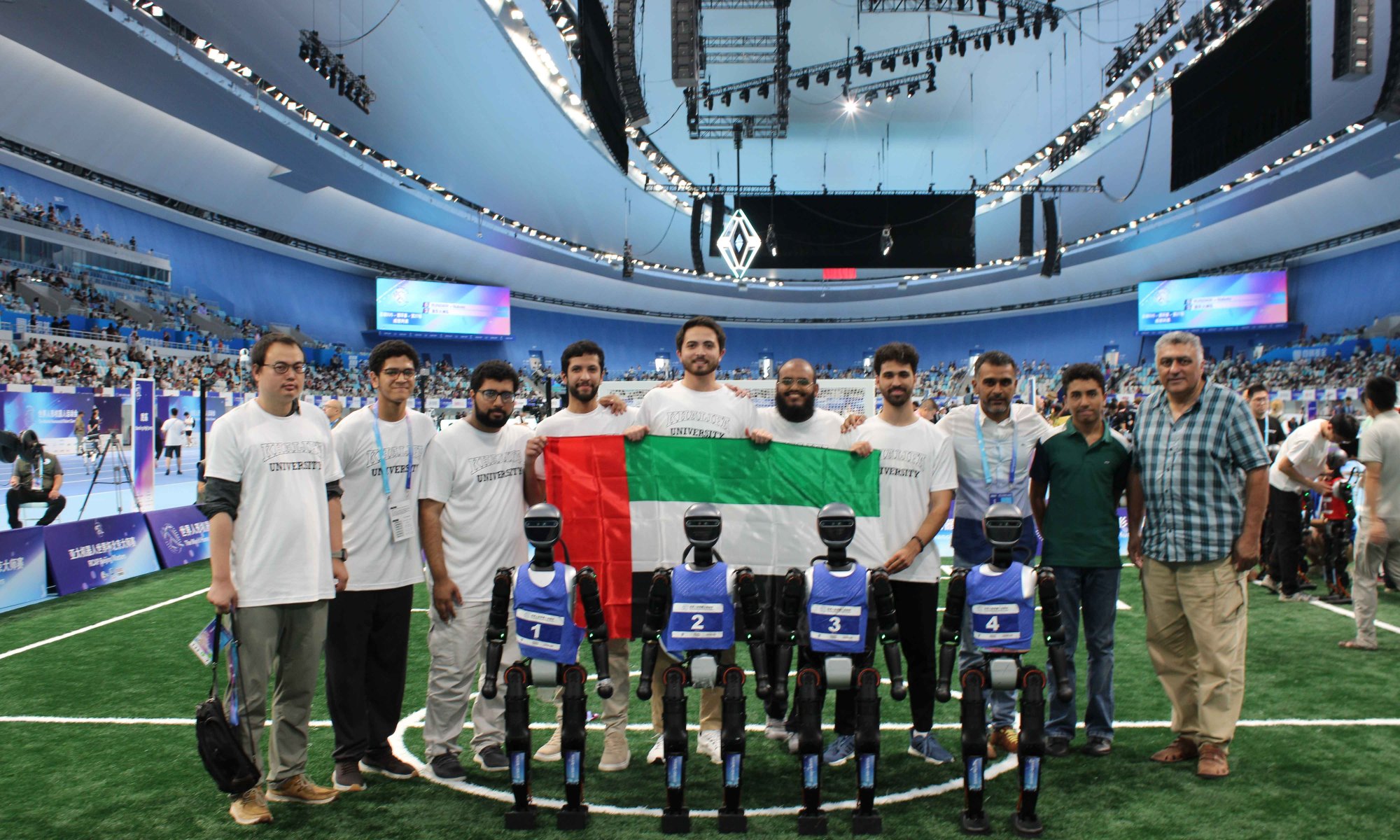
A team of seven Khalifa University students and researchers, competing as the Khalifa University Robotics Athletes (KURA), demonstrated their international competitiveness at the first-ever ‘World Humanoid Robot Games (WHRG) RCAP Beijing Masters 2025’ in Beijing, China. Against 32 of the world’s best university teams, KURA advanced to the top tier of the competition and finished in fourth place in the three versus three (3v3) RoboCup Humanoid Soccer category.


The KURA team was honored to receive personal congratulations from His Excellency Hussain bin Ibrahim Al Hammadi, UAE Ambassador to China, marking a proud moment for Khalifa University.


The roster for WHRG 2025 included PhD in Engineering students Ahmed Albreiki, Saif Alameri, and Post Doctoral Fellow Dr. Binzhao Xu, Mechanical & Nuclear Engineering, Ahmed Sultan Alali, PhD, Computer Science, as well as undergraduate students Mohammed Alshorafa and Yaman Masad, Computer Engineering, with Obay Hussni, Mechanical Engineering. The team’s faculty supervisors included Professor Jorge Dias, Deputy Director, KU Center for Robotics and Autonomous Systems as well as Associate Professors, Mechanical & Nuclear Engineering, Dr. Irfan Hussain and Dr.  Hamad Karki, and Assistant Professor, Electrical Engineering, Dr. Ahmed Altunaiji. 


The Challenge involved programming Booster T1 humanoid robots to play fully autonomous 3v3 football matches, requiring the integration of advanced perception, locomotion, real-time decision-making, and coordinated strategy execution.


PhD student Ahmed Albreiki, who played a leading role in strategy design and path-planning, helped enable coordinated team behaviors and adaptive gameplay during the competition. He also gained hands-on experience in ROS2 and robotics frameworks, further advancing his expertise in the field.


Building on this momentum, KURA is preparing to compete on home ground at RoboCup Asia-Pacific (RCAP) 2025, which Khalifa University will host in Abu Dhabi from 10–15 November 2025. The event will coincide with Abu Dhabi Autonomous Week, creating a landmark moment for the UAE’s robotics and intelligent systems ecosystem. The competition will bring together global talent in robotics and AI, further cementing the UAE’s role as a regional hub for innovation and autonomous systems.


Dr. Hamad Karki, said: “This achievement at the inaugural World Humanoid Robot Games is a testament to Khalifa University students’ creativity, teamwork, and technical skills. They not only competed against some of the best international teams but also gained invaluable experience that will serve them well as they prepare for RoboCup Asia-Pacific 2025 here in Abu Dhabi. It reflects Khalifa University’s commitment to fostering talent that advances robotics and AI both in the UAE and globally.


“The WHRG participation follows KURA’s success at RoboCup 2024 in Eindhoven that won second place in the Humanoid Soccer category. While several team members from last year have since graduated, the Beijing competition allowed a new generation of Khalifa University students to gain valuable international exposure and practical experience.”


Alisha Roy
Science Writer

Khalifa University Ranks among Top 3 in Arab Region and Strengthens its Top in UAE

According to QS World University Rankings: Arab Region 2026


Khalifa University of Science and Technology today announced that it is ranked top in the UAE once again and among top three in the Arab Region according to QS World University Rankings: Arab Region 2026, reaffirming regional leadership in education, research, and innovation. 


With an outstanding overall performance, Khalifa University has demonstrated sustained excellence across key indicators such as academic and employer reputation, international research collaborations, and expanded digital reach.


The University has also scored high in International Research Network,  Faculty Ratio, as well as ‘Staff with PhD’.


His Excellency Prof. Ebrahim Al Hajri said, “Each achievement in the rankings reflects the drive of our community to turn knowledge into national strength and it gives us great pride to have Khalifa University distinguished among the Arab region’s top three universities. Khalifa University continues to lead transformative research, foster emerging sectors, and build capabilities that strengthen national competitiveness. Building on this foundation, our faculty, researchers, and students are developing real-world solutions for the region’s most urgent needs, from water, energy, food, and climate resilience, reinforcing the UAE’s role as a driver of innovation and sustainable progress across the Arab world.


The 2026 QS Arab Region University Rankings evaluated 298 published institutions across the Arab region, highlighting Khalifa University’s continued standing among the very top performers and as the UAE’s highest-ranked university. In the QS World Universities Rankings 2026, Khalifa University was placed 177th to be among the top 200. 


Alisha Roy
Science Writer

Emirates Polar Program Engages in High-Level Arctic Dialogue at The Arctic Encounter Symposium

The Emirates Polar Program participated in The Arctic Encounter Symposium(AES), the largest annual Arctic policy and business event in the United States, bringing together global leaders, policymakers, industry experts, Indigenous leaders, and and leading experts from the science, technology, marine, research, startups, investment, health, and energy sectors, to address pressing issues in Arctic policy. The Symposium aims to address the shared interests and concerns of the United States and the global community.


As part of the symposium’s agenda, the UAE delegation contributed to two prominent panel discussions. The first panel, titled “Expanding the Arctic Dialogue: Diplomacy from Tokyo to Abu Dhabi”, explored the growing involvement of nations outside the Arctic region in shaping its future through diplomacy, investment, and strategic partnerships. Representing the Emirates Polar Program, Mr. Wassim Said, Chairman’s Advisor at the International Affairs Office of the Presidential Court and member of the Emirates Polar Program Steering Committee, joined distinguished panelists to share insights on the UAE’s role in fostering international collaboration in Arctic affairs.


While the second panel, titled “Closing the Cutter Gap to Rebuild Arctic Power”, examined the urgent need for icebreaker capabilities to ensure year-round maritime access in the Arctic. Mr. Ahmed Al Katheeri, representing Abu Dhabi Ports Group, joined international industry leaders to discuss the importance of polar-capable infrastructure for sustainable Arctic development and security.


The Emirates Polar Program’s participation in The Arctic Encounter Symposium underscores the UAE’s growing engagement in global polar dialogues and its commitment to building strategic partnerships that contribute to understanding, protecting, and sustainably developing the world’s polar regions.


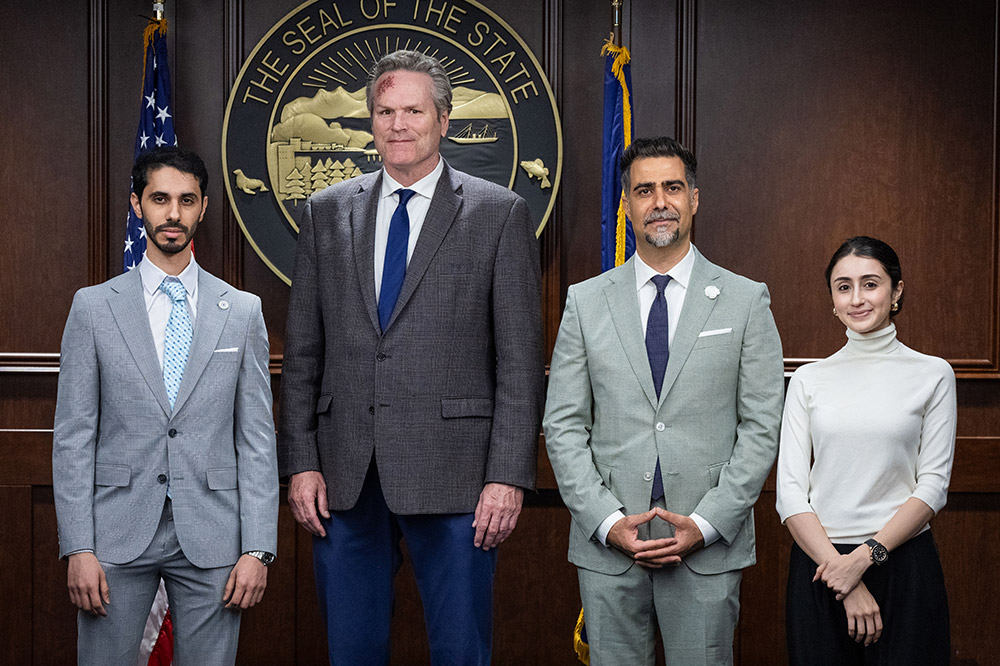
In addition to panel participation, the Emirates Polar Program representatives met with the Governor of Alaska, Gov. Mike Dunleavy, to further explore potential areas of collaboration. The meeting included Mr. Wassim Said, Ms. Loulia AlKhatib, Secretariat Director of the Emirates Polar Program and Researcher at the UAE Presidential Court, along with Mr. Ahmed Al Katheeri. Discussions focused on cooperation towards advancing shared interests in polar research, sustainable development, and environmental stewardship.

Emirates Polar Program Introduces Young Learners to the Polar Regions at Kids Palace Nursery in Abu Dhabi

The Emirates Polar Program hosted an engaging educational event at Kids Palace Nursery, the Presidential Court’s nursery, aimed at sparking curiosity and raising awareness amongst young children around the unique environments and Indigenous communities of the polar regions.


The initiative reflects the Emirates Polar Program’s belief that cultivating environmental awareness must start early, empowering future generations to become informed and responsible global citizens.


Through a series of interactive and sensory-based activities, the children were transported to the icy landscapes of the Arctic and Antarctic. Highlights included playful “snow” exploration, an ice-fishing scene, hands-on demonstrations of how plants can grow in extreme conditions, and digging and chiselling for hidden rocks and minerals. Children also learned how climate change is impacting the polar regions, and how these changes affect ecosystems around the world.


The activities also shed light on endangered polar wildlife, helping the little ones understand the delicate balance of these ecosystems and the importance of protecting them. Each learning moment was paired with creative outlets such as coloring and tactile play, ensuring the experience was both educational and fun.


The event aligns with the Emirates Polar Program’s wider mission to advance polar research, foster climate awareness, and encourage public engagement, starting with the youngest members of our society.

UAE Attends the 47th Antarctic Treaty Consultative Meetings in Milan, Italy After Acceding the Antarctic Treaty in December 2024

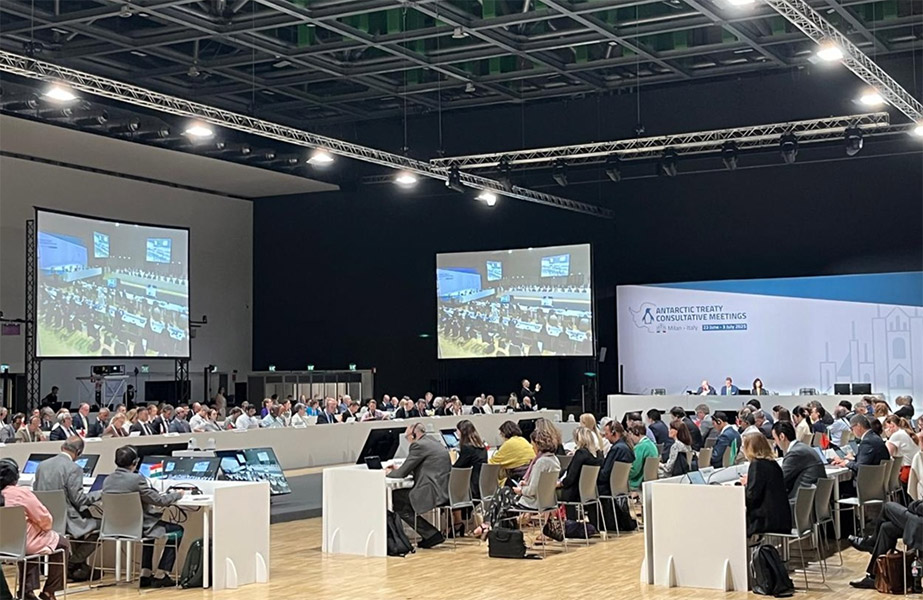
The UAE delegation, headed by H.E. Abdalla Balalaa, Deputy Chair of the Emirates Polar Program and Assistant Foreign Minister for Energy and Sustainability Affairs at the Ministry of Foreign Affairs, attended the 47th Antarctic Treaty Consultative Meetings (ATCM) in Milan, Italy for the first time after acceding the Antarctic Treaty in December 2024. The delegation additionally included representatives from the Emirates Polar Program and the Ministry of Foreign Affairs.


The Antarctic Treaty Consultative Meeting is the key platform for decision-making on Antarctic matters. All parties gather annually to address critical issues and policies concerning Antarctica, and to present information and working papers on scientific research being conducted on the continent. The ATCM shapes Antarctica’s future through mandating clean energy sources to power research stations.


As a Non-Consultative Party, the United Arab Emirates participated in the Antarctic Treaty Consultative Meeting, alongside over 400 delegates, 29 Consultative Parties, 28 Non-Consultative Parties, Observers, and invited Experts. Held in Milan, Italy, from 23 June to 3 July 2025, the Antarctic Treaty Consultative Meeting takes place annually “for the purpose of exchanging information, consulting together on matters of common interest pertaining to Antarctica and formulating, considering and recommending to their Governments measures in furtherance of the principles and objectives of the Treaty”


Following the United Arab Emirate’s first participation, H.E. Abdalla Balalaa emphasized the significance and importance of the ATCM, stating “We are honored to be joining the 47th ATCM for the first time as a new Non-Consultative Party. We look forward to being proactive in preserving the Cryosphere through science, innovation, and collaboration”. Through national initiatives like the Emirates Polar Program, the United Arab Emirates remains committed to advancing scientific knowledge, global cooperation, and the promotion of environmental stewardship.


As the UAE advances its commitments to environmental stewardship, global climate action, and science diplomacy, the next crucial step for the country, is the signing of the Environmental Protocol – a comprehensive international agreement, that is part of the wider Antarctic Treaty. The Protocol is designed to protect the natural ecosystems of Antarctica, promote sustainable development, and ensure responsible use and management of resources on the Southern continent of Antarctica.