Student Presents Thesis Findings at Japanese Ministry of Foreign Affairs Roundtable

The roundtable aims to share and discuss the practices and policies different countries are undertaking to fight violent extremism. 


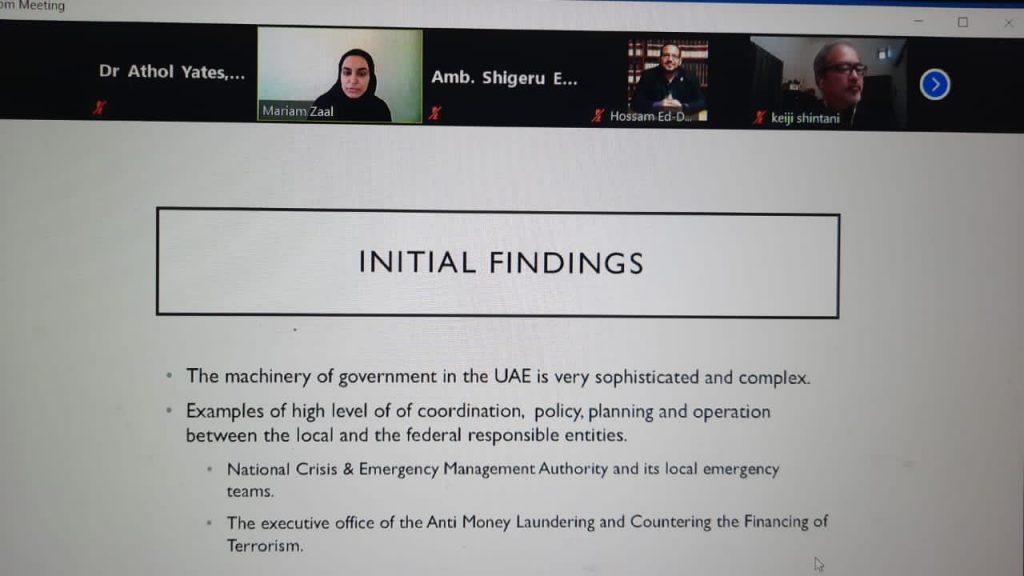
Mariam Zaal Al-Hemeiri, a student completing her MA in International and Civil Security, presented her preliminary thesis findings at the 4th Dialogue on Countering Violent Extremism in the Middle East. 


The dialogue was organized by Japan’s Ministry of Foreign Affairs and included experts from different sectors, including universities, security agencies, government organizations, and private companies, most of whom are working in combating terrorism and extremism in their countries. 


Mariam’s presentation during the dialogue.


Mariam was selected to represent the UAE, while the rest of the speakers were from Japan and other Middle Eastern countries. The theme of the roundtable focused on three topics: de-radicalization of terrorists and other practical issues, political Islam and extremism, and the role of women. The dialogue’s objective is to share knowledge on the practices and policies set in place by different countries to combat violent extremism. 


Mariam’s research focuses on the operation of the UAE’s machinery of government in relation to countering terrorism, extremism, and subversion. A key early finding of her research is that the machinery is highly sophisticated and complex and that while there are few government entities whose sole responsibility is countering terrorism, extremism, and subversion, there are many more that have supporting roles. This requires a high level of intergovernmental coordination, and the coordination needs to be both between federal agencies as well as between federal and local agencies. 


Dr. Athol Yates, Acting Program Chair for the Institute of International and Civil Security, is Mariam’s supervisor. “Mariam’s work is groundbreaking as it identifies for the first time all of the institutions at the UAE at the Federal and emirate level which together fight terrorism, extremism, and subversion. What it reveals is a multi-faceted approach involving a large number of entities that range from the Ministry of Interior’s special forces to the Central Bank’s financial intelligence unit which supports the work to combat the financing of terrorism.”


Ara Maj Cruz
Creative Writer
5 April 2021


Carbon Capture and Conversion Technologies Could Clean the Atmosphere and Turn CO2 into Commercial Opportunities

By Dr. Ludovic Dumée


Dr. Ludovic Dumée , Assistant Professor of Chemical Engineering at Khalifa University, outlines the strategies and technologies that could be deployed to turn CO2 emissions into a resilient circular economy.


Read Arabic story here.


The continuous emission of carbon dioxide into the atmosphere is the leading cause of climate change and subsequent extreme weather events.


In 2015, the international community adopted the Paris Climate Agreement, agreeing to limit the global average rise in temperature to less than 2° C, compared to pre-industrial levels, but with ambitions to limit the rise to less than 1.5° C. Along with a paradigm shift from fossil fuels to renewable energy sources, deployment of carbon capture and storage technologies was proposed as a core strategy to actively and significantly reduce greenhouse gas emissions. This is in addition to the clear economic benefit that could be derived from using CO2 as a feedstock material for chemical products in a resilient circular economy.


While research into CO2 capture technologies is gaining traction, research into integrated capture and conversion strategies – which involves capturing CO2 at its source and effectively transforming the CO2 into value-added chemicals within the same chemical process – has received significantly less attention.


Dr. Ludovic Dumée

With my colleagues from Deakin University in Australia, including Dr. James Maina, Prof. Jennifer Pringle and Prof. Joselito Razal, and Dr. Suzana Nunes from King Abdullah University of Science and Technology in Saudi Arabia, Dr. Fausto Gallucci from Eindhoven University of Technology in Netherlands, and Dr. Lourdes Vega, Director of Khalifa University’s Research and Innovation Center on CO2 and Hydrogen (RICH), we published a review paper in the journal ChemSusChem to assess recent advances in the integrated capture and conversion of CO2 from industry gases and atmospheric air.


Carbon capture and storage technologies (CSS) have been demonstrated across a number of pilot operations globally and typically include capturing CO2 from emission sources such as power plants, followed by compression prior to transportation to long-term storage sites. Although CSS technologies are viable for the capture of CO2 from large sources at high concentration levels, such as fossil fuel power plants or cement factories, they are not practical for small and distributed sources, such as transportation and residential heating, which cumulatively account for around half of all CO2 emissions.


For these cases, technologies that can extract CO2 directly from the atmosphere are needed if the associated carbon emissions are to be mitigated. These are direct air capture technologies (DAC) and they have some distinct advantages over traditional carbon capture technologies, including not needing to be located close to emission sources, which makes them deployable to any location around the world. However, since there is a much lower concentration of CO2 in the atmosphere compared to that available in the by-product gas from industrial plants, DAC is much more costly and energy intensive.


Associated with carbon capture and storage is carbon capture and utilization (CCU) where the CO2 captured from various sources is put back to work as a raw material. While CCU is most often associated with Enhanced Oil Recovery, CO2 can also produce valuable chemicals and fuels, which may be marketed to generate revenue and offset the expenses associated with the capture process. With a suitable catalyst, CO2 can be converted into a wide variety of products, including acids, monomers and carbon nanomaterials.


The potential for developing profitable businesses from products generated from CO2 is evidenced by the large number of recent start-up companies. The annual methanol market, for example, is expected to reach US$91.5 billion by 2026 and since methanol can be made from hydrogen and CO2, this represents a significant opportunity.


However, to further minimize energy requirements and eliminate the risk of secondary CO2 emissions, new, sustainable and energy efficient materials and processes that capture and convert CO2 emissions from the air directly need to be developed.


In our paper, we recommend that conversion reactions be carried out using renewable energy and that any chemicals and catalyst materials be produced using sustainable methods. Otherwise, CO2 derived products won’t have a low carbon footprint compared to fossil-fuel derived products. To highlight this, the generation of methanol from a reaction between CO2 and hydrogen generated by reforming of natural gas was found to release three times more CO2 than the conventional industrial production technique. But when the same reaction was carried out with hydrogen generated from wind power, there was a 58 percent reduction in emissions.


There is great potential in the scale-up and commercialization of capture and conversion technologies, but there are also key technological challenges hindering the advancement of this field that research can help overcome. Research and development carried out in the RICH Center at Khalifa University is tackling some of these challenges from a different angle. 


Dr. Ludovic Dumée is an Assistant Professor of Chemical Engineering at Khalifa University and a faculty member of the Research and Innovation Center on CO2 and Hydrogen (RICH). 


Khalifa University Achieves QS Global Ranking Institution’s Coveted 5-Star University Rating in Seven Categories

5-Star Rating Reflects Khalifa University’s High Reputation, Cutting-Edge Facilities, and Internationally-Renowned Research and Teaching Faculty  


Read Arabic story here.


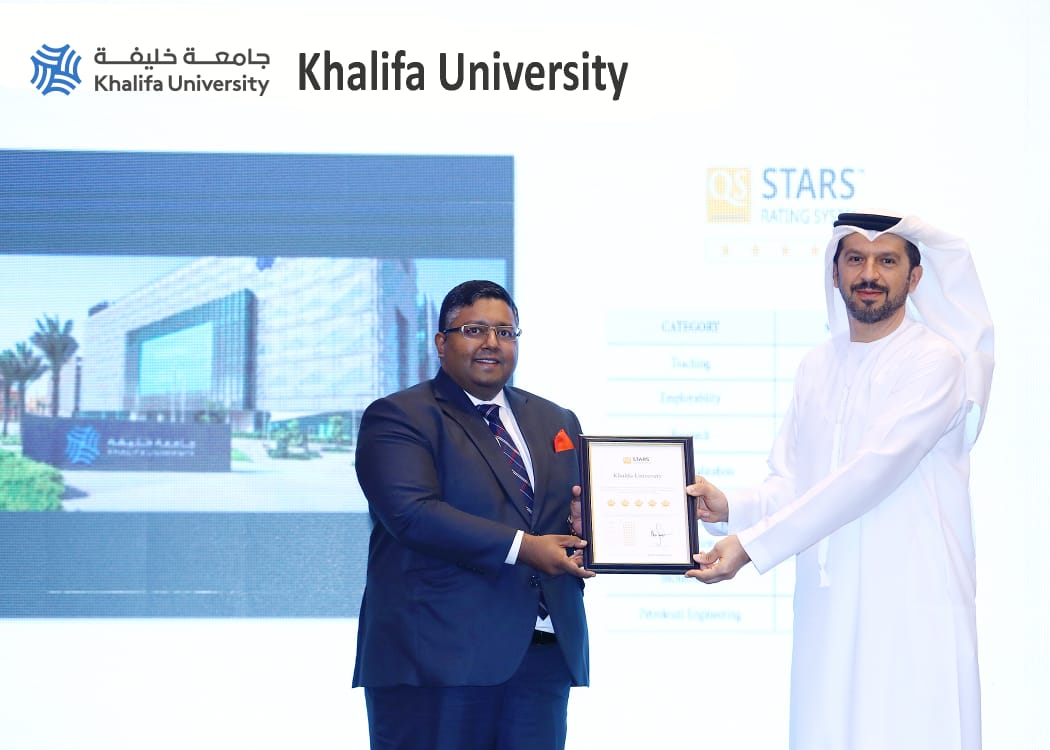
Khalifa University of Science and Technology announced it has achieved the coveted 5-Star rating with QS (Quacquarelli Symonds) Stars, in seven categories including teaching, employability, research, internationalization, facilities, innovation, and in the subject of Petroleum Engineering.


Khalifa University was honored during a special ceremony organized by QS, which was attended by Dr. Arif Sultan Al Hammadi, Executive Vice President of Khalifa University.


A typical 5-Star university is generally world-class in a broad range of areas, enjoys a high reputation and has cutting-edge facilities and internationally-renowned research and teaching faculty. Khalifa University has met all these thresholds to achieve the QS 5-Star rating.


The QS Stars is a rating system that provides a detailed look at an institution, and identifies which universities are the best in specific areas. The system allows students to get a wider picture of the qualities of universities around the world, looking at everything from the teaching and research qualities to employability of graduates, sports facilities and community engagement. The QS Stars audit evaluates an institution against more than 50 different indicators.


In order to achieve the 5-Star rating, a university must obtain an overall score of at least 700 out of 1000 points. A university must have at least 5% international faculty, and 5% international students, a score of 70 points or more in the learning environment category and 85 points or more in the employability category. In the Research category, the university must have 150 academic references or three citations per faculty member. If assessed in the Academic Development category, it must have 105 points in Teaching.


Clarence Michael
English Editor Specialist
31 March 2021

Harnessing the Power of the Sun to Desalinate Brine Sustainably

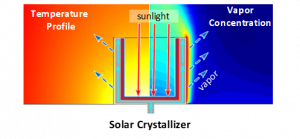
The team’s ‘solar crystallizer’ uses solar energy as the main energy source to heat and evaporate the brine


Read Arabic story here.


Brine is a high-concentration solution of salt in water and is a by-product of many industrial processes, including desalination. The simplest way to dispose of brine is to return it to the ocean, but high localized brine concentrations raise seawater salinity and alkalinity to the point that an environmental risk is created.


Another common way to dispose of brine is to use evaporation ponds, where the water is evaporated and the salt is collected for use in other processes.


Unfortunately, neither method is a fully environmentally-friendly approach, and untreated brine can be corrosive and toxic if disposed of improperly.  


A team of researchers, including Khalifa University’s Dr. Tiejun Zhang and Dr. Hongxia Li from the Department of Mechanical Engineering, has designed a new, sustainable way to treat brine without disposing of any water, using the energy from the sun.


Dr. Zhang and Dr. Li published their work in Nature Communications with Chenlin Zhang and Prof. Peng Wang’s group from King Abdullah University of Science and Technology, Saudi Arabia.


The collaborative research team led by Prof. Wang designed a ‘solar crystallizer’ that uses solar energy as the main energy source to heat and evaporate the brine.


“Proper disposal of industrial brine is a critical environmental challenge,” explained Dr. Zhang. “The volumes of brine produced by modern industries range from hundreds of liters to tens of thousands of liters. Conventional methods of disposing brine are detrimental to aquatic ecosystems and land vegetation systems. Concentrating the brine to near saturation and then evaporating the water in a contained system can remove all residual water from the brine to produce solid salts in a zero liquid discharge process.”


Typically, a zero liquid discharge process concentrates the original source brine to near saturation and uses a process known as ‘crystallization’ to remove all the salts from the solution. Brine crystallizers are sometimes used to separate the salt from the water, but they require electricity to heat the brine for water evaporation, resulting in high energy consumption.


“Solar-driven water evaporation is gaining popularity as an environmentally friendly way to produce water vapor for clean water production via solar distillation,” explained Dr. Zhang. “In such a process, solar energy is harvested and converted to heat using a photothermal material, producing water vapor from various source waters in a solar still. Then, the condensate from the water vapor is collected as fresh water.”


Sounds simple, but the amount of salt in the water can affect the light absorption of the photothermal materials, water transport and evaporation in wicking materials.


To solve this, the research team designed a new 3D solar crystallizer device in which the water evaporation surface and the light absorption surface are physically separated by an aluminum sheet with high thermal conductivity. The bottom and inner walls act as the sunlight absorbing component, absorbing 99 percent of the light that hits it, while the outer wall surface serves as the water evaporation surface and salt crystallization surface.


“The high thermal conductivity of the aluminum separator conducts the heat generated at the bottom of the device to its wall for water evaporation,” explained Dr. Li.


“This results in a high solar-to-vapor performance, meaning this simple but promising strategy can provide a low-cost and sustainable solution, especially for small to medium-sized industrial brine treatment.”


Dr. Zhang has teamed up with Dr. Faisal Al Marzooqi to develop more advanced solutions at Khalifa University for sustainable solar brine treatment with anti-fouling, anti-corrosion and anti-scaling performance.


Jade Sterling
Science Writer
31 March 2021

Searching for Suitable Materials and Refrigerants for AC Units That Also Store Heat for Energy

As global energy demand from air conditioners continues to rise, finding a way to replace energy-intensive systems is paramount.


Read Arabic story here.


As the mercury rises in the UAE, Dr. Lourdes Vega, Director of the Khalifa University Research and Innovation Center on CO2 and hydrogen (RICH), and KU Research Scientists Dr. Edder Garcia and Dr. Daniel Bahamon are turning their attention to finding efficient and environmentally-friendly forms of air conditioning systems.


“Due to global warming and a boost of wealth in tropical regions, the demand for refrigeration and air-conditioning is likely to increase in the coming years,” explained Dr. Vega. “This process already accounts for around 10 percent of the global electricity consumption, so finding green alternatives is of utmost importance.”


Global energy demand from air conditioners is expected to triple by 2050, and supplying power to these AC units comes with large costs and environmental implications.


Dr. Vega and her team are investigating a cleaner cooling process known as ‘absorption refrigeration,’ which could replace conventional energy-intensive vapor compression refrigeration, and could even be used as a way to store solar energy.


Conventional AC systems rely on vapor-compression cycles and a mechanical compressor. This is how it works: Refrigerant flows through a compressor, where it gets pressurized. Then the refrigerant flows through a condenser, where it condenses from vapor form to liquid form, giving off heat in the process. From the condenser, the refrigerant goes through an expansion valve and its pressure drops. Finally, the refrigerant travels to the evaporator, where it draws heat from the air around it (the air that needs to be cooled), which causes the refrigerant to vaporize. The vaporized refrigerant then goes back to the compressor to restart the cycle. In addition to the electricity consumption associated with air conditioning, in current vapor-compression cycles the refrigerant is usually a fluorinated gas (F-gas) with high global warming potential, making the phase out of such gases an urgent environmental need.


An adsorption-based refrigeration system is much simpler. It has two main components: a tank, where the liquid refrigerant is stored, and a bed filled with a solid material known as an ‘adsorbent.’ The refrigerant molecules ‘adsorb’, or attach, onto the surface of this material instead of dissolving into a liquid, creating a film on the surface where refrigerant vapor accumulates.


The adsorbent is a highly porous material with a large internal surface, full of holes that collect the refrigerant vapor. These systems transform energy into cooling power without any moving parts, making them low maintenance and more durable than conventional vapor-compression refrigeration systems.


Importantly, adsorption refrigeration can be powered by renewable energy sources, like the sun.


During energy production peaks, such as during the middle of the day for solar power supplies, heat is transferred to the adsorbent, causing the refrigerant to vaporize and desorb from the solid adsorbent. It detaches from the pores in the adsorbent and is condensed into a liquid for storage in the tank.


When it is time to cool down the air outside the unit, the liquid refrigerant is released to the evaporator, removing a heat from the surrounding area.


“When the refrigerant adsorbs onto the solid surface adsorbent, energy is released,” explained Dr. Vega. “Therefore, the adsorbent can be used as a thermal energy storage unit. Energy is stored during the removal of the refrigerant from the adsorbent material. The stored energy is recovered during the adsorption step and can be used as a low-temperature energy source. In this way, we can make a unit that both cools the air and stores energy.”


Developing such a unit however requires finding the perfect adsorbent-refrigerant pair. Currently, the most common refrigerants for domestic and automobile air conditioning and for vapor-compression cycles are hydrofluorocarbons, but these have tremendous global warming potential and are being phased out globally.


Using computational simulations, Dr. Vega and her team are trying to find the best adsorbent-refrigerant pair, and they are specifically looking for the ideal pairing with compounds known as metal-organic frameworks, or MOFs, combined with low global warming potential refrigerants including hydrofluoroolefins (HFO). They published their results in ACS Sustainable Chemistry and Engineering.


“Several criteria can be used to select an adsorbent-refrigerant working pair,” said Dr. Vega. “The energy density that can be stored by adsorbent per unit of volume is an important indicator of performance. The difference in the adsorbed amount of refrigerant between adsorption and desorption—the working capacity—can also be considered. However, given the large number of potential materials that could be utilized, experimental evaluation is an expensive, time-consuming and tedious endeavor.”


Rather than individually test each pairing, the research team conducted simulations to guide selection of MOFs for thermal-storage applications. A total of 40 MOFs were studied using three refrigerants based on HFO, which has much lower global warming potential than the traditional hydrofluorocarbons.


The research team established a relationship between the adsorptive capacity and the properties of the materials, finding that MOFs with open metal sites interact strongly with the refrigerants, making them more suitable for thermal energy storage applications.


For cold thermal energy storage, MOFs with larger pore sizes showed a considerably higher energy density than the materials currently used commercially.


Jade Sterling
Science Writer
30 March 2021

 

New Book Released by Khalifa University Researcher on the Energy System Dynamics of the MENA Region

The new book contains 11 essays from leading experts in the field of energy system dynamics


Read Arabic story here.


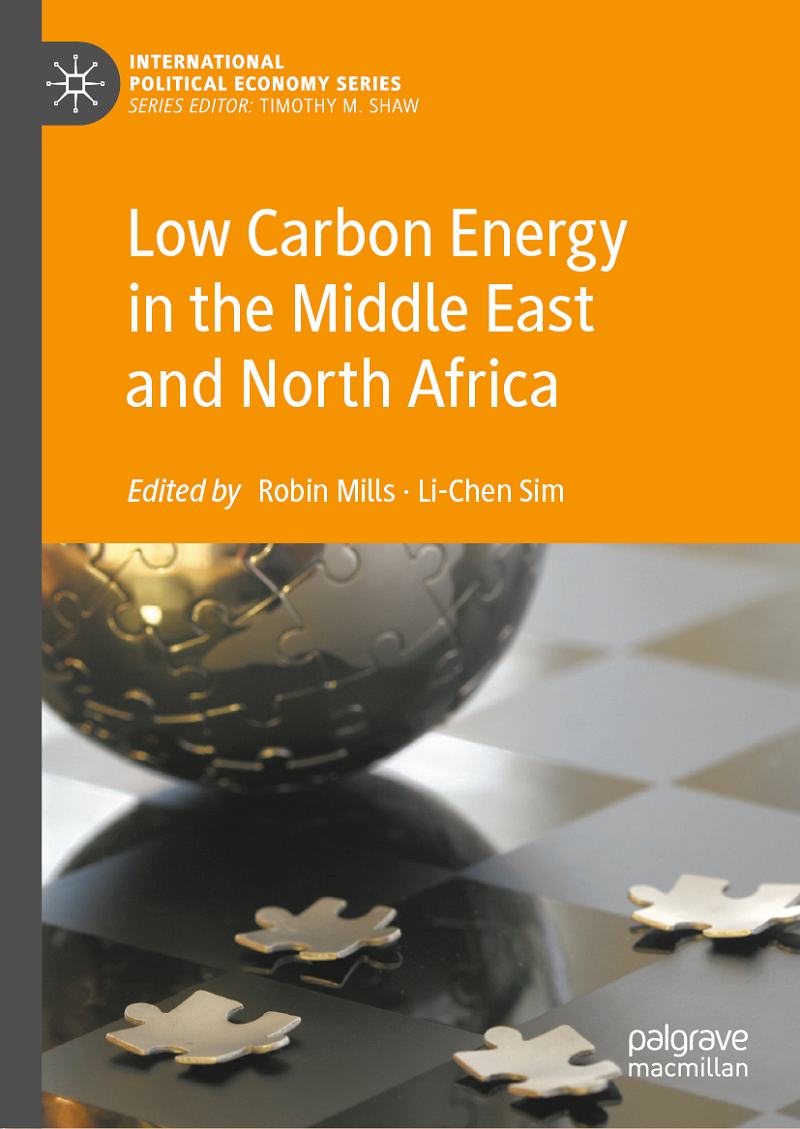
Dr. Li-Chen Sim, Assistant Professor in the Department of Humanities and Social Sciences at Khalifa University, and Robin Mills, CEO of Qamar Energy and Fellow at the Columbia University Center on Global Energy Policy, have edited a new book detailing how the transition to low-carbon energy in the Middle East impacts the energy system dynamics of the region. Their new book is titled Low Carbon Energy in the Middle East and North Africa.


“The book explores the evolving roles of energy stakeholders and geopolitical considerations, leveraging on the dizzying array of planned and actual projects for solar, wind, hydropower, waste-to-energy, and nuclear power in the region,” explained Dr. Sim. “Over the next few decades, favorable economics for low carbon energy sources combined with stagnant oil demand growth will facilitate a shift away from today’s fossil fuel-based energy system. Will the countries of the Middle East and North Africa be losers or leaders in this energy transition? Will state-society relations undergo a change as a result?”


Compiled by editors Dr. Li-Chen Sim and Robin Mills, the new book contains 11 essays from leading experts in their fields, discussing topics ranging from the rise of renewables in the Gulf states to the development of clean electricity supply in Egypt.


“Our book will interest academics working in the fields of international relations and politics, energy economics, and business,” said Dr. Sim. “Consultants, practitioners, policy-makers, and risk analysts will also find the insights helpful. It suggests that ultimately, politics, more so than economics or environmental pressure, will determine the speed, scope, and effects of low-carbon energy uptake in the region.”


“This book compellingly illustrates how the transition to renewable and nuclear energy may fundamentally change the energy system dynamics of a region that has long been known for hydrocarbon-dependence and political strife,” added Dr. Steve Griffiths, Senior Vice President, Research and Development. 


Jade Sterling
Science Writer
30 March 2021



Innovative Waste Collection System Wins KU Students First Place at 2021 IEOM Conference

A team of Industrial and Systems Engineering students at Khalifa University has won first place in the Industrial Engineering and Operations Management (IEOM) Senior Design Project Competition. The team, who beat out over 100 other student projects, won for their innovative project that describes a streamlined waste collection system.


The team includes Shamma Al-Ali, Khadija Alhmoudi, Rawdha Alawadhi and Khalid Alhosani, and was supervised by Dr. Ali Bouabid, Assistant Professor of Industrial and Systems Engineering, and Dr. Andrei Sleptchenko, Assistant Professor of Industrial and Systems Engineering.


Their paper, titled “Improving Waste Collection & Transportation System,” describes their Senior Design Project, which is an innovative system they designed to improve the waste collection and transportation system in Abu Dhabi in collaboration with Tadweer (Abu Dhabi Waste Management​ ​Center). 


“Leveraging industrial and systems engineering principles, the students proposed a simulation-based approach to streamline the waste collection process as part of the future strategic vision for waste management in the Emirate of Abu Dhabi,” explained Dr. Bouabid. 


Team member Khalid Alhosani said, “As industrial & systems engineers, we are committed to delivering our expertise in a way that will help our society. Directly aligned with the UAE’s 2021 vision, our proposed solutions express a genuine desire to deliver positive, real-world change in the UAE. We hope that our work will contribute to the success of the UAE in increasing the percentage of treated waste.”


The KU team successfully demonstrated problem solving, creative thinking, innovation, project planning, and teamwork through a challenging design and build project. They presented their poster and paper at the International Conference on Industrial Engineering and Operations Management (IEOM), and were awarded at the 2021 IEOM 11th Annual Conference Awards Ceremony on 11 March 2021.


“Our Senior Design Project series have been purposefully designed to showcase our students abilities and skills in real-world applications and industries, with direct benefits to the local community of service providers and supply chain enterprises. This is the second year in a row that our SDP students are recognized in international awards, which is testament to their work’s international impact as well,” said Dr. Mohammed Omar, Professor and Department Chair of Industrial and Systems Engineering.


The IEOM Society International is a non-profit organization that provides academics, researchers, scientists, and practitioners a platform and forum to exchange ideas and provide insights on the latest developments and advancements in the fields of Industrial Engineering and Operations Management. The IEOM conference was held in Singapore this year and welcomed competitors from more than 60 different nationalities.


With a number of waste management projects underway like this one at Masdar Institute, Khalifa University’s sustainability focused research institute, KU is helping to drive the technological and industrial innovation required to meet the UAE’s strategic sustainability goals.


Erica Solomon
Publication Senior Specialist
29 March 2021

Khalifa University Announces Two-Week Virtual Spring Ektashif Coding Camp for High School Students from 28 March

Select Group of 30 Students to Present Coding Project Results on Conclusion of Program on 8 April


Khalifa University has launched the Ektashif Spring – School Coding Camp, a new initiative from the Khalifa University Outreach Office to run during the spring break. The online learning camp will start from 28 March for a select group of 31 UAE high school students.


It will cover topics in basic understanding and appreciation of various essential programming-language constructs, paradigms, evaluation criteria and language implementation issues.  


Participants will learn how to read and write code, develop cognitive skills, and learn a methodical and problem-solving technique by breaking down complex problems into units. They will also gain related skills such as logical thinking by selection and use of logical statements, as well as structural thinking by combining small units to find the outcome. Most importantly, they will realize the significance of perseverance and the mental strength to resolve any problem related to non-functioning of components.


Dr. Arif Sultan Al Hammadi, Executive Vice-President, Khalifa University, said: “The two-week Ektashif Spring – School Coding Camp aims to bring awareness to high school students on the importance of learning basic language skills that will help them develop refined analytic skills and clear, concise communication abilities. This camp is part of Khalifa University’s initiative to empower youth, not only through academic programs and research, but also through outreach programs such as Ektashif. We hope participants from high schools will take advantage of this opportunity to develop a problem-solving mindset, gain skills that make them well-versed in data structures and algorithms design, while learning multiple technologies and programming languages.”


The Ektashif Spring camp is inspired by UAE’s strategic goals. The UAE’s digital economy places significant importance to computer skills, demanding a fresh approach to education. Following the launch of programs such as the annual One Million Arab Coders initiative, coding has become a focus for the UAE. With software and computers impacting every part of life, it has become imperative for school students to learn about algorithms, ways to develop an app or understand the functioning of the internet. 


With 90% of jobs requiring digital skills, employability in the coming years depends on students being digitally literate, thus making the Ektashif Spring camp even more relevant for today’s students. At the end of the two-week Ektashif Spring – School Coding Camp, participants will present their coding project results. Certificates of completion will be awarded on 8 April.


Clarence Michael
English Editor Specialist
28 March 2021

KU Researcher Explains What Makes the UAE So Foggy in the Winter

Despite being a desert country, the UAE has all the necessary ingredients for fog, seeing up to 50 foggy nights per year. 


Read Arabic story here.


Winter in the UAE brings respite from the scorching summer temperatures for which this region is famed. It also brings foggy mornings, enveloping the country from the skyscrapers in Dubai to the dunes in Liwa.


Despite being a desert country, the UAE has all the necessary ingredients for fog, seeing up to 50 foggy nights per year. Dry desert conditions exist next to the warm seas of the Gulf, with moist air carried inland by the afternoon sea breeze cooled by the night desert surface.


“The fog that forms over the UAE is known as radiation fog and is caused by the rapid cooling of the desert surface at night during the winter,” explained Dr. Diana Francis, Head of the Environmental and Geophysical Sciences (ENGEOS) Lab at Khalifa University. “This cooling leads to cool air in the lower layers of the atmosphere, which condenses the water vapor present there. The UAE has an atmosphere rich in water vapor since it’s surrounded by water bodies, where sea breeze circulation brings large amounts of water vapor inland during the day, which is trapped and forms fog during the night.”


Fog can be considered as a low-lying cloud; it’s a visible aerosol of miniscule water droplets hovering above the ground. About 95 percent of the fog seen in the UAE is radiation fog, which is why it is so prevalent in the winter and not the summer. The other 5 percent is advection fog, meaning it forms over the surrounding seas and moves over the UAE. Regardless of the type of fog, when the sun rises and warms the country in the morning, the fog dissipates.


The desert part of the country also plays a vital role in the weather over the UAE. When the winds over the country are calm, the moist air blown in from the sea earlier in the day mixes with the dust and sand in the air from the desert. This dust acts as the catalyst for fog development.


“Dust is the main component in the aerosol load present in the atmosphere over the UAE,” explained Dr. Francis. “Aerosols act as condensation nuclei for water vapor, causing the water to condense around the dust particles in the air. This is the same principle that leads to the condensation of water vapor on the mirror when you shower—the mirror is the aerosol particle. Given how much of the atmosphere is sand from the desert and the large capacity of the desert to cool down quickly at night, it makes sense that two of the hot spots for fog formation in the UAE are the Sweihan desert and the South West of Abu Dhabi. Both  are desert areas, with fog forming over these places, expanding, and then merging together, particularly over Abu Dhabi airport.”


ENGEOS lab research work shows that Abu Dhabi airport experiences more low visibility events than Dubai or Al Ain due to the fog that starts nearby. The fog is most frequent between 20 and 100 kilometers inland but can extend up to 200 kilometers inland over the desert, and tends to occur the most in December and January, even though the fog season lasts between September and March.


“At ENGEOS we perform now-casting of fog formation, spatial cover and duration using satellite observations and artificial intelligence techniques,” said Dr. Francis. “We also forecast fog formation, time of occurrence, intensity and duration one day in advance using modelling. We found that fog can occur any time between 7pm and 11am local time, but the highest number of events occur between 3am and 7am. This information is critical for operations at Abu Dhabi airport and the transport sector in general to reduce the risks related to fog and low visibility.”


Jade Sterling
Science Writer
28 March 2021

Khalifa University is the First University in the UAE to be a Global E3 Consortium Member

The University is also the first in the Gulf Region to be part of the consortium exchange program for engineering students.


Khalifa University is now a member of the Global Engineering Education Exchange Program (Global E3 Consortium), a consortium-based exchange program established in 1995 that provides undergraduate engineering students an opportunity to study in leading universities from around the world while able to pay tuition at their home university. 


As a top-ranked university in the UAE and a regional leader in STEM education, Khalifa University joins the ranks of prestigious institutions such as Nanyang Technological University (Singapore), Georgia Institute of Technology (USA), Delft University of Technology (Netherlands), and the University of Melbourne (Australia).  By joining the E³ Consortium, KU would be the first member from the UAE and wider Gulf region, and the second country from the Arab world. 


Education is not limited to the classroom and as a member of the consortium, Khalifa University will be able to provide our students with additional opportunities to broaden their horizons and enhance their international education experience, while at the same time welcoming students from other Global E3 members into our KU Community. 


Dr. Ahmed Al Shoaibi, Senior Vice-President of Academic and Student Services, commented: “The engagement of our students in international learning and research is critical to KU’s vision as a research-intensive university with a transformative student learning experience. KU’s commitment to internationalization is evident through our student exchange programs with top ranked universities around the world. Experiencing studying abroad equips our students with the strength and unique skills, immersing them in a variety of educational and cultural experiences that will help them face challenges beyond their home countries and classrooms. Becoming a member of the prestigious E3 Network is a leap forward in our internationalization efforts which will offer our students more options to explore and pursue.”


Each year, the Global E3 Consortium exchanges 250-300 students and with over 70 members across over 20 countries, students of consortium members can study at these international institutions for a single semester or for an academic year. The credits these students earn during their study abroad are transferred to their home institution following their successful completion of the term(s). 


Ara Maj Cruz
Creative Writer
25 March 2021

Imaging Organic Matter in 12,000 Year Old Fossils for the First Time


Read Arabic story here.


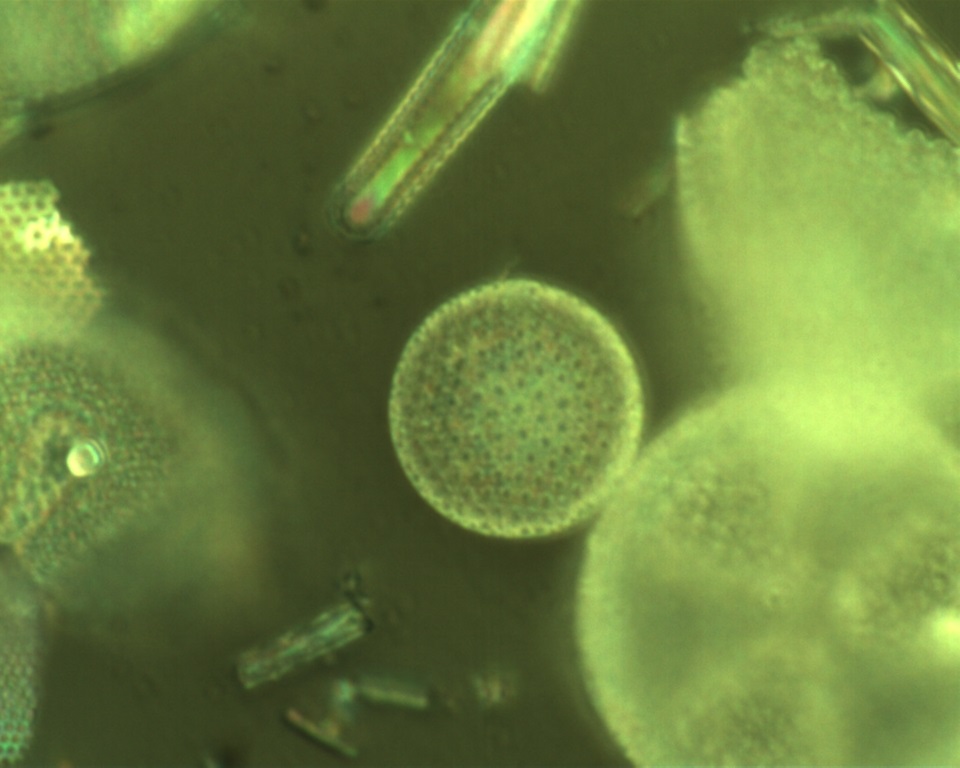
A team of researchers have discovered a new way to see organic matter inside of fossilized ‘diatoms’ –  a type of microalgae – using powerful microscopy imaging techniques, which could help scientists better understand the conditions and climate of the Earth thousands of years ago.


Diatoms are one of the most prolific microscopic sea organisms that serve as food for many animals. Beyond that though, diatoms – which include around 16,000 species – can be preserved in the sediment record, offering clues into what life was like on Earth in the past.  


The extensive fossil record of diatoms in this sediment record is extremely useful to researchers looking at changes in ecological conditions over long periods of time.


The research team includes Dr. Gobind Das, Associate Professor of Physics at Khalifa University, Dr. Shaun Akse, Dr. Lubos Polerecky and Dr. Jack Middelburg from the Department of Earth Sciences at Utrecht University, Dr. Susana Agusti from the Red Sea Research Center and Core Labs at King Abdullah University for Science and Technology, and Dr. Laetitia Pichevin from the School of Geosciences at the University of Edinburgh. Their findings were recently published in Marine Chemistry.


Diatoms’ unique anatomy features a cell wall made of hydrated silicon dioxide, or amorphous silica, called a frustule. Fossil evidence suggests that certain fossil diatoms originated during or before the early Jurassic period, which was about 150 to 200 million years ago.


This silica is thought to protect any organic matter in the fossilized diatom, which could be investigated to understand and reconstruct the conditions of the oceans at the time the diatom was alive.


“Scientists believe that nitrogen encased in the diatom frustule is protected from any alteration, presenting a more robust insight to the conditions of that time period,” explained Dr. Das.


However, the location of this organic matter within the frustule has proved challenging to identify­—until now.


Using high spatial resolution imaging techniques, the research team identified where the organic material is retained in the fossil. They developed and applied nanoscale secondary ion mass spectrometry (nanoSIMS imaging), which allows imaging of elements down to 50 nanometres.


To validate their findings, they used microRaman spectroscopy and transmission electron microscopy (TEM) to probe further into the fossil and identify the molecular structure of samples. While the TEM technique did not have the sensitivity to image the organic material, the nanoSIMS and Raman techniques imaged the presence of organic matter in fossil frustules for the first time, highlighting exactly where the organic matter can be found.


Diatoms build intricate hard but porous frustules, which are highly patterned with a variety of pores, spines, ridges and elevations. The samples used for the research team’s investigation came from a core of sediment that was 12,450 years old.


“Our findings suggest that organic signals were present throughout the frustule but in higher concentrations at the pore walls,” said Dr. Das.


“As the first result of its kind, our study shows that the organic material embedded in the silica matrix of fossil frustules can be imaged, but the nanoSIMS analysis should be combined with additional high spatial resolution chemical mapping techniques to confirm and better understand the distribution of organics within the frustule of fossil diatoms.”


Finding the organic material in these fossils allows further and more accurate investigation into its composition, which will help researchers understand more about the atmospheric and oceanic conditions of life on Earth more than 12,000 years ago. 


Jade Sterling
Science Writer
23 March 2021

Khalifa University Researchers Develop Shoes to Continuously Monitor Body Weight and Help Prevent Hospitalizations

Short-term changes in body weight are correlated with some severe health problems and daily information about a patient’s body weight could save lives.


Read Arabic story here.


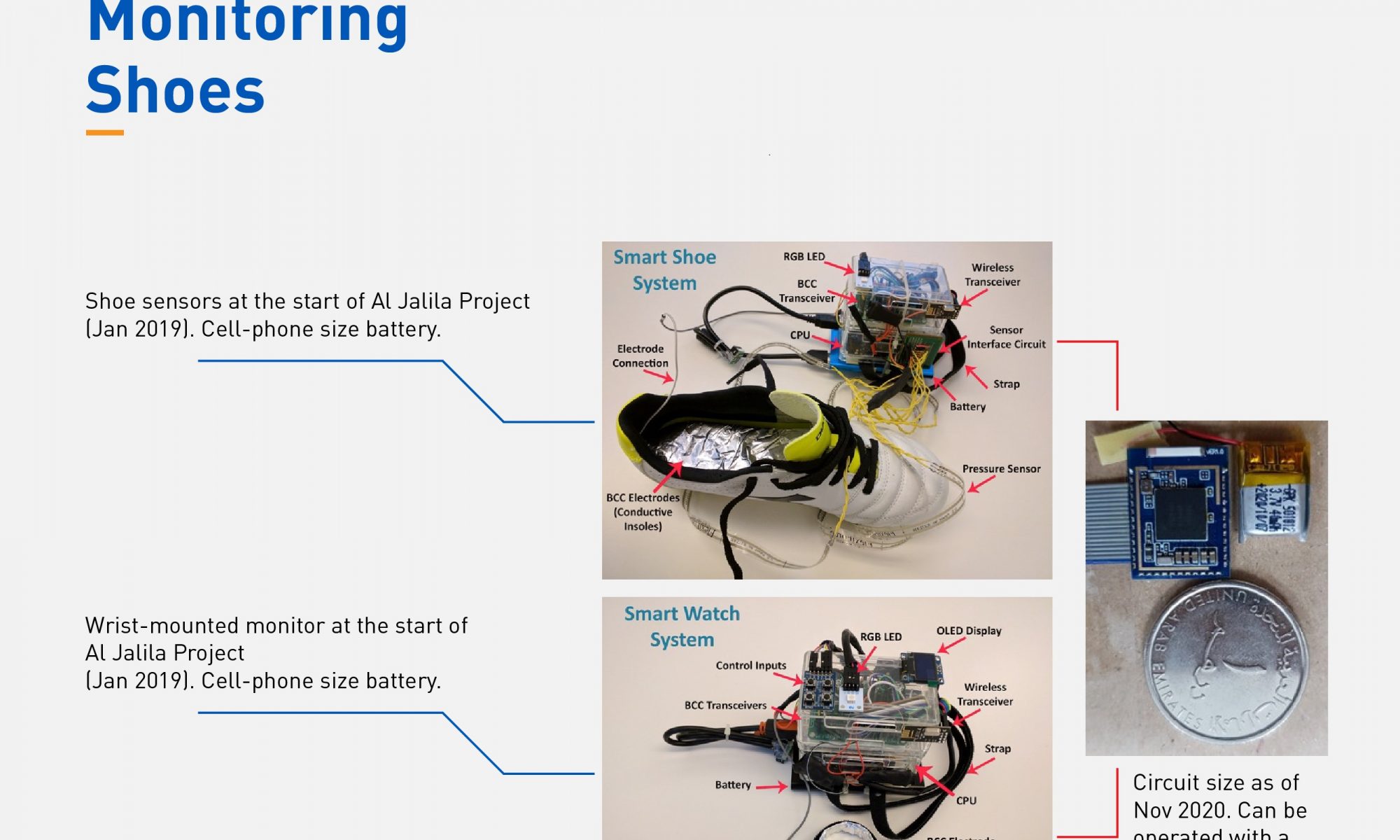
Dr. Ibrahim Elfadel, Professor of Electrical Engineering and Computer Science, and Dr. Shahzad Muzaffar, Postdoctoral Researcher, were recently awarded an Al Jalila Foundation research grant for their work on sensors integrated into shoes to continually monitor body weight. The Al Jalila Foundation is a not-for-profit organization dedicated to transforming lives through medical research, education and treatment in the UAE. The researchers were recently granted a US patent to cover their innovative sensing method. Technical details on their sensor design appeared in the IEEE Sensors Journal in July 2020.


Their work combines pedobarography with wearable technology, using sensors embedded in shoes for continuous and unintrusive body weight monitoring.


“Pedobarography is the art of measuring and analyzing pressure forces exercised by the foot on the ground during the walk cycle,” explained Dr. Elfadel. “Wearable pedobarography is a highly promising research area and the results are expected to impact a range of healthcare applications such as activity monitoring, weight estimation, obesity control, prosthetics and sports medicine. Other engineering areas can also profit from wearable pedobarography, including robotics, security, and entertainment.”


Many elements of healthcare require a careful look at body weight over time but short-term changes are correlated with severe physical, mental and emotional health problems. For example, the American Heart Association considers a sudden weight gain of more than 2 to 3lbs in a 24-hour period a medical alert, with this supported by medical studies finding sudden increases in body weight are associated with hospitalization for congestive heart failure. These studies report that daily information about a patient’s body weight could alert clinicians to patients who may be at high risk for hospitalization on the basis of weight gain.


Existing commercially available shoes with sensors include those used for athletic performance monitoring, training and health analytics. Commonly, the shoe insole is where the pressure sensors are integrated, making them more suitable for gait and activity monitoring but much less suitable for ground reaction force, and therefore, body weight measurements.


“To help prevent heart failure hospitalization, it’s crucial to enable monitoring technologies that can detect such body weight changes early enough for preventive measures to work,” explained Dr. Elfadel. “Continuous monitoring of body weight requires continuous measuring of ground reaction forces under the feet. Traditionally, force sensors are placed flat in a shoe insole, and the data is collected for further analysis. Unfortunately, the traditional sensor placement fails to account for the total applied force due to a spreading effect within the shoe insole. Placing the force sensors  at only few points under the flat insole makes it impossible to account for the total reaction force.”


The ground reaction force is the force exerted by the ground on a body in contact with it. A person standing motionless on the ground exerts a contact force on it equal to the person’s weight, while an equal and opposite ground reaction force is exerted by the ground on the person. Measuring this accurately, however, is a major challenge. In existing designs, Force Sensitive Resistor (FSR) sensors have been placed into the insole, but since these only capture some of the total ground reaction force, the weight estimations are subject to significant errors, especially when the patient is moving.


Dr. Muzaffar and Dr. Elfadel used a novel approach to shoe-integrated sensor design and characterization to ensure accurate continuous body weight measurements, while also keeping the shoe as comfortable and ordinary as possible. Rather than integrating the FSRs in the insole, the team used them on the external frame of the shoe. They designed an integrated three-layer structure that consolidates the reaction force exerted by the ground, channeling the total applied force to a set of carefully placed points under the shoe to improve accuracy. To complement the sensor, the team also developed a high-performance processing methodology to optimize sensor geometry and integrate it seamlessly with shoe design.


“We used a layered structure called Sandwiched Sensor Force Consolidators (SSFC) under the shoe sole to concentrate and channel the applied forces,” explained Dr. Muzaffar. “Each SSFC is a three-layer structure made of top and bottom capping layers and a middle sensory layer. The SSFC can be shaped to an ergonomic shoe design that is comfortable to wear. Plus, our sensor array mitigates the ‘spreading out’ effect of the total ground reaction force. The main idea was to concentrate the applied forces on a set of critical points placed under the shoe sole, hence the SSFC. The number and shapes of the SSFCs can be customized for comfort and force sensing accuracy.”


Importantly, this novel approach can be used when the wearer is walking, not just when they are standing still. In addition to the SSFC, innovative signal processing algorithms have been used to recover the body weight from the waveforms of the ground reaction forces during the walk cycle. As a result, the measurements collected from the prototype developed at Khalifa University were shown to be more than 99 percent accurate, even in the presence of motion. This is at least four times better than the existing state-of-the-art products. Additionally, the sensor array and integration technique can enable more precise measurement methods for several adjacent applications to body weight monitoring, including gait analysis, sports medicine, and physical therapy.  


Jade Sterling
Science Writer
23 March 2021