

Less Data, More Knowledge: The Power of Semantic Networks

Moving beyond the limitations of traditional models and embracing semantic communication promises to be profoundly transformative for wireless communication networks


The landscape of wireless communication is set to shift as future wireless systems must cater to the complex and stringent requirements of emerging applications, such as the metaverse, holographic teleportation, digital twins, and Industry 5.0. Traditional data-heavy models are giving way to intelligent, knowledge-driven systems and at the forefront of this transformation is the concept of semantic communication networks.


Semantic communication is a system where the focus shifts from merely transmitting data to conveying meaning. Traditional communication systems treat all data equally, transmitting it bit by bit without understanding its content. Semantic communication, however, involves networks that can understand and process the meaning of the data they handle, making them vastly more efficient and intelligent.


Khalifa University’s Prof. Merouane Debbah developed a groundbreaking approach to semantic communication networks with researchers from Virginia Tech, Princeton University and Kyung Hee University, South Korea. They published their work in IEEE Communications Surveys and Tutorials, a top 1% journal.  


Traditionally, wireless networks have been data-driven, heavily relying on discrete data elements like spectrum data and quality-of-service values to optimize performance. This method ties the network’s capabilities closely to the availability and quality of data. In contrast, the proposed knowledge-driven networks leverage machine learning to create a reasoning system that can draw logical conclusions based on accumulated knowledge. This shift allows networks to achieve high rates, low latency, and high reliability with less data, marking a significant step forward in meeting the complex demands of future applications such as the metaverse.


A key aspect of this approach is the creation of semantic representations: minimal yet efficient data structures that faithfully capture the essence of the information being communicated. These representations form the basis of a “semantic language,” distinct from natural language, designed to be both generalizable and efficient. In this model, transmitters (referred to as teachers) and receivers (referred to as apprentices) interact more intelligently. The teacher identifies and transmits semantic content, which the apprentice can understand and logically process, mimicking human learning and reasoning.


Reasoning-driven semantic networks can understand causal relationships within data streams. This allows the network to make more informed decisions and enhances its adaptability to new situations. Plus, by integrating semantic communication principles into large-scale environments, such as 6G cellular networks, it can be scaled up to meet the increasing demands of emerging technologies more effectively, ensuring robust and reliable performance.


This research lays the groundwork for the next generation of wireless communication systems. By transitioning from data-driven to knowledge-driven models, integrating advanced machine learning techniques, and focusing on the meaningful transmission of information, semantic communication networks promise to revolutionize how we think about and implement wireless communication.

Jade Sterling
Science Writer
20 Aug 2024


Khalifa University Student Joins UK Tokamak Energy’s Team of Engineers Designing First Fusion Energy Pilot Plant

Student Will Gain Practical Skills in Managing Fusion Fuels through Two-Month Internship at Oxfordshire, and Participate in Cutting-Edge Research in Clean Energy


Khalifa University of Science and Technology and leading UK-based global commercial fusion energy company Tokamak Energy, today announced the first UAE National student has joined a team of engineers designing the first fusion energy pilot plant at Oxfordshire, under an internship program. 


Jassem Alhammadi, a Khalifa University senior student in the bachelor’s program in Chemical Engineering with a minor in Nuclear Engineering, has become the first Emirati intern to join the Tokamak Energy team and will spend two months in Oxfordshire, UK, learning about the company’s mission to deliver clean, secure and affordable energy. The internship program follows a successful three-day ‘Focus on Fusion’ event and exhibition that was organized in September 2023 at Khalifa University’s Main Campus for stakeholders in the world of fusion and the energy sector. A Tokamak Energy team of leading scientists and engineers offered a series of lectures covering different approaches to delivering commercial fusion, the physics of fusion and how new generation high temperature superconducting magnet technology has accelerated progress. 


Alhammadi was selected for this internship as part of an ongoing partnership between Tokamak Energy and Khalifa University, designed to educate the next generation of engineers in fusion energy. He will gain practical skills in managing fusion fuels, and play an important role in the cutting-edge research in clean energy. 


Jacqui Dalziel, Tokamak Energy’s Head of Talent, said, “Our ‘Focus on Fusion’ event and exhibition at Khalifa University helped raise awareness of fusion within the UAE and the region, and highlighted the many benefits of this ultimate source of clean, secure and affordable power, which is set to transform the global energy landscape. As part of our continuing collaboration, we are now delighted to welcome Jassem Alhammadi to the UK for this exciting opportunity to work with our team, supporting a key part of our first fusion pilot plant.” 


Dr. Saeed Al Ameri, Director, Emirates Nuclear Technology Center (ENTC), Khalifa University, and Assistant Professor, Mechanical and Nuclear Engineering, said: “This internship is a testament to the growing collaboration between Khalifa University and Tokamak Energy, reflecting our shared commitment to advancing fusion technology. We are incredibly proud of Jassem’s achievement and confident that his experience in the UK will not only deepen his understanding of fusion processes but also inspire other Emirati students to pursue careers in this transformative field. This partnership highlights our dedication to fostering innovation and sustainability, crucial for the UAE energy sector’s future.”


Jassem said: “I am so excited to be at Tokamak Energy, and I am keen to gain work experience and deepen my understanding of fusion processes, while contributing to sustainable energy solutions. This internship allows me to apply my academic knowledge, gain practical skills.”

Frost on Mars Discovered Offering Insights to Martian Water Cycle

New research offers glimpse into the dynamic environmental processes and water cycle on Mars as morning frost is discovered on Martian volcanoes


Recent research from an international team of researchers, including Khalifa University’s Dr. Mohamed Ramy El-Maarry, provides new insights into the Martian water cycle. High-resolution images from the European Space Agency’s Trace Gas Orbiter have revealed morning frost deposits on the calderas of the Tharsis volcanic region, offering significant implications for our understanding of Mars’ water cycle and the planet’s potential for supporting future human exploration.


The team’s findings were published in Nature Geoscience, a top 1% journal.


The Tharsis region is home to some of the largest volcanoes in the solar system. Observations from the Colour and Stereo Surface Imaging System (CaSSIS) on the orbiter revealed bluish frost deposits on the caldera floors and rims that form during the cold Martian mornings but disappear by afternoon. The frost primarily occurs during the colder Martian seasons.


Spectral data and images from the Mars Express orbiter confirmed these observations and climate model simulations indicate that the surface temperatures are low enough to support the formation of water frost, rather than carbon dioxide frost. This suggests that the frost is atmospheric in origin, rather than volcanic, an important distinction given the location of the frost deposits.


The team’s research points to the role of microclimates in local frost formation and their contribution to Mars’ broader water cycle. The presence of transient morning frost in this region implies an active exchange of water between the Martian surface and atmosphere. The discovery enhances our understanding of Mars’ current hydrological processes and the potential for future human missions to use local water sources.


Water is a crucial resource for any potential human presence on Mars, and the discovery of these transient frost deposits provides a hint that water, even in small quantities, is still actively cycling on the planet.


Further studies are now required to understand the detailed mechanisms of frost formation and its seasonal variability. As we continue to explore Mars with more sophisticated instruments and missions, each discovery brings us closer to unraveling the mysteries of the Red Planet and preparing for the possibility of human exploration.  


Jade Sterling
Science Writer
16 Aug 2024

Khalifa University Launches Innovative Bachelor of Science Program in Robotics and Artificial Intelligence

Program Equips Students with Technological Innovation to Participate in Projects and Create Prototypes for Various Applications


Khalifa University of Science and Technology today announced a new full-time Bachelor’s academic program in Robotics and Artificial Intelligence (AI) to equip students with the knowledge and skills for technological advancement and innovation in those fields. 


The interdisciplinary program features a comprehensive curriculum that blends theoretical knowledge with practical experience in robotics, artificial intelligence, computer, electronic and mechanical engineering, and mathematics, preparing graduates of the program for a wide range of careers in a rapidly growing field. 


Students are exposed to the latest advancements in robotics and AI technology, enabling them to explore emerging professional trends such as autonomous vehicles and drones, and develop systems that improve human-robots interaction. Healthcare robotics for surgical assistance, rehabilitation, and elderly care are exciting fields that are continuing to expand. Students will also be involved in projects that create robotic and AI prototypes for various applications including manufacturing and exploration of hazardous environments. Aspects of sustainability, innovation, and entrepreneurship are embedded throughout the program.


Dr. Bayan Sharif, Provost, Khalifa University, said: “We are delighted to launch the new academic program, which will empower students with the knowledge and necessary skills to tackle global challenges and develop innovative solutions in robotics and intelligent systems. Our state-of-the-art Robotics and Artificial Intelligence teaching and research laboratories provide students with experiential learning. Guided by a world-class faculty, graduates of the program will be instrumental in contributing to the UAE’s knowledge-based economy and leading the way in technological advancements.”


In addition to the design and development of robotic systems for various applications, the Bachelor of Science program includes AI algorithms and machine learning for cognition, data analysis, and automation. It also covers foundational courses in mathematics and computer science, computer, electronic and mechanical engineering, and AI ethics. 


The programs leverage Khalifa University’s state-of-the-art facilities, including dedicated robotics laboratories equipped with the latest hardware and software. Students will gain hands-on experience in the Robot Navigation and Control Lab, Robot Sensing and Perception Lab, and Robot Systems Lab, each spanning approximately 100 square meters and featuring motion tracking systems, and various robot platforms.


These labs are further complemented by the Computing Labs and the Khalifa University Center for Autonomous Robotic Systems (KUCARS) research labs, including the Aerial Robotics Lab, Marine Robotics Pool, Grasping and Manipulation Lab, Autonomous Car Lab, UGV Robotics Lab, Industrial Robotics Labs, and Computer Vision Lab.


Learn more about the program here.


Alisha Roy
Science Writer
13 Aug 2024

New Catalyst Mixtures Enhance CO2 Conversion to Methane

New approach turns a greenhouse gas problem into a sustainable energy solution


As the world grapples with the escalating impacts of climate change, finding effective ways to reduce carbon dioxide emissions has become more urgent than ever. Traditional methods of CO2 capture, though effective, often face challenges in terms of scale, energy use and expense.


Researchers have now developed an innovative method that could provide a seamless process to capture CO2 and convert it into a useful product: methane. This study aspires to revolutionize studies relevant to Power-to-Methane application as well as deploy smart and affordable ways to tackle big issues through activation of small molecules: CO2.


Khalifa University’s Prof. Kyriaki Polychronopoulou, Director of the Center of Catalysis and Separations (CeCaS), and Dr. Aseel Hussein, postdoctoral fellow of CeCaS, collaborated with Anastasios Tsiotsias, Nikolaos Charisiou, and Maria Goula, University of Western Macedonia, Greece, and Victor Sebastian, Universidad de Zaragoza, Spain. In particular, Anastasios Tsiotsias, PhD student at the University of Western Macedonia, was visiting research scholar at Khalifa University in February 2023 working on the decarbonization flagship project under CeCaS. Their approach was to activate dual site catalysis concept where the CO2 is captured first by an adsorbent and then is converted by the bimetallic catalyst. In particular, the process involves a combination of sodium alumina (Na-Al2O3) adsorbents and specially formulated Ni-Ru bimetallic catalysts to turn carbon dioxide emissions into methane.


Their results were published in Chemical Engineering Journal, a top 1% journal.


The novelty is on the fact that capture and conversion of CO2 happens on different sites that are designed to be at close vicinity. The team’s method combines CO2 capture and methanation into a single, integrated process which operates at a relatively low temperature of 300C. Lower operational temperatures mean enhanced material stability and reduced energy costs. Plus, the method proves effective even in the presence of oxygen and water, common impurities in industrial CO2 streams, demonstrating robustness under real-world conditions.


The role of the bimetallic catalyst is crucial here: Ruthenium enhances the activity of the catalyst at low temperatures, mitigating the adverse effects of oxygen and water. This ensures that the catalyst maintains high activity and stability, essential for continuous industrial operations.


The potential applications are vast. Methane can be used as a synthetic natural gas in industry which can be used to reduce carbon footprint or as a valuable energy carrier. However, for this promising technology to transition from the lab to the industry, further research and optimization are required.  Scaling up the process, ensuring long-term stability, and assessing economic viability are the key next steps. Additionally, exploring the development of dual-function materials — those that can simultaneously capture and methanate CO2 — could further streamline the process, making it even more efficient and cost-effective.


Jade Sterling
Science Writer
12 Aug 2024

Khalifa University Scientist Elected to International Academy of Astronautics

Aerospace Engineering Professor Dr. Elena Fantino’s Appointment Makes the UAE 91st Country on the International Organization


Khalifa University’s Dr. Elena Fantino, Associate Professor, Aerospace Engineering has been elected as a Corresponding Member of the International Academy of Astronautics (IAA), marking the first time the UAE is represented in this international organization as well as an outstanding recognition for Khalifa University.


With a lengthy selection process lasting several months, Dr. Fantino’s appointment makes the UAE the 91st country to be represented in this organization, which includes 1,186 members across 90 countries. The IAA is an independent non-governmental organization recognized by the United Nations, bringing together leading experts in astronautics to recognize accomplishments and provide guidance on the peaceful uses of space and space exploration.


The election of Dr. Fantino as a Corresponding Member was formalized by IAA President John Schumacher and IAA Secretary-General Jean-Michel Contant, underscoring its significance.


Dr. Elena Fantino said: “I am deeply honored to have been elected as a Corresponding Member of the International Academy of Astronautics. This recognition not only highlights the world-class aerospace research being conducted at Khalifa University, but it marks an important milestone for the UAE and the region’s growing presence in the global space sector. I look forward to contributing my expertise and collaborating with the renowned experts within the IAA to advance the field of astronautics.”


In addition to her role at Khalifa University where she has founded the Astrodynamics research group, Dr. Fantino serves on the Astrodynamics Technical Committee of the International Astronautical Federation. She is also a member of the Space Dynamics Group at the Technical University of Madrid and a reviewer for many leading international journals in her field.

Dr. Elena Fantino’s research at Khalifa University spans several areas in astrodynamics and spacecraft trajectory design with projects including collaborations with leading institutions in the US and Spain on designing efficient low-energy transfers to Near-Earth Objects, developing methodologies relevant to solar sails, and designing and studying satellites. Additionally, her work explores leveraging the dynamics of the restricted three-body problem for planetary moon exploration tours.


Alisha Roy
Science Writer
9 Aug 2024

Breakthrough in Fingerprint Protection with FinTem

New approach enhances the security of fingerprint authentication systems, addressing key vulnerabilities of traditional systems


In a world of pervasive digitization, the need for robust and secure authentication methods continues to grow. Traditional systems relying on passwords, tokens, and verification cards are fraught with vulnerabilities, from being easily duplicated to getting lost or stolen. Biometric systems are a leading method for verifying identity — particularly fingerprint recognition — but these come with their own challenges, primarily concerning privacy and security.


Prof. Naoufel Werghi and Dr. Syed Sadaf Ali, with Amber Hayat and Ashok Kumar Bhateja from the Indian Institute of Technology, developed a groundbreaking technique designed to enhance the security of fingerprint templates. Named FinTem, their method represents a significant leap forward in fingerprint template security. Their results were published in Computers & Security, a top 1% journal.


Fingerprint authentication systems are used for their reliability and cost-effectiveness. The process is straightforward: A fingerprint is scanned, minute details that are unique markers within the fingerprint are identified, and this data is stored in a database for future comparisons. However, storing these minutiae points directly poses a significant risk. Should a database be compromised, malicious actors could potentially reconstruct the original fingerprint, leading to identity theft and fraud.


Unlike passwords, biometric data is immutable, making the security of stored biometric data paramount. Traditional methods fall short in this regard, necessitating a more secure approach to protect such sensitive information.


With the FinTem method, instead of storing minutiae points directly, the fingerprint data is transformed into a secure, non-invertible format that can be safely stored and used for authentication.


The process starts by dividing the fingerprint into triangles based on the minutiae points, from which various geometric properties are extracted and then mapped into a four-dimensional array. This array is converted into a binary sequence, forming a secure user template. The result is a robust, non-invertible fingerprint representation that can be securely stored in a database.


The approach was testing on nine different databases, significantly outperforming traditional methods in terms of security, revocability, and resilience against attacks. FinTem maintained high accuracy in fingerprint recognition, even in challenging situations, such as scenarios where an attacker had access to a compromised template. The FinTem approach ensured that newly generated templates using different keys were entirely dissimilar to the compromised ones, preventing any unauthorized access.


As digital security threats continue to evolve, innovative approaches like FinTem are essential for protecting sensitive biometric data and maintaining user privacy. This breakthrough paves the way for more secure and reliable biometric solutions in the future. 


Jade Sterling
Science Writer
8 Aug 2024

Khalifa University’s RIC2D and LOLC Advanced Technologies Australia Pty Ltd Move to Next Phase of Partnership

Collaboration Agreement Facilitates Development of Graphene-Related Products for Precision Applications 


Khalifa University of Science and Technology’s Research & Innovation Center for Graphene and 2D Materials (RIC2D) through its commercial arm spinoff company INTRATOMICS™, and LOLC Advanced Technologies Australia Pty Ltd, a subsidiary of the Sri Lanka-based LOLC Group, today announced their collaboration following an agreement on the development of graphene-related products for precision applications.


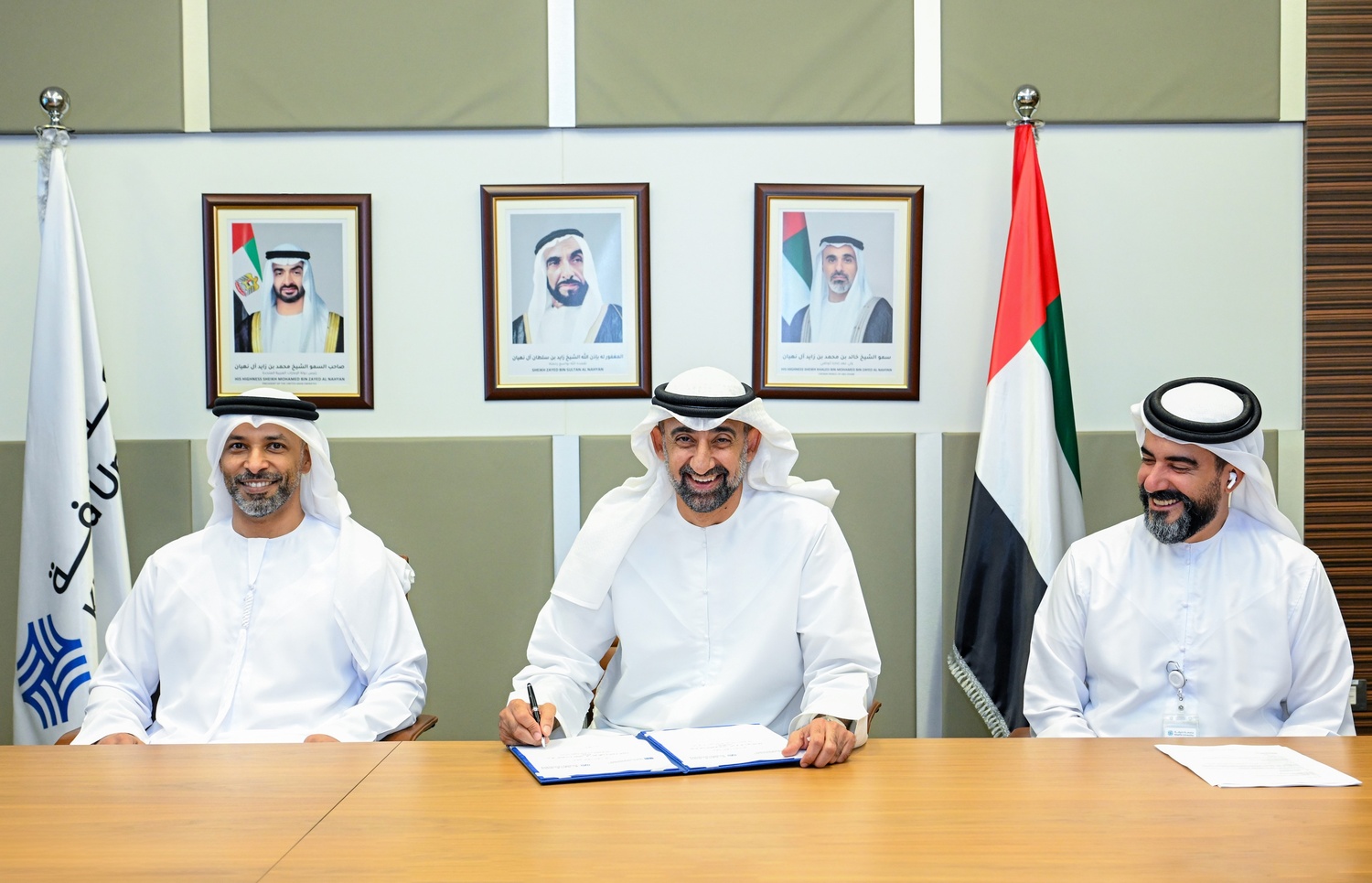
His Excellency Homaid Abdulla Al Shimmari, Vice-Chairman of the Board of Trustees of Khalifa University, and Manju Gunawardana, CEO-Research and Innovation, LOLC Group, signed the agreement. His Excellency Professor Ebrahim Al Hajri, President, Khalifa University and Ishara Nanayakkara, Chairman, LOLC attended the ceremony


The joint production of graphene in commercial quantities and development of advanced materials manufacturing marks this phase of the partnership as INTRATOMICS™ and LOLC Advanced Technologies Australia consolidate their roles in this agreement following the earlier MoU signed in August 2023.


The partnership entails the launch of a state-of-the-art, smart, and cost-effective production facility in Abu Dhabi; the first of its kind in the Middle East. This facility is set to expand and meet regional and global demands for high quality graphene related materials. By producing and developing advanced materials and additives, including Graphene Oxide, Reduced Graphene Oxide, Graphene, and Graphite derivatives, for precision applications, this will contribute to the field of sustainable materials further enabling the diversification of the UAE’s economy.


His Excellency Al Shimmari said: “INTRATOMICS’s™ partnership with LOLC Advanced Technologies is a testament to Khalifa University’s consistent commitment to driving innovation and advancing the development of cutting-edge materials. By leveraging our combined expertise, this joint initiative will enable us to develop advanced materials using graphene and related products, ultimately supporting the UAE’s transition towards a more sustainable and diversified economy.”


Manju Gunawardana said: “Partnering with INTRATOMICS™ Abu Dhabi, is a catalyst in LOLC Advanced Technologies Australia’s journey towards bringing graphene and 2D nanomaterials to the commercial forefront. Most graphene-related research outcomes are concentrated towards academic results, and this partnership aims to bring such research towards commercial-scale industrial application development.”


By developing advanced materials, including Graphene Oxide, Reduced Graphene Oxide, Graphene, and Graphite, for precision applications, RIC2D and LOLC Advanced Technologies aim to contribute to the field of sustainable materials further enabling the diversification of the UAE’s economy.


LOLC Advanced Technologies is currently engaged in the manufacturing and distribution of high-quality Graphene products for precision application developments.


LOLC Group, the parent company of LOLC Advanced Technologies, has operations in 22 countries, and a few of its entities engaged in digital technology and innovation are also incorporated in the UAE. 


Clarence Michael
English Editor – Specialist
8 Aug 2024

Zayed Military University, Khalifa University cooperate to enhance education and research

Zayed Military University (ZMU) and Khalifa University of Science and Technology are collaborating to expand Khalifa University’s educational offerings to a new setting within ZMU.


This is a significant step towards enhancing education and research in the UAE. The collaboration will begin with the offering of a ‘Bachelor of Computer Science’ programme starting in January 2025, following approval from the Commission for Academic Accreditation (CAA).


The programme will be taught at the well-equipped, state-of-the-art facilities of the ZMU campus, by Khalifa University’s world-class faculty. The programme will be available to qualifying UAE national applicants who are ready to commit to a military career.


The admission requirements for the Computer Science programme at ZMU are identical to those of Khalifa University. These include specific high school requirements and EmSAT scores in English, Math, and either Computer Science or Physics. Additionally, ZMU students will undergo a supplementary review process, which includes a physical health screening and a face-to-face interview.


The student-to-faculty ratio will be maintained at a low ratio, ensuring a minimal class size designed to promote a high-quality and personalised educational experience. The first group of students will comprise approximately 60 cadets, both male and female, who will commence their university studies in January 2025.


Upon successful completion, students will receive their degree from Khalifa University. Major General Mike Hindmarsh, Commandant, Zayed Military University stated: “This collaboration is a testament of our unwavering commitment to provide the highest quality education and training to our cadets. By integrating Khalifa University’s cutting-edge curriculum into our academic offerings, we are enhancing the educational experience for our cadets and preparing the future leaders of the UAE military to excel both academically and professionally.”


Prof. Ebrahim Al Hajri, President, Khalifa University said: “We are delighted to collaborate with Zayed Military University on this significant milestone in our academic endeavours to expand access to high-quality education and research opportunities. By offering Khalifa University’s Bachelor of Computer Science programme at ZMU, we are equipping the next generation of Emirati leaders with knowledge and the necessary skills to address evolving challenges of the 21st century. The programme seamlessly integrates our faculty’s research and enterprise prowess and cutting-edge innovations, ensuring a robust and relevant educational experience. As we jointly contribute to building a knowledge-based economy, it also aligns with the UAE’s strategic priorities of nurturing local tech talent and positioning the country as a hub of digital excellence on the global stage.”


This collaboration also involves other academic partners that will be announced in due course upon final agreements. ZMU plans to offer several bachelor’s degrees through its three academic partners, with the full programme roll-out expected by 2027. This strategic collaboration signifies a new era of academic excellence and is aimed at preparing a new generation of highly qualified leaders in various fields. All programmes will be delivered at ZMU campus.


Students at ZMU will receive numerous benefits, including a monthly stipend, accommodations and meals, transportation, textbooks, and a laptop. Students also benefit from access to comprehensive medical services, personalised advising and counseling, learning centres, and peer and faculty-led tutoring. These benefits provide a supportive learning environment, allowing students to focus on their studies and achieve their academic goals. Additionally, students can participate in a range of sports, competitions, and student club activities.

The collaboration will significantly further enhance the provision of high quality of education and research in the UAE, reinforcing the standing of ZMU and Khalifa University as leading educational institutions.


Khalifa University and Abu Dhabi Investment Office to develop largest student accommodation project in GCC

Abu Dhabi Investment Office (ADIO), in collaboration with Khalifa University of Science and Technology (Khalifa University), has awarded KUnnected Living, a multinational consortium led by Plenary Group, BESIX Group and Mazrui International, a project to develop world-class student accommodation facilities in Abu Dhabi. The project has now successfully reached commercial close.


The development is the largest student accommodation project in the GCC be developed under a public-private partnership (PPP) model, and includes a 23-year concession to design, build, finance and maintain 3,260 student rooms and communal facilities located across Khalifa University’s Main Campus and its Sas Al Nakhl (SAN) Campus.


A signing ceremony took place at Abu Dhabi Department of Economic Development (ADDED) to mark the commencement of the PPP concession period and the on-site construction activities.


The student accommodation project is being implemented through Abu Dhabi’s proven and successful Public Private Partnership Programme, which seeks to expand the role of the private sector in delivering major public sector infrastructure and services. ADIO is the central Abu Dhabi Government authority responsible for the facilitation, development and procurement of all infrastructure projects delivered through the PPP framework.


The project underpins Khalifa University’s commitment to provide world-class accommodation solutions that promote a vibrant on-campus student living experience, alongside a rich and inclusive social environment, for local and international students alike. Designed to meet international best practices, the new facilities will offer technology-enabled ensuite rooms for undergraduates and ensuite studios for post-graduate students, as well as expansive communal spaces that include support services, central study areas, fitness studios, a gym, and commercial and retail areas.


The new student accommodation facilities form a key part of Khalifa University’s 10-year strategic growth plan to enhance and modernise its teaching, research and living offerings. The research, enterprise and innovation-oriented university remains top ranked in the UAE and is placed 202nd worldwide in the QS World University Rankings 2024.


The PPP project is set to boost Abu Dhabi’s economy through the attraction of foreign direct investment, and will support of local suppliers and manufacturers by drawing local content and products from the national supply chain for the purposes of development and operation.


Plenary, one of the key partners in the KUnnected Living consortium, is an independent long-term investor, developer and manager of public infrastructure that specialises in PPPs and has recently been awarded a US$3.3 billion investment project for La Trobe University in Australia. BESIX Group is a major Belgian-French construction and property developer, with PPP concession experience in the education sector that has been operating in the region for 50 years. Mazrui International is a privately held diversified holding company that operates across numerous industries and asset classes.


Yaser Al Nuaimi, Acting Head – Infrastructure Partnerships at ADIO, said: “In Abu Dhabi, we are committed to ensuring that the private sector can play a significant role in strategic infrastructure projects that will create impact and value across the emirate. The Khalifa University accommodation project is a leading example of this: it demonstrates efficient PPP delivery through an effective commercial partnership that supports the development of premier facilities for students choosing to pursue their studies and research in our top-ranked educational facilities.”


Dr Ebrahim Al Hajri, President of Khalifa University, said: “We are delighted to collaborate with the Abu Dhabi Investment Office to award the student accommodation public-private partnership contract to the consortium comprising BESIX, Plenary Group, and Mazrui International. This initiative is part of our strategy to provide improved campus facilities and accommodation for an enhanced student living experience, and it seeks to enhance our reputation as one of the leading universities in the region with high-quality infrastructure megaprojects in the education sector.”


David Lamming, CEO at Plenary Group, said: “The KUnnected Living consortium is honoured to be selected to deliver the largest on-campus student accommodation developments in the GCC region. We commend the Abu Dhabi Government on its impressive, continued programme of infrastructure development and look forward to working in partnership with ADIO and Khalifa University of Science and Technology to deliver this world-class integrated precinct.”


All PPP tenders in Abu Dhabi follow a competitive, transparent and efficient evaluation process in accordance with Abu Dhabi’s PPP Law, and ADIO’s Partnership Projects Guidebook and Environmental, Social and Governance (ESG) Policy.

Dynamic Defense Enhances Vehicular Network Security

A new approach, enhanced by deep learning, represents a significant leap in securing vehicular networks


Vehicles today are evolving into more than just modes of transport: they are becoming integral components of a vast, dynamic network. As vehicles become more connected and autonomous, they communicate with each other through vehicular ad hoc networks, forming the backbone of the Internet of Vehicles. However, with this interconnectedness come significant security challenges.


A team of researchers from Khalifa University says traditional static security measures typically focus on creating robust static defense strategies aimed at providing heightened security against unauthorized access and malicious attacks. They believe these defense mechanisms could be complemented by a dynamic security approach known as Moving Target Defense (MTD), which can adapt to new and emerging cybersecurity threats.


Esraa Ghourab, Dr. Shimaa Naser, Prof. Sami Muhaidat, Prof. Mahmoud Al-Qutayri, Prof. Ernesto Damiani and Dr. Paschalis Sofotasios proposed an adaptive defense strategy that leverages spatiotemporal diversification to enhance security in cooperative vehicular networks. This involves selecting relay nodes dynamically and adjusting the percentage of fake data injected over time, creating a constantly shifting target for potential attackers. They published their results in Vehicular Communications, a top 1% journal.


Vehicular networks are highly dynamic and delay-sensitive, making them particularly difficult to secure. Traditional static security solutions, which work well in more stable environments, struggle to keep up with the changing environments or emerging threats. As a result, attackers can exploit these vulnerabilities, compromising the security and reliability of vehicle-to-vehicle communications.


The MTD paradigm presents a promising complementary security solution for vehicular networks, which are increasingly vulnerable to new cyber-attacks due to their connectivity and critical nature. Unlike static defenses, MTD proactively changes the network configurations continuously, creating uncertainty and unpredictability for attackers. By altering system settings such as IP addresses and relay nodes and injecting fake data, MTD significantly complicates the execution of successful attacks.


Through extensive simulation experiments, the team demonstrated that their approach significantly enhances the system’s security, offering a robust solution for securing cooperative vehicular networks. By continuously adapting to changing network conditions, the proposed framework provides a higher level of defense against eavesdropping attacks without compromising data transmission efficiency.


The team’s findings lay the groundwork for new research and development in vehicular network security. Future work will address the challenges of high network mobility and explore more complex models in real-world scenarios. As vehicles become more connected and autonomous, ensuring their security will be crucial to the success and safety of intelligent transportation systems.


Jade Sterling
Science Writer
29 July 2024

14-Member Khalifa University Team Wins Second Place Globally at RoboCup 2024 Challenge in Netherlands

Khalifa University Robotics Athletes ‘KURA’ Team Competes in RoboCup with 300 Teams from 45 Countries


Khalifa University of Science and Technology today announced a 14-member Khalifa University Robotics Athletes (KURA) team has won second place globally in the RoboCup Soccer category, Kid-Size Humanoid league, at the RoboCup 2024 challenge held in Eindhoven, the Netherlands.


With the KURA robot, the multidisciplinary team competed at RoboCup, which included 300 teams from 45 countries across 17 competitions in all five leagues. KURA’s 2nd place achievement came in Khalifa University’s first-ever participation at RoboCup, the premier championship for robotics, founded with the aim of sharing knowledge and accelerating developments in robotics, was organized by the Eindhoven University of Technology, in collaboration with the non-profit foundation Promotech2050, which aims to promote robotics to a wide audience.


Dr. Hamad Karki, Associate Professor, Mechanical and Nuclear Engineering, and Principal Investigator of the KURA project, said: “Achieving second place in an international robotics competition in Europe is another strong demonstration of Khalifa University’s expertise in this advanced technology field.  This is especially relevant now as Khalifa University is preparing to host and organize the 36th edition of the IEEE/RSJ International Conference on Intelligent Robots and Systems (IROS 2024), in Abu Dhabi in October this year. Congratulations to the team that built the KURA Humanoid Robot with special capabilities to achieve excellent results. Their team spirit, technical preparation level, and the ability to apply theoretical knowledge to hands-on projects are all truly commendable.”


With faculty and students from Mechanical and Nuclear Engineering, Computer Science, Aerospace, Electrical, as well as Computer Engineering, the team was advised by Dr. Hamad Karki, Associate Professor, Dr. Giulia De Masi, Program Manager, Visiting Researchers and Dr. Azer Babaev, as Technical Advisor.


Khalifa University’s team participated at the RoboCup Kid Size League and demonstrated its skills with the KURA Robot, equipped with a camera to identify the ball, goal post, and other players. With 20 servo-motors and pressure sensors on the feet to regulate ball kicking, it also incorporated AI on the edge to make decisions for fine movements. A dedicated simulator helped in testing the control algorithms in advance before taking the robot to the pitch. The research focus of the KURA robot is mechatronics design, control and multi-agent cooperation at plan and perception levels.


In the RoboCup Kid Size League, teams of five fully autonomous robots play soccer with a FIFA size 1 soccer ball. This league showcased the most spectacular football, featuring teams of table-high football robots engaged in a five-on-five game, autonomously controlling the field without any human input. Teams designed their own hardware but all sensors had to be on-board and there is a limit on the size and weight of the robots.


Using the sensors, the robots played strategically and shared their position and other data with each other. The driving and shooting capabilities of the robots made the RoboCup competitions attractive to spectators from an entertainment and technology perspective. A human referee’s instructions were relayed to the players via WiFi.


The categories for RoboCup 2024 included autonomous soccer robots competing against each other, home robots assisting with daily tasks, rescue robots detecting victims in disaster situations, industrial robots, and junior competitions where approximately 1,000 young participants competed with their self-built and programmed robots.


Clarence Michael
English Editor – Specialist
25 July 2024