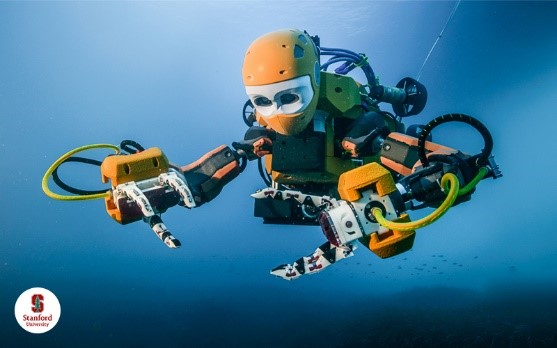
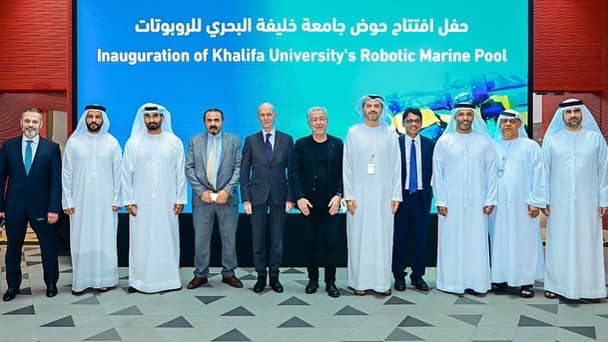
Khalifa University inaugurates the region’s first-ever advanced lab for Marine Studies and Research
Khalifa University Hosts IROS 2024, Featuring 13 Forums Aligned with UN SDGs
Dedicated Forums and Workshops to Focus on Critical Role of Robotics in Achieving Sustainability
Khalifa University of Science and Technology today announced dedicated forums and workshops focusing on the critical role of robotics in achieving the United Nations Sustainable Development Goals (SDGs) will be part of the 36th edition of the IEEE/RSJ International Conference on Intelligent Robots and Systems (IROS 2024) that is themed ‘Robotics for Sustainable Development’.
IROS 2024 comes to the Middle East and North in Africa (MENA) region for the first time and will be held from 14-18 October 2024 at the Abu Dhabi National Exhibition Center (ADNEC). The event will bring together leading researchers, academics, industry professionals, and corporate giants from around the globe to explore the latest advancements in robotics and their impact on sustainability. It will focus on leveraging robotics to address pressing global challenges, including ocean conservation, climate change mitigation, and healthcare accessibility.
Dr. Jorge Dias, General Chair, IROS 2024 and Director, Khalifa University-Center for Autonomous Robotic Systems, said: “Khalifa University is delighted to organize the IROS 2024 in Abu Dhabi to highlight the crucial role of robotics in achieving a sustainable future, in line with its theme. Driving progress towards the UN SDGs with the next generation of sustainable robotics, IROS 2024 will facilitate in-depth discussions, knowledge sharing, and collaboration on critical topics. This landmark event will showcase the transformative power of robotics through several dedicated forums and workshops, targeting different sectors to provide a unique platform for collaboration and innovation.”
A forum on ‘Marine Robotics in Ocean Decade Initiative for Sustainable Development’ will bring together representatives from industry, government, and academia to discuss opportunities and new collaborations for utilizing robots and advanced engineering solutions to address ocean sustainability challenges. A collaboration between IEEE- Oceanic Engineering Society and IEEE- Robotics and Automation Society, this forum will explore the use of marine robotics for ocean monitoring, ecosystem preservation, and early warning systems for environmental disasters. Reversing the decline of the state of the ocean system and finding new opportunities for sustainable development of the marine ecosystem will also be discussed.
The various ways robotics and AI can contribute to sustainable development will be addressed in the forum on ‘Robots for Sustainability and Sustainable Robots’ which will include the development of sustainable robots and examine how robots can be designed and deployed to minimize their environmental impact and promote responsible resource management.
Promoting sustainability in the medical sector will be a forum on ‘Sustainable Medical and Surgical Robotics’ focusing on the potential of low-cost medical and surgical robotics to improve healthcare accessibility and affordability. This forum will also cover the development of surgical robotics to improve healthcare outcomes for all, particularly for communities in need. The forum committee has a diverse group of experts including Dr. Paolo Fiorini, Needleye Robotics, Dr. Kinda Khalaf, Khalifa University, and Dr. Pietro Valdastri, University of Leeds, who will discuss the latest innovations and challenges in developing sustainable solutions for medical robotics and the One Health approach.
With its focus on the UN Sustainable Development Goals, IROS 2024 presents several opportunities to engage with cutting-edge advancements in robotics and their applications for sustainable development. Providing a dynamic platform for collaboration among leading researchers, industry experts, and innovators, IROS has specialized forums and workshops that address critical global issues such as marine conservation, climate change, and healthcare accessibility, highlighting the transformative potential of robotics for a more sustainable future.
The list of forums during IROS 2024 is as follows:
- Robots for Sustainability and Sustainable Robots
- Europe Regulates Artificial Intelligence: The Challenge for Robotics
- Government Forum: Funding for Robotics Research
- Robotics in Africa Forum
- Robotics & AI in the UAE: Research Innovation and Entrepreneurship
- Human-Avatars Symbiosis: Can you imagine a future society where you can remotely control multiple avatars?
- Empowering Diverse Voices in Robotics
- Sustainable Medical and Surgical Robotics
- Moonshot R&D Program Goal 3 Forum. Envisioning a Future of
- Human-Robot Co-living: Potential for Robotics to Transform Human Lives
- Marine Robotics in Ocean Decade Initiative for Sustainable Development
- The Future of Work: AI-Enhanced Robotics and Human Interaction Research in M3S
- Industrial Opportunities and Socio-Economic Impact of Medical Robotics
- Robots for a Better Tomorrow: Wellbeing Through Advanced Technology
More information at https://iros2024-abudhabi.org/
Hosting of IROS 2024 Reflects ‘Khalifa University’s Willingness to Contribute to UAE’s Strategic Objectives on AI’
Khalifa University President Welcomes Participants and Delegates to Lead Knowledge Exchange in Robotics and AI through Nine Tutorial Sessions and 31 Technical Workshops
Hosting the 36th edition of the IEEE/RSJ International Conference on Intelligent Robots and Systems (IROS) in collaboration with stakeholders is in line with Khalifa University’s mandate and reflects a willingness to contribute to the UAE Artificial Intelligence Strategy 2031, said His Excellency Professor Ebrahim Al Hajri, President, Khalifa University of Science and Technology.
Welcoming the delegates and participants of IROS 2024 that opened on 14 October at the Abu Dhabi National Exhibition Center (ADNEC), His Excellency Professor Al Hajri commended that stakeholders in the UAE, the global scientific community, and the researchers and academics in the region have played a critical role in bringing an international conference and exhibition of this stature to the Abu Dhabi. The event themed ‘Robotics for Sustainable Development’, runs up to 18 October 2024.
His Excellency Professor Al Hajri said: “This is a proud moment for the UAE and for Khalifa University as we host IROS 2024 in Abu Dhabi. Through such global events, Khalifa University will help facilitate collaboration on cutting-edge research, and we believe delegates and participants will explore opportunities for growth within MENA region, while actively contributing to the global innovation ecosystem in robotics and artificial intelligence.”
On Monday 14 October, IROS 2024 witnessed nine tutorial sessions and 31 technical workshops as researchers, scientists and academics from universities, research institutions and leading corporates across the world interacted on various aspects of robotics technologies.
Among the global-level competitions and challenges, the euROBIN Manipulation, the F1 Tenth Autonomous Racing Competition, and the IEEE/RAS Quadruped Robot Challenge (QRC), began on 14 October, with the rest of the challenges spread over all the days from 15 – 16 October. The competitions are designed to inspire creativity, focusing on robots’ physical or athletic intelligence, remote robot navigation, robot manipulation, underwater robotics, and perception and sensing.
Among the 13 forums, the ‘Robots for Sustainability and Sustainable Robots’ forum is scheduled for 15 October, while the rest are scheduled from 16-18 October with four forums each, every day.
Exhibits of the latest technologies and products demonstrating the next generation of sustainable robotics evinced keen interest at IROS 2024. Poster sessions, keynotes, panel discussions, and networking events are also lined up for the remaining days at this major international conference.
Khalifa University Students Gain Hands-On Experience in Nuclear Energy Safety and Operations at FNC Technology, South Korea
Eight-Week Internship Equips Students with Essential Knowledge for Managing the UAE’s Peaceful Nuclear Energy Infrastructure
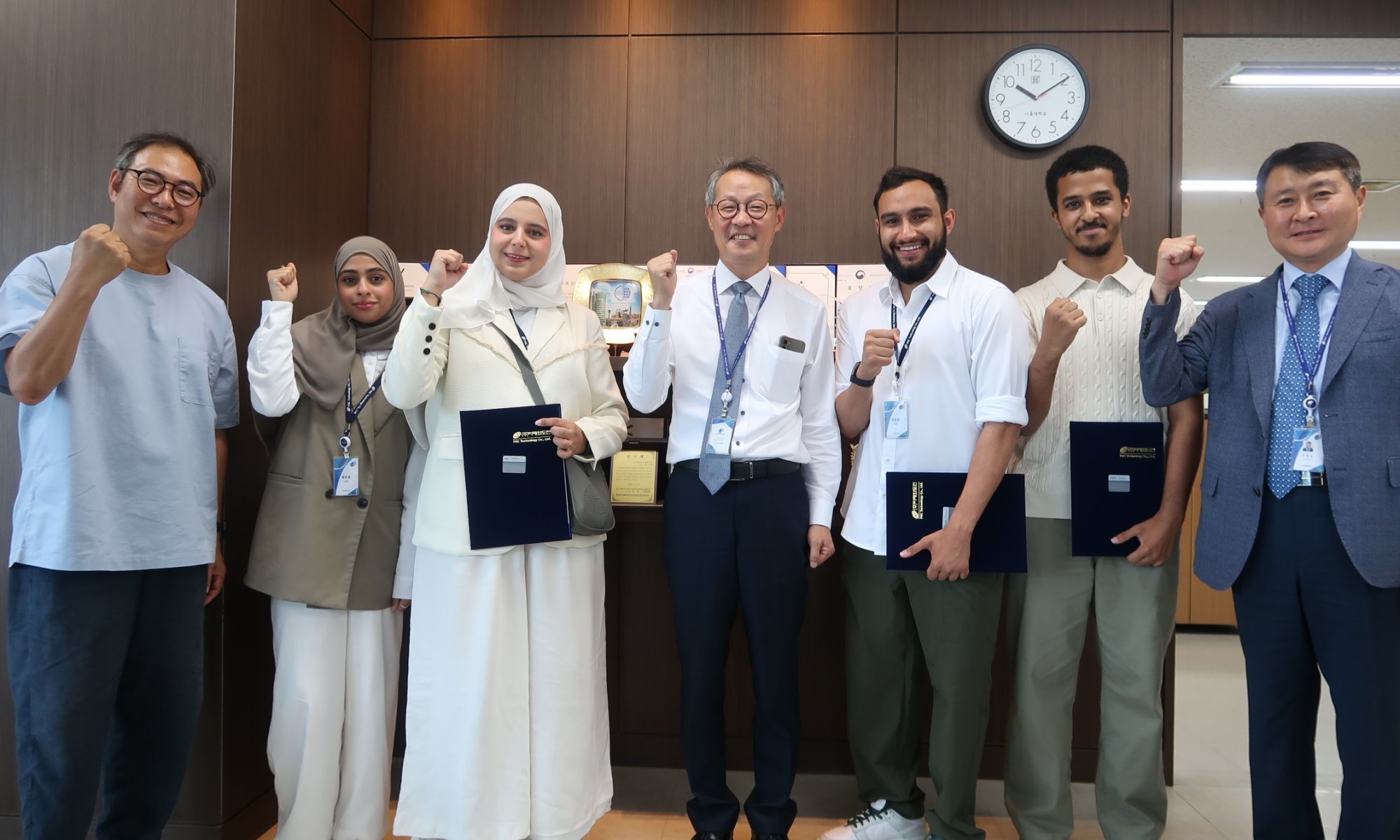
Four Khalifa University Chemical Engineering students gained in-depth insights into the operations, radiation safety, and hands-on training at the South Korea’s FNC Technology, as part of a holistic eight-week internship program, to equip themselves with skillsets essential for managing the UAE’s peaceful nuclear energy infrastructure.
Ahmed Alhosani, Alyazia Alkalbani, Amal Alhashmi, and Jaafer Aljefri successfully completed their projects supported by their South Korean mentors during the internship program. Their projects included ‘An overview of periodic safety review work for Nuclear Power Plant (NPP)’, ‘Acquiring general knowledge related to safety performance indicators in the periodic safety review (PSR)’, ‘Literature survey on Rankine cycle analysis tool for the optimal design on Nuclear-Renewable Hybrid Energy System. (NRHES)’, and ‘Understanding the degradation mechanism of materials and develop its mitigation methodology at NPPs’.
Dr. Yacine Addad, Deputy Director, Emirates Nuclear Technology Center and Associate Professor, Mechanical and Nuclear Engineering, Khalifa University, said: “The knowledge and insights our students have gained from this internship at FNC Technology and other organizations will be invaluable to their academic pursuits, research endeavors, and future career trajectories. Programs like this, focused on comprehensive student development, underscore Khalifa University’s commitment to fostering international collaborations in the fields of clean energy and sustainability, ultimately benefiting both our regional and global communities. As one of the earliest universities in the region to have introduced the Nuclear Engineering program, we take great pride in establishing partnerships with global energy industry stakeholders to ensure adequate human capital is accessible with the UAE at all times to manage the nuclear infrastructure.”
The internship program also included an extensive tour of the FNC Institute, Korean history and cultural experience, heritage, one-on-one meetings with mentors, collaborating with team members on projects, networking events, and visits to some of the leading companies and institutions that are pioneering energy technologies.
Some of the entities that the Khalifa University students visited included the Korea Atomic Energy Research Institute (KAERI), Geological Museum, Korean Institute of Fusion Energy (KFE), Korea Institute of Energy Research (KIER) in Daejon, BHI Co in Haman, Doosan Enerbility in Changwon, and the Korea Institute of Machinery and Materials (KIMM) in Busan.
Students also learnt about the emergency core cooling systems (ECCS) sump trainer test loop, downstream test loop, and liquid metal test apparatus, as well as the explanation of code and standards on review tasks, understanding of the degradation mechanism of materials at NPP, review of Rankine cycle and NRHES and a self-study on SF8 in IAEA SSG-25 – a code that describes how IAEA member countries can safely and securely manage high-risk radioactive sources. A literature survey on the degradation mechanism and mitigation methodology was also part of the project tasks during the internship program.
Clarence Michael
English Editor – Specialist
2 Oct 2024
11 Khalifa University Students Successfully Complete JICE Internship on Clean Technology in Japan
10-Week Program Covered Renewable-Energy Projects and Immersive Cultural Experience
Clean technology, renewable energy projects, corporate site visits, and Japanese cultural activities were the main focus of the 10-week Japan International Collaboration Center (JICE) summer internship program for 11 Khalifa University students, organized by the Japan’s Ministry of Economy, Trade and Industry (METI), in a collaboration with Khalifa University.
The students from Mechanical, Aerospace, Chemical Engineering, and Computer Science programs visited Mikawa Genki Monogatari, Chiyoda Corporation and Mitsubishi Heavy Industries. They gained hands-on experiences in clean technology and aerospace which they showcased during on-campus presentation sessions organized by the Khalifa University’s Career Office upon returning to the UAE.
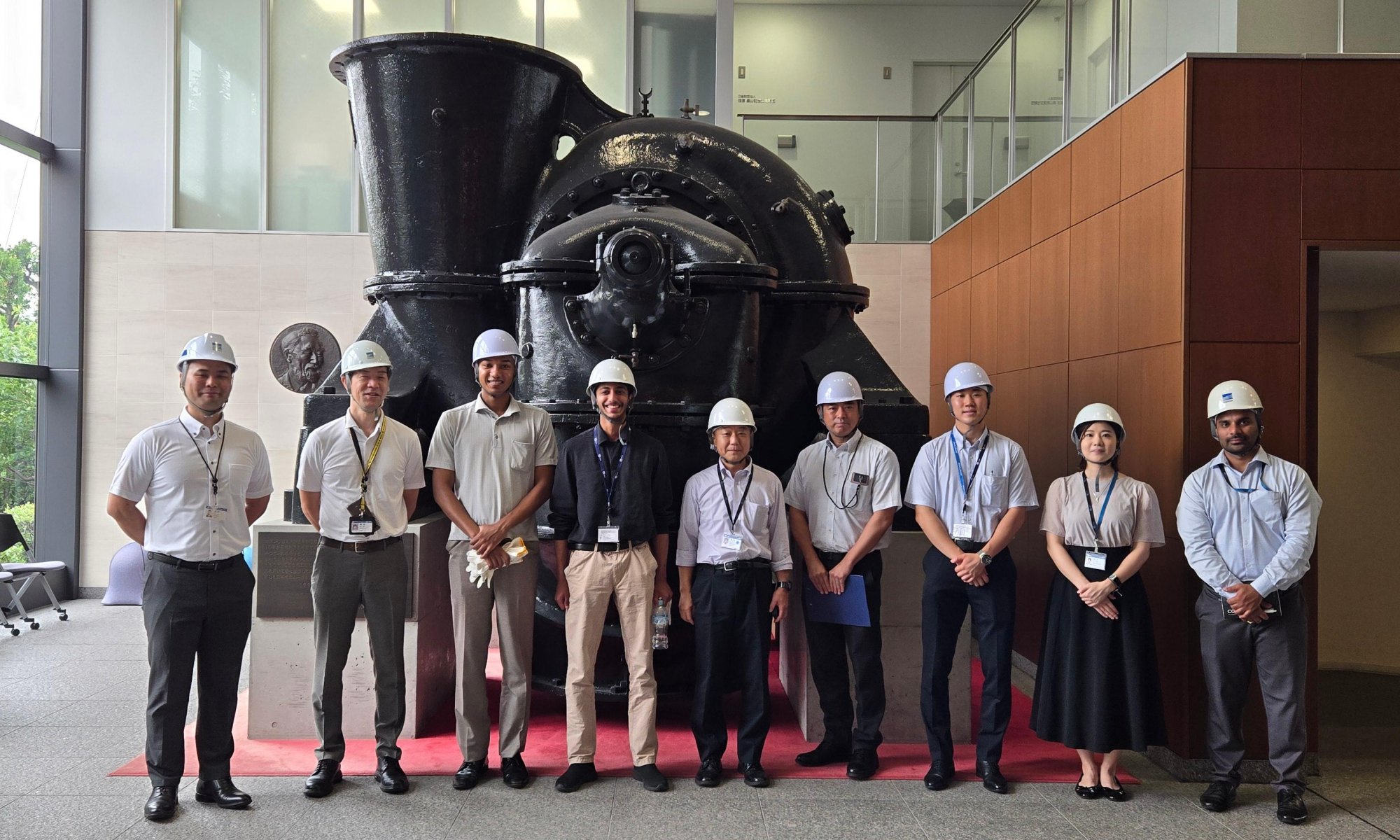
H.E. Shihab Al Faheem, UAE ambassador to Japan, interacted with the Khalifa University students during their visit to the UAE Embassy in Japan.
The faculty advisors for the internship program are Dr. Roberto Sabatini, Aerospace Engineering, Dr. Nahla Al Amoodi, Chemical Engineering, Dr. Andreas Henschel and Dr. Sajid Javed, Computer Science, and Dr. Afshin Goharzadeh, Mechanical Engineering.
Internship participants included Ahmed Saleh Ahmed Mohamed Basahel, Abrar Khalifa Rashed Aldowaij Alfalasi, Fatima Abdulrahman Hussein Mussa Alblooshi, Noof Majid Hassan Abdulqader Alshehhi, Buthaina Ali Abdelrahim Mohamed Almulla, Abdulla Yousef Ahmed Ebrahim Al-Ali, Mariam Abdulrahman Hareb Mohammed Alshamsi, Hyatt Mohamed Abdelrahim Abdelrazaq Alfahim, Shaikha Jasim Khalfan Malalla Alhammadi, Hedaya Adel Alyahmadi, and Maryam Mohamed Abdulla Aldowaib Alzeyoudi.
The students attended 10 sessions during an orientation which focused on Japanese language, business etiquette, reporting and presentation skills as part of the preliminary week which also featured visits to heritage sites. The internship also included a visit to a Life Safety Learning Center, which offers experiential training in disaster preparedness through activities like earthquake simulations and firefighting exercises.
As part of a three-day wrap-up session, students attended two sessions to review and report the important developments during their internships with Japanese companies and shared their experiences and understanding of Japanese corporate culture.
Dr. Roberto Sabatini said: “Aerospace Engineering students completed an enriching internship experience at Mikawa Genki Monogatari in Japan, focusing on the rapidly evolving field of drone technology. This comprehensive program provided students with hands-on training in Remotely Piloted Aircraft Systems (RPAS), where they actively participated in technical activities, exhibitions, and various events related to RPAS, significantly enhanced their knowledge.”
The cultural exchange, practical skills, professional development, and Japanese language skills helped aerospace engineering students in advancing their technical capabilities and acquiring skills in global aerospace and drone industries.
Alisha Roy
Science Writer
2 Oct 2024
Khalifa University Scientists First from UAE to Deploy Special Instrument in Antarctica to Conduct Research on Ice
ENGEOS Researchers Strategically Install SIMBA in April, before Formation of Sea Ice Starts, to Gain Insights on Ocean and Atmosphere Characteristics
Uncover insights on Antarctic ice and sea level rise—listen now!
Khalifa University of Science and Technology today announced scientists and researchers from its Environmental and Geophysical Sciences (ENGEOS) laboratory and the Earth Science department have deployed Snow Ice Mass Balance (SIMBA), a special instrument to study ice in Antarctica. This is the first time scientists from any institution in the UAE have deployed operational instruments on the icy southern continent.
The project led by Khalifa University’s Dr. Diana Francis, Head, ENGEOS lab, and Assistant Professor, Earth Sciences, is supported by five researchers. Two scientists from the Australian Antarctic Division are also working with the Khalifa University team.
Prof. Bayan Sharif, Provost, Khalifa University, said: “We are honored to be the first academic institution from the UAE to deploy this instrument to study sea ice formation and melting, aiding in better understanding the risk of rising sea levels. We are proud of this achievement and remain dedicated to pioneering innovation and scientific exploration, particularly in climate change. This initiative started in 2020, has successfully attracted international collaborations with those countries already present in Antarctica.”
Sea ice in the Southern Ocean around Antarctica starts to form every year around May and reaches its maximum extent and concentration in July, in the middle of the austral winter. SIMBA is deployed strategically in April before the formation of sea ice starts in order to gain insights on the ocean and atmosphere characteristics before this critical phase.
Dr. Diana Francis said: “Once the ice forms, it surrounds the instrument which continues to measure all the parameters in addition to the evolution with time of the sea ice thickness. When the melting season starts at the beginning of austral fall, once again the instrument is here to record the state of ice, water and atmosphere. This offers invaluable information about the ocean, ice and atmospheric conditions governing formation and melting of sea ice.”
Antarctic sea ice plays the role of a protective band around Antarctica against waves and the ocean forcing on the glaciers. It exerts buttressing effects, slowing down the flow of ice from the interior part of Antarctica (the ice sheet and the glaciers), which contribute to rise in sea levels. Knowing the processes at play in sea ice formation and melting is crucial for better understanding of the risk in the rise of sea levels due to Antarctic ice.
Over 99.5% of Antarctica is covered in ice, and the icy continent contains 90% of the freshwater ice on the planet. Antarctic ice plays a critical role in regulating the Earth’s climate by reflecting the sun’s heat, providing a habitat for microscopic plants that absorb carbon, controlling global sea levels and generating cold, salty water that helps drive global ocean currents.
Khalifa University Students Present Innovations at TAQA’s Youth Energy Forum in World Utilities Congress 2024
Two PhD researchers from the Advanced Power and Energy Center (APEC) and four senior Khalifa University students showcased their innovative energy solutions at TAQA Group’s pavilion during the World Utilities Congress 2024 in Abu Dhabi.
Rawdha AlKuwaiti and Ammar Ibrahim presented posters on cutting-edge solutions at TAQA Group’s Youth Energy Forum. AlKuwaiti’s research focused on developing new formulations to determine the optimal parameters within the PEMELz model, demonstrating its applicability in a microgrid. Her work illustrated how these advancements could be integrated into a larger system to optimize renewable energy use. Ibrahim’s research focused on the monotonic operation of battery energy storage systems to reduce their degradation and aging while mitigating the intermittency of renewable energy resources. His research plays a crucial role in enhancing grid stability and supporting the shift toward sustainable energy sources.
Hamda Alhameli, Hajer Altamimi, Noura Alyammahi, and Shaikha Alraeesi presented a senior design project, ‘Design of Solar Powered Green Parking’. This project focuses on transforming traditional parking spaces into energy hubs by designing a grid-connected PV system with battery storage for EV fast and slow charging. The project aligned with the objective of supporting renewable energy shift.
The senior students were delighted to see other projects similar to theirs, share ideas with industry professionals, and learn new approaches to enhance their work. In addition, they witnessed innovative demonstrations and also engaged in meaningful dialogue with officials from clean energy companies.
The World Utilities Congress brought together global energy leaders, policymakers, innovators, and industry professionals from across the power and water utilities value chain who also engaged in discussions about the role and pace of decarbonization.
Alisha Roy
Science Writer
27 Sept 2024
‘Robotics in Africa’ Forum at IROS 2024 to Highlight Africa’s Remarkable Progress in Robotics R&D
Forum to Issue Status Report on Robotics in Africa and Facilitate Networking and Discussions on Ongoing Projects and Research Outcomes
Khalifa University of Science and Technology today announced the 36th edition of the IEEE/RSJ International Conference on Intelligent Robots and Systems (IROS 2024) in Abu Dhabi will include the ‘Robotics in Africa’ Forum to highlight the continent’s remarkable progress, especially in research and innovation, and release a status report on the robotics sector in Africa.
Coming to the Middle East and North Africa (MENA) region for the first time, IROS is themed ‘Robotics for Sustainable Development’ and will be hosted from 14-18 October 2024 at the Abu Dhabi National Exhibition Center (ADNEC), gathering researchers, academics, leading corporate majors, and industry professionals from around the globe. The Robotics in Africa Forum, scheduled for 16 October 2024, will explore opportunities for robotics and Artificial Intelligence (AI) applications, and foster networking, while highlighting the impact of research and development in Africa. A total of 13 forums will be organized during IROS 2024.
Dr. Jorge Dias, General Chair, IROS 20204 and Director, Khalifa University Center for Autonomous Robotics Systems (KU-CARS), said: “IROS 2024 gathers participants from academia, government and industry stakeholders and the Robotics in Africa Forum will be a perfect platform for showcasing the state of robotics in the continent, as well as its cutting-edge research to practical industrial applications, education, and training. It will also offer robotics enthusiasts within Africa an opportunity to engage with the global robotics community. The status report on robotics in Africa will outline the major achievements of various segments within robotics and will seek to find more technology solutions to the challenges facing the sector.”
The agenda will include two keynote talks, poster presentations, as well as a panel discussion on the various aspects of robotics.
The speakers at the forum include Dr. Paul Amayo, Senior Lecturer and Principal Investigator in the African Robotics Unit at the University of Cape Town, Dr. David Vernon, technical mentor at the Carnegie Mellon University Africa-Industry Innovation Lab (IIL), Marwa A. ElDiwiny PhD researcher who also hosts the IEEE RAS Soft Robotics Podcast, Ndivhuwo Makondo, a Research Scientist in Machine Learning at IBM Research, South Africa Lab, and Chinwe Ekenna (University of Albany).
Chinwe Ekenna, University of Albany, Kenechukwu C. Mbanisi Olin College of Engineering, Simeon Adebola, University of California, Berkeley, and Addisu Taddese, Intrinsic. And the Steering Committee includes Ken Goldberg – UC. Berkeley, Amir Patel, University of Cape Town, and Aisha Walcott-Bryant, Google Research, are part of the Program Committee.
The event is sponsored by IEEE Robotics and Automation Society, Abu Dhabi Convention and Exhibition Bureau, the Robotics Society of Japan (RSJ), the Society of Instrument and Control Engineers (SICE), the New Technology Foundation, and the IEEE Industrial Electronics Society (IES).
More information at https://iros2024-abudhabi.org/
Safer Power Options on the Horizon for Medical Implants and Wearables
Biocompatible Supercapacitors to Transform Next-Gen Power Sources
Discover the future of implantable devices with biocompatible supercapacitors!—Listen now!
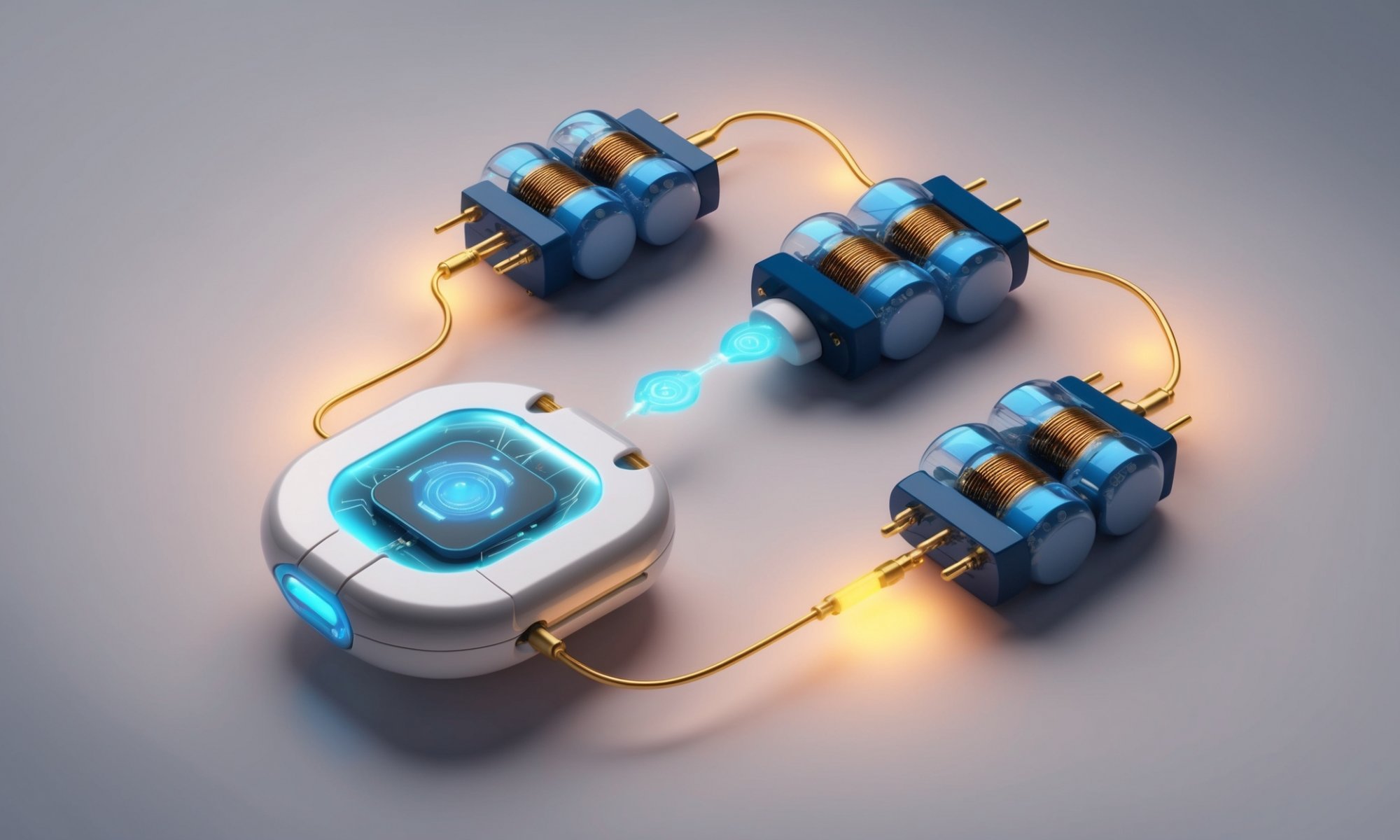
If you have ever had to replace a battery in a device, you know it can be a hassle. For many, this hassle becomes even more serious when that device is inside the body. Pacemakers, cochlear implants, and sensors are some of the medical devices that millions have come to rely on and these devices are powered by batteries that can be harmful and even require frequent replacement. A team of researchers at Khalifa University has comprehensively reviewed this challenge and found materials like activated carbon, graphene, and some of metal oxides, to make devices powered by energy storage systems, such as ‘biocompatible supercapacitors’(B-SCs), safer and more efficient.
H.E. Prof. Ebrahim Al Hajri, Professor of Practice, Mechanical and Nuclear Engineering, Dr. Amal Al Ghaferi, Associate Professor, and Research Scientists Dr. Nilesh R. Chodankar, Dr. Jang-Kyo Kim from Department of Mechanical and Nuclear Engineering, and Dr. Rohan B. Ambade, Aerospace Engineering, Khalifa University, published a review in a paper titled ‘Revolutionizing Implantable Technology: Biocompatible Supercapacitors as the Future of Power Sources’ in Advanced Functional Materials, a top 10% journal, in the field of Condensed Matter Physics. The team also includes Prof. Yun-Suk Huh, Inha University, South Korea; Prof. Young-Kyu Han, Dongguk University-Seoul, South Korea; and Dr. Pragati A. Shinde, National Institute for Materials Science, Japan.
Traditional lithium-ion batteries have long been the standard power source for not only implantable electronic medical devices — such as sensors, pacemakers, implantable cardioverter defibrillators, cochlear implants, and stimulators — but also in various wearables applications. When embedded in the body, electronic medical devices can help in treatments and diagnosis, and while they may be small, such devices contain various electronic components, such as integrated circuits, sensors, and power sources like batteries and biofuel cells, which can pose risks due to potential leakage of toxins. Another common drawback is the frequent battery or device replacements that can require surgery, increasing risks for patients and raising healthcare costs.
“Biocompatible supercapacitors can improve medical implants and wearables with safer long-lasting energy sources, reducing risks and improving patients’ quality of life.”
— Dr. Nilesh R. Chodankar, Research Scientist, Mechanical & Nuclear Engineering, Khalifa University.
Materials used in biocompatible supercapacitors, such as activated carbon and graphene improve the performance of supercapacitors and being ‘biocompatible’, they can safely interact with biological tissues. Additionally, supercapacitors have advantages even over rechargeable batteries, including high power, long lifespan, low internal resistance, affordability, non-toxicity, and low maintenance. When integrated with energy harvesting and conversion systems, supercapacitors that supply power for biomedical devices can deliver reliable energy over long periods to implantable devices which can be placed inside the body or worn on the skin.
Dr Nilesh R. Chodankar, said: “Recent studies have focused on the best electrode and electrolyte materials for wearable and portable devices. However, there is currently no review on biocompatible supercapacitors (B-SCs) for Implantable Electronic Medical Devices. It is essential to fill this gap to tackle existing challenges and this review will cover advancements in B-SC materials, design strategies, power requirements of various IEMD technologies, and the critical features needed for their energy storage systems.”
Alisha Roy
Science Writer
2 Oct 2024

Khalifa University Researchers Validate Potential Discoveries of Ancient Civilization at Saruq Al Hadid and Al Ain Archaeological Sites
Satellite Imagery, Ground Penetrating Radar Reveals Buried Structure, Aflaj Systems, Umm an-Nar tombs, and Ancient Buildings
Khalifa University of Science and Technology today announced researchers from the Environmental and Geophysical Sciences (ENGEOS) lab and the Earth Science department have detected the presence of a long, buried remains, which may resemble a wall or an ancient building, at the Saruq Al Hadid archeology site in Dubai, and signs of historic settlements in Al Ain, through advanced ground penetrating radar, demonstrating that their method can be used to spot potential archaeological sites buried under the sand, from space.
The method was developed during this first phase of the project led by Khalifa University’s Dr. Diana Francis, Head, ENGEOS lab, and Assistant Professor, Earth Sciences, applying machine learning algorithms to high-resolution satellite imagery, and advanced image processing techniques to detect and map buried archaeological features at the site. An archaeological excavation is still required to confirm the discoveries at Saruq Al Hadid, while collaboration with Dubai Culture has already been initiated to proceed with manual investigations at the site by archaeological missions.
The researchers have already applied their innovative method to investigate sites of archeological importance in Al Ain in collaboration with the Department of Culture and Tourism – Abu Dhabi, with this ongoing work leading to the discovery of several ancient water channels (Aflaj) and related irrigation systems, buried tombs of the Bronze Age Umm an-Nar culture, and other ancient buildings. The researchers are planning to apply this method to other areas in the UAE, including Umm Al Quwain.
His Excellency Professor Ebrahim Al Hajri, President, Khalifa University, said: “The validation of results at the archaeological sites in Abu Dhabi and Dubai strongly reflects Khalifa University’s emphasis on locally and globally-relevant research projects that positively impact the community. By developing an effective method to support exploration of areas for information on ancient civilization, our researchers have once again demonstrated their commitment to obtain suitable solutions through scientific innovation. We believe our achievement will immensely benefit local and global stakeholders, especially those involved in archaeology.”
Muna Faisal Al Gurg, CEO, Culture and Heritage Sector, Dubai Culture, highlighted the site’s rich archaeological value and its role in emphasizing the historical significance of Dubai and the region, saying: “Saruq Al Hadid is one of the most important and largest archaeological sites in the southeastern part of the Arabian Peninsula dating back to the Iron Age, and the discovery of significant findings during previous excavations has enhanced the site’s status and its scientific importance.” She commended the efforts of the team at Khalifa University of Science and Technology during the period of study which has resulted in the confirmation of the presence of buried structures at Saruq Al Hadid, representing a qualitative leap in the excavation processes witnessed by the site. “The results of the study will pave the way for more archaeological discoveries within the site, which will enrich scientific research related to the archaeology sector in Dubai and the UAE, and increase knowledge about the economic activity and lifestyles experienced by the area’s inhabiting civilizations during the Iron Age.”
“The ENGEOS Lab’s pioneering research at Saruq Al Hadid and Al Ain archaeological sites sets a benchmark for the development of remote sensing archaeology capabilities and automates and refines the process, so we can improve accuracy and minimize potential errors.”
— Dr. Diana Francis, Head of ENGEOS lab, Assistant Professor, Earth Sciences, KU
Dr. Diana Francis said: “Through the fusion of technology, research, and collaboration, Khalifa University continues to lead the way in fostering innovation and understanding in the field of environmental and geophysical sciences. The ENGEOS Lab’s work at Khalifa University exemplifies the institution’s commitment to pushing boundaries and contributing to the advancement of scientific knowledge. This pioneering research not only sets a benchmark for the development of remote sensing archaeology capabilities at a national and regional level but by automating and refining the process, we can improve accuracy and minimize potential errors before expanding the methodology to larger areas.”
One of the aims of the method, which used advanced satellite images, machine learning and radar sensors, was to be able to pinpoint specific regions within a vast area from which archaeologists may start their search, saving extensive time and resources for archaeologists by enabling targeted investigations based on satellite and machine learning predictions. Moreover, this groundbreaking approach conducted by the ENGEOS Lab holds other far-reaching implications, particularly in addressing the challenges of remote sensing in desert environments like the UAE, where classic satellite imagery can be compromised by the fact that archaeological sites get buried under the sand with time.
Looking ahead, the ENGEOS Lab has outlined two main objectives as they aim to apply and refine their method in similar desert environments to enhance the algorithm’s efficiency and provide additional evidence of its effectiveness. The team also intends to apply their approach to known sites, comparing geophysical data with the findings of professional archaeologists to further enhance the learning capabilities of the intelligent systems model.
Transforming Renewable Energy with Advanced Control Strategies for Hybrid Microgrids
New approach paves the way for more resilient and efficient microgrid operations, contributing to a more sustainable and stable energy future
As the world shifts towards using renewable energy sources (RESs), managing their inherent intermittency becomes crucial. This is particularly evident in hybrid microgrids that combine wind and solar power. A team of researchers from Khalifa University has developed a sophisticated control strategy that promises to enhance the stability and efficiency of these systems.
Dr. Muhammad Bakr Abdelghany, Prof. Ahmed Al-Durra and Prof. Hatem Zeineldin, with Prof. Fei Gao, University of Technology of Belfort-Montbéliard, France, created a novel approach that integrates hydrogen energy storage with advanced model predictive control. They published their results in IEEE Transactions on Industrial Informatics, a top 1% journal.
Hydrogen energy storage systems are central to this new strategy. Unlike traditional batteries, hydrogen storage offers high density and is suitable for long-duration storage, making it an ideal solution for balancing the fluctuating output of RESs. In this hybrid microgrid setup, hydrogen is produced when surplus energy is consumed when there is a deficit, ensuring a steady power supply.
The innovation lies in a dual-layer control architecture. One layer handles long-term operations, scheduling hydrogen production and consumption to meet daily energy demands. It also participates in the daily electricity market to maximize revenue and minimize operational costs. The other is focused on short-term operations, correcting deviations between forecasted and actual conditions in real-time. This layer optimizes power production and ensures smooth energy delivery to the grid based on a sophisticated control approach.
By coordinating these two layers, the system effectively balances long-term planning with real-time adjustments, addressing both economic and operational challenges.
To validate their approach, the research team conducted extensive numerical simulations and laboratory tests at the Energy Systems and Control Optimization (ESCO) Lab, Khalifa University. They demonstrated that their system effectively manages the hybrid microgrid, meeting energy demands while optimizing economic performance. They also saw a significant reduction in power fluctuations and fewer state switches for hydrogen devices compared to traditional control methods.
This innovative control strategy represents a significant step forward in managing hybrid microgrids. By integrating hydrogen energy storage with advanced predictive control, the system enhances the stability and efficiency of RESs. As the world transitions towards sustainable energy, such advancements are crucial for ensuring reliable and economically viable power systems.
Jade Sterling
Science Writer
25 Sep 2024