
How student research keeps the lights on in Dutch greenhouses

Extensive research by Dutch students who were trying to reduce climate control costs in greenhouses bore fruit when their findings were used by horticultural companies in the Netherlands trying to keep energy costs down.

In a massive greenhouse, home to one of the oldest and largest lily cultivators in the Netherlands, pink lights on the ceiling are trained on rows of green pots.

The lights gradually brighten and dim, mimicking the cycle of sunset and sunrise.

Experts say variable lighting has vastly improved the quality and yield of the pink and white flowers, and has also reduced energy usage compared to traditional high-pressure sodium lamps.

“Energy prices were so high and we made a decision to switch to LED lights when production was hit last year,” said Michel van Kester, sales manager at Van Schie, which grows more than three million pots of lilies and a million chrysanthemums annually, mostly for export.

“We were testing the LED option but the energy crisis sped up decisions.

“With the old lamps, it was either on or off. Now we can dim or increase it like the sun.

“There is no stress on the plants. It’s as if the plants like it, they say to us, ‘Let it always be natural like the sun.’”

This is only one example of how students have collaborated with companies to cut energy costs at horticultural companies.

University studies were rapidly put to use over the past year by companies hit by skyrocketing energy bills after Russia restricted gas supplies in response to western sanctions over its invasion of Ukraine.

Horticultural businesses in the Netherlands were forced to switch off lights in their greenhouses or delay planting. Supplies to overseas markets were affected when some growers shut down or cut production of crops including tomatoes, cucumbers and flowers.

Sense of urgency

The energy crisis was a wake-up call for the Dutch industry and has prompted renewed experimentation.

“The energy crisis is so big that nobody can solve it on their own,” said Raymond Hedges, horticulture manager at Inholland University of Applied Sciences, whose students were involved in the LED energy research.

“It is an example of how people need to work together as there are complex problems that you cannot solve yourself.

“You have to listen to each other, really listen and understand and only then you can move forward to work on complex problems.”

Across the country, several strategies to save energy pioneered by students at institutions such as Wageningen University and Research were enacted by agricultural companies.

These strategies included using LED lights that change colour, more robust insulation of greenhouses, and the use of additional screens and curtains.

Despite its relatively small size, the Netherlands is a powerhouse in vegetable, fruit and flower exports.

At its core is a decades-long collaboration between companies, universities and government.

This is put to the test daily at the World Horti Centre in Westland, the heart of the country’s horticultural production.

The centre is where on-site research conducted and classes take place, and it also brings together businesses, which have permanent booths.

Collaboration between the UAE and the Netherlands

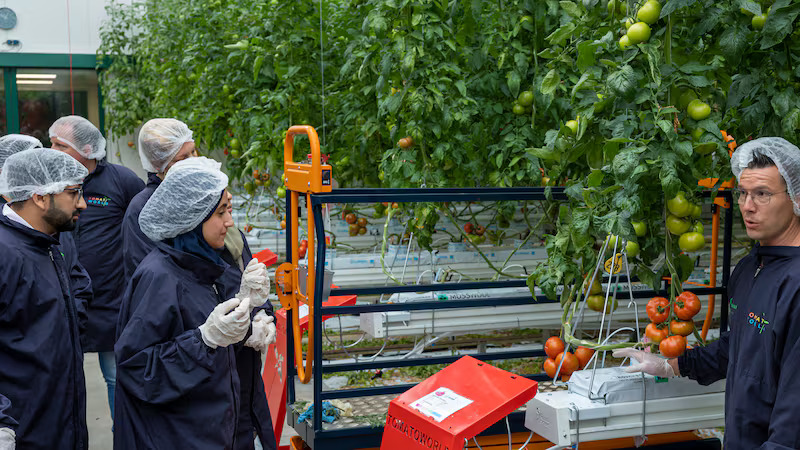
A team of UAE government officials and university professors recently visited horticultural centres in the Netherlands as part of an ongoing dialogue on educational co-operation.

The Emirates is keen to collaborate and learn from the recent challenges faced by the Dutch.

The meetings with diplomats, university heads and private companies encouraged joint projects in the lead-up to Cop28 that will be held in the UAE in November.

Lakmal Seneviratne, director of the Khalifa University Centre for Autonomous Robotic Systems in Abu Dhabi, hopes to work with Dutch universities to make agriculture more sustainable and profitable.

High temperatures in the UAE as well as limited arable land and natural water resources make growing food challenging.

Developing new technologies will allow researchers to produce food economically and with a low carbon footprint.

Khalifa University researchers are exploring robotic solutions with companies in the UAE.

“We are looking at the application of AI [artificial intelligence] and robotics for farming particularly for indoor farming – greenhouse and vertical farming,” said Mr Seneviratne, a professor of mechanical engineering.

“We can use robots to inspect soil in farms, use robots for precision targeting of pesticides and also harvesting and sample collection.

“Using robotics can make agriculture efficient and cost effective.”

Afra Al Doobi, an assistant project manager with the UAE’s Ministry of Climate Change and Environment, said close teamwork between different sectors in the Netherlands was a revelation.
UAE and Netherlands to focus on water and food security projects ahead of Cop28

Water security will be among key green initiatives taken up by the UAE and the Netherlands ahead of the Cop 28 climate summit in Dubai later this year.

Diplomats from both countries said the work will have a global impact.

Jamal Jama Al Musharakh, the UAE’s ambassador in the Netherlands and Gerard Steeghs, the incoming Dutch envoy, told The National about taking on challenges related to water, energy and food.

“When it comes to collaboration with the kingdom of the Netherlands, the focus on water is very important and the next is food security,” Mr Al Musharakh said in an interview at the UAE embassy in The Hague.

How you secure healthy crops is important
Jamal Jama Al Musharakh, UAE ambassador to the Netherlands

“The number three collaboration is helping countries in need to face the challenges of climate change.

“That is a very integral part of Cop28 which the UAE will host at the end of the year.

“The projects in the pipeline include a focus on water in particular.

“I can’t reveal much in terms of the what the outcome will be but we are very hopeful that such a collaboration will lead to something that will benefit greatly not only our two countries but countries beyond.”

Details of the project will be announced later.

Mr Steeghs also spoke of taking the partnership to new heights.

“The Netherlands is a land that is very much engaged in the field of water,” said the Dutch diplomat who takes on the ambassador’s post in Abu Dhabi in July.

“We are looking at Cop28 and at the great contribution we can make in the field of water and adaptation with regard to climate change.”

Frederik Vossenaar, special envoy at the Netherlands’ agriculture ministry, said co-creation was vital to both countries that are small in size but keen to deliver on sustainability promises.

“It is about dialogue, discussion, co-creation and learning,” he said.

“Co-operation with the UAE is based on a sustainable vision for the long term,” he said. “By putting our ideas together we can achieve the best results so other countries can profit from this in the long run.”

Stepping stones to climate action

Cop28 will take place from November 30 until December 12 and as the host, the UAE has outlined its ambitions to unite the world on climate action plans with bold and practical solutions to pressing global challenges.

Mr Al Musharakh said historical ties with the Netherlands on agriculture and technology were building blocks to future partnerships.

“It’s a growing conversation that is becoming in-depth on global issues,” he said.

“So our conversations are not only of the bilateral nature but to take on global challenges through private companies, government entities.

“Constant conversations on how to strategically plan around not only food security but nutrition as well – that is something the Netherlands has pioneered.

“Usually when food security is spoken about, it’s about how to secure crops but how you secure healthy crops is important.”

The Netherlands is an agricultural powerhouse and the second largest global exporter of food after the US.

The total value of goods and services trade between the Netherlands and the UAE was €10.2 billion (Dh40.8 billion) in 2022.

Dutch exports to the UAE are largely of food, animals, machinery, transport equipment and chemicals.

Mr Al Musharakh also met a group of UAE government officials and professors visiting the Netherlands.

He spoke about the need to involve young people and to introduce young Emiratis to exchange programmes with universities in the Netherlands.

Reaching young Emiratis

Mr Al Musharakh said it was crucial that cutting-edge research was not confined to laboratories, and that awareness should spread to Emiratis and residents about how they can be involved.

“It’s about how to raise awareness among all segments of society to care more for the environment, be more aware of the challenges, how to face them and how to mitigate future risks,” he said.

“It’s how to accustom our future generations to be aware of significant differences one can make by adjusting their lifestyle to secure a more prosperous future for generations to come.”

The UAE has made strides in efforts to feed its population, with local horticulture companies growing a range of vegetables and fruits, from lettuce and tomatoes to blueberries and strawberries.

Dutch companies work closely with UAE agribusinesses by exporting technology and know-how to build greenhouses.

“We have a lot to offer each other and these conversations are being held at the highest levels,” Mr Al Musharakh said.

“What we have in common with the Netherlands is that both our countries have taken on the environmental climate challenges which our countries’ experience and transformed this into an advantage.”

Sheikh Abdullah bin Zayed, Minister for Foreign Affairs and International Co-operation, met Wopke Hoekstra, the Dutch Minister of Foreign Affairs in the UAE in January.

The ministers pledged to combat climate change and enhance partnerships in fields including energy and food security.

Energy transition in cities of the future

Mr Steeghs, the Netherlands ambassador-designate, said he was excited to further develop ties with the UAE.

“I think the UAE is doing great experiments in building green cities,” Mr Steeghs said.

“How you deal with the energy problem and transport in these cities – there we can work together.

“The objectives the UAE has set for itself in going over to a climate-neutral economy are challenging.

“The world knows the UAE as a supplier of hydrocarbons, gas and oil.

“So it’s incredibly important that the UAE is saying we still should make that climate policy, we should make the energy transition.

“Hosting Cop28 is showing the planet that this is what is important, this is what we have to get on top of.”

He looked forward to soon begin his ambassadorial role in the Emirates.

Our paper titled ” Aquaculture defects recognition via multi-scale semantic segmentation ” has been published in Expert Systems with Applications Elsevier Journal (IF: 8.5, Scopus Percentile: 96th (top 4%))!

We are thrilled to announce that our paper titled ” Aquaculture defects recognition via multi-scale semantic segmentation ” has been published in Expert Systems with Applications Elsevier Journal (IF: 8.5, Scopus Percentile: 96th (top 4%))! 🎉


Paper Link: https://lnkd.in/dESkXdKq

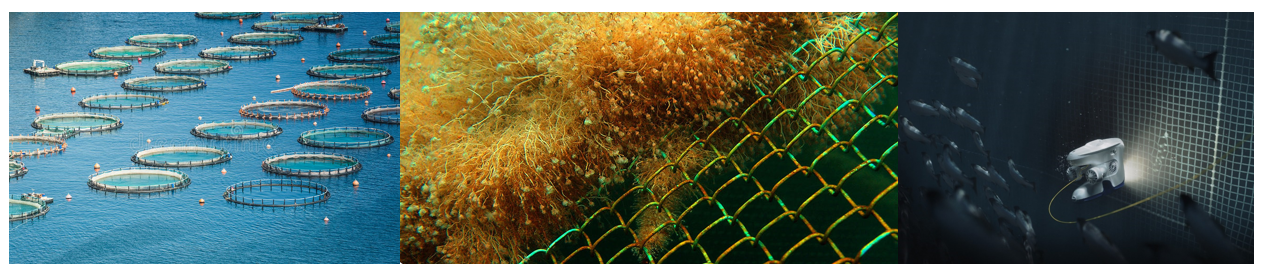
Many Congratulations to, Dr. Waseem Akram, Dr. Taimur Hassan, Hamed Toubar, Dr. Muhayy Ud Din, Prof. Lakmal Seneviratne and Prof. Irfan Hussain for their remarkable achievement in developing an autonomous net pen defect detection system. Their innovative multi-scale semantic segmentation approach effectively identifies biofouling, vegetation, and hole issues in the aquaculture environment.

Thank you, Khalifa University and Khalifa University Center of Autonomous Robotics Systems, hashtagKUCARS for the continuous support.

Video Link: https://lnkd.in/ddTth4UR

The Khalifa University-Beijing Institute of Technology team Fly Eagle has become one of the five finalists for the Maritime Grand Challenge, part of the AED11-million Mohammed Bin Zayed International Robotics Competition (MBZIRC) series

The Khalifa University-Beijing Institute of Technology team Fly Eagle has become one of the five finalists for the Maritime Grand Challenge, part of the AED11-million Mohammed Bin Zayed International Robotics Competition (MBZIRC) series.

The KU-BIT Fly Eagle team received US$100,000 prize money, as well as a robotic arm worth US$50,000 for performing well in the Simulation Phase which required teams to develop the proof of concept while completing inspection and intervention tasks in simulation. The simulation environment included a large coastal region, UAVs with different sensor configurations, a USV model, a robot manipulator, and multiple target vessels.

Professor Lakmal Seneviratne, Director, Khalifa University’s Center for Autonomous Robotic Systems, Khalifa University, and Professor Oussama Khatib, Director, Stanford Robotics Laboratory, Computer Science Department, Stanford University shed light on the groundbreaking work at the Khalifa University Marine Robotics Lab

Professor Lakmal Seneviratne, Director, Khalifa University’s Center for Autonomous Robotic Systems, Khalifa University, and Professor Oussama Khatib, Director, Stanford Robotics Laboratory, Computer Science Department, Stanford University shed light on the groundbreaking work at the Khalifa University Marine Robotics Lab.
Our cutting-edge marine robotics systems are set to revolutionize sustainable marine ecosystem applications, ocean cleaning, and deep water exploration.
#khalifauniversity is determined by its commitment to expanding the horizons of robotics and machine learning, presenting innovative sustainable solutions that will benefit the #UAE and have a global impact.

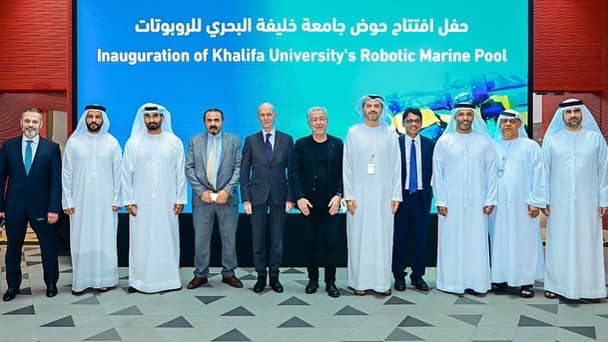
Khalifa University inaugurates the region’s first-ever advanced lab for Marine Studies and Research

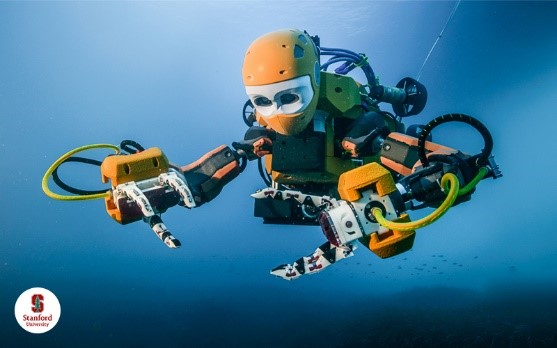
Khalifa University inaugurates the region’s first-ever advanced lab for Marine Studies and Research, the advanced robotics research facility equipped with wave and stream generation facilities, while Khalifa University’s Center for Autonomous Robotic Systems (KUCARS) and Stanford University entered into a collaboration to explore the use of marine robotics for sustainable ocean ecosystems, including removal of plastics to curb pollution.
The Khalifa University Marine Studies and Research Lab allows testing robots under a controlled environment that simulates the adverse underwater environmental conditions of the sea. The pool includes a wave generator, a flow current generator, underwater and overhead tracking systems, and an overhanging (gantry-type) mechanism covering the entire width of the pool. The OceanOneK robot, designed and built by a Stanford University team, also made its Abu Dhabi debut and demonstrated its capability in retrieving plastic waste in the Marine Studies and Research Lab.

Khalifa University Hosts IROS 2024, Featuring 13 Forums Aligned with UN SDGs    

Dedicated Forums and Workshops to Focus on Critical Role of Robotics in Achieving Sustainability 


Khalifa University of Science and Technology today announced dedicated forums and workshops focusing on the critical role of robotics in achieving the United Nations Sustainable Development Goals (SDGs) will be part of the 36th edition of the IEEE/RSJ International Conference on Intelligent Robots and Systems (IROS 2024) that is themed ‘Robotics for Sustainable Development’. 


IROS 2024 comes to the Middle East and North in Africa (MENA) region for the first time and will be held from 14-18 October 2024 at the Abu Dhabi National Exhibition Center (ADNEC). The event will bring together leading researchers, academics, industry professionals, and corporate giants from around the globe to explore the latest advancements in robotics and their impact on sustainability. It will focus on leveraging robotics to address pressing global challenges, including ocean conservation, climate change mitigation, and healthcare accessibility.  


Dr. Jorge Dias, General Chair, IROS 2024 and Director, Khalifa University-Center for Autonomous Robotic Systems, said: “Khalifa University is delighted to organize the IROS 2024 in Abu Dhabi to highlight the crucial role of robotics in achieving a sustainable future, in line with its theme. Driving progress towards the UN SDGs with the next generation of sustainable robotics, IROS 2024 will facilitate in-depth discussions, knowledge sharing, and collaboration on critical topics. This landmark event will showcase the transformative power of robotics through several dedicated forums and workshops, targeting different sectors to provide a unique platform for collaboration and innovation.” 


A forum on ‘Marine Robotics in Ocean Decade Initiative for Sustainable Development’ will bring together representatives from industry, government, and academia to discuss opportunities and new collaborations for utilizing robots and advanced engineering solutions to address ocean sustainability challenges. A collaboration between IEEE- Oceanic Engineering Society and IEEE- Robotics and Automation Society, this forum will explore the use of marine robotics for ocean monitoring, ecosystem preservation, and early warning systems for environmental disasters. Reversing the decline of the state of the ocean system and finding new opportunities for sustainable development of the marine ecosystem will also be discussed.  


The various ways robotics and AI can contribute to sustainable development will be addressed in the forum on ‘Robots for Sustainability and Sustainable Robots’ which will include the development of sustainable robots and examine how robots can be designed and deployed to minimize their environmental impact and promote responsible resource management. 


Promoting sustainability in the medical sector will be a forum on ‘Sustainable Medical and Surgical Robotics’ focusing on the potential of low-cost medical and surgical robotics to improve healthcare accessibility and affordability. This forum will also cover the development of surgical robotics to improve healthcare outcomes for all, particularly for communities in need. The forum committee has a diverse group of experts including Dr. Paolo Fiorini, Needleye Robotics, Dr. Kinda Khalaf, Khalifa University, and Dr. Pietro Valdastri, University of Leeds, who will discuss the latest innovations and challenges in developing sustainable solutions for medical robotics and the One Health approach.   


With its focus on the UN Sustainable Development Goals, IROS 2024 presents several opportunities to engage with cutting-edge advancements in robotics and their applications for sustainable development. Providing a dynamic platform for collaboration among leading researchers, industry experts, and innovators, IROS has specialized forums and workshops that address critical global issues such as marine conservation, climate change, and healthcare accessibility, highlighting the transformative potential of robotics for a more sustainable future. 

The list of forums during IROS 2024 is as follows: 

  1. Robots for Sustainability and Sustainable Robots 
  2. Europe Regulates Artificial Intelligence: The Challenge for Robotics 
  3. Government Forum: Funding for Robotics Research 
  4. Robotics in Africa Forum 
  5. Robotics & AI in the UAE: Research Innovation and Entrepreneurship 
  6. Human-Avatars Symbiosis: Can you imagine a future society where you can remotely control multiple avatars? 
  7. Empowering Diverse Voices in Robotics 
  8. Sustainable Medical and Surgical Robotics 
  9. Moonshot R&D Program Goal 3 Forum. Envisioning a Future of
  10. Human-Robot Co-living: Potential for Robotics to Transform Human Lives 
  11. Marine Robotics in Ocean Decade Initiative for Sustainable Development 
  12. The Future of Work: AI-Enhanced Robotics and Human Interaction Research in M3S 
  13. Industrial Opportunities and Socio-Economic Impact of Medical Robotics 
  14. Robots for a Better Tomorrow: Wellbeing Through Advanced Technology 

                          More information at https://iros2024-abudhabi.org/ 

                          Hosting of IROS 2024 Reflects ‘Khalifa University’s Willingness to Contribute to UAE’s Strategic Objectives on AI’ 

                          Khalifa University President Welcomes Participants and Delegates to Lead Knowledge Exchange in Robotics and AI through Nine Tutorial Sessions and 31 Technical Workshops 


                          Hosting the 36th edition of the IEEE/RSJ International Conference on Intelligent Robots and Systems (IROS) in collaboration with stakeholders is in line with Khalifa University’s mandate and reflects a willingness to contribute to the UAE Artificial Intelligence Strategy 2031, said His Excellency Professor Ebrahim Al Hajri, President, Khalifa University of Science and Technology. 


                          Welcoming the delegates and participants of IROS 2024 that opened on 14 October at the Abu Dhabi National Exhibition Center (ADNEC), His Excellency Professor Al Hajri commended that stakeholders in the UAE, the global scientific community, and the researchers and academics in the region have played a critical role in bringing an international conference and exhibition of this stature to the Abu Dhabi. The event themed ‘Robotics for Sustainable Development’, runs up to 18 October 2024. 


                          His Excellency Professor Al Hajri said: “This is a proud moment for the UAE and for Khalifa University as we host IROS 2024 in Abu Dhabi. Through such global events, Khalifa University will help facilitate collaboration on cutting-edge research, and we believe delegates and participants will explore opportunities for growth within MENA region, while actively contributing to the global innovation ecosystem in robotics and artificial intelligence.” 


                          On Monday 14 October, IROS 2024 witnessed nine tutorial sessions and 31 technical workshops as researchers, scientists and academics from universities, research institutions and leading corporates across the world interacted on various aspects of robotics technologies. 


                          Among the global-level competitions and challenges, the euROBIN Manipulation, the F1 Tenth Autonomous Racing Competition, and the IEEE/RAS Quadruped Robot Challenge (QRC), began on 14 October, with the rest of the challenges spread over all the days from 15 – 16 October. The competitions are designed to inspire creativity, focusing on robots’ physical or athletic intelligence, remote robot navigation, robot manipulation, underwater robotics, and perception and sensing. 


                          Among the 13 forums, the ‘Robots for Sustainability and Sustainable Robots’ forum is scheduled for 15 October, while the rest are scheduled from 16-18 October with four forums each, every day. 


                          Exhibits of the latest technologies and products demonstrating the next generation of sustainable robotics evinced keen interest at IROS 2024. Poster sessions, keynotes, panel discussions, and networking events are also lined up for the remaining days at this major international conference.  


                          Khalifa University Students Gain Hands-On Experience in Nuclear Energy Safety and Operations at FNC Technology, South Korea 

                          Eight-Week Internship Equips Students with Essential Knowledge for Managing the UAE’s Peaceful Nuclear Energy Infrastructure 


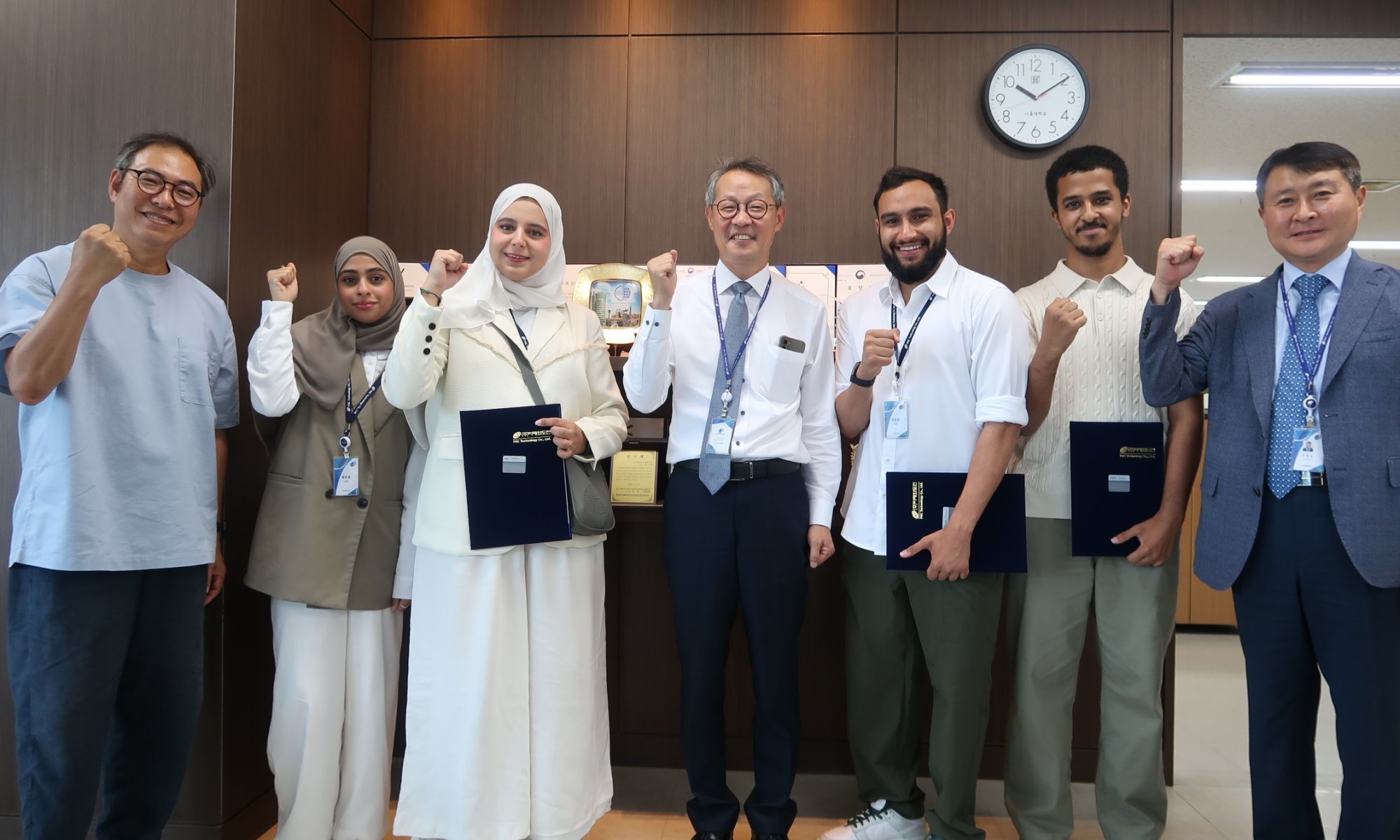
                          Four Khalifa University Chemical Engineering students gained in-depth insights into the operations, radiation safety, and hands-on training at the South Korea’s FNC Technology, as part of a holistic eight-week internship program, to equip themselves with skillsets essential for managing the UAE’s peaceful nuclear energy infrastructure. 


                          Ahmed Alhosani, Alyazia Alkalbani, Amal Alhashmi, and Jaafer Aljefri successfully completed their projects supported by their South Korean mentors during the internship program. Their projects included ‘An overview of periodic safety review work for Nuclear Power Plant (NPP)’, ‘Acquiring general knowledge related to safety performance indicators in the periodic safety review (PSR)’, ‘Literature survey on Rankine cycle analysis tool for the optimal design on Nuclear-Renewable Hybrid Energy System. (NRHES)’, and ‘Understanding the degradation mechanism of materials and develop its mitigation methodology at NPPs’. 


                          Dr. Yacine Addad, Deputy Director, Emirates Nuclear Technology Center and Associate Professor, Mechanical and Nuclear Engineering, Khalifa University, said: “The knowledge and insights our students have gained from this internship at FNC Technology and other organizations will be invaluable to their academic pursuits, research endeavors, and future career trajectories. Programs like this, focused on comprehensive student development, underscore Khalifa University’s commitment to fostering international collaborations in the fields of clean energy and sustainability, ultimately benefiting both our regional and global communities. As one of the earliest universities in the region to have introduced the Nuclear Engineering program, we take great pride in establishing partnerships with global energy industry stakeholders to ensure adequate human capital is accessible with the UAE at all times to manage the nuclear infrastructure.” 


                          The internship program also included an extensive tour of the FNC Institute, Korean history and cultural experience, heritage, one-on-one meetings with mentors, collaborating with team members on projects, networking events, and visits to some of the leading companies and institutions that are pioneering energy technologies. 


                          Some of the entities that the Khalifa University students visited included the Korea Atomic Energy Research Institute (KAERI), Geological Museum, Korean Institute of Fusion Energy (KFE), Korea Institute of Energy Research (KIER) in Daejon, BHI Co in Haman, Doosan Enerbility in Changwon, and the Korea Institute of Machinery and Materials (KIMM) in Busan. 


                          Students also learnt about the emergency core cooling systems (ECCS) sump trainer test loop, downstream test loop, and liquid metal test apparatus, as well as the explanation of code and standards on review tasks, understanding of the degradation mechanism of materials at NPP, review of Rankine cycle and NRHES and a self-study on SF8 in IAEA SSG-25 – a code that describes how IAEA member countries can safely and securely manage high-risk radioactive sources. A literature survey on the degradation mechanism and mitigation methodology was also part of the project tasks during the internship program.


                          Clarence Michael
                          English Editor – Specialist
                          2 Oct 2024

                          11 Khalifa University Students Successfully Complete JICE Internship on Clean Technology in Japan 

                          10-Week Program Covered Renewable-Energy Projects and Immersive Cultural Experience  


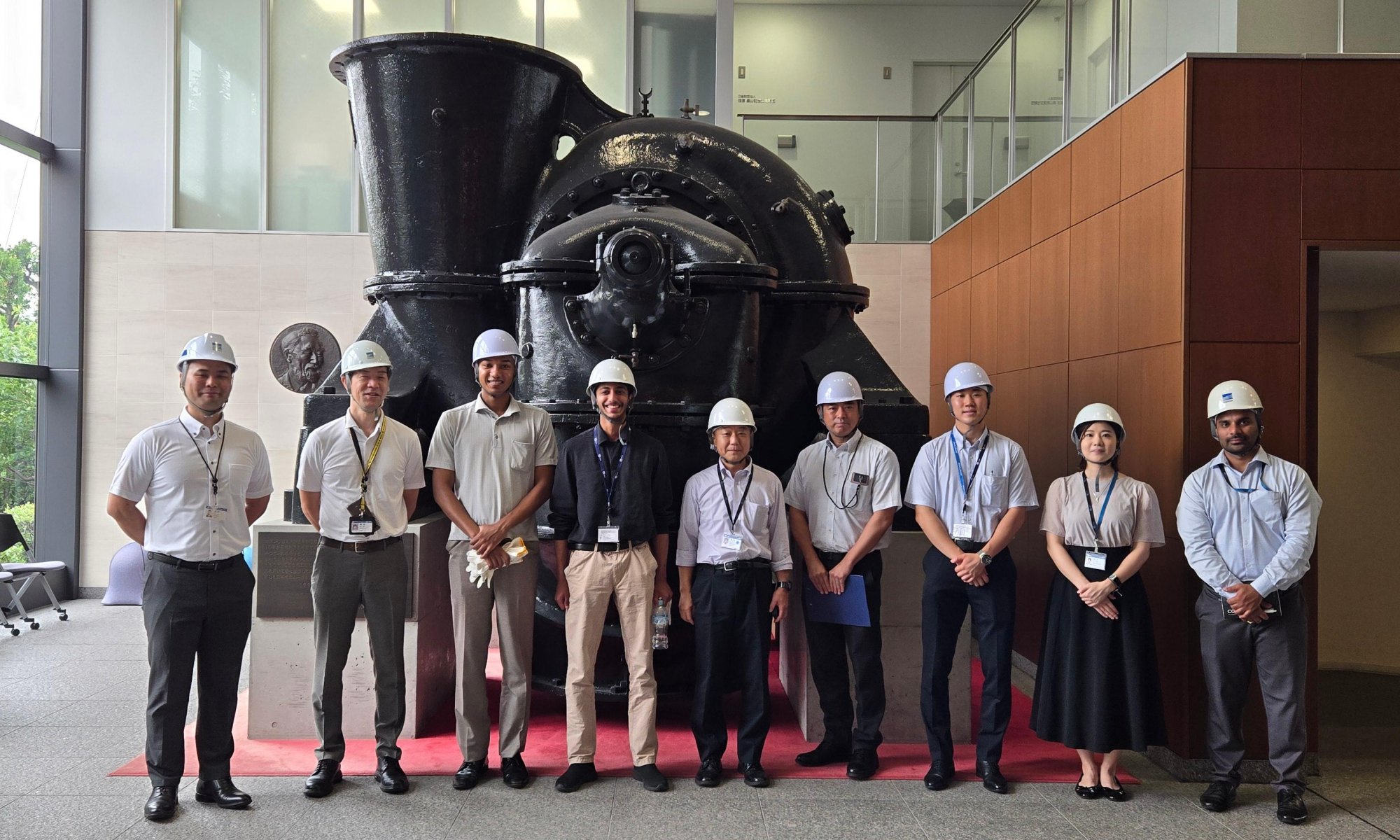
                          Clean technology, renewable energy projects, corporate site visits, and Japanese cultural activities were the main focus of the 10-week Japan International Collaboration Center (JICE) summer internship program for 11 Khalifa University students, organized by the Japan’s Ministry of Economy, Trade and Industry (METI), in a collaboration with Khalifa University. 


                          The students from Mechanical, Aerospace, Chemical Engineering, and Computer Science programs visited Mikawa Genki Monogatari, Chiyoda Corporation and Mitsubishi Heavy Industries. They gained hands-on experiences in clean technology and aerospace which they showcased during on-campus presentation sessions organized by the Khalifa University’s Career Office upon returning to the UAE. 


                          H.E. Shihab Al Faheem, UAE ambassador to Japan, interacted with the Khalifa University students during their visit to the UAE Embassy in Japan.  


                          The faculty advisors for the internship program are Dr. Roberto Sabatini, Aerospace Engineering, Dr. Nahla Al Amoodi, Chemical Engineering, Dr. Andreas Henschel and Dr. Sajid Javed, Computer Science, and Dr. Afshin Goharzadeh, Mechanical Engineering. 


                          Internship participants included Ahmed Saleh Ahmed Mohamed Basahel, Abrar Khalifa Rashed Aldowaij Alfalasi, Fatima Abdulrahman Hussein Mussa Alblooshi, Noof Majid Hassan Abdulqader Alshehhi, Buthaina Ali Abdelrahim Mohamed Almulla, Abdulla Yousef Ahmed Ebrahim Al-Ali, Mariam Abdulrahman Hareb Mohammed Alshamsi, Hyatt Mohamed Abdelrahim Abdelrazaq Alfahim, Shaikha Jasim Khalfan Malalla Alhammadi, Hedaya Adel Alyahmadi, and Maryam Mohamed Abdulla Aldowaib Alzeyoudi. 


                          The students attended 10 sessions during an orientation which focused on Japanese language, business etiquette, reporting and presentation skills as part of the preliminary week which also featured visits to heritage sites. The internship also included a visit to a Life Safety Learning Center, which offers experiential training in disaster preparedness through activities like earthquake simulations and firefighting exercises.  


                          As part of a three-day wrap-up session, students attended two sessions to review and report the important developments during their internships with Japanese companies and shared their experiences and understanding of Japanese corporate culture. 


                          Dr. Roberto Sabatini said: “Aerospace Engineering students completed an enriching internship experience at Mikawa Genki Monogatari in Japan, focusing on the rapidly evolving field of drone technology. This comprehensive program provided students with hands-on training in Remotely Piloted Aircraft Systems (RPAS), where they actively participated in technical activities, exhibitions, and various events related to RPAS, significantly enhanced their knowledge.” 


                          The cultural exchange, practical skills, professional development, and Japanese language skills helped aerospace engineering students in advancing their technical capabilities and acquiring skills in global aerospace and drone industries. 


                          Alisha Roy
                          Science Writer
                          2 Oct 2024

                          Khalifa University Scientists First from UAE to Deploy Special Instrument in Antarctica to Conduct Research on Ice

                          ENGEOS Researchers Strategically Install SIMBA in April, before Formation of Sea Ice Starts, to Gain Insights on Ocean and Atmosphere Characteristics 


                          Uncover insights on Antarctic ice and sea level rise—listen now!


                          Khalifa University of Science and Technology today announced scientists and researchers from its Environmental and Geophysical Sciences (ENGEOS) laboratory and the Earth Science department have deployed Snow Ice Mass Balance (SIMBA), a special instrument to study ice in Antarctica. This is the first time scientists from any institution in the UAE have deployed operational instruments on the icy southern continent. 


                          The project led by Khalifa University’s Dr. Diana Francis, Head, ENGEOS lab, and Assistant Professor, Earth Sciences, is supported by five researchers. Two scientists from the Australian Antarctic Division are also working with the Khalifa University team.  


                          Prof. Bayan Sharif, Provost, Khalifa University, said: “We are honored to be the first academic institution from the UAE to deploy this instrument to study sea ice formation and melting, aiding in better understanding the risk of rising sea levels. We are proud of this achievement and remain dedicated to pioneering innovation and scientific exploration, particularly in climate change. This initiative started in 2020, has successfully attracted international collaborations with those countries already present in Antarctica.” 


                          Sea ice in the Southern Ocean around Antarctica starts to form every year around May and reaches its maximum extent and concentration in July, in the middle of the austral winter. SIMBA is deployed strategically in April before the formation of sea ice starts in order to gain insights on the ocean and atmosphere characteristics before this critical phase. 


                          Dr. Diana Francis said: “Once the ice forms, it surrounds the instrument which continues to measure all the parameters in addition to the evolution with time of the sea ice thickness. When the melting season starts at the beginning of austral fall, once again the instrument is here to record the state of ice, water and atmosphere. This offers invaluable information about the ocean, ice and atmospheric conditions governing formation and melting of sea ice.” 


                          Antarctic sea ice plays the role of a protective band around Antarctica against waves and the ocean forcing on the glaciers. It exerts buttressing effects, slowing down the flow of ice from the interior part of Antarctica (the ice sheet and the glaciers), which contribute to rise in sea levels. Knowing the processes at play in sea ice formation and melting is crucial for better understanding of the risk in the rise of sea levels due to Antarctic ice. 


                          Over 99.5% of Antarctica is covered in ice, and the icy continent contains 90% of the freshwater ice on the planet. Antarctic ice plays a critical role in regulating the Earth’s climate by reflecting the sun’s heat, providing a habitat for microscopic plants that absorb carbon, controlling global sea levels and generating cold, salty water that helps drive global ocean currents. 

                          Khalifa University Students Present Innovations at TAQA’s Youth Energy Forum in World Utilities Congress 2024

                          Two PhD researchers from the Advanced Power and Energy Center (APEC) and four senior Khalifa University students showcased their innovative energy solutions at TAQA Group’s pavilion during the World Utilities Congress 2024 in Abu Dhabi.


                          Rawdha AlKuwaiti and Ammar Ibrahim presented posters on cutting-edge solutions at TAQA Group’s Youth Energy Forum. AlKuwaiti’s research focused on developing new formulations to determine the optimal parameters within the PEMELz model, demonstrating its applicability in a microgrid. Her work illustrated how these advancements could be integrated into a larger system to optimize renewable energy use. Ibrahim’s research focused on the monotonic operation of battery energy storage systems to reduce their degradation and aging while mitigating the intermittency of renewable energy resources. His research plays a crucial role in enhancing grid stability and supporting the shift toward sustainable energy sources.


                          Hamda Alhameli, Hajer Altamimi, Noura Alyammahi, and Shaikha Alraeesi presented a senior design project, ‘Design of Solar Powered Green Parking’. This project focuses on transforming traditional parking spaces into energy hubs by designing a grid-connected PV system with battery storage for EV fast and slow charging. The project aligned with the objective of supporting renewable energy shift.


                          The senior students were delighted to see other projects similar to theirs, share ideas with industry professionals, and learn new approaches to enhance their work. In addition, they witnessed innovative demonstrations and also engaged in meaningful dialogue with officials from clean energy companies.


                          The World Utilities Congress brought together global energy leaders, policymakers, innovators, and industry professionals from across the power and water utilities value chain who also engaged in discussions about the role and pace of decarbonization.


                          Alisha Roy
                          Science Writer
                          27 Sept 2024