
Distinguished Innovators and Thought Leaders to Deliver Keynotes and Plenary Sessions at the 36th IROS in Abu Dhabi

Speakers to Focus on Human-Robot Collaboration, Multi-Robot Systems, Embodiment of AI and Bio-mechanics/Neuroscience, and Security Strategies for Next Generation of Robotics

Khalifa University of Science and Technology today announced an impressive array of thought leaders and innovation experts in Robotics and Artificial Intelligence are lined up for the plenary and keynote sessions during the 36th edition of the IEEE/RSJ International Conference on Intelligent Robots and Systems (IROS 2024) in Abu Dhabi, Middle East and North Africa (MENA) Region’s first-ever global conference.


Themed ‘Robotics for Sustainable Development’ IROS 2024 will run from 14-18 October 2024 at the Abu Dhabi National Exhibition Center (ADNEC), and highlight the region’s rapidly advancing capabilities in the robotics and intelligent transport systems. Four plenary and more than 20 keynote speakers will focus on human-robot collaboration, Multi-Robot Systems, Embodiment of AI and Biomechanics/Neuroscience, and the Security Strategies for the Next Generation of Robotics.


The keynote speakers will focus on drone racing, speeding up flying machines through agility and collaboration, drones for environmental health, safe learning in autonomous systems, bio-robotics, applied artificial intelligence, TelecomGPT, (soft) robot control, crossmodal learning, beyond lingual and visual intelligence, competitions including the Defense Advanced Research Projects Agency (DARPA) challenges, and translation of technologies from lab to market.


IROS 2024 has gathered several thousand researchers, academics, leading corporate majors, and industry professionals from across the globe. One of the largest and most important robotics research conferences in the world, IROS 2024 is themed ‘Robotics for Sustainable Development’ and provides a platform for the international robotics community to exchange knowledge and ideas about the latest advances in intelligent robots and smart machines.


Dr. Jorge Dias, General Chair, IROS 2024, said: “The assorted array of speakers for the plenary sessions and keynote talks IROS 2024 represent thought leadership in robotics and artificial intelligence as well as breakthrough innovations. The diverse topics these experts cover will indicate the direction in which this rapidly-evolving technology and the industry will be heading during the coming decades. We believe the large gathering of global scientists, academics, researchers, industry leaders and government stakeholders will benefit from the perspectives these speakers will share during the knowledge exchange.”


With a total of over 3,500 submissions, oral and poster presentations, 13 forums, along with eight global-level competitions and challenges covering various aspects of robotics and AI, an exhibition of new technologies, as well as an exclusive Career Fair that will provide an ideal forum for talent-hunting, IROS 2024 is expected to impact everyone across the industry spectrum.

More information at https://iros2024-abudhabi.org/
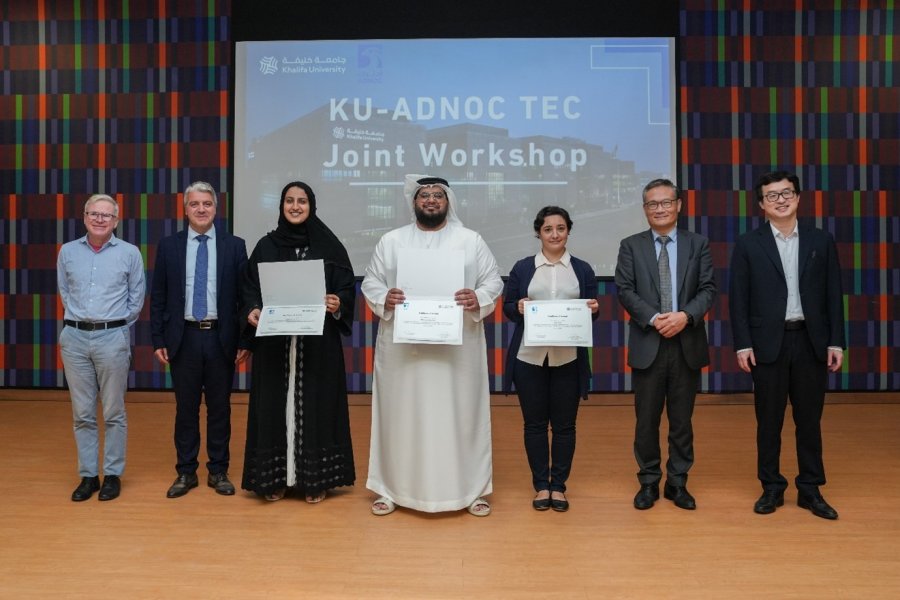
PhD Researcher Receives KU-ADNOC ‘Outstanding Power Award’

A PhD student in Electrical Engineering at Khalifa University, has received an Outstanding Power Award for her poster presentation on emerging trends in energy, AI, and digital technologies during the recent Khalifa University-ADNOC Joint Workshop at the Sas Al Nakhl (SAN) Campus attended by senior officials from both partners.


The poster on hydrogen electrolyzers, presented by Rawdha AlKuwaiti highlighted key findings from a paper co-authored by AlKuwaiti and her advisory team, recently published in the Q1-ranked International Journal of Hydrogen Energy.

Khalifa University’s RIC2D and UK’s Levidian to Collaborate on UAE’s Decarbonization and Produce High-Quality Graphene

Khalifa University of Science and Technology’s Research & Innovation Center for Graphene and 2D Materials (RIC2D), and leading British climate tech firm Levidian today announced the signing of a pioneering research partnership to help further the UAE’s decarbonization efforts by exploring carbon capture from gas flaring and future applications for graphene.


According to the agreement, the two partners will work together to explore the effectiveness of Levidian’s patented LOOP technology in capturing carbon from different gas types, including flare gas from oil and gas facilities. Khalifa University’s RIC2D will then spearhead research into the applications of graphene produced as part of the process, which also creates clean hydrogen.


Prof. Hassan Arafat, Senior Director, RIC2D at Khalifa University, said: “We are delighted to enter into this partnership with Levidian and leverage their innovative LOOP technology to contribute to the UAE’s decarbonization efforts. This collaboration will enable the RIC2D team to continue to spearhead research into the applications of graphene produced as part of the process, also creating clean hydrogen. By driving scientific development, this collaboration has all the hallmarks of successfully driving innovation in graphene and 2D materials as well as facilitating commercialization.”


John Hartley, CEO of Levidian, said: “The UAE has an incredible opportunity not only to drive down emissions from its oil and gas operations but, in doing so, create two high value products that are going to change the face of the future energy landscape – hydrogen as a critical future fuel, and graphene as a powerful additive to batteries for EVs and to store excess power produced by wind and solar projects. The possibilities are genuinely endless, and we are delighted to be working with Khalifa University as the region’s leading academic institution as we continue to drive forward our technology and get more LOOPs out into the field.”


Khalifa University’s RIC2D has entered into multiple partnerships to further drive innovation identifying opportunities in advanced materials innovation. It also seeks to combine expertise, resources, and research capabilities towards accelerating the development and commercialization of graphene-based technologies. It collaborates with stakeholders in organizing symposiums to explore the transformative potential of 2D materials.


Levidian announced earlier this year plans to invest around US$100m in the UAE as part of the establishment of a new delivery center, that will serve as a showcase and central hub for the business in the Middle East. The center is expected to create around 100 highly skilled professional and manufacturing roles as well as a further 150 indirect jobs.


Levidian provides a unique service that helps hard-to-abate sectors to unlock critical decarbonization projects by capturing the carbon from methane gas and turning it into high value graphene and hydrogen.


The graphene produced is ‘net zero’, with the potential to be carbon negative depending on the make-up of the local grid and can be used to both drive process efficiencies and enhance the intrinsic characteristics of products in major global industries as far ranging as steel, batteries and petrochemicals. The hydrogen can be produced at varying levels of purity to be injected into the gas grid, used as a lower carbon fuel for on-site energy generation or as pure hydrogen suitable for hydrogen fuel cell EVs.


More Policy Integration Needed to Reduce Global Warming

Despite Growing Challenges 1.5°C Climate Target Still within Reach 


Discover solutions to limit global warming—listen now

Every fraction of a degree counts in the fight against climate change, yet, from 2020 to 2023, carbon dioxide emissions have continued to rise despite advances in clean energy technology. Without stronger climate policies, the critical 1.5°C target—the threshold that scientists warn could trigger severe and irreversible impacts—now faces a risk of being overshot, according to a new study involving researchers from Khalifa University.


Emphasizing on managing peak temperatures rather than abandoning climate objectives, the study focuses on minimizing overshoot. Unlike traditional cost-effective models, the research introduces scenarios that consider various real-world constraints, including institutional, technological, and geophysical factors for a more realistic picture of limiting global warming. Utilizing eight different global models, 20 scenarios feature realistic temperature targets, managing CO2 emission, and the balance between technological possibilities and implementation challenges.


The research was published in a paper titled, ‘Feasibility of peak temperature targets in light of  institutional constraints’ in Nature Climate Change, a top 1% journal.


The team of researchers include Khalifa University’s Dr. Pedro Rua Rodriguez Rochedo, Assistant Professor, Management Science & Engineering, as well as researchers from the University of Maryland, US, the International Institute for Applied System Analysis (IIASA), Austria, and institutions from Italy, Germany, Brazil and The Netherlands.

The rise in global temperatures is expected to peak around the same time carbon dioxide (CO2) emissions hit net-zero – as we reduce emissions to zero – temperatures will also reach their highest point. Scientists now find the most ambitious efforts could maintain peak warming just below 1.6°C, but the odds drop to as low as 5%, if current global policies on climate change remain unaddressed.


Dr. Pedro Rua Rodriguez

“Without stronger climate policies, the critical 1.5°C target—the threshold that could trigger severe and irreversible impacts due to global warming—looks even more distant.”

, Assistant Professor, Management Science & Engineering, KU

A key finding is that along with technological advancements, reducing energy demand – in regions with high energy consumption – can ease the pressure on other mitigation efforts for preventing an overshoot of the 1.5°C limit and for lowering temperatures after an overshoot occurs. If global temperatures do exceed the 1.5°C limit, the study suggests it will require removing a vast amount of CO2—hundreds of gigatons—for every 0.1°C increase to reduce temperatures.


Dr. Pedro Rua Rodriguez Rochedo said: “The 1.5°C target remains achievable, however it requires urgent and coordinated action. Rapid technological advancements and increased deployment of clean energy, although crucial, especially for lowering temperatures after an overshoot, are still not sufficient on their own. The most significant barriers to achieving ambitious climate goals are the effectiveness of implementing, and enforcing climate-friendly policies.


He added: “Our model intercomparison study establishes a new benchmark of mitigation scenarios beyond the dominant cost-effective scenario design. By recognizing the limitations of focusing only on cost, we aim to bridge the gap between economically driven models and real-world implementation challenges, resulting in a more grounded understanding of climate mitigation possibilities.”


Alisha Roy
Science Writer
10 Oct 2024

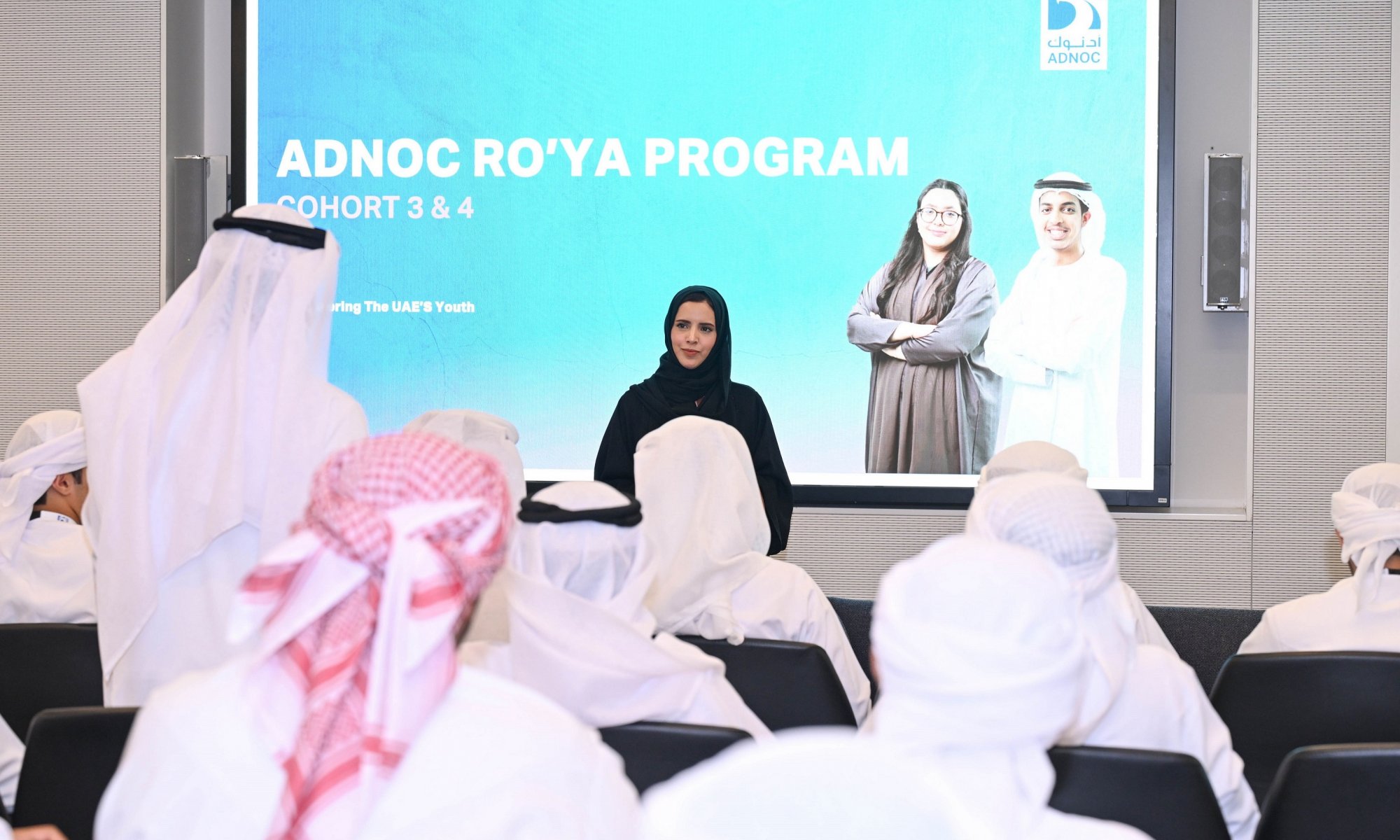
31 Students Successfully Conclude One-Year Ro’ya Program Organized by Khalifa University and ADNOC

Fourth cohort of 63 participants completed summer activities and set to attend refresher program during winter


Khalifa University of Science and Technology and ADNOC announced that 31 participants have successfully completed the Ro’ya Program. This year-long initiative is meticulously designed to raise awareness among high school students about career opportunities in the UAE’s energy sector.


Ayesha Mohamed Al Hammadi, Executive Vice President of HC Strategy, Talent, and Performance Management at ADNOC, presented the completion certificates to the third cohort of Ro’ya participants, in recognition of projects they developed during the program. Separately, the fourth cohort of 63 high school students completed their first summer with ADNOC and Khalifa University and will continue their training during the upcoming winter break. Notably, nine alumni of the program have joined undergraduate programs with two students receiving ADNOC Scholarships to Khalifa University.


Dr. Bayan Sharif, Provost, Khalifa University, said: “We are delighted to witness the continued success of the Ro’ya Program which inspires students to explore the energy sector and develop critical thinking and leadership skills for future academic and professional success. The Khalifa University – ADNOC collaboration aims to nurture the next generation of leaders in the UAE’s energy sector, in line with the UAE Centennial 2071 objectives. Congratulations to the participants who have successfully completed the program that would help in building skills required to become professionals in the future.”


Ayesha Mohamed Al Hammadi, said: “At ADNOC, we are proud that the Ro’ya Program has become a gateway for talented youth to gain access to the energy sector and shape the skilled workforce required to drive the UAE’s future growth. ADNOC will continue to invest in STEM-related educational programs to empower our youth and help them build successful careers at home and abroad. We warmly congratulate all the graduates and wish them a bright and prosperous career ahead.”


Four participants from the third cohort had the opportunity to attend ADNOC/NASA Space Camp 2024 in Huntsville, Alabama, where they experienced a hands-on learning environment. The camp ignited their curiosity and inspired innovative thinking in space exploration and scientific discovery.


During their second summer, the graduating cohort took part in a variety of activities including thought-provoking discussion on leadership, the impact of intelligent systems and digital technology, and how academics contribute to personal growth. They also participated in an entrepreneurship workshop, oil production training, and sessions on renewable energy, drones technology in energy for the future, and engineering innovation.


Both cohorts also visited the Mohammed Bin Rashid Space Centre (MBRSC) ,where they gained insights into the UAE’s space initiatives. The fourth cohort consisting of 63 participants attended sessions on public speaking, petroleum engineering, advanced research technologies, planetary science, geophysics, and the potential impacts of earthquakes on the energy industry.


Participants also visited the Thamama Excellence Center, and Abu Dhabi Energy Center where they explored programs such as ADNOC Pioneer program, and the ADNOC Scholarship Program. The Ro’ya Program featured presentations by the Society of Petroleum Engineers (SPE) Student Chapter and included regional and international competitions. Throughout the year, students worked on projects, engaged in online learning and participated in monthly mentorship sessions with Khalifa University faculty and researchers, who guided them in their academic and project-based endeavors.


IROS 2024 in Abu Dhabi to Feature 13 Forums Highlighting Impact of Advanced Robotics on Diverse Industry and Economic Sectors

Special Forums at MENA Region’s First-Ever Robotics Conference and Exhibition to Feature Role of Multiple Avatars, Human-Robot Co-Existence, Opportunities for Industrial Sectors and Future of Robots


Khalifa University of Science and Technology today announced an array of 13 diverse forums highlighting the impact of robotics on various sectors will be part of the 36th edition of the IEEE/RSJ International Conference on Intelligent Robots and Systems (IROS 2024) in Abu Dhabi – the Middle East and North Africa (MENA) region’s first-ever such global event.


Themed ‘Robotics for Sustainable Development’, IROS 2024 will run from 14-18 October 2024 at the Abu Dhabi National Exhibition Center (ADNEC) and has already gathered several thousand researchers, academics, leading corporate majors, and industry professionals from across the world. The 13 forums will span four days and will cover rapid development of robotics technologies and its relevance to policy-makers, socio-economic impact, role of multiple avatars, human-robot co-existence, opportunities for the industrial sectors and the future of robots.


Dr. Jorge Dias, IROS2024 General Chair, said: “The IEEE/RSJ International Conference on Intelligent Robots and Systems 2024 includes 13 forums that impact every aspect of an increasingly digitalized world. From sustainable development to government funding and human-robot co-existence, these forums will not only offer a platform for experts to share their perspectives on the role of robotics in the future, but also provide insights from researchers and academics on the way forward. Each forum is designed to highlight the recent advancements as well as to provide an impetus to guide the course of future developments in this key area of science that that will have comprehensive social, economic and intellectual impact.”


The Forum on ‘Robots for Sustainability and Sustainable Robots’ on 15 October will first set the scene with contribution from prominent experts, and will include a presentation on how robotics and AI can take care of the world, with models, design solutions and technologies that will make future robots sustainable.


Four forums scheduled for 16 October 2024 include Europe Regulates Artificial Intelligence: the Challenge for Robotics, Government Forum: Funding for Robotics Research, Robotics in Africa Forum, and the Robotics & AI in the UAE: Research Innovation and Entrepreneurship.


The IROS 2024 schedule for 17 October 2024 include Human-Avatars Symbiosis: Can you imagine a future society where you can remotely control multiple avatars?, Empowering Diverse Voices in Robotics, Sustainable Medical and Surgical Robotics, and Moonshot R&D Program Goal 3 Forum. Envisioning a Future of Human-Robot Co-living: Potential for Robotics to Transform Human Lives.


The four forums on the final day include Marine Robotics in Ocean Decade Initiative for Sustainable Development, The Future of Work: AI-Enhanced Robotics and Human Interaction Research in M3S, Industrial Opportunities and Socio-Economic Impact of Medical Robotics, and Robots for a Better Tomorrow: Wellbeing Through Advanced Technology.


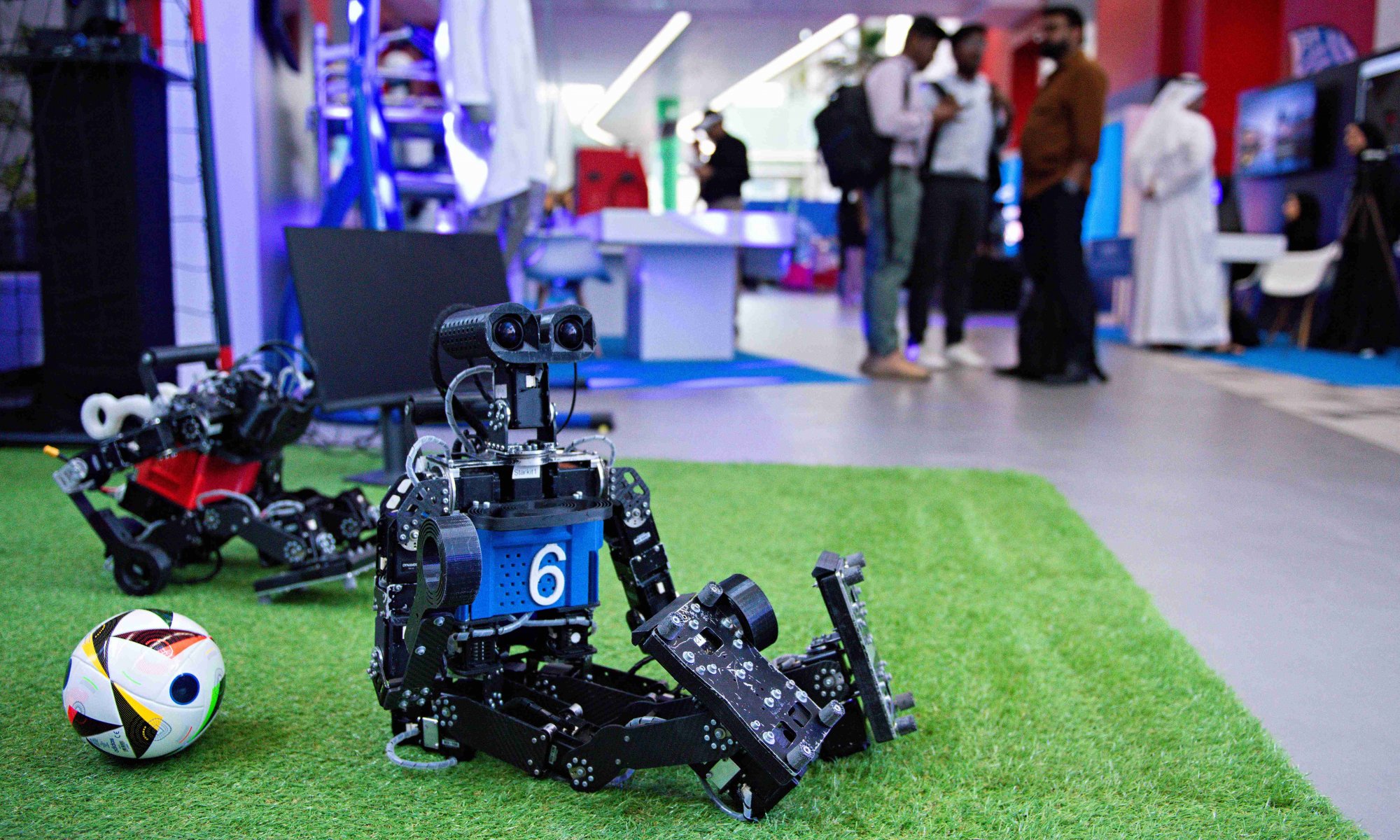
IROS 2024 will also demonstrate the next generation of sustainable robotics as well as exhibits of the latest robotics technologies and products. Poster sessions, keynotes, panel discussions, and networking events are also lined up for this major international conference.


Clarence Michael
English Editor – Specialist
8 Oct 2024

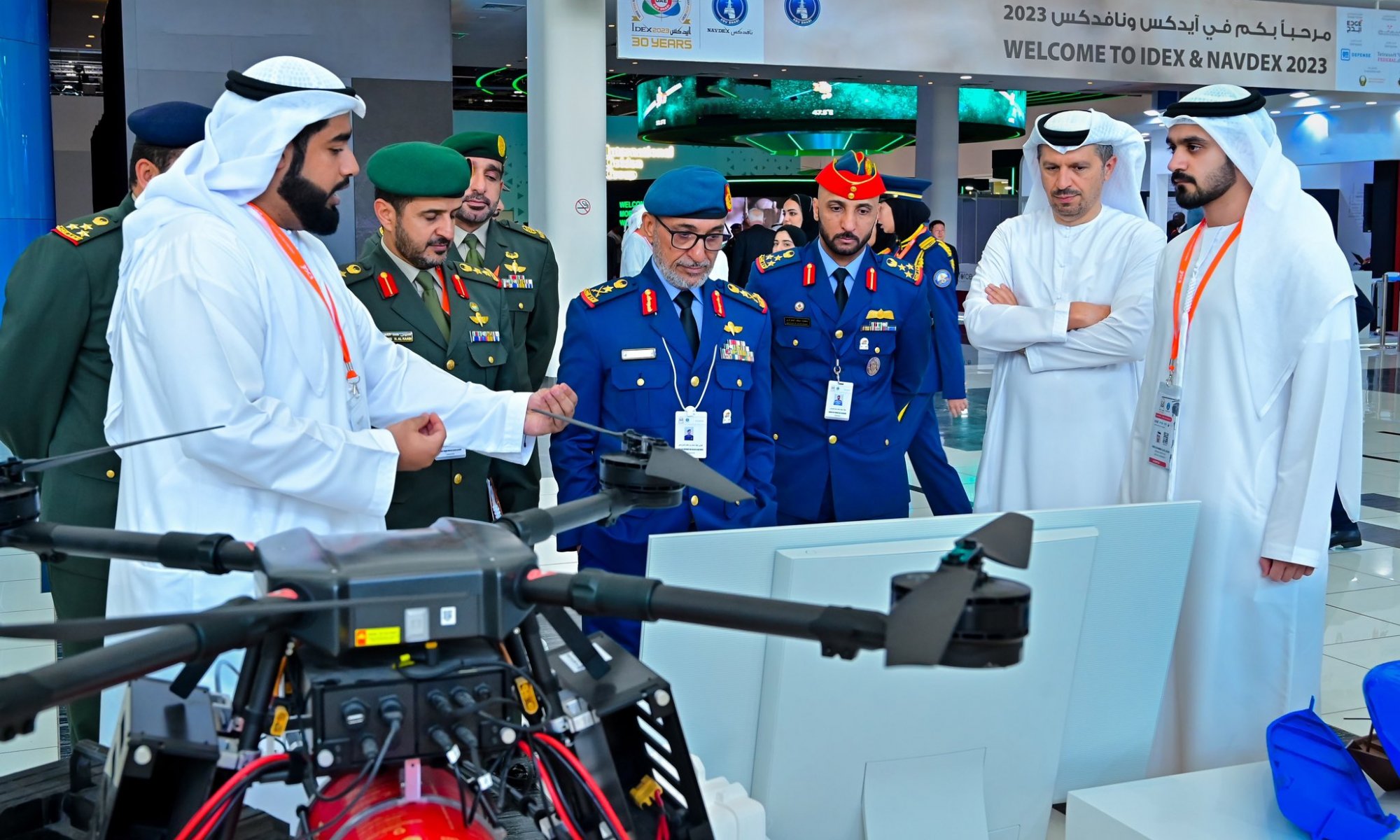
His Excellency Lieutenant General Engineer Issa Saif Mohammed Al Mazrouei, Chief of Staff of the UAE Armed Forces, visited the university’s pavilion at #آيدكس , where he viewed the projects of the Elite Program students, including technologies for security and defense

His Excellency Lieutenant General Engineer Issa Saif Mohammed Al Mazrouei, Chief of Staff of the UAE Armed Forces, visited the university’s pavilion at #آيدكس , where he viewed the projects of the Elite Program students, including technologies for security and defense

How AI can help produce a new crop of Emirati farmers

The UAE is taking a leaf out of the Netherlands’ book in attempting to persuade young Emiratis to take up farming by using advanced technology – including artificial intelligence – to drum up interest in the agricultural sector.

UAE professors and government officials from the environment and education ministries recently met diplomats, private companies, farmers and academics in the Netherlands to discuss food security before Cop28, which will be held in Dubai this November.

The meetings were part of a series of dialogues to gain knowledge of how the Netherlands has retained its role as the world’s second-largest exporter of agricultural produce after the US.

Young people don’t want to be farmers anymore
Oscar Niezen, senior adviser at Lentiz Education Group, Netherlands

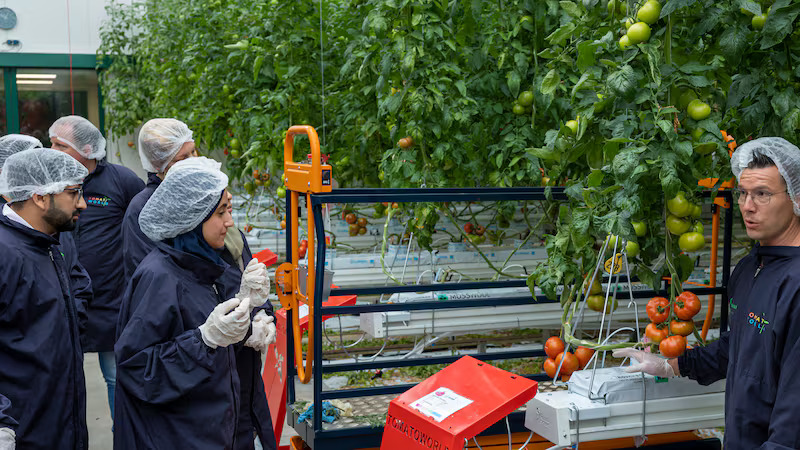
During field visits, experts from the Netherlands explained how AI, using real-time analysis of data, can monitor crop health round-the-clock.

AI systems can also help improve the quality of a harvest and detect disease in plants, with sensors providing detailed information to increase efficiency, forecast temperatures and predict the yield.

Agriculture no longer ‘old fashioned’

Leo Marcelis, professor horticulture and product physiology at Wageningen University and Research in the Netherlands, said it was a struggle to capture the attention of young people.

“Students and young people are traditionally not so interested in agriculture because they think it’s old-fashioned,” he said.

“But when they see new technology, they say, ‘Wow, this is innovation.’

“The young take sustainability really seriously and it attracts them to come here to study.

“With international collaboration we can ensure food is produced for people in the whole world in a sustainable way.”

Ranked among the world’s top agricultural research institutes, the university is known for cutting-edge studies and works with companies using greenhouses to employ technology to reduce water consumption and control the environment so crops can thrive.

Students have the option to study in applied agricultural science colleges or vocational schools that teach agricultural skills. Training and education is also available for farmers.

“We need to make farming attractive for young people. No farmers, no food,” said one poster at an education institute.

Change the perception of young people

Oscar Niezen, senior adviser for international projects with the Lentiz Education Group, said it was important that UAE students understand the quality of life farmers could have.

The group organises training programmes for international students in the Netherlands that run from a week to nine months.

Students visit farms for internships and work in greenhouses growing vegetables and flowers.

“They see the life of the grower is comfortable, cool even,” Mr Niezen said.’

“They understand it’s not dirty. It’s good for young people to actually see this because for students all over the world, agriculture has a bad name.

“Young people don’t want to be farmers any more.

“But then they see how profitable it can be, that the grower has a nice car and house. Yes, he works hard but it’s a good job.

“The technology used in modern greenhouses can help change the perception of young people.

“When they see all this, it comes alive.”

Tech for the UAE

The UAE is aiming to become self-sufficient and produce fresh food locally.

Charbel Tarraf, chief of operations and development at the International Centre for Biosaline Agriculture, said that, to achieve this, a strategy was required to build vocational agricultural schools in the UAE to train young people.

The ICBA, based in Dubai, works with more than 50 countries, conducting crucial studies to improve the resilience of trees, irrigation efficiency and crop genome research.

“The UAE is at the start of its agricultural journey, the Netherlands is advanced and so we need to see how to learn from them,” he said.

“To have successful agriculture, you need manpower, human capital.”

He said sometimes in the Arab world, farmers are not as valued as they should be.

“But when you talk about entrepreneurship, technology that requires skill and bringing this to farms – that will definitely be an incentive for the young.”

Elke Neumann, a professor of plant nutrition in United Arab Emirates University‘s College of Agriculture and Veterinary Medicine, said exchange programmes would build knowledge on both sides.

The UAEU in Al Ain is the only institute in the country that offers higher education programmes in horticulture, food sciences and agribusiness.

UAE citizens make up the majority of about 160 students in specialised agriculture programmes at the university.

“Most students join not because they don’t find anything else to study but because they are really truly interested in agriculture,” she said.

“More and more students are finding jobs in new private companies.”

Over the past few years, the UAE has used technology to produce locally farmed salmon, berries and quinoa.

Vertical farms use a hydroponics system in which plants are grown in nutrient-rich water instead of soil.

Ms Neumann said the task before researchers was to develop unique systems to tackle harsh climate conditions.

“This requires confidence that we can find solutions specifically tailored to UAE requirements,” she said.

“We need intrinsically to do something for our country and not always modify a solution that is imported.

“We require a massive expansion of our agri-research capacity and it absolutely can be achieved.”

Disease detection

UAEU has joined forces with Khalifa University in Abu Dhabi to develop robotic technology for agriculture.

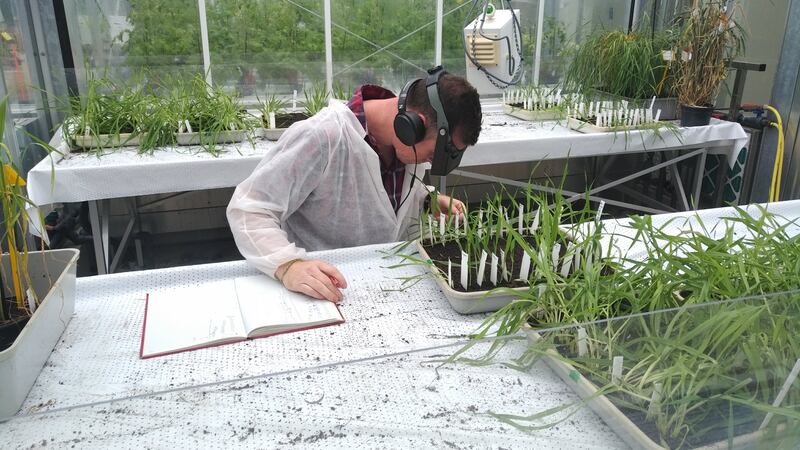
Irfan Hussain, assistant professor in Khalifa University’s mechanical department, is keen to use AI to guard against the spread of diseases in plants.

This is the future and is much needed for the UAE,” he said.

“I do believe we can get the next generation excited because of the tech element and the promise of innovation.”

How student research keeps the lights on in Dutch greenhouses

Extensive research by Dutch students who were trying to reduce climate control costs in greenhouses bore fruit when their findings were used by horticultural companies in the Netherlands trying to keep energy costs down.

In a massive greenhouse, home to one of the oldest and largest lily cultivators in the Netherlands, pink lights on the ceiling are trained on rows of green pots.

The lights gradually brighten and dim, mimicking the cycle of sunset and sunrise.

Experts say variable lighting has vastly improved the quality and yield of the pink and white flowers, and has also reduced energy usage compared to traditional high-pressure sodium lamps.

“Energy prices were so high and we made a decision to switch to LED lights when production was hit last year,” said Michel van Kester, sales manager at Van Schie, which grows more than three million pots of lilies and a million chrysanthemums annually, mostly for export.

“We were testing the LED option but the energy crisis sped up decisions.

“With the old lamps, it was either on or off. Now we can dim or increase it like the sun.

“There is no stress on the plants. It’s as if the plants like it, they say to us, ‘Let it always be natural like the sun.’”

This is only one example of how students have collaborated with companies to cut energy costs at horticultural companies.

University studies were rapidly put to use over the past year by companies hit by skyrocketing energy bills after Russia restricted gas supplies in response to western sanctions over its invasion of Ukraine.

Horticultural businesses in the Netherlands were forced to switch off lights in their greenhouses or delay planting. Supplies to overseas markets were affected when some growers shut down or cut production of crops including tomatoes, cucumbers and flowers.

Sense of urgency

The energy crisis was a wake-up call for the Dutch industry and has prompted renewed experimentation.

“The energy crisis is so big that nobody can solve it on their own,” said Raymond Hedges, horticulture manager at Inholland University of Applied Sciences, whose students were involved in the LED energy research.

“It is an example of how people need to work together as there are complex problems that you cannot solve yourself.

“You have to listen to each other, really listen and understand and only then you can move forward to work on complex problems.”

Across the country, several strategies to save energy pioneered by students at institutions such as Wageningen University and Research were enacted by agricultural companies.

These strategies included using LED lights that change colour, more robust insulation of greenhouses, and the use of additional screens and curtains.

Despite its relatively small size, the Netherlands is a powerhouse in vegetable, fruit and flower exports.

At its core is a decades-long collaboration between companies, universities and government.

This is put to the test daily at the World Horti Centre in Westland, the heart of the country’s horticultural production.

The centre is where on-site research conducted and classes take place, and it also brings together businesses, which have permanent booths.

Collaboration between the UAE and the Netherlands

A team of UAE government officials and university professors recently visited horticultural centres in the Netherlands as part of an ongoing dialogue on educational co-operation.

The Emirates is keen to collaborate and learn from the recent challenges faced by the Dutch.

The meetings with diplomats, university heads and private companies encouraged joint projects in the lead-up to Cop28 that will be held in the UAE in November.

Lakmal Seneviratne, director of the Khalifa University Centre for Autonomous Robotic Systems in Abu Dhabi, hopes to work with Dutch universities to make agriculture more sustainable and profitable.

High temperatures in the UAE as well as limited arable land and natural water resources make growing food challenging.

Developing new technologies will allow researchers to produce food economically and with a low carbon footprint.

Khalifa University researchers are exploring robotic solutions with companies in the UAE.

“We are looking at the application of AI [artificial intelligence] and robotics for farming particularly for indoor farming – greenhouse and vertical farming,” said Mr Seneviratne, a professor of mechanical engineering.

“We can use robots to inspect soil in farms, use robots for precision targeting of pesticides and also harvesting and sample collection.

“Using robotics can make agriculture efficient and cost effective.”

Afra Al Doobi, an assistant project manager with the UAE’s Ministry of Climate Change and Environment, said close teamwork between different sectors in the Netherlands was a revelation.

UAE and Netherlands to focus on water and food security projects ahead of Cop28

Water security will be among key green initiatives taken up by the UAE and the Netherlands ahead of the Cop 28 climate summit in Dubai later this year.

Diplomats from both countries said the work will have a global impact.

Jamal Jama Al Musharakh, the UAE’s ambassador in the Netherlands and Gerard Steeghs, the incoming Dutch envoy, told The National about taking on challenges related to water, energy and food.

“When it comes to collaboration with the kingdom of the Netherlands, the focus on water is very important and the next is food security,” Mr Al Musharakh said in an interview at the UAE embassy in The Hague.

How you secure healthy crops is important
Jamal Jama Al Musharakh, UAE ambassador to the Netherlands

“The number three collaboration is helping countries in need to face the challenges of climate change.

“That is a very integral part of Cop28 which the UAE will host at the end of the year.

“The projects in the pipeline include a focus on water in particular.

“I can’t reveal much in terms of the what the outcome will be but we are very hopeful that such a collaboration will lead to something that will benefit greatly not only our two countries but countries beyond.”

Details of the project will be announced later.

Mr Steeghs also spoke of taking the partnership to new heights.

“The Netherlands is a land that is very much engaged in the field of water,” said the Dutch diplomat who takes on the ambassador’s post in Abu Dhabi in July.

“We are looking at Cop28 and at the great contribution we can make in the field of water and adaptation with regard to climate change.”

Frederik Vossenaar, special envoy at the Netherlands’ agriculture ministry, said co-creation was vital to both countries that are small in size but keen to deliver on sustainability promises.

“It is about dialogue, discussion, co-creation and learning,” he said.

“Co-operation with the UAE is based on a sustainable vision for the long term,” he said. “By putting our ideas together we can achieve the best results so other countries can profit from this in the long run.”

Stepping stones to climate action

Cop28 will take place from November 30 until December 12 and as the host, the UAE has outlined its ambitions to unite the world on climate action plans with bold and practical solutions to pressing global challenges.

Mr Al Musharakh said historical ties with the Netherlands on agriculture and technology were building blocks to future partnerships.

“It’s a growing conversation that is becoming in-depth on global issues,” he said.

“So our conversations are not only of the bilateral nature but to take on global challenges through private companies, government entities.

“Constant conversations on how to strategically plan around not only food security but nutrition as well – that is something the Netherlands has pioneered.

“Usually when food security is spoken about, it’s about how to secure crops but how you secure healthy crops is important.”

The Netherlands is an agricultural powerhouse and the second largest global exporter of food after the US.

The total value of goods and services trade between the Netherlands and the UAE was €10.2 billion (Dh40.8 billion) in 2022.

Dutch exports to the UAE are largely of food, animals, machinery, transport equipment and chemicals.

Mr Al Musharakh also met a group of UAE government officials and professors visiting the Netherlands.

He spoke about the need to involve young people and to introduce young Emiratis to exchange programmes with universities in the Netherlands.

Reaching young Emiratis

Mr Al Musharakh said it was crucial that cutting-edge research was not confined to laboratories, and that awareness should spread to Emiratis and residents about how they can be involved.

“It’s about how to raise awareness among all segments of society to care more for the environment, be more aware of the challenges, how to face them and how to mitigate future risks,” he said.

“It’s how to accustom our future generations to be aware of significant differences one can make by adjusting their lifestyle to secure a more prosperous future for generations to come.”

The UAE has made strides in efforts to feed its population, with local horticulture companies growing a range of vegetables and fruits, from lettuce and tomatoes to blueberries and strawberries.

Dutch companies work closely with UAE agribusinesses by exporting technology and know-how to build greenhouses.

“We have a lot to offer each other and these conversations are being held at the highest levels,” Mr Al Musharakh said.

“What we have in common with the Netherlands is that both our countries have taken on the environmental climate challenges which our countries’ experience and transformed this into an advantage.”

Sheikh Abdullah bin Zayed, Minister for Foreign Affairs and International Co-operation, met Wopke Hoekstra, the Dutch Minister of Foreign Affairs in the UAE in January.

The ministers pledged to combat climate change and enhance partnerships in fields including energy and food security.

Energy transition in cities of the future

Mr Steeghs, the Netherlands ambassador-designate, said he was excited to further develop ties with the UAE.

“I think the UAE is doing great experiments in building green cities,” Mr Steeghs said.

“How you deal with the energy problem and transport in these cities – there we can work together.

“The objectives the UAE has set for itself in going over to a climate-neutral economy are challenging.

“The world knows the UAE as a supplier of hydrocarbons, gas and oil.

“So it’s incredibly important that the UAE is saying we still should make that climate policy, we should make the energy transition.

“Hosting Cop28 is showing the planet that this is what is important, this is what we have to get on top of.”

He looked forward to soon begin his ambassadorial role in the Emirates.

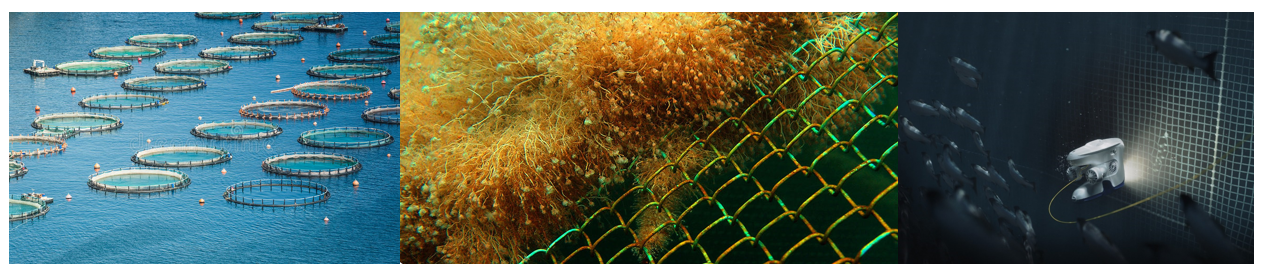
Our paper titled ” Aquaculture defects recognition via multi-scale semantic segmentation ” has been published in Expert Systems with Applications Elsevier Journal (IF: 8.5, Scopus Percentile: 96th (top 4%))!

We are thrilled to announce that our paper titled ” Aquaculture defects recognition via multi-scale semantic segmentation ” has been published in Expert Systems with Applications Elsevier Journal (IF: 8.5, Scopus Percentile: 96th (top 4%))! 🎉


Paper Link: https://lnkd.in/dESkXdKq

Many Congratulations to, Dr. Waseem Akram, Dr. Taimur Hassan, Hamed Toubar, Dr. Muhayy Ud Din, Prof. Lakmal Seneviratne and Prof. Irfan Hussain for their remarkable achievement in developing an autonomous net pen defect detection system. Their innovative multi-scale semantic segmentation approach effectively identifies biofouling, vegetation, and hole issues in the aquaculture environment.

Thank you, Khalifa University and Khalifa University Center of Autonomous Robotics Systems, hashtagKUCARS for the continuous support.

Video Link: https://lnkd.in/ddTth4UR

The Khalifa University-Beijing Institute of Technology team Fly Eagle has become one of the five finalists for the Maritime Grand Challenge, part of the AED11-million Mohammed Bin Zayed International Robotics Competition (MBZIRC) series

The Khalifa University-Beijing Institute of Technology team Fly Eagle has become one of the five finalists for the Maritime Grand Challenge, part of the AED11-million Mohammed Bin Zayed International Robotics Competition (MBZIRC) series.

The KU-BIT Fly Eagle team received US$100,000 prize money, as well as a robotic arm worth US$50,000 for performing well in the Simulation Phase which required teams to develop the proof of concept while completing inspection and intervention tasks in simulation. The simulation environment included a large coastal region, UAVs with different sensor configurations, a USV model, a robot manipulator, and multiple target vessels.