
Masdar Institute Presents its Research Facilities to Boston-Area Students

CAMBRIDGE, Mass., March 2, 2011 – Masdar Institute of Science and Technology, a graduate-level institution based in the United Arab Emirates (UAE), yesterday gave a presentation to Boston-area students at the Massachusetts Institute of Technology (MIT). Masdar Institute, which was established with the advice and assistance of MIT, focuses its academic and research agenda on renewable energy and sustainable technologies and offers full scholarships to all successful admitted students.

“Masdar Institute is dedicated to developing students from the UAE and abroad in the renewable energy and sustainability fields,” said Dr. Lamya N. Fawwaz, executive director of public affairs, Masdar Institute. “The development of human capacity is paramount to solving pressing global sustainability issues and climate change.”

During the presentation at MIT, Masdar Institute, which is located in Masdar City, Abu Dhabi, also discussed its research facilities set in a unique sustainable campus which is a test bed for innovative technologies. Masdar Institute currently offers eight Master’s programs including the recently announced Chemical Engineering program which will be offered September 2011, as well as an interdisciplinary Ph.D.

Steven Meyers, a second year student at Masdar Institute who gave a presentation on student life in Abu Dhabi, said:  “It is a privilege for me to be able to study at the Masdar Institute, where I can bring real benefit to the UAE and beyond through my research in mechanical engineering. It is a huge incentive for all the students knowing that the work we do is helping to build a better future.”

“MIT is very excited about this important collaboration with Masdar Institute,” said Duane Boning, MIT Professor and Director of the MIT Abu Dhabi Program. “We look forward to working together to further advance studies in the strategic and highly important renewable energy and sustainability sectors.”

Masdar Institute began its recruitment tour in the United States with a visit to the UAE Embassy in Washington D.C., where it met UAE Nationals currently studying in the US. As the Institute targets the next generation of students interested in the renewable energy and sustainability sectors, it is visiting several elite universities over the course of the week, including Harvard University, Princeton University and Yale University. 


UAE Embassy in Washington DC Hosts Masdar Institute

Masdar Institute began a student recruitment visit to the United States, by making a presentation to the UAE Embassy in Washington DC. The delegation from Masdar Institute was greeted by Dr. Husam Al Ulama, the UAE Cultural Attaché to the United States, who acknowledged the Institute’s commitment to developing the best and brightest talents in Abu Dhabi and the UAE.

The delegation from Masdar Institute including faculty and students will visit universities including Massachusetts Institute of Technology, Yale University, and Harvard University between Monday February 28th and Thursday March 3rd. Masdar Institute hopes to attract some of the UAE nationals currently studying in the US to apply to study at the graduate-level institution located in Masdar City, Abu Dhabi.

Ambassador Yousef Al Otaiba, UAE Ambassador to the US, applauded the strides made by the Masdar Institute since its inception less than two years ago.  “In a short time, the Masdar Institute has established itself as one of the world’s leading research-driven universities for advanced energy and sustainable technologies,” said Ambassador Al Otaiba. “UAE nationals and other students who attend the Masdar Institute will be working to help address one of the toughest challenges facing society today – ensuring a future, sustainable clean energy supply for the UAE and the rest of the world.”

Dr. Husam Al Ulama, UAE Cultural Attaché to the United States, said: “We are delighted to welcome Masdar Institute to the UAE Embassy in Washington DC. The research and development conducted at the Institute is helping to tackle some of the most pressing problems in the climate change space facing the world today. With Abu Dhabi emerging as an international hub for the renewable energy and sustainability sectors, Masdar Institute is an ideal environment for UAE national students interested in these sectors to further their studies.”

During the visit to the UAE Embassy an overview of Masdar Institute was provided by Dr. Lamya Fawwaz, Executive Director of Public Affairs. Dr Fawwaz said: “Masdar Institute provides UAE national students with the opportunity to create a better future for Abu Dhabi and the UAE, by making it more sustainable and more energy efficient. In 2010, our student intake consisted of 34 per cent UAE nationals, with this recruitment visit we hope to encourage UAE nationals studying in the US to apply to study at Masdar Institute as well.”

Noura Al Dhaheri, PhD student at Masdar Institute, who gave a presentation on studying and living in Masdar Institute said:  “It is a privilege for me to be able to study at the Masdar Institute, where I can bring real benefit to Abu Dhabi and the UAE through my research. It is a huge incentive for all the students knowing that the work we do is helping to build a better future.”

Masdar Institute will be giving presentations at the following universities and institutions in the United States, as part of its US recruitment tour (Eastern Standard Time):

Monday 28th Feb (4.30pm)  Princeton University, New Jersey
Monday 28th Feb (5.30pm)  University of Virginia, Virginia
Monday 28th Feb (7.00pm)  Yale University, Connecticut
Tuesday 1st Mar (12.30 & 3.00pm) MI Day at MIT (two sessions)
Wednesday 2nd Mar (11.30am) Olin University, Needham
Thursday 3rd Mar (4.00pm)  Harvard University, Cambridge
Thursday 3rd (5.00pm)  Boston University, Boston


Masdar Institute Associate Dean appointed Committee Chair at American Nuclear Society

Masdar Institute of Science and Technology has lauded the appointment of one of its key faculty members as a committee chair at the American Nuclear Society (ANS).

Professor and Associate Dean for Academic Affairs Dr. Youssef Shatilla has been honored with the appointment of Chair of the ANS Accreditation Policy & Procedures Committee, a move welcomed by the senior administration of Masdar Institute.

“Professor Dr. Shatilla’s appointment is a testament to the strength of the professional and academic credentials of Masdar Institute’s faculty. We are proud that one of our own will be contributing to such an esteemed body as the ANS Policy & Procedures Committee in such a senior way. We wish Dr. Shatilla all the success in his appointment,” Dr. Fred Moavenzadeh, President of Masdar Institute said.

The ANS is a prestigious not-for-profit, international, scientific and educational organization that, since 1954, has sought to unify professional activities within the diverse fields of nuclear science and technology.  The Accreditation Policy & Procedures Committee that Dr. Shatilla will chair from June 30, 2011 is responsible for developing policy, procedures, and criteria for accreditation of nuclear, radiological and related academic programs in engineering and technology.

In announcing Dr.Shatilla’s selection ANS Vice President/President Elect Dr. Eric Loewen said: “From his current post at Masdar Institute, he brings an international academic flavor to the Committee. This will better position the Society to expand into the Middle East where nuclear engineer programs are increasing. Dr. Shatilla’s previous industrial work at Westinghouse, his work at the INL, and teaching at the Massachusetts Institute of Technology bring extensive experience and insight as both an industry person and now as a professor.”

Dr. Shatilla said his new role was complimentary to his work at Abu Dhabi’s first graduate-level research university focused on the challenges of sustainability.

“As the Associate Dean for Academic Affairs at Masdar Institute, I am responsible for the accreditation of the academic programs. Maintaining the highest standards of education and research through academic accreditation is at the heart of all that we do at the Institute. This is exactly what we will strive for at the Accreditation Policy & Procedures Committee,” he said.

Dr. Shatilla will be focusing his attention as Chair of the Accreditation Policy and Procedures Committee on increasing the ANS’s presence in developing the policy, procedures and criteria for accreditation of nuclear engineering academic programs across the globe.

“This is very relevant today as the world is experiencing a “nuclear renaissance” across developed and developing countries. The committee I will chair will ensure that the standards used to accredit nuclear engineering academic programs across the world are of the highest quality and relevance,” he said.
 

How microbes can help the planet and create energy

From our inner gut to the deep earth and ocean, microbes can live just about anywhere. And this gives them an exciting potential – to provide renewable and sustainable energy sources while helping remove contaminants from the environment.

They have the potential to act as natural catalysts, such as protein enzymes, to perform chemical transformations on organic compounds.

In many cases, these compounds are being used to make energy-rich products such as biodiesel, methane, and hydrogen gases.

If we can identify those products and pathways, we can replicate them, be it in pharmaceutical, nutritional, chemical and energy-producing processes.

First, though, we need to understand how the microbes manage to use metabolic pathways to process molecules they find in the environment – and that takes an interdisciplinary approach integrating bioinformatics, microbiology, molecular biology, and chemistry.

Scientists at the Masdar Institute are delving into this new and potentially profitable science.

Using high-throughput sequencing – in which many pieces of DNA or RNA are read at the same time, allowing much faster results – we are exploring a range of issues, from removing contaminants from the environment to using microbes to produce energy-rich molecules, such as methane or hydrogen.

One project, led by Dr Farrukh Ahmad, is exploring ways environmental microbes can help remove chemicals from environmental water supplies, making water safer for use.

His research group is isolating microorganisms that can degrade man-made industrial compounds for environmental bio-remediation.

They use high throughput sequencing to identify the chemical pathways involved, and to develop processes that can help with decontamination.

Another group, led by Dr Lina Yousef, is looking at the messenger RNA – the molecules that provide information for chemical pathways – from actively transcribed genes.

They hope to gain an understanding of how microbes evolved to adapt the UAE’s extreme environments, and of how the evolution of biochemical pathways can be directed for the purposes of bioremediation and energy production.

Another colleague, Dr Jorge Rodriguez, is developing mathematical models describing how microbes are involved in waste water regeneration and in producing biofuels from organic waste in waste water.

His lab is looking at the metabolic profile of a reed bed microbial ecosystem that removes contaminants from waste water.

A second project looks at the production of methane or hydrogen from anaerobic fermentation of waste water.

Bringing computing to bear on the issue, Dr Andreas Henschel is developing algorithms to identify and extract new metabolic pathways from large genomic databases.

This again should help identify microbial pathways with the potential for bioremediation and energy production.

As the last member of the team, I am working to isolate microalgae from the UAE environment and study how they can be used to provide energy-rich molecules for food, pharmaceuticals, and biofuels production.

Again using high-throughput sequencing, my lab focuses on understanding the metabolic potential of each species of microalgae.

These isolates can then be used to clean up waste water, or to help mitigation of CO2 by using environmental CO2 as a source of carbon for growth.

With this mix of interdisciplinary experts and high-tech equipment, we hope to position Abu Dhabi as a leader in microbial genomics for industrial and environmental applications in the Gulf and wider region, and to put the Masdar Institute at the forefront of environmental microbiology in the UAE.

Dr. Hector Hernandez is assistant professor of chemical engineering at Masdar  


How ‘smart dust’ could save lives

Imagine walking into your home and the entire house transforms to welcome you. The walls display comforting images, the air is filled with pleasant aromas and sounds. Everything adapts to your mood.

There are sensors everywhere. On your body, and in your clothes, telling your home if you’re tired, hungry, or happy. Throughout the house, the sensors create an intelligent and adaptive environment.

But this intelligent house has no single “brain”, no hub where all the information is gathered and processed, and which issues instructions to all the various devices that adapt the environment around you.

Instead, the intelligence emerges from the fluid interconnection of these devices, with information processed in a distributed fashion. This kind of processing network stands to create amazing new possibilities.

We’ve already seen the power of networks as the internet has connected people and ideas, allowing whole new ways of getting things done.

Now a similar principle is on the verge of transforming the environment around us: our homes, cars, offices, gyms, and towns.

Liquid networks are in fact fundamental to any thriving system – as Steven Johnson notes in his book Where Good Ideas Come From: The Natural History of Innovation – from the explosion of biological innovation in the Indian Ocean that puzzled Charles Darwin to the success of human societies and organisations that promote the flow of ideas rather than a rigid hierarchy.

Technically, though, creating a liquid network environment for the home or office is quite a challenge. Researchers at the Masdar Institute are now studying this problem, looking not only at ways of transmitting vast amounts of information, but also minute amounts from sensors that can be thought of as such “smart dust”.

One challenge is transmitting video signals from smart phones or tablets to displays that cover entire walls – an immersive video environment somewhat akin to a 3D IMAX cinema.

This kind of immersive experience requires enormous resolutions and frame rates – and consequently a huge amount of data.

Current wireless standards – the wifi in your laptop – can’t even nearly touch it. They operate at relatively low frequencies, below 6GHz, where there simply isn’t enough bandwidth to transmit such vast amounts of information.

Fortunately other parts of the electromagnetic spectrum might. Lying between the electrical and optical realms, they are known as millimetre-wave and terahertz bands.

The trouble is that at these frequencies, even the most advanced transistors run out of steam eventually. Optical transmission could work in theory, but the technology just isn’t there yet.

There are physical hurdles, too – not least the fact that these waves are absorbed by both oxygen and water, making it tricky to get them across a room.

At the Masdar Institute, we are developing new types of transceiver – devices that both receive and transmit signals – to mitigate these problems. That way, we hope to help unleash this bandwidth.

At the other extreme of bandwidth, researchers are investigating ways of embedding sensors in clothes and bandages to collect vital information about the health and wellbeing of the person wearing them.

The problem here is such sensors need to operate without batteries.

Instead, they must harvest tiny amounts of vibrational or thermal energy from the surrounding environment, in a process similar to that used by mechanical wristwatches.

This energy allows the sensors to process the information they collect and transmit small amounts of relevant data between each other and a “hub” device – a smartphone, for example.

This data could be used to help us eat, exercise and sleep better.

It might even help predict the onset of serious health problems, thus saving lives.

Such sensors operated by harvested energy could be deployed everywhere. Researchers at the University of California, Berkeley have even coined two fascinating terms for its component parts: “smart dust” and, “the swarm”. It is projected there will be more than a thousand such sensors per person.

While this will certainly create an environment completely different from what we know today, it also creates amazing opportunities for Abu Dhabi as it pushes into the field of semiconductor manufacturing to secure its post-oil future.

Dr. Ayman Shabra is assistant professor of microsystems engineering at the Masdar Institute of Science and Technology.


How 3D chip stacking may be the answer to smaller phones

We all want faster, smaller and more energy-efficient smartphones. Unfortunately, physics is getting in the way.

Moore’s Law, which states that the number of transistors on an integrated circuit doubles approximately every two years, is no longer held to be true. Tried and true methods for shrinking integrated circuits have nearly reached their economical implementation limit.

So scientists and engineers are working to find a way of pushing past that obstacle to deliver the next generation of circuit design.

One possible way of scaling up the performance of integrated circuits is 3D chip stacking.

Conventionally, the focus has been on simply shrinking the size of conventional 2D chips, to pack as much as possible into a single layer.

The 3D chip stacking builds on those efforts, by thinning these chips and stacking them on top of each other to produce high-speed and multifunctional systems.

These multilayered chips can incorporate vertical interconnects, transmitting data and power up and down the chip stack.

This not only increases the communication bandwidth between the chips in the stack, but also means the communication links between the various parts can be shorter. Shorter links means less delay and therefore better performance -and less power drain. A properly designed 3D stacked system can use as much as 70 per cent less power than a conventional chip.

But while this area of research has been gaining momentum over the past decade, with significant research from market leaders like Intel, much needs to be done to ensure that these far more complex chips function as seamlessly as needed.

In-depth exploration and testing must be done to learn how the close proximity of so many transistors, in three dimensions, affects the functionality of the chip in terms of its electrical, thermal and mechanical properties.

It is already known that the 3D design changes the stresses within the device. The thinned-down circuits do not behave in the same way, which can affect the transport of the electrons. And the stack design can get hot, too.

These factors can add up to create problems with the signals, voltage, material properties, device behaviour and material integrity, among other things.

The Masdar Institute has embarked on research that seeks to establish design and manufacturing guidelines for integrating electronics with photonic (eg. laser) circuits, and to characterise how thinning and stacking of the chips could potentially affect the behaviour of electrons and photons in a complex stacked system.

The major goal of this undertaking – which includes 12 individual projects – is to explore and illustrate the low-power features of 3D integrated microelectronics in a variety of computing, communication, storage and sensing design contexts.

My focus will be on the impact of stacking on the electronic circuits and their yield.

It is our hope that the sum of these projects will be a clearer idea of how to manage multifunctional, diverse integration of the chips, avoid thermal hotspots, and improve overall functionality in terms of power and speed.

We also hope to address the need for new computer-aided chip design algorithms that take account of the heating challenges.

And these projects will provide unique, functional and crucial hands-on experience for the professionals in the UAE’s vibrant semiconductor industry.

It should help Abu Dhabi develop indigenous know-how in 3D chipmaking – an area that will soon be the crux of our rapidly evolving high-tech world.

Dr. Irfan Saadat is a professor of microsystems engineering at the Masdar Institute of Science and Technology


Abu Dhabi perfect for crop that could change the world

Think of Abu Dhabi’s landscape and you might envisage sandy beaches and rolling dunes spotted with the occasional windblown plant – a picture that is not particularly lush or verdant.

But this hot and arid region actually has great potential to support a type of life that can contribute to the economic and environmental vibrancy of the emirate.

Some of the huge swathes of open desert and coast that Abu Dhabi has in ample supply could, one day, be the farmlands for a promising type of crop, to provide sustainable energy and a valuable export commodity. Certain kinds of algae – simple plants that grow in water and have no true stems, roots or leaves – could be easily cultivated here.

Abu Dhabi’s abundant sunshine and climate makes it a nearly ideal location for growing microalgae – and with the right treatment, this algae can be turned into biofuel.

Microalgae biofuels have several advantages over other biomass-derived fuel sources. They can be grown on dry, salty or nutrient-poor land that is otherwise useless for farming. That removes the “food-versus-fuel” argument that is often used against other forms of biofuel, such as ethanol derived from corn.

Algae also does not sap the UAE’s precious reserves of fresh water, growing in brackish water, seawater and even wastewater. And because the carbon in the fuel has only recently been captured from the atmosphere, the whole process is carbon-neutral.

Lastly, the algae has the potential to produce useful – and valuable – byproducts, in the form of pharmaceutical or even food supplements.

With these benefits in mind, the Masdar Institute of Science and Technology has started investigating the use of native microalgae strains for making biofuels.

This research is being carried out by interdisciplinary teams of scientists and engineers, exploring both the agricultural and chemical engineering sides of cultivating the microalgae and producing drop-in diesel and jet fuel. Agriculturally, the focus is on understanding what conditions – temperature, salinity and exposure to sunlight – provide the best growing environment for strains that are native to the UAE.

For fuel synthesis, standard biofuels processing techniques to extract oils from the microalgae – to be subsequently turned into fuel – are being investigated, as well as other more novel routes that are not based on oils. The Masdar Institute is also exploring microalgal products including proteins and carotenes that can be used as food supplements or pharmaceuticals. Key to this is understanding the metabolic pathways that microalgae use to produce nutrients such as beta-carotene. Native strains are currently being mapped genetically for this purpose. The strains will then be genetically manipulated to make the process more efficient.

In addition to microalgae, the scientists and engineers at Masdar Institute are also looking at macroalgae – more commonly known as seaweed.

Seaweed is potentially a rich source for pharmaceuticals, such as antibiotic and antiviral compounds, which have a very high commercial value.

But little is known about the composition of and potential products that could be obtained from the macroalgae that are native to the UAE.

Work at present is focused on prospecting for native macroalgae strains and describing their chemistry. With about 2,390 kilometres of coastline along the mainland and islands of the southern Arabian Gulf, products from living marine habitants could very well prove to be a viable new “green” industry for Abu Dhabi and the UAE.

Dr. Robert M Baldwin is professor of chemical engineering at the Masdar Institute of Science and Technology.

URL : – http://www.thenational.ae/news/uae-news/technology/abu-dhabi-perfect-for-crop-that-could-change-the-world

New technique to use light to give early warning of illnesses

Sunlight provides Earth with a continuous stream of energy that sustains life in this planet. It lets us see, too. Not only can we see whether the fruit on a tree is an apple or an orange, the characteristics of light allows us to tell how old a star is, to probe proteins in the brain, and even detect single atoms.

At the Masdar Institute, we are taking advantage of these properties to design advanced light-sensing circuits that will help colleagues researching biofuels, solar cells, lightweight aircraft materials and more efficient desalination plants.

On one project, we are designing miniaturised chips that include lasers, optical sensing heads, micro-pumps and micro-channels, together with electronic control circuitry that can monitor glucose levels in diabetics, and diagnose asthma or even risk of severe heart failure. These chips will be made and tested at Masdar Institute, using cleanroom techniques similar to those used in making any other microchip.

We are looking at the “chemical fingerprints” left by some of these conditions – in exhaled breath, for example. These chemical compounds absorb light of specific frequencies – particularly at the two extremes of the visible spectrum, ultraviolet and infrared. Like a fingerprint, this absorption is unique, allowing us to distinguish the exact compound present.

Our project aims to design, build and test a compact and portable system that can spot the unique signatures of various gases. Such a device would have many uses. It could be used by doctors to test for diseases by checking for the presence of telltale chemicals in the breath of sufferers of diseases like lung fibrosis disorders, heart failure, asthma and diabetes.

It could also be used to monitor air quality for environmental threats to workers, like toxic industrial chemicals. Risk exposure is a serious concern in many industries, from manufacturing, to mining, oil and gas, and laboratory work.

Currently, environmental monitoring is done with devices specific to a single chemical, such as dosimeter badges for ionic radiation and personal pump-and-particle-entrapment monitors for asbestos. There is no wearable device that can monitor and measure a range of chemicals, and provide that data live to the user.

The best devices currently available – mass spectroscopy detectors – are bulky and expensive, limiting their use to only a few research labs. A portable and highly integrated optical and microelectronic system would be useful in a wide range of situations. The technology can also be deployed remotely, at site, to monitor for pollutants in the air, earth or water. This would help provide far more accurate and current data on how activities like quarrying, mining or water desalination were affecting the area around them.

The device will be sensitive enough to monitor for man-made nanoparticles, new forms of materials like metals and semiconductor particles, whose environmental effect is unknown.

Having access to this kind of data will help provide a clearer picture of the cause and effect of our actions, thus allowing for appropriate mitigation and correction.

Last but not least, having an advanced system for detecting trace contaminants will give us a better picture of the environmental effect of Abu Dhabi’s increasingly diverse industry.

The creation of such a device – and the technology it requires – could thus not only help the UAE better monitor the health and welfare of its people and environment, but also provide a useful new product to the global market, thus contributing to the country’s knowledge economy exports and intellectual property.

Dr. Jaime Viegas is an assistant professor of microsystems engineering at the Masdar Institute of Science and Technology.

Fishy waste to sow salty fields

As the world’s population increases, so does its demand for fish. 

And as overfishing of the oceans has hit global fish stocks, that demand is increasingly being met by aquaculture. The fastest-growing animal food producing sector, aquaculture already accounts for almost half the world’s fish consumption.

While this “blue revolution” has the potential to limit the pressure on stocks of wild fish, while providing protein for the growing population, aquaculture still poses environmental challenges.

Many aquaculture operations discharge wastewater containing fish wastes and uneaten fish feed. High in nutrients, this wastewater can cause a rapid growth in the population of algae, some toxic. And when the algae die, their decomposition uses substantial amounts of the oxygen in the water, which may cause many other organisms to die.

For freshwater fish, such as trout or catfish, a convenient solution is to use the wastewater to irrigate crops such as corn or soybeans. But with marine fish or shrimp, which are grown with seawater, the effluent is salty, and unsuitable for irrigation.

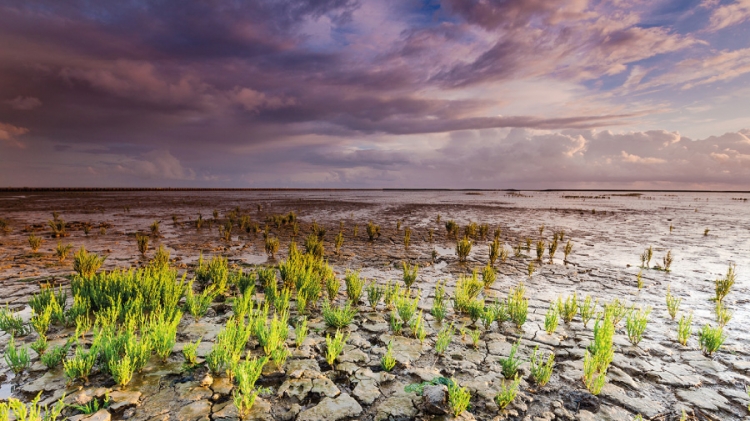
There are, however, some plants, known as halophytes, that can grow in very saline conditions.  Common halophytes that most of us are familiar with are mangroves. 

If halophytes could be domesticated into useful crops – oilseeds (similar to soybeans), forage for livestock feed (similar to alfalfa), or even vegetables – perhaps that salty, nutrient-rich wastewater could be an excellent source of irrigation water for them.

Here in Abu Dhabi, the Masdar Institute of Science and Technology is beginning a five-year project to examine the feasibility of doing exactly that.

Its Integrated Seawater Energy and Agriculture System project is the flagship of its Sustainable Bioenergy Research Consortium (SBRC), a partnership between the institute, the government of Abu Dhabi, Boeing, Etihad Airways, UOP/Honeywell and Safran. One of the project’s goals is to get energy from the halophyte plant material and oil.

The plan is for fish or shrimp to be grown in ponds using seawater pumped from the Arabian Gulf.  The wastewater from these ponds will be used to irrigate fields of halophytes selected for their potential yields.

Nutrients from the wastewater will act as fertiliser for the halophytes – which will effectively filter out those nutrients.

At the same time, the halophytes will produce a useful product, such as an oilseed to be turned into biofuel, and a woody biomass that can be further processed into fuel or other products, and fodder.

Water draining from these halophyte fields will eventually drain into managed mangrove forests – including some areas where there are currently no mangroves. The mangroves will remove any further nutrients from the wastewater.

Additionally, the mangroves will serve another important environmental purpose, as nursery areas for coastal fish and a habitat for birds.

All this should use very little precious freshwater, as it will rely on seawater, without degrading arable land that could be used to grow conventional crops.

The salty land it will use would not support conventional crops – so the project will in effect turn previously commercially useless land into a useful, biologically active area. And it should all be sustainable in its energy use and greenhouse gas emissions.

With the potential to produce fish and sustainable energy with limited waste, this technology could hold great promise for coastal desert areas.

Dr J Jed Brown is the director of the Masdar Institute’s Integrated Seawater Energy and Agriculture System project.
http://www.thenational.ae/news/uae-news/technology/fishy-waste-to-sow-salty-fields

For nation’s school-weary youth, hands-on science holds the key

In an inspiring speech at the recent TEDx Ajman, the columnist Khalid al Ameri pointed to the alarming dropout rate at Emirati high schools – one in four boys and one in five girls.

That brought to my mind another teacher who casually mentioned that from his own observations in the UAE, children who otherwise seemed to hold back were transformed into leaders when placed in team settings with a clear project objective.

This leads to the obvious question: how can we help lagging students rise up and meet their potential before they are so lost to education that they drop out?

It is a challenge many are working to address, just as developed economies try to reverse the flight away from maths and science.

The success of initiatives such as the Masdar Institute is absolutely dependent on finding enough students who are not only talented – of whom there is no shortage in the UAE – but also trained and proficient in the rigours of maths and science. Without them, we have no purpose as educators.

The slow, difficult process of adapting the education system and the maths and science culture has been under way for some time. Beyond the Government setting standards, checks and incentives, there have also been some remarkable efforts from others to help inspire young people.

That is why the Masdar Institute has launched its Young Future Energy Leaders programme, which exposes talented and ambitious young people to the energy sector, its leaders and its dialogues.

Such programmes, which provide young people with hands-on practical experience, are extremely effective in teaching. Experience is worth a thousand memorised facts.

Similarly, for the critically important high-school population, the World Robot Olympiad that was tried out last year by the Abu Dhabi Educational Council shows fantastic potential.

Also aimed at that age group is the Lego League, a worldwide robotics tournament that could serve to excite, involve and motivate the nation’s youngsters to pursue maths and science

Organised by the For Inspiration and Recognition of Science and Technology (First) group, these events are an annual, worldwide robotics competition intended to show that science, technology and problem-solving can be exciting and rewarding.

This effect is not simply a conjecture. Data from Norway, where First Scandinavia has been organising tournaments since 2000, showed a tangible increase in enrolment in science and engineering education, especially among girls.

Not only did it reverse a downward trend, it actually increased enrolment by 17 per cent in a decade. And the proportion of women in science rose from 27 per cent in 2000 to 32 per cent in 2010.

These successes were a result of a concerted attempt by the Norwegian public and private sectors to promote innovation, with hands-on education at the heart of it.

In the United States, a study by Brandeis University found that First students were three times more likely to take engineering degrees and 10 times more likely to pursue an internship after their first year of university than the control group.

The World Robot Olympiad, a sister event to First, was held in Abu Dhabi in November. We believe Abu Dhabi and the UAE should make such events a regular fixture, and lead the Gulf region in winning young hearts and minds for science.

The Masdar Institute and its professors should surely support such efforts, as will industrial leaders that rely on the engineering excellence of the young Emirati workforce, such as Adnoc, Mubadala, Adewa, Emal, Enec, Atic and Etisalat. Their support is critical for the UAE’s First Lego League to take shape.

With that, and more events like it, we hope that more of the nation’s young people will be able to experience first hand the amazing potential of science and advanced studies.

If we can save just one child from dropping out and inspire them instead to become one of the scientists, engineers or technicians that the nation needs, we will have done something of real benefit to the country and its people.

Dr. Matteo Chiesa is an associate professor of mechanical engineering and materials science and engineering; Dr Sgouris Sgouridis is an associate professor of engineering systems and management, both at the Masdar Institute of Science and Technology
http://www.thenational.ae/news/uae-news/technology/for-nations-school-weary-youth-hands-on-science-holds-the-key

Nothing ventured, nothing gained

Money drives businesses and states. And the secret to making it is often innovation.

Innovation creates wealth by providing a product, system or service that is either cheaper or better than those already available, or something that disrupts the status quo by providing something completely revolutionary.

This third option – a disruptive technology – is the holy grail of innovation, as it creates a new market where there was none before.

Think of computers or mobile phones. Each met a need that was not yet even properly identified, let alone being met. They carved out a new market for themselves, and in the process, provided massive returns to those involved in their design and marketing.

But most successful innovators – Alexander Graham Bell, Thomas Edison, Steve Jobs, Bill Gates – failed repeatedly before they succeeded. What allowed them to continue to tweak their concepts until they reached a successful formula was a spirit of risk-taking.

To inculcate that spirit, we need to develop a culture that understands that failure is part of research and exploration – and decriminalise failure in business.

Apple would not be the company we know today had Steve Jobs not been able to recover from the failure of his workstation company NeXT, which lost hundreds of millions of investors’ dollars. It is said the average entrepreneur has 3.8 business failures before they succeed.

We must embrace this as part of the learning and idea-honing process to develop a true innovative culture in the UAE.

There needs to be the potential of payoff for those who take risks. Some of the world’s wealthiest people today were technological innovators who got rich because helpful laws and strong protection of intellectual property let them collect and reinvest the wealth their innovations generated.

Not everyone succeeds. If you try to innovate, you may lose money. But if you fail to innovate, you may lose business and thus still lose money – as the fallen camera giant Kodak can testify.

The UAE has made great progress in promoting innovation. This year, the GE Global Innovation Barometer report rated the country as “above average”.

However the report also noted areas where there is more to be done, particularly in venture capital deals – respondents said venture capital is quite difficult to obtain – and high-technology exports.

Both could be improved through better collaboration across academia, industry and government, as well as by tightening intellectual property rights and easing bankruptcy laws.

With more conducive investment laws, the UAE would be able to enjoy the spirit of risk-taking. And in time that would surely result in meaningful innovation, creating and accumulating wealth for the nation and providing it with a brighter and more economically diverse future.

Dr. Fred Moavenzadeh is president of the Masdar Institute of Science and Technology
http://www.thenational.ae/news/uae-news/technology/nothing-ventured-nothing-gained


How enzymes deal with rubbish we cannot afford to waste

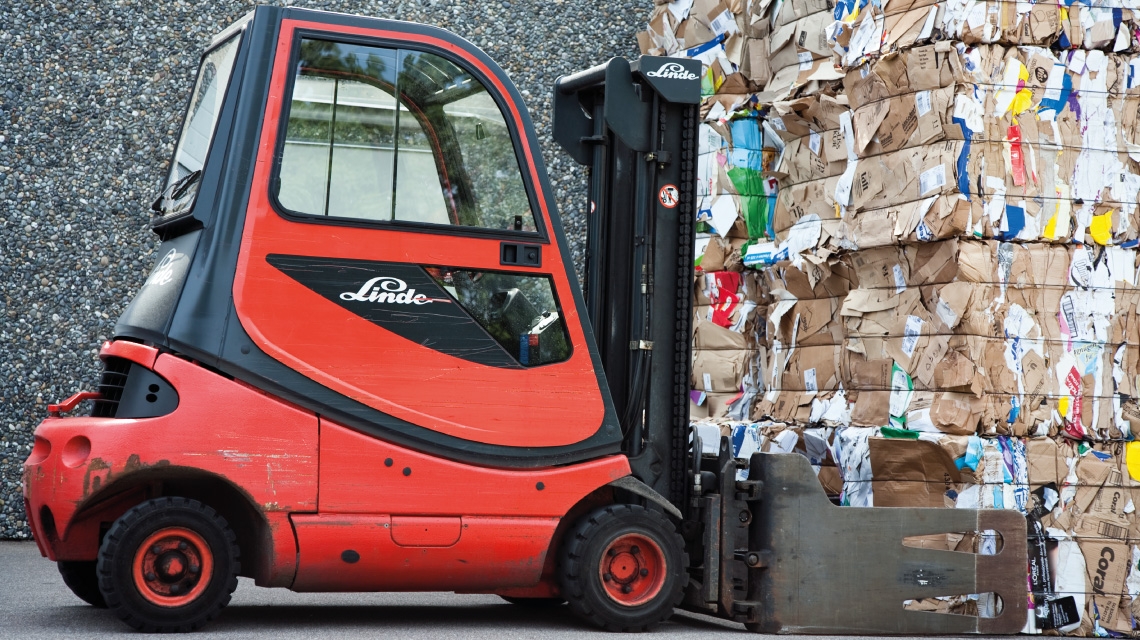
Most of us don’t bat an eyelid at throwing out leftover food, peels, cores, scraps from the table and wrappers. Metal, glass and plastic, yes, we realise these things can be recycled. But organic waste such as a banana peel? What value does that have?

How about powering a jet plane? Or making shampoo that’s better for the environment? Organic and cellulosic municipal solid waste – the food and paper we mostly throw out – can be broken down into their most basic form, providing a ready supply of sugars. These can be used to produce biofuels and biochemicals that could help replace the petrochemicals we rely on so heavily.

In Abu Dhabi alone, there is very large potential to put this organic waste to use. The capital’s residents produce more than 2,000 tonnes of the stuff every day, nearly all of which goes into landfill.

That is neither efficient nor sustainable – it takes up land that could otherwise be used more productively and risks contaminating the soil and groundwater.

Turning it instead into biofuel or biochemicals would avoid this loss of land while producing a renewable energy or resource that can be used or sold.

But there is a major stumbling block. Collecting, sorting and processing waste is a relatively expensive and complicated process. It requires the creation of an infrastructure where waste can be sorted – ideally at the point of disposal through separated bins – and then processed in an easy and cost-effective way to quickly break down the waste so that its caloric value – the energy it contains – can be utilised.

At the Masdar Institute we are researching the latter question, looking at Masdar City as a model for Abu Dhabi as a whole. We will evaluate the available technologies and methods, economic feasibility, and the processes that turn the biomass into biogas and biochemical. This information can then be used to develop a realistic and detailed strategy for Abu Dhabi and similar urban landscapes.

One way we are exploring is the use of enzymes to act on the various components of household waste. This kind of “pre-processing” can save time and money. The enzymes liquefy the organic part of the waste while nonorganic waste like plastics stays solid. The liquid can be easily drained off to be used as food for microorganisms, producing biofuels or biochemicals. Different microorganisms can make a variety of products – methane (biogas) that can be used for to generate heat and electricity or power cars, bioethanol or bio-butanol, liquid fuels that can also power cars, and “green” chemicals that can replace petrochemicals in everything from beauty products to polymer production.

The global petrochemical market is estimated at more than US$3 trillion a year and rising.
As fossil fuels become more costly to extract – both financially and environmentally – mankind will need affordable and secure alternatives.

Research such as ours will help provide a necessary alternative, not only to help sustainably power Abu Dhabi’s further growth, but also provide it with valuable export products while solving the problem of waste disposal.

Biofuels and biochemicals will surely have a greater role to play in our carbon-constrained future. Our waste is a resource we cannot afford to “waste”. And research projects like ours will help ensure that green alternatives are economically feasible and ready when we need them.

Dr. Mette Hedegaard Thomsen is an assistant professor of chemical engineering at the Masdar Institute of Science and Technology
http://www.thenational.ae/news/uae-news/environment/how-enzymes-deal-with-rubbish-we-cannot-afford-to-waste