
Masdar Institute Professor Named Vice-Chairman of Carnegie Institution for Science

Professor Bruce Ferguson Becomes First Middle East Resident to Serve as Trustee in Carnegie’s 112-Year History 

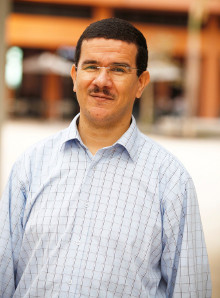
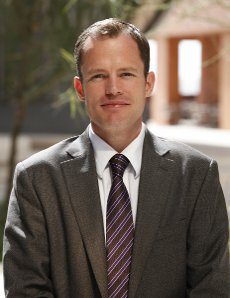
Abu Dhabi-UAE: 25 June, 2013 – Masdar Institute of Science and Technology, an independent, research-driven graduate-level university focused on advanced energy and sustainable technologies, today announced Professor Bruce Walker Ferguson has been named Vice-Chairman of the Carnegie Institution for Science.
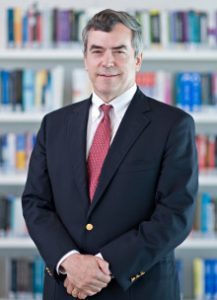
This is the first time in Carnegie’s 112-year history that a resident of the Middle East has served as a trustee of the respected institution.

The Masdar Institute announcement follows the annual meeting last month in Washington, D.C., in which the Board of Trustees of the Carnegie Institution elected Professor Ferguson as its non-executive Vice-Chairman. The term of office is three years renewable. 

The Carnegie Institution is one of the world’s oldest and most respected not-for-profit science research foundations. While its trustees have lived in the U.S., Europe, Japan, Canada, and other countries, as a resident of Abu Dhabi Professor Ferguson has become the first trustee to live in the Middle East.

Dr Fred Moavenzadeh, President, Masdar Institute, said: “We welcome the appointment of Professor Bruce Ferguson to the Carnegie Institution for Science which bears testimony to the high caliber of our faculty. With the support of the country’s leadership, we continue to raise our profile among world-ranked institutions through renowned faculty who are recognized by other global science institutions. Faculty is the mainstay of any academic institution and we will steadfastly progress to achieve our goals and remain among the top research-based scientific institutions in the world.”

Professor Ferguson, who teaches technology management, innovation and entrepreneurship at the Masdar Institute, also directs the recently announced new Center on Innovation Systems and Entrepreneurship. Together with the Massachusetts Institute of Technology, the Center co-sponsored the ‘UAE Forum on Innovation and Entrepreneurship’ in Abu Dhabi in May 2013.

Professor Ferguson said: “The expanded reach of Carnegie’s Board membership reflects the increasing globalization of science and technology. I look forward to continuing to support basic science research at Carnegie and technology-directed research at the Masdar Institute. Both are vital components of the innovation ecosystem needed to develop a knowledge-based economy.”

Professor Ferguson is a co-founder and former COO of Orbital Sciences Corporation, a space technology company listed on the New York Stock Exchange, and the co-founder and former CEO of Edenspace Systems Corporation, a plant biotechnology company developing new renewable energy and environmental products. He has been a Fellow at the George Washington University Center for International Science and Technology Policy, and Vice-Chairman of the Kansas State University Research Foundation. He received his Juris Doctor (JD), Master of Business Administration, Master of Education, and Bachelor of Arts degrees from Harvard University.

The Carnegie Institution has six research departments – the Geophysical Laboratory and the Department of Terrestrial Magnetism, both located in Washington, D.C.; The Observatories, in Pasadena, California, and Chile; the Department of Plant Biology and the Department of Global Ecology, in Stanford, California; and the Department of Embryology, in Baltimore, Maryland.

Serving as a key pillar of innovation and human capital, Masdar Institute remains fundamental to Masdar’s core objectives of developing Abu Dhabi’s knowledge economy and finding solutions to humanity’s toughest challenges such as climate change.

Established as an on-going collaboration with the Massachusetts Institute of Technology (MIT), Masdar Institute integrates theory and practice to incubate a culture of innovation and entrepreneurship, working to develop the critical thinkers and leaders of tomorrow.  With its world-class faculty and top-tier students, the Institute is committed to finding solutions to the challenges of clean energy and climate change through education and research.
Masdar Institute Summer Internships to Offer Clean Technology Research in Two Key Areas

Projects on Water Quality Sensors and Solar Cell Technologies Demonstrate Knowledge-Building Measures

Abu Dhabi-UAE: 26 June, 2013 – Masdar Institute of Science and Technology, an independent, research-driven graduate-level university focused on advanced energy and sustainable technologies, today announced three projects offered for the research internship program this summer will target the key areas of water quality and solar cell technology.

Water quality sensors, solar cell applications and Si PV solar cells are some of the projects offered for the four-week research-based internship program for UAE national undergraduates that is scheduled to commence from 30 June this summer.

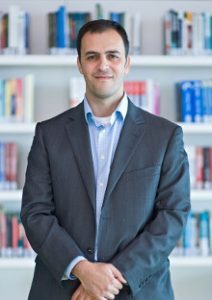
The project titled ‘Technologies and Applications of Solar Cells’ will be led by Dr. Mahieddine Emziane, Associate Professor, Materials Science and Engineering program. The project offers students an opportunity to design solar cells from materials and device perspectives, to model and simulate solar cells, as well as investigate solar cells under UAE operational conditions. An intern is also expected to assess and conduct a feasibility study of the solar cells. In addition to proficiency in science and engineering, self-motivation and hard work are additionally required to complete this research project.

The ‘Real-Time Continuous Water Quality Sensors’ project will be spearheaded by Dr. Clara Dimas, Assistant Professor – Microsystems Engineering program. An intern working on this project is expected to test Microfluidic and optical devices to sense water quality parameters and review the information available in relevant literature. Students majoring in Chemical Engineering / Material Science / Electrical Engineering / Mechanical Engineering with a penchant for innovation were eligible to apply for this project.

Dr Adel Gougam, Assistant Professor – Materials Science & Engineering, is in-charge of the project titled ‘Technology comparison of high efficiency Si PV Solar Cells’. An intern is expected to do a comprehensive study on the existing high efficiency (above 18%) Si based solar cells and do a technologocial and economical assessment of the various technologies involved in the fabrication of the high efficiency cells and assess the potential of market penetration of such technologies in the UAE and the GCC. Eligibility includes proficiency in physics, materials science, chemistry and some computer modeling. 

An arid region, the GCC considers water as a strategic area. A Frost & Sullivan analysis reveals that between 2010 and 2012 the GCC has witnessed growth rates between 14%-20% across various segments of the water and wastewater industry, including treatment equipment and chemicals. In the next five years, the region expects that numerous technology options will be available for desalination, water and wastewater treatment.

Dr. Clara Dimas said: “Water quality sensors play a crucial role in ensuring public health and a healthy environment. This research project will help interns to use devices to generate data for quality assessment. We hope students will enthusiastically participate in the project and enhance their research skills for future opportunities.”

One of the fast growing sectors in clean energy, solar power offers tremendous potential. According to a report titled ‘Growth Opportunities in Global Solar Photovoltaic Cell Market 2012-2017: Trends, Forecasts and Opportunity Analysis’ from international firm Research and Markets, the global solar photovoltaic (PV) cell market is expected to reach US$35 billion by 2017, with compound annual growth rate (CAGR) of 4% over the next few years. Such analyses reflect the growing global trend in installing high-power devices that facilitate access to solar power.

Dr. Mahieddine Emziane said: “Various technologies and applications are being used to make solar cells generate power more efficiently. The interns selecting their project will work on solar cells from the design stage to conducting feasibility study. We hope the university seniors will learn additional skills through participating in this project and creatively enhance their knowledge in the science and engineering of solar cells.”

Dr Adel Gougam said: “Si PV solar cells are generally flat and rigid compared to other types of cells. Our summer research project will aim to assess the efficiency rates of these cells and establish a baseline of the research to be carried in the field. We hope students will gain expertise in understanding the complexity of the various processes involved in the fabrication of these high efficiency cells, noting that Si based cells represent the largest share of the PV market as of today.”

In order to participate in these research projects, the UAE national undergraduates must have science or engineering as ‘major’ subjects in their degree course and a GPA of at least 3.0 (on a 4.0 scale). An IELTS score of at least 6.0 (or equivalent) is mandatory along with a letter of recommendation.

Serving as a key pillar of innovation and human capital, Masdar Institute remains fundamental to Masdar’s core objectives of developing Abu Dhabi’s knowledge economy and finding solutions to humanity’s toughest challenges such as climate change.

Established as an on-going collaboration with the Massachusetts Institute of Technology (MIT), Masdar Institute integrates theory and practice to incubate a culture of innovation and entrepreneurship, working to develop the critical thinkers and leaders of tomorrow.  With its world-class faculty and top-tier students, the Institute is committed to finding solutions to the challenges of clean energy and climate change through education and research.

Summer Research Internship for UAE National Undergraduate Students Begins at Masdar Institute

Four-Week Program Offers Six Research Projects Focusing on Water, Solar Energy and Fuel Cell

Abu Dhabi-UAE: 30 June, 2013 – Masdar Institute of Science and Technology, an independent, research-driven graduate-level university focused on advanced energy and sustainable technologies, today announced the beginning of the four-week summer research internship program for the UAE national undergraduate students.

Among them, six students are from the University of Sharjah, two each from Abu Dhabi University and University of Arizona, and one each from HCT Sharjah, The University of Edinburgh and The American University of Ras Al Khaimah. The program offers a total of six research projects focusing on water, solar energy and fuel cell – areas that are identified as strategically important to the UAE.

Out of a large number of applications, the selection panel chose candidates who showed a strong inclination in clean energy and sustainable advanced technology research. The eligibility criteria for students included Science or Engineering as ‘major’ subjects in the degree course, a GPA of no less than 3.0 (on a 4.0 scale) and an IELTS score of at least 6.0 (or equivalent) along with a letter of recommendation.

Dr Fred Moavenzadeh, President, Masdar Institute, said: “The projects are specifically chosen to allow the interns gain insights into advanced research and development, while enriching their laboratory experience at Masdar Institute. The UAE leadership’s consistent support has enabled Masdar Institute to become a leading research-based academic institution, dedicated to Abu Dhabi’s human capital development. We hope the interns will be actively involved in the research projects and enrich themselves with fresh skills to lead innovation in clean technologies.”

Among the projects that were offered for internship, Dr Bruce Walker Fergusson, Professor, Engineering Systems management, is heading a ‘Case Study Development’ project, while Dr Hector Hernandez, Assistant Professor, Chemical Engineering, is leading the project on ‘Isolation of Camels Rumen Microbes Implicated in Methane Production’.

Dr. Simo Pehkonen, Professor – Chemical Engineering, handles the project titled ‘Dye Sensitized Solar Cells Using Palm Date Fruit’, while Dr. Mahieddine Emziane, Associate Professor, Materials Science and Engineering, is responsible for a project on ‘Technologies and Applications of Solar Cells’.

Dr Clara Dimas, Assistant Professor – Microsystems Engineering, will guide the interns for a project titled ‘Real-Time Continuous Water Quality Sensors’, and Dr. Adel Gougam, Assistant Professor – Material Science & Engineering, runs the research project on ‘Comparison of high efficiency Si PV solar cells’.

During the internship program, students will acquire new insights into the scientific process while learning ways to apply their knowledge in technical and laboratory skills. They will also work with their professor guides and learn to handle the most advanced equipment at the cutting edge laboratories in Masdar Institute.

At the end of the program, students’ works on select projects will be showcased through poster presentations at a special ceremony. 

Masdar Institute’s academic programs aim to develop human capital and build a sound R&D infrastructure in the UAE that contributes to Abu Dhabi’s objective of developing a knowledge-based economy. At the same time, the summer research program, which is part of Masdar Institute’s outreach initiative, seeks to build on the capabilities of undergraduate students who have the drive and intention to identify niche technology areas for further innovation.

Serving as a key pillar of innovation and human capital, Masdar Institute remains fundamental to Masdar’s core objectives of developing Abu Dhabi’s knowledge economy and finding solutions to humanity’s toughest challenges such as climate change.

Established as an on-going collaboration with the Massachusetts Institute of Technology (MIT), Masdar Institute integrates theory and practice to incubate a culture of innovation and entrepreneurship, working to develop the critical thinkers and leaders of tomorrow.  With its world-class faculty and top-tier students, the Institute is committed to finding solutions to the challenges of clean energy and climate change through education and research.

Three UAE National Students from Masdar Institute Present Papers at Mediterranean Green Energy Forum 2013 in Morocco

Papers on Abu Dhabi’s Energy Scenario Generate Interest at Conference that Coincides with World Renewable Energy Congress 2013 in Fes

Abu Dhabi-UAE: 01 July 2013 – Masdar Institute of Science and Technology, an independent, research-driven graduate-level university focused on advanced energy and sustainable technologies, today announced three UAE national students who recently graduated have presented scientific papers at the Mediterranean Green Energy Forum (MGEF) 2013 in Morocco.

The three Emirati students – Sara Al Shkeili, Materials Science and Engineering program, Mona Al Ali, Engineering Systems and Management program, and Mohamed Al Hosani, Chemical Engineering program – presented their papers at the forum that was held in the Middle East and North Africa (MENA) region for the first time. 

Hosted by the Universite Sidi Mohamed Ben Abdellah, Fes, Morocco, the Mediterranean Green Energy Forum 2013 (MGEF) was held from 16 – 20 June. The major international conference was jointly organized by KES International, the World Renewable Energy Network, and Laboratoire des Sciences de l’Information et des systèmes (LSIS), Marseilles, France. This year’s event was a combination of the annual KES Sustainability in Energy and Buildings conference and a regional meeting of the World Renewable Energy Congress.

Dr. Mahieddine Emziane, Associate Professor, Materials Science and Engineering program, said: “The acceptance of the papers by the high-level international conference indicates the extent of innovative and productive technology features analyzed by the students. This international platform in Fes provided a strong impetus to such relevant region-specific innovations. All the papers submitted to this conference go through a rigorous peer-review process and, if accepted, are published by the Elsevier’s international journal Energy Procedia.”

The three scientific papers additionally reflect Masdar Institute’s contribution to Abu Dhabi’s human capital development efforts. Of the three UAE national students, Mohamed Al Hosani’s paper titled ‘Modeling and Simulation of a Thermophotovoltaic System with NaF Heat Storage’ focused on the design of a solar thermophotovoltaic (STPV) system with heat storage to achieve continuous power generation without using expensive batteries.

Al Hosani said: “Due to its geographic location, Abu Dhabi receives very high solar irradiance during the year – between 600 W/m2 and 950 W/m2. These high values which can be used as a heat source in STPV make solar power systems suitable for this part of the world, especially for tackling the main challenge – Abu Dhabi’s peak solar irradiance and the peak electricity demand.”

Sara Alshkeili’s paper on the ‘Design of Si/Ge Dual Junction Solar Cell Devices’, investigates the Si and Ge solar cells in a dual junction tandem solar cell structure, to broaden the collection of photons form the incident solar spectrum. The new structure was evaluated and simulated under different conditions to investigate its suitability in thermophotovoltaic (TPV) and concentrated photovoltaic (CPV) applications besides its main intended photovoltaic (PV) application.

Alshkeili said: “Since Abu Dhabi is aiming for 7% energy form sustainable sources by 2020, it would be reasonable to consider dual junction tandem solar cells as a main contributor because their efficiency exceeds that of conventional single junction Si solar cells technology. From a business point of view, higher efficiency of the solar cell devices means higher energy output with the same amount of bulk semiconducting materials.”

Mona Abdulla Al Ali’s paper on ‘Performance analysis of rooftop PV systems in Abu Dhabi’ evaluates the suitability of PV systems for installations in different types of buildings in Abu Dhabi and the UAE.

Al Ali said: “This is the first paper that represents the results of my Master’s thesis. It presents the results obtained from simulated performance monitoring of seven different roof-mounted PV systems in Abu Dhabi. In my thesis, technical and economic assessments were carried out for rooftop PV systems with different sizes that use different solar cell technologies. Also, policy frameworks already put in place were examined and some recommendations were proposed for large-scale deployment of PV systems in the UAE’s built environment.”

Papers presented at the Sustainability in Energy and Buildings 2013 conference covered areas including technology for renewable energy and sustainability in the built environment; optimization and modeling techniques; information and communication technology usage; as well as behavior and practice, including applications.

Serving as a key pillar of innovation and human capital, Masdar Institute remains fundamental to Masdar’s core objectives of developing Abu Dhabi’s knowledge economy and finding solutions to humanity’s toughest challenges such as climate change.

Masdar Institute Paper Wins Best Presentation Award at 13th World Congress on Anaerobic Digestion in Spain

12 Papers from Masdar Institute to Portray Array of Advanced Research Projects at Event Held Only Once in Three Years

Abu Dhabi-UAE: 02 July, 2013 – Masdar Institute of Science and Technology, an independent, research-driven graduate-level university focused on advanced energy and sustainable technologies, today announced that a paper co-authored by one of its faculty won the best presentation award at the 13th World Congress on Anaerobic Digestion in Spain.

Titled, ‘Linking thermodynamics and kinetics to assess pathway reversibility in anaerobic fermentations’, the paper achieved a combined peer review and presentation score above 87%, making it the the highest rated paper of the over 700 papers presented (200 oral and 500 poster) at the conference.

The paper was co-authored by Rebeca González, visiting PhD student at Masdar Institute, Juan M. Lema, University of Santiago de Compostela, Dr Jorge Rodríguez,  Institute Centre for Water Advanced Technology and Environmental Research (iWATER), Masdar Institute, and Robbert Kleerebezem Delft University of Technology.

Organized by the International Water Association (IWA), the ‘World Congress on Anaerobic Digestion: Recovering (bio) Resources for the World’ was held from 25-28 June in Santiago de Compostela, Spain. More than 700 scientific presentations were offered to delegates on breakthrough innovations and advanced technologies at the event that attracted academics and industry professionals in large numbers. The Congress is held only once in every three years as part of the IWA Anaerobic Digestion Specialist Group conference series, which were conceived as an international forum for discussion on state-of-the-art anaerobic bioprocesses.

Dr Rodríguez, was the co-chair of the Scientific Committee at the Congress, while Dr Jens Schmidt, Professor in Biofuels – Chemical Engineering, is a member. Both led panel discussions at the event.

A total of 12 papers were presented by Masdar Institute students, post-doc researchers and faculty. A poster on ‘Assessing biomass hydrolysis capacity of camel rumen microorganisms for bioenergy production,’ by Alya Altunaji, a UAE national student, co-authored by Dr Hector. H. Hernandez, and Dr Rodríguez. was presented.

Other papers included ‘Biomethane potential of biomass waste from the halophyte Salicornia bigelovii cultivated in sea water,’ co-authored by J. M. Uratani, J.R. Bastidas-Oyanedel, and Dr Rodríguez; and ‘Evaluation of pre-treatment conditions of biomass waste from the halophyte Salicornia bigelovii cultivated in sea water’ by T. Chaturvedi, J. M. Uratani, Dr Mette Hedegaard Thomsen, and Dr Rodríguez.

Dr Fred Moavenzadeh, President, Masdar Institute, said: “The scientific papers and poster presentations at the World Congress on Anaerobic Digestion strongly indicate the nature of the research being carried out at Masdar Institute and the caliber of the faculty guiding the students. With the support of the UAE’s leadership, we continue to elevate our profile in global events while driving innovation in advanced technologies. We believe participating in international forums will bring further progress in knowledge and human capital development for Abu Dhabi and the UAE.”

Dr Rodriguez said: “An event such as the World Congress on Anaerobic Digestion offers the most suitable platform to explore the advances, frontiers and applications for a more sustainable planet. In addition, the global and multidisciplinary audience at the event provides a compelling reason to participate and further raise the profile of Masdar Institute. Renowned international academicians are already aware of the extent of research being undertaken at Masdar Institute and this Congress will help us reach out to interested industry partners and potential students.”

Other papers from Masdar Institute include ‘Enzymatic pre-treatment of the organic fraction of municipal solid waste’ by A Nwobi, I. Cybulska, Dr Rodríguez, and Dr Thomsen; ‘Anaerobic digestion as key process in the biorefinery on Salicornia plant biomass: Simulation study using Super Pro Designer®’ by A. Alassali, T. Oyetunde, K. Rashid, Dr Robert Baldwin, Dr Thomsen, and Dr Rodríguez; and ‘Stability and structure of different microbial communities during dark fermentation of glucose’ by J. Bastidas-Oyanedel, R. Kumaraswany, and Dr Rodríguez.

Serving as a key pillar of innovation and human capital, Masdar Institute remains fundamental to Masdar’s core objectives of developing Abu Dhabi’s knowledge economy and finding solutions to humanity’s toughest challenges such as climate change.

Established as an on-going collaboration with the Massachusetts Institute of Technology (MIT), Masdar Institute integrates theory and practice to incubate a culture of innovation and entrepreneurship, working to develop the critical thinkers and leaders of tomorrow.  With its world-class faculty and top-tier students, the Institute is committed to finding solutions to the challenges of clean energy and climate change through education and research.


Researchers at Masdar Institute Develop Polymer-based Organic Solar Cells for First Time in UAE

UAE National Student Contributes to Technological Breakthrough in Clean Energy

Abu Dhabi-UAE: 08 July, 2013 – Masdar Institute of Science and Technology, an independent, research-driven graduate-level university focused on advanced energy and sustainable technologies, today announced its researchers have fabricated the very first bulk-hetero-junction solar cell in the UAE, marking another technological breakthrough for the country in clean energy.

This also reflects another key milestone – these are also the very first solar cells fabricated at the Masdar Institute cleanroom.

Ms. Mejd Alsari, a UAE national student, and Dr. Samuele Lilliu, a post-doctoral fellow working at the Nano-Optics and Optoelectronics Research (NOOR) Laboratory under Dr. Marcus Dahlem, Assistant Professor, Microsystems Engineering, have fabricated the first polymer-based organic photovoltaic solar cell (OPV), which can also be conveniently printed on flexible substrates. This has been achieved using Masdar Institute’s cleanroom facilities internally without any assistance from external fabrication facilities or expertise.

The OPVs with advanced aesthetic characteristics such as colors and design will be developed with inkjet-printing deposition techniques. These prototypes could be highly interesting for Building Integrated Photovoltaic (BIPV) applications and designers globally and in the region. Further to the OPVs research, large area organic photo-detectors based on the same technology, with potential applications in the medical, security and entertainment industry could also be prepared. A start-up venture based in Masdar City to transfer prototypes into final products may also be set up at a later stage.

Dr. Fred Moavenzadeh, President, Masdar Institute, said: “The outstanding feat of our researchers and faculty consolidates the status of Masdar Institute as a research-driven institution, continuously striving to contribute to the Abu Dhabi’s long-term objectives in advanced technology. The support of the country’s leadership has strengthened us to achieve this breakthrough. Our students and faculty will remain focused in their research on clean energy innovations that will ensure the creation of a sustainable knowledge economy in the Emirate of Abu Dhabi.”

The first bulk-heterojunction OPV solar cells fabricated at Masdar Institute are part of a new major research project on organic photo-detectors undertaken by Dr. Lilliu and Dr. Dahlem from the NOOR Laboratory. Other faculty members involved in the project include Dr. Amal Al Ghaferi and Dr. Marco Stefancich, Assistant Professors in the Materials Science and Engineering program, as well as Dr. Ammar Nayfeh, Dr. Jerald Yoo and Dr. Jaime Viegas, Assistant Professors in the Microsystems Engineering program, Dr. Matteo Chiesa, Associate Professor in the Materials Science and Engineering program, Dr. Simo Pehkonen, Professor in the Chemical Engineering program, and Dr. Bruce Ferguson, Director of Masdar Institute’s Center on Innovation Systems and Entrepreneurship.

High quality training and assistance during the fabrication process on the equipment in the cleanroom was provided by Mike Tiner, Manager, Fabrication and Microscopy Facilities, and Leslie George, Micro & Nanofabrication Instructor-Institute Initiatives. The fabrication process used to manufacture these cells is environment-friendly and does not produce any toxic waste.

The novel research project focuses on improving the performance of organic/hybrid bulk hetero-junction (BHJ) photo-detectors such as OPVs and organic photodiodes (OPDs). It equally aims to stress on the efficiency enhancement, lifetime lengthening, and fabrication cost reduction of OPV/OPD devices. Combining these three aspects are the focus of Mejd Alsari’s master research work. The project will keep a balance between academic research and the development of OPVs/OPDs based product prototypes that could target markets in the GCC and developing countries.

Mike Tiner said: “The team will continue to optimize the process to seek further gains in efficiency. Many of these gains are expected to result from understanding the interaction of the different materials used to fabricate the device. Masdar Institute is home to several powerful electron microscopes capable of investigating these interactions down to the atomic scale including Scanning Electron Microscopes and Transmission Electron Microscopes from FEI company in the Netherlands. The Cleanroom at Masdar Institute has been a work in progress for some time and it is a great honor for us to be part of the growth of the region as demonstrated by the solid progress made with these devices.”

The semiconductor ‘clean room’ and associated laboratories at Masdar Institute’s facility are part of the collaboration with Advanced Technology Investment Company (ATIC), an investment company in the high-technology sector.

Serving as a key pillar of innovation and human capital, Masdar Institute remains fundamental to Masdar’s core objectives of developing Abu Dhabi’s knowledge economy and finding solutions to humanity’s toughest challenges such as climate change.

Established as an on-going collaboration with the Massachusetts Institute of Technology (MIT), Masdar Institute integrates theory and practice to incubate a culture of innovation and entrepreneurship, working to develop the critical thinkers and leaders of tomorrow.  With its world-class faculty and top-tier students, the Institute is committed to finding solutions to the challenges of clean energy and climate change through education and research.

First Masdar Institute-Only Paper Published in Nature Scientific Reports

The research was undertaken in Masdar Institute in the Nano Electronics and Photonics Lab

Abu Dhabi-UAE: 11 July, 2013 – Masdar Institute of Science and Technology, an independent, research-driven graduate-level university focused on advanced energy and sustainable technologies, today announced that one of its faculty and student have published the first Masdar Institute-only paper in the prestigious Nature Scientific Reports.
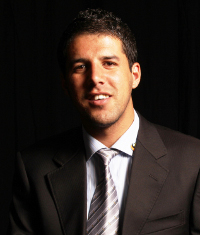
The paper is authored by Dr. Ammar Nayfeh, Assistant Professor in Microsystems Engineering, and PhD student Amro Al Khatib, and titled, ‘A Complete Physical Germanium-on-Silicon Quantum Dot Self-Assembly Process’. This work was undertaken in the Nano Electronics and Photonics Lab headed by Dr. Nayfeh (www.nep-masdar.com).

This research represents an important achievement in material science and quantum assembly.  It enhances scientific progress in fields extending from photovoltaics, low power memories and electronics. As a result, it matches perfectly with the vision of Masdar Institute and Abu Dhabi 2030.

Dr. Fred Moavenzadeh, President, Masdar Institute, said: “Masdar Institute contributes to the UAE’s R&D efforts that will make the country a regional and eventual global leader in the creation of knowledge capital. This paper reflects the extent of our faculty’s contribution to the development of new technologies. With the support of the country’s leadership, we are confident these achievements will continue to keep Masdar Institute in the forefront of scientific innovations.”
 
Professor Nayfeh says: “We are very excited about this achievement. We are able to precisely locate 10 nm Ge quantum dots without any chemical processing. There are a plethora of potential applications.  The fact that we are able to publish this work in Nature is another big step in placing Masdar Institute of Science and Technology on the research and scientific map.”

The research describes an original method for precise zero-dimensional tiny quantum structures that assemble themselves using an inherently simple manufacturing arrangement. The method requires no chemical processing or lithography. The results achieved highlight an attractive way to manufacture quantum dot structures for future quantum electronics and photonic applications due to its strict precision and simplicity.

The paper is available online at, http://www.nature.com/srep/2013/130628/srep02099/full/srep02099.html

Dr. Nayfeh has co-authored several papers, which have been presented in international conferences and published in respective journals. Dr. Nayfeh research focuses on using nanotechnology to enhance future photovoltaic devices and low power electronic devices.  He has also contributed with two other Masdar Institute students in bringing the technical expertise for fabricating advanced thin-film solar cells to the UAE.

Serving as a key pillar of innovation and human capital, Masdar Institute remains fundamental to Masdar’s core objectives of developing Abu Dhabi’s knowledge economy and finding solutions to humanity’s toughest challenges such as climate change.

Established as an on-going collaboration with the Massachusetts Institute of Technology (MIT), Masdar Institute integrates theory and practice to incubate a culture of innovation and entrepreneurship, working to develop the critical thinkers and leaders of tomorrow.  With its world-class faculty and top-tier students, the Institute is committed to finding solutions to the challenges of clean energy and climate change through education and research.

US$10 Device by Masdar Institute Student Turns Smartphone into Multipurpose Tool for Engineers and Scientists

Remarkable Feat by Masdar Institute PhD Student Becomes Winner at Intel Business Challenge Middle East and North Africa 2013

Abu Dhabi-UAE: 15 July, 2013 – Masdar Institute of Science and Technology, an independent, research-driven graduate-level university focused on advanced energy and sustainable technologies, today announced that one of its PhD students has developed an integrated device that can turn a smartphone into a powerful multipurpose tool for engineers and scientists at a cost of only US$10.

The ‘UltraSmart’ project developed by Alaeddine Mokri, a PhD student and Research Assistant in the Inter-Disciplinary Doctoral Degree Program at Masdar Institute, has become one of the four winners in the Intel Business Challenge Middle East & North Africa 2013 regional finals ceremony held in Abu Dhabi on 23 June. The four winners will now compete at the Intel Global Challenge, to be held at UC Berkley in the Silicon Valley in October 2013 for a chance to win up to US$50,000.

The Masdar Institute entry representing the UAE competed against more than 700 projects presented by over 2,300 students and engineers from 14 countries in the Middle East and North Africa region. A committee of business experts assessed the projects to shortlist the top 25 before selecting the four winners.

UltraSmart is a combination of a measuring device and a corresponding adapter. When used together with the appropriate smartphone application, UltraSmart will be able to be combined with any smartphone to enable new functions, demonstrating four innovative features. For example, the device will enable the smartphone to perform 3D scanning, as well as scanning of plots and charts to gather data. It can also be used to measure the distance, curvature, or the surface area of a given object. In addition, it can be used as a computer mouse with extra features that do not exist in standard computer control devices.

Dr Fred Moavenzadeh, President, Masdar Institute, said: “The UltraSmart project developed by Alaeddine Mokri showcases the capabilities of Masdar Institute’s students and faculty experts who equip them with knowledge. We will continue to empower young local, regional and international youth with the support of the country’s leadership. This smartphone device developed by Alaeddine is only one of his recent achievements and we congratulate our PhD student on his remarkable feat. We are confident he will achieve similar feats to become the pride of Masdar Institute and the UAE.”The integrated smartphone tool will also help developers of applications (for smartphones and tablets) to address the needs of scientists and engineers, especially in industrial design. They can take measurements and create drawings with their smartphones. The device can also prove fruitful to designers and manufacturers of solar cells, as well as applications specific to nanotechnology and nano-science. 

Alaeddine Mokri said: “I feel that I am paying back to a country that I deeply love and feel indebted to because now I will be representing the UAE in the Intel Global Business Challenge, where not many countries will be present. I also feel I have brought something new to the world and I am making some change, although little. Besides, I developed this device in Abu Dhabi with the knowledge that I acquired here, and tools that I bought here. Now I see it standing out in the Arab world and I will be competing at a global event. Now I  understand what they mean by Abu Dhabi’s ‘knowledge-based economy’ and I see it happening.”

The winning projects at the Intel Business Challenge Middle East & North Africa 2013 included Exa.IO – a cloud-based animation rendering system from Bahrain; Kashef – a landmine detection system from Egypt, EgTNS – a traffic management system from Egypt  and UltraSmart from Masdar Institute in the UAE.

In addition to the two U.S. patent applications, Alaeddine Mokri has several accomplishments to his credit. As a research associate recently, he was closely associated with NASA’s Ames Research Center in Moffett Field, California, US, where he contributed to the ‘Phonesat’ project by identifying the best solar cells, in terms of both cost and performance, for use in small satellites. The project was selected among the top 100 technology projects in the ‘Best of What’s New’ Award by Popular Science magazine.

In November 2012, Mokri was named the ‘Solar Entrepreneur of the Year’ by Emirates Solar Industry Association (ESIA) for his pioneering research on designing novel solar power systems and the best ways to overcome challenges in operating and implementing solar power projects in the UAE.

Earlier, Mokri won an award in the at the ‘IEEE Made in UAE 2012’ competition for his sustainable wireless electric mobile phone charger that is more efficient and faster in charging a mobile phone battery.

Serving as a key pillar of innovation and human capital, Masdar Institute remains fundamental to Masdar’s core objectives of developing Abu Dhabi’s knowledge economy and finding solutions to humanity’s toughest challenges such as climate change.

Established as an on-going collaboration with the Massachusetts Institute of Technology (MIT), Masdar Institute integrates theory and practice to incubate a culture of innovation and entrepreneurship, working to develop the critical thinkers and leaders of tomorrow.  With its world-class faculty and top-tier students, the Institute is committed to finding solutions to the challenges of clean energy and climate change through education and research.

Masdar Institute Interns Learning Sustainable Technologies at Major Companies in Japan

JICE Internship Takes Seven Emirati Students on Site Visits to Projects Incorporating Landmark Smart Grid, Solar Power and CCS Technologies

Abu Dhabi-UAE: 17 July, 2013 – Solar power, carbon capture and sequestration (CCS) and smart grids are no new terms to students of Masdar Institute of Science and Technology. However, what the select seven UAE national students in Japan are currently being exposed to could be positively termed ‘innovative sustainable technologies’.

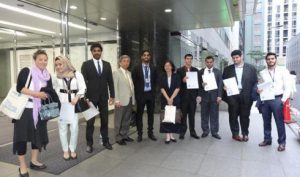
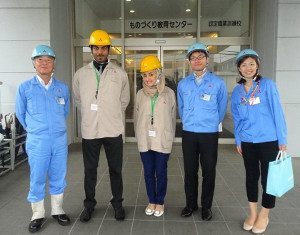
The students from four Master’s programs are participating in an internship program coordinated by Japan International Cooperation Center (JICE). The second annual program that runs from 18 May – 19 July is supported by the Japan’s Ministry of Economy, Technology and Industry (METI).

Mohamed Al Musharrekh and Iman Ustadi are interning with Mitsubishi Heavy Industries, LTD, (MHI), while Abdulla Al Shammari is doing his internship at Chiyoda Corporation. JGC Corporation is hosting Jasem Al Hammadi and Majed Al Marzouqi, while Hitachi, Ltd., Infrastructure Systems Company has Hasan Alhashmi for the program. Ahmed Mukhayer is spending the summer interning with Mitsubishi Electric Corporation.

Iman Ustadi, Research Assistant in Engineering Systems and Management Program, interns with Mitsubishi Heavy Industries, LTD, (MHI). Ustadi said, “The experience is beneficial, offering me a profound exposure to the latest technologies in various sectors of energy, waste and renewables. We were also lucky enough to visit MHI’s power, CO2 and waste-to energy plants located at different prefectures in Japan.”

Ustadi’s internship on waste-to-energy includes lectures, visits to plants in different regions of Japan, in addition to some technical and informative discussions with experts in the field.
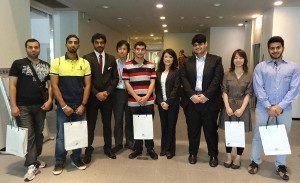
As part of the program, Majed Saeed Al Marzouqi visited a photovoltaic plant located in Oita City and the JGC laboratory located in Ueno City. As an intern, he is acquiring knowledge in the latest technologies in the fields of carbon capture, energy saving, and building of smart communities.

Al Marzouqi says: “I believe the internship will make a huge difference for me academically. I have learnt two new technologies – one used for CO2 capture and the other for Concentrated Solar Power (CSP). JGC produces a new membrane for capturing CO2 called HiPACT, designed jointly with Germany’s BASF. The advantages include reduction in compression and capture of energy as well as drop in capture and compression costs. The reduction of CO2 recovery cost is estimated around 25%-35%. On the other hand, the JGC-designed parabolic trough technology for CSP (similar to Shams-1 in the UAE) uses a molten salt as cycle fluid due to the high capacity of temperature compared to other fluids such as oil or water.”

The latest technology in CO2 capture and storage as well as desalination process is the focus of Mohamed Al Musharrekh’s internship. He has already visited the Mitsubishi Heavy Industries unit in Hiroshima to see how compressors are manufactured. At the R&D center he learnt about the testing of the CO2 capture plant and related research. At the Mitsubishi Heavy Industries’ Takasago R&D Center, he saw most of the research on developing the power plants.

Al Musharrekh said: “I learned about the latest technology that is being used in power plants as well as in shipbuilding and ocean development. At the Mitsubishi Heavy Industries’ Nagasaki shipyard, I learnt about how huge oil and gas tankers are built. Later, I moved to another plant to see how boilers are made.”
Jasem Al Hammadi is working in energy monitoring and conservation through the Energy Management System (EMS) developed by JGC Corporation as part of developing smart communities. EMS is expected to allow every individual in the city to access their profile and be responsible in their consumption behavior. Also, it helps in managing the demand response of electricity through supplying electricity using batteries

Al Hammadi said: “We have visited the largest mega-solar plant in Japan, owned by JGC Corporation in Oita City, Kyushu. At the JGC Research and Development Center in Oaraim, Ibaraki Prefecture, we viewed the laboratories and learnt about the latest technologies. Our visit to Kamiooka area in Yokohama, where JGC’s BEM tests are conducted also proved worthwhile.”

Hasan Al Hashimi, a Research Assistant in Mechanical Engineering Program, interns at Hitachi. His work focuses on the process of producing bio-plastics, such as polylactic acid (PLA), from an R&D point of view. Bioplastics that are biodegradable such as PLA are becoming increasingly attractive to both consumers and producers as they offer new ways of recovery and recycling, saving on resources and offering the unique potential of carbon neutrality.

Al Hashimi said: “I was introduced to the CFD models, given part of the FORTRAN code and some tasks by my mentor for a parametric study at the Ikebokuro office. Now I am in the feasibility stage, where I am experimenting with a bench scale model at the Hitachi Research Laboratory.”

On completion of their internships, the seven Emirati students are set to bring these advanced technologies to the UAE for further development and enhancements.

Masdar Institute of Science and Technology is an independent, research-driven graduate-level university focused on advanced energy and sustainable technologies. Serving as a key pillar of innovation and human capital, Masdar Institute remains fundamental to Masdar’s core objectives of developing Abu Dhabi’s knowledge economy and finding solutions to humanity’s toughest challenges such as climate change.

Established as an on-going collaboration with the Massachusetts Institute of Technology (MIT), Masdar Institute integrates theory and practice to incubate a culture of innovation and entrepreneurship, working to develop the critical thinkers and leaders of tomorrow.  With its world-class faculty and top-tier students, the Institute is committed to finding solutions to the challenges of clean energy and climate change through education and research.

Tawazun Economic Council and Masdar Institute launch research program on land systems and advanced materials

Collaboration to drive human capacity development in UAE’s industrial and manufacturing sectors

Abu Dhabi, 18 July 2013 – Tawazun Economic Council, which is mandated to oversee implementation of the UAE Tawazun Economic Program, and Masdar Institute of Science and Technology, an independent, research-driven graduate-level university focused on advanced energy and sustainable technologies, have jointly announced a collaborative research project focused on land systems and advanced materials.

In the presence of His Excellency Dr Sultan Al Jaber, CEO of Masdar, and Chairman of the Executive Committee of the Board of Trustees of Masdar Institute, the collaboration agreement was signed today by H.E. Saif Mohamed Al Hajeri, Chief Executive Officer of the Tawazun Economic Council and Dr Fred Moavenzadeh, President, Masdar Institute.

Following the signing, His Excellency Dr Sultan Al Jaber, said: “Collaboration between the renewable energy industry and academia is crucial in strengthening the UAE’s competitiveness, especially across knowledge-led fields. We are confident that our partnership with Tawazun sets the foundation necessary to enable the UAE to develop and accelerate technologies for advanced defense and aerospace industries. This promotes human capital development efforts and supports economic growth, in line with the wise guidance of our leadership.”

H.E. Al Hajeri said: “We are delighted to enter into this collaboration agreement with Masdar Institute, which specializes in sustainable and advanced technology research.”

He added that the agreement bodes well for Tawazun Economic Council’s endeavors to contribute to driving and building capabilities in the industrial and advanced manufacturing sectors in the UAE, creating opportunities for UAE nationals in knowledge-intensive and high value-added projects as well as speeding up technology transfer.

He said, “We are confident that our collaboration will contribute significantly to the drive aimed at developing the UAE into a globally-recognized center of manufacturing excellence and we believe the scientific and research expertise of Masdar Institute will help us achieve this goal. We hope this agreement will pave the way for more collaboration in the future.”

Dr Moavenzadeh said: “The agreement with Tawazun Economic Council focusing on research related to land systems and advanced materials is the first project in a broader collaboration Masdar Institute is developing with Tawazun Economic Council. The collaboration reflects the support that our research focus areas receive while enabling knowledge and human capacity development in the country. We hope the outcome of this research collaboration will benefit both partners.”

Tawazun Economic Council was established in 1992 to oversee implementation of the UAE Tawazun Economic Program – with the purpose of generating economic and commercial value from defense procurement programs.

Over the years, the program has created sustainable businesses with international partners in various sectors. Recently, the focus has been concentrated on developing technology and advanced defense and aerospace industries to meet the country vision.
 
Serving as a key pillar of innovation and human capital, Masdar Institute remains fundamental to Masdar’s core objectives of developing Abu Dhabi’s knowledge economy and finding solutions to humanity’s toughest challenges, such as climate change.

Established as an on-going collaboration with the Massachusetts Institute of Technology (MIT), Masdar Institute integrates theory and practice to incubate a culture of innovation and entrepreneurship, working to develop the critical thinkers and leaders of tomorrow. With its world-class faculty and top-tier students, the Institute is committed to finding solutions to the challenges of clean energy and climate change through education and research.


UAE and Saudi Arabia Score High in GCC Renewable Energy Readiness Index

Assessment Report Calls for Clear Policy and Legal Framework in GCC Region to Ensure Sustainable Deployment of Renewable Energy Projects

Abu Dhabi-UAE: 25 July, 2013 – Clear policy and legal framework with a consistent strategy will ensure sustainable deployment of the renewable energy projects across the GCC region, according to a GCC-wide study that was released today.

Titled ‘Renewable Energy Readiness Assessment Report: The GCC Countries 2011-2012’, the report (2013-The EU-GCC-Report) suggests that initiatives undertaken so far in the GCC represent a proactive approach to addressing energy security and environmental issues at international, regional and national scales.

It reveals that most countries have not yet officially set their RE development targets and are yet to implement stable policies. The GCC has yet to come up with a consistent strategy for the region as well as individual national plans to achieve renewable energy technology (RET) deployment goals.

The report is an outcome of the collaboration between the GCC consortium on Clean Energy and the EU-GCC Clean Energy Network that aims to respond to the common interests of stakeholders in the GCC and the EU regions. 

Dr Scott Kennedy, Dean of Research, and Associate Professor – Engineering Systems and Management, Masdar Institute, said: “The report identifies areas that need to be strengthened and spells out measures to be implemented in the GCC region. Such a study offers an avenue for governments across the region to channel their resources and lay the foundations for large-scale deployment of renewable energy. We firmly believe the report will quicken the pace of clean technology adoption in the region.”
With a score of 4.75 out of 7, the UAE leads in the RE-readiness index with Saudi Arabia following closely with 4.60. The index shows that compared to the other GCC countries, the UAE and Saudi Arabia are more ready to integrate RETs for power generation. 

On the other hand, in the renewable resources category, Qatar, Kuwait, Bahrain and Oman have received RE-readiness scores of 5.6, 5.5, 5.3 and 5.2, respectively, because of their substantial solar and wind resources. The UAE and Saudi Arabia follow with a score of 4.7 and 4.55 respectively, due to lower wind resources.

Hamza Kazim, Vice-President, Operations & Finance, Masdar Institute, who additionally represents the research-based institution at the EU-GCC Clean Energy Network and the GCC at the GCC Consortium, said: “This collaborative study is a testament to the extent of synergy that could be achieved among researchers in the GCC. The GCC has succeeded in attracting top researchers to address regional challenges and drive innovation through offering practical solutions. We hope the report will incentivize clean energy projects in the GCC region.”

The RE-readiness assessment framework has been developed by identifying the dominant barriers and supporting mechanisms for the deployment of RETs and then creating quantitative factors to rate their intensity. It organizes the factors according to three pillars – infrastructure, institution and human capital. Each factor is assigned a weight and a score between 1 and 7, with 7 being the highest readiness.

Identifying country-wide gaps for development of RETs, the report emphasizes that the GCC region is in need of a strong innovation and R&D environment to support the diffusion of new technologies. 

Moreover, a prominent need for collaboration among the GCC energy research institutions and universities as well as international partners is identified. The report concludes by calling for sustained support from governments to overcome barriers to investment in renewable energy projects for power generation by minimizing energy subsidies and promoting RET investment.

While setting the GCC on a leadership path in renewable energy for sustainable development, these measures, if implemented, will benefit the GCC region encouraging the reduction of the domestic fossil fuel consumption and increasing oil and gas export revenue potential and preventing a near-term transition to the status of an energy importer.

The report aims to foster an understanding and development of RETs in the GCC countries, provide a wider introduction to energy and environmental issues, as well as develop a generic framework to assess RE-readiness of GCC countries as a case study. 

Serving as a key pillar of innovation and human capital, Masdar Institute remains fundamental to Masdar’s core objectives of developing Abu Dhabi’s knowledge economy and finding solutions to humanity’s toughest challenges such as climate change.

Established as an on-going collaboration with the Massachusetts Institute of Technology (MIT), Masdar Institute integrates theory and practice to incubate a culture of innovation and entrepreneurship, working to develop the critical thinkers and leaders of tomorrow.  With its world-class faculty and top-tier students, the Institute is committed to finding solutions to the challenges of clean energy and climate change through education and research.

Masdar Institute to Develop Water Quality Monitoring Tools for Arabian Gulf in Partnership with Bayanat

Project to Help Forecast, Detect and Monitor Different Environmental Hazards in GCC Region’s Coastal Waters

Abu Dhabi-UAE: 11 August, 2013 – Masdar Institute of Science and Technology, an independent, research-driven graduate-level university focused on advanced energy and sustainable technologies, today announced the launch of a collaboration project with Bayanat for Mapping and Surveying Services, a Mubadala Company, to develop water quality monitoring tools in the Arabian Gulf using the satellite receiving station at the research-based institution.

The Ocean Color (OC) Research Group at the Earth Observation and Hydro-Climatology (EO-HC) Lab at Masdar Institute is leading this project with Bayanat, a specialist in the UAE’s geospatial sector. The OC Group, led by Dr. Hosni Ghedira and Dr. Taha Ouarda, presently includes a team of two post-doctoral researchers, an IT engineer, a Geographic Information Systems (GIS) developer, one field and lab engineer and three research assistants.

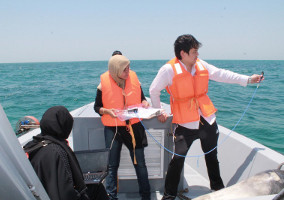
Mariam Rashed Al Shehhi and Muna Rashed Al Kaabi – UAE national doctorate students well-trained in satellite data collection and processing techniques –– are collecting measurements from the sea in order to conduct their experiment that relates to water quality assessment and monitoring. They are also involved in the lab analysis of these samples.

The OC Group is currently undertaking several research projects focusing on the development of new satellite-based tools to forecast, detect and monitor different environmental hazards in the UAE’s coastal areas and the Arabian Gulf region. The project also covers water turbidity mapping, red-tide detection monitoring and forecasting, oil spills detection and monitoring, in-house atmospheric correction algorithm adapted to the regional climate, impact assessment of the discharge of desalination plants on the coastal ecosystem of the UAE, as well as ocean circulation model for the Arabian Gulf.

Khaled AlMelhi, CEO of Bayanat for Mapping & Surveying Services, said: “Our collaboration aims to tap Masdar Institute’s expertise in developing new satellite-based tools to detect environmental hazards. We have provided the research team with a vessel to conduct sea cruises and deploy the instruments for measurements during the research project. We hope the synergy between the two organizations will bring benefits of the region.”

Dr Fred Moavenzadeh, President, Masdar Institute, said: “Our collaboration with Bayanat reflects the relevancy of our research efforts that aim to bring extraordinary value the region. With the guidance of the country’s leadership, we have established partnerships with government organizations to help the UAE and the GCC region tackle environmental hazards ahead of time. We believe this joint project will provide more productive tools that can be deployed by all the countries across the globe.”

Bayanat aims to provide both a strategic capability for the UAE and support both the government and commercial sectors with high quality national level geospatial products and services. Its team of geospatial services professionals specializes in ‘Data Acquisition, Processing and Analysis’, ‘Geospatial Data Visualization and Cartography’, and ‘GIS applications’ Development and Geospatial Consultancy’.

Dr Hosni Ghedira said: “This project is the first of its kind in the Gulf region and will provide information on marine resources management and sustainable development of the coastal and offshore zones. The tools we are developing can help Abu Dhabi reduce economic losses at fish farms by providing advanced warning of an upcoming ‘red tide’ so they can move their stocks and sensitive species. It will also save money for the government’s desalination plants by facilitating early closure before an algal bloom, thus preventing contamination damage to the plants. Advanced warning of bloom will also ensure that the water utilities will have time to make alternative solutions for customers before a desalination plant is closed.”

The EO-HC Lab has its own satellite receiving station getting real-time SEVIRI images from the European Satellite Meteosat (one image each 15 minutes) and MODIS (operated by NASA). This data is used by the OC team to derive real-time Sea Surface Temperature (SST) and other dust-related products for the water turbidity project. SEVIRI data is also used to improve atmospheric correction model implemented in the OC products.

The satellite station is also receiving higher resolution data from NASA’s MODIS satellite (twice daily). This data is also used to produce daily assessment of oil spills, Chlorophyll concentration, red-tide coverage and water turbidity. Historical scenes from the high-resolution Landsat satellite (30-m) are also used to improve oil spills product. Currently, the OC team is developing red tide forecasting tool by coupling daily chlorophyll maps with ocean circulation data derived from the Hybrid Coordinate Ocean Model (HYCOM).

Serving as a key pillar of innovation and human capital, Masdar Institute remains fundamental to Masdar’s core objectives of developing Abu Dhabi’s knowledge economy and finding solutions to humanity’s toughest challenges such as climate change.

Established as an on-going collaboration with the Massachusetts Institute of Technology (MIT), Masdar Institute integrates theory and practice to incubate a culture of innovation and entrepreneurship, working to develop the critical thinkers and leaders of tomorrow.  With its world-class faculty and top-tier students, the Institute is committed to finding solutions to the challenges of clean energy and climate change through education and research.