
7 June 2013
Dr. Fred Moavenzadeh is President of Masdar Institute of Science and Technology in Abu Dhabi

7 June 2013
Dr. Fred Moavenzadeh is President of Masdar Institute of Science and Technology in Abu Dhabi
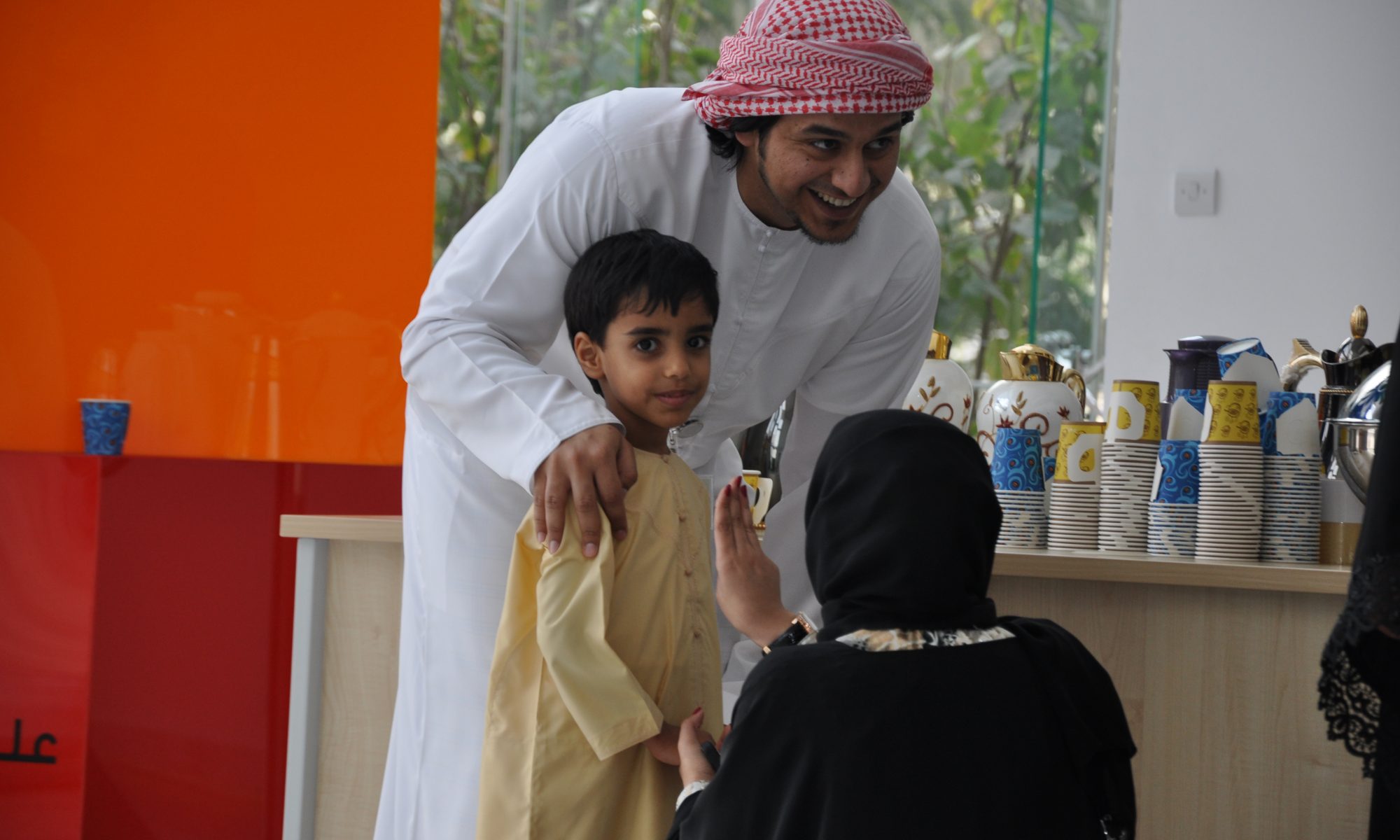
 Diverse Groups Representing Over 30 Nationalities Sway to Traditional Tunes to Mark International Day at Sustainable Campus
Abu Dhabi-UAE: 28 February, 2013 – Color, pageantry and traditional entertainment showcased the strength of diversity on the third annual ‘International Day’ at Masdar Institute of Science and Technology, an independent, research-driven graduate-level university focused on advanced energy and sustainable technologies.
Hosted by the Student Affairs Office (SAO) and organized entirely by the students on 26 February, the International Day was an occasion for students, faculty and staff to become part of an afternoon that brought forth the rich cultural diversity of the sustainable campus. The Wind Tower area was abuzz with a burst of entertainment as eight diverse dance groups representing regions including the US, Africa, the Indian Sub-continent and the UAE swayed to the tunes of traditional and modern music.
From the UAE’s Ayyalah to the African drums and the Syrian Arada, Palestinian and Jordanian Dabke, as well as music and dance from South Asia, every form of traditional rhythm was presented with enthusiastic participation from students.
Sumptuous cuisine from various countries was on offer for food-lovers as stalls became a bee-hive of activity. Faculty and students tested their abilities in traditional Emirati rope-making and basket-weaving techniques at the UAE stall while food was served with the customary touch of hospitality. Answers to randomly selected questions brought prizes to visitors at the Ireland stall while country stalls representing the Americas, Continental Europe, Africa and Asia offered interesting information on ancient sites and places of interest to tourism.


Event on 2 March to Highlight Advantages of Pursuing Graduate Studies in Abu Dhabi’s Research-Based Institution
London/Abu Dhabi: 02 March, 2013 – A team of faculty and students from Masdar Institute of Science and Technology, an independent, research-driven graduate-level university focused on advanced energy and sustainable technologies, will be participating in the Spring 2013 QS World Grad School Tour Fair & Seminars on 2 March in London to highlight the advantages of pursuing graduate studies at the Abu Dhabi-based institution.
A large number of students from across universities in the UK are expected to gather for the event from 2.00pm–5.00pm at The Queen Elizabeth II Conference Centre, Broad Sanctuary, Westminster, London. Pre-fair presentations and panels are scheduled from 1.00pm-2.00pm. Dr. Hector H. Hernandez, Assistant Professor, Chemical Engineering, with student Lindsey Gilbert and other representatives from the research-based Abu Dhabi institution will showcase a research project on tapping algae in the UAE. The research project aims to use microalgae as a source of sustainable biofuel.
Developed with the ongoing support of the Massachusetts Institute of Technology (MIT), Masdar Institute’s graduate programs integrate education, research and scholarly activities. With admission criteria similar to MIT, Masdar Institute helps students to be innovators, creative scientists, researchers and critical thinkers in technology development, systems integration and policy.
Masdar Institute is part of Abu Dhabi’s Masdar Initiative to diversify the economy and extend its leadership in the energy sector. Masdar is already a familiar name in the UK, where it is implementing the 870MW London Array-I, the largest offshore wind project. The wind farm off Kent’s east coast has been generating energy since October 2012.

Event on 5 March in Rome to Highlight Advantages of Pursuing Graduate Studies in Abu Dhabi’s Research-Based Institution
 Rome-Italy/Abu Dhabi-UAE: 4 March, 2013 – A team of faculty and students from Masdar Institute of Science and Technology, an independent, research-driven graduate-level university focused on advanced energy and sustainable technologies, will participate in Spring 2013 QS World Grad School Tour Fair & Seminars on 5 March in Rome to highlight the advantages of pursuing graduate studies at the Abu Dhabi-based institution.
A large number of graduates from across universities in Italy are expected to gather for the event from 5.00pm-8.00pm at Hotel Palatino, Via Cavour 213/M, Rome. Pre-fair presentations and panels are scheduled from 4.00pm-5.00pm. Dr. Marco Stefancich, Assistant Professor – Materials Science and Engineering, with student Carlo Maragliano and other representatives, and staff from Masdar Institute, will showcase a research project that aims to find an approach to circumvent the limitations in the efficiency of solar photovoltaic systems.
Developed in cooperation with Massachusetts Institute of Technology (MIT), Masdar Institute’s graduate programs integrate education, research and scholarly activities. With admission criteria similar to MIT, Masdar Institute helps students to be innovators, creative scientists, researchers and critical thinkers in technology development, systems integration and policy.
Masdar Institute’s research themes include ‘water, environment and health’, ‘energy systems’, and ‘microsystems and advanced materials’.
Dr. Fred Moavenzadeh, President, Masdar Institute, said: “Since inception, we have achieved breakthroughs in research and innovation, contributing to developing the region’s human capital and R&D infrastructure. Our patents, research accomplishments and academic success serve as an inspiration for graduate students seeking to enroll and acquire clean energy knowledge. This roadshow offers us an opportunity to interact with students across Europe and apprise them of the learning options at the sustainable campus. We welcome them to take advantage of our educational and research offerings.”
Explaining his project, Dr. Marco Stefancich said that his team is working in collaboration with the Massachusetts Institute of Technology to achieve the best conversion rate for achieving power from solar cells. He added that the challenging project is already providing important results and will ensure sustainable and economically viable high efficiency new generation solar panels.
Masdar Institute provides such niche research options to participate in the creation of intellectual property rights and patents. Pursuing Master’s degree in Masdar Institute also gives students an opportunity to gain job placements in the fast-growing clean energy and sustainable sector in the region and worldwide.
Masdar Institute has one patent already issued and 16 active patent applications pending at present. With publications of papers in 311 peer-reviewed journals, 330 conference papers, two full books and 38 invention disclosures, it has already notched up success in academic and research fields.
In addition to providing full scholarship to qualified applicants, Masdar Institute has collaboration agreements with several organizations including the International Renewable Energy Agency (IRENA) for up to 20 scholarships and Toyota Motor Corporation for one student every year to work in sustainable transportation.
For the September 2012 intake, the total number of enrolled students across the eight Master’s programs reached 336. The student body is expected to grow to 600-800 over the next few years. Two batches of Master’s students have already graduated from Masdar Institute – the first in June 2011 and the second in May 2012.
Admissions for Fall 2013 are now open. Application forms can be downloaded from www.masdar.ac.ae/Admission.html. A minimum CGPA of 3.0 on a scale of 4.0 and a minimum GRE Quantitative scope of 700 (or 155 on the new scale) are mandatory for applicants. Talented applicants, who may not meet the GRE and TOEFL/IELTS requirements but are otherwise qualified to enroll, may be admitted. They will be, however, required to pass two placement exams or complete additional technical and math coursework.
Dr. Marco Stefancich obtained his ‘Laurea’ at the University of Pisa in Italy in 1995 as a student at the ‘Scuola Normale Superiore di Pisa’ and PhD in physics at the University of North Texas, US, in 1998. He obtained a permanent position as researcher at the National (Italian) Institute for Research (CNR) in 2003 and co-founded a spin-off company in Italy for concentrating photovoltaic systems in 2006.
Dr. Stefancich’s interests cover all aspects of solar energy and sustainable development.
Serving as a key pillar of innovation and human capital, Masdar Institute remains fundamental to Masdar’s core objectives of developing Abu Dhabi’s knowledge economy and finding solutions to humanity’s toughest challenges such as climate change.
Established as an on-going collaboration with the Massachusetts Institute of Technology (MIT), Masdar Institute integrates theory and practice to incubate a culture of innovation and entrepreneurship, working to develop the critical thinkers and leaders of tomorrow. With its world-class faculty and top-tier students, the Institute is committed to finding solutions to the challenges of clean energy and climate change through education and research.
His Excellency Dr Sultan Bin Ahmed Sultan Al Jaber, CEO of Masdar and Chairman of the Executive Committee of the Board of Trustees of Masdar Institute, has been appointed Minister of State in the UAE Federal Cabinet.
His Excellency Dr. Al Jaber continues to be an active contributor to the Masdar  initiative, and continues to manage strategic plans for a number of projects for the country.
Earlier, His Excellency Dr. Al Jaber was bestowed the UN’s “Champions of the Earth” award that recognizes outstanding visionaries and leaders. He was also on the United Nations Secretary General’s High Level Group on Sustainable Energy for All.
His Excellency Dr. Al Jaber is a Board member of Aldar properties and ZonesCorp, Director-General of Zayed Future Energy Prize (ZFEP), and First Advisor to Mubadala Development Company.
By Dr Farrukh Ahmad, Dr Jorge Rodriguez and Dr Andreas Henschel
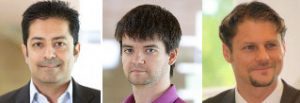 With little or no freshwater, the UAE relies heavily on costly, energy- intensive desalination plants. Treating wastewater is much cheaper – if only we could make more use of it.
According to the Statistics Centre Abu Dhabi, in 2012 treated wastewater met less than 10% of Abu Dhabi city’s total water demand.
Desalinated water and groundwater met 79% and 12% of the total water demand, respectively.
Treated wastewater is currently used only for irrigation and landscaping. If we could put it to other uses, we could make a big dent in our carbon and energy expenditure.
But for applications beyond irrigation, science must first address important questions about water for treatment and reuse. What happens to micropollutants and pathogens in the wastewater treatment process?
What happens to any residual micropollutants and pathogens present in recycled water when it is reused? Or to put it more simply, do we remove the harmful stuff, and how harmful is the stuff we don’t remove?
Micropollutants consist of natural and synthetic chemicals, from hormones to pharmaceuticals and flame-retardants.
They are typically organic compounds, found at low concentrations in the municipal waste stream as a result of their large-scale production and widespread use in commercial and consumer products.
They affect both human and other living things, disrupting endocrine – hormonal – systems, killing cells, and causing increased antibiotic resistance.
One uncertainty is where the large number of micropollutants present in wastewater end up.
These compounds tend to persist in treated wastewater because conventional treatment processes, like activated sludge treatment and membrane bioreactors, do not target their removal.
In order to address these concerns, we at Masdar Institute are interested in using a comprehensive and multi-disciplinary computational, experimental, and field-scale approach at all points along the wastewater generation, treatment, and end-use process train to help allow more water to be reused safely.
Analysing micropollutants requires sophisticated instruments and techniques, such as gas and liquid chromatography coupled with mass spectrometry, which most water utilities are not equipped for.
Monitoring pathogens and other biological agents is tricky, too. All water, even tap water and bottled drinking water, contains complex microbial communities that are, for the most part harmless to humans.
Unlike chemical contaminants, microbes can multiply in the treatment system – so counting the microbes in one part of the system doesn’t necessarily tell you how many there are somewhere else.
And while some microbes are potentially pathogenic, many others are entirely benign. So simply counting them – as is the conventional practice – doesn’t tell you if there’s actually anything to worry about.
For these reasons, conventional microbiological methods are grossly inadequate for monitoring presence and levels of pathogens, especially in warm and hot climates.
Modern molecular biological techniques, such as polymerase chain reaction (PCR) and high-throughput or metagenomic DNA sequencing, can provide cost-effective, detailed analysis of the microbes present, including pathogens.
These techniques, coupled with quantitative chemical and microbial risk assessment, offer a scientifically robust way of assessing any health risk from disease vectors in treated wastewater.
This, in turn, would allow the UAE to use treated wastewater for a wider variety of applications – which would reduce the UAE’s carbon footprint and energy demand, while enhancing food and water security.
Dr Farrukh Ahmad is associate professor of water and environmental engineering, Dr Jorge Rodríguez is assistant professor of water and environmental engineering, and Dr Andreas Henschel is assistant professor of computing and information science, all at the Masdar Institute of Science and Technology.
Abu Dhabi-UAE: 25 March, 2013 – 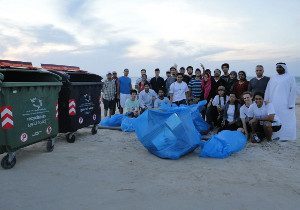 Members of the Sustainability Club at Masdar Institute of Science and Technology marked Earth Hour 2013 on 23 March by organizing a beach clean-up drive on Yas Island, in collaboration with the Environment Agency Abu Dhabi (EAD) and Centre of Waste Management (CWM). The CWM provided equipment and support personnel to students, who were also assisted by Al Mahara Diving Center. The clean-up was led by Sanaa Iqbal Pirani, Graduate Student and President of Sustainability Club, Masdar Institute.
After completing the clean-up event that resulted in massive volume of unwanted items left over by beach-goers and strollers, members of the Sustainability Club concluded the activities with games including a quiz competition on climate change.
Mubadala Petroleum CEO Offers Special Insights into Building Successful Enterprise at Knowledge-Sharing Platform Organized by Masdar Institute
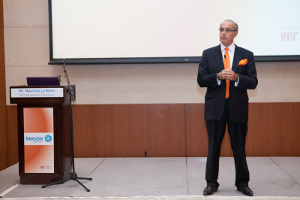 Abu Dhabi-UAE: 26 March, 2013 – The long-term fundamentals for the energy industry will continue to remain robust despite far-reaching changes, especially the advent of unconventional hydrocarbons, such as shale gas and shale oil that are projected to corner a major share of the market.
According to Maurizio La Noce, Chief Executive Officer of Mubadala Petroleum, the company’s continuing evolution into a globally competitive business hinges on three key factors – people, partnerships and performance. Only the right combination of these factors can bring about adequate growth and returns.
La Noce’s comments came during a lecture titled ‘Building a Globally Competitive Business: People, Partnerships and Performance’ at a knowledge-sharing platform organized by Masdar Institute of Science and Technology. The lecture was attended by top officials from the government and private sector in the UAE as well as international corporate leaders and faculty and students from Masdar Institute.
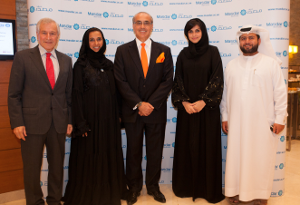 Dr Fred Moavenzadeh, President, Masdar Institute, said: “The lecture is organized as part of Masdar Institute’s knowledge sharing initiative under the framework of developing Abu Dhabi’s human capital. With the support of the country’s leadership we continue to provide the right forum for knowledge exchange and we hope this forum will benefit all the stakeholders.”
La Noce said: “Mubadala Petroleum is one of the strategic pillars within Mubadala and focuses on creating long-term value, developing a new generation of internationally capable leaders and contributing specifically to oil and gas projects of strategic interest to Abu Dhabi. We deliver on our promise through a clear vision and a shared purpose as well as with performance that excels.
“Our key priorities include accessing attractive opportunities, selecting the right partners and service providers, as well as mobilizing appropriate technology. Our greatest priority, however, is to attract and develop the right talent – people who are passionate about their work and willing to learn. We provide opportunities for local employees both at home and abroad, and manage relationships with key stakeholders and local communities.”
La Noce added that Mubadala Petroleum seeks to meet its strategic objectives through a three-pronged approach; delivering gas supplies to the UAE, creating long-term value growth through exploration-led businesses and generating near-term net income from its current producing and non-operated assets.
Currently, Mubadala Petroleum is focusing on three key regions – ‘Africa and Eastern Mediterranean’, ‘South-east Asia’, and ‘Middle East and Central Asia’. For each region, Mubadala Petroleum adopts a tailored approach. The company carries out high-impact exploration and frontier projects in the Africa and Eastern Mediterranean region, while targeting primarily lower risk, smaller scale-exploration and production in South-east Asia.
In the Middle East and Central Asia region, Mubadala Petroleum is concentrating on field redevelopment, some high impact exploration and gas supply in the UAE.
Serving as a key pillar of innovation and human capital, Masdar Institute remains fundamental to Masdar’s core objectives of developing Abu Dhabi’s knowledge economy and finding solutions to humanity’s toughest challenges such as climate change.
Established as an on-going collaboration with the Massachusetts Institute of Technology (MIT), Masdar Institute integrates theory and practice to incubate a culture of innovation and entrepreneurship, working to develop the critical thinkers and leaders of tomorrow. With its world-class faculty and top-tier students, the Institute is committed to finding solutions to the challenges of clean energy and climate change through education and research.
Delegation Members Learn about Masdar Institute’s Patent Filings and Progress in Clean Energy and Advanced Technology Research
Abu Dhabi-UAE: 27 March, 2013 – Masdar Institute of Science and Technology, an independent, research-driven graduate-level university focused on advanced energy and sustainable technologies, today announced a high-level delegation comprising the President, Provost and Board of Trustees of Boston University (BU) visited the sustainable campus.
Dr Fred Moavenzadeh, President, Masdar Institute, and other officials welcomed the 41-member delegation that was led by Mr. Rajen Kilachand, Chairman and President of the Dodsal Group, a trans-global multinational company with a persified portfolio of businesses operating across the world. Mr. Kilachand is a member of the Boston University Board of Trustees.
 Robert A. Knox, Chairman of the board and Senior Managing Director, Cornerstone Equity Investors, L.L.C., Stamford, Connecticut, Robert A. Brown, President of Boston University, and Jean Morrison University Provost and Chief Academic Officer were received by Masdar Institute officials and faculty including Hamza Kazem, Vice-President, Operations & Finance, Dr. Lamya N. Fawwaz, Executive Director, Public Affairs, Dr. Steven Griffith, Executive Director, Institute Initiatives, Dr. Marwan Khraisheh, Dean of Engineering, Dr Youssef Shattila, Dean of Academic Programs, and Dr. Scott Kennedy, Dean of Research. The delegation also included Willis G. Wang, J.D., Vice-President and Associate Provost for Global Programs, and Deputy General Counsel at Boston University, and others.
In his presentation, Dr. Moavenzadeh briefed the visitors on various activities of Masdar Institute. He emphasized the research works of the Master’s students and world-renowned faculty in clean energy and sustainable advanced technology, and the patents applied so far. He also elaborated on the cutting edge laboratory amenities that facilitate research in these domains. He concluded his briefing by focusing on Masdar Institute’s contribution to developing human capital and intellectual property that aim to bring about a knowledge-based economy in the UAE. The delegation members later visited the Wind Tower, Podium and 10MW solar farm before heading towards the laboratory facilities.
The delegation visited the laboratory of Dr Raed Hashaikeh, Associate Professor – Materials Science and Engineering, where research is being done on advanced materials for electrochemical devices, polymer nano-composites, and advanced cellulosic materials. At the laboratory of Dr Farrukh Ahmad, Associate Professor – Water and Environmental Engineering, they learnt about research in novel microbial fuel cells and their applications, environmental impact of biofuels and bio-catalyzed mineralization of dolomite.
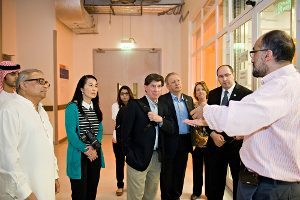 In the Undercroft area, they visited the Microbial Environmental and Chemical Engineering Lab of Dr. Hector Hernandez, Assistant Professor, Chemical Engineering, to gain insights into research on isolating and characterizing microalgae species, microbial composition of camel gut ecosystem, and investigating the effect on natural ecosystems by invasive microbiological species from shipping lanes. The delegation members were later briefed on biofuels and biochemicals using biorefinery concepts at the biofuels lab of Dr. Mette Hedegaard Thomsen, Chemical Engineering. After visiting the clean rooms to view the lithography tools and high temperature/cleaning stations, they boarded the PRT pods to exit.
Mr. Rajen Kilachand has a personal commitment of over US$50 million to core philanthropic initiatives spanning healthcare, vocational training and education, including building libraries and teachers’ training institutions. In September 2011, Mr. Kilachand made an endowment of US$25 million to the Arvind and Chandan Nandlal Kilachand Honors College at Boston University in the US. Unlike most institutions, Kilachand College’s liberal education acquaints students with the subject matter, approaches, and teaching methods of both the arts and sciences, and the professions. This was followed in June 2012 with another endowment of US $10 million to the Kilachand Honours College.
Mr. Kilachand’s endowment is driven by a common purpose to foster enterprise, research, discovery and creative activity across disciplines and schools. The objective is to arm students with the ability to go out into a complicated modern world with a well-rounded background.
Boston University is one of the largest private universities in the US with more than 4,000 faculty members and 31,000 students. With a research expenditure of US$407.8 million in 2009-2010, BU is categorized as an RU/VH research university (very high research activity) in the Carnegie Classification of Institutions of Higher Education. Its faculty and alumni include seven Nobel Prize winners such as Martin Luther King Junior, 22 Pulitzer Prize winners and numerous Guggenheim and MacArthur fellows.
Serving as a key pillar of innovation and human capital, Masdar Institute remains fundamental to Masdar’s core objectives of developing Abu Dhabi’s knowledge economy and finding solutions to humanity’s toughest challenges such as climate change.
Established as an on-going collaboration with the Massachusetts Institute of Technology (MIT), Masdar Institute integrates theory and practice to incubate a culture of innovation and entrepreneurship, working to develop the critical thinkers and leaders of tomorrow. With its world-class faculty and top-tier students, the Institute is committed to finding solutions to the challenges of clean energy and climate change through education and research.
Reverse Osmosis to Dominate US$40-billion Membrane Desalination Sector, Say Industry Estimates
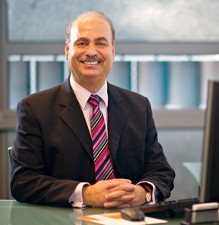 Abu Dhabi-UAE: 08 April, 2013 – The reverse osmosis segment of membrane technology will dominate the desalination sector in the coming years with the global market expected to exceed US$50 billion by 2020, according to Professor Nidal Hilal, Acting Provost and Professor in Nano-membranology and Water Technologies, Masdar Institute of Science and Technology, and Editor-in-Chief of the International journal Desalination, an international expert in membrane technology and desalination.
The global desalination market is expected to reach US$52.4 billion by 2020, up over 320% from US$12.5 billion in 2010, according to a recent report from SBI Energy. The same report further predicts that the reverse osmosis segment of membrane technology will see the largest growth, reaching US$40 billion by 2020.
Professor Hilal is chairing the 1st International Conference on Desalination using Membrane Technology (MEMDES 2013) that is being held from 7-10 April 2013, at Sitges, 35km south of Barcelona in the Catalan region of Spain. Dr. Raed Hashaikeh, Associate Professor – Materials Science and Engineering, are set to deliver a keynote address on ‘Membrane Fabrication for Application in Desalination’. Dr. Hassan Arafat, Associate Professor – Water and Environmental Engineering, will sit on the Scientific Committee and share his insights as a panelist.
Other industry professionals and leading academicians are scheduled to be highlighting, analyzing and discussing global industry trends and other major scientific breakthroughs at the conference that is organized by leading publishers Elsevier. The event will also allow the dissemination and discussion of cutting edge research and will include theoretical and applied research, as well as technological and industrial development.
Dr Fred Moavenzadeh, President, Masdar Institute, said: “This is a major forum entirely dedicated to recent developments in membrane desalination and related technologies. Such promising technologies will hold sway in the coming generation. We are pleased to actively participate in this conference with the support of the country’s leadership and highlight our recent breakthroughs in this arena. We believe such thought-provoking forums will serve as the drivers of research and innovation.”
Professor Hilal said: “As finite and valuable resources, Energy and Water are closely inter-related. Seven per cent of all energy consumed globally is used to produce water while 50 per cent of the water supply is used to generate power, and both might increase in the future. As ‘desalinators’ and ‘membranologists’, we must keep on seeking new ways for the efficient and sustainable production of water, using less energy. We hope the conference will provide the necessary impetus by offering a platform to showcase new inventions and leading current technologies.”
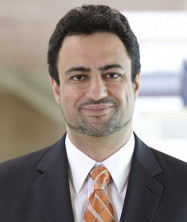 Professor Hilal is an international expert in membrane technology and desalination. He is globally recognized as leading expert in Membrane technology and Desalination and a world-leader in developing and applying the force measurement capability of AFM to the study of membrane separation and engineering processes at the nano-scale level. Dr Hashaikeh is internationally recognized for his contributions in material engineering. He is also on the editorial board of the international journal Desalination. He was instrumental in leading a team of scientists that developed a new battery technology for which Masdar Institute has filed a patent application in the US.
Dr. Arafat and Dr Hashaikeh are currently conducting research on ‘Engineering eco-friendly membranes to treat seawater’. The project aims to make desalination more environmentally friendly by developing more eco-friendly membranes to treat and clean the seawater. Engineering purpose-specific biodegradable membranes can help reduce the need for treatment chemicals normally used in desalination.
The conference committee has scheduled a program that aims to address the cutting-edge in desalination and water treatment and related techniques. A series of state-of-the-art plenary presentations will also be presented by internationally-renowned experts. These will be accompanied by breakout sessions of oral presentations. Poster presentations will also be organized for easy viewing during sessions, coffee breaks and lunch. An associated exhibition will provide up-to-date information on commercially available support for the delegates’ line of work.
Serving as a key pillar of innovation and human capital, Masdar Institute remains fundamental to Masdar’s core objectives of developing Abu Dhabi’s knowledge economy and finding solutions to humanity’s toughest challenges such as climate change.
Established as an on-going collaboration with the Massachusetts Institute of Technology (MIT), Masdar Institute integrates theory and practice to incubate a culture of innovation and entrepreneurship, working to develop the critical thinkers and leaders of tomorrow. With its world-class faculty and top-tier students, the Institute is committed to finding solutions to the challenges of clean energy and climate change through education and research.
New Phase in Advanced Technology Learning and Innovation as Global ‘BioMEMS’ Market Set to Reach US$6.6 Billion by 2018
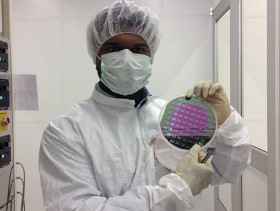 Abu Dhabi-UAE: 10 April, 2013 – Masdar Institute of Science and Technology, an independent, research-driven graduate-level university focused on advanced energy and sustainable technologies, today announced its research staff have etched a silicon wafer for the first time in the UAE, marking the beginning of a new phase in advanced technology learning and innovation.
With the etching of silicon wafer, the Masdar Institute Fabrication Facility has entered the operational phase. Etching is used in micro-fabrication to chemically remove layers from the surface of a wafer during manufacturing. The Facility achieved Deep Reactive Ion Etching (DRIE) through the Bosch process, which also enables the use of silicon mechanical components in high-end wristwatches.
DRIE was developed for micro-electromechanical systems (MEMS), which is also used for high-density capacitors for direct random access memory (DRAM). More recently they are used for creating through silicon via’s (TSVs) in advanced 3D wafer level packaging technology. TSV interconnects are emerging to serve a wide range of 3D packaging applications.
MEMS devices can be made using silicon wafers and the manufacturing process can incorporate semiconductor manufacturing processes such as sputtering, deposition, etching and lithography. Some of the MEMS devices that can be mentioned include smartphones, tablets, game controllers, notebooks, digital cameras and health/fitness apps. The technology also enables functionalities such as augmented reality applications, indoor navigation, immersive video-gaming, heart rate/blood pressure monitoring, e-reader displays, and improved voice communications.
With such additional functionalities, the industry portends a promising future. According to market research firm Global Information Inc (GII), the ‘bioMEMS’ market alone is expected to grow from US$1.9 billion in 2012 to US$6.6 billion in 2018. The benefits of growing MEMS applications include innovations, revolution and growth in the personal healthcare market including wireless implants, as well as rising awareness and affordability of healthcare.
Dr Fred Moavenzadeh said: “The technology feat established by our Fabrication Facility reflects the cutting-edge facilities available with Masdar Institute to drive scientific innovation. This silicon etching means a world class research facility is now available in Abu Dhabi with some of the brightest faculty and researchers from around the world to work with Emirati and international students. The wise leadership of the UAE continues to support our research activities and we are confident Masdar Institute will achieve many more milestones in advanced and sustainable technology areas.”
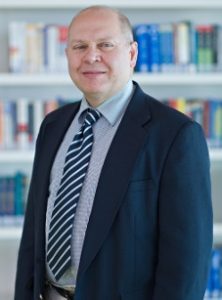 Mike Tiner, Manager, Fabrication and Microscopy Facilities, said: “Masdar Institute, Abu Dhabi and the UAE are well on their way to participating in an exciting technological revolution. This simple wafer, etched in a lab in Masdar Institute, represents the day that we made a significant step for the UAE to take its rightful place among those countries producing innovation for the world to share. The Fabrication Facility at Masdar Institute is a place for Emirati researchers, in their own country, that will encourage and support their contribution to this new and important scientific endeavor.”
Dr. Ibrahim Elfadel, Professor – Microsystems Engineering, is leading a multi-program project on three-dimensional microelectronic circuit integration in collaboration with the Technical University of Dresden in Germany. 3D integration is an important research area at the Masdar Institute that will benefit from the deployment of DRIE technology.
Dr. Ibrahim Elfadel said: “This step taken by Masdar Institute’s Micro Fabrication staff in successfully commissioning and testing the DRIE tool, materials, and process in Masdar Institute’s own clean room is very significant. The hands-on learning will have direct bearing on several programs at the Institute, such as Microsystems Engineering, Mechanical Engineering, and Materials Science and Engineering programs. It will also provide students and faculty involved in semiconductor research and manufacturing first-hand knowledge of the etching process. Masdar Institute’s research projects which benefit from such first-hand knowledge include on-going work on advanced semiconductor devices, MEMS, 3D integration, and photonics.”
He added: “The Masdar Institute Micro Fabrication facility is the first of its kind in the UAE and the Institute is planning to make its micro fabrication facilities available to researchers across all UAE universities through collaboration and joint research projects with its researchers.”
Serving as a key pillar of innovation and human capital, Masdar Institute remains fundamental to Masdar’s core objectives of developing Abu Dhabi’s knowledge economy and finding solutions to humanity’s toughest challenges such as climate change.
Established as an on-going collaboration with the Massachusetts Institute of Technology (MIT), Masdar Institute integrates theory and practice to incubate a culture of innovation and entrepreneurship, working to develop the critical thinkers and leaders of tomorrow. With its world-class faculty and top-tier students, the Institute is committed to finding solutions to the challenges of clean energy and climate change through education and research.