
Class of 2016 Best Thesis Research Celebrated

The most novel and relevant research theses prepared by the Masdar Institute Class of 2016 were honored at the Commencement Recognition Dinner, which took place on 24 May, following the graduation ceremony earlier in the day.

“This year’s Best Thesis Award winners reflect the intellectual and scientific achievement of the Masdar Institute Class of 2016. The individual winners have contributed to advancing the cutting edge of science through their work, and the scientific rigor and creativity they have demonstrated through their work makes me confident that they will continue learning to change the world,” said Dr. Youssef Shatilla, Dean of Academic Affairs at Masdar Institute.

Each year the Masdar Institute Academic Affairs Department assesses all graduate theses and selects the best for each program to receive the Best Thesis Award. 

Zaid Almahmoud received the Best Thesis Award for Computing and Information Science for his thesis titled “Algorithms for Optimizing Power Consumption in the Smart Grid”. His research examined how to minimize peak electricity demand in a smart grid by developing a self-teaching program for electric appliances to schedule their use in a more balanced manner. He developed a system that is able to deal with many of the challenges caused by the complex and dynamic power and pricing variables seen in smart grids in a way that is better than existing methods. Smart grids are an essential part of the renewable energy-powered future envisioned by the UAE leadership, which has set a goal of renewable energy accounting for 24% of the country’s energy mix by 2030.

Almahmoud also received one of the 20 UAE Graduate Student Research Conference 2016 (GSRC) awards for a related paper, which he co-authored with Dr. Khaled Elbassioni, Associate Professor of Computing and Information Science.

Explaining the scope of his work, Almahmoud said: “Our research proposes methods for optimizing power consumption in the smart grid, which would help achieve the UAE’s goal of developing smart techniques to support a sustainable energy system.” Smart grids leverage advanced systems and technologies, like digital communications, to accommodate a mix of renewable and conventional energy sources.

The Best Thesis Award for Chemical Engineering was awarded to Nawshad Akhtar, for her thesis titled Thesis Title: “A Parametric Study of Polybenzimidazole (PBI) Membrane Fabrication Process for Forward Osmosis Seawater Desalination in the UAE”. Her thesis explored the development of a desalination membrane that utilizes the unique chemical and thermal strength of the material polybenzimidazole (PBI), with the chemical phenomenon known as phase-inversion, whereby removal of the solvent from a liquid-polymer solution produces a porous and solid membrane. The project aimed to optimize the components and methodology for membrane fabrication, and evaluate its performance with respect to water flux and salt rejection. In this way, Akhtar’s research aims to improve the performance of forward osmosis desalination, which is a technology that has the potential to produce freshwater from seawater in a more energy-efficient way.

Edward Baleke Sselima received the Best Thesis Award for Electrical Power Engineering for his thesis titled “Power Dispatch Strategies for Enhanced Grid Integration of Hybrid Wind-PV Power Plants”. In his research, he explored novel strategies for optimal dispatch of hybrid wind-photovoltaic (PV) power plants were examined and presented. Pairing these wind and solar energy capture systems in a single plant is believed to have the potential to address the issues of energy intermittency, which is a major challenge in renewable energy deployment. He developed novel strategies based on resource availability forecasting to guarantee the ideal supply of wind and solar power. Sselima’s research found that renewable based power plants could provide the same reliability and security of conventional power plants at lower cost.  This research supports the UAE’s goal of achieving 24% renewable energy in the country’s energy mix by 2030.

Maryam AlMazrouei won the Best Thesis Award for Engineering Systems and Management, for her thesis titled “CO2-Enhacned Oil Recovery System Optimization with System Dynamics Material Balance Characterization of Injection.” Her thesis aims to enhance the commercialization of carbon capture, utilization and storage (CCUS) technologies, which is a technological system that is expected to play a central role in the fight against global climate change. In her thesis Almazrouei presented a system to improve the use of captured carbon for enhanced oil recovery, including optimizing the infrastructure network and another model that analyzes the relationship between carbon dioxide injection, hydrocarbon output, and accumulating carbon dioxide. This area of research is of great relevance to the UAE, as the Abu Dhabi government has set an emirate target of reaching 70% ultimate recovery from its oil fields in the future. The Abu Dhabi National Oil Company (ADNOC) has also set a goal of capturing and injecting 800,000 tons of carbon dioxide in its fields per year.

The Best Thesis Award for Materials Science and Engineering was won by Abulimti Aili for his thesis titled “Condensation on Micro- and Nano-structured Superhydrophobic Surfaces”. His thesis research studied the impact of the structure and wetting properties of a range of surfaces on the formation of the water droplets of condensation. Aili found that micropores and water-repelling surfaces can accelerate droplet formation, growth and removal, which promises great potential in enhancing condensation heat transfer performance. He also discovered and analyzed the internal flow and self-removal of droplets on 3-dimensional porous surfaces. These findings provide new knowledge of designing novel micro/nanostructured superhydrophobic surfaces for various energy and water applications.

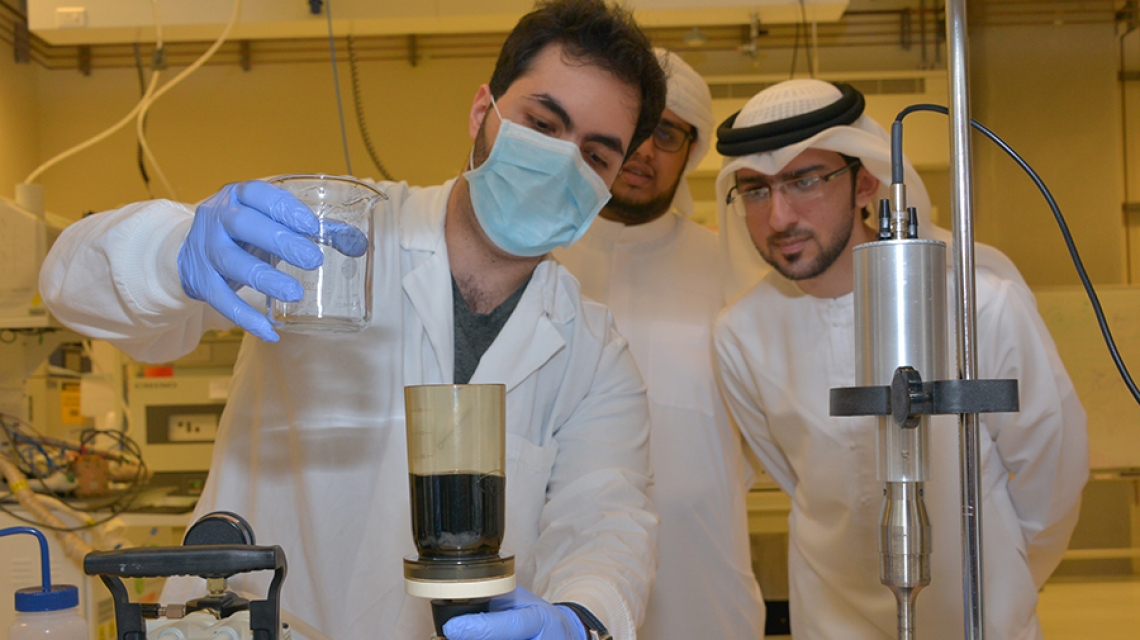
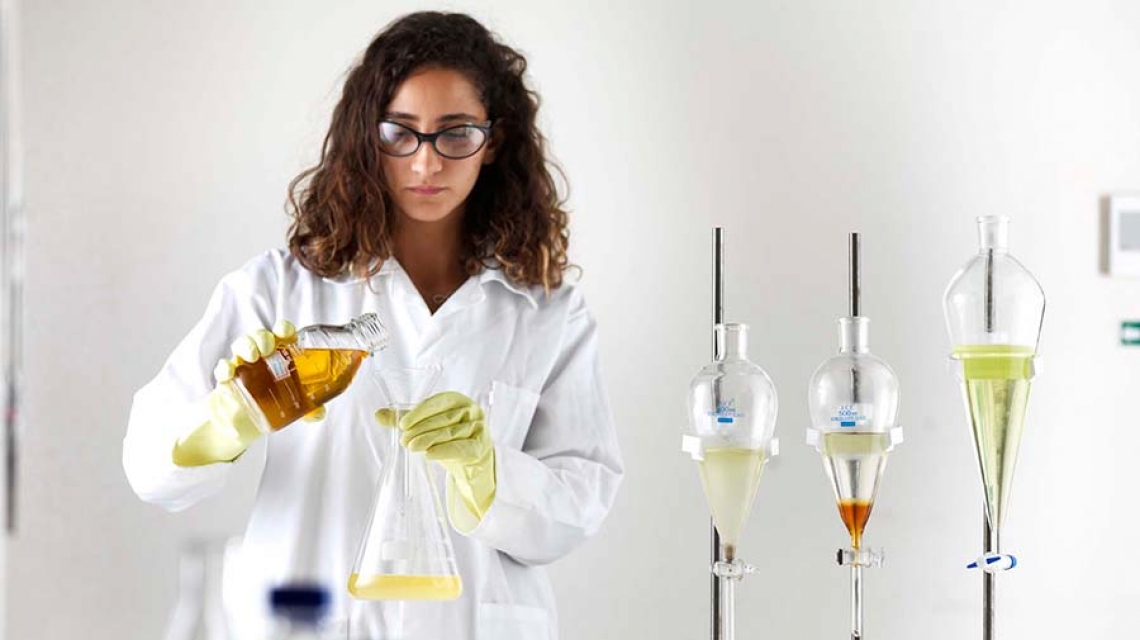
The Best Thesis Award for Mechanical Engineering was received by Tala El Samad for her thesis titled “Transesterification of Waste Cooking Oil: Intensified Sonication and Byproduct Deployment”. El Samad’s thesis focused on enhancing the process by which waste cooking oil is transformed into biodiesel. She used ultrasound energy to speed up the chemical reactions necessary to treat and separate waste cooking oil. The goal of this research is to make this technology more affordable by reducing processing time and cost. To fully test the project’s hypothesis and community-sized pilot was set up, where waste cooking oil was gathered for processing into biofuel. This project supports the UAE’s goal of reduced municipal waste and carbon emissions by turning a waste product into a fuel product that can replace carbon-intensive diesel fuel.

El Samad also received one of the GSRC 2016 awards for another paper based on her thesis research, which she co-authored with Master’s student Mohammed Hussain and Dr. Isam Janajreh, Associate Professor of Mechanical and Materials Engineering.

“I feel privileged to be part of the advanced research related to sustainability and other forms of energy production systems that is being conducted at Masdar Institute. This work is in line with Masdar Institute’s vision of innovation and sustainability,” she shared.

Hossam Shoman was the winner of the Best Thesis Award for Microsystems Engineering, for his thesis titled “Low Power Frequency Tuning of Optical Filter Banks”.  His project, sponsored by Mubadala Technology, focused on designing, simulating and testing a new device that enables the configuration of communication channels in optical integrated circuits using ultra low power. This device is part of a large system that integrates the optical signals from several channels, thus increasing the communication bandwidth. The device is based on a microelectromechanical cantilever that controls light waves traveling in optical chips. As part of Shoman’s research he modelled and designed several micro-scale structures, which were sent for fabrication at a commercial semiconductor foundry. The fabricated chips were then successfully measured at the Masdar Institute, showing lower power consumption when compared to existing technology. This area of research supports the UAE’s interest in semiconductors.

The Best Thesis Award for Sustainable Critical Infrastructure was given to Victoria Hernandez Streiedinger for her thesis titled “Assessing and Planning for Walkability Using Mixed Methods Approach: Abu Dhabi Case Study”. In Streiedinger’s thesis she investigated the walking habits of Abu Dhabi residents, examining how different factors, like climate and infrastructure, impact the behavior and choices of pedestrians in two urban neighborhoods. The results indicated high connectivity to a number of services, like mosques and bus stops, with the majority of respondents stating that they walk for transportation and entertainment. The information gathered in this study can help lead to the development of policies, design strategies and systems to support a more sustainable, healthy and pedestrian friendly environment in the UAE’s urban centers.


Zarina Khan
Senior Editor
1 June 2016
 

Students Gather to Share Fasting Experience during Ramadan

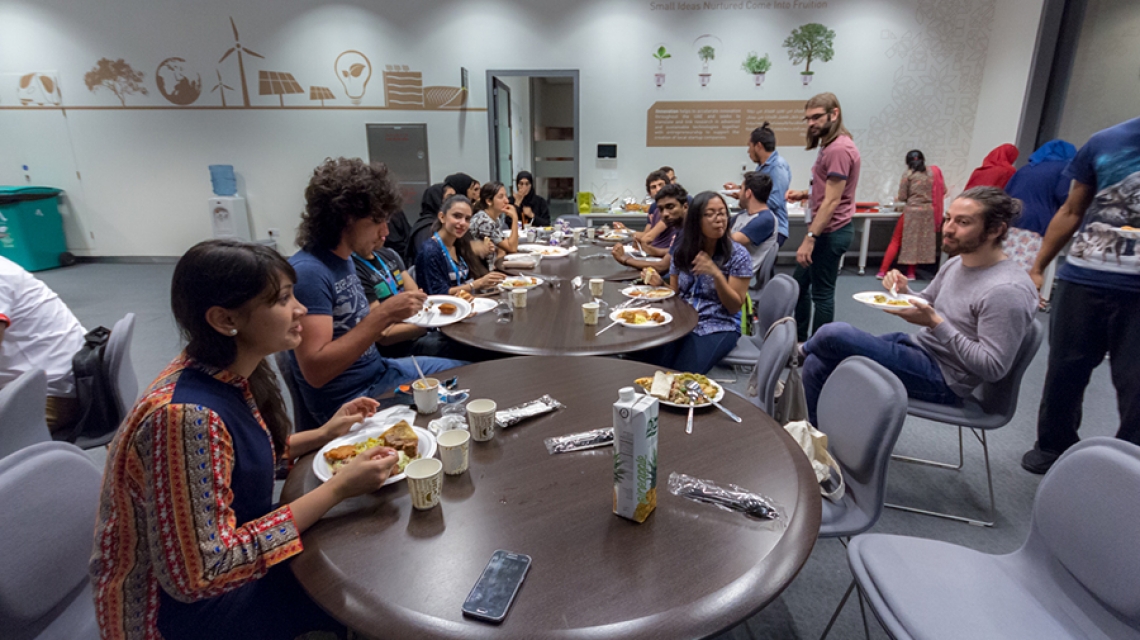
Masdar Institute students gathered to share their culture and company at an on-campus iftar party held during the Islamic month of fasting Ramadan.

A total of 30 students attended the break-fast dinner, contributing their own cultural foods to the gathering, illustrating the cultural diversity of the institute’s 432-strong student body, which hails from over 60 countries.

The iftar celebration began at 7:13pm UAE time, when the maghrib call to prayer announced the end of the day’s fast. Muslims fast from sunrise till sunset throughout the holy month of Ramadan, which began on 6 June this year.

PhD student Mauricio Paton said: “The student iftar was a great opportunity to bring people together and it was nice to see a great variety of dishes that people brought. It was my first time in an Iftar event and it was an interesting opportunity to meet everyone. People who are fasting obviously go for more loaded kind of food after being without any food the whole day while those who do not fast should try to be a little bit lighter. But the food was so tasty that it was really difficult to avoid that!”

Water and Environmental Engineering student UAE National Kulthoum Ismail said: “This kind of iftar gathering shows others the way we treat guests and the kind of food we serve. This helps us to exchange or share our thoughts with other residents and form strong and lasting friendships with international students”.

Monika Capriles, visiting international PhD student from KTH Royal Institute of Technology at Stockholm, said: “This is my first time experiencing the Holy Month of Ramadan in a Muslim country. It was a very nice evening to get to know and share with the other students. In particular, it was very cool since people brought their home countries’ dishes; so it was a multicultural experience during Ramadan.”

The students shared food and stories about their communities and customs. They also discussed the challenges to fasting during the summer months, as well as the benefits.


Clarence Michael
News Writer 
21 June 2016

Sheikh Mohammed bin Rashid receives Masdar Institute Class of 2016 Graduates

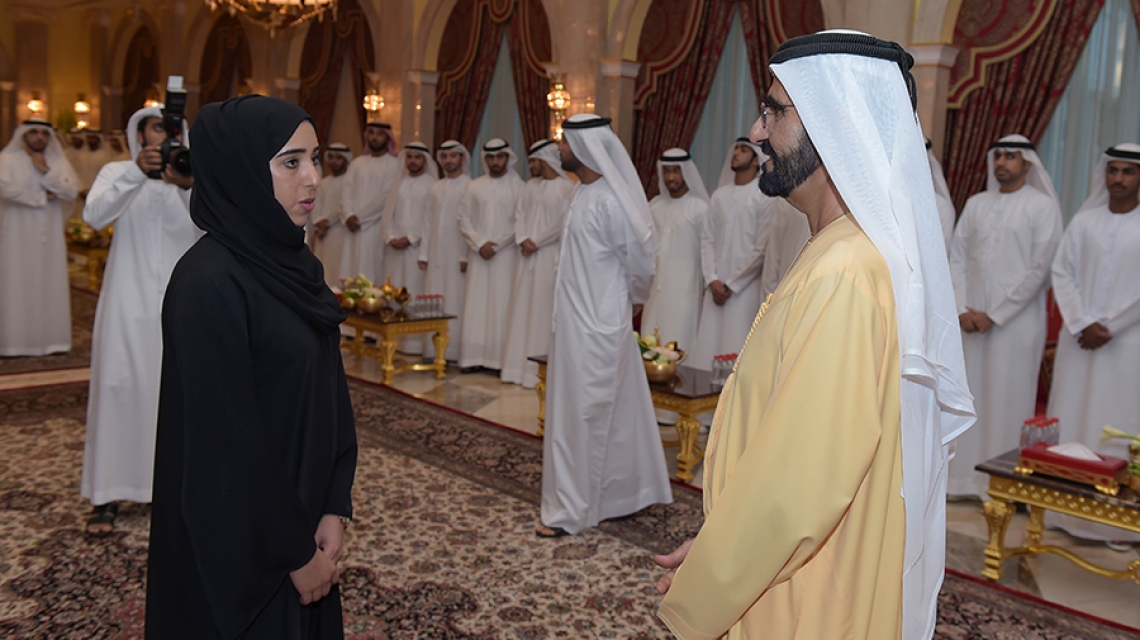
Two Masdar Institute Class of 2016 alumni were received by His Highness Sheikh Mohammed bin Rashid Al Maktoum, Vice President and Prime Minister of the United Arab Emirates and Ruler of Dubai, at the Zabeel Palace at a reception and iftar held to congratulate top achieving university graduates in the UAE.

The two Masdar Institute alumni – MSc in Engineering Systems and Management graduate Maryam AlMazrouei and MSc in Mechanical Engineering graduate Abdulla Alshehhi — were nominated for the honor due to their high academic rankings during their Master’s studies.

His Highness Sheikh Mohammed received the top graduates for the academic year 2015-2016 on 28 June at the Zabeel Palace in Dubai in the presence of Sheikh Hamdan bin Mohammed bin Rashid Al Maktoum, Crown Prince of Dubai, and Sheikh Maktoum bin Mohammed bin Rashid Al Maktoum, Deputy Ruler of Dubai.

His Highness Sheikh Mohammed congratulated the young men and women on their academic excellence and urged them keep up the good work. He noted the importance of engaging in scientific research and told the graduates that the UAE and its leaders count on them for sustainable development, state-owned news agency WAM reported.

“I am extremely proud to be among UAE’s top graduates. Our achievements are a result of the continuous support from our leaders and government, who have conveyed a spirit of adventure that has always inspired me to thrive for excellence and nothing less,” AlMazrouei shared.

“HH Sheikh Mohammed bin Rashid has been always a living role model to me. Meeting His Highness gave me a huge push to always maintain the first place and to work hard.”

Sheikh Ahmed bin Saeed Al Maktoum, Chairman of Dubai Civil Aviation Authority and Chairman of Emirates Group, Sheikh Ahmed bin Mohammed bin Rashid Al Maktoum, Chairman of Mohammed bin Rashid Al Maktoum Foundation, were among the officials who attended the reception, which was followed by an iftar banquet hosted by Sheikh Mohammed.

AlMazrouei won Masdar Institute’s Class of 2016 Best Thesis Award for Engineering Systems and Management, for her thesis titled ‘CO2-Enhanced Oil Recovery System Optimization with System Dynamics Material Balance Characterization of Injection. Her thesis aims to enhance the commercialization of carbon capture, utilization and storage (CCUS) technologies, which is a technological system that is expected to play a central role in the fight against global climate change.

“It was a great pleasure to meet His Highness Sheikh Mohammed Bin Rashid and to hear his motivational speech, which urged us to continue developing ourselves and work harder to achieve our goals and become future leaders,” Alshehhi shared. “His words were very inspiring, encouraging us to pursue our future dreams.”

Alshehhi was one of the two students involved in an innovative collaborative research project with Etihad Cargo to design a new cool dolly. The new dolly would optimize the transportation of temperature-sensitive cargo, which includes pharmaceuticals and perishable products that need to be transferred between the aircraft and storage compartments in cargo warehouses, providing Etihad Cargo and the Abu Dhabi International Airport a unique competitive advantage over other airports.

Zarina Khan
Senior Editor
30 June 2016

Academia Must Continue to Develop Small Satellites, Says Expert from Orbital ATK

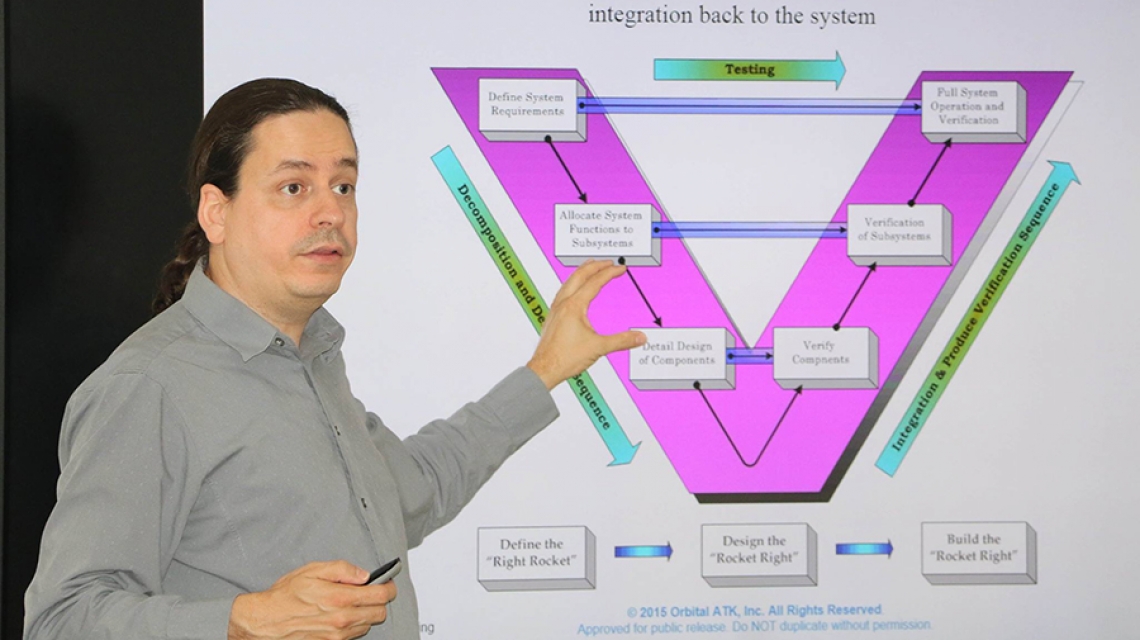
The skills gained in designing and developing mini satellites, known as CubeSats, are a crucial contribution to the development of competent students and high value human capital, said Carlos Niederstrasser, ‎Space Industry Professional, System Engineer, STEM Educator, and Business Development & Special Initiatives, Orbital ATK, during a seminar at Masdar Institute of Science and Technology.

Niederstrasser was speaking at the seminar organized on campus on 19 June. The lecture was designed to help students in Masdar Institute’s Space Systems and Technology concentration to learn more about CubeSats and be able to formulate a relevant thesis topic relating to them.


Niederstrasser said:“One of the primary purposes of universities is to develop the country’s human capital in science and technology,. Moreover, nearly 95% of the educational goals of this program are met the moment the satellite is delivered to the launch vehicle. University programs are always about workforce development, skill-building, and creating in-country capabilities. A student-satellite is also a hands-on project in arguably the ‘most attention-getting’ of engineering disciplines.”

A CubeSat (U-class spacecraft) is a type of miniaturized satellite for space research that is made up of multiples of 10×10×11.35 cm cubic units. CubeSats have a mass of no more than 1.33 kg per unit, and often use commercial off-the-shelf (COTS) components for their electronics and structure. CubeSats also act as a low-cost pathway to conduct research in science, exploration, technology development, education or other space-related operations.

CubeSats have seen explosive growth ever since the US National Aeronautical and Space Administration (NASA) began to get involved in their launch in 2003. More than 40 university-class satellites were launched in 2014 alone. CubeSats are also used for education and training, technology experiment and demonstration, scientific research, biological experiment, communications, earth remote sensing, military projects, space tethering and for navigation purposes. Among these areas, technology demonstration and earth imaging were the two areas in which the most number of CubeSats were launched during 2014 and 2015.

Advising the students at Masdar Institute to focus on industry-compliant practices for better results, Niederstrasser said: “CubeSats need to have only hardware designed for and tested in irradiated environments as they are expected to stay in a sustained low Earth orbit lasting months, probably even years. Radiation-hardened devices need to be used while building these small satellites. They must also comply with the CubeSat Design Specification and focus on products which many treat as standards in CubeSat electronics.”

“Cost-benefits play a key role in the launch of CubeSats,” Niederstrasser said and added that “there are always low cost piggy-back opportunities available for CubeSats on medium and heavy-lift launch vehicles”. However, he pointed out that dedicated launchers now under development could radically alter this trend.

Earlier, on 15 June, Niederstrasser led another seminar titled ‘Space Systems Engineering’ at Masdar Institute. Both on-campus lectures served as a follow-up on last year’s ‘Faculty Enrichment Seminars’ that reflect the collaboration under the joint multi-disciplinary graduate academic space program with Yahsat and Orbital ATK.

The seminars are of relevance to Masdar Institute’s Space Technology and Systems concentration, which was launched in Fall 2016 train students in satellite design, development and operation  techniques of relevance to other sectors including communication, aerospace, and alternative energy. The concentration also supports the UAE in becoming the first Gulf country to successfully design and build a satellite entirely by students.

Students of the concentration are currently working towards designing, building, testing and flying a nanosatellite, guided by Orbital ATK engineers and mentorship from Al Yah Satellite Communications Company (Yahsat). Overall, the students plan to build up to four CubeSats named MI1, MI2, MI3 and MI4.

Masdar Institute CubeSats are expected to focus on education and training, technology experiment and demonstration, scientific research, communications, and earth remote sensing. They may be used for training across multiple engineering disciplines such as aerospace, electrical and mechanical, as well as for testing efficiency of future spacecraft components such as novel solar panels and batteries and microelectromechanical systems (MEMS) devices.

In addition Masdar Institute CubeSats will also be used as experimental platform for earth observation (EO) applications including monitoring CO2 levels, algae blooms in the Gulf, oil spill detection and others such topics directly related to Masdar Institute’s core research thrusts.

Clarence Michael
News Writer
10 July 2016

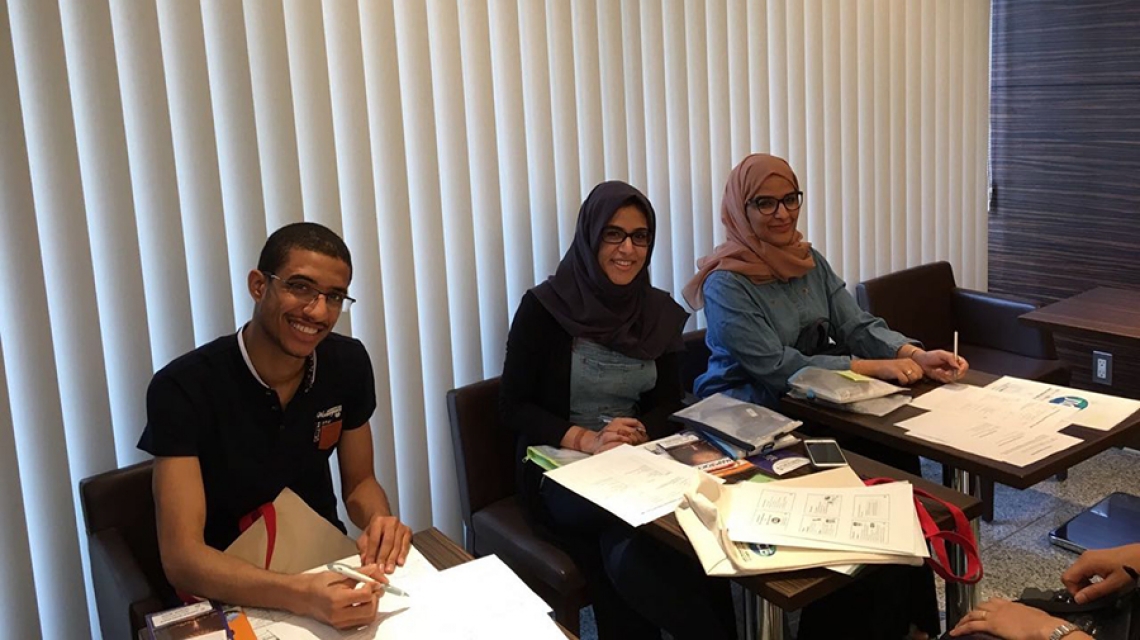
Three UAE National Students Attend Orientation in Tokyo Ahead of JICE Internship

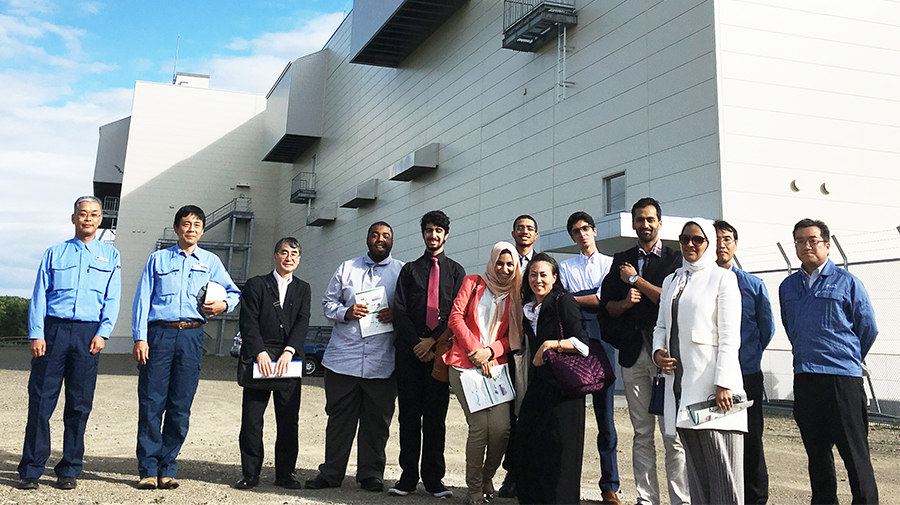
Three UAE national students recently attended an orientation program in Tokyo as part of their internship program that is being organized in collaboration with the Japan International Cooperation Center (JICE). The internship at Chiyoda Corporation and Mitsubishi Heavy Industries in Japan has commenced on 11 July and will run until 5 August.

The three interns are Chemical Engineering student Abdullah AlHinai, Engineering Systems and Management student Fatma AlShowab, and Sustainable Critical Infrastructure student Maryam Almheiri. The orientation was held on 27 June, which was followed by Japanese language classes until 4 July. During this period, the students also attended a reception on 1 July at the UAE Embassy in Tokyo.

Dr. Mohammad Abu Zahra, Associate Professor and Head of the Department of Chemical and Environmental Engineering at Masdar Institute, will review the students’ final presentation on 9 August after the internship program. The students arrived in Tokyo on 26 June for the program and will return to Abu Dhabi on 10 August.

Al Hinai said: “The one-week orientation program equipped us in basics of the Japanese language, local culture, business etiquette and handling of unexpected fire hazards. We also had an opportunity to visit the research labs at Tokyo University and the Japan Ministry of Economy organized lectures about energy challenges in Japan and globally. My internship with Mitsubishi Heavy Industries has now begun at the company’s research center in Nagasaki, where I am working on a carbon capture project – exactly my area of research.”

Before leaving for Japan, the three students attended a pre-departure orientation session with Kanamori Tokuya, JICE Representative at the Educational Development Office, Abu Dhabi. They also joined Abdulla Al Suwaidi, a UAE national alumnus from the University of Tokyo, who shared his experiences in Japan during a dinner gathering in Abu Dhabi.


Clarence Michael
News Writer
11 July 2016

Masdar Institute Introduces Clean Energy Storage Technologies to Young Professionals

Members of the Young Future Energy Leaders (YFEL) program participated in a two-day course in electrochemical engineering focusing on ‘Batteries and Fuel Cells’ that was organized at the Masdar Institute campus.

The course, led by Dr. Saif AlMheiri, Assistant Professor, Mechanical and Materials Engineering, was held from 20-21 July. It aimed to increase the awareness of YFEL members on contemporary issues and research opportunities in the sustainability related issue of energy storage.  The course also seeks to highlight the contribution of YFEL in the area of energy storage, for the UAE’s sustainable energy future.

With an introduction to electrochemical engineering, the course sessions covered thermodynamics, kinetics and characterization methods of fuel cells, as well as the definition and principles, technology and characteristics of batteries. In addition to a hands-on tutorial on fuel cells, a dedicated session on mobile and grid-scale energy storage was also part of the course.

Dr. Lamya N. Fawwaz, Vice-President for Institutional Advancement and Public Affairs, Masdar Institute, said: “The two-day course was part of our endeavor to equip YFEL members with technical expertise in sustainable energy-related areas. Energy storage plays a key role in the advancement of clean and sustainable energy, and as future energy industry leaders, the YFEL members will require in-depth knowledge of the challenges and opportunities in these sectors. We believe this course will help train them to become leaders and innovators in energy.”

According to independent research and advisory firm Lux Research, the global energy storage market could reach US$50 billion by 2020 driven by demand in consumer electronics, transportation and stationary storage. The two-day course will educate YFEL members in this fast-expanding industry.

YFEL member Abrar Mohamed, a Civil and Transportation Engineer working with Abu Dhabi Ports Company, believes the course was her starting point to be creative and come up with unique solutions to overcome challenges experienced by most of the construction projects.

Abrar Mohamed said: “This course highlighted electro-chemical energy, and the different types of batteries we can use as hybrid storage devices rather than only batteries. One of the things that came to my mind was how we can change our current infrastructure for solar use and the necessary retro-fitting Abu Dhabi Ports can do to change the electricity that is produced by conventional methods to become more eco-friendly. I am going to do the necessary case studies about the batteries for forklifts or other machinery onsite as well as explore the elements required for changing the grid system.”

YFEL member Muna AbduKabeer, an aircraft maintenance engineer at Etihad Airways, believes that the course has helped her increase knowledge in various electrochemical energy storage and conversion technologies, including cell construction, operation and materials selection.

AbduKabeer said: “I am working with a company that contributes to Abu Dhabi’s Vision 2030, by which time I believe most of the aircraft will be working with fuel cells using more electronics, than fuel itself, thereby bringing in new technology for future generation of aircraft. This course has provided me the ability to examine electrochemical thermodynamics, mass transport and reaction kinetics, and evaluate the performance of devices via electrochemical methods. I believe my company could start looking into the use of fuel cell in the aircraft if a Masdar Institute team could support me to submit an interesting proposal.”

With the completion of the course, YFEL members will now be able to distinguish between the various energy storage and conversion technologies such as cell construction, operation and materials selection. They have also come to understand the concepts related to electrochemical thermodynamics, mass transport and reaction kinetics. Additionally, the course has enabled them to become competent in evaluating the performance of electrochemical devices both quantitatively and qualitatively, while assessing challenges in the electrochemical energy storage and conversion area.


Clarence Michael
News Writer
25 July 2016

19 UAE National Undergraduates Explore Scientific Innovation at Masdar Institute

A total of 19 UAE national undergraduates engaged in scientific exploration at the research laboratories of Masdar Institute of Science and Technology as part of the Ektashif Summer 2016 program from 24-28 July.

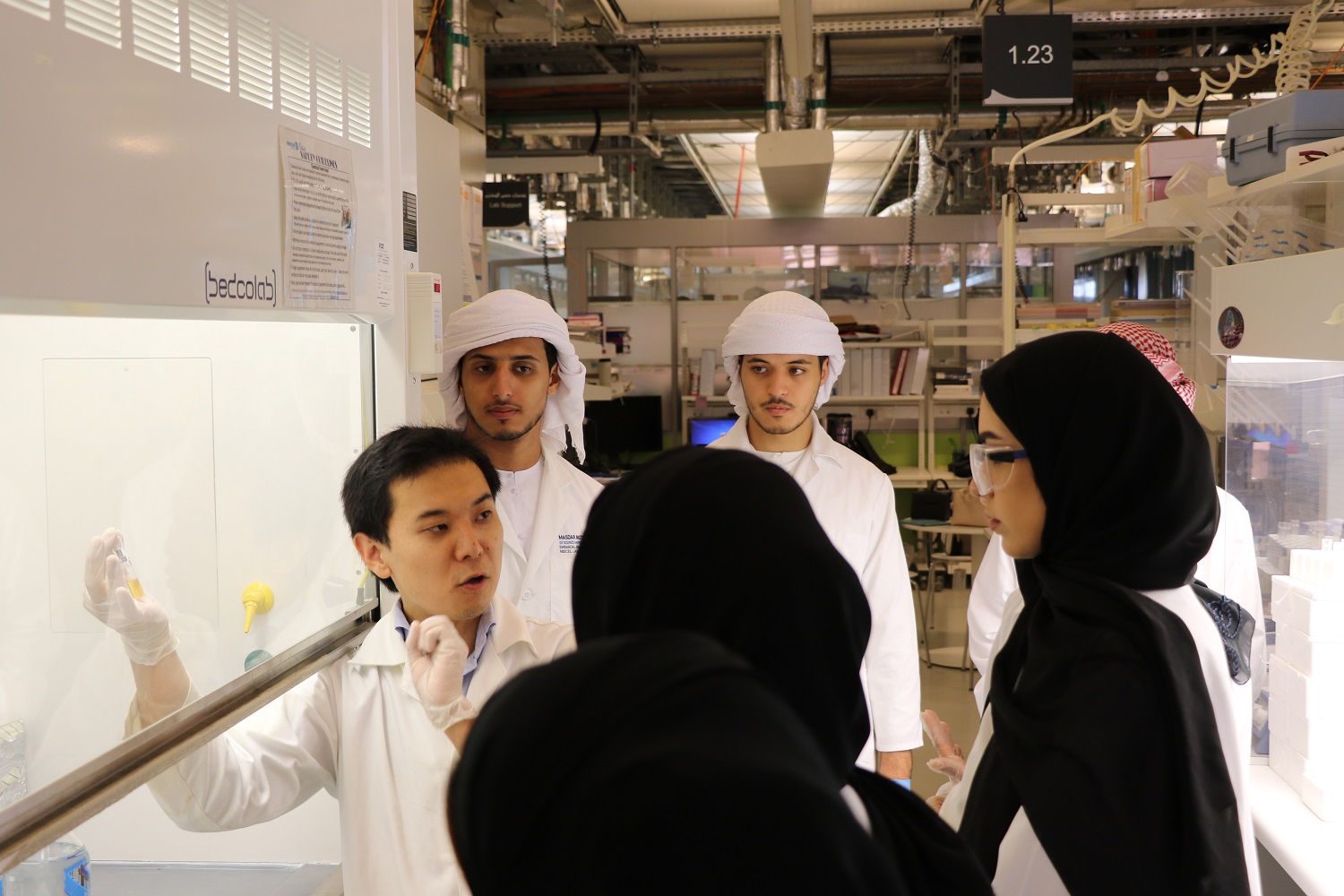
The on-campus program offered undergraduates majoring in science, engineering or information technology an opportunity to experience the advanced technology environment at Masdar Institute’s cutting-edge laboratory facilities. Nominated by their respective universities, the students participated in many exciting hands-on workshops and discussed on-going research conducted by faculty and current graduate students at Masdar Institute.
 
Dr. Lamya Fawwaz, Vice President for Institutional Advancement and Public Affairs, Masdar Institute, said: “The twice-yearly Ektashif program provides undergraduate participants a preview of what they can expect if they decide to become part of the Masdar Institute campus community for their Master’s studies. As a research-oriented institution, our Ektashif program aims to raise awareness among young students about challenges and opportunities in energy, space systems, water, sustainable technology, and advanced materials. We believe Ektashif participants take home lessons that will not only change their lifestyles but also encourage them to participate in the UAE’s sustainable knowledge economy transformation.”
 
The Ektashif workshops this year focused on digital electronics, basic principles of an aerated microbial wastewater treatment bioreactor, as well as application of biotechnology tools and engineering principles for energy, climate change, and health applications. Other technology-focused workshops focused on the role of solid sorbents in carbon capture, practical applications of nano-satellites, applications of power electronics, theories and principles of 3D printing, as well as conversion of waste into added-value products.

The residential internship program is coordinated by Dr. Kenneth Volk, Outreach Manager, Masdar Institute. A policy-focused workshop guided the interns on the design of sustainable energy policy for complex energy economic systems and the financial strategies to promote clean tech investment. A final workshop was designed to help the students learn how to write an abstract for a thesis or journal article and educate them on ways to avoid the pitfalls of plagiarism through proper use of citations.
 
Dr. Jorge Rodriguez, Associate Professor, Chemical and Environmental Engineering, hosted a lab on ‘Microbial Catalysis Reactor – Water Treatment’, for the Ektashif participants. He said: “This year’s participants were a diverse group predominantly female students, which shows the growing role of women in science and technology in the UAE. Many of the students have chemical and chemical engineering backgrounds and have shown great potential for careers in that field that could benefit the UAE.”
 
The workshop on satellite communications was hosted by Dr. Prashanth Marpu, Assistant Professor, Water and Environmental Engineering. Dr. Marpu said: “The students were intensely involved in the workshop activity. It was rewarding to see how curious they were about various aspects of satellite communication and CubeSat development at the YahSat Space Lab.”
 
Ektashif participant Suhaib Mohamed Dawood Abdalla from UAE University, said: “We have had a fantastic journey at Masdar Institute. I learned many things from each class, including the one on CubeSat, which I loved, as well as the digital electronics lab. I am grateful to the faculty and lab staff for listening to us patiently and guiding us through the sessions. And I am definitely looking forward to fulfil my dream of getting accepted by Masdar Institute for Master’s studies.”
 
Another Ektashif participant Aaya Kamel Mohamed Hasan Almarzooqi from Sharjah Higher Colleges of Technology said: “I had great experience in the labs but the satellite communication workshop was the one I liked most. I have a passion for the space field and the experiment taught us how to track a satellite and how things work when trying to build one. In addition, the workshops on algae, CO2 capture and 3D printer were also amazing. I am grateful to the professors answering all my questions, explaining in a way that I could easily understand.”
 
The Ektashif Summer 2016 program was further enriched by a research presentation on carbon capture offered by Chemical and Environmental Engineering student Roghayeh Dejan. This research is focused on identifying novel organic solvents for carbon capture that are lower cost than current water-based carbon capture solvents. .

The Ektashif program also seeks to encourage students to consider conducting further research in clean energy and sustainability, while developing the students’ teamwork and communications skills through team building and interactive activities.

Clarence Michael
News Writer
10/08/2016


Advanced Algorithm Presented at International Computing Conference

Masdar Institute PhD alumnus Dr. Majid Khonji presented a novel algorithm that would enable smart grids to optimize power generation and consumption by matching power supply to consumer demand at the 22nd International Computing and Combinatorics Conference (COCOON’16), which was held on 2-4 August in Ho Chi Minh city, Vietnam .

Dr. Khonji, who graduated from Masdar Institute’s interdisciplinary engineering Doctorate program in May, designed the algorithm for optimized power generation as part of his dissertation with support from his advisor, Dr. Sid Chi-Kin Chau, Assistant Professor of Electrical Engineering and Computer Science. Such optimized power supply would help alleviate the peak-day stress placed on electrical grids, contributing to a more resilient and sustainable national power grid. A paper he coauthored with Dr. Chau, Associate Professor of Electrical Engineering and Computer Science Dr. Khaled Elbassioni and PhD student Areg Karapetyan on the algorithm, titled “Complex-demand Scheduling Problem with Application in Smart Grid,” was published in the COCOON’16 conference proceeding.

“The concept that power needs to be supplied equally to all users, at all times of the day, is no longer considered efficient,” Dr. Khonji explained. “This algorithm helps grid operators schedule loads to match the supply profile, which is variable due to intermittent energy sources, like wind and solar power, being fed onto the grid. Traditionally, power engineers change supply to match demand profile, which is why we get peak demand issues.”

Dr. Khonji’s advanced algorithm may bring power engineers one step closer to developing next-generation smart grids that are capable of parsing out electricity to meet individual demand, as opposed to constantly supplying a steady stream of electricity at all times to all users equally, whether that amount of electricity is required or not. This conventional, steady-production system generates excessive amounts of electricity in order to meet the incredibly high peak-day power levels, even during off-peak times. This constant production of large amounts of power is wasteful, which in turns contributes to higher levels of greenhouse gas emissions.

In addition to optimizing power supply, Dr. Khonji’s algorithm is perfectly adapted to deal with the varying electric supply associated with intermittent renewables, which are expected to play an integral role in future smart grids. These grids will include more power generated by intermittent renewable energy sources, such as wind and solar energy, from decentralized locations.  While the addition of these renewable sources will help decrease greenhouse gas emissions, they will also make power supply substantially more complex and variable.  

Another key strength of Dr. Khonji’s algorithm is its ability to overcome the scheduling and allocation challenge associated with alternating current (AC) electricity. Today’s power grids generate AC electricity, which means that the electrical current periodically reverses direction, a feature that allows the electric current to be carried long distances at high voltages.  However, AC’s non-linear currents, coupled with varying consumer demands, presents challenges to optimized power supply. These challenges make the power scheduling problem particularly difficult to solve.

“The problem is considered virtually impossible to find an exact algorithm to solve it. However, I have developed some novel techniques that enable my algorithm to come to a near-optimal solution,” Dr. Khonji shared.

The ultimate objective of the algorithm is to maximize utility. In the context of this power supply challenge, utility can be understood as the ability to maximize the number of demands that the grid operator can fit within a given power supply range.
Essentially, equipped with Dr. Khonji’s algorithm, the grid operator would be able to automatically allocate power in the best way to satisfy the

highest number of consumer demands. The advanced algorithm would be integrated with smart meters, and would help communicate and regulate the power demand and supply between individual homes and the grid operator.

Dr. Khonji’s presentation attracted conference visitors and computer scientist experts, who were impressed with the novelty and potential application of his algorithm. He is now working on an extension of his algorithm, which aims to make the algorithm more flexible so that consumers can change their demand preferences “on the fly”, or on the same day, rather than the day before.  

The UAE National’s cutting-edge algorithm underpins Masdar Institute’s robust computer science and engineering program and its ability to produce highly-skilled personnel who will help transform the UAE into a knowledge-based economy.

Erica Solomon
News and Features Writer
14 August 2016

PhD Student Wins Best Presentation Award for Self-Cleaning Glass Research

A Masdar Institute PhD student won the best oral presentation award at the 30th International Conference on Surface Modification Technologies (SMT30), which took place last month at the Polytechnic University of Milan, Italy.

Student Gabriele Scandura’s oral presentation was on a research paper titled “Investigation on the wettability of TiO2 evaporated thin films by atomic force microscopic and contact angle”, which he jointly authored with PhD students Corrado Garlisi, Chia-Yun Lai and Tuza Olukan, Master’s student Yun-Hsiang Chang, associate professor Dr. Matteo Chiesa and assistant professor Dr. Giovanni Palmisano.

Surface wettability is the ability of a liquid to maintain contact with a solid surface. It is important in a number of applications of relevance to the industries targeted in the UAE, including development of construction materials, semiconductor wafers, electronics and plastics. The awarded project is taking place as a collaboration between two Masdar Institute teams, one led by Dr. Palmisano and another lead by Dr. Chiesa.

“This research is relevant to the UAE since it uses an environmentally friendly material involving solar light exploitation, to get beneficial effects in applications requiring clean glass thanks to the self-cleaning effect coming from the photocatalytic effect with titanium dioxide (TiO2),” Dr. Palmisano explained.

The project aims to achieve an integrated nano- and macro- scale inspection of wettability alteration in titanium dioxide thin films deposited on glass through light exposure and the heating and strengthening process known as annealing. Demonstrating the effectiveness of annealing to produce water-repelling surfaces in this way supports the development of multipurpose self-cleaning coatings for glass.

Self-cleaning glass able to automatically get rid of organic pollutants is of particular interest to the UAE given the substantial amounts of glass being used in new buildings that need frequent cleaning.

“Highly developed construction activity in the world and especially in the UAE would certainly benefit of modern functional materials able to assure self-cleaning glass,” Dr. Palmisano explained.

Scandura was one of three PhD students to receive awards for best presentations, among approximately 50 contenders.


Zarina Khan
Senior Editor
23 August 2016


Masdar Institute Professor Named ASME Fellow

Masdar Institute’s Dr. Tariq Shamim, Professor of Mechanical and Materials Engineering, was recently elected as a Fellow of the American Society of Mechanical Engineers (ASME), joining a very small group of people from the Gulf region to receive this honor.

“Dr. Shamim has been with Masdar Institute since its early days. We welcome this international announcement and recognize it is a testimonial of Dr. Shamim’s leadership in Mechanical engineering,” remarked Dr. Behjat Al Yousuf, Interim Provost, Masdar Institute. “With Dr. Shamim’s new appointment in ASME, we look forward to new opportunities for knowledge sharing within and across all engineering disciplines to develop solutions that will benefit all.”

Dr. Shamim joined Masdar Institute in 2010 and has been teaching courses in advanced thermodynamics, heat transfer, sustainable energy systems, fuel cell systems and combustion and emissions control. He has led several research projects while at MI, playing a key role in critical local and international collaborative projects with partners like Abu Dhabi Aircraft Technologies, Takreer Research Center and Emirates Global Aluminum.

A particularly innovative research project Dr. Shamim is leading involves capturing carbon dioxide with a novel chemical looping combustion technology. His team built the region’s first lab-scale chemical looping combustion system in collaboration with the Massachusetts Institute of Technology (MIT) and Southeast University China, which was completed in 2014, and is going through a series of testing and validation.

“Professor Shamim’s distinguished record of research, teaching and service to the engineering profession makes him among the most recognized engineering professors in UAE.  I have worked closely with Dr. Shamim on a range of projects, and he is always dynamic, diligent, and thoughtful. It is truly an honor to work with him. Masdar Institute will continue to thrive with Dr. Shamim’s helpful and valuable contributions,” shared Dr. Rashid Abu Al-Rub, Associate Professor and Head of the Mechanical and Materials Engineering Department at Masdar Institute. Dr. Abu Al-Rub is currently working with Dr. Shamim on a collaborative research project with Emirates Global Aluminum to reduce the energy footprint of aluminum production.

An ASME Fellow is a membership grade of distinction conferred by the ASME Committee of Past Presidents to an ASME member with significant publications or innovations and distinguished scientific and engineering background. Less than 3% of its members have attained the grade of Fellow worldwide.

Dr. Shamim is recognized for his contributions in the fields of energy systems, carbon capture, fuel cells, combustion and emission control. He has over 100 technical publications in research proceedings and journals. He is an active participant in many professional organizations, including ASME, the Society of Automotive Engineers (SAE) and the Combustion Institute. He is a recipient of several awards including the SAE International Ralph Teetor award for excellence in teaching (2004); University of Michigan-Dearborn’s Faculty Senate Appreciation awards for academic leadership (2006, 2007 and 2009); Abu Dhabi Convention Bureau’s Appreciation Award (2014); and Masdar Institute’s Outstanding Faculty Award (2015). He is currently serving as a subject editor of a leading international Elsevier energy journal – Applied Energy.

Dr. Shamim earned his doctorate in mechanical engineering and a master’s in aerospace engineering from the University of Michigan – Ann Arbor. He holds a second master’s degree in mechanical engineering from the University of Windsor, Canada, and a bachelor’s degree in mechanical engineering from the N.E.D. University in Karachi. Prior to joining Masdar Institute, Dr. Shamim was a tenured faculty member in the Department of Mechanical Engineering at the University of Michigan-Dearborn, where he worked since 1997.  Dr. Shamim also held visiting faculty appointments at MIT, National University of Singapore, American University of Sharjah, NED University of Engineering & Technology, Oak Ridge National Laboratory and Ford Motor Company.

ASME was founded in 1880 as an engineering society focused on mechanical engineering in North America. Today, ASME is multidisciplinary and global with over 140,000 members in 158 countries worldwide.


Erica Solomon
News and Features Writer 
29 August 2016

JICE Internship in Japan Provides Enhanced Learning Experience in Clean Technology, Say Three Participants

Three UAE nationals have successfully completed a Japanese summer internship program that featured visits to integrated green developments, clean-energy projects, and cultural sites.  

Organized by the Japan International Collaboration Center (JICE), the internship program was supported by Chiyoda Corporation and Mitsubishi Heavy Industries, which provided internship experiences to three students – Abdullah Al Hinai, Fatma AlShowab and Maryam Almheiri – from 11 July to 5 August. The students gave a presentation on their experience on 9 August, which was reviewed by Dr. Mohammad Abu Zahra, Associate Professor and Head of Chemical and Environmental Engineering, and Dr. Noura Al Kaabi, Director of the Research Development Office.

Masako Kishimoto, Vice-President, JICE, said: “The Masdar Institute students enthusiastically participated in the internship program and were keen to learn about the sustainable technologies. At JICE, we feel privileged to contribute to the UAE’s efforts towards creating a knowledge-based economy through human capital development while helping to strengthen bilateral relations between the two countries.”  

Dr. Abdullah Al Hefeiti, Acting Dean of Students and Dean of Library, Masdar Institute, said: “The collaboration with JICE benefits Masdar Institute by enhancing the learning experience of our students. We feel privileged to work with JICE in our human development efforts to create tomorrow’s industry leaders in clean energy and sustainability. We hope the internship experience will help motivate the students to seek innovations similar to the technologies currently implemented in Japan.”  

Dr. Abu Zahra said the JICE internship program is unique because it provides the students with the technical knowledge while teaching them greater professionalism, work ethics and cultural values that they can apply back home and at Masdar institute.  

He explained: “Being at these large industrial companies in Japan for a few weeks gave the students access to advanced technologies and development. In addition to the technical knowledge, they also learned valuable information relating to research and thinking methodologies. This will help the students in the planning and execution of their future projects.”  

Maryam Ali Almheiri of the Sustainable Critical Infrastructure program interned with Chiyoda. She said the JICE internship was unique at every stage and the program gave her a chance to experience Japan in a different way. She said she would utilize all the information that the Japanese officials at Chiyoda provided to her Master’s thesis project on developing sustainable energy in Abu Dhabi and UAE.  

Almheiri added: “Through my thesis research I aim to enhance the microclimate in Abu Dhabi neighborhood by using new design strategies for solar energy as well as landscape designs to reduce urban heat island effects and enhance urban comfort. This JICE internship help me to understand how to design and develop the solar technologies and increase their efficiency by using different techniques.”  

Chemical Engineering student Abdullah Al Hinai interned with Mitsubishi Heavy Industry. He said he was impressed by the Japanese focus on time management and their loyalty to their work. He also felt the internship helped him understand the challenges that face commercial applications of carbon capture technologies.  

Al Hinai said: “Abu Dhabi’s Vision 2030 targets a sustainable environment. Therefore, more research is required in carbon capture and storage technologies to make them economically more feasible on a commercial scale. I am grateful to the officials at JICE and Mitsubishi Heavy Industries for the internship opportunity I experienced. I also thank Masdar Institute for selecting me to be part of this Japan internship program.”  

Clarence Michael
News Writer 
04 September 2016

New Student Government Association Board Members Elected

The Masdar Institute student body has chosen its members to represent it through the 2016-2017 academic year through the Student Government Association (SGA) elections.

Abdullah Al Hefeiti, Dean of Library and Acting Dean of Students, Masdar Institute, said: “Congratulations to the new members of the SGA board 2016-17. My best wishes to the entire board for their commitment to leading on-campus and off-campus activities. I would also like to thank all students who turned up to vote and elect the new board.”

Saeed Kaddoura of the Water and Environmental Engineering program was elected as the new president of the Masdar Institute Student Governance Association while Mechanical Engineering student Tawadud AlKatheeri was elected as vice president.

SGA President Kaddoura said: “One of our challenges this year is to reinforce the role of the Sustainability Club in the student community. Masdar Institute is a well-known forerunner in the field of sustainability and environmental research, and the Sustainability Club acts as a think-tank for student-led sustainability community initiatives. We feel that encouraging students to participate in the Sustainability Club will provide a platform for students to be creative and innovative when it comes to our sustainability challenges.”

Other members of the board are Sustainable Critical Infrastructure student Fernanda de Carvalho Schuch (Secretary), PhD student Dan Cracan (Treasurer), Materials Science and Engineering student Frazly Khalil Alexander, (Chairperson-Sports and Engineering Systems and Management student Abdul Rahman Al Zaabi (Chairperson-Events).

SGA Vice President AlKatheeri said: “We plan to further extend the reach of the students’ impact beyond the campus by increasing our community involvement, and with a student body of over 400 students, we are confident that we can create a meaningful impact within the City of Abu Dhabi.”

The SGA office-bearers have pledged to empower the members while ensuring that the board’s vision is aligned with that of Masdar Institute by doing its best to create an environment that redefines education, research, and leadership.

Elections for the SGA are held within 30 days of the first day of class each fall semester, with an additional election held in April for an interim SGA to replace graduating members The Student Affairs Office (SAO) provides a range of services and support to enhance Masdar Institute students’ overall well-being and to create opportunities to enrich and broaden their educational experience.


Clarence Michael
News Writer 
10 October 2016