
Advancements in Materials Science Research Presented

Masdar Institute researchers presented over a dozen innovative, materials science-related research projects at the Materials Research Society’s (MRS) flagship conference, the 2015 MRS Fall Meeting and Exhibit in Boston, Massachusetts, USA.

The 18 abstracts presented by Masdar Institute students, faculty and post-doctoral researchers served to demonstrate the Institute’s robust materials science research activities, particularly in the development of transistors, solar cells, and sensors.

“Research in advanced materials is critical to the development of innovations that will play a significant role in the UAE’s key industries, including aerospace, oil and gas, and renewable energy. We are delighted that a significant number of our research projects were presented at this leading advanced materials research conference, revealing our strong capabilities in this critical area,” said Dr. Steve Griffiths, Vice President for Research, Masdar Institute.

Four Masdar Institute faculty members from the Mechanical and Materials Engineering Department are the principal investigators for the projects presented at the conference — Interim Dean of Students and Assistant Professor Dr. Amal Ghaferi, Associate Professor Dr. Matteo Chiesa, Assistant Professor Dr. Kumar Shanmugam and Assistant Professor Dr. TieJun Zhang. Three faculty members from the Electrical Engineering and Computer Science Department, including Professor Dr. Irfan Saadat, Associate Professor Dr. Ammar Nayfeh, and Assistant Professor Dr. Jaime Viegas, also are principal investigators for research projects that were presented.

Mateusz Madzik, a student of Masdar Institute’s Microsystems Engineering program, presented his research titled “Thin Film Transistors Based on Zinc Oxide Channel Layer and Molybdenum Doped Indium Oxide Transparent Electrodes.”  In this study, Madzik and his team fabricated novel transparent, thin-film and high-efficient transistors with metal oxides, that have potential applications in sensors and LED display screens.

Another paper presented by Madzik relating to transistors, titled “Impact of Glycerol on Zinc Oxide Based Thin Film Transistors with Indium Molybdenum Oxide Electrodes,” further investigated the development of transparent metal-oxide transistors with glycerol – a clear liquid that could improve the transistor’s transparency.

On the topic of water-splitting, Post-Doctoral Researcher Dr. Nitul Rajput presented the paper “Electron Beam Induced Rapid Crystallization of Water Splitting Nanostructures.” His research investigated using titanium dioxide loaded with gold to catalyze water splitting – the process of splitting water into oxygen and hydrogen, which could be used for energy storage and power production.

Also on the same topic, Dr. Viegas presented a paper titled “Comparative Study of Multilayered Nanostructures for Enhanced Solar Optical Absorption,” in which he describes how his team has made a significant step towards improving photon-to-electron conversion using multilayered nanostructures, which can be used in applications such as photodetectors, photovoltaics and solar water splitting.

Exploring wettability, which is interaction between a liquid and solid phase, PhD student Chia-Yun Lai presented the paper “Probing the Hydrophilicy of a Single DNA.” The paper described her team’s research into mapping DNA molecules’ tendency to repel water, which causes the water to form droplets. Their research could impact the study of biological processes where the role of water films and fluidity is critical, such as protein folding and protein−DNA interactions.

Lai also presented her team’s study of a group of polymers that can both attract and repel water in a paper titled “Amphiphilic Polymer Nanodomains for Anti-Fouling Coatings.” The team studied the exact size, in nanometers, of the patches of tight water droplets on the polymers, which can be used to better understand how bacteria attaches to certain wetted surfaces.

Also on the topic of wettability, Sohail Shah, a student of Masdar Institute’s Materials Science and Engineering program, presented a paper on his team’s research to increase the rate of condensation in power generation heat exchangers – where the steam that drives the turbine is condensed back into water to be used again – by applying graphene layers onto copper. His team’s paper is titled “Controlled Synthesis of Graphene on Roughened Copper Surface for Improved Heat Transfer.”

Dr. Chiesa presented a fourth paper on the topic, titled “AM-AFM Force Spectroscopy: a Framework to Evaluate the Time Dependent Wettability of Graphitic Surfaces,” which revealed his team’s research on the wettability of individual sheets of graphene, using a novel approach to study graphene’s nanoscopic layers.

In the area of solar cells and optical devices, Dr. Chiesa presented his team’s innovative research on a novel, low-cost solar optical device that both separates and concentrates sunlight in order to boost solar cell efficiencies, in a paper titled “Experimental Demonstration of a Dispersive Spectral Splitting Concentrator for High Efficiency Photovoltaics.”

Muhaira Aleghfeli, a student of Masdar Institute’s Microsystems Engineering program, also presented a paper relating to this critical research area, titled “Electrical Characterization of ZnO/Al2O3 Alloy Growth Using Atomic Layer Deposition.” Aleghfeli’s team developed multi-layer composite films using zinc and aluminum oxides that have enhanced electrical properties for low cost solar applications.

PhD student Harry Apostoleris presented two papers relating to solar cells and optical devices. The first is titled “Polymer-Based Transparency-Switching Materials: Optical and Kinetic Aspects,” and explores the student’s development of a novel device that can track and concentrate sunlight onto high-efficient solar cells without mechanically moving to follow the sun’s path across the sky.

The second paper is titled “Nanoparticle-Based Coatings for Enhanced Solar Cell Performance in Desert Conditions.” In this paper, innovative research analyzes how nanoparticle-coated glass can help reduce the accumulation of dust on solar panels under real weather conditions in the UAE.

PhD student Md. Mahfuzur Rahman also presented a paper in this category, titled “Tunable Optical Properties of Carbon Nanostructured Surface,” on his team’s research to develop thin carbon nanotubes with low reflectivity, so that optical signals can be sent through the nanotubes more effectively.

Sensors are another key application of materials science research, and the Masdar Institute team presented three papers on this topic. Post-Doctoral Research Dr. Hammad Younes presented his team’s sensor research on the development of graphene films for sensor systems that can be used to sense scale deposition in oil and gas pipes for online monitoring of the pipes. The paper is titled “Chemical Vapor Deposition Graphene Based Resettable Sensor for Online Scale Monitoring.”

Samuel  Sofela, a student of Madsar Institute’s Microsystems Engineering program, presented the paper titled “Detection of Inert Gases by Electronic Variation Induced by Atom Collision with Carbon Nanomaterials Sensor.” Sofela described his team’s research to develop sensors with graphene sheets that can be used to detect gas in a vacuum.

Khalid Marbou, a student of Masdar Institute’s Materials Science and Engineering program, and his team developed carbon nanotube layers with good chemical, electrical and mechanical properties, which can be used to detect scaling, using ink-jet printing – a low production method. He presented the team’s paper titled “Assessing the Stability of Inkjet-Printed CNT Films for Scale Sensor Applications.”

Polymers are another dynamic material science research focus area that Masdar Institute’s team highlighted. Dr. Shanmugam presented his research on using nanoparticles to improve the ability of the polymer plastic to inhibit oxidation – the natural process that causes food to spoil. His team’s paper is titled “Improved Gas Barrier Performance of Polymer Nanocomposites with Carbon Nanotube/Graphene Hybrid Nanofillers.”

PhD student Tuza Olukan also shared his research paper title “Exploiting Multi-Parametric Force Measurement to Map the Heterogeneity of Copolymers,” where the binding forces between molecules in sapphire and copolymers were analyzed.

Masdar Institute’s researchers enjoyed networking and exchanging information with other researchers and industry experts throughout the week-long conference. While they informed their colleagues about Masdar Institute’s novel research activities, they also acquired valuable knowledge about other novel materials science research taking place across the world – knowledge that will help to further strengthen Masdar Institute’s advanced materials research.

Erica Solomon
News and Features Writer
13 December 2015
PhD Students Help Make Cloud Computing More Energy-Efficient

Two Masdar Institute PhD students have returned from a summer at the IBM Thomas J. Watson Research Center – the research headquarters of technology giant IBM Research in New York, USA – where they worked to develop automated systems that may ultimately be used to reduce the power demand of cloud computing.

Cloud computing, or “the cloud,” provides computer resources like data storage and software applications, through the internet. Off-site, cloud computing is rapidly replacing traditional in-house servers and data centers. This surge in cloud computing is increasing the development of energy-intensive computer-server farms that power the cloud, which are responsible for 2% of global carbon emissions, according to a 2014 Greenpeace report.

Responding to this need for greater energy-efficiency in the cloud, Masdar Institute PhD students Puskar Budhathoki and Rupesh Karn worked with IBM to develop a system whose ultimate goal is to improve the performance and energy efficiency of a cloud hardware cluster and its ‘virtual machines’, which are the virtual servers where end-users store their data and run their software applications.

“We are developing a system that leverages machine learning techniques to enable virtual machines to adapt their processing and storage characteristics to utilization needs, which would prevent their underlying servers from wasting energy,” explained Karn, who is a first-year PhD student.

By applying machine learning – the identification of patterns in data to adjust computer actions accordingly – the virtual machine will automatically adapt its processing speed and data storage based on the amount of resources needed – a process known as auto-scaling.

While at IBM, the two students used open-source software to develop machine learning algorithms, which they are now testing on Amazon’s Elastic Compute Cloud (EC2) – a cloud infrastructure that allows subscribers to run applications on Amazon’s computing environment.

“With the work we started at IBM, we intend to further cloud computing work at Masdar Institute, enabling us to perform extensive research in scalability, optimization, power management and security for the cloud,” Budhathoki shared, who is a second year PhD student.

Enhancing the performance of virtual machines, so that excess power is put to use where it’s needed, could help drastically reduce the energy footprint of the cloud’s vast network of computer-server farms. By contributing to greater energy-efficiency in cloud computing, Karn and Budhathoki will support the sustainable growth of the world’s telecommunications industry and other high-tech industries that rely on the cloud.

Speaking about his internship, Budhathoki said, “I had the opportunity to work with top researchers in cloud computing from world class universities like MIT, Stanford, and Princeton. With their support, along with IBM’s experts, I learned how to tackle research problems and explore novel ways to solve them. I also experienced first-hand how the business needs of the company drives IBM’s research.”

These IBM summer internships for the Masdar Institute students were part of a two-year joint study agreement between the Masdar Institute and IBM Research in the area of cloud computing.

“This agreement is a great example of industry-academia collaboration in a high-tech area that will see constant growth for the foreseeable future, especially in terms of job creation for our skilled graduates,” said Dr. Ibrahim (Abe) M. Elfadel, Head of the Masdar Institute Center for Microsystems (iMicro) and Professor of Electrical Engineering and Computer Science. Dr. Elfadel is lead faculty on the collaborative project.

“Puskar and Rupesh have made a great start as IBM interns and will play instrumental roles in continuing the collaboration with IBM as part of their doctoral research. I thank both Masdar Institute and IBM for their solid support and for creating the frameworks and the environments that have made the internships and the collaboration possible,” Dr. Elfadel added.

Dr. Elfadel is Karn’s faculty advisor and he co-advises Budhathoki with Dr. Andreas Henschel, Assistant Professor of Computing and Information Science.

While at IBM research, the Masdar Institute students were coached and supervised by a team of IBM experts led by Dr. Hubertus Franke, a Distinguished Research Staff Member at the IBM T. J. Watson Research Center. “We are very selective when it comes to summer interns,” said Dr. Franke. “This was our first contact with graduate students from Masdar Institute and I can safely say that it has been a very successful one. We are very much looking forward to being part of these students’ doctoral work and to continue collaborating with Masdar Institute.”

Erica Solomon
News and Features Writer
13 December 2015
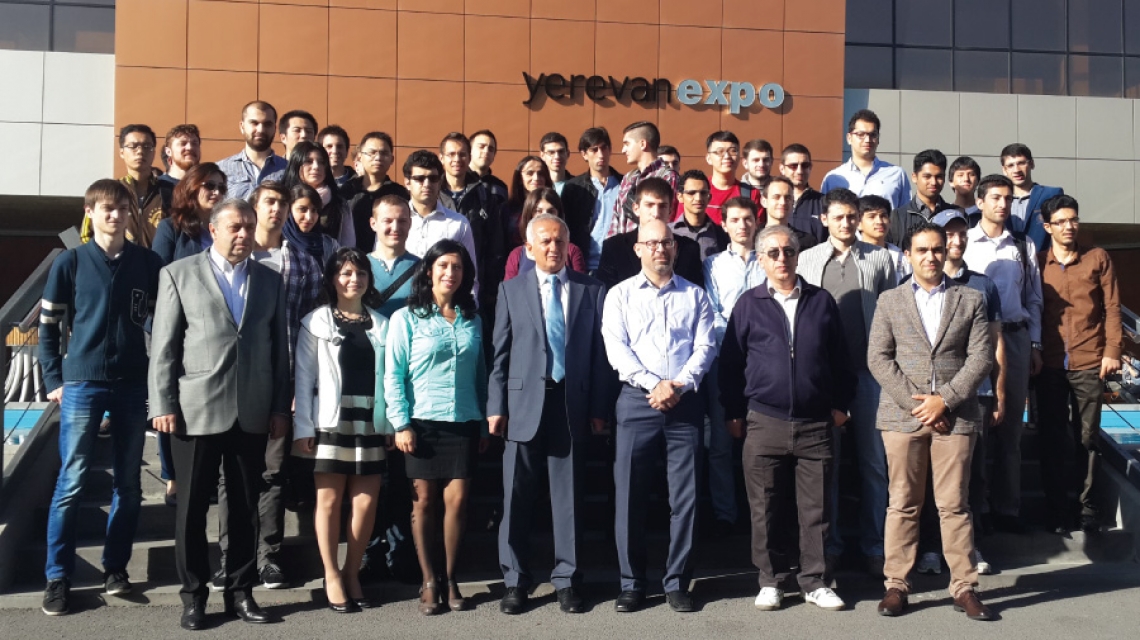
Masdar Institute Research Engineer and Alumnus a Top Winner at Microelectronics Olympiad

Ahmed Elian, a Masdar Institute MSc in Microsystems Engineering Class of 2014 graduate and current Research Engineer, has won second place at the 10th International Microelectronics Olympiad of Armenia – an international contest designed for the world’s brightest microelectronics engineers and students under the age of 30.

Elian was one of 42 finalists selected from over one thousand participants who competed in the first stage of the Olympiad. During the final round in Armenia, Elian beat out 40 more top engineers and students.

Attributing his success to the strong, multidisciplinary microsystems engineering program at Masdar Institute, Elian said: “Most of the knowledge that benefited me in the contest was acquired through my studies at Masdar Institute. This achievement reflects Masdar Institute’s advanced level of education in the area of microelectronics, which has been strongly supported by the UAE.”

The selective Olympiad, which this year attracted engineers from 29 countries, is conducted in two stages. The first stage of the Olympiad is held in several countries around the world. Participants in these countries have one hour to complete a multiple-choice exam that covers complex questions in the areas of digital integrated chip designs, semiconductor devices, and algorithms for electronic design automation. In the second stage, the top 42 scorers are invited to Armenia, where they take a second, more challenging four-hour long written exam covering similar microsystems-related concepts.

“This is the second time Masdar Institute has participated in this international competition, and we are particularly proud of Ahmed’s achievement this year,” said Dr. Ibrahim (Abe) M. Elfadel, Head of the Masdar Institute Center for Microsystems and Professor of Electrical Engineering and Computer Science. “Ahmed’s achievement demonstrates both the top talent we have here at Masdar Institute and the high quality of our education and research programs. Our participation in this and similar competitive events is bound to gain Masdar Institute both the visibility and recognition our researchers and students deserve.”

The annual event aims to broaden the international community of young specialists in microelectronics, while also evaluate the level of knowledge of participants in order to make necessary adjustments to regional educational programs.

Speaking about the competition, Elian said: “I was inspired by the unique challenge of competing against participants from different parts of the world in an international contest that spans various topics related to my major field of study and research. It served as a measure of my background knowledge in microsystems engineering and I wanted to see how far I could go in the competition. It was also a unique opportunity to visit Armenia, a country deeply rooted in history with one of the most charming landscapes.”

Elian’s research is in the area of mixed-signal integrated circuit design, which he carries out through Masdar Institute’s Center for Microsystems (iMicro).

Erica Solomon
News and Features Writer
13 December 2015
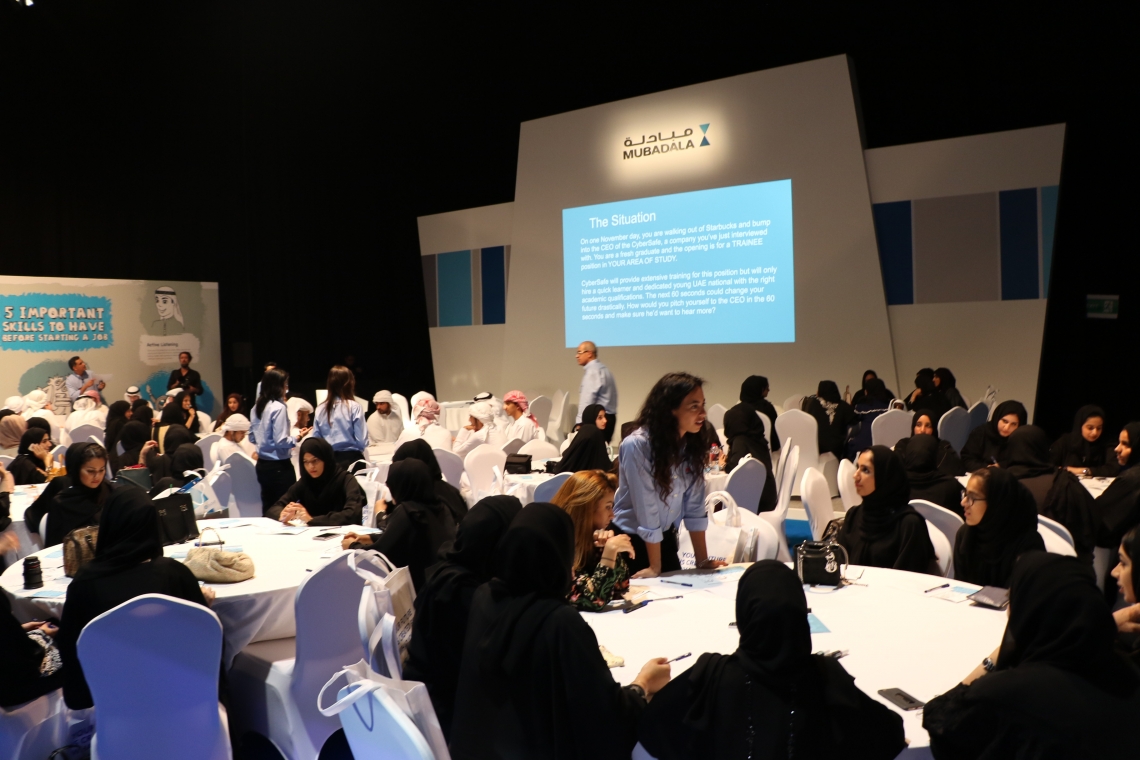
Emirati Youth Discover how Masdar Institute can help them Become Future Innovators

Masdar Institute presented the value of leveraging world-class research-focused studies to help the UAE achieve its innovative national transformation goals to Mubadala Youth Forum, which recently took place at the Abu Dhabi National Exhibition Center. 

The event, which is now in its fifth year, focused on the theme of “From College to Career” and gave young UAE nationals the opportunity to meet and engage with leading UAE figures and influencers to encourage discussion and provide advice for career development.

Masdar Institute’s outreach team attended the forum, where they presented the Institute’s unique academic programs and research activities to the hundreds of prospective future students who attended the event to help inspire the younger generation in the UAE to pursue science and technology-related studies.

Reem Orfali, Student Enrollment Manager, Masdar Institute said; “Our participation in the Mubadala Youth Forum provides a valuable opportunity for our Student Enrollment team to engage with our prospective students. The event proved very successful as a number of students approached our team to discuss their intention to pursue postgraduate studies at Masdar Institute, highlighting the desire and dedication of the youth to providing innovative and sustainable solutions for Abu Dhabi and the UAE’s most pressing issues.”

Sara Al Khajeh, an undergraduate student from Khalifa University said: “After listening to the leaders this morning, I have learned that it is important to love my job and my work. When I graduate from Khalifa University I am hoping continue my studies in the Electrical Power Engineering MSc program at Masdar Institute.”

The Mubadala Youth Forum provided attendees a rich environment to explore career options tailored to their talents. It also highlighted the drive and ambition of young UAE nationals to contribute to the the diversification of the UAE, and provided a platform for young innovative Emiratis to be awarded for their contributions to the development of the knowledge capital of the UAE.

Panel discussions provided participants with insights for tackling the transition from university to the workplace and emphasized the important role interning can play in selecting the right career and company.

Attended by hundreds of students from the UAE, the forum included a number of inspiring talks by influential leaders including Homaid Al Shemmari, CEO, Aerospace and Engineering Services, Mubadala; Sheikh Dr. Majid Al Qassimi, Director of Terrestrial Biodiversity, Environment Agency Abu Dhabi; Ali Eid AlMheiri, Executive Director, Mubadala Real Estate and Infrastructure; and Iman Al Qasim, Associate Director, Human Capital, Mubadala. The interactive talks provided students the opportunity to learn from these prominent members of UAE society and engage the leaders for advice regarding career advancement.

Ciara Sutton
News and Features Writer
11 October 2015


Carbon Capture and Storage Expertise Shared at European Parliament Hearing

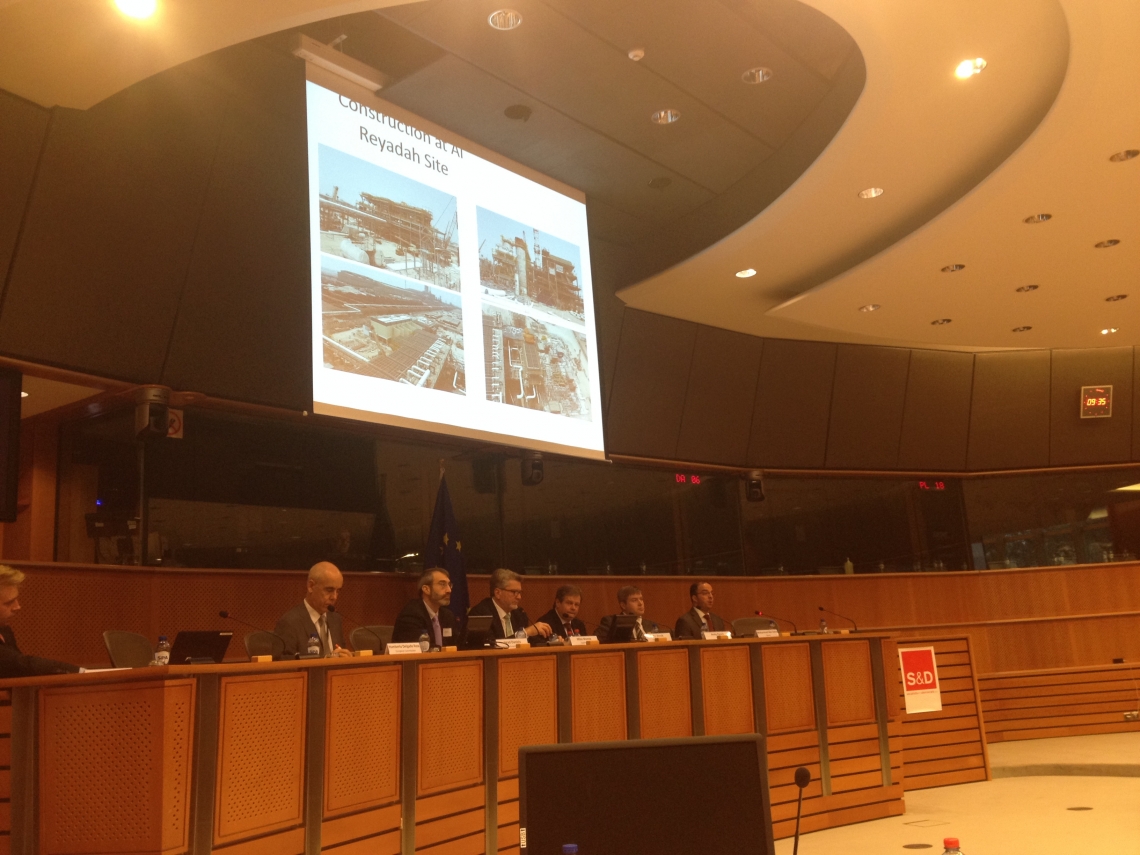
As a regional expert in the field of carbon capture utilization and sequestration (CCUS), Masdar Institute’s Dr. Mohammad Abu Zahra, Associate Professor of Chemical and Environmental Engineering, presented an innovative Abu Dhabi-based CCUS project at a European Parliament hearing hosted by British parliament member Theresa Griffin and Latvian parliament member Krišjānis Kariņš in Bruxelles, Belgium.

The parliamentary hearing provided a forum for stakeholders to hear directly from high-profile CCUS projects from around the world before considering ways to make best use of policy that could catalyze CCUS deployment throughout the European Union.

The collaborative CCUS project between Masdar, Emirates Steel, Al Reyadah – Abu Dhabi Carbon Capture Company, and the Abu Dhabi National Oil Company (ADNOC), aims to capture the carbon dioxide (CO2) emitted from Emirates Steel’s production plant, and utilize it for enhanced oil recovery (EOR).

“This Emirates Steel project is the first CCUS project from industrial site and that makes it unique and very important for the entire CCUS community in the UAE, the Middle East and globally,” said Dr. Abu Zahra. “The project aims to capture and utilize 800,000 tons of CO2 per year for EOR, contributing to both a cleaner atmosphere and more environmentally sustainable oil production. The project demonstrates the UAE’s efforts to keep its environmental and economic needs in balance and serves as an excellent CCUS model for other nations.”

The CO2 separation technology has already been installed at Emirates Steel’s production facility in Abu Dhabi’s Industrial City. The project is expected to start operation in March 2016.

Dr. Abu Zahra was invited to present the innovative CCUS research project on behalf of the project’s collaborators to a panel of policy makers and CCUS industry experts at the hearing, due to his in-depth knowledge of CCUS technologies and strong ties to the UAE.

“When Masdar Institute faculty members are called upon by industry leaders, policy makers and outside researchers to share their expertise in a specific research area, it demonstrates the Institute’s success in attracting and retaining high-caliber faculty – which is critical to the Institute’s vision of becoming a world-class university,” said Dr. Mohamed Sassi, Interim Dean of Faculty and Professor of Mechanical and Materials Engineering.

The collaborative Abu Dhabi-based CCUS project seeks to capture CO2 and use it as a value-added chemical for EOR in an economical way, which could lead to further innovation in CCUS technologies. EOR are practices designed to increase oil output from an oil reservoir by as much as 50%. Injecting captured CO2 for EOR can be a much more environmentally friendly and cost-efficient method compared to conventional EOR practices, using other chemical injection.

Erica Solomon
News and Features Writer
14 December 2015


Collaborative Research into Middle Eastern and Northeast Asian Energy Relations Updated

A Masdar Institute team has shared the findings of its preliminary research into an unconventional gas – methane hydrate – at a recent workshop in Tokyo, Japan, held as part of its engagement in a strategic energy partnership between Gulf Cooperation Council (GCC) and Northeast Asian research institutions.

The workshop titled “Connecting East and West Asia: Enhancing Inter-Regional Energy Understanding,” was held as part of a bilateral partnership involving 13 research institutes from the Gulf and Northeast Asia, which is focused on completing a strategic analysis of evolving energy relations between the two regions. Each of the institutes has been tasked with composing a chapter of a book titled “Connecting East and West Asia: The Benefits of Mutual Interdependence,” which focuses on strategic energy relationships between the two regions.

For its chapter, Masdar Institute will be completing a full analysis of the potential impact of methane hydrate development on GCC countries and the Northeast Asia region of China, Japan, Korea and Taiwan, in particular reference to energy trade between the regions. The chapter will be written by Ahmed Kiani, a Masdar Institute Post-Doctoral Research Fellow.

“International energy markets are undergoing major transitions and so active dialogue between energy trade partners is essential to ensuring a secure energy future for all involved. Masdar Institute is involved as the UAE research partner, and we see this initiative as critical to bringing together GCC and Northeast Asian countries in discussion about their interdependent energy futures,” said Dr. Steve Griffiths, Vice President of Research at Masdar Institute. He is heading Masdar Institute’s contribution to the collaborative project.

Other members of the group include the Japanese Institute of Energy Economics, Chinese Academy of Sciences, DERASAT Bahrain, Qatar Environment and Energy Research Institute, Qatar University, Hopkins-Nanjing Center, Renmin University of China, Shanghai Fudan, China State Information Center, China International Energy Research Center, King Saud University, and the Korea Energy Economics Institute.

Following a comprehensive investigation by each of the participating organizations, the book – which is due for completion in 2016 – will include an in-depth assessment of energy-related issues of the GCC and NEA including: an in-depth overview of the trading history between the two regions; the economic and investment issues that arise from developing energy trade links; the influence of energy on trade; energy security and bilateral relationships; and the environment.

The workshop also provided an opportunity for attendees to update collaborating partners on emerging energy themes and reconnect with their peers. Dr. Sameh El Khatib, Assistant Professor of Engineering Systems and Management, represented Masdar Institute at the workshop and provided a synopsis of the Institute’s chapter progress to date.

Dr. El Khatib said: “By region, the Middle East is one of the world’s largest exporters of fossil fuels and Asia is one of the world’s largest importers of fossil fuels. This initiative recognizes the interdependence of both regions in terms of energy supply. This partnership between the GCC and Northeast Asian research institutes is conducting research that will ensure the development of a thorough analysis of the evolving relations between Middle East and Asian regions so that issues related to energy security, the environment, trade, and economics and investment can be addressed in a proactive manner and at a strategic level.”

Ciara Sutton
News and Features Writer
30 August 2015

Emotional Intelligence Course held to Cultivate Strong Leaders

Masdar Institute is helping to build better leaders and professionals for the UAE through a pilot course on emotional intelligence aimed at enhancing the ability to think more critically about what it means to lead others. 

Glenda El Gamal, Lecturer at Masdar Institute, has been teaching the course, titled “Inspiring Leadership Through Emotional Intelligence” since October.

“This course can help you become a better leader, and also a better, more aware person in general,” commented Mohamed Al Ghailani, a Master’s student in the Chemical Engineering Program and President of the Student Government Association.

Though Masdar Institute’s main function is to conduct cutting-edge research in advanced energy and sustainable technologies, its efforts to develop the leadership skills of its students, staff and faculty directly supports the Institute’s goal of developing high-caliber professionals with the skills needed to drive the UAE’s knowledge-economy transformation.

“The emotional intelligence skills that the students develop in this course can educate them to become innovators with the breadth and depth to develop the UAE region as a knowledge hub both in the region and the world,” said El Gamal.

“I want to share this knowledge about emotional intelligence and give our student leaders – who will be future leaders in the community – the opportunity to equip themselves with knowledge of how the brain operates and how the emotional response system works,” El Gamal added.

The two-hour sessions are being held weekly over the course of eight weeks, and are designed to teach students how to judge the consequences of their actions, problem solve, have rational thinking even in critical situations, become familiar with their own emotions, learn flexibility, self-control, and empathy towards their team and co-workers.

Emotional intelligence is the ability of an individual to monitor their own emotions and the emotions of others, while understanding the differences between them using that information to guide their actions.

“Emotional intelligence is a key factor in effective leadership. It’s a valuable skill to have – being able to relate to behaviors and challenges of emotional intelligence on workplace performance can really help a person develop an exceptional team. If leaders are mindful and attuned to the emotional dimension of their team members, they can more effectively gauge their needs, wants and expectations,” El Gamal added.

The course was developed with input from El Gamal, Dr. Amal Al Ghaferi, Dean of Students, Rabia Bekhazi, Director of Student Affairs and Fatima Alamri, Student Affairs Officer. They wanted to offer Masdar Institute students, staff and faculty a unique platform to learn valuable leadership skills while developing cohesion across departments and sections of the Masdar Institute community.

“Greater interaction brings greater trust and better cooperation among groups, so I believe this mix of staff, faculty and students is immensely rewarding,” El Gamal shared.

Emotional intelligence plays a critical role in a person’s holistic development, helping them become better leaders and team members. Masdar Institute recognizes the inherent value of cultivating these skills in its students, and El Gamal hopes to be able to offer this course to a larger section of the Masdar Institute community in the future.

Erica Solomon
Science and Technology Writer
17 December 2015

Masdar Institute Lines Up Sustainable Industry Professionals to Inspire Talented Youth at Green Career Fair 2016

A host of industry leaders in clean advanced energy and sustainability will inspire youth to take up careers at the annual Green Career Fair, during the World Future Energy Summit (WFES) from 18-21 January 2016, that will be held as part of the Abu Dhabi Sustainability Week (ADSW) 2016 at the Abu Dhabi National Exhibition Center (ADNEC).

A number of local and international partners will engage and reach out to the region’s young men and women, sharing professional and career tips through presentations and networking during the event at Stand: #7370 Hall No: 7. For recruiters, the Green Career Fair has become an ideal platform to highlight openings, internships and developmental opportunities in their companies.

Companies that will be involved with the the Green Career Fair 2016 activities include GE,  KEO International Consultants, Action Energy Partners, Monster Gulf, Green Services Solutions, UAE Ministry of Energy, Schneider Electric and AECOM.

With employer booths and career-related workshops as well as a dedicated room for conducting interviews, the Green Career Fair 2016 offers young people an opportunity to network with companies, receive career guidance, and explore potential employability in the advanced energy and sustainability industry. The fair will include special workshops on renewable energy career topics, while visitors can make use of a ‘Career Advice Desk’ to receive tips from human resource professionals on-site.

Dr. Amal Al Ghaferi, Interim Dean of Students, Masdar Institute, said: “The development of human capital plays a crucial role in the growth of any sector and the clean energy industry is no exception. Through the Green Career Fair, Masdar Institute offers an avenue for the region’s talented youth to seek meaningful employment and engagement with industry stakeholders. By involving more corporate partners and lining up industry leaders for career-oriented sessions, we aim to ensure that the UAE’s sustainable development and key innovative sectors will find the high-value human capital required to achieve critical mass.”

Robust employment trends in the renewable energy sector offers scope for talented youth to chart their career in this growing industry. More than 7.7 million people were employed by renewable energy industries worldwide at the end of 2014, up 18% from 2013, according to a report from the International Renewable Energy Agency (IRENA). The UAE has a number of leading renewable energy-related businesses and the sector is growing exponentially.

Reflecting the trend, Masdar Institute has facilitated successful placement of 96% of its previous graduating class, either in employment or PhD programs. Many Masdar Institute graduates have found job placement in leading organizations such as Microsoft, GE, YahSat, Mubadala, UAE Ministry of Foreign Affairs (MoFA), Siemens, Emirates Nuclear Energy Corporation (ENEC), IRENA, and Nestle. Others have joined PhD programs at leading universities including the University of California – Los Angeles (UCLA), Massachusetts Institute of Technology (MIT), New York University (NYU), University of California – Berkeley, University of Texas-Austin, and Imperial College, London.

The Green Career Fair at WFES offers cost-effective, convenient and easy ways to create social and professional networking opportunities, giving professionals an edge over their competitors. Visitors are also given in insight about the infinite array of career opportunities in the growing industry.

Clarence Michael
News Writer
06 January 2016

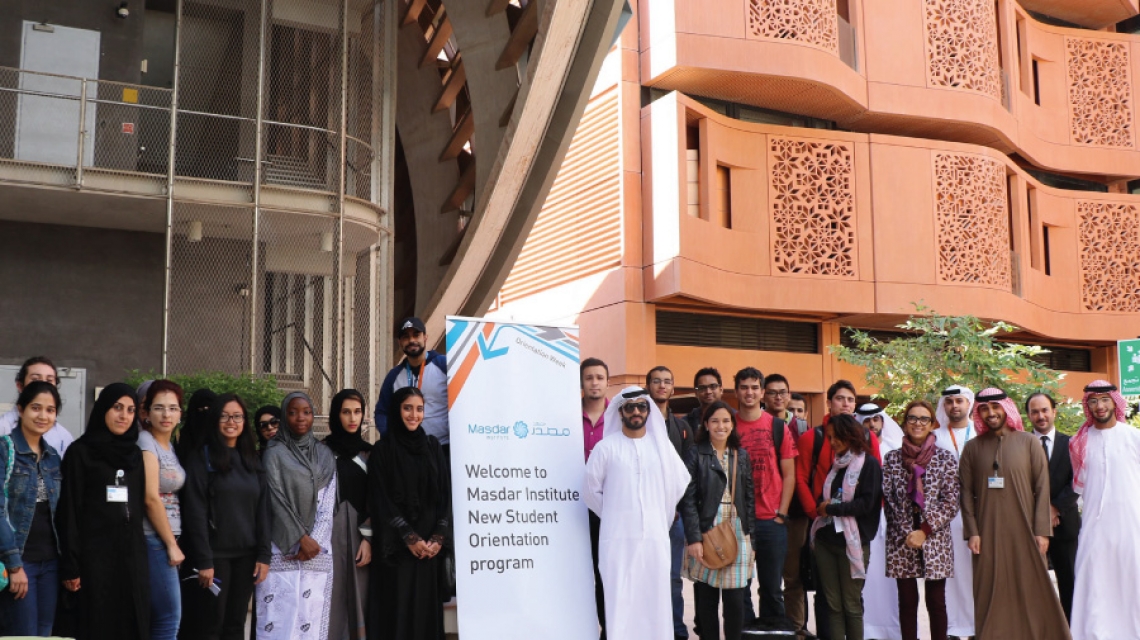
Spring Term Orientation for Newly Admitted Students


A total of 41 local and international students attended a two-day Spring 2016 term orientation program, learning about Masdar Institute’s overall academic and campus offerings. Fifty-three local and international students had been offered admissions for the term.
 
Dr. Behjat Al Yousuf, Interim Provost, welcomed the students and urged them to contribute effectively to the development of sustainable solutions to energy and climate challenges. The initial opening remarks were provided by Dr. Amal Al Ghaferi, Interim Dean of Student Life, while Dr. Mohamed Sassi, Interim Dean of Faculty, offered an overview of the research-based institution. Dr. Youssef Shatilla, Dean of Academic Programs, gave the students an insight into the academic programs.
 
Various representatives from Facilities, Outreach,  Safety and Security, Young Future Energy Leaders (YFEL) program, Student Government Affairs (SGA), Microscopy Facility, Career Services Office (CSO) and Alumni Office, Student Affairs Office (SAO), Office of Academic programs, Office of Faculty, Registrar Office, ICT, and others explained the various offerings and services available to students at Masdar Institute. Later, the students were introduced to campus facilities including the information and communication technologies and library services.
 
Dr. Behjat Al Yousuf said: “The orientation program helps new entrants to familiarize themselves with the Masdar Institute vision as a research-driven university. We welcome all the new students who have chosen Masdar Institute to pursue their graduate studies in clean energy, water and advanced technology subjects. We hope through their commitment and hard work, they will begin to contribute to the institution’s region-relevant research efforts.”
 
Masdar Institute offers full scholarships to admitted students who come with high academic credentials. The institution’s Master’s academic programs and research offerings respond to the needs of the UAE, the region and the wider global community.
 
Clarence Michael
News Writer
07 January 2016

Masdar Institute Sets Ambitious Agenda for Abu Dhabi Sustainability Week 2016

A number of collaboration agreements, new project launches, active research projects and platforms that drive forward the UAE’s innovation agenda will be some of the highlights of Masdar Institute’s participation in the Abu Dhabi Sustainability Week (ADSW) 2016.

Achievements in carbon capture and sequestration, renewable energy technology development, and climate monitoring, will also be showcased at the Masdar Institute pavilion at the event.

Part of ADSW 2016 that is held from 16-21 January 2016, the World Future Energy Summit (WFES) is an annual platform to exchange ideas, explore the latest developments, and address challenges in the future energy arena. The event is expected to attract more than 30,000 attendees from 170 countries, and 650 exhibiting companies from more than 40 countries.  

Masdar Institute’s faculty and students will be integrally involved with several activities at the WFES 2016 and the International Water Summit 2016 (IWS) to highlight the research-based institution’s role in sustainable innovation and clean energy research. Some of the knowledge-exchange sessions that the faculty will be involved with include solar energy, space concentration, water and desalination, bioenergy including biofuel, and graphene research.

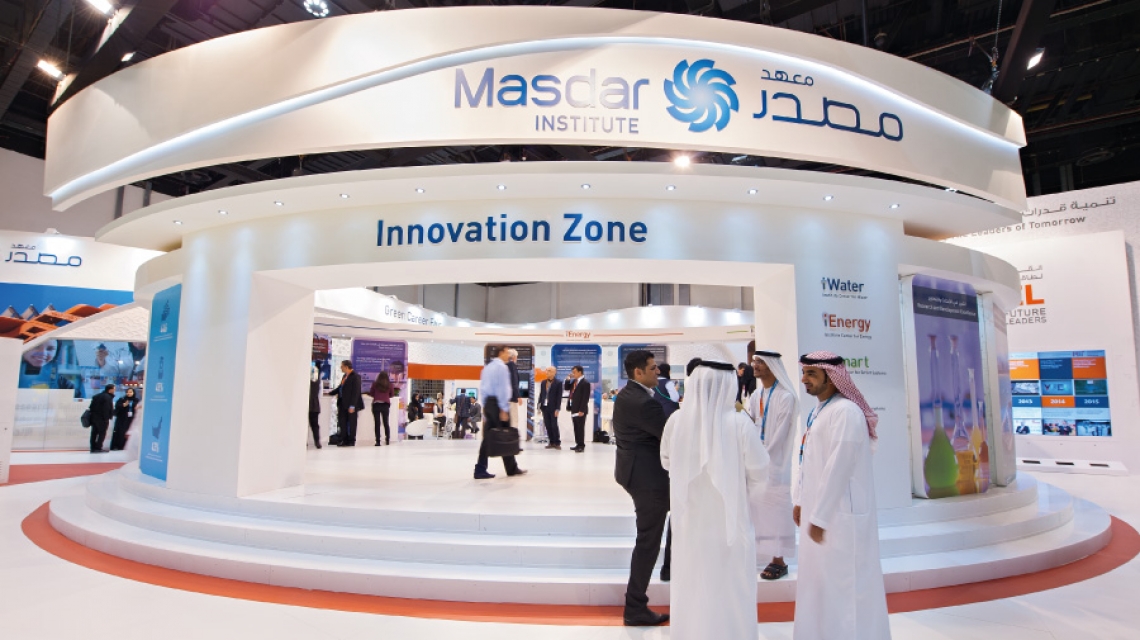
This year’s Masdar Institute pavilion will include an Innovation Zone that will feature leading research projects in energy, water and advanced materials. In addition, the Green Career Fair 2016 and the Young Future Energy Leaders’ (YFEL) stands will also be co-located within the Masdar Institute pavilion.

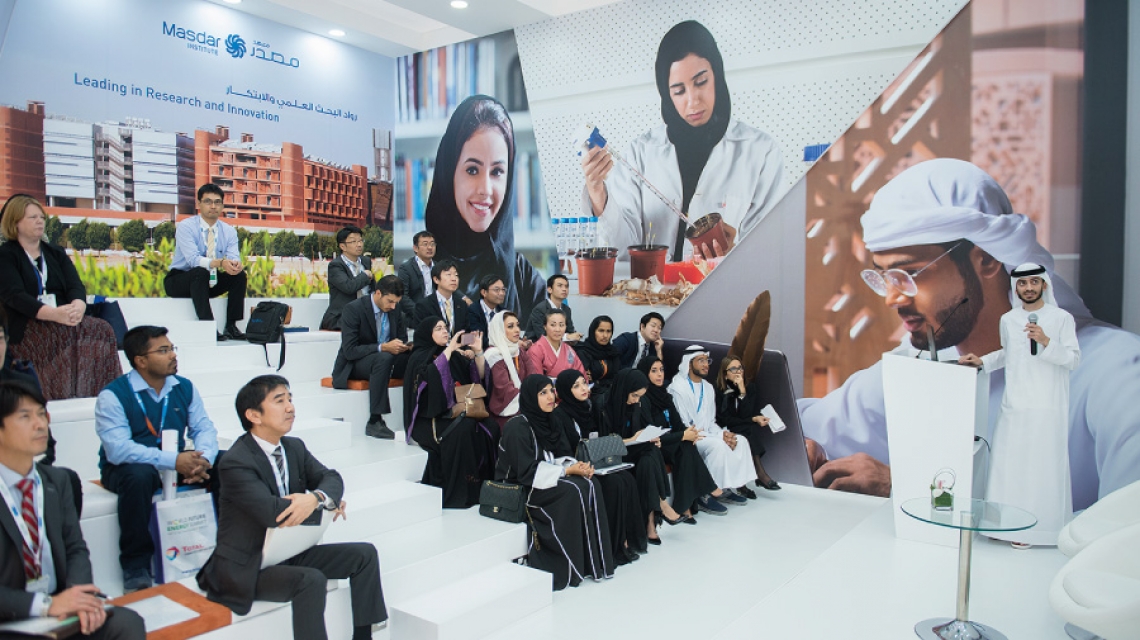
Other features of the pavilion will include presentations by select faculty on high-priority research areas, individual booths and presentations by companies talent-hunting for the green energy sector, an Oculus Rift virtual reality head-mounted display unit providing a glimpse of some of Masdar Institute’s research facilities, and a ‘digital wall’ that will capture, curate and present Masdar Institute followers’ social content in real time from social media platforms such as Instagram, Twitter and Facebook.

Dr. Behjat Al Yousuf, Interim Provost, Masdar Institute, said: “Masdar Institute will leverage ADSW and WFES as an opportunity to present its research and collaborations that support the UAE agenda for innovation and economic diversification. These include new projects for water security, advanced materials, carbon capture and sequestration, renewable energy uptake, energy efficiency, sustainability innovations and, more importantly, human capacity building through education and awareness programs..”

“Additionally, our areas of research help to enable countries across the globe to achieve the emissions reduction targets that were discussed in Paris last month,” Dr. Al Yousuf added.

Some of the key events in which Masdar Institute will be engaged include the launch of collaborations in graphene research, the Middle East release of the Green to Scale Report developed in collaboration with the Finnish Think-Tank Sitra, the release of a report on the UAE’s efforts toward energy subsidy reform that was written in collaboration with the Washington D.C.-based Brookings Institution, and an important announcement from the  Seawater Energy and Agriculture System’s (SEAS) pilot project by the Sustainable Bioenergy Research Consortium (SBRC), the partnership of leading industry and government organizations that was founded by Masdar Institute.

Innovate@IWS 2016 will feature three finalist innovators pitching their innovation to a panel of judges for five minutes each. The event aims to find and accelerate next generation technologies in water sustainability.

Faculty experts will lead and participate in various sessions during the ADSW 2016 and IWS 2016. Dr. Steve Griffiths, Vice President for Research, will speak on the ‘High-level Masdar Institute Research Agenda’ at WFES and on ‘Creating world-class partnerships between research industry, government and academia to build long-term sustainable solutions’ at the IWS. Dr Griffiths will also participate in a session titled ‘Breakthrough technologies to watch’ and share his perspectives on the research being done today that will significantly impact the way we generate, distribute and use energy in future. The focus will be on research which could lead to technological breakthroughs and meaningful business implications.  

Dr. Alejandro Rios Galvan, Director of the SBRC and Professor of Practice, Engineering Systems and Management, will highlight the progress of the projects under the consortium, which is a partnership of energy and technology leaders founded by Masdar Institute.  

As the official R&D partner for IWS 2016, Dr. Taha B.M.J. Ouarda, Professor of Water and Environmental Engineering, and Head of Masdar Institute Center for Water and Environment (iWater), will drive home the innovations in water related technologies at the Innovate@IWS. Dr. Ouarda will speak on the ‘Innovations in the water-food-energy nexus; and ‘Water adaption strategies to combat climate change and natural disasters.’  

At the same time, Dr. Saif Saeed Al Mheiri, Assistant Professor, Mechanical and Materials Engineering, and Dr. Daniel Sunghoi Choi, Associate Professor, Mechanical and Materials Engineering, will highlight the developments and contribution of Masdar Institute’s new Master’s concentration in space technologies and systems, which is offered across seven of the Institute’s Master’s programs. The programs aims to develop talent for the UAE’s space building program.  

The Ghantoot Desalination Project will be elaborated on by faculty from the Chemical and Environmental Engineering Department, including Dr. Linda Zou, Professor, Dr. Hassan Arafat, Associate Professor, and Dr. Shadi Hasan, Assistant Professor.

Dr. Daniel Sunghoi Choi, Associate Professor, Mechanical and Materials Engineering, will offer details about the graphene research that Masdar Institute is conducting in collaboration with the University of Manchester, in the UK.

The continuing advancements made by Masdar Institute in solar energy research through the Masdar Institute Solar Platform will be illustrated by Dr. Nicolas Calvet, Assistant Professor, Mechanical and Materials Engineering.  

Masdar Institute will seek to reinforce its dedication to developing sustainable and innovative solutions to the regions’ water and energy challenges through its participation in various discussions and knowledge exchanges during the ADSW 2016.

  
Clarence Michael
News Writer
12 January 2016

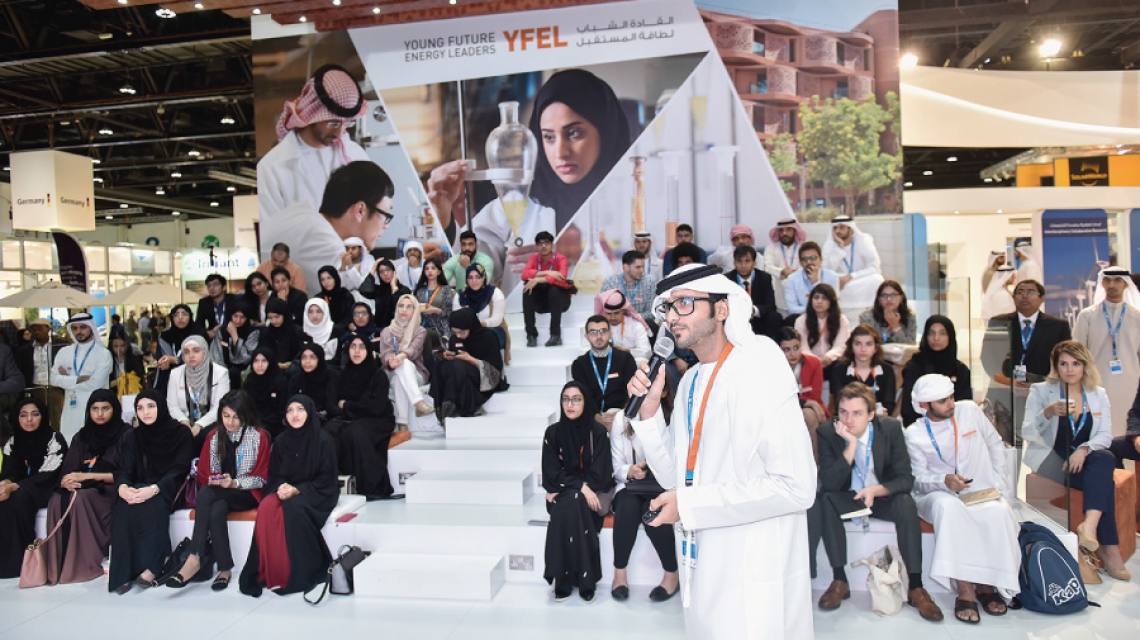
Notable Inspirational Leaders in Clean Energy to Address YFEL Members at WFES 2016

An impressive array of prominent inspirational leaders in clean energy are lined up to interact with members of the Young Future Energy Leaders (YFEL) program at the Abu Dhabi Sustainability Week (ADSW) 2016.  

The YFEL stand #7370 (Hall-7) is located at the Masdar Institute pavilion at the World Future Energy Summit (WFES) 2016, which is being held from 18-21 January at the Abu Dhabi National Exhibition Center (ADNEC).

The stand offers YFEL members a strong platform to network and interact with global industry leaders and decision-makers, who provide experience and guidance of relevance to the YFEL’s members on development into future energy leaders. Additionally, YFEL members will attend the last day’s events at ‘Egypt Energy Forum 2016: A decade of future energy opportunities’.  

Dr. Lamya N. Fawwaz, Vice President for Institutional Advancement and Public Affairs, Masdar Institute, said: “We are pleased to see that, through the YFEL program, Masdar Institute has inspired a new generation of sustainability thought leaders through international experiences and high-impact training sessions. During WFES, these students will continue their growth with opportunities to engage with global sustainability influencers.”  

“The program’s success is thanks both to the high caliber of students we receive every year and to the support of the UAE’s leadership and the program’s sponsors,” Dr. Fawwaz added.  

The YFEL agenda for WFES includes addresses by sustainability leaders from international non-government, government and private sector organizations, including His Excellency Felipe Calderon, Chairman, Global Commission on the Economy and Climate, and Former President of Mexico; HE Dr. Gro Harlem Brundtland, Former Prime Minister of Norway; Dr. Abubakr S Bahaj, Professor of Sustainable Energy, Head of Energy and Climate Change Division, University of Southampton, and Chief Scientific Adviser, Southampton City, UK; Christine Lins, Executive Secretary, REN21, H. E. Dr. Thani Al-Zeyoudi,Permanent Representative of the United Arab Emirates to the International Renewable Energy Agency (IRENA) and the Head of the Directorate of Energy and Climate Change (DECC) within the UAE Ministry of Foreign Affairs (MOFA); as well as Khalifa Al Qama, Founder of Dubai-based multi-disciplinary engineering company OpSys.  

His Excellency Felipe Calderon will open the proceedings on 18 January at the YFEL stand. He will share his perspectives on the recently concluded 21st United Nations Framework Convention on Climate Change (UNFCCC) Conference of Parties (COP21) in Paris, encouraging YFEL members to be more pragmatic with their projects in clean energy. Representatives of YFEL groups will then offer a brief description of their chosen projects to the audience.  

A debate on whether government steps or market forces are required to encourage more renewable energy installations will be moderated by Dr. Sgouris Sgouridis, Associate Professor, Masdar Institute on the first day. Subsequent days will witness debates including one titled ‘The Positive and Negative Impacts of Technology Innovations,’ to be moderated by Dr. Ken Volk, Outreach Manager, Masdar Institute, and ‘Waste to Energy Conversion Pathways’, to be moderated by Dr. Isam Janajreh, Associate Professor, Masdar Institute.

Panel discussions will focus on energy and economics that will shape the clean energy market in the next decade, sustainable water resources management in Abu Dhabi, and accelerating progress to a low carbon future.

Sharing his experience with YFEL members, Khalifa Al Qama will speak about developing a business just out of his personal interest in innovation, entrepreneurialism and a determination to add value.   Launched at the WFES 2010 as an initiative to engage the youth in advanced energy and sustainable technology, the YFEL program aims to prepare them to be the future leaders. Through networking with decision-makers and industry leaders who attend the program, the YFEL program encourages members to discuss, share and learn, from them in order to add great future values. 

  
Clarence Michael
News Writer
14 January 2016

YFEL Members Honored for Successful Completion of Year-Long Course

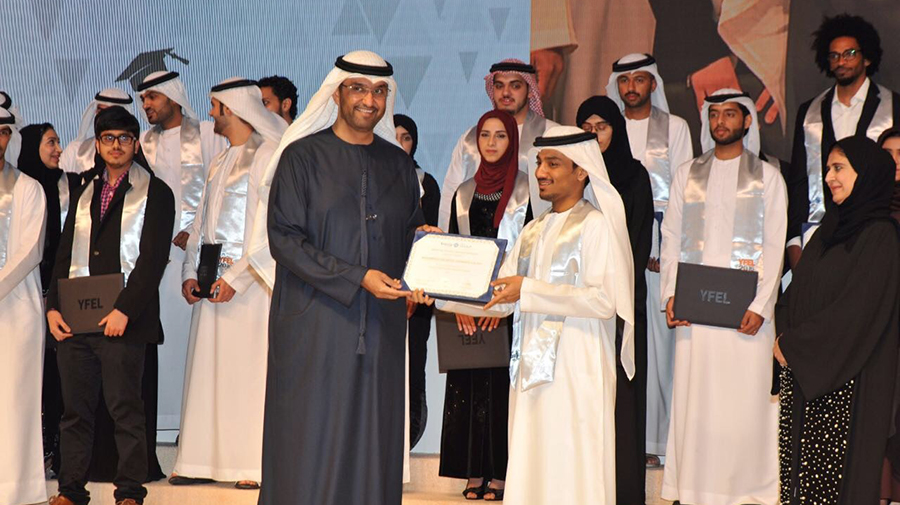
A total of 33 members of the Young Future Energy Leaders (YFEL) 2015 outreach program were honored for successfully completing their year-long training and mentorship experience.  

His Excellency Dr. Sultan Al Jaber, Minister of State, and Chairman of Masdar, presented certificates of completion to the fifth batch of YFEL members at the graduation ceremony, which was organized during the Abu Dhabi Sustainability Week 2016. The ceremony was attended by His Excellency Abdulla Al-Majid, Assistant Undersecretary and the Chief Innovation Office at UAE Ministry of Justice, Faisal Al Ali, Scholarships Division Manager, Abu Dhabi National Oil Company (ADNOC), Rafi Baghdjian, Chief Operations Officer Shell Abu Dhabi, representatives from YFEL sponsors such as the International Renewable Energy Agency (IRENA), dignitaries, and guests.

Previous private sponsors and community leaders, including Salem bin Kardous Al Ameri, son of Mohammed bin Kardous Al Ameri, the renowned Emirati philanthropist who made the first private contribution to YFEL, also attended the event.

Dr. Ahmed Belhoul, CEO, Masdar, Dr. Fred Moavenzadeh, James Mason Crafts Professor, Professor of Civil and Environmental Engineering and Engineering Systems, and Director of the Technology and Development Program, MIT, Dr. Behjat Al Yousuf, Interim Provost, Masdar Institute, Dr. Lamya N. Fawwaz, Vice President of Public Affairs and Institutional Advancement, Masdar Institute, Hamza Kazim, Vice President of Operations and Finance, Masdar Institute, Dr. Steve Griffiths, Vice President of Research, Masdar Institute, Dr. Ken Volk, Outreach Manager, Masdar Institute, and members of the YFEL 2016 program were present on the occasion.  

Dr. Fawwaz said: “This annual ceremony honors YFEL members who have successfully completed their year-long courses, overseas visits, and training programs that equip them to be future leaders. It also represents the culmination of the development phase the YFEL members pass through on their journey towards becoming leading professionals in clean energy and sustainable sectors. We congratulate the YFEL 2015 members and welcome the new members for YFEL 2016.”  

The fifth graduation ceremony served as an inaugural event for the YFEL 2016 members while helping the YFEL 2015 members to look back on their achievements with pride. A special video on the success stories of the year highlighted the major activities of YFEL 2015 program, which included specially organized courses on leadership, policy and technology as well as visits to sustainability-related activities for communities in overseas locations. YFEL 2015 member Mohammed Bastaki offered his perspectives on the year-long experience.

Mohammed Bastaki, YFEL member and a young professional from Ministry of Foreign Affairs, said: “The opportunities provided by the YFEL program were key to widening my knowledge in the fields of renewable energy and advanced technologies, and the interactions with experts from across the world were invaluable.

During the year, YFEL 2015 members attended courses that promote innovation in different areas related to advanced energy and sustainability. These courses were led in partnership with different international government organizations such as IRENA, energy leader SHELL, and others.

As part of their interaction with government decision-makers, a group of YFEL members attended the third ‘Gulf Cooperation Council (GCC) Leadership Conference: Developing Energy Leaders,’ which was organized in Bahrain. The conference highlighted energy sector manpower statistics and discuss the job needs of the sector going forward. It also reviewed best practices and training and discussed leadership issues and topics such as innovation and performance.   Guest speakers from IRENA and the UAE Country Representative of the Global Green Growth Institute (GGGI) offered their views on the role of policy-making in clean energy during a workshop in Abu Dhabi. The event titled ‘The Role of Policy in the Renewable Energy Industry’ also threw light on the nuances of developing policy framework and implementation techniques.  

A course titled ‘Being an analyst in the renewable energy industry,’ led by officials from Masdar, IRENA, PricewaterhouseCoopers (PwC), the International Energy Agency (IEA), and the World Bank offered advice on prominent tools and data sources that could help nurture the YFEL members into full-fledged industry analysts. An entrepreneurship boot-camp, a course on “Water Science and Technology,” and the annual knowledge seminar organized by Royal Dutch Shell on the role of gas in the region’s energy transition were all designed to provide YFEL members a competitive edge in the professional arena.  

Overseas visits to Japan and Indonesia helped YFEL members strengthen their knowledge and professional insights. The Japan visit offered YFEL members an opportunity to explore new smart sustainable and clean technologies currently implemented successfully by communities. The Indonesia visit, on the other hand, challenged YFEL members to become creative in their interaction with the community and develop adoptable non-grid locally-manageable green energy systems.  

YFEL offers participants exceptional and unmatched access to top global leaders, senior business executives and academics engaged in alternative energy and sustainability through events such as World Future Energy Summit (WFES) in Abu Dhabi and other major events held overseas. The program is mandated to educate, inspire and empower students and young professionals to become future leaders capable of solving the world’s most pressing challenges in advanced energy and sustainability.

Through such activities, the YFEL program seeks to contribute towards developing talented youth who could become future decision-makers and energy leaders.

Clarence Michael
News Writer
21 January 2016