
Student Contributes to Enhanced Fiber Optics Switch for Faster Data Transfer

Masdar Institute microsystems engineering Master’s student Hossam Shoman has returned from a summer at the University of Tokyo where he helped scientists there develop optical switches to make fiber optics – the hair-thin fibers that carry large amounts of data at the speed of light – more energy-efficient.

The research Shoman contributed to could lead to significant boosts in the performance of telecommunication systems, among other applications that rely on optical fibers, the student believes.

Shoman’s extensive two-month internship was an eye-opening experience, where the young engineer realized that hands-on research with pioneering professors is a much richer learning experience than flipping through pages of the research literature.

“In research papers, only the successful results are presented. You will never read the failures the groups have been through until you try it yourself,” Shoman shared. His insights point to the important role that internships play in creating highly-skilled graduates, offering them a chance to see how theories play out with colleagues and leading professors of their field.

Shoman worked with University of Tokyo’s Dr. Yoshiaki Nakano, Professor of Electrical Engineering and Information Systems, and Dr. Takuo Tanemura, Associate Professor of Electronic Engineering, who are pioneers in the field of optical switching and lasers.

“Having a chance to work with them was an honor,” Shoman said. He also expressed gratitude towards his advisor, Masdar Institute’s Dr. Marcus Dahlem, Assistant Professor of Electrical Engineering and Computer Science, who introduced Shoman to the field of photonics and helped secure his internship there.

During his internship, Shoman characterized a novel optical switching technology being developed at the University of Tokyo. Optical switches enable the data that’s being transferred through fibers – which is transferred in the form of pulses, or flashes of laser light – to reach its intended destination.

The skills he honed while there will help him carry out his Master’s thesis research, which focuses on increasing the capacity of fiber optic cables to transmit more data in an energy-efficient way by combining multiple wavelengths of light onto a single strand of fiber. His research is conducted through the Masdar Institute Center for Microsystems (iMicro).

“Some tools that I used at the University of Tokyo are very helpful in my research. Knowing how to use these tools will save me training time when I need to use them in the future. Also, I learned about the limitations of each tool, and shared this information with my research group here at Masdar Institute. We now know about some extremely valuable research tools,” Shoman said.

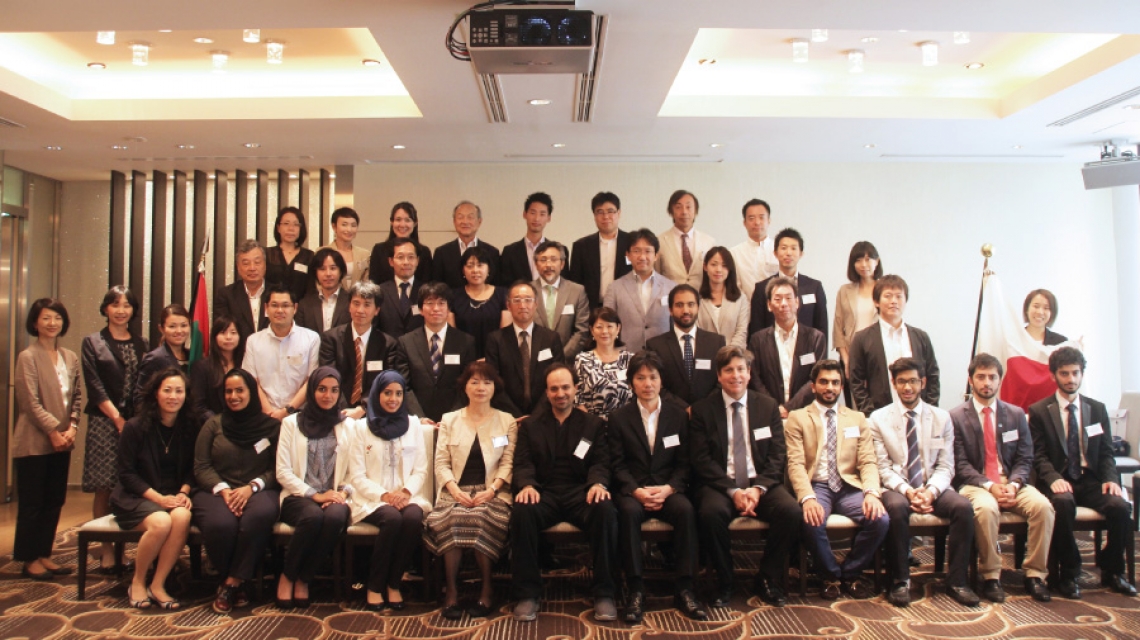
Shoman is the third student from Masdar Institute to intern at the University of Tokyo, following from a research collaboration agreement that Masdar Institute and the University of Tokyo established last year.

Shoman’s fruitful experience demonstrates that internships are a valuable two-way exchange – they help develop the individual student’s skills while also contributing to more productive research from which both universities can benefit. Masdar Institute is proud to meet the needs of both its students and research collaborators through dynamic internships like this one.

Erica Solomon
News and Features Writer
13 November 2015

Support for SMEs and Start-Up Companies in the UAE Urged at Innovation Conference

The importance of linking academia with industry and the role of incubators and accelerators to spur innovation were highlighted by Dr. Steve Griffiths, Vice President for Research at Masdar Institute, during his participation at the Khalifa Fund Innovation Conference, which took place in Abu Dhabi last week.

Dr. Griffiths represented Masdar Institute as the academic member of a panel to discuss “Leveraging Partnerships and Innovative Solutions to Empower SMEs,” and was joined by fellow experts in the private, government, financial and economic development sectors.

Using Masdar Institute as an example, Dr. Griffiths provided insights into how the Institute has stimulated innovation by providing the foundations for innovation and incentivizing it. By focusing on research first, the Institute is investing the required resources to produce the knowledge and technologies that can then be translated to commercial value. The realization of the commercial value is recognized as innovation.  

Dr. Griffiths explained: “The key to encouraging and facilitating innovation is to lay the foundations for individuals and SMEs to take their innovations and ideas to the commercialization stage in a straight-forward manner with readily accessible resources. After achieving this, entrepreneurs and innovators will come forward with their innovations for commercialization.   

Speaking of the fundamentals for fostering innovation, Dr. Griffiths discussed the importance of academia maintaining a strong base of science and engineering capabilities and establishing a strong linkage with industry to ensure that problems of practical importance are understood and addressed.   

“The addition of academic programs that support innovators and entrepreneurs to come forward, including technology transfer offices, proof-of-concept funding, entrepreneurship education and translational structures such as accelerators and incubators, encourage and facilitate a culture of innovation. This is proving successful at Masdar Institute, as in the past year the Institute has substantially invested in creating an innovation supportive culture and as a result invention disclosures and quality disclosures have doubled in comparison to previous years,” he explained.

Academia, government and industry can help SMEs to leverage their innovations and create sustainable, high-growth businesses by allowing access to markets, financing and infrastructure, which were identified by Dr. Griffiths as the biggest obstacles that SMEs face in the UAE when trying to commercialize their innovations and expand their operations.

“Access to markets is one the principal challenges technology start-ups and SMEs in the UAE face. In order to help stimulate growth in the SME sector, it is critical that measures are put in place to support the growth of technology companies in key sectors and ensure they gain access to international markets,” he advised.

From a financial perspective, there is an inherent need for the provision of funding to aid companies from the proof-of-concept stage to full incorporation – including channels into other markets – and emphasized the need for an increasing amount of venture capital investment locally to support SMEs in their development.

To fully support the development of start-ups and SMEs, the UAE needs to establish clusters to attract multinational corporations or research laboratories that have the R&D capabilities to scale capital intensive technologies at a faster pace than SMEs. These clusters, or national laboratories, could then provide engineering and market knowledge that SMEs lack and have difficulty finding.  

To ease the challenges posed by starting a business, Dr. Griffiths said there was a need to introduce accelerators and incubators to provide additional funding and business support for business that need to scale up. By providing access to accelerators or incubators, start-ups and SMEs can easily locate and grow their businesses with access to dynamic entrepreneurial and innovative environments and flexible terms that can alleviate many start-up issues regarding long-term office leasing costs, staffing, living costs and other business issues.

The Khalifa Fund Innovation Conference, held under the theme of “Unlocking SME Potential through Partnerships, Innovation and Technology Solutions,” was hosted and organized by the Khalifa Fund for Enterprise Development with the support of the IFC World Bank during the 5th SME Toolkit Global Partner Conference. The conference allowed for the sharing of best practices to develop competitiveness and innovation capacity and discussed the importance of leveraging partnerships to stimulate innovation and creativity in the SME sector.


Ciara Sutton
News and Features Writer
11 November 2015

IEEE Award for Innovative Hearing Aid Research

Masdar Institute PhD student Wala Saadeh won two awards at the International Symposium on Circuits and Systems (ISCAS) 2015 for her innovative research that looks to improve battery life in hearing aids, beating out the other one thousand papers submitted at the IEEE Circuits and Society’s flagship conference, held in Portugal. Saadeh’s winning paper  demonstrates Masdar Institute’s strong research capabilities in the field of microsystems engineering.

“Hearing loss is a major public health issue that affects more than 360 million people worldwide. I am hoping that my research will lead to the development of hearing aids that offer more natural hearing for individuals suffering from hearing loss by creating advanced binaural hearing aids that have greater data capacities than Bluetooth but with reduced power demand,” Saadeh said.

Saadeh won for the Best Paper in the Biomedical Track and Best Paper Runner-Up. Her work explores how to improve the communication method in binaural hearing aids – a type of hearing aid that lets two hearing aids communicate to one another by sharing information through a wireless data stream – by developing energy-efficient wireless transceivers that leverage the human body as a communication medium.

“Conventional wireless communication methods, such as Bluetooth and ZigBee, are extremely inefficient in providing connectivity between body-worn sensors like hearing aids. This is due to the fact that the human body absorbs the majority of radio frequency signals these wireless communication devices transmit, resulting in significant weakening of the signal,” said Dr. Jerald Yoo, Associate Professor of Electrical Engineering and Computer Science. Dr. Yoo is Saadeh’s research advisor and co-author of the winning paper.  

To overcome the weak signal caused by the human body’s tendency to absorb radio frequency signals, Saadeh and Dr. Yoo investigated ways to leverage the body as a natural coupling medium to enhance the wireless communication between the hearing aids.

Body coupled communication (BCC) uses the body itself as a channel to form a body area network (BAN), much like the personal area network (PAN) that Bluetooth systems form to communicate with each other. In their binaural hearing aid system, the two hearing aids form a network with each other and the human body using BCC as an alternative wireless communication technology.

“Instead of the human body acting as a blockage, as it does with radio frequency communication on body, in BCC the human body actually aids the communication,” Saadeh explained.

Because signals are less attenuated in BCC compared to radio frequency, a faster, more efficient transmission between the two hearing aids becomes possible.

The team invented and developed a pioneering technology, called Hybrid-Orthogonal Frequency Division Multiplexing (H-OFDM), which overcomes the issue of the high Peak-to-Average Power Ratio (PAPR) that conventional OFDM has. This superior technology, combined with BCC, creates a much more energy-efficient transceiver that could even be powered by solar energy in the future, according to Saadeh.

“Because the power needed to operate the transceivers is significantly reduced using BCC, solar energy harvesting devices may be able to power them,” Saadeh said. “These hearing aids will be more affordable and energy-efficient and energy efficiency is a major goal of the Masdar Institute.”

“I would like to congratulate Wala and Prof. Yoo for these outstanding achievements and thank them for all the hard, creative work that has led to such a rewarding outcome,” said Dr. Ibrahim (Abe) M. Elfadel, head of the Masdar Institute Center for Microsystems who was present at the ISCAS award ceremony. “I was there witnessing first hand the research at the Masdar Institute getting top recognition in a top scientific venue. It was both a very proud moment and a stake in the ground for all our faculty and students,” added Dr. Elfadel.

Saadeh’s research has been conducted under the umbrella of the Abu Dhabi – SRC Center of Excellence on Energy-Efficient Electronic Systems (ACE4S) and is one of many Masdar Institute research projects under way at the Institute Center for Microsystems (iMicro), which are generating valuable technology-based innovations in the health sector – a priority sector targeted by the UAE’s National Innovation Strategy.


Erica Solomon
News and Features Writer
16 November 2015


Innovative Desalination Technology Earns Assistant Professor UAE Pioneer Award

Dr. Faisal AlMarzooqi, who recently joined Masdar Institute as an assistant professor after becoming the Institute’s first PhD graduate over the summer, was among 44 UAE Nationals who were awarded the UAE Pioneer award by His Highness Sheikh Mohammed bin Rashid Al Maktoum, Vice-President and Prime Minister of the UAE, and Ruler of Dubai, on the occasion of the 44th UAE National Day.

The 44 Nationals were commended for their achievements in the fields of education, research, health, economy, military, and sports. Dr. AlMarzooqi was honored for being the “first UAE inventor of a water desalination technology based on nanotechnology.”

AlMarzooqi’s award-winning work combined water desalination research and advancements in nanotechnology to produce a device that can desalinate water in a more sustainable and energy efficient way, which is potentially of great value to the UAE due to its dependence on desalination to meet its domestic water needs. The young Emirati scientist’s device was so unique and innovative that a patent application has been submitted for it.

“Faisal AlMarzooqi has brought pride to Masdar Institute ever since he joined as a student in 2013, and it comes as no surprise to us that he is also bringing pride to the nation today. He is a talented and dedicated scientist and we are confident he will continue to be an asset to the UAE and a role model to young UAE nationals who also wish to give back to their country,” said Dr. Behjat Al Yousuf, Interim Provost of Masdar Institute.

Of the tens of thousands of applicants who are nominated to win the yearly UAE Pioneer prizes, each year the government selects the same number of winners as the UAE’s age. AlMarzooqi and this year’s 43 other UAE Pioneer award recipients will have their names archived with their achievements in the UAE Government Year Book.

“I would like to express my sincere gratitude and appreciation first to the leaders of our nation and second the Masdar Institute, for establishing the excellent platforms through which we can achieve such dreams and goals.” Dr. AlMarzooqi said, upon his receipt of the award.

This latest prize for Dr. AlMarzooqi is a culmination of his pursuit of excellence in the service of his country. Prior to joining Masdar Institute’s doctoral program, he completed his MSc degree in chemical engineering at the Imperial College, London and has worked as a process engineer for the Abu Dhabi Marine Operating Company (ADMA-OPCO).

Dr. AlMarzooqi is also an alumnus of Masdar Institute’s Young Future Energy Leaders (YFEL) program, a mentorship experience that he said led him to choose Masdar Institute for his PhD. He also recently served as a member of the UAE Government Leaders Program, which was established by the UAE government to help prepare and develop future UAE Nationals as leaders who will help the government achieve the main objectives of its declared economic and socio-political strategies.

As an assistant professor at Masdar Institute Dr. AlMarzooqi has focused his attention on expanding the research he conducted during his PhD studies. His thesis research dissertation combined water desalination research and advancements in nanotechnology to produce a novel device that can desalinate water in a sustainable, energy efficient way.

Along with critical research in areas of advanced energy and sustainable technologies, Dr. AlMarzooqi believes that teaching is needed to firmly anchor the UAE’s knowledge-based economy. This belief, along with his deep gratitude toward his country for its unwavering support, prompted

Dr. AlMarzooqi to apply for a faculty position at Masdar Institute.

Zarina Khan
Senior Editor
17 November 2015


Student Wins Hospitality Innovator Award

One of Masdar Institute’s PhD students has won the Hospitality Innovator Award for an innovative approach to helping reduce food wastage in the UAE that she developed during her doctorate studies.

Sanaa Pirani, a Masdar Institute MSc in Materials Science and Engineering graduate and current Doctoral program student, was awarded the prize for her innovation  at the Hospitality Technology Forum 2015 in Dubai, which took place on 4 November.

“We have been researching food wastage as part of Masdar Institute’s focus on waste management and utilization, and found that it is estimated that nearly 3.27 million tons of food, worth more than USD3.45 billion, is wasted in the UAE every year. Food waste accounts for approximately one-third of all waste that ends up in landfills in Dubai. Given the UAE’s focus on food security and waste reduction, this presented a huge opportunity for improvement,” Pirani said.

To find out how to help reduce food waste in the UAE, over 50 hotels in the UAE were interviewed for their food waste management habits. Hospitality sector events were monitored in order to quantify the amount of food waste generated. Pirani won the Best Presentation Award when her work was presented at the World Resources Forum in Davos, Switzerland, in 2013.

Pirani and a team of researchers then developed a performance indicator called the Food Waste Rating for Events vis-à-vis Sustainability in the Hospitality sector (FRESH) Number. The goal was to provide a rating of the sustainability of food service at hospitality sector events.

“This metric is the first of its kind for the hospitality sector and has the potential to be used to rate events all around the world,” said Dr. Hassan Arafat, Associate Professor of Water and Environmental Engineering and Pirani’s faculty advisor.

The results of Pirani’s research have shown many factors that influence food wastage in hospitality, but one major source was the practice of serving mounded dishes of meat with carbohydrates, like rice, pasta, and potatoes, which is where Pirani got the inspiration for a novel dish design.

“We found that when a dish had a layer of meat on top of carbohydrates, like Ouzi or Mandi, people will usually pick out the meat first and leave behind the rest. The bulk of carbohydrates is then wasted,” Pirani explained.

The very simple solution she hit upon was to develop a dish that only gives the appearance of a mounded serving of food, so less of the carbohydrate base is needed to give the impression of abundance.

“The dish we designed achieves a better balance between the portions of protein and carbohydrates in the served amount, while ensuring that the meal looks bountiful, as is desired in the local culture,” she explained. Her research shows that the award-winning dish has the potential to save 73,000 kg of food waste annually in the UAE alone.

Pirani is now testing her innovative dish design in collaboration with a leading food catering company in Abu Dhabi.

Zarina Khan
Senior Editor
17 November 2015 

Masdar Institute to Host Open Day 2015 on Saturday 28 November

A package of events are scheduled for the Open Day 2015 to showcase Masdar Institute’s specially-focused academic programs, research centers and the unique scientific research environment.

The host of events aim to provide visiting university students with a first-hand insight into campus life, academic experience and cutting-edge facilities

To be held from 10:00am to 4:00pm on Saturday 28 November, the day-long event will target undergraduate and graduate students in science, information technology and engineering who are aspiring to take their academic experience to the next level. The event will also be part of the UAE Innovation Week activities organized by Masdar Institute and will aim to encourage more students to be involved in developing new inventions and solutions as visioned by the UAE leadership.

Dr. Lamya Fawwaz, Vice-President, Institutional Advancement and Public Affairs, Masdar Institute, said: “Every year we open the campus to university students, their families and interested visitors, welcoming them to  experience our sustainable campus, and the cutting-edge laboratory facilities that inspire innovation. This year, Open Day is being organized during UAE Innovation Week to further highlight the importance of scientific inventions and their impact on the economy, while also offering an opportunity to showcase Masdar Institute’s research in energy, water, and advanced materials..

The event aims to provide an overview of the research-based institution to visiting students and their families, who will have the chance to learn about Masdar Institute’s leadership in areas including energy, water, advanced materials and, food security . The event will also seek to highlight the Institute’s ongoing collaboration with the Massachusetts Institute of Technology (MIT) and other research partnerships with various government organizations and international corporate leaders.
 
Offering nine Master’s programs and a PhD in Interdisciplinary Engineering focused on research and innovation, Masdar Institute remains committed to developing human and intellectual capital while enhancing the UAE’s status as an innovation leader in advanced energy and sustainable technologies. In addition there will be program booths providing information about the degree programs.

This year, an Innovation Zone highlighting some of the ongoing research projects will be part of the day’s offering, echoing the event’s special relevance to the theme of the week’s UAE-wide celebration of innovation. Campus tours to various facilities will be organized while a number of competitions will ensure nearly everyone receives prize giveaways.
 
A special ‘Admissions’ team will register the names of qualified candidates and will also respond to queries from prospective students.

A dedicated desk for the PhD program, a stand on Outreach covering the Young Future Energy Leaders (YFEL) program, Summer Internships and Ektashif, as well as a stand on ‘Student Life,’ will provide visitors with information about life at Masdar Institute. The stands will be manned by students and faculty  from the nine academic programs.
 
Masdar Institute offers full scholarships to admitted students who come with high academic credentials and admission is highly competitive. The degree programs and research offerings respond to the needs of the UAE, the region and wider global community.
 
Clarence Michael
News Writer
23 November 2015

Students and Faculty Learn to Transform Research into Innovative Products

Masdar Institute hosted the second annual Academic Entrepreneurship Bootcamp last week, during which entrepreneurial experts from the Massachusetts Institute of Technology (MIT) helped participants strengthen the technical skills needed to translate their academic research into commercial products.

MIT and Masdar Institute jointly organized the three-day Entrepreneurship Bootcamp, which was designed to teach academics how to strategically identify research that has potential market impact and construct a roadmap that leads to translation of those ideas into commercial ventures.

“Entrepreneurship for academics is different from the traditional view of entrepreneurship,” said Dr. Charles Cooney, Professor Emeritus of Chemical Engineering and Faculty Director Emeritus, Deshpande Center for Technological Innovation, MIT.

“Traditional entrepreneurship starts with an idea to solve a problem, while academic-based entrepreneurship starts with early-stage research that could be a potential solution to the right problem – that problem just has to be carefully identified. This boot camp is designed to help academics direct their early-stage research toward a commercial venture that addresses a unique problem,” he told attendees.

Dr. Cooney headed the Bootcamp with Dr. Luis Perez-Breva, Lead Instructor and Director of MIT Innovation Teams Program and Lecturer and Research Scientist at MIT School of Engineering.

Based on similar workshops conducted at MIT and in Singapore, Dr. Perez-Breva and Dr. Cooney have been successfully teaching hands-on innovation for years. They shared their innovative technology translation approach with the boot camp participants – which included Masdar Institute faculty, students and members from Masdar Institute’s outreach program, the Young Future Energy Leaders (YFEL) – through several modules designed to help the participants formulate and articulate a unique technology-based venture.

The event culminated in a competition of the participants’ commercial venture ideas, which they developed throughout the course of the Bootcamp. The winning team’s technology venture was a slow-release fertilizer that prevents water loss and helps deliver nutrients to plants slowly.

“If farmers in the UAE adopt this technology, the UAE could drastically improve water use efficiency while eliminating the need to apply significant amounts of fertilizer,” said Dr. Lina Yousef, Assistant Professor of Chemical and Environmental Engineering and member of the winning team. She added that the group’s strength was not only in the technology, but also their go-to-market strategy, which included action plans to develop strong relationships with individual farmers to build trust, and a long-term strategy to engage with policy makers who will mandate implementation of the technology.

Taking a short break from the intensive boot camp to address a larger audience at Masdar Institute, Dr. Cooney presented a lecture on the topic of “Accelerating Academic Research into Commercialization.” During his lecture, Dr. Cooney shared the model he developed that helps identify early-stage research and direct it towards its commercial potential.

The Academic Bootcamp is one of several ways in which Masdar Institute has been encouraging the development of commercial products based on its student- and faculty-led research. Other efforts to translate potential research to commercial products include the Masdar Institute-MIT Innovation Program (MMIP). This program awards grants to support faculty-led proof-of-concept research projects with commercial potential.

Masdar Institute looks forward to further supporting the budding entrepreneurs who attended this year’s boot camp, by continuing to provide a critical platform for translation of their technology research into innovative commercial products, services and processes.

Erica Solomon
25 November, 2015

YFEL-Led Solar Energy Project Comes Online to Power Abdullah Omran Hospital through Masdar Collaboration

A 543 KWp photovoltaic (PV) solar power project – an initiative led by Masdar Institute of Science and Technology’s Young Future Energy Leaders (YFEL) program to deliver renewable energy to the Rashid Abdullah Omran Hospital – has been commissioned today in collaboration with UAE Ministry Public Works.

The project was driven by eight members of the 2011-2012 YFEL program, who worked in close partnership with Masdar Special Projects. The installation, commissioned by the UAE’s Ministry of Public Works, will be the largest renewable energy project in the UAE to power a hospital. It will use polycrystalline solar modules manufactured in the emirate of Fujairah to deliver solar energy to the Ras Al Khaimah-based hospital.

H.E. Eng. Zahra Al Aboudi, Under-Secretary of the Ministry of Public Works, stressed on the role of such partnerships in improving efficiency, increasing employment, enhancing development and implementation of the UAE’s infrastructure, as well as the exchange of experience, knowledge, data and resources among all partners. She added that this memorandum of cooperation helps support the sustainability ecosystem and green buildings, which Ministry of Public Works remains committed to. This is also key to achieving the objectives under the UAE 2021 Vision and the national agenda, she said and commended the Emirati youth who were behind this project.
 
H.E Eng. Al Aboudi pointed out that such partnerships come from Ministry of Public Works’ commitment to lay down the foundations for the strategic cooperation between the ministry and the various government agencies, including Masdar City and Masdar Institute, and to benefit from each other’s expertise in sustainability to achieve synergy.

Dr. Ahmad Belhoul, CEO of Masdar, said: “We are pleased to cooperate with the Ministry of Public Works by providing this hospital with a renewable energy source of electricity. This project is yet another example of Masdar stimulating and supporting innovation together with its partners as we continue to celebrate people and projects during UAE Innovation Week. This project demonstrates the viability of renewable energy as a source of electricity as well as a growth market opportunity for the UAE. Using solar panels manufactured in Fujairah to power the new Rashid Abdullah Omran Hospital, the UAE is taking strides to address energy security while simultaneously creating economic growth in new sectors.”

For the YFEL team, its completion is a testament to the collective efforts of its members. It also demonstrates the positive impact that the YFEL program has on its members and the networking platform that it provides during the annual World Future Energy Summit (WFES), held as part of the Abu Dhabi Sustainability Week.

Dr. Behjat Al Yousuf, Interim Provost of Masdar Institute said: “The YFEL members’ initiative to help bring solar energy to a UAE hospital is a wonderful example of the kind of impact and inspiration this Masdar Institute outreach program hopes to have on its participants. They have taken what they learned through their YFEL experience and used it to bring the benefits of renewable energy to the Rashid Abdullah Omran Hospital, which will now enjoy savings of AED267,300 per year and reduced greenhouse gas emissions by 700 tons per year.”

The YFEL team members were involved in identifying potential suitable sites, conducting viability studies, obtaining approvals, assisting in timely completion, tendering for a contractor, before testing and handing over the completed project.

The YFEL team included: Shaikha Mohsen Al Attas (Project Initiator and Media Coordinator and a Masdar Institute graduate of 2014) Azza Ahmed Al Raisi (Project Co-initiator and Media Coordinator), Mohammed Rashid Al Ghailani (Project Coordinator), Ahmed Al Hashmi, (Commercial Engineer), Alia Ali Busamra (Technical Engineer), Asiyah Jassem Al Ali (Technical Engineer) and Hjalmar Nilsonne (Technical and Commercial Engineer).

Zainab Abdul Rahim Al Ali, Program Manager, YFEL, explained: “The RAK hospital project was a great team effort. For us, the close partnership and commitment to tackling the various challenges that came up along the way added to our collective breadth of experience. Even seasoned professionals find new ways to learn when working with new colleagues through YFEL.”

A Masdar Institute outreach program, YFEL offers young professionals and students from the UAE and abroad an opportunity to become more engaged in finding solutions to two of the world’s biggest challenges – achieving greater energy efficiency and tackling climate change. It also brings young professionals closer to government representatives, business leaders and other organizations active in the area of alternative energy and sustainability.

The solar panels are spread across the rooftop of the 82-bed maternity and children’s hospital, and the car park shading system.

The solar PV installation is the latest success for Masdar Special Projects, which launched renewable energy installations in Mauritania, Afghanistan, and the Seychelles last year. Masdar’s increased involvement in clean energy projects worldwide as well as within the UAE, is a key element of Abu Dhabi’s strategy to further diversify its investments beyond hydrocarbons while simultaneously boosting industrial growth domestically.

Clarence Michael
News Writer
26 November 2015

Masdar Institute Attracts Interest from Top Students in Brazil and Colombia

More than 220 students from 13 institutions in Brazil and Colombia turned up to learn about the academic and research offerings available at Masdar Institute of Science and Technology during a recruitment and outreach tour of the South American countries.

The team, composed of Masdar Institute Student Enrolment Manager Reem Orfali and Dr. Marcus Dahlem, Assistant Professor, Microsystems Engineering, visited 12 universities and a research institute. Their tour, which took place on 13-23 October, was organized in collaboration with the Embassies of Brazil and Colombia in Abu Dhabi along with the UAE Embassy in Bogota and the UAE Consulate in Sao Paulo.

Orfali said: “The trip generated good interest among the students and the university managements. Presentations conducted at each of the institutions were effective and provided a good platform to interact with students. Students were already aware of Masdar Institute and the Masdar Initiative and a good number of them showed keen interest in the scholarship opportunities available at Masdar Institute.”

During their meetings with the officials at a number of institutions, the Masdar Institute team also discussed research collaboration, post-doc opportunities and student exchanges with the South American universities.

At present, several students from Latin American countries such as Peru, Colombia, Bolivia and Brazil are enrolled at Masdar Institute.

Clarence Michael
News Writer
02 November 2015

Masdar Institute Observes Commemoration Day

Dr. Behjat Al Yousuf, Interim Provost, Masdar Institute, said: “Instituted through the decree of His Highness Sheikh Khalifa bin Zayed Al Nahyan, President of the UAE, this day serves to honor the brave Emiratis who gave their lives in the line of duty for their country. We are proud of our martyrs. Their sacrifices ensure that the UAE flag continues to fly with pride, and the country will continue to stand behind the principles to achieve peace and justice.”

Following the one-minute silence, Masdar Institute’s staff, faculty and students participated in a flag raising ceremony, where the UAE national flag was raised to the sound the national anthem as a mark of respect for the country’s martyred heroes.

 
Clarence Michael
News Writer
30 November 2015

The Past Meets the Innovative Future at 44th UAE National Day Celebrations

The past met the future at Masdar Institute during the 44th UAE National Day celebrations, where time-honored Emirati cultural activities were celebrated at the sustainable campus.

Special zones were set up between research center and laboratory buildings where Emirati activities, cultural displays, and traditional foods were shared to mark the holiday, while an Innovation Zone  featured some of novel research being done at the Institute.

Dr. Behjat Al Yousuf, Interim Provost, Masdar Institute, said: “The 44th UAE National Day is an opportunity for us to celebrate the legacy, journey and beauty of our country and people, and Masdar Institute, as a research university focused on supporting the UAE’s economic and strategic goals, is proud to be a part of that. We hope our efforts to develop the human and intellectual capital needed for the country’s continuing prosperity will contribute to an even brighter future and give us all even greater cause to celebrate each coming year.”

The 44th National Day celebrations began with the Abu Dhabi Police Band playing the UAE National Anthem, which led a march through the festival arena campus. A heritage area recalled the UAE’s historic past with a traditional ‘dukan’ store set up on campus to give visitors a chance to experience this old-fashioned venue for exchanging information and buying basic goods.

The camel and falcon – two iconic elements of desert life – were also on campus, allowing visitors an opportunity to see these cherished symbols of the UAE up close. Masdar Institute also hosted live demonstrations of handicraft-making, cooking of Emirati foods, and pottery-making. Prizes were later distributed to those who successfully answered trivia questions about the UAE’s historic past and traditions.

The Innovation Zone highlighted some of Masdar Institute’s many research projects in water, energy, microsystem and smart systems technology, echoing the event’s special relevance to the theme of the week’s UAE-wide celebration of innovation.

Many Masdar Institute Emirati students participated in the day’s events, manning various stalls during the day. The international students actively took part in various events, displaying their keenness to learn about the UAE’s culture and lifestyle.

Emirati student Noora Abdulrahman from Engineering System and Management said, “I am so proud to be here today to celebrate the 44th UAE National Day. This day reminds the younger generation of the sacrifices that our forefathers made to bring together the federation and today we are happy to enjoy the benefits of their deeds.”

Colombian Juan David Barbosa, an Engineering Systems Management student, said: “Masdar Institute’s National Day celebration was a nice firsthand experience of the cultural roots that unite the country. It also provided a glimpse of the great future that waits ahead.”

Spaniard Nicolas Ramirez Goicoechea from the Sustainable Critical Infrastructure program, said: “I really enjoyed the 44th UAE National Day celebrations at Masdar Institute. The celebrations made it possible for me to learn about the customs, try the traditional Emirati men’s kandoora and even see a camel! It was a really fun day.”

Clarence Michael
News Writer
02 December 2015

Does Open Data have the Potential to Help the UAE Achieve its Sustainability Goals?

A student of the Masdar Institute of Science and Technology is pairing his background in software engineering and his current studies in sustainable critical infrastructure to bring innovation to the UAE’s sustainable infrastructure sector through his growing open data research.

Aleksandar Abu Samra was one of the first students in Masdar Institute’s Master of Sustainable Critical Infrastructure Program when it launched in fall of 2014, and he is already making waves.

His research at Masdar Institute is focused on analyzing the current situation of open data in the UAE, specifically on understanding the process of data collection related to energy in Abu Dhabi’s building sector. Access to building data – which includes information like electricity consumption, water consumption, cooling demands – is important to understanding the complex functions of the building, and how they can be improved and regulated. The objective is to propose policies that make energy consumption data up-to-date, structured and publicly available, because access to accurate and up-to-date data is critical for making effective interventions and decisions.

“If my research is successful and it provides the UAE with information that leads to improved policies on publishing of open data, it can help contribute to the strategic goals of Abu Dhabi by encouraging and enabling access to large datasets, while improving the transparency of data,” he said.

Abu Samra was also part of a team that won the ‘Best Embodiment of Values and Ethics’ prize at the inaugural ‘Al Jazeera Canvas Hackathon 2014’ for a Google Chrome web browser extension they developed, called Acumen, which aims to make news and media more unprejudiced for readers by introducing a tool for detecting potential bias via information on the content, author background and audience reading the work.

“During the initial development of the application’s concept, my research in open data at Masdar Institute helped to filter out the information most relevant to detecting bias in news and media,” Abu Samra said.  

Open data has become an increasingly important avenue for the provision of information by governments. It provides an outlet for governments, agencies and organizations to demonstrate their transparency, encourages the development of social and commercial enterprises to utilize available data and enables citizens to become more informed of their country’s governance. Open data policies are believed to create new business and job opportunities; support development of communication between government, private sector and individuals, improve efficiency of data sources; promote innovation; contribute to economic growth; and raise the standard of living.

UAE federal law puts emphasis on the importance of open data, with the Ministry of Social Affairs website stating that, “Adopting Open Data at the federal level in the UAE is in line with the UAE Strategy (2011-2013), which emphasizes that government entities should take into account users’ requirements and expectations when providing their services.”

In line with this focus, Abu Dhabi was the site of the first Open Government Data Forum in 2014 and this year Dubai strengthened its commitment to the UAE’s open data policy by issuing an Open Data Law to allow the sharing of non-confidential information by government entities and other stakeholders to turn Dubai into a smart city.

Enhancing the UAE’s open data landscape can also contribute to innovation and entrepreneurship in the country by revealing business opportunities and needs. This can help to contribute to Abu Dhabi’s Economic Vision 2030, by assisting in the continued development of a diversified and innovative knowledge-based economy.

Abu Samra is just one example of the innovative and dedicated students who are researching and developing their skills at Masdar Institute. By taking a leading role in the development of human capital in Abu Dhabi, Masdar Institute is ensuring that its students develop the skills and experience that will allow them to become innovators and critical thinkers empowered to solve current and future sustainability challenges, while helping the UAE attain its strategic goals.

Ciara Sutton
News and Features Writer
16 March 2015