
Field Trip to Rural Area in Indonesia Addresses Extreme Energy Needs

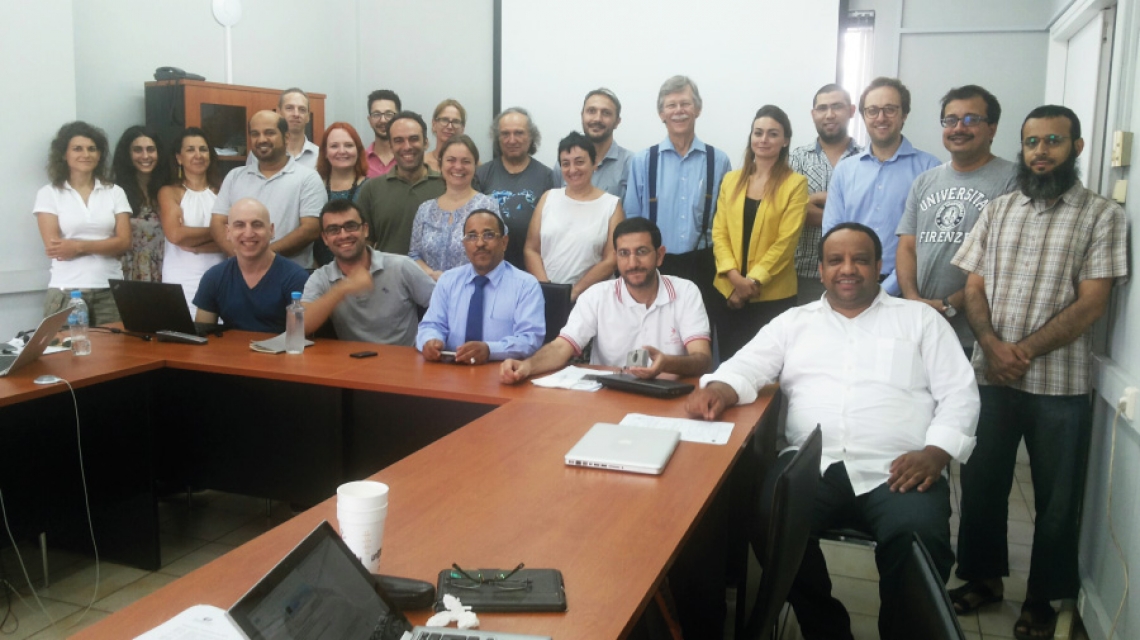
A group of Masdar Institute Master’s students recently visited rural Segoro Gunung in Dongeran, Central Java, Indonesia to see how they can use their Engineering Systems and Management skills to help solve energy needs for people living in remote areas with limited energy access.

The trip involved a case study of the Segoro Gunung village as part of the students’ studies in Masdar Institute’s Energy and Poverty Solutions course. The course was designed to examine the challenges of reducing poverty within developing communities by promoting improved access to modern energy services and thereby improving economic development, as energy is a means for economic development. 

The students, who were accompanied on their trip by their lecturer Dr. Sgouris Sgouridis, Associate Professor in the Department of Engineering Systems and Management, and Dr. Scott Kennedy, Assistant Director for Educational Initiatives, Massachusetts Institute of Technology and Executive Director of Energy Action Partners, used the village of Segoro Gunung in Dongeran, Central Java, Indonesia as this years’ case study. 

The students shadowed the locals as they went about their daily activities to assess their energy needs and community interactions. The fieldtrip also identified and assessed other related issues such as education, health and sanitation. The aim of each years’ field trip is to develop specific energy solutions that meet the needs of the community for activities they undertake on a daily basis. The students gain skills in developing energy solutions with limited resources and social entrepreneurship skills.

Dr. Sgouridis said, “The annual Energy and Poverty Solutions field trip allows Masdar Institute students to gain first-hand experience of development needs in rural communities related to energy availability. It aims to spur innovation and entrepreneurship for creating solutions in communities that lack modern energy access and other basic utilities. The course intends to shift students’ with an engineering mentality to see that understanding the community’s perspective and seeking continuous input in the product development phase is critical for a successful project. By providing this course, we are not only assisting students to create their own innovations for the provision of essential utilities for emerging communities, but we are also developing human capital in the UAE to address some of the world’s most pressing sustainability issues.”

Each year participating students of the Energy and Poverty Solutions module undertake a seven-day field study to a community that has limited energy access. Previous field trips have included villages in India and Africa, where students assessed the energy needs and energy resources of local villages.

Dates and Updates at Alumni Iftar

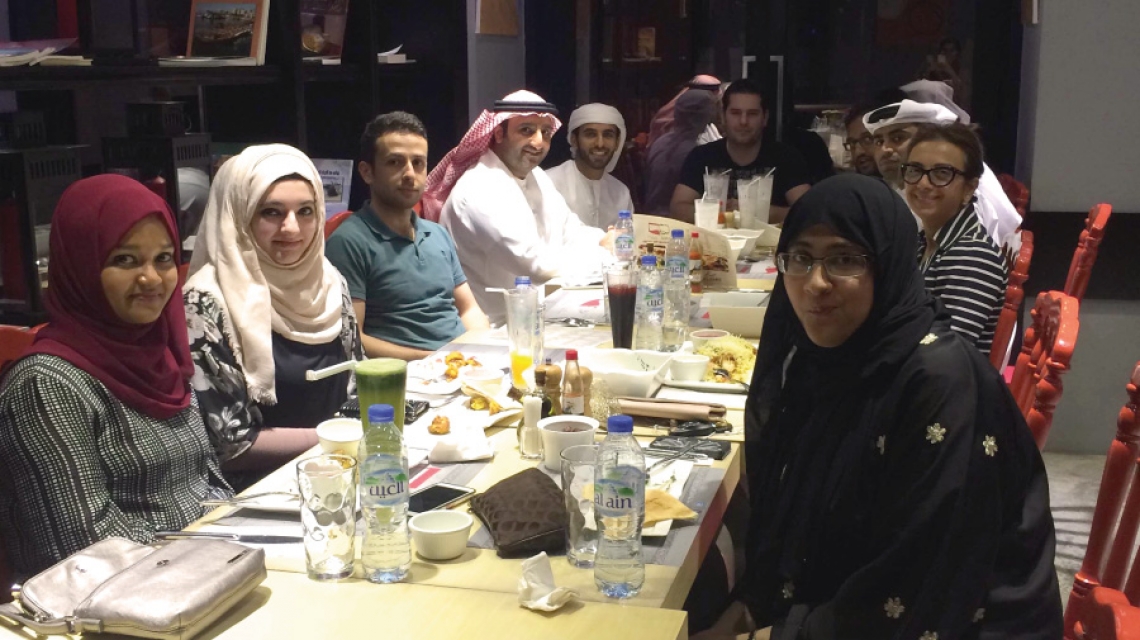
Masdar Institute alumni shared food, updates and new information at the Alumni Relations Ramadan Iftar, which took place on Wednesday, 24 June, 2015 at Osha restaurant, Masdar City. 

The annual event reunites Masdar Institute alumni from all graduating classes and gives them the opportunity to network and share news over the Ramadan meal. Members of the Alumni Relations Office were also present, including Rabia Bekhazi, Acting Director of Student Affairs and Manager of Career Services and Alumni Affairs. 

Bekhazi said, “This is an important occasion for our alumni as it allows them to spend time with their fellow Masdar Institute graduates during the holy month of Ramadan. We have found events like these to be an important outlet for our alumni, as it provides an opportunity to get more involved with the activities we organize throughout the year and offers graduates the chance to share stories of their time since their departure from the Institute.”


Students Score Cricket and Badminton Titles

Masdar Institute’s cricket and badminton teams were crowned champions of their respective disciplines during the Abu Dhabi Inter-University Sports League Official Celebration, which recently took place at the Petroleum Institute.

Dr. Behjat Al Yousuf, Dean of Student Life at Masdar Institute said, “We are delighted to have expanded our involvement in the inter-university league. This year over 75 Masdar Institute students participated as part of six teams, a number of which won in their league. We are proud of our students’ sports successes, which are an important balance to their academic pursuits.”

The Masdar Institute cricket team successfully fought off the competition to win the first Abu Dhabi Inter-University Sports League cricket championship with a comprehensive victory over the Petroleum Institute (PI) in the final, which was held in March 2015.

Saad Akhtar, captain of the Masdar Institute cricket team, said, “We were overjoyed to have won the cricket league in its first year of inclusion as a discipline in the Abu Dhabi Inter-University Sports League. This win has been made even more memorable as our team was formed just one year ago. We look forward to competing again next year and trying to retain our title.”

Masdar Institute’s badminton team was also top of the winner’s table by defeating the PI team in a thrilling final that was held in New York University Abu Dhabi in February 2015.

Asif Soopee, captain of the Masdar Institute badminton team said, “Our team put a lot of effort and dedication into training and preparing for the league and league finals. We are delighted that it paid off. The team thoroughly enjoyed the experience of competing and we are already looking forward to next year’s tournament.”

During the awards celebration, a student from each of the teams were presented with the Players’ Player of the Year awards. In addition to this, Shahid Rabbani (badminton) won the Athlete of the Year award, while Saad Akhtar (cricket) received the Scholar Athlete of the Year honor.

Established in 2012, the Abu Dhabi Inter-University Sports League brings teams from all over the emirate to participate in a number of disciplines. This year Masdar Institute added basketball, cricket and volleyball to its list of teams that already included badminton, football, and table tennis.  The Student Affairs Office of Masdar Institute has been instrumental in facilitating the development of the Institute’s teams and assisting them with their preparations for the league.

Ciara Sutton
News and Features Writer
27 April 2015

YFEL Takes Sustainability Initiatives to Indonesia

The projects were part of an intensive one-week field-based training program titled ‘Designing Off-Grid Energy Systems for Community Development in Sustainable Energy Entrepreneurship’ that was jointly organized from 25-31 July by YFEL, Universitas Sebelas Maret, and Energy Partners, a non-government organization. The students visited Pringgodani Training Center at Boyolali, near Surakarta, also known as Solo City, for the program.
 
The one-week program aimed to motivate youth to become leaders in expanding energy access and sustainable development. The training also helped teach participants how to use systems-thinking with a multidisciplinary approach, while creating unique opportunities for team formation and hands-on practice.
 
During the program, the YFEL-Indonesian youth group focused its activities on energy systems technology, community engagement, perspectives on sustainability, creating organizations for social change, stream-flow measurement in a nearby river, as well as bio and solar energy potential.
 
The program also brought together expert trainers and practitioners in community development; renewable energy engineering and technology; energy systems planning and design; and rural energy entrepreneurship to offer guidance to the youth. It also offered a platform to connect and train the promising students and professionals who participated in the program, emphasizing the criticality of team formation in a new enterprise, encouraging diversity and respect for multiple perspectives as well as prioritizing locally-available expertise.
 
Zainab Al Ali, Program Manager, YFEL, said: “This program plays an important role in nurturing YFEL members’ skills and knowledge by providing them with exceptional and unmatched opportunities to engage in hands-on alternative energy and sustainability projects in marginalized populations. The authentic learning experience that the YFEL members receive during this trip emphasizes strong technical fundamentals, realistic and appropriate business models, and community participation, which result in positive human development outcomes.”
 
Participating YFEL members and Indonesian students benefited from the workshop that included a  team challenge that required the design and presentation of a sustainable energy enterprise through field visits and hands-on projects. Additionally, the program offered the youth an opportunity to engage with villagers from the surrounding community and participate in interactive lectures and discussions, which encouraged self-driven learning.
 
Various youth teams visited the nearby river to learn and practice stream-flow measurement — which records the flow of water in streams, rivers, and other channels, a critical part of assessing a water cycle. The program also helped participants evaluate the potential of bioenergy and solar energy of the area based on the solar resource and local land use practices. Project ideas were based on assessing and evaluating needs of local agricultural activity. Participants stayed in the village over the course of the week, learning to appreciate a basic and simple lifestyle of the community.
 
For YFEL member Manar Almazrouei, the trip was a life-changing experience.

“This trip was one of my best experiences of my life. In one week I learnt a lot as an engineer and as a person. As a sustainable and renewable energy engineering student, this trip was the core of my study, where I learned about different renewable energy sources and technologies that can help in capturing these sources, and convert them to other useful sources of power,” she shared.

At the same time, students from Indonesia‘s Universitas Sebelas Maret who participated in the program acknowledged the role played by YFEL in empowering the community in Boyolali. Participants exchanged ideas with locals who are the primary stakeholders to develop an understanding about the local requirements.
 
Indonesian student Arya Ksatria Raja said: “This workshop will definitely influence my future decisions and career. After I finished the workshop, I became more aware of alternative energy resources and their development, especially in my country. I’m planning to get my master’s degree on energy subject, so I can share all of my knowledge with the local communities in Indonesia.”

Clarence Michael
News Writer
06 September 2015

YFEL Course Highlights Value of Renewable Energy Careers

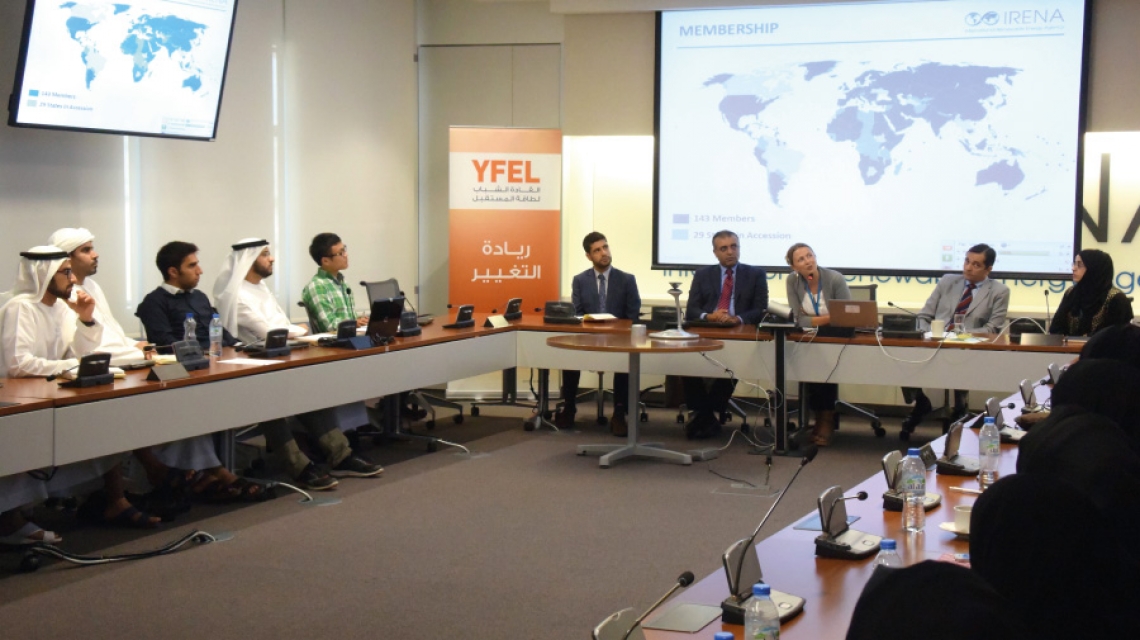
Members of Masdar Institute’s Young Future Energy Leaders Program (YFEL) learned about the career prospects of the rapidly-growing global alternative energy sector and the tools and policies that impact it as part of a one-day course.

Around 45 YFEL members participated in the course that was titled ‘Being an analyst in the renewable energy industry.’ It was led by officials from the International Renewable Energy Agency (IRENA) and the Masdar corporation, with members of PricewaterhouseCoopers (PwC), the International Energy Agency (IEA), and the World Bank participating in a panel discussion that was part of the course.

“Energy markets worldwide are undergoing a rapid transformation, including the emergence of renewable energy as a mainstream alternative to fossil fuels,” said IRENA Director-General Adnan Z. Amin. “Government and business must track these changes for policy and planning purposes, and they will need skilled energy analysts to do so. IRENA is pleased to work with Masdar Institute’s YFEL program to help meet the growing need for future energy experts.”

Over the past three years, renewables have accounted for more than half of net capacity additions in the global power sector – meaning more new renewable energy capacity is being installed than new capacity in fossil and nuclear power combined. Today, more than 7.7 million people worldwide are employed by the renewable energy sector, which has grown 17 percent since last year. In 2014 the sector was valued at US$270 billion by the United Nations Environment Program (UNEP). These compelling factors encouraged IRENA to organize the one-day course for YFEL members to raise their awareness about career prospects in alternative energy.

“As a program dedicated to creating future energy leaders, YFEL offers various avenues for professional development in collaboration with industry and non-government partners including IRENA,” said Dr. Lamya Fawwaz, Vice-President, Institutional Advancement and Public Affairs, Masdar Institute. “With incremental growth in opportunities in the renewable energy sector, courses such as this are becoming necessary for strengthening and further developing the region’s skill base. Masdar Institute is delighted to work with IRENA and support talented youth through the YFEL outreach program.”

The course panel discussion was moderated by Nicolas Fichaux, Program Officer Renewable Potentials, IRENA. Panelists included expert analysts including Maged Farouk, Senior Manager, Masdar Special Projects Unit, Diako Makhmalbaf, Senior Consultant, PricewaterhouseCoopers (PwC), Yasmina Abdelilah, Data Analysis and Modelling, IEA, and Amit Jain, Renewable Energy Specialist, World Bank.
 
A knowledge-sharing session was followed by a presentation of IRENA analytical tools and data sources. A special session on ‘Resource’ — the world’s largest repository of free information on renewable energy — showed YFEL members how to gather valuable information on the sector. The course also included an introduction to renewable energy policy mechanisms and existing policy databases.
 
The course also included a practical case study meant to demonstrate YFEL members’ understanding of the renewable energy sector and the related tools and services. They were asked to apply their understanding of the issues and opportunities to a specific country and submit a summary on the status of the energy market, as well as the potential for renewable energy development.

YFEL is a Masdar Institute outreach program with a mission to educate and inspire students and young professionals to become future leaders capable of solving the world’s most pressing challenges in advanced energy and sustainability. Throughout the year, YFEL members are mentored in the fields of advanced energy and sustainability technologies through participation in case study competitions and world energy conferences.
In addition to courses organized by external partners, YFEL offers guest lectures and intensive courses annually on technology, policy, and leadership that are led by renowned industry experts and Masdar Institute faculty.


Clarence Michael
News Writer
10 September 2015

First Masdar Institute PhD Graduate Returns as Faculty

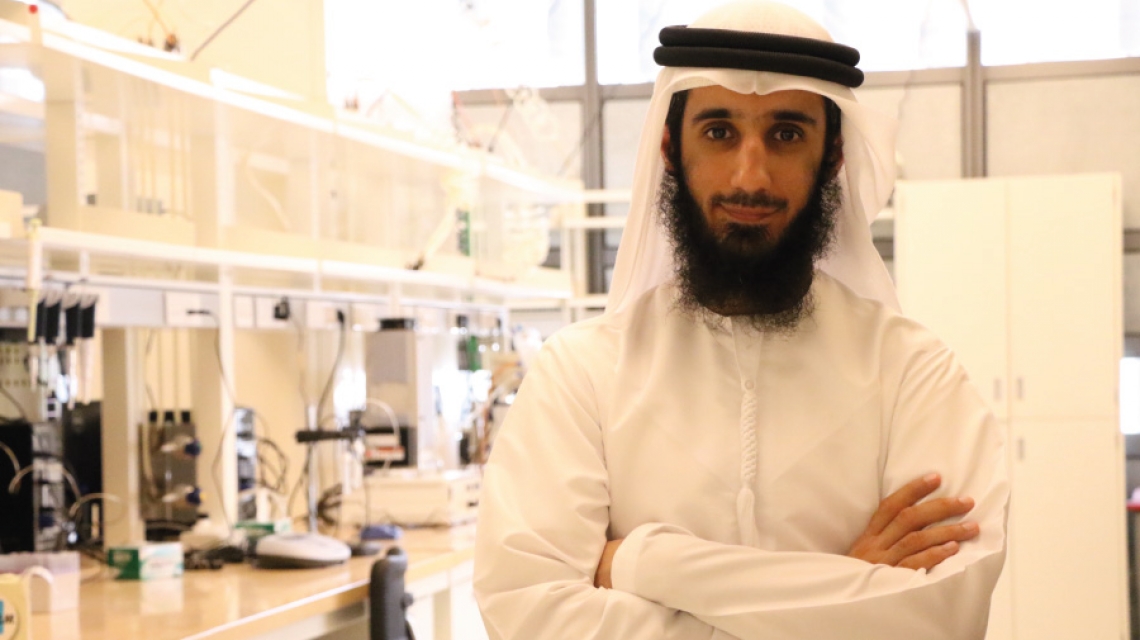
Dr. Faisal Al Marzooqi, Masdar Institute’s first PhD graduate, has become the Institute’s most recent faculty addition following his appointment as assistant professor of Chemical and Environmental Engineering.

As a full-time faculty member, the young UAE National will continue his pursuit of cutting-edge research in the area of desalination and membrane technologies as well as teaching classes. Dr. Al Marzooqi’s recent appointment makes him the Institute’s 17th UAE National faculty member.

“Masdar Institute works to attract and retain the UAE’s most talented professors. Through its research-driven focus, rigorous coursework, world-class faculty, and support from the UAE leadership, Masdar Institute has produced PhD graduates with competitive, valuable and unique scholarship profiles. It is exactly this kind of talent that we aim to recruit,” said Dr. Mohamed Sassi, Interim Dean of Faculty, Masdar Institute. “We are proud of Dr. Al Marzooqi’s achievements and we are pleased to have him join our faculty.”

Speaking about his new designation, Dr. Al Marzooqi said, “I am very grateful for what Masdar Institute has given me. They first equipped me with the engineering skills I need to uniquely approach problems, discover solutions, and conduct research effectively, and now they have accepted me among their team of expert faculty. This is the start of a new stage, in which I hope I can continue to contribute to the successful development of our nation.”

As an assistant professor, Dr. Al Marzooqi will be able to expand on the research he conducted during his PhD studies, further extending Masdar Institute’s portfolio of advanced water technologies. His thesis research dissertation combined water desalination research and advancements in nanotechnology to produce a novel device that can desalinate water in a sustainable, energy efficient way.

His advisor during his PhD studies, Dr. Hassan Arafat, Associate Professor of Chemical and Environmental Engineering, said, “Faisal created an excellent thesis; his work included elements of both breadth and depth of knowledge. The subject of his thesis, desalination, is of great relevance to the mission of Masdar Institute and to the UAE, one of the most water-scarce regions on earth. I am very proud that Faisal has recently joined me as a colleague in our department. He is a fine example for all our graduates.”

Dr. Al Marzooqi believes that Masdar Institute is the best place for him to continue his research.
“Masdar Institute stands as a leading university in the UAE and broader Middle East. It offers state-of-the-art labs, such as the cleanroom and microscopy suite, which provide the ideal place for scientists and researchers to carry out their research,” he said.

Along with critical research in areas of advanced energy and sustainable technologies, Dr. Al Marzooqi believes that teaching is needed to firmly anchor the UAE’s knowledge-based economy. This belief, along with his deep gratitude toward his country for its unwavering support, prompted Dr. Al Marzooqi to apply for a faculty position at Masdar Institute. As a Masdar Institute faculty member, he plans to help establish the UAE as a leader in research and development capacity and expertise.

“We ultimately want the world to approach us for research and education and we cannot do that if we don’t support our local universities,” Dr. Al Marzooqi explained.

Dr. Al Marzooqi’s decision to join Masdar Institute’s faculty, which to date number nearly 100, is a continuation of his ongoing efforts to achieve his highest potential and give back to his country. He completed his MSc degree in chemical engineering at the Imperial College, London and has worked as a process engineer for the Abu Dhabi Marine Operating Company (ADMA-OPCO). Dr. Al Marzooqi is also an alum of Masdar Institute’s Young Future Energy Leaders (YFEL) program, a mentorship experience that he said led him to choose Masdar Institute for his PhD. He also recently served as a member of the UAE Government Leaders Program, which was established by the UAE government to help prepare and develop future UAE Nationals as leaders who will help the government achieve the main objectives of its declared economic and socio-political strategies.

Erica Solomon
News and Features Writer
15 September 2015

From Mangrove to Biomethane: Demonstrating Seawater Biorefinery in the UAE

Saleha Almardeai, a Masdar Institute Master’s student in Chemical Engineering, has won the award for best poster presented at the International School on Energy Systems (ISES) 2015, held last week in Germany.

Almardeai’s winning poster, titled “Seawater Biorefinery of Avicennia Marina – Biomethane Potential at Seawater Conditions,” builds on her thesis research, which is focused on converting biomass to bioenergy – which can be used for power generation, heat and transportation fuels – and other valuable chemicals used in various industrial applications.  The research was performed under the supervision of by Dr. Jens Ejbye Schmidt, Professor of Chemical and Environmental Engineering and Head of the Institute Center for Energy (iEnergy), Dr. Hector Hernandez, Assistant Professor of Chemical and Environmental Engineering, and Post-Doctoral Researcher Dr. Juan Bastidas.

“We measured biomethane production from the mangroves because methane is the fastest product that can be measured to prove whether the seawater biorefinery concept can be achieved,” Almardeai explained.

The five-day long conference brought together researchers and industry leaders in the fields of energy technologies, economics, political science and related disciplines to discuss the challenges of present and future energy systems. A total of 45 posters were presented, with Almardeai joined by one other participant in the award for best poster.

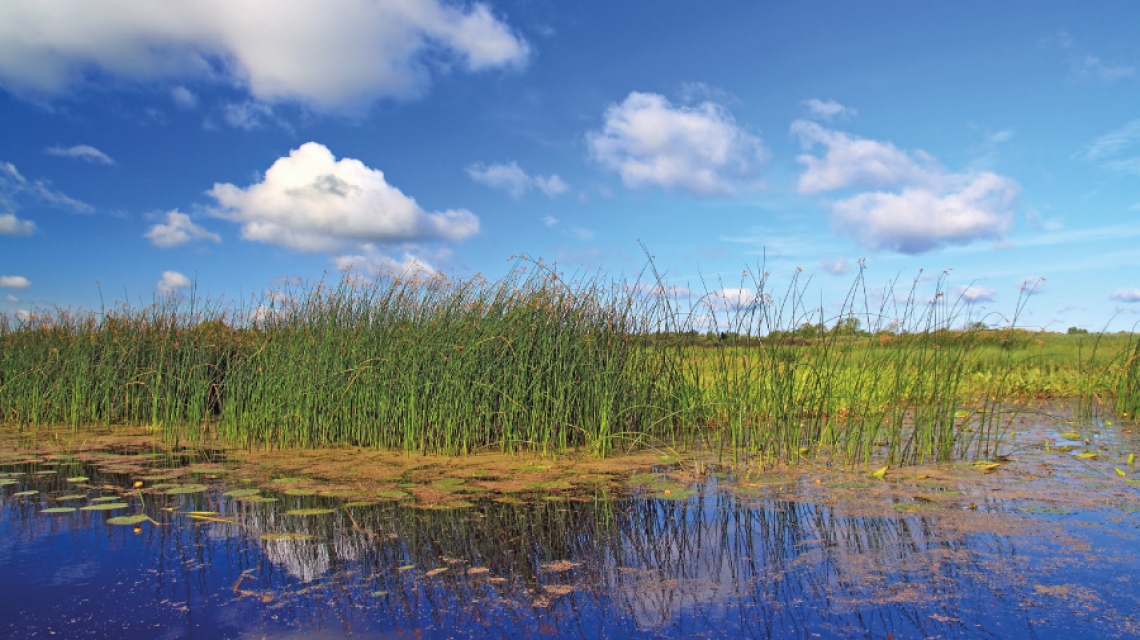
The poster presented Almardeai’s findings on the feasibility of harvesting indigenous, salt-tolerant mangrove plants irrigated with seawater for biomethane production. Biomethane is a naturally occurring gas produced through the anaerobic digestion of organic matter, such as plants or waste.  Chemically identical to natural gas – a fossil fuel stored deep in the ground – but much more environmentally friendly as biomethane is a renewable energy source. As an alternative to natural gas, biomethane can be used for clean electricity generation, water and space heating, cooking, to fuel vehicles and to produce other biochemicals.

Plants that can be irrigated with seawater and grown on desert land or coastal areas are a preferred source of biomass feedstock for bioenergy production because they do not require freshwater or large swathes of arable land. Around the world major research is being conducted to determine whether seawater and desert land can be used to produce commercially viable levels of biochemical, biofuel and other useful products.

Adding to this growing body of research, Almardeai sought to determine the viability of using seawater and local mangroves for fermentative biochemical production. According to her study, which measured the methane content in three varying amounts of mangrove plant materials after 48 days, Almardeai found that the mangrove plant material was able to produce high levels of biomethane – with 1.09 grams of mangrove material producing 52.8 milliliters of methane – successfully demonstrating that seawater biorefinery of mangrove plants is a viable way to produce bioenergy. The next step is to determine the feasibility of scaling the process up to produce larger amounts of the bioenergy.

The study is a critical step in proving that seawater biorefinery can be successfully implemented to produce biofuel and other valuable biochemicals from the UAE’s salt-loving mangrove forests.

Almardeai’s research, conducted through the Masdar Institute Center for Energy (iEnergy), is one of its many research projects investigating innovative ways to produce bioenergy from salt-loving plants and other microorganisms that thrive in UAE’s desert climate.

Erica Solomon
News and Features Writer
21 September 2015

Value of Research and Collaboration in Smart Urban Future Highlighted

The value of using advanced engineering to ensure that urban infrastructures are able to sustainably meet the needs of city residents for generations to come was highlighted by Masdar Institute Assistant Professor Dr. Elie Azar during the  the European Union and Gulf Cooperation Council Science and Technology International Cooperation Network (INCONET-GCC2) 1st Summer School, which took place in Volos, Greece, on 7-10 September 2015.

Dr. Azar delivered the first keynote speech of the event titled ‘Towards Smart Cities, Buildings and People’, in which he discussed common issues and sustainability challenges on a local and international scale, and defined the concept of a smart city and its different pillars – buildings, transportation, governance, information communications technologies and citizens.

“While citizens must play an important role to enable sustainability in cities in the future, technology-related solutions – like the smart buildings and smart grid systems being researched at Masdar Institute  – are integral. This event, and the workshops that were part of it, have helped lay the foundations for future collaborative projects through the EU Horizon 2020 framework,” Dr. Azar explained.

His keynote speech highlighted the research being conducted at Masdar Institute in its Sustainable Critical Infrastructure Program and the Department of Engineering Systems and Management in relation to smart cities, and the key challenges facing current and future smart cities. In his concluding remarks, Dr. Azar discussed the importance of the role that people have to achieve the transition to more sustainable cities.

As part of his participation in the summer school, Dr. Azar also led a workshop titled ‘Smarter Cities, Buildings and People’, which was attended by professionals and academics from Oman, Bahrain, Qatar, Greece, Brazil and Switzerland. The aim of the workshop was to find common areas of collaboration and focused on the main values that should be implemented in smart  cities – both in the GCC and Europe.  

The summer school was held under the theme of ‘Collective Awareness Platforms for Smart Cities Development,’ and was established as a way of promoting collaboration between institutes and research centers towards smart city development.

Emphasizing the challenges of sustainable urban design and development, this year the event stressed the importance of developing and implementing a strategy to address the issues related to smart and sustainable cities while promoting the ‘Smart Cities’ model and the potential for developed technologies to address aspects related to energy and the environment, and the urban design and development of a city. The objective of the summer school was to ensure that it created an awareness of smart city issues by creating a dialogue between participants and encouraging attendees to discuss shared issues that could lead to cooperative action and collaboration.

INCONET-GCC2 is a three year project, which began in 2014, and is sponsored by the Directorate General for Research and Innovation at the European Commission. The aim of the project is to facilitate bi-regional coordination during the Horizon 2020 program, an EU research and innovation program that is providing nearly €80 billion in funding between 2014 and 2020.

Ciara Sutton
News and Features Writer
13 September 2015

Aerospace & Defense Stakeholders Explore Potential Impact of Thermal Imaging Innovations

The new technologies emerging out of the rapidly growing defense and aerospace industries are among the most advanced available today. The next-generation technologies are foundational to the future of industries even beyond aerospace and defense, providing incredible research and development (R&D) opportunities, an event at Masdar Institute recently highlighted.

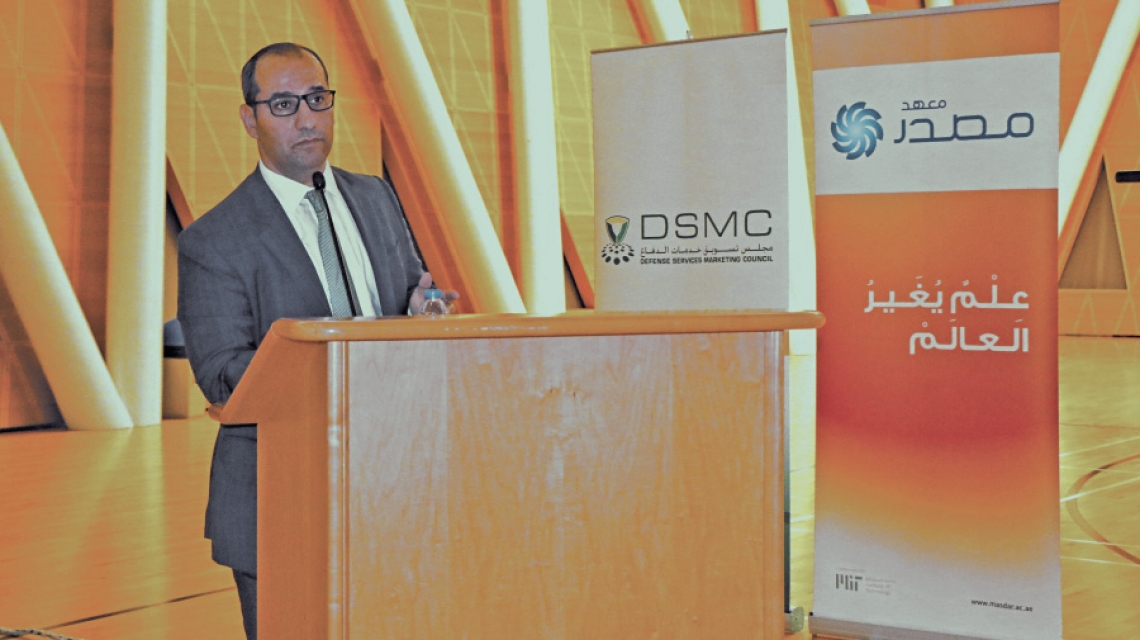
The “Partnering to Achieve Innovation in Defense and Aerospace” (PAIDA) Working Group met last month at Masdar Institute, bringing together industry experts and academicians for a focused discussion on one technology that has multiple applications in the aerospace and defense industry: thermal imaging.

Dr. Mohammad Omar, Head of the Institute Center for Smart and Sustainable Systems (iSmart) and Head of the Department of Engineering Systems and Management, led the thermal imaging discussion at PAIDA.

The meeting, which was organized by the UAE’s Defense Services Marketing Council (DSMC) and hosted by Masdar Institute, was the third in a series of focused discussions around innovative defense and aerospace technologies and their potential applications in the UAE. The working group included industry leaders like the Abu Dhabi-based Tawazun group and Italy’s Selex ES, academic experts from Masdar Institute and the Khalifa University of Science Technology and Research (KUSTAR), among other organizations.

Analysts from MarketsandMarkets (M&M) expect the global thermal imaging market to grow from approximately US$7 billion in 2015 to US$10 billion by 2020, and aerospace and defense stakeholders in the UAE want to capitalize on this growth to develop thermal imaging devices across a diverse range of applications.

“Thermal imaging allows us to image out-of-reach areas, in real-time, quickly,” said Dr. Omar, whose research has been recognized by the American Society of Manufacturing Engineers SME and the Society of Mobility Engineers SAE.

“Through thermal imaging, we can determine an object’s shape, whether it is moving or stationary, and we can characterize the materials it’s made from and how it will react in different conditions,” he added.

Thermal imaging can provide a lot more information about an object than can be gathered by the naked eye. Dr. Omar described how human eyes are limited to the very tiny portion of the solar spectrum known as visible light, whereas infrared imaging allows us to view a much larger portion of the spectrum, known as infrared radiation – the heat emitted by all objects. Thermal imaging creates an electronic image based on the temperature differences between the different objects being imaged.

Thermal imaging systems can characterize objects in the thermal spectrum, which helps to identify an object, including the materials it’s made out of (such as wood, plastic, metal, etc.) as well as its function. This technology can be used to identify a military vehicle, weapon, or aircraft, and even determine the state of the vehicle’s engine (for example, if it’s overheating) and the condition of the people inside the vehicle. This is done by imaging extremely small bands of infrared light emitted from an object.

The thermal imaging systems Dr. Omar has developed, which combine thermal imaging and visible light imaging, can be used in many applications, including improving an object’s design.
Innovations in infrared imaging systems are just scratching the surface of their potential, but as Dr. Omar pointed out, further R&D should be advanced with a specific purpose, guided by industry experts. Otherwise, such innovations may never leave the lab.

“We need the industry to bring us their problems. The knowledge and technologies we are developing in the lab must be guided by need and must be developed for specific applications requested by industry leaders,” Dr. Omar stated, reminding the PAIDA members of their goal.  

The goal of the PAIDA working group is to connect innovative aerospace and defense R&D with industry experts who have an intimate understanding of the industry’s needs. Such collaborations will help to guide relevant research, disseminate research results and accelerate the commercialization of viable products that the industry wants.

These collaborations will help reduce the barriers that tend to hinder novel technologies from leaving the R&D stage and entering the market.

Erica Solomon
News and Features Writer
20 October 2015

Academic Programs, Research Innovation and Scholarship Options to the Fore at NAJAH 2015

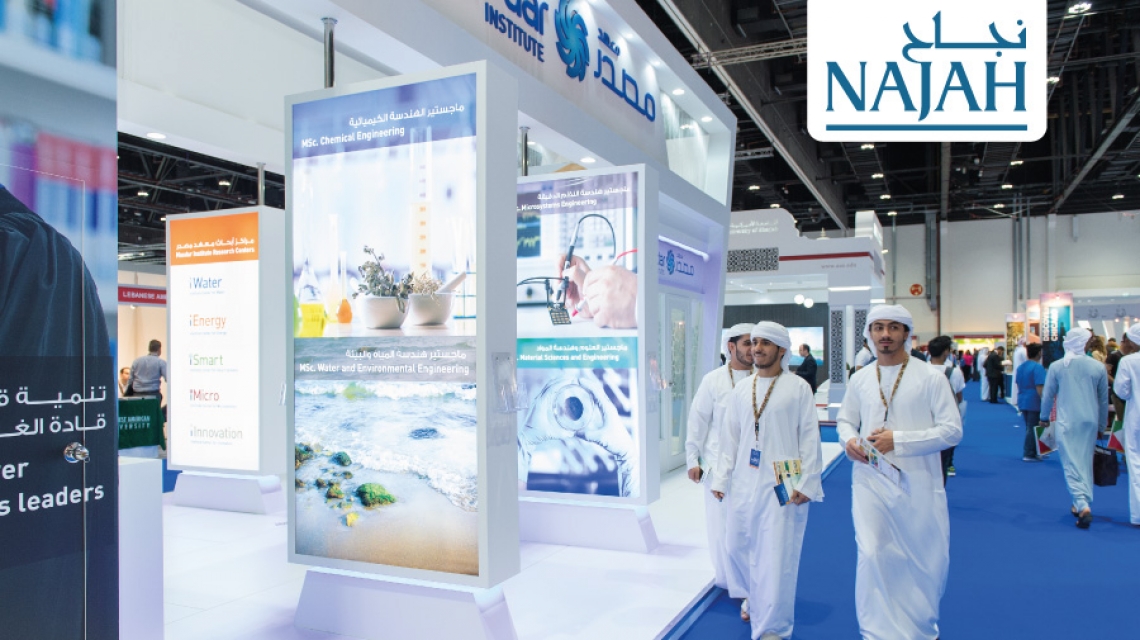
The highly-focused Master’s and PhD programs, locally-relevant research innovation, scholarship opportunities, and the employment potential will be some of the highlights of Masdar Institute’s participation at Najah 2015, the country’s leading higher education and training exhibition and career fair.

Reflecting its top ranking in the ‘research citation impact’ category among 96 Arab universities in the 2015 US News and World Report listing, the Masdar Institute stand at Najah 2015 will also offer details on cutting-edge laboratory facilities, and internships. Officials, faculty members representing Masdar Institute’s research centers (iCenters) and select students at the stand offered visitors additional information on the research-based institution’s overall offerings. The event will run from 27-29 October 2015 at the Abu Dhabi National Exhibition Centre (ADNEC).

Two locally-relevant research projects will also be on display – one focusing on ‘Investigation of the natural hydrolysis system in camel rumen’ and the other on ‘Microbial microbeads for regeneration of agricultural soils of the UAE’. The artificial camel gut system designed and built at Masdar Institute will help study microbes in generating clean energy, while the microbeads developed with a microbial community will help enhance regeneration and carbon retention of the Abu Dhabi soils. For the visitors, the event will be an eye-opener on the extent of advanced technology research and innovation that are being undertaken at the campus.

Dr. Behjat Al Yousuf, Interim Provost, Masdar Institute, said, “Our participation in Najah 2015 illustrates the extent of our involvement in developing Emirati human and intellectual capital towards creating the UAE’s knowledge economy. Our highly skilled alumni have been hand-picked by leading global and regional corporations as well as national organizations such as YahSat, Mubadala, Emirates Nuclear Energy Corporation (ENEC), International Renewable Energy Agency (IRENA), Siemens and GE, while our research projects continue to offer sustainable solutions and thus impacting the local, regional and global communities. For Masdar Institute, Najah presents an opportunity to reach out to emerging talent that can be further nurtured so that they can become dynamic future leaders, driving the country’s sustainable progress.”

Since September 2015, Masdar Institute has begun offering a new concentration in space systems and technology across seven of its Master’s programs, throwing open an avenue for the UAE nationals to contribute to the country’s space missions. Details on this concentration will also be offered to interested student visitors who are keen to join space endeavor.
 
Masdar Institute also offers internship programs such as Summer Research Internships, Ektashif and Student Internships, providing the UAE national students with a preview of the research and professional environment. These programs help students interested in renewable energy and advanced technologies to take their learning ambitions forward by joining Masdar Institute, which has consistently demonstrated its research prowess over the years.
 
Most of the graduate innovators from Masdar Institute have already been employed with leading national, global and regional organizations, while others have continued with their academic pursuits and joined PhD programs at leading international universities. NAJAH 2015 presents an opportunity for students based in the UAE to learn more about these alumni, as well as gather information on the opportunities offered by Masdar Institute to chart an effective professional career.

Organized under the patronage of His Excellency Sheikh Nahyan bin Mubarak Al Nahyan, Minister of Culture, Youth and Community Development, NAJAH 2015 is supported by the Ministry of Higher Education and Scientific Research and Abu Dhabi Education Council (ADEC).

Clarence Michael
News Writer
26 October 2015

Industry-Guided R&D Can Lead to Sustainable UAE Gas Industry

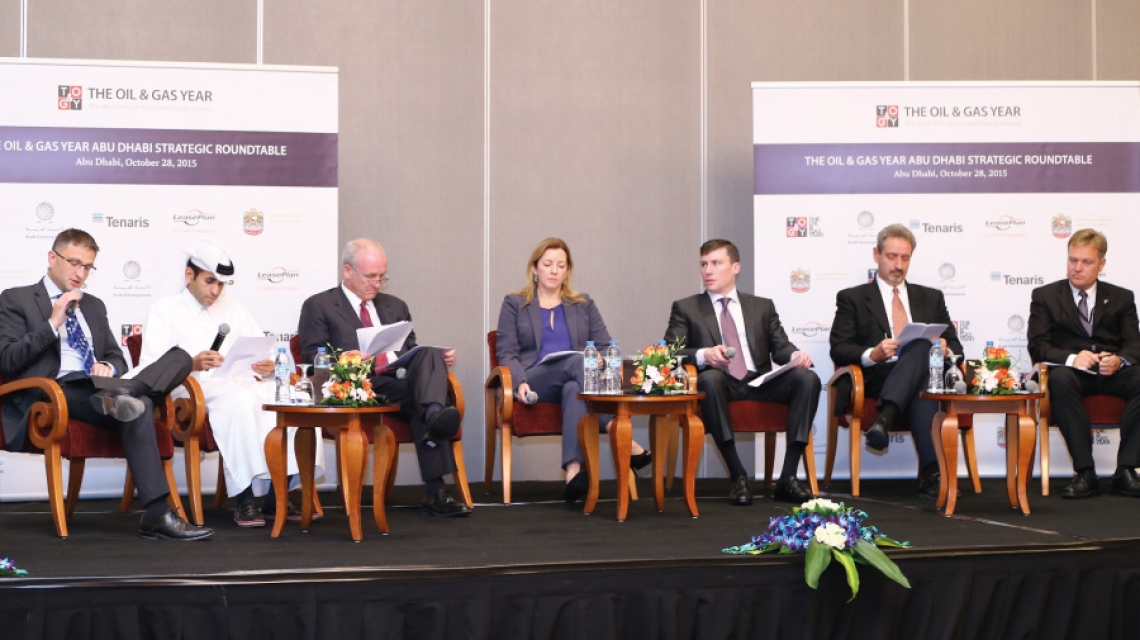
The key to a sustainable future for all – industry and environment alike – is industry-guided research and development (R&D), Masdar Institute Vice President for Research and Professor of Practice Dr. Steve Griffiths told attendees of the Oil and Gas Year Strategic Roundtable last week.
“Innovation happens through collaboration between private, public and academic organizations,” Dr. Griffiths said. “Public-private partnerships are effective tools for leveraging the resources and expertise of each sector for the development of technology-based innovations that make oil and gas-related operations more efficient and sustainable.”

Dr. Griffiths was speaking in a panel discussion at the influential roundtable event, which brought together 200 government officials and senior management executives, including the UAE Minister of Energy, H.E. Suhail bin Mohamed Faraj Fares Al Mazrouei, to discuss best practices on how to achieve sustainability in the UAE’s oil and gas industry.

This 6th iteration of the roundtable was sponsored by the Arab Development Company (ARDECO), LeasePlan and Tenaris. Panelists focused on how innovative R&D of cutting-edge oil and gas technologies can be leveraged to support the UAE’s oil and gas sector – which remains the mainstay of the UAE’s economy, accounting for 30% of the country’s gross domestic product (GDP), which was valued at US$1.47 trillion last year, and contributing over 60% of the government’s revenues – while also reducing the industry’s adverse environmental impact.

Dr. Griffiths spoke about the novel R&D taking place through industry-guided collaborations between the country’s research institutes and local and global enterprises, which are catalyzing breakthrough innovations that are enabling UAE’s oil and gas sector to optimize extraction and utilization of their oil and gas reserves.

Collaborations are a key element to Masdar Institute’s oil and gas R&D, which seeks to produce sustainable technologies across the oil and gas value chain, from extraction of the precious fossil fuels to their transportation and refinement into energy and high-value fuels and chemicals.
Masdar Institute currently collaborates with industry leaders like the Abu Dhabi National Oil Company (ADNOC), Takreer – ADNOC’s refining arm –, BP, Total and Maersk Oil Company, to support the development of sustainable technologies required to sustain and power the oil and gas industry and any economic sectors that are impacted by it.

Among Masdar Institute’s notable oil and gas R&D is its Digital Rock Physics (DRP) project, which involves the study of how oil moves through the micro- and nano-sized pores of the underground carbonate rocks in which it is trapped. The study aims to produce an extensive archive of rock images in microscopic detail and to digitally simulate and test the behavior of oil and gas in reservoirs with the ultimate goal to maximize oil recovery.

Another oil and gas innovation being developed at Masdar Institute is the development of enhanced sensors that use graphene to detect scale build-up in pipes, helping to reduce energy requirements needed to maintain vital piping systems needed to extract and transport oil.
Additionally, Masdar Institute’s advanced materials research is leading to the creation of composite materials to help oil flow through pipes more efficiently. Other studies that leverage the unique properties of advanced materials are being conducted to improve the performance of plastics and piping, providing the UAE’s industries with a competitive advantage.

These innovations are the direct result of targeted R&D, Dr. Griffiths explained. Research collaborations like these directly support the UAE’s knowledge-economy transformation by providing key UAE enterprises with innovative, viable and valuable solutions while providing students with real-world industrial problems, producing a pool of highly-skilled and trained personnel that all thriving innovation ecosystems require.

Public-private partnerships that leverage the UAE’s robust technology infrastructure, coupled with an innovation-enabling regulatory framework, will help position the UAE as a center of regionally-focused but globally-recognized knowledge and technology creation, explained Dr. Griffiths.

Dr. Griffiths also highlighted the future directions of energy technologies based on fundamental advances in materials science and information science. Particular applications that will be disruptive to the energy industry include carbon conversion to higher value products and autonomous vehicles.

Supporting development and commercialization of indigenous innovations directly supports the UAE’s national ambition to be an exporter of knowledge and technology, and Dr. Griffiths believes that industry-guided research is central to these efforts.

Erica Solomon
News and Features Writer
30 October 2015

Global and Regional Experts in Electron Microscopy Gather at Masdar Institute for Second Annual Conference

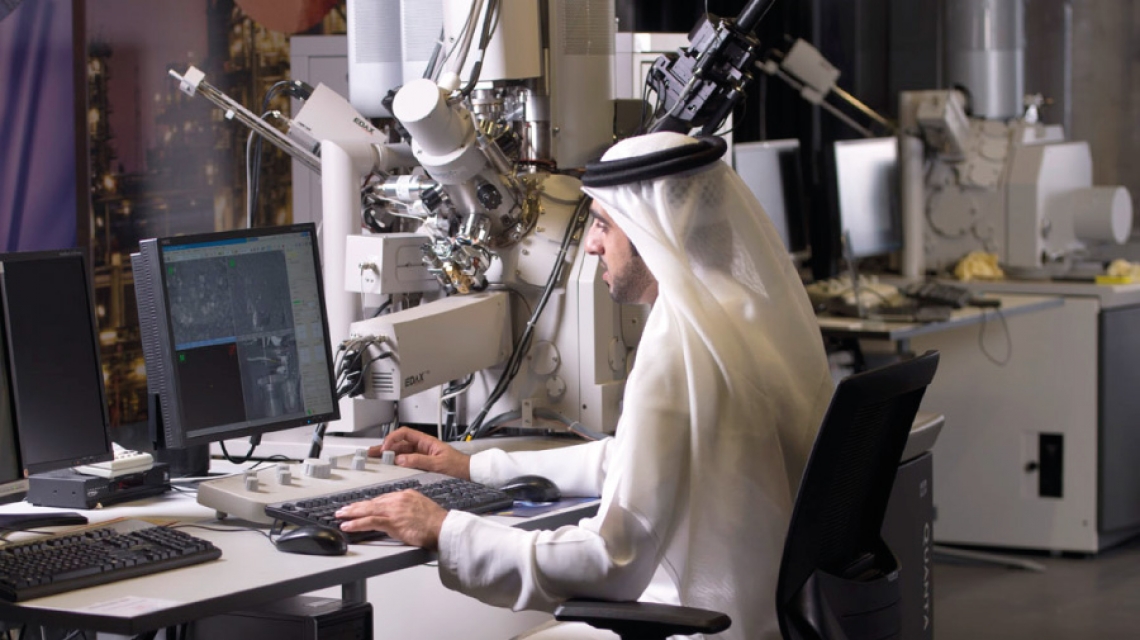
The sustainable campus in Abu Dhabi became the venue for one of the largest gatherings when international and regional expert electron microscopists convened for the annual Electron Microscopy Conference and Symposium 2015 that was held from 2-5 November.

Aimed at highlighting the role of the community of microscopists in delivering regionally-relevant innovations, the four-day event focused on two regionally-relevant topics – digital rock physics and physical metallurgy — and explored advanced visualization techniques, including 3D imaging and combined imaging/analytical techniques. The conference also had hands-on training sessions covering ‘Electron Back-Scattered Diffraction’ and ‘Advanced Imaging Techniques.’

The objective of the event was to build advanced electron microscopy expertise and support the growth of the electron microscopy community within the UAE and help develop special local expertise in advanced visualization techniques, especially rock physics that will benefit oil and gas as well as the metals manufacturing sectors.

Masdar Institute has taken a leadership position in training local scientists to operate within its world-class electron microscopy facility. In four years, Masdar Institute has trained over 400 users in basic microscopy and over 150 of those users have continued their growth through advanced training sessions and use of the instruments. Advanced electron microscopy was also integral to the studies of Dr. Faisal Al Marzooqi, the first student to receive a PhD from Masdar Institute, who since then has become a faculty.

The conference themes had special relevance to local and regional industry such as Emirates Global Aluminium (EGA), Emirates Steel Industries (ESI), Abu Dhabi National Oil Company (ADNOC), Abu Dhabi Marine Operating Company (ADMA-OPCO), and Abu Dhabi Oil Refining Company Takreer, as well as regional academic institutions such as The Petroleum Institute, Abu Dhabi University, King Abdulaziz City for Science and Technology (KACST) and King Abdullah University of Science and Technology (KAUST).

Dr Behjat Al Yousuf, Interim Provost, Masdar Institute, said, “The second annual gathering of microscopists once again firmly established our advanced technology capabilities in locally-relevant research and development. We believe the summit will benefit representatives from industry, government and academia working in the microscopy sector.”

Dr Steve Griffiths, Vice-President for Research, and Mike Tiner, Director, Laboratories, Masdar Institute, welcomed the gathering of approximately 100 specialists. Dr. Mohamed Sassi, Interim Dean of Faculty, and Dr Mustapha Jouiad, Principal Scientist and Electron Microscopy Facility Manager, Masdar Institute, chaired the opening session. Visits to Masdar Institute’s cutting-edge laboratories were also part of the information-packed agenda.

Conference organizers had developed an agenda representing international specialists, corporate leaders and academicians including geology and mineralogy expert Dr. David Mainprice from University of Montpellier, France; Dr. Rene De Kloe, applications specialist in Electron Backscatter Diffraction (EBSD) from EDAX, a Materials Analysis Division unit of the leading global manufacturer AMETEK, Dr. Noomane Keskes, Scientific and Technology Adviser at Total, France; and Dr. David Field, Professor, School of Mechanical and Materials Engineering, Washington State University, US.
 
Electron Microscopes (EM) are critical for  much of the research ongoing at Masdar Institute and the EM facility is one of the more widely utilized core laboratory facilities . The facility is available 24/7 with equipment scheduling, training program, status updates and can be accessed through the Masdar Institute web portal.
 
The corporate sponsors of the Electron Microscopy Symposium 2015 included EGA, FEI Company, WITec, Sigma-Aldrich, Naizak Global Engineering Systems, Gatan, Ametek; and Leica Application Suite (LAS).


Clarence Michael
News Writer
08 November 2015