
Khalifa University Launching Cooperative Education from Fall 2026 across Engineering, Computing, and Biomedical Engineering

Program Bridges Academic Learning with Practical Experience and Career Exploration


Khalifa University of Science and Technology today announced it will be launching Cooperative Education (Co-op) courses from Fall 2026, integrating academic learning with practical hands-on experience in engineering and computing fields.


Each co-op semester spans 6 months, with the first earning 2 credits, while eligibility criteria include those with a CGPA of 3.25 and a minimum of 75 credits to apply and 90 credits to start. Students who would like to enroll need to demonstrate full-time commitment, compliance with guidelines, and completion of 26 weeks with the assigned organization, either on-site or in offices.


Professor Bayan Sharif, Provost, Khalifa University, said: “The launch of the co-op course reflects our strong commitment to helping students acquire additional skills during their campus life. It integrates academic studies with work experience, alternating periods of study and work, involving a partnership between students, institutions, and employers. Khalifa University is proud to initiate such an arrangement that facilitates employability, and financial support, even as employers gain access to talented students, and reduced recruitment costs, while contributing to workforce development. This course also serves as part of our mandate to support the UAE’s knowledge-economy transformation.”


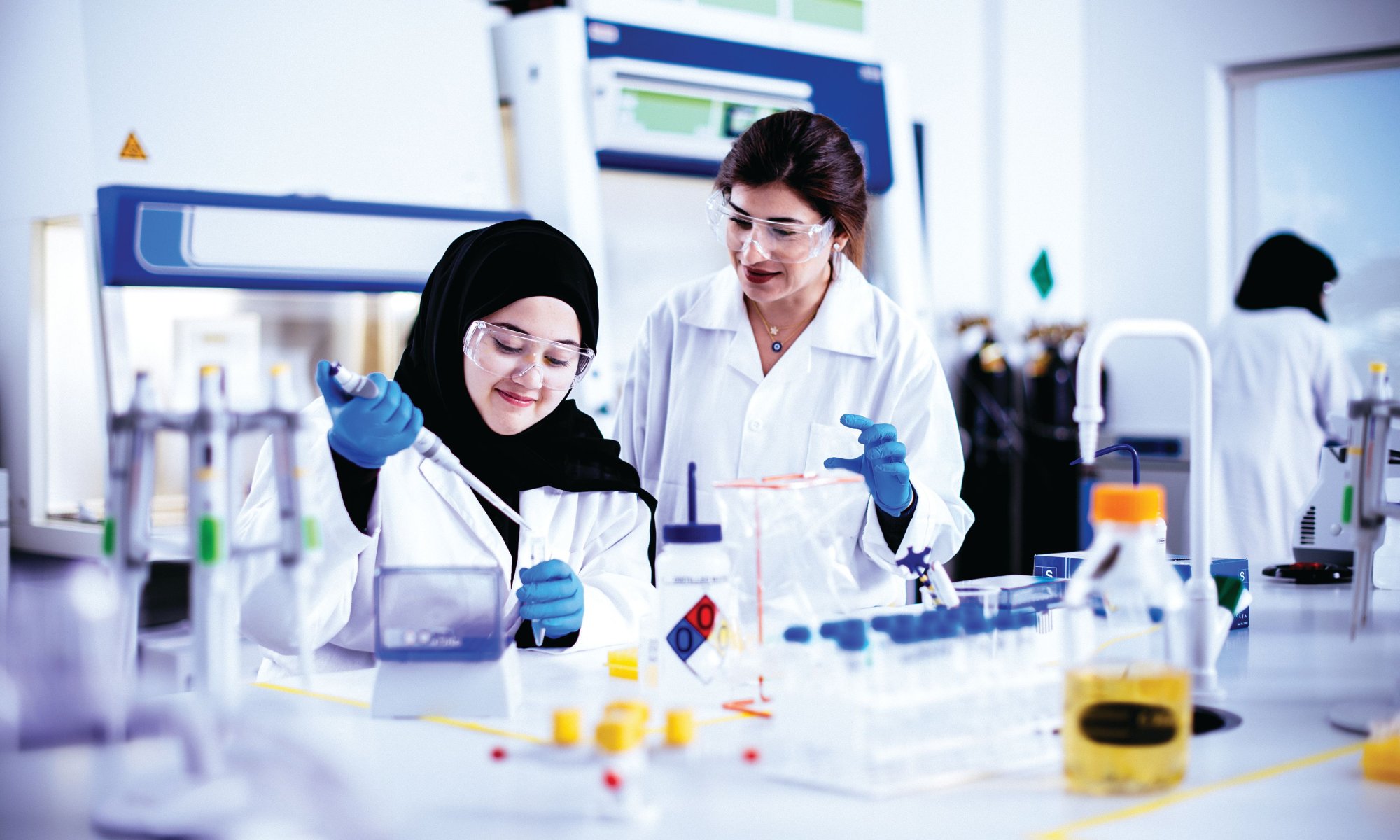
The co-op program helps students apply classroom knowledge to real-world engineering challenges through meaningful, supervised work placements, gain essential workplace skills, and explore potential career paths. Elements of co-operative education programs build quality into program delivery, while offering an enriched understanding of a student’s academic program through practical application.


Through the competitive co-op placement process, students develop the ability to assess their skill level, prepare a polished résumé, and to even go through the interview process successfully. Moreover, through their work experiences, students can develop and refine employability skills, gain an understanding of career opportunities in their areas of study and workplace realities.


The co-op program assists in cultivating professional skills including communication, teamwork, and problem-solving, while offering exposure to the expectations and culture of the professional arena. It facilitates exploration of career interests and industry sectors, while enhancing employability through practical experience and networking.


KU Explorer

The Space Technology and Innovation Lab is propelling Khalifa University to the forefront of space exploration, one CubeSat at a time. 

In the heart of the United Arab Emirates, a team of visionary researchers is pushing the boundaries of space technology and innovation. Khalifa University’s Space Technology and Innovation Lab (KUSTIL), led by former NASA scientist Professor Sean Swei, is spearheading projects that promise to revolutionize space exploration. From conquering the removal of space debris to taking previously earth-based activities, such as pharmaceutical research, into space, KUSTIL is tackling some of the most pressing challenges in space science with ingenuity and determination. 

Abu Dhabi High School Students Explore Particle Physics at CERN Masterclass Hosted by Khalifa University 

Over 300 High School Students Utilize Real CERN Data at Khalifa University 


The mysteries of the subatomic world came alive at Khalifa University as 350 students from more than 40 high schools across Abu Dhabi participated in the CERN International Masterclasses: Hands-on Particle Physics, an immersive, global initiative that gives students a genuine taste of particle physics through analysis of real data from the world’s largest scientific experiments at the CERN-Large Hadron Collider (LHC) in Geneva, Switzerland. 


The event highlighted Khalifa University’s physics curriculum and research activities, as well as the exceptional undergraduate and graduate opportunities, including the academic program, scholarships, collaborative and multidisciplinary projects that involve students in international experiments, and possible summer internships at CERN.  


Students were divided into small teams to work with collision data from the ATLAS experiment using friendly software tools to reconstruct the Z-boson path. Through this analysis, they identified elementary particle signatures, reconstructed invariant masses, and gained direct insight into how physicists probe the fundamental constituents of matter via the recorded LHC proton-proton collisions.  


The CERN International Masterclasses included remarks by Professor Mahmoud Al-Qutayri, Associate Provost, Academic Operations, Professor Ehab Fahmy El-Sadaany, Dean, Engineering and Physical Sciences, and Professor Mauro Pereira, Head of the Department of Physics from Khalifa University. Professor Fernando Quevedo from NYUAD and the University of Cambridge, provided an inspiring overview of particle physics, tracing the evolution of the Standard Model of elementary particles and highlighting the open questions that drive today’s searches for new phenomena at the LHC.  


Dr. Rachik Soualah, Assistant Professor, Physics and the KU-ATLAS team leader, delivered a presentation in which participants traced the journey from theoretical calculations to the experimental realms of high-energy physics. He explained how collision events at colliders are recorded, reconstructed, and analyzed, and what the plans for the future of the ATLAS detector are, from precision measurements and beyond, in addition to the plans of expanding the LHC’s discovery potential. 


Another session of the scientific program included Dr. Issam Qattan, Associate Professor, and Dr. Arjen Van Vliet, Assistant Professor, Physics, who highlighted Khalifa University’s physics curriculum and research activities. Participants joined an international video conference with peers from Egypt, Slovakia, and Brazil and particle physicists from the global CERN Masterclasses based in Geneva. All students from the participating institutions compared their obtained results, discussed data interpretations, and encountered firsthand the collaborative energy powering today’s scientific achievements. 


Professor Mahmoud Al-Qutayri said: “Physics provides the foundational principles that inform every scientific inquiry and technological innovation. From the algorithms that drive data science in business analytics to the biophysical models used in medical research, physics cultivates the analytical mindset and problem-solving skills which are essential across all disciplines. At Khalifa University, we prepare students to excel not only as physicists, but as versatile leaders in any field they choose to pursue.” 


Professor Ehab El Sadaany said: “The participants not only mastered real CERN data but also saw one of the possible ways that can help answer the universe’s deepest questions. The study of Physics is the engine of innovation that drives the technologies we rely upon every day, from medical imaging and renewable energy to telecommunications. It ignites curiosity in young minds and equips them with the tools to transform the discoveries of today into the breakthroughs of tomorrow.” 


Alisha Roy
Science Writer

Khalifa University PhD Student Wins Best Review Paper Award for Influential Work on Sustainable Consumption Behavior


Global Recognition for Paper Decoding Why People Choose or Avoid Living Sustainably


Khalifa University PhD student Shayaan Syed, Engineering Systems and Management program, Management Science and Engineering, has received 2024 Best Paper Award for Review Paper from Resources, Conservation & Recycling Advances, a top Scopus-rated journal in the field of sustainability.


The review paper titled, Decoding sustainable consumption behavior: A systematic review of theories and models and provision of a guidance framework, is co-authored by Shayaan Syed and Khalifa University faculty advisors Dr. Adolf Acquaye, Associate Professor, Management Science and Engineering, Dr. Malik Khalfan, Associate Professor, Management Science and Engineering, as well as Professor Theresa Obuobisa-Darko, Head of Management Studies, Ghana Communication Technology University, Ghana, and Professor Fred Yamoah, Professor of Business and Society, Buckinghamshire New University, UK. 


The review paper consolidates over a decade of research to understand the theoretical foundations and factors influencing sustainable choices, including social norms, intentions, and behaviors. 


The award recognizes the study’s outstanding scholarly merit and significant impact in shaping how researchers and policymakers understand sustainable consumption behavior and the choices people make around buying, using, and disposing products in environmentally friendly ways. A committee of editors and board members selected the paper for the top award, which was presented in June 2025. 


Dr. Adolf Acquaye said: “This award-winning review unpacks the complex and multi-faceted landscape of theories and models used in sustainable consumption research and practice, and offers a unified framework to guide future studies. Shayaan Syed’s achievement reflects the department’s growing reputation for research excellence in sustainability, circular economy, and responsible innovation. The recognition highlights the importance of robust theoretical grounding in addressing global environmental and consumption challenges.” 


Shayaan Syed said: “The research lays the essential groundwork to navigate sustainable consumption behavior for my PhD research, which focuses on decoding the barriers and enablers of sustainable consumption behavior in the UAE using a multistakeholder and machine learning approach. By synthesizing and unifying diverse theoretical models, the paper provides strategic direction necessary for developing data-driven and context-specific interventions and policies that can drive sustainable behavior change at both individual and institutional levels.”


Out of the 17 UN Sustainable Development Goals (SDGs), SDG 12, “Responsible Production and Consumption”, aims to promote resource efficiency, waste reduction, and minimization of environmental impacts across the entire lifecycle of goods and services and so more broadly support a comprehensive vision that balances economic success, social well-being and environmental protection.


Alisha Roy
Science Writer

Khalifa University’s RIC2D and Partners Join A.J. Drexel Nanomaterials Institute to Launch Research Project on MXene for Water and Healthcare

Three-Year Project Aims to Achieve Industrial Production by 2028


Khalifa University of Science and Technology’s Research & Innovation Center for Graphene and 2D Materials (RIC2D) along with partners at the University of Padua (Italy), and Carbon-Ukraine (Ukraine), are working together with the Drexel University’s A.J. Drexel Nanomaterials Institute and the Department of Materials Science & Engineering to develop methodologies for MXene production. The project will focus on two important applications: water desalination and advanced biomedical analysis.


The project titled “Commercial MXene manufacturing toward technology innovations in the UAE and beyond,” (MX-Innovation), is led by Professor Yury Gogotsi, Charles T. and Ruth M. Bach Distinguished Professor of Materials Science & Engineering, and Director of the A.J. Drexel Nanomaterials Institute. MX-Innovation is one of three projects under RIC2D’s inaugural call. The three-year project will aim to achieve industrial production by 2028.


Professor Gogotsi said: “We are thrilled to begin work on this exciting project. Exploring these MXene applications at a greater scale will certainly expand the capabilities of this family of materials and offer vital opportunities to people in need of more drinking water, and cell labeling and tracking for crucial clinical research and medical diagnostics. This study is timely and further emphasizes the importance of the work we are doing with MXenes.”


Professor Hassan Arafat, Senior Director, RIC2D, said: “The partnership between Khalifa University and Drexel University is well-aligned, as both institutions share a strong focus on commercializing the research. Ultimately, RIC2D in the UAE will serve as the hub for deploying these innovative MXene-based technologies—advancing potable water production and cell tracking capabilities. These solutions are critically important for the UAE and the broader region, and the project promises to deliver meaningful global impact.”


The global partnership also brings together Professor Ekaterina Pomerantseva (US), and Khalifa University faculty Professor Lucia Gemma Delogu (Italy and the UAE), Dr. Ahsan Ul Haq Qurashi, Dr. Anna Maria Pappa, Dr. Faisal AlMarzooqi, and Dr. Emad Alhseinat (UAE), with Dr. Laura Fusco (Italy), Dr. Veronika Zahorodna and Dr. Oleksiy Gogotsi (Ukraine), to tackle important issues impacting many communities worldwide.


Water desalination and biomedical applications are among the fields in which MXenes have shown great promise. Developing tailored 2D materials to produce drinking water from high-salinity seawater from the Arabian Gulf or brackish water, and support clinical research through ‘Cytometry by Time-of-Flight’, a disruptive technology already replacing flow cytometry in clinical settings, is the focus of this study.


Production of MXene with the composition and properties required in these applications is a necessity to carry this project through to a successful outcome. For MX-Innovation, the aim is to develop production methodologies for two specific purposes, whilst paving the way to producing MXenes at a commercial scale.


RIC2D was established in 2022 at Khalifa University to foster scientific exploration, development and commercialization of graphene and other novel materials that will have a positive impact on both the UAE and the global civilization.


Khalifa University’s Master’s Program in HSE Engineering Goes Fully Online from Fall 2025

Designed for Engineers Seeking in-Demand Expertise in Health, Safety and Environmental Areas


Khalifa University of Science and Technology today announced its Master of Engineering program in Health, Safety and Environmental Engineering (MEng in HSE Engineering) will be available fully online from Fall 2025, to help practicing engineers and graduates enhance their expertise with such specialties.


The online MEng in HSE Engineering will offer concentrations in Fire Protection, Process Safety, and Radiation Protection, and will equip professionals to assess and manage risk, devise optimal engineering and operational solutions, and ensure compliance with regulatory mandates and industry best practices.


Professor Bayan Sharif, Provost, Khalifa University, said: “The fully online MEng in HSE Engineering reflects our commitment to offering strategically relevant programs that remain critical to the regional and global workplace requirements. As a research and enterprise-oriented higher education institution, our objective is to offer the community initiatives that help build capacities while creating awareness on environment and safety. We believe the graduates that will come through this program will significantly contribute to not only the economic progress but also the overall well-being of the society.”


Graduates of the MEng in Health, Safety, and Environment Engineering will be equipped to design water and wastewater systems that ensure clean, safe water by eliminating harmful bacteria and viruses. As environmental and safety concerns grow worldwide, demand for these specialists is expected to rise. In addition to environmental protection, their expertise in fire engineering is critical for designing systems and protocols that prevent, detect, and control fires in industrial and public settings. Health and Safety Engineers play a key role in protecting lives, infrastructure, and the environment through risk reduction and sustainable planning. They are also trained to assess hazards, report findings, and develop innovative, science-based solutions to complex safety and environmental challenges.


In addition, health and safety engineers will be able to design machinery and equipment which improve human health or prevent diseases, assisting in waste disposal, improving pollution control measures, as well as in developing methods of cleaning up existing hazards.


Learn more about the program here


Clarence Michael
English Editor – Specialist  

Mapping the Emotional Landscape of Speech with Artificial Intelligence

Artificial intelligence models for detecting emotions in speech conversations show promise but may still be getting mixed signals


Listen now to explore the profound implications of AI’s emotional intelligence.


Artificial intelligence is getting better at interpreting how we feel — at least in theory. Emotion recognition from speech, once mere science fiction, is now central to emerging tools in mental health, customer service, and virtual assistants. But a new study from Khalifa University suggests these systems may not be as emotionally fluent as we think. 


Ghada Alhussein, Ioannis Ziogas, Shiza Saleem and Prof. Leontios Hadjileontiadis, all from Khalifa University’s Department of Biomedical Engineering and Biotechnology, published a systematic review and meta-analysis in Artificial Intelligence Review, analyzing 51 studies from 2010 to 2023. They found major discrepancies in how emotions are labelled, the types of data used, and how algorithms are tested. 


The field, known as Speech Emotion Recognition in Conversations (SERC), uses AI to identify emotions in human speech. These tools have potential applications in areas like mental health monitoring, human-computer interaction, and call center analytics. But the research finds that while accuracy has improved — especially with the use of deep learning and self-supervised models — bias and methodological issues remain unresolved. 


One major finding is that datasets often use inconsistent or poorly defined emotional labels. Some studies use categorical models (e.g. happy or angry), while others adopt dimensional models based on valence (positive vs. negative) and arousal (calm vs. excited). This inconsistency leads to confusion for algorithms trying to learn emotional patterns. Even the best AI systems can’t outperform the quality of the labels they’re trained on. 


Then, there’s the issue of realism. Many datasets used to train AI on emotion are based on acted speech: people pretending to be angry, sad, or cheerful. While easier to collect and label, these examples don’t always reflect how emotions actually sound in real conversations. The review found that most studies used scripted or acted datasets, which can produce inflated performance metrics that don’t translate to real-world settings. 


Dr. Nilesh

“Emotion recognition by AI is not just a technical challenge – it’s a question of how we define, experience and communicate feelings. That makes data quality just as important as model architecture.”

Dr. Leontios Hadjileontiadis, Khalifa University.


Despite these challenges, technical improvements are helping. Newer models based on self-supervised learning show promise in extracting emotion-relevant features from speech, even with limited labelled data. Hybrid approaches that combine hand-crafted and deep features also tend to perform better. Still, this review makes it clear that model sophistication alone isn’t enough. Performance depends heavily on dataset quality, the realism of the speech samples, and the clarity of the emotional categories. 


“We see strong potential for AI in emotion recognition,” Prof. Hadjileontiadis said. “But the field needs to address foundational issues — particularly in how emotions are defined, labelled, and measured — if we want these systems to be both accurate and applicable.”

Khalifa University Honors Top 10 Academic Achievers in UAE with Full Scholarships for Undergraduate Studies

Initiative in Line with Acknowledging Talented Students and Developing UAE’s Future Change Makers


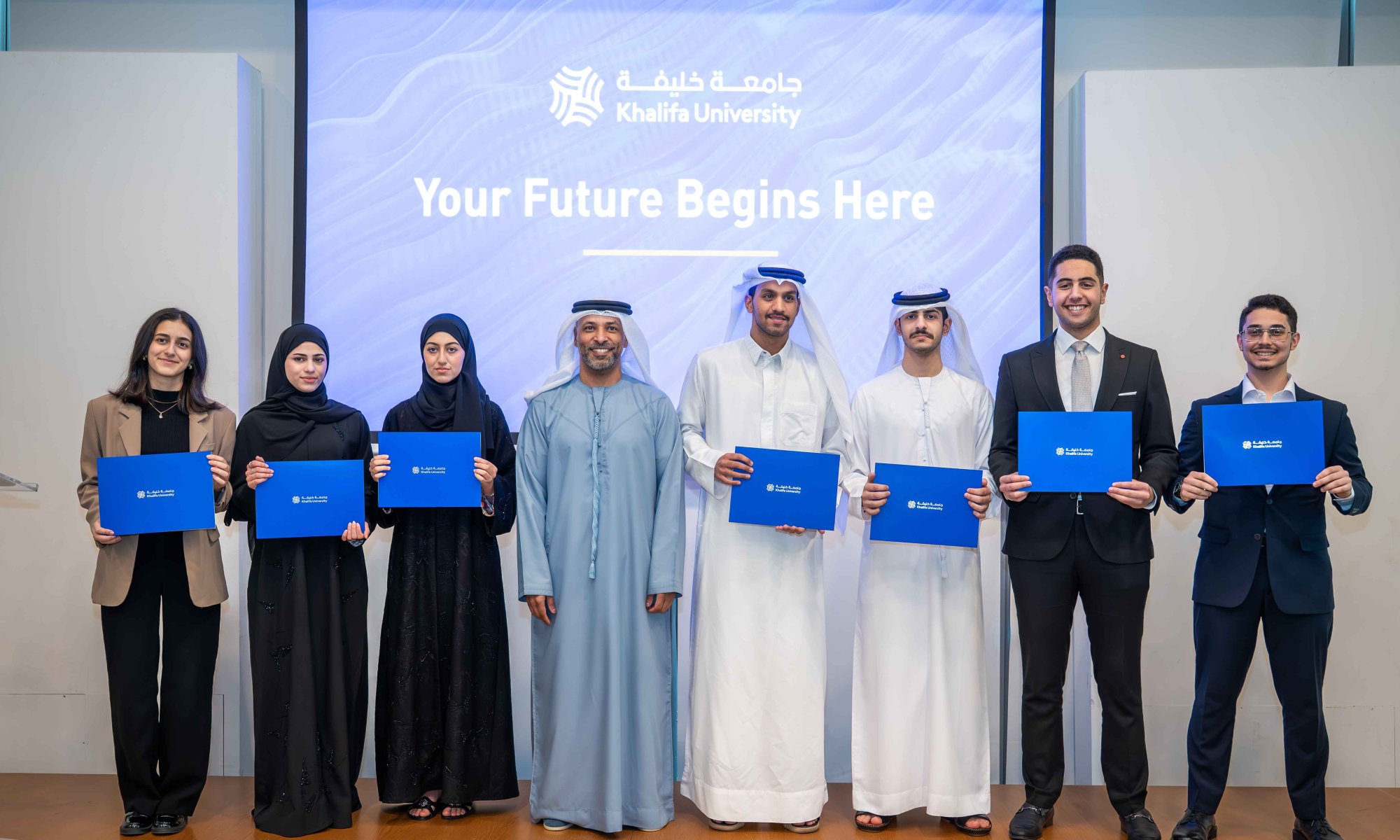
Khalifa University of Science and Technology today honored the UAE’s top 10 academic achievers from grade 12, offering full scholarship for undergraduate studies and providing a platform that will help them transition into the next phase of their academic journey.


During a ceremony organized at the University’s Main Campus, His Excellency Professor Ebrahim Al Hajri, President, Khalifa University, welcomed the students and their families and honored them with recognition for their achievements.


His Excellency Professor Ebrahim Al Hajri said: “We are delighted to honor the top 10 academic achievers in the UAE, demonstrating our status as an institution that nurtures the UAE’s future change makers and acknowledging talented students. The UAE’s top-ranked Khalifa University believes in effectively attracting the top talents and by honoring these students we provide them with an opportunity to become full-fledged future leaders.”


The students were later taken on a tour of campus facilities such as the Khalifa University Center for Autonomous Robotics Systems (KU-CARS), the Advanced Research and Innovation Center that focuses on aerospace, the Khalifa University Space Technology and Innovation Lab (KUSTIL), the Advanced Robotics Lab for Marine Studies and Research – equipped with wave and stream generation facilities.


Clarence Michael 
English Editor – Specialist 

Khalifa University and National Center of Meteorology Sign MoU to Strengthen Scientific Collaboration

Joint Research, Knowledge Exchange, and Development of Future Initiatives Aim to Serve National Priorities


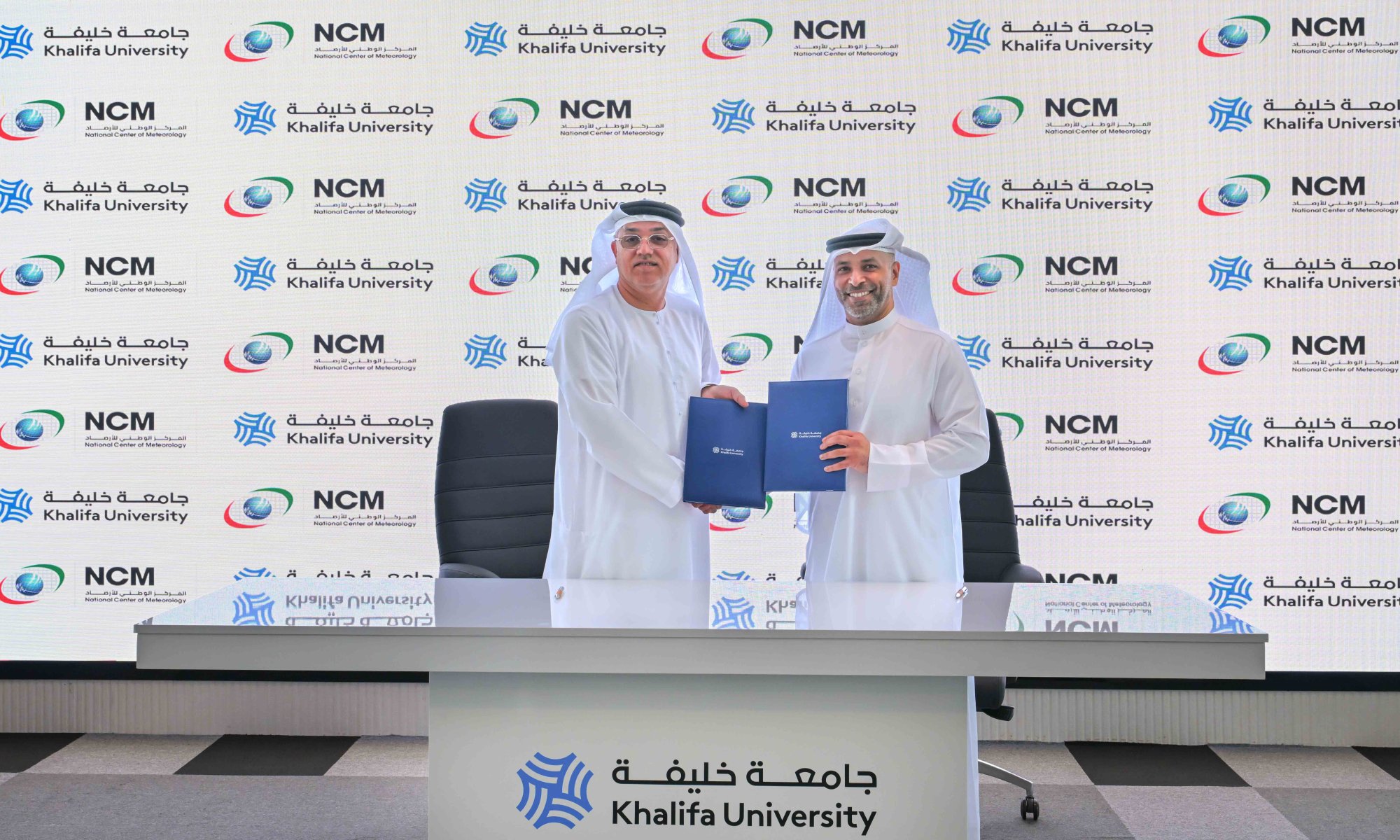
Khalifa University of Science and Technology announced it has signed a Memorandum of Understanding (MoU) with the National Center of Meteorology (NCM) to cooperate across a range of scientific, academic, and technical fields.


The MoU was signed by His Excellency Dr. Abdullah Ahmed Al Mandous, Director-General,  National Center of Meteorology and Permanent Representative of UAE with World Meteorological Organization (WMO), and His Excellency Professor Ebrahim Al Hajri, President, Khalifa University. The MoU facilitates collaboration in joint research, knowledge exchange, and the development of future initiatives aligned with mutual interests and national priorities.


His Excellency Professor Ebrahim Al Hajri said: “Khalifa University is proud to continue playing a key role in national initiatives that combine academic excellence with real-world impact. Through closer cooperation with the National Center of Meteorology, we aim to deepen our contributions in areas such as climate science, polar research, and atmospheric technologies. This collaboration represents a step forward in aligning the scientific efforts of both institutions, reinforcing the UAE’s ambition to lead in environmental research, innovation, and global collaboration.”


His Excellency Dr. Abdullah Ahmed Al Mandous, Director General, NCM, said: “This partnership with Khalifa University reflects our shared commitment to advancing scientific excellence and developing solutions to address climate and environmental challenges. By combining our operational expertise with the University’s academic capabilities, we are paving the way for impactful research, technological innovation, and the development of national talent to support the UAE’s long-term sustainability goals.”


Through this MoU, Khalifa University and the NCM aim to explore opportunities for conducting joint scientific studies, exchanging expertise, providing consulting services, hosting academic and technical events, and implementing joint training and development programs.


Khalifa University and NCM already collaborate in key research areas including polar science, cloud seeding, and drone technology. Researchers from Khalifa University have actively participated in NCM-led workshops, and both entities are currently co-developing proposals that apply drone-based systems to environmental and meteorological research.


Alisha Roy
Science Writer

Khalifa University and Knowledge E to Organise AI Futures Summit in Abu Dhabi

Abstracts Submission Deadline is 27 July 


Khalifa University of Science and Technology and Knowledge E, today announced a partnership for the AI Futures Summit: Empowering Higher Education, taking place on 24–25 September 2025 at Khalifa University’s state-of-the-art Main Campus in Abu Dhabi. This summit is designed as a response to the urgent need to equip higher education professionals with the tools and insights necessary to thrive in an increasingly AI-driven academic landscape.


As artificial intelligence continues to reshape research methodologies and knowledge dissemination, the AI Futures Summit: Empowering Higher Education will delve into current trends, challenges, and opportunities presented by AI. The conference is intended for higher education leadership, researchers, faculty, librarians, graduate students, and academic professionals seeking to navigate and collaborate with AI in academia.


Professor Bayan Sharif, Provost, Khalifa University said: “As a leading institution driving innovation in artificial intelligence, through education and research, Khalifa University is proud  to collaborate with Knowledge E for the AI Futures Summit: Empowering Higher Education. This partnership demonstrates our shared commitment to advancing the responsible development of AI technologies, empowering the next generation of scientists in the UAE and the region, contributing to the UAE’s status as global leader in digital transformation.” 


Key themes and sessions include ‘AI in Teaching and Learning’ strategies for integrating AI technologies into curriculum design and assessment to enhance educational experiences, ‘Ethical and Sustainable AI’ addressing the ethical and societal implications of AI in education, including privacy, security, and environmental considerations, ‘Institutional AI Use Cases’ showcasing practical applications of AI in research repositories, data management, learning management systems, and institutional operations, and ‘Industry Partnerships’ for fostering collaborations between universities and corporations to solidify student experiences and drive innovation.


The organising committee invites everyone to submit their abstracts related to the summit’s themes. Preference will be given to case studies demonstrating innovative AI collaborations in higher education institutions. The submission deadline is 27 July 2025. Accepted speakers will receive a full waiver of the conference registration fees.


Organisations interested in sponsoring the AI Futures Summit: Empowering Higher Education can choose from various packages, including digital sponsorships, exhibitor tables, social events, and speaking opportunities. 


Further information about the AI Futures Summit can be found on the Summit, Knowledge E and Khalifa University’s social media channels as well as the conference website: https://aifuturessummit.com, while requests and questions can be directed to events@knowledgee.com


Clarence Michael
English Editor – Specialist 

Khalifa University Showcases Sustainable and Smart Technologies at Al Ain Emirates Agriculture Conference and Exhibition 2025 

Innovations Cover Vertical Farming, Smart Greenhouse, Plant-Based Biomedical Solutions, and Microalgae Farming with AI 


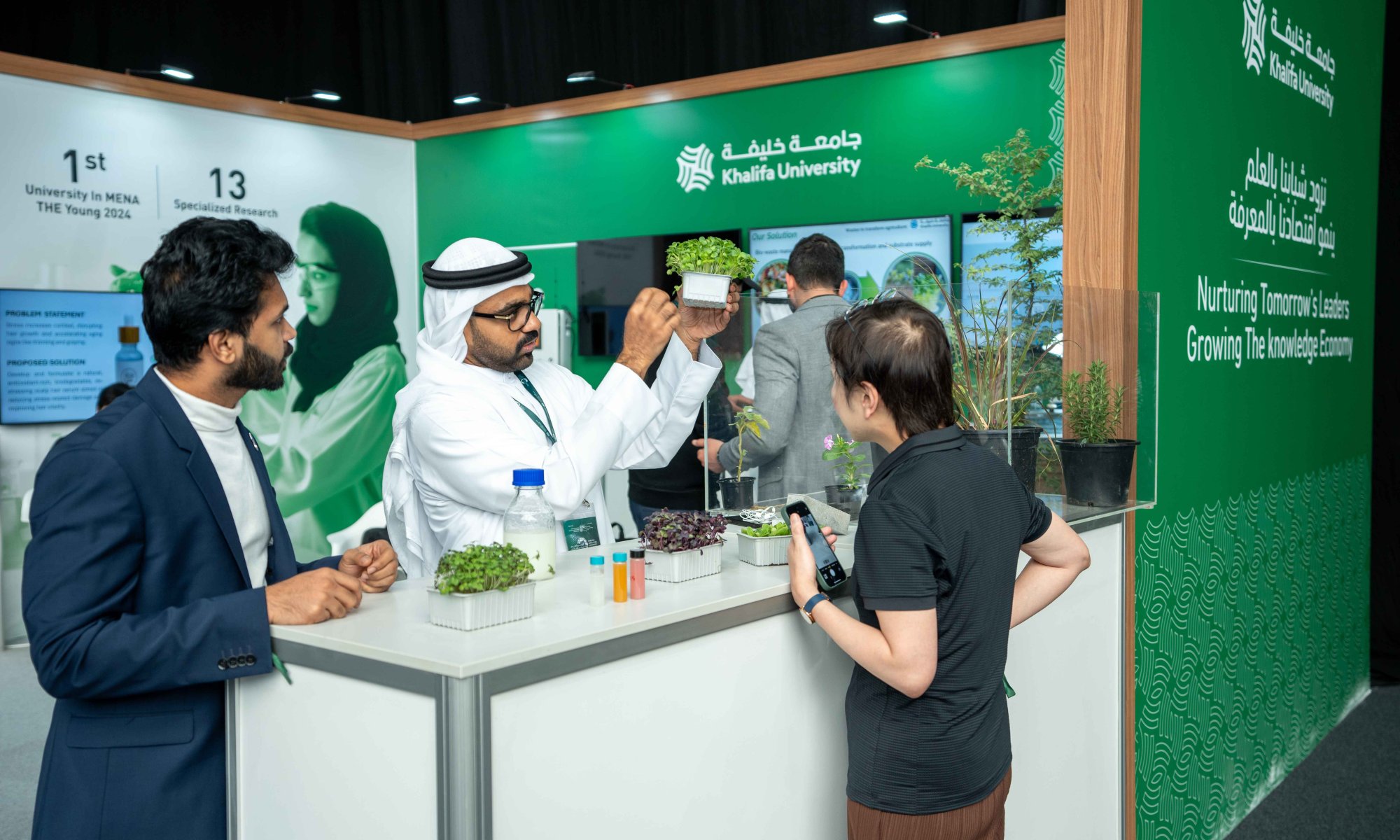
Khalifa University showcased several sustainable and smart agriculture technologies, vertical farming, and plant-based innovations in biomedical field at the Emirates Agriculture Conference and Exhibition 2025, organized under the ‘Plant the Emirates’ National Program. 


The Emirates Agriculture Conference and Exhibition was   held from 28 – 31 May at ADNEC Centre Al Ain, gathering farmers, investors, experts, government agencies, and scientific research institutions, contributing to the exchange of knowledge and expertise in sustainable agriculture. The Khalifa University pavilion, located in the ‘Schools and Universities Zone’, featured the latest innovative solutions customized and designed for the farm sector growth. 


Professor Bayan Sharif, Provost, Khalifa University, said: “Our participation in the first Emirates Agriculture Conference and Exhibition illustrates our commitment to creating sustainable agricultural solutions in line with the UAE’s strategic vision to support the local agricultural sector and promote sustainable national food security. The vertical farming techniques from our Food Security and Technology Center (FSTC) and the Khalifa University AgX research facility are some of the advanced technologies we continue to develop to assist in smart and sustainable agriculture. Through these advanced solutions we aim to seek wider industry partnerships that will help contribute to the UAE’s national objectives.” 


Some of the projects on display at the Khalifa University stand focused on smart greenhouses with light-heat-water management, agricultural co-products up-cycling for achieving circular bioeconomy, and smart microalgae farming with the use of AI and IoT. 


The biomedical initiatives are strategically aligned to promote healthy longevity through nature-derived interventions. These include plasma-enhanced plant extracts and microalgae for accelerated wound healing, nanoparticle delivery of plant-derived phenolic compounds for targeted anticancer and anti-Alzheimer therapies, plant-based nutraceutical formulations for anti-aging and Vitamin D supplementation, and the development of seaweed-enriched dietary regimens to support metabolic health and long-term wellness. 


The Khalifa University AgX, part of FSTC, aims to accelerate innovation cycles in controlled environment agriculture (CEA), commercialize new agricultural products suited for extreme environments, and address challenges in seed availability and greenhouse integration. It also plans to develop high-value crops for commercial viability, while testing new agricultural technology innovations for food security applications. 


Clarence Michael
English Editor – Specialist