
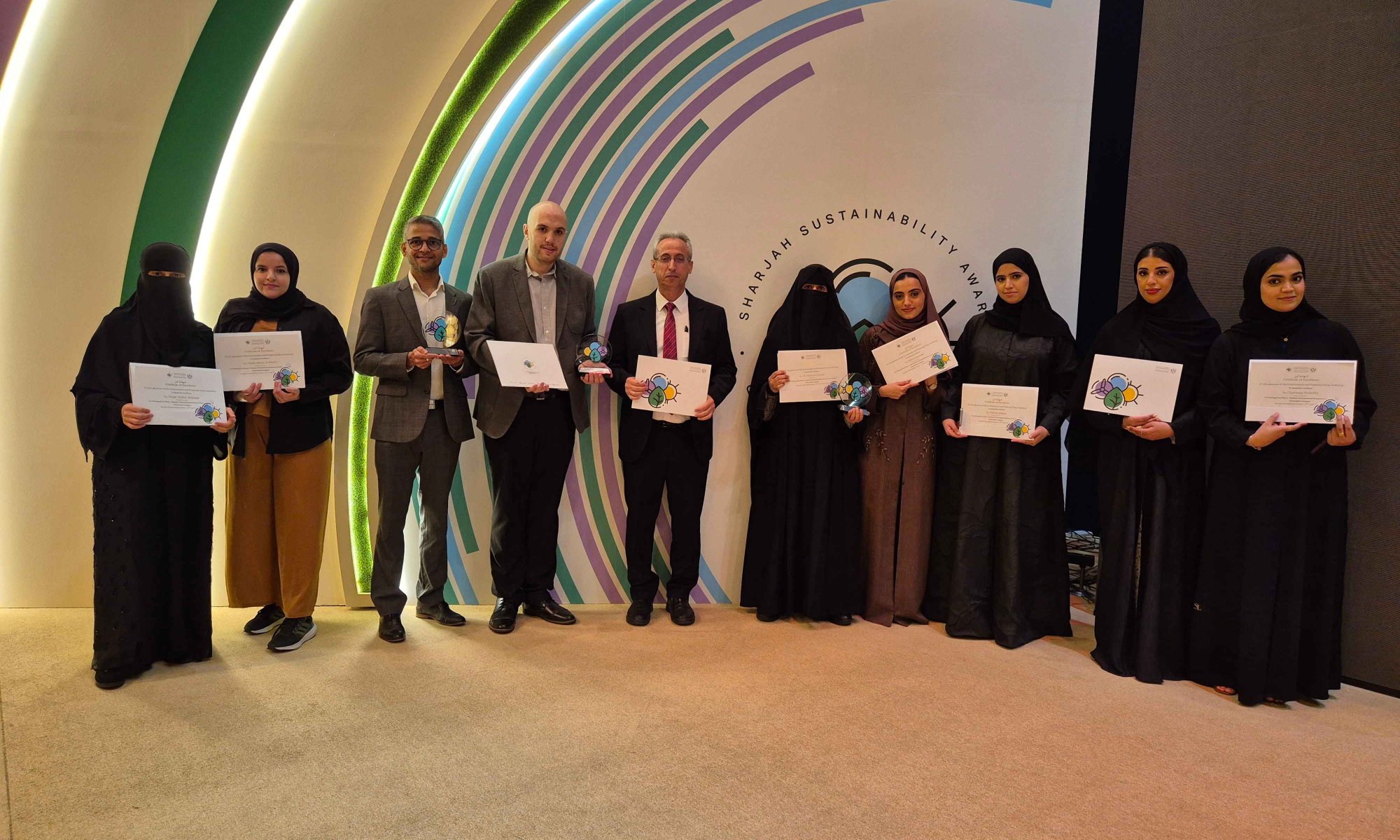
Khalifa University Teams Win Top Spots at 13th Sharjah Sustainability Award with Groundbreaking Green Solutions


Faculty and Students Drive Green Innovation with Award-Winning Projects in Recycling, Clean Energy, and Marine Restoration


A total of three research teams from Khalifa University have won top prizes across three research categories at the 13th edition of the Sharjah Sustainability Award for the 2024–2025 academic year. The winning projects and participants from various categories were honored during the Environment and Protected Areas Authority’s (EPAA) final awards ceremony in Sharjah.


Held under the patronage of the Government of Sharjah’s EPAA, the national competition recognizes innovative projects that advance environmental protection and sustainable development in the UAE. This edition included 235 projects submitted from schools, universities, government and private entities, alongside 248 university students and 115 academic members.


Nineteen jury members evaluated the submissions based on rigorous scientific criteria and the Khalifa University teams were recognized with top prizes after progressing through several competitive rounds, including public showcases and jury assessments of their prototypes. Their award-winning projects addressed critical environmental issues, ranging from sustainable resource recovery to the restoration of marine ecosystems.


A team led by Dr. Nahla Al Amoodi, from the Department of Chemical and Petroleum Engineering, took first place in the Environmental Resources Conservation and Protection category for the project ‘Utilization of Steel Slag for Coral Reef Restoration.’ Undergraduate researchers Fatima Alketbi, Sumayya Alshehhi, Zahra Alameri, and Bakheeta Alqubaisi presented an innovative solution to restore coral reefs using steel slag, which is an industrial byproduct promoting marine biodiversity and circular resource use.


Associate Professor Dr. Dinesh Shetty from the Department of Chemistry led a team that won first place in the Human & Environmental Health Protection category for the project ‘Materials for sustainable recovery of gold from e-waste and their reuse.’ Along with PhD students Najat Aldaqqa and Nada ElMerhi, the team developed new materials to recover gold from electronic waste, offering a more sustainable approach to managing one of the fastest-growing waste streams worldwide.


Khalifa University Graduate Student achievements were recognized in the Research in Sustainability category, where PhD student Mohammed A. Abujayyab, claimed second place for the project on ‘Shaping Tomorrow’s Lithium Industry: Sustainable Extraction Solutions with Keratin.’ Led by Dr. Fawzi Banat, Center Director, Food Security & Technology Center, the project proposes a greener pathway for meeting the rising global demand for lithium, critical for batteries and renewable energy storage.


Dr. David Sheehan, Chair, Chemistry, Khalifa University, said: “It is rewarding to see fundamental chemistry applied in such practical, forward-looking ways, whether through recycling critical materials or supporting more sustainable industries. This kind of work represents the best of what research and education can achieve together. Moreover, such awards are a testament to the creativity and commitment of our students and faculty, especially in tackling urgent environmental challenges.”


Dr. Ali Elkamel, Chair, Chemical and Petroleum Engineering, Khalifa University, said: “The top prizes in different research domains reflect Khalifa University’s diverse research capabilities and its growing impact on environmental innovation in the UAE. It especially highlights how our faculty and students are actively contributing to national sustainability goals through innovative, science-based solutions.”


Alisha Roy
Science Writer 
Conjugated Polymers Take Center Stage in the Future of Electronics and Photonics  

A new review from Khalifa University researchers highlights how organic polymers can be used in flexible nanoelectronic and photonic devices  


Discover how organic polymers are shaping tomorrow’s tech, listen now!


Conjugated polymers are flexible, sustainable, and high-performance alternatives to silicon-based semiconductors. A new review by researchers from Khalifa University outlines how molecular engineering is turning these organic materials into powerful building blocks for applications ranging from solar energy to wearable electronics.  


Dr. Ammar Nayfeh, Amaan Chougle, Dr. Ayman Rezk, and Syed Usama Bin Afzal, all from Khalifa University Department of Electrical Engineering, collaborated with Dr. Abdul Khayum Mohammed and Dr. Dinesh Shetty from  Khalifa University’s Department of Chemistry to examine the expanding role of conjugated polymers in developing next-generation electronic and photonic devices. They published their review in Nano-Micro Letters.  


“Conjugated polymers bring a level of adaptability and sustainability that traditional semiconductors can’t easily match,” Dr. Nayfeh said.  “These materials are perfect for flexible devices transistors and memory needed for wearables.  Also they can be used for flexible solar cells. Their optical and electrical properties are well suited for this role.  One challenge is the fabrication of devices that our group is currently working on in this project.” 


Dr Shetty added: “At the heart of these materials is their ϖ-conjugated system which allows electrons to move more freely along polymer chains. This mobility, combined with the ability to tweak their chemical structure, gives scientists a toolkit to design polymers with custom electronic, optical and mechanical properties.” 


The team’s review categorizes conjugated polymers by their molecular architecture — one-dimensional linear chains and two-dimensional sheets — and explains how structure influences performance. 2D polymers provide superior charge mobility while 1D polymers are ideal for flexible applications.  


Dr. Nilesh

“Conjugated polymers offer a powerful combination of customizability, performance, and sustainability that positions them at the forefront of next-generation electronic and photonic technologies.”

Dr. Ammar Nayfeh/span>, Khalifa University.


Molecular design innovations are driving performance improvements. Research has developed polymers that achieve power conversion efficiencies over 20 percent in all-polymer solar cells while also optimizing their performance for long-term stability, which is key to commercial viability.  


Beyond photovoltaics, conjugated polymers are making strides in organic transistors, nonvolatile memory applications and bioelectronics. While challenges remain, such as environmental degradation and integration with existing manufacturing, the trajectory is clear: conjugated polymers are becoming indispensable to the future of nanoelectronics and photonics.  


This review exercise is part of team’s exploration of finding the suitable polymer system with relevant electronic and photonic properties.  


Jade Sterling
Science Writer

Dual-Purpose Solar Tech Delivers Clean Water and Power in One Device 

Khalifa University researchers have developed a compact system that efficiently produces both electricity and clean water using solar energy, offering a sustainable solution for water-scarce, off-grid regions 


Discover the latest in solar innovation — listen now!

In an effort to address the global twin crises of energy and water scarcity, researchers from Khalifa University have engineered a solar-powered device that does both: it generates electricity and produces freshwater by combining concentrated photovoltaics and membrane distillation into a single, compact module. Unlike traditional desalination systems that rely heavily on fossil fuels or separate energy sources, this hybrid design uses the waste heat from solar cells to drive a thermal desalination process.  


The team was led by Dr. Mohamed Ali, with Dr. Kabbir Ali and Dr. Mostafa Ismael, all from Khalifa University’s Mechanical and Nuclear Engineering Department. Their results were published in Energy.  


“Instead of letting heat dissipate, we direct it into water purification,” Dr. Ali said. “Clean water access is crucial for remote societies, affecting health and wellbeing, and requiring essential water infrastructure enhancements. Integrating sustainable energy sources with desalination systems provides an eco-friendly approach, addressing energy, water, and environmental challenges.” 


Dr. Nilesh

“By harnessing both electricity and thermal energy from the sun in a single unit, our hybrid system represents a step towards affordable, dual-purpose infrastructure for water-stressed regions.”

Dr. Mohamed Ibrahim Ali, Khalifa University


The team used computational fluid dynamics to simulate how the system behaves under varying solar intensities, water flow rates, and seasonal conditions before it was rigorously validated against lab data. Performance varied by season and time of day, with peak water production occurring during summer afternoons and electricity generation peaking around noon.  

Most importantly, the system is energy efficient, consuming significantly less energy than traditional desalination systems, only requiring energy for pumping water. There is significant potential for this system, but before commercialization, there are some hurdles to overcome. Long-term durability under harsh conditions and large-scale deployment remain areas for future research, but the team’s achievements represent a significant step towards decentralized, sustainable solutions for remote and arid regions.  

Jade Sterling
Science Writer 

UAE Space Agency and Khalifa University Commission First UAE-Developed Sustainable Propulsion System for 6U CubeSat

Landmark Achievement in Sustainable Space Technology Marks a Leap Forward in Local Capacity Building with Global Relevance


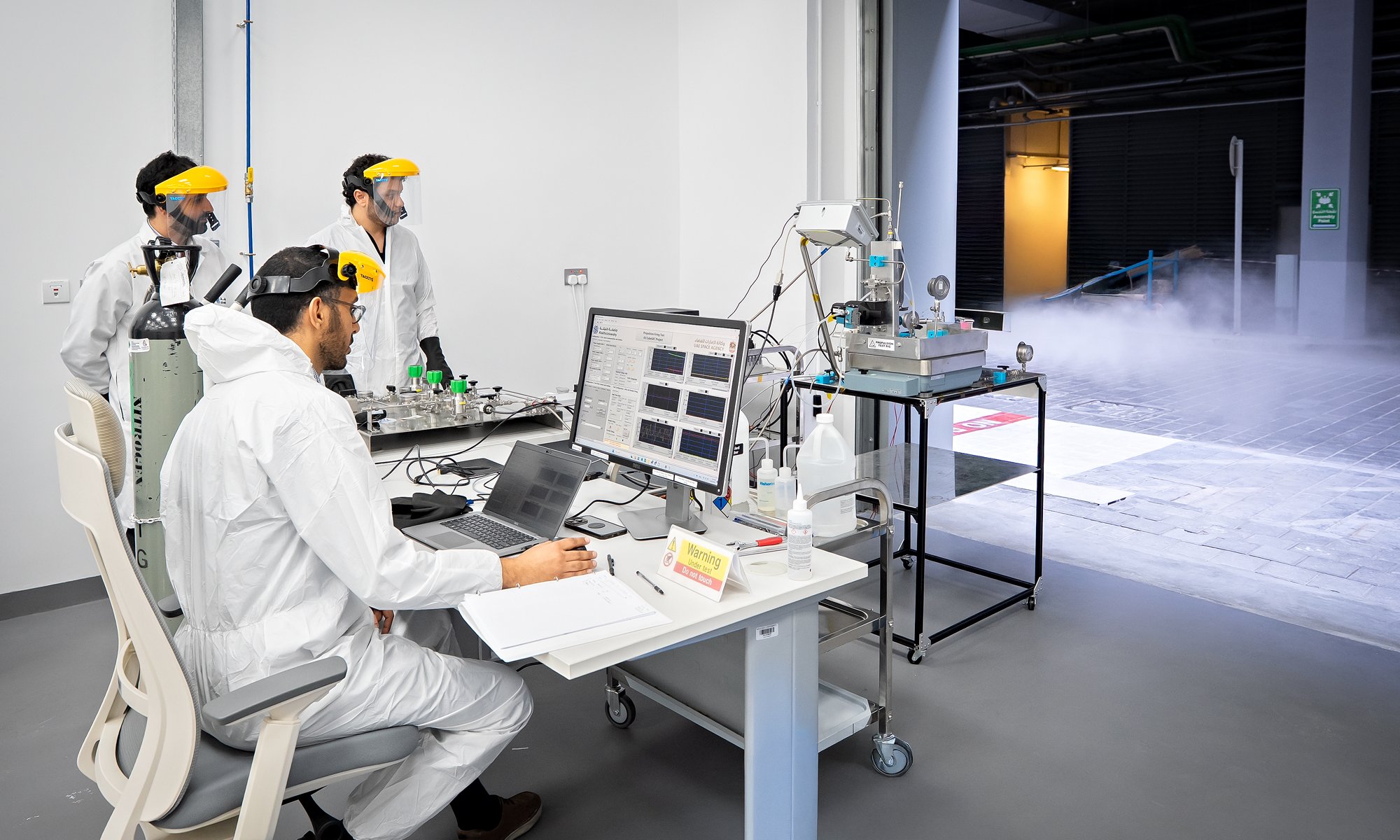
Khalifa University of Science and Technology and the UAE Space Agency today announced a major milestone in space innovation with the commissioning of the region’s first environmentally friendly, in-house-developed micro propulsion system for a 6U CubeSat. The system is designed, built, and tested entirely in the UAE, marking a critical step towards building national capability to engineer and deploy satellite propulsion systems.


Supported by the UAE Space Agency (UAESA) through a formal agreement with Khalifa University, the project is part of the 6U CubeSat initiative to demonstrate in-orbit technology for low Earth orbit (LEO) missions. Six University researchers and key collaborators from UAESA are involved, with the system now entering the final commissioning phase at Khalifa University’s Small Satellite Lab.


Developed at Khalifa University Space Technology and Innovation Lab (KUSTIL), the propulsion system marks a sustainable alternative to traditional chemical systems, by utilizing High Test Peroxide (HTP), a non-toxic propellant that breaks down into water vapor and oxygen. Compact yet high performing, the system’s 2U propulsion module features five thrusters capable of five degrees of freedom (DOF) control, an uncommon achievement for satellites in the CubeSat class.


His Excellency Salem Butti Al Qubaisi, Director-General of UAE Space Agency, said: “Today, we mark a historic milestone in the UAE’s space innovation journey with the launch of our environmentally friendly, locally developed micro propulsion system for the 6U CubeSat. This strategic achievement not only embodies our commitment to sustainable space technologies but stands as living proof of our national talent capabilities in engineering”.


Al Qubaisi added: “This distinguished innovation has laid a new cornerstone in our quest to cement the UAE’s position as a pioneer in space exploration at both regional and global levels. It is a source of immense pride to see our investments in the space sector transform into tangible reality. We remain steadfast in our determination to achieve further breakthroughs that will strengthen the UAE’s footprint in the global space economy and next-generation technology.”


His Excellency Professor Ebrahim Al Hajri, President, Khalifa University, said: “As part of the collaboration with the UAE Space Agency, the CubeSat propulsion project aligns with the UAE’s vision to strengthen local and regional space capabilities. Such advanced systems represent a significant leap in the country’s ability to independently validate complex and sustainable space technologies. Reaching the final commissioning phase highlights Khalifa University’s deep commitment to nurturing national talent, enhancing local infrastructure, and advancing innovation that not only supports a self-reliant space ecosystem but contributes meaningfully to global scientific progress.”


The propulsion module will be integrated into a fully functional 6U CubeSat system, expected to launch by the end of 2026. The primary mission is to demonstrate in-orbit propulsion capabilities for attitude control and orbital maneuvers. A successful demonstration aims to pave the way for the UAE’s first CubeSat-based satellite constellation, establishing a foundation for scalable, sustainable access to space, which would also be the first of its kind in the Gulf Cooperation Council (GCC) region.


Beyond the module itself, the team has also built a dedicated milli-Newton thrust testing facility, now operational in Abu Dhabi. This facility will be available for future use by external researchers and industry partners, contributing to the UAE’s broader capabilities in space propulsion R&D. Khalifa University will lead the Assembly-Integration-Testing (AIT) phase of the CubeSat with national entities, including UAESA, as well as international partners to secure a launch window.


Alisha Roy
Science Writer

Khalifa University IEEE EMBS Student Chapter Wins 2025 Best Regional Student Chapter Award 

Award to be Officially Presented at EMBC 2025 Conference in Denmark   


The IEEE Engineering in Medicine and Biology Society (EMBS) EMBS Student Chapter at Khalifa University has been selected as the winner of the 2025 Best Regional Student Chapter Award, following a year of impactful contributions and engagement. This is the first time the Khalifa University Chapter has won the award. 


The award citation commended the student chapter for its technical excellence, and leadership in advancing biomedical engineering education, outreach, and global visibility. The award will be officially presented during the opening ceremony of the EMBC 2025 Conference, in Copenhagen, Denmark. 


Dr. Maria De Fatima Fonseca Domingues, Assistant Professor, Biomedical Engineering and Biotechnology, is the Chancellor of the IEEE EMBS Khalifa University Student Chapter, while Rateb Majd Katmah is the President. During the year, the Student Chapter organized and supported a diverse range of events that helped to enrich the technical, professional, and community engagement of the members and students. It hosted hands-on technical workshops such as the ‘Mastering Ubuntu and Python’ series and led campaigns including the Breast Cancer Awareness Month, engaging over 500 participants.


The chapter played a pivotal role in organizing and hosting the 11th International Conference on Software Development and Technologies for Enhancing Accessibility and Fighting Info-exclusion (DSAI 2024) and the first College of Medicine and Health Sciences (CMHS) Undergraduate Research Conference 2025. It also hosted a series of distinguished seminars and panel discussions, including ‘Empowering Young Minds’ by Dr. Fatma Al Hashimi on stem cell science, ‘Extending the Reach of Bioelectronic Implants’ by Prof. Christopher Proctor, ‘Future Biomaterials’ by Prof. Jonathan Knowles from University College London, and a panel discussion on ‘Women in Emerging Technology’ featuring prominent speakers. 


Dr. Domingues, said: “Organizing and supporting various activities not only elevated the EMBS Student Chapter’s visibility locally and globally, but also contributed to growing the chapter’s membership to 66 within its first year, positioning it as a leading EMBS student chapter in the region. This international achievement is commendable, and we acknowledge the continuous dedication and hard work of both the current and former EMBS officers across successive semesters.” 


Clarence Michael 
English Editor – Specialist 

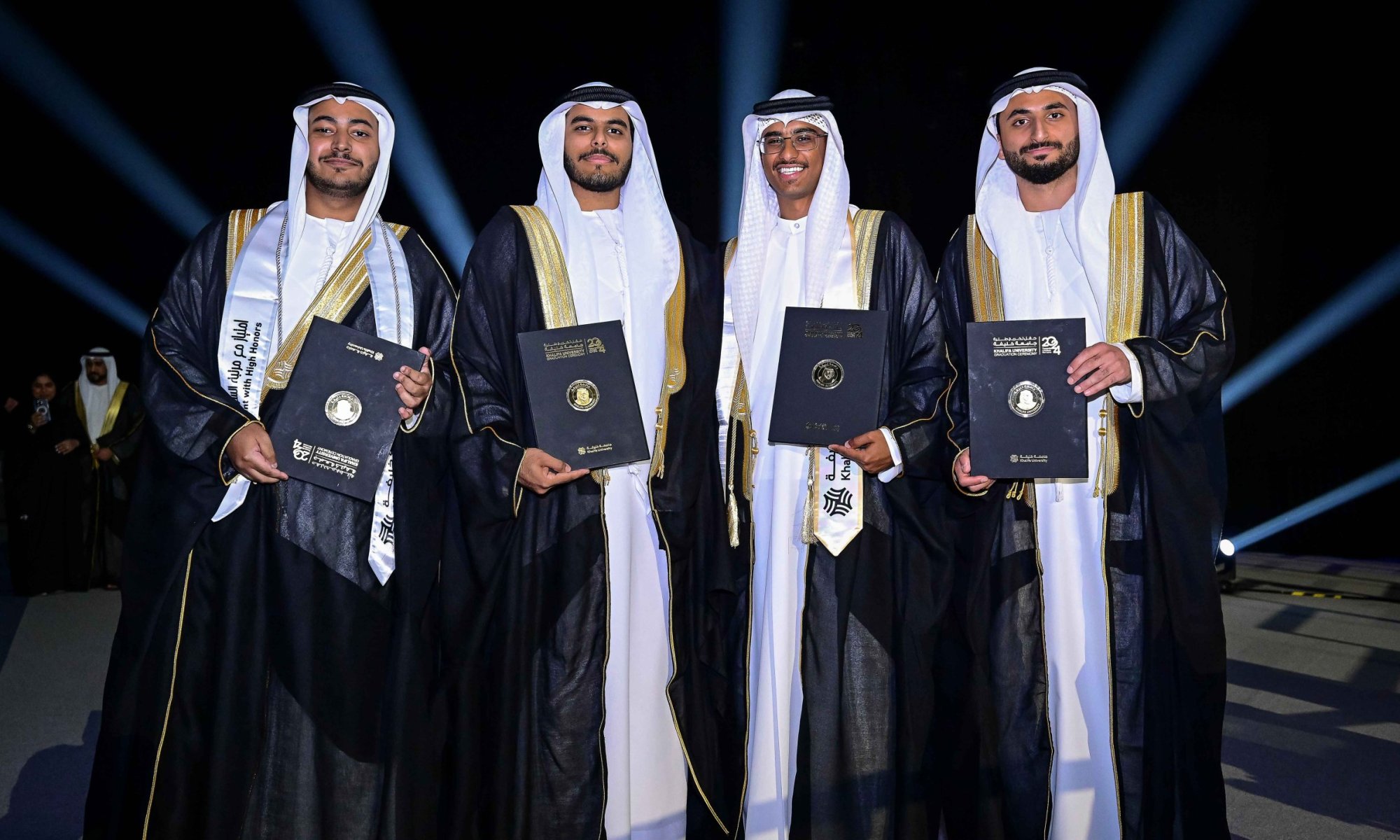
Under the patronage of the UAE President, Khaled bin Mohamed bin Zayed attends Khalifa University 2025 graduation ceremony  

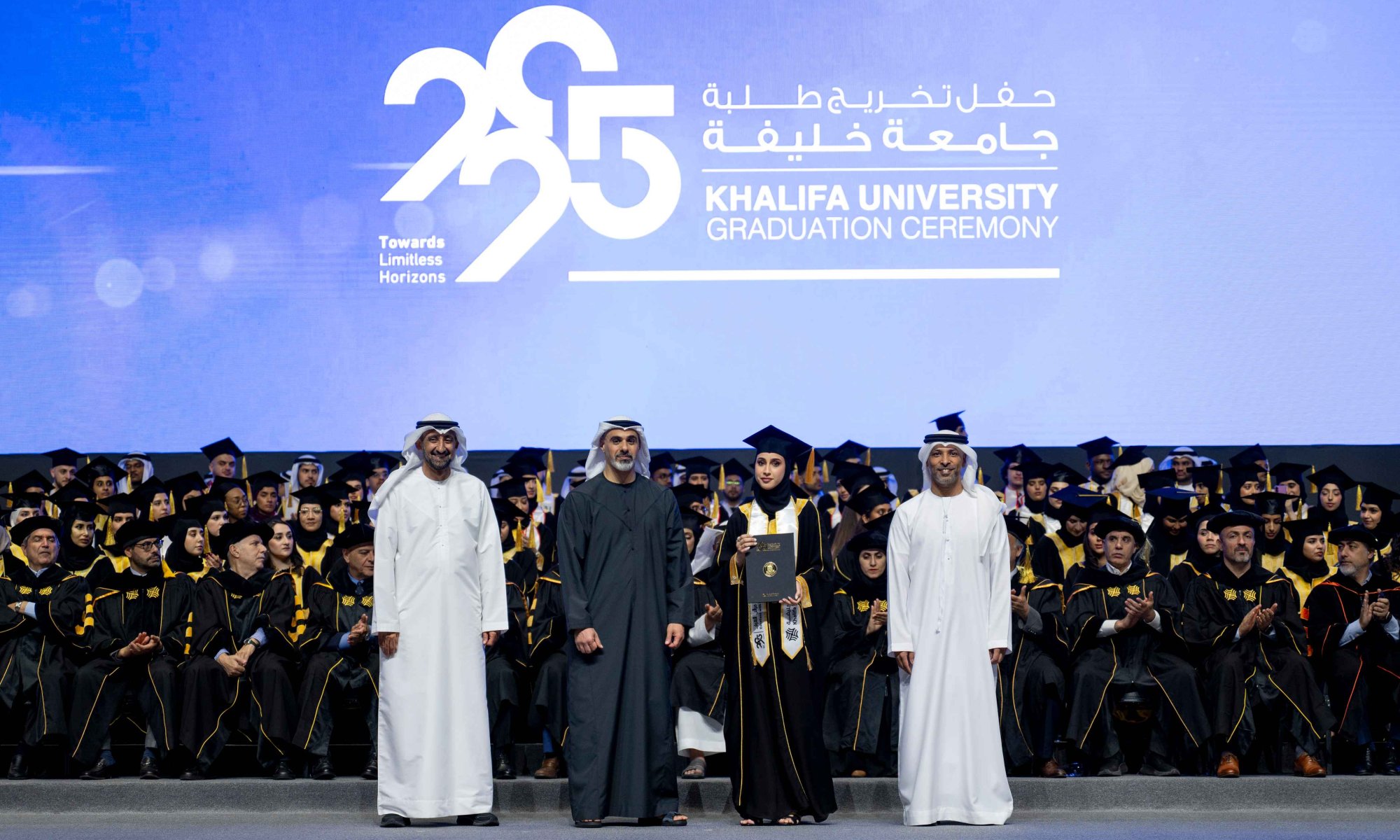
Under the patronage of His Highness Sheikh Mohamed bin Zayed Al Nahyan, President of the UAE, His Highness Sheikh Khaled bin Mohamed bin Zayed Al Nahyan, Crown Prince of Abu Dhabi and Chairman of the Abu Dhabi Executive Council, has attended the 2025 graduation ceremony, held at ADNEC Centre Abu Dhabi.


In all, 163 students received their PhD degrees, while 193 received their master’s, and a total of 725 students received their bachelor’s degrees, making the overall numbers 1,112, including 31 PhDs in medicine graduates.


His Highness Sheikh Khaled bin Mohamed bin Zayed Al Nahyan congratulated the graduates and their families on passing this educational stage, wishing them continued success in their professional and scientific careers, and in the service of their homelands and societies in various fields.


His Highness reaffirmed that the graduation of a new cohort of students from Khalifa University, specialised in engineering, science, and medicine, reflects the UAE’s commitment to preparing a generation of scientifically and academically qualified talent capable of meeting the needs of crucial sectors in advanced engineering, technology, medicine, and health sciences.


His Highness commended the role of Khalifa University as a leading academic and research institution, in developing distinguished specialists and researchers capable of creating advanced solutions in the fields of artificial intelligence, medical sciences, and future technologies.


In his address, His Excellency Professor Ebrahim Al Hajri, President of Khalifa University, expressed his gratitude to His Highness Sheikh Mohamed bin Zayed Al Nahyan, President of the UAE, for his visionary leadership and support of Khalifa University and the UAE’s academic and research institutions.


His Excellency also extended his sincere thanks and appreciation to His Highness Sheikh Khaled bin Mohamed bin Zayed Al Nahyan for attending the ceremony and for His Highness’ continued support of national talent and competencies across various scientific and research fields.


Reflecting on the UAE Year of Community and its impact, His Excellency Professor Ebrahim Al Hajri highlighted the academic achievement of Khalifa University students and reaffirmed the institution’s role in preparing future-ready talent to lead and excel in various industries, including the private sector.


His Excellency emphasised that the students represent the innovation and excellence that support the UAE’s long-term vision, thanking the faculty members for their instrumental role in shaping skills and competencies of the graduates of this cohort.


During 2025, Khalifa University has achieved several milestones. The institution was ranked first in the UAE and 37th in Asia in the Times Higher Education (THE) Asia University Rankings 2025 and ranked top in the UAE in 10 subjects in the QS World University Rankings by Subject 2025. The Petroleum Engineering programme has risen to the 7th place maintaining its position in the global top 10 for three consecutive years.


Khalifa University marked a milestone in its sustainable journey with the launch of Sustainability Strategy – A Pathway to Net Zero 2050, the university’s first greenhouse gas (GHG) emissions report. Further enhancing Abu Dhabi’s reputation as a global hub for robotics and AI innovation, the University launched a bachelor’s programme in Robotics and AI.


In academics, Khalifa University also developed a dual PhD programme in collaboration with KU Leuven, a first-of-its-kind dual master’s programme with the Arizona State University, partnerships with Zayed Military University and Al Ghurair Foundation, and an undergraduate research programme with Mubadala Healthcare, as well as continuing its partnership with the National Service and Reserve Authority (NSRA).


Also in attendance at the graduation ceremony were senior officials, members of the Khalifa University Board of Trustees, faculty and staff, the graduates, and members of their families.

Khalifa University Showcases Cutting-Edge Research at PIERS 2025 in Abu Dhabi

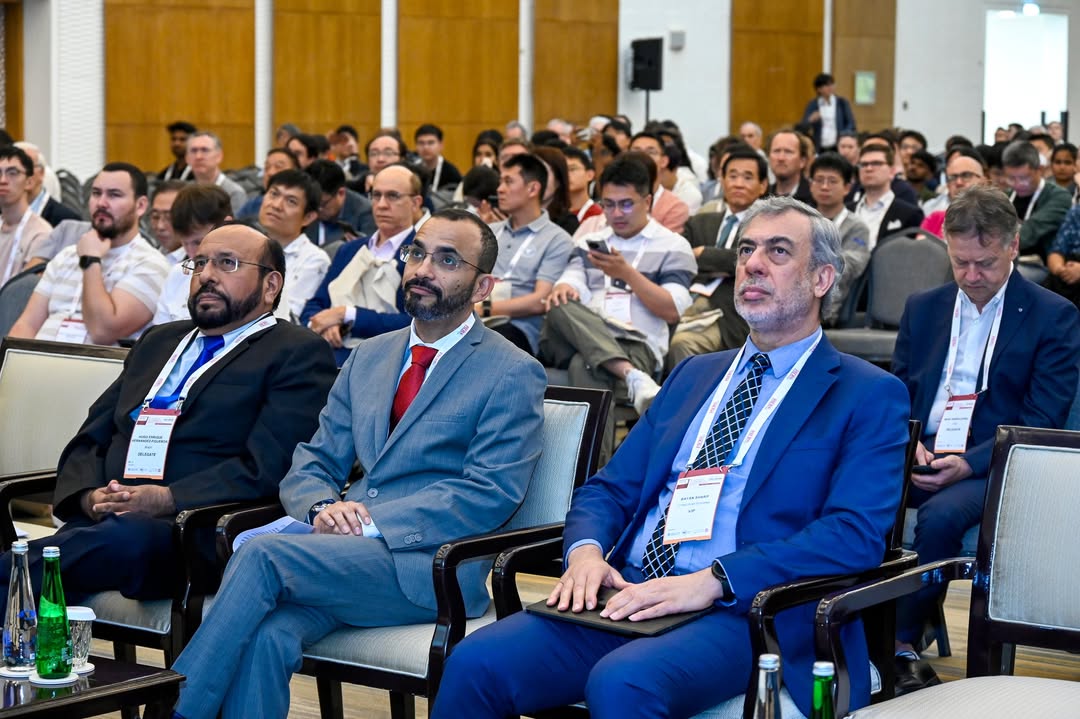
The PhotonIcs and Electromagnetics Research Symposium (PIERS 2025), also known as the Progress In Electromagnetics Research Symposium, was held from May 4–8, 2025, in Abu Dhabi, UAE. The event brought together more than 1 100 delegates from 50 countries. Over 4.5 days, attendees participated in 116 technical sessions across ten parallel tracks, nine hot-topic talks, and 15 keynote addresses by world-renowned experts.


Professor Ibrahim (Abe) M. Elfadel from KU’s Computer and Information Engineering (CIE) department served as one of the general chairs. KU contributed four organized sessions and approximately 25 papers, spanning multiple departments including CIE, Electrical Engineering (EE), Physics, Mechanical and Nuclear Engineering, and Biomedical Engineering.

The symposium’s award ceremony recognized two PhD students from KU: Khamis Hasan Ali (EE) won second prize for the Best Student Paper Award in Antennas and Microwave Technologies, and Ismail Abiola Shittu (CIE) received an honorable mention in Metamaterials, Plasmonics, and Complex Media.

For more details, visit the conference website: https://abdb2025.piers.org/

Khalifa University to Organize 2025 Graduation Ceremony on 11 and 12 June  

Khalifa University of Science and Technology will organize the graduation ceremony at the Abu Dhabi National Exhibition Centre (ADNEC), honoring the achievements of 1,112 students across undergraduate and postgraduate programs. The graduation will take place over two days – on Wednesday 11 June and Thursday 12 June. 


Marking the UAE’s Year of Community 2025, the ceremony will honor the academic journeys of students from a wide range of disciplines. In all, 725 students will receive their bachelor’s, 193 will receive their Master’s, while 163 will receive their PhD degrees at the graduation ceremony. Including 31 medical graduates, a total of 738 students will be receiving their bachelor’s degrees making the overall numbers to 1,112 including medical graduates.  


This year also represents a milestone for Khalifa University’s Biomedical Engineering program, which sees a record number of graduates contributing to the UAE’s efforts in advancing healthcare technologies. The ceremony will likewise commend a strong cohort from the University’s pioneering Nuclear Engineering program, the first of its kind in the UAE, supporting the country’s clean energy goals. Additionally, Khalifa University will confer degrees on Master of Science students from the Sustainable Critical Infrastructure program. 


This year’s graduation also reflects Khalifa University’s continued expansion into future-critical disciplines. Following the recent launch of the bachelor’s program in Robotics and Artificial Intelligence, the University is laying the groundwork for the next generation of graduates who will shape the UAE’s leadership in emerging technologies.  

International Experts Convene in Abu Dhabi for High-Level Workshop on Probabilistic Safety Assessment of Multi-Unit Nuclear Power Plants

From February 10 to 14 (2025) leading nuclear safety experts from six countries, including South Korea, the United States, and Germany, gathered in Abu Dhabi for a high-level workshop on probabilistic safety assessment (PSA) for multi-unit nuclear power plants. Organized by the International Atomic Energy Agency (IAEA) and hosted by the Federal Authority for Nuclear Regulation (FANR), the event served as a pivotal forum for enhancing global approaches to nuclear safety and risk assessment.

Representatives from the Emirates Nuclear Technology Center (ENTC) played a key role in the discussions, contributing valuable insights and expertise. The ENTC team collaborated with international specialists to explore strategic approaches to safety assessment, regulatory challenges, and operational best practices for multi-unit nuclear power plants.

Probabilistic safety assessment (PSA) is a critical tool in modern nuclear governance, enabling decision-makers to anticipate and mitigate potential risks. By providing a structured, data-driven evaluation of plant operations and system interactions, PSA strengthens safety protocols and supports long-term strategic planning. The workshop underscored the increasing importance of integrating PSA methodologies into regulatory frameworks to ensure nuclear facilities operate at the highest safety standards.

A key area of focus was the application of probabilistic safety methodologies at the Barakah Nuclear Power Plant, the UAE’s first multi-unit nuclear facility, which currently supplies 25% of the nation’s electricity. The discussions provided an opportunity for experts to refine strategies for risk assessment and strengthen national capabilities in nuclear safety oversight.

With over 45 participants and more than 15 senior experts contributing insights from diverse regulatory, operational, and technical backgrounds, the workshop facilitated a rich exchange of global expertise. It also reinforced the UAE’s leadership in nuclear safety and laid the groundwork for future advancements in safety assessment methodologies, ensuring the continued reliability and resilience of nuclear energy both regionally and worldwide.

Fatima Alzaabi Participates in IAEA Leadership Training

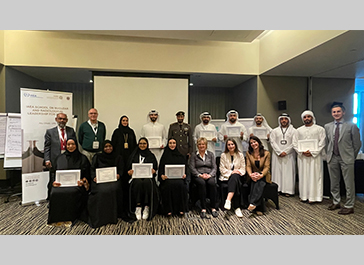
Fatima AlZaabi from the Emirates Nuclear Technology Center (ENTC) successfully participated in the IAEA School on Nuclear and Radiological Leadership for Safety, held in Abu Dhabi from December 9–13, 2024. The training focused on enhancing leadership skills for nuclear and radiological safety, emphasizing case studies, safety culture, and systemic approaches to safety in complex environments.

ENTC Welcomes KEPCO Nuclear Fuel Delegation

The Emirates Nuclear Technology Center (ENTC) recently hosted a delegation from KEPCO Nuclear Fuel, South Korea’s leading nuclear fuel company. The meeting focused on exploring opportunities for future collaboration, with discussions covering operational efficiency, and technological innovation. This visit highlights KEPCO’s dedication to building global partnerships with ENTC in the nuclear sector.