
Integration of renewable energy into power systems

Being at the forefront of science and technology is not only exciting, it’s also challenging. Today, we at the Masdar Institute of Science and Technology are researching how to make mankind’s presence on earth more sustainable. And in the arena of sustainability, one of the most significant of issues is how we power our lives through electricity. Of the some 474 exajoules of energy that is estimated to have been consumed globally in 2008, some 14 percent was in the form of electricity, of which it is believed that up to 80-90 percent originated from the combustion of fossil fuels – a method of releasing energy that is blamed today for the global climate change that imperils our planet. Electricity, in short, has a huge role in modern life, and we currently still source most of it from unsustainable fuels.

It should be clear then that the need of the hour is to evolve mankind’s current electricity system, which is wasteful, inefficient and even environmentally damaging, to one that is intelligent, efficient, forward thinking and sustainable. Two parts in the electricity system that have been identified as being critical for this evolutionary process are the source of power, and its method of distribution. And that is why the research of my team and others at Masdar Institute is so crucial – we are investigating new and clean sources of energy, and also the systems needed to distribute their power conveniently, safely and economically.

As most people today know, part of evolving the electricity system to be more sustainable includes tapping into renewable energy sources like solar, wind, geothermal, biofuel and others. Today we have all seen some application of renewable energy – perhaps in the form of a solar powered bus station or from a towering wind turbine. But these renewable energy applications tend to be on a very small scale and currently only contribute to a fraction of the world’s electricity needs.

One of the big challenges to the global push towards sustainability is evolving renewable energy from one-off applications to where it is integrated into the grid systems that power our cities and developments. Masdar City, which is the clean-tech cluster of the Masdar initiative and the home of Masdar Institute, aims to be a pioneer in large-scale integration of distributed generation.

The reason for this current limitation is that traditional power grids were created to follow a basic array system. A utility provider had perhaps one or two remotely located power plants which, through thousands of miles of underground and overhead cabling, provided power to an area. The utility provider was the only source for power on the grid – with power flowing out from its core to various clients on its network through a system that tends to have around 10 percent of line losses.

But nowadays we are looking at microgrids, which are a group of micro-generators connected to the main utility grid. While before there may have been one or two sources of power on a grid, in our sustainable future, power will be generated from a host of sources – solar panels on an individual’s house, a windmill on school grounds, a biofuel cell at a dairy farm, etc.  This will not only reduce dependence on conventional fossil fuel-sourced electricity, but also reduce line-losses, as the microgrid system puts the source and the user side-by-side, eliminating the need for the miles of cabling to get energy to a user. And a third potential benefit of the microgrid system – beyond the use of renewable energy and reduced line losses – can be in the form of wealth generation. With a feed-in tariff system, a homeowner whose solar panels collect more energy than he needs can sell it back to the shared network and turn a profit.

In order to make this idea a reality, scientists have to create the technology and systems needed to evolve our electricity system. To accommodate renewable energy technologies, reduce cost and improve efficiency, the existing grid has to undergo some serious changes that bring complications and sophistication to what was a very basic and limited system. Some of these challenges include voltage regulation, harmonics, protection coordination, islanding and etc. Studies related to the core technology of renewable energy micro-grids are required to assure safe, reliable cost-effective and efficient operation of the power system. The new power grid system needs to be evolved to handle the complexities and unique challenges of a future where individual houses and complexes may have their own solar panel on the roof or windmill in their backyard.

Dealing with those complications and adding the necessary sophistication is what Masdar Institute is hoping to address through innovative research. We are looking to provide systems needed to ensure microgrids can safely provide quality and dependable energy. Part of that includes the development of distribution system models that include distribution network models and renewable/distributed energy sources models. We will also be working to develop a control scheme for facilitating micro-grid operation. The study will then assess the impact of the integration of renewable energy sources such as wind, solar, fuel cells, etc in the form of micro-grids on distribution system protection and operation.

My own specialty is in islanding detection of renewable energy sources. I work in algorithms to create the software systems that lend the energy network the intelligence and sensitivity to detect distributed generation islanded operation. Islanding protection is one of our key areas of investigation for distribution system protection issues, as well as loss of coordination, nuisance fuse tripping, and loss of protective device sensitivity. New protection schemes will be proposed to overcome any negative impacts that could be imposed as a result of micro-grid operation.

We at Masdar Institute are doing the groundwork today to create the electricity system of tomorrow. It is our hope that with the support of the Abu Dhabi government and the hard work and brilliance of Masdar Institute’s professors and students, we can help make these dreams a reality.

Dr. Hatem Zeineldin is assistant professor of electrical power engineering at the Masdar Institute of Science and Technology.
The human cost of climate change must be calculated

Taking global climate change from a debated idea to a documented and ongoing phenomenon is happening on the back of a growing body of scientific evidence. All global surface temperature reconstructions from the US National Climatic Data Centre show that Earth has warmed since 1880 and most of this warming has occurred since the 1970s. Additionally, the 20 warmest years on record have been from 1981 and with all 10 of the warmest years occurring in the past 12 years. It is estimated that the global average surface temperature rose about 1 degree Fahrenheit in the 20th century.

But what does that truly mean? A single degree of temperature increase does not sound very serious to most people. After all, each year humans experience a range of weather. Every season has its highs and lows. What difference does a few degrees make?

Much more than many may realise. It is estimated that global sea levels rose some 17 centimetres in the last century, which is nearly double the rate of previous centuries. One of the reasons for the rising water levels is the fact that the increased atmospheric temperature is melting the world’s ice caps and glaciers. Data from Nasa’s Gravity Recovery and Climate Experiment show that Antarctica lost about 152 cubic kilometres of ice between 2002 and 2005, and similar losses have been recorded in other glacial regions. And the world’s oceans are not just rising, they are also becoming warmer. Research has found that the top 700 metres of the ocean have warmed 0.302 degrees Fahrenheit in the last 40 years alone.

That is just the tip of the iceberg of the effects wrought on our planet by global climate change. But while the list of recorded planetary impacts is long and extensive, there are major gaps in research into the impacts of climate change on human health. This despite the fact that the United Nations’ Intergovernmental Panel on Climate Change’s Fourth Assessment Report says that climate change is likely to affect human health directly through changes in temperature and precipitation and indirectly through changes in the ranges of diseases and other channels.

Most dialogue on the human health impact of climate change focuses on Europe and North America. For example, France experienced a blistering heat wave in 2003 which claimed some 15,000 lives. The majority of those who died in that unusually hot summer were the elderly who, without the aid of air conditioning, were unable to cope with the suffocating temperatures that reached up to 104 Fahrenheit. In 1999 the Midwest region of the United States was hit by a blizzard that caused 73 deaths. In the 2008-09 winter period, the United Kingdom recorded an extra 36,700 more deaths in England and Wales alone, compared to the average in the non-winter period and the previous winter saw another spike in deaths across Europe brought on by freezing weather.

But that does not mean that climate change does not pose significant danger to other regions. In fact, we believe that the world’s hotter countries, particularly those that are heavily populated and less developed, could suffer far more extensively from climate change than what has been recorded elsewhere.

That is why a team of scientists at Masdar Institute of Science and Technology, to which I belong, is currently working to model and predict the cost of climate change on health in the region we call home, the greater Middle East, but also for North Africa and South Asia. Climate change is expected to have an even stronger effect on human mortality in those areas compared to many others.

This is because the hot climate is already making the temperature in these regions close to the upper limits of what that the human body can endure. Most countries in these regions also have lower average incomes, meaning that there are fewer resources, such as air conditioned homes and vehicles, to counter or mitigate the health impacts of climate change. Governments and individuals have less to spend on coping with the weather and handling disasters. These factors jointly show that there is a great need to investigate how severely climate change may affect human health, particularly human mortality, in the Middle East, North Africa and South Asia.

It is our hope that this research at Masdar Institute will give forward-thinking governments like that of the UAE, which has made tackling climate change a major goal, the necessary information to help them formulate their energy and climate policies and strategies. Climate change mitigation strategies need to come off the drawing board into society, which is what our research intends to do. In order to help facilitate the action necessary to reduce the fatal impact of global climate change, we need to explicitly detail its cost to human life, giving governments, non-governmental organizations, lobbyists, media, and other scientists, the information they need to formulate plans of action. Climate change is not just causing environmental damage; it is causing loss of human life.

With this research, highlighting the specifics costs of climate change to the health of residents of three of the most heavily populated regions in the world, the UAE and its Masdar Institute can help to provide the understanding that allows policies to be implemented and to save lives.

Dr I-Tsung Tsai is an assistant professor in the Masdar Institute of Science and Technology’s engineering systems and management program.
http://www.thenational.ae/thenationalconversation/comment/the-human-cost-of-climate-change-must-be-calculated

A universal source of energy waiting to be harnessed

Ask nearly any person to tell you what the future may bring and they will probably imagine a world run on solar power. And there is a reason for that. The sun is the most obvious source of power available to us. Over billions of years it provided energy for the earliest organisms and continues to give nourishment today to plant life that helps sustain man and animal alike. The sun is truly a low-hanging proverbial fruit. The question is: how do we reach up and pluck it?

Despite the potential and ease of access, solar power remains relatively rare globally. While concentrated solar power (CSP) systems have been around for decades, the process only provides a fraction of the global energy supply. The major reason is the continuing engineering and operational challenges that affect its use. As yet, no single solar power technology exists that can work in every environment and provide energy in a way that makes it as affordable and efficient as other fuels.
 
So while science has proven that solar energy can be harvested, how it can be done in an effective manner has yet to be worked out. Widespread, efficient and cost-effective solar energy should be more than just an idea. It needs to be a reality.
 
That is one of the major focuses of research work being undertaken at Abu Dhabi’s Masdar Institute of Science and Technology. Professors and researchers like myself are hoping to develop solar energy into a major electricity and heating provider.
 
Specifically, we are working on the unique challenges that the UAE faces in capitalising on this ready source of energy. Each year, every square kilometre of land in the UAE receives on average solar energy equal to 1.5 million barrels of crude oil. That is a lot of energy to waste, which is why Abu Dhabi has made solar a priority in its goal to generate 7 per cent of its energy from renewable sources by 2020.
 
One of the major projects underway is the development of the first solar thermal power station in the UAE. The project, Shams 1, will have a capacity of 100MW. It is expected to displace approximately 175,000 tons of carbon dioxide per year, which is the equivalent of planting 1.5 million trees or removing 15,000 cars from Abu Dhabi’s roads.
 
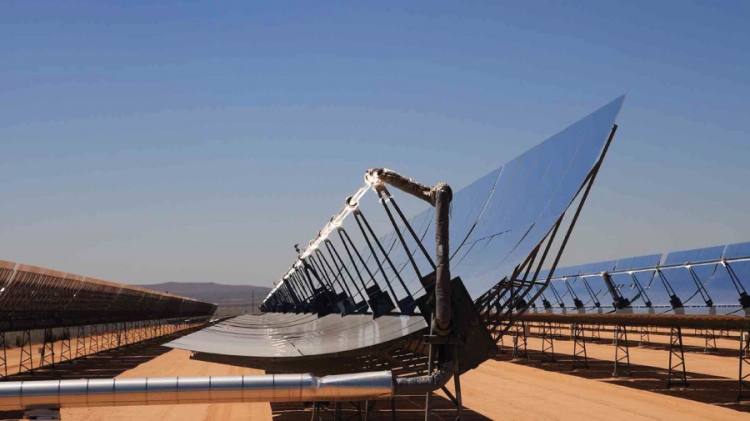
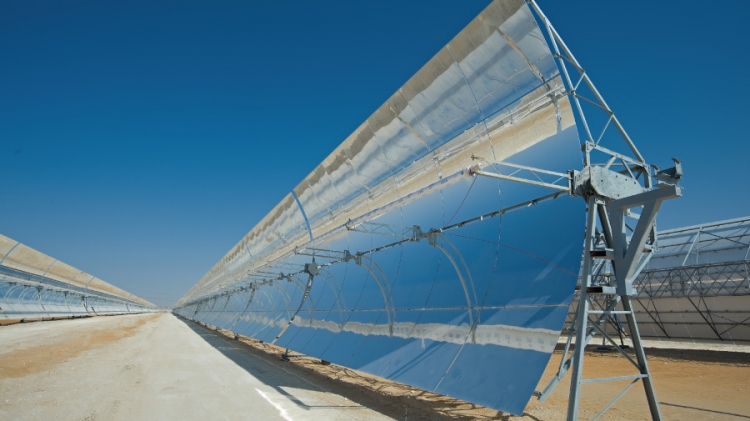
The solar plant will use large curved reflectors in one of the most proven CSP technologies for this region. Ahead of the construction of this project, which will become operational in 2012, Masdar Institute scientists are investigating the power generation cost verses resource trade-off, which varies from site to site depending on the amount of suspended fine solid particles in the air.
 
We also have identified four important hurdles to overcome to bring CSP technologies to market: resource assessment, performance improvement, component cost reduction, and operation and maintenance cost reduction. Research in these areas will address the medium to longer-term needs of CSP technologies, while in the short term, CSP projects will provide increased confidence in the technology and see start-up costs drop through mass production.
 
To further test the compatibility of developing CSP technologies, Masdar Institute has constructed a pilot power plant in collaboration with Tokyo Tech and several industrial partners. This plant would serve as a means to validate key research results.
 
The plant’s chosen design is that of a Beam Down tower, which we believe is well-suited to the UAE’s unique needs and limitations. This type of tower provides a solid design that minimises the effects of aerosols, which are the suspended particles in the air that are a major obstacle to solar power collection in the Gulf’s dusty desert climate.
 
The information we collect will not only be able to improve the efficiency of planned power plants like the Shams 1, but could also provide critical data to developers and policymakers to better understand and exploit solar resources.
 
The success of CSP technology will also rely on improving operational performance so that plants can make the most of the daylight hours, thus increasing the potential revenue of a CSP plant. The factors influencing a longer operation time are adequate storage systems, efficient start-up and shutdown procedures, and higher reliability of components. These research efforts rely on the availability of adequate research infrastructure and pilot plants.
 
And while these two projects – Shams 1 and the Beam Down – are investigating answers to a set of crucial questions in one area of CSP, another massive undertaking, the 10MW PV Solar Power Plant, is already displaying innovation in action.
 
The plant, developed at Masdar City by Abu Dhabi-based Enviromena Power Systems, is the largest grid connected solar plant in the Middle East and shows how a plant can work in this part of the world, providing tangible results and adapting to real world challenges.
 
In the past year the plant produced 17,348 MWh of electricity and is operating at impressive efficiency levels. To address the concern of dust build-up on the modules, a specialised cleaning system employing dry brooms is deployed, adding to this system’s eco-friendliness.
 
A solar-powered future is not as far off as it would seem. And it’s being drawn ever closer thanks to the pioneering research and pilot project work being done at Masdar. We’re not just reaching for the stars, we’re reaching for our closest star.

Dr. Matteo Chiesa is an assistant professor in the mechanical engineering program at the Masdar Institute of Science and Technology
http://www.thenational.ae/thenationalconversation/comment/a-universal-source-of-energy-waiting-to-be-harnessed

The lifeblood of the UAE is at stake in today’s science

We all know “water is life”. But here in the UAE, it’s also a precious and scarce resource. There is very little naturally available in this arid region. That poses a challenge not only to the government and utility providers, but also to the scientists at the Masdar Institute of Science and Technology. That is why we are putting so much attention on how we can improve access to water and mitigate some of the concerns over water security.

As this week’s meeting of the Federal National Council revealed, desalination provides 65 per cent of the water used in the UAE for domestic, commercial and industrial purposes. Desalination technology has provided the water resources that have allowed the country to grow at an amazing rate and given residents a quality of life that is rare in the region.

But the technology also has limitations, as the FNC meeting pointed out. The process of turning sea water into sweet water is energy intensive and requires the burning of fossil fuels, which contributes to global climate change. The reliance on fossil fuels also makes desalination a costly process that must be offset by governments through subsidies or by higher costs for the consumer.

All of these concerns leave a question mark over the UAE’s use of desalination. As the FNC members pointed out, desalination is costly, has an impact on the environment, and is heavily relied upon. In the past, we have had to simply work within these limits. But now, we know this isn’t the case. Science has come a long way in the years since many of the UAE’s 83 desalination plants were built. Desalination is becoming more energy efficient and has a lesser impact on the environment.

We are looking to improve the efficiency of producing sweet water even more in the future. At Masdar Institute’s Water and Environment Engineering Programme, we are researching a number of technologies and systems that we hope will improve water security. There are currently a number of research projects looking to make desalination a less carbon-intensive project by harnessing the Gulf region’s ever-present sunshine.

One relevant study is looking at the technical performance of newly developed membrane desalination and pre-treatment systems versus conventional ones, to measure actual benefits and identify margins of improvement. We are comparing reverse osmosis (which has the largest market share in desalination), membrane distillation and forward osmosis (which show good potential for lower energy consumption and water production costs), and nano-filtration, for the removal of chemicals during pre-treatment.

Masdar Institute is also looking into making the most of the UAE’s groundwater resources. The country has very little naturally occurring groundwater and only 3 per cent is fresh – the rest is brackish and/or hyper-saline, which has greatly limited how and even whether it can be used for human needs.

Another team of scientists at Masdar is looking to develop a novel high-yield and cost-effective solar still that will give the UAE the option of using some of its untapped groundwater resources. A solar still is a low-tech way of distilling water from the sun’s energy. It uses evaporation to produce water that is free of impurities such as salts, heavy metals and microbiological organisms.

We are looking to develop a still that could utilise the UAE’s available geothermal and solar energy resources to produce fresh water in a sustainable and environmentally friendly way. These solar stills could also allow UAE residents in remote areas to utilise previously unusable groundwater, thus reducing dependence on desalinated seawater.

A third aspect to improving the UAE’s water security comes from harvesting wastewater. As Mohammed al Zaabi, an FNC member from Sharjah, said at the meeting: wasted water is a “luxury that is making us poor”. Currently very little wastewater in the UAE is treated and reused, with only about 9 per cent of the water used for agriculture coming from treated wastewater. Governments and scientists today now agree that in the future, wastewater will have to be viewed as a true resource and will need to be used in whatever way possible.

The Institute is researching a number of ways to help improve the quality and efficiency of wastewater treatment. One area of interest is bio-electrochemical systems to develop an energy efficient way to oxidate organic matter in municipal wastewater. The systems use indigenous microbial cultures. By removing some of the more energy-intensive processes, the cost of turning wastewater into useable water can be reduced.

After improving the desalination methods, groundwater extraction and wastewater treatment potential, the last piece of the water security puzzle is water storage. Existing groundwater supplies are scarce, wastewater may only have limited uses and, most importantly, desalination produces water for immediate use. For water security, the UAE needs to increase its stored water.

One potential solution to the water storage question is the recharging of aquifers. Many have been emptied over the years, but still hold the potential to be refilled as self-cleaning, self-maintaining water reservoirs. Masdar’s work in isotopic fingerprinting is giving science a unique view into the flow of water through an aquifer, allowing us to understand the limits and potential so we may safely utilise this resource in the future.

These are just some of the research projects being undertaken at Masdar Institute through its Water and Environmental Engineering Programme. We hope the UAE Government, academia and industry will join us in supporting this critical research to help safeguard our collective future.

This article was authored by Masdar Institute faculty in the Water and Environmental Engineering Department, including Dr. Farrukh Ahmad, Dr. Hassan Arafat, Dr. Hassan Fath, Dr. Hosni Ghedira, Dr. Isam Janajreh and Dr. Toufic Mezher.

Recharging ancient wells with modern science

Water scarcity and water security are two issues closely linked and are very much on the minds of leaders around the world. Last year on World Water Day, His Highness Sheikh Hamdan bin Zayed Al Nahyan, UAE Deputy Prime Minister and Chairman of Environment Agency – Abu Dhabi issued a statement revealing the limits of the emirate’s own natural water resources, which saw an 18 percent reduction in the groundwater supply since 2003. On top of that, he warned that Abu Dhabi’s total consumption of water resources exceeds by 24 times its natural recharge capacity – due in part to the rapid social and economic development that the emirate has witnessed in the last four decades.

What makes that rate of water consumption a challenge is the fact that the UAE lies in a very arid region, with limited rainfall and few bodies of fresh water. Traditionally, those who call the UAE home have sourced the sweet water needed to sustain their families, livestock and farms, mainly from groundwater, either using wells or spring-fed aflaj systems . But over time many of the wells and springs that bring up the ancient water that lies deep in the earth have begun to run dry. The aquifers – which are an underground layer of water-bearing permeable rock or unconsolidated materials – are being emptied of their precious cargo of natural fresh water. And as the UAE sees only around 100mm per year of rain and an evapotranspiration rate of approximately 2.5 m per year, the rate of recharge for those aquifers is very slow. In the past, once an aquifer and the wells it sourced had run dry, there was nothing much that could be done to reclaim it.

In modern times, hydrologists have investigated recharging those aquifers with water from other sources. The benefit of artificially recharging an aquifer is that you return the source of water to the native plants and animals that depend on it and also, you provide your community with a natural water reserve in case of emergency. Currently, the UAE relies very heavily on desalinated sea water for domestic and commercial consumption – with some reports stating that upwards of 90 percent of the water used in the UAE now originates in desalination plants. Still, there is great benefit in ensuring there is a ready supply of groundwater in case of incidences where the desalination plants may not be able to operate – as was seen during the First Gulf War. An aquifer may serve as a self cleaning, self maintaining water storage system.

But artificially recharging an aquifer comes with some challenges. Aquifers are the result movement and linkages that occur below the earth’s surface over a period of eons and are resultantly complex. Inserting a foreign body into a natural ecosystem can potentially have repercussions. It is often hard to know where water from aquifer ends up, and the impact of any trace contaminants present in it can have on the sensitive ecosystem around it. With the help of isotopic fingerprinting methods that we are researching at the Masdar Institute of Science and Technology, scientists can track the flow of water through an aquifer by tracking tracers such as Boron that remain in water after reverse osmosis desalination, a desalination process gaining popularity.  In addition to this, we can track the fate of any pre-existing ionic contaminants in the aquifer, such as bromate, nitrate, and perchlorate, which can have an adverse effect on the health of humans and animals consuming the water.  We are currently pioneering the use of two different existing fingerprinting techniques – ion chromatography and triple quadruple mass spectrometry – in tandem, to produce the kind of results that only a few research laboratories in the world can achieve. Our joint system allows us to ionize the ion further to look at the signature of different fragments and isotopes within that ion.  The natural isotopic ratios of elements within ions in water vary with the source of water and the type of processing that the water has undergone.  Our method effectively ‘fingerprints’ an element, and based on that, we can then track the water that carries the fingerprinted element wherever it goes. 

The resulting water signatures can then be used to monitor the health of an aquifer and the impacts of artificial recharge. The information collected by utilizing our method can potentially show the UAE how best to recharge its natural water tables to return its fragile desert ecosystems to vibrant and sustainable health, as well as providing greater water security for its people.

Our research into isotopic signatures in ions has some other helpful applications in the water realm. Desalination, which I briefly mentioned earlier, is one of the innovative technologies that has allowed the UAE to reach its rapid levels of growth, modernization and development. But the system – where sea water is run through a number of processes to render it potable for human use – takes progressive management and monitoring to mitigate the impact of its brine byproduct on the environment. Water and power authorities in the UAE are always looking for ways to improve desalination systems. One application for our research into isotopic signatures is in tracking the flow and dispersal of brine from the discharge outfalls of desalination plants. By tracking the isotropic signature of the brine outflow, we can help ensure that no portion of the discharge area is oversaturated. The fingerprinting of the brine can show you how long it takes to for brine to disperse and where it goes, in order to ensure that it adequately mixes with the sea water. Based on that, a mixing radius can be established for the discharge points, thereby avoiding areas for placing desalination plant sea water intake points. This approach also helps safeguard the health of the plant and animal life that share the environment with our desalination plants.

As the late great Sheikh Zayed said: “On land and in the sea, our fore-fathers lived and survived in this environment. They were able to do so because they recognized the need to conserve it, to take from it only what they needed to live, and to preserve it for succeeding generations.”  It is the hope of our research teams at Masdar Institute that our work in isotopic signatures in ions may help the UAE’s residents do just that – preserving our environment and natural resources for succeeding generations.

Dr. Farrukh Ahmad is assistant professor of water and environmental engineering at the Masdar Institute of Science and Technology.
Planning for smart power

Although sources of energy are evolving, the power grid systems used to deliver and manage electricity have not kept up with the evolution. In many ways, the grid systems in use today are not able to efficiently integrate renewable energy sources. Without the appropriate infrastructure to carry and manage the distribution of such energy, we will not be able to reach our collective sustainability goals. The future where energy is clean, efficient, and affordable cannot become a reality without further research and development. This is why the Masdar Institute of Science and Technology, which started academic classes in 2009 as a centrepiece of the Abu Dhabi government’s Masdar initiative, is focusing on smart power grids. In order to fully benefit from these diverse, vast, and renewable energies, researchers must devise ways to make their use widespread and economically viable.

To make an efficient, affordable shift from unsustainable fuels to renewable sources of power, we must develop intelligent devices that can manage renewable resources in a smarter way. The development of such information technologies is challenging, as there are so many people and stakeholders in the system, all of whom have many different wants and needs. However, with the help of the information technologies that my team and others at the Masdar Institute are researching, we hope to help make renewable power affordable and convenient.

One of the issues we are working on addressing in the creation of smart power grids is how to manage the fluctuations in power that tend to come with renewable energy. For instance, wind energy is available only when you have a constant breeze. Wave energy depends on the tides. And solar can be collected only in the day. Yet we need to be able to capitalise on these renewable energies, especially solar. Solar power is widely considered one of the most readily available sources of energy, and we have abundant access to sunlight. The amount of sunlight that reaches the Earth on a daily basis is more than 200,000 times the total electricity that mankind generates.

It is also one of the most powerful energy sources, with huge potential, which is demonstrated by Masdar’s recent investment in the 100 megawatt Shams 1, the world’s largest concentrated solar power plant, the first of its kind in the Middle East. So what do you do? Tell someone they can have electricity only when it is readily available (for example, only when the sun is shining)? That is unrealistic. One commonly cited potential solution to this problem is to vary electricity prices according to the ebb and flow of demand. In this way, people have the option of deciding when to use electricity, but are encouraged to use it when it is more readily available. For instance, when the renewable energy supply is high, electricity prices would be low. When the supply of renewable energy is low, such as in the evenings, when the grid has to be powered by conventional energy sources, customers would pay more for their electricity.

The challenge is that these fluctuations can happen quickly and unexpectedly throughout the day. Since the average person or entity does not want to have to think about these changes, intelligent information technologies can be used to automatically manage energy consumption and pricing. For example, each customer, be it a homeowner of business, could use a device that automatically determines when to schedule electricity usage in a way that reduces costs while satisfying their power needs. This would allow each entity in the grid to respond to immediate fluctuations in price without requiring unrealistic efforts from individual customers.

But how do we create such a device, one that people can programme to satisfy their individual needs while interacting effectively with everything that affects the system from the outside? This is a complicated problem. In collaboration with researchers at the Massachusetts Institute of Technology, my research laboratory is developing and analysing robust control and learning algorithms for smart power grids. Intelligent devices can use these algorithms to determine when to schedule electricity loads given a user’s individual needs and preferences and the state of the grid at the time. In essence, devices can self-adapt based on user input and experience. If these algorithms are successful, devices that employ them will “think for you” so that your energy needs and wants will be satisfied. Additionally, such devices would increase the reliability and stability of power grids despite fluctuations in electricity generation from renewable energy sources.

The development of learning and control algorithms for smart devices is especially difficult, because they must scale well to larger and larger power grid networks. Not only will the clean-tech cluster Masdar City – and subsequently Masdar Institute – be powered with renewable energies, but we believe that in the not-too-distant future most, if not all, cities will need to use, at least partially, sustainable energy sources. However, the larger the network, the harder it is to manage what is going on. At the Masdar Institute, we are seeking to develop techniques that would scale up to these larger networks and, perhaps, one day be part of every electricity network in the UAE.

Researching smart power grids will definitely contribute to Abu Dhabi’s sustainability goals. It is an important piece of the renewable energy puzzle, one that we are proud to be working on.

Dr. Jacob Crandall is an assistant professor in computing and information science at the Masdar Institute of Science and Technology
http://www.thenational.ae/news/uae-news/science/masdars-plan-for-smart-power

Reed beds to weed out waste and make clean water

Imagine a field of tall, green reeds, rustling lightly in the wind. Dragonflies flit between the stalks, attracting migratory birds to rest, eat and rehydrate. Now imagine if that beautiful scene were also a water-treatment facility. It could be.

Constructed wetlands are an established method to treat water safely and with minimal energy requirements.
They consist of reed plants cultivated in a sandy filter where natural microbial, chemical and mechanical processes in the roots of the plants and the sandy filter transform sewage into clean water, gases, minerals and fertiliser.

The system is essentially a type of water filtration and treatment plant, making efficient use of natural processes. It mimics the way natural wetlands break down waste in water, filter out sediment and remove heavy metals.
By using filtration layers, plant roots and microbial processes, wastewater or sewage is pumped in, and after undergoing a passive and nature-based process, the now clean water is pumped out.

As a water treatment system and conservation method, constructed wetlands are often deployed in Europe and North America. In the UAE, however, it has been tried only on a small scale. There has been no conclusive work to adapt the system for the unique climatic needs here. Without such knowledge, this uniquely beneficial method cannot reach its potential in our country. That’s a shame, as it holds much promise.
To meet that promise, a team of researchers at the Masdar Institute, led by my adviser Dr Jorge Rodriguez, are developing optimised design guidelines for constructed wetlands for the UAE.

As a UAE national and a civil engineer by training, it is my hope we can develop this technology to treat water in a way that requires nearly no energy, contributes to clean air with the carbon-absorbing capabilities of the reeds, provides habitat for wildlife and, of course, provides treated water that would otherwise have to be expensively desalinated.

Because the constructed reed bed can be easily operated and is decentralised, it can serve remote small communities that would require an expensive pipeline infrastructure or carbon-intensive tanker lorries to transport sewage to distant treatment plants. But because previous reed bed research has been conducted in climates dissimilar to that of the UAE, the findings are not completely aligned with the climate in this part of the world. The heat here leads to higher evaporation rates, a more rapid rate of growth for plants, and a heightened water temperature for the microbes.

The structure and diversity of the microbes themselves are also very important. They conduct a significant portion of the water-cleaning process by breaking down waste.

To ensure the microbes are able to function optimally, I am focusing my component of the research on using the molecular tools to investigate the microbial community found in reed-bed basins, characterising how it develops with time and throughout the depth of the basin.

Eventually, we hope to provide Abu Dhabi with another part of the overall sustainability puzzle that will reduce the ecological footprint through carbon and energy reduction, while saving precious water resources and money that could be better used elsewhere. Not only that, constructed wetlands can add to the beauty and biodiversity of my country.

Rashed Al Gaoud is a water and environmental engineering student at the Masdar Institute of Science and Technology
http://www.thenational.ae/news/uae-news/technology/reed-beds-can-weed-out-the-waste-to-return-clean-water

Exploring how to sanitize ballast water

The Arabian Gulf is host to some of the most intensive tanker traffic in the world – particularly oil tankers. It is estimated that 20 per cent of oil traded in the world passes through the Strait of Hormuz – the passage between the Gulf of Oman and the Arabian Gulf.

While that traffic helps bring wealth to our part of the world, it also comes with some unpleasant byproducts in the form of ballast water.

Ballast water is used to help weigh down and evenly balance a ship. When making a journey to pick up a shipment of fuel oil, tankers use it to fill their otherwise empty holding tanks, to stay stable. It is then discharged before the tanker takes on its load.

The quantities are vast, with an estimaated 3.7 billion tonnes of ballast water transferred and discharged globally each year.

That water is rich with all kinds of minute and microscopic life forms – 3,000-plus types of organisms such as vertebrate, invertebrate, phytoplankton, zooplankton, bacteria, viruses, and sediments. And although most of these species are naturally present in seas and oceans everywhere, each body of water has its own unique food chain.

Disturbing that order can greatly upset a marine habitat, with consequences from clogged filtration systems to the exposure of native fisheries to diseases such as cholera.

The International Maritime Organization, the UN agency responsible for improving maritime safety and preventing pollution from ships, estimates that ballast water causes losses above $138 billion annually. On such a scale, it is easy to see ballast water as a global marine environmental crisis.

International regulations have been in the works for decades, but implementing them is easier said than done.

One big obstacle has been the means to treat ballast water effectively, quickly and cheaply. To that end, as a naval engineer and first lieutenant in the UAE Navy, now working in the Microbial Environmental Chemical Engineering Laboratory at Masdar Institute, I am involved in a project that is attempting to provide a solution for the shipping industry in this region.

We have begun by studying which organisms are present in ballast water, and which pose a risk, to help us better target our eradication technologies.

We are also investigating different forms of eradication – including oxidation, ultraviolet, ozone treatment and chemicals – to find the ones that are best able to eradicate the identified alien organisms.

Eventually we aim to have a prototype system that can be retrofitted in tanker ships that will neutralise any dangerous species in ballast water, without adding unnecessary chemicals that could harm the environment.

The system has to be able to treat the vast amount of ballast water – up to 1.8 million litres per trip – absorbed by the Arabian Gulf each day. It also has to be cheap to install and operate, as ballast water regulations are often not enforced and violations are minimally fined, and thus early adoption would be voluntary. The easier and cheaper the system is, the more operators are likely to adopt and use it.

It is my hope that such technologies can help the region reduce the impact of one of the most important local industries.

Additionally, an Arabian Gulf-specific ballast water cleaning system would help the UAE better preserve the harmony of the Gulf’s natural flora and fauna.

1st Lt Talal Al Hajri is a naval engineer and student of water and environmental engineering at the Masdar Institute of Science and Technology

Harvesting dwindling phosphorous from alternative sources

As mankind continues to mine the Earth’s natural resources, scientists are desperately hunting alternatives.

Sustainable and renewable fuels are part of that. But there is another natural resource that is even more depleted and whose absence would have repercussions at least as grave for modern life: phosphorus.

The element is critical to all forms of life. It helps living things turn nutrients into energy, and is an essential component of DNA. It is in our electronics, our matchsticks and our shampoo.
Perhaps most crucially, it is a key component of agricultural fertiliser, making up for deficiencies in soil quality to turn barren land into productive land and increase the yield of a wide range of crops.

And yet it is estimated that our reserves of the phosphate rocks that comprise the main raw material from which fertiliser is made may last only 50 years.

And as these reserves dwindle, the price will increase – it has already risen by about 800 per cent in recent decades – potentially making food prohibitively costly in many countries, particularly those where the soil is poor.

To counter this grave situation, researchers at the Masdar Institute are working to harvest phosphorus from other sources. They are exploring ways of recovering and recycling phosphorus, from sources such as household waste or domestic waste water.

Abu Dhabi is currently among the world’s highest per-capita producers of municipal solid waste, generating more than 5kg per person a day, about three quarters of which is organic matter. It generates a lot of waste water, too.

At present, household waste goes to landfill, and no phosphorus is recycled from domestic waste water.
As things stand, the phosphorus content of that waste is hazardous. It can all too easily end up being discharged into rivers, lakes or the Arabian Gulf.

There, it can cause eutrophication, a sudden bloom of aquatic plant life caused by a surfeit of nutrient, which in turn can suffocate fish and make the water toxic to human beings. But it can be removed, not only making waste-water outflows more benign, but also, potentially, providing a new source of biofuel and fertilisers.

The Masdar team is trying to develop a UAE-specific method for this removal. It would use microbes to convert the waste into biofuel, producing a phosphorus-rich residue.

The biogas produced through this method is similar to natural gas and can be used in its place, and bioethanol can be added to regular petrol. Meanwhile the phosphorus residue could be used as a cheap, secure and locally-manufactured source of fertiliser.

And on top of this triple benefit – fuel, fertiliser, and safer waste – this research will also contribute to Abu Dhabi’s leadership in the development of technologies based on renewable and sustainable resources. That’s quite a result from something we currently throw away.

Dr Jens Ejbye Schmidt is a professor in the chemical engineering program at the Masdar Institute of Science Technology

The answer to UAE’s water needs may lie in cleaning up waste water

With the little or no freshwater, the UAE relies heavily on costly, energy- intensive desalination plants. Treating wastewater is much cheaper – if only we could make more use of it.
According to the Statistics Centre Abu Dhabi, in 2012 treated wastewater met less than 10% of Abu Dhabi city’s total water demand.  
Desalinated water and groundwater met 79% and 12% of the total water demand, respectively.
Treated wastewater is currently used only for irrigation and landscaping. If we could put it to other uses, we could make a big dent in our carbon and energy expenditure.
But for applications beyond irrigation, science must first address important questions about water for treatment and reuse. What happens to micropollutants and pathogens in the wastewater treatment process?   
What happens to any residual micropollutants and pathogens present in recycled water when it is reused? Or to put it more simply, do we remove the harmful stuff, and how harmful is the stuff we don’t remove?
Micropollutants consist of natural and synthetic chemicals, from hormones to pharmaceuticals and flame-retardants.
They are typically organic compounds, found at low concentrations in the municipal waste stream as a result of their large-scale production and widespread use in commercial and consumer products.
They affect both human and other living things, disrupting endocrine – hormonal – systems, killing cells, and causing increased antibiotic resistance.
One uncertainty is where the large number of micropollutants present in wastewater end up.
These compounds tend to persist in treated wastewater because conventional treatment processes, like activated sludge treatment and membrane bioreactors, do not target their removal.
In order to address these concerns, we at Masdar Institute are interested in using a comprehensive and multi-disciplinary computational, experimental, and field-scale approach at all points along the wastewater generation, treatment, and end-use process train to help allow more water to be reused safely.
Analysing micropollutants requires sophisticated instruments and techniques, such as gas and liquid chromatography coupled with mass spectrometry, which most water utilities are not equipped for.
Monitoring pathogens and other biological agents is tricky, too. All water, even tap water and bottled drinking water, contains complex microbial communities that are, for the most part harmless to humans.
Unlike chemical contaminants, microbes can multiply in the treatment system – so counting the microbes in one part of the system doesn’t necessarily tell you how many there are somewhere else.
And while some microbes are potentially pathogenic, many others are entirely benign. So simply counting them – as is the conventional practice – doesn’t tell you if there’s actually anything to worry about.
For these reasons, conventional microbiological methods are grossly inadequate for monitoring presence and levels of pathogens, especially in warm and hot climates.
Modern molecular biological techniques, such as polymerase chain reaction (PCR) and high-throughput or metagenomic DNA sequencing, can provide cost-effective, detailed analysis of the microbes present, including pathogens.
These techniques, coupled with quantitative chemical and microbial risk assessment, offer a scientifically robust way of assessing any health risk from disease vectors in treated wastewater.
This, in turn, would allow the UAE to use treated wastewater for a wider variety of applications – which would reduce the UAE’s carbon footprint and energy demand, while enhancing food and water security.
 
Dr. Farrukh Ahmad is associate professor of water and environmental engineering, Dr. Jorge Rodríguez is assistant professor of water and environmental engineering, and Dr. Andreas Henschel is assistant professor of computing and information science, all at the Masdar Institute of Science and Technology.
Biology of UAE deserts an untapped fountain of wealth

When we think of vibrant biodiversity, the Amazonian jungles, the American Great Plains and the vast oceans come to mind.

Related


And for good reason. They are a prime source of pharmaceuticals, nutritionals and biomass for energy products.


It is for that reason so many of us support efforts to prevent deforestation in the rainforests and overfishing in the oceans.


That global support has helped countries such as Brazil, the United States and Australia implement strict legislation to prevent the export and exploitation of their natural biodiversity by foreigners for commercial purposes.


India and many other developing nations have also set limits on which biodiversity samples can be exported.


But in our part of the world, there is still a perception that the desert is a barren place, and thus, does not need protection.


In fact, Abu Dhabi and the UAE have a unique and unexplored environment full of natural diversity that is only found in the Arabian Peninsula.


From the oil rich salicornia plants that thrive in the UAE’s stark saltflats, to the nourishing and medicinal ghaf trees that survive in the dunes, our coasts, desserts, wadis, and sabkhas have evolved unique and potentially useful plants and animals, most of which have yet to be discovered.


This unexplored potential is even more important given the UAE’s mandate to become more sustainable and prosperous.


Among the unassuming dunes we might find a species that provides us with greater food security, or maybe in our oases we could find a plant that can reduce our dependence on fossil fuels.


There is a wealth of unknown potential for the development of new bio-based renewable and sustainable industries, and preliminary exploration efforts have already begun.


The Marine Research Centre in Umm Al Qaiwain is studying compounds made from sea grass and corals for medicinal and pharmaceutical uses.


Fujairah, too, has opened a research station at Wadi Wurayah Mountain Protected Area to study the natural biodiversity of the freshwater wadi.


Meanwhile, researchers at UAE University are looking for anti-cancer and antimicrobial compounds found in native UAE plants. It is currently working to isolate a compound from a plant extract that shows promising initial results stopping the growth of cancerous cells.


In my own laboratory at the Masdar Institute of Science and Technology, we are investigating the microbes and algae that live in the desert as a source of biofuels.


We have isolated several native microbial species and algae, which we are characterising in the laboratory. This work has led an Emirati student, Ahmed Al Harethi, to file a patent on an isolate of one native algal strain – AAH001 – with the US patent and trade office.


All these initial findings hint at the hidden potential for the development of intellectual property that will provide the base for new entrepreneurial opportunities for the UAE.


But all this work will be for nothing if there is no legislation that protects our natural biodiversity from being exported and used in other places around the world without our consent.


The UAE, through the Environmental Agency Abu Dhabi, has established guidelines on how to protect our environment to preserve our biodiversity for the future generations.


There is no formal legislation, however, preventing the export of our most precious natural resources. It is our hope that the UAE will soon join the ranks of nations like the US and Costa Rica, and put in place laws and limits to ensure its irreplaceable natural wealth is protected.


The desert and the ocean have always been a key part of the UAE’s history. They have provided food and substance for our past generations. With proper care and stewardship, the bounty hidden in their depths can bring sustainable and renewable prosperity to a new generation of UAE citizens.


Dr. Hector Hernandez is an assistant professor of chemical engineering at the Masdar Institute of Science and Technology.
Emirate’s big move at the smallest of scales

14 August 2013

Inside even the smallest of gadgets, there are many tiny parts and components that must come together as a single, integrated system to execute the functions of the device.

Electronic components have to be made compatible with optical or mechanical ones, various kinds of materials must bind together properly, operating frequencies have to match and component timers have all to work in synchrony as if playing an orchestral symphony.

It is for that reason that international and local leaders in academia, industry, and government have come together to launch the Abu Dhabi Centre of Excellence for Energy Efficient Electronic Systems (ACE4S), a joint project by Advanced Technology Investment Company (ATIC) and Semiconductor Research Corporation (SRC).

The centre will be jointly hosted by the Khalifa University of Science, Technology, and Research (KISTAR) and the Masdar Institute of Science and Technology and will involve three other institutions – United Arab Emirates University – Al Ain, New York University – Abu Dhabi, and the American University of Sharjah.

ATIC, KUSTAR and the Masdar Institute will jointly provide the centre’s Dh35 million budget for the first three years.

The research centre is focused on autonomous wireless sensing and monitoring systems and is meant to drive innovations in sensing and storage devices, logic and communication circuits, power management, and energy harvesting for wireless sensor technologies.

Its task portfolio comprises 16 different projects led by UAE-based faculty from the five participating universities. The centre’s projected research and development will feed into two system prototypes that will be used to showcase the overall success of the centre’s innovative work. The act of prototyping and its success in demonstrating a working implementation will in itself go a long way in bridging the gap between the inventions that will happen in the laboratories and the innovations that are required by the marketplace.

My co-director of the centre, KISTAR’s Prof Mohammed Ismail El Najjar, shares a belief in the educational value of having our graduate students learn by doing – by designing, verifying, implementing and testing.

This undertaking is perhaps the first of its kind in the Arabian Gulf, bringing together local academia and local industry to establish a world-class, UAE-wide academic centre dedicated to the research, development, and prototyping of energy-efficient electronic systems.

It also marks the first time that SRC, the world’s leading technology research consortium, has established an international academic centre outside of the United States. With members such as Intel, IBM, Texas Instruments, Applied Materials and GlobalFoundries, SRC brings to the UAE more than 30 years of experience in establishing, funding and guiding pre-competitive research for the semiconductor industry.

Through the centres it has established and the projects it has funded, SRC has graduated more than 9,000 highly qualified students, many of whom now play leading roles in industry and academia.

The launch of ACE4S can be taken as a timely recognition by SRC that the Abu Dhabi semiconductor ecosystem is ready to conduct leading-edge, industry-relevant, pre-competitive research that will be of intellectual and industrial value to ATIC, the SRC member companies, and the participating universities.

Over the past few years, government, business, and academic leaders in the UAE have been making great strides towards creating an integrated ecosystem in Abu Dhabi for semiconductor research, development and manufacturing. This integrated ecosystem includes academic, industrial and strategic components. We have seen the launch and ramp-up of several world-class academic programmes, cutting-edge facilities, visionary research funding cycles and the graduation of highly skilled students – including Emiratis – in the areas of semiconductor processing, device engineering and chip design and fabrication.

The semiconductor industry is knowledge and capital intensive and the globalisation of its research and development is challenging.

But Abu Dhabi is rising up to the challenge and taking ownership of this very first international SRC research centre. It is doing it through multifaceted partnerships using the pool of world-class talent it already has.

“Partnership models will be critical to [the UAE’s] economic growth and global competitiveness within knowledge-intensive industries,” says Sultan Al Jaber, Masdar’s chief executive.
I could not agree more.

Dr. Ibrahim (Abe) M.  Elfadel is Professor of Microsystems Engineering at the Masdar Institute of Science and Technology. He is also the co-director of ACE4S.