Agreement Signed with IEA to Curb Greenhouse Gas Emissions

A collaborative agreement for curbing greenhouse gas (GHG) emissions has been signed with the IEA Environmental Projects Ltd (IEA EPL). With this agreement, Masdar Institute becomes the first individual institution from the Gulf Cooperation Council-Middle East and North Africa (GCC-MENA) region to partner with the International Energy Agency (IEA) through its IEA Greenhouse Gas (IEAGHG) Research and Development program.  

The IEA EPL acts as the operating agent for the lEA Greenhouse Gas Research and Development program on behalf of its members. The IEAGHG is already working with more than 23 energy-related institutions around the world including the Organization of Petroleum Exporting Countries (OPEC), the United States Department of Energy (DOE), the UK Department of Energy and Climate Change, the Commonwealth Scientific and Industrial Research Organization (CSIRO) of Australia, and the Department of Natural Resources of Canada.  

The agreement was signed by Dr. Kelly Thambimuthu, Chairperson, IEAGHG, John Gale, General Manager, IEAGHG, and Dr. Behjat Al Yousuf, Interim Provost, Masdar Institute.

For Masdar Institute, membership of IEAGHG offers several advantages in addition to paving the way for hosting the 14th International Conference on Greenhouse Gas Technology (GHGT-14) in Abu Dhabi in 2018. The biennial event will be sponsored by the Abu Dhabi Education Council (ADEC). The IEAGHG research and development program is the guardian of the Greenhouse Gas Control Technologies (GHGT) conference series, which rotates between North America, Europe and Asia. The GHGT-12 conference was hosted by the University of Texas at Austin from 5-9 October 2014 and was attended by over 1,250 delegates. Switzerland will host the GHGT-13 conference in 2016, while Abu Dhabi will host the GHGT-14 in 2018.  

Dr. Behjat Al Yousuf, Interim Provost, Masdar Institute, said: “The agreement with IEAGHG illustrates our commitment to partnering with others around the world to curb GHG emissions in line with the UAE’s directives. Being part of the IEAGHG group will also strengthen Masdar Institute’s status with other members and hopefully develop one-to-one collaborations and research partnerships. We believe our alliance with the IEAGHG will lead to several productive and transformative innovations in GHG-related research project.”  

John Gale of IEAGHG said: “This agreement with Masdar Institute expands IEAGHG’s membership into the Gulf states, strengthening our global presence. We look forward to working with Masdar Institute and working in a region that is showing significant interest in developing CCS technology and making significant progress in demonstrating CCS at industrial scale.”  

Dr. Mohammad Abu Zahra, Associate Professor of Chemical Engineering and coordinator of carbon capture and storage-related (CCS) research activities at Masdar Institute, said: “The agreement entitles Masdar Institute to participate in IEAGHG Executive Committee meetings as well as the expert groups set up by the IEAGHG. It will also provide access to IEAGHG’s research and development activities, which average 5-7 studies per year, and obtain voting rights on some of the research projects. The partnership will further enable Masdar Institute to expand collaborative relations with other IEAGHG Executive Committee members and present R&D activities at international conferences. More importantly, Masdar Institute students will gain an opportunity to participate in international summer internships on CCS.”  

CCS is expected to play an important role in curbing global warming. According to a Global CCS Institute report, as of August 2015, there were 51 large-scale integrated CCS projects around the world in operation or in various stages of planning, with investment totaling around US$13 billion since 2007. The large-scale projects currently in operation can capture around 27 million tons of CO2 per year. Under the IEA’s modelling of least cost technology pathways, this would need to increase to 6,460 million tons per year by 2050 if the world is to achieve emissions reductions that will likely limit global temperature rises to within 2-degrees Celsius.  

Clarence Michael
News Writer
14 March 2016

Under the Patronage of His Highness Sheikh Mohammed bin Zayed Al Nahyan: Masdar Institute to Celebrate Commencement Ceremony for Class of 2016 on 24 May

The sixth commencement ceremony for the Class of 2016 will be organized under the patronage of His Highness Sheikh Mohammed bin Zayed Al Nahyan, Crown Prince of Abu Dhabi, Deputy Supreme Commander of the UAE Armed Forces, and the Chairman of the Masdar Institute of Science and Technology Board of Trustees, on 24 May 2016.  

The ceremony will be held at Emirates Palace in Abu Dhabi. More than 100 PhD and Master’s students from 30 countries including the UAE are expected to receive their degree across nine academic programs. A total of 44 UAE nationals – 41 Master’s and three PhD students – will also be part of the group that will be graduating this year.

Dr. Behjat Al Yousuf, Interim Provost, Masdar Institute, said: “The sixth Masdar Institute commencement celebrates a new batch of talented and specialized post graduate engineers who have gained the skills and training necessary to help overcome some of the most pressing challenges faced in the UAE and worldwide, like energy, water and sustainable development. These graduates will be joining the global marketplace at a time when innovators and innovations are needed more than ever. We are confident that the Class of 2016 are an asset to the country and the world as advocates for the global push for sustainability.”

Several graduating students have recorded remarkable achievements in sustainable innovation, contributing to Masdar Institute’s position at the forefront of R&D in science and technology in the region. They have won accolades for their research in addressing the country’s food, water, infrastructure, and energy challenges. With their peers and faculty advisors, the Class of 2016 also helped raised the number of published papers in international peer-reviewed scientific journals to more than 1000, and conference papers presented to more than 600. Student research activities also contributed to 10 US patents, over 70 patent applications, and more than 120 invention disclosures.  

The graduates were also actively involved in research projects undertaken by the Masdar Institute research centers (iCenters) and sponsored research centers, helping drive knowledge creation. These projects contribute to key local sectors including water, energy, space, and advanced materials, which are of direct relevance to the country’s transformation into a knowledge-economy.  

Some of the research covered in the graduate theses includes optimization of the performance of membranes used for forward osmosis in desalination, improving non-destructive testing and thermal imaging techniques to examine an aircraft’s carbon fiber reinforced plastic, and the use of carbon nanostructures to make portable lithium ion batteries more sustainable.

Dignitaries, ministers, government officials, and CEOs of private and government sector organizations are expected to be present at the graduation ceremony. In addition, the event will be attended by board members and stakeholders of Masdar Institute and Masdar, representatives from the Massachusetts Institute of Technology (MIT), which is Masdar Institute’s main academic collaborator, as well as families and friends of graduating students.  

The Class of 2016 will be joining Masdar Institute’s 450-plus alumni currently working or studying in the UAE and abroad. Nearly 90% of the previous graduating classes are already employed or pursuing further studies.  

Clarence Michael
News Writer
8 May 2016

Masdar Institute Research Papers Win Nine Awards at UAE Graduate Students Research Conference 2016

Nine out of a total of 20 best paper awards at the UAE Graduate Students Research Conference (GSRC) 2016 in Abu Dhabi were won by students from the Masdar Institute of Science and Technology.

The awards included two in the categories of Chemistry & Chemical Engineering and Mechanical Engineering, as well as one each in Civil Engineering, Computer & Information Science, Electrical & Electronics Engineering, Energy, and Micro/Nano Systems.

Dr. Behjat Al Yousuf, Interim Provost of Masdar Institute, said: “Our students have contributed to Masdar Institute’s track record of achievement through their GSRC awards, which also demonstrated their own cutting-edge research prowess. I congratulate those who won awards for their papers and brought further pride to Masdar Institute.”

The winning Masdar Institute papers were submitted by the following nine teams composed of students, post-doc researchers and faculty: Afra Alketbi, Jin You Lu and Dr. TieJun Zhang; Tala El Samad, Mohammed Hussain and Dr. Isam Janajreh; Nazek El Atab and Dr. Ammar Nayfeh; Abdallah Dindi, Dang Viet Quang and Dr. Mohammad Abu Zahra; Corrado Garlisi, Gabriele Scandura and Dr. Giovanni Palmisano; Sokratis Papadopoulos and Dr. Elie Azar; Miguel Diago, Juliana Beltran Torres, Benjamin Grange, Victor Gutierrez Perez and Dr. Peter Armstrong; Zaid Almahmoud and Dr. Khaled Elbassioni; and Lama Mahmoud, Boor Lalia and Dr. Raed Hashaikeh.

From among the winning teams, Computing and Information Science student Zaid Almahmoud, Materials Science and Engineering student Lama Mahmoud, and Mechanical Engineering students Tala El Samad and Juliana Beltran Torres will be graduating with their Master’s degrees on 24 May at the sixth Masdar Institute commencement ceremony.

A total of 220 papers were presented by all universities at the interdisciplinary academic event, which aims to share the research being conducted at universities across the UAE and their international partners. The conference was organized by the UAE University from 27-28 April in collaboration with Khalifa University of Science, Technology and Research, Zayed University, Masdar Institute, Petroleum Institute, American University Of Sharjah and the University of Sharjah. Papers were accepted in several categories under ‘Arts, humanities & social sciences,’ ‘Clinical, pre-clinical, health & life sciences,’ as well as ‘Engineering, information technology & physical sciences’.

Dr. Steve Griffiths, Vice President for Research and Interim Associate Provost, Masdar Institute, was on the GSRC 2016 steering committee, while Dr. Mohamed Sassi, Dean of Faculty, and Professor of Mechanical Engineering, was on the organizing committee. The GRSC Technical Program Committee also included several Masdar Institute faculty members.

Masdar Institute students had presented a total of 67 papers, many of which have multiple student co-authors, in the areas of advanced technology, energy, water and the sustainability areas for review and oral presentations. Each paper was reviewed and scored by three experts, while both the chair and/or the co-chair of each conference session provided scores for the oral presentations of the students. The combined four or five scores were used to form the rating for each orally presented paper. The top twenty rated papers were given best paper awards during the closing ceremony.  

Some of the locally and regionally-relevant research papers presented by Masdar Institute students included an evaluation of the different models for forecasting the mean and volatility of UAE wind speed, a study on the impact of seasonal weather changes on surface visibility due in Abu Dhabi, mapping of coral reef environment in the Arabian Gulf using multispectral remote sensing, and research assessing depletion of groundwater resources by excessive exploitation in the Al Ain region.  

Other papers included energy and ‘exergy’ analysis of the variable refrigerant flow in air-conditioning systems, opportunities to reduce emissions of greenhouse gases (GHG) and save energy in aluminum smelting, assessing the stability of inkjet-printed carbon nanotube (CNT) films for scale-sensing applications in the oil and gas sector, analyzing the characteristics of extreme temperature events in the Arabian Gulf region, and applying remotely sensed data to analyze the inter-annual and seasonal variability as well as changes in total water storage and precipitation for the Arabian Peninsula.  

The GSRC provides opportunities for graduate students to share their research work amongst themselves, receive scholarly feedback, and network professionally. The event also enables graduate students to showcase their innovative ideas and projects to various sectors of industry and government, and receive feedback on practical aspects that may enhance the value of their research. Prospective graduate students also learn about the different research opportunities available at the participating academic institutions. Speaking at the ‘Forum on Graduate Studies’ side event on the first day, Dr. Youssef Shatilla, Dean of Academic Programs, briefed the audience about Masdar Institute’s interdisciplinary academic programs.  

As of January 2016, Masdar Institute has published over 1,000 articles in peer-reviewed journals, and presented more than 500 conference papers. With such increasing number of innovative research papers, Masdar Institute’s students and faculty continue to cement its status as a leader in intellectual capital development in the UAE.


Clarence Michael
News Writer
16 May 2016

Under the Patronage of His Highness Sheikh Mohamed bin Zayed Al Nahyan Masdar Institute Hosts Commencement for Class of 2016

Under the patronage of His Highness Sheikh Mohamed bin Zayed Al Nahyan, Crown Prince of Abu Dhabi and Deputy Supreme Commander of the UAE Armed Forces and Chairman of the Board of Trustees of Masdar Institute of Science and Technology, His Highness Sheikh Hamed bin Zayed Al Nahyan, Chairman of Abu Dhabi Crown Prince Court and Member of the Executive Council, and His Excellency Sheikh Nahyan bin Mubarak Al Nahyan, Minister of Culture and Knowledge Development, today attended the graduation ceremony of the Masdar Institute Class of 2016.

His Excellency Dr. Sultan Ahmed Al Jaber, Minister of State and Chairman of the Executive Committee of the Board of Trustees of Masdar Institute, and His Excellency Dr. Ahmad Belhoul AlFalasi, Minister of State for Higher Education, were also present at the event.

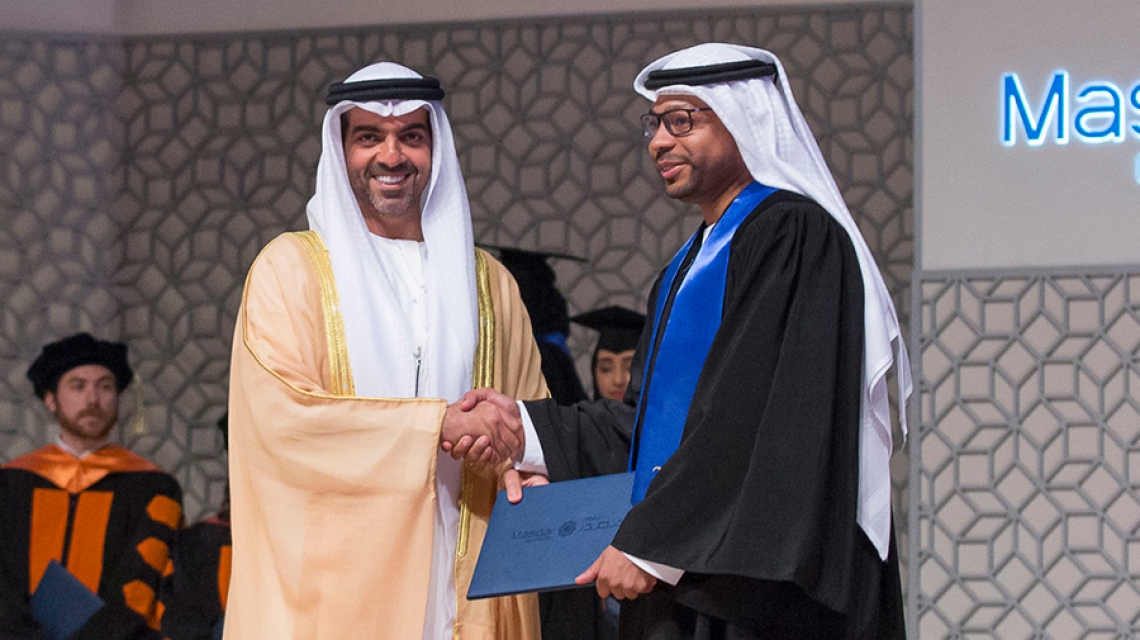
His Highness Sheikh Hamed bin Zayed Al Nahyan presented the degrees to the graduates in Masdar Institute’s nine Master’s degree programs and its PhD in Interdisciplinary Engineering program, while His Excellency Dr. Ahmad Belhoul AlFalasi was the keynote speaker at the event, which was held at the Emirates Palace Hotel, Abu Dhabi, UAE.

His Highness Sheikh Hamed thanked His Highness Sheikh Khalifa bin Zayed Al Nahyan, President of the UAE and Supreme Commander of the UAE Armed Forces, for his leadership that has ensured the UAE’s continual growth and development, allowing young UAE nationals to be a part of the country’s knowledge economy transformation.   He also thanked His Highness Sheikh Mohamed bin Zayed Al Nahyan, Crown Prince of Abu Dhabi and Deputy Supreme Commander of the UAE Armed Forces, for being an inspiration to the UAE youth in their pursuit of their highest potential through academics and work. He added that His Highness Sheikh Mohamed’s continuous guidance has helped the people of the UAE implement progressive economic policies.

His Highness Sheikh Hamed said: “The Masdar Institute Class of 2016 graduates who received their degrees today reflect the UAE’s continuing commitment to innovation and achievement. These talented young men and women will be the new generation of innovators, inventors, entrepreneurs and advanced technology leaders. I congratulate Masdar Institute and its Class of 2016 and look forward to seeing their impact on the country’s ongoing economic development and the global push for sustainability.”

His Excellency Dr. Sultan Ahmed Al Jaber said: “Intellectual and human capital development are critical to achieving the knowledge economy goals that are central to the UAE leadership’s vision for the future. At a time when the global community is striving to achieve sustainable development, Masdar Institute’s Class of 2016, will be the future leaders in the search for solutions to climate change and water and energy security, not just here in the UAE but across the world.

“With this sixth commencement, the Masdar Institute is continuing to play a leading role in the nation’s knowledge-economy transformation by providing the highly-skilled science and engineering graduates who will drive forward the country’s targeted high-tech industries and key economic sectors,” he added.

Also present on the occasion were dignitaries, ministers, ambassadors, government officials, and CEOs of private and government sector organizations, members of Masdar Institute board of trustees, and guardians of students.

In his keynote speech His Excellency Dr. AlFalasi spoke about Masdar Institute’s alignment with the UAE’s vision for a progressive and prosperous future, saying: “Progress, after all, is what Masdar Institute is all about. It is committed to advancing the cutting edge of technology; to raising the bar for research universities not just in the UAE, but across the Gulf; to driving the UAE’s innovative knowledge-economy transformation; and to producing beneficial and novel inventions. With today’s commencement, Masdar Institute is awarding Masters and Doctoral degrees to 120 qualified innovators who are trained to do just that.”

His Excellency Dr. AlFalasi then congratulated the new graduates on their commencement and urged them to continue their efforts towards even greater achievements and success.

The Masdar Institute Class of 2016 Master’s and PhD graduates totaled 120, including 46 UAE nationals and 74 international graduates from 30 countries. The graduates received degrees in the specialized Master’s programs in Engineering Systems and Management, Computing and Information Science, Materials Science and Engineering, Mechanical Engineering, Water and Environmental Engineering, Microsystems Engineering, Electrical Power Engineering, Chemical Engineering, and Sustainable Critical Infrastructure and its PhD program in Interdisciplinary Engineering.

Masdar Institute currently has 432 students from over 60 countries, of which 47% are female. For the year 2015-2016, UAE nationals constituted 43% of the total student population. Since inception, nearly 450 students in advanced energy and sustainable technologies have graduated from Masdar Institute. The first two PhD students graduated in May 2015, both of whom have since returned to Masdar Institute as faculty. At present, Masdar Institute has 96 faculty members from over 30 countries, of which 19% are UAE nationals.

Masdar Institute faculty are graduates from leading international institutions including MIT, Stanford University, University of California – Berkeley, University of Michigan, Korea Advanced Institute of Science and Technology, University of Waterloo, Oxford University, Cambridge University and Harvard University.

ACHIEVEMENTS

As of May 2016 Masdar Institute has registered 10 US patents, 71 pending patent applications, and 122 invention disclosures from faculty and students, firmly establishing the Institute’s place as a leader in intellectual capital development in the UAE. The research-based institution also published over 1,000 articles in peer-reviewed journals, and more than 500 conference papers, as of January 2016.

In December 2014, the US News & World Report ranked Masdar Institute top in the ‘field-weighted citation impact’ category for its inaugural ‘Best Arab Region Universities’ listing of 91 institutions across 16 countries. Masdar Institute was also ranked second in the ‘percentage of total publications in the top 10 percent’ category, third in the ‘percentage of total publications in top 25 percent’ category and ranked 6th in the ‘energy’ subject area. Driving strategic collaborations with government and international private sector partners, Masdar Institute has so far secured over US$72 million (around AED264 million) in industry and government sponsored research contracts with more than 50 organizations (50% in the UAE), with a strong pipeline of new agreements planned for the upcoming year.

Two research projects with the UAE’s national airline Etihad Airways – one for a new design for a smart, temperature-controlled, sustainable and energy-efficient air cargo container (cool dolly) system and the other for a fog detection software system – were among the new and highly relevant collaborative research undertakings Masdar Institute launched this year with local partners.

The institute also launched the region’s first MSc Concentration in Space Systems and Technology in collaboration with YahSat and Orbital ATK, in contribution to the UAE’s space sector ambitions.

Another leading Masdar Institute research collaboration was awarded Oil and Gas Year’s 2016 ‘Partnership of the Year’ award. The Digital Rock Physics (DRP) project, with partners including Abu Dhabi National Oil Company (ADNOC), French energy firm Total, and the Petroleum Institute, aims to understand how hydrocarbons move through the tiny pores of Abu Dhabi’s heterogeneous carbonate reservoirs. The project is expected to enhance knowledge of the pore network and pore morphology of Abu Dhabi’s reservoirs from the nanoscale to macro-scale, with a view toward maximizing oil recovery.

Among the newly graduating students, Mohammed Alshehhi of the MSc in Electrical Power Engineering program won the Innovator UAE 2016 award in the Sustainability and Life Sciences category for his Smart Solar-powered Ventilation System for vehicles, at the Innovator Show 2016 organized by the Abu Dhabi Education Council (ADEC) and the Abu Dhabi Technology Development Committee (TDC).

Alshehhi also won second place in the Graduate Studies category for the same project at the seventh edition of the International Exhibition for National Security and Resilience (ISNR) Abu Dhabi 2016. His project responds to the risk of fatal distraction heatstroke accidents, which refers to incidents when children are forgotten inside parked vehicles that reach deadly temperatures during the summer months. The awards further demonstrate the social relevance of the research projects undertaken by Masdar Institute students.

MSc in Engineering Systems and Management graduate Jean Phelippe Ramos de Oliveira won first place at a university challenge hosted by Emirates NBD for his innovative “one-click-to-go” mobile application idea that has the potential to make banking transactions faster, easier and more efficient. It would allow users to program the transaction they wish to perform at the ATM ahead of time on their smartphones, significantly reducing the amount of time spent at the ATM.

A novel innovation that can help address the UAE’s food, water and energy security concerns has been developed by Fatima Al Jallaf. Her soil fertility-enhancing biodegradable “microbeads” have the potential to improve the UAE’s ability to support farming.

Aleksandar Abu Samra, an MSc in Sustainable Critical Infrastructure graduate, was part of a team that won the ‘Best Embodiment of Values and Ethics’ prize at the inaugural ‘Al Jazeera Canvas Hackathon 2014’ in Doha for developing Acumen, a Google Chrome web browser extension. The extension makes news and media more unprejudiced for readers by introducing a tool for detecting potential bias via information on the content, author background and audience reading the work.

Masdar Institute also won nine of the total 20 best paper awards at the UAE Graduate Students Research Conference (GSRC) 2016 in Abu Dhabi. From among the winning teams of students, post-docs and faculty, four students – MSc in Computing and Information Science student Zaid Almahmoud, MSc in Materials Science and Engineering student Lama Mahmoud, and MSc in Mechanical Engineering students Tala El Samad and Juliana Beltran Torres – received their Master’s degrees at the sixth Masdar Institute commencement ceremony.

UAE national faculty Dr. Ibraheem Almansouri, Assistant Professor of Microsystems Engineering, received the Emirates Energy Award for his novel research on advanced solar cells technology that he undertook during his PhD studies. Dr. Almansouri’s project titled “Silicon Cells for Tandem Solar Cell Structures” was selected out of 14 entries in the ‘Young Professional Energy’ Award category.

The year also saw Dr. Linda Zou, Masdar Institute Professor of Chemical and Environmental Engineering, receiving one of three cooperative research grants at the first edition of the UAE Rain Enhancement Program grant worth US$5 million, launched by the UAE Ministry of Presidential Affairs in collaboration with the UAE National Centre of Meteorology and Seismology (NCMS). Dr Zou received the award for her innovative research proposal on using nanotechnology to develop novel cloud seeding materials for enhanced rainfall in arid and semi-arid regions.

Masdar Institute faculty also received six ADEC Awards for Research Excellence (A2RE) 2015 for the quality, originality and feasibility of their research proposals and their relevance to strategic sectors in the UAE. These awards further illustrate the extent of Masdar Institute’s strategically important research focus.

The past years have seen major research agreements underway with local and international companies such as Takreer, Strata, Abu Dhabi national Oil Company (ADNOC), Mubadala, Etihad Airways, Emirates Global Aluminum, Emirate Steel, the UAE Ministry of Energy, Abengoa, Trevi Systems, Boeing, Suez Environment, Lockheed Martin and BP.

A major on-campus event was the launch of the new Masdar Institute Solar Platform (MISP), a concentrating solar power (CSP) research facility designed to advance innovative and cutting-edge CSP and thermal energy storage technologies. The MISP aims to develop and leverage both human capital and solar resources to increase the implementation and utilization of CSP and thermal energy storage in the UAE, both required to fully utilize concentrated solar energy for large-scale power generation.

Another key event was the Sustainable Bioenergy Research Consortium’s (SBRC) launch of its Seawater and Energy Agricultural Systems (SEAS) at Masdar City, the world’s first research facility to grow both food and fuel, using desert lands irrigated by seawater on a two-hectare site adjacent to the Masdar Institute campus. The facility uses coastal seawater to raise fish and shrimp for food, from which nutrient-rich wastewater is used to fertilize local plants rich in oils, which are later harvested for aviation biofuel production.

Masdar Institute’s recent contributions to sustainability included the Middle East launch of the ‘Green-to-Scale’ report, which assesses a number of readily available, high-impact climate change mitigation solutions from around the world and analyses the scope of their implementation at a global scale. The work was conducted in collaboration with independent public Finnish think-tank Sitra, and other global stakeholders.

Illustrating its role advancing clean energy prospects, Masdar Institute also launched the Photovoltaic (PV) Performance Simulator, a web-based geographic information systems (GIS) tool for modelling and simulating the performance of utility-scale PV power stations in the UAE. The first tool of its kind available for the solar PV industry in the UAE tool will be useful for solar plant developers and investors to simulate the performance of future plants with different solar technologies, allowing them to make better-informed choices regarding both the technology and location for future solar energy plants.

Masdar Institute also collaborated with The Brookings Institution in Washington to release the study titled ‘Reforming Energy Subsidies – Initial Lessons from the United Arab Emirates,’ which sheds light on the measures currently being undertaken by the UAE to establish itself as a leader in regional energy subsidy reforms.

Other collaborations established in the past year include a collaborative research program in graphene/2D materials with the University of Manchester, UK. The three initial projects launched to initiate the collaboration will explore the development of novel low-density graphene-based foams for various engineering applications, inkjet-printed graphene micro-sensors for energy and defense applications, and graphene-enabled ion exchange membranes for desalination.

Another research collaboration with leading global water technology provider Xylem aims to establish sustainability indicators such as energy and cost performance of processes and equipment for water, wastewater and water transport and treatment facilities in Abu Dhabi. The collaboration is a further step forward in Masdar Institute’s focus on achieving a leadership position in water research and development.


Clarence Michael
News Writer
24 May 2016

Inaugural Group of Sustainable Critical Infrastructure Graduates Set to Take on Challenges in Urban Planning and Development

The inaugural group of graduates from the Sustainable Critical Infrastructure (SCI) program from Masdar Institute of Science and Technology are gearing up to take on challenges in urban planning and development.  

The SCI students received their Master of Science degrees on 24 May at the Commencement ceremony for Class of 2016. These graduates are expected to contribute their expertise to the rapidly developing sustainable development and green construction sector, regionally and globally.

Dr. Steve Griffiths, Vice President for Research, Masdar Institute, said: “The inaugural group of graduates in Sustainable Critical Infrastructure reflects the strength of our academic expertise in developing skillsets required for meeting key challenges in resource efficiency for Abu Dhabi and the region. With their newly acquired knowledge, we believe these graduates will make a difference in resource efficient urban planning and infrastructure design, locally and globally, advancing Masdar Institute’s mission to support sustainability.”

“As Master’s students, this inaugural batch was provided with the training and guidance needed to tackle challenges in realizing a fully sustainable infrastructure sector; mainly, in the efficiently-built environment, smart and connected transport network, and sustainable urban planning, which are the main themes of the SCI program. As professionals, their abilities will be further tested in urban planning, green construction and infrastructure development, but I am confident that they will rise to the occasion and help enhance the UAE’s position as an innovative sustainable developer,” said Dr Mohamed Atif Omar, Professor of Engineering Systems and Management, Masdar Institute.

“Our SCI program pioneers have dedicated their thesis research to addressing some of the unique challenges that regional developers face in achieving effective, affordable and sustainable urban projects. We are proud that our SCI graduates have advanced the cutting edge of sustainable infrastructure research from energy-efficient buildings to smart transportation planning in the Gulf and believe their work as professionals after graduation will continue to help the UAE and its neighbors achieve their shared sustainable development goals,” Dr Omar added.

UAE National Anfal Al-Ali has focused her thesis research on the topic of enhancing the social capital of open space in Abu Dhabi.  

She explained: “As a researcher in urban planning, I realized that some neighborhoods may look as if they are ideally designed when we examine them from a distance, but when you examine them closely, you can see that for some reason, these neighborhoods act like boundaries between residents. My research investigated the problems that prevent sociability at the neighborhood scale.”  

Al-Ali is now looking forward to contributing his knowledge to sectors including architecture, design, urban planning, and project management.

Aleksandar Abu Samra from Serbia, whose thesis is titled “Public Data for Energy and Environment Research in UAE,” spent his time at Masdar Institute exploring the current state of information-sharing about infrastructure in the UAE and proposes solutions for its improvement. He believes it can help the UAE and countries of the region in adapting relevant international trends to their local needs.

Winner of the ‘Best Embodiment of Values and Ethics’ prize at Al Jazeera’s ‘Canvas’ hackathon in 2014, Abu Samra said: “I look forward to innovative and inclusive solutions for helping societies develop the sustainable critical infrastructure sector. I hope to be able to avoid issues of the currently underdeveloped infrastructure market in my country and seek solutions for improvement.”

Fellow SCI student Jiin Baek from South Korea has focused her thesis research on “How the Built Environment and Individuals Perceptions Affect Walking Patterns: The Case of Abu Dhabi Downtown”.

Explaining the potential impact of her research Baek said: “My observation on people’s walking pattern, purpose of walking, and their perception of walking in Abu Dhabi has given me good understanding of the emirate’s infrastructure. I would love to work for the government sector in the UAE, such as the Urban Planning Council or Abu Dhabi Municipality to implement my knowledge and experience, or as an urban designer with critical thinking of sustainable development for a consultancy firm. I also hope to continue and expand on the sustainable lifestyle habits I developed at Masdar Institute, like recycling, walking, and energy-saving. As a designer and researcher, I believe it is important to emphasize the role of active design and movement in social community.”

Another student Victoria Hernandez Streiedinger’s thesis is titled “Assessing and planning for walkability using mix methods approach: Abu Dhabi – a case study.” Streiedinger hails from Mexico.

Revealing her motivation, she said: “As the world’s population continues to increase, the migration of people from suburbs to cities progresses, and climate change becomes an ever-present issue. In this situation, sustainable critical infrastructure elements such as walkability will become the foundation of all future cities, out of necessity to provide future generations with livable cities.”

Streiedinger believes the planning of healthier walkable environments could be one of the top priorities for Abu Dhabi’s Urban Planning Council. The government’s involvement for sustainable transportation has the potential to encourage a broader audience, and to show that improvements are attainable, she added.

The SCI program is delivered through a faculty cohort that include experts in urban planning such as Dr. Khaled Al Awadi, Assistant Professor, and Dr. Praveen Maghelal, Associate Professor, and experts in efficient buildings science such as Dr. Afshin Afshari, Professor of Practice, and Dr.Elie Azar, Assistant Professor, as well as experts in travel behavior and transport planning such as Dr. P. Zhu, Assistant professor, and Dr. Abdullah Galadari, Assistant Professor. Dr. Al Awadi served as the leading founding member to the SCI program and received the Institute Best Service Award last year for his dedication and role as the Principle Founding Member of the Program. 

Masdar Institute’s SCI program aims to develop future leaders with the ability to design integrated urban infrastructure systems for new or existing developments after careful examination of environmental, social and financial requirements. The program was established in 2014 in response to important role the built environment plays in managing sustainable consumption of resources.


Clarence Michael
News Writer
25 May 2016

Masdar Institute and Engineering Solutions Minerals Collaboration Suggest Economic Feasibility of Novel Carbon Capture Technology

Findings from a study conducted by a Masdar Institute research team reveal that the novel carbon capture and utilization technology developed by UAE-based ENGSL Minerals DMCC (the technology partner of EnPro) could capture up to 1.3 million tons of carbon dioxide (CO2) annually, or 85% of total CO2 emitted by a typical UAE combined-cycle natural gas-fired power plant, at minimal costs.

“This is an important technology with a very good potential for industrial-scale deployment in the UAE. We are very happy with our collaboration with Masdar Institute on this environmentally-friendly process and we look forward for the continuation of this project and future related projects with Masdar institute and other industrial partners,” said Badri Ghais, Chairman of ENGSL.

“Through a comprehensive process of design modeling, economic evaluation, and experimental validation, we determined how economically feasible this technology is and we have proven that it has very high potential to be implemented on a large-scale on UAE’s combined cycle power plants,” said Dr. Mohammad Abu Zahra, Associate Professor of Chemical and Environmental Engineering.

Dr. Abu Zahra is leading the Masdar Institute research team, which includes Dr. Ahmed Al Hajaj, Assistant Professor of Chemical and Environmental Engineering, and Master’s student Ahmed Yusuf. The team produced these results from a techno-economic analysis of ENGSL’s sodium hydroxide-based Carbon Capture and Utilization (CCU) technology.

The team’s findings reveal that the capital costs of ENGSL’s technology could be up to 35% lower compared to mainstream carbon capture technologies, which use aqueous amine solutions in an energy-intensive carbon capture process, while overall energy/electricity demand could be up to 65% lower.

The associate professor believes that if implemented at a large-scale, ENGSL’s patented CCU technology – which mixes sodium hydroxide with CO2 from the flue gas to create a valuable chemical called soda ash – provides a very good opportunity to lower the UAE’s greenhouse gas emissions while increasing its revenue stream from soda ash exports.

ENGSL’s CCU technology has a significantly smaller energy requirement than conventional carbon capture technologies due to its unique capture process, which converts the CO2 directly into a solid material without the need to compress the captured CO2. CO2 compression accounts for roughly 35% of the energy cost of a typical aqueous amine-based Carbon Capture system.

Dr. Abu Zahra’s team found that the energy and financial costs of operating the ENGSL capture technology on a 560-megawatt electrical natural gas-fired power plant can be further reduced and completely offset by selling the resulting soda ash for a minimum of US$18 per ton. This amount is significantly cheaper than current market value of the chemical, which is a common ingredient in glass, detergents and many other chemical industries, and has recently sold at market prices above US$200 per ton.

According to the 2015 UAE State of Energy Report, the country’s combined power generation and water desalination plants are the country’s largest CO2 emitters, accounting for one-third of the total greenhouse emissions, or roughly 65 million tons of greenhouse gases per year. Therefore, finding sustainable low-carbon solutions for the power and water sector is critically needed to reduce the country’s overall carbon footprint and achieve its sustainable development goals, as CO2 capture technologies are expected to play a crucial role in reducing the global atmospheric greenhouse gases responsible for climate change.

Evaluating the economic feasibility of ENGSL’s innovative CCU technology on the UAE’s combined-cycle natural gas-fired power plants is a critical step towards commercializing the patented technology for large-scale application and highlights the important role that cross-sector collaborations play in driving the commercialization of sustainable technologies in the region.

During the next phase of the research collaboration, ENGSL will begin to test its patented technology on a larger scale, while Masdar Institute researchers will begin experimentally examining other technological options, such as the use of fly ash, to improve the CO2 capture process.


Erica Solomon
News and Features Writer
31 May 2016

Novel Solar Absorber to Improve Efficiency of Concentrating Solar Power Technology

Masdar Institute faculty are part of a collaborative team of researchers that has discovered a novel way to significantly increase the amount of sunlight that a solar absorber can convert into heat. By converting more of the solar energy that reaches the Earth’s surface into heat in a low-cost way, the solar absorber can help make sustainable technologies that rely on solar heat, like solar thermal technologies, more efficient and affordable.

“Our research team has developed a simple and cost-effective fabrication technique to create solar absorbers that can harness a greater share of the solar spectrum, thus increasing their efficiencies, while also maintaining low emission levels,” said Masdar Institute’s Dr. TieJun Zhang, Assistant Professor of Mechanical and Materials Engineering.

Dr. Zhang co-authored the paper that describes this research, which was published last month in the journal Advanced Optical Materials, with a team of researchers from Masdar Institute and the Massachusetts Institute of Technology (MIT).

Dr. Nicholas X. Fang, Professor of Mechanical Engineering at MIT and co-principal investigator of the project, said “We are very excited that this MIT-Masdar Institute collaboration has led to new insights in the emerging field of plasmonics, which quantify the interactions between the electromagnetic field and free electrons in a metal. By trapping sunlight with plasmonics, the solar absorber developed by our team can achieve higher efficiency levels. We look forward to testing the overall solar conversion efficiency of the coating materials in the next step of our research. ”

The work contributes to a larger Masdar Institute-MIT research project, which is aimed at developing a solar-powered, combined electrical power plant and cooling system.

The team’s novel fabrication technique involves patterning a solar absorber with tiny holes with diameters less than 400 nanometers (that’s roughly 200 times smaller than the width of a human hair), cut into the absorber at regular intervals.

The tiny holes penetrate the entire absorber greatly enhancing the range of solar energy that can be absorbed. Close to 90% of the all the wavelengths of light that reach Earth’s surface are absorbed by the nano-hole patterned absorber. Unlike traditional solar absorbers, this absorber requires very little material and consists of only two layers: a semiconductor film and a reflective metallic layer, with a total thickness of 170 nanometers.

“This idea can be applied to most conventional solar absorbers. With this unique patterning, the absorbers can be boosted to harvest more solar energy from the ultraviolet and visible regions of the electromagnetic spectrum,” said Masdar Institute postdoctoral researcher Dr. Jin You Lu, who is the paper’s lead author along with MIT postdoctoral researcher Dr. Sang Hoon Nam.

To optimize a solar absorber’s efficiency, it is desirable to maximize the solar absorption and reduce the thermal radiation of heat from the absorber. However, it is challenging to create a solar absorber that can absorb a high level of sunlight while maintaining low thermal radiation losses. As the solar absorber takes in more energy, its temperature increases, causing it to lose energy in the form of thermal radiation.

The sweet spot of a solar absorber then, is that point when optimal levels of sunlight are absorbed with the least amount of energy escaping back into the atmosphere through radiation. Dr. Lu believes they may have found this sweet spot.

“By taking advantage of the ultrathin film coatings and patterning, we are able to maximize the absorption spectrum while keeping the solar absorber’s emission levels quite low,” Dr. Lu explained.

The team is now working to optimize the system with alternative metals for the reflective metallic layer, such as aluminum, copper or silver, which will reduce the costs of the solar absorber even further.

Erica Solomon
News and Features Writer 
8 June 2016

New Approach to Develop Ultra-Strong, Lightweight Materials Could Transform Aerospace, Energy and Water Industries

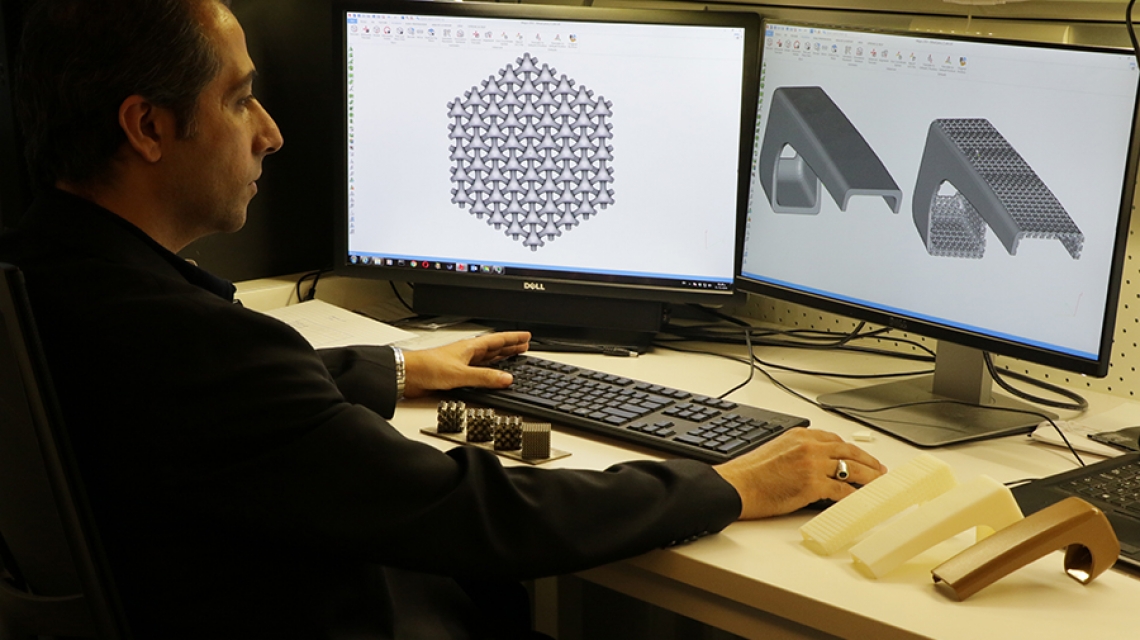
Researchers from the Masdar Institute have leveraged the unique capabilities of additive manufacturing – or 3-dimensional (3D) printing – to design strong, ultra-lightweight ‘architectured foam’ structures that have the potential to make vehicle bodies much lighter and stronger and improve water production and oil and gas operations.

The novel foams can be 3D printed with various materials such as plastics, metals, ceramics, and composite materials to enhance the thermal, electrical and mechanical properties of various engineering systems, including aerospace and automotive structural components. They can be used anywhere there is a need for very strong, lightweight and conductive materials, such as in the aerospace and defense industries, or they can be used in applications that require highly conductive or porous materials, such as the energy, water and medical industries.

“The foam structures have the potential to become a platform technology, driving innovations across key industries and markets,” said Masdar Institute’s Dr. Steve Griffiths, Vice President for Research. “This project demonstrates how Masdar Institute’s strong advanced materials research capabilities support disruptive technology-based innovations in the Institute’s core research areas of water and energy while benefiting other sectors of importance to the UAE.”

Masdar Institute’s Dr. Rashid Abu Al-Rub, Associate Professor of Mechanical and Materials Engineering, is leading this collaborative research through the development of a computer model that can design thousands of different architectured foams. The research has been featured in over five peer-reviewed journals, including Composites Science and Technology.

“The key to the foams’ strength and light weight is in their internal geometry or what we refer to as internal architecture,” Dr. Abu Al-Rub explained.

Similar to how the Eiffel Tower achieves its strength through a lattice of steel beams and struts balanced against open air, Dr. Abu Al-Rub’s cellular materials – which are more than 90% air – achieve their strength through the airy, geometric arrangements of their internal structure.

“We are not creating new materials. Rather, we are re-architecting a given material, such as steel or plastic, by manipulating its internal geometry so that we can deliver the desired properties – whether stiffness, electrical conductivity, or porosity – to the material,” he added.

The model can generate thousands of foam structures, allowing the researchers to select the desired properties of the foam – such as enhanced thermal and electrical properties, lightweight and stiffness. Once designed in the model, the foams are then fabricated with a 3D printer.

The foams can be used as a three-dimensional continuous reinforcement, enhancing the properties of other solid materials, or they can be used independently as standalone foams.

The researchers are engaging with several companies to secure the proof-of-concept funding needed to accelerate the innovative foam’s commercialization.

One of the properties that can be manipulated and tailored by the computer model is the porosity of a structure in order to control the flow distribution of a gas or liquid, which is an important aspect of oil and gas operations, seawater desalination processes, wastewater treatment systems and catalytic converters.

“The foam structures could be used to maximize gas flow, and increase the conversion efficiency of catalytic converters to reduce greenhouse gas emissions from car engines,” said Oraib Al-Ketan, a PhD student working with Dr. Abu Al-Rub.

As the foams’ architectures are extremely complex, they pose a challenge to traditional manufacturing processes. But thanks to recent technological advances in 3D printing (which creates objects by adding material layer by layer), the complex foams can be printed at extremely small dimensions, such as the nano-scale – a size scale a hundred-thousand times thinner than a human hair – or the macro scale – a size scale measured in millimeters. New York University Abu Dhabi’s Dr. Reza Rowshan, Director of Core Technology Platforms Operation, provided valuable collaboration to improve the performance and manufacturability of the 3D printed metallic foams.

“We have introduced a paradigm shift in how materials are being designed. Currently, people design materials based on a material’s existing chemistry, structure and its corresponding properties. Our vision for material design instead looks first at the desired properties you are targeting in a material for a product application and then applies our proprietary design methods to optimize the structure and its’ internal geometry so that it will give you those desired properties,” Dr. Abu Al-Rub said. As a next step in the development of this promising innovation, Dr. Abu Al-Rub is seeking industry collaborators to explore the applications of his 3D printed architecture foams in a number of key UAE sectors.


Erica Solomon
News and Features Writer 
12 June 2016

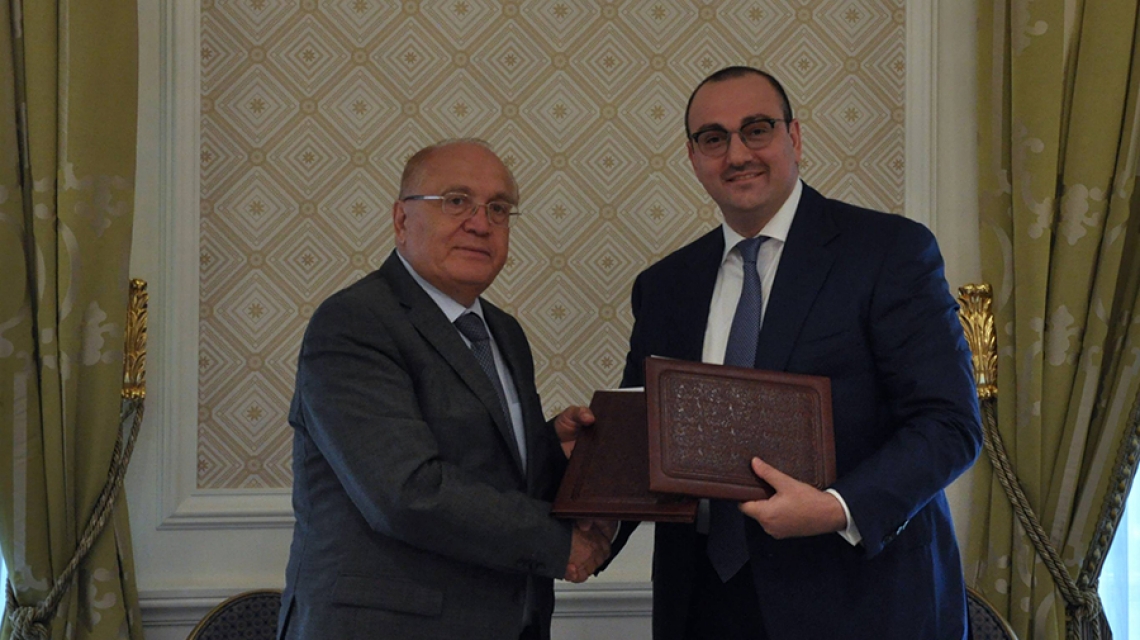
Masdar Institute and Lomonosov Moscow State University Agree to Collaborate on Research and Innovation

The Masdar Institute of Science and Technology and Lomonosov Moscow State University (MSU) have signed an international scientific and technological cooperation agreement to collaborate on conducting educational activities, research and innovation.

The agreement was signed on the sidelines of the 20th St. Petersburg International Economic Forum (SPIEF 2016) by Mohamed Jameel Al Ramahi, Chief Executive Officer of Masdar, on behalf of Masdar Institute, and Victor Sadovnichy, Rector of MSU. Andrey Fedyanin and Tatyana Kortava, both vice-rectors at Lomonosov Moscow State University, also attended the event.

According to the agreement, the two institutions will establish long-term partnerships for joint fundamental and applied research, and investigate the mechanisms for the implementation of joint innovative projects aimed at commercialization of ideas and technological solutions. They will also cooperate on organization of scientific, educational and technological centers (representations) in the Russian Federation and the UAE.

The agreement also lays the ground for a specific research and development (R&D) program in the priority sectors for the UAE and Russia. The program is expected to be launched by January 2017 with initiation of one or more collaborative projects agreed by joint steering committee members.

Al Ramahi said: “Pushing the boundaries of science and translating innovation into viable commercial technologies relies on a culture of collaboration and knowledge sharing across the academic and industry community. Forging closer ties between Masdar Institute and Lomonosov Moscow State University will advance the adoption of clean technologies and alternative energies, and further raise the profile of both the UAE and Russia as global energy leaders.”

Dr. Behjat Al Yousuf, Interim Provost, Masdar Institute, said: “We worked closely with MSU over the past year towards this agreement, which will develop a platform for knowledge transfer for sustainable and clean technology. The landmark agreement will bring about a productive partnership that will benefit the academic and scientific communities in both countries. We welcome this partnership and thank the UAE leadership for their support to all Masdar Institute initiatives.”

V.A. Sadovnichy, Rector, academic of Moscow State University: “The agreement between Moscow State University and the Masdar Institute of Science and Technology is an important step in developing scientific, technical, and cultural collaboration between the Russian Federation and the United Arab Emirates. This partnership will help in combining efforts to find effective solutions to scientific, technical and educational tasks and in developing projects of mutual interest to our countries.”

Since establishment in 2007, Masdar Institute has closely collaborated with the Massachusetts Institute of Technology (MIT), and in the convening years has partnered with other leading institutions including the University of Manchester, Tokyo University, and Tsinghua University.

Masdar Institute’s research activities are driven by a core focus on energy and water support by platform capabilities in microelectronics, materials science, information science and engineering systems. These research focus areas and capabilities cover a diverse range of topics  that  link industry and academia in key UAE sectors.

Clarence Michael
News Writer 
17 June 2016

Research to Make Plastic More Sustainable

Researchers the Masdar Institute have worked on a technology in an attempt to improve the ability of certain plastics to delay oxidation – the natural process that causes food to spoil. The research supports the UAE’s position as a regional leader in the international plastics industry.  

Masdar Institute Assistant Professor of Mechanical and Materials Engineering Dr. Kumar Shanmugam led the research project in collaboration with Abu Dhabi Polymers Company (Borouge) – a petrochemical company that provides innovative, value creating plastics solutions and a joint venture between the Abu Dhabi National Oil Company (ADNOC) and Austria’s Borealis. The resulting plastic provides a better barrier for the preservation, safety and transportation of food, while also being aesthetically pleasing and offering a wide range of uses due to its transparency.

“With the right combination of nano-materials, dosing levels and process parameters, a significant improvement in oxygen barrier performance can be achieved. Therefore, this study is a step toward the development of a commercially viable solution,” said Wim Roels, Chief Executive Officer of Borouge Pte Ltd.

“Partnering with regional industry leaders like Borouge to address their technology challenges is critically important to Masdar Institute’s mission of positioning Abu Dhabi as a knowledge hub and engine for socio-economic growth,” said Dr. Steve Griffiths, Vice President for Research, Masdar Institute.  

“The research by Masdar Institute scientists has been aimed at strengthening the UAE’s petrochemical industry, and in turn, boosting the UAE industrial sector’s share of GDP from the current 10% to the targeted 25% by 2025.”  

Dr. Shanmugam’s research enhances the ability of packaging polymers to prevent oxygen diffusion – when oxygen seeps into sealed food containers and speeds up the food spoilage process – in addition to creating high-quality food containers that retain the freshness of foods for longer.  

Borouge provided the polyethylene and polypropylene resins, while the blending materials were fabricated in the labs of Masdar Institute. Permeation tests to measure oxygen barrier resistance took place at Borouge’s facilities.  

“We developed different nano-composite blends for polymers made out of three different materials – silicate nano-clays, carbon nanotubes and graphene,” Dr. Shanmugam explained.  

The silicate nano-clays, graphene and carbon nanotubes essentially create an obstacle for the oxygen, making it difficult to pass through. Without such a special design, oxygen would permeate straight through the plastic.  

With this new solution, oxygen’s path is obstructed, making the diffusion path more difficult, which significantly reduces the amount of oxygen that passes through the plastic. The research was supported by Masdar Institute’s Post-Doctoral Research Fellow Dr. Yanbin Cui, and Dr. Shailesh Kundalwal, Banting Post-doctoral Fellow, University of Toronto.  

“Each material increased the plastic’s barrier performance, with nanoclay reducing oxygen diffusion by 15%, graphene by 25%, and carbon nanotubes by 40%,” Dr. Shanmguam added.  

Not only do these coatings make it more difficult for oxygen to pass through the plastic and spoil food, they also increase the plastic’s longevity by preventing the plastic layers from splitting apart. Thus, the nano-coatings could help to produce long-lasting containers, which would in turn reduce the number of containers that end up in dust bins and landfills, resulting in both financial and environmental savings.

While graphene and carbon nanotubes have a higher barrier performance, they made the plastic less transparent and dark. Nanoparticles offered the best of both worlds – transparency and improved barrier performance.  

Dr. Shanmguam believes that graphene- and carbon nanotube composite polymers could be very well suited in other applications, where oxygen diffusion is undesirable and transparency is not required, such as in underground pipes, including oil and gas pipelines.

Masdar Institute’s research and development efforts to enhance the plastics produced by local petrochemical manufactures such as Borouge ultimately are intended to give the country a significant competitive advantage in the plastics market. 

Erica Solomon
News and Features Writer
27 June 2016

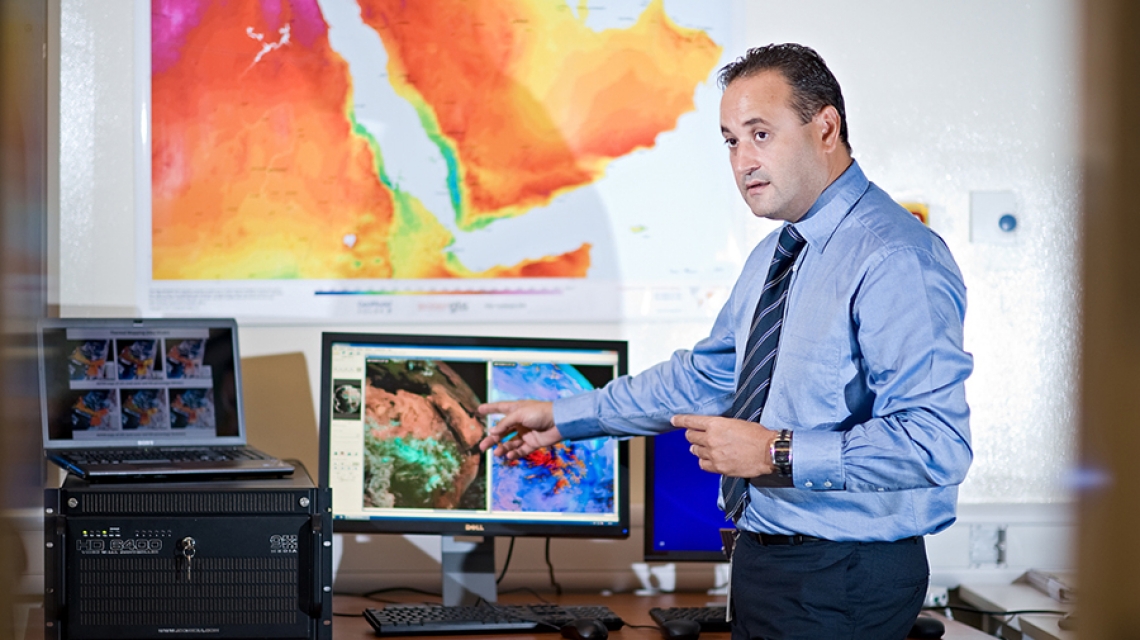
Real-Time Dust Storm Forecasting

When a severe dust storm hit the Middle East back in April 2015, extremely low visibility resulted in hundreds of road accidents, dozens of flight delays, and even school closures. Not only was this arguably the most severe dust storm of the year, it also marked an important achievement for a team of researchers at the Masdar Institute of Science and Technology – the dust storm validated the researchers’ dust model, which simulated the dust storm ahead of time, making it one of the most effective dust models to date for predicting dust storms in the region.

The web-based forecasting system is available online at http://atlas.masdar.ac.ae/forecast/.

“This is a turning point in the region’s ability to properly manage the impacts of dust storms. With access to accurate forecast of dust events and sandstorms, people can better prepare for them. This information will be extremely useful for the transportation sector, as it will help show motorists, pilots and air traffic controllers where the dust will be and for approximately how long,” said Dr. Hosni Ghedira, Director of the Research Center for Renewable Energy Mapping and Assessment (ReCREMA) and Professor of Practice at Masdar Institute.

By being able to better predict the UAE’s dust storms, the country can more effectively and efficiently manage its agricultural sector, renewable energy infrastructure, transportation, health, environment and climate policy – key socio-economic sectors affected by dust storms – and provide advanced warning ahead of extreme dust events in order to reduce risk to human life.

Dr. Ghedira is part of the research team that is the first to use the advanced chemistry-transport model called CHIMERE over the Middle East to simulate dust concentrations across the region. CHIMERE is an open source model for air quality forecasting and simulation that enables researchers to enter weather and land surface parameters such as wind speed, relative humidity, air temperature, and soil composition over a specified region to produce forecasts of atmospheric ozone, aerosols and other pollutants and run simulations for emission control scenarios.

Other members include Post-Doctoral Researcher Dr. Naseema Beegum Shyju, Research Scientist Dr. Imen Gherboudj, and Research Scientist Dr. Naira Chaouch. The work was also performed in close collaboration with research partners at King Abdulah City for Atomic and Renewable Energy (KACARE), Saudi Arabia.

“Other dust models exist, but they are not really providing an exact estimation of aerosols over the region,” explained Dr. Ghedira.

“CHIMERE is able to forecast spatiotemporal variability of the dust storms in reasonably good accuracy,” he added.

Because the UAE’s dust does not originate in the UAE – it is transported mostly from the Empty Quarter (the world’s largest sand desert encompassing most of the southern third of the Arabian Peninsula), Iran, and North-Africa – the model covers the wider Middle East region, including the Arabian Peninsula, the eastern coast of Africa that borders the Red Sea, and the southern part of Iran.

The dust forecasting system is similar to the UAE Solar (http://solaratlas.masdar.ac.ae/) and Wind (http://windatlas.masdar.ac.ae/) Atlases created by ReCREMA. The atlases provide near-live satellite maps of the UAE’s solar and wind resources. Both are publicly available and have been integrated into the Global Atlas for Renewable Energy platform of the International Renewable Energy Agency (IRENA).

In a region full of dust, there are few chemistry-transport models that simulate the atmospheric dust cycle, which influences the weather system and in turn society and key economic sectors. Researchers at Masdar Institute are responding to this through several dust-focused research projects, including a comprehensive characterization of the UAE’s dust – where it comes from, average duration and frequency of dust storms throughout the year, and its effect on the atmosphere. This research has found that severe dust storms are occurring more frequently in the UAE, accelerating the need for a reliable and accurate dust forecasting system for the region.

Other researchers are developing dust-resistant and self-cleaning solar panels, to help mitigate the effects of dust storms on the country’s renewable energy resources.

The limited visibility produced by dust storms cause road accidents and flight delays and can severely damage aircrafts. The high levels of mineral dust and other pollutants wafted into the air during a dust storm can trigger asthma, respiratory diseases, and other infectious diseases. Dust storms can also render solar panels ineffective and can have detrimental effects on agricultural crops. Thus, through the configured and calibrated dust forecasting system at Masdar Institute, the UAE will be better equipped to prepare for and tackle the negative impacts of dust storms.

Erica Solomon
News and Features Writer
18 July 2016

Masdar Institute Faculty Publish Book on Next-Generation Microchips

Faculty members from the Masdar Institute of Science and Technology have contributed to the scientific advancement of next-generation integrated circuits and documented their contributions in a new book on 3-dimensional (3D) stacked chips.

Masdar Institute’s Dr. Ibrahim Elfadel, Professor of Electrical Engineering and Computer Science, is the book’s co-editor, along with Dr. Gerhard Fettweis, the Vodafone Chair at the Dresden University of Technology (TU Dresden). The book, titled “3D Stacked Chips: From Emerging Processes to Heterogeneous Systems”, is published by Springer, one of the leading international science and technology publishers.

Dr. Behjat Al Yousuf, Interim Provost, Masdar Institute, said: “As Masdar Institute commemorates 2016 as the UAE’s Year of Reading, Dr. Elfadel’s recent book publication underscores the significant role our faculty members play in the organization, documentation, and dissemination of cutting-edge knowledge for readers in the UAE and around the world. It also highlights their contributions to expanding the horizons of technological and scientific literacy through their research publications.”

The book, which is composed of 17 chapters, presents a comprehensive review of the research conducted under the framework of the Masdar Institute-TU Dresden Twinlab 3D Stacked Chip Research Center (3DSC), a collaborative research center that, from November 2012 till its closure in October 2015, brought together teams of semiconductor experts from both universities to advance the energy-efficiency and performance of 3D integrated chips. Dr. Elfadel served as the TwinLab 3DSC’s director.

“This book represents an important milestone for the Masdar Institute as it documents the research conducted under one of our earliest sponsored research programs, namely, the Mubadala-funded TwinLab on 3D Stacked Chips in collaboration with the TU Dresden,” said Dr. Elfadel.

The book features forewords from Eva-Maria Stange, the Saxon State Minister for Higher Education, Research and the Arts, and Ibrahim Ajami, Executive Vice President and Chief Strategy Officer at GLOBALFOUNDRIES. 

In recognition of the valuable role the collaborative research played in developing the book and contributing to the advancement of semiconductor technologies, Ajami said: “I very much hope that the path-breaking partnership that has enabled this research will become more bonded and that more contributions of technological relevance will result from it.”

Dr. Fettweis also acknowledged the importance of collaboration to the book’s development, saying: “This book is the culmination of three years of research work at Dresden and Abu Dhabi on a joint theme that is at the cutting-edge of semiconductor technology. This collaboration would not have been possible without the strong support we have received from the Abu Dhabi – Saxony Partnership Committee. We hope that TwinLab 3DSC will serve as a template for future collaborative work across national boundaries on research topics of global significance and local relevance.”

A 3D stacked chip layers two or more integrated circuits – which are made of millions and sometimes billions of inter-connected transistors on a piece of silicon – into a single, vertically-connected circuit. In the same way progress in elevator technology enabled structural and civil engineers to build taller skyscrapers, it is the progress in vertical interconnect technology that is enabling semiconductor process and design engineers to build 3D stacked chips.

The book chapters explain how 3D chip stacks promise to enhance the integration and functionality of electronic systems while reducing their physical footprint.  The book also discloses several innovative stacking methods that could significantly improve chip performance and enable the seamless integration of 3D stacked chips.

Erica Solomon
News and Features Writer
20 July 2016