Pilot Program Launched to Develop Collaborative Platform for Integrated Circuit Design in the UAE

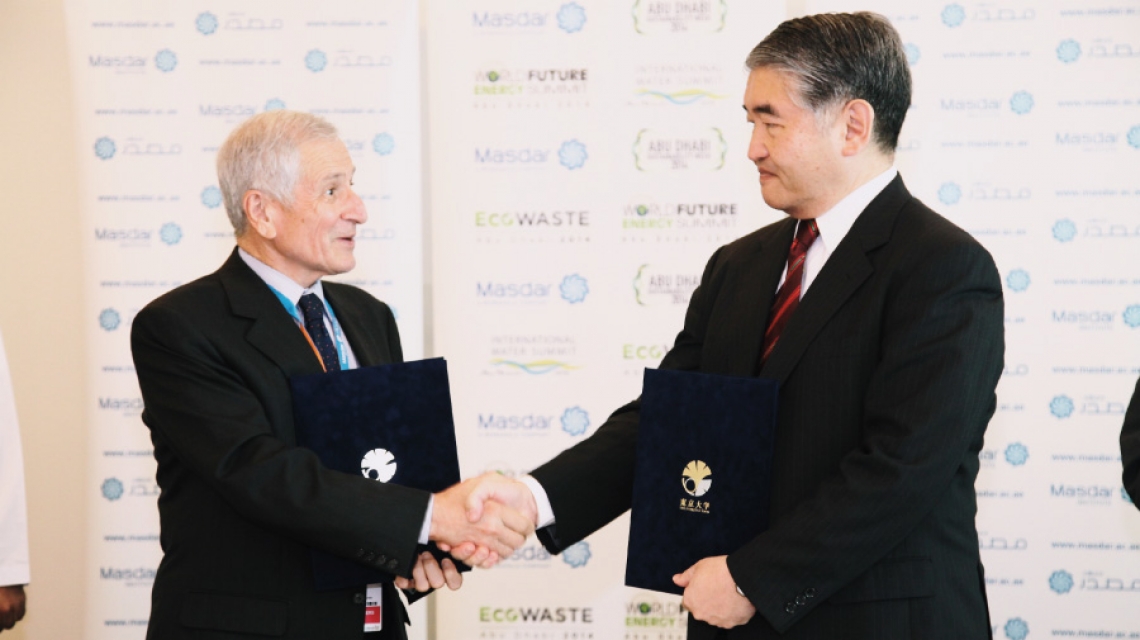
Singapore and Abu Dhabi, UAE, Dec. 11, 2014 – In collaboration with Masdar Institute of Science and Technology, Khalifa University, and Semiconductor Research Corporation (SRC), Silicon Cloud International, a provider of secure and private cloud computing infrastructure, announced today the successful deployment of a pilot program for a cloud based semiconductor design workflow in the UAE. The pilot program included participation from professors and researchers from Masdar Institute, Khalifa University, American University of Sharjah, UAE University, NY University – UAE Campus, and Higher Colleges of Technology. Masdar Institute hosted the launch kickoff event.

“Silicon Cloud’s environment is used to guarantee consistency of the virtual platform, the tools used, and the data generated with laser focus on IP protection and security,” said Dr. Ibrahim Elfadel, Head of the Institute Center for Microsystems (iMicro) and Professor, Microsystems Engineering, Masdar Institute.

Masdar Institute’s iMicro provides strategic and operational direction to basic and applied microsystems research to generate knowledge and technologies that will help the UAE lead in microsystem devices and materials research, process technology, circuit and system design, as well as photonics. iMicro also works with MEMS TwinLab, jointly led by Masdar Institute and the Institute of Microelectronics (IME) Singapore.

Silicon Cloud provides an end to end semiconductor design infrastructure that is maintenance-free and provisioned with the latest semiconductor process technologies, production grade workflows, semiconductor Intellectual Property (IP), and Electronic Design

Automation (EDA) software. Silicon Cloud’s common and consistent infrastructure enables global semiconductor development and research collaboration, improves time to market, and provides secure access to leading edge EDA tools, process libraries and IP cores.

“SRC believes Silicon Cloud International’s design cloud will greatly enhance and facilitate university research in design of integrated circuits at Masdar, Khalifa and other key universities in the area,” said Steve Hillenius, Executive Vice President of SRC.

“Cloud based collaboration, consistency of design platform, and high performance computing are essential components for enabling the next wave of semiconductor designs, driven by Internet-of-Things devices,” noted Mojy Chian, CEO and co-founder of Silicon Cloud International. “Silicon Cloud is at the forefront of providing these capabilities and technologies.”

For more information, please visit www.siliconcloudinternational.com 

Masdar Institute Enters the Year of Innovation with a Significant Head Start

Abu Dhabi-UAE: 23 December, 2014 – The Masdar Institute of Science and Technology is entering 2015 with a healthy profile of noteworthy contributions to the development of innovative human and intellectual capital in the UAE, including novel inventions and awards.

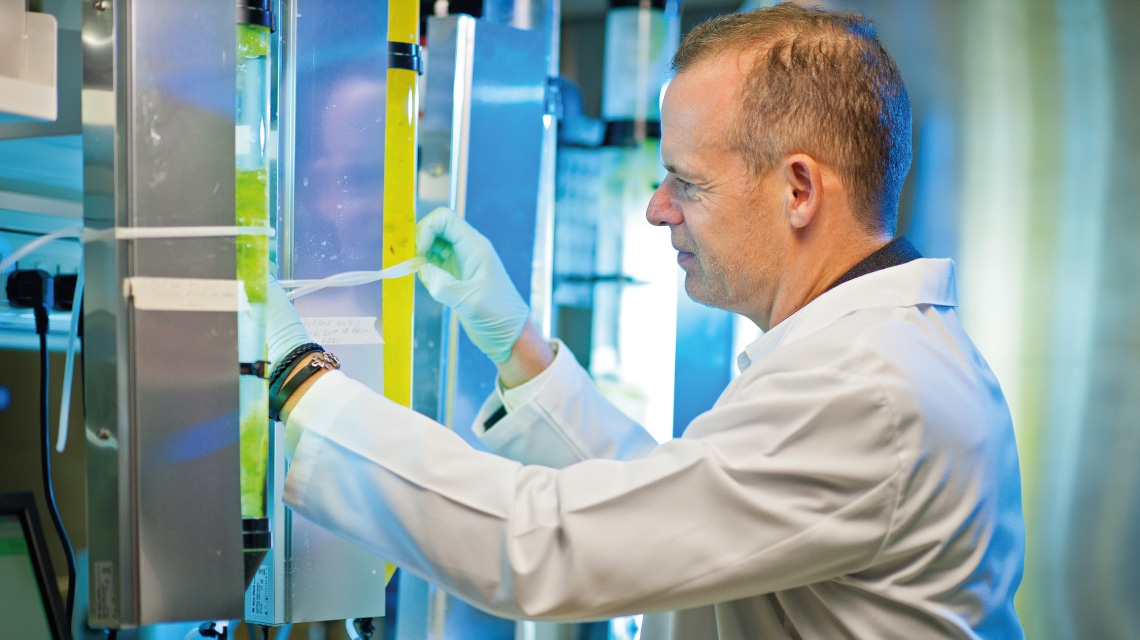
In this month alone, a Masdar Institute PhD student was selected from over 137,000 UAE Nationals to receive one of 43 Medal of Top Emiratis awards for his novel research in the extraction of high value compounds from algae naturally occurring in the Abu Dhabi desert. Days earlier, Masdar Institute was ranked among the ‘Best Arab Region Universities’ for research excellence according to the 2015 US News & World Report’s inaugural ‘Best Arab Region Universities’ list.

With four approved US patents, 42 patent applications pending and 69 invention disclosures achieved since inception, Masdar Institute also saw its novel research outcomes reach new highs. Patents and inventions are considered a key measure of innovative performance within a university, company or country.  These research-focused achievements are the result of Masdar Institute’s dedication to innovation, technology and development in the UAE.

Dr. Fred Moavenzadeh, President, Masdar Institute, said: “As we progress steadily, each year has brought tremendous growth in developing intellectual property, building human capital and creating a knowledge base. Crucial to our success is the support of the UAE leadership, for which we remain grateful. We believe our growth will multiply manifold in the future, laying the ground for Masdar Institute to increase its role as an innovation accelerator.”

The research-based institution’s faculty, post-docs and students have published over 500 papers in peer-reviewed journals as well as four book chapters and two full books, and participated in over 380 conference proceedings. These activities demonstrate the value and validity of Masdar Institute’s research in the international academic and scientific communities and contribute to Abu Dhabi’s global standing in R&D, innovation, and the related industrial sectors.

Masdar Institute had started off 2014 with the launch of its five Institute Research Centers (iCenters), which consolidate its research activities. The iCenters have since provided fresh momentum to Masdar Institute’s pursuit of solutions to real-world problems, with tangible research outcomes and academic and industrial collaborations. Throughout the year, each iCenter also hosted a number of international conferences, gathering experts in water and environment, smart infrastructure, clean energy, semiconductors and advanced technology.

The Institute Center for Innovation and Entrepreneurship (iInnovation) works to nurture promising research projects across Masdar Institute with guidance, support and funding towards commercialization, to help accelerate the pace of innovation and entrepreneurship in the UAE. As part of its mission, iInnovation organized several though-leadership conferences in collaboration with the Massachusetts Institute of Technology (MIT) and partners including BP. Additionally, the inaugural BP Innovation Scholarships were awarded to two students to work towards creating new technology-based businesses. Four grants were also announced under the Masdar Institute and MIT Innovation Program (MMIP) to fund research projects run jointly by faculty members at both institutions. The MMIP is focused on achieving commercial applications from research performed across various iCenters.

An important global collaboration was signed during 2014 with NEST AS, a Norwegian company developing large-scale thermal energy storage (TES) technology, to build a pilot facility at ‘Beam Down’ solar concentrator – a 100 kWth concentrated solar power (CSP) pilot plant. Masdar Institute is transforming the ‘Beam Down’ facility into a platform for development of TES systems, concentrated solar power (CSP) components, and related activities.. The NEST project aims to develop a modular, scalable system for high temperature thermal energy storage, to demonstrate cost-effective, flexible and scalable solutions for the global renewable energy sector.

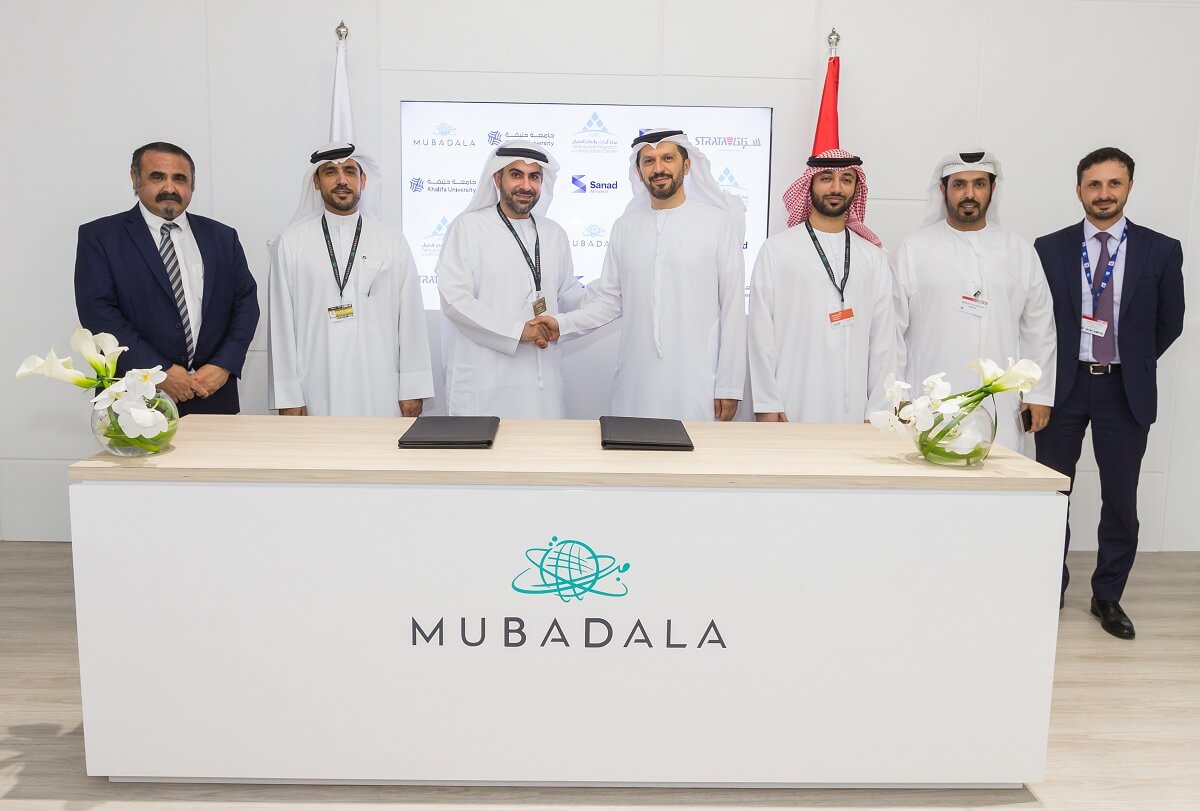
Among local collaborations, Masdar Institute signed a two-year research collaboration with Tadweer, the Center of Waste Management – Abu Dhabi, to improve the process for the production of biodiesel from waste cooking oil. Another partnership with Strata Manufacturing, an advanced composite aero-structures manufacturing facility fully owned by Mubadala Development Company, is focusing on developing novel and advanced non-destructive testing systems and methods for aerospace structures.

Masdar Institute diverse student body achieved placement among the top 10 finalists out of 652 entries submitted for the Telecom Italia Big Data and Trentino Open Data Challenge 2014. The competition entry titled ‘Misery Loves Company,’ presented by the Masdar Institute Social Computing & Artificial Intelligence Lab, investigated the relationship between communication between different geographic areas within an urban center and the ‘happiness’ levels in those areas, as measured by social media content production.

Locally, Masdar Institute also won three awards – an R&D Shield and two ‘R&D Research Top Ideas’ at the ADNOC Research & Development Academic Conference (ADRAC) & Exhibition 2014. These awards firmly cement the status of Masdar Institute as a leading academic institution that contributes to the UAE’s advancement in research of importance to key industry sectors in the UAE.

The Institute has played host to a number of dignitaries in 2014 through the continuation of the Masdar Institute Distinguished Lecture Series. Illustrious speakers at this year’s series have included: Her Highness Sheikha Lubna Al Qasimi, UAE Minister for International Cooperation and Development; His Excellency Ólafur Ragnar Grímsson, President of Iceland; Badr Al Olama, Chief Executive of Strata Manufacturing; His Excellency Patrick Hennessey, Irish Ambassador to the UAE; and Dr. L Rafael Reif, President of the Massachusetts Institute of Technology. 

Masdar Institute also received approval for its ninth Master’s program from the Commission for Academic Accreditation of the Ministry of Higher Education and Scientific Research this year. The Sustainable Critical Infrastructure Program, launched in Fall 2014, offers learning in integrated sustainable infrastructure planning and development, with an initial focus on urban operations planning and transportation systems.

The 2014 year also saw the largest commencement ceremony to date, with 130 students from the Class of 2014 receiving their graduation certificates at Masdar Institute’s fourth annual commencement. A total of 491 students are currently pursuing studies at Masdar Institute, of which nearly half are UAE nationals.

Masdar Institute’s mission is to position Abu Dhabi as a knowledge hub and an engine for socio-economic growth. Its research-focused degree programs in clean energy and advanced technologies aim to produce the innovative human and intellectual capital required for the UAE’s high-tech competitive knowledge economy.

Masdar Institute currently offers nine Master’s programs and a doctorate in interdisciplinary engineering that impact areas targeted in the UAE National Innovation Strategy, including renewable energy, transport, education, health, technology, water and space.

Near-Live Solar Energy Satellite Maps Now Mobile, Thanks to New Masdar Institute App

Abu Dhabi-UAE: 20 January, 2015 – The Masdar Institute of Science and Technology an independent, research-driven graduate-level university focused on advanced energy and sustainable technologies, today announced that its Research Center for Renewable Energy Mapping and Assessment (ReCREMA) has developed a mobile application to access satellite maps of wind and solar energy resources in the UAE.

Dr Fred Moavenzadeh, President, Masdar Institute, said: “The mobile application reflects our commitment to innovation that makes clean energy resources available in the digital arena. With the support of the UAE leadership, we have evolved into an institution that contributes to developing digital tools in future energy. We believe the mobile app developed at Masdar Institute will further encourage wider adoption of sustainable sources while motivating others to seek similar innovative digital solutions.”

The Solar Mobile Application will allow users to access solar resource information for their location, in near real-time through their GPS enabled smart phones using the unique satellite-based solar mapping algorithm developed at Masdar Institute. The mobile application “UAE LiveSolar” is currently available for download on iTunes for Iphone and Google Play for Android devices. It will soon be available for Windows mobile platforms.

The mobile app is on display at the Masdar Institute stand (5350) at the World Future Energy Summit (WFES) 2015 that is being held from 19-22 at the Abu Dhabi National Exhibition Center (ADNEC).

Dr Hosni Ghedira, Director, ReCREMA, and Professor of Practice, Masdar Institute, said: “Being able to interact with this data using a mobile device is a great advance following the current trend of making such information systems more ubiquitous. This mobile application is ready to use anywhere in the world provided that solar radiance or radiation data is available, including the UAE.”

Moreover, the UAE Solar Atlas produced by Masdar Institute is also accessible through the mobile app. Its yearly and monthly maps are included in the mobile application, allowing users to interactively access their values and evaluate monthly and yearly variations.

With this app, resource maps with DNI, DHI and GHI values for the latest available data are also available as well as charts showing the latest values for these three solar components at the user’s current location. Yearly and monthly maps from the UAE Solar Atlas are also available allowing users to interactively access their values and evaluate monthly and yearly variations.

Sustainable Bioenergy Research Consortium awards contract to construct innovative agriculture and energy pilot project at Masdar City

ABU DHABI, Jan. 20, 2015 – Based on ground-breaking research at the Masdar Institute of Science and Technology, the Sustainable Bioenergy Research Consortium (SBRC) today announced it is awarding a contract to International Mechanical & Electrical Co. L.L.C. (IMECO) to construct the world’s first bioenergy pilot project to use desert land – irrigated by seawater – to produce both bioenergy and food. The pilot project is expected to be operational by late summer.

“This remarkable research has enormous implications for harmoniously producing food and fuel in water- and arable land-constrained regions,” said Masdar CEO Ahmad Belhoul. “Considering that about 20 percent of the world’s land is desert and 97 percent of the world’s water is salt water, this approach turns a land and water resource scarcity problem on its head by creating a bioenergy solution applicable in countries around the globe.
“As the UAE enters the Year of Innovation, bioenergy research will continue to be a key area of focus for Masdar and will help to position our nation as one that incubates and exports knowledge,” Dr. Belhoul added.

SBRC’s announcement was made during Abu Dhabi Sustainability Week (ADSW), the Middle East’s largest gathering of international leaders to address the interconnected challenges of energy and water security, climate risk and sustainable development. Hosted by Masdar, Abu Dhabi’s renewable energy company, ADSW includes the World Future Energy Summit and the International Water Summit.

“Masdar Institute is in pursuit of solutions to the water-food-energy nexus, which is being taken to the next level through this contract, and would like to thank the UAE leadership for their continuing support to address the country’s needs for sustainable food, fuel, and water security through such efforts. Collaborative undertakings like the one we are engaged with through the SBRC will enhance our ability to sustainably meet the UAE’s growing needs,” said President of Masdar Institute Dr. Fred Moavenzadeh.

Masdar Institute, together with Etihad Airways, The Boeing Company and Honeywell UOP, founded the consortium. Safran and GE have since joined.
“The Masdar Institute research is truly game-changing for large-scale biofuel production,” said Barbara Bramble, chair of the Roundtable on Sustainable Biomaterials (RSB), which provides and promotes the global standard for socially, environmentally and economically sustainable production and conversion of biomass. “This project puts the UAE at the forefront of a global movement to create sustainable, alternative fuels that support – not compete with – food production and fresh water conservation.”

The research is funded through the SBRC, established to advance the aviation industry’s commitment to sustainable business practices by developing technology with the promise of producing a clean, alternative fuel supply.

“This project is a great example of the public-private collaborations Etihad believes are essential to stimulating innovation and driving real change within the transportation industry,” said James Hogan, president and CEO, Etihad Airways.

“Boeing is proud to take this important, new step with our partners, Etihad Airways and Masdar Institute, to further one of the most innovative biofuel projects available globally in the United Arab Emirates,” said Jeffrey Johnson, president, Boeing Middle East. “The research leadership and collaboration at the SBRC will support the country’s efforts to innovate for the long-term sustainable growth for commercial aviation here and around the world.”

The project is based upon an integrated, closed-loop system. The technology uses coastal seawater to raise fish and shrimp for food, whose nutrient-rich wastewater then fertilizes plants rich in oils that can be harvested for aviation biofuel production. The plants thrive in arid, desert conditions and don’t require fresh water or arable land to grow. Lastly, the effluent is diverted into cultivated mangroves being discharged back into the sea, further removing nutrients and providing valuable carbon storage.

The goal of this pilot project is to demonstrate the integrated bioenergy process as a commercially viable and sustainable system with respect to essential food and fuel production, suitable land use, reduced carbon emissions and wastewater clean-up.
Studies have shown that sustainably produced aviation biofuel reduces carbon emissions by 50 to 80 percent through its lifecycle. More than 1,600 flights have used sustainable aviation biofuel blended with conventional petroleum jet fuel since renewable jet fuel was approved for commercial use in 2011.

Masdar Institute Calls for Focus on R&D-Innovation Ecosystem to Spur Sustainable Economic Growth

Abu Dhabi-UAE: 26 February, 2015 – Although research, development and innovation are related, they are distinctly different. Investing in research and development generates knowledge and new technology, whereas promoting innovation generates business activity and spurs economic growth. This is why the Masdar Institute of Science and Technology places a major emphasis on contributing to developing the UAE’s innovation ecosystem.

“In order to achieve sustainable economic growth from innovation, an optimally developed ecosystem is required to integrate innovation and R&D. This can come only through the combined efforts of various stakeholders, including business/commercial entities, state-owned enterprises, large foreign companies, and small and medium enterprises (SMEs),” said Dr Steve Griffiths, Executive Director, Office of Institute Initiatives, Masdar Institute, during the Defense Innovation & Technology Conference (DITEC) 2015. 

Highlighting the relevance of Masdar Institute’s research agenda, Dr Griffiths remarked that the key to successful collaboration between universities and industrial partners is to engage in research collaborations that achieve tangible outcomes while at the same time promoting human capital development and knowledge creation. At Masdar Institute this is accomplished through a focus on “use-inspired” research, which is research that aims to achieve the practical outcomes sought by industry while also seeking to achieve the fundamental understanding that faculty and students can provide through deeper exploration of research topics.

Dr Griffiths said Masdar Institute’s current partnerships in the aerospace and defense sector include collaborations with Boeing, Mubadala Aerospace, Tawazun, Lockheed Martin, and other leading corporate entities. Through these collaborations, Masdar Institute continues to drive innovation in the strategic areas as directed by the UAE and Abu Dhabi economic development strategies, he added.

He added that graduate universities such as the Masdar Institute play a key role in innovation through development of trained human capital and low-to-mid technology-readiness level R&D to generate knowledge, solutions and intellectual property.

The remarks from Dr Griffiths came while he was participating in an industry -academia R&D panel discussion titled ‘How industry and academia can collaborate to optimize industry resources and utilize existing academic capabilities in order to catalyze advanced research and technology output.’

Themed ‘Advancing Defense Inventors & Technology: ‘From Ideas to Application,’ DITEC 2015 was hosted by the Abu Dhabi Technology Development Committee and sponsored by Takamul with the strategic partnership of the UAE’s Ministry of Defense. The event was held along the International Defense Exhibition and Conference (IDEX) 2015 at the Abu Dhabi National Exhibition Center (ADNEC).
 
Masdar Institute currently has four Institute Research Centers (iCenters), an innovation and entrepreneurship center (iInnovation), and five sponsored research centers, driving innovation in clean energy and advanced technology areas. By the end of January 2015, Masdar Institute had six issued patents, 52 pending patent applications, with 82 invention disclosures, firmly establishing itself as a leading academic institution that is driving intellectual property. At present, there are 348 students in nine Master’s programs and 143 students in the PhD program enrolled in Masdar Institute.

The four iCenters are Institute Center for Energy (iEnergy), Institute Center for Water and Environment (iWater), Institute Center for Microsystems (iMicro), and the Institute Center for Smart and Sustainable Systems (iSmart). These iCenters serve as interfaces for external engagement and they help define the key UAE R&D needs and guiding translational and applied R&D.

iInnovation (the center of innovation) offers several avenues to students to encourage innovation such as the Technology Management, Innovation and Entrepreneurship (‘TMIE’) within the Engineering Systems and Management program. Moreover, the ‘Technopreneurship’ Boot Camps provide faculty and students with experience, insights, and training for technology innovation. Innovation scholarships are also offered for MSc students who may establish startup companies before graduation.

Through use-inspired research, Masdar Institute’s iInnovation aims to translate discoveries and inventions into innovations that benefit industry and generate new companies. It also organizes seminars and forums on innovation and entrepreneurship annually.

At Masdar Institute, Dr. Griffiths has overall responsibility for research, including large-scale, collaborative research programs and centers, research development, sponsored programs, technology transfer, and research laboratories. Additionally, Dr. Griffiths has an active role in multiple industry, research and innovation bodies outside of Masdar Institute, including the Middle East Solar Industry Association (MESIA) Board of Directors and the Zayed Future Energy Prize Selection Committee. Dr. Griffiths is an associate editor, a member of the editorial board of the international journal Energy Strategy Reviews, and author of various works in the energy policy and energy strategy fields.

Masdar Institute-University of Tokyo to Tackle Regional Security Through Better Water-Energy-Food Management

Abu Dhabi-UAE: 01 March, 2015 – The Masdar Institute of Science and Technology, an independent, research-driven graduate-level university focused on advanced energy and sustainable technologies, and the University of Tokyo today announced a special joint seminar to support regional security through proper management of the water, energy and food nexus.

To be held on 3 March at the campus by the Masdar Institute’s Center for Smart and Sustainable Systems (iSmart), the seminar titled ‘Nexus of Energy-Security and Water-Energy-Food’ will be led by faculty and graduate researchers. They will highlight the trajectory of the successful collaboration between the Masdar Institute and the University of Tokyo, including implementation of joint research and joint symposia, exchange of research materials, and publications in water, energy and food-related research. Moreover, the seminar will also cover the important role of the Japan International Cooperation Center (JICE) in facilitating the internships of Masdar Institute’s Emirati students with leading companies in major Japanese industries.

Other research reports that will be presented at the seminar will include electricity trading among Gulf Cooperation Council (GCC) countries, ‘Feed-In-Tariff’ schemes, presentations on working with Fundacion Capital, a non-government organization (NGO) in Colombia, South America, and challenges faced by Central Asian countries in the construction of the Rogun dam.

Dr Fred Moavenzadeh, President, Masdar Institute, said, “The seminar with The University of Tokyo reflects the long-term collaboration in strategic areas between two world-class research-based institutions. The discussions will bring out the extent of research conducted by faculty and students in the interconnectivity of water, energy and food sectors and their role in the regional economic growth.”

From The University of Tokyo, graduate student Aoi Minamisaka will present his views on ‘The Effect of Electricity Trade on Regional Cooperation: The Analysis of SAARC using Game Theory.’ Graduate students Ryota Doi and Gun Matsuo will discuss ‘Security Implications of Planned Electricity Trade in the Middle East.’ A paper on ‘Water-Energy-Food Nexus in Central Asia’ will be analyzed by Dr. Mikiyasu Nakayama, Professor, Department of International Studies, Graduate School of Frontier Sciences.

From Masdar Institute, Dr. Mohamed Omar, Head of iSmart, and Associate Professor, Engineering Systems and Management, will speak about ‘University of Tokyo and Masdar Institute: A Positive Example of a Collaboration Framework,’ while Dr. Sameh El Khatib, Assistant Professor, will present his views on ‘Modeling a Nexus: Where to Start.’

Since signing the collaboration agreement in January 2014, the two institutions have steadily expanded their joint research activities. In addition, the collaboration also covers an annual internship program, which is sponsored by the Ministry of Economy, Trade and Industry of Japan (METI) and organized by JICE. The JICE internship offers Emirati students exclusive professional experience at leading Japanese corporations, as well as advance learning opportunities with the latest research and development in clean technologies.

Masdar Institute Captures Prominent Role at the 2015 UAE Graduate Students Research Conference

Abu Dhabi-UAE: 23 March, 2015 – The Masdar Institute of Science and Technology, an independent, research-driven graduate-level university focused on advanced energy and sustainable technologies, today announced its graduate students are among the strongest  contributors in terms of accepted papers in the ‘engineering and physical sciences’ track for the UAE Graduate Students Research Conference (GSRC) 2015 taking place in Abu Dhabi.

Masdar Institute’s share in ‘engineering and physical sciences’ works out to 36% – that is 79 out of the 221 of all accepted papers in this category. A total of 302 papers have been accepted in the conference’s four total tracks – ‘arts humanities and social sciences,’ ‘clinical pre-clinical and health,’ ‘engineering and physical sciences,’ and ‘life sciences.’ Masdar Institute’s share in the total accepted papers is 26% – representing a total number of 80 across all tracks.

“The number of papers from Masdar Institute and their scope of research topics illustrate our interdisciplinary nature and the depth of our academic programs in clean energy and advanced technologies,” said Dr. Mohamed Sassi, Dean of Faculty, and Professor of Mechanical Engineering, Masdar Institute. “We have witnessed remarkable enthusiasm and motivation amongst our Master’s and PhD researchers and commitment among our faculty advisors in achieving this high number of submissions,” he added.

Masdar Institute researchers submitted papers on a wide range of locally-relevant topics. The papers on some of the locally-relevant projects includinge the development of smart sensors for detecting and monitoring impurities inside oil pipelines, recycling of industrial waste-based innovative materials in the UAE for high-temperature thermal energy storage applications, and dust mapping and monitoring of dust in the UAE through the use of ground and satellite data.

Held under the patronage of His Highness Sheikh Hamdan Bin Mubarak Al Nahyan, Minister of Higher Education and Scientific Research, the UAE GSRC is an interdisciplinary academic event that aims to share graduate-level research being conducted at universities across the UAE, as well as internationally.

The event is organized from 22-24 March 2015 by the Khalifa University of Science Technology and Research and is sponsored by the Abu Dhabi Education Council (ADEC). The conference seeks to provide opportunities for UAE graduate students to share their research work, receive scholarly feedback and network professionally.
 
Of the total 79 papers in the ‘engineering and physical sciences’ track that are from Masdar Institute, 11 papers focus on ‘materials science,’ while topics such as ’computer and information science’ and ‘mechanical engineering’ have attracted nine papers each. Eight papers focus on ‘electrical and electronic engineering’ and ‘chemistry and chemical engineering,’ while seven relate to ‘water.’

Masdar Institute submitted six papers in the topics of ‘earth and environmental engineering’ and ‘micro/nano-systems,’ four papers on ‘energy and fuels;’ three on ‘civil engineering,’ and two on the topics of ‘petroleum’ and ‘other topics in engineering and physical sciences.’ The topics such of ‘transportation and logistics,’ ‘operations research and management science,’ ‘bioinformatics,’ and ‘information security’ received one paper each.

The UAE GSRC 2015 looks to enable graduate students to showcase their innovative scholarship to various sectors of industry and government, and get feedback on practical aspects that may enhance the value of their research. Prospective graduate students will be able to learn about the various research opportunities available at the participating academic institutions.

Since its inception in 2007, Masdar Institute has published over 450 papers in peer-reviewed journals, as well as 340 conference proceedings, 19 book chapters, and two full books. Its students and faculty continue to participate in local and international events, presenting their scientific papers and posters. More recently in December 2014, a paper titled ‘Racing With and Against the Machine: Changes in Occupational Skill Composition in an Era of Rapid Technological Advance,’ co-authored by a Masdar Institute UAE national faculty with Massachusetts Institute of Technology (MIT) faculty, won the prestigious International Conference on Information Systems (ICIS) Award for ‘Best Conference Paper’ at the ICIS 2014 held in Auckland, New Zealand.

Masdar Institute Launches Official IEEE Geoscience and Remote Sensing Society

Abu Dhabi-UAE: 30 March, 2015 – Masdar Institute of Science and Technology, an independent, research-driven graduate-level university focused on advanced energy and sustainable technologies, today announced that it  has received approval for the formation of the UAE Chapter of the Institute of Electrical and Electronics Engineers’ (IEEE) Geoscience and Remote Sensing Society (GRSS).

The letter of approval and the geo-code have been received by the UAE chapter, which has started the process of contacting professionals working in the field of remote sensing in the UAE. As part of the activities during the first year, the UAE Chapter will host a series of distinguished lecturers sponsored by the IEEE GRSS, along with organizing local meetings to share technical interests and foster collaborations.

The IEEE GRSS Chapter can also provide technical support to host remote sensing conferences in the UAE. In this regard, the chapter has already won the bid to host the Joint Urban Remote Sensing Event (JURSE) 2017 in Abu Dhabi and is planning to organize several regional workshops with active support from the Abu Dhabi Education Council and Abu Dhabi Tourism and Culture Authority.

“The main aim of establishing the IEEE GRSS chapter is to foster remote sensing research in the UAE,” said Dr. Prashanth Marpu, Chair, UAE Chapter of the IEEE GRSS. “Masdar Institute has established itself as a leading organization in this region in the field of remote sensing. We have a strong group of professors who are actively involved in remote sensing research. We are proud to take a leadership role in this initiative. The IEEE GRSS chapter will help us in bringing together the remote sensing researchers and professionals in the UAE. Our aim is to establish active collaborations with various universities, industry and government agencies in the UAE,” he added.

Faculty members that are part of the  Institute’s  Earth-Observation and Hydro-Climatology Lab (EOHCL) have spearheaded  key remote sensing research projects. . These faculty include Dr. Taha Ouarda, Professor and Head, Institute Center for Water and Environment (iWater); Dr. Hosni Ghedira, Director of the UAE Research Center for Renewable Energy Mapping and Assessment (ReCREMA) and Professor of Practice; Dr. Marouane Temimi Associate Professor; Dr. Prashanth Marpu Assistant Professor; and Dr. Annalisa Molini, Assistant Professor.

The EOHCL faculty are also presently involved in a joint four-year pilot study with the US National Aeronautics and Space Administration (NASA) to understand how the level of soil moisture affects dust emission in desert and dry environments. It had been selected by NASA in 2011 to be one of seven global pre-launch test sites for a new earth observation Soil Moisture Active Passive (SMAP) satellite, which was launched by NASA in January 2015 (smap.jpl.nasa.gov).

Masdar Institute is actively engaged in many more remote sensing research and development projects. The faculty team is working on a diverse range of research projects with special focus on desert and arid climate such as urban heat island studies, studying coral reefs in the Gulf, modelling solar irradiance in the UAE, and studying river drainage networks in the Eastern region of the UAE; monitoring oil spills, algal blooms, solar resources, and dust storms; national-level water budget; land-atmosphere interactions; modelling of hydro-meteorological variables; and understanding the impacts of climate change in arid regions.

The EOHCL continues to play a critical role in driving these projects and bringing sustainable benefits, regionally and globally.

Abu Dhabi Attracts Prestigious International Conference on Applied Energy

Abu Dhabi-UAE: 16 March, 2015 – The Masdar Institute of Science and Technology, an independent, research-driven graduate-level university focused on advanced energy and sustainable technologies, today announced that experts in applied energy and sustainable energy systems will be gathering for the seventh International Conference on Applied Energy (ICAE) in Abu Dhabi.

The annual event, previously held in Hong Kong, Singapore, Italy, South Africa and Taiwan, arrives in the emirate at a time of significance for the UAE, as it is producing its own achievements in energy innovation.

A total of 672 scientific papers on applied energy, 25 of which are from Masdar Institute students and faculty, have been peer-reviewed and accepted for the seventh edition of the ICAE 2015. With a regionally-relevant theme, ‘Clean, Efficient and Affordable Energy for a Sustainable Future,’ the globally-recognized event will be held from 28-31 March 2015 at the Abu Dhabi National Exhibition Center (ADNEC).

Organized by the International Scientific Committee of the ICAE, the conference is co-organized by Masdar Institute, Mälardalen University of Sweden, Abu Dhabi Education Council, Abu Dhabi Convention Bureau, Applied Energy Innovation Institute (AEII), Elsevier, and the Collaborative Innovation Center of Electric Vehicles in Beijing. 

The ICAE 2015 in Abu Dhabi will also mark the 40th anniversary of Applied Energy, a leading international journal with an ‘impact factor’ of 5.261. Over 1,000 papers are published in Applied Energy every year, with authors from over 60 countries and downloads of over 2.25 million reported from ScienceDirect in 2014. The impact factor of a journal is the average number of citations received per paper published in that journal during the two preceding years.

Joan MacNaughton, Chair of the International Advisory Board of the Energy Academy of Europe, will give a keynote to answer the question: ‘Is clean secure energy affordable?’ MacNaughton is also a trustee of The Climate Group and serves on other academic advisory boards in Europe and the US.

Dr. S K Chou, Executive Director, Energy Studies Institute, National University of Singapore, will lead a panel session titled ‘Teaching Energy Efficiency – How Difficult Can That Be?’
Professor J. Yan, Director of Future Energy Profile, Royal Institute of Technology (KTH) and Malardalen University (MDU), Sweden, is the conference chair. Faculty members from Masdar Institute on the ICAE 2015 Organizing Committee include Dr. Tariq Shamim (Chair), Professor of Mechanical Engineering; Dr Steve Griffiths, Executive Director, Office of Institute Initiatives; and Dr. Mohamed Sassi, Dean of Faculty.

“Hosting this conference on a technically-advanced field and gathering academic professionals of such expertise will help create awareness about research in applied energy subjects in the UAE and the region,” said Dr. Tariq Shamim. “We are grateful to the numerous Abu Dhabi entities for their support to Masdar Institute in bringing this prestigious international conference to Abu Dhabi and the region for the first time. We hope the conference will help create future energy experts with the capability to tackle challenges in energy-efficiency and consumption.”

Leading global experts and scientists in energy will share their new research results and knowledge at the conference, further enhancing scientific excellence and international cooperation in the region. Some of the key topics that will be discussed at the conference include ‘clean energy production from wastes and biomass,’ ‘energy-efficient technologies,’ ‘power generation and systems,’ ‘energy management, policy and economics,’ ‘advances in photovoltaics’ and other renewable technologies.

Masdar Institute has a large portfolio of research in the area of applied energy. Some of the projects include CO2 capture and utilization, advanced energy storage technologies for renewable energy, bio-refinery, efficient solar cells, advanced cooling technologies, and optimization of reactors for oil refining process.

The conference will include plenary sessions, keynote lectures, and parallel specialized sessions on different topics related to applied energy. The best papers published each calendar year at the International Conference on Applied Energy are presented with the Elsevier ICAE Best Paper Awards.

Applied Energy provides a forum for information on innovation, research, development and demonstration in the areas of energy conversion and conservation, optimal use of energy resources, analysis and optimization of energy processes, mitigation of environmental pollutants, and sustainable energy systems.

Masdar Institute Revealing Desalination Nanotechnology Progress and More at World Water Forum 2015

Abu Dhabi-UAE: 12 April, 2015 – The Masdar Institute of Science and Technology, an independent, research-driven graduate-level university focused on advanced energy and sustainable technologies, today announced it will present innovative water and desalination technologies at the World Water Forum 2015 in South Korea.

The 7th World Water Forum, set to serve as a crucial platform to explore conclusive outcomes for tackling emerging challenges in water security, will be held on 12-17 April 2015 in the South Korean cities of Daegu and Gyeongbuk. Managed by the World Water Council, the largest international conference on water held triennially since its inception in 1997, the event brings together industry experts from the public, private sectors, academia and industries to facilitate international discussions on global water challenges.

Dr. Fred Moavenzadeh, President, Masdar Institute, said, “Water is a shared resource and water security is a shared challenge. That is why water has been one of Masdar Institute’s key focus areas since inception, with diverse research looking to address challenges in desalination, water treatment, preservation and monitoring. Through Masdar Institute’s participation in the World Water Forum in South Korea, we hope to advance the dialogue and collaborations that are working to solve the many challenges related to water.”

Masdar Institute’s iWater research center remains at the forefront of research and innovation in water technologies in the region, driving efforts towards water security and water management. Researchers at Masdar Institute have succeeded in developing a new water desalination membrane that can be cleaned more efficiently using nanotechnology. The membrane is coated with carbon nanostructures so that the membrane can be cleaned without stopping operations through the application of a low voltage that generates gases at the membrane surface to clear unwanted surface deposits.

Another research project using nanotechnology in the water arena is led by a Masdar Institute student. It uses carbon nanotubes and graphene as part of a lower power capacitive deionization system to produce clean water. The two technologies are expected to have far-reaching implications in preserving water – a resource of strategic importance to the UAE.

Two faculty members and two students from Masdar Institute will highlight the latest research in water technology and modeling of climate variability and change in the UAE e at the forum. Dr. Taha B.M.J. Ouarda, Professor and Head of the Institute Center for Water and Environment (iWater), and Dr. Hassan Arafat, Associate Professor of Water and Environmental Engineering, will be joined at the forum by students Safa Al Sadi and Faisal Al-Marzooqi. Dr Ouarda will deliver a presentation titled “Adaptation to Climate Variability and Change for a Sustainable Management of Water Resource – UAE Experience,” which will be followed by a Q&A session.

Masdar Institute continues to make significant contributions to developing new technologies in desalination and water-related areas. In January 2015, the research-based institution announced a collaboration project with Masdar, GDF Suez subsidiary Laborelec, and Suez Environment subsidiary Degrémont for the development of a completely solar-powered, full-scale seawater reverse osmosis (SWRO) desalination plant in the UAE. Other research projects cover water scarcity and security, water and environment technologies, and water issues related to achieving sustainable marine and coastal environment.

Other UAE representatives at the World Water Forum will include representatives from the Ministry of Foreign Affairs, Ministry of Energy, Ministry of Environment & Water, Federal Electricity & Water Authority,  Executive Affairs Authority, National Centre of Meteorology & Seismology,  Abu Dhabi Renewable Energy Company Masdar, Environment Agency of Abu Dhabi, Dubai Electricity & Water Authority, Abu Dhabi Water & Electricity Authority, Abu Dhabi Sewerage Services Company, Sharjah Electricity & Water Authority, and the United Arab Emirates University.

Representatives from UAE government authorities are expected to utilize the forum to highlight the country’s growing efforts to reduce water consumption, costs and waste to ensure a water-secure future in what is considered one of the most arid countries of the world.

Masdar Institute and Massachusetts Institute of Technology Reveal Regional Impact of Ongoing Joint Research at Abu Dhabi Conference


Abu Dhabi-UAE: 13 April, 2015 – The Masdar Institute of Science and Technology, an independent, research-driven graduate-level university focused on advanced energy and sustainable technologies, revealed progress and opportunities surrounding the collaborative research projects it has undertaken with the Massachusetts Institute of Technology (MIT) at the Masdar Institute and MIT Research and Innovation Conference 2015, held in Abu Dhabi.

The conference, held on 13 April at Masdar Institute campus, acted as a platform for researchers from MIT and Masdar Institute to engage with stakeholders in the UAE’s innovation ecosystem.  

The joint research projects discussed were launched two and a half years ago, with the aim of addressing the unique sustainability challenges faced in the UAE.  Since then, researchers have made significant progress towards achieving this goal with innovations in the fields of renewable energy, water security, and the other priority sectors identified in the National Innovation Strategy.

“The Masdar Institute and MIT Research and Innovation Conference facilitated an important dialogue into the potential for international collaborations to produce research-driven innovations catered to the UAE’s unique challenges,” said Dr. Fred Moavenzadeh, President, Masdar Institute.  “We are pleased to see participants showing a strong interest in translating this regionally-relevant, joint sustainability research from the lab to the marketplace.”

Dr Duane Boning, Director, MIT & Masdar Institute Cooperative Program (MIT & MICP), Professor, Department of Electrical Engineering and Computer Science, MIT of MIT, said, “This conference has successfully gathered stakeholders in the UAE innovation ecosystem to explore new opportunities innovations resulting from our joint research with Masdar Institute.  The participants in this event are excited to leverage such innovations into engines of economic growth.”

The Masdar Institute-MIT Research and Innovation Conference 2015 opened with welcome remarks from Dr. Moavenzadeh.  Dr. Steve Griffiths, Executive Director, Office of Institute Initiatives, Masdar Institute, spoke about Masdar Institute’s research strategy within the context of the UAE National Innovation Strategy.

His presentation was followed by an overview of the conference from Dr. Duane Boning, Director, MIT & Masdar Institute Cooperative Program (MIT & MICP), Professor, Department of Electrical Engineering and Computer Science, MIT.  Faculty from both universities then summarized work on 14 projects that relate to the seven priority sectors established by the National Innovation Strategy – clean and renewable energy, water, health, education, transportation, space, and technology.

During a networking reception at the end of the conference, an ‘Innovation Zone’ was hosted by Dr. Bruce Walker Ferguson, Head of the Masdar Institute Center for Innovation and Entrepreneurship (iInnovation). The Innovation Zone highlighted research with promising commercial applications through poster presentations and provide an opportunity to engage face-to-face with leaders in the UAE’s innovation ecosystem – including academics, venture capitalists, entrepreneurs, policymakers, and corporate leaders. The projects on display featured leading edge ideas in energy, water and microelectronics from Masdar Institute and MIT that are on the fast track to commercialization.


Masdar Institute-Massachusetts Institute of Technology Joint Research Projects Driving Innovation in The UAE


Abu Dhabi-UAE: 15 April, 2015 – Nine flagship research projects with direct relevance to the priority sectors specified in the UAE’s National Innovation Strategy, jointly undertaken by the Masdar Institute of Science and Technology and the Massachusetts Institute of Technology (MIT), were the focus of a conference organized by the two institutions in Abu Dhabi earlier this week.

The flagship projects featured at the Masdar Institute-MIT Research and Innovation Conference 2015, held at the Masdar Institute campus, include research into water desalination and purification, electrical power grids, regional climate modeling, solar photovoltaics, bio-refining, coupled solar thermal power and cooling systems, and energy storage a. Faculty researchers from both institutions also presented innovation focused projects being conducted as part of the Masdar Institute and MIT Innovation Program that is a collaboration between Masdar Institute and the MIT Deshpande Center for Technological Innovation. The event was attended by a large number of government, private and academic sector stakeholders in the UAE innovation ecosystem.

Nearly 50 students are involved in the flagship collaboration research projects that have resulted in three invention disclosures, 63 publications, and 43 conference proceedings.

Welcoming the gathering, Dr. Fred Moavenzadeh, President, Masdar Institute, said, “Through these research collaborations, the UAE is further developing its R&D infrastructure, science and technology manpower, and the intellectual capital required to attract investment and start-up enterprises. he country is also working in alleviating the legal ambiguities with respect to insolvency.”

Other MIT and Masdar Institute faculty who spoke at the conference included: Dr. Vladimir Bulovic, Associate Dean for Innovation, Professor, Electrical Engineering and Computer Science Department, MIT; Dr. Duane Boning, Director, MIT & Masdar Institute Cooperative Program (MIT & MICP), Professor, Department of Electrical Engineering and Computer Science, MIT; Dr. Steve Griffiths, Executive Director, Office of Institute Initiatives, Masdar Institute; Dr. John Lienhard, Abdul Latif Jameel Professor, Department of Mechanical Engineering, MIT; and Dr. Bruce Walker Ferguson, Head of the Masdar Institute Center for Innovation and Entrepreneurship (iInnovation).

Dr. Bulovic highlighted the role of nanotechnology and its wider implications in sectors including energy, health, life sciences, quantum sciences, electronics, and manufacturing. He discussed the key role that nanotechnology plays in the market for organic light-emitting diode (OLED) displays, which is set to become a US$20 billion industry, and that the technology has significant potential for saving electricity, reducing food wastage, and in medical applications.

MIT, seeking to remain at the forefront of science and technology, is at present constructing ‘MIT.nano’ – a 200,000-square-foot building that will house state-of-the-art cleanroom, imaging, and prototyping facilities supporting research with nanoscale materials and processes, Dr. Bulovic added.

In his address, Dr. Griffiths said, “The UAE has all the ingredients to become one of the most innovative countries globally within the next seven years if the technology infrastructure, enabling services, regulatory framework, and investment structures that are outlined in the UAE National Innovation Strategy are established.”

Providing an overview of Masdar Institute’s research strategy and outcomes to date, Dr. Griffiths revealed that the research-based institution at present has six registered US patents and 54 patent applications pending, while receiving 94 invention disclosures from its faculty and students. He also highlighted energy, water and engineering systems research projects being conducted with partners in the aviation, aerospace and defence sector, which is a key component of the Abu Dhabi Economic Vision for 2030.  The projects include a pilot facility that is being constructed at Masdar City as part of the Sustainable Bioenergy Research Consortium (SBRC) and collaborative work with Tawazun, STRATA and , Lockheed Martin.

Speaking about water and food research at MIT, Dr Lienhard highlighted work that has been done to tackle challenges related to the drying up of inland seas, algal bloom, rapid population increase, and climate change. These included food safety through Big Data, a graphene membrane desalination technology that is currently being commercialized, a leak-detection technology from the MIT spin-off Visenti Pte Ltd, and Massachusetts-headquartered Gradient Corp’s technology for remediating of water in the unconventional oil and gas sector.

He also shared information on Cambrian Innovation, an MIT spin-out, which focuses on technologies that extract clean energy and clean water from wastewater, reducing costs and eliminating the burden of wastewater management for food and beverage companies.

Participants, numbering over 300 industry experts and stakeholders, walked away from the event with a greater understanding of the best-practice approaches to delivering innovative research projects with direct, positive implications for the UAE.