Masdar, Masdar Institute, Laborelec, and Degré mont Sign Research Collaboration for Renewable Energy-Powered Water Desalination Plant

Abu Dhabi-UAE: 19 January, 2015 – The Masdar Institute of Science and Technology, an independent, research-driven graduate-level university focused on advanced energy and sustainable technologies, today announced its research collaboration with three leading advanced energy and clean technology corporations to execute a research project supporting the development of a completely solar-powered, full-scale seawater reverse osmosis (SWRO) desalination plant in the UAE. 

The UAE relies on desalination plants for most of its potable water. These plants are powered by natural gas, which contributes almost a third of the UAE’s greenhouse gas emissions. Turning to a more sustainable method of clean water production can save costs in the long run and reduce carbon emissions.

Collaborators include Masdar – Abu Dhabi Future Energy Company, which works to develop and invest in renewable and clean energy in Abu Dhabi; Laborelec – a subsidiary of GDF Suez, an international research center and technical service provider that specializes in electrical power technology and sustainable energy; and Degrémont – a subsidiary of Suez Environment, a water treatment and services provider dedicated to finding sustainable water management solutions.

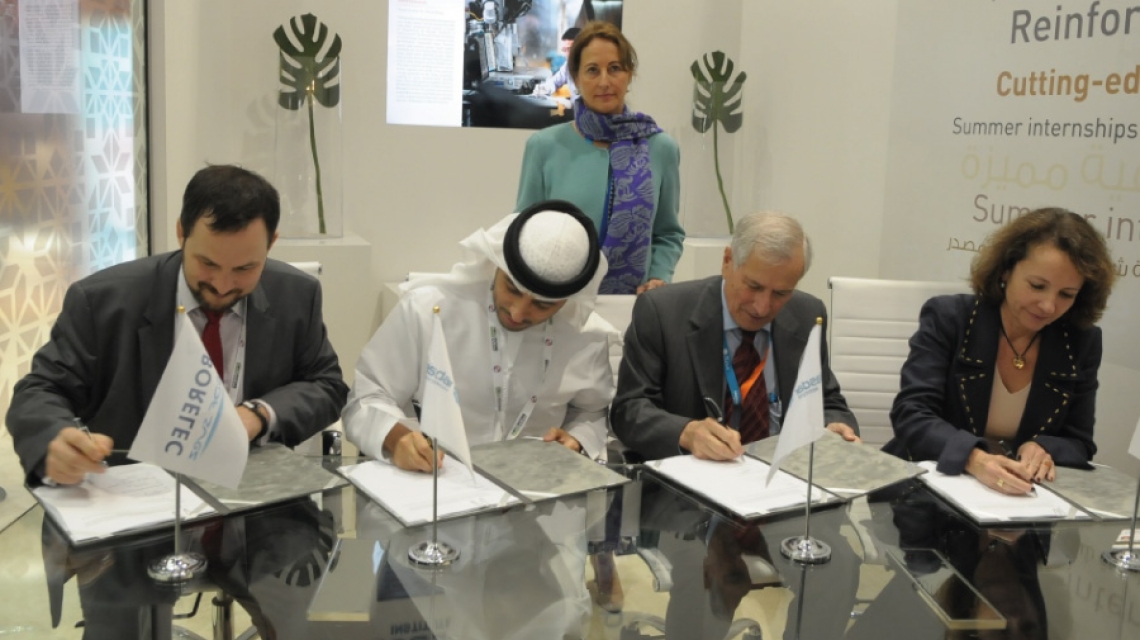
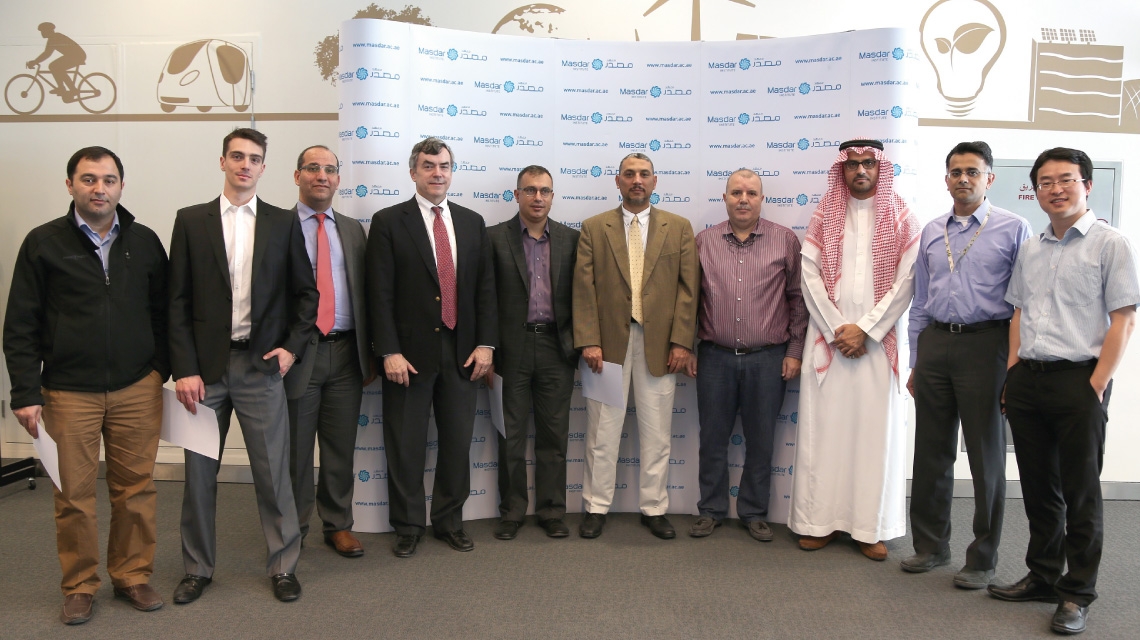
Dr. Ahmad Belhoul, CEO, Masdar Corporate, Dr. Fred Moavenzadeh, President, Masdar Institute, Mr. Pierre Pauliac, Director Middle East, Degrémont, and Mr. Michael Marique, Managing Director, Laborelec, signed the agreement in the presence of Ségolène Royal, French Minister of Ecology, Sustainable Development and Energy, during the 8th annual World Future Energy Summit (WFES), which is taking place from 19-22 January, 2015 in Abu Dhabi.

Dr. Moavenzadeh said: “Through this agreement between Masdar, Masdar Institute, Laborelec and Degrémont, we hope to leverage our renewable energy experience and expertise to produce a cutting-edge SWRO plant powered exclusively by renewable energy. This research will help bring the UAE closer to its goal of producing a greater proportion of its electricity from renewable energy and will contribute significantly to the UAE’s research and development expertise.”

All four collaborators have been deeply involved in renewable energy and/or SWRO research. Now, through their concerted efforts, they will be harnessing the synergy needed to find the most efficient and economical solutions for a solar energy-powered SWRO plant for the UAE.
 
The research collaboration will focus on selecting the most practical and economical photovoltaic (PV) and solar thermal energy technologies to supply a full-scale SWRO with locally produced renewable energy. The parties will jointly work to develop an optimized design of a solar energy powered SWRO desalination plant. They will then attempt to demonstrate, according to the particular conditions of a selected UAE site, the ability to produce the required quality and quantity of fresh water on a large scale.

Masdar’s Renewable Energy Desalination Program was initiated to discover advanced and innovative desalination technologies that can be powered by renewable energy. Masdar has operated several solar irradiance measurement stations across the UAE from 2009 through June 2013 and continues to operate one high-precision station in Al Aradh, close to Al Ain. Masdar and Masdar Institute has expertise in solar resource assessment – a method of determining precise measurement of the sun’s radiation in order to optimize PV systems – and cost modeling of renewable power plants.

At Masdar Institute, Dr. Hassan Arafat, leader of the Membrane and Sustainable Desalination Research Group (MSDR) and Associate Professor, Department of Chemical and Environmental Engineering, will act as the project’s principal investigator. Dr. Arafat  has developed tools in the field of technical and environmental assessment and cost modeling of renewable energy-powered desalination technologies. Additionally, Masdar Institute has been developing innovative concentrated solar power (CSP) technologies – used to capture, store, and transport solar thermal energy – and has contributed to the development of solar radiation concentrating systems in order to optimize PV systems.

Laborelec’s Renewable Energy Research Program covers selected topics in solar energy, wind turbine efficiency, ocean power and biofuels. One of Laborelec’s notable contributions to the solar energy sector is the creation of a thin-film photovoltaic panel test pilot.

Degrémont has already created 250 SWRO desalination plants and has achieved a laudable track record for incorporating the use of renewable energies for a plant’s power supply, fostering internal energy recovery, and implementing procedures to disperse saline concentrates to protect marine flora and fauna.

WFES is held under the patronage of His Highness Sheikh Mohammed Bin Zayed Al Nahyan, Crown Prince of Abu Dhabi and Deputy Supreme Commander of the UAE Armed Forces and is the anchor event of Abu Dhabi Sustainability Week (ADSW), which includes the third International Water Summit (IWS), EcoWASTE, and the Zayed Future Energy Prize. Hosted by Masdar, Abu Dhabi’s renewable energy company, this eighth iteration of the conference is expected to attract upwards of 30,000 delegates from 170 different countries, representing expertise from industry, technology, finance and government.

Strata’s Robotic Arm Gets Upgraded

A team of senior engineering students improved the function and autonomy of robotic arms commonly used for industrial purposes.

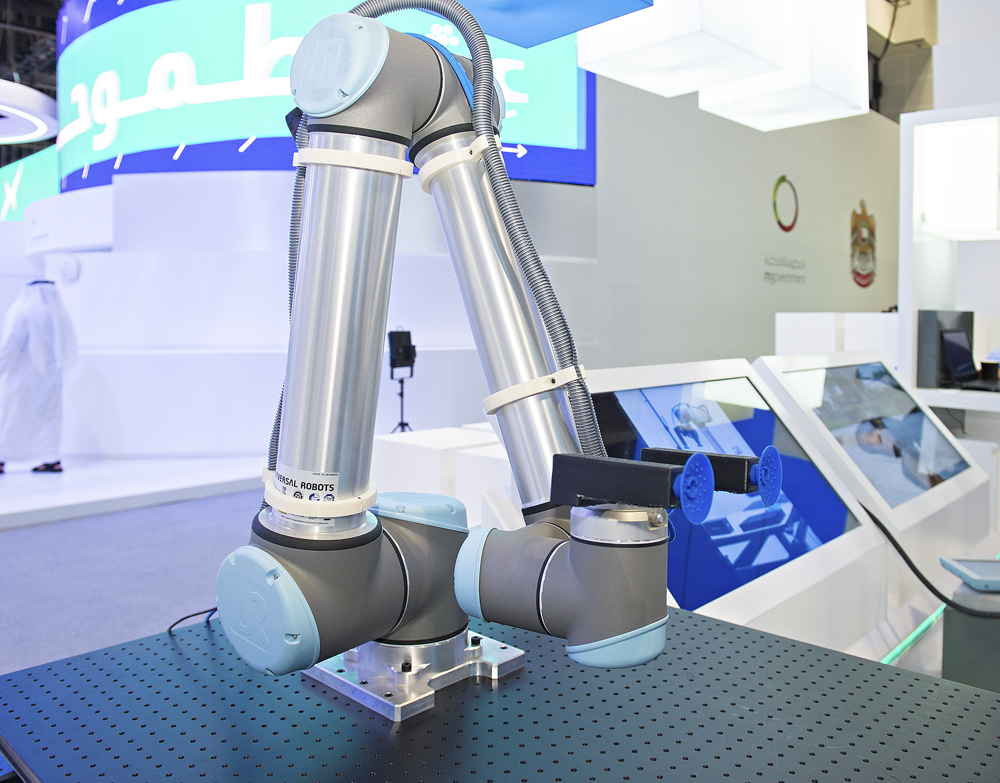
Strata Company provided the students with a UR10 robotic arm, which the students programmed and rigged with sensors to detect and move objects from one place to the other. The robot had to perform the task without any human assistance.

“We used MATLAB to program the robot because it provided us an environment that is easy to use and it can be expressed in mathematical notation. We used Festo sensors to simultaneously map and identify the objects that needed to be manipulated. For instance, the control of the robot arm was used to simulate control of the interface parts from solid work to RoboDK in MATLAB,” said Ayesha Sari Alhameli, Senior Aerospace Engineering student. She was joined by engineering students Ali Sultan Almarzooqi and Amna Abdulla AlMatrooshi.

The students effectively bridged the gap between university project and industrial solutions with real world applications.

Simulink blocks were used to revolute the actuation change of the motion to provide a given input. Furthermore, it was used to create a signal builder while developing the desired angles of the given timeline. Through this, most of the project was theoretical but in various instances, they worked directly with the hardware and components. Simulink played a crucial role in the exportation of CAD assembly models. In light of this, Simulink ran as an entity of MATLAB, or, in some instances as a tool to integrate the interaction with solid work.

Solidwork played a crucial role in visualizing how all the parts fit together. The software we used enabled us to tweak movements for fully autonomous running. The future of the project lies on the success of the theoretical analysis of the project. 

“The lessons we learned throughout the project form the basis for troubleshooting and future improvements,” Amna shared. 

Erica Solomon
Senior Editor
1 November 2019

Masdar Institute Nurtures UAE’s Culture of R&D and Innovation with Green Career Fair in Support of Advanced Energy and Sustainable Technology Sectors

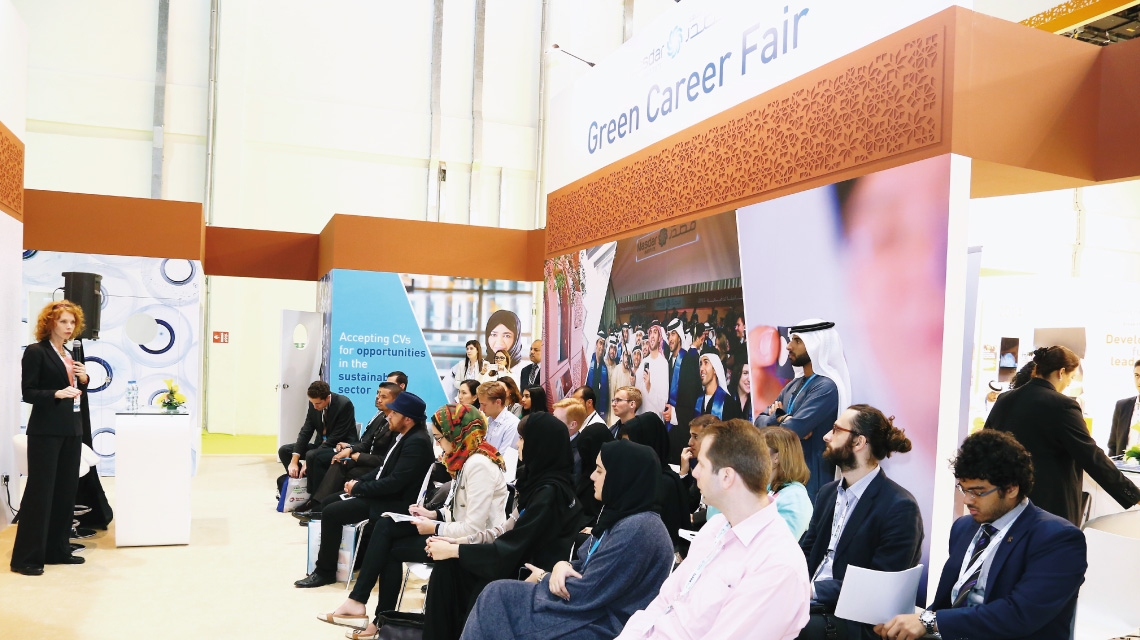
Abu Dhabi-UAE: 04 February, 2015 The third Green Career Fair hosted by the Masdar Institute of Science and Technology wrapped up with strong interest from local and international industries in the UAE’s new high-tech engineering graduates, revealing the growing value of the renewable energy and advanced technology sectors targeted by the UAE leadership.

Through this third Green Career Fair, Masdar Institute has demonstrated its continuing commitment to providing the high-value human capital needed for the UAE’s knowledge-economy transformation, as well as the increasing interest of local and international industry in its fresh engineering and science graduates. Within the next six years, Abu Dhabi plans to have renewable energy produce 7% of its energy needs, while Dubai has recently upped its own target to 15% by 2030. Additionally, the UAE has included renewable energy as one of the seven sectors it will develop as part of its Innovation Strategy, which looks to make the country one of the world’s most innovative by 2021.

This focus on the renewable energy and sustainable technology sectors are estimated to contribute 25,663 job-years of additional direct jobs in the UAE by 2030, according to research from Masdar Institute. These are jobs that demand specialized skills related to engineering, technical certification, analysis and administration, which can often prove challenging to fill.

The Green Career Fair, which Masdar Institute hosted during Abu Dhabi Sustainability Week (ADSW), serves to connect the UAE’s technical graduates and professionals with the renewable energy and sustainable technology companies that are looking for their unique talents.

“We are an environmental agency and it’s difficult to find people with environmental science or chemical engineering backgrounds. This career fair’s sustainability focus helps us to find such qualified people,” said Ayesha Al Nahdi from the Environment Agency – Abu Dhabi (EAD).

The EAD was one of nine major players in green sectors featured at the fair, giving the UAE’s new renewable energy and alternative technology graduates the opportunity to display their potential as future employees.
To help the attending graduates and professionals stand out in the rapidly growing global green sector, two professional websites – LinkedIn and Bayt.com – were on hand to share how best to utilize their platforms for professional advantage.

LinkedIn was represented by Pascale Comaty, Middle East and North Africa Marketing Manager at LinkedIn, who discussed ‘Five Things You Should be Doing on LinkedIn’. It detailed the opportunities that are missed by prospective employees on the job-networking site. Suha Haroun, Regional Manager and Human Resources Director at Bayt.com, spoke to attendees regarding the Gulf job market with an informative presentation titled ‘The Next Big Thing: The Recruitment Landscape of the Middle East.’

Over the four day event, company presentations were also made by Imtiaz Mahtab, Executive Vice President, Middle East and North Africa, Air Liquide and Martin Tillman, Director, Transport and Master Planning Transport, Ramboll, where participants were given a glimpse into the green corporate world and the potential employment opportunities it contains.
Human resources and sustainability experts also held discussions at the event, imparting advice and expertise to students and prospective employees.

Holley Chant, Executive Director, Corporate Sustainability at KEO International Consultants, gave a presentation titled ‘Entry Level Sustainability Consulting: Employment Opportunities and the Skills Required to Land the Role’, which shared key skills a candidate should possess to gain employment in the green sector. Her presentation was aimed at helping fresh graduates gain access to the green sector, which tends to be both highly-sought after and highly-competitive, and thus especially demanding in its expectations for new hires.

A number of industries involved in sustainability were invited to make presentations regarding job opportunities and graduate programs so that participants were aware of their career options.

An expert from the Dubai Supreme Council of Energy provided an invaluable insider view of how the electricity sector in the UAE will be changing in the coming years to incorporate new smart and renewable technologies.

Faisal Ali Rashid, Director of Demand Side Management at Dubai Supreme Council of Energy, gave a presentation on ‘Demand Side Management 2030: Strategy and Implementation,’ which is part of the Dubai Integrated Energy Strategy 2030 and has a goal of reducing energy demand by 30% by 2030.

The management strategy aims to promote energy conservation; support energy security by inducing lower dependency on external supply and lower exposure to price volatility; support safety and environment by introducing modern equipment and best practices; promote the creation of a smart city by introducing new technologies like remote load control and smart grids; and create additional jobs and capabilities through efficiency initiatives – a point of particular relevance to the attendees of the Green Career Fair.

Another guest at the fair who shared information on green opportunities in the UAE’s was Ivano Iannelli, Chief Executive Officer of the Dubai Carbon Center of Excellence. The Dubai Carbon Center of Excellence was established through an agreement between the Dubai Supreme Council of Energy and the United Nations Development Program to facilitate the transition of Dubai and the UAE to a low carbon economy.

Many students and graduates are unaware of the recruitment requirements and processes of international companies. To help rectify this, Gautam Goenka, an experienced recruitment and learning professional with General Electric Company (GE), presented a talk titled ‘How to Impress the Recruiter,’ Goenka currently leads the global talent recruitment team at GE and through his presentation he imparted details of the qualities and attributes that GE seeks when attracting graduates to its organization.

GE was present at the Green Career Fair throughout the event, which facilitated networking and meeting of prospective employees. Bindhu Pradeep, Recruitment Events Manager, Middle East North Africa and Turkey, described the benefits the fair provides to an international company such as GE.

“This is our second year here at the career fair. We saw a lot of students and young talent who were keen on GE and what we’re doing, especially students from Masdar Institute. It’s a great platform to be here, a lot of talent is under one roof; experienced people and fresh graduates,” she said.

The hosting of this Green Career Fair by Masdar Institute showed its continuing dedication to the development of human capital in Abu Dhabi and the UAE, and its promotion of careers in the sustainable technology and advanced technology sectors. With 2015 declared to be the Year of Innovation by His Highness Sheikh Khalifa bin Zayed Al Nahyan, President of the UAE, next year’s fair can only expect to see even greater growth and excitement in the country’s innovative green sectors.

Partnering to achieve the UAE’s vision of an innovative future

Achieving such a far-reaching transformation cannot be done quickly or by one party alone for it requires collaborative participation across the key sectors that drive its social, economic and academic growth. Public-private partnerships are a key element of the UAE innovation strategy as they can play a critical role in achieving our mutual benefits, with private institutions or entities working together with government and semi-government organizations to pursue shared goals. Masdar Institute is pleased to be leading in some of these key collaborations, partnering with local government and industry to help solve problems and achieve results.

With renewable energy and sustainability part of Masdar Institute’s very fabric, it is probably no surprise that many of our collaborations are linked to energy. But what may surprise some is how closely we work with the UAE’s other priority economic sectors. That is because we recognize them to be partners in the UAE’s transformation; they are the pillars that have and will carry the weight of the UAE economy and should be helped to transition to the country’s next phase of growth.

The UAE’s oil and gas sector is focused on optimizing the extraction and utilization of the precious resources that have brought the UAE great prosperity and so Masdar Institute is working with the Abu Dhabi National Oil Company (Adnoc), Total and the Petroleum Institute to map the complex behavior of the region’s carbonate reserves with a view to maximizing oil recovery. The ‘Digital Rock Physics’ (DRP) project pools our technical resources and expertise, alongside that of the Petroleum Institute, to produce an extensive archive of rock images in microscopic detail, as well as to digitally simulate and test the behavior of oil and gas reservoirs. Masdar Institute’s state-of-the-art microscopy facility is examining local rock samples at the nano-scale to generate 3D images of the pore network and pore morphology of typical Abu Dhabi reservoir rock cores.

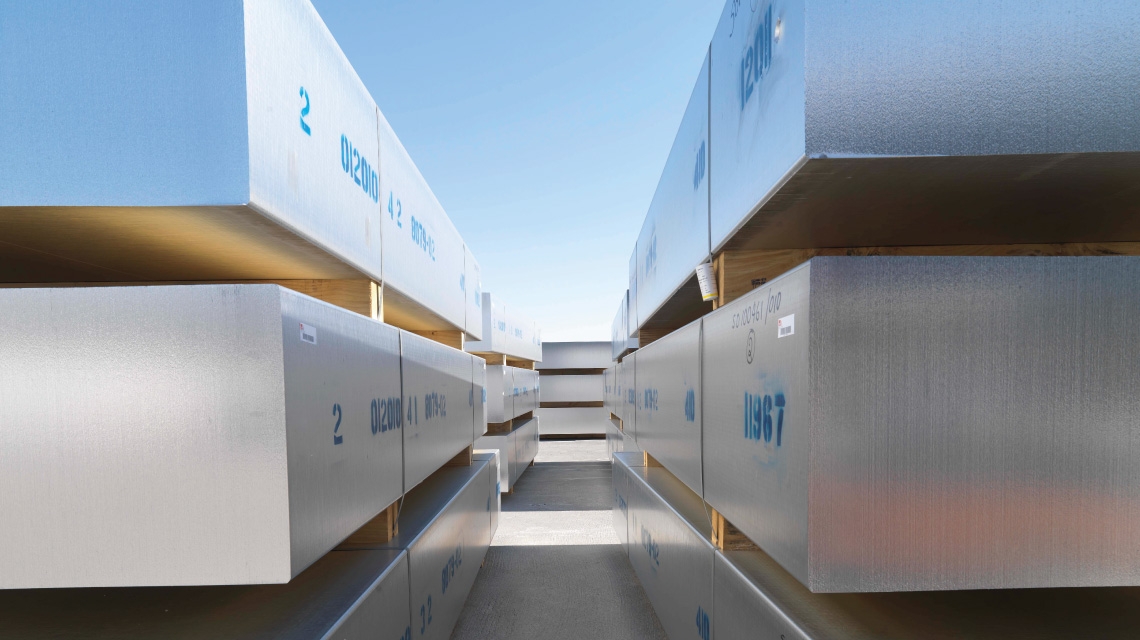
The metal industry was one of the critical sectors targeted in the Abu Dhabi Vision 2030 and aluminum in particular is one of the Gulf region’s hottest industries, with investment tipped to reach US$55 billion in 2020. Aluminum is also a feedstock of two of the sectors targeted in the UAE Innovation Strategy — transport and space — and the UAE aluminum manufacturing sector has a significant effect on energy as one of the country’s largest consumers of electricity. To secure a continuing competitive edge, Abu Dhabi’s aluminum giant —Emirates Aluminum Company (EMAL), now part of Emirate Global Aluminum (EGA), sought the expertise of Masdar Institute’s mechanical and materials engineering faculty. The results of this collaboration can help Emal reduce its energy consumption and thus improve operational cost while supporting preservation of the UAE’s natural gas resources. The results of the project can be applied to fine-tuning of existing Emal plants and in the design of new plants. This kind of collaboration benefits Abu Dhabi by helping improve the competitiveness of its industrial entities.

Another research area that is critical to Abu Dhabi’s strategic ambitions relates to water. It is estimated that desalination technology – which converts seawater to freshwater – produces about 40% of the UAE’s water supply. As part of Masdar’s broader renewable energy water desalination program, Masdar Institute is currently working with a number of international companies to develop and improve renewable energy-powered desalination technology, so that renewable resources, particularly solar, can be used to turn seawater into freshwater.

With collaborations like these, Masdar Institute is offering the best of its minds and facilities to help solve some of the UAE’s most pressing needs — whether they are that of an individual manufacturer or a government agency. With the UAE Innovation Strategy moving UAE government entities to increasingly dedicate resources to research and innovation projects, we are confident more research collaborations will be in the offing in 2015, helping draw the UAE closer to its ambitious but critical national development goals, and making the UAE brighter for us all.

Dr. Steve Griffiths is the Executive Director of the Office of Institute Initiatives at Masdar Institute of Science and Technology in Abu Dhabi.

Masdar Institute and MIT Faculty Awarded “Best Conference Paper” at International Conference on Information Systems 2014

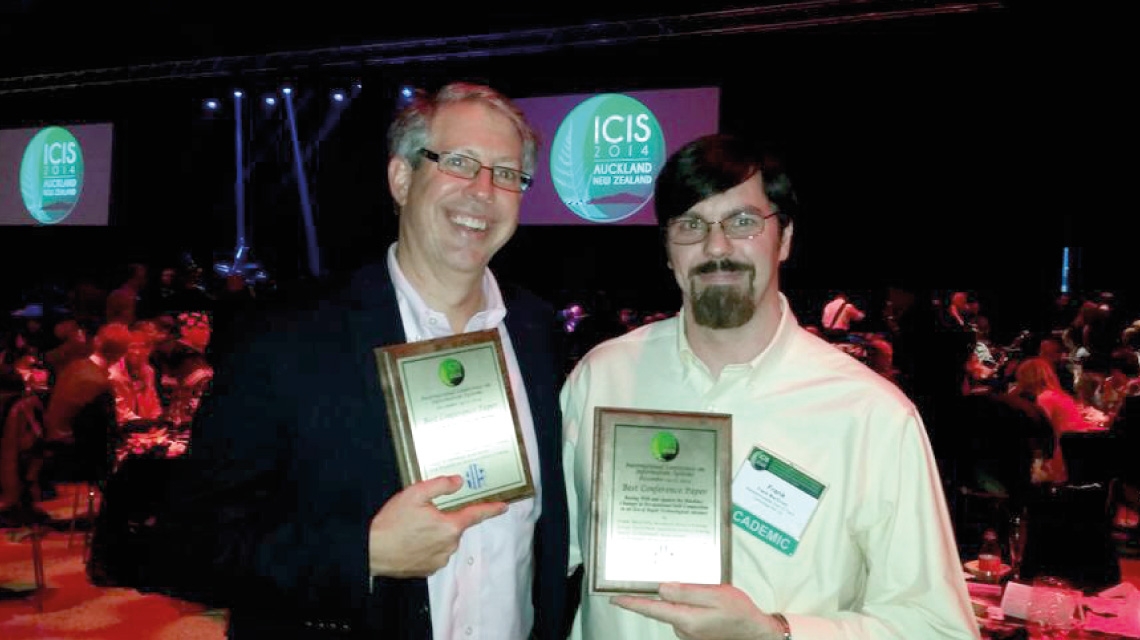
Abu Dhabi-UAE: 10 February, 2015 – The Masdar Institute of Science and Technology, an independent, research-driven graduate-level university focused on advanced energy and sustainable technologies, today announced that a paper co-authored by one of its UAE National faculty and Massachusetts Institute of Technology (MIT) faculty has won the prestigious International Conference on Information Systems (ICIS) Award for ‘Best Conference Paper.’

Dr. Yousef AlHammadi, Assistant Professor, Engineering Systems and Management, Masdar Institute, co-authored the winning paper titled ‘Racing With and Against the Machine: Changes in Occupational Skill Composition in an Era of Rapid Technological Advance,’ with Dr. Erik Brynjolfsson, Director of the MIT Center for Digital Business, MIT Initiative on the Digital Economy, Dr. George Westerman (Research Scientist) and Frank MacCrory (MIT Post-doctoral Associate).

Examining rapid advances in digital technologies that have profound implications for employment, the paper finds a significant reduction in occupational skills that compete with machines, an increase in skills that complement machines, and an increase in skills where machines, so far, have not made great inroads. The group worked from 2006-2014 using comprehensive data on occupational skill requirements from 674 jobs to understand the effects of recent changes in automation.

The award was presented at ICIS 2014, the annual meeting of the Association for Information Systems (AIS) held in Auckland, New Zealand. Themed ‘Building a Better World through Information Systems,’ it was attended by over 1,200 members from around the world. The event included 60 sessions and 180 presentations, in addition to keynotes, chief information officer panels and research panels. The approximately 4,000 members of AIS represent universities spanning over 95 countries.

“Winning the Best Conference Paper award in Auckland at one of the leading global events for information systems with my MIT co-authors was a rare and fulfilling moment,” said Dr. AlHammadi. “The group’s combined effort was the primary reason for the outcome, which we hope will be useful in dealing with major social issues, such as an individual’s ‘employability.’ The digital world offers ever-increasing opportunities for research in similar areas that could be tapped for the benefit of an individual.”

Dr AlHammadi is currently an advisor for the Abu Dhabi government on Analytics and data science. At the time of the writing the paper, he was a visiting scholar at MIT Sloan Management School. Dr. AlHammadi is a member of the MIT Center for Digital Business, a research initiative that analyzes the business uses of the Internet and other digital technologies. His research explores how advancement in information technology contributes to business performance and organizational change and the effect of technology advancement and automation on employment and economy. Dr. AlHammadi’s research interests include the use of statistical tools, such as ‘Big Data,’ data mining and social networks, in decision- and policy-making.

Masdar Institute-MIT Boot Camp Contributes to UAE’s Innovation Ecosystem with Sessions on How to Commercialize Research

Abu Dhabi-UAE: 21 February, 2015 – The Masdar Institute of Science and Technology, an independent, research-driven graduate-level university focused on advanced energy and sustainable technologies, has contributed to the enhancement of the UAE’s innovation and entrepreneurial ecosystem through a boot camp on how to take promising ideas out of the lab and into the marketplace, which culminated with a start-up proposal contest.

Participants at the action-oriented and hands-on boot camp were briefed on various aspects of translating an idea into a business venture. The topics included project selection and team-formation, value proposition for technology, finding initial customers, development roadmap, making and managing assumptions and risk, execution modelling, funding requirements, as well as financial modelling and planning. There were also presentations on intellectual property rights, as well as company structure, valuation and fundraising.

Dr Bruce Ferguson, Head of Masdar Institute’s Center for Innovation and Entrepreneurship (iInnovation), and Professor of Practice – Engineering Systems and Management, presented commemorative certificates to the aspiring entrepreneurs who participated in the boot camp.

“Hosting such an exclusive academic entrepreneurship boot camp in collaboration with MIT reflects not only our researchers’ expertise in commercialization but also our capabilities in technology transfer,” said Dr. Fred Moavenzadeh, President, Masdar Institute. “With the support of the UAE leadership, we continue to validate the importance of research-driven innovation in diversifying the UAE’s economy through entrepreneurship.”

The boot camp was jointly organized by the Massachusetts Institute of Technology (MIT) and Masdar Institute’s iInnovation. It was designed to aid academic researchers, including faculty, graduate students and post-doctoral researchers, in recognizing and developing promising technology-based entrepreneurial opportunities.

At the end of the sessions, participants formed groups of 3-5 and proposed start-up concepts to a panel of three financial experts, who provided feedback and selected the most promising team as the winner. The first prize (a large box of dates) was awarded to the food safety team. There were five teams – ‘Food safety inspection,’ ‘Sparticles nanotechnology,’ ‘Automotive pollution reduction platform,’ ‘Concentrated solar’ and ‘Water from air.’

Based on similar successful workshops conducted earlier at MIT and in Singapore, the boot camp at Masdar Institute was led by Dr. Charles Cooney, Professor of Chemical Engineering and Faculty Director, Deshpande Center for Technological Innovation, MIT, and Dr. Luis Perez-Breva, Co-Director of MIT Innovation Teams Program and Research Scientist at MIT School of Engineering.

Dr. Cooney said, “This boot camp emphasizes the translation of ideas from the academic laboratory to the commercial marketplace. It is intended to introduce academic researchers to the principles of technology based entrepreneurship in a way that will help them both identify and guide their own thinking around commercialization of technology. We believe such boot camps help faculty prepare their students and post-doctoral research staff for careers as technology entrepreneurs, either in new companies or within larger corporations.”

Participants were invited based on their expressed interest in technology translation, such as participation in Masdar Institute’s Technology Innovation Program (TIP) and Masdar Institute-MIT Innovation Program (MMIP) solicitations.

Region’s First Global Nanotechnology Conference at Masdar Institute Accelerates Research and Development in Emerging Nanotechnologies

Abu Dhabi-UAE: 03 March, 2015 – Experts at the ‘Nanotechnology for advanced energy harvest and storage devices’ symposium hosted by the Masdar Institute of Science and Technology and the US National Science Foundation (NSF) last week  revealed a global interest in forming international collaborations to move forward emerging nanotechnologies. Professors from participating institutions discussed breakthroughs in nanotechnology, such as its role in the development of high-efficiency energy harvesting and storing systems, as well as advanced materials, devices and sensors. Dr. Ammar Nayfeh, Associate Professor, Masdar Institute, who championed this conference expressed, “The impact of hosting a conference on nanotechnology at Masdar Institute and in Abu Dhabi can not be quantified.  It marks an important milestone for the UAE in term of research and development and fits exactly with the ‘Year of Innovation’ theme recently announced in the UAE.”

“We are pleased to partner with the National Science Foundation to deliver a conference of this caliber for the first time in the UAE,” said Dr. Fred Moavenzadeh, President, Masdar Institute.  “Masdar Institute’s role in fostering research in nanotechnology innovation reflects our vision of further diversifying the UAE’s economy. We hope that, through this meeting, new partnerships will be established and existing ones will be strengthened to contribute to the UAE’s burgeoning human capital.” Masdar Institute’s research in nano science and technology  helps find solutions to humanity’s toughest challenges, such as clean energy, water and food security and health, and will continue its collaborative efforts in the fields of nanotechnology, contributing to the UAE’s transformation into a knowledge economy.

Nanotechnology is a rapidly developing field in science today. From faster computer chips, to tiny medical devices that repair clogged arteries, to filters that clean water pollution, the application of nanotechnologies has seen remarkable growth – especially in the field of renewable energy. But as was emphasized throughout the event, this growth does not happen in isolation. Instead, it relies on mutual collaboration and interdisciplinary partnerships in order to achieve the common goal of finding sustainable solutions to our global challenges of energy security and climate change.

Masdar Institute and NSF jointly sponsored the event, which was tasked with promoting the discovery, integration, dissemination, and employment of new knowledge and technologies, including nanotechnology. To achieve this goal, NSF supports fundamental research in science and engineering, funding the best ideas and people, some 2,000 colleges and universities across America. The significant potential of nanotechnology – a technology which involves imaging, measuring, modeling and manipulating matter at the nanoscale level, or a hundred-thousand times thinner than a human hair – prompted NSF to dedicate close to half a billion dollars towards research and development (R&D) in this field.

Participating institutions included the University of Illinois at Urbana-Champaign, University of Chicago, Masdar Institute, Massachusetts Institute of Technology, Cornell University, National Research Center of Cairo, University of Jordan, Yarmouk University, Karachi University, Lahore University, National Center for Technological Foresight in Kazakhstan, Fatih University, KACST in Saudi Arabia, Saigon High Tech Park in Vietnam, Khalifa University, Gazi University and Bilkent University.

Throughout the meeting, professors showcased their specialized research areas and many focused on how their research contributes to the enhanced harvesting and storing of renewable energy, particularly solar energy. Solar technologies usually focus on either capturing the sun’s light or its heat for electricity generation. Nanotechnology plays a significant role in helping to harvest and store the sun’s light and heat more efficiently.  

Keynote speaker Dr. Munir Nayfeh, Professor, University of Illinois and President, NanoSi Advanced Technologies, addressed the need for participants to collaborate and form partnerships so that their concerted efforts in nanotechnology advancement can gain traction in the commercial marketplace, thus attracting grants and donations from notable funding agencies. Dr. Nayfeh described the purpose of the conference as “a catalyst for producing coherent, complementary partnerships.” While the meeting centered on the role of nanotechnologies in renewable energy, Dr. Nayfeh explained that the discussions would transcend renewable energy, as advancements in nanotechnology have wide-ranging implications in health, safety, and social welfare.

On capturing the sun’s light, Dr. Ammar Nayfeh, Associate Professor, Masdar Institute, shared some of Masdar Institute’s groundbreaking nano-scale research, including the development of thin-film solar cells which use nanoparticles to more efficiently trap the sun’s light, leading to an increase in the potential amount of electricity which can be generated from solar cells. Similarly, Dr. Nicholas X. Fang, Associate Professor, Massachusetts Institute of Technology, discussed his work in the use of nano-structures to efficiently extract and harvest light on thin-film solar cells. Additionally, Dr. Ali Kemal Okyay, Assistant Professor, Bilkent University, shared his research in enhancing the light absorption ability of dye sensitized solar cells – an efficient type of thin-film solar cell.   

Many industries outside of solar energy are positively affected by nanotechnology R&D. Participants shared research projects on the development of devices and sensors which are used in other priority economic sectors, such as the oil and gas, medical, and defense industries. For example, the research of Dr. Amal Al Ghaferi, Associate Professor, Masdar Institute and Dr. Irfan Saadat, Professor, Masdar Institute, aims to develop nanoparticle-enhanced sensors for monitoring scale deposition – a salt mixture which coats pipelines and limits production – in oil pipelines. These smarter sensors will bring the industry a more efficient way of collecting oil while reducing losses.
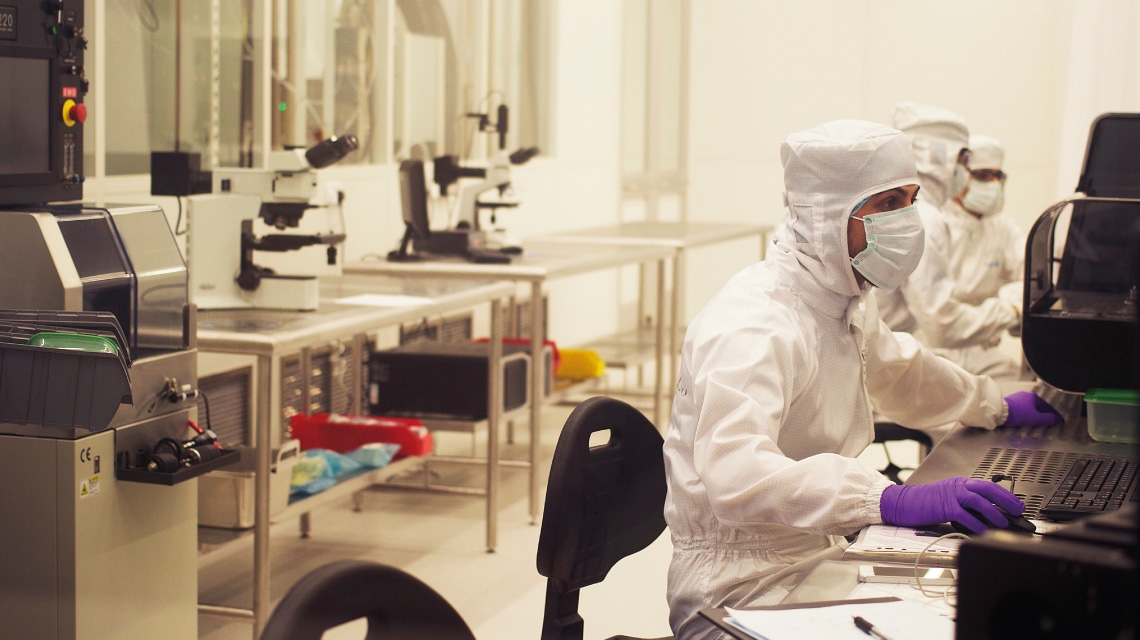
On the second day, participants toured Masdar Institute’s Cleanroom Fabrication Facility – which includes Class ‘100’ and Class ‘1000’ cleanrooms for researchers to build nano-components – Electron Microscopy Facility, Photovoltaic Testing Lab and the Digital Systems Laboratory.

Dr. Irfan Ahmad, Executive Director, Center for Nanoscale Science and Technology and Professor, University of Illinois, concluded the meeting with a poignant reminder of the meeting’s purpose: To establish meaningful multidisciplinary research collaborations across universities and public and private entities to tackle our shared global challenges. Dr. Ahmad expressed that these collaborations inspire an entrepreneurial spirit among students and faculty and stimulate the region, bringing with it an economic boom and interest from external stakeholders. Dr. Ammar Nayfeh, summed up the conference by saying:  “We are very pleased we could host this important meeting on nanotechnology for energy at Masdar Institute. The meeting was highly successful and has resulted in discussions and collaborations that will spark research in the UAE and across the region.”

This nanotechnology meeting is one in a series of similar meetings and workshops to bring academicians and experts together, so that they may design multi-institutional research projects that will generate game-changing nanotechnologies for applications in renewable energy, health, and other prominent economic sectors.

Ground-Breaking Research Demonstrates Masdar Institute’s Commitment to the UAE’s Innovation Goals

Abu Dhabi-UAE: 15 March, 2015  ̶   The announcement by UAE president His Highness Sheikh Khalifa bin Zayed bin Sultan Al Nahyan declaring 2015 the UAE’s ‘Year of Innovation’ has placed innovations at the Masdar Institute of Science and Technology directly in the spotlight.  A number of these projects hold great promise for tackling some of the UAE’s sustainable challenges in very creative ways, including the use of next-generation desalination technology, monitoring of coastal habitats, water saving at mosques, using palm frond waste for agriculture, creating biofuel from microalgae, improving robot interactions, optimizing electricity in the UAE, bringing daylight into workspaces and the invention of new solar cells.

These research projects display the commitment by faculty and students to the ‘Year of Innovation’ and the provision of solutions to sustainability issues. Masdar Institute is an independent, research-driven graduate-level university focused on advanced energy and sustainable technologies, which has, for the past six years, worked to foster a culture of innovation and entrepreneurship in the UAE. The research and development foci of the Institute continues to develop the knowledge capital of the UAE, which has enabled the Institute to deliver sustainable solutions for many sectors including water, energy and food.
Water scarcity is a challenge in the UAE due to the country’s low natural freshwater resources and high consumption rates. Masdar Institute’s research is attempting to address some of the country’s water scarcity issues with research that aims to improve the desalination technology that turns seawater into freshwater. One such project, led by Dr. Shadi Hassan, Assistant Professor of Chemical and Environmental Engineering, is focused on identifying innovative desalination techniques for water.

Sahar Daer, a student involved in the project explains, “The main objective of our project is to investigate the potential use of Forward Osmosis (FO) as an emerging technology in the field of water desalination in the UAE. Abu Dhabi’s seawater is of both high salinity and high temperature, which enables us to experiment the use of this FO technology in harsh conditions.”

The research team believes that the use of FO as a desalination technique over traditional methods such as thermal distillation and membrane technology will prove beneficial to the UAE by providing ultra-pure freshwater through a more energy efficient process. This water desalination technique has the potential to help meet the increasing water demands of Abu Dhabi that have resulted from population growth and urban development.

And to ensure the UAE is able to securely and sustainably run its coastal desalination plants, another research project looks to enhance the UAE’s marine coastal resource management. The Arabian Gulf is the source of large volumes of economic, transportation, and tourism related activities for the UAE. These activities are vulnerable to a number of hazards such as toxic algae blooms called ‘red tides’ and oil spills, which then threaten country’s desalination operations and the fishing industry.

To help prevent and combat these events, Dr. Marouane Temimi, Associate Professor of Chemical and Environmental Engineering at Masdar Institute, is currently leading students in a research project that will monitor and forecast coastal hazards. Its aim is to provide accurate results that give operators and managers of coastal facilities appropriate lead-time to plan for and address these potential hazards.

“Our project aims to combine high-resolution satellite data with 3D models of ocean currents to monitor and ultimately forecast water circulation and quality in the Arabian Gulf. We conduct this monitoring in real-time in order to quickly detect and forecast red tide outbreaks, oil spills and other hazards along the UAE’s coastline. The benefits of this forecasting system include a reduction in the disruption of the fishing, desalination and other coastal industries, and the reduction of health risks associated with these coastal threats and hazards,” Dr. Temimi adds.

To help reduce the wastage of the UAE’s precious water resources, Dr. Ahmed Aljaberi, Assistant Professor of Mechanical and Materials Engineering, and Mohamed Al Musharrekh, a PhD student, have developed a water-saving device for mosques. This sustainable device can help reduce water wastage by informing users how much water they have used while performing their pre-prayer ablution. The device displays levels for water usage and can easily be attached to mosques’ water features to alert users of their water consumption and waste.

According to Al Musharrekh, “The guideline of using only half a liter of water for ablution is widely ignored by the public. This is caused, in part, by the fixtures currently in use in mosques, which allow for most of the water to be wasted. According to our estimates, we believe that this easily fitted fixture could reduce the water usage in mosques around the UAE by at least 90%, promising greater savings.”

Another area of research of relevance to the UAE’s strategic goals and future prosperity is the management of waste. The Abu Dhabi Center of Waste Management estimates that 33,000 tons of waste are generated in the emirate every day. The UAE has a goal of diverting 80% of its waste from landfills by 2018. To help address this situation, Masdar Institute faculty and students have innovated a number of methods that can utilize waste for gain.

Dr. Lina F. Yousef, Assistant Professor of Chemical and Environmental Engineering, is leading a group of students in related research focused on using waste to improve soil in the UAE to enhance agricultural productivity. On average, more than 450 thousand tons of palm frond waste are transported to landfills in Abu Dhabi per year. The Sustainable Soil and Environmental Micro Lab at Masdar Institute is currently developing a unique set of carbon formulations to utilize this waste, turning it into a fertilizer that can improve soil properties so that the UAE can support more agriculture. This project aims to improve a number of soil qualities that are known to limit agricultural production in arid climates, such as water retention and use efficiency. The end goal of this project is to increase food security and sustainable resource management in the UAE.

Dr. Yousef explains that, “We have identified a number of potential benefits resulting from the transformation of this palm frond waste into useful carbon formulations including a reduction of waste transport to landfills, a reduction in water consumption, a reduction in soil erosion, the sequestration of carbon, the ability to combat desertification and the creation of a process by which waste can be transformed into a commodity, which will benefit the emirate. It will also help to address important food security issues, particularly in arid regions, which will not only benefit the UAE but also other dry regions around the world that struggle with food production.”

Masdar Institute is further exploring the potential of turning organic material into valuable products through a number of other projects. One research project is investigating species of microalgae to help address water, food and energy challenges in the UAE. Dr. Hector Hernandez, Assistant Professor of Chemical Engineering, has identified microalgae that can be cultivated in the UAE without the use of freshwater or arable land. If cultivated and classed as a plant, this microalgae would be considered the fastest growing plant with the highest oil yield per unit area, producing vast quantities of high potential crop with many uses.
“The microalgae cultivated could be used to produce biofuels such as biodiesel and jet fuel, reducing the need for fossil fuels and the carbon dioxide emissions associated with these fuels,” Dr. Hernandez says.

Dr. Hernandez and his students have helped identify further uses for this microalgae, as animal feed, food for human consumption, and to produce bio-chemicals for use in pharmaceuticals and cosmetics.

Students and faculty at Masdar Institute are also researching and developing intelligent robots that can better interact with humans in a number of the UAE’s important sectors, including health and energy, which are two sectors targeted in the UAE Innovation Strategy. Robots play an important role in many industries when it is either unsafe, inefficient or costly to use a person – like deep-sea drilling, bomb-disposal, and automobile assembly. As technology has developed, the use of these intelligent robots has increased. Dr. Jacob Crandall, Assistant Professor of Electrical Engineering and Computer Science, is currently leading a project that aims to enhance the ability of robots to work with humans in a more effective manner.

Dr. Crandall explains, “The aim of our project is to create robots that learn to establish long-term relationships with people. Robots must be able to fully interact with humans in order to gain acceptance and wider use in industrial sectors. By developing algorithms and interaction methodologies, we were able to develop a robot capable of cooperating with humans. We hope that the success of this project will ensure that robots can be further utilized in many different industries.”

Stable, secure and affordable electricity supply is critical to economic productivity and maintaining the high quality of life UAE residents have come to expect. Through its research, the Institute is looking to sustainably enhance the UAE’s electricity sector. Dr. Sameh El Khatib, Assistant Professor, Engineering Systems and Management, is leading a project looking to improve energy security in the UAE while maintaining sustainable economic growth.

“This project analyzes a number of areas in the UAE electricity value chain. The project then used this analysis to quantify the potential national wealth savings the UAE could achieve from primary energy extraction to end-use through the provision of technology interventions that could help reduce the net energy demand for power generation. The benefits include a lower carbon footprint, with cost savings and the delivery of greater energy security for the UAE,” Dr. El Khatib says.

He hopes his project will pave the way for national energy policy recommendations and implementation plans that facilitate a sustainable energy system in the UAE.

In a hot climate like that of the UAE, there is always a need to improve energy efficiency in buildings. An optical switch device developed by Masdar Institute in collaboration with the Massachusetts Institute of Technology (MIT) aims to help address that need. Dr. Kumar Shanmugam, Assistant Professor of Mechanical and Materials Engineering, is leading a number students from Masdar Institute in the project and after extensive research and development, the team has printed a prototype of an Optical Switch using a multi-material 3D printer at the Institute. The Optical Switch is a device that dynamically distributes daylight and minimizes glare and heat on a building.

Explaining the benefits of the device Dr. Shanmugam says, “We have developed the Optical Switch to provide an energy efficient solution for workspaces and buildings so to distribute daylight and minimize glare from sunlight. This provides occupants with a better quality of space and health, while increasing the energy efficiency and sustainability of the building. Utilizing smart devices like the Optical Switch in the UAE’s buildings can reduce their cooling demand and electricity consumption.”

With the UAE’s goal of achieving 7% renewable energy production by 2030, developing renewable energy technologies that suit the UAE’s needs is also of great importance. One project looking to address that need is a project led by Dr. Ammar Nayfeh, Associate Professor of Electrical Engineering and Computer Science. Dr. Nayfeh and his research team have designed a unique solar cell to improve the energy optimization and flexibility of solar panels.

“In the PV industry there is high demand for a low-cost, high efficiency tandem solar cells. As a result we invented a ‘step-cell,’ which in a tandem cell system exposes some parts of the bottom silicon cell to direct sunlight, increasing the current in the bottom cell. When the bottom cell is optimized, the overall current and efficiency increase, ensuring that more energy is produced from the cell,” Dr. Nayfeh says.

The ‘step-cell’ design also allows for a more flexible top cell material selection when producing the device, which would lead to lower production costs without a significant loss in overall tandem cell efficiency. Integrating this unique cell in the UAE’s solar panels could help the country utilize more the available solar energy in an efficient and affordable manner.

These projects were on display at Masdar Institute’s Innovation Zone during Abu Dhabi Sustainability Week 2015 and reveal just a snapshot of the wide range of innovative research underway at Masdar Institute. With their focus on providing solutions to local and real-world problems, they aim to provide valuable intellectual and human capital for the UAE’s future knowledge economy while helping the country reach its own strategic development target


Solar and Wind Now the UAE’s Most Cost-Competitive New Energy Sources

Marking the country’s first public comparison of different energy technology costs and potentials, the Renewable Energy Prospects: United Arab Emirates report finds the UAE could achieve a 10 per cent share of renewable energy in its total energy supply – and almost 25 per cent in the power sector – resulting in energy system savings of USD 1.9 billion (AED 7 billion) annually by 2030.

 “The UAE’s strategy of innovation and diversification has placed it at the fulcrum of the massive transformation of the global energy landscape that has already begun. Renewables have decisively emerged from a niche technology to a major component of the energy mix and have been the majority of global power capacity additions for the last three years. The dramatic technology cost declines we are mapping present a real possibility to move to a sustainable energy future even in the hydrocarbon producers in the MENA region.” – IRENA Director-General Adnan Z. Amin

The report cites sharp declines in renewable energy costs in the UAE, as well as rising costs for natural gas as domestic production declines and the country turns to more expensive imported sources, as the key drivers for renewable energy’s financial attractiveness. Local solar PV costs, for instance, have fallen by 80 per cent since 2008, while the cost of new gas supplies in the UAE has grown from under $2.5/MMBtu in 2010 to $6-8/MMBtu for domestic production and $10-18/MMBtu for imports today, even after the recent decline of oil and LNG prices. The report estimates that solar, wind, and waste-to-energy are preferable for power generation when new gas is above $8/MMBtu – making them immediately competitive in the UAE, where natural gas supplies almost 100 per cent of power.

The report also reveals that solar costs are poised to decrease even further. In January, the tender for the second phase of Mohammed bin Rashid Solar Park in Dubai was awarded to the lowest bidder for under six cents per kilowatt hour for a 25-year fixed contract. This is the lowest solar price ever achieved worldwide.

“This report is an eye-opener. It provides policymakers and investors with an objective cost baseline, making the clear case that renewables, and especially solar, will have a much larger role sooner than we ever expected in the UAE and Middle East.” – Dr. Fred Moavenzadeh, President of Masdar Institute

The report is one of the first three country analyses under IRENA’s REmap 2030 programme, which evaluates how the world can meet the United Nations’ Sustainable Energy for All goal of doubling the global share of renewable energy by 2030. The project maps how renewable energy can grow in the power, industry, buildings, and transport sectors.  Health and environmental benefits are also included in the analyses, and in the case of the UAE, they could amount to additional annual net savings of USD 1 to 3.7 billion by 2030.

 “The UAE made an early bet on energy diversification. We are investing broadly and letting technologies compete to produce the optimal supply mix.  As this report shows, there is now a clear financial case for renewables, even before we consider benefits like energy security, emissions, and job creation.” – His Excellency Dr. Thani Al Zeyoudi, the UAE’s Permanent Representative to IRENA and the Director of Energy and Climate Change at the Ministry of Foreign Affairs

The report notes that solar and wind are still challenged by intermittency, which will require natural gas to fill gaps in output.  However, the savings from generating solar power during the daytime, instead of consuming gas, are so great that they could justify 17,500 megawatts of PV in the UAE by 2030, up from around 40 MW today.

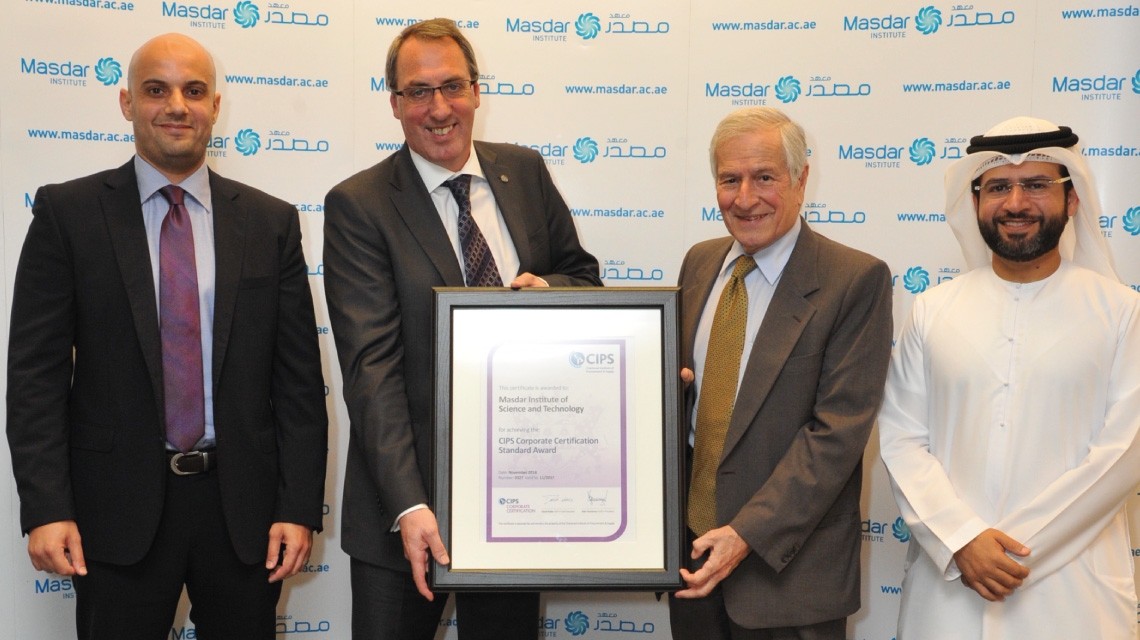
Masdar Institute Becomes Region’s First to Receive CIPS Corporate Certification-Standard

Abu Dhabi-UAE: 16 April, 2015 – The Masdar Institute of Science and Technology, an independent, research-driven graduate-level university focused on advanced energy and sustainable technologies, today announced its Business Services and Procurement Department (BSPD) has become the first among universities in the GCC region to receive the ‘Corporate Certification-Standard’ from the Chartered Institute of Procurement & Supply (CIPS).

The certification was presented by Duncan Brock, Director of Customer Relationships and CIPS Subsidiary Offices. Outside the UK In-Charge, to Dr Fred Movenzadeh, President, and Hamza Kazim, Vice-President, Operations and Finance, Masdar Institute, at an awards ceremony organized by CIPS on 16 April 2015, which was attended by several government and industry officials.

CIPS certification for Masdar Institute
Commending the department, Kazim said, “We are proud that Masdar Institute’s Business Services and Procurement Department is the first in the region to receive this certification. The department has successfully maintained its governance standards by being agile and dynamic to match the sophistication of our researchers and their unique demands. Our strong procurement methodologies, innovative solutions and effective relationship management have ensured the credentials of Masdar Institute among international suppliers, who seek extraordinary guarantees before supplying high-technology equipment.”

Kazim added, “The BSPD also explores and identifies customization requirements while seeking to purchase new equipment for many of Masdar Institute’ unique cutting-edge laboratories. With global best practices, necessary governance mechanisms for effective supply assurance and compliance, we continue to achieve cost benefits. We are now looking forward to obtaining the next stage of certification in the near future.”

The process of CIPS certification took seven months of preparation, including meetings with officials and direct monitoring. It involved assessment of the policy, procedures, compliances and performance according to global procurement standards. The evaluation process measured procurement functions against the world-class standards through five dimensions — ‘Leadership and Organization,’ ‘Strategy,’ ‘People,’ ‘Process and Systems,’ and ‘Performance Measurement and Management,’

“The CIPS ‘Corporate Certification-Standard’ shows the emphasis Business Services and Procurement department places on global best practices and standards”, said Saleem Rayyan, Director. “The credit goes to the entire team within the department which has worked tirelessly towards this acknowledgement. We believe this achievement will motivate us to achieve more milestones in the years ahead”.

The certification validates Masdar Institute’s reputation and credibility for world-class procurement while strengthening stakeholder relationships. It is also likely to empower and motivate staff, while delivering significant cost savings and improving risk management.

Masdar and Masdar Institute Launch UAE’s First Independent Solar Testing and R&D Hub

Abu Dhabi, UAE, April 22, 2015 – Masdar, Abu Dhabi’s pioneering renewable energy company, and the Masdar Institute of Science and Technology, today announced plans to launch the Masdar Solar Hub to expedite the development of solar technologies. The new hub aims to support Abu Dhabi’s efforts to achieve its ambitions for solar energy development and deployment through research and demonstration of cutting-edge solar photovoltaic, solar thermal and thermal energy storage technologies.

“Collaborations are essential for a thriving innovation ecosystem, as they facilitate dialogue between industry leaders and government, and support the development of novel, game-changing technologies,” said Dr Ahmad Belhoul, CEO of Masdar. “The Masdar Solar Hub is expected to become a successful catalyst for solar energy development in Abu Dhabi and across the region while training human resources for Abu Dhabi’s energy sector.”

The aim of the Masdar Solar Hub, the first independent solar testing and R&D facility in the UAE, is to build a high-performance testing infrastructure in the region, providing the foundation for new product development, co-operation with local and international companies and the creation of new solar companies in Abu Dhabi.

The hub will provide unbiased research, development, testing, evaluation and certification of solar technologies and systems, as well as consulting and information services, leading to the practical and widespread implementation of solar energy solutions across Abu Dhabi.

“The Masdar Solar Hub will enable researchers to engage in significant development and testing to create efficient solar technologies that can operate at maximum capacity in the region’s unfavourable climactic conditions,” said Dr Fred Moavenzadeh, President, Masdar Institute.

“Directly in line with the UAE National Innovation Strategy, this initiative reinforces Masdar Institute’s capacity to advance research in support of Abu Dhabi’s mandate to provide 7 per cent of its power generation capacity with renewable energy technologies by 2020 and contribute to a more sustainable future,” he added.

Solar energy has received increased interest globally following strengthened focus amongst international entities and recent examples of its growing cost-competitiveness. The price of electricity from solar power has declined by 75 per cent over the past seven years and this year global solar photovoltaic capacity alone is expected to grow by 25 per cent.

Despite solar power’s increasing cost competitiveness and efficiency, Masdar Institute’s Research Centre for Renewable Energy Mapping and Assessment has shown from satellite data alone that Abu Dhabi receives significantly less direct sunlight than expected and this is due to high levels of atmospheric dust and humidity. The Masdar Solar Hub will allow Masdar Institute, Masdar and leading organisations in solar power to advance demonstration-scale solar technology assessment in the region’s hot, dust-filled environment.

UAE National Faisal Al Marzooqi to Become Masdar Institute’s First PhD Graduate at Commencement for Class of 2015

Dhabi-UAE: 12 May , 2015 – The Masdar Institute of Science and Technology, an independent, research-driven graduate-level university focused on advanced energy and sustainable technologies, today announced that UAE national PhD student Faisal Al Marzooqi will be the first Masdar Institute doctoral program graduate at its upcoming Commencement 2015 ceremony on 26 May.
 
Al Marzooqi was the first Masdar Institute PhD student to successfully defend his thesis titled ‘Interplay of membrane fabrication and nanotechnology in water desalination,’ making him the first Masdar Institute PhD student to be cleared for graduation. A technology patent resulting from Al Marzooqi ‘s thesis is now pending with the US Patents Office.

Dr Fred Moavenzadeh, President, Masdar Institute, said, “The graduation of Masdar Institute’s first students in its PhD in Interdisciplinary Engineering program marks an important milestone in our efforts to develop the UAE’s research and innovation ecosystem. These dedicated students have successfully reached the pinnacle of academic achievement to become highly-trained and specialized experts in critical fields. They will prove a valuable contribution to the UAE’s efforts to become one of the world’s most innovative nations by 2021.”

Al Marzooqi focused his PhD thesis on the critical technology of desalination, inspired by the statement from His Highness General Sheikh Mohamed bin Zayed Al Nahyan, Crown Prince of Abu Dhabi and Deputy Supreme Commander of the UAE Armed Forces, that ‘water is more important than oil for the UAE.’
 
Al Marzooqi said, “A major part of my PhD has been related to nanomaterials, nanotechnology and nano and micro fabrication techniques. It was such an important period in my PhD since it unlocked for me a new horizon in science and engineering, offering me a stepping stone to venture into various challenges in the scientific and engineering disciplines. This is one thing I would like to focus on further developing since it will help me in my future career as a researcher.”
 
Al Marzooqi developed six scientific papers in the course of his thesis research. He has published a review paper, submitted a paper on the use of image analysis in membrane characterisation, in addition to drafting the final version of three other studies (papers) on the development of membrane fabrication techniques. He also has two accepted conference papers – one will be presented at the second International Conference on Desalination using Membrane Technology, Singapore, in July 2015, while the other will be offered during August-September 2015 at the International Desalination Association Conference, in San Diego, California, US.

For Al Marzooqi Dr. Hassan Arafat, Associate Professor, Water and Environmental Engineering, Masdar Institute, was the thesis advisor. The research committee members included Dr. John H. Lienhard, Abdul Latif Jameel Professor of Water and Food; and Director, Center for Clean Water and Clean Energy at MIT, Dr. Amal Al Ghaferi, Assistant Professor, Materials Science and Engineering, and Dr. Irfan Saadat, Professor, Microsystems Engineering, Masdar Institute.
 
The PhD in Interdisciplinary Engineering at Masdar Institute is accredited by the Commission for Academic Accreditation (CAA) at the UAE Ministry of Higher Education and Scientific Research. The first set of PhD students were enrolled at Masdar Institute in September 2013.

The PhD program is designed to allow students the flexibility to respond to complex problems by crossing the boundaries of more than one scientific and/or technical academic program. The program maintains breadth, while emphasizing the necessary depth to produce consummate experts in one or more fields of specialization.