APEC Holds 7th High Voltage and Power Systems Research Workshop

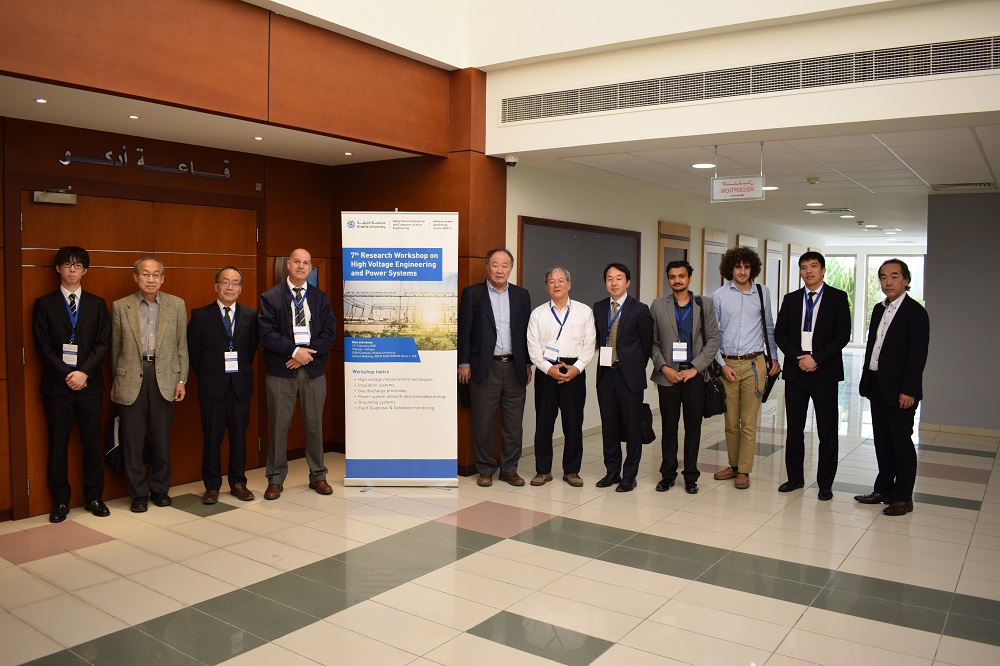
The High-Voltage and Dielectrics Materials research group of the Advanced Power and Energy Center (APEC) at Khalifa University organized the 7th Research Symposium on High Voltage and Power Systems at Sas Al Nakhl Campus, which took place on Thursday, 13 February 2020.

The full-day symposium provided a forum for scientists, industry engineers working in the power and energy sector, and researchers to exchange ideas on recent advances in the topic. It was also an occasion to highlight the role of Khalifa University as a key research and educational hub for high-voltage technology and power system applications.

Representatives from Khalifa University’s APEC research center, The University of Tokyo, Kyushu Institute of Technology, Aichi Institute of Technology, Hosei University, Tokyo Denki University and local industry presented on a range of topics of current interest in the field, including transformer fault diagnosis and oil insulation, partial discharge measurement, high-voltage measurement and analysis, advanced grounding system research and lightning phenomena, and renewable energy.

Attendees had the opportunity to engage in fruitful discussions on these current issues and future research directions. A special visit was also arranged to one of Transco’s high-voltage substations in Abu Dhabi.

Lead organizers Dr. Noureddine Harid, Associate Professor of Electrical Engineering and Computer Science, and Dr. Huw Griffiths, Professor of Electrical Engineering and Computer Science, emphasized the need to promote and sustain such activities in future to enrich awareness about the important advances in such strategic areas and to help address the challenges expected from the rapid growth and development in the UAE’s electrical energy infrastructure.

Staff Writer
20 February 2020

Top 300 Students Honored and Invited to Join KU’s Golden Key Chapter

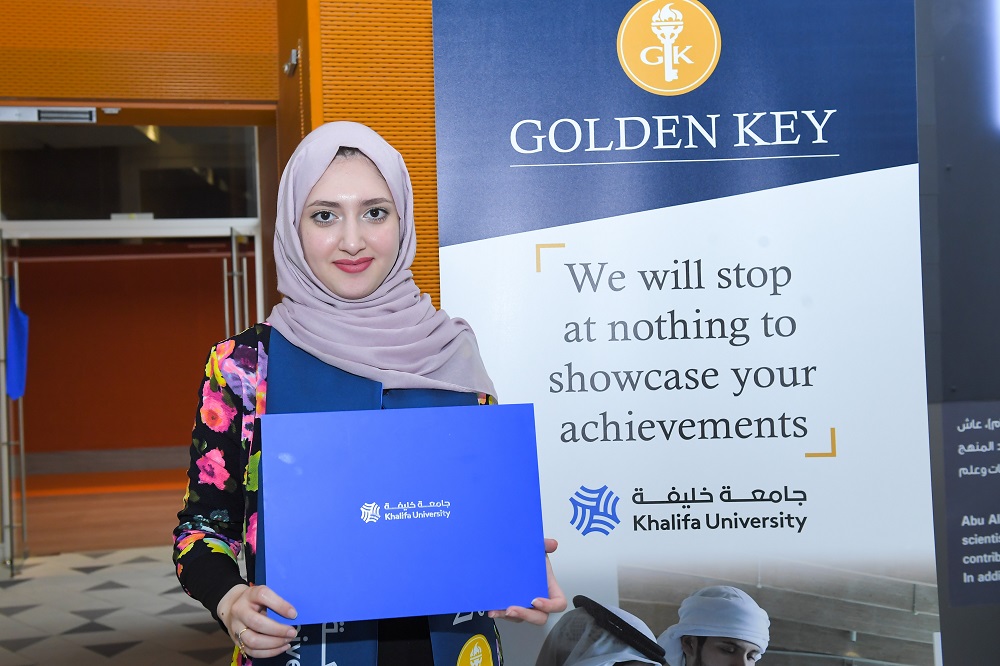
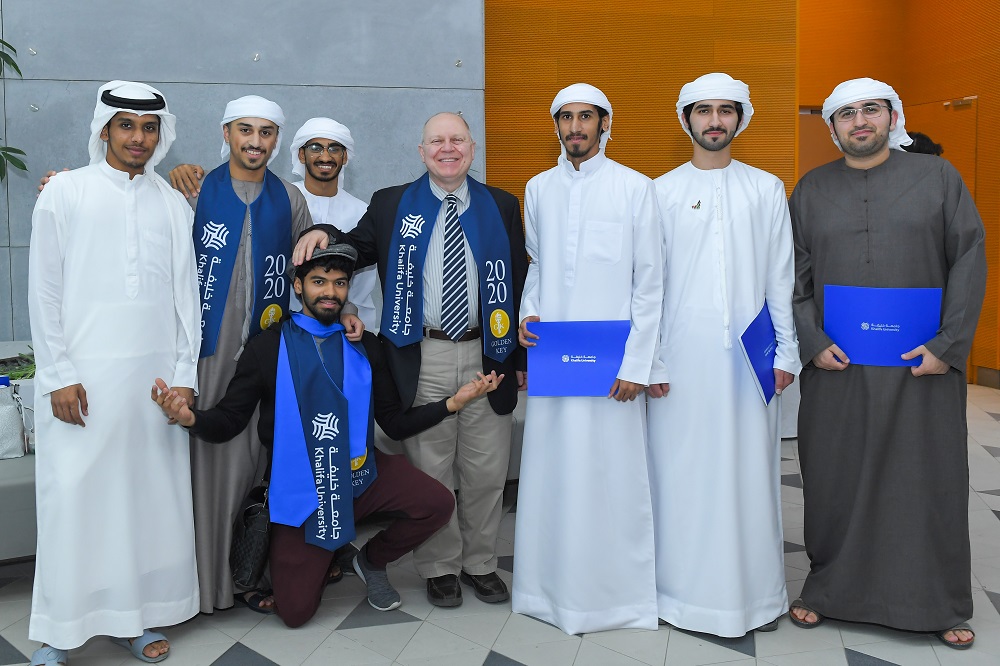
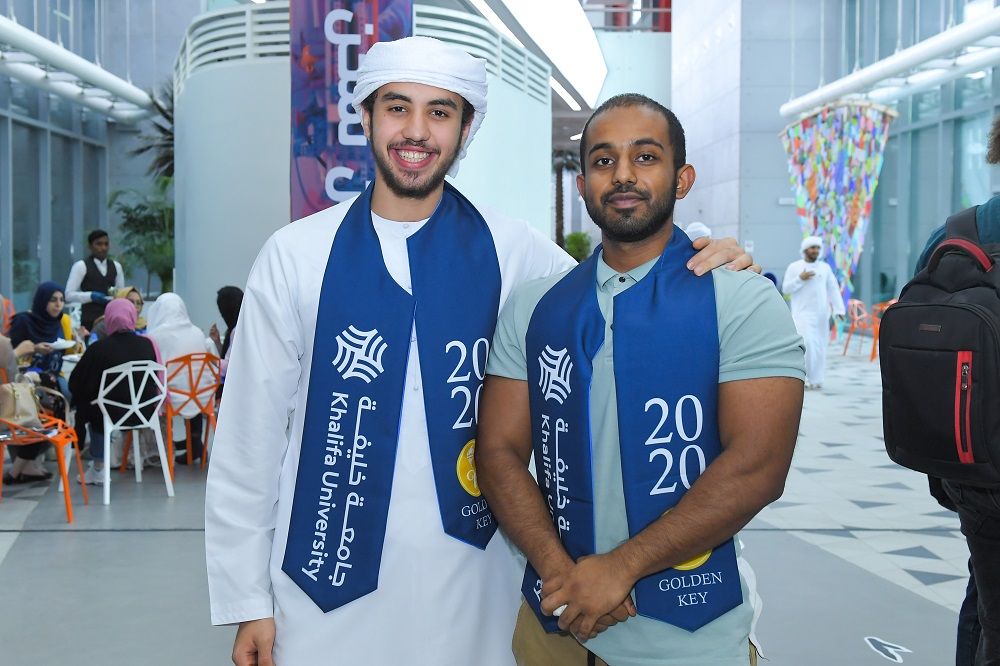
The Student Success Department at KU organized “KU Honors Day” to recognize more than 300 students for their excellent academic performance during the 2019-2020 academic year. The event was held at the Main Campus in the presence of Dr Arif Sultan Al Hammadi, Executive Vice President of KU, Dr. Ahmed Al Shoaibi, Senior Vice President of KU, Dr. Derek Woolins, Provost, Deans, Faculty and the wider KU community on Tuesday, 17 February.


During the ceremony, KU inaugurated its Golden Key Honor Society Chapter, which is the first chapter ever in the Middle East, and invited its high-achieving students to join and become part of one of the world’s best networking groups. By extending Golden Key membership to its top-achieving students, KU is not only reaffirming its commitment to help students realize their full potential, but it is also setting a new standard of academic excellence in the region.

Zayed’s Green legacy

Four undergraduate students from Khalifa University described the environmental campaign they started, called Zayed’s Green Legacy, in an article featured in the State of Green Economy Report 2020, the official publication of the World Green Economy Summit (WGES).

Their mission is to raise awareness of the UAE’s flora and fauna, and its rich biodiversity. Read the full story on pgs 176-177 here: https://dcce.ae/publications/state-of-green-economy-report-2020/.

Khalifa University to Host Second Edition of Mubadala-Globalfoundries-SRC Forum on AI Hardware R&D in Abu Dhabi on 20 February

Forum on UAE’s AI Semiconductor Ecosystem and Launch of Hardware Research Projects in Partnership with Semiconductor Research Corporation

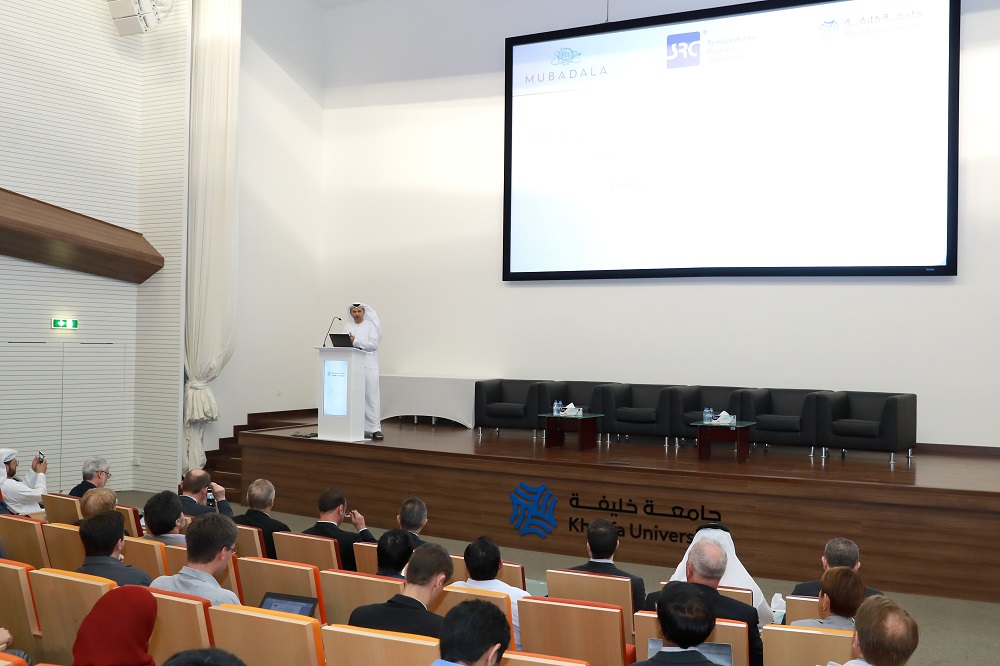
Khalifa University of Science and Technology will be hosting the second ‘Mubadala-Globalfoundries-SRC Forum’ in Abu Dhabi to formulate a vision and to chart future plans for the artificial intelligence (AI) semiconductor ecosystem in the UAE.

Titled ‘UAE AI Semiconductor Ecosystem: Looking Ahead’, the AI R&D forum scheduled for 20 February is being co-organized by Mubadala Investment Company, Globalfoundries and the US-based Semiconductor Research Corporation (SRC). It will include AI scientists from the academia and industry, as well as relevant government organizations such as Hub 71, Abu Dhabi’s global tech hub and flagship initiative of the economic accelerator program – Ghadan 21, and Abu Dhabi Investment Office (ADIO). The forum will also aim to cover priorities and working-model options to make the semiconductor ecosystem sustainable and successful.

In addition, scientists and faculty from NYU-Abu Dhabi, UAE University and Khalifa University will present the status of their latest research in AI, while exploring potential collaboration. Hub 71 and ADIO will focus on how they are supporting the growing AI community, upskilling developers and outlining startup incubator and funding opportunities for AI startups through the Hub71 Incentive Program, while the private sector initiative Sandooq Al Watan will present its programs on building Emirati talent.

The forum’s plenary titled ‘Future of AI Hardware Systems’ will be chaired by Dr Baker Mohammed, Professor, Khalifa University, while the session on ‘Academic Perspective on AI Hardware Research’ will be chaired by Victor Zhirnov, Chief Scientist, SRC. The session on ‘AI Hardware Ecosystem in the UAE – Key Enablers’ will be chaired by Dr Rafic Makki, Global Chief Scientist, Mubadala Capital–Ventures, while Dr Steve Griffith, Senior Vice-President, Research and Development, Khalifa University, will chair an interactive session on ‘Operating Model for a Successful Ecosystem’.

In April 2019, Khalifa University held the first forum on AI hardware that attracted speakers from a number of top universities in the US and industry leaders. The forum resulted in defining the technology strategy and launching an AI hardware thrust at the Semiconductor Research Corporation.

“We are pleased to announce that several projects from Khalifa University are being selected as part of this program,” said Dr Arif Sultan Al Hammadi, Executive Vice-President, Khalifa University. “We thank Mubadala, GlobalFoundries and SRC for their support over the past several years and for contributing to advancing the UAE’s objectives in this vital area of science. We believe the second edition of the Forum will further intensify our efforts towards driving innovation in R&D and bring AI closer towards everyday use,” he added.

The research projects cover different aspects of new chip architectures for Artificial Intelligence with a focus on power efficiency.

Ken Hansen, President and CEO, SRC, said: “We are in the early stages of unleashing this new technology but already are seeing widespread adoption across many different applications. While an impressive start, there are still unbounded opportunities ahead which are limited only by our ability to innovate AI solutions. Funding university research in AI is a vital element to invent the next generation AI hardware or to add new capability such as perception and cognition.”

News Writer
19 February 2020

Bringing 3D Printed Lower Limbs to Those in Need

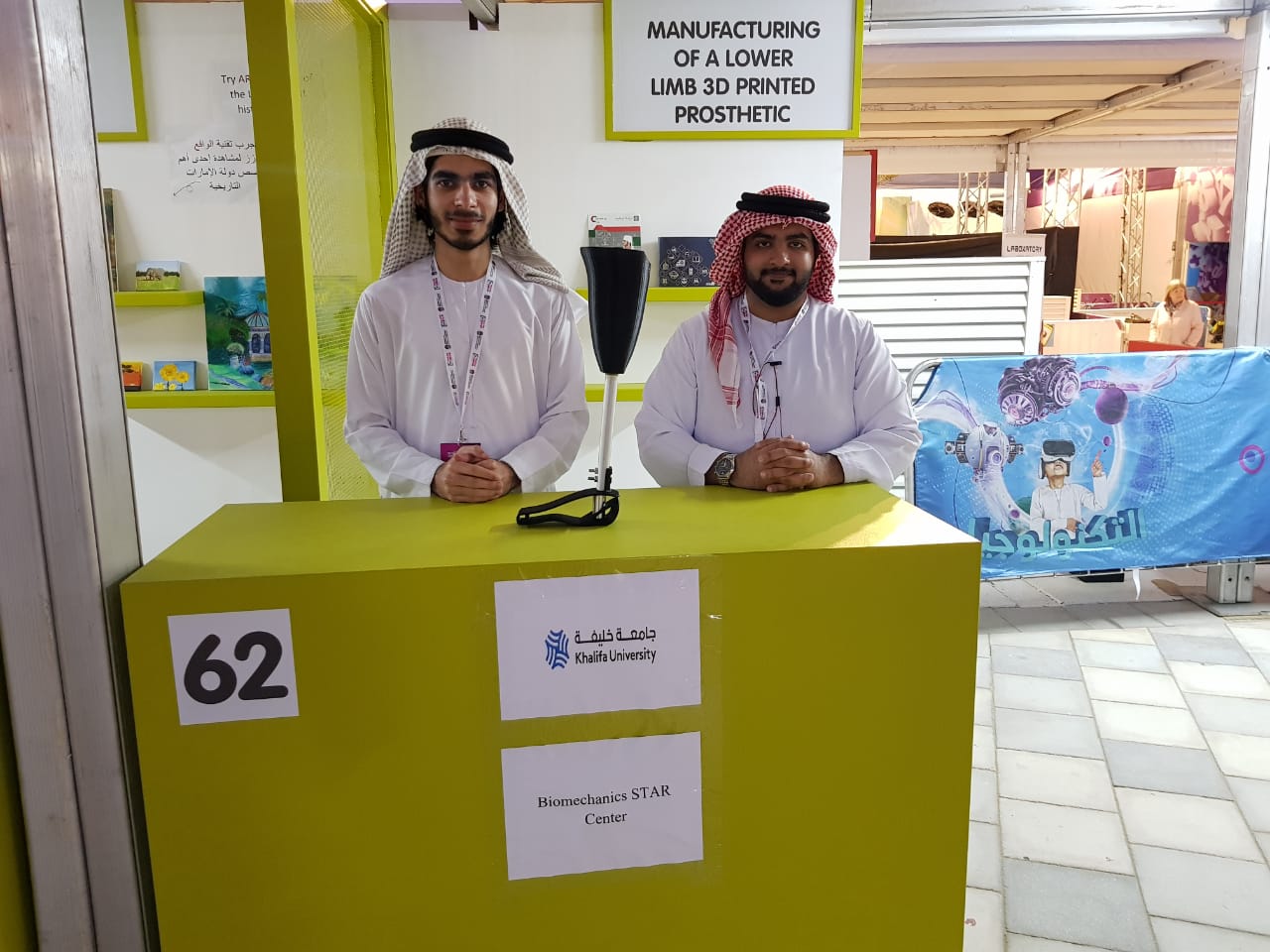
Two Khalifa University Mechanical Engineering students have presented their work at Innovator 2020 in Abu Dhabi to raise awareness of the important role additive manufacturing can have in medical fields. Abdulaziz Ali Alzurahi and Abdulla Mohammed Alkatheeri debuted a lower limb prosthetic device, designed with advanced creative engineering technologies and manufactured using the latest 3D printing technology.

“The project centers around producing patient-specific lower limb prosthetics for individuals who have lost their limbs due to genetics, diabetes, military combat, etc.,” explained Alzurahi.

Additive manufacturing, commonly called 3D printing, is a relatively new but promising technology available to prosthetists. A prosthetic hand can cost thousands of dollars and take months to produce using plastic molding techniques. The prosthetic limb showcased by Alzurahi and Alkatheeri costs less than USD1000 to print and can be produced in just 48 hours.

“Our goal is for this project to help people who cannot afford to buy a traditional prosthetic acquire a device for their daily assistive needs,” added Alzurahi. “Our work can help people in need in the UAE.”

Thanks to their relatively high accessibility and affordability, 3D printed prosthetics are slowly changing the face of medicine. While hands and arms are some of the most common printed prosthetics and can cost as little as USD50, Alzurahi and Alkatheeri chose to focus on lower limb prosthetics.
Traditionally, a prosthetist would create a socket from a reverse mold of the patient’s stump to measure as carefully as possible the precise pathology. Great care must be taken to avoid nerves and tender areas that may not tolerate the continuous pressure of resting on a prosthetic limb. This is a cumbersome and time-consuming process.

Uniquely, this 3D printed limb offers a huge advantage over conventional prosthetics currently on the market: using 3D printing and advanced medical software, Alzurahi and Alkatheeri can use advanced geometry to offer exact socket fittings for each patient, individualizing the prosthetic to a degree unheard of before. Additionally, 3D printed prostheses are a cost-effective way to keep up with a child as they grow or damage their current one as they enjoy their childhood.

“The other major advantage to a prosthetic that can be produced quickly and cheaply is that this is particularly helpful for children,” said Alzurahi. “A child’s lower limbs are continuously growing, which makes 3D printing the best current solution to their cases in particular. Usually, children have to change their sockets after six months of prosthetic use. That can get very expensive.”
Importantly, the prosthetic produced by Alzurahi and Alkatheeri can be manufactured using various 3D material types, geometrical shapes, images, and colors. They can make a prosthetic fun, which they say is crucial for encouraging children to like their prosthetics and interact more efficiently and enthusiastically with them.

“We can produce any design a child wants, based on their interests, hobbies or even cartoon characters,” said Alzurahi.
Alzurahi and Alkatheeri are continuing to develop their prosthetic and are currently working on a shock-absorbing technology to enhance the user experience.

3D printing materials cannot yet compete with the long-term durability of traditionally-made prostheses, and most printing plastics commercially available aren’t strong enough to support body weight. But this will soon change, and in the meantime, those with access to more advanced printers and materials are making cost-effective prosthetics a reality for those in need.

Jade Sterling
News and Features Writer
18 February 2020

Cultivating the Youth to Be Social Leaders

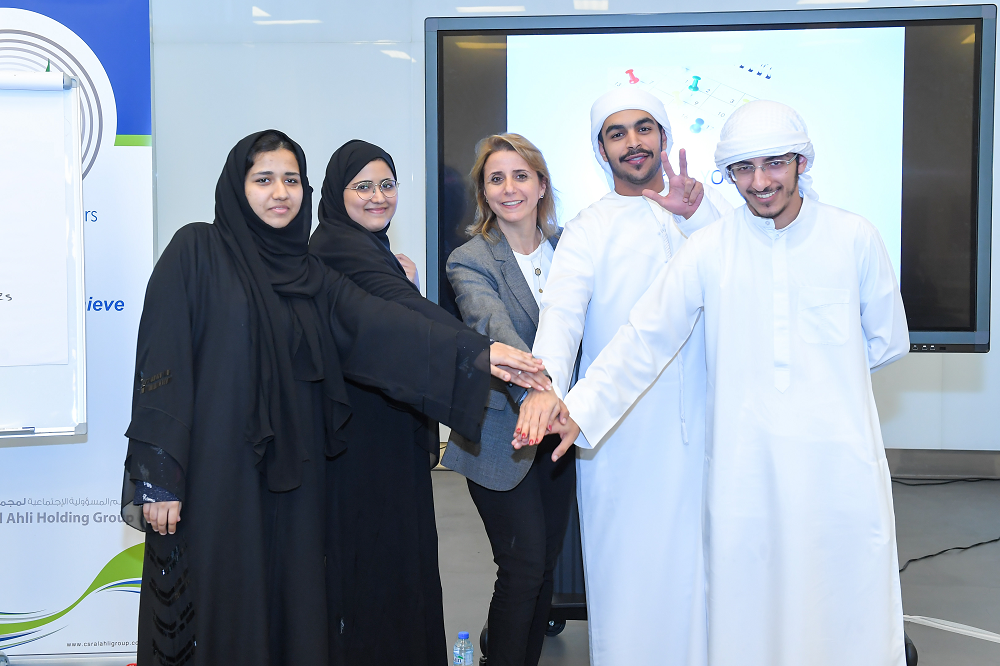
The Al Ahli Holding Group, through its CSR Division and in collaboration with Khalifa University’s Student Success Department, conducted a two-day UAE Social Leaders Program on 7–8 February 2020 at The Hive, located at Khalifa University’s Main Campus.

CSR Al Ahli aims to develop the youth to become global leaders through learning by exposure and cultivating their social enterprise and entrepreneurial skills.

Almost 30 Khalifa University students attended the two-day training program that included sessions about the concept of social entrepreneurship, sustainable development goals, and how to become a social leader. KU faculty Dr. Amani Abdullatif Omer, Associate Professor of Humanities and Social Sciences, led the session on Best CSR Practices and Alliya Rose Anderson, Lecturer of the Preparatory Program, led the team formation and team-building activities.

One of the goals of the training is to inspire the participants to come up with social enterprise projects. These projects, which are associated with social challenges built upon the needs of the UAE, should be able to address development requirements, and at the same time build strong grassroots initiatives.

During the training, the students were able to come up with nine projects that focused on poverty eradication, promotion of education for all, health awareness, and renewable energy and its environmental impacts. There will be a month-long mentorship and coaching period where the participants will further develop their projects and implementation plans.

At the end of the year, the committed projects will compete for the 10,000 USD prize in the annual Social Entrepreneurship Summit organized by CSR Al Ahli.

Ara Cruz
News Writer
13 February 2020


Khalifa University Hosts a University Tour for Armenian Students

To promote a strong cultural and educational exchange program between the UAE and Armenia, the UAE Embassy in Yerevan has initiated an educational trip for top Armenian students studying IT, Architecture, and Engineering to visit the UAE.

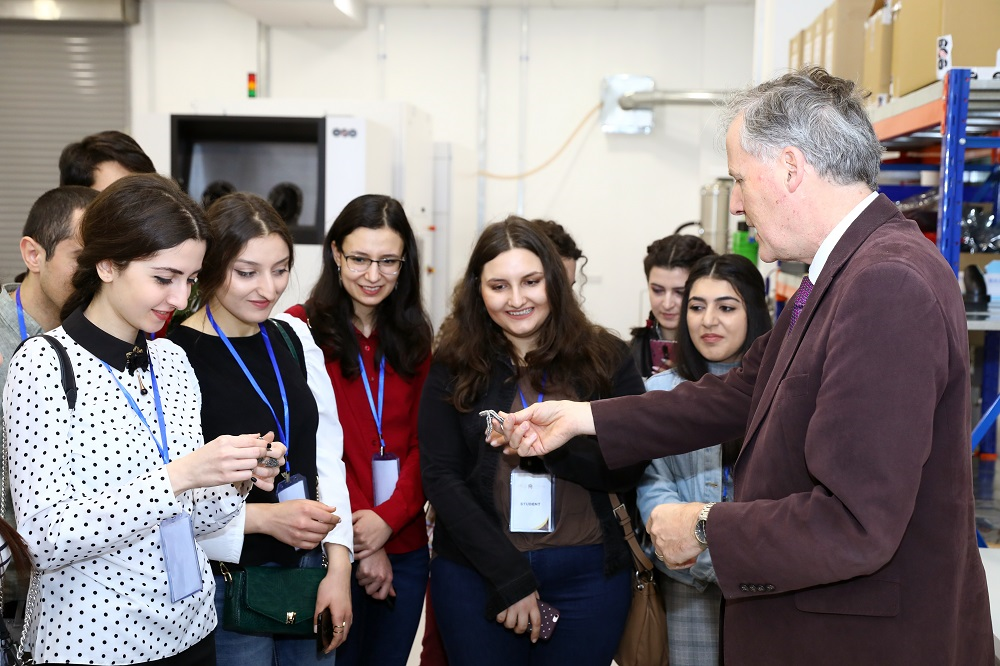
On 5 February 2020, Khalifa University welcomed 14 students from different Armenian universities at the KU Main Campus. The KU Outreach Department arranged a special full day tour, starting with a welcome note from Dr. Ahmed Al Shoaibi, Senior Vice President, Academic and Student Services. A presentation about Khalifa University’s academic programs, research centers, and KU initiatives and achievements was also shown to the guests.

The Armenian students also visited KU’s Aerospace Research and Innovation Center (ARIC), Healthcare Engineering Innovation Center (HEIC), and Emirates ICT Innovation Center (EBTIC). The directors of the centers, Dr. Wesley Cantwell, Dr. Cesare Stefanini, and Dr. Nawaf Al Moosa, met and discussed with the students about the goals, initiatives, and projects of each of the centers.

At the end of the tour, the students also visited the Admissions and Scholarship Office to know more about the admissions procedures, scholarships, and student services offered at KU.

Ara Cruz
News Writer
13 February 2020

Applications for the Global Energy Prize 2020 is Open

The Global Energy Association continues to accept applications for the Prize in 2020. Applications will be accepted until March 20th, 2020. Self-nomination for the Prize is not acceptable. The right to nominate candidates for the Prize is given to well-known and respected scientists. In order to learn the nomination rules, join the pool of nominees or apply, check out the official website of the organization.

Scientists from any country of the world can become Global Energy Prize laureates. The Prize awards authors of outstanding research and developments, who made discoveries and technological innovations that help solve the most acute energy problems. Since 2019, the Global Energy Prize gives awards in three categories: ‘Traditional Energy’, ‘Non-Traditional Energy’, ‘New Ways of Energy Application’.

In September 2019, Khalifa University partnered with the Global Energy Association to jointly promote the Global Energy Association award programs, which includes the Global Energy Prize.

The nomination process of the Global Energy Prize from nominating candidates to awarding laureates is exceptionally open and transparent. Self – nomination for the prize is not acceptable. The list of persons entitled to nominate for the Global Energy Prize include the following scientists: the Global Energy Prize laureates, laureates of the Nobel Prize, winners of the prizes of Kyoto, Vax Planck, Wolf, Balzan, Sheikh Zayed, Energy Globe, Goldman Environment, UNEP Sasakawa Prize, members of the Russian Academy of Sciences and of foreign academies of sciences and scientists who have been verified as nominating persons by the Global Energy Association. Additionally, energy experts can send an application to join the nomination pool. After the assessment and approval of their candidacy by the Association, they are vested with the right to nominate their candidate. The full information about the nomination process available on the Global Energy Prize website.

After determining the works admitted to the contest, the Association conducts their independent international assessment. Each work is evaluated by three experts. The work of experts is carried out according to international standards. By results of their work, experts draw up the acts of examination on the approved by the Association form. An average score is calculated for each nomination submission. On the next step, a short list is formed. The short list is usually announced to the public before the official announcement of the names of the current year’s laureates. The final decision on the laureates’ definition is made by the International Award Committee, which consists of 20 outstanding scientists from 14 countries.

The objective process of selecting the Global Energy Prize nominees was recognized at the global level. The Global Energy Prize is included in the official list of the International Congress of Distinguished Awards (ICDA). In ICDA prestige rating the Global Energy Prize is in the category of ‘Mega Awards’ for its laudable goals, exemplary practices and the overall prize fund. According to IREG Observatory on Academic Ranking and Excellence, the Global Energy Prize is one of TOP-99 international academic awards with the highest prestige and significance. It is the only award from Russia included in the IREG list. Since 2003 the prize has been presented to 39 laureates from 13 countries: Australia, Austria, Canada, Denmark, France, Iceland, Japan, Russia, Sweden, Switzerland, Ukraine, the UK, the USA.

 Contact information:
The Global Energy Association
+7 495 739 54 35, e-mail: press@ge-prize.org

 About the Global Energy Association
The Global Energy Association develops international research and projects in the field of energy. The Association operates with the support of the leading Russian energy companies PJSC “GAZPROM”, “FGC UES”, PJSC, PJSC “Surgutneftegas”. The Association manages the Global Energy Prize, organizes the eponymous summit, and implements the Global Energy Youth Program.

The Global Energy Prize is an international award for outstanding scientific research and technological development in energy. Since 2003, the Global Energy Prize has been awarded to 39 Laureates from 13 countries: Australia, Austria, Canada, Denmark, France, Iceland, Japan, Russia, Sweden, Switzerland, Ukraine, the UK and the USA. According to IREG Observatory on Academic Ranking and Excellence, the Global Energy Prize is one of TOP-99 international academic awards with the highest prestige and significance. In the prestige rating of the International Congress of Distinguished Awards (ICDA) the Global Energy Prize is in the category of “Mega Prizes” for its laudable goals, exemplary practices and the overall prize fund.


Khalifa University Receives Mohammed bin Rashid Al Maktoum Global Water Award

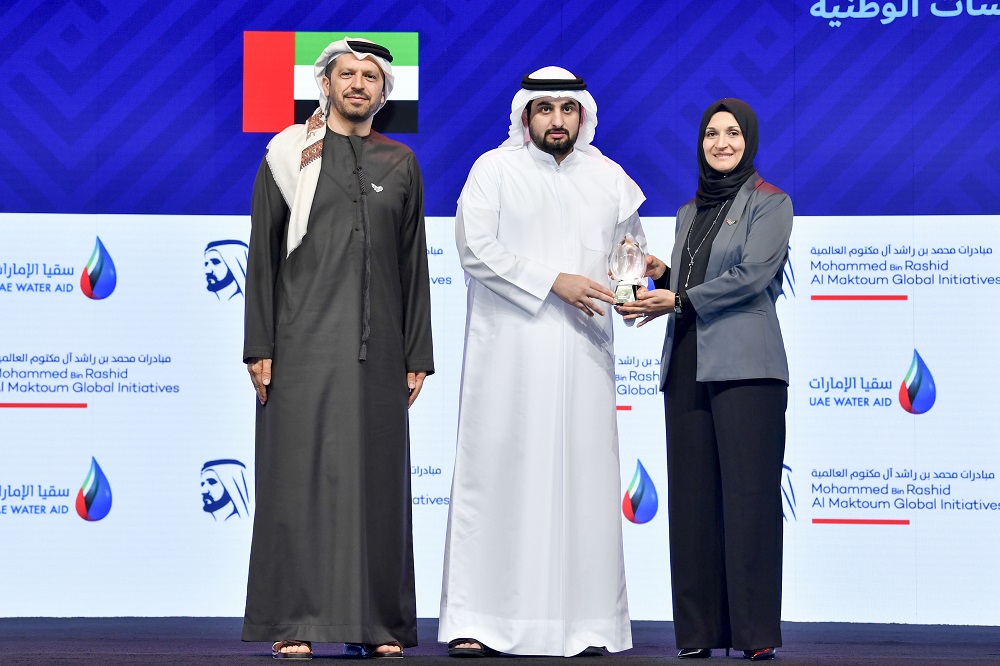
Khalifa University was awarded, for the second time, the Innovative Research & Development Award at the Mohammed bin Rashid Al Maktoum Global Water Awards ceremony held last 29 January 2020 at Madinat Jumeirah, Dubai.

The Global Water Award is an initiative of His Highness Sheikh Mohammed bin Rashid Al Maktoum, Vice President, Prime Minister and Ruler of Dubai, to encourage research institutions, individuals, and innovators, not only from the UAE but from around the world, to help solve the water shortage problem that we are experiencing worldwide. The award is given out by the UAE Water Aid Foundation (Suqia), which functions under the umbrella of the Mohammed bin Rashid Al Maktoum Global Initiatives. It has three main categories, the Innovative Projects Award, Innovative Research and Development Award, and the Innovative Individual Award.

The Khalifa University research recognized was led by Dr. Banu Yildiz, Assistant Professor of Civil Infrastructure and Environmental Engineering. The project is a low-cost desalination project that uses a distiller coupled with a gravity solar water heater.

H.H. Sheikh Ahmed bin Mohammed bin Rashid Al Maktoum, Chairman of the Dubai Media Council and Chairman of the Mohammed bin Rashid Al Maktoum Knowledge Foundation, honored the 10 Global Water Award recipients. The awards ceremony was also attended by Dr. Thani bin Ahmed Al Zeyoudi, Minister of Climate Change and Environment; Saeed Mohammed Al Tayer, Chairman of the Board of Trustees of the UAE Water Aid Foundation; and Dr. Hamad bin Sheikh Ahmed Al Shaibani, Director-General of the Islamic Affairs and Charitable Activities Department in Dubai. Directors of government departments, ambassadors, consuls general, public figures, officials from the public and private sectors, and representatives from local and international universities and research centers were also in attendance.

Dr. Thani bin Ahmed Al Zeyoudi, Minister of Climate Change and Environment, said: “At Suqia, we are committed to working on one of the key objectives set by the Mohammed bin Rashid Al Maktoum Global Initiatives foundation, which is Humanitarian Aid and Relief by contributing to providing safe and clean water. In this regard, I thank the Emirates Red Crescent and the Mohammed bin Rashid Al Maktoum Humanitarian and Charity Establishment for supporting Suqia in implementing sustainable water projects in 36 countries around the world, to provide drinking water for over 9 million people.”

Ara Cruz
News Writer
8 February 2020


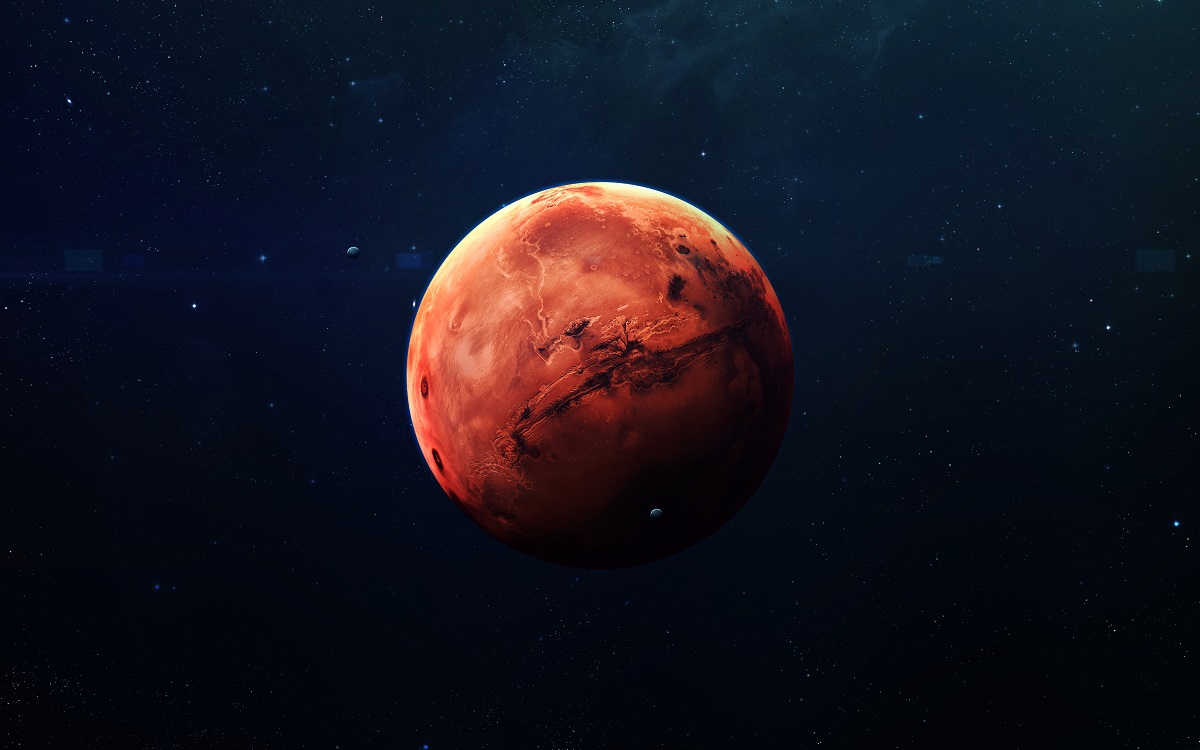
Is There Magnetism on Mars?

Ahmed AlHantoobi, Aerospace Engineering student, has published his research on Mars’ magnetism in the major journal Geophysical Research Letters, which he conducted during his summer experience with the Emirates Mars Mission Research Experience for Undergraduates program.


“Orbital magnetometers and the InSight lander discovered strong crustal magnetic fields in some regions of Mars, despite the lack of a detectable core dynamo,” explained AlHantoobi to a room full of respected and established researchers in their field. “This strong crustal magnetism is unexplained given that previous models of Mars’ ancient core dynamo are of approximate strength to Earth’s current field and would not produce such strong remnant magnetization if Earth-like lithologies are assumed. However, the crust on Mars is more iron-rich than Earth’s crust, which may lead to rocks with significant proportions of magnetic phases such as magnetite, hematite, pyrrhotite, and titanomagnetite.”


The lithology of a rock unit is the description of its physical characteristics to map and investigate areas by correlation between different rock types.


The dynamo theory proposes a mechanism by which a celestial body, such as Earth or Mars, generates a magnetic field, a process through which a rotating, convecting, and electrically conducting fluid can maintain a magnetic field over astronomical time scales. This conductive fluid in a geodynamo, like a planetary body, is liquid iron in the outer core, with the magnetic field induced and maintained by the convection of the liquid iron in the outer core. As the Earth rotates, the Coriolis effect supplies the rotation in the outer core, and it is this rotating fluid that induces the magnetic field.


While Mars lacks a detectable magnetic field of global scale, it boasts a rich spectrum of magnetic fields at smaller spatial scales. On average, the Mars crust is ten times more intensely magnetized than the Earth’s, and theories suggest that the Mars crust acquired this remnant magnetism from its dynamo shutting down for reasons as yet unknown.


“Previous models of Mars’ ancient core dynamo suggest that its strength was similar to that of Earth’s current magnetic field and would not produce such strong magnetic anomalies as seen,” explained AlHantoobi. “We know that Mars contains more iron than Earth when considering proportions, so the presence of very iron-rich rocks isn’t unexpected in the crust.


The Mars Global Surveyor Mission in 1996 provided a wealth of data into Mars’ evolution and the magnetic record of the crust. However, its data was collected from orbit, at great distance from the rocks containing the history of the planet’s magnetism. Until space exploration missions can use surface or aerial magnetometer surveys or even return a piece of Noachian crust (from an early time period on Mars) to Earth, researchers like AlHantoobi are using the data they already have to propose explanations for the remnant magnetism.


“The data from the magnetometer shows that there are magnetic anomalies on the Martian crust in the absence of a global magnetic field,” said AlHantoobi. “The magnetic field recorded from orbit is suggested to be a result of rocks containing magnetic minerals acquiring remnant magnetization from the time Mars presumably had a global magnetic field. The most likely cause of this remnant magnetization is thermoremanent magnetization.”


When an igneous rock, formed through the cooling and solidification of magma or lava, cools, it acquires a thermoremanent magnetization (TRM) from the Earth’s field. This remanence can be very stable and last without significant change for millions of years. If a rock is heated above its Curie temperature— the temperature above which certain materials lose their permanent magnetic properties—it can be permanently demagnetized.


“The lack of magnetic anomalies in regions with large impact basins and large shield volcanoes implies that Mars’ dynamo shut down before heavy bombardment and volcanism,” said AlHantoobi. “Magnetic minerals in regions of volcanic activities are susceptible to heat above the Curie temperature, leading to demagnetization if the global magnetic field is no longer present.”


It appears that around four billion years ago, the global magnetic field on Mars collapsed. Now, the history of its magnetic field is archived in its crust.


“We can see that in the five regions where Mars’ crustal field is particularly strong, there is a strong positive correlation coefficient between magnetic field strength and iron content,” said AlHantoobi. “It’s possible that this is due to thermoremanent magnetization of iron-rich basalt with abundant single-domain magnetic carriers such as magnetite, and therefore high magnetic susceptibility.


“This theory hasn’t been explored before. We used a model of the magnetic field created using data from the Mars Global Surveyor mission and MAVEN, and mineral maps from TES to explore the potential relationships between the magnetic field observed and the mineralogy of the Martian crust.


“A possible explanation for some of the strong crustal magnetic fields observed from orbit is local mineralogical enhancements of those regions,” explained AlHantoobi. “Therefore, Mars’ ancient core dynamo does not need to produce an extremely strong global magnetic field to explain the strong magnetic anomalies. Instead, the rocks may be much better recorders for the magnetic field than typical lithologies available on Earth.


“The methods we used rely on the presence of a recorded magnetic field, so we couldn’t comment on the crustal regions where there isn’t a recorded magnetic field. However, we can see that in both the individual and the linked correlation maps of the geologic units, there are regions with strong positive correlation, and others with a strong negative correlation. Unfortunately, the areas with the highest recorded magnetic fields comprised many small geologic units and didn’t contain enough data sets to provide us with a reliable correlation value.”


Research such as AlHantoobi’s is crucial for better understanding the universe around us and offers unprecedented access to the history of Earth’s nearest planetary neighbor. NASA’s InSight lander touched down on Mars in November 2018 to investigate the Martian crust and measure the strength and direction of the planet’s magnetic field, among many other intelligence gathering missions. Data from InSight will hopefully clarify whether the strong magnetic signal coming from the rocks beneath the lander is coming from rocks deep underground or closer to the surface. If the magnetism is coming from rocks nearer the surface, it would imply the strong magnetic field persisted around Mars for longer than currently thought.


Additionally, the Hope Mars Mission from the Emirates Mohamed Bin Rashid Space Center will study the atmospheric layers of Mars and help explain how the collapse of the planet’s global magnetic field contributed to the stripping of the atmosphere that could have sustained liquid water. Understanding the magnetic history of the red planet could help researchers determine whether there ever was any life on Mars.


Jade Sterling
News and Features Writer
28 January 2020

 

Khalifa University’s Project on UAE’s Values of Tolerance Showcased to Diverse Religious Leaders

Touch-Screens Developed by Students Offer Details on More Than 450 Individuals of 15 Different Faiths Buried between 1963 and 2012 at Sas Al Nakhl Non-Muslim Cemetery

Khalifa University today showcased a ‘Digital Repository for Abu Dhabi’s First Non-Muslim Cemetery’ – touch-screens offering details of those buried at the Sas Al Nakhl Non-Muslim Cemetery to various religious leaders as part of the university’s initiative to celebrate the values of tolerance in the UAE.

Religious leaders representing the Catholic, Anglican, Orthodox and other Christian churches, as well as leaders from Hindu, Sikh and Buddhist faiths attended the event during which they acknowledged the efforts behind the project. The touch-screens provide details of the deceased, buried from the early 1960s to 2012. According to available records, around 450 known individuals of 15 different faiths were buried at the cemetery between 1963 and 2012. Since the year 2012, all non-Muslim burials have been shifted to the Bani Yas Graveyard.

His Excellency Dr. Mugheer Khamis Al Khaili, Member of the Executive Council, head of the Department of Community Development, was present on the occasion.

Religious leaders who attended the event included Rev. Fr. Gandolf Wild, OFM Cap., Vice Secretary to His Excellency Bishop Paul Hinder, and Rev Fr Abishai Vase, both from St Joseph’s Cathedral – Abu Dhabi, Rev. Canon Andrew Thompson of St. Andrew’s Anglican Church – Abu Dhabi, Rev Martell Menlove from Church of Jesus Christ of Latter-day Saints – Abu Dhabi, and Rev Father Mikhail Bilmilad Hani Youssef, Coptic Orthodox Church – Al Ain.

Dr Arif Sultan Al Hammadi, Executive Vice-President, Khalifa University of Science and Technology, said: “Khalifa University is privileged to have contributed to this historic project and developed these touch-screens as part of its commitment to the values of tolerance, which demonstrates the UAE’s enduring acceptance of other religions, as directed by the country’s leadership. The cemetery project is a perfect illustration of the UAE’s diverse and inclusive culture, and the values of co-existence and peace that have been key pillars of the country, right from the beginning. Khalifa University has undertaken this initiative to preserve and promote religious harmony, an important legacy of the UAE.”

Gathered meticulously by several university students including 10 students from Khalifa University, the Sas Al Nakhl (Umm Al Nar) Non-Muslim Cemetery project was the culmination of several months of dedicated work. The project was led by Dr. Athol Yates, Assistant Professor, Humanities and Social Sciences, Khalifa University, with support from Abu Dhabi Police. The touchscreen application is designed to mimic a virtual guide to the first non-Muslim cemetery in Abu Dhabi.

Details of the individuals, extracted from death certificates, belonged to the Roman Catholic, Anglican, Armenian Apostolic, Apostolic Christian, Coptic Orthodox, Indian Orthodox, Greek Orthodox, Malankara Mar Thoma Syrian Church, Protestant, Evangelical and various Christian denominations, as well as Hindu, Buddhist, and Sikh faiths.

The touchscreen offers details of a deceased individual, such as name, religious affiliation and other information as catalogued from the death certificates. Users of the touchscreen will be able to view an aerial photograph of the cemetery showing the location of graves, as well as background information about the cemetery, statistical details and relevant information.

The touchscreen also makes it easy to access the full list of those known to have been buried at the Sas Al Nakhl Non-Muslim Cemetery, with location of individual graves and tombstones.

Clarence Michael
News Writer
27 January 2020