

Achieving Orbit Around Saturn with as Little Fuel as Possible

Researchers from Khalifa University are investigating ways to reduce the cost of sending spacecraft to the Solar System’s outer planets. They use deep-space electric propulsion to decrease the cost of entering Saturn’s orbit, which will pave the way for new opportunities to explore Saturn and other outer planets with significantly less fuel. 

Arguably one of the most captivating of our solar system’s planets, Saturn is a massive ball made mostly of hydrogen and helium, adorned with a system of icy rings and surrounded by more than 60 known moons. It is home to some of the most fascinating landscapes in the solar system, many of which we are still exploring, and is a rich source of scientific discovery and mystery.

To investigate the outer planets, spacecraft need to get there. The spacecraft must travel through interplanetary space to its target planet, and then decelerate relative to that planet using an orbit insertion rocket or some other means.

Dr. Elena Fantino, Assistant Professor of Aerospace Engineering at Khalifa University, and Dr. Robert Flores, Research Scientist, have investigated deep-space electric propulsion in a paper for the Journal of Guidance, Control and Dynamics to dramatically reduce the excess speed of a spacecraft arriving at Saturn. Their interplanetary trajectory includes a gravity assist at Jupiter, combined with low-thrust manoeuvres to allow the spacecraft to slow down enough to be ‘captured’ by Saturn’s gravitational pull.

“The giant planets have a special place in our quest for learning about the origins of our planetary system and our search for life, and robotic missions are essential tools for this scientific goal,” explained Dr. Fantino.

This work uses deep-space electric propulsion to decrease the cost of entering Saturn’s orbit, which will pave the way to new opportunities to explore Saturn and the other outer planets with significantly reduced amounts of propellant.

Planning for any mission to the outer planets needs careful consideration of mass and cost. Four spacecraft have visited Saturn so far, with Pioneer 11, Voyager 1 and Voyager 2, each providing valuable flyby insights on the planet. In 2004, the Cassini mission arrived in orbit and studied Saturn from its orbit for 13 years before it was plunged into the planet’s atmosphere in 2017. Studies are now underway to launch the Titan Saturn System Mission as a joint ESA-NASA project.

“Missions to the outer planets have been prioritized by both NASA and ESA, including orbiter missions to Uranus and Neptune,” said Dr. Fantino. “In this case, the amount of propellant required to decelerate and be captured by the planets’ gravity on arrival is very large, and the support of techniques like aerobraking and aerocapture is being explored.”

The Cassini mission travelled to Saturn using a VVEJGA (Venus-Venus-Earth-Jupiter Gravity Assist) trajectory: it executed two consecutive gravity assists with Venus, one with Earth, one with Jupiter and used midcourse manoeuvres.

A gravity assist involves a spacecraft’s approach carefully timed so that it passes by the planet in its orbit around the sun. A gravity assist at Jupiter has a spacecraft come into Jupiter’s gravitational influence, fall towards Jupiter, and then change its speed assisted by the motion of the gravitating planet as it pulls on the spacecraft. This is also known as a gravitational slingshot and is used to reduce expense and save on propellant.

The Cassini spacecraft entered Saturn’s orbit with approximately 800kg of liquid propellant. Bringing Cassini into an orbit close enough for observations consumed another 314kg, while deep space maneuvers and course corrections before orbit insertion required another 1000kg of propellant.

“Clearly, the impact of these operations on the size and cost of the mission was considerable,” explained Dr. Fantino. “One alternative to reducing the cost of exploring the giant planets is to use an electrodynamic tether, which can produce a significant thrust to assist in orbit insertion.”

Electrodynamic tethers (ET) are long conducting wires which can operate on electromagnetic principles as generators, by converting their kinetic energy to electrical energy, or as motors, converting electrical energy to kinetic energy. Electric potential is generated across a conductive tether by its motion through a planet’s magnetic field.

The ET concept paves the way towards missions to explore Saturn and its moons with spacecraft masses below one ton—for comparison, the Cassini launch mass was 5600kg, or just over five tons.

“We also explored the possibility of using the electric propulsion system to reduce the high cost of a direct Earth-to-Jupiter transfer,” added Dr. Fantino. “This is an unusual choice. Schemes involving Earth and Venus gravity assists are much more common because they help to reduce the hyperbolic excess speed of the spacecraft. We selected a direct transfer from Earth to Jupiter for its simplicity but our findings are applicable to any VVEJGA (Venus, Earth, Jupiter, Gravity Assist) trajectory.”

While the use of gravity assists reduces fuel consumption, orbit insertion required a huge amount of fuel for Cassini. If the spacecraft is not slowed on its approach to its target planet, the hyperbolic excess velocity will carry the spacecraft beyond its target as its speed will be too great for the gravitational pull of the planet to bring it into orbit. It will simply speed past. Shedding excess velocity is typically achieved by an orbit insertion burn, which requires fuel.

Dr. Fantino’s method substantially decreases the hyperbolic excess speed of a spacecraft approaching Saturn to facilitate gravitational capture. The interplanetary trajectory includes a gravity assist at Jupiter, combined with low-thrust manoeuvres. While the trajectory between Jupiter and Saturn requires a long transfer time of eight years, the reduced excess velocity at Saturn means a significantly decreased insertion impulse needed to achieve the same initial orbit as the Cassini mission.

“The reduced impulse opens the door for more efficient braking methods, such as electrodynamic tethers, or even direct capture by means of a Titan flyby,” explained Dr. Fantino. “The reduced excess velocity comes at the cost of a long Jupiter-to-Saturn transfer time because a moderate eccentricity trajectory tangent to Saturn’s orbit is required.”

Titan is the largest moon of Saturn. It is massive enough to deviate the path of a spacecraft and even to convert its trajectory relative to Saturn from hyperbolic to elliptical. In other words, a gravity assist with Titan may be sufficient to accomplish orbit insertion and no further adjustment burn would be required. Arriving at Saturn with a low hyperbolic excess speed (like in this work) increases the effectiveness of a flyby with Titan. In other words, if the spacecraft approaches Saturn at a low speed and then passes by Titan, the deviation caused by the moon is bigger.

The strategy designed by Dr. Fantino can be applied to new missions to Saturn, such as those proposed by NASA. These missions can benefit from reduced excess hyperbolic velocity, which would enable a new, inexpensive and more flexible category of missions to Saturn. The results can even be applied further afield to missions to the outermost planets of Uranus and Neptune.

Jade Sterling
News and Features Writer
29 March 2020

Khalifa University Researchers Use Synthesized Nanoparticles to Protect the Environment from Persistent Pollutants in Wastewater

To aid in the treatment of wastewater, researchers from Khalifa University have synthesized a nanostructured metal oxide material to kickstart a reaction aimed at removing phenol from wastewater 
Industrial wastewater is an undesirable by-product of various industrial processes and needs to be treated and cleaned before it can be reused or disposed of to prevent any environmental detrimental impact. Many pollutants can be very difficult to treat.
To aid in the treatment of wastewater, Dr. Mohammad Abu Haija, Assistant Professor of Chemistry, and Dr. Fawzi Banat, Chair of Chemical Engineering, have synthesized a nanostructured metal oxide material to kickstart a reaction to remove phenol from wastewater. They described their catalyst in a paper recently published in the journal Applied Catalysis B: Environmental.
“The wastewater typically produced during industrial processes contains organic and inorganic pollutants that are environmentally persistent and cannot be removed by conventional methods,” explained Dr. Banat. “Some of these pollutants are dyes, pesticides and organic solvents which may contain aromatic compounds, cyanides, ammonia, sulphides, and phenols.”
Phenol is a persistent organic pollutant that is commonly used in agriculture and in general disinfection.
“Phenol’s poor biodegradability demands a tertiary treatment as the conventional primary and secondary processes, like membrane technology and electrochemical processes, are not efficient at dealing with phenol in wastewater,” said Dr. Haija.
Recent studies have indicated an increase in the prospect of advanced oxidation processes focused on peroxymonosulfate (PMS) activation as an effective treatment method, owing to its pH flexibility, redox potential and great oxidation ability.
“The use of PMS as an oxidant has attracted a lot of attention due to the different reactive oxygen species produced during its activation process,” explained Dr. Haija.
However, PMS alone is not enough to take care of the phenol in wastewater. It needs a catalyst to get the degradation reaction started.
Activation via metal oxide catalysts has drawn much attention as they are reusable, easy to recover, and reduce the need for chemical reagents. Even though the naturally abundant transition metals show high activation of PMS, their high solubility and toxicity make them somewhat unfavorable for use in wastewater treatment and other environmentally focused applications.
Metal oxides with vanadate (a salt containing both vanadium, a transition metal, and oxygen) are environmentally abundant oxides, with remarkable physical and chemical properties which enable their application in batteries, semiconductors, and catalysis. Combining vanadate with rare earth metals such as cerium, lanthanum and praseodymium shows a great enhancement in their electrochemical properties, thermal stability, surface area and magnetic properties.
Cerium vanadate (CeVO4) is naturally occurring and can also be prepared using simple methods in the laboratory.
“Due to its optical, electrical, magnetic and catalytic properties, CeVO4 is often used as a catalyst, with several reports about its efficiency at degrading organic pollutants, such as organic dyes and for the oxidative dehydrogenation of propane,” explained Dr. Banat.
The research team at KU prepared CeVO4 nanoparticles using a simple ‘one-pot’ co-precipitation method. The prepared nanoparticles were scrutinized for their stability and purity and were found to exhibit good crystallinity and display a rod-like structure. The lab-derived CeVO4 replicated naturally occurring cerium vanadate.

The crystalline structure of pristine CeVO4 nanostructures as shown in various tests: (a) XRD pattern, (b) Crystal structure, (c) Raman spectrum and (d) FTIR spectrum

The lab-derived CeVO4 was then used to activate PMS for phenol degradation experiments. To prove that the catalyst was responsible for the results, the researchers also ran experiments where they removed the catalyst from the reaction system. They saw that negligible phenol degradation was achieved, which shows that the reaction is completely derived by the catalyst.
“We conducted preliminary experiments using PMS alone, CeVO4 alone, and then CeVO4 with PMS,” said Dr. Banat. “To emphasize the importance of the catalyst performance, we tested the self-adsorption of the catalyst and the self-oxidation of PMS first. We found that PMS alone was not effective at degrading phenol, as only 2 percent of phenol was removed after about 180 minutes. CeVO4 alone was also insufficient, removing less than 20 percent of phenol in 180. Remarkably, PMS and CeVO4 combined achieved a complete degradation of phenol within 80 minutes, suggesting the PMS was activated by the CeVO4 catalyst.”
The system has uses beyond just phenol degradation too.
To investigate the CeVO4and PMS system for use in degrading different organic pollutants, the researchers tested organic pollutants, including resorcinol, acrylamide, methyl violet and methyl, with the system. The results showed that the CeVO4/PMS system successfully degraded all four organic pollutants.
Plus, the CeVO4 nanoparticles were found to be reusable.
“The regeneration and reusability of a catalyst are important criteria for any practical application,” explained Dr. Haija. “Our regenerated CeVO4 nanoparticles were tested for five consecutive cycles using the same reaction parameters. Our results showed that the reused catalyst exhibited high catalytic activity, proven by the complete degradation of phenol within 60 minutes. Plus, there was no significant leaching of either cerium or vanadate from the catalyst.”
“Combining a simple synthesis method with the excellent catalytic properties exhibited by CeVO4 is a suitably cost-effective and environmentally friendly technique that can be employed in water treatment applications.”
Jade Sterling
News and Features Writer
26 March 2020


Khalifa University grants IP licence to Emirati startup

Abu Dhabi’s Khalifa University of Science and Technology on Wednesday announced the licencing of its patented technology to a heart monitoring startup floated by an alumnus Emirati entrepreneur with a faculty member.

The intellectual property (IP) technology licence was given to the home-based monitoring device, the Emirati startup ‘Twinkle Heart’, helps pregnant mothers monitor foetal heartbeat and the baby’s cardiac activity.

Read full story here: https://www.thenational.ae/uae/education/khalifa-university-grants-ip-licence-to-emirati-startup-1.994448

Emirates Nuclear Technology Center Project Adds to the Safety of Nuclear Power Plants

Stress corrosion cracking of stainless steels in the primary water of pressurized water reactors is one issue threatening the safety of a nuclear power plant. To improve safety, researchers from Khalifa University’s Nuclear Engineering Department are investigating the role of the carbides produced when heat-treating steel. 

Pyungyeon Cho, Research Assistant in the Department of Nuclear Engineering, has developed a project to investigate the main role of the carbides (carbon-metal alloys) produced when stainless steel and nickel-based alloys are heat-treated.

Nuclear power plants use stainless steels in the various structures of the reactor for robustness, but the environment in a nuclear reactor is uniquely stressful. Materials subjected to reactor conditions for long periods of time begin to corrode and crack. Cho’s project is expected to show how the carbides produced at the boundary between the particles in the steels act during stress corrosion cracking in one area of the reactor.

“The stress corrosion cracking of austenitic stainless steels and Ni-based alloys in the primary water of pressurized water reactors is one issue threatening the safety of a nuclear power plant,” explained Cho. “A number of studies have been performed on the primary water stress corrosion cracking (PWSCC) of austenitic stainless steels and Ni-based alloys, and several mechanisms have been proposed to explain the observations. However, the exact mechanism remains open to debate.”

Cho’s project sets out to verify the role of the grain boundary carbides in PWSCC. To isolate one factor leading to carbide formation and chromium depletion, stainless steel 347 is used and nickel-based carbides are precipitated without chromium depletion. In the first stage, optimized heat treatment conditions are determined and in the second stage, PWSCC tests are performed. After these tests, microstructures and crack morphology are examined.

All thermal reactor designs require the fast fission neutrons to be slowed down to interact with the nuclear fuel and sustain a chain reaction. Pressurized water reactors (PWRs) use ordinary water as a coolant and neutron moderator (a medium to reduce the speed of fast neutrons), leaving them as thermal neutrons with only minimal kinetic energy. PWRs are by far the most common type of reactor in use today. Kept under high pressure and not allowed to boil, the primary water (the water in contact with the uranium fuel) passes through a heat exchanger, where it transfers its heat to a second loop of water at a lower pressure. This secondary water transforms into steam used to spin turbines that produce electricity.

The secondary water is not in contact with radioactive elements and can be recycled after having been condensed. The plume of steam escaping from the tower of a nuclear power plant comes from a third loop of tertiary water that cools the condenser. PWRs are among the cleanest of the nuclear power reactors, as a radioactive product would need to make its way through the zircaloy shell of the fuel rod, into the primary water, into the secondary water, and then into the tertiary water. The safety provided by these multiple barriers comes at the additional cost of build complexity.

The structure around the reactor and associated steam generators is designed to protect it from outside intrusion and to produce those outside from the effects of radiation in case of any serious malfunction inside. Typically, this is a metre-thick concrete and steel structure.

“Austenitic stainless steels and nickel-based alloys have been widely used in PWR primary coolant systems, such as reactor internals, steam generator tubing, reactor pressure vessel inlet and outlet nozzles and so on, because these alloys satisfy the requirements for primary side components,” explained Cho. “However, stress corrosion cracking on Ni-based alloys and their welds in primary water conditions has been observed since the 70s. Since 1997, we’ve even had reports of cases of intergranular stress corrosion cracking on cold-worked austenitic stainless steels in primary water conditions.”

Primary water conditions are characterized by their high temperature, high pressure, low dissolved oxygen, added hydrogen, and other additives such as boric acid and lithium hydroxide. Boron and cadmium control rods are used to maintain primary system temperatures at the desired point and an operator can control the steady state operating temperature by adding boric acid.

The high temperature water coolant with boric acid dissolved in it is corrosive to carbon steel, which limits the lifetime of the reactor and the systems that filter out the corrosion products. However, stainless steel should not be affected.

“PWSCC is influenced by a number of factors: chemical compositions (carbon, nickel, chromium), grain size and grain boundary orientation, carbide precipitation, cold-work, stress, temperature, pH, and hydrogen partial pressure, among others. Studies show some unique features of cracking behaviour, for example, the cracking of the alloys in the primary side is almost intergranular, and cold-work enhances the susceptibility of alloys to PWSCC.”

A grain boundary is the interface between two grains, or crystallites, in a polycrystalline material. They are 2D defects in the crystal structure, and tend to decrease the electrical and thermal conductivity of the material.

It has been observed that PWSCC is suppressed by the microstructural changes in both austenitic stainless steels and Ni-based alloys after sensitization heat treatment, but it is unclear how this happens. Cho theorized that the carbides precipitated by this treatment play a main role in the microstructural changes of the stainless steel.

“When both the alloys are heat-treated at a temperature range of 450 to 850 C for sufficient time, chromium-rich carbides are precipitated at grain boundaries, leading to the depletion of chromium along the grain boundaries,” explained Cho. “Since carbide formation is always accompanied by chromium depletion, it is not easy to identify which one plays the main role in PWSCC.”

So far, the first stage has been completed and the second stage is underway. It is expected that the results from the second stage and the analysis thereafter will provide key evidence for the role of carbides in primary water stress corrosion cracking, with the research contributing to the safety of this industry.

Jade Sterling
News and Features Writer
25 March 2020

UAE-developed MeznSat to be launched in June

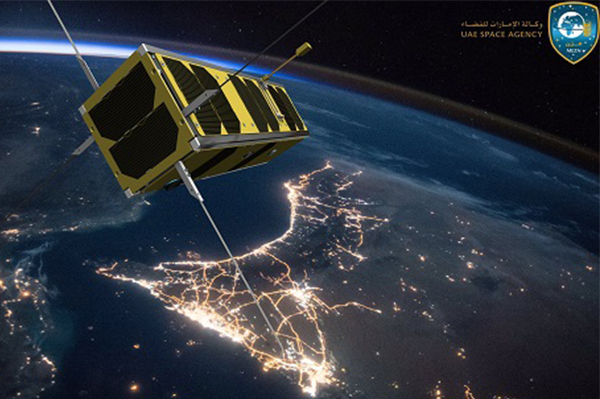
The MeznSat nanosatellite that Ras Al Khaimah students are helping to develop, build and test, in collaboration with Khalifa University and the UAE Space Agency, is planned for launch on a Soyuz-2 rocket from Russia in June 2020, Abdul-Halim Jallad, Director and Assistant Professor, Center of Information, Communication and Networking Education and Innovation (ICONET) said.
Read full story here: https://www.broadcastprome.com/news/satellite/uae-developed-meznsat-to-be-launched-in-june/

Japan to expand emirati HRD programmes

The Japan International Cooperation Centre (JICE) Abu Dhabi Office this month successfully concluded a twelve-month series of joint collaborations, projects, activities and studies with various UAE governmental bodies and institutions for the educational and human resource development of young Emirati talent.

The popularity of studying Japanese language among Emirati youth has been growing year by year, with Khalifa University of Science and Technology extending its Japanese language curricular courses coordinated by JICE for a fourth year this year.

Read full story: http://tradearabia.com/news/EDU_365663.html

Khalifa University’s Novel MEMS Gyroscope and Magnetometer to Help AVs Navigate Rocky Terrain in Space

To help vehicles navigate their way around the solar system, Dr. Daniel Choi is leading a team to develop a novel micro-electromechanical system gyroscope and magnetometer for a miniaturized space attitude control system

Rough terrain is tricky for anybody to navigate let alone an autonomous vehicle. A human walking across a rough terrain can instinctively adjust movements to stay upright; robots lack this instinctive balance. More than simply staying upright, an unmanned vehicle on a far-flung planet would need to keep its antenna accurately pointed towards Earth for communications; keep its data-collecting instruments precisely pointed for accurate onboard experiments and interpretation; and optimize heating and cooling effects of shadow and sunlight for thermal control.

To help vehicles navigate their way around the solar system, Dr. Daniel Choi, principal investigator and Associate Professor of Mechanical Engineering and Dr. Ibrahim Elfadel co-investigator and Professor of Electrical Engineering and Computer Science at Khalifa University, are leading a team comprising Dr. Ru Li, Eng. Dima Ali and graduate student, Muneera Al-shaibah, to develop a novel micro-electromechanical system (MEMS) gyroscope and magnetometer for a miniaturized space attitude control system.

An unmanned ground or aerial vehicle needs a robust and reliable system in place to keep it functional once it has left terra firma on Earth. If the robot should need help stabilizing on rocky ground, a planetary mission would be hampered by the communications delay imposed by the enormous distance between earth and space-faring robots. Even at its maximum speed of 5.2 megabits per second (Mbps), message from the Mars Reconnaissance orbiter (MRO) a single high-resolution image takes 90 minutes to be sent back to Earth. If a UGV had to wait for this information every time it encountered a large rock it wasn’t sure how to navigate, it would take an inordinate amount of time for any mission to be completed.

Much of the communication difficulty could be solved if the technology sent into space were autonomous, with the necessary tools designed by teams like the one led by Dr. Choi at Khalifa University.

“This research project is the first to be sponsored by the UAE Space Agency since the agency was established in 2014,” said Dr. Choi. “We started this project in December 2017, aiming to design, fabricate, and characterize a MEMS gyroscope and magnetometer to be used in inertial measurement units (IMU) of space altitude control systems.”

Attitude control is the process of controlling the orientation of an vehicle with respect to an inertial frame of reference or another entity, such as the celestial sphere. In aviation, this is traditionally the Earth’s horizon. Controlling vehicle attitude requires sensors to measure vehicle orientation, actuators to apply the torques needed to orient the vehicle to a desired attitude, and algorithms to command the actuators based on sensor measurements and specification of the desired attitude.

Gyroscopes are devices that measure or maintain rotational motion. When things rotate around an axis, they have angular velocity which is measured in degrees per second or revolutions per second. Angular velocity is simply a measurement of the speed of rotation. MEMS gyroscopes are small, inexpensive sensors that measure this angular velocity. They are found in most autonomous navigation systems: balancing a robot can involve a gyroscope measuring rotation from a balanced position and sending corrections to a motor.

MEMS gyroscopes are used in automotive roll-over prevention and image stabilization as well as many other applications.

One key process in designing a system pertaining to attitude control is the mathematical modelling of the vehicle dynamics and environmental influences. Everything is tested and analyzed under simulated space conditions.

A MEMS gyroscope device includes a vibrating structure which determines the rate of rotation. When the gyroscope is rotated, a small resonating mass is shifted as the angular velocity changes. This movement is converted into very low-current electrical signals that can be amplified and read by a host microcontroller to control a ship’s attitude.

“Our team was able to fully characterize the MEMS gyroscope device by finding its resonance frequency, or frequency of maximum oscillation amplitude,” explained Dr. Choi. “Before testing, intensive simulations were done to find the resonance frequency. This involved actuating the proof or test mass of the device by applying the optimum amount of direct current.”

The simulations showed a frequency at which the gyroscope shows a resonant peak of 47.7 KHz, while testing showed a value of 46.6 KHz. With a percentage error of just 2.2 percent, the team concluded they had successfully tested their design.

“In addition to the MEMS gyroscope, the team has also been testing the MEMS magnetometer,” said Dr. Choi. “The design has been successfully tested for static capacitance and resonance frequency in both ambient and vacuum conditions.”

A magnetometer is a device that measures magnetism—the direction, strength, or relative change of a magnetic field at a particular location. In an aircraft’s attitude and heading reference system, they are commonly used as a heading reference. As magnetometers are miniaturized to be incorporated in integrated circuits, they are finding increasing use as miniaturized compasses. In a MEMS magnetometer, a change in voltage or resonant frequency can be measured electronically.

“We have confidence in our circuit and designs and are currently working on improving and optimizing them for operations,” said Dr. Choi. “The next step is to design and fabricate application-specific integrated circuits (ASIC) for implementing these devices in upcoming space missions.”

Jade Sterling
News and Features Writer
23 March 2020

Emirati start-up aimed at helping pregnant mothers gets IP tech licence

A home-based device which helps pregnant mothers monitor fetal heart-beat and the baby’s cardiac activity, developed at Khalifa University of Science and Technology, has received an official intellectual property (IP) technology licence.

The technology behind ‘Twinkle Heart’ was developed by Dr Ahsan Khandoker, associate professor, Biomedical Engineering, and licensed to Advanced Research Projects, the start-up established by Biomedical Engineering graduate and Emirati Saeed Alteneiji, and was incubated at Khalifa Innovation Centre (KIC).

Read full story here: https://www.arabianbusiness.com/healthcare/443294-emirati-start-up-aimed-at-helping-pregnant-mothers-gets-ip-technology-licence

Khalifa University Grants Intellectual Property License to Emirati Startup

Patented Technology Invented in Biomedical Engineering Research Laboratory Helps Development of Novel Device for Pregnant Mothers to Monitor Baby’s Cardiac Activity

Khalifa University of Science and Technology has announced the licensing of its patented technology to a startup floated by an alumnus Emirati entrepreneur with a faculty member.

The intellectual property (IP) technology license was granted recently, marking a significant milestone in the university’s innovation journey. The home-based monitoring device, called by the Emirati startup ‘Twinkle Heart’, helps pregnant mothers to monitor fetal heart-beat and the baby’s cardiac activity. The technology behind the product was developed by Dr Ahsan Khandoker, Associate Professor, Biomedical Engineering, and licensed to Advanced Research Projects, the start-up established by Biomedical Engineering graduate Saeed Alteneiji, and was incubated at Khalifa Innovation Centre (KIC).

Dr. Arif Sultan Al Hammadi, Executive Vice-President, Khalifa University of Science and Technology, said: “Khalifa University’s comprehensive role includes not only education, but also providing a successful and integrated academic journey in areas that serve the UAE’s strategic sectors. This enables graduate studies and innovations at our state-of-the-art research centers, while facilitating the creation of start-ups and commercialization of patented technology with products targeting these sectors.”

Al Hammadi added, “This is a key milestone for Khalifa University towards successful commercialization of a technology developed at our own research laboratory. It is also critical for the university to grant intellectual and patent rights to a startup led by an Emirati entrepreneur. We will continue to further exploit the commercial potentials of our IP and patent portfolios and contribute to the innovation ecosystem.”

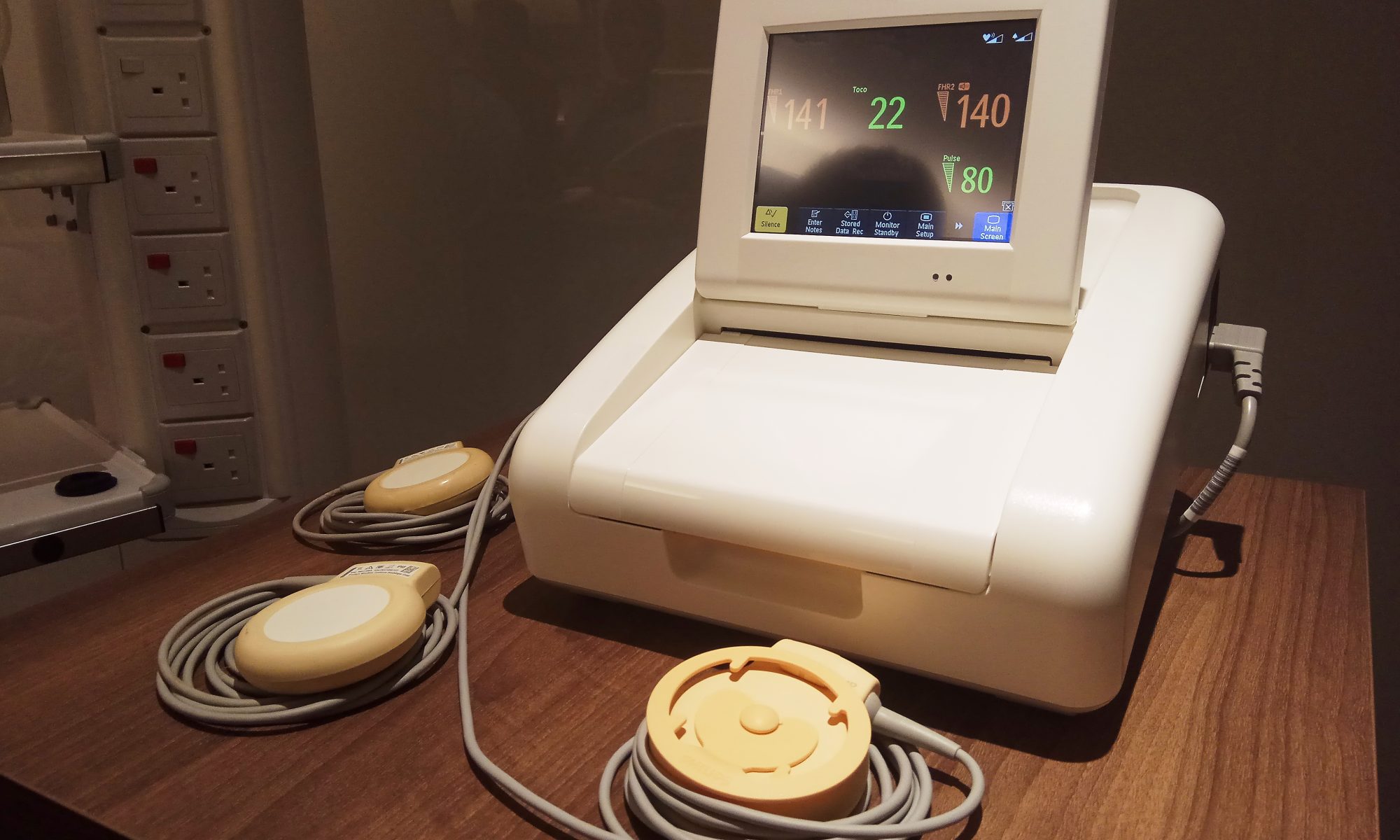
Twinkle Heart comprises four fetal phonocardiogram (FPCG) sensors held on the maternal abdomen by a square fabric harness and elastic belts, making it easier for pregnant women to simply listen to their baby’s heartbeat and feel reassured.

Dr Khandoker said: “It is rewarding to see this piece of my research work can further be progressed by a local start-up into a market product that can benefit the public. The uniqueness of this non-invasive device is the ease of use so it should be accessible to any pregnant mother to determine the well-being of her baby. The successful IP licensing to Advanced Research Projects is a reflection of the University vision for having impactful research.”

The portable, low-cost, safe, and easy-to-use fetal screening device for use at home or pregnancy clinics by mobile phone and cheap sensors was originally planned to help medical doctors and midwives. The research results have already been demonstrated through several collaborating hospitals in the UAE and overseas.

Alteneiji said: “ARP’s IP license with Khalifa University is vital for my startup. We will be executing a development plan in 2020 to transfer the IP from the prototype stage to a commercialized product. A marketing plan is already on the way to create awareness for the device, and our team of experts in marketing, engineering, and technology are closely working towards developing the final product. We are grateful to Khalifa University, especially Dr Al Hammadi as well as the Technology Management and Innovation and the Legal offices for their effort and extended support.”

Beyond its home-based application, the device’s portability makes it an ideal solution for health workers in remote areas. Alteneiji’s company Advanced Research Projects has a subsidiary MARP, established early this year, which will be responsible for this product.

Khalifa University currently has over 140 issued patents, with around 360 pending patent applications and more than 400 invention disclosures, while remaining a leading contributor to the country’s patents portfolio.

News Writer
18 March 2020


Physics Professor to Host Microscopy & Microanalysis 2020 Symposium in August 2020

The Microscopy & Microanalysis (M&M) 2020 Conference is the biggest event in the field of Microscopy and this year it will be held in Milwaukee, Wisconsin from 2–6 August 2020. KU’s Dr. Dalaver H. Anjum, Assistant Professor of Physics, will host one of the conference’s symposiums, called “Bridging the Fundamental Electron Dose Gap for Observing Atom Processes in Complex Materials in their Native States.”

The symposium will focus on devising new strategies to manipulate electron beams in advanced transmission electron microscopy (TEM) instruments for carrying out a nanoscale analysis of next-generation materials in their native state. New strategies are urgently needed because electron beams can alter the structure of materials if the electron dose is above the materials’ threshold level. Low-dose frame averaging, cryoTEM, electron detectors, and primary electron energies are a few examples of the parameters that are manipulated to devise new analysis strategies. Their applications cover various advanced materials including two-dimensional, biological, metal-organic framework, and zeolites.

Thus, the central message of the symposium will be to emphasize how TEM techniques (both cryoTEM and room temperature TEM) have become an indispensable tool for exploring the science and technology of next-generation materials.

Dr. Anjum will also be presenting his work in two other M&M 2020 symposia, including “Advances in Electron Microscopy to Characterize Materials Embedded in Devices” and “Crystallography at the Nanoscale and MicroED with Electrons and X-rays.” The two papers will focus on transmission microscopy analysis of semiconductors and metallic materials that have solar cell and aerospace applications.

Ara Cruz
News Writer
16 March 2020

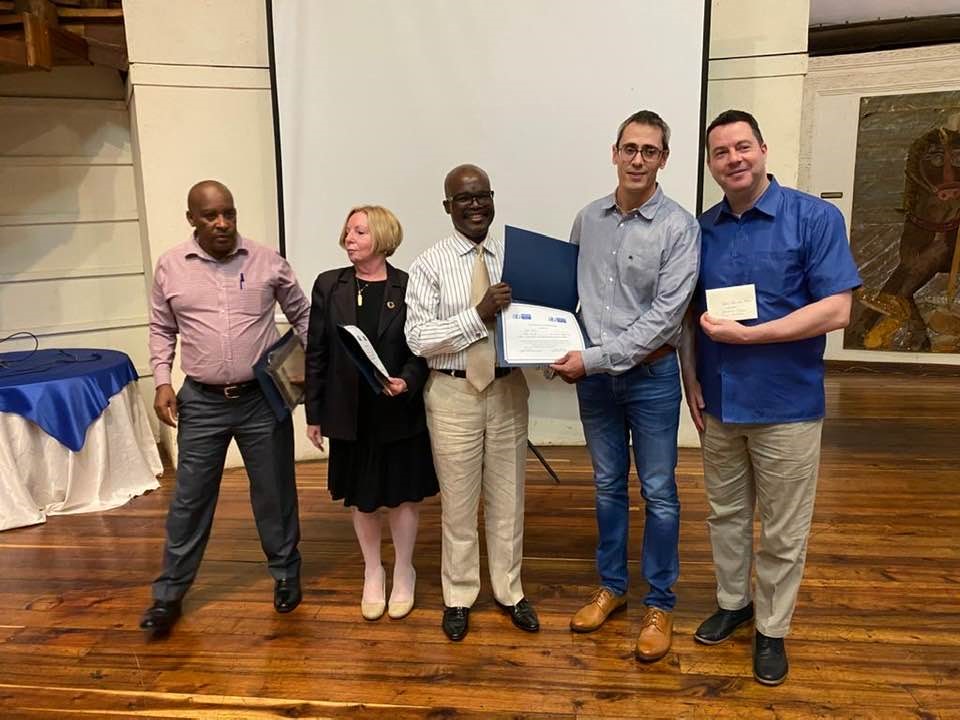
KU Professors Win Best Paper Award at the Academy of International Business 2020 Conference

Dr. Glenn Muschert, Professor of Humanities and Social Sciences, and Dr. Dimitrios Reppas, Assistant Professor of Humanities and Social Sciences, received Best Paper Award for their paper “Mobile Money Systems as Avant-Garde in the Digital Transition of Financial Relations.”

The award was presented at the Academy of International Business (AIB) 2020, which was held from 6–9 January 2020 in Nairobi, Kenya. The event was a joint conference of AIB Africa Chapter and Northeast USA Chapter hosted by the Chandaria School of Business at the United States International University – Africa (USIU-A).

In their paper, Dr. Muschert and Dr. Reppas discussed Mobile Money, an electronic form of currency that has become popular, particularly in developing countries over the last decade. They summarized the main findings from empirical literature regarding the positive economic and social impacts of deploying Mobile Money platforms.

Positive economic and social impacts  from Mobile Money platforms include the potential to reconfigure and transform pre-existing financial practices, include the unbanked segments of the populations into formal economic relations, and provide self-reliance and security to local communities.

In their winning paper, Dr. Muschert and Dr. Reppas clarified the types of data required to conduct more reliable empirical research and therefore enhance cooperation among the parties involved in deploying and studying the effects of Mobile Money systems, including the academic community, policy makers/regulators, central banks, telecommunication companies, and entrepreneurs.

Ara Cruz
News Writer
16 March 2020

KU Faculty From HSS Department Invited as Senior Delegates and Speakers to Prestigious Events in India

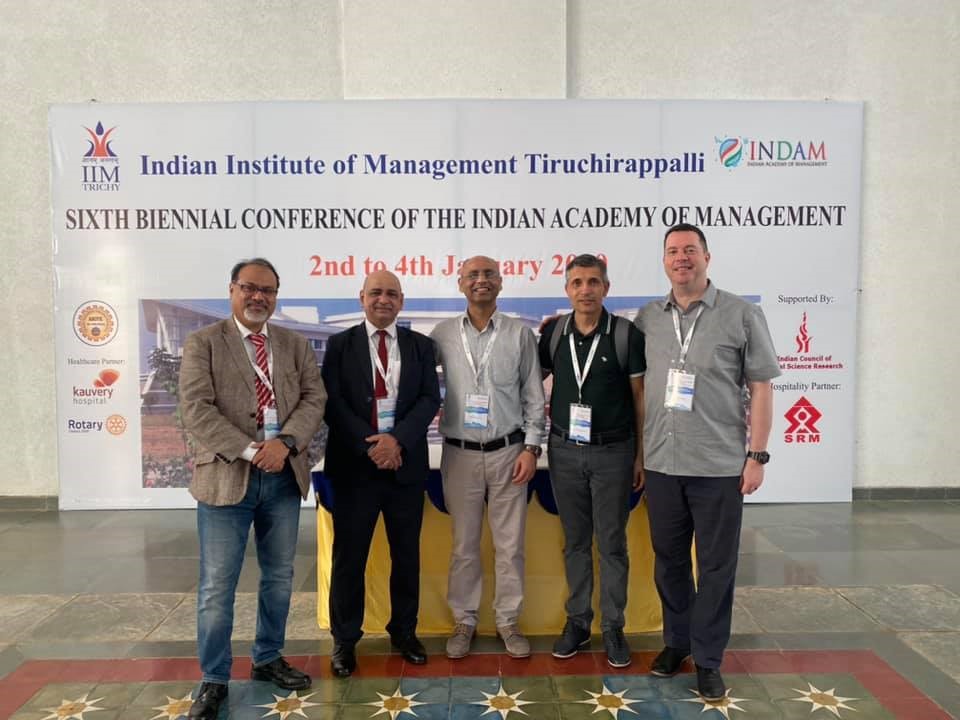
Two faculty from the Department of Humanities and Social Sciences, Dr. Vijay Pereira, Associate Professor of International Business, and Dr. Glenn Muschert, Professor of Sociology, recently participated in several high-profile events in India.


From 2-4 January 2020, the faculty participated in the Indian Academy of Management Conference (INDAM 2020) at the Indian Institute of Management Tiruchirappalli. Dr. Pereira presented two papers and was part of the panel on ‘Global Outlook of Indian Industries @75’. He also participated in the Meet the Editors session representing the Scopus Q1 ranked Journal of Business Research published by Elsevier. Dr. Muschert, on the other hand, was part of the panel on ‘Policy, Populism and Global Value Chains: Implications for India.’


Dr. Muschert and Dr. Pereira were also International Delegates at the ‘International Conclave on Globalizing Indian Thought,’ hosted by the Indian Institute of Management Kozhikode, from 16-18 January. Dr. Pereira presented a paper on research-led evidence for emerging markets. He served as a representative of the UAE (as a faculty member of Khalifa University), and the UK, his home country. While Dr. Muschert represented the UAE (also as a faculty member of Khalifa University) and his home country of the USA. Guests of the conference included the Prime Minister Shri Narendra Modi, who delivered the inaugural address, and Sri Sri Ravi Shankar, who delivered the keynote address.


The last event attended by Dr. Muschert and Dr. Pereira was the Roundtable Conference on Advances in ICT in the Healthcare Sector, where they were International Business and Sociological delegates. The event was hosted by the Indian Institute of Management Ahmedabad from 18-19 January. The roundtable consisted of 20 leaders from the Indian healthcare sector, which included doctors, IT professionals, entrepreneurs, and academics.


The event was an opportunity for the delegates to strategize on the best way to effectively digitize and deploy improvements to the healthcare system in India.


Ara Cruz
News Writer
16 March 2020